
Article

Non-Iridescent Metal Nanomesh with Disordered Nanoapertures Fabricated by Phase Separation Lithography of Polymer Blend as Transparent Conductive Film

1
Department of Materials Science and Engineering, College of Engineering and Applied Sciences, National Laboratory of Solid State Microstructures, Nanjing University, Nanjing 210093, China
2
State Key Laboratory of Materials-Oriented Chemical Engineering, College of Materials Science and Engineering, Nanjing Tech University, Nanjing 210009, China
3
National Laboratory of Solid State Microstructures, School of Physics, Nanjing University, Nanjing 210093, China
4
Jiangsu Collaborative Innovation Center for Advanced Inorganic Function Composites, Nanjing Tech University, Nanjing 210009, China
5
Jiangsu National Synergetic Innovation Center for Advanced Materials (SICAM), Nanjing Tech University, Nanjing 210009, China
*
Authors to whom correspondence should be addressed.
Materials 2021, 14(4), 867; https://doi.org/10.3390/ma14040867
Submission received: 8 December 2020 / Revised: 22 January 2021 / Accepted: 28 January 2021 / Published: 11 February 2021
(This article belongs to the Special Issue Advances in Nanostructured Materials)

Abstract

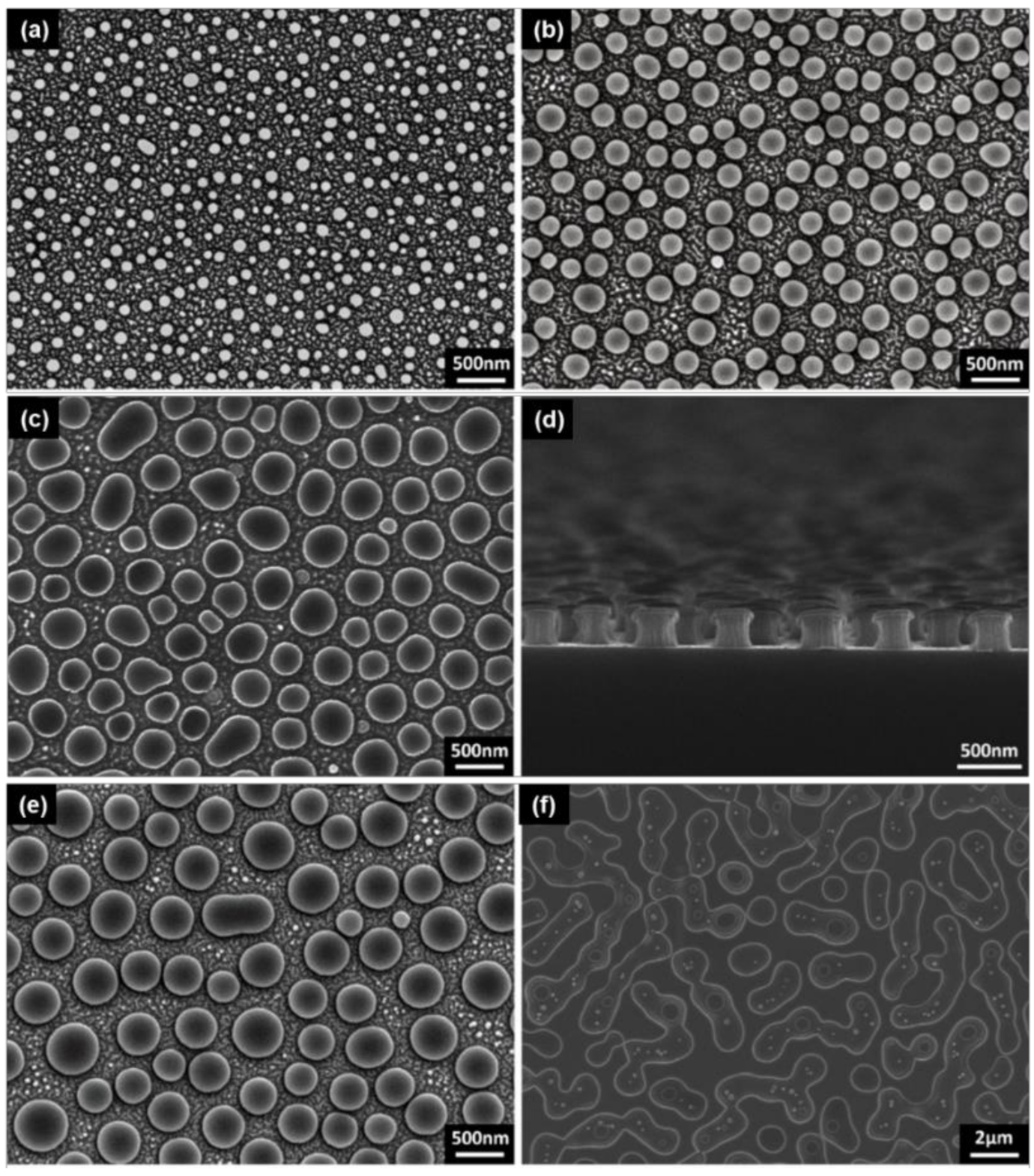
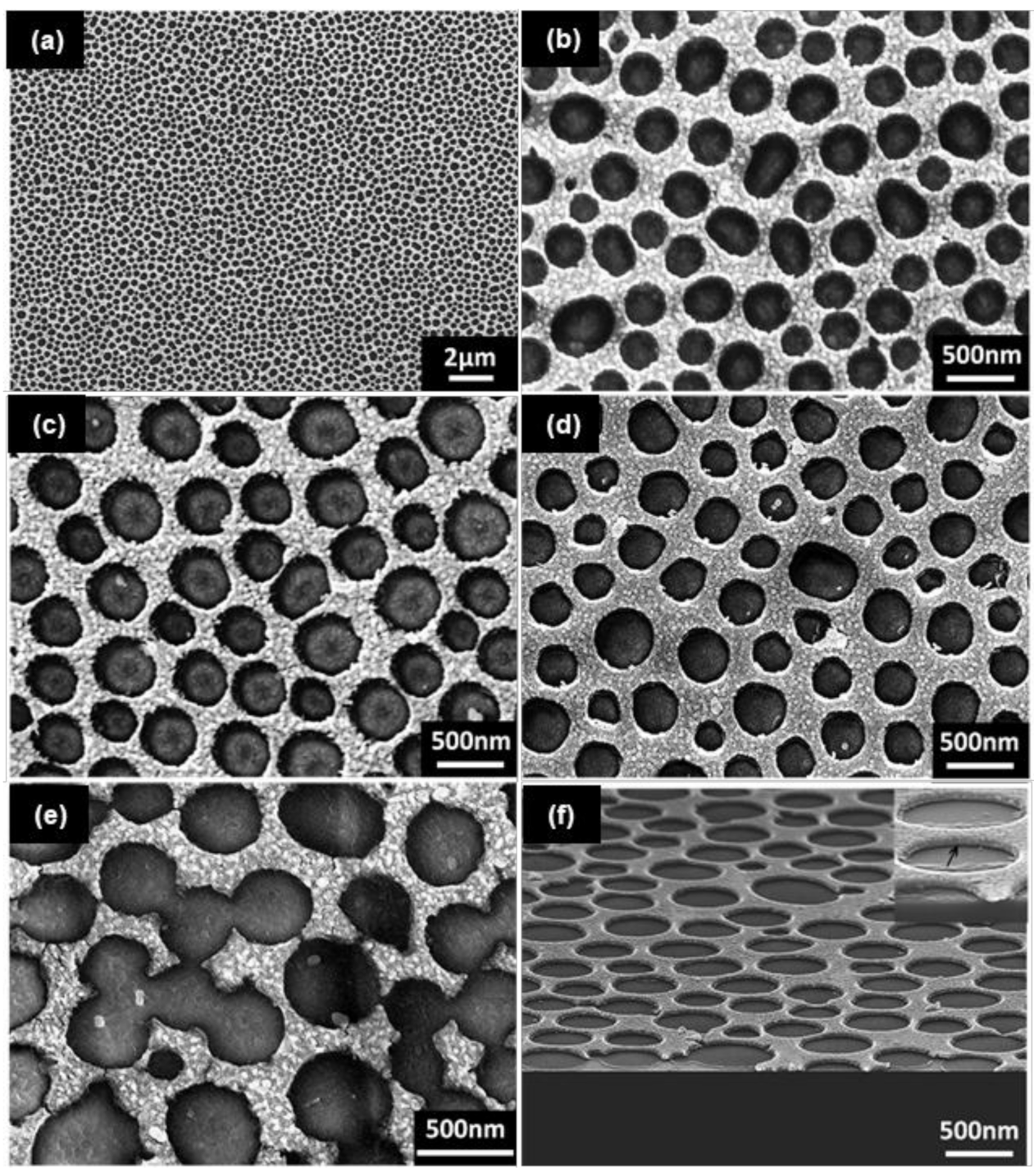
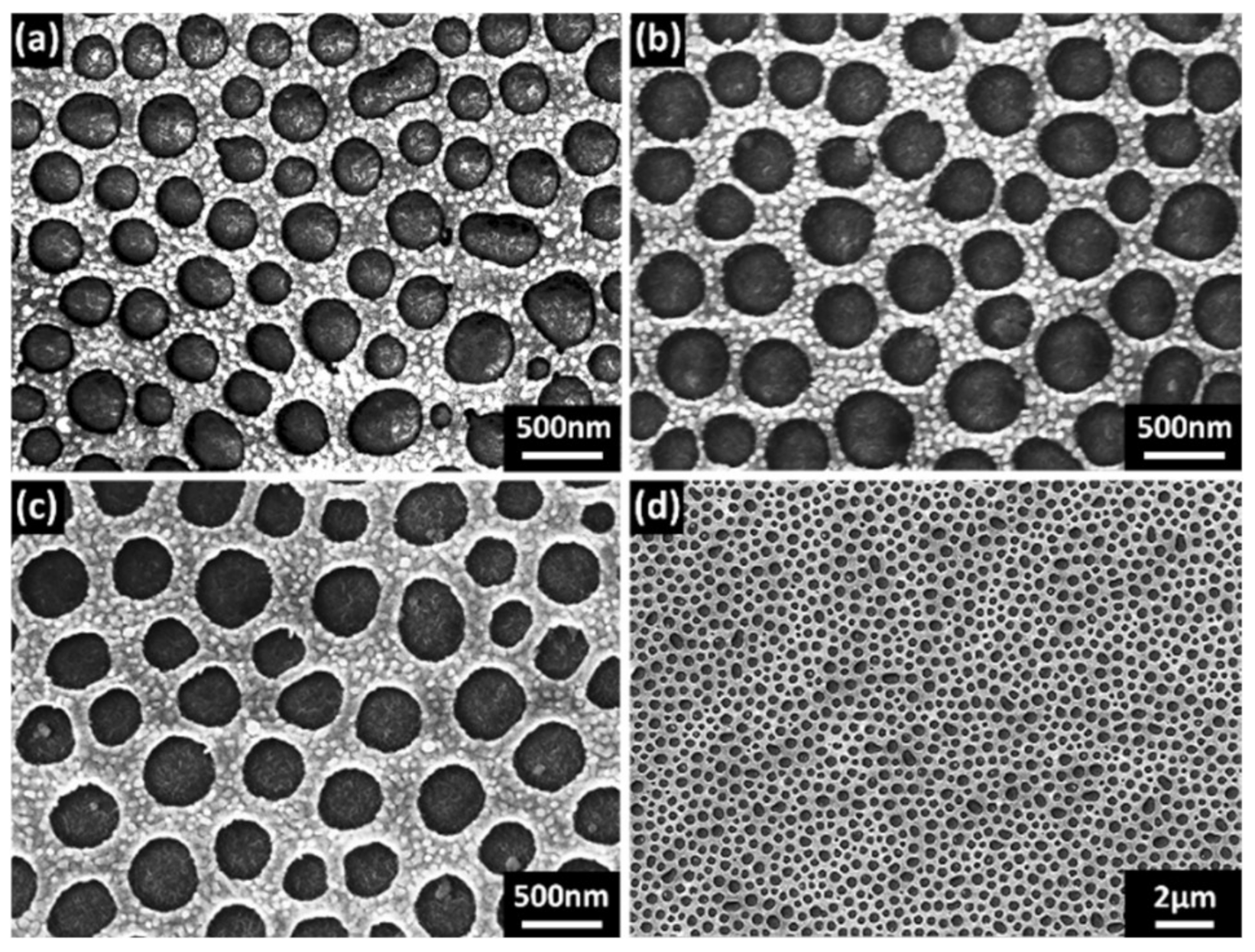
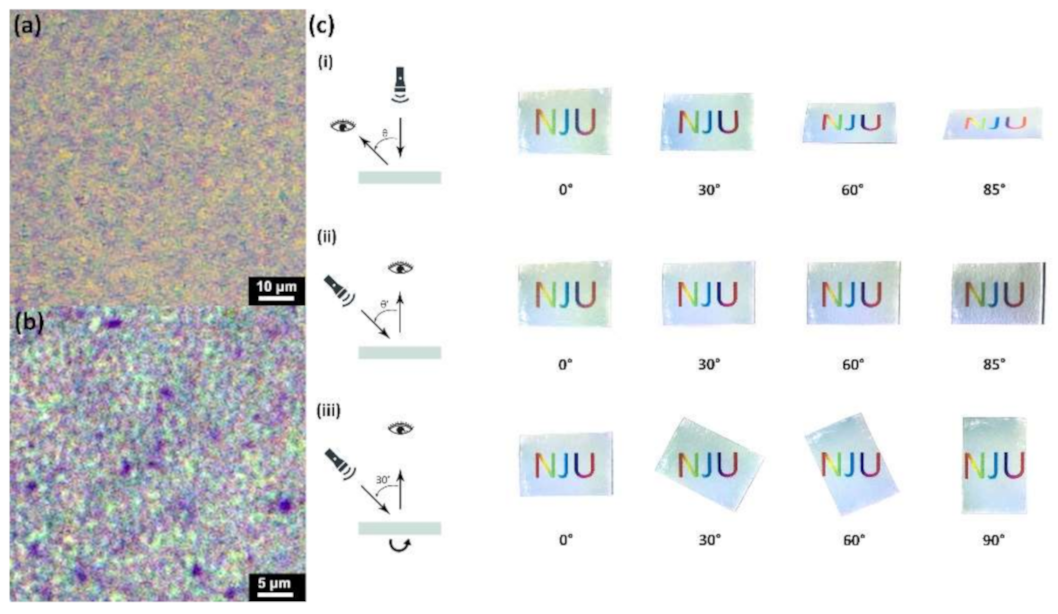
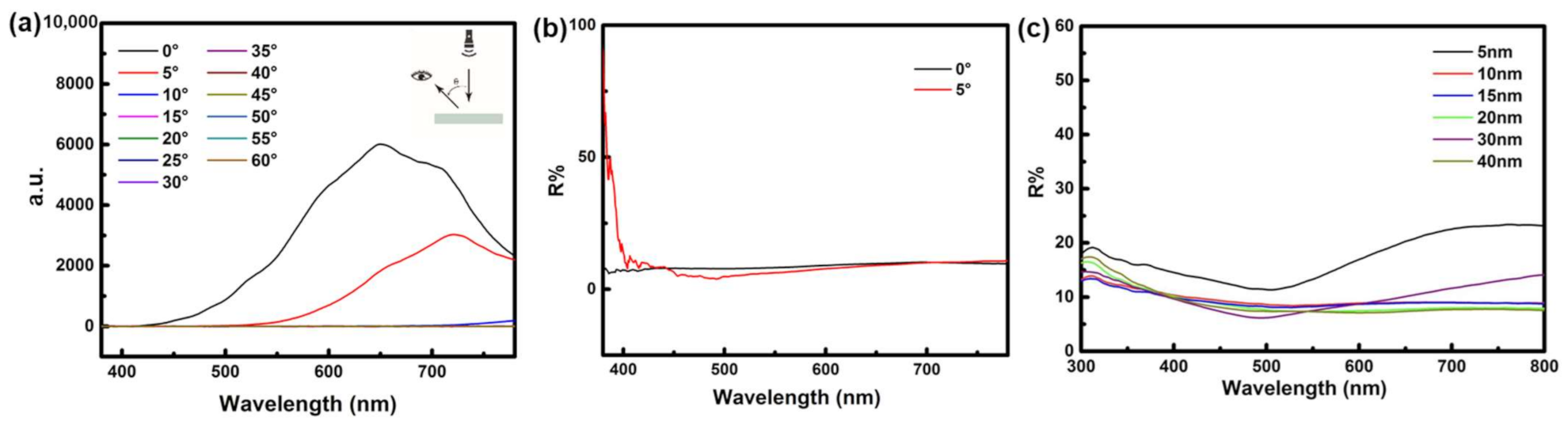
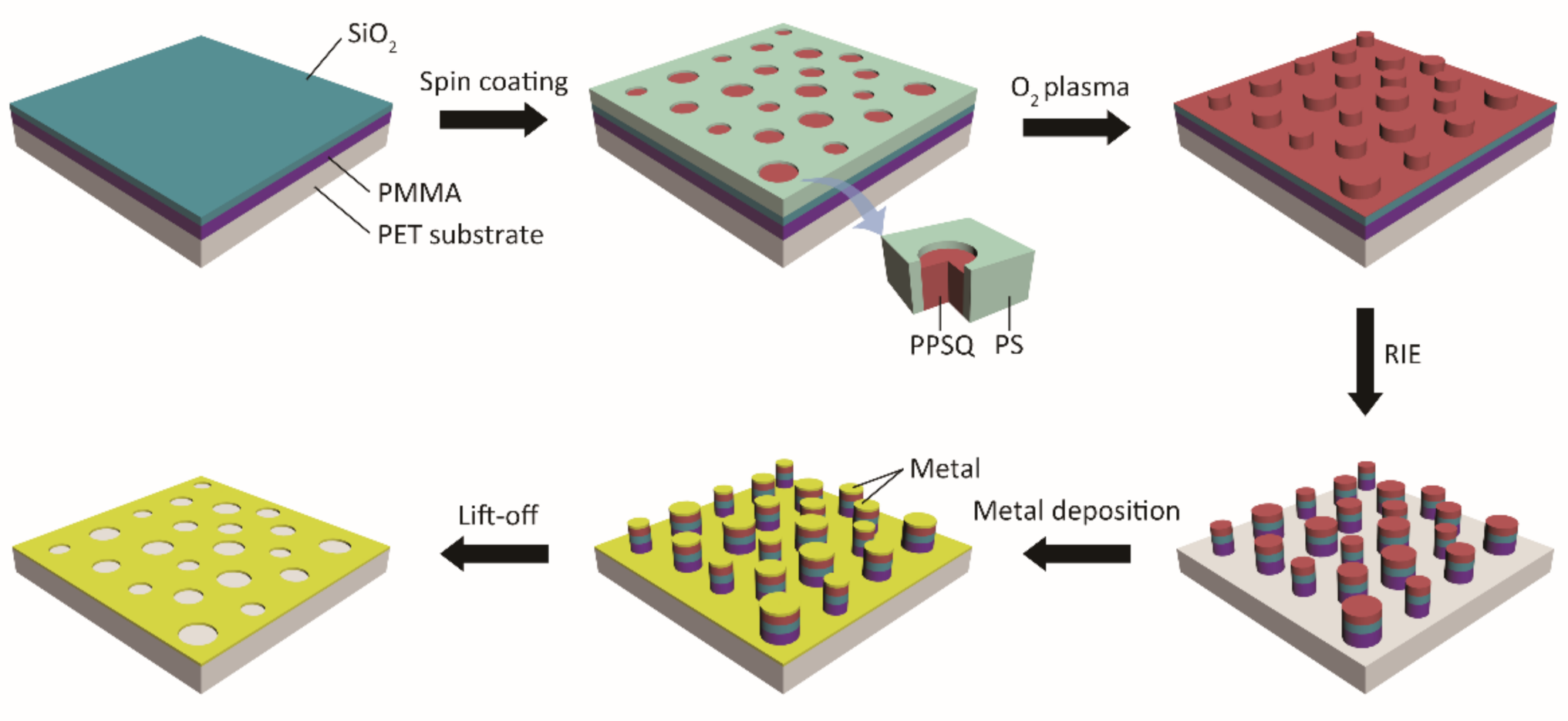
Metallic nanomesh, one of the emerging transparent conductive film (TCF) materials with both high electrical conductivity and optical transmittance, shows great potential to replace indium tin oxide (ITO) in optoelectronic devices. However, lithography-fabricated metallic nanomeshes suffer from an iridescence problem caused by the optical diffraction of periodic nanostructures, which has negative effects on display performance. In this work, we propose a novel approach to fabricate large-scale metallic nanomesh as TCFs on flexible polyethylene terephthalate (PET) sheets by maskless phase separation lithography of polymer blends in a low-cost and facile process. Polystyrene (PS)/polyphenylsilsequioxane (PPSQ) polymer blend was chosen as resist material for phase separation lithography due to their different etching selectivity under O2 reactive ion etching (RIE). The PS constituent was selectively removed by O2 RIE and the remained PPSQ nanopillars with varying sizes in random distribution were used as masks for further pattern transfer and metal deposition process. Gold (Au) nanomeshes with adjustable nanostructures were achieved after the lift-off step. Au nanomesh exhibited good optoelectronic properties (RS = 41 Ω/sq, T = 71.9%) and non-iridescence, without angle dependence owing to the aperiodic structures of disordered apertures. The results indicate that this Au nanomesh has high potential application in high-performance and broad-viewing-angle optoelectronic devices.
Keywords: transparent conductive film; phase separation lithography; non-iridescence; metallic nanomesh; nanofabrication transparent conductive film; phase separation lithography; non-iridescence; metallic nanomesh; nanofabrication