Article

Permanent Deformation and Rutting Resistance of Demolition Waste Triple Blends in Unbound Pavement Applications
by
Farshid Maghool
1,*,
Muditha Senanayake
1,
Arul Arulrajah
1 and
Suksun Horpibulsuk
1,2,*
1
Department of Civil and Construction Engineering, Swinburne University of Technology, Melbourne 3122, Australia
2
School of Civil Engineering, and Center of Excellence in Innovation for Sustainable Infrastructure Development, Suranaree University of Technology, Nakhon Ratchasima 30000, Thailand and Academy of Science, The Royal Society of Thailand, Bangkok 10300, Thailand
*
Authors to whom correspondence should be addressed.
Materials 2021, 14(4), 798; https://doi.org/10.3390/ma14040798
Submission received: 18 January 2021 / Revised: 2 February 2021 / Accepted: 3 February 2021 / Published: 8 February 2021
(This article belongs to the Special Issue Novel Construction Materials for Sustainable Pavements)

Abstract

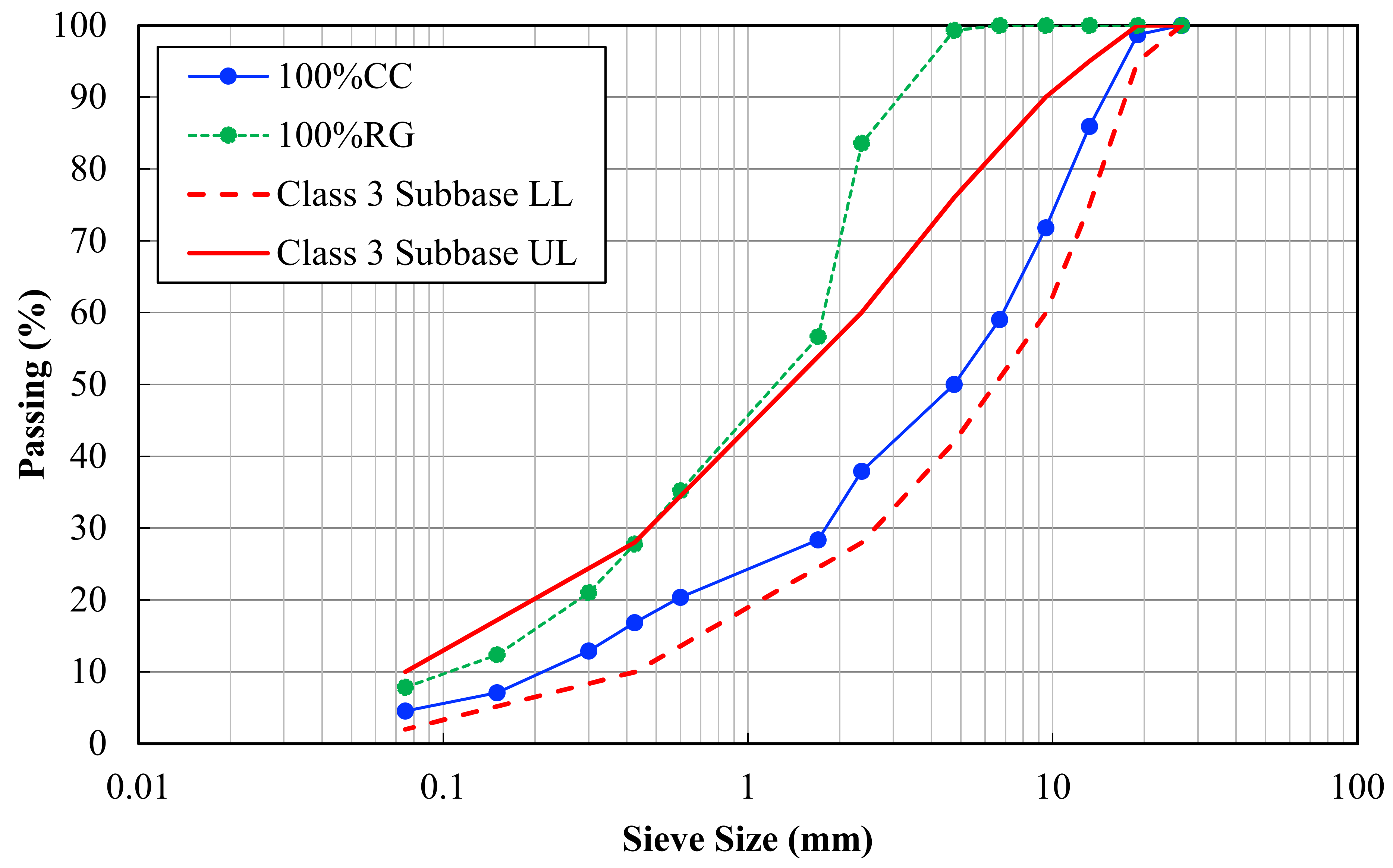
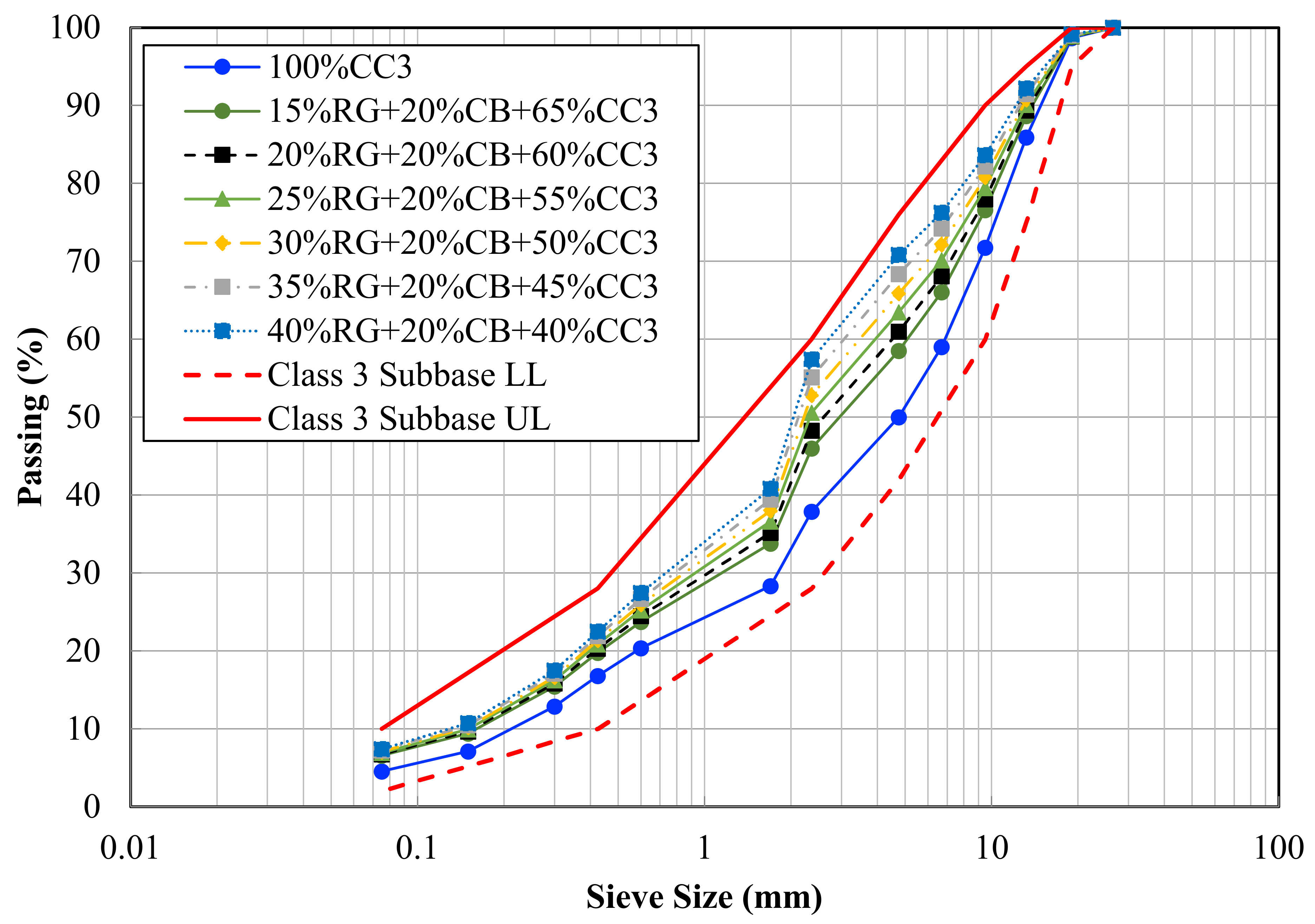
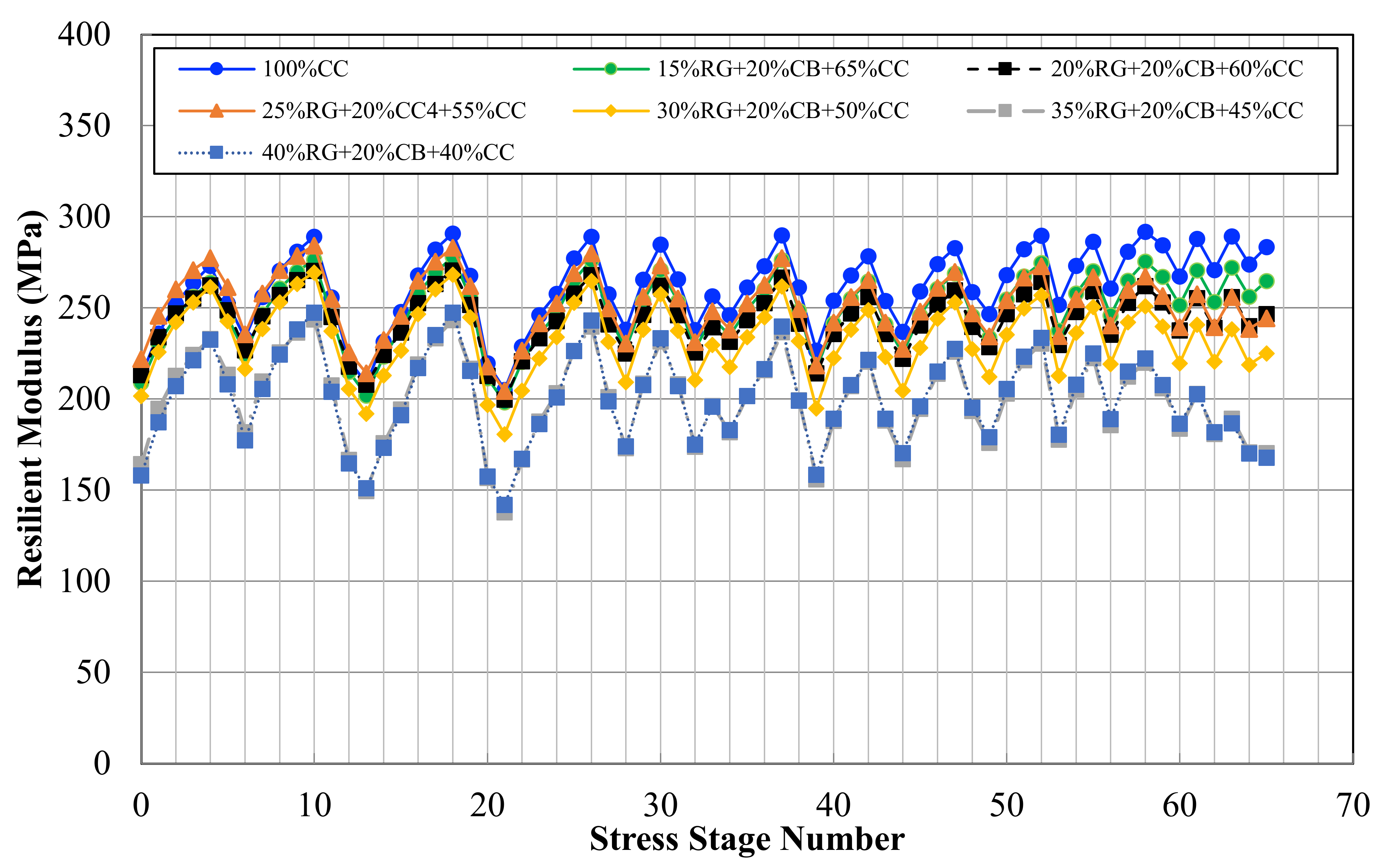
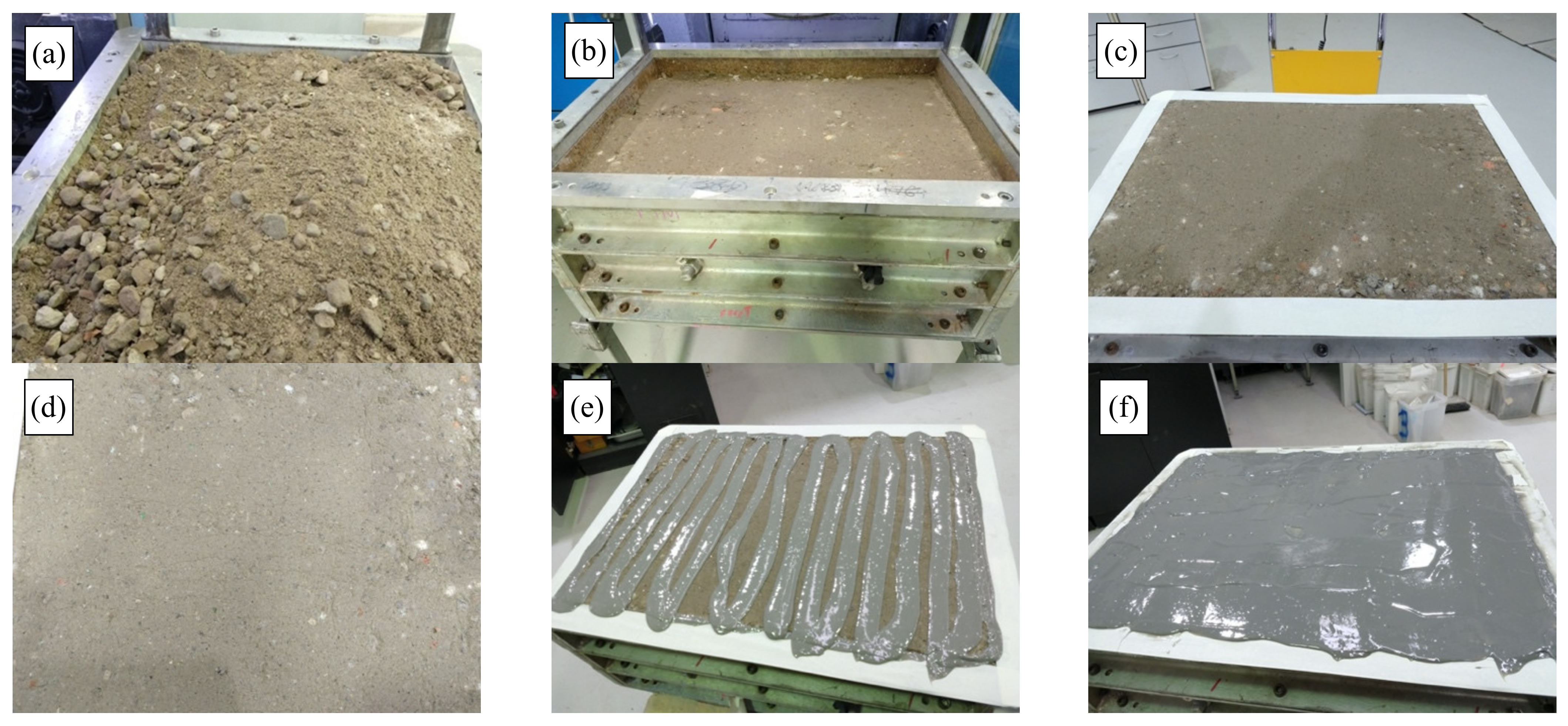
Virgin quarried materials are becoming increasingly scarce in our environment, and these materials are no longer a viable or economical solution for the construction industry. The construction industry is constantly seeking new markets for recycled waste in civil engineering applications. This research’s primary focus is the optimization of the usage of recycled materials such as recycled glass (RG), crushed brick (CB), and crushed concrete (CC), in pavement base/sub-base applications. Various percentages of RG, up to 40%, were blended with two types of CC in this research. The CC and CB, which were used as triple blends in this research, were utilized for the upper (100% CC) and lower sub-bases (up to 50% CB). This study sought to establish the maximum amount of RG that could be incorporated in the triple blends with CB and CC whilst maintaining an acceptable performance. Thus, a comprehensive series of fundamental and advanced geotechnical laboratory tests, including repeated load triaxial (RLT) and wheel-tracker (WT) tests, were performed to assess the engineering properties and permanent deformation characteristics of these triple blends. The particle-size distribution curve and California Bearing Ratio (CBR) values of all the blends met the minimum requirements. Results of RLT tests confirmed that all the nominated blends were found to provide the resilient modulus value required to be used as pavement materials. The WT results on the triple blend with 15% RG showed that the specimen performed exceptionally well during the test and comfortably met the requirements to be used in pavement applications. Based on the engineering properties and permanent deformation results, up to 15% RG can be suggested for incorporation as an accompanying material in unbound roadwork applications. Subject to the outcomes of future field testing, there might be potential to increase the percentage of RG added in the blends up to 30%.
Keywords: pavement base; permanent deformation; wheel-tracker; rutting; demolition wastes; ground improvement pavement base; permanent deformation; wheel-tracker; rutting; demolition wastes; ground improvement