Optimization of Pickling Solution for Improving the Phosphatability of Advanced High-Strength Steels

Abstract
1. Introduction
2. Materials and Methods
3. Results and Discussion
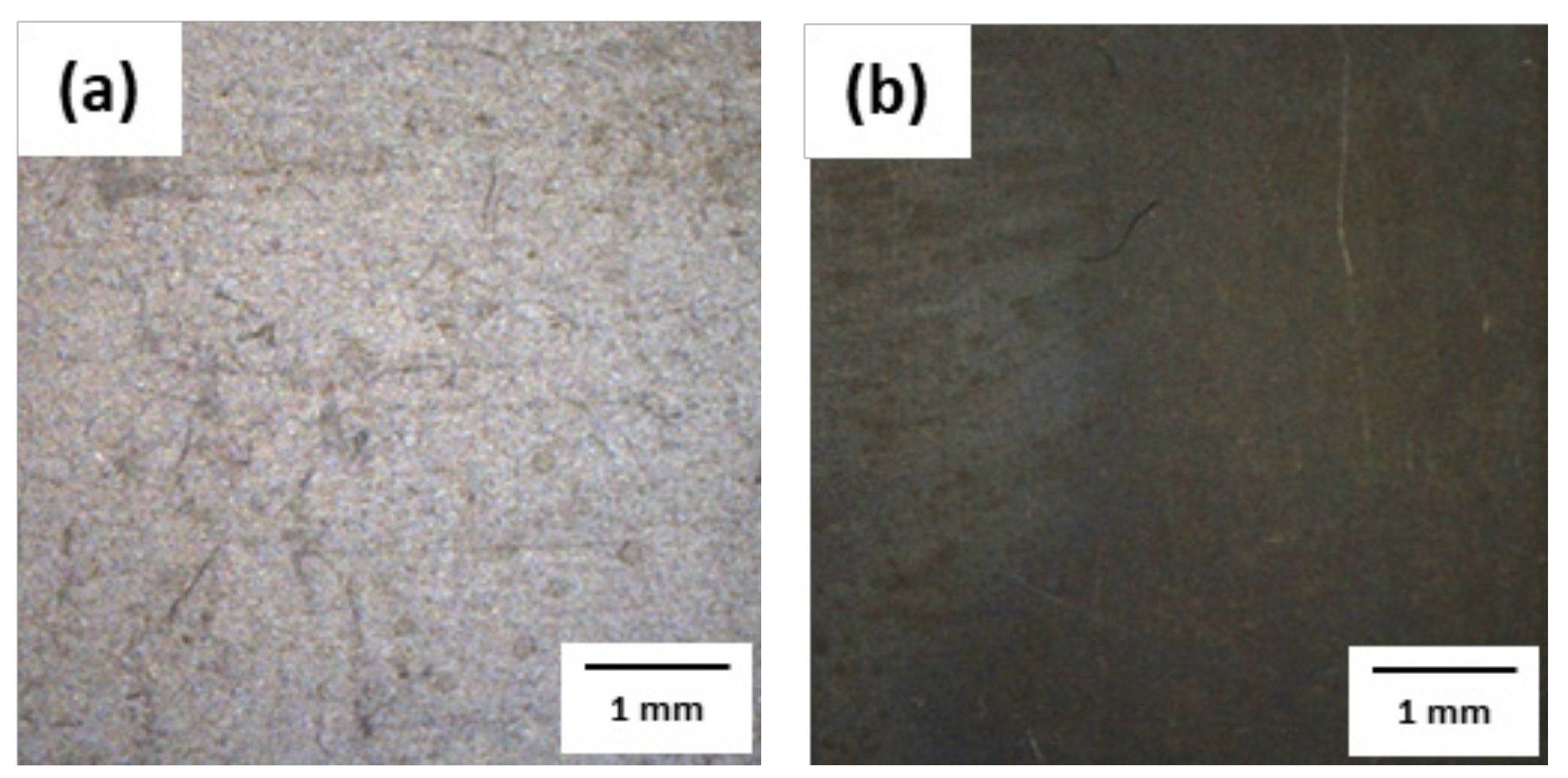
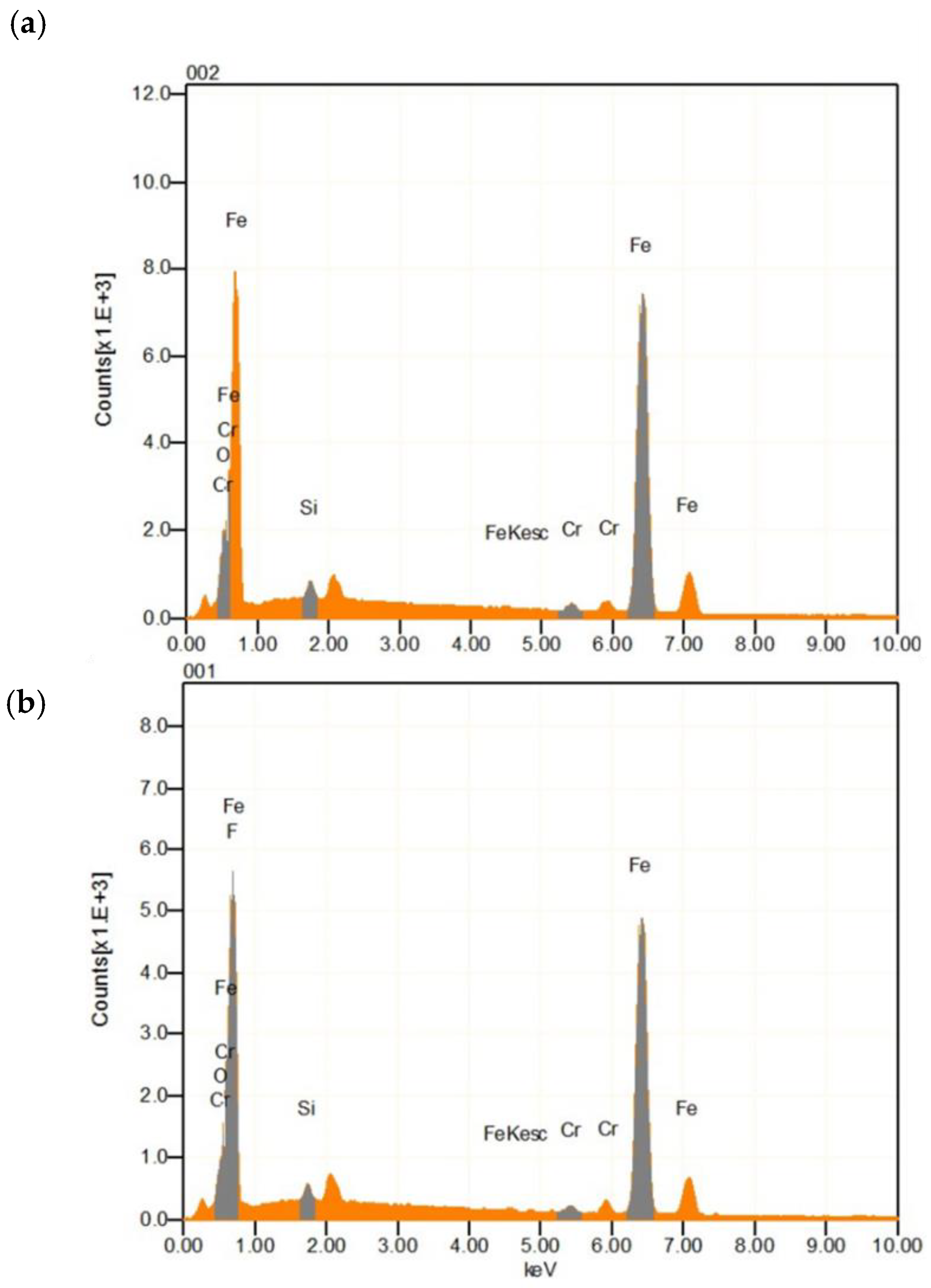
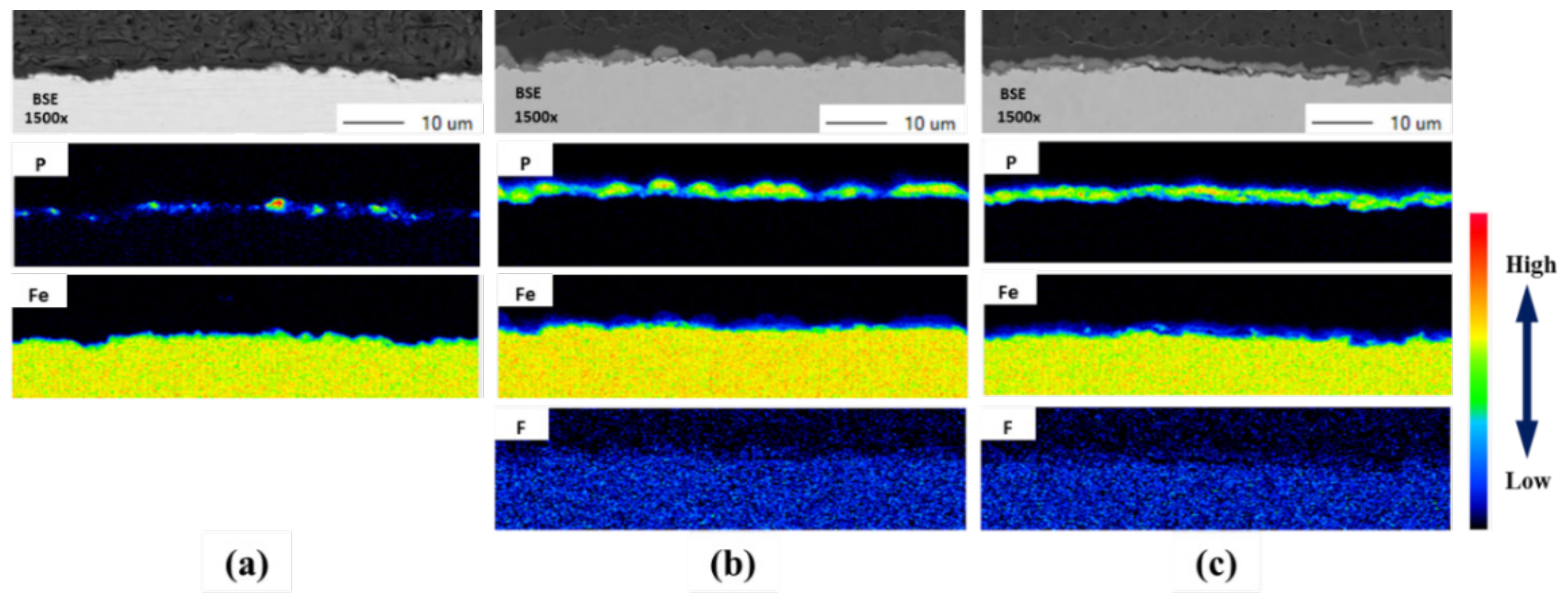
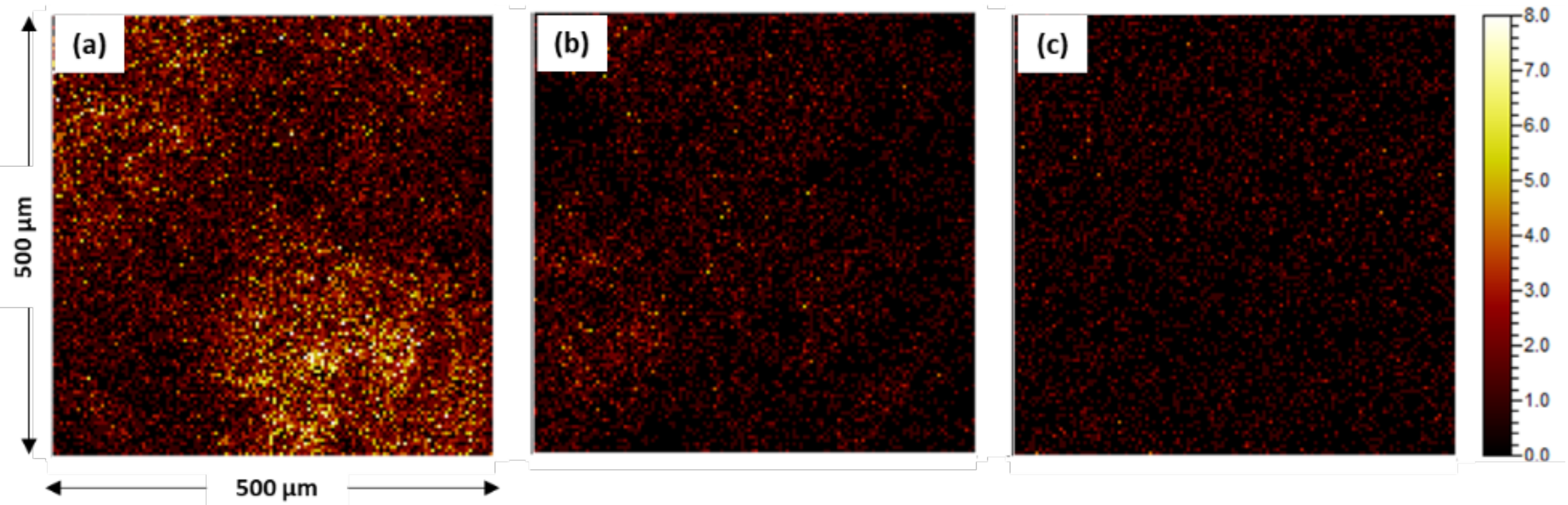
3.1. Surface Analysis
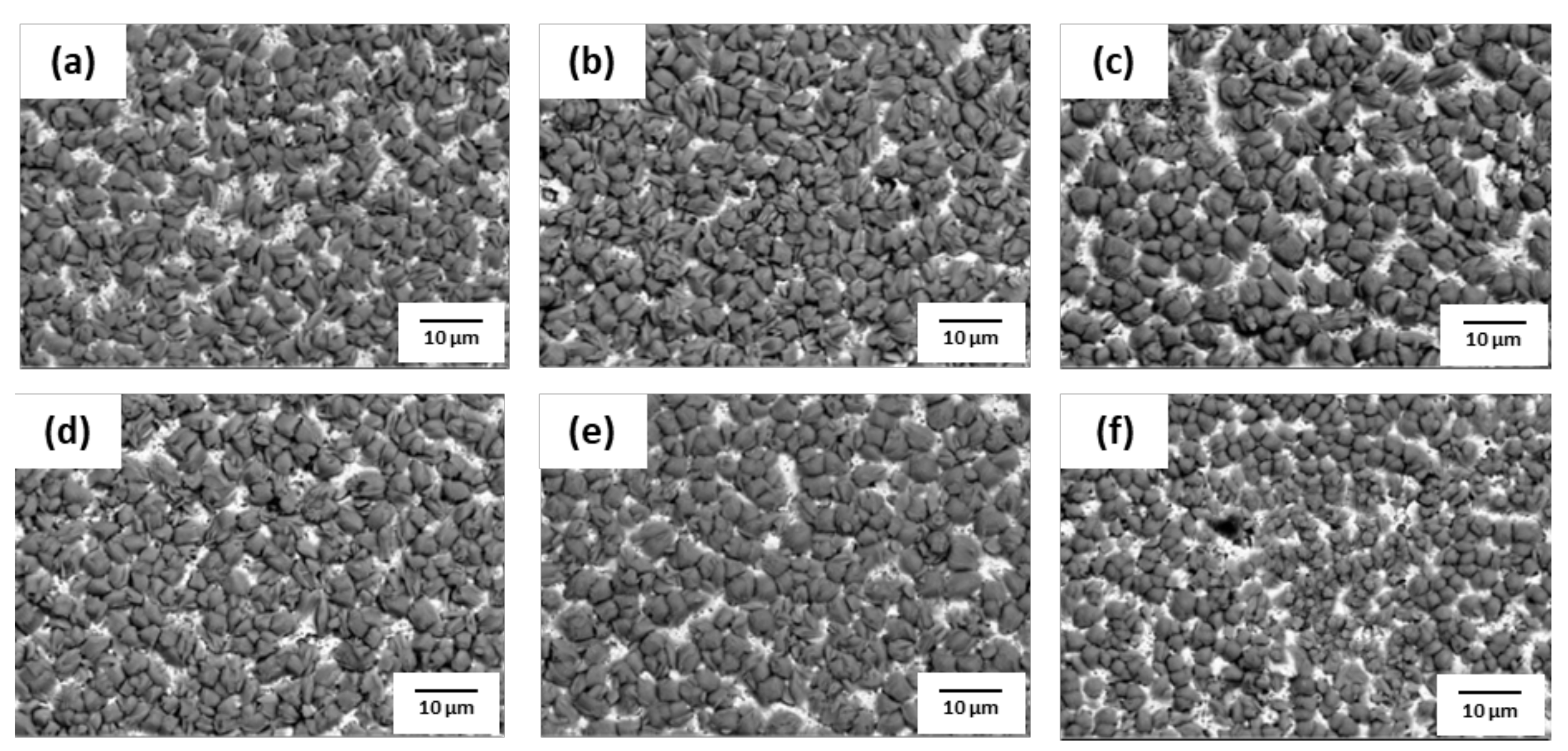
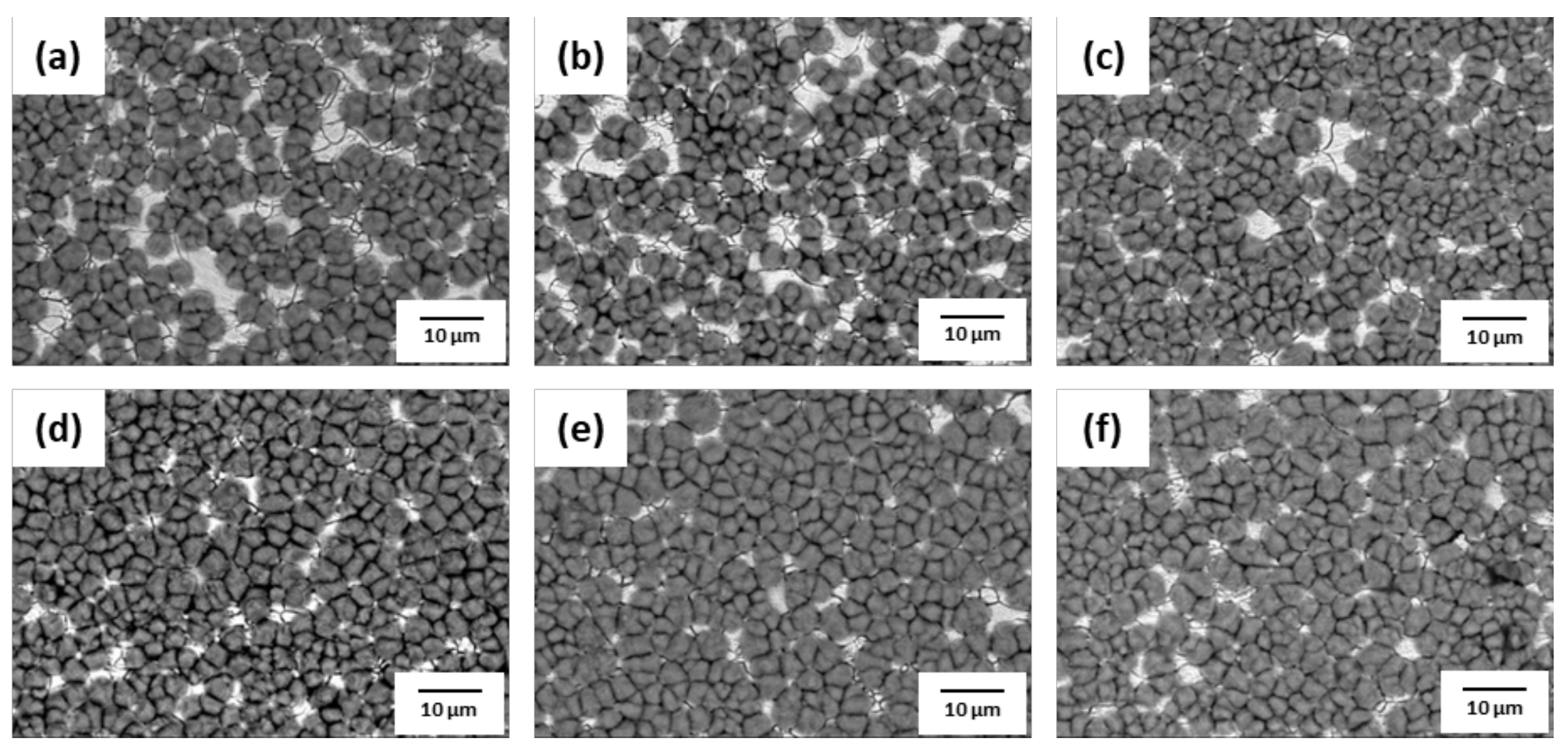
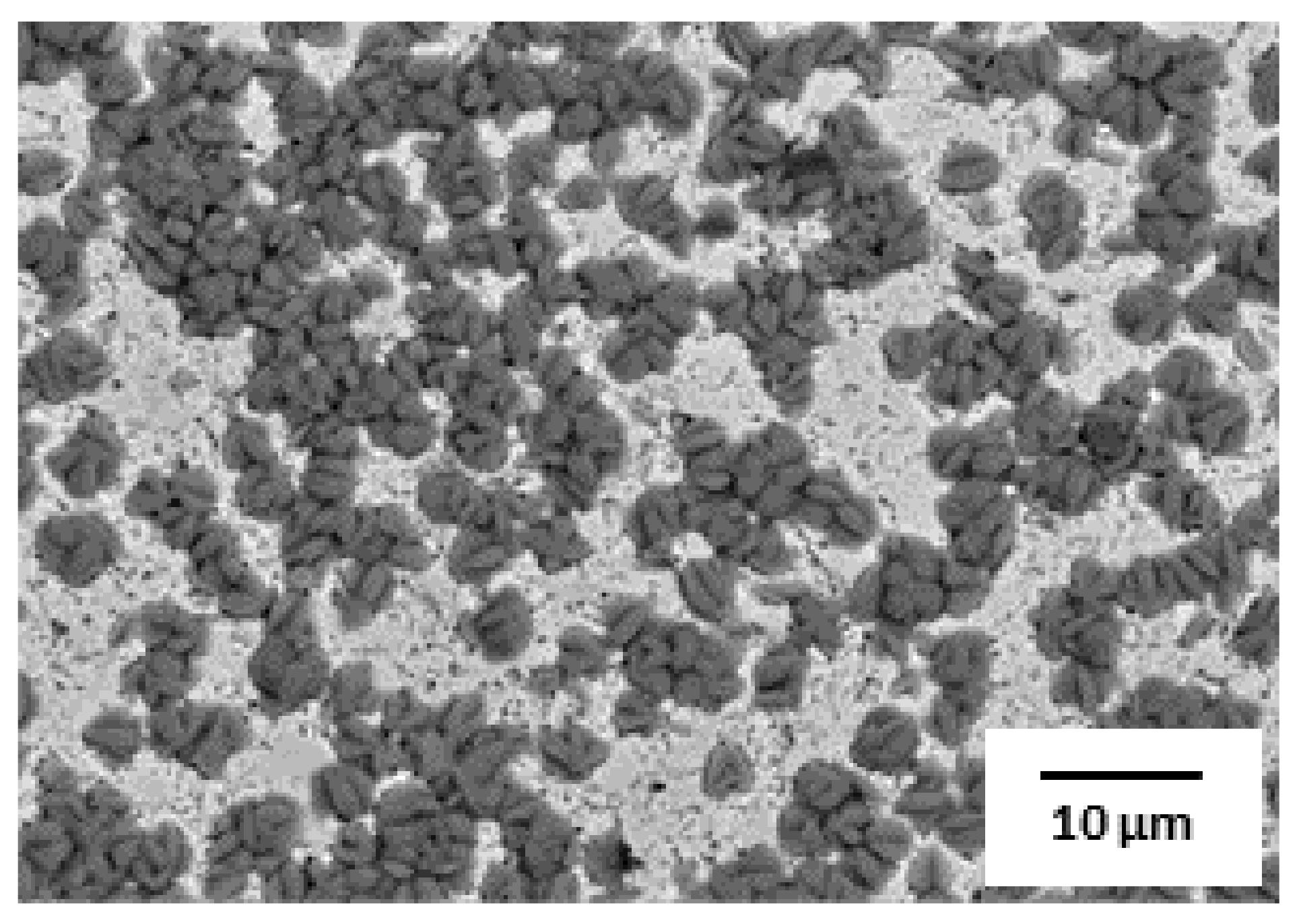
3.2. Phosphatability
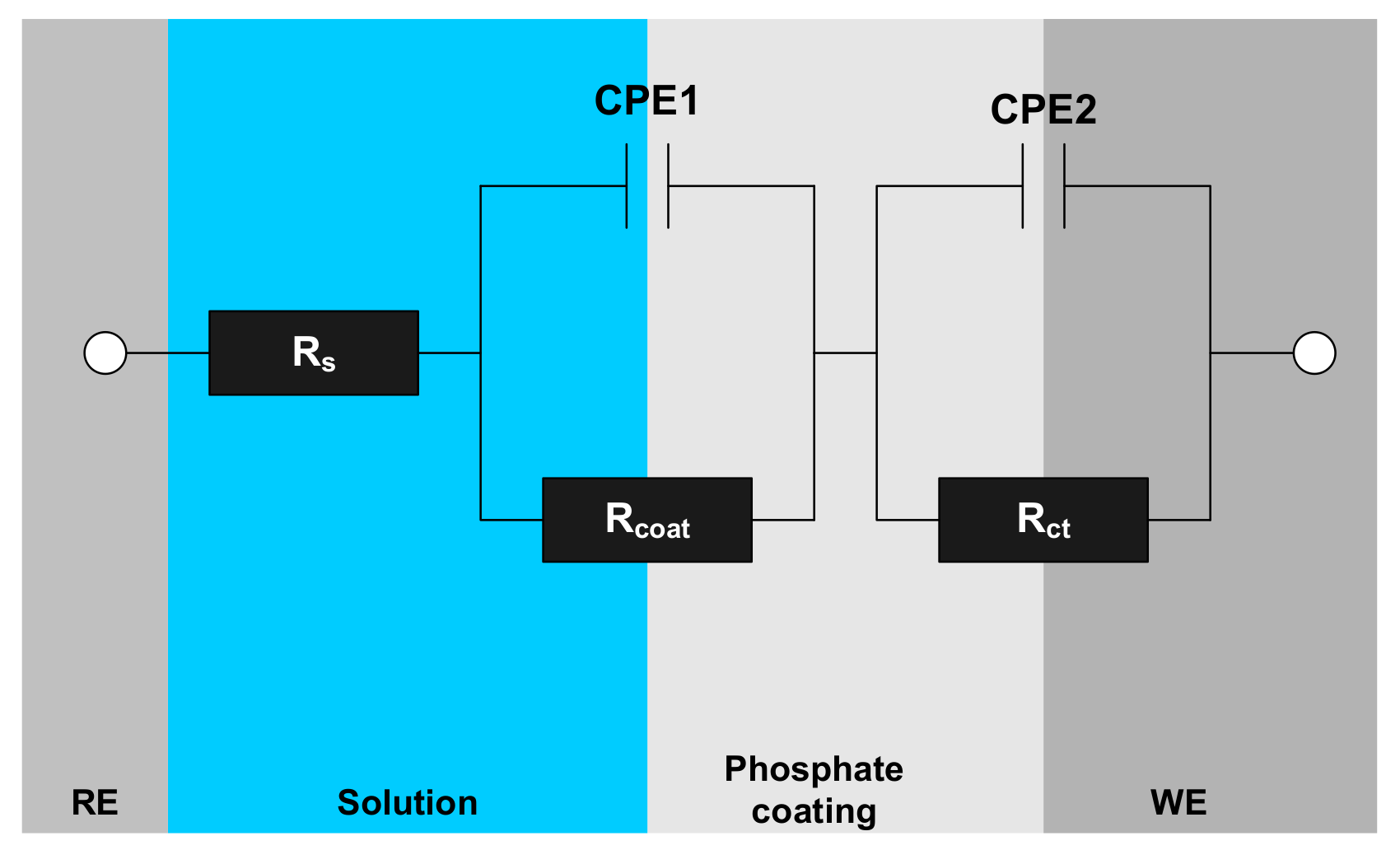
3.3. Electrochemical Imedance Spectroscopy
3.4. pH Measurement
3.5. Surface Roughness Measurement
4. Conclusions
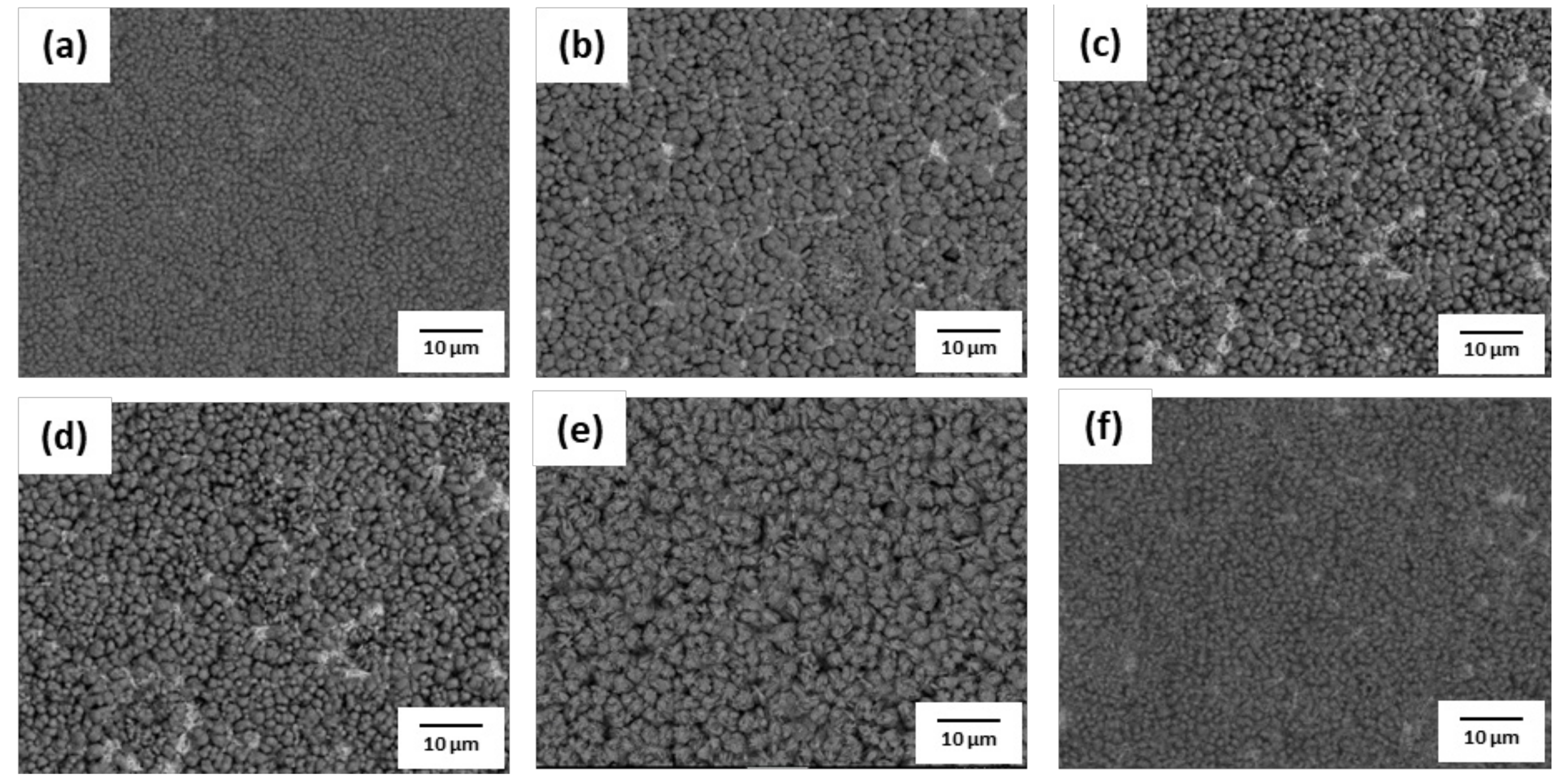
- With HNO3-based pickling solutions, the phosphatability improved remarkably at HNO3 concentrations higher than 13% for both steels. Furthermore, the phosphate crystals became finer after pickling with a HNO3-based solution compared to those with a HCl-based solution.
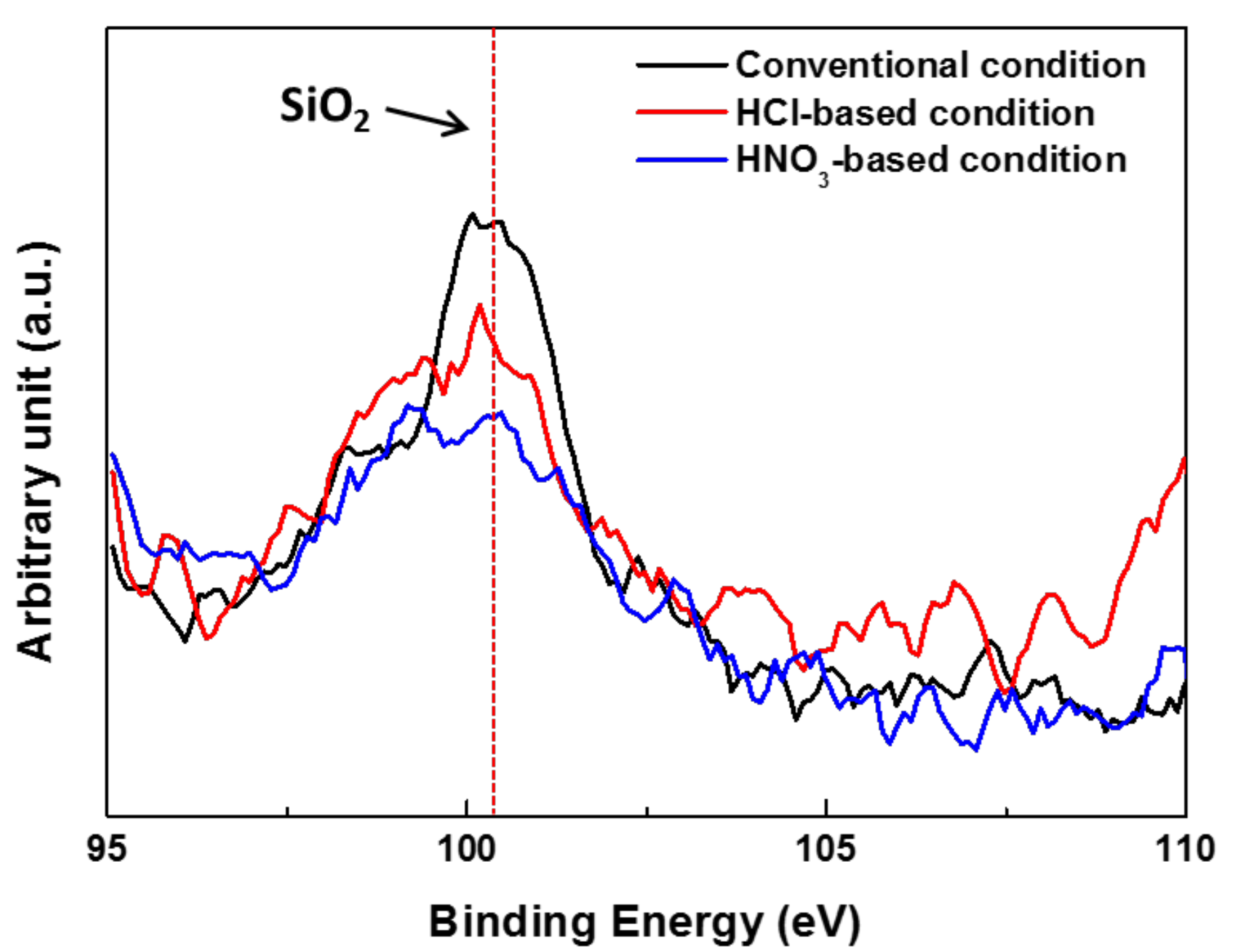
- SiO2 was noticeably removed by a pickling solution with NH4HF2.
- The corrosion resistance of phosphate-treated AHSS was higher using a HNO3-based pickling condition compared to a HCl-based pickling condition.
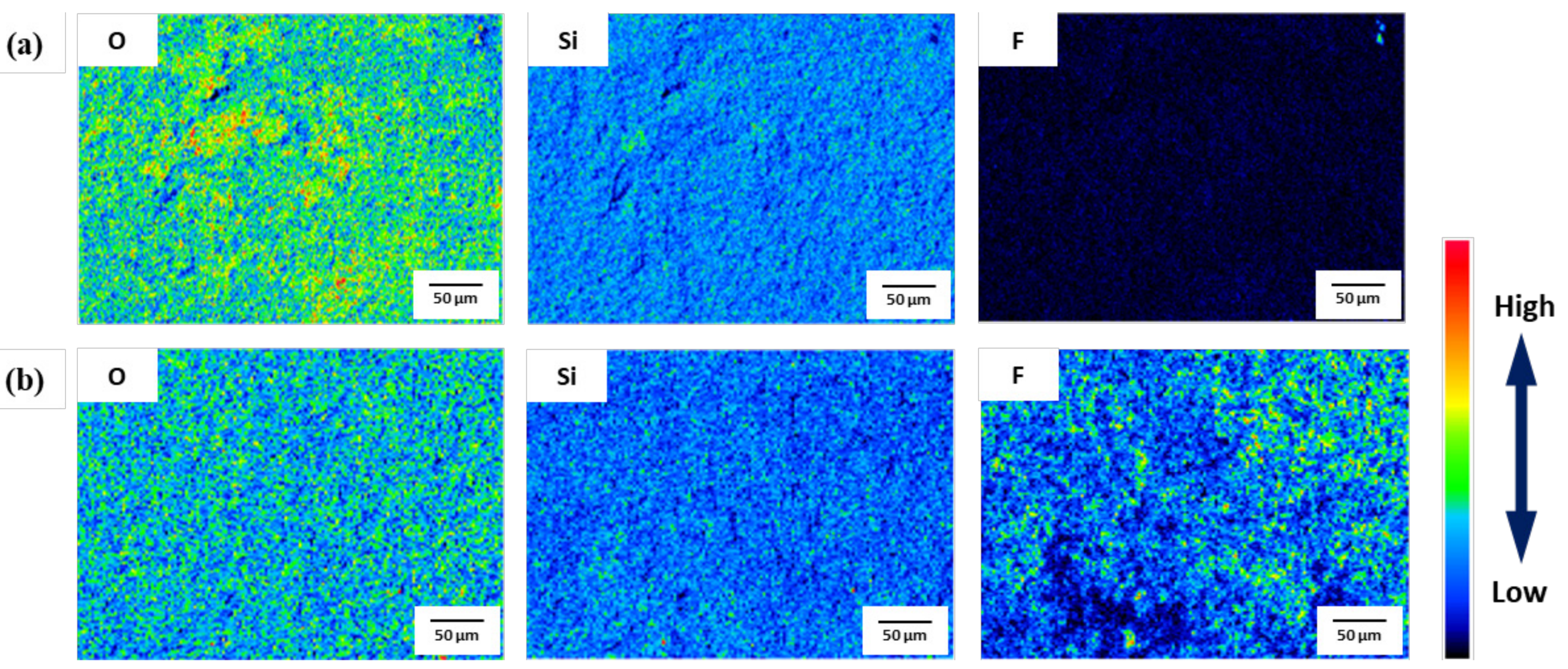
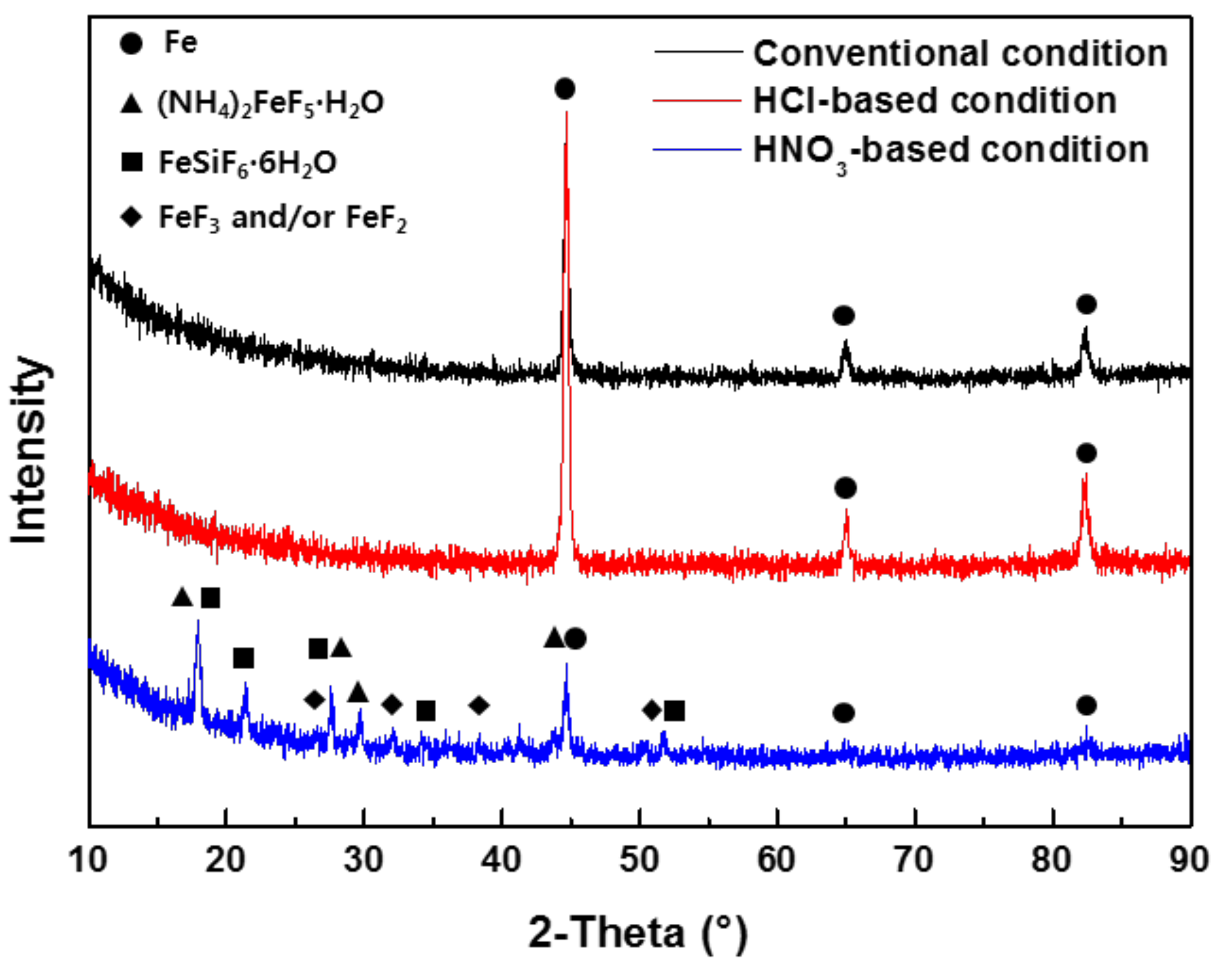
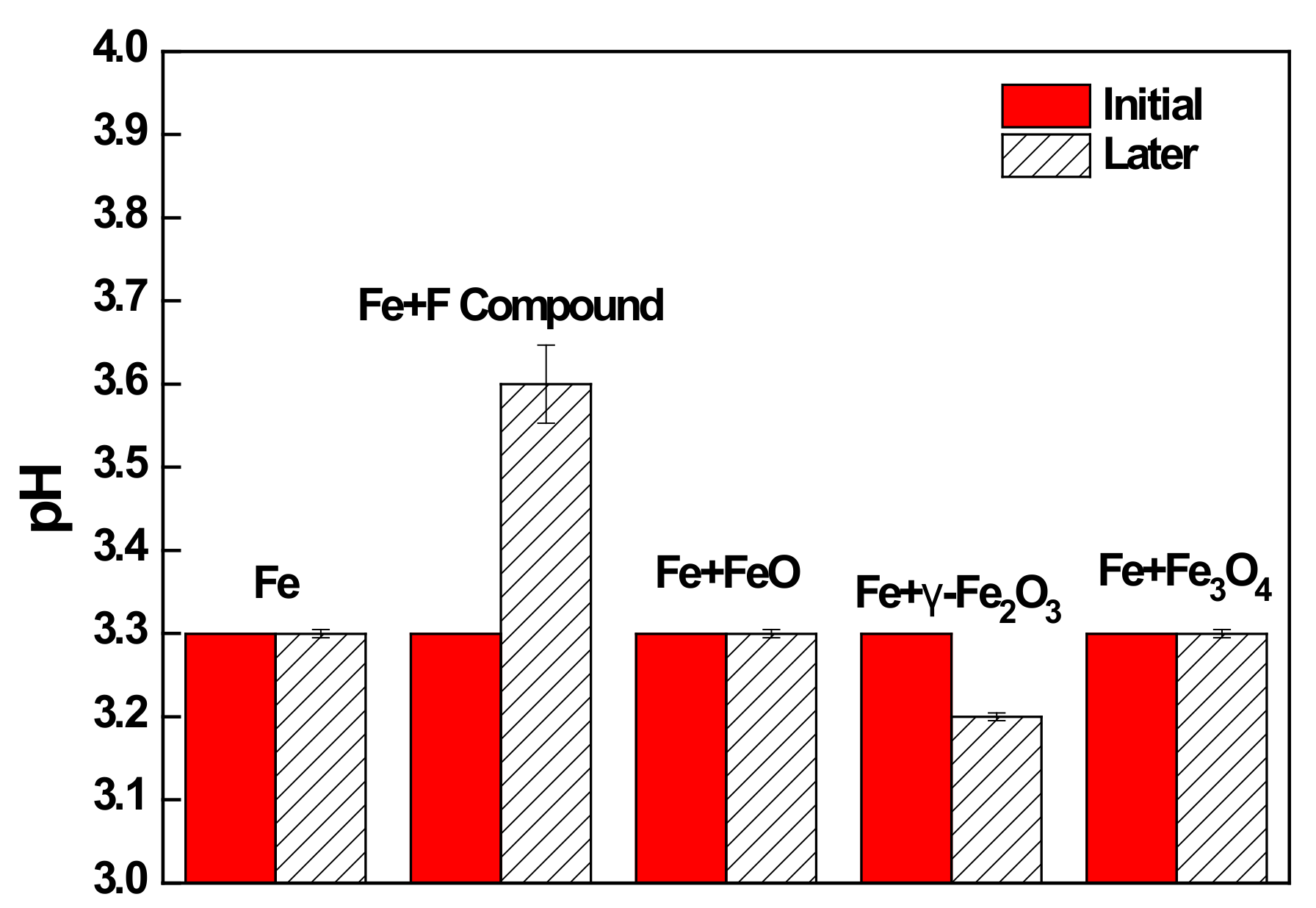
- With HNO3-based pickling solutions, F compounds, which are involved in the phosphate treatment process, formed on the surface of the AHSS. The F compounds reacted with the phosphate solution to increase the pH of the phosphate solution, thereby greatly improving the phosphatability of AHSS.
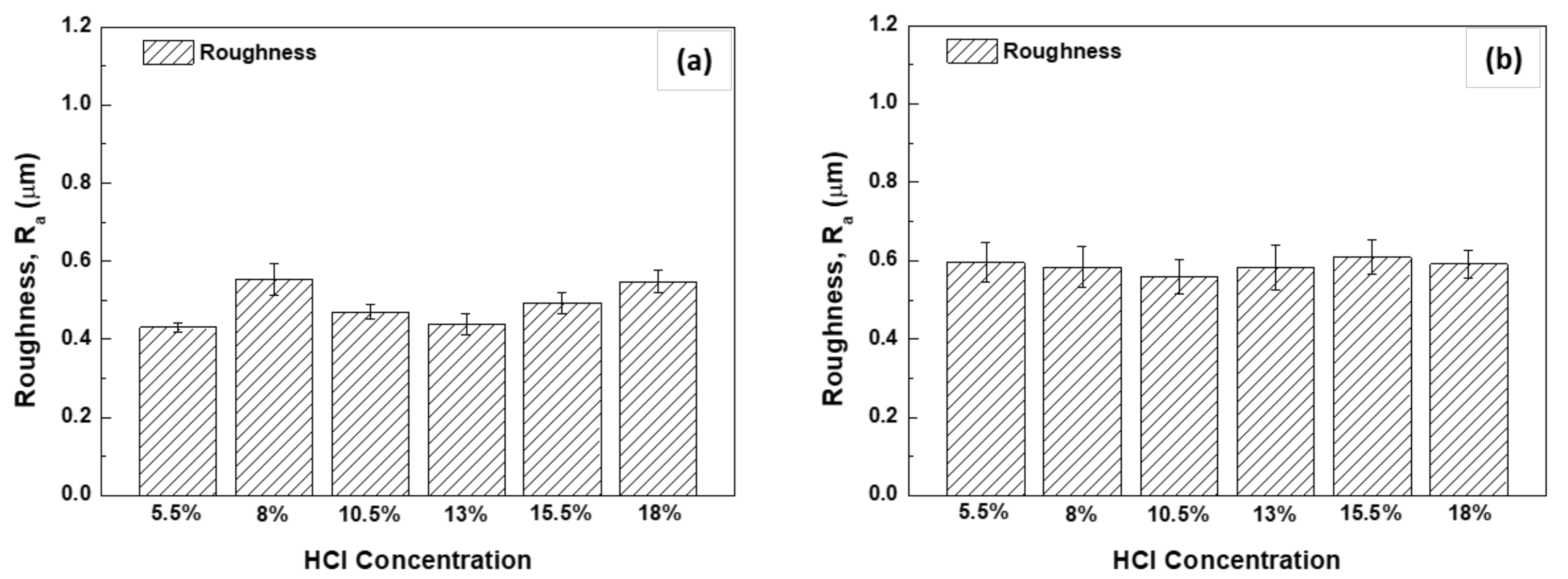
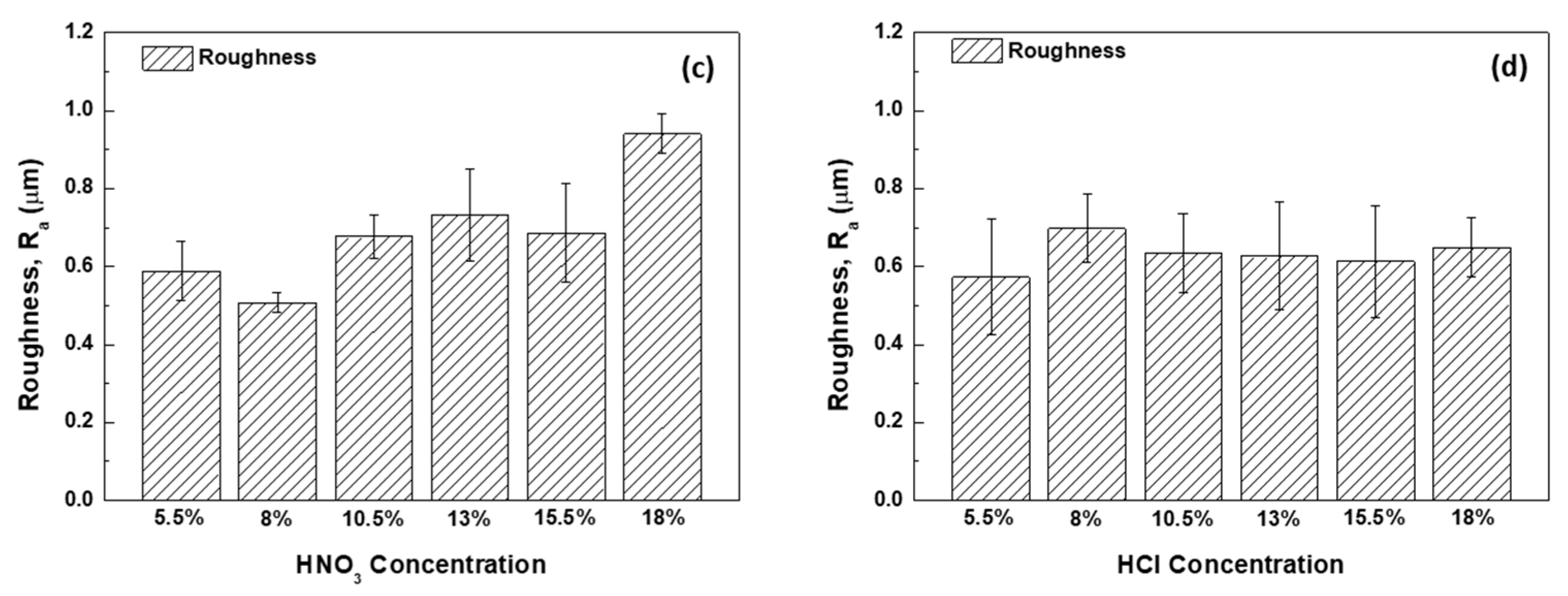
- The phosphatability was better under HNO3-based pickling conditions than under HCl-based pickling conditions due to the increased surface roughness.
Author Contributions
Funding
Institutional Review Board Statement
Informed Consent Statement
Data Availability Statement
Conflicts of Interest
References
- Kulekei, M.M. Magnesium and its alloys applications in automotive industry. Int. J. Adv. Manuf. Technol. 2008, 39, 851–865. [Google Scholar] [CrossRef] [Scilit]
- Tisza, M.; Czinege, I. Comparative study of the application of steels and aluminum in lightweight production of automotive parts. Int. J. Lightweight Mater. Manuf. 2018, 1, 229–238. [Google Scholar]
- Machado, J.J.M.; Nunes, P.D.P.; Marques, E.A.S.; Da Silva, L.F.M. Adhesive joints using aluminium and CFRP substrates tested at low and high temperature under quasi-static and impact conditions for the automotive industry. Compos. Part B 2019, 158, 102–116. [Google Scholar] [CrossRef] [Scilit]
- Kang, J.; Rao, H.; Zhang, R.; Avery, K.; Su, X. Tensile and fatigue behavior of self-piercing revets of CFRP to aluminium for automotive application. IOP Conf. Ser. Mater. Sci. Eng. 2016, 137, 12–25. [Google Scholar] [CrossRef] [Scilit]
- Matheis, R.; Eckstein, L. Aluminium-carbon fibre-reinforced polymer hybrid crash management system incorporating braided tubes. Int. J. Automot. Compos. 2016, 2, 330–355. [Google Scholar] [CrossRef] [Scilit]
- Fathyunes, L.; Azadbeh, M.; Tanhaei, M.; Sheykholeslami, S.O.R. Study on an elaborated method to improve corrosion resistance of zinc phosphate coating. J. Coat. Technol. Res. 2017, 14, 709–720. [Google Scholar] [CrossRef] [Scilit]
- Kathavate, V.S.; Pawar, D.N.; Bagal, N.S.; Deshpande, P.P. Role of nano ZnO particles in the electrodeposition and growth mechanism of phosphate coatings for enhancing the anti-corrosive performance of low carbon steel in 3.5% NaCl aqueous solution. J. Alloys Compd. 2020, 823, 153812. [Google Scholar] [CrossRef] [Scilit]
- Tegehall, P.-E.; Vannerberg, N.G. Nucleation and formation of zinc phosphate conversion coating on cold-rolled steel. Corros. Sci. 1991, 32, 635–652. [Google Scholar] [CrossRef] [Scilit]
- Nomura, M.; Hashimoto, I.; Kamura, M.; Kozuma, S. Development of high strength cold-rolled steel-sheets with excellent phosphatability. Kobeco Technol. Rev. 2007, 28, 44–48. [Google Scholar]
- Jung, B.H.; Lee, K. Method and Device for Pickling Ultra-High Strength Steel Sheet. Kr. Patent KR101696117B1, 13 January 2017. [Google Scholar]
- Park, H.K.; Nho, H.S.; Kwak, S.J.; Park, S.H. Method for Pickling Hot Rolled Steel Sheet Having Advanced High Strength. Kr. Patent KR20120074135A, 5 July 2012. [Google Scholar]
- Lee, C.T. Non-HF type etching solution for slimming of flat panel display glass. Appl. Chem. Eng. 2016, 27, 101–109. [Google Scholar] [CrossRef] [Scilit]
- Kraydenko, R.I.; Dyachenko, A.N.; Malyutin, L.N.; Petlin, I.V. The mechanism for production of beryllium fluoride from the product of ammonium fluoride processing of beryllium-containing raw material. IOP Conf. Ser. Mater. Sci. Eng. 2016, 135, 12–21. [Google Scholar] [CrossRef] [Scilit]
- Pastushenko, A.; Lysenko, V. Electrochemical synthesis of luminescent ferrous fluorosilicate hexahydrate (FeSiF6·6H2O) nano-powders. RSC Adv. 2016, 6, 8093–8095. [Google Scholar] [CrossRef] [Scilit]
- Reddy, R.G.; Wang, S.; Chen, B. Solubility of iron in spent pickling solutions. Min. Met. Explor. 1993, 10, 102–107. [Google Scholar] [CrossRef] [Scilit]
- Sartor, M.; Buchloh, D.; Rogener, F.; Reichardt, T. Removal of iron fluorides from spent mixed acid pickling solutions by colling precipitation at extreme temperatures. Chem. Eng. J. 2009, 153, 50–55. [Google Scholar] [CrossRef] [Scilit]
- Park, H.S.; Cho, J.H.; Jung, J.H.; Duy, P.P.; Le, A.H.T.; Yi, J. A review of wet chemical etching of glass in hydrofluoric acid based solution for thin film silicon solar cell application. Curr. Phot. Res. 2017, 5, 75–82. [Google Scholar]
- Kim, K.H.; Lee, S.H.; Nguyen, D.N.; Kim, J.G. Effect of cobalt on the corrosion resistance of low alloy steel in sulfuric acid solution. Corros. Sci. 2011, 53, 3576–3587. [Google Scholar] [CrossRef] [Scilit]
- Hong, M.S.; Kim, S.H.; Im, S.Y.; Kim, J.G. Effect of Ascorbic acid on the pitting resistance of 316L stainless steel in synthetic tap water. Met. Mater. Int. 2016, 22, 621–629. [Google Scholar] [CrossRef] [Scilit]
- Kissi, M.; Bouklah, M.; Hammouti, B.; Benkaddour, M. Establishment of equivalent circuits from electrochemical impedance spectroscopy study of corrosion inhibition of steel by pyrazine in sulphuric acidic solution. Appl. Surf. Sci. 2006, 252, 4190–4197. [Google Scholar] [CrossRef] [Scilit]
- Sankara Narayanan, T.S.N. Surface pretreatment by phosphate conversion coatings—A review. Rev. Adv. Mater. Sci. 2005, 9, 130–177. [Google Scholar]
- Asadi, V.; Danaee, I.; Eskandari, H. The effect of immersion time and immersion temperature on the corrosion behavior of zinc phosphate conversion coatings on carbon steel. Mater. Res. 2015, 18, 706–713. [Google Scholar] [CrossRef] [Scilit]
- Jones, D.A. Principles and Prevention of Corrosion, 2nd ed.; Prentice Hall, Inc.: Upper Saddle River, NJ, USA, 1996. [Google Scholar]
- Kim, H.J. Variation of phosphatability with chemical composition and surface roughness of steel sheet. Surf. Eng. 1998, 14, 265–267. [Google Scholar] [CrossRef] [Scilit]
- Meshri, D.T. Kirk-Othmer Encyclopedia of Chemical Technology; Fluorine Compounds, Inorganic, Iron, 5th ed.; John Wiley & Sons, Inc.: Hoboken, NJ, USA, 2000. [Google Scholar]






| Grade | C | Mn | Si | P | S |
|---|---|---|---|---|---|
| 0.4Si steel | 0.17 | 2.8 | 0.25 | 0.02 | 0.005 |
| 1.0Si steel | 0.1 | 2.8 | 1.2 | 0.03 | 0.003 |
| Parameter | Conventional Pickling Condition | HCl-Based Pickling Condition | HNO3-Based Pickling Condition |
|---|---|---|---|
| Inorganic acid | HCl | HCl | HNO3 |
| Acid concentration (wt.%) | 5.5, 18 | 5.5, 8, 10.5, 13, 15.5, 18 | 5.5, 8, 10.5, 13, 15.5, 18 |
| Additives | − | NH4HF2 (30 wt.%) | NH4HF2 (30 wt.%) |
| Temperature (°C) | 55 | 55 | 55 |
| Time (s) | Within 7 | 7 | 7 |
| Chemicals | NaCl | CaCl2 | NaHCO3 | (NH4)2SO4 |
|---|---|---|---|---|
| SAE solution (wt.%) | 0.05 | 0.1 | 0.075 | 0.35 |
| Parameter | Fe | O | Si | F | Cr |
|---|---|---|---|---|---|
| HCl-based pickling condition (%) | 94.13 | 3.77 | 0.85 | − | 1.25 |
| HNO3-based pickling condition (%) | 92.25 | 1.98 | 0.85 | 3.56 | 1.36 |
| Acid | Steel | Concentration | Rs (Ω∙cm2) | CPE1 | Rcoat (Ω∙cm2) | CPE2 | Rct (Ω∙cm2) | ||
|---|---|---|---|---|---|---|---|---|---|
| Qcoat (μF/cm2) | n1 | Qct (μF/cm2) | n2 | ||||||
| HCl | 1.0Si | 5.5% | 62.98 | 56 | 0.8 | 1183 | 45.5 | 0.8 | 279.8 |
| 8% | 72.35 | 149 | 0.7301 | 358.2 | 42.4 | 0.9004 | 1285 | ||
| 10.5% | 63.58 | 178.3 | 0.5432 | 89.6 | 46.6 | 0.9395 | 1223 | ||
| 13% | 70.29 | 189.3 | 1 | 1083 | 64.7 | 0.9535 | 1777 | ||
| 15.5% | 67.04 | 108 | 0.8995 | 430.8 | 243 | 0.7957 | 673.2 | ||
| 18% | 63.41 | 208 | 0.975 | 140.6 | 104 | 0.8421 | 1,287 | ||
| 0.4Si | 5.5% | 62.37 | 75 | 0.8419 | 1504 | 265 | 1 | 918.9 | |
| 8% | 70.87 | 8990 | 0.6406 | 145.9 | 49.1 | 0.8305 | 1168 | ||
| 10.5% | 63.16 | 207.9 | 0.9996 | 940.4 | 45.8 | 0.8414 | 1878 | ||
| 13% | 70.72 | 981 | 1 | 179.4 | 70.6 | 0.8408 | 1186 | ||
| 15.5% | 62.67 | 179 | 0.8284 | 775.1 | 220 | 1 | 1320 | ||
| 18% | 69.29 | 134 | 0.8182 | 819.5 | 153 | 1 | 1413 | ||
| HNO3 | 1.0Si | 5.5% | 60.91 | 476 | 1 | 367.8 | 157 | 0.8468 | 528.2 |
| 8% | 66.97 | 120 | 0.8452 | 967.2 | 910 | 0.98 | 235.9 | ||
| 10.5% | 70.41 | 74.2 | 0.8295 | 1227 | 14,200 | 0.9539 | 138.1 | ||
| 13% | 61.01 | 186 | 0.8669 | 1059 | 250 | 0.8649 | 301.2 | ||
| 15.5% | 72.76 | 266 | 0.6565 | 1066 | 204 | 0.8387 | 272.2 | ||
| 18% | 73.47 | 300.1 | 0.8455 | 4300 | 397.7 | 0.9307 | 766.8 | ||
| 0.4Si | 5.5% | 61.46 | 72.2 | 0.8527 | 1015 | 169 | 0.982 | 945.6 | |
| 8% | 70.7 | 209 | 1 | 892.6 | 65 | 0.8414 | 1525 | ||
| 10.5% | 62.75 | 345 | 1 | 1332 | 108 | 0.8473 | 1680 | ||
| 13% | 72.12 | 48.7 | 0.9522 | 1564 | 66.2 | 0.7682 | 1036 | ||
| 15.5% | 65.98 | 29.4 | 0.8391 | 3812 | 2085 | 0.4284 | 690.9 | ||
| 18% | 73.74 | 38.9 | 0.8746 | 2000 | 426 | 0.635 | 932.9 | ||
Publisher’s Note: MDPI stays neutral with regard to jurisdictional claims in published maps and institutional affiliations. |
© 2021 by the authors. Licensee MDPI, Basel, Switzerland. This article is an open access article distributed under the terms and conditions of the Creative Commons Attribution (CC BY) license (http://creativecommons.org/licenses/by/4.0/).
Share and Cite
Cho, S.; Ko, S.-J.; Yoo, J.-S.; Park, J.-C.; Yoo, Y.-H.; Kim, J.-G. Optimization of Pickling Solution for Improving the Phosphatability of Advanced High-Strength Steels. Materials 2021, 14, 233. https://doi.org/10.3390/ma14010233
Cho S, Ko S-J, Yoo J-S, Park J-C, Yoo Y-H, Kim J-G. Optimization of Pickling Solution for Improving the Phosphatability of Advanced High-Strength Steels. Materials. 2021; 14(1):233. https://doi.org/10.3390/ma14010233
Chicago/Turabian StyleCho, Sangwon, Sang-Jin Ko, Jin-Seok Yoo, Joong-Chul Park, Yun-Ha Yoo, and Jung-Gu Kim. 2021. "Optimization of Pickling Solution for Improving the Phosphatability of Advanced High-Strength Steels" Materials 14, no. 1: 233. https://doi.org/10.3390/ma14010233
APA StyleCho, S., Ko, S.-J., Yoo, J.-S., Park, J.-C., Yoo, Y.-H., & Kim, J.-G. (2021). Optimization of Pickling Solution for Improving the Phosphatability of Advanced High-Strength Steels. Materials, 14(1), 233. https://doi.org/10.3390/ma14010233