


Abstract
This paper reports the improvement of microstructural and hardness properties of 3 mol% yttria-stabilized zirconia (3Y-TZP) ceramics with nano TiO2 powders (with 0, 0.9, 1.8, and 2.7 wt%) added using a low-temperature microwave-assisted sintering of 1250 °C. Even at such a low sintering temperature, all sintered samples had the main phase of tetragonal zirconia (t-ZrO2) without the appearance of the secondary monoclinic phase or TiO2 phase, and had high relative densities, larger than 95%. The grain growth was well developed, and the grain sizes were around 300–600 nm. The Ti and O elements appeared at the grain and grain boundary and increased with the increased nano TiO2 contents identified by the element analysis, although the TiO2 phase did not appear in the X-ray pattern. The Vickers hardness was in the range of 10.5 to 14.5 GPa, which first increased with increasing content till 0.9 wt% and then decreased. With citric acid corrosion treatment for 10 h, the Vickers hardness only decreased from 14.34 GPa to 13.55 GPa with the addition of 0.9 wt% nano TiO2 powder. The experiment results showed that 0.9 wt% nano TiO2 addition can improve the densification as well as the Vickers hardness under a low temperature of microwave-assisted sintering.
1. Introduction
Zirconia (ZrO2) has become one of the most important dental materials in the recent development of restorative dentistry, due to the finding of transformation toughening mechanisms [1,2]. Based on the final composition and temperature used, three different polymorphs are known to exist in pure zirconia, including monoclinic zirconia (m-ZrO2), tetragonal zirconia (t-ZrO2), and cubic zirconia (c-ZrO2). It is well known, based on equilibrium conditions, that the monoclinic (m) phase exists stably at room temperature to 1170 °C, the tetragonal (t) phase occurs and is stable at temperatures between 1170 °C and 2370 °C, and the cubic (c) phase is stable above 2370 °C [3]. Additionally, ZrO2 has many special chemical, physical, and mechanical properties, for example, low wear resistance, chemical inertness, ionic conductivity, high elastic modulus, high strength, high toughness, high elastic modulus, and high melting temperature. Due to these excellent properties, ZrO2 is popular as an engineering material and is a replacement to alumina as a dental material [4].
Although ZrO2-based ceramics are very popular for dental use due to their excellent hardness, toughness, and fracture strength, they still have a drawback since the low-temperature cubic phase and tetragonal phase are metastable and might be transformed into the monoclinic phase (with a low hardness property) during the cooling process after sintering [1,2]. Keeping the tetragonal phase stable at the low-temperature state to provide the desired mechanical properties is required for increasing the biomedical applicability [1]. In the past, many techniques have been reported for holding the tetragonal phase of the ZrO2-based ceramics and avoiding the damaging t → m phase transformation during the cooling process [3,5]. For example, Partially Stabilized Zirconia (PSZ) material is well developed by adding a small content of stabilizers, such as Y2O3, CeO2, and MgO, into ZrO2-based material to provide various coexistent phases that can hold the tetragonal phase from 1170°C to room temperature and prevent the appearance of crack propagation, thus giving high hardness and fracture toughness [4,5]. Furthermore, near full densification and uniform grain size of the ZrO2-based ceramics are also needed in order to enhance the mechanical properties.
In various PSZ materials, 3 mol% yttria-stabilized zirconia, known as 3 mol% yttria-stabilized zirconia (3Y-TZP), provides a very fine yttria grain in the zirconia polycrystals, showing only the tetragonal phase at room temperature and good mechanical properties, including high hardness, toughness, and strength [6,7,8,9]. Thus, 3Y-TZP is a desired material for the soft machining of dental prosthetic systems requiring long-term durability.
Recently, it was reported that small amounts of oxide, such as MgO, CaO, TiO2, HfO2, CeO2, Nb2O5, and Ta2O5, can be doped into the 3Y-TZP to further increase the phase stability by decreasing the axial ratio c/a of the structure [10]. Moreover, 7.7 mol% TiO2-doped 3Y-TZP has been used for the joining technique of dental bridges as an insert material, since TiO2-doped 3Y-TZP can provide enhanced plasticity. With the suitable mixture of particle sizes, 3Y-TZP composites can increase grain densification and improve the mechanical properties of the ceramics [11].
As is well known, furnace sintering provides heat that is radiantly transferred to the surface of the sintered sample and is spread to the material core through thermal conduction, thus causing nonuniform heating distribution. Sintering of ZrO2 dental samples usually requires a long sintering time from 8 to 10 h at a temperature between 1400 and 1550 °C to obtain the relative density of better than 98% in the sintered material, thus causing much energy consumption [2,3]. Unlike conventional heating with large thermal energy losses, microwave heating provides electromagnetic energy to the materials, and heat is generated internally within the material [12]. The process is very rapid, since the material is heated by energy conversion instead of energy transfer. The conversion of electromagnetic energy into heat is almost 100%, largely within the sample itself [13,14,15]. It was reported that ZrO2 ceramics with different amounts of micrometer TiO2 powder added could be microwave-sintered at 1300 °C. However, the sintered samples had many monoclinic phases instead of the tetragonal phases and thus had poor hardness of only 125 to 300 Hv [16]. It was reported that small contents of CuO powders were added to 3Y-TZP ceramics to obtain a high hardness at low microwave-sintering temperatures [17]. Therefore, it was expected that the nano TiO2 powder added to 3Y-TZP ceramics using microwave sintering would improve the microstructure and mechanical properties.
In this study, the purpose was to study the effect of the addition of nano TiO2 powders on the phase, grain size, and hardness of the 3Y-TZP at a low microwave sintering temperature of 1250 °C. Phase and grain growth were observed by X-ray diffraction (XRD) and scanning electron microscopy (SEM), respectively. Hardness was measured by the Vickers detection. Furthermore, the dependence of the nano TiO2 powers with 0, 0.9, 1.8, and 2.7 wt% on the hardness property was investigated to discuss the importance of nano TiO2 addition for the as-sintered samples and the sample with the treatment of citric acid corrosion.
2. Experiment
2.1. Sample Preparation
In this study, 3Y-TZP powders with purity of 94.3% were used as the starting powders. Nano TiO2 powders with purity of 99.85% and particle size of 300–600 nm were used as the doping material. 3Y-TZP powders had 0, 0.9, 1.8, and 2.7 wt% nano TiO2 powders added to them. The mixed powders were ZrO2-ball milled for 10 h in ethanol, to obtain a uniform mixing and then dried at 90 °C for 10 h. The dried powders were machine-grinded and a 5 wt% polyvinyl alcohol (PVA) solution was added. Tested samples were formed by uniaxially pressing to a 10 mm diameter and a 2 mm thickness. The samples, surrounded with four SiC plates, were microwave-assisted sintered in a microwave sintering oven. The sintered samples burned out the binder at 300 °C for 1 h and were then further heated at the sintering temperature of 1250 °C with a holding time of 1 h under an air atmosphere during the microwave-assisted sintering process. After microwave sintering, the microwave sintering oven was turned off and the samples were cooled slowly to room temperature without external heating [15,16].
2.2. Characterization
The diameter and thickness of the microwave-sintered samples were determined by using a digital caliper to calculate the shrinkage percent. X-ray diffraction (XRD, Bruker D8 Advance, Bruker Corporation, MA, USA) analysis with CuKα radiation of λ = 1.5406 Å using a Ni filter and with a secondary graphite monochromator was used to conduct the crystalline phases of the microwave-assisted sintered samples. A scanning range of 2θ = 20°–80° with a step of 0.03° and a count time per-step of 0.4 s was used. The scanning electron microscope (SEM, HORIBA EX-200, HORIBA, LTD., Kyoto, Japan) with the function of energy dispersive spectroscopy (EDS) was used to examine the surface morphology and the element content of the microwave-sintered samples. The linear intercept method on the surfaces of the SEM images was used to obtain the average grain sizes of the sintered samples [18]. To measure the hardness, a micro-Vickers hardness tester (HM-113, Mitutoyo Corporation, Kanagawa, Japan) was used, with an indent load of 1g held for 10 s on the surface of the microwave-sintered samples. To evaluate the effect of citric acid corrosion, the microwave-sintered samples were exposed in citric acid for 10 h. Citric acid solution was prepared by adding 0.5 g of citric acid powder to 40 mL of pure water, and then stirring was carried out with a magnetic stirrer until the powder was completely dissolved. The citric acid solution was obtained with a pH of 2.14. The microwave-sintered samples with citric acid corrosion were taken out for hardness test.
3. Results and Discussion
3.1. Microstructure
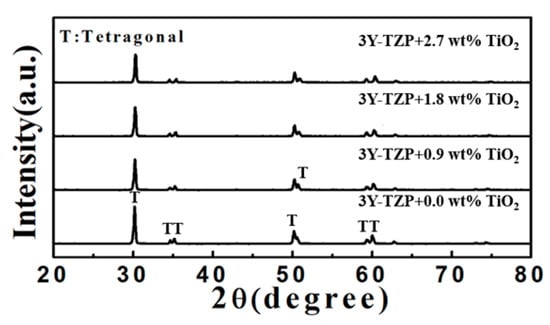
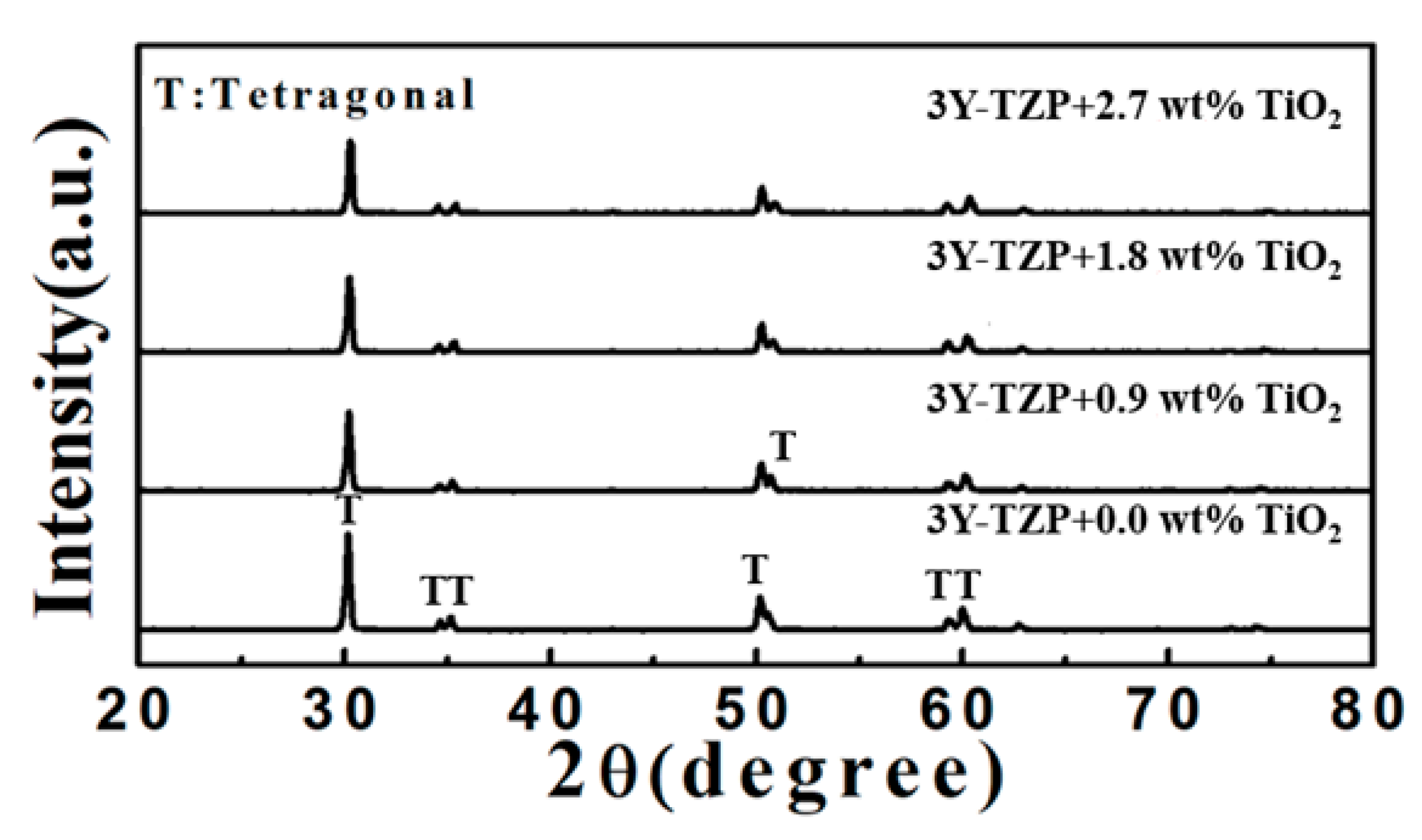
Figure 1 shows the XRD results of the microwave-sintered 3Y-TZP samples with the addition of 0, 0.9, 1.8, and 2.7 wt% TiO2 powders, sintered at 1250 °C for 1 h. It was clearly observed that all the diffraction results were in the tetragonal phase, having 2θ = 30°, 51°, and 60°, without any observation of a secondary monoclinic phase or TiO2 phase for different TiO2 contents [2,6]. It is known that the cubic and tetragonal phases of ZrO2 ceramics are metastable at room temperature, and would have been transformed into the monoclinic phase during the cooling process [5]. By adding the stabilizer, Y2O3, 3Y-TZP ceramic showed stable tetragonal structure, even at the room temperature. In reference [16], the ZrO2-based ceramics with micro-sized TiO2 additions could be microwave-sintered at 1300 °C; however, the XRD results showed the sintered samples had many monoclinic phases instead of the tetragonal phases. In this study, TiO2 powders at nano-size were used. Therefore, it was found that with the addition of the nano-sized TiO2 powders instead of the micro-size TiO2 powders, microwave sintering was more useful to form the stable phase of the 3Y-TZP, even with a low sintering temperature of 1250 °C, which is much lower than that used in conventional sintering [19].
Figure 1.
XRD patterns of the microwave-sintered 3 mol% yttria-stabilized zirconia (3Y-TZP) samples with the addition of 0, 0.9, 1.8, and 2.7 wt% nano TiO2 powders.
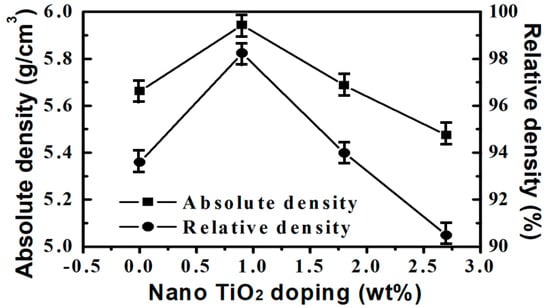
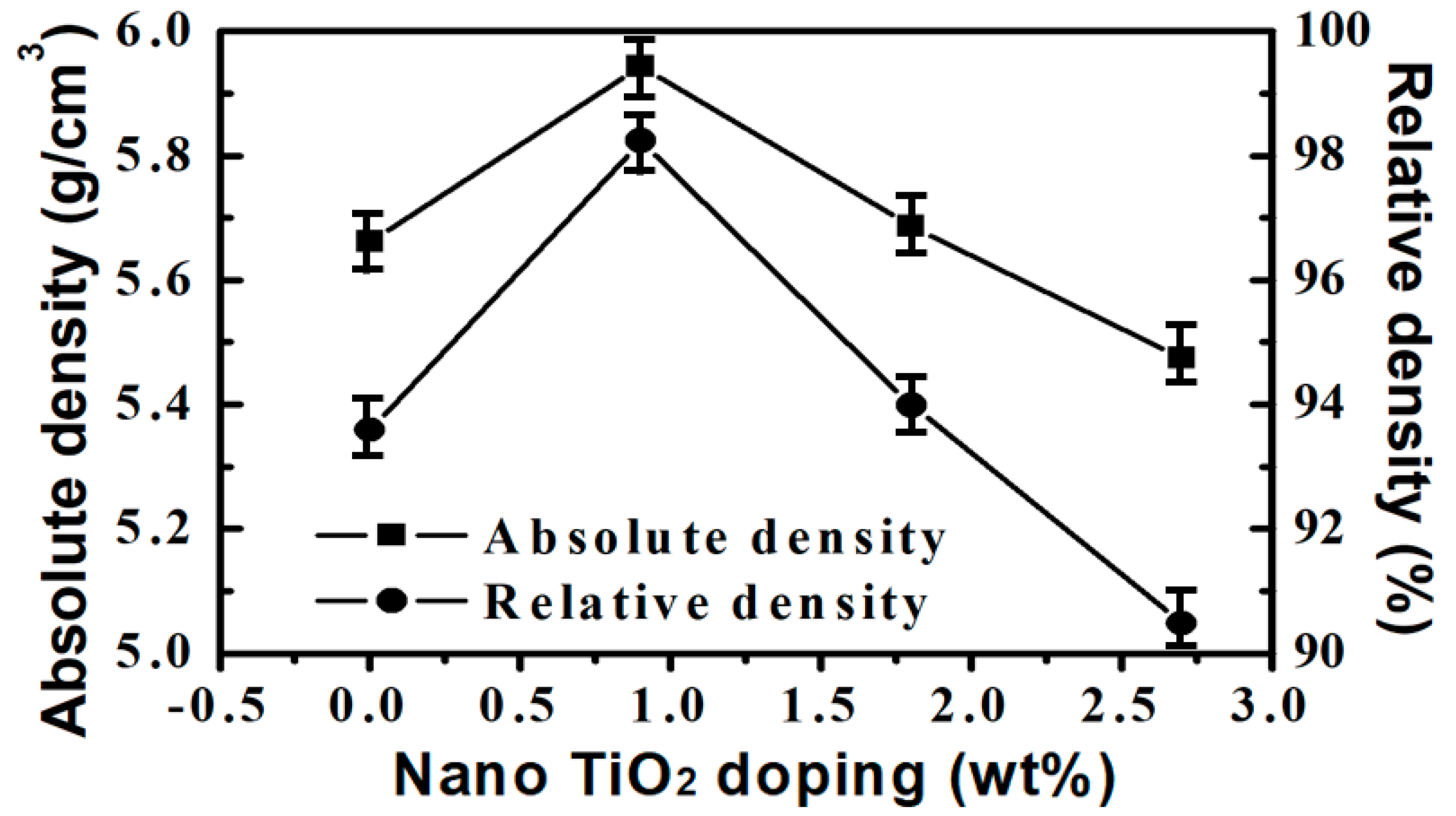
Figure 2 shows the absolute density and the relative density of the microwave-sintered 3Y-TZP samples with addition of nano TiO2 powders. Under the sintering temperature of 1250 °C and the holding time of 1 h, the linear shrinkage of the microwave-sintered 3Y-TZP samples with different additions are about 20%–22%. In the density measurement, 3Y-TZP samples with 0, 0.9, 1.8, and 2.7 wt% addition of nano TiO2 powders have absolute densities of 5.65, 5.92, 5.72 and 5.45 g/cm3, respectively. Namely, these relative densities of microwave-sintered 3Y-TZP ceramics are around 93.4%, 97.9%, 94.5%, and 90.1%, respectively. The measured results indicate that even at such a low sintering temperature of 1250 °C, with help of addition of 0.9 wt% nano TiO2 powder, the measured density is relatively close to the theoretical density of 3Y-TZP, thus a big fraction of the porosity is almost closed [19].
Figure 2.
Absolute density and relative density of the microwave-assisted sintered 3Y-TZP samples as function of 0, 0.9, 1.8, and 2.7 wt% nano TiO2 contents microwave-assisted sintered at 1250 °C.
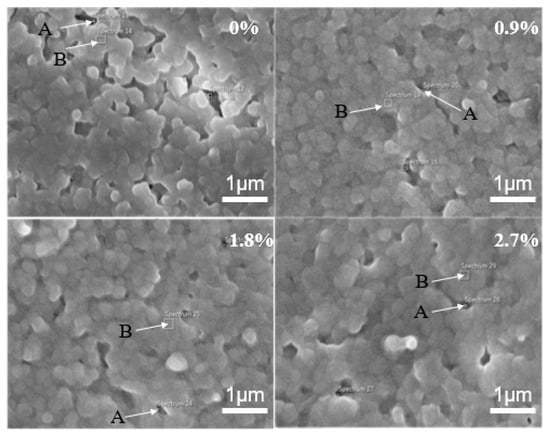
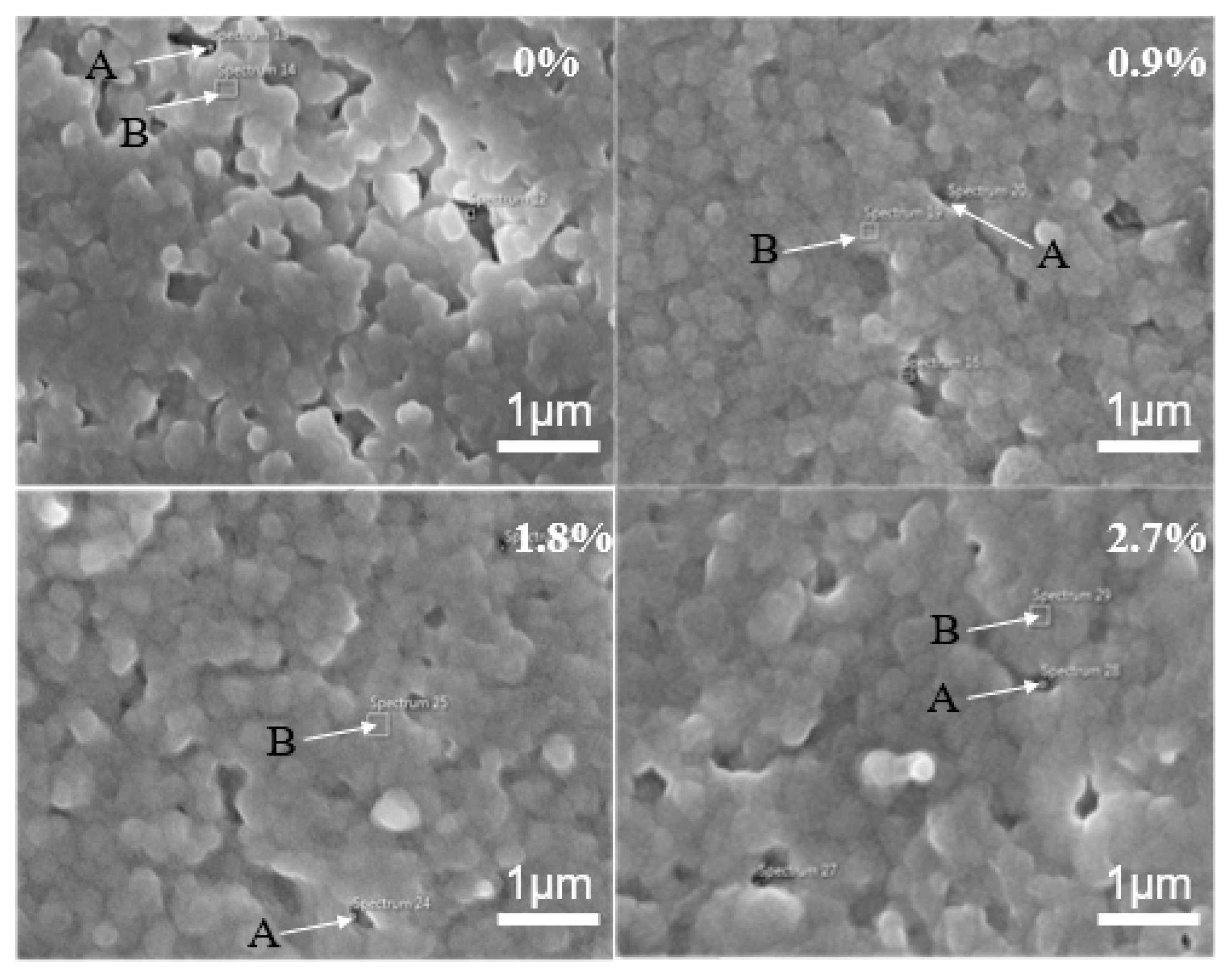
Figure 3 shows SEM pictures of the microwave-sintered 3Y-TZP ceramics with the addition of (a) 0, (b) 0.9, (c) 1.8, and (d) 2.7 wt% nano TiO2 powders, sintered at 1250 °C for 1 h. It is clearly observed that the grains of the 3Y-TZP samples with the addition of nano TiO2 powders ultimately coalesced with each other, indicating the aggregated grains had clearly grown. Without the addition of nano TiO2 powders, some pores were still present at the triple junctions of the 3Y-TZP grains. The existing pores enlarged the diffusion distance between 3Y-TZP grains, and the shrinkage ability of the sintered ceramics was reduced [2]. The addition of nano TiO2 powders in 3Y-TZP ceramic could slightly improve the grain growth. The reason might be that the Ti ion is a transition element, which absorbs electromagnetic energy quickly.
Figure 3.
SEM pictures of the microwave-sintered 3Y-TZP ceramics as function of nano TiO2 powders, sintered at 1250 °C (A is directed to grain and B is directed to grain boundary).
The grain sizes were estimated as 350, 460, 520, and 560 nm for the additions of nano TiO2 powders with 0, 0.9, 1.8, and 2.7 wt%, respectively. It was reported that when grain size was larger than a critical grain size of 1000 nm, 3Y-TZP would reduce in stability and be more likely to spontaneously transformation from t→m, and when grain size was smaller than 1000 nm, 3Y-TZP would lower the transformation rate [20]. Therefore, the prepared samples can be stable without the phase transformation.
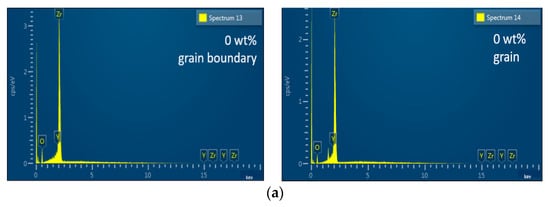
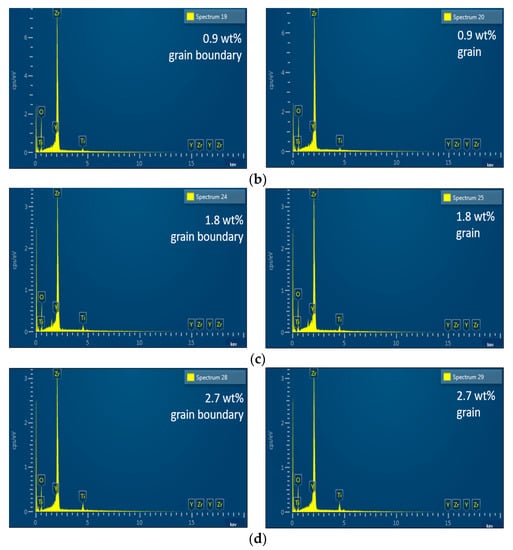
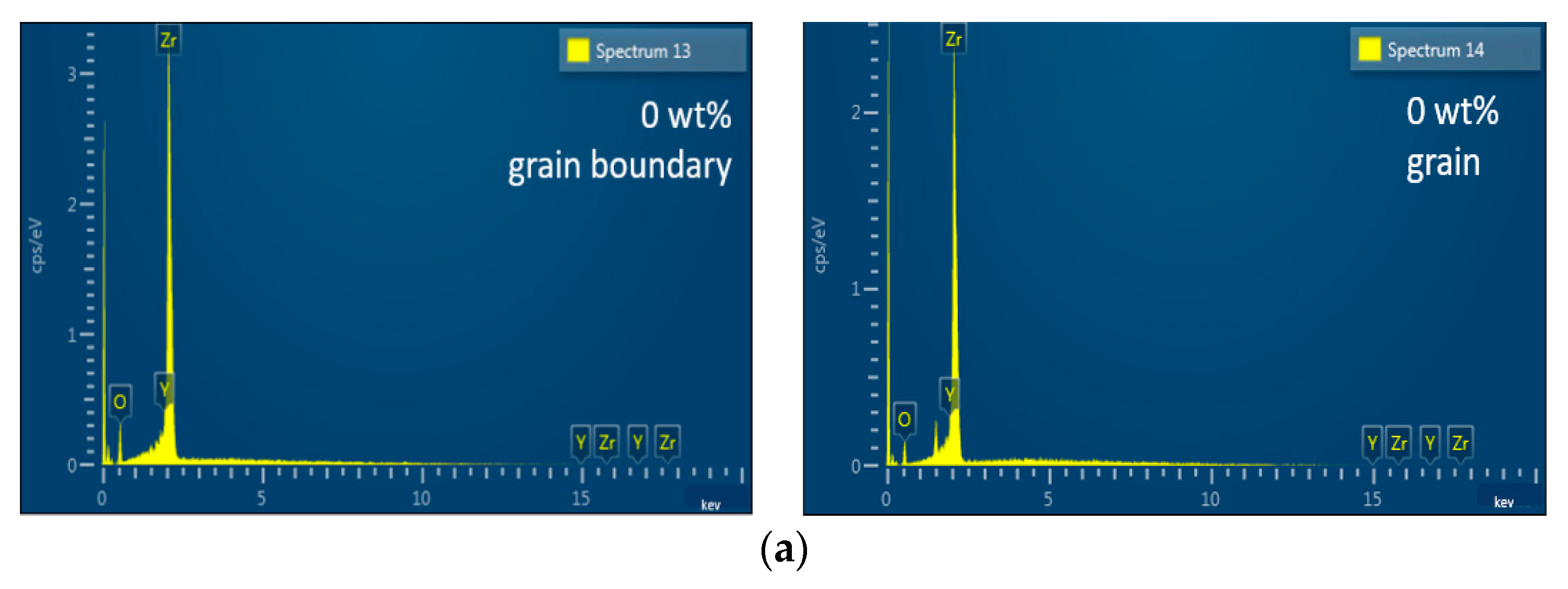
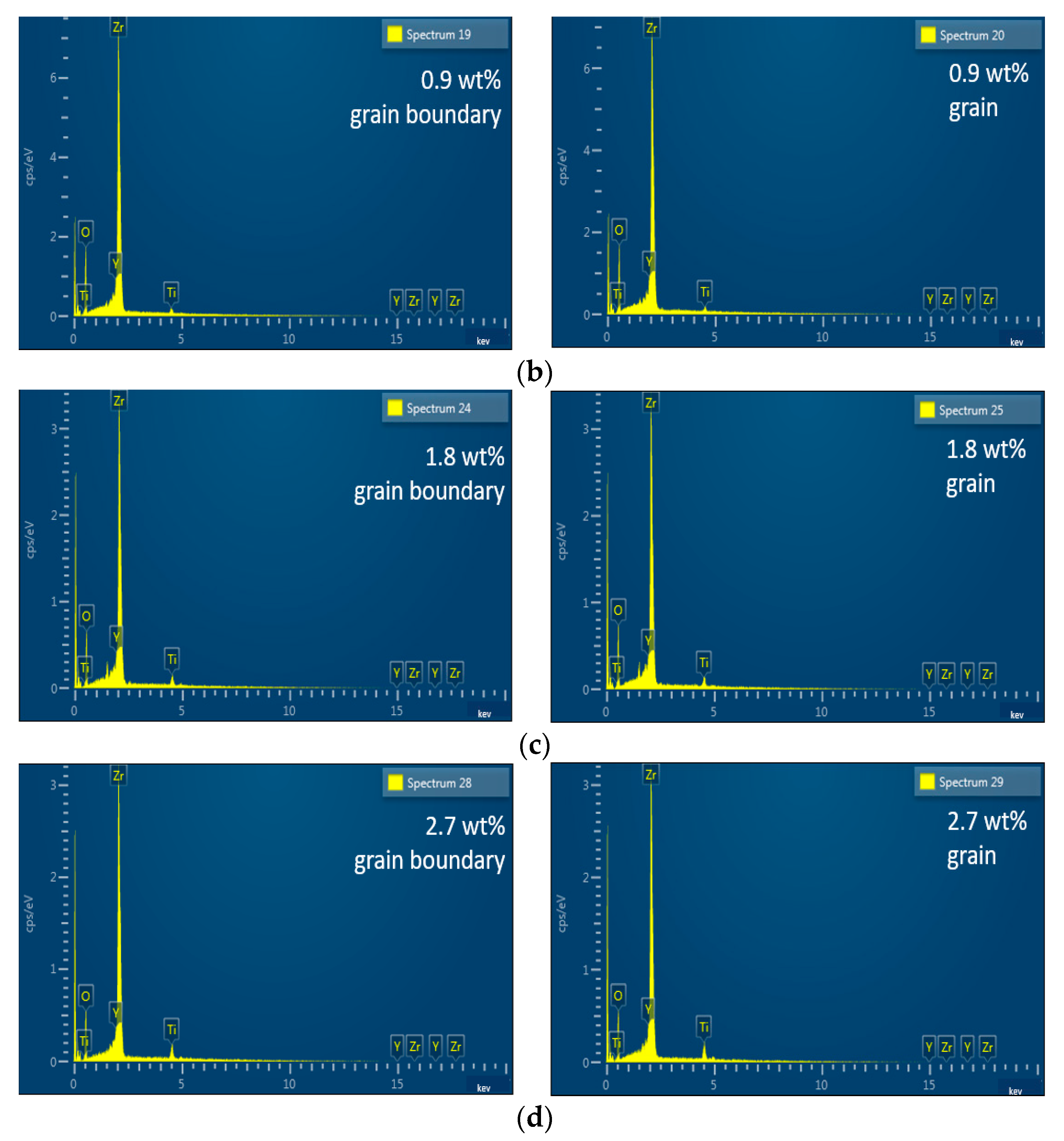
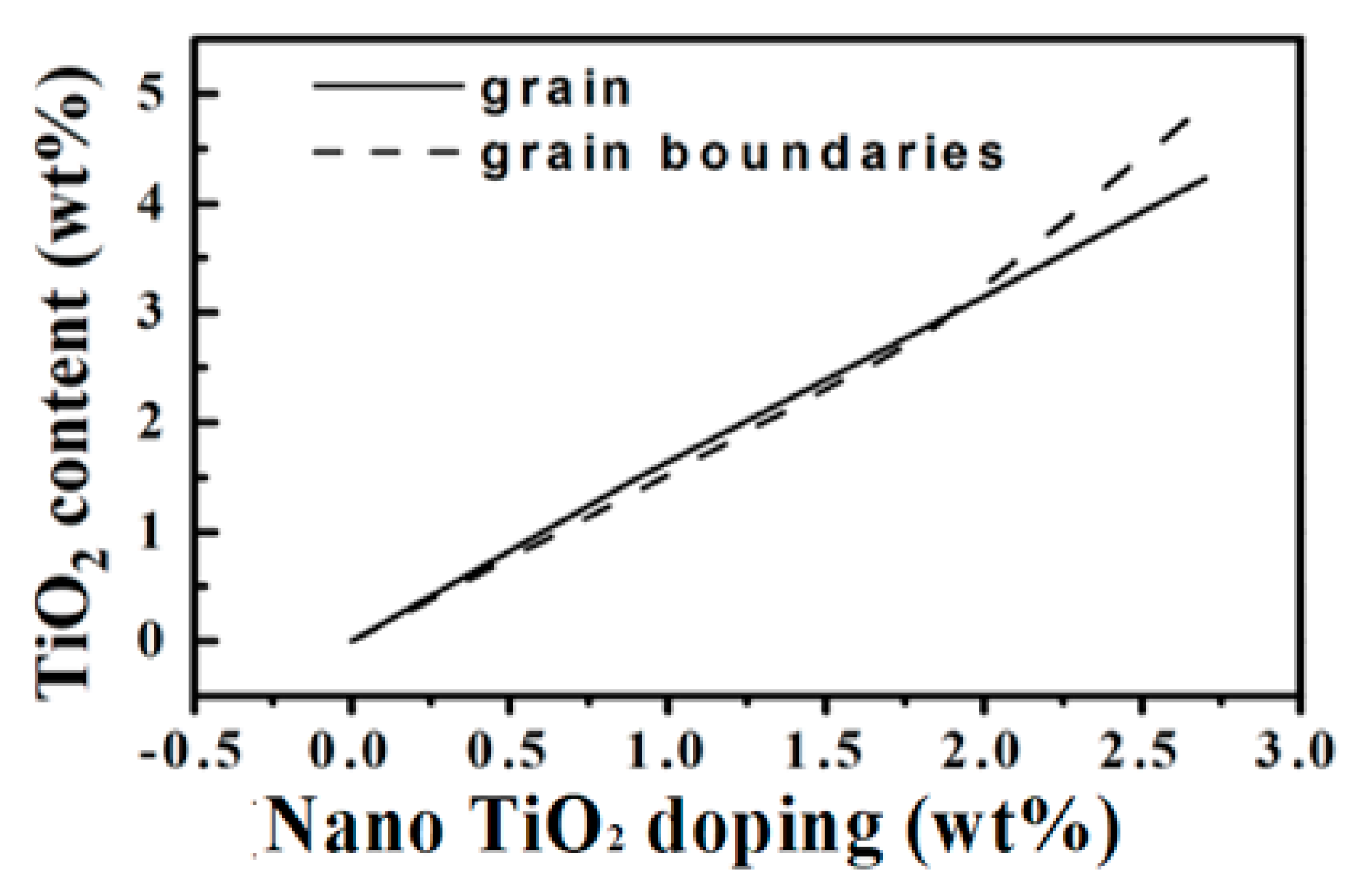
In this study, the TiO2 content was too small, thus the TiO2 phase was hard to detect in the XRD pattern since the detection of the XRD had a limitation of around 3% [21]. The element analysis was used to investigate the location of the nano TiO2 powders around the grain and/or the grain boundary. Figure 4 shows EDS analysis of the microwave-sintered 3Y-TZP ceramics as function of (a) 0, (b) 0.9, (c) 1.8, and (d) 2.7 wt% nano TiO2 powders. The Ti and O elements were identified on both the grain and grain boundaries. It might be because the radius of the Ti ion and Zt ion are very close, around 0.74 Å and 0.86 Å, respectively [22]. Moreover, nano TiO2 powder reacted more easily than micro TiO2 powder to the 3Y-TZP material before the limitation of solid solution. Figure 5 shows TiO2 contents in the grain and grain boundary of the microwave-sintered 3Y-TZP samples sintered at 1250 °C. The contents of TiO2 in the grain and grain boundaries both increased with increasing the addition content of the nano TiO2 powders.
Figure 4.
EDS analysis of the microwave-sintered 3Y-TZP ceramics as function of (a) 0, (b) 0.9, (c) 1.8, and (d) 2.7 wt% nano TiO2 powders, sintered at 1250 °C.
Figure 5.
TiO2 contents in grains and grain boundaries of the microwave-sintered 3Y-TZP ceramics sintered at 1250 °C.
3.2. Hardness Test
Hardness is used to represent a material’s resistance to plastic deformation, and is typically measured as nondestructive testing [1]. The calculated hardness values were mainly affected by the surface quality of the prepared sample, the hardness tester used, and the effects of environmental and human factors.
Moreover, the important subject in ZrO2-based ceramics is the sensitivity of low-temperature degradation (LTD) [23,24]. It was reported that transformation usually first begins around the isolated grains on the surface by a stress corrosion mechanism [20]. In this study, the effect of citric acid corrosion was evaluated. The microwave-sintered samples were exposed to a citric acid solution.
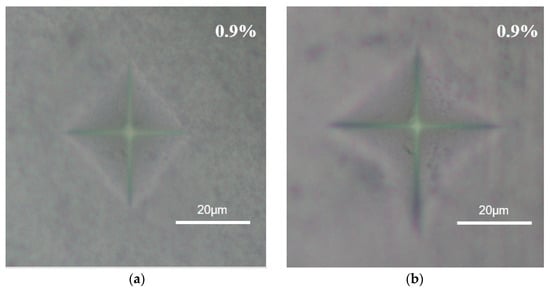
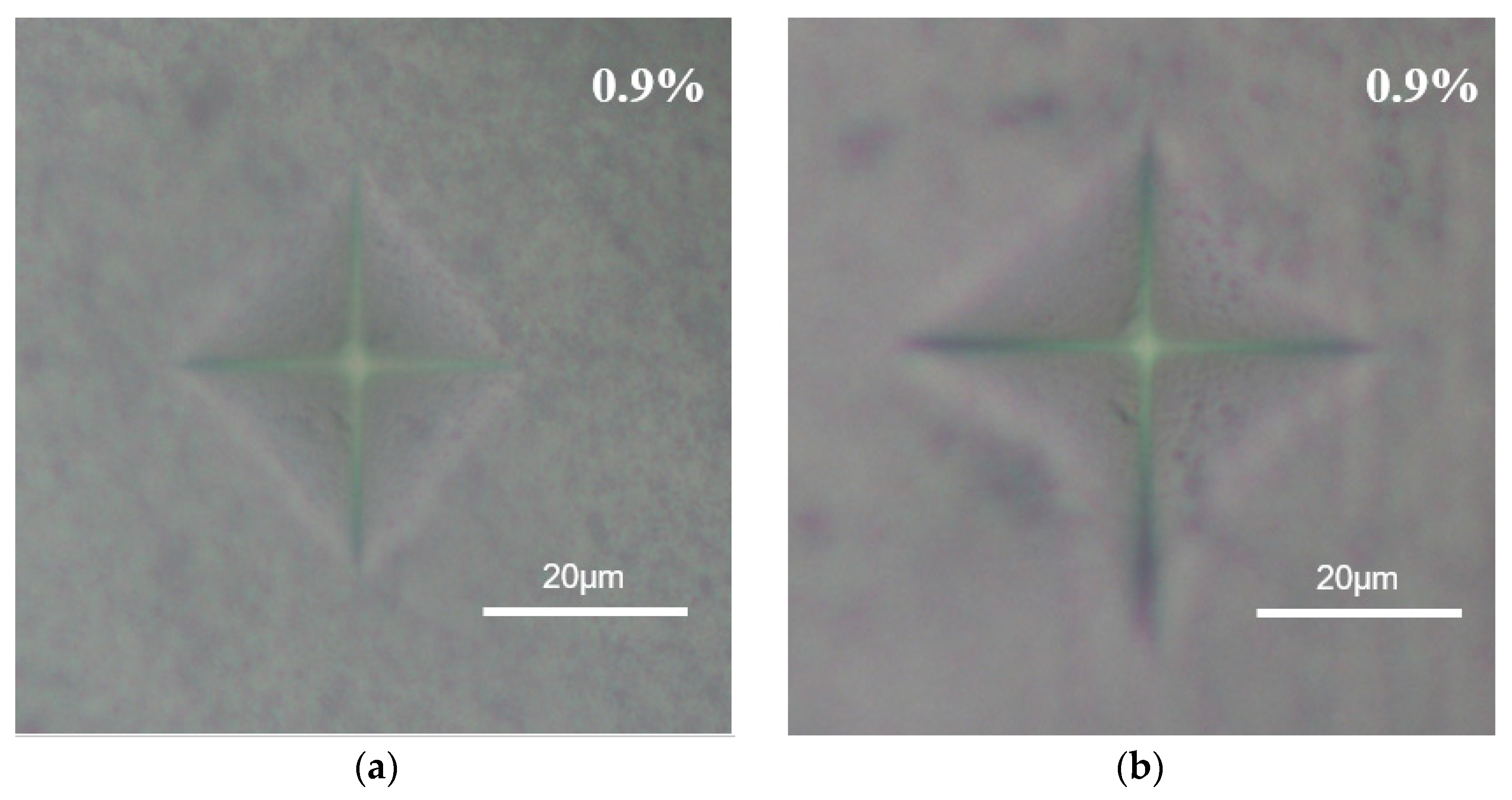
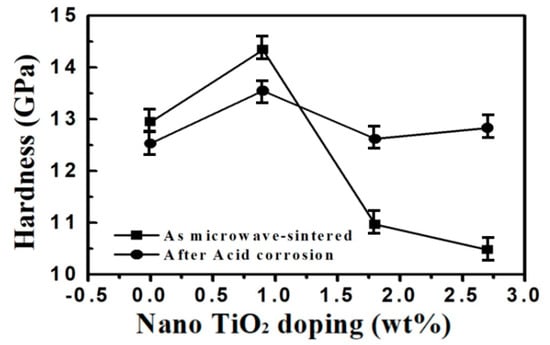
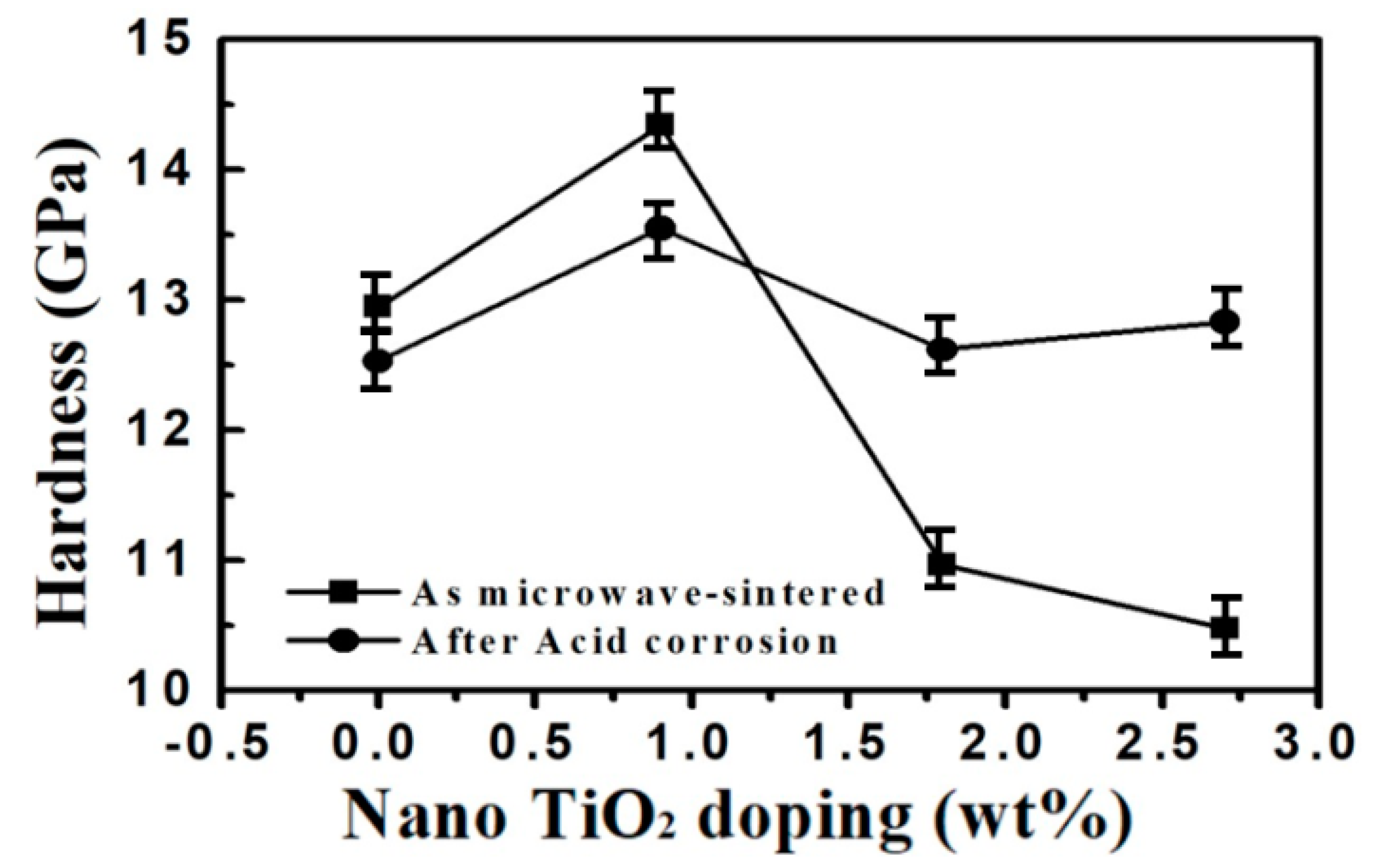
Figure 6 shows typical optical microscope of the 3Y-TZP ceramics with 0.9 wt% nano TiO2 powders added, both (a) as microwave-sintered and (b) under the treatment of citric acid corrosion for 10 h. Typically, the shorter length of the cross-indentation indicates the larger Vickers hardness. Figure 7 summarizes the Vickers hardness of the 3Y-TZP ceramics as a function of various additions of 0, 0.9, 1.8, and 2.7 wt% nano TiO2 powders under as-sintering and after treatment of citric acid corrosion.
Figure 6.
Optical microscope of the 3Y-TZP ceramics added with 0.9 wt% nano TiO2 powders. (a) as microwave-sintered and (b) under the treatment of citric acid corrosion for 10 h.
Figure 7.
Vickers hardness of the 3Y-TZP ceramics as a function of 0, 0.9, 1.8, and 2.7 wt% nano TiO2 contents under as-sintering and after citric acid corrosion treatment.
The Vickers hardness of the as-sintered 3Y-TZP ceramics with the addition of 0, 0.9, 1.8, and 2.7 wt% nano TiO2 powders was calculated as 12.95, 14.34, 10.97, and 10.48 GPa, respectively. As compared to the previous works, the measured Vickers hardness values of this study were similar to those of the CuO-added 3Y-TZP ceramics at the same sintering temperature using microwave processing [17], but much larger than those of ZrO2 ceramics with the addition of micro-size TiO2 powders at the similar sintering temperature using microwave processing [16].
Normally, there are many factors affecting the Vickers hardness of ceramic materials [22], including (1) the intrinsic factor of ceramic deformability and (2) the extrinsic factor of microstructure features, including crystal orientation, existed phases, porosity, grain size, boundary constitution, and density [6,8]. In this study, even at the low microwave sintering temperature of 1250 °C, the main phase is the tetragonal phase without any secondary monoclinic phase or TiO2 phase in the sintered samples with different TiO2 content, as discussed in Figure 1. Moreover, the grain sizes were similar for the samples with different additions of nano TiO2 powders, as shown in Figure 2. The measured hardness had the same trend with the density, independent of the different additions of nano TiO2 powders. Thus, it is suggested that in this study the hardness of the 3Y-TZP samples was mainly influenced by the relative density [18]. The highest measured hardness value, obtained from the prepared 3Y-TZP sample with a 0.9 wt% addition of nano TiO2 powder, may be due to the high relative density. It is noteworthy that the 3Y-TZP ceramics with small amount of nano TiO2 powders also improved the densification as well as the hardness in both the as-sintered and citric-acid-treated samples.
In addition, the Vickers hardness of the microwave-sintered 3Y-TZP ceramics as a function of various additions of 0, 0.9, 1.8, and 2.7 wt% nano TiO2 powders after the treatment of citric acid corrosion for 10 h were calculated as 12.53, 13.55, 12.62, and 12.83 GPa, respectively.
Typically, transformation from the tetragonal to the monoclinic phase of zirconia-based ceramic is strongly accelerated in humid or solution environments, causing a distribution of structural integrity and poor hardness [20]. However, as shown in Figure 7, the measured hardness values of the citric acid treated samples only decreased from 14.34 GPa to 13.55 GPa at the addition of 0.9 wt% nano TiO2 powder, and even higher than those of the as-sintered samples with increased additions of nano TiO2 powders to 2.7 wt%.
The first reason hardness may have improved in citric acid treated samples may be attributed to size-induced phase stabilization. The phase stability of the 3Y-TZP material in hot water or solution is greatly affected by grain size, since t-m transformation is considerably enhanced as grain size increases. The high-temperature phases become more stable than the low-temperature ones when the grain size is below a critical grain size [25]. As shown in Figure 3, for all the samples with the addition of nano TiO2 powders of 0, 0.9, 1.8, and 2.7 wt%, the grain sizes were smaller than the critical grain size of around 1000 nm. The second reason for improved hardness in citric acid treated samples may be attributed to the high densification due to the existence of the addition of stabilizer and nano TiO2 powder. The microwave sintering for the 3Y-TZP samples with various additions of nano TiO2 powders improved the densification and reduced the porosity of the sintered samples, decreasing the nucleation of the monoclinic phase [26]. A highly dense sample, having a measured density close to the theoretical density reduced the transformation rate [3]. The treatment of citric acid corrosion provided a clean surface to the sintered samples for the samples with additions of 1.8 wt% and 2.7 wt% nano TiO2 powders, thus enhancing the measured hardness. Both parameters of grain size and densification resulted in an unaffected stability under the treatment of citric acid corrosion.
It was reported that the Vickers hardness values of 0.3 and 0.5 wt% MnO2-doped yttria tetragonal zirconia polycrystal (Y-TZP) ceramics sintered at 1250 °C had a high hardness of ~13.2 GPa (0.3 wt%) and 13.6 GPa (0.5 wt%) [27], and that the Vickers hardness values of doped Al2O3 and CeO2-doped Y-TZP ceramics sintered at 1400 °C were around 14 GPa [28]. As compared to these reports, the maximum Vickers hardness value of 14.34 GPa for the as-sintered TiO2-doped 3Y-TZP sample at 1250 °C was relatively excellent, and even the Vickers hardness value of 13.55 GPa for the citric acid treated sample was also high enough.
From the above results, it is summarized that microwave sintering with help of additions of nano TiO2 powder showed an important factor on the phases, grain growth, and hardness of 3Y-TZP ceramics sintered at a low-temperature. Despite the fact their were microwave-sintered and citric-acid-treated samples, the measured hardness values were high enough to be designed for dental application.
4. Conclusions
In this paper, the improvement of microstructural and hardness properties of 3Y-TZP bio-ceramics with the addition of nano TiO2 powder is investigated. The 3Y-TZP ceramics with additions of 0, 0.9, 1.8, and 2.7 wt% nano TiO2 powders were sintered at a low sintering temperature of 1250 °C. For all the sintered samples, the phase was the tetragonal zirconia (t-ZrO2) phase without monoclinic zirconia (m-ZrO2) phase and secondary phase of TiO2, and the aggregated grains had clearly grown. The estimated grain sizes were around 300-600nm without and with the addition of nano TiO2 powders. The Vickers hardness had a value from 10.5 to 14.5 GPa, and increased first with the increase of TiO2 content until 0.9 wt% and then decreased. Compared to the as-sintered samples, the Vickers hardness of the citric acid treated samples was only decreased from 14.34 GPa to 13.55 GPa for samples with the addition of 0.9 wt% nano TiO2 powders. The experiment results showed that addition of 0.9 wt% nano TiO2 powders improved the densification and the Vickers hardness of the 3Y-TZP samples, even microwave-sintered at a relatively low temperature.
Author Contributions
M.-H.W. contributed the experiment concept and wrote the paper, C.-S.H. and R.-Y.Y. supported the experiment resource and provided useful suggestions, C.-X.L. and C.-Y.T. fabricated and measured the samples, and R.-Y.Y. advised the design procedure. All authors have read and agreed to the published version of the manuscript.
Funding
This research received no external funding.
Acknowledgments
The Precision Instrument Center of National Pingtung University of Science and Technology of Taiwan is much appreciated for supplying the measurement equipment.
Conflicts of Interest
The authors declare no conflict of interest.
References
- Özkurt, Z.; Kazazoğlu, E. Zirconia Dental Implants: A Literature Review. J. Oral Implant. 2011, 37, 367–376. [Google Scholar] [CrossRef] [Scilit] [PubMed]
- Grech, J.; Antunes, E. Zirconia in dental prosthetics: A literature review. J. Mater. Res. Technol. 2019, 8, 4956–4964. [Google Scholar] [CrossRef] [Scilit]
- Chen, Y.-W.; Moussi, J.; Drury, J.L.; Wataha, J.C. Zirconia in biomedical applications. Expert Rev. Med Devices 2016, 13, 945–963. [Google Scholar] [CrossRef] [Scilit] [PubMed]
- Zhang, Y.; Lawn, B. Novel Zirconia Materials in Dentistry. J. Dent. Res. 2017, 97, 140–147. [Google Scholar] [CrossRef] [Scilit]
- Chevalier, J.; Gremillard, L.; Virkar, A.V.; Clarke, D.R. The Tetragonal-Monoclinic Transformation in Zirconia: Lessons Learned and Future Trends. J. Am. Ceram. Soc. 2009, 92, 1901–1920. [Google Scholar] [CrossRef] [Scilit]
- Kanade, K.; Baeg, J.; Apte, S.; Prakash, T.; Kale, B.B. Synthesis and characterization of nanocrystallined zirconia by hydrothermal method. Mater. Res. Bull. 2008, 43, 723–729. [Google Scholar] [CrossRef] [Scilit]
- Abden, M.J.; Islam, M.K.; Afroze, J.D. Microstructure and mechanical properties of 3YSZ ceramics reinforced with Al2O3 particles. Int. J. Mater. Eng. 2014, 4, 129–135. [Google Scholar]
- Ban, S.; Sato, H.; Suehiro, Y.; Nakanishi, H.; Nawa, M. Biaxial flexure strength and low-temperature degradation of Ce-TZP/Al2O3 nanocomposite and Y-TZP as sental restoratives. J. Biomed. Mater. Res. B Appl. Biomater. 2008, 87, 492–498. [Google Scholar] [CrossRef] [Scilit]
- Llorca, J.; Pastor, J.Y.; Poza, P.; Peña, J.I.; Francisco, I.; Larrea, A.; Orera, V. Influence of the Y2O3Content and Temperature on the Mechanical Properties of Melt-Grown Al2O3-ZrO2Eutectics. J. Am. Ceram. Soc. 2004, 87, 633–639. [Google Scholar] [CrossRef] [Scilit]
- Mago, S.; Sharma, C.; Sharma, P.; Singh, K.L.; Singh, A.P. Comparative Analysis of Yttria Stabilized Zirconia (YSZ) and Titania Doped YSZ (YZT) Sintered by two Different Routes: Conventional and Microwave Processing. Orient. J. Chem. 2018, 34, 2539–2547. [Google Scholar] [CrossRef] [Scilit]
- Laberty-Robert, C.; Ansart, F.; Deloget, C.; Gaudon, M.; Rousset, A. Dense yttria stabilized zirconia: Sintering and microstructure. Ceram. Int. 2003, 29, 151–158. [Google Scholar] [CrossRef] [Scilit]
- Takigawa, Y.; Naka, Y.; Higashi, K. Effect of Titania Doping on Phase Stability of Zirconia Bioceramics in Hot Water. Mater. Trans. 2007, 48, 332–336. [Google Scholar] [CrossRef] [Scilit]
- Almazdi, A.A.; Khajah, H.M.; Monaco, E.A.; Kim, H. Applying microwave technology to sintering dental zirconia. J. Prosthet. Dent. 2012, 108, 304–309. [Google Scholar] [CrossRef] [Scilit]
- Upadhyaya, D.D.; Ghosh, A.; Dey, G.K.; Prasad, R.; Suri, A.K. Microwave sintering of zirconia ceramics. J. Mater. Sci. 2001, 36, 4707–4710. [Google Scholar] [CrossRef] [Scilit]
- Chen, H.-Y.; Weng, M.-H.; Chang, S.-J.; Yang, R.-Y. Preparation of Sr2SiO4:Eu3+ phosphors by microwave-assisted sintering and their luminescent properties. Ceram. Int. 2012, 38, 125–130. [Google Scholar] [CrossRef] [Scilit]
- Yang, R.-Y.; Weng, M.-H.; Chen, H.-Y.; Hsiung, C.-M.; Chen, S.-H. The influence of Eu3+ doping on photoluminescent properties of red emitting phosphor YInGe2O7:Eu3+ by microwave-assisted and conventional sintering method. J. Lumin 2012, 132, 478–483. [Google Scholar] [CrossRef] [Scilit]
- Kuo, H.-N.; Chou, J.-H.; Liu, T.-K. Microstructure and Mechanical Properties of Microwave Sintered ZrO2 Bioceramics with TiO2 Addition. Appl. Bionics Biomech. 2016, 2016, 1–7. [Google Scholar] [CrossRef] [Scilit]
- Standard Test Methods for Determining Average Grain Size, ASTM E112-13; ASTM International: West Conshohocken, PA, USA, 1 October 2013.
- Presenda, A.; Salvador, M.D.; Penaranda-Foix, F.; Moreno, R.; Borrell, A. Effect of microwave sintering on microstructure and mechanical properties in Y-TZP materials used for dental applications. Ceram. Int. 2015, 41, 7125–7132. [Google Scholar] [CrossRef] [Scilit]
- Marinis, A.; Aquilino, S.A.; Lund, P.S.; Gratton, D.G.; Stanford, C.M.; Diaz-Arnold, A.M.; Qian, F. Fracture toughness of yttria-stabilized zirconia microwave-assisted sintered in conventional and microwave ovens. J. Prosthet Dent. 2013, 109, 165–171. [Google Scholar] [CrossRef] [Scilit]
- Borkhodoev, V. Estimation of limits of detection and determination in X-ray fluorescence analysis by the dependence of the relative standard deviation on analyte concentration. J. Anal. Chem. 2016, 71, 872–877. [Google Scholar] [CrossRef] [Scilit]
- Shannon, R.D. Revised effective ionic radii and systematic studies of interatomic distances in halides and chalcogenides. Acta Crystallogr. Sect. A Cryst. Phys. Diffr. Theor. Gen. Crystallogr. 1976, 32, 751–767. [Google Scholar] [CrossRef] [Scilit]
- Schneider, J.; Begand, S.; Kriegel, R.; Kaps, C.; Glien, W.; Oberbach, T. Low-Temperature Aging Behavior of Alumina-Toughened Zirconia. J. Am. Ceram. Soc. 2008, 91, 3613–3618. [Google Scholar] [CrossRef] [Scilit]
- Tredici, I.G.; Sebastiani, M.; Massimi, F.; Bemporad, E.; Resmini, A.; Merlati, G.; Anselmi-Tamburini, U. Low-temperature degradation resistant nanostructured yttria-stabilized zirconia for dental applications. Ceram. Int. 2016, 42, 8190–8197. [Google Scholar] [CrossRef] [Scilit]
- Ye, Y.; Li, J.; Zhou, H.; Chen, J. Microstructure and mechanical properties of yttria-stabilized ZrO2/Al2O3 nanocomposite ceramics. Ceram. Int. 2008, 34, 1797–1803. [Google Scholar] [CrossRef] [Scilit]
- Ai, Y.; Xie, X.; He, W.; Liang, B.; Fan, Y. Microstructure and properties of Al2O3(n)/ZrO2 Dental ceramics prepared by two-step microwave sintering. Mater. Des. 2015, 65, 1021–1027. [Google Scholar] [CrossRef] [Scilit]
- Ramesh, S.; Meenaloshini, S.; Tan, C.Y.; Sopyan, I.; Teng, W.D. Sintering and ageing properties of manganese doped Y-TZP Ceramics. In Proceedings of the 33rd International Conference & Exposition on Advanced Ceramics and Composites, Daytona Beach, FL, USA, 1–23 January 2009. [Google Scholar]
- Golieskardi, M.; Satgunam, M.; Ragurajan, D. Densification Behaviour and Mechanical Properties of Aluminium Oxide and Cerium Oxide-Doped Yttria Tetragonal Zirconia Polycrystal Ceramics Using Two-Step Sintering. J. Nanosci. 2014, 2014, 1–6. [Google Scholar] [CrossRef] [Scilit]

© 2020 by the authors. Licensee MDPI, Basel, Switzerland. This article is an open access article distributed under the terms and conditions of the Creative Commons Attribution (CC BY) license (http://creativecommons.org/licenses/by/4.0/).