Article

Production of SNG from Biomass Using a Commercial-Scale Fluidized Bed Gasifier Integrated with Water Electrolysis

by
Tomasz Marcin Chmielniak
1,*,
Tadeusz Jan Chmielniak
2,
Tomasz Iluk
3,
Tomasz Billig
3 and
Leszek Stepien
4,*
1
Department of Thermal and Fluid Flow Machinery, Faculty of Energy and Fuels, AGH University of Krakow, al. Mickiewicza 30, 30-059 Krakow, Poland
2
Faculty of Energy and Environmental Engineering, Silesian University of Science and Technology, ul. Akademicka 2A, 44-100 Gliwice, Poland
3
Institute of Energy and Fuel Processing Technology, ul. Zamkowa 1, 41-803 Zabrze, Poland
4
Department of Fuel Technology, Faculty of Energy and Fuels, AGH University of Krakow, al. Mickiewicza 30, 30-059 Krakow, Poland
*
Authors to whom correspondence should be addressed.
Energies 2026, 19(1), 253; https://doi.org/10.3390/en19010253
Submission received: 24 November 2025 / Revised: 26 December 2025 / Accepted: 29 December 2025 / Published: 2 January 2026
(This article belongs to the Topic Advanced Bioenergy and Biofuel Technologies)

Abstract

Biomass gasification, as a thermochemical process, has attracted growing interest due to the increasing popularity of biofuel production based on syngas or pure hydrogen. Moreover, when integrated with CO2 capture, this method of producing gaseous fuels can achieve negative CO2 emissions, making it competitive with other production systems based on either fossil or renewable sources. This paper presents the results of a process and economic analysis of synthetic natural gas (SNG) production systems integrated with a commercial fluidized-bed gasification reactor based on Synthesis Energy Systems (SES) technology. The study examines the potential integration of the system with a water electrolyzer at two levels of coupling: one providing oxygen for the gasification process, and the other eliminating the need for CO2 separation before the SNG synthesis stage. Using a single gasification unit with a raw biomass feed rate of 60 t/h, the system produces 188 t/d of SNG. Integration with a water electrolyzer increases SNG production to 259 and 621 t/d. For cases without electrolyzer integration and under the assumption of zero emissions from biomass processing, the application of CO2 separation enables the achievement of negative CO2 emissions. This creates an opportunity for additional revenue from the sale of CO2 emission allowances, which can significantly reduce SNG production costs. In this analysis, the break-even CO2 price, above which the SNG production cost becomes negative, is USD 251/t CO2. In systems integrated with water electrolysis, the cost and carbon footprint of the electricity consumed in the electrochemical water-splitting process have a decisive impact on both the overall SNG production cost and its carbon intensity.

1. Introduction

Limiting global warming to 2 °C (or preferably 1.5 °C) requires the implementation of various classes of technologies, including those aimed at removing carbon dioxide from the atmosphere. These are known as “Negative Emissions Technologies” (NETs). This term generally refers to deliberate human actions designed to remove CO2 emissions from the atmosphere [1]. The assessment and positioning of NETs should address various aspects related to their operation, including effectiveness (understood as the ability to achieve the intended objectives), efficiency (both thermodynamic and economic), deployment potential, risk, and synergy with other climate policy instruments [2]. In this context, it is also emphasized that a comprehensive evaluation of energy and resource-based technologies requires the inclusion of ESG (Environmental, Social, Governance) aspects, which directly affect investment conditions, market valuation, and long-term development prospects [3].
Among NETs, bioenergy technologies with carbon capture and storage (Bioenergy with Carbon Capture and Storage—BECCS) play a particularly important role [1,4,5,6,7,8]. It is estimated that the overall negative emission potential of BECCS technologies amounts to approximately 0.5–5 GtCO2 per year (achievable by 2050), at a cost in the range of 100–200 USD per ton of CO2. The contribution of BECCS technologies is expected to account for 10–20% of the total estimated mitigation potential of all NET measures by 2050 [6]. Using the TIAM-UCL model [9], study [10] presented scenario-based research results supporting the thesis that BECCS technologies play a fundamental role in achieving global CO2 reduction goals by the year 2100. Literature reports and the current state of development of various technological modules comprising negative emission systems justify the need for intensive basic and applied research, as well as R&D efforts, focused on further development of BECCS technologies. Collecting data on technological and economic characteristics and utilizing results from demonstration installations should help identify optimal technological configurations and support investment processes for large-scale facilities.
Within BECCS technologies, particularly in the context of large-scale production, the use of solid biomass as a feedstock in gasification processes plays a significant role, either for direct energy generation [11] or for the production of low-CO2 energy carriers such as hydrogen [12,13,14] and synthetic natural gas (SNG). According to IEA reports and European Commission guidelines, natural gas remains one of the main energy carriers; however, due to its limited resources and availability, the use of a synthetic substitute appears to be a promising option [15]. Carbon-neutral SNG produced from biomass seems to be one of the potential ways to decarbonize markets dependent on natural gas. Currently, biomass gasification is commercially used for electricity or heat generation. The technology for producing SNG from synthesis gas still requires further development and optimization to ensure full commercial and industrial viability. So far, only a limited number of pilot installations have been built that integrate biomass gasification with syngas methanation [16]. A list of selected pilot installations is presented in Table 1.
SNG production from biomass is usually carried out through thermochemical or biochemical conversion [25,26]. Biochemical methane production technologies have been used for many years; however, they suffer from low efficiency and sensitivity to process conditions (temperature, pH, and feedstock type) [27]. Additionally, when injecting biomethane into the gas grid, gas conditioning and purification systems are required to meet the necessary quality standards [28]. Thermochemical conversion of biomass to SNG typically consists of two main components: a gasification reactor and a methanation reactor. Moreover, to increase the hydrogen content in synthesis gas, integration with electrolysis systems is often employed [29,30,31,32]. The most used gasification reactors are based on the following technologies: pressurized O2-blown circulating fluidized bed (CFB) gasification, atmospheric indirect steam-blown gasification, and pressurized bubbling fluidized bed (BFB) hydrogasification. For large-scale systems enabling the production of large volumes of synthesis gas, some of the most advanced commercial and pilot-scale solutions include technologies developed by Uhde/HTW (High-Temperature Winkler) [33,34,35], KRW (Kellogg–Rust–Westinghouse) [36,37,38], U-Gas GTI/SES (Synthesis Energy Systems) [39], and KBR Transport Reactors [40,41]. A summary of fluidized-bed gasification technologies operating at a commercial scale is provided in [42].
The syngas methanation process consists of two exothermic reactions (1) and (2) [26]:
CO + 3H2 = CH4 + H2O − 206 kJ/mol
CO2 + 4H2 = CH4 + 2H2O − 164 kJ/mol
The methanation reaction is most often carried out in catalytic reactors with a fixed or fluidized bed [33,34,35]. An alternative to catalytic reactors is a microbiological reactor for biomethanation [43].
The process and economic efficiency of SNG production from biomass reported in the literature exhibits a wide range of values resulting from differences in the applied gasification technologies, system configurations, and process scale.
Wan et al. [34] propose a process model in Aspen for wood gasification integrated with an electrolysis unit producing hydrogen used in the syngas methanation process. The energy efficiency of the proposed process reaches about 61% with an 89% carbon conversion. The estimated SNG production price is about USD 101/MWh. Cormos et al. [44] conducted a process analysis of SNG production from woody biomass with an additional CO2 removal system for an industrial scale of 500 MWth. The process model in ChemCAD assumes steam gasification of woody biomass, CO2 removal using MDEA, and catalytic methanation of syngas. In the proposed system, an energy efficiency of about 69% was achieved, with CO2 emissions of 3 kg/MWh and a production cost of SNG of about EUR 53/MWh.
Katla et al. [45] analyzed three configurations of a fluidized-bed biomass gasification system with an additional hydrogen production installation and utilization of the resulting CO2. The cold gas efficiencies (CGE) obtained from the simulation were in the range of 63 to 77%, and the price of the produced SNG ranged from EUR 57 to EUR 111/MWh depending on the plant configuration used.
Conversely, Cui et al. [46] conducted an analysis of biomass gasification with oxygen of 80–96% purity, finding a high dependence of the obtained gas quality on the oxygen concentration. The economic analysis, based on Chinese raw material and energy costs, showed that the proposed technology could be competitive with plants featuring an integrated electrolysis system.
Di Bisceglie et al. [47] conducted a thermodynamic optimization of the gasification and methanation system, proposing the use of heat produced during the exothermic methanation reaction to supply the energy needed in the gasification reactor. A summary of recent studies on SNG production based on biomass gasification is presented in Table 2.
Water electrolysis is a mature and reliable technology for producing clean hydrogen, allowing for the mitigation of carbon emissions and fulfilling energy demands and strict emission factors. It can also be incorporated into SNG production plants to produce hydrogen necessary to convert syngas into methane in the catalytic methanation process [49,50].
The most common electrolysis units are alkaline (AEL) and proton exchange membrane (PEM) reactors. AEL typically operates at 60–90 °C and 1–30 bar, achieving electrical efficiencies of 60–70% (LHV) with a specific electricity consumption of approximately 50–55 kWh·kg−1 H2. PEM electrolysis operates at 50–80 °C and pressures up to 30–70 bar, with efficiencies of 65–75% (LHV) and a specific electricity consumption in the range of 48–54 kWh·kg−1 H2 [51,52,53]. Other solutions currently at the demonstration or small-scale research level include solid oxide electrolyzers (SOECs) and anion exchange membranes (AEMs) [53].
The development directions for fifth-generation electrolyzers (post-2020) indicate that this period should enable the transition to widespread deployment, as well as from the megawatt to the gigawatt scale. The key development targets include reducing capital costs below 200 USD/kW, achieving high durability (>50,000 h), and attaining high efficiency (up to 80%, LHV basis) [53].
The idea of integrating electrolytic hydrogen and biomass gasification was previously mentioned in a couple of publications [32,54,55,56,57,58,59]. Clausen [32] proposed a new system connecting a gasification reactor to produce syngas with a pressurized solid oxide electrolysis cell to produce hydrogen as well as internally perform the methanation reaction, due to the addition of nickel to the electrode material. Based on thermodynamic calculations, the authors claim to have obtained almost 100% of carbon conversion and >80% energy efficiency. Naderi et al. [55] presented a review of modeling approaches to biomass to gas technologies. Giglio et al. [58] proposed two different options to integrate biomass gasification with high-temperature electrolysis. In their Aspen Plus model, the authors used CFB gasification units with a different configuration of the electrolysis process. Based on thermodynamic calculations, the energy efficiency ranged from 66.8 to 71.7%. Menin et al. [60] proposed a model of biomass gasification technology coupled with electrolysis, water gas shift reforming, and biomethanation, which enables the operation of the methanation reactor at milder conditions compared to catalytic conversion.
As the capacity of electrolyzers increases, the local supply of low-cost oxygen also grows, which, according to analyses, can significantly improve the economics of its energy and industrial applications—especially in cases where the cost of producing or transporting O2 from air separation units (ASU) has previously been a barrier [61,62].
The use of oxy-fuel combustion can contribute to increased process efficiency and simplification of CO2 capture, thereby enhancing the attractiveness of oxy-fuel combustion in the energy sector, the cement industry, and the waste-to-energy sector [63,64].
Affordable and readily available oxygen may also promote the development of solid fuel gasification technologies, including BECCS, toward hydrogen and synthetic fuel production—provided that production systems are co-located within industrial clusters and O2 logistics costs are minimized [61,62,65,66,67].
This paper presents an analysis of the potential for large-scale industrial production of low-emission synthetic natural gas (SNG) using biomass gasification technology in a fluidized bed based on the SES (Synthesis Energy System) process. The main innovation of this study lies in the assessment of large-scale SNG production based on a commercially available fluidized-bed biomass gasification technology (SES), rather than on conceptual or pilot-scale systems commonly reported in the literature. The study further introduces and compares two distinct strategies for integrating water electrolysis into the gasification–methanation pathway: one focused on oxygen supply for the gasification process and the other aimed at tailoring the syngas composition to achieve SNG production without the need for CO2 separation. This dual integration framework provides new insights into the trade-offs between process complexity, carbon utilization, and system efficiency.

2. Materials and Methods

2.1. Goal of This Study

This paper presents the results of both process and economic analysis of SNG production using biomass gasification as a feedstock material. The economic analysis was performed using assumptions specific to the Polish energy market and assuming an annual system availability of 90%.
Simulations were run for the following four different plant configurations:
  • Case A (base case): SNG production without CO2 sequestration. Captured CO2 due to adjustment of the H2/CO2 ratio before the methanation reaction is released into the atmosphere.
  • Case B: SNG production with CO2 sequestration. Captured CO2 is compressed to 100 bar and prepared for transport to the injection site.
  • Case C: SNG production with CO2 sequestration (as above). Integration with water electrolysis. Electrolyzer sized to supply oxygen for gasification. Produced hydrogen is fed upstream of the methanation reactor. Elevated H2 flow reduces CO2 removal demand before SNG synthesis (adjustment of the H2/CO2 ratio to methane reaction stoichiometry).
  • Case D: SNG production with CO2 sequestration (as in point 2 and 3). Integration with water electrolysis. The electrolyzer capacity is selected to provide a hydrogen flow that enables achieving the desired gas composition upstream of the methanation unit, eliminating the need for CO2 capture.
An important aspect in the assessment of currently operating and developing production systems is the carbon intensity of production. For this reason, all analyzed cases were evaluated in terms of CO2 emissions per unit of produced SNG, highlighting the potential to achieve so-called negative emissions. Negative CO2 emissions in the analyzed SNG production system were quantified based on a carbon balance and the biogenic origin of carbon contained in biomass. The net CO2 emission was calculated as the difference between indirect emissions associated with electricity consumption and the amount of captured CO2 (biogenic), according to the following equation:
E C O 2 = N c o n s u m . N p r o d . E F C O 2 E C O 2 , c a p t u r e d
where
ECO2—net CO2 emissions from the system;
Nconsum—electricity consumption;
Nprod—electricity production;
EFCO2—emission factor of electricity generation, kg CO2/MWh;
ECO2, captured—CO2 captured.
The determination of CO2 emissions associated with SNG production did not take into account upstream emissions or emissions related to the subsequent transport and end use of SNG.
Figure 1 presents general block diagrams of the considered SNG production system, along with an indication of potential CO2 emission sources associated with the production process.

2.2. SES Technology Reactor Modeling

SES gasification technology, previously known as U-Gas, uses oxygen/steam fluidized bed gasification to produce synthesis gas. It is a commercially proven technology, with five plants operating in China (12 gasification reactors), producing methanol and gas for fuel (aluminum production plants). The proposed model is based on a Gibbs reactor connected in series with stoichiometric reactors. Additional stoichiometric reactors are added to simulate specific gasification reactions such as the CO-shift reaction and methane and ammonia production. The model was made in a ChemCAD process simulator [68] and is described in detail in the publications [40,42]. The results of the model validation based on data from a large-scale commercially available SES plant were presented in [69]. To increase the accuracy of the energy balance, enthalpy of biomass formation was included in the model.
It was shown in [40] that the effects of the enthalpy of formation influence the calculation of the thermodynamic equilibrium temperature, which also leads to different equilibrium compositions of the produced syngas. The method for calculating the enthalpy of formation is presented in [42,70].

2.3. Computational Model of a Methane Synthesis Unit

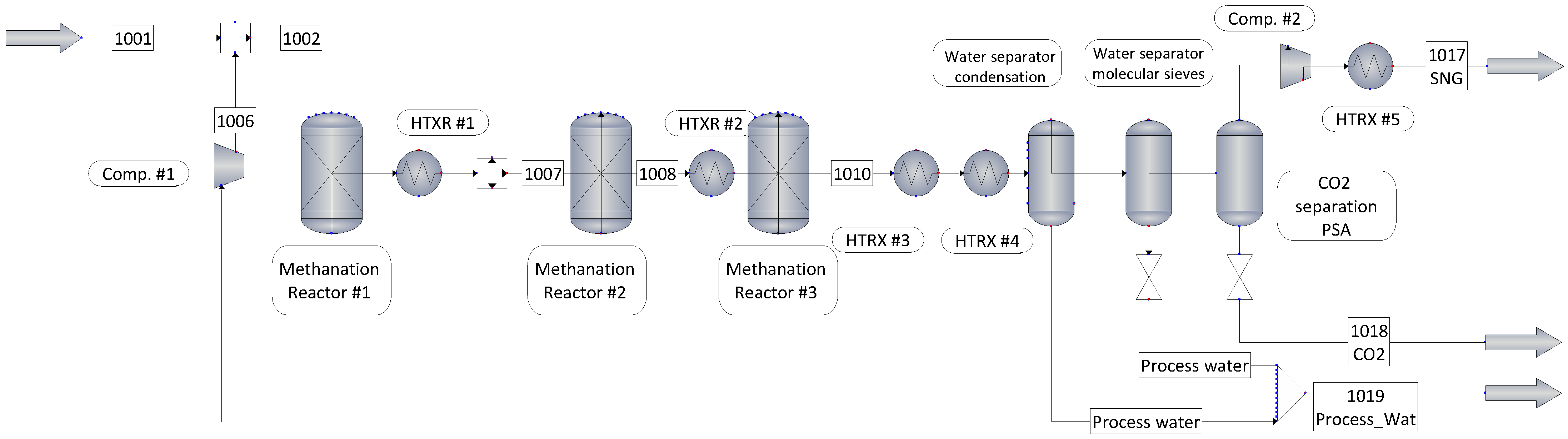
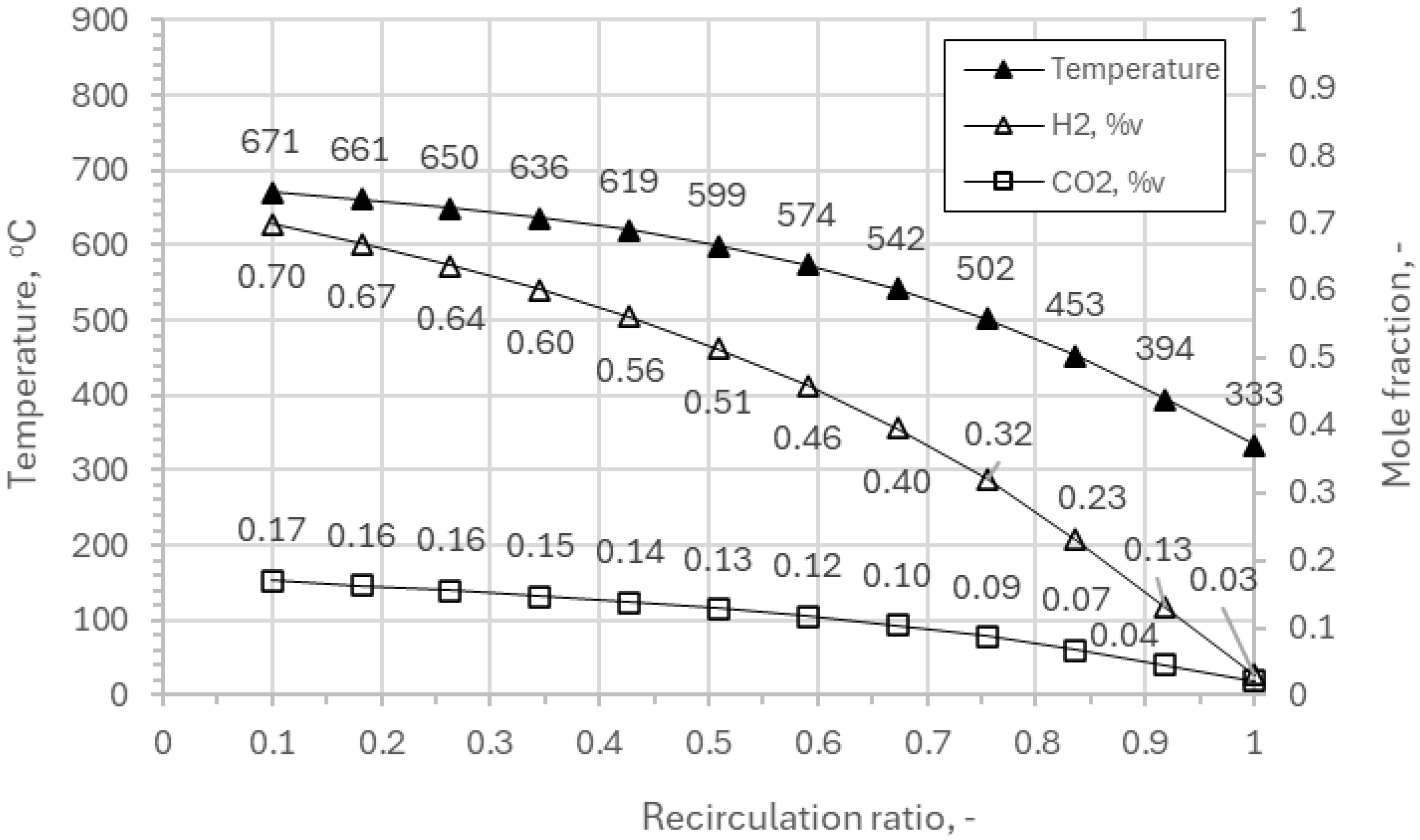
Figure 2 presents the flowsheet of the SNG synthesis system simulated in ChemCAD. The system consists of three Gibbs reactors in series, heat exchangers, and units for moisture and CO2 removal, which are simulated in ChemCAD by Flash and Component Separator units. After the first reactor, the unreacted gas is cooled in a heat exchanger (HTRX1) and partially recirculated to improve reaction efficiency and control temperature. In the analyzed case, the recirculation ratio was set at 55%, which allowed the process gas temperature to be reduced below 600 °C in the first reactor. The effect of the recirculation ratio on gas temperature and mole fraction of CO and H2 in the synthesis gas is shown in Figure 3. The gas, cooled to 260 °C, was directed to the second reactor and, after being cooled again to 220 °C (HTRX2), to the third synthesis reactor. After exiting the final reactor, the gas was cooled to 35 °C (enabling low-temperature steam production: HTRX3 and boiler feedwater preheating: HTRX4) and then directed to the moisture removal units (water vapor condensation, molecular sieves) followed by the PSA system, where CO2 was separated. Finally, SNG was compressed to 60 bar, enabling its injection into the high-pressure gas transmission system. The stream properties are summarized in Table 3.

2.4. Process Assumption for the SNG Production System

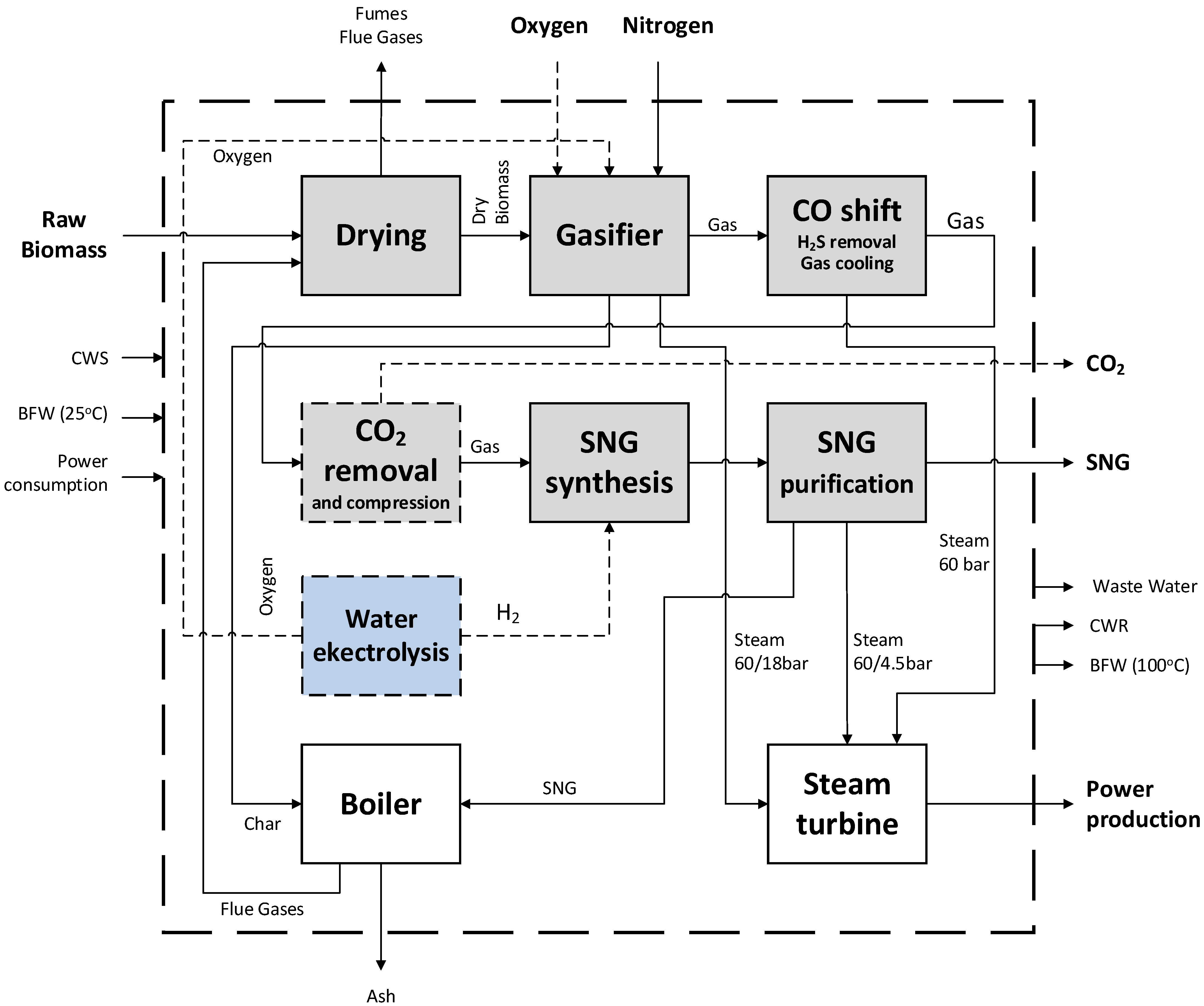
An analysis of the potential for producing synthetic natural gas (SNG) from biomass was carried out using results obtained from a process model developed in the ChemCAD simulation environment. This model represents an SNG production system integrated with biomass gasification, raw gas treatment, SNG synthesis, and water electrolysis. The model enables the evaluation of key performance indicators for an SNG production facility, such as mass and energy balances, syngas composition, energy consumption, and CO2 emissions. The overall process flow diagram is shown in Figure 4. For the simulation, a single gasification reactor was assumed, capable of processing 60 tons per hour of raw biomass with a 40% moisture content. With an assumed annual availability of 7884 operating hours, this corresponds to a biomass throughput of 473,040 tons per year. The fuel properties used in the analysis are summarized in Table 4.
The analyzed SNG production system consists of the following elements:
  • An oxygen and nitrogen compression system;
  • A biomass drying system;
  • A biomass gasification system with gas cooling and purification;
  • A CO conversion system;
  • A gas cooling system;
  • A carbon dioxide removal system (Case B, C);
  • A SNG synthesis system;
  • A water electrolyzer (Case C, D);
  • A char and SNG combustion system (heat production for biomass drying).
The specifications of the technological equipment were chosen based on commercial availability and technological maturity, cost and efficiency, and specific technological characteristics matching fuel characteristics and plant setup.

2.4.1. Oxygen and Fuel Preparation Systems

The analyzed system considers two alternative approaches for oxygen supply. In the first option (Cases A and B), oxygen was delivered from an external source at typical conditions of 32 °C and 8.5 bar and subsequently compressed on site to the operating pressure of 40 bar. In the second option (Cases C and D), oxygen was generated locally using an electrolysis unit. Carbon dioxide recovered during the upgrading of synthesis gas and SNG purification was compressed to 40 bar and employed as a transport medium for fuel injection into the gasification reactor.
Raw biomass was first transferred by a stacker–loader and a belt conveyor system to a vibrating screen for classification into fine and coarse fractions. Before being supplied to the reactor, the biomass was ground and dried. The coarse fraction was conveyed to a crusher via a belt conveyor, while both the fine fraction and the crushed coarse material were transported by belt and bucket conveyors to a drum dryer unit.
Heat for the drying process was supplied indirectly through hot exhaust gases produced by the combustion of char and a portion of the generated SNG [71,72]. The partially dried biomass, with a moisture content of approximately 20%, was then stored in buffer tanks. At that moisture content, biomass LHV remains at about 14MJ/kg, required for efficient conversion in a fluidized bed [42]. Meanwhile, vapors and exhaust gases from the dryer were cleaned of dust before being released into the atmosphere. Energy consumption associated with the mechanical processing of biomass (such as grinding and screening) and its transport to the reactor via conveyors has not been accounted for in the model.

2.4.2. Gasification System

The gasification unit comprises a fuel dosing section, a gasification reactor, and a gas conditioning and cooling section. Dried biomass was transported via belt, bucket, and screw conveyors to the raw material tank. The reactor is equipped with three feeding lines, each capable of handling up to 50% of the reactor’s capacity; under normal conditions they operate at one-third load each. Fuel is delivered to the reactor through screw and pneumatic feeders, with three nozzles introducing it into the fluidized bed. Compressed CO2 serves as the carrier gas.
The gasification reactor, based on SES (formerly U-Gas) technology, operates as a fluidized bed reactor at 30 bar, using oxygen and steam as gasifying and fluidizing agents supplied to the reactor’s lower section. The hot process gas exits the reactor and passes through two cyclones for solid particle removal. The separated char and ash are recycled to enhance carbon conversion.
Heat contained in the hot synthesis gas (around 1000 °C) is recovered in heat exchangers, generating steam at multiple pressure levels. A portion of the medium-pressure steam is reused internally, while excess steam is expanded in a turbine to generate electricity. After cooling to 180 °C, the gas passes through additional particulate separation and wet scrubbing stages, where inorganic contaminants, nitrogen compounds, and residual hydrocarbons are removed. Scrubber water is continuously recirculated, and the loss is made up by adding water condensed from cooling. A controlled purge stream is sent to wastewater treatment.

2.4.3. Process Gas Cleaning and Conversion

After leaving the gasification unit, the raw gas undergoes CO conversion (CO shift), cooling, desulfurization, and CO2 separation. The CO-shift stage is crucial, as it supplies about 37% of the hydrogen derived from biomass in the analyzed cases. The incoming gas already contains sufficient moisture, so no additional steam is required (the H2O/CO molar ratio before the shift must exceed 2).
Because low temperatures favor higher CO conversion but slower reaction rates, a two-stage process—with high- and low-temperature reactors and interstage cooling—is used [72,73,74]. In this setup, gas from the first stage is cooled to about 200 °C before entering the second (low-temperature) reactor. The cooling step also produces medium-pressure superheated steam (60 bar), which is used for power generation.
The shifted gas is then reheated to around 360 °C using this steam and passes through a ZnFe2O4 bed for deep desulfurization [75]. To achieve the proper gas composition for SNG synthesis, part of the CO2 is removed and/or external hydrogen is added. In this analysis, the gas composition entering the SNG synthesis unit is assumed to match the stoichiometric requirements of the reaction.
C O 2 + 4 H 2 C H 4 + 2 H 2 O         H = 165   k J / m o l
As a result, a high-purity carbon dioxide stream (typically exceeding 99% concentration) is obtained as a by-product, which can be sold, transported, or stored. Given the pressures at which the gas exits the gasification reactor, physical absorption is the most energy-efficient CO2 separation method. For this analysis, CO2 capture using Selexol technology—with an assumed separation efficiency of 92%—was selected.
To ensure effective CO2 removal, the gas must be cooled to approximately 35 °C before absorption. This cooling occurs in three stages: during the process, low-pressure steam (4.5 bar) is generated, feedwater is heated to about 100 °C, and an external water coolant is utilized.

2.4.4. SNG Synthesis

The methanation system consists of three reactors connected in series, where the catalytic conversion of carbon oxides and hydrogen into methane takes place [76,77] (Figure 2). Typically, nickel-based catalysts are used in the process [76].
After the first reactor, the resulting mixture of methane and unreacted gases is cooled to approximately 260 °C (production of superheated steam at 60 bar) and partially recirculated to increase the hydrogen conversion rate and to control the process temperature so that it does not exceed 700 °C. The gas is then directed to the next reactor and, after leaving the reaction zone, is again cooled to 260 °C (production of superheated steam at 60 bar). After the final reactor, the gas is cooled to 140 °C (for steam generation at 5 bar) and then to 35 °C (boiler feedwater heating to 100 °C). It is subsequently directed to the moisture removal units (via condensation and molecular sieves) and to the PSA unit, where the remaining CO2 is removed. The resulting methane, with a purity of approximately 97%, is then compressed to 60 bar before being fed into the natural gas transmission system.
See also Section 2.3.

2.4.5. Electrolyzer

In Cases C and D, the calculations assume an alkaline electrolyzer with parameters based on the GHS (Green Hydrogen Systems, X Series) technology. The basic parameters of the electrolyzer are presented in Table 5.

2.4.6. Additional Units

Before being transported to a storage location, carbon dioxide leaving the Selexol system is compressed to 100 bar with a multistage compressor.
There are three types of superheated steam produced in the system, with pressures of 60, 18, and 4.5 bar. According to the calculations, turbine systems are able to generate power ranging from 15.2 to 38.4 Mwe, depending on the considered case. Auxiliaries in this system include the use of boiler water compression and an additional combustion boiler. The boiler is used to combust gasification char and part of the produced SNG to generate the heat needed to dry biomass. A summary of the system configuration data is shown in Table 6.

2.5. Production Cost Calculation—Methodology

The basic economic parameters used to estimate the costs of SNG and electricity production are given in Table 7. This table contains data on the main costs related to the operation of the installation, and the values presented were determined based on market price analyses and source materials.
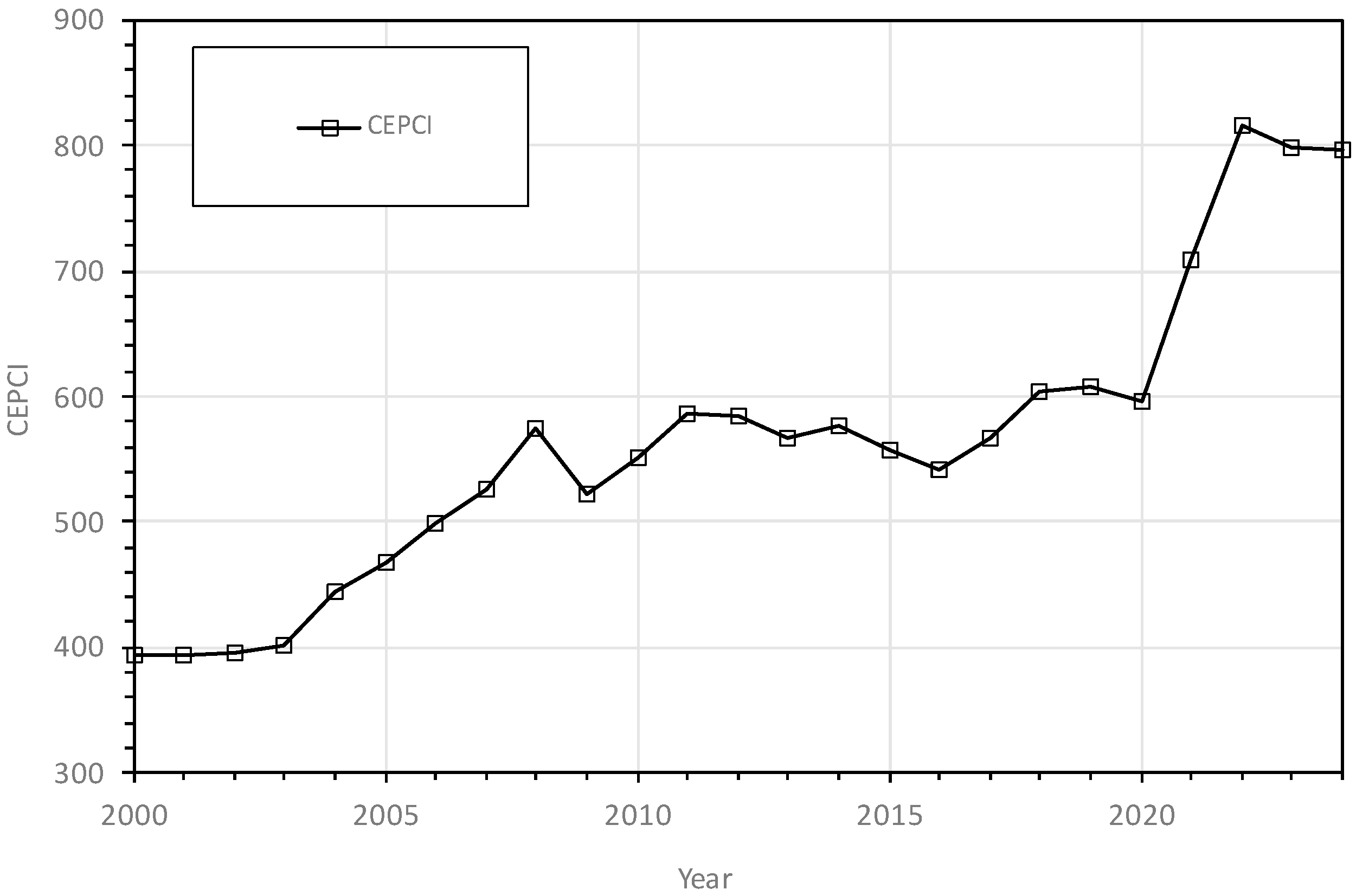
The capital expenditure (CAPEX) calculations were conducted using an exponential investment assessment and price growth index method. As previously demonstrated in [84], the methodological approach employed in these calculations has already been outlined in preceding analyses. As demonstrated in Table 8, the base scales and scaling exponents for the components of the production facilities were derived based on both literature data and in-house expertise, while capital expenditures specified for the base year were calculated for the current year using CEPCI (see Figure 5 for details). The calculation of total investment costs (TICs) was performed by applying the Peters and Timmerhaus factors, as detailed in Table 9 [85].

Levelized Cost of SNG Production (LCOSNG) Calculation Methodology

LCOSNG calculations were performed based on the LCOE (levelized cost of energy) calculation methodology according to the Cost Estimation Methodology for NETL Assessments of Power Plant Performance [79]. The adopted methodology was similar to the methodology used for the Levelized Cost of Hydrogen Production calculation presented in a previous analysis [42] and the Levelized Cost of CO2 Capture presented in [84]. Table 10 presents the assumptions adopted for the LCOSNG calculations.

3. Results

3.1. Gasification Reactor

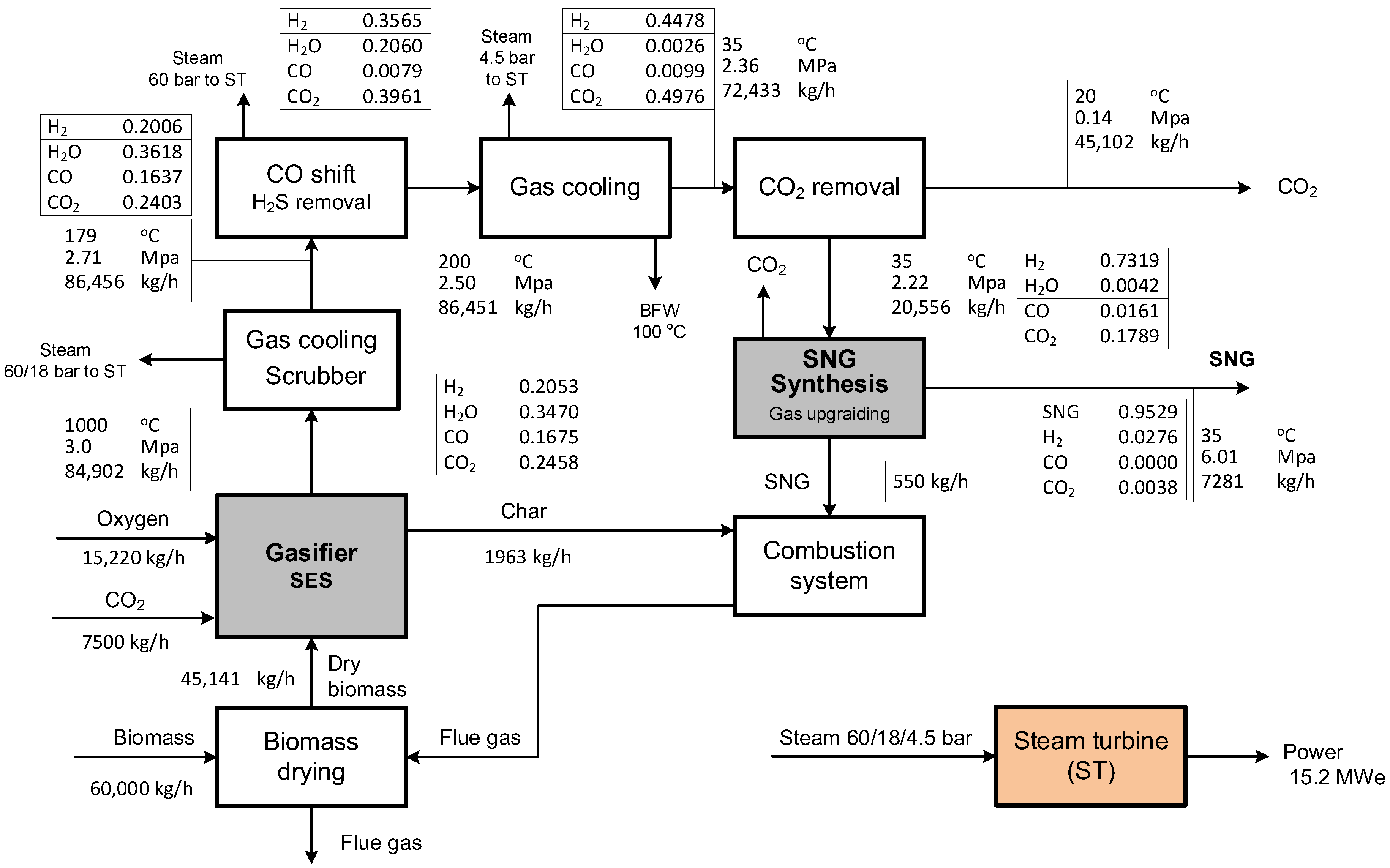
The mass and energy balance of the gasification system is presented in Table 11. The system consists of a gasification reactor, raw gas cooling (production of steam at 60 and 18 bar), and a gas scrubber.
The gasification of 45.1 t/h of semi-dried biomass produces 86.5 t/h of raw syngas. The process also generates 34.9 t/h of steam at 60 bar and 5.2 t/h at 18 bar. After satisfying the steam demand of the gasification reactor, a net steam output of 15.9 t/h at 60 bar remains available. The solid residue from the gasification process (char) contains 48 wt.% elemental carbon, assuming an elemental carbon conversion of 98%, and exhibits a lower heating value of 15.7 MJ/kg. This char is utilized to supply thermal energy for biomass drying. Following wet gas cleaning in a scrubber, the entire raw gas stream is directed to the water–gas shift (WGS) unit, where carbon monoxide is converted to enhance hydrogen production. The cold gas efficiency of the gasification process, based on the lower heating value, is 71%. The characteristic properties of the cleaned raw gas at the gasifier outlet are reported in Table 12.

3.2. SNG Production Plant

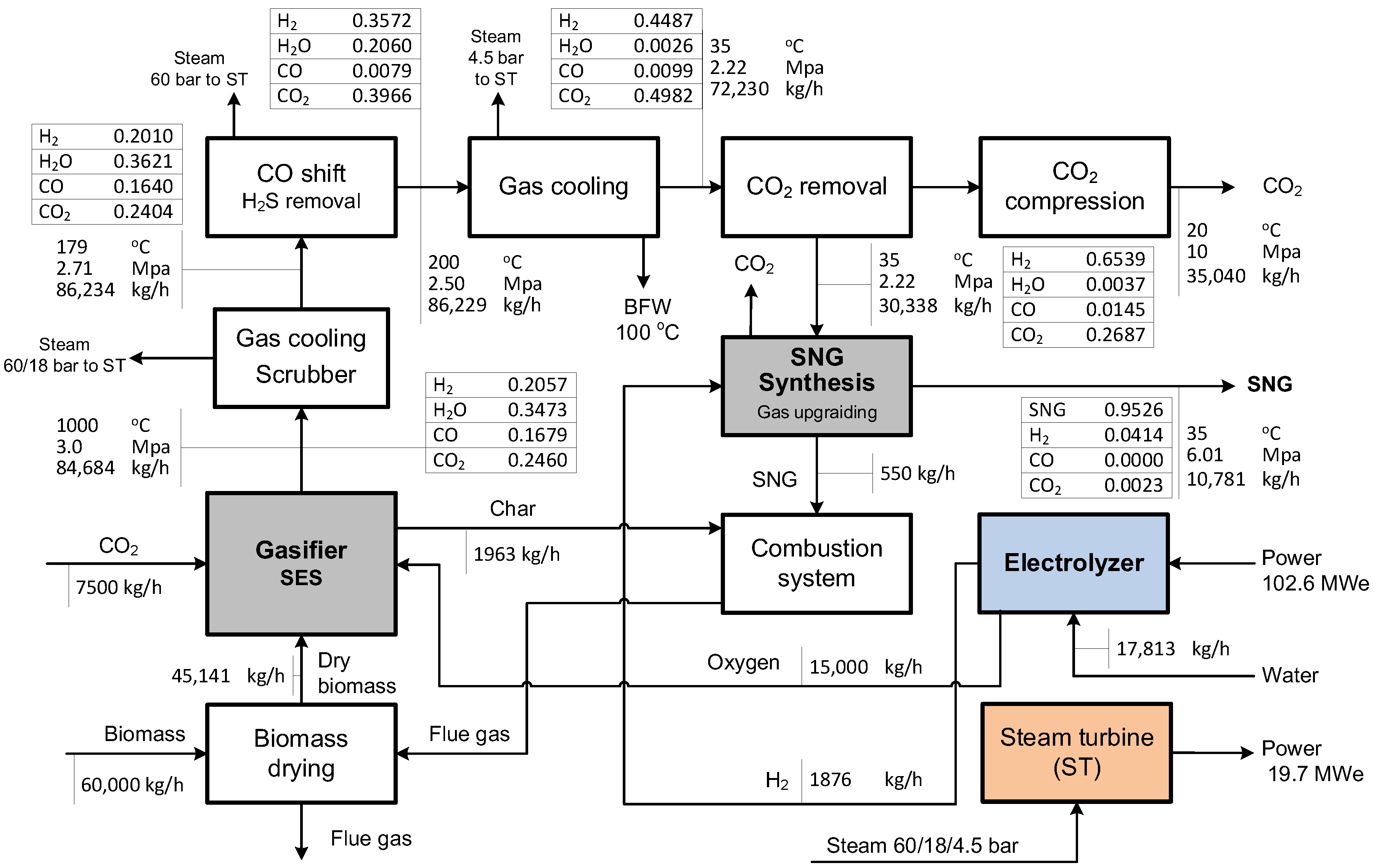
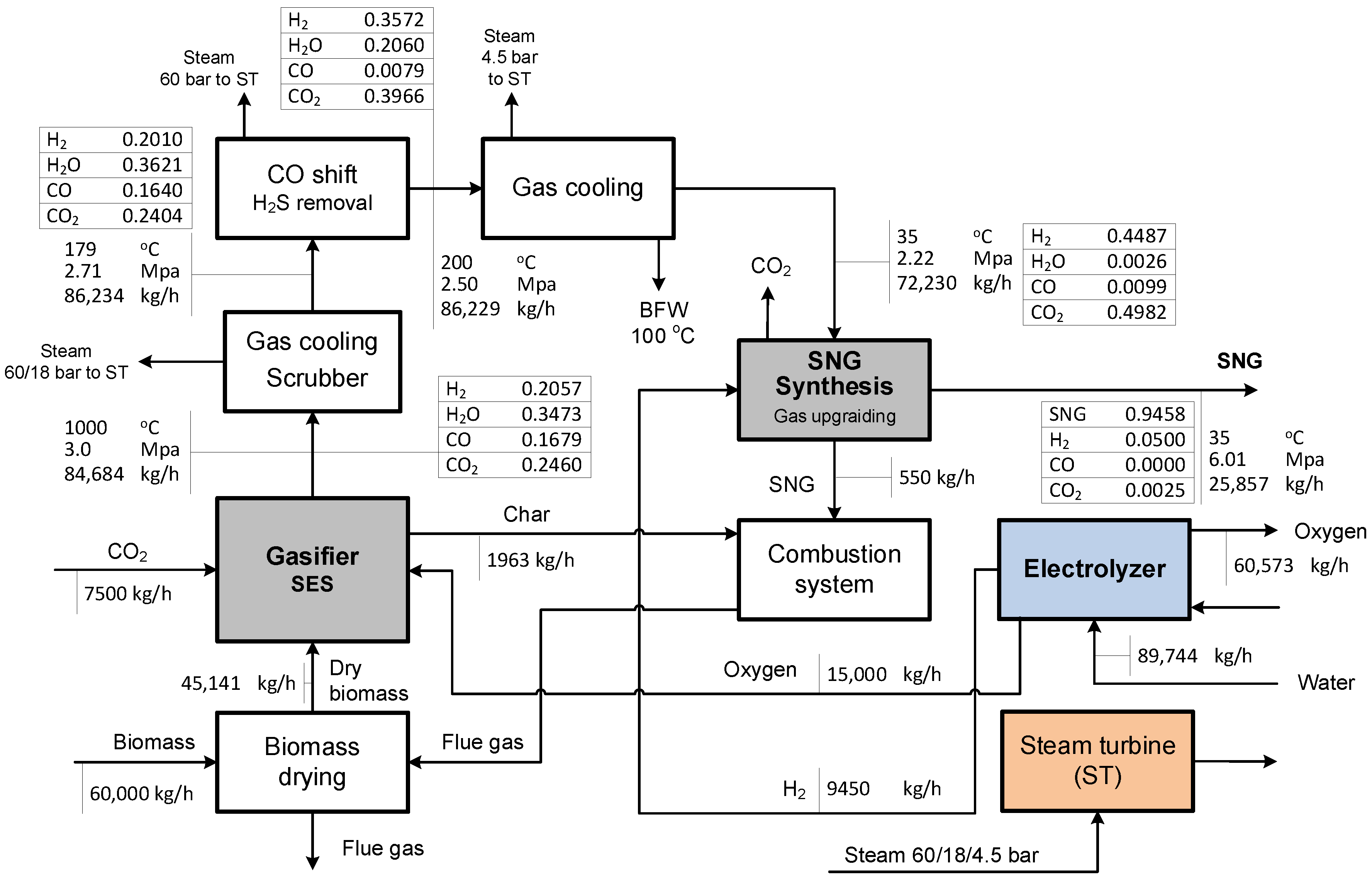
Figure 6, Figure 7 and Figure 8 present a schematic diagram of the production plant as well as the calculated values of the most important streams for the analyzed scenarios. The gasification reactor remains unchanged in all three scenarios; therefore, its cold gas efficiency stays constant at 71%. The SNG production efficiency for all analyzed cases is comparable and amounts to approximately 57% (for Cases C and D, the calculations also include the electricity consumed for hydrogen production in electrolyzers). In all cases efficiency is also comparable with other research detailed in Table 2. Slightly lower values compared to some recent studies may be attributed to the use of fuels with very high calorific value that do not require drying [34,44,45,46,47], or to accounting approaches in which not only the chemical enthalpy of the produced SNG but also the generated heat is included as a useful product [45]. In Cases A and B, the SNG production rate equals 7821 kg/h. The addition of extra hydrogen to the synthesis section increased the SNG output to 10,781 kg/h and 25,857 kg/h for Cases C and D, respectively.
Selected calculation results for all cases are summarized in Table 13.
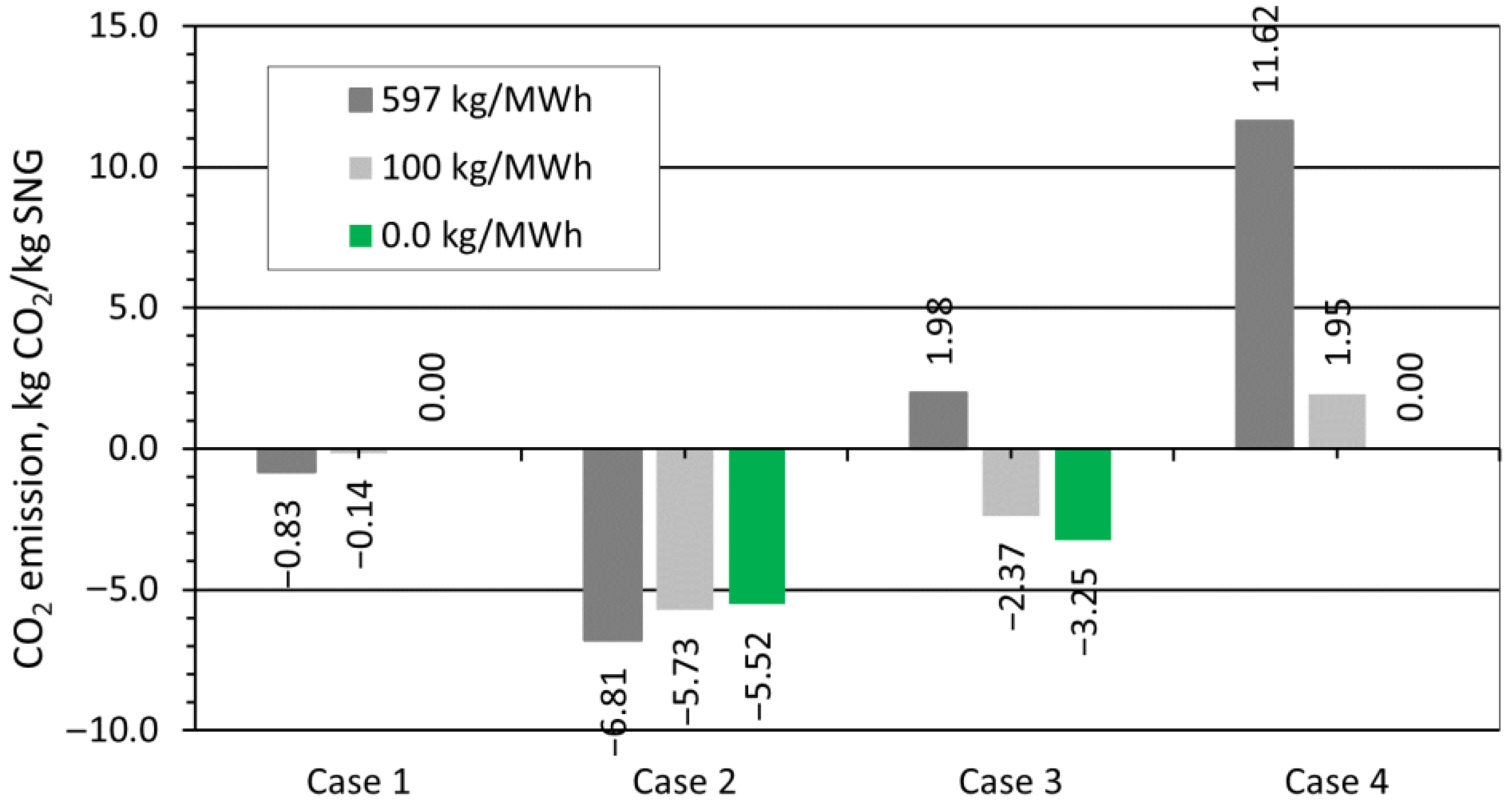
In response to increasingly stringent greenhouse gas emission regulations, advanced technologies are required to comply with strict limits on CO2 emissions. Accordingly, all simulated scenarios were evaluated to quantify their CO2 emissions and to examine the potential for achieving carbon-neutral or even carbon-negative performance during synthetic natural gas (SNG) production. The assessment accounts for process-related emissions arising from SNG generation as well as the carbon intensity of the electricity consumed (see also point 2.1). Under the assumption that biomass processing is CO2-neutral, the calculated carbon footprint across the analyzed cases varied between –6.81 and 11.62 kg CO2 per kg of SNG. Negative emissions were obtained for Cases A and B. In Case A, they resulted from surplus electricity generation, while in Case B they mainly originated from system integration with CO2 capture. Relatively high emission intensities for the cases integrated with electrolyzers stem from the high energy consumption required for water electrolysis and from the assumption that the electrolyzers are powered by grid electricity with a carbon footprint of 597 kg CO2/MWh [95] (the average electricity emission factor in Poland in 2023).
Using low-emission electricity with a carbon intensity of 100 kg CO2/MWh (EU taxonomy limit) or zero-emission renewable electricity significantly reduces the carbon footprint of SNG produced in Cases C and D. In contrast, for Cases A and B, the overall process emission intensity increases because the negative emission effect from surplus electricity generation is reduced. Figure 9 presents a comparison of SNG production emission intensities for three levels of electricity carbon footprint: 597, 100, and 0 kg CO2/MWh.

3.3. Results of Economic Calculations

In the next stage of the analysis, capital expenditure and operating costs (CAPEX, OPEX) were determined and the cost of SNG production (average cost of SNG production, LCOSNG) was estimated. The calculations were performed according to the methodology and assumptions outlined in Section 2 and presented in the previous analyses [54,69], as well as material and energy balances, main process streams characteristics, and investment cost estimates. The results of the calculations are presented in Table 14.
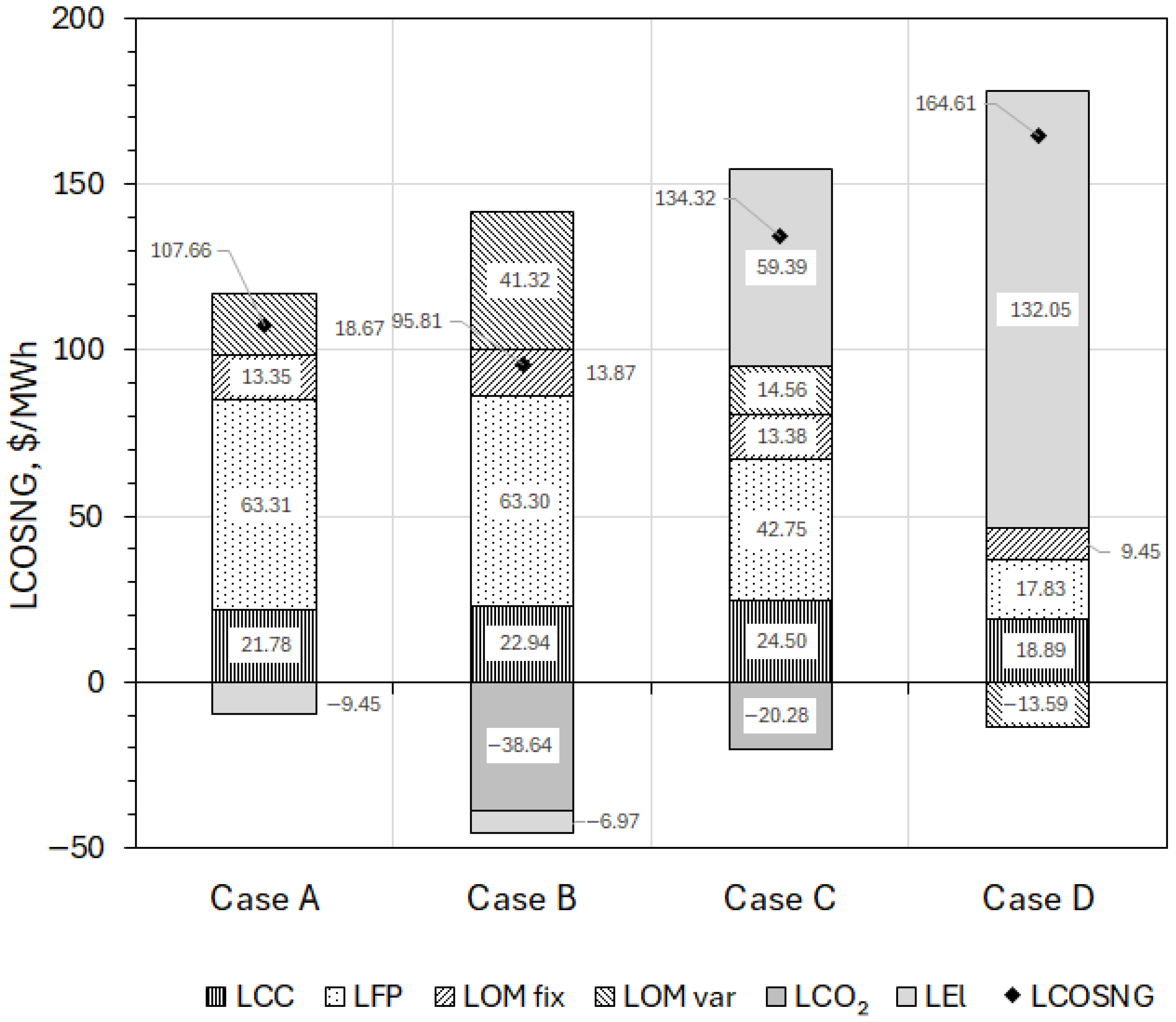
Results show that implementation of CO2 compression, transport and storage allows the reduction of the levelized cost of SNG production by approximately USD 12/MWh SNG, representing an 11% decrease (from USD 107.66/MWh SNG to USD 95.81/MWh SNG). The calculated cost of SNG production is in line with the ranges resulting from previous publications [34,45,46,49]. This decrease accounts for revenues from the sale of CO2 emission allowances due to negative CO2 emissions, despite high CO2 transport and storage costs resulting in increased OPEX. Implementation of H2 production using electrolysis technology results in a significant increase in SNG production cost, despite its higher SNG production efficiency, mainly due to a high cost of electricity required for the electrolysis process. The production cost structure for the analyzed cases is presented in Figure 10.
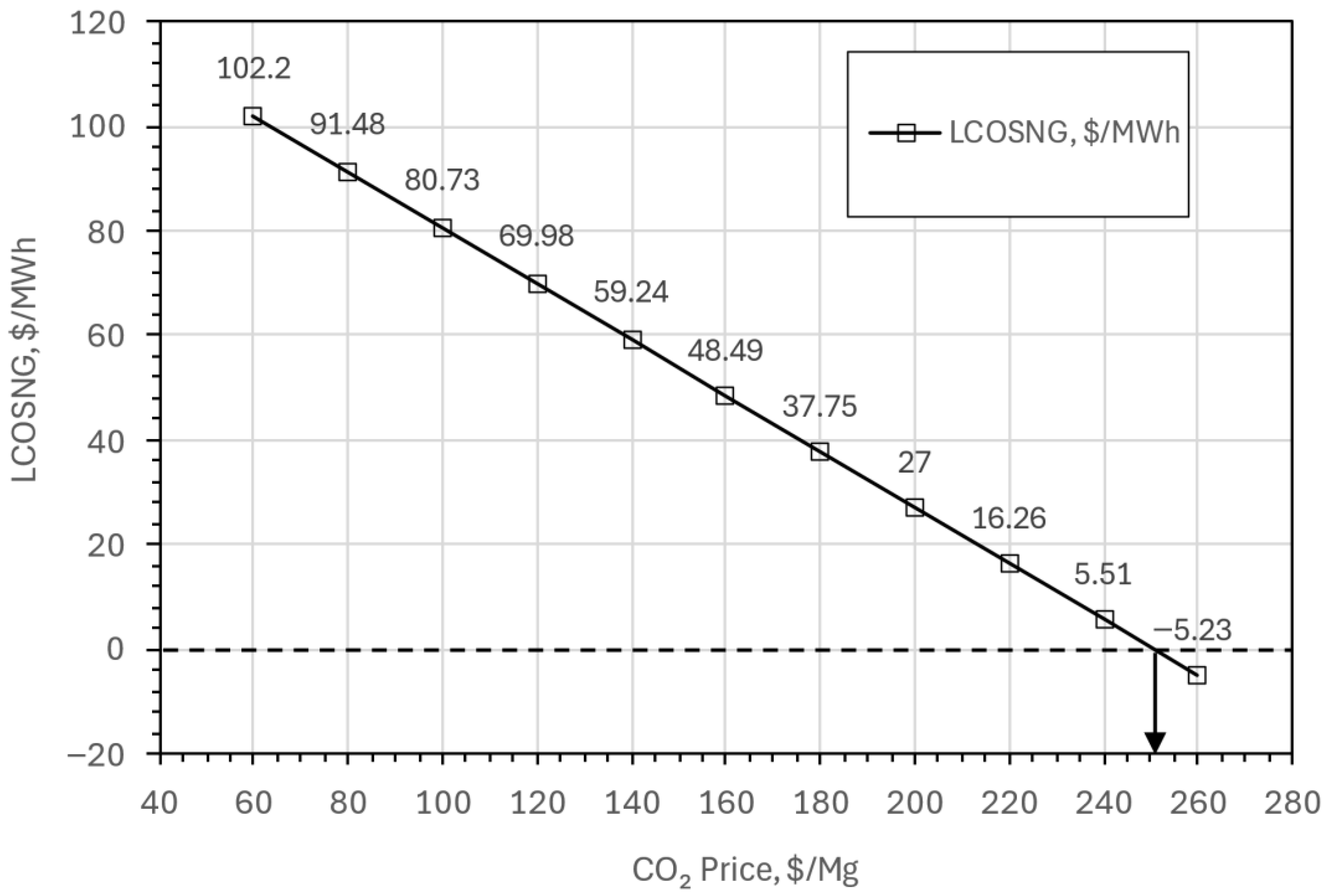
As shown in Figure 10, the structure of SNG production cost can vary significantly for different case scenarios. The obtained SNG production cost for the most feasible case (Case B) is more than double the natural gas prices presented by TGE for BASE_Y-25 contracts in 2024 [96], which were equal to USD 45.65/MWh. Despite the increased costs of SNG production compared to natural gas prices, the biggest advantage for the analyzed technology is the possibility of reliable local SNG production using local resources, regardless of the current natural gas market situation. This can be easily compared to the situation in 2022, when natural gas shortages caused a sharp price rise. Natural gas prices presented by TGE for BASE_Y-23 contracts in year 2022 had an average price of USD 132.64/MWh with a price spike of USD 229.81/MWh in August 2022. An additional advantage of using biomass for hydrogen production is negative CO2 emissions, which can lead to negative SNG production costs. The simulation shows that for the analyzed Case B, the LCOSNG becomes negative for CO2 emission allowances prices exceeding USD 251/Mg (Figure 11).
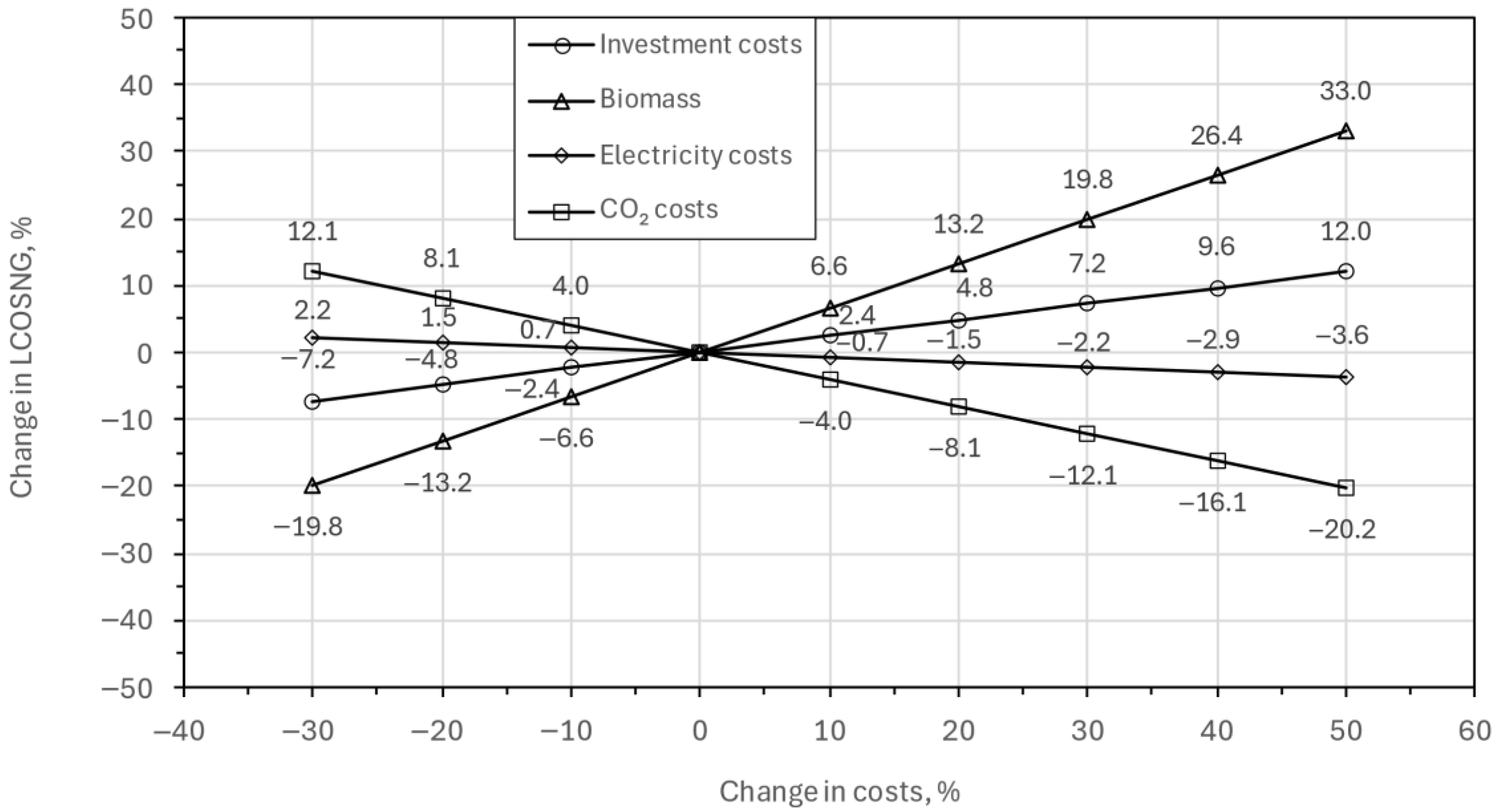
Sensitivity analysis of the LCOSNG performed in the range of −30% to +50% is presented in Figure 12. The analysis shows the impact of biomass purchase costs, CO2 emission allowance prices, electricity prices, and investment outlays on the percentage change in LCOSNG.
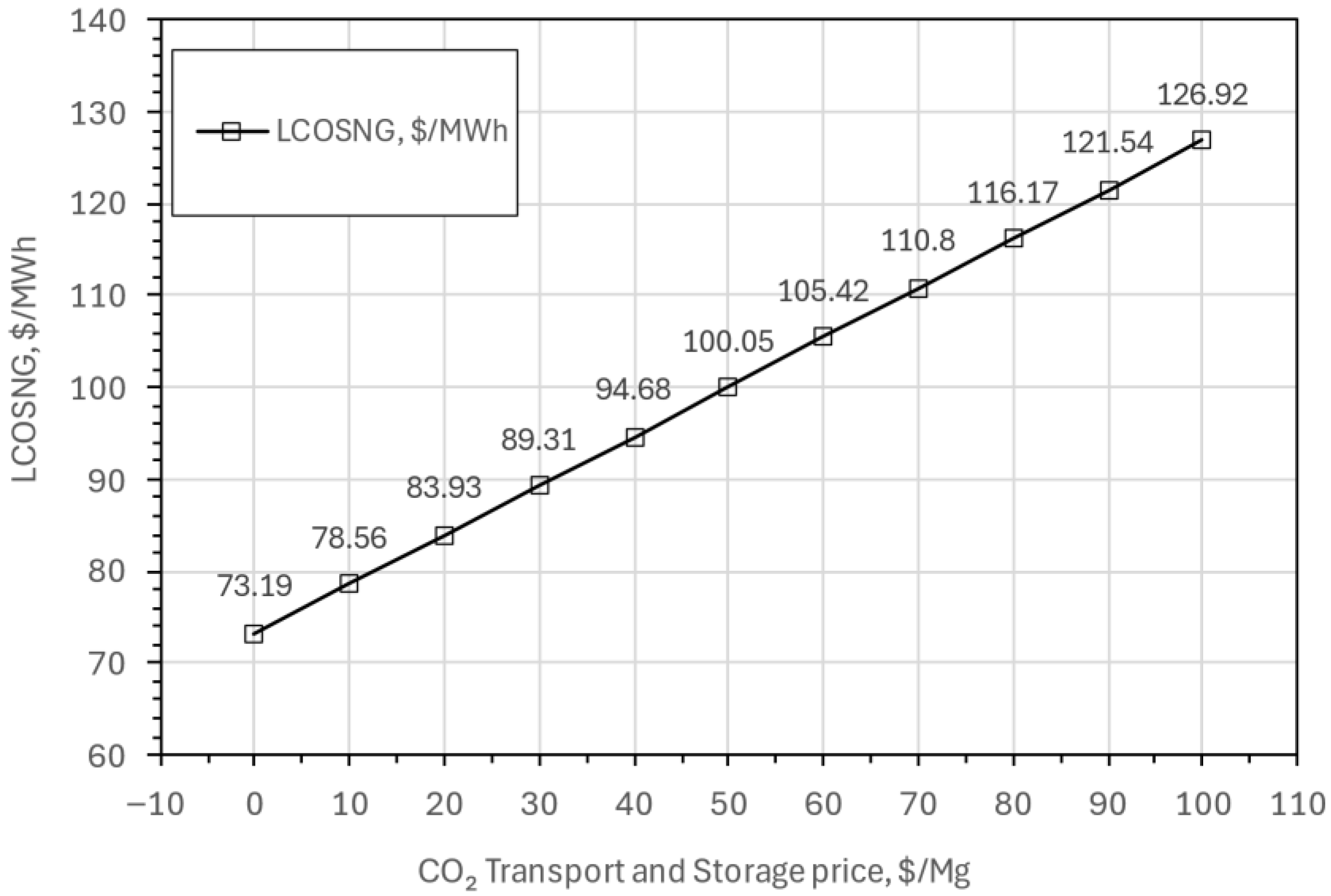
CO2 transport and storage costs are a significant component of the SNG production cost; thus, sensitivity analysis for the LCOSNG cost impact was performed separately (Figure 13).
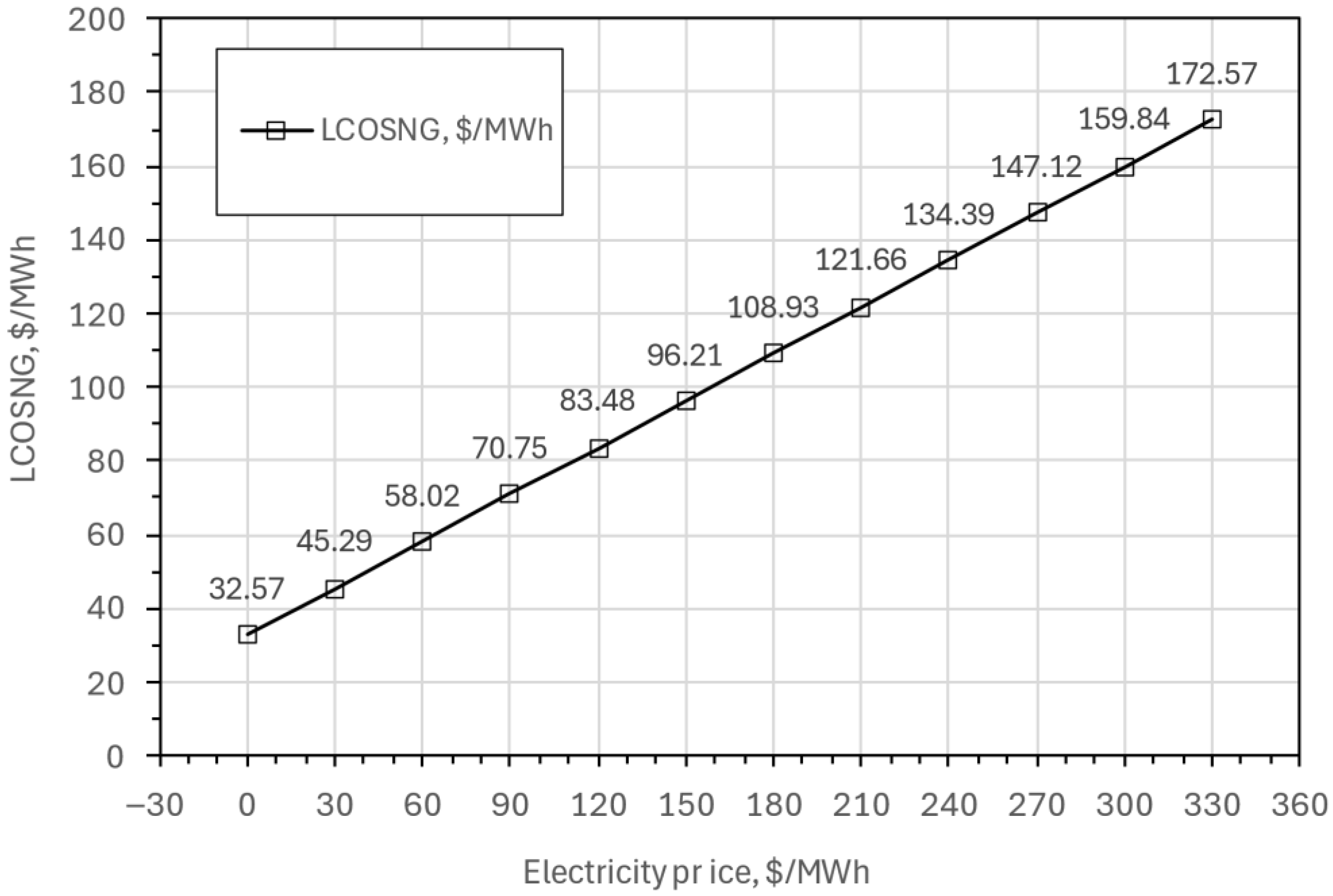
Analysis of Case D showed that the cost of electricity accounts for over 80% of the levelized cost of SNG production for Case D. Thus, minimizing electricity costs can play a major role in lowering the price of SNG production. Simulation of the impact of the price of electricity on the cost of SNG production is shown in Figure 14. For an electricity price of 0 PLN/MWh, LCOSNG drops below USD 33/MWh.

4. Conclusions

This paper presents and analyzes the potential for producing synthetic natural gas (SNG) using biomass fluidized-bed gasification technology, based on a commercial solution offered by Synthesis Energy Systems. The possibility of integrating the system with an electrolyzer installation was also investigated. The analysis was carried out for a gasification unit with a capacity of 188 MWth (raw biomass feed rate of 60 Mg/h). In the case of integration with an electrolyzer, two power levels were proposed: the first (103 MWe) to meet the oxygen demand of the gasification process, and the second (517 MWe) to eliminate the need for CO2 separation prior to the SNG synthesis section.
Depending on the analyzed case, the SNG production rate varied between 188 (Cases A and B) and 621 Mg/day (Case D).
Under the assumed scale and configuration, the cost of SNG production ranged from 95 to 168 USD/MWSNG, exceeding current market prices of natural gas. For the biomass gasification system with CO2 separation (Case B), it is possible to significantly reduce production costs as the price of CO2 emission allowances increases. When the allowance price reaches 170 USD/Mg CO2, the cost of SNG production falls to the current market price of natural gas, and at 251 USD/Mg CO2, production costs can effectively reach zero.
The high production costs of systems integrated with electrolyzers result primarily from electricity consumption and its associated cost, which in Case D accounts for up to 80% of the total production cost. Improving the environmental and economic performance of these systems would require integration with on-site renewable energy generation, assuming that the additional investment costs would have a much smaller impact on production costs than purchasing electricity from the grid.
An important aspect of the analysis was the assessment of SNG production emissions for the considered technological variants. When grid electricity with a carbon intensity typical for Polish conditions is used, only the configurations not integrated with electrolyzers achieve net negative CO2 emissions. Integration (Cases C and D) leads to a significant increase in the carbon intensity of the produced SNG, exceeding the carbon footprint associated with the extraction and transport of natural gas (upstream natural gas emissions: 9.7 g CO2e/MJ).
Considering a CO2 intensity of 100 kg/MWhe (the average value for electricity generation between 2020 and 2050, consistent with the EU’s target of achieving net-zero emissions by 2050), a significant reduction in CO2 emissions is observed. The resulting emission levels were −2.37 and 1.95, respectively, for Cases C and D.
Although the integration of SNG production systems with water electrolysis is currently limited to pilot and demonstration installations, several factors indicate a realistic potential for their deployment at an industrial scale. First, both key subsystems—biomass gasification in fluidized beds and large-scale water electrolysis—are based on technologies that, when considered separately, have already reached high levels of technological maturity. Recent industrial projects confirm the technical feasibility of electrolyzers with capacities exceeding hundreds of megawatts [97], while the anticipated development of fifth-generation electrolyzers over the 2020–2050 horizon assumes achievable capacities at the gigawatt scale, accompanied by a significant reduction in capital expenditures and an increase in hydrogen production efficiency [53]. Consequently, the main challenge is not technological feasibility itself, but rather system-level integration and optimization of the combined operation of these technologies. In addition, ensuring stable access to low-cost, low-carbon electricity is essential to justify large-scale integration. From a process perspective, further challenges include stable operation at high annual availability, as well as efficient utilization of by-product oxygen and waste heat. In parallel, regulatory frameworks, CO2 accounting methodologies, and support schemes for low- or negative-emission fuels will play a crucial role in enabling large-scale deployment. Overcoming these technical, economic, and regulatory barriers is key to transitioning integrated gasification–electrolysis–SNG systems from the demonstration stage to commercial implementation.
Moreover, the effective development of biomass gasification systems integrated with water electrolyzers to produce low-emission hydrogen or synthetic fuels will depend on the availability of feedstock and the advancement of infrastructure for CO2 transport and storage.
In the case of Poland, there appears to be significant potential in woody biomass, which represents the most suitable feedstock for gasification processes. It is estimated at 13–16 million cubic meters per year [98].
It should also be noted that work on the development of CCS technologies related to CO2 transport and storage has intensified. In Europe, an example is the Northern Lights project, which plans to demonstrate a system with a capacity of 3 million tons of CO2 per year in the near future, as well as a joint Polish–Lithuanian initiative aimed at developing CO2 transport infrastructure between 2025 and 2030 [77,85,99].

Author Contributions

Conceptualization, T.M.C., T.J.C. and T.I.; methodology, T.M.C., T.J.C., T.I. and T.B.; software, T.M.C. and T.B.; validation, T.M.C. and T.B.; investigation, T.M.C., T.J.C., T.I., T.B. and L.S.; data curation, L.S., T.B. and T.M.C.; writing—original draft preparation, T.M.C., L.S., T.B. and T.I.; writing—review and editing, L.S., T.B. and T.M.C.; visualization, T.M.C., T.B. and L.S.; supervision, T.M.C., T.J.C. and T.I. All authors have read and agreed to the published version of the manuscript.

Funding

This research was funded by an internal grant for research from AGH University of Krakow and the Institute of Energy and Fuel Processing Technology, Zabrze, Poland.

Data Availability Statement

Data are not publicly available due to privacy and ethical reasons.

Conflicts of Interest

The authors declare no conflicts of interest.

References

  1. Minx, J.C.; Lamb, W.F.; Callaghan, M.W.; Fuss, S.; Hilaire, J.; Creutzig, F.; Amann, T.; Beringer, T.; de Oliveira Garcia, W.; Hartmann, J.; et al. Negative Emissions—Part 1: Research Landscape and Synthesis. Environ. Res. Lett. 2018, 13, 063001. [Google Scholar] [CrossRef]
  2. Fridahl, M.; Lehtveer, M. Bioenergy with Carbon Capture and Storage (BECCS): Global Potential, Investment Preferences, and Deployment Barriers. Energy Res. Soc. Sci. 2018, 42, 155–165. [Google Scholar] [CrossRef]
  3. Ulanov, V.L. The Need for the Green Economy Factors in Assessing the Development and Growth of Russian Raw Materials Companies. J. Compr. Bus. Adm. Res. 2024, 1, 19–26. [Google Scholar] [CrossRef]
  4. Minx, J.C.; Lamb, W.F.; Callaghan, M.W.; Bornmann, L.; Fuss, S. Fast Growing Research on Negative Emissions. Environ. Res. Lett. 2017, 12, 035007. [Google Scholar] [CrossRef]
  5. Fuss, S.; Lamb, W.F.; Callaghan, M.W.; Hilaire, J.; Creutzig, F.; Amann, T.; Beringer, T.; de Oliveira Garcia, W.; Hartmann, J.; Khanna, T.; et al. Negative Emissions—Part 2: Costs, Potentials and Side Effects. Environ. Res. Lett. 2018, 13, 063002. [Google Scholar] [CrossRef]
  6. Nemet, G.F.; Callaghan, M.W.; Creutzig, F.; Fuss, S.; Hartmann, J.; Hilaire, J.; Lamb, W.F.; Minx, J.C.; Rogers, S.; Smith, P. Negative Emissions—Part 3: Innovation and Upscaling. Environ. Res. Lett. 2018, 13, 063003. [Google Scholar] [CrossRef]
  7. Honegger, M.; Reiner, D. The Political Economy of Negative Emissions Technologies: Consequences for International Policy Design. Clim. Policy 2018, 18, 306–321. [Google Scholar] [CrossRef]
  8. Fridahl, M.; Hansson, A.; Haikola, S. Towards Indicators for a Negative Emissions Climate Stabilisation Index: Problems and Prospects. Climate 2020, 8, 75. [Google Scholar] [CrossRef]
  9. Anandarajah, G.; Kesicki, F.; Pye, S.; Usher, W. TIAM-UCL Global Model Documentation; University College London: London, UK, 2011. [Google Scholar]
  10. Anandarajah, G.; Dessens, O.; McDowall, W. The Future for Bioenergy Systems: The Role of BECCS? In Biomass Energy and Carbon Capture and Storage: Unlocking Negative Emissions; Wiley: Hoboken, NJ, USA, 2018. [Google Scholar]
  11. Balopi, B.; Moyo, M.; Gorimbo, J.; Liu, X. Biomass-to-Electricity Conversion Technologies: A Review. Waste Dispos. Sustain. Energy 2025, 7, 323–351. [Google Scholar] [CrossRef]
  12. Binder, M.; Kraussler, M.; Kuba, M.; Luisser, M. Hydrogen from Biomass Gasification; IEA Bioenergy: Paris, France, 2018. [Google Scholar]
  13. Lepage, T.; Kammoun, M.; Schmetz, Q.; Richel, A. Biomass-to-Hydrogen: A Review of Main Routes Production, Processes Evaluation and Techno-Economical Assessment. Biomass Bioenergy 2021, 144, 105920. [Google Scholar] [CrossRef]
  14. Rubinsin, N.J.; Karim, N.A.; Timmiati, S.N.; Lim, K.L.; Isahak, W.N.R.W.; Pudukudy, M. An Overview of the Enhanced Biomass Gasification for Hydrogen Production. Int. J. Hydrogen Energy 2024, 49, 1139–1164. [Google Scholar] [CrossRef]
  15. Bartik, A.; Benedikt, F.; Lunzer, A.; Walcher, C.; Müller, S.; Hofbauer, H. Thermodynamic Investigation of SNG Production Based on Dual Fluidized Bed Gasification of Biogenic Residues. Biomass Convers. Biorefinery 2021, 11, 95–110. [Google Scholar] [CrossRef]
  16. Radosits, F.K.; Ajanovic, A.; Harasek, M. The Relevance of Biomass-Based Gases as Energy Carriers: A Review. Wiley Interdiscip. Rev. Energy Environ. 2024, 13, e527. [Google Scholar] [CrossRef]
  17. Available online: https://www.goteborgenergi.se/Files/Webb20/Kategoriserad%20information/Forskningsprojekt/The%20GoBiGas%20Project%20-%20Demonstration%20of%20the%20Production%20of%20Biomethane%20from%20Biomass%20v%20230507_6_0.pdf (accessed on 9 November 2025).
  18. Available online: https://www.dbfz.de/fileadmin/user_upload/Referenzen/Berichte/Final_project_report_biomethan.pdf (accessed on 9 November 2025).
  19. Available online: https://task33.ieabioenergy.com/wp-content/uploads/sites/33/2023/09/Florian_Benedikt.pdf (accessed on 9 November 2025).
  20. Rabou, L.P.L.M.; Drift, B.; van Dijk, E.; Meijden, C.; Vreugdenhil, B. MILENA Indirect Gasification, OLGA Tar Removal, and ECN Process for Methanation. In Synthetic Natural Gas from Coal, Dry Biomass, and Power-to-Gas Applications; John Wiley & Sons: Hoboken, NJ, USA, 2016; pp. 231–248. ISBN 9781118541814. [Google Scholar]
  21. van der Meijden, C.M. Development of the MILENA Gasification Technology for the Production of Bio-SNG. Ph.D. Thesis, Technische Universiteit Eindhoven, Eindhoven, The Netherlands, 2014. [Google Scholar]
  22. Romano, L.; Ruggeri, F. Methane from Syngas—Status of Amec Foster Wheeler VESTA Technology Development. Energy Procedia 2015, 81, 249–254. [Google Scholar] [CrossRef]
  23. Lee, U.D.; Yang, W. Development of Biomass Gasification System Based on Fluidized Bed Technologies. Korea Institute of Industrial Technology (KITECH) Energy System R&D Group (2012). Available online: https://www.processeng.biz/iea-fbc.org/upload/67_7.%20U.%20Lee.pdf (accessed on 9 November 2025).
  24. Available online: https://www.reuters.com/business/sustainable-business/tokyo-gas-begins-synthetic-methane-trial-using-green-hydrogen-2022-06-24 (accessed on 9 November 2025).
  25. Cormos, C.-C. Green Hydrogen Production from Decarbonized Biomass Gasification: An Integrated Techno-Economic and Environmental Analysis. Energy 2023, 270, 126926. [Google Scholar] [CrossRef]
  26. Rönsch, S.; Schneider, J.; Matthischke, S.; Schlüter, M.; Götz, M.; Lefebvre, J.; Prabhakaran, P.; Bajohr, S. Review on Methanation—From Fundamentals to Current Projects. Fuel 2016, 166, 276–296. [Google Scholar] [CrossRef]
  27. Mao, C.; Feng, Y.; Wang, X.; Ren, G. Review on Research Achievements of Biogas from Anaerobic Digestion. Renew. Sustain. Energy Rev. 2015, 45, 540–555. [Google Scholar] [CrossRef]
  28. Solarte-Toro, J.C.; Chacón-Pérez, Y.; Cardona-Alzate, C.A. Evaluation of Biogas and Syngas as Energy Vectors for Heat and Power Generation Using Lignocellulosic Biomass as Raw Material. Electron. J. Biotechnol. 2018, 33, 52–62. [Google Scholar] [CrossRef]
  29. De Padova, A.; Giglio, E.; Santarelli, M. Electrolysis-Boosted Substitute Natural Gas from Biomass: Kinetic Modeling of Fluidized Bed Gasification and System Integration. Renew Energy 2024, 223, 120071. [Google Scholar] [CrossRef]
  30. Zhu, M.; Ai, X.; Fang, J.; Wu, K.; Zheng, L.; Wei, L.; Wen, J. Optimal Integration of Electrolysis, Gasification and Reforming for Stable Hydrogen Production. Energy Convers. Manag. 2023, 292, 117400. [Google Scholar] [CrossRef]
  31. Ali, S.; Sørensen, K.; Nielsen, M.P. Modeling a Novel Combined Solid Oxide Electrolysis Cell (SOEC)—Biomass Gasification Renewable Methanol Production System. Renew Energy 2020, 154, 1025–1034. [Google Scholar] [CrossRef]
  32. Clausen, L.R.; Butera, G.; Jensen, S.H. High Efficiency SNG Production from Biomass and Electricity by Integrating Gasification with Pressurized Solid Oxide Electrolysis Cells. Energy 2019, 172, 1117–1131. [Google Scholar] [CrossRef]
  33. Witte, J.; Kunz, A.; Biollaz, S.M.A.; Schildhauer, T.J. Direct Catalytic Methanation of Biogas—Part II: Techno-Economic Process Assessment and Feasibility Reflections. Energy Convers. Manag. 2018, 178, 26–43. [Google Scholar] [CrossRef]
  34. Wan, H.; Feng, F.; Yan, B.; Liu, J.; Chen, G.; Yao, J. Methanation of Syngas from Biomass Gasification in a Dual Fluidized Bed: An Aspen plus Modeling. Energy Convers. Manag. 2024, 318, 118902. [Google Scholar] [CrossRef]
  35. Anghilante, R.; Müller, C.; Schmid, M.; Colomar, D.; Ortloff, F.; Spörl, R.; Brisse, A.; Graf, F. Innovative Power-to-Gas Plant Concepts for Upgrading of Gasification Bio-Syngas through Steam Electrolysis and Catalytic Methanation. Energy Convers. Manag. 2019, 183, 462–473. [Google Scholar] [CrossRef]
  36. Miller, B.G. Coal Energy Systems; Elsevier: Amsterdam, The Netherlands, 2005; ISBN 9780124974517. [Google Scholar]
  37. Parekh, R.D. Handbook of Gasifiers and Gas Treatment; National Technical Information Service: Alexandria, VA, USA, 1982.
  38. Zheng, L.; Furinsky, E. Comparison of Shell, Texaco, BGL and KRW Gasifiers as Part of IGCC Plant Computer Simulations. Energy Convers. Manag. 2005, 46, 1767–1779. [Google Scholar] [CrossRef]
  39. Available online: https://www.sungasrenewables.com/wp-content/uploads/2020/10/SGR-AboutUsFlyer-9-20_v1.pdf (accessed on 4 November 2025).
  40. Chmielniak, T.; Stepien, L.; Sciazko, M.; Nowak, W. Effect of Pyrolysis Reactions on Coal and Biomass Gasification Process. Energies 2021, 14, 5091. [Google Scholar] [CrossRef]
  41. Zhuang, Q.; Biondi, M.; Yan, S.; Bhagat, K.; Vansickle, R.; Chen, C.; Tan, H.; Zhu, Y.; You, W.; Xia, W. TRIGTM: An Advanced Gasification Technology to Utilize Low Rank Coals for Power. Fuel 2015, 152, 103–109. [Google Scholar] [CrossRef]
  42. Chmielniak, T.; Iluk, T.; Stepien, L.; Billig, T.; Sciazko, M. Production of Hydrogen from Biomass with Negative CO2 Emissions Using a Commercial-Scale Fluidized Bed Gasifier. Energies 2024, 17, 5591. [Google Scholar] [CrossRef]
  43. Paniagua, S.; Lebrero, R.; Muñoz, R. Syngas Biomethanation: Current State and Future Perspectives. Bioresour. Technol. 2022, 358, 127436. [Google Scholar] [CrossRef]
  44. Cormos, C.-C.; Dragan, M.; Petrescu, L.; Cormos, A.-M.; Dragan, S.; Bathori, A.-M.; Galusnyak, S.-C. Synthetic Natural Gas (SNG) Production by Biomass Gasification with CO2 Capture: Techno-Economic and Life Cycle Analysis (LCA). Energy 2024, 312, 133507. [Google Scholar] [CrossRef]
  45. Katla-Milewska, D.; Nazir, S.M.; Skorek-Osikowska, A. Synthetic Natural Gas (SNG) Production with Higher Carbon Recovery from Biomass: Techno-Economic Assessment. Energy Convers. Manag. 2024, 300, 117895. [Google Scholar] [CrossRef]
  46. Cui, X.; Song, G.; Yao, A.; Wang, H.; Wang, L.; Xiao, J. Technical and Economic Assessments of a Novel Biomass-to-Synthetic Natural Gas (SNG) Process Integrating O2-Enriched Air Gasification. Process Saf. Environ. Prot. 2021, 156, 417–428. [Google Scholar] [CrossRef]
  47. Di Bisceglie, E.; Papa, A.A.; Vitale, A.; Pasqual Laverdura, U.; Di Carlo, A.; Bocci, E. Optimization of Biomass to Bio-Syntetic Natural Gas Production: Modeling and Assessment of the AIRE Project Plant Concept. Energies 2025, 18, 753. [Google Scholar] [CrossRef]
  48. Al Zakwani, S.; Ouadi, M.; Mohammed, K.; Steinberger-Wilckens, R. Simulation of Biomass Gasification and Syngas Methanation for Methane Production with H2/CO Ratio Adjustment in Aspen Plus. Energies 2025, 18, 4319. [Google Scholar] [CrossRef]
  49. El-Shafie, M. Hydrogen Production by Water Electrolysis Technologies: A Review. Results Eng. 2023, 20, 101426. [Google Scholar] [CrossRef]
  50. Abudureyimu, A.; Tuluhong, A.; Chang, Q.; Wang, F.; Luo, B. A Comprehensive Review of Green Hydrogen Technology: Electrolysis Methods, Topologies and Control Strategies, Applications. Materials 2025, 18, 4826. [Google Scholar] [CrossRef] [PubMed]
  51. Miranda, R.; Carmo, M. Green Hydrogen Cost Reduction: Scaling up Electrolysers to Meet the 1.50C Climate Goal; International Renewable Energy Agency: Abu Dhabi, United Arab Emirates, 2020. [Google Scholar]
  52. McKenzie, H.; Esposito, A.M.; Peterson, D.; Miller, E.; Stanford, J. Hydrogen Shot: Water Electrolysis Technology Assessment; U.S. Department of Energy: Washington, DC, USA, 2024.
  53. Chatterji, P.; Chang, F. Analysis of Electrolytic Hydrogen Technologies with a Comparative Perspective on Low-Carbon (CCS-Abated) Hydrogen Pathways; IEAGHG: Cheltenham, UK, 2024. [Google Scholar]
  54. Wagner, H.; Wulf, C.; Kaltschmitt, M. Polygeneration of SNG, Heat and Power Based on Biomass Gasification and Water Electrolysis—Concepts and Their Assessment. Biomass Convers. Biorefinery 2014, 5, 103–114. [Google Scholar] [CrossRef]
  55. Naderi, M.; Reynolds, A.; Doherty, W. A Review on Modelling of Power-to-Gas Energy Storage Integrated with Biomass Gasification. Discov. Biotechnol. 2025, 2, 36. [Google Scholar] [CrossRef]
  56. Menin, L.; Vakalis, S.; Benedetti, V.; Patuzzi, F.; Baratieri, M. Techno-Economic Assessment of an Integrated Biomass Gasification, Electrolysis, and Syngas Biomethanation Process. Biomass Convers. Biorefinery 2021, 11, 445–459. [Google Scholar] [CrossRef]
  57. Katla, D.; Jurczyk, M.; Skorek-Osikowska, A.; Uchman, W. Analysis of the Integrated System of Electrolysis and Methanation Units for the Production of Synthetic Natural Gas (SNG). Energy 2021, 237, 121479. [Google Scholar] [CrossRef]
  58. Giglio, E.; Vitale, G.; Lanzini, A.; Santarelli, M. Integration between Biomass Gasification and High-Temperature Electrolysis for Synthetic Methane Production. Biomass Bioenergy 2021, 148, 106017. [Google Scholar] [CrossRef]
  59. Pan, Z.; Chan, W.P.; Veksha, A.; Giannis, A.; Dou, X.; Wang, H.; Lisak, G.; Lim, T.-T. Thermodynamic Analyses of Synthetic Natural Gas Production via Municipal Solid Waste Gasification, High-Temperature Water Electrolysis and Methanation. Energy Convers. Manag. 2019, 202, 112160. [Google Scholar] [CrossRef]
  60. Menin, L.; Benedetti, V.; Patuzzi, F.; Baratieri, M. Techno-Economic Modeling of an Integrated Biomethane-Biomethanol Production Process via Biomass Gasification, Electrolysis, Biomethanation, and Catalytic Methanol Synthesis. Biomass Convers. Biorefinery 2023, 13, 977–998. [Google Scholar] [CrossRef]
  61. Gustavsson, M. Potential Use and Market of Oxygen as a By-Product from Hydrogen Production; Energiforsk AB: Stockholm, Sweden, 2023; ISBN 978-91-7673-937-2. [Google Scholar]
  62. Panchawadkar, D. Review of Opportunities to Valorise the Oxygen Generated from Water Electrolysis; DiVA portal: Uppsala, Sweden, 2024. [Google Scholar]
  63. Talei, S.; Fozer, D.; Varbanov, P.S.; Szanyi, A.; Mizsey, P. Oxyfuel Combustion Makes Carbon Capture More Efficient. ACS Omega 2024, 9, 3250–3261. [Google Scholar] [CrossRef]
  64. Stanger, R.; Wall, T.; Spörl, R.; Paneru, M.; Grathwohl, S.; Weidmann, M.; Scheffknecht, G.; McDonald, D.; Myöhänen, K.; Ritvanen, J.; et al. Oxyfuel Combustion for CO2 Capture in Power Plants. Int. J. Greenh. Gas Control 2015, 40, 55–125. [Google Scholar] [CrossRef]
  65. Lundgren, J.; Vreugdenhil, B.; Ganjkhanlou, Y.; Baldwin, R. Biomass Gasification for Hydrogen Production; IEA Bioenergy: Paris, France, 2025. [Google Scholar]
  66. Gao, Y.; Wang, M.; Raheem, A.; Wang, F.; Wei, J.; Xu, D.; Song, X.; Bao, W.; Huang, A.; Zhang, S.; et al. Syngas Production from Biomass Gasification: Influences of Feedstock Properties, Reactor Type, and Reaction Parameters. ACS Omega 2023, 8, 31620–31631. [Google Scholar] [CrossRef]
  67. Bornemann, L.; Lange, J.; Kaltschmitt, M. Oxygen Production via Electrolysis: A Model-Based Assessment of Its Impact on a Climate-Neutral German Energy System. Energy Convers. Manag. 2025, 344, 120213. [Google Scholar] [CrossRef]
  68. ChemCAD Documentation. Available online: https://www.datacor.com/products/chemcad (accessed on 19 December 2025).
  69. Sciazko, M.; Chmielniak, T.; Lau, F.; Taber, W.; Bigda, J.; Sobolewski, A. Process Analysis of the Low-Quality Fuels Gasification, Integrated with Coal Boiler. In Proceedings of the Proceedings of the 19th International Freiberg Conference on IGCC & XtL Technologies, Berlin, Germany, 3–8 June 2018. [Google Scholar]
  70. Sciazko, M. Rank-Dependent Formation Enthalpy of Coal. Fuel 2013, 114, 2–9. [Google Scholar] [CrossRef]
  71. Mujumdar, A.S. (Ed.) Handbook of Industrial Drying; CRC Press: Boca Raton, FL, USA, 2014; ISBN 9780429169762. [Google Scholar]
  72. James, I.R.; Zoelle, A.; Keairns, D.; Turner, M.; Woods, M.; Kuehn, N. Cost and Performance Baseline for Fossil Energy Plants Volume 1: Bituminous Coal and Natural Gas to Electricity; National Energy Technology Laboratory (NETL): Pittsburgh, PA, USA, 2019.
  73. Chiesa, P.; Consonni, S.; Kreutz, T. Co-Production of Hydrogen, Electricity and CO from Coal with Commercially Ready Technology. Part A: Performance and Emissions. Int. J. Hydrogen Energy 2005, 30, 747–767. [Google Scholar] [CrossRef]
  74. Shoko, E.; McLellan, B.; Dicks, A.L.; da Costa, J.C.D. Hydrogen from Coal: Production and Utilisation Technologies. Int. J. Coal Geol. 2006, 65, 213–222. [Google Scholar] [CrossRef]
  75. Rahim, D.A.; Fang, W.; Wibowo, H.; Hantoko, D.; Susanto, H.; Yoshikawa, K.; Zhong, Y.; Yan, M. Review of High Temperature H2S Removal from Syngas: Perspectives on Downstream Process Integration. Chem. Eng. Process. 2023, 183, 109258. [Google Scholar] [CrossRef]
  76. Wix, H.; Dybkjaer, N.; Udengaard, R. Coal to SNG—The Methanation Process. In Proceedings of the 24th Annual International Pittsburgh Coal Conference, Johannesburg, South Africa, 10–14 September 2007. [Google Scholar]
  77. Ribeiro Domingos, M.E.G.; Flórez-Orrego, D.; dos Santos, M.T.; de Oliveira Junior, S.; Maréchal, F. Process Modeling and Integration of Hydrogen and Synthetic Natural Gas Production in a Kraft Pulp Mill via Black Liquor Gasification. Renew Energy 2023, 219, 119396. [Google Scholar] [CrossRef]
  78. Baltpool International Biomass Exchange, Wood Chips FOB Baltic Index. Available online: https://www.baltpool.eu/en/home-page/ (accessed on 6 November 2025).
  79. National Renewable Energy Lab. (NREL). Assessment of Hydrogen Production with CO2 Capture Volume 1: Baseline State-of-the-Art Plants; National Energy Technology Laboratory (NETL): Golden, CO, USA, 2011.
  80. CO2 Emission Futures Contracts. Available online: https://pl.investing.com/commodities/carbon-emissions-historical-data (accessed on 6 November 2025).
  81. Archive of Average Exchange Rates—Table A, NBP Poland. Available online: https://nbp.pl/statystyka-i-sprawozdawczosc/kursy/archiwum-kursow-srednich-tabela-a (accessed on 6 November 2025).
  82. Baggio, T.; Norton, S.; Taylor, E. Report on Updated Costs for CO2 Ship Transport; Carbon Capture & Storage Association: London, UK, 2024. [Google Scholar]
  83. Castilla, G.M. The Role of Carbon Capture across Hard-to-Abate Industries in the EU: A Review of Projections for 2030 and 2050; Joint Research Centre (JRC): Brussels, Belgium, 2024. [Google Scholar]
  84. Tatarczuk, A.; Szega, M.; Billig, T.; Więcław-Solny, L.; Zdeb, J. Techno-Economic Analysis of Heat Integrated Stripper Application in Chemical Absorption Process for CO2 Capture: Insights from Pilot Plant Studies. Energy 2025, 319, 134995. [Google Scholar] [CrossRef]
  85. ORLEN: Terminal Przeładunkowy CO2 z Unijnym Dofinansowaniem. Available online: https://www.orlen.pl/en/about-the-company/media/press-releases/archive/2023/December-2023/ORLEN-EU-funding-secured-for-CO2-transshipment-terminal-?utm_source=chatgpt.com (accessed on 6 November 2025).
  86. Spath, P.; Aden, A.; Eggeman, T.; Ringer, M.; Wallace, B.; Jechura, J. Biomass to Hydrogen Production Detailed Design and Economics Utilizing the Battelle Columbus Laboratory Indirectly-Heated Gasifier; National Renewable Energy Lab. (NREL): Golden, CO, USA, 2005.
  87. Synthesis Energy System. Personal Communication with Technology Provider; Synthesis Energy System: Houston, TX, USA, 2020. [Google Scholar]
  88. Kreutz, T.; Williams, R.; Consonni, S.; Chiesa, P. Co-Production of Hydrogen, Electricity and CO from Coal with Commercially Ready Technology. Part B: Economic Analysis. Int. J. Hydrogen Energy 2005, 30, 769–784. [Google Scholar] [CrossRef]
  89. Holmgren, K.M. Investment Cost Estimates for Gasification Based Biofuel Production Systems; Report No B 2221; IVL Svenska Miljöinstitutet: Stockholm, Sweden, 2015. [Google Scholar]
  90. Capex Rates, Electrolysis Techno-Economic Analysis, EPRI. Available online: https://apps.epri.com/lcri-electrolysis-tea/en/capex-rates.html (accessed on 6 November 2025).
  91. Theis, J.; National Renewable Energy Lab. (NREL). Cost Estimation Methodology for NETL Assessments of Power Plant Performance. In Quality Guidelines for Energy System Studies; U.S. Department of Energy’s National Energy Technology Laboratory (NETL): Pittsburgh, PA, USA, 2019. [Google Scholar]
  92. WIBOR Reference Rates. Available online: https://gpwbenchmark.pl/en-home (accessed on 19 November 2025).
  93. Standard CIT Value. Available online: https://taxsummaries.pwc.com/poland/corporate/taxes-on-corporate-income?utm_source=chatgpt.com (accessed on 19 November 2025).
  94. Ministry of Finance. Guidelines for the Use of Uniform Macroeconomic Indicators as a Basis for Estimating the Financial Impact of Proposed Legislation; Ministry of Finance: Warsaw, Poland, 2025. [Google Scholar]
  95. Emission Factors of CO2, SO2, NOx, CO, and Total Particulate Matter for Electricity Based on Information Contained in the National Database on Greenhouse Gas and Other Substances Emissions for the Year 2022; Warsaw, 2023. (In Polish). Available online: https://www.kobize.pl/uploads/materialy/materialy_do_pobrania/wskazniki_emisyjnosci/Wska%C5%BAniki_emisyjno%C5%9Bci_dla_energii_elektrycznej_grudzie%C5%84_2024.pdf (accessed on 12 November 2025).
  96. Monthly Reports, TGE Statistical Data. Available online: https://www.tge.pl/statistic-data (accessed on 6 November 2025).
  97. Available online: https://www.hydrogeninsight.com/ (accessed on 19 November 2025).
  98. Wieruszewski, M.; Górna, A.; Stanula, Z.; Adamowicz, K. Energy Use of Woody Biomass in Poland: Its Resources and Harvesting Form. Energies 2022, 15, 6812. [Google Scholar] [CrossRef]
  99. Global CCS Institute. Global Status of CCS in 2024—Collaborating for a Net-Zero Future; Global CCS Institute: Melbourne, Australia, 2024. [Google Scholar]
Figure 1. Block diagrams of the analyzed SNG production configurations.
Energies 19 00253 g001
Figure 2. Process simulation model of the SNG synthesis unit (ChemCAD process simulation software, ver. 8.1.0.16649).
Energies 19 00253 g002
Figure 3. Effect of the gas recirculation ratio on CO2 and H2 concentrations before the first methanation reactor, and on gas temperature after the first methanation reactor. Own calculations (ChemCAD v.8—Case 1: system without CO2 separation and electrolyzer).
Energies 19 00253 g003
Figure 4. Schematic diagram of the SNG production plant integrated with biomass gasification.
Energies 19 00253 g004
Figure 5. Historical development of the Chemical Engineering Plant Cost Index (CEPCI).
Energies 19 00253 g005
Figure 6. Block flow diagram of the SNG production system with main process stream parameters (Cases A and B).
Energies 19 00253 g006
Figure 7. Block flow diagram of the SNG production system with main process stream parameters (Case C).
Energies 19 00253 g007
Figure 8. Block flow diagram of the SNG production system with main process stream parameter (Case D).
Energies 19 00253 g008
Figure 9. Comparison of carbon emissions for considered SNG production cases for different CO2 penalty of power production.
Energies 19 00253 g009
Figure 10. SNG production cost structure for the considered cases.
Energies 19 00253 g010
Figure 11. Impact of the price of CO2 emission allowances on the cost of SNG production (Case B).
Energies 19 00253 g011
Figure 12. The impact of biomass purchase costs, CO2 emission allowance prices, electricity prices, and investment outlays on the percentage change in LCOSNG (Case B).
Energies 19 00253 g012
Figure 13. Impact of CO2 transport and storage price on changes in LCOSNG (Case B).
Energies 19 00253 g013
Figure 14. Impact of electricity price on the cost of SNG production (Case D).
Energies 19 00253 g014
Table 1. Reference list of biomass gasification and methanation plants.
Plant/Project/LocationReported SNG CapacityGasifier Type/
Methanation Technology
Efficiency/Current StatusReference
GoBiGas (Phase1)
Gothenburg, Sweden
~20 MW biomethaneIndirect/steam gasification (DFB),
Catalytic methanation (commercial)
≥65% biomass → SNG
Large demo; injected biomethane to grid
[17]
Güssing Bio-SNG demo
Güssing, Austria
~1 MWDual fluidized-bed steam gasification (DFB)
Fluidized-bed methanation
Reported in project papers,
Early full-chain demonstration
[18]
TU Wien pilot chain,
Vienna, Austria
10–100 kW (pilot)100 kW DFB biomass gasifier
Small fluidized bed/lab units
Efficiency in academic reports,
Academic pilot for optimization
[19]
MILENA + OLGA (ECN)
The Netherlands
0.8 MWth pilot; planned 1 MWe demoMILENA indirect gasification + OLGA tar removal
Catalytic methanation tested
Claimed proven at pilot scale,
Proven at pilot scale; commercial proposals
[20,21]
VESTA (Amec Foster Wheeler), pilot
Nanjing, China
~100 Nm3/hSyngas-fed methanation demo,
VESTA catalytic methanation
Validated process and efficiency,
Small-scale demo of VESTA methanation
[22]
Korean research, pilots
South Korea
Bench → pilot scales (kW–MW)DFB + other pilot gasifiers
Lab/pilot; BTL (biomass to liquid; diesel, SNG, Fisher-Tropsh process)
Long-term operation and testing of the pilot-scale system; not commercial demo[23]
Japanese PtG/methanation, pilots
Japan (various sites)
12.5–100 Nm3/h pilotsCO2+H2 methanation (not biomass)
Commercial methanation modules
Proven for PtG
Relevant technology; applicable to biomass syngas
[24]
Table 2. Summary of recent studies on SNG production in systems integrated with biomass gasification.
Ref.System
Configuration
Reactor Type/Technology/ModelRole of the
Electrolyzer
Production ScaleRemarks
[34]
Biomass gasification
Electrolyzer (PEM)
Methanation
Reactor DFB (dual fluidized bed)
Reactor model: thermodynamic equilibrium (Gibbs)
H2 supply for syngas composition adjustment prior to methanation
Biomass: 100 kg/h (dried wood)
Production efficiency: 60.6%
Production cost: 101 USD/MWh (2023)
[44]
Biomass gasification
CO2 removal
Methanation
Power production
CFB,
HTW
Reactor model: thermodynamic equilibrium (Gibbs)
None
Biomass: 744.7 MWth (dried wood)
SNG: 500 MWth
Production efficiency: 69%
Production cost: 14.76 EUR/GJ (53 EUR/MWh, 2023)
[45]
Biomass gasification
Electrolyzer (−)
CO2 removal
Methanation
DFB/CFB (3 cases)
Reactor model: thermodynamic equilibrium (Gibbs)
H2 supply for syngas composition adjustment prior to methanation
O2 utilization in the gasification process
Biomass: 100 kg/h (dried wood chips)
SNG: 0.34–0.87 MWth
Production efficiency: 69.1–75.6%
Production cost: 100–112 EUR/MWh (2022)
[46]
Biomass gasification
CO2 removal
Methanation
Biomass drying
Power production (ORC)
Not specified
Reactor model: thermodynamic equilibrium (Gibbs)
None
Biomass: 25 t/h
(Straw—raw biomass)
SNG: 0.34–0.87 MWth
Production efficiency: 60.4–60.8% (including net power consumption)
Production cost: 1.88–1.96 CNY/mn3, (2019)
[47]
Biomass gasification
CO2 removal
Methanation
DFB
Reactor model: thermodynamic equilibrium (Gibbs)
None
Biomass: 100 kWth (hazelnut shells)
Production efficiency: 79%
[48]
Biomass gasification
CO2 removal
Electrolyzer (SOEC)
Methanation
CFB (3 cases)
Plug flow model
H2 supply for syngas composition adjustment prior to methanation
Biomass: 15 MWth (wood pellets)
Production efficiency: 44–62%
Table 3. Basic parameters of selected streams in the SNG synthesis unit (stream numbering according to Figure 2). Case A: SNG production without CO2 sequestration.
Stream No.t, °Cm, kg/hCH4, %v.H2, %vCO2, %vH2O, %v
10013520,6106.573.117.90.4
100218545,89017.648.812.019.5
100726020,61030.520.45.641.8
100843120,61035.17.32.252.8
101028420,61039.71.11.756.8
101735728995.32.70.40.0
10181187870.00.099.01.0
101910911,9840.00.00.0100.0
Table 4. Feedstock biomass properties.
ParameterSymbolUnitAs ReceivedDryBiomass Feed to the Reactor
(20% Moisture)
CoalC%31.4252.3741.89
HydrogenH%2.484.133.31
NitrogenN%0.130.220.17
SulphurSt%0.010.020.01
OxygenO%24.2640.4332.35
MoistureWt%40.000.0020.00
AshA%1.702.832.27
LHVWdkJ/kg974217,90313,824
HHVQSkJ/kg11,30018,83315,069
Table 5. Basic parameters of alkaline electrolyzer: GHS-X SERIES 1.
ParameterUnitValue
Demineralized water consumptionkg/kg H2<9.1
H2 purity% vol99.97
Stack efficiencykWh/kg H251.9
System efficiencykWh/kg H254.7
1 Green Hydrogen Systems.
Table 6. Plant specification and assumptions for the considered production scenarios.
SpecificationUnitValues
Oxidant production
Oxygen production-Case A, B: O2 is produced outside of the considered model; Inlet parameters: 32 °C/8.5 bar; Oxygen purity: 98.95% vol.
Case C, D: O2 is produced in electrolyzer system model; Assumed oxygen purity: 100% vol
Oxygen compression-Three-step compressor with inter stage cooling
Outlet O2 pressure: 40 bar
Gasification island
Reactor-SES fluidized bed
Pressurebar30
Ratio O2/Ckg O2/kg C0.8 (calculated)
0.33 with respect to biomass mass stream (calculated)
Ratio steam/Ckg H2O/kg C1.0 (calculated)
0.42 with respect to biomass mass stream (calculated)
Carbon conversion%95.0
Syngas LHVkJ/Nm37624 1 (calculated, dry)
CGE (cold gas efficiency)%71 1 (based on LHV)
Gas cooling-Convective cooling, produced steam at 60 and 18 bar
Gasifying agent-Oxygen
Steam 60 bar (produced in the system)
Fuel-Dried biomass (20% m. moisture content)
Fuel transport gas-CO2, 7500 kg/h
Initial gas processing-Cyclones, water scrubber
Gas conditioning and WGS reactor
WGS (CO conversion)-Two-step reactor, CO conversion: 95.2% (calculated)
Desulphurization-Adsorption ZnFeO4
Claus process-Not included
CO2 separation (if included)-Selexol, effectiveness: 63 (Case C)–78% (Case B)
SNG synthesis
Configuration (see also Figure 3)-Three reactors connected in series
Partial recirculation of the produced gas after first reactor; Recirculation ratio 55%
Gas cooling Convective coolers, steam production (60, 4.5 bar) and BFW heating (105 °C)
Gas composition at the system inlet-CO2/H2: 4/1
Hydrogen conversion%99 (calculated)
SNG purity%95 (calculated)
Biomass drying
Heat source-Combustion of char and part of SNG produced
Final moisture content% m.20%
Additional units
Energy production-Steam turbine, 60/18/4 bar
Cooling water°C15/26
CO2 compression-Seven-step compression unit with interstage cooling
Outlet CO2 parameters: 100 bar/20 °C
1 Raw gas after gasification reactor.
Table 7. Basic economic assumptions.
ParameterValueComment
Biomass price6.66 EUR/GJPrice assumed according to market pricing, average for 2024 [78]
Capacity factor90%Yearly availability, according to DOE/NETL [79]
Oxygen price83.9 USD/tBased on own data for commercial use
Carbon Dioxide price83.9 USD/tBased on own data for commercial use
Electricity price311.29 PLN/MWhMonthly market electricity price, Polish market, average price for 2024 [51]
Carbon tax66.47 EUR/t CO2CO2 Emissions Futures Contracts, average for 2024 [80]
USD and EUR valued in a year2023, Decemberrate EUR/PLN: 4.3065
rate USD/PLN: 3.9799
Average rates NBP 1, 2024 [81]
Operation and maintenance costs4.3 to 5.8% of total investment costCalculated separately for each case, including chemicals, water, waste disposal, insurance, tax, renewals [79].
CO2 transport and storage costsUSD 42.11/tCalculated using data acquired for year 2024, including rail transport, ship transport and storage in Northern Sea location [82,83]
1 NBP: Central Bank of the Republic of Poland.
Table 8. Parameters used to estimate purchased equipment cost.
No.Plant ComponentScaling
Parameter S0
S0 ValueUnitScale Factor fCo
[mln USD] 1
Base
Year
Source
1Biomass processing and dryingRaw biomass feed83,333kg/h0.753.8402005[86]
2Gasification island
(gasifier, syngas cooler, preliminary gas cleaning, fines/ash handling)
Therma input (fuel)258MWth0.6718.4982017[87]
3CO2 compression (transport gas)Compression power10MWe0.671.260 22002[88]
4O2 compressionCompression power10MWe0.671.690 22002[88]
5CO2 drying and compressionCompression power13MWe0.673.968 22002[88]
6CO shiftGas stream161Mg/h0.670.8662005[86]
7Sulphur removal, adsorptionSour gas stream81Mg/h0.671.2042005[86]
8Selexol (CO2 removal)Pure CO2 captured327Mg/h0.678.800 22002[88]
9SNG synthesis 3Thermal output, SNG175MWth0.676.3762012[77,89]
10Off gas boilerTherma input (fuel)236MWth0.678.2222007[79]
11BFWP 4Water stream158,425kg/h0.330.0962005[86]
12Steam turbineST gross power136MWe0.6715.871 22002[88]
13ElectrolysisPower input50MWe0.7317.7652024[90]
1 Equipment purchase cost. 2 Cost of equipment calculated from overnight capital costs using Peters and Timmerhaus factors. 3 Catalyst initial fill included. 4 Boiler feed water pump.
Table 9. Factors for total investment cost estimation [54].
Investment Cost Component% of TPEC
Total purchased equipment cost (TPEC)100.0
Purchased equipment installation39
Instrumentation and controls26
Piping31
Electrical systems10
Buildings (including services)29
Yard improvements12
Total installed cost (TIC)247.0
Indirect costs
Engineering32
Construction34
Legal and contractors’ fees23
Project contingency37
Total indirect costs126.0
Total project investment373.0
Table 10. Basic assumptions for LCOSNG calculation methodology.
ParameterValueNotes
%Equity50%Assumed share of equity and debt for the analyzed project, following NETL assumptions [91]
%Debt50%
requity10%Assumed following NETL assumptions [91]
rdebt6.5%Assuming average value of WIBOR 6 M 1 factor 4.5% + margin 2% [92]
ETR19%Average CIT 2 value for Polish market [93]
dn5%Average straight-line depreciation rate for period of 20 years
z20
y30Assumed following NETL assumptions [91]
i2.5%The long-term average annual dynamics of the CPI index were adopted in accordance with the guidelines for the use of uniform macroeconomic indicators [94]
1 WIBOR—Warsaw Interbank Offer Rate—Polish indicator representing interest rate on loans between banks, usually defines base value for variable interest rate on loans. 2 CIT—Corporate Income Tax.
Table 11. Mass and energy balance in the gasification reactor.
Streamt [°C]p [bar]Mass Flow
[kg/h]
Chemical Enthalpy [MW]Physical Enthalpy [MW]Total [MW]
Biomass 143.41.045,141.0188.31.4189.7
Oxygen (99% v.)47.240.015,220.00.00.00.0
Transport gas (CO2)100.040.07500.00.00.10.1
Natural gas (steam reformer)25.02.0665.210.30.010.3
BFW, 60 bar100.060.036,926.10.03.13.1
BFW, 18 bar100.018.05246.00.00.50.5
Process water (scrubber)61.135.02800.00.00.10.1
Total input--110,833.0188.35.2193.5
Process gas178.727.186,450.2139.820.9160.7
Steam, 60 bar540.060.715,926.10.015.115.1
Steam, 18 bar227.518.25246.00.04.04.0
Char25.01.21962.68.60.08.6
Waste water (from scrubber)179.927.11248.2-0.20.2
Losses 2-----4.9
Total output 110,832.2148.340.2193.5
1 Moisture content: 20%. 2 Heat losses (reactor: 2% of the fuel chemical enthalpy; heat loss due to char cooling and other processes).
Table 12. Raw gas characteristics.
ParameterUnitValue
Gas yieldkg/h86,450
Temperature°C179
Pressurebar27
LHV (HHV)MJ/kg4.90 (5.82)
Gas composition% vol.
CO16.4
CO224.0
H220.1
H2O28.8
N20.1
CH43.2
Ar0.1
Table 13. Comparison of process parameters and emitted CO2 for different SNG production plant configurations.
NoParameterUnitCase A
w/o CCS
Case B
w/CCS 1
Case C
w/CCS_El1 1
Case D
El2
1Biomass
  • Flow
kg/h60,000.0060,000.0060,000.0060,000.00
  • Chemical enthalpy
MWth188.33 2188.33188.33188.33
2Cold Gas Efficiency 3%74.2074.2074.2074.20
3Electric energy
  • Nominal power input
MW15.1615.1619.7338.37
  • Power requirements
MW5.027.6711.5024.79
  • Electrolizer power requirements
MW0.000.00102.62516.92
  • Net production 4
GWh79.9559.01−744.21−3968.31
  • Energy usage
kWh/kg SNG0.691.0510.59
4Water/steam requirements
  • BFW
    Cooling water

kg/h
kg/h

119,634.61
33,622.31

119,634.61
38,243.43

103,647.58
57,603.00

72,451.09
101,588.85
5SNG production
  • Net production
kg/h7821.277821.4410,781.1525,857.11
t/y57,405.5757,406.8784,998.57203,857.43
  • SNG to biomass
kg/Mg biomass121.35121.36179.69430.95
  • SNG efficiency 5
%57.3 557.3 556.9 656.58 6
6CO2 emission
  • CO2 separated
kg/h45,103.0645,101.7535,039.570.00
  • Total in situ CO2 emissions (SNG production)
kg/h49,997.964894.974938.274941.58
  • CO2 emissions due to energy consumption 7
kg/h−6054,25−4468.2656,353.68300,492.11
  • Total yearly emissions
Mg/y394,184.9538,591.9738,591.3138,959.41
  • Total yearly emissions including energy production
Mg/y346,452.22−7906.34483,225.722,408,039.23
  • Net CO2 emissions
kg/h−6054.25−49,570.0121,314.00300,492.11
t/y−47,731.73−390,809.95168,040.442,369,079.820.00
7Emission factors
  • Total emission from the plant

kg CO2/kg SNG

6.04

−6.14

2.44

11.81
  • Total emissions from the plant assuming zero CO2 emissions from biomass processing
kg CO2/kg SNG−0.83−6.811.9811.62
8Carbon capture efficiency 8%0.0065.2450.690.00
9Carbon capture efficiency including chemical sequestration 9%27.6792.9292.8692.85
1 The CO2 released in the production process is compressed and prepared for transport. 2 Heat of combustion—HHV. 3 Ratio of the chemical enthalpy of the process gas (after the gasification reactor) to biomass (heat of combustion). 4 Annual production (plant availability: 90%). 5 Ratio of the chemical enthalpy of SNG to the chemical enthalpy of biomass (heat of combustion). 6 Electrolyzer power requirements included. 7 597 kg CO2/MWh [66]. 8 Efficiency of CO2 removal in relation to the carbon content in the fuel (efficiency of CO2 removal from the process gas—92%). 9 Efficiency of CO2 removal including CO2 used for SNG synthesis.
Table 14. Economic calculation results for analyzed cases of SNG production systems integrated with biomass gasification.
ParameterCase A
w/o CCS
Case B
w/CCS
Case C
w/CCS_El1
Case D
El2
mln USD 2024 (USD/kWHHv)mln USD, 2024
(USD/kWHHv)
mln USD, 2024
(USD/kWHHv)
mln USD, 2024
(USD/kWHHv)
CAPEX193.49
(1793.48)
203.80
(1889.05)
322.35
(2017.97)
595.96
(1555.56)
OPEX total56.84
(526.85)
38.2
(447.06)
107.61
(673.66)
342.48
(893.94)
Raw materials
51.96
(481.65)
51.96
(481.64)
41.90
(262.28)
5.68
(14.82)
  • Biomass
41.90
(388.35)
41.90
(388.34)
41.90
(262.28)
41.90
(109.36)
  • Carbon Dioxide and Oxygen
10.07
(93.30)
10.07
(93.30)
-−36.22
(−94.53)
Media, Energy, media, chemicals, T&S and environmental costs
−3.96
(−36.71)
−12.91
(−119.66)
52.60
(329.28)
314.60
(821.17)
  • CO2 emission allowances
-−25.58
(−237.06)
−19.87
(−124.38)
-
  • Electricity
−6.25
(−57.97)
−4.61
(−42.77)
58.20
(364.34)
310.33
(810.02)
  • Others
2.29
(21.25)
17.28
(160.17)
14.27
(89.33)
4.27
(11.15)
Fixed costs (including O&M costs)
8.84
(81.91)
9.18
(85.08)
13.12
(82.10)
22.20
(57.94)
LCOSNG (USD/MWhSNG)107.6695.81134.32164.61
Disclaimer/Publisher’s Note: The statements, opinions and data contained in all publications are solely those of the individual author(s) and contributor(s) and not of MDPI and/or the editor(s). MDPI and/or the editor(s) disclaim responsibility for any injury to people or property resulting from any ideas, methods, instructions or products referred to in the content.