Article

Effects of Pulsating Wind-Induced Loads on the Chaos Behavior of a Dish Concentrating Solar Thermal Power System


1
School of Mechanical Engineering, Hunan Institute of Engineering, Xiangtan 411104, China
2
Hunan Province Engineering Laboratory of Wind Power Operation Maintenance and Testing Technology, Hunan Institute of Engineering, Xiangtan 411104, China
3
College of Mechanical and Vehicle Engineering, Hunan University, Changsha 410082, China
*
Author to whom correspondence should be addressed.
Energies 2026, 19(1), 182; https://doi.org/10.3390/en19010182 (registering DOI)
Submission received: 24 November 2025 / Revised: 17 December 2025 / Accepted: 25 December 2025 / Published: 29 December 2025

Abstract

In order to effectively reveal the nonlinear characteristics of a dish concentrating solar thermal power system (DCSTPS) under pulsating wind-induced loads, a fluid simulation model of the DCSTPS was established, and the simulated pulsating winds were developed via the user-defined function (UDF) combined with the autoregressive (AR) model using MATLAB (R2015b). And based on the fluid simulation calculations of the DCSTPS, the time-range data of the relevant wind vibration coefficients under different working conditions were obtained. The research results show the following: (1) When the altitude angle α is 0° or 180° due to the azimuth angle β = 0°, the maximum values of their drag coefficient Cx, lateral force coefficient Cy, and lift coefficient Cz are similar, and the maximum of rolling moment coefficient CMx is significantly smaller than the values at the other two angles; the maximum of the pitch moment coefficient CMy and maximum of the azimuth moment coefficient CMz are significantly larger than the values of the other two angles. (2) The increase in altitude angle α leads to a reduction in the drag coefficient Cx, an increase in the lift force coefficient Cz, and an increase of the pitch moment CMx. Moreover, an improved phase space delay reconstruction method was developed to calculate the delay time, Lyapunov exponent, and Kolmogorov entropy of the DCSTPS, and the research results show that (1) the maximum Lyapunov exponent and Kolmogorov entropy of the DCSTPS are greater than zero under the action of pulsating wind; (2) the action of pulsating wind will cause increases in the maximum Lyapunov exponent and Kolmogorov entropy of the DCSTPS and will accelerate the divergence speed of the DCSTPS trajectory; and (3) the time for the DCSTPS to enter the chaotic state will be shortened, while the time of entering a chaotic state and degree of subsequent chaotic states will be significantly affected by relevant wind vibration coefficients but without regularity.

1. Introduction

At present, solar power generation technology mainly includes photovoltaic power generation technology [1,2,3,4] and solar thermal power generation technology [5,6,7,8]. Solar thermal power generation technology [9,10,11,12] can more easily hold excess energy and can generate power steadily and continuously [13,14,15], with higher peak shaving in power generation compared with solar photovoltaic power generation technology. It also has a straightforward structure, credible operation, long service lifespan, low noise, low cost, high efficiency, fast construction speed, and good commercial prospects [16,17,18]; therefore, it has the lowest environmental hazards but the highest photovoltaic conversion efficiency, which is a solar energy utilization technology [19,20,21], and is increasingly valued and of interest in countries around the world [22,23].
Since the 1960s, the design of concentrator structures for dish solar thermal power generation systems and wind resistance research for solar thermal power generation systems have flourished [24,25,26]. Brosens [27] began to study the vibration of solar mirrors under gusts and conducted research on the stability of solar mirrors. Anderson et al. [28] investigated and tested the working conditions of trough concentrators in harsh environments such as strong winds and high cold and concluded that the working performance of some concentrators was difficult to guarantee. Cutting et al. [29] used the finite difference method to study the structure of the heliostat of a 10 MW solar power plant and calculated its strength and stability in strong wind environments, and they found that it can withstand fluctuating wind speeds of 38 m/s under parking conditions.
Since the 1980s, with the rise of solar power plants, the state of solar concentrating systems operating in wind environments has been widely studied. Strickland et al. [30] conducted low-speed wind tunnel experiments at Texas Tech University to study and analyze the flow field characteristics around a heliostat and measured the vortex shedding frequency on the back of a rectangular flat plate near the ground when it was perpendicular to a uniform incoming flow; Stahl et al. [31] found that when the angle between a circular or square flat plate structure and the ground is small enough, the force generated by the airflow hitting its surface will suddenly decrease, and this decrease is often accompanied by drastic changes in the surrounding flow field. Bhumralkar et al. [32] were the first to use two-dimensional numerical simulation methods to numerically simulate a 100 MW solar thermal power plant in California, studying the impact of various atmospheric factors on the equipment.
As solar thermal power generation gradually becomes market oriented, more and more research on wind-induced response of solar thermal power generation systems is focused on optimizing structural design and reducing costs. Edwardsa [33] compared the relationship between wind-induced displacement response spectra and control parameters of solar thermal power generation system concentrators and optimized the structure using functions of solar reflection path error and stiffness to reduce costs while ensuring safety. Peterka et al. [34] used wind tunnel experimental methods to calculate the average wind load and peak wind load on the surface of a heliostat under different conditions and found the most economical manufacturing solution to reduce the wind force and bending moment. However, they did not provide the flow characteristics of the airflow or the mechanism of wind load influence. Randall et al. [35] systematically designed two different sets of force wind tunnel tests to simulate the situation of trough solar concentrators in a uniform flow environment and atmospheric boundary layer environment. They calculated the wind-induced response forces of individual and array concentrators in working and resting states. The results showed that the reaction force and moment would increase with the height and aspect ratio of the trough solar concentrator model, and the force on the concentrator located in the array was about 50–65% of that of a single unit.
Murphy et al. [36] conducted on-site measurements on different types of concentrating systems such as heliostats, trough solar concentrators, and dish solar concentrators (DSCs) and studied and analyzed the influence of wind loads on them. The research results were consistent with wind tunnel experiments. Naeeni and Yaghoubi [37] also used numerical simulation methods and wind tunnel experiments to simulate the local topography and studied the trough concentrator of a 250 kW solar power plant, obtaining surface loads at different angles and wind speeds. Paetzold et al. [38] conducted a three-dimensional simulation of the wind efficiency of parabolic trough concentrators based on experimental data from wind tunnel tests and obtained the wind load and heat loss of parabolic trough power plants, providing a theoretical basis for improving the efficiency of parabolic trough concentrators. Emes et al. [39] calculated the power leveling cost based on the design wind speed and studied the influence of the size in the solar mirror on the manufacturing cost in the solar mirror. The results indicate that the cost of the structural components of the solar mirror is most sensitive to the design wind speed, and the optimal size of the solar mirror decreases with increasing design wind speed. Andre et al. [40] estimated the average, root mean square, and peak wind loads on parabolic trough solar collectors and evaluated the simulation method for the neutral stable atmospheric boundary layer. The numerical results were in good agreement with the boundary layer wind tunnel test results.
Benammar and Tee [41] established a model of a solar mirror component and developed a solar mirror performance function, determined the reliability and safety indicators of the main solar mirror components, and studied and obtained the influence of wind speed on the reliability of solar mirrors. Kaabia et al. [42] used a combination of unsteady aerodynamic models and semi deterministic time-domain wind analysis methods to analyze the shape of concentrated solar photovoltaic power generation systems under different configurations and explored the influence of the main structural parameters of concentrated solar photovoltaic power generation systems on the wind-induced vibration response and weight of their steel support structures. The results indicate that the peak wind response of the structural parameters of the concentrated solar photovoltaic power generation system under wind load is highly nonlinear. Xiao et al. [43] studied and found that adjusting the position, edge angle, tilt angle, and emissivity of the receiver can improve the photothermal conversion efficiency of parabolic solar thermal power generation systems under wind loads by 2.6%, 2.4%, 8%, and 1.8%, respectively.
Christo [44] studied and analyzed a single dish solar concentrator using fluid dynamics methods, covering the variation characteristics of wind pressure distribution on the surface of the concentrator at various height angles, and examined the effects of other conditions in the flow field, such as vegetation cover and equipment presence, on the flow field behavior. In addition, the dust accumulation effect on the surface of the disc solar concentrator in the presence of sand and dust in the flow field was also calculated. Hachichha et al. [45] studied the different airflow distribution patterns of a disc solar concentrator under various windward angles and air flow velocities and found that the height angle for the concentrator directly affects the appearance and development of cyclones behind it. Ngo et al. [46] conducted a comprehensive study on the heat loss performance of an improved disc system collector based on three-dimensional computational fluid dynamics method, and in their research, they changed the airflow velocity to analyze the heat loss of the collector.
E et al. [47] studied and obtained the wind load, aerodynamic characteristics, and maximum wind pressure distribution law of disc solar concentrators, providing a good theoretical foundation for the wind resistant design of disc solar thermal power generation system concentrators. Liu et al. [48] used a constant wind speed virtual wind tunnel experiment to study the distribution of pressure on the reflection face at a disc solar concentrator and the flow velocity distribution in the fluid domain under different postures and wind speed distributions. They obtained the wind pressure distribution on the front and rear surfaces of the disc solar concentrator, the wind load velocity distribution in the entire fluid domain, and the need to appropriately increase the stiffness at the center of the disc solar concentrator. These results reveal a theoretical foundation for improving the structural performance of the disc solar concentrator and diagnosing faults in engineering practice. Yu et al. [49] studied the influence characteristics of different gap sizes (0–60 mm) between disc solar concentrators under different wind load conditions. The results indicate that the wind load on the disc solar concentrator is sensitive to the working position, and the gap causes uneven distribution of the average pressure coefficient on each surface, thereby increasing the risk of wind-induced vibration at the edge of the mirror surface of the disc solar concentrator. Zhang et al. [50] established a multi-physics-coupled transient model of fluid dynamics, elasticity, and geometric optics to study the effect of wind load. The results showed that (1) the maximum displacement increased with the increase of wind speed (the maximum displacement was 9.55 mm when the wind speed was 14 m/s); (2) using average wind speed instead of time-varying wind speed will underestimate the actual deformation and optical efficiency loss; and (3) in most practical working conditions, there will be an aerodynamic elastic response in the local area of solar concentrators. Zuo et al. studied the drag coefficient and lift force coefficient in the concentrator under the effect of diverse azimuth and altitude angles by using the CFD software STAR-CCM+ v13.04 [51].
The above literature research results indicate that research on the DCSTPS mainly focuses on improving the energy conversion efficiency and concentration efficiency under wind loads with a constant wind speed or gradual change in wind, and there have been no relevant reports on the nonlinear characteristics research of the DCSTPS under different wind-induced vibrations. Due to the fact that the DCSTPS generally worked in environments with flat terrain but high wind speeds, pulsating winds are unstable air currents that occur in the wind field and may have some effect on large equipment. This kind of wind can lead to a vibration and impact the equipment, which, in turn, affects the performance and life of the equipment, resulting in casualties and significant economic losses.
Therefore, in this work, a fluid simulation model of the DCSTPS will be established under pulsating wind-induced loads, and the simulated pulsating winds will be developed via the user-defined function (UDF) combined with the AR model using MATLAB (R2015b). And based on the fluid simulation calculations of the DCSTPS, the time-range data of the relevant wind vibration coefficients under different working conditions will be obtained, and the delay time, Lyapunov exponent, and Kolmogorov entropy of the DCSTPS will be calculated by using the developed phase space delay reconstruction method to effectively investigate the nonlinear characteristics of the DCSTPS. The research results will be of great safety significance to analyze and study the nonlinear design parameter of the DCSTPS under pulsating wind.

2. Simulation Model and Its Verification

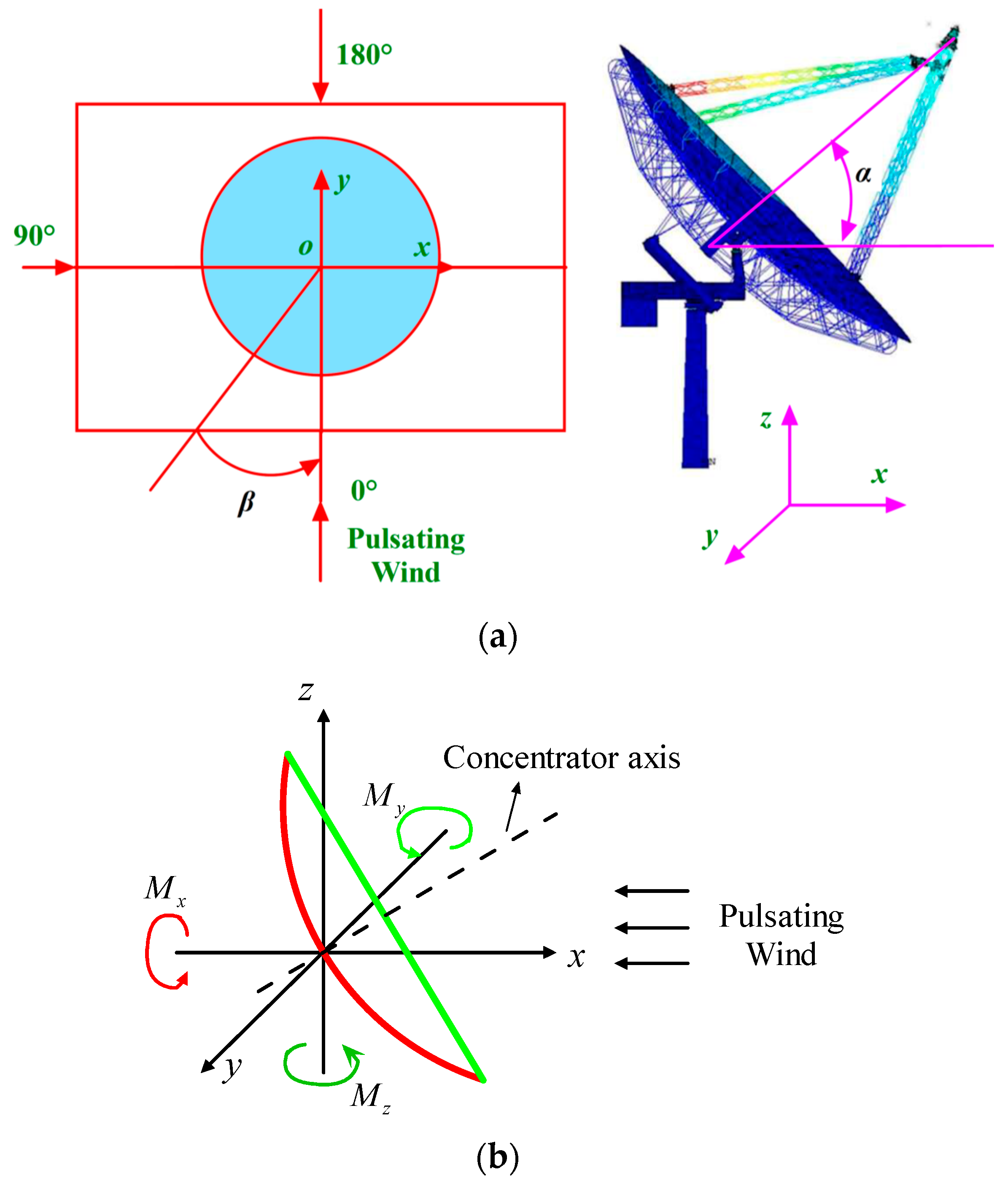
For the DCSTPS with 38 kW, the finite element model was constructed by using ANSYS 21.0, as shown in Figure 1.

2.1. Pulsating Wind Speed Spectrum

Pulsating wind, which is also known as gust pulsation, is caused by uneven wind force. Under the action of pulsating wind, the structure is vibrated, thereby affecting the stability of the structure. Pulsating wind is generated by atmospheric turbulence, which is the random movement of air particles. Turbulent fluctuations are the result of the superposition and interaction of eddies of various scales. The turbulent characteristics of wind are important factors affecting the aerodynamic properties of structures, including the turbulence intensity, turbulence integral scale, and fluctuating wind speed spectrum.
The Davenport spectrum [42] in the pulsating wind power spectrum is a mathematical model used to describe and analyze changes in wind speed. This model is particularly suitable for describing and predicting wind speed pulsation characteristics at specific time scales. The basic form of the Davenport spectrum of the wind speed can be expressed as follows:
S v n = v 10 2 4 k 1 x n 1 + x 2 4 / 3 x = 1200 n v 10
where Sv(n) is the pulsating wind power spectrum, m2/s; v10 is the average wind speed at a height of 10 m, m/s; k1 is the ground roughness parameter, which is related to terrain features and dimensionless; and n is the frequency of pulsating wind, Hz, which is the number of cycles per second.
It is very important that a frequency-dependent model is provided to describe the fluctuating characteristics of wind speed based on the Davenport spectrum. This model assumes that the fluctuation of wind speed is a random process, but its statistical characteristics can be described by power spectral density. A high value of power spectral density indicates a larger energy of wind speed pulsation at the corresponding frequency, while a low value indicates a smaller energy. In practical applications, the Davenport wind speed spectrum model can be used to evaluate the response of the system under wind loads, including vibration, fatigue, and stability issues. By analyzing wind speed fluctuations at different frequencies, we can better understand and predict the impact of wind on buildings and other structures and design safer and more economical structural solutions.

2.2. Simulation of Pulsating Wind Based on Autoregressive Method and Development of User-Defined Function

At present, for the simulation of wind speed methods, the used methods are mainly harmonic synthesis technology through the superposition of trigonometric functions and linear filtering technology based on digital filtering. Considering that harmonic synthesis technology is computationally complex, the generated wind speed data lack temporal continuity and differ from the actual wind speed variation curve. But the autoregressive method (AR) [52,53] can be used to predict the next moment’s wind speed by the wind speed data from a series of previous moments; therefore, it can effectively be used to simulate fluctuations in wind speed in this work.
The variation of the fluctuating wind speed is influenced by various factors, such as terrain and climate conditions, and there is high uncertainty. This uncertainty exists not only at the macro level but also at the micro level, resulting in fluctuating wind speeds exhibiting random characteristics. Therefore, the variation in fluctuating wind speeds can be regarded as a random process, and the theory of the random processes is applied to construct a model of the fluctuating wind speed to more accurately simulate and analyze the fluctuation of wind speed.
The p-order auto-regression (AR) model used to simulate pulsating wind characteristics can be expressed as:
X T = c + ϕ 1 X T 1 + ϕ 2 X T 2 + + ϕ p X T p + ε T
where XT is the fluctuating wind speed at time T; c is a constant term; ϕ1, ϕ2, …, ϕp are model parameters of the auto-regression model; and εT is the white noise error term.
The order p of the AR model [52,53] can be determined based on the actual wind speed data, and then the parameters ϕ1, ϕ2, …, ϕp and constant term c of the AR model can be estimated.
Assuming that the white noise error term εT of the AR(p) model can be expressed as:
ε T = X T c ϕ 1 X T 1 ϕ 2 X T 2 ϕ p X T p
the squared sum S of the white noise error term can be expressed as:
S = T = p + 1 n ε T 2
By combining Equations (3) and (4), Equation (5) can be obtained as follows:
S = T = p + 1 n ( X T c ϕ 1 X T 1 ϕ 2 X T 2 ϕ p X T q ) 2
The partial derivative of S for each parameter is calculated separately and made equal to 0, so the obtained system of equations can be shown in Equation (6).
S c = 0 S ϕ 1 = 0 S ϕ 2 = 0 S ϕ p = 0
Solving this system of equations, the estimated values of ϕ1, ϕ2, …, ϕp can be obtained, and then the estimated values of ϕ1, ϕ2, …, ϕp can be substituted into Equation (2) to obtain the time-series data of fluctuating wind speed.
A program for simulating the fluctuating wind was developed in the MATLAB (R2015b) platform by combining the AR model [52,53]. User-defined functions (UDFs) provide precise control, high flexibility, and improved simulation accuracy, saving computing resources and enhancing model applicability. By compiling with UDFs, this program can work in conjunction with Fluent software to import simulated pulsating wind time-series data for the simulation of the DCSTPS.
Firstly, the AR model is applied for debugging in Matlab, related functions are encapsulated, and the underlying algorithm logic is modified. And then Matlab language is converted to C++, mainly using code mixing conversion. Based on C++ language, the function rules of UDFs are defined, including grid definition, surface definition, and function definition. After compiling the CPP file, we perform relevant debugging in Fluent to solve issues such as crashes and overflows and make corresponding modifications. Finally, the entrance boundary is successfully set to pulsating wind speeds during simulation, allowing for simulation analysis of the DCSTPS.
We used the Davenport spectrum, such as in Equation (1), to verify the pulsating wind simulated using the AR method. Selected parameters showed that the pulsating wind frequency n is equal to 0.1, the ground roughness coefficient k1 is equal to 0.2, and the average wind speed v10 at a height of 10 m (Inner Mongolia Huiteng Xile Wind Farm, Ulanqab, China, with an annual average wind speed of 7.2 m/s at a height of 10 m) is equal to 7.2 m/s. Using the ARMA model, a pulsating wind simulation program was developed on the MATLAB platform, and Davenport power spectrum curves were created to validate the simulated time-series data of the wind speed.
It should be pointed out that the initial random numbers are used to generate random disturbances during the AR method simulation process for simulating the randomness and turbulence characteristics of the wind field. Each time it runs, the initial random numbers are different, which will generate different random number sequences, resulting in differences in the simulation results.

2.3. Wind-Induced Vibration Characteristic Parameters

(1)
Wind coefficient
The wind coefficient Cf can be expressed as shown in Ref. [54]:
F = 1 2 ρ v 2 A 1 C f
where F is the wind force, N; and A1 is the effective area of the object subjected to wind resistance, m2.
Force, moment analysis, and constraint effects of the DCSTPS are shown in Figure 2. According to Figure 2a, the wind force F and wind coefficient Cf can generally be decomposed into three components as follows [55]:
F x = 1 2 ρ v 2 A C x F y = 1 2 ρ v 2 A C y F z = 1 2 ρ v 2 A C z
where Fx is drag, N; Fy is lateral force, N; Fz is lift force, N; Cx is the drag coefficient; Cy is the lateral force coefficient; and Cz is the lift force coefficient.
(2)
Wind moment coefficient
The wind moment coefficient CM can be expressed as shown in Ref. [54]:
M = 1 2 ρ v 2 A 2 d C M
where M is the moment generated by the wind on the research object; A2 is the effective area of the part subjected to moment, and in this work, A2 = 251 m2; and d is the distance between the part subjected to moment and the rotating shaft, which is taken as 8 m in this work.
According to Figure 2b, the wind moment M and wind moment coefficient CM can generally be decomposed into three components as follows [55]:
M x = 1 2 ρ v 2 A 2 d C M x M y = 1 2 ρ v 2 A 2 d C M y M z = 1 2 ρ v 2 A 2 d C M z
where Mx is the rolling moment, N·m; My is the pitch moment, N·m; Mz is the azimuth moment, N·m; CMx is the rolling moment coefficient; CMy is the pitch moment coefficient; and CMz is the azimuth moment coefficient.

2.4. Fluid Domain Mesh Division of the Dish Concentrating Solar Thermal Power System

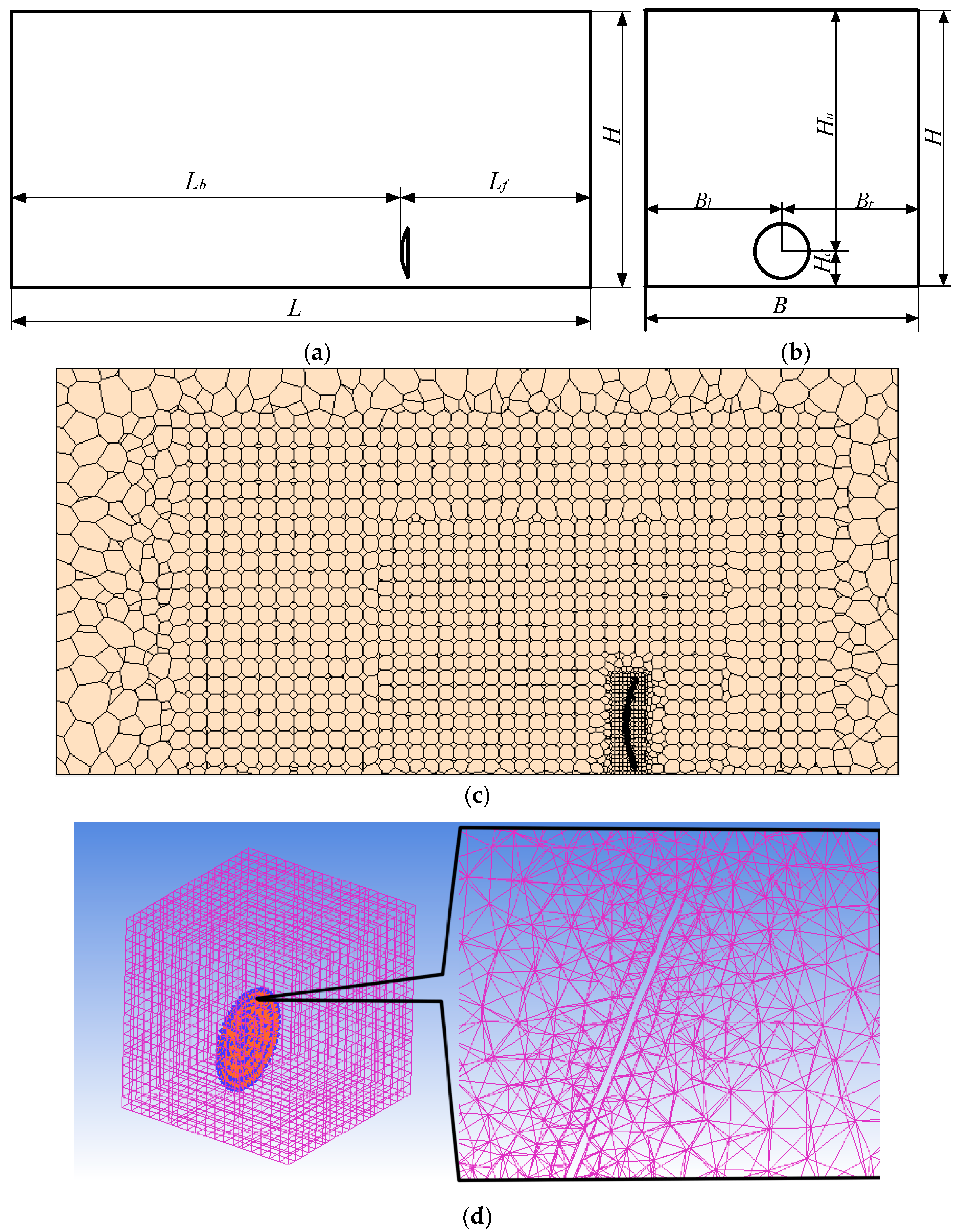
In this work, the nonlinear wind load characteristics analysis of the DCSTPS was mainly investigated. The diameter of the DSC is 17 m, and the thickness is 27 mm in order to make sure the airflow reaches a fully developed state in the fluid domain, and the length of it is approximately 10 times the size of the DSC, while the height and width of the fluid domain are approximately 5 times the size of the DSC. After multiple modeling simulations, the size of the fluid domain is set up as 170 m × 80 m × 80 m, with the model center at a height of 10 m from the ground and the wind inlet at a distance of 65 m from the model center.
The type and quantity of mesh directly affect the accuracy of the simulation results. Therefore, in order to ensure calculation quality and improve the calculation speed, a hybrid mesh combined with local encryption was adopted to do the mesh division. The surface from the DSC is divided into unstructured triangular mesh, and the outer flow field area is divided into locally encrypted polyhedral mesh. The surrounding area of the concentrator is densely divided with the wall, and the quality of polyhedral mesh is higher than that of tetrahedral mesh. With the same mesh size, the amount of mesh is much smaller. For relatively simple structures, the direction of polyhedral mesh is more suitable for the flow field direction, and the mesh discretization error is smaller. Smaller mesh sizes were used in the internal area near the DSC structure to address the complex boundary conditions of the structure in contact with the external flow field, and the larger mesh sizes were used in a larger area of the external flow field to improve computational speed. Fluid domain mesh division of the computational domain is shown in Figure 3. The set values of the calculation domain are shown in Table 2 in ref. [55].

2.5. Fluid Domain Simulation Condition Settings

Before setting boundary conditions, it is necessary to set the fluid domain of the model. The selected fluid medium in the fluid domain is air, which is incompressible and has a constant density of 1.18415 kg/m; the air temperature is 20 °C, the reference pressure is one standard atmospheric pressure, and the pulsating wind effect is non-stationary and contains strong instability. Therefore, the SST k-ω model from the turbulence model is selected. The number of time steps is 6000 steps, the time step is 0.1 s, and the iteration step is 20 times.
Three boundary conditions are adopted as follows:
(1)
Inlet boundary conditions: The fluid flow in this area is incompressible, and the inlet wind speed is simulated using a pulsating wind simulation program developed on the MATLAB platform. A UDF program for Fluent has also been developed.
(2)
Outlet boundary conditions: At the outlet, a pressure outlet boundary condition is adopted, with a pressure of one standard atmospheric pressure.
(3)
Wall conditions: The roughness of the fluid domain surface and the condenser surface is set to be smooth. The velocity on the non-slip wall is zero, and the fluid velocity at the wall is zero. The surface and ground of the concentrator adopt non-slip wall conditions. Sliding boundary conditions are adopted at the top, front, and back of the fluid domain.
In practice, the wind load on any structure is not uniform, especially for large structures such as a DSC. Considering that heat transfer was not considered in this numerical simulation, the governing equations are only the mass conservation equation and the momentum conservation equation [42]. In order to achieve high solution accuracy, improve computational speed, and accelerate equation convergence, a first-order upwind model is used for the discrete format, and the relaxation factor is set to a default value. And the wind coefficient and wind moment coefficient of the overall mirror surfaces were monitored. Therefore, the obtained wind force coefficient and wind moment coefficient are dynamic responses under actual working conditions rather than steady-state flow fields. After the simulation calculation was completed, post-processing of the simulation results is carried out, and the time-series data of the wind coefficient and wind moment coefficient of the DSC under pulsating wind are exported for subsequent processing and analysis.

2.6. Pulsating Wind Simulation Verification of the Dish Concentrating Solar Thermal Power System

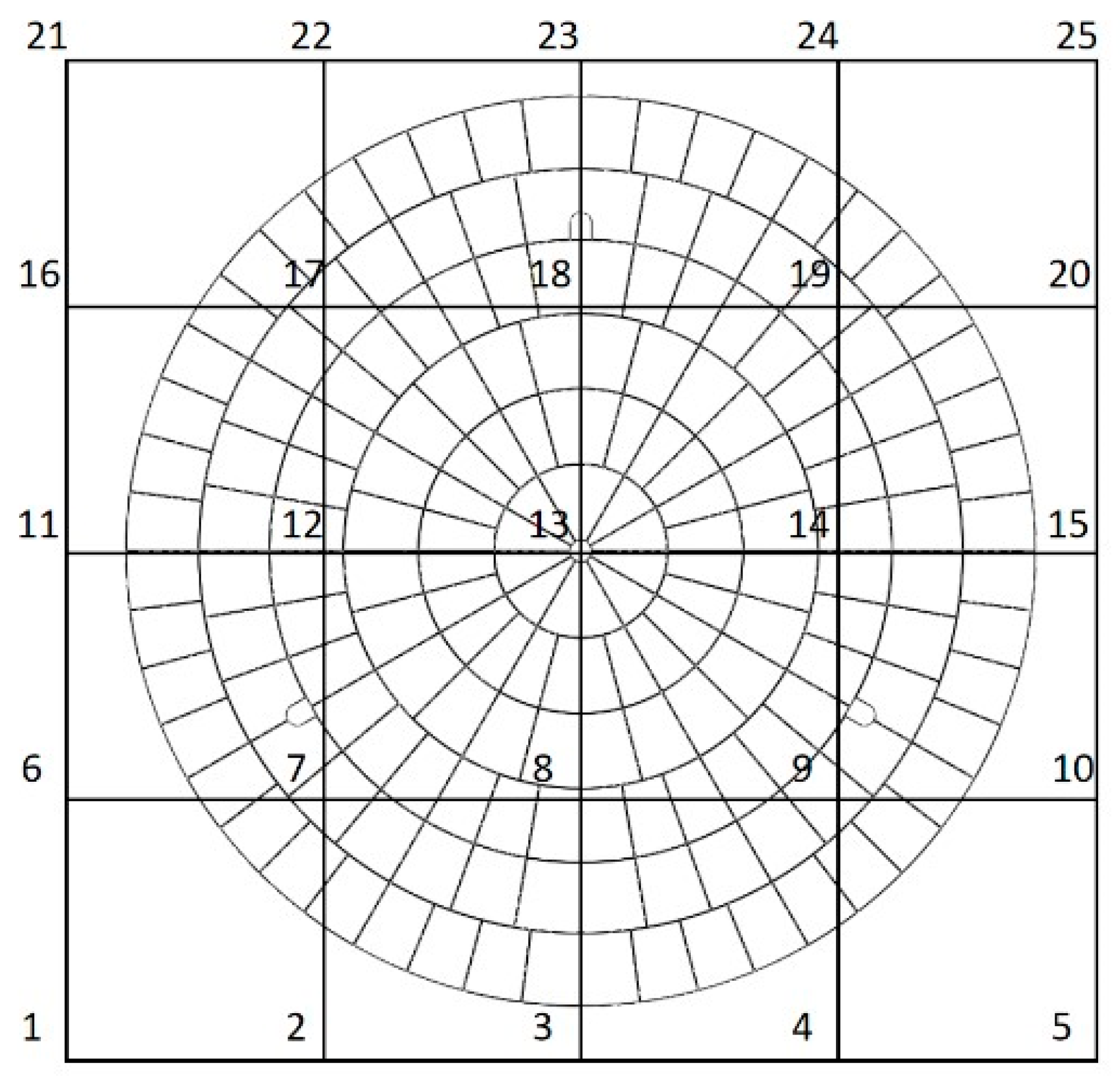
The overall analysis cannot reflect the specific wind load on each small mirror surface. Therefore, in this work, the wind load on the overall system and local (for example, the small mirror surface of the node 9 as shown in Figure 4) of the DSC is monitored and analyzed, which will provide a reference for the wind resistance and vibration resistance research of the DSC in the actual work of the solar thermal power generation system.
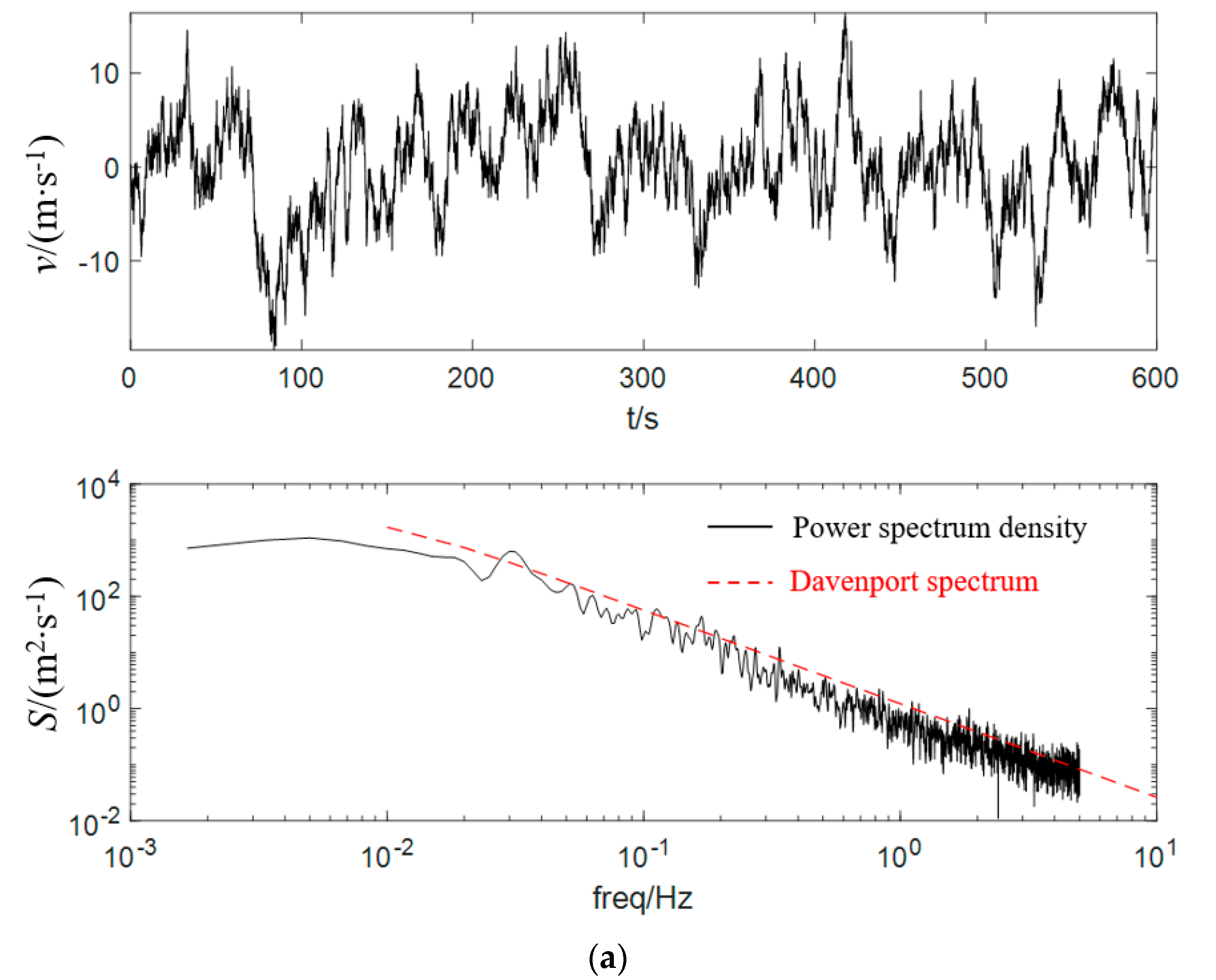
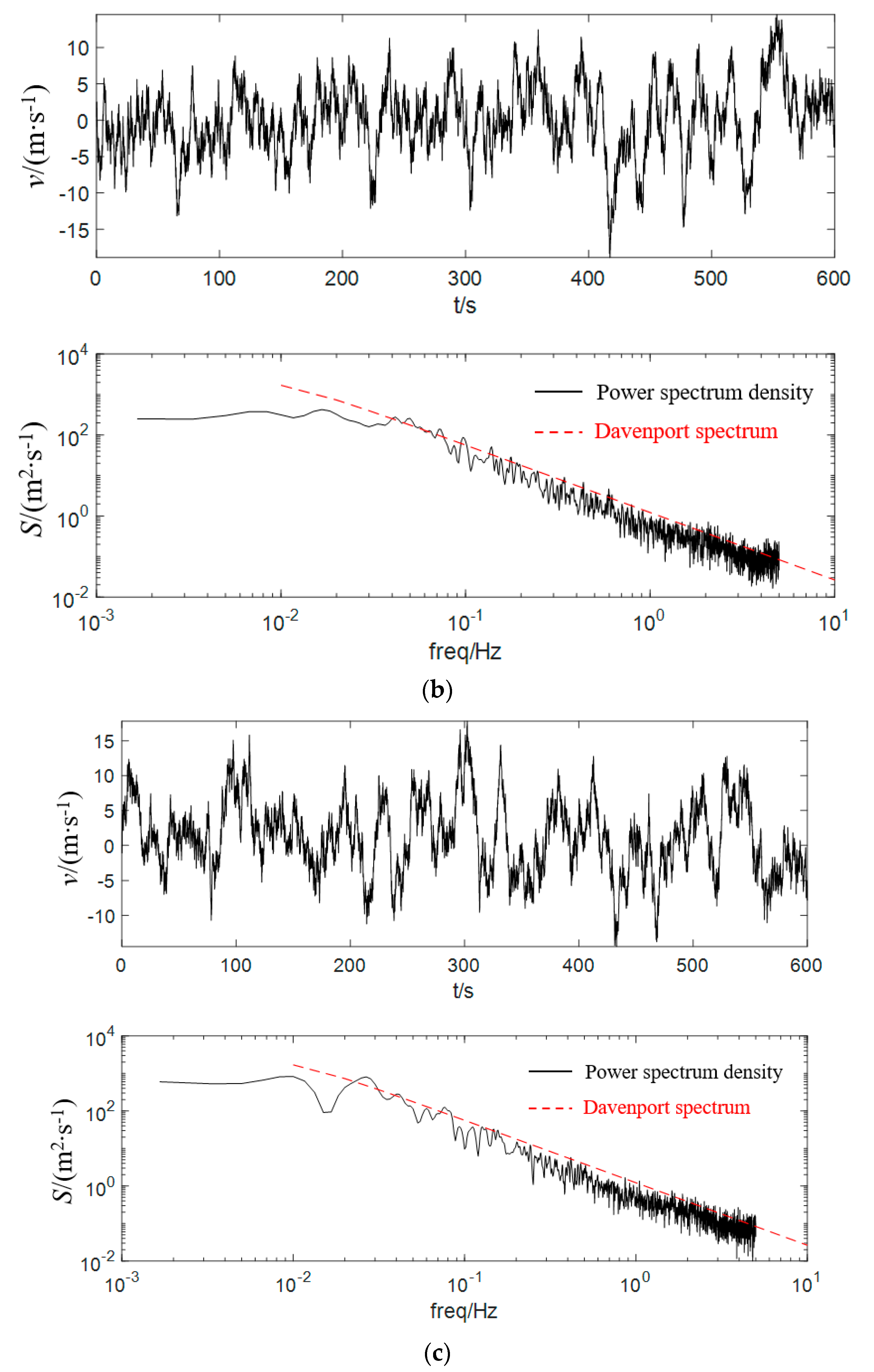
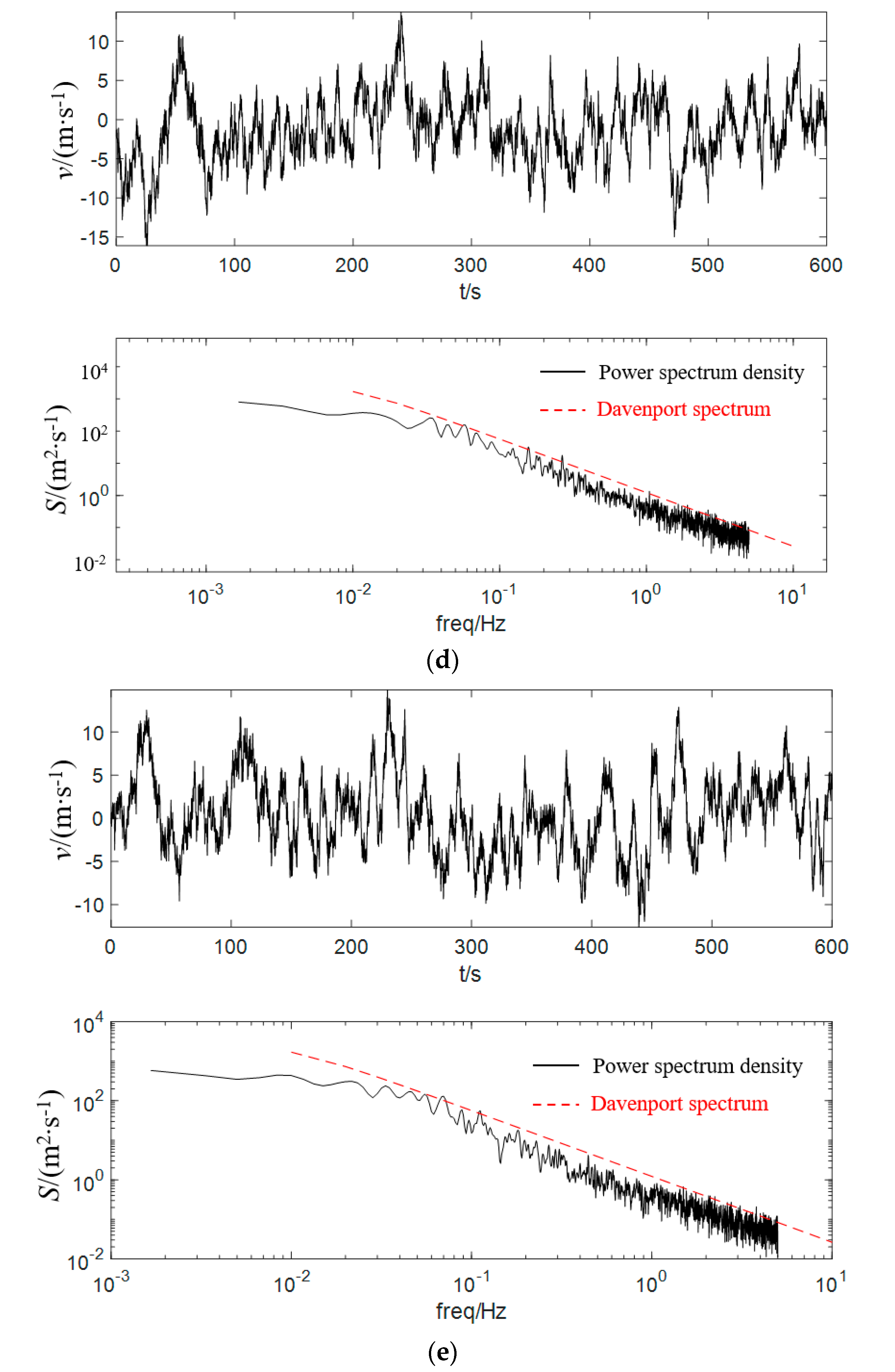
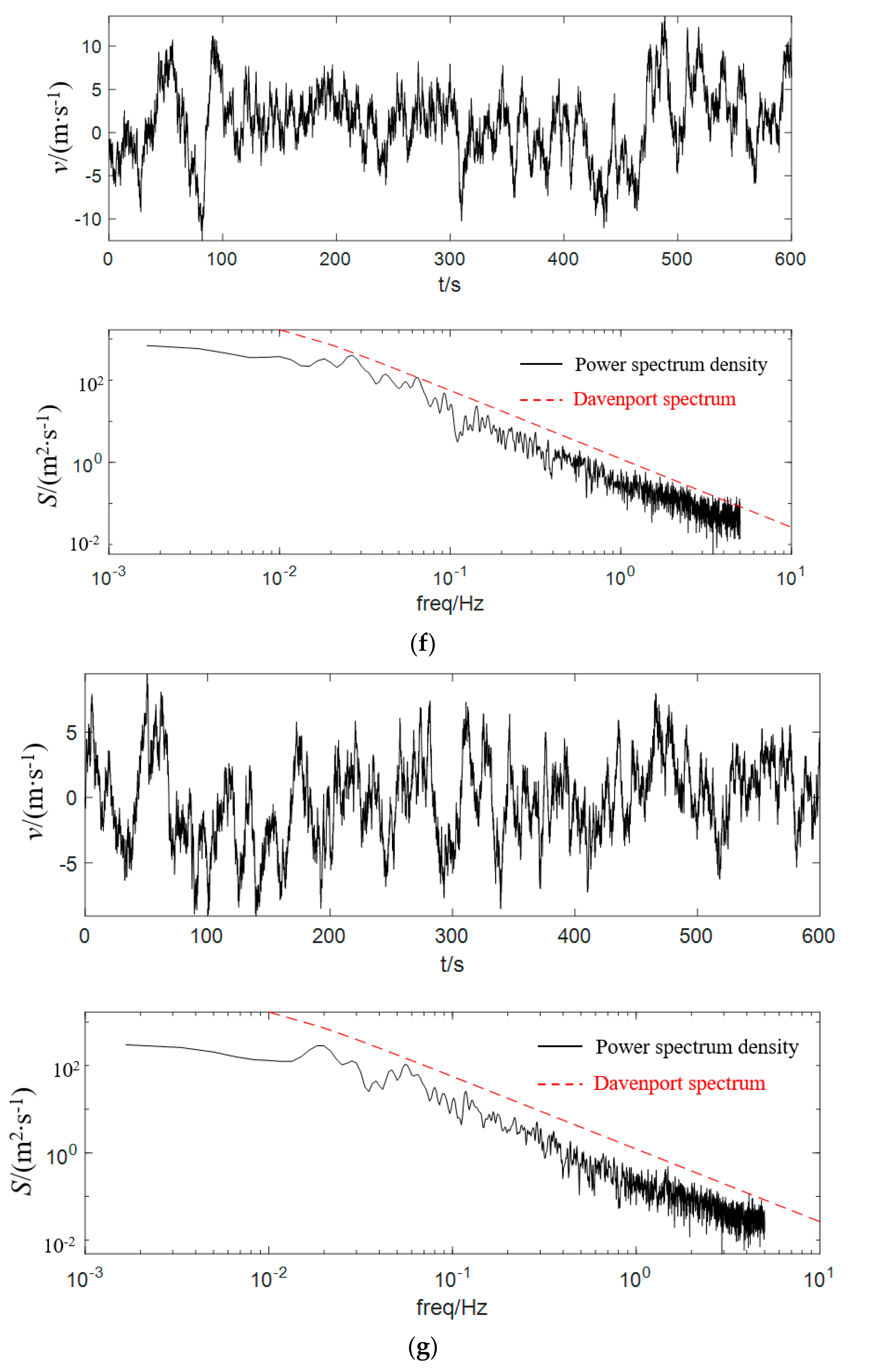
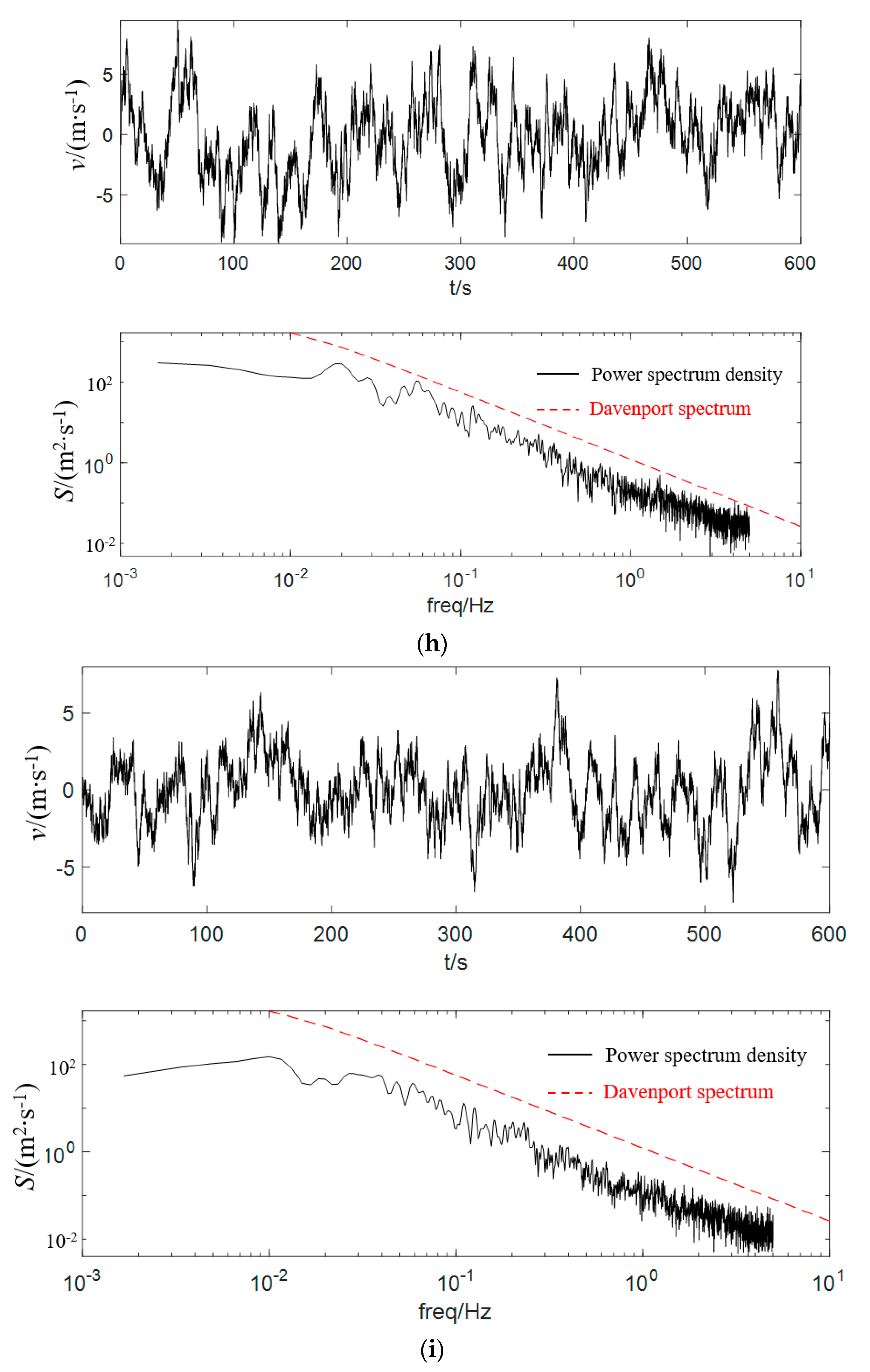
The diameter of the DSC is about 17 m, and pulsating wind speeds of 25 nodes, as shown in Figure 4, are simulated in a space of 400 m2, with a distance of 5 m between each node. The duration of pulsating wind speed is 600 s, and the step time is 0.1 s, including 6000 time history data points of the wind speed. The power spectrum density for the pulsating wind speeds of spatial nodes 7, 8, 9, 12, 13, 14, 17, 18, and 19 are selected as the analysis objects and compared with the wind speed pulsation characteristics set by the Davenport spectrum, and the wind speed time history chart and power spectrum chart of the representative nodes in the DSC are shown in Figure 5.
From Figure 5, it can be concluded that (1) the error between the power spectrum density for wind speed pulsation characteristics of spatial nodes 7, 8, 9, 12, 13, 14, 17, 18, and 19 and wind speed pulsation characteristics set by the Davenport spectrum gradually will increase with height increases in the simulated wind speed time history. Figure 5 also shows that the trends of the power spectrum density for wind speed pulsation characteristics in the nodes 7, 8, and 9 are in accordance with those of the Davenport spectrum, and there are smaller relative errors. Therefore, in the area of the DSC, nodes 7, 8, and 9 are selected to simulate the wind speed time history of the DSC.
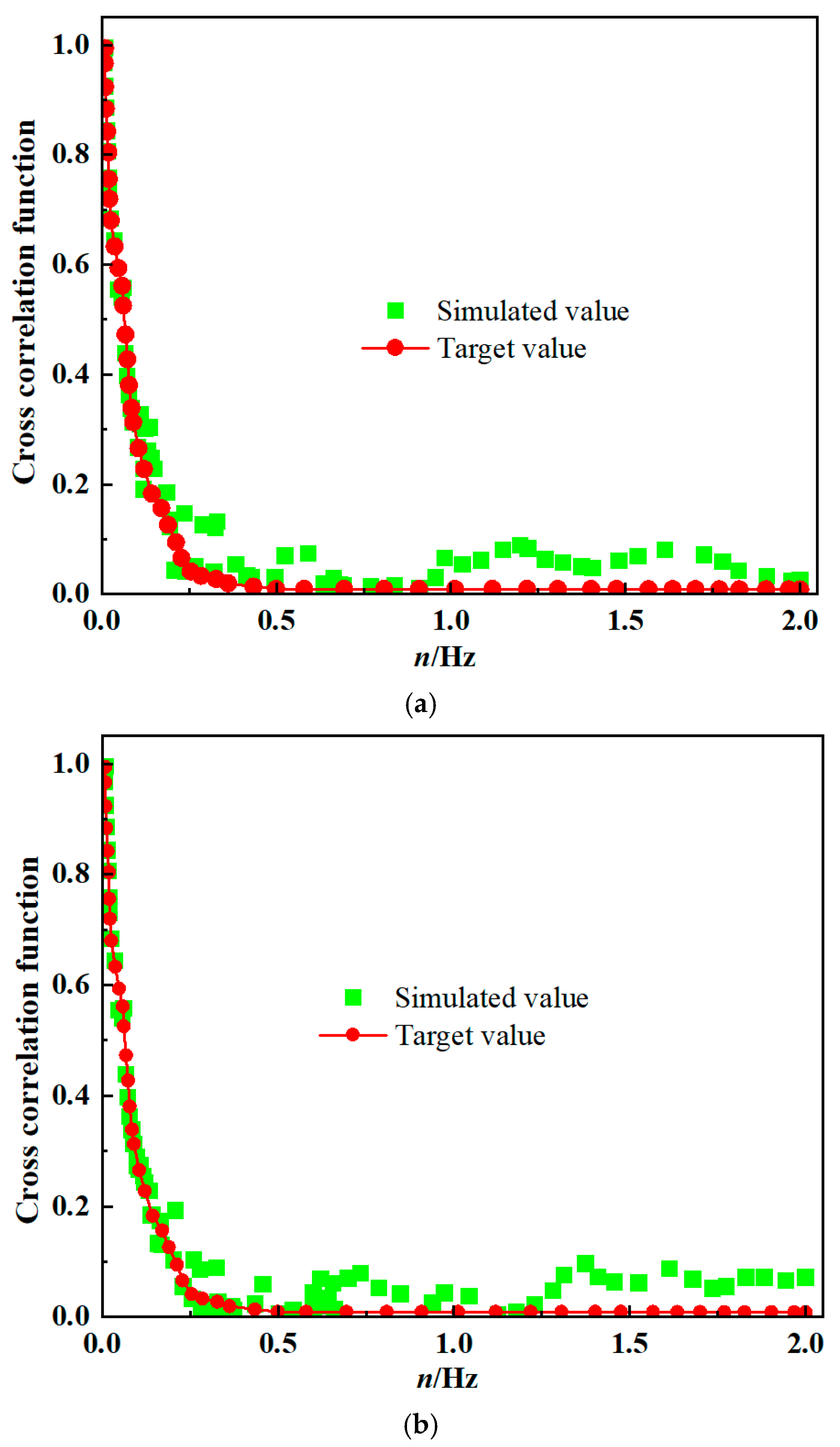
Figure 6 shows the cross-correlation function curves of the simulated value and target value between 7# node and 8# node, as well as 8# node and 9# node, respectively. From Figure 6, it can be seen that the simulated pulsating wind time history using this method satisfies the exponential decay law of the target value and is in good agreement with the objective function. The coherence of the fluctuating wind time history between nodes in the low-frequency range (0, 0.25) is significant but decreases with increasing frequency. Meanwhile, when the spacing between nodes is small, the correlation between the corresponding node data will be slightly greater.
According to Ref. [42], the edge area and the front and back ends of the DSC are the most strongly vibrating part of the DCSTPS; therefore, the simulated fluctuating wind speed time history at node 9 will be used to simulate the wind vibration characterization of a DCSTPS, and the mirror surface at node 9 is set as the monitoring surface to ensure the accuracy of the simulation results.

2.7. Verification of the Grid Independence

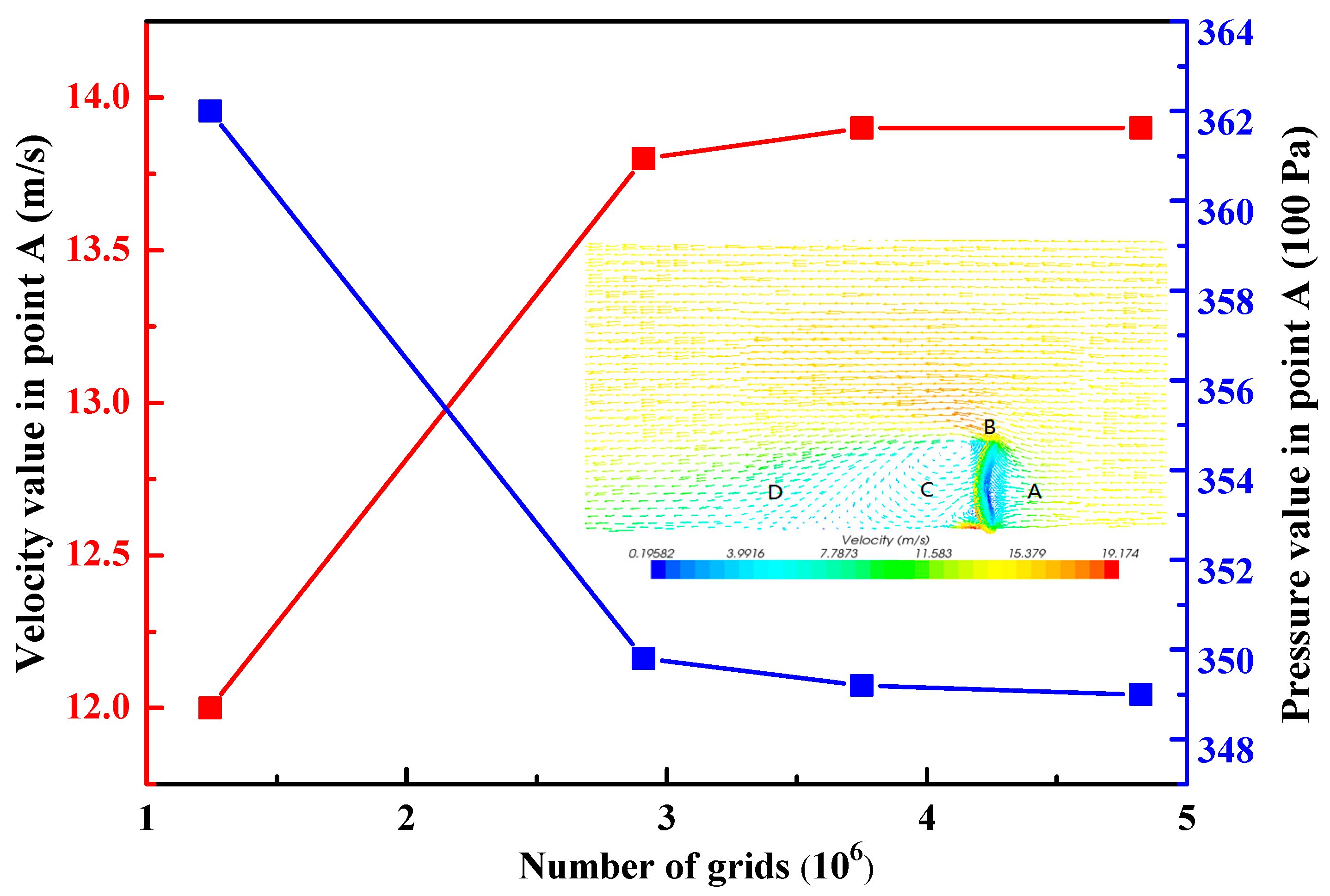
A verification study of the grid independence under α = 0° and β = 0°, shown in Figure 7, was conducted on the fluid simulation model to determine the optimal grid configuration for which the grid size of the dense area of the concentrator gradually increases, and simulations are conducted with a constant wind speed of 15.0 m/s to obtain the maximum outlet velocity. Four grid numbers of 1,244,284, 2,912,035, 3,750,343, and 4,824,643 are elected in the verification study of the grid independently.
When the grid number is greater than 2,912,035, the pressure values or the velocity values in point A draw near to a constant. And the velocity values in point A are 13.8 m/s and 13.9 m/s, respectively, under the grid numbers 2,912,035 and 4,824,643. The pressure values in point A are 349.8 Pa and 349.0 Pa, respectively, under the grid numbers 2,912,035 and 4,824,643. It is obvious that change rates for the pressure values or the velocity values in point A are just −0.72% and 0.23%, respectively, which shows that there is a small impact on the simulation results under the grid numbers 2,912,035 and 4,824,643. Thus, the grid number 3,750,343 is elected for wind vibration characterization simulation of the DCSTPS.

2.8. Verification of the Simulation Model

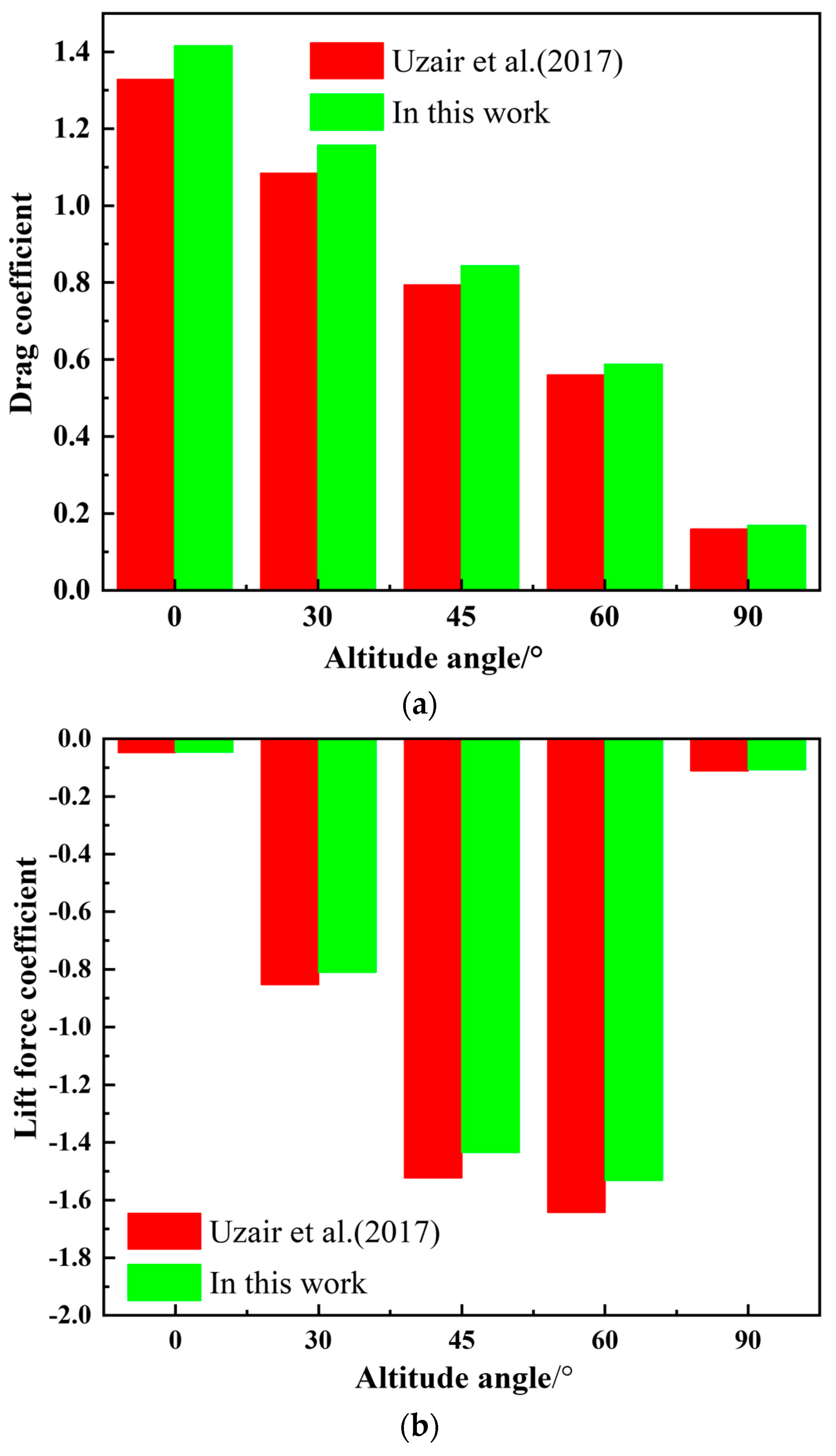
In order to verify the accuracy of the simulation model in this study, this section analyzes the model by comparing it with the simulation and experimental data in the existing literature. The experimental data of Uzair et al. [56] were selected as references in this study to compare the trends of the DSC’s drag and lift force coefficients with the altitude angle when the azimuth angle is 0°. Figure 8a,b show the comparison of the results of this study with those of previous studies, which show that the trends of the two coefficients with the altitude angle are in accordance with previous studies. Specifically, the drag coefficient decreases with an increasing altitude angle and reaches its maximum value at an altitude angle of 0°, while the lift force coefficient peaks at an altitude angle of 60°. For the relative error between simulation results and Uzair’s experimental data of the drag coefficient and lift force coefficient, they are 4.91–6.69% and 3.92–7.28%, respectively.
Considering the differences between the research object in this study and the previous study in terms of dimensions and shapes, as well as the necessary simplification of the model by omitting structures such as the base, DSC, and other supporting trusses during the modeling process, there may be significant differences in the wind load coefficients of the model in this study compared to those of the non-simplified model. Considering that the streamlined design of the base and other structures in the non-simplified model can reduce the wind load coefficient of the whole system to a certain extent, the wind load coefficient obtained from the simplified model in this study is naturally larger in absolute value than that of the previous study.
Based on this, combined with the reasonableness of the model simplification and the relative consistency of the simulation results, it can be concluded that the computational model established in this work is of valid.

3. Analysis and Discussion

3.1. Effects of Pulsating Wind Action on Wind Force Coefficient and Wind Moment Coefficient

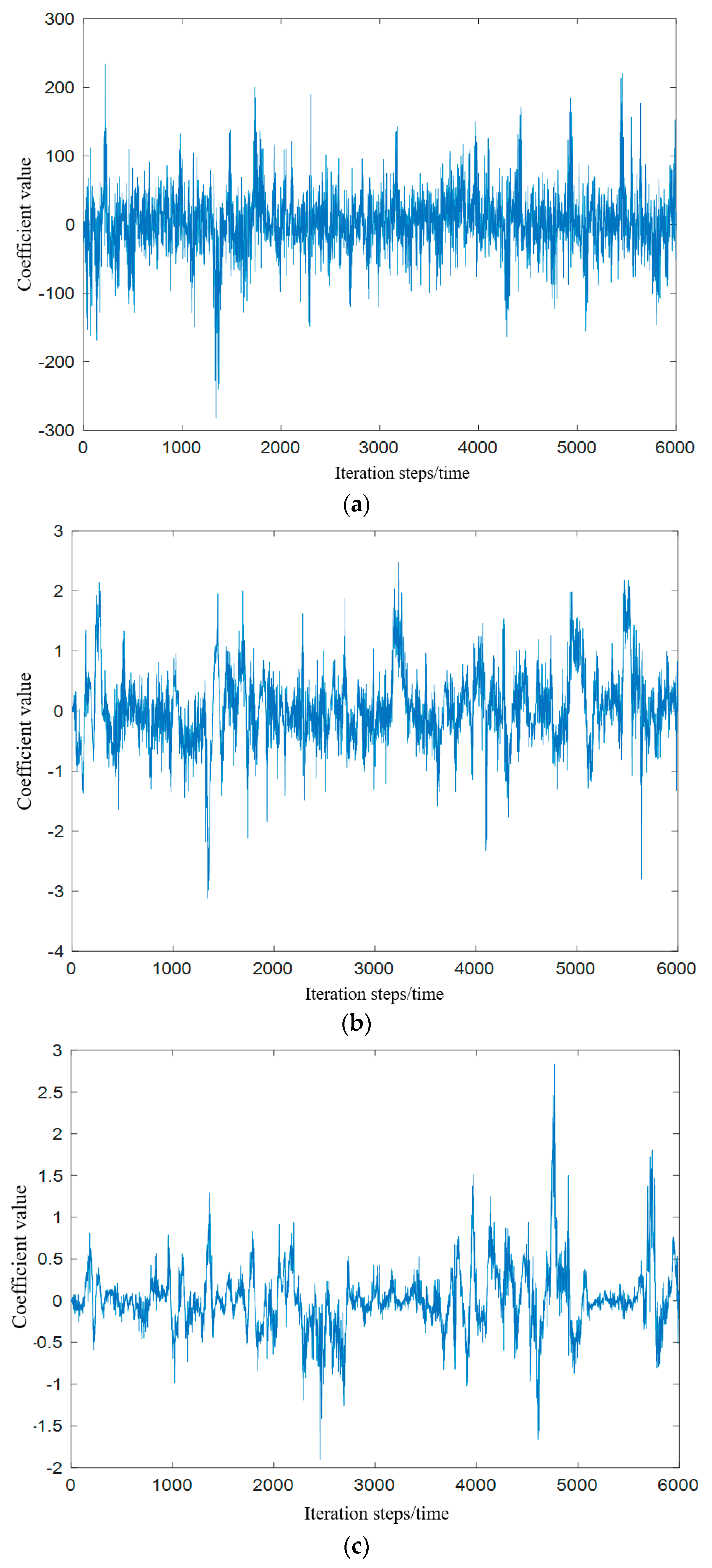
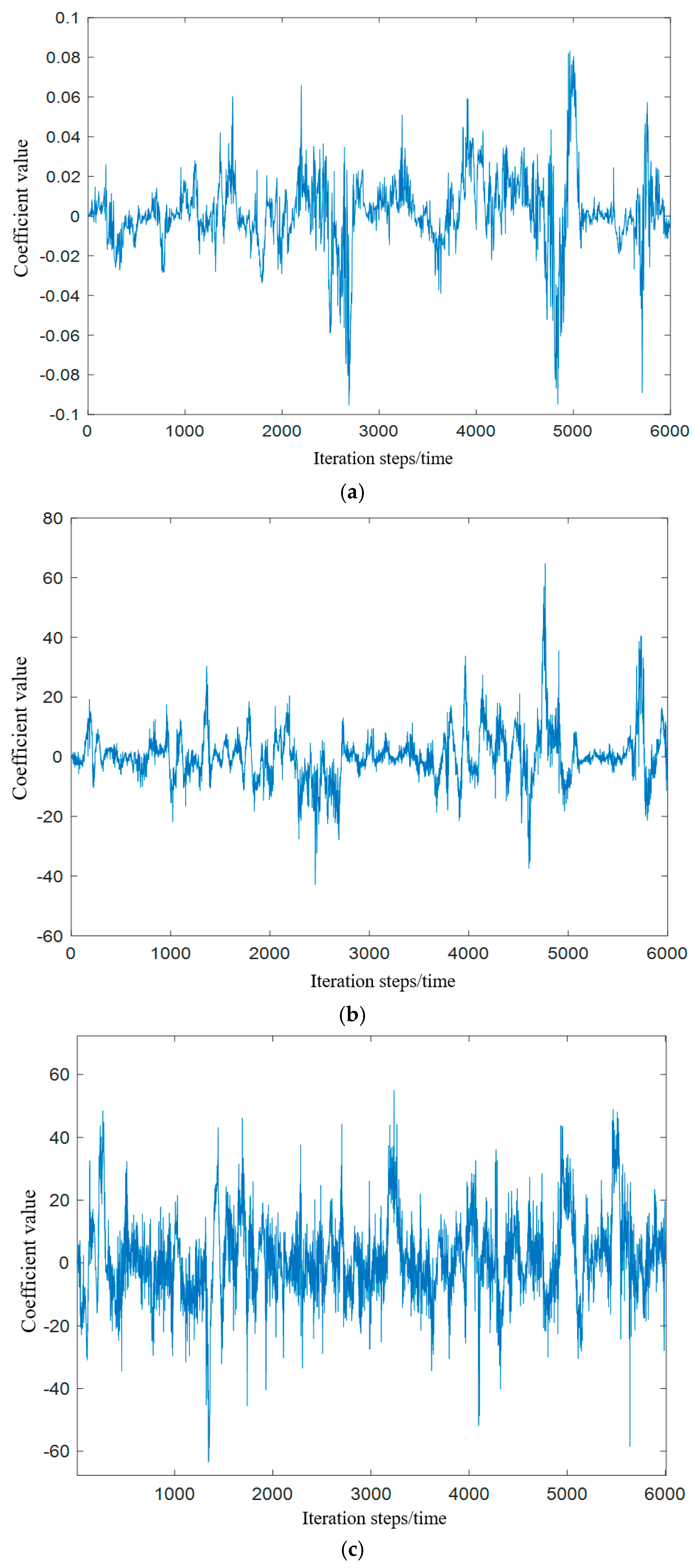
Based on the AR method to simulate fluctuating wind speeds, the compiled UDF was used to set the inlet boundary with the fluctuating wind speed at node 9 as the boundary condition. The model was simulated for eight different poses (azimuth angles α were 0° and 45°, and altitude angles β were 0°, 45°, 135°, and 180°). And 96 sets of time history data for the drag coefficient Cx, lateral force coefficient Cy, lift force coefficient Cz, roll moment coefficient CMx, pitch moment coefficient CMy, and azimuth moment coefficient CMz at node 9, as shown in Figure 4, were obtained. Figure 9 and Figure 10 show the time history data of the overall wind coefficient and wind moment coefficient of the DCSTPS under α = 0° and β = 0°.
Under the action of pulsating wind, the time history data of the relevant wind vibration coefficient shows irregular changes. It is preliminarily judged that the wind vibration coefficient of the DCSTPS under pulsating wind is a nonlinear change, and in-depth data analysis will be needed through nonlinear research methods in future work.
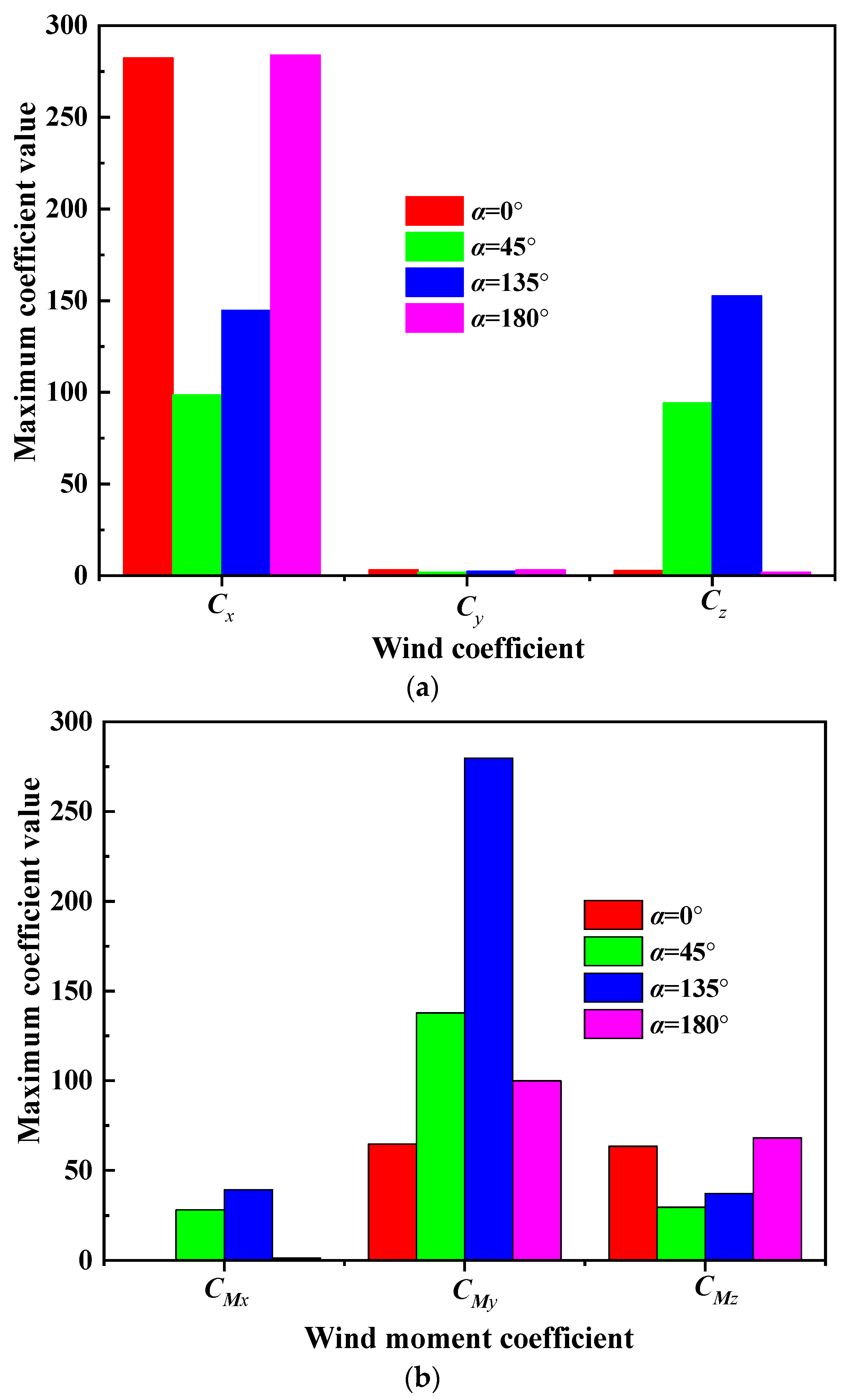
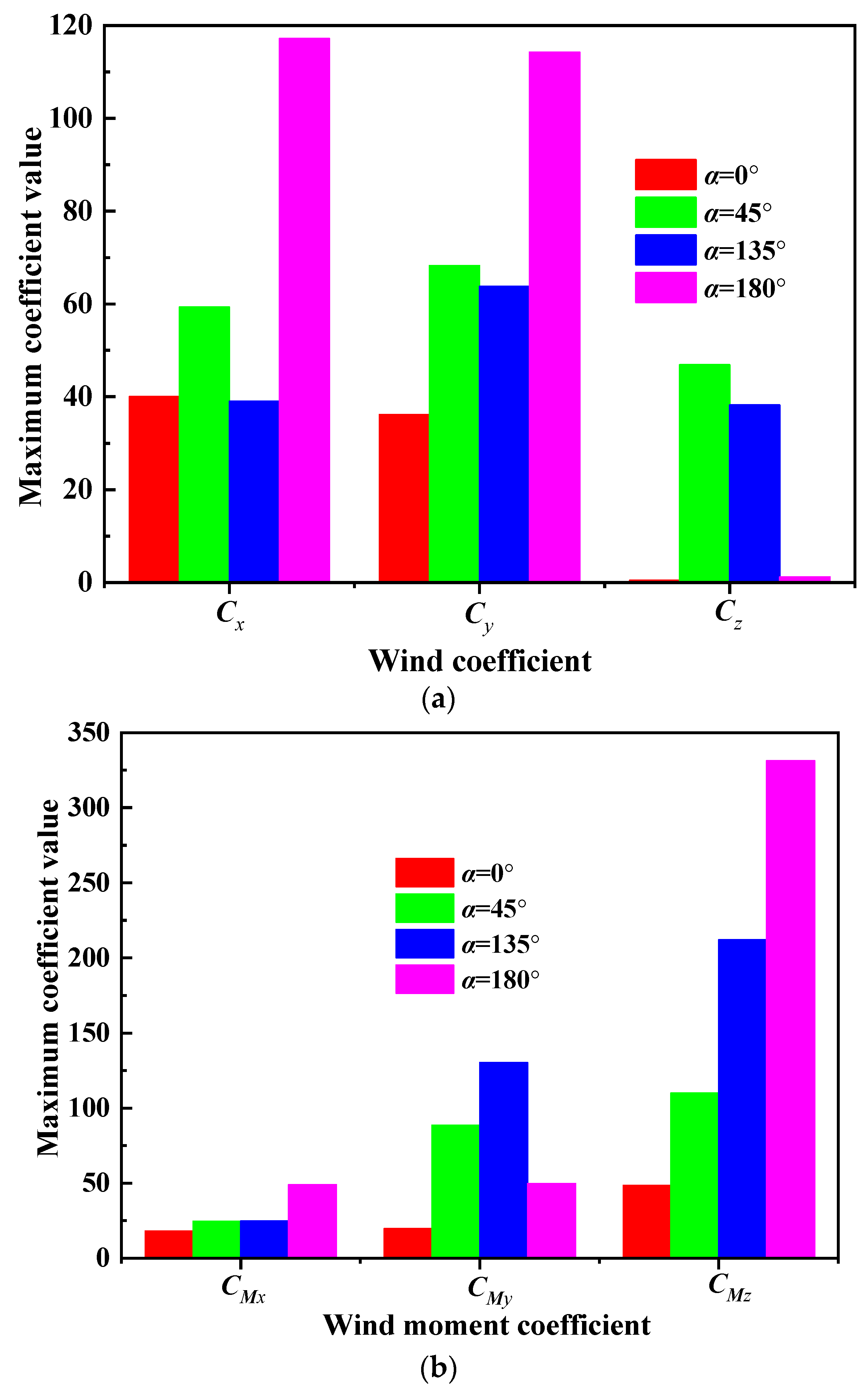
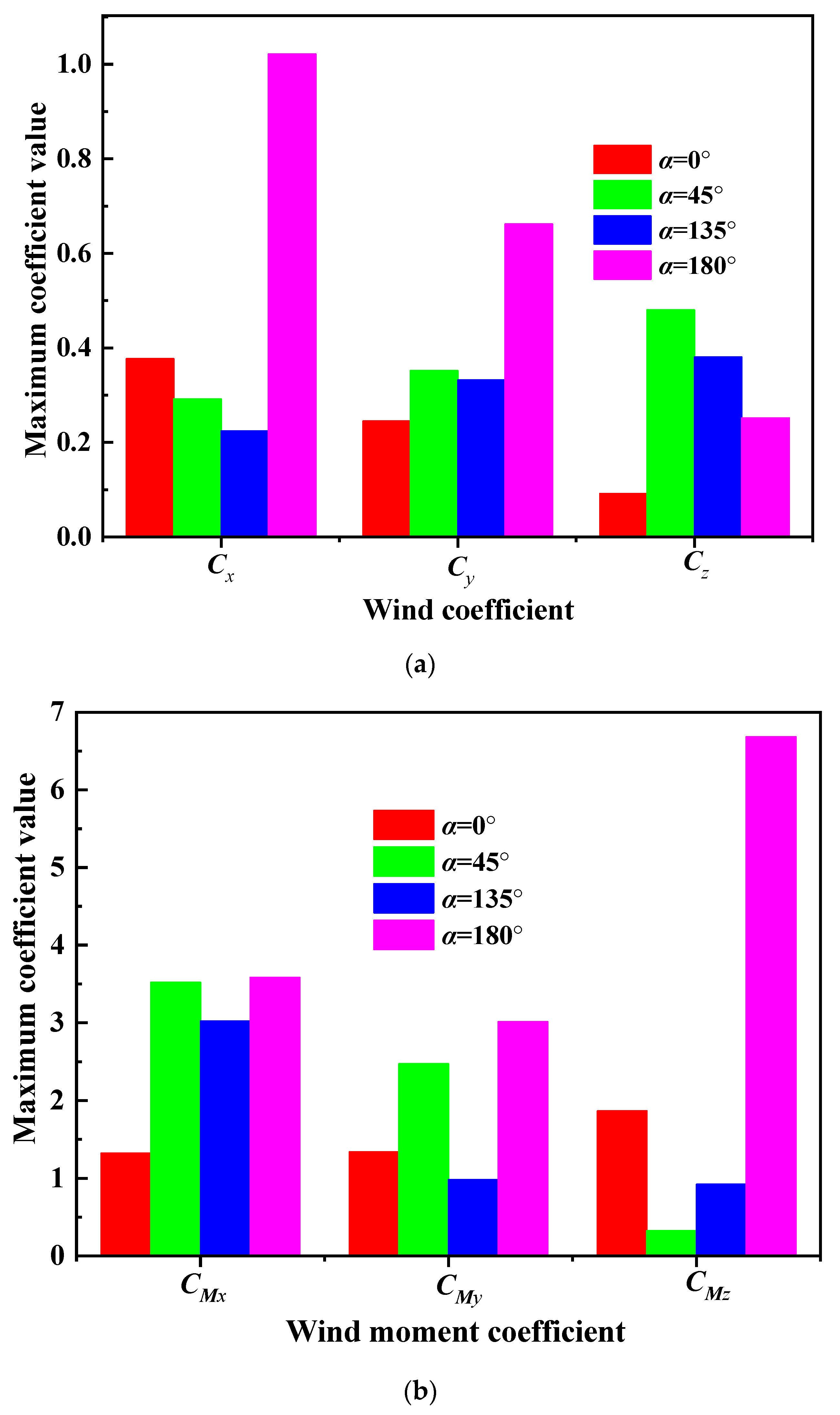
Figure 11 and Figure 12 show a comparison of the maximum values of the wind force coefficient and wind moment coefficient at different altitude angles. It can be concluded as follows:
(1)
For azimuth angle β = 0°, the maximum values of the lateral force coefficient Cy remain basically unchanged at different altitude angles. When the altitude angles are 0° and 180°, the drag coefficient Cx, lateral force coefficient Cy, and lift force coefficient Cz are of approximately equal maximum values, and the lift force coefficient Cz and drag coefficient Cx are close to each other when the altitude angles are 45° and 135°. And the maximum pitch moment coefficient CMy changes most significantly at different altitude angles, while the maximum pitch moment coefficient CMy at altitude angles of 45° or 135° is significantly greater than the maximum pitch moment coefficients at altitude angles of 0° and 180°.
(2)
For azimuth angle β = 45°, the drag coefficient, lateral force coefficient, and lift force coefficient are of approximately equal maximum values when the altitude angles are 45° and 135°. When the altitude angles are 0° and 180°, the lift force coefficient is close to 0, and the maximum pitch moment coefficients are also significantly smaller than the maximum pitch moment coefficients altitude angles of 45° and 135°.
Therefore, the maximum values of each coefficient basically follow the law of stable wind; that is, the drag and the lift force of the DCSTPS will increase together with the altitude angle increases, and the pitch moment of the DCSTPS will increase with the altitude angle.
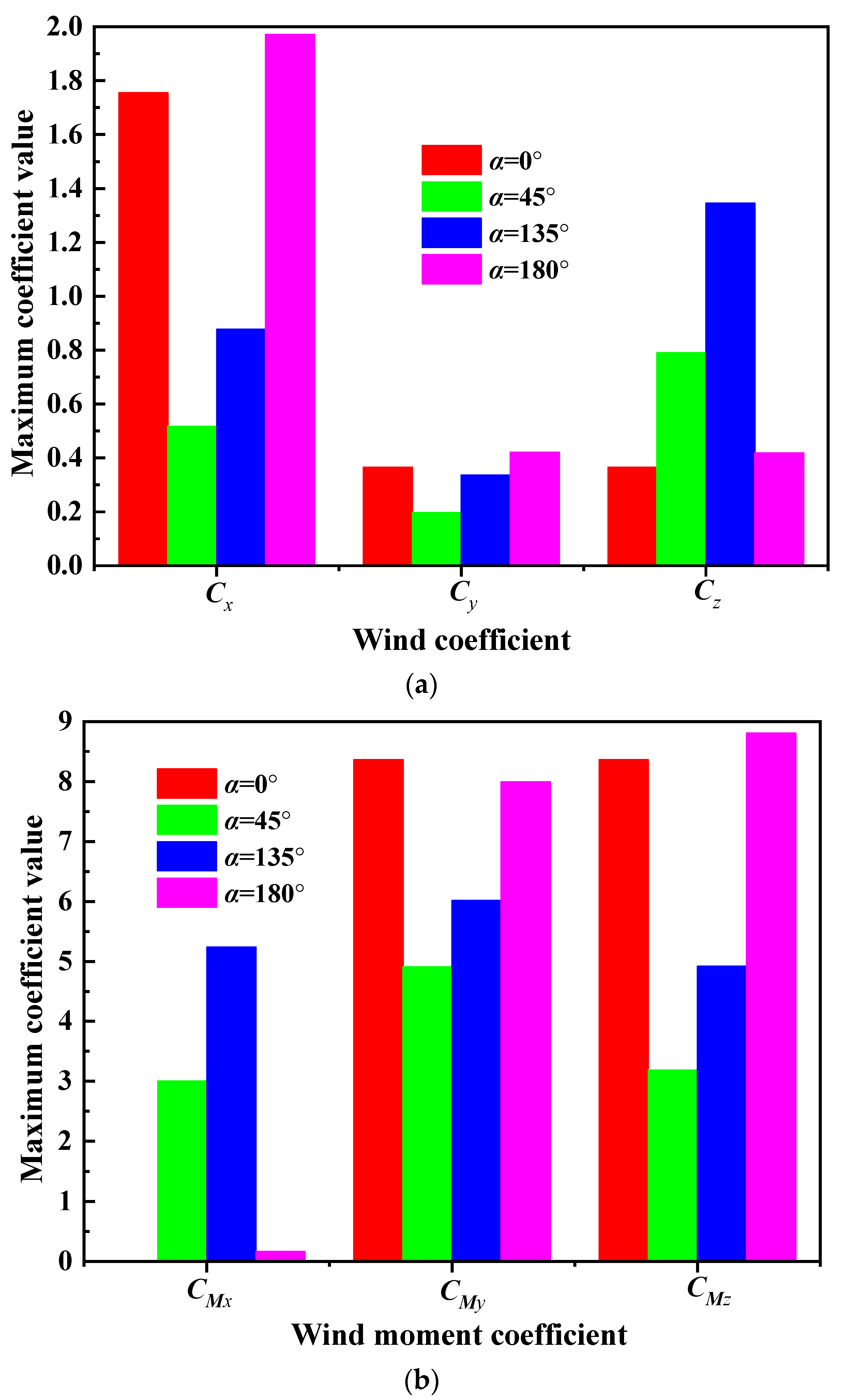
Figure 13 and Figure 14 show the wind vibration coefficient of the node 9 under β = 0° based on different altitude angles. It can be concluded as follows:
(1)
For azimuth angle β = 0°, the maximum lateral force coefficient Cy at different altitude angles is of the smallest value among the coefficients, and the change in the altitude angle has a relatively small impact on the maximum lateral force coefficient Cy. When the altitude angle is 0° or 180°, the drag coefficient Cx, lateral force coefficient Cy, and lift force coefficient Cz of the DCSTPS are of approximately equal maximum values. And the maximum drag coefficient will decrease, while the maximum lift force coefficient of the DCSTPS will increase when the altitude angle is 45° and 135°, respectively.
(2)
When the altitude angles are 0° and 180°, the maximum roll moment coefficients are also significantly smaller than the maximum roll moment coefficient altitude angles of 45° and 135°, but the maximum pitch moment coefficient and maximum azimuth moment coefficient are significantly greater than the maximum roll moment coefficient altitude angles of 45° and 135°.
Due to the fact that node 9 already has an angle in the mirror surface of the DSC, the maximum wind vibration coefficient will change complexly, and the change pattern of the wind vibration coefficient is not obvious when the azimuth angle changes.
Based on the above analysis, due to the action of pulsating wind, it can be concluded that the maximum values of the wind coefficient and wind moment coefficient-related components of the DCSTPS are affected by changes in the altitude angle and the azimuth angle during the pulsating wind action time. And effects of pulsating wind action and stable wind action on the wind force coefficient and wind moment coefficient are similar; that is, the drag coefficient Cx and the pitch moment coefficient CMy will decrease, and the lift force coefficient Cz will increase with altitude angle increases. And the drag coefficient, the pitch moment coefficient, and the azimuth moment coefficient are of larger values than the other force coefficient and moment coefficient.
Let the drag coefficient under β = 0° and under β = 45° as Cx1 and Cx2, and let the pitch moment coefficient under β = 0° and under β = 45° as CMy1 and CMy2; moreover, let the azimuth moment coefficient under β = 0° and under β = 45°as CMz1 and CMz2; with this, the changes in some wind force coefficients and wind momentum coefficients of node 9 are shown in Table 1.
Based on Table 1, it can be shown that the drag coefficient Cx1, the pitch moment coefficient CMy1, and the azimuth moment coefficient CMz1 under β = 0° are much greater than the drag coefficient Cx2, the pitch moment coefficient CMy2, and the azimuth moment coefficient CMz2 under β = 45°, respectively. And the maximum rate of their change is −364%, −524%, and −432%, respectively.

3.2. Chaos Behavior of Wind-Induced Vibration Characteristic of a Dish Solar Thermal Power System

3.2.1. Improvement and Verification of Phase Space Delay Reconstruction Method

(1)
Steps of phase space delay reconstruction method
The phase space delay reconstruction method is a method used to deal with nonlinear dynamical systems that reconstructs the state space of the system into the phase space to reveal the dynamic characteristics of the system. The phase space reconstruction technique has two key parameters [57]: the embedding dimension m and the delay time τ. The embedding dimension and time delay must be selected appropriately according to the actual situation.
Step 1: Determining the delay time τ;
Step 1.1: Autocorrelated function method for determining the delay time τ.
The autocorrelated function is a relatively simple method for calculating the delay time τ, mainly used to extract linear correlation between sequences.
For a given time series x(t), its autocorrelation function is expressed as follows:
R ( τ ) = t = 1 N τ [ x ( t ) x m ] [ x ( t + τ ) x m ] t = 1 N [ x ( t ) x m ] 2
where t is the time of the time series; N is the length of the time series; and xm is the average value of the time series.
Next, we focus on creating an autocorrelation function curve and finding the corresponding τ value when the autocorrelation function crosses the initial value R(0) = 1 − 1/e for the first time, which is the delay time τ for reconstructing the phase space.
Step 1.2: Mutual information method for determining the delay time τ
Assuming that the systems composed of two discrete information series {s1, …, sm} and {q1, …, qn} are, respectively, system S and system Q, the information entropies obtained from the two systems are expressed as follows:
H ( S ) = i = 1 m P S s i log 2 P S S i H ( Q ) = j = 1 n P Q q j log 2 P Q q j
where PS(si) is the probabilities of events si in system S, i = 1, 2, …, m; and PQ(qj) is the probabilities of events qj in system Q, j = 1, 2, …, n.
Then, the calculation formula of interactive information I1(S, Q) of system S and system Q is:
I 1 S , Q = H S + H Q H S , Q H S , Q = j = 1 m j = 1 n P S , Q ( s i , q i ) log 2 [ P S , Q ( s i , q i ) ]
where PS,Q(si,qj) is the joint distribution probability of event si and event qj.
By using the equidistant grid method to calculate the joint probability distributions PS,Q(si,qj), as well as the probability distributions PS(si) and PQ(qj) of S and Q, the standardization I(S, Q) of interactive information is expressed as follow:
I ( S , Q ) = I 1 ( S , Q ) H ( S ) H ( Q )
Assuming that S is time series x(i) and Q is time series x(i + τ), then {S, Q} = {x(i), x(i + τ)}, 1 ≤ inτ.
The definition of I(τ) = I(S,Q) is a function of the delay time τ, namely I(τ) = I{x(i), x(i + τ)}. And I(τ) = 0 indicates that x(i) and x(i + τ) are completely unpredictable, meaning they are completely unrelated.
And the delay time τ corresponding to the first decrease of the mutual information curve I(τ) = I(S,Q) to a minimum value is the optimal delay time. The first minimum value of the I(τ) represents the maximum possible uncorrelation between x(i) and x(i + τ). When reconstructing the phase space, the first minimum value of the I(τ) is taken as the optimal delay time τ.
Step 2: Determining the minimum embedding dimension d
In this work, Cao’s method was used to calculate the minimum embedding dimension d.
Cao’s method only requires one parameter as the delay time τ to calculate the minimum embedding dimension d with a small amount of data. Assuming there is a time series x(1), …, x(n), the vector space constructed based on the delay time τ is:
y i ( d ) = { x ( t ) , , x [ t + ( d 1 ) τ ] } , 1 t n ( d 1 ) τ
where yi(d) represents the i-th d dimensional reconstruction vector.
We define variable a(i, d) as follows:
a ( i , d ) = | | y i ( d + 1 ) y n ( i , d ) ( d + 1 ) | | / | | y i ( d ) y n ( i , d ) ( d ) | | , i = 1 , 2 , n d τ
where ||…|| is the maximum number of models; and y n ( i , d ) ( d ) is the nearest Euclidean point in d dimensions.
We define variable E(d) as follows:
E ( d ) = ( n d τ ) 1 i = 1 n d τ a ( i , d )
In order to investigate the change in the variable E(d) from d to d + 1, letting E1(d) = E(d + 1)/E(d), with no more changes or very little changes for E1(d), then d + 1 is the minimum embedding dimension when the value d was greater than a certain value d0.
In addition to E1(d), a variable E2(d) was defined as follows:
E 2 ( d ) = E ( d + 1 ) / E ( d ) E ( d ) = ( n d τ ) 1 i = 1 n d τ | x ( i + d τ ) x ( n ( i , d ) + d τ ) |
where n(i, d) is the integer of the nearest Euclidean point in d dimensions, and n(i, d) ≠ i.
For random sequences, there is no correlation between data, and E2(d) = 1. For deterministic sequences, the relationship between data points depends on the variation in the minimum embedding dimension d, and there are always some values that make E2(d) ≠ 1.
Step 3: Reconstructing the phase space
Step 3.1: Selecting data points from the time series and constructing a delay vector based on the delay time τ and the minimum embedding dimension d.
Step 3.2: Using all delay vectors as points to construct an m-dimensional phase space.
Step 3.3: Choosing the delay time τ and the embedding dimension m, where the delay time τ refers to the time interval between adjacent points in the time series, and the embedding dimension m is the dimension of the reconstructed phase space.
Step 3.4: Constructing a delay vector.
For each point x(t) in the time series, we construct an m-dimensional delay vector X(t), and the i-th component of the delay vector X(t) is x{t + (i − 1)τ}, where i = 1, 2, …, m. For example, if τ = 2 and m = 3, then the delay vector X(t) = {x(t), x(t + 2), x(t + 4)}. Then, we fill the phase space and treat each delay vector X(t) as a point in the m-dimensional phase space. Over time, these points will fill the entire m-dimensional space, forming a trajectory that reveals the dynamic behavior of the system.
(2)
Improved phase space delay reconstruction method
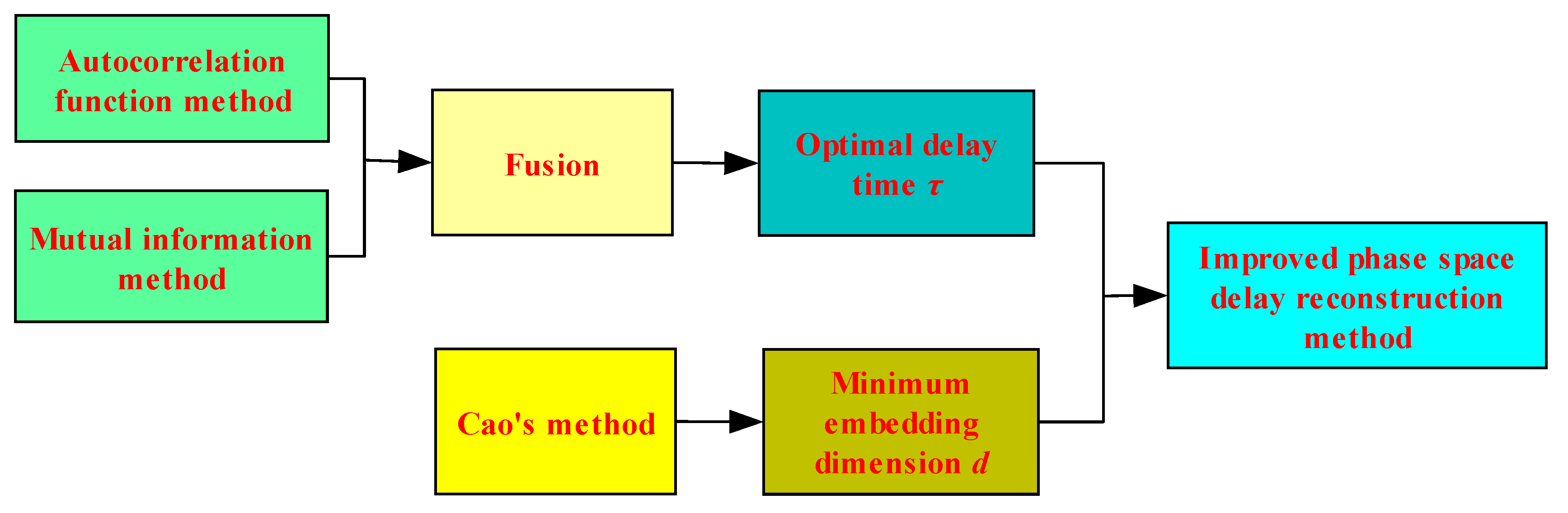
Figure 15 shows flow chart of the improved phase space delay reconstruction method. The key to phase space reconstruction lies in the selection of the optimal delay time τ and the minimum embedding dimension d. The appropriate delay time τ is crucial, as it directly affects the quality of the reconstructed phase space. The autocorrelation function method and mutual information method are two commonly used methods to estimate the optimal delay time τ. By combining these two methods, the delay time τ can be calculated more accurately.
Firstly, independently applying these two methods and obtaining their respective optimal delay times is necessary. For the autocorrelation function method, finding the point where the autocorrelation function firstly crosses zero can be determined as the delay time τ1. For the mutual information method, observing the changes in mutual information and finding the point where the interactive information value begins to significantly decrease can also be determined as the calculated delay time τ2. The difference between the two delay times τ1 and τ2 was analyzed to give different weights w1 and w2 to these two delay times τ1 and τ2 based on the specific situation of the actual analysis object through weighted averaging, and then the weighted average was calculated as the final delay time τ = w1τ1 + w2τ2.
The method of determining the weighted average was mainly based on the following points:
(a)
Characteristics of the time series: If the time series is of strong nonlinear and chaotic characteristics, a mutual information method is more effective in this case because it can capture nonlinear relationships. At the same time, the mutual information method is usually more sensitive to nonlinear and complex systems than the autocorrelation method, and a higher proportion of mutual information method should be given. On the contrary, if the time series is linear or is of obvious periodicity, a higher proportion of the autocorrelation method should be given.
(b)
Noise level: In situations with high noise levels, the mutual information method may be more robust, so its proportion increase should be considered.
(c)
Expert experience: In the absence of clear guidance, the experience and intuition of experts are also important factors in determining the different weights w1 and w2 to the two delay times τ1 and τ2. Experts can propose reasonable weighting suggestions based on their understanding of data characteristics and analysis objectives.
(3)
Verification of the improved phase space delay reconstruction method
The Lorenz model is a classic chaotic dynamical system consisting of three ordinary differential equations used to describe chaotic systems:
d x d t = σ ( y x ) d y d t = x ( ρ 1 z ) y d z d t = x y γ z
where x, y, and z are the three coordinates of the system, σ is the Prandtl number, ρ1 is the Rayleigh number, and γ is the directional ratio.
The Lorenz model takes the values of three variables at a certain time as the coordinates of a point in three-dimensional space, and the sequence of numbers forms a sequence of points, recording the behavior of the entire system. The equation of the Lorenz model is expressed as follows:
The selection of three parameters (namely the Prandtl number σ, the Rayleigh number ρ1, and the directional ratio γ) plays an important role in determining whether the system will enter a chaotic state.
The typical parameter values for the Lorenz model exhibiting chaotic behavior are σ = 10, ρ1 = 28, and γ = 8/3, where time-series data x, y, and z can be obtained, respectively. The improved phase space delay reconstruction method was used to carry out the delay reconstruction using the obtained time-series data, and the optimal delay time τ and the minimum embedding dimension d are determined to obtain the reconstructed phase space. Then, the shape of the attractor of the reconstructed phase space was analyzed to verify whether it can reflect the dynamic characteristics of the Lorenz system and validate the effectiveness of the improved phase space delay reconstruction method.
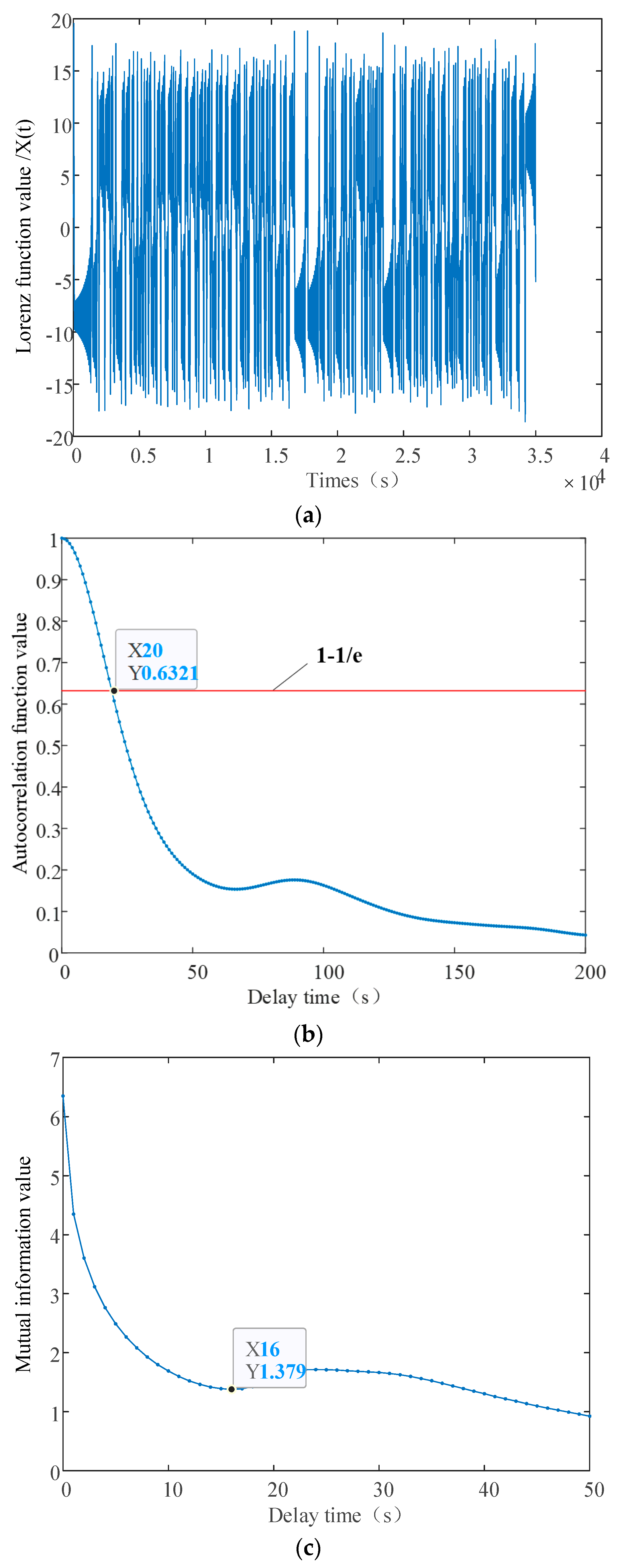
Let σ = 10, ρ1 = 28, and γ = 8/3, with initial values of x, y, and z [1, 1, 1], and generate 3 × 350,000 sets of time-series data for the X, Y, and Z phases, selecting X-phase time-series data, as shown in Figure 16a. According to the improved phase space delay reconstruction method, the optimal delay time is obtained through the autocorrelation function method and the mutual information method, as shown in Figure 16b,c.
According to the autocorrelation function method, the optimal delay time τ1 is calculated to be 20. According to the mutual information method, the optimal delay time τ2 is calculated to be 16. Due to the strong nonlinear characteristics of the Lorenz system, after multiple calculations, adjustments, and optimizations, the final weight w1 is 0.2, and the weight w2 is 0.8. Therefore, the final delay time τ = w1τ1 + w2τ2 = 16.8 ≈ 17.
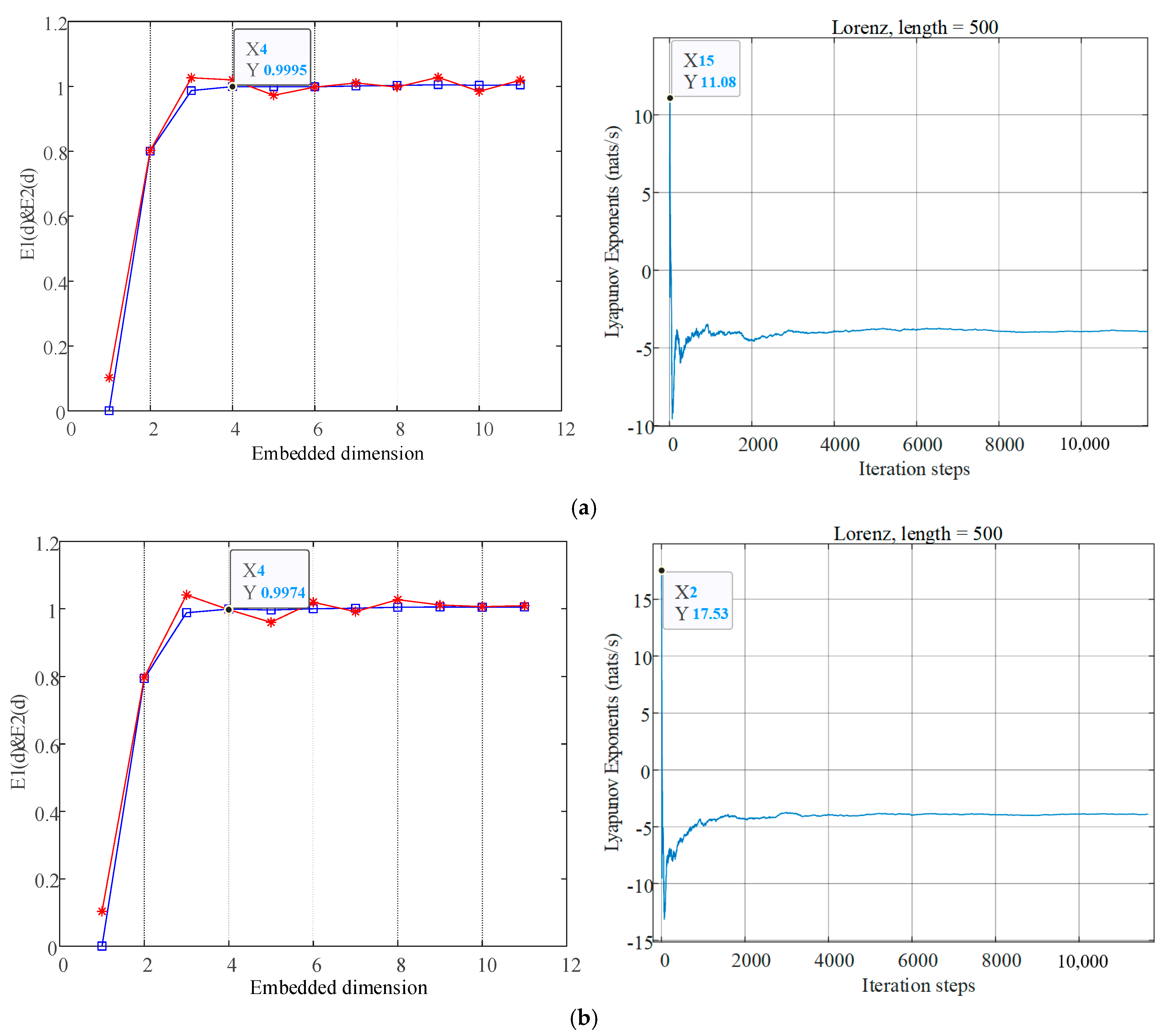
Cao’s method was used to calculate the minimum embedding dimension d corresponding to the final delay time τ, and the obtained the Lyapunov exponents are shown in Figure 17.
According to the original phase space reconstruction method, it is determined that τ = 16, d = 5, and the maximum Lyapunov exponent (MLE) = 11.08, as shown in Figure 17a. According to the improved phase space reconstruction method, it is determined that τ = 17, d = 5, and the MLE = 17.53, as shown in Figure 17b.
Figure 17 shows that using the improved phase space delay reconstruction method to calculate the delay time leads to an increase in the maximum Lyapunov exponent of the Lorenz system, which means that the divergence speed of the Lorenz system trajectory will be accelerated, and the time for the Lorenz system to enter the chaotic state will be shortened. Therefore, the improved phase space delay reconstruction method is more effective.

3.2.2. Chaos Behavior of the Wind Vibration Characteristic Parameters of a Dish Solar Thermal Power System

Based on the improved phase space reconstruction method, 96 sets of data, including 8 operating conditions, 2 monitoring areas (overall and 9-node mirror), and 6 coefficients, were reconstructed in the phase space. Due to space limitations, some of the obtained data are shown in Table 2.
The Lyapunov exponent [58] can be used to determine whether a system is stable, periodic, or chaotic. When determining whether a nonlinear system has chaotic motion, it is necessary to check whether its maximum Lyapunov exponent (MLE) is positive. The MLE is a key parameter for determining chaotic characteristic of a nonlinear system. If MLE is greater than zero, it indicates that the system has exponential divergence in a certain direction, and two similar initial states of the system will exhibit exponential separation over time, exhibiting chaotic characteristics.
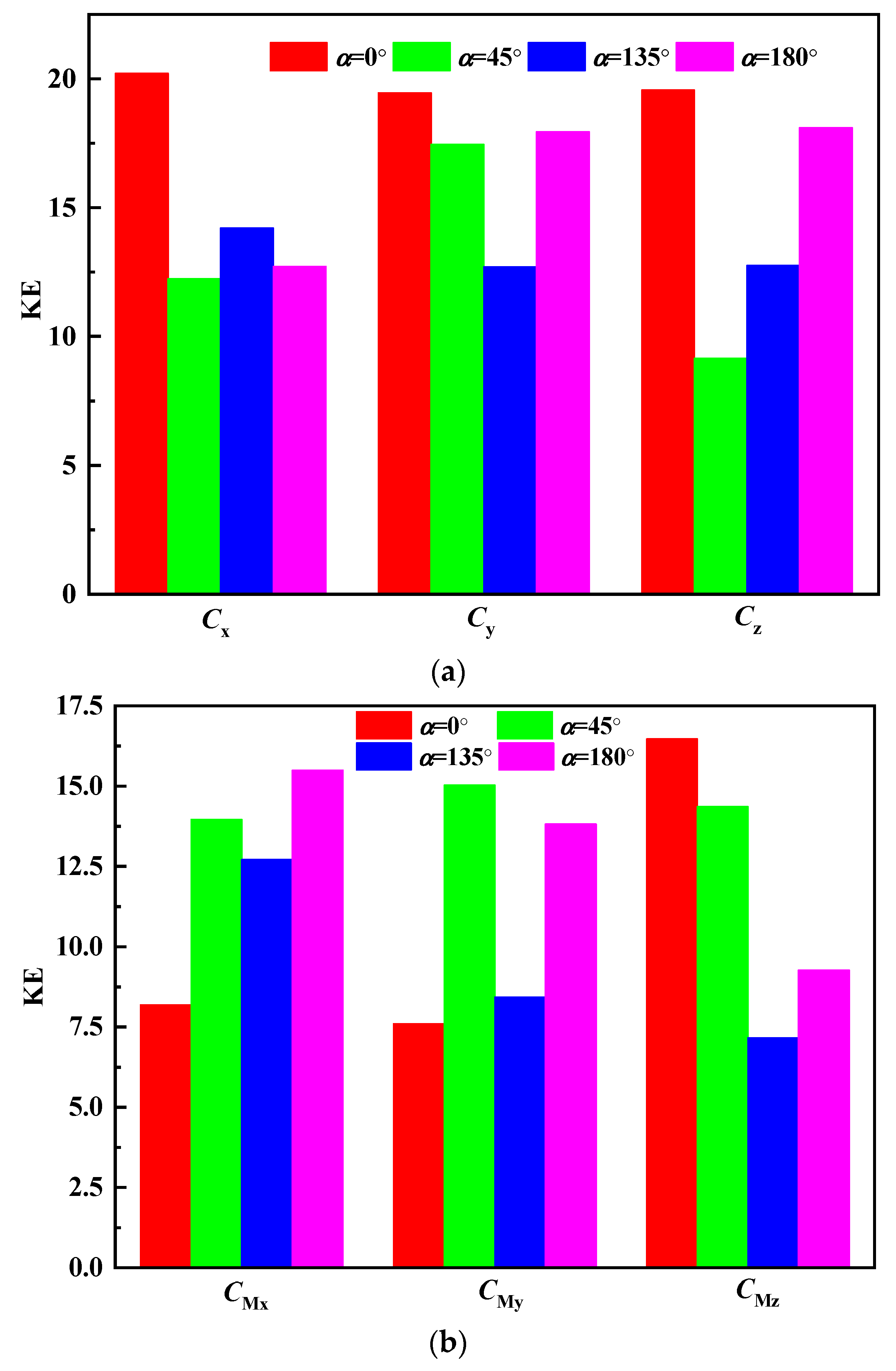
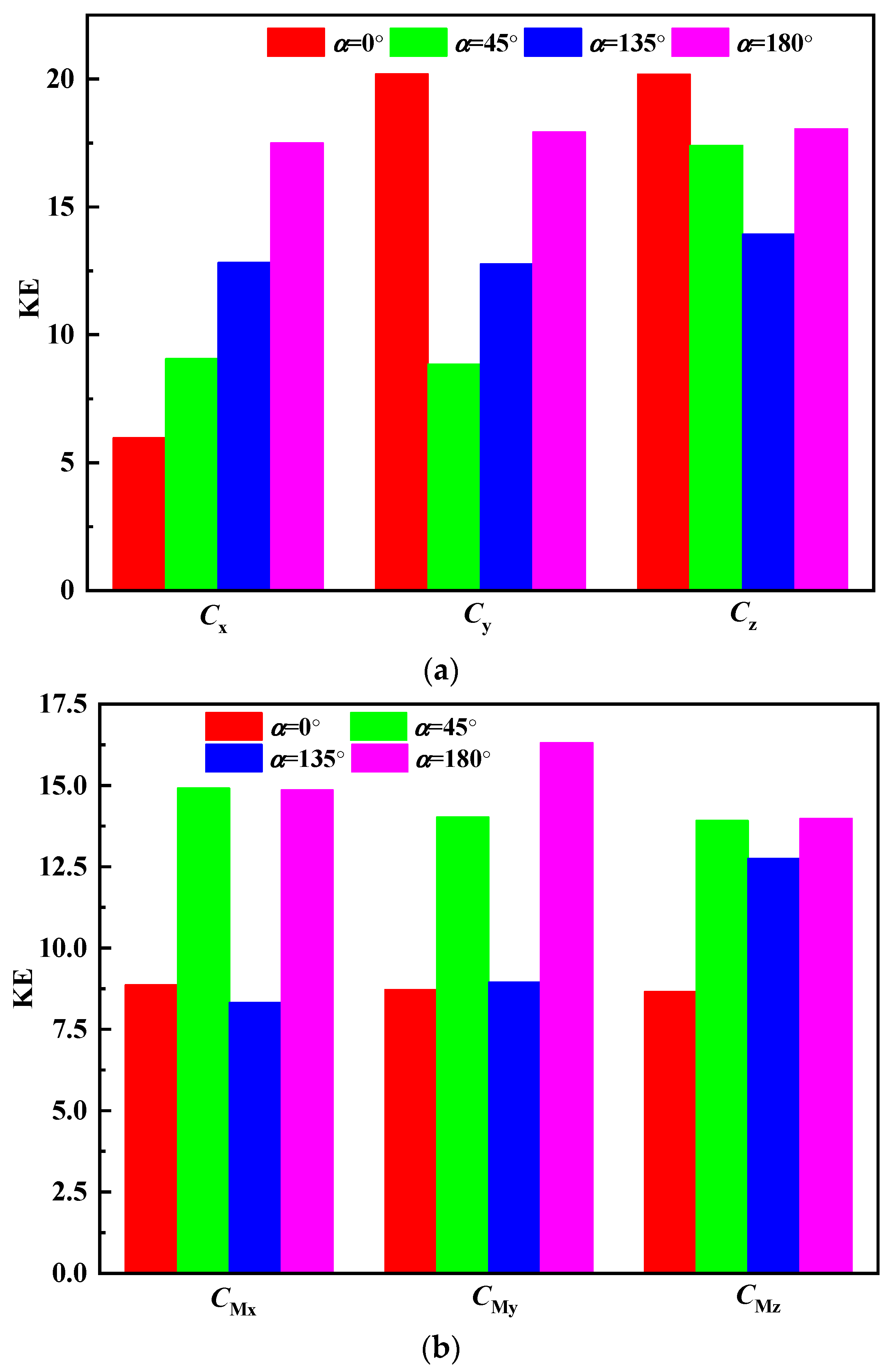
Kolmogorov entropy (KE) can be used as a quantitative indicator to describe the complexity and uncertainty of a system, helping to reveal its evolutionary characteristics and chaotic behavior. High KE indicates that the evolution of the system is more complex and difficult to predict, and low KE indicates that the evolution of the system is relatively simple and has high predictability. In sum, KE is an important concept used to measure the complexity and uncertainty of dynamical systems, and it plays a crucial role in chaos theory and complex system research. In chaotic systems, KE is greater than zero, and the larger KE is, the greater the rate of information loss is, and the greater the degree of chaos in the system is, or in other words, the more complex the system is.
Therefore, the Lyapunov exponent and Kolmogorov entropy were used to analyze the wind-induced vibration characteristics of the dish concentrating solar thermal power system; that is, based on both, the stability and chaotic characteristic of the dish concentrating solar thermal power system would be determined.
(1)
Chaos behavior of wind vibration characteristic parameters based on Lyapunov exponent.
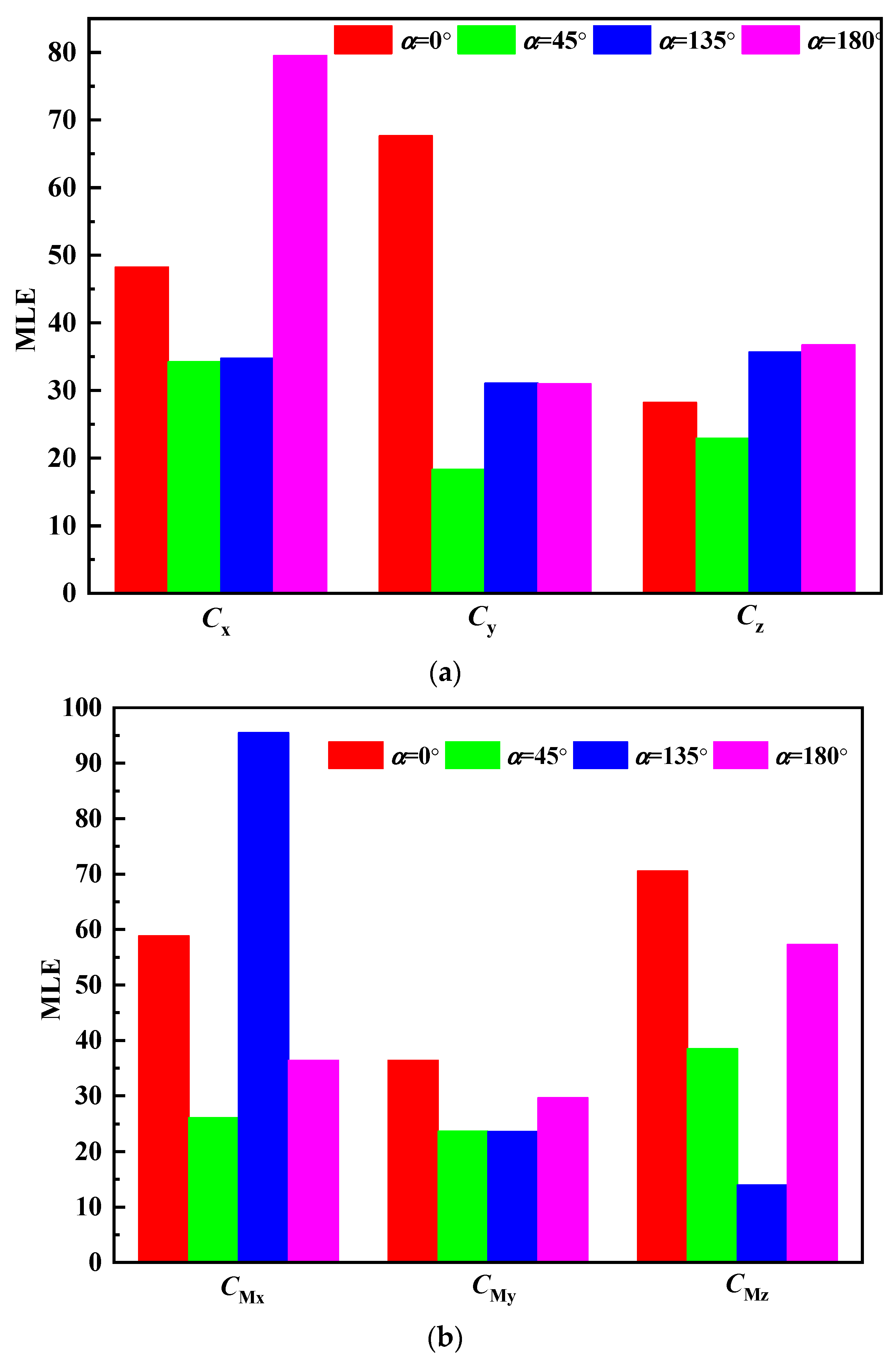
Under the action of pulsating wind, the maximum Lyapunov exponent (MLE) of the drag coefficient, lateral force coefficient, lift force coefficient, roll moment coefficient, pitch moment coefficient, and azimuth moment coefficient of the dish concentrating solar thermal power system as a whole and for node 9 on the mirror surface were obtained when the azimuth angles were 0° and 45° and altitude angles were 0°, 45°, 135°, and 180°, respectively.
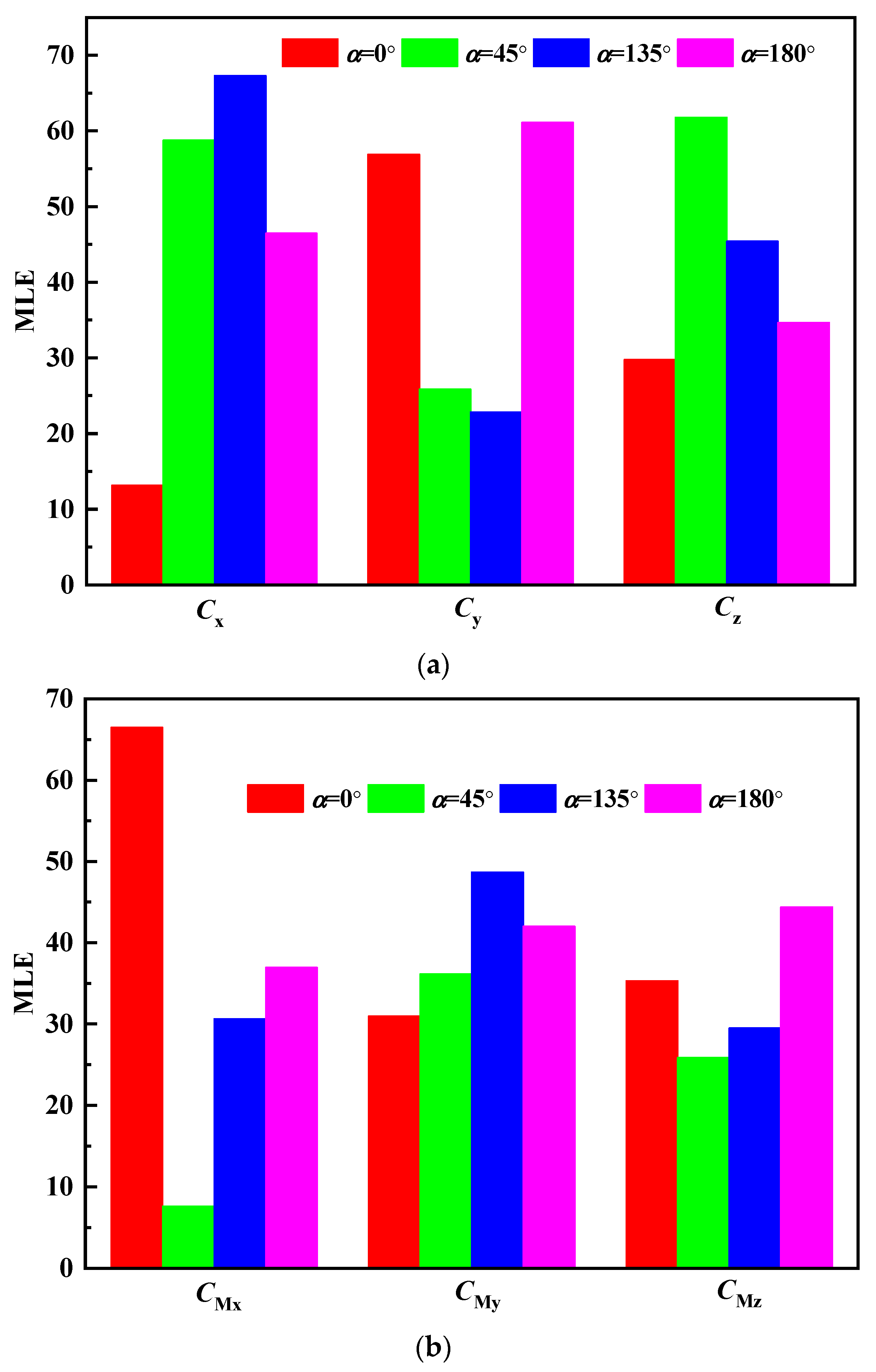
When the MLE is positive, it indicates that the dish concentrating solar thermal power system will enter a chaotic state. The larger the MLE index is, the faster the wind or moment affected by this coefficient causes the system to enter a chaotic state. Figure 18 and Figure 19 show the overall variation in the wind-induced vibration coefficient of the dish concentrating solar thermal power system, while Figure 20 and Figure 21 show the variation in the mirror wind-induced vibration coefficient at node 9 of the dish concentrating solar thermal power system.
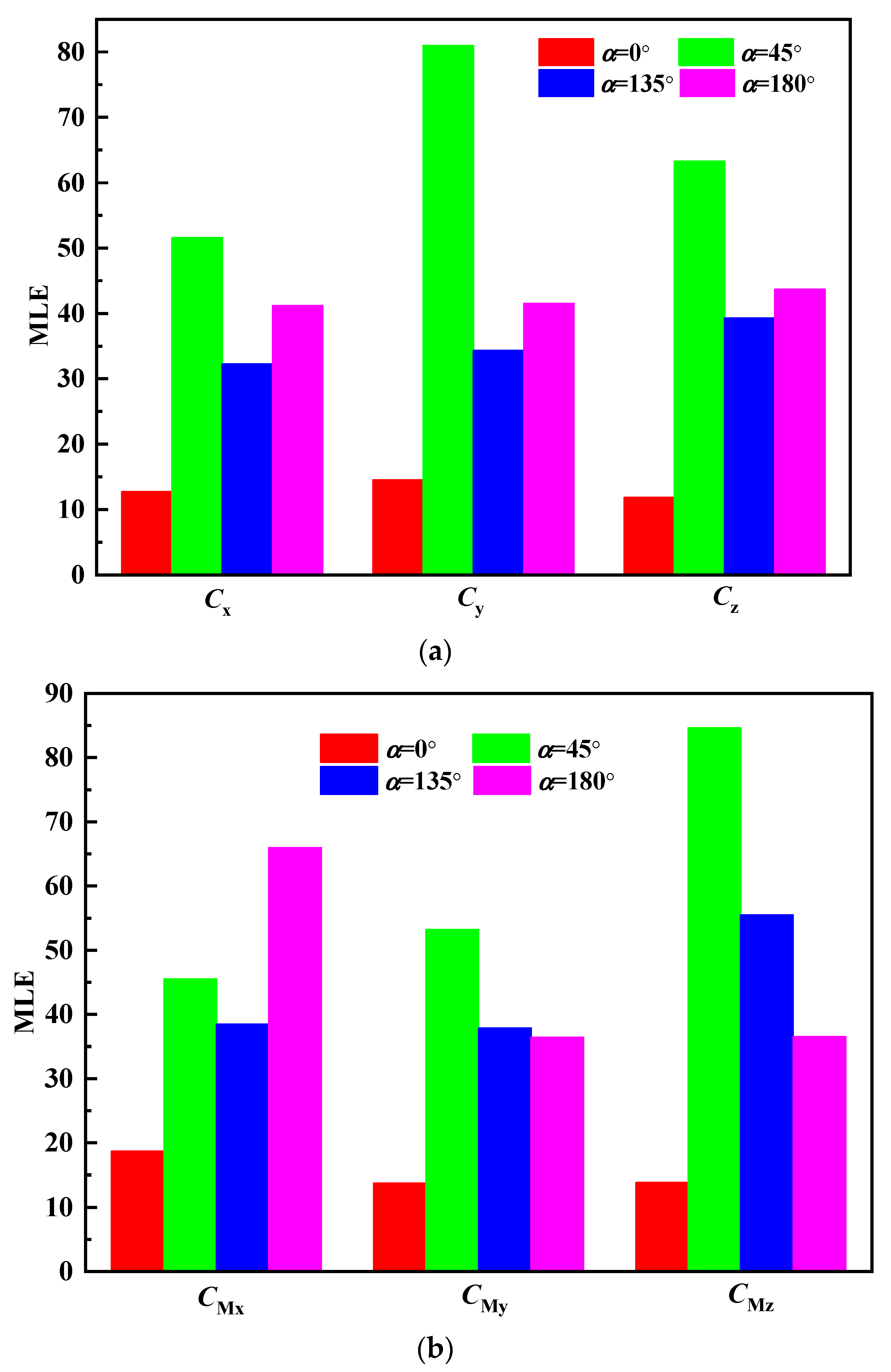
As shown in Figure 18, under the action of pulsating wind, when the azimuth angle is 0° and the altitude angles are 0°, 45 °, 135°, and 180°, the calculated MLEs of the wind vibration coefficient are greater than zero, and the dish concentrating solar thermal power system will enter a chaotic state in all directions.
When the altitude angle is 0°, the MLEs of the lateral force coefficient and the rolling moment coefficient are the highest, which means that compared to forces and moments in other directions, the lateral force and rolling moment will cause the dish concentrating solar thermal power system to enter a chaotic state faster. When the altitude angle is 45°, the MLEs of the drag coefficient and the lift force coefficient are large and similar, the MLE of the pitch moment coefficient is the largest, and the drag, lift force, and pitch moment will cause the system to enter a chaotic state faster. When the altitude angle is 135°, the MLEs of the lateral force coefficient and the pitch moment coefficient are the highest, and the lateral force and pitch moment will cause the system to enter the chaotic state faster. When the altitude angle is 180°, the MLEs of the lateral force coefficient and the azimuth moment coefficient are maximized, and the lateral force and azimuth moment will cause the system to enter the chaotic state faster.
As shown in Figure 19, under the action of pulsating wind, when the azimuth angle is 45° and the altitude angles are 0°, 45°, 135°, and 180°, the wind vibration coefficients obtained are all greater than zero, and the dish concentrating solar thermal power system will enter a chaotic state in all directions.
When the altitude angle is 0°, the MLEs of the lateral force coefficient and the azimuth moment coefficient are the highest, which means that compared to forces and moments in other directions, the lateral force and azimuth moment will cause the system to enter a chaotic state faster. When the altitude angle is 45°, the MLEs of the drag coefficient and the azimuth moment coefficient are the highest, and the drag and azimuth moment will cause the system to enter the chaotic state faster. When the altitude angle is 135°, the MLEs of the lift force coefficient and the roll moment coefficient are the highest, and the lift and pitch moments will cause the system to enter the chaotic state faster. When the altitude angle is 180°, the MLEs of the lateral force coefficient and azimuth moment coefficient are at the maximum values, which will cause the system to enter a chaotic state faster.
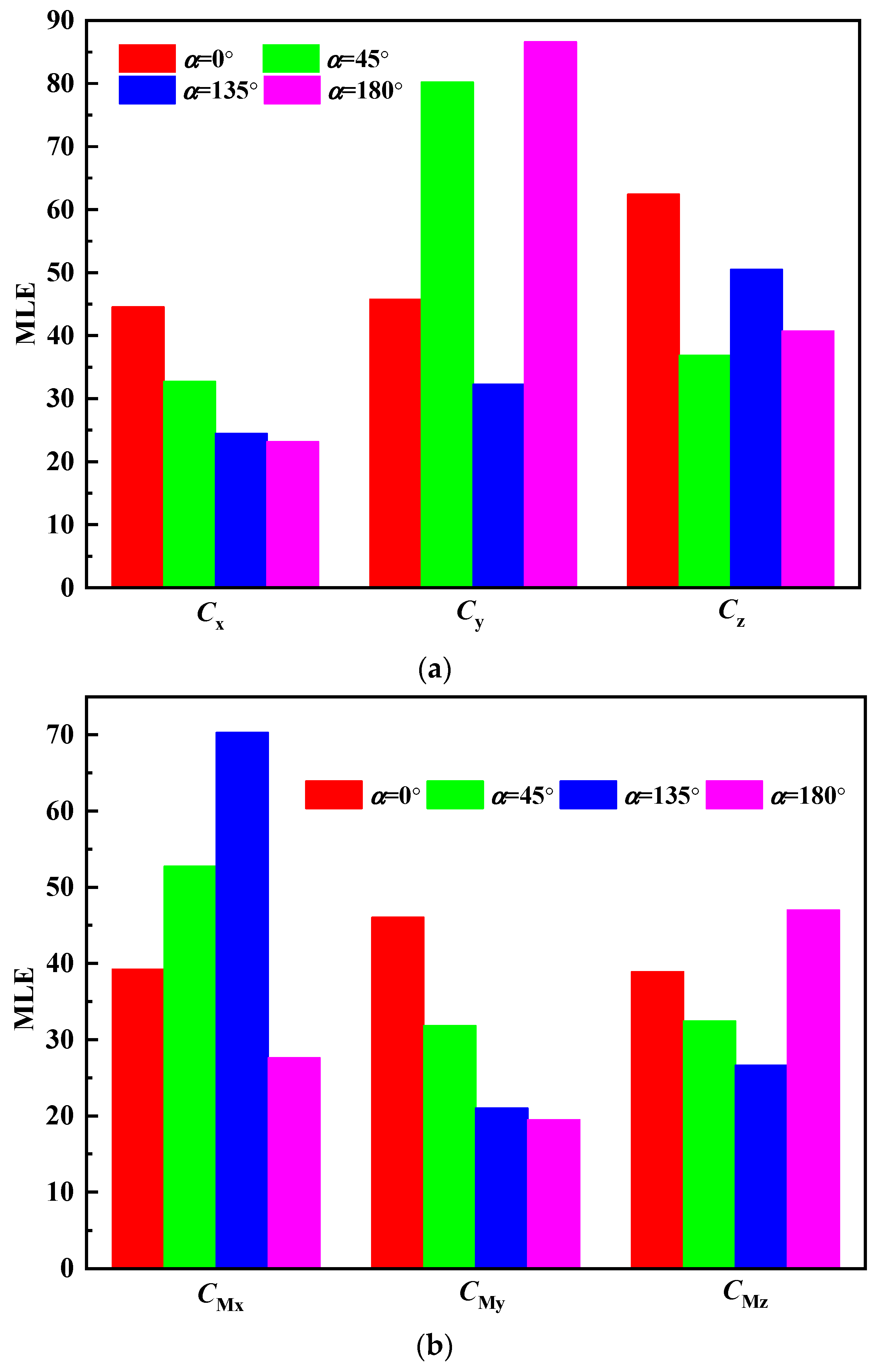
As shown in Figure 20, under the action of pulsating wind, when the azimuth angle is 0° and the altitude angles are 0°, 45°, 135°, and 180°, the calculated MLEs of the wind vibration coefficient are greater than zero, and the mirror surface of node 9 will enter a chaotic state in all directions.
When the altitude angle is 0°, the MLEs of the lateral force coefficient and the rolling moment coefficient are the highest, which means that compared to forces and moments in other directions, the lateral force and rolling moment will cause the system to enter a chaotic state faster. When the altitude angle is 45°, the MLEs of the lateral force coefficient and the azimuth moment coefficient are maximized, and the lateral force and azimuth moment will cause the system to enter the chaotic state faster. When the altitude angle is 135°, the MLEs of the lift force coefficient and the azimuth moment coefficient are maximized, and the lift force and azimuth moment will cause the system to enter the chaotic state faster. When the altitude angle is 180°, the MLEs of the lift force coefficient and the rolling moment coefficient are maximized, and the lift force and rolling moment will cause the system to enter the chaotic state faster.
As shown in Figure 21, under the action of pulsating wind, when the azimuth angle is 0° and the altitude angles are 0°, 45°, 135°, and 180°, the calculated MLEs of the wind vibration coefficient is greater than zero, and the mirror surface of node 9 will enter a chaotic state in all directions.
When the altitude angle is 0°, the MLEs of the lift force coefficient and the pitch moment coefficient are the highest, and the lift force and pitch moment will cause the system to enter the chaotic state faster. When the altitude angle is 45°, the MLEs of the lateral force coefficient and the rolling moment coefficient are the highest, and the lateral force and the rolling moment will cause the system to enter the chaotic state faster.
When the altitude angle is 135°, the MLEs of the lift force coefficient and the rolling moment coefficient are the highest, and the lift and rolling moment will cause the system to enter the chaotic state faster. When the altitude angle is 180°, the MLEs of the lateral force coefficient and the azimuth moment coefficient are at the maximum value, which will cause the system to enter a chaotic state faster.
(2)
Chaos behavior of wind vibration characteristic parameters based on Kolmogorov entropy.
Under the action of pulsating wind, when the azimuth angles are 0° and 45° and the altitude angles are 0°, 45°, 135°, and 180°, the Kolmogorov entropies (KEs) of the drag coefficient, lateral force coefficient, lift force coefficient, rolling moment coefficient, pitching moment coefficient, and azimuth moment coefficient of the dish concentrating solar thermal power system and mirror surface of node 9 are determined. The evolution of this coefficient is more complex than others, and as time increases, the degree of chaos increases. When Kolmogorov entropy is positive, Figure 21, Figure 22, Figure 23 and Figure 24 show that the KEs change for the overall wind-induced vibration coefficient and node 9’s wind-induced vibration coefficient.
In the dish concentrating solar thermal power system, if KE is greater than zero, the greater the KE is, and the greater the uncertainty and complexity of the system is over time, that is, the greater the degree of chaos in the system is (or the more complex the system is).
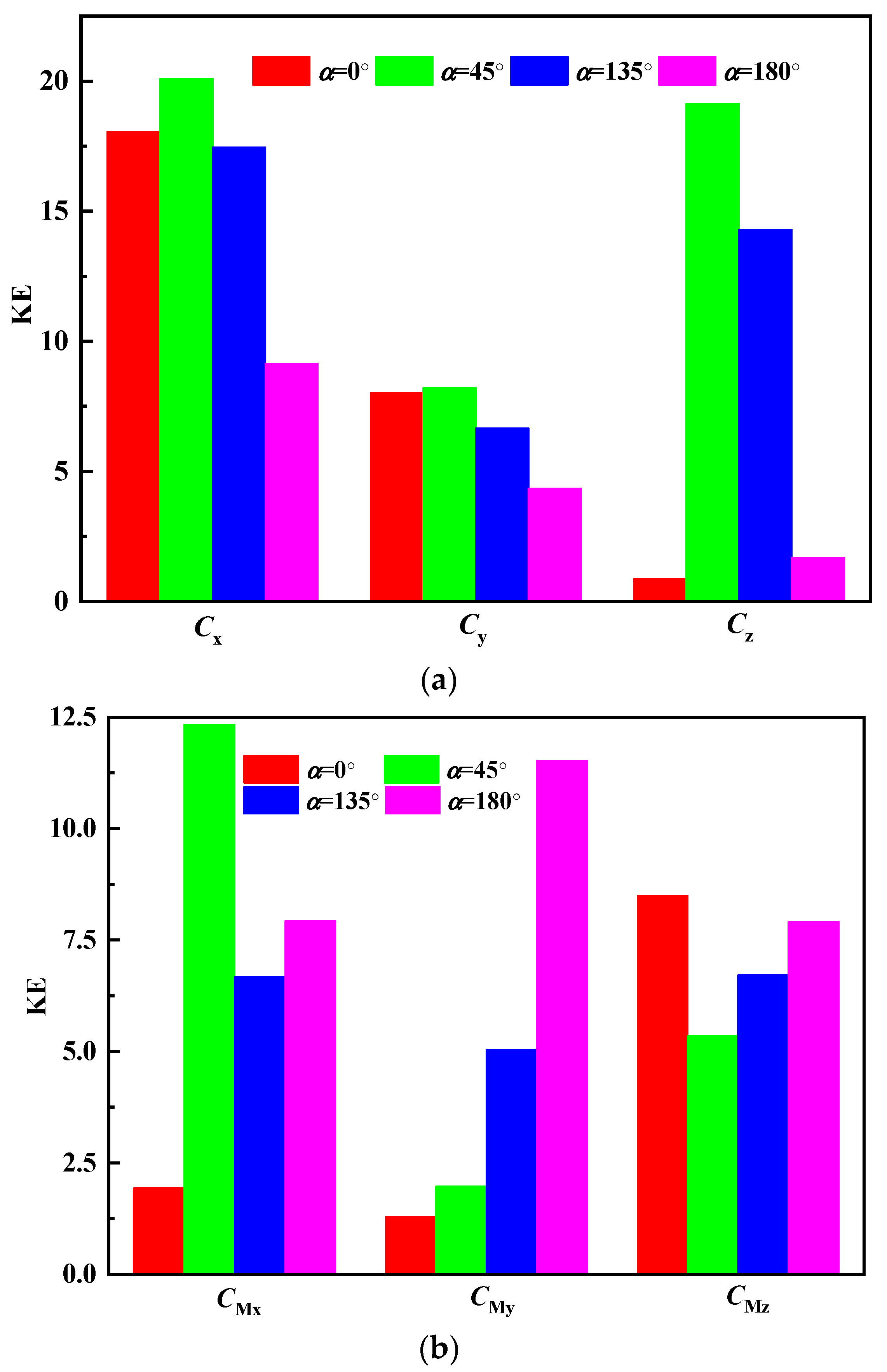
As shown in Figure 22, under the action of pulsating wind, the KEs of the overall wind vibration coefficient are greater than zero when the azimuth angle is 0° and the altitude angles are 0°, 45°, 135°, and 180°, respectively.
When the altitude angle is 0°, the KEs of the drag coefficient and azimuth moment coefficient are the highest, and the drag and azimuth moment are more likely to increase the degree of chaos in the system. When the altitude angle is 45°, the KEs of the drag coefficient, lift force coefficient, and rolling moment coefficient are the highest, and the drag, lift force, and rolling moment are more likely to increase the degree of chaos in the system. When the altitude angle is 135°, the KEs of the drag coefficient, lift force coefficient, rolling moment coefficient, and azimuth moment coefficient are the highest, and the drag, lift force, rolling moment, and azimuth moment are more likely to increase the degree of chaos in the system.
When the altitude angle is 180°, the KEs of the drag coefficient and pitch moment coefficient are the highest, and the drag and pitch moment are more likely to increase the degree of chaos in the system.
As shown in Figure 23, under the action of pulsating wind, the KEs of the overall wind vibration coefficient are greater than zero when the azimuth angle is 45° and the altitude angles are 0°, 45°, 135°, and 180°, respectively.
When the altitude angle is 0°, the KEs of the coefficient of lateral force and pitch moment are the largest, and the lateral force and pitch moment are more likely to increase the degree of chaos in the system. When the altitude angle is 45°, the three KEs of the wind force coefficient are approximately the same, and the three wind forces have similar effects on the evolution of the chaotic system. The KE of the rolling moment coefficient is the largest, and the rolling moment is more likely to increase the degree of chaos in the system. When the altitude angle is 135°, the KEs of the lateral force coefficient, lift force coefficient, pitch coefficient, and azimuth moment coefficient are the highest, and the lateral force, the lift force coefficient, the pitch moment, and the azimuth moment are more likely to increase the degree of chaos in the system. When the altitude angle is 180°, the KEs of the drag coefficient and the pitch moment coefficient are the highest, and the drag and the pitch moment are more likely to increase the degree of chaos in the system.
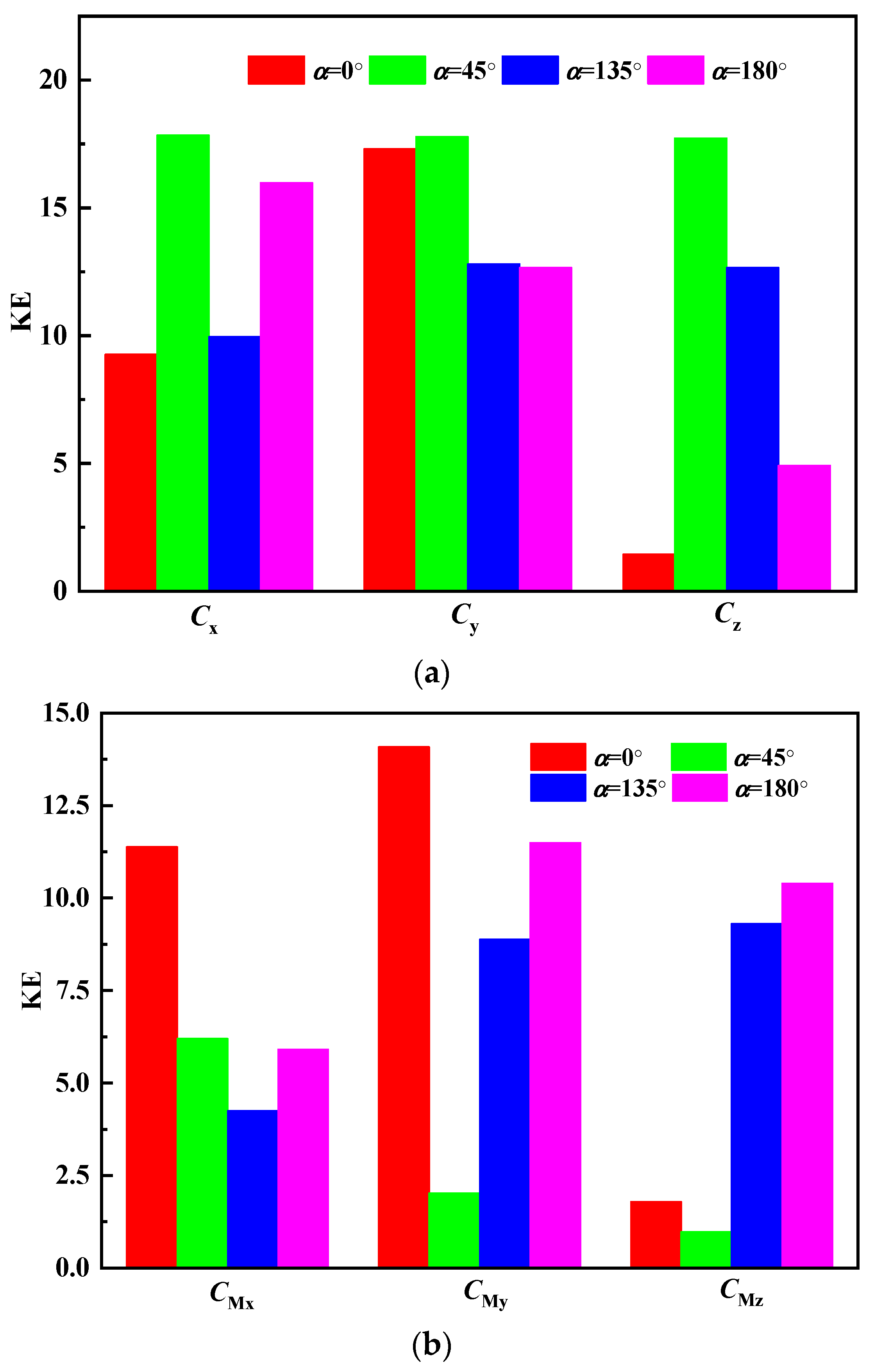
As shown in Figure 24, under the action of pulsating wind, when the azimuth angle is 0° and the altitude angles are 0°, 45°, 135°, and 180°, respectively, the KEs of the wind vibration coefficient of the mirror surface at node 9 are greater than zero.
When the altitude angle is 0°, the three KEs of the wind force coefficient are similar, and their impact on the evolution of the chaotic system is similar. The KEs of the pitch moment coefficient and the azimuth moment coefficient are the largest, and the pitch moment and azimuth moment are more likely to increase the degree of chaos in the system. When the altitude angle is 45°, the KEs of the lateral force coefficient and azimuth moment coefficient are the highest, and the lateral force and azimuth moment are more likely to increase the degree of chaos in the system.
When the altitude angle is 135°, the KEs of the wind coefficient component and the moment coefficient are similar, and their impact on the evolution of chaotic systems is similar. When the altitude angle is 180°, the KEs of the lateral force coefficient, lift force coefficient, pitch moment coefficient, and azimuth moment coefficient are the highest, and the lateral force, the lift force coefficient, the pitch moment, and the azimuth moment are more likely to increase the degree of chaos in the system.
As shown in Figure 25, under the action of pulsating wind, when the azimuth angle is 45° and the altitude angles are 0°, 45°, 135°, and 180°, respectively, the KEs of the wind vibration coefficient of the mirror surface at node 9 are greater than zero.
When the altitude angle is 0°, the KE of the lift force coefficient is the highest, and lift force is more likely to increase the degree of chaos in the system. The three KEs of the wind moment coefficient are similar, and their impact on the evolution of the chaotic system is similar. When the altitude angle is 45°, the three KEs of the wind force coefficient and wind moment coefficient are approximately the same, and their impact on the evolution of the chaotic system is similar.
When the altitude angle is 135°, the KEs of the drag coefficient and the azimuth moment coefficient are the highest, and the drag and azimuth moment are more likely to increase the degree of chaos in the system. When the altitude angle is 180°, the KEs of the drag coefficient and pitch moment coefficient are the highest, and the drag and pitch moment are more likely to increase the degree of chaos in the system.

4. Conclusions

A numerical model of a DCSTPS was established, and the AR method and Matlab compiler were used to simulate pulsating wind action, so the wind speed time series of different nodes were obtained. At the same time, the developed UDF based on the Matlab program was used to simulate a model of a DCSTPS, and the time-series data of the wind coefficient and wind moment coefficient were obtained. By analyzing the maximum value of the time-series data, the maximum values of the drag coefficient, lift force coefficient, and pitching moment coefficient wind were obtained under the action of fluctuation. And the influence of pulsating wind action on the wind vibration characteristics of the DCSTPS was explored, and some results were obtained as follows:
(1)
Under the pulsating wind action, the maximum values of the wind coefficient- and wind moment coefficient-related components of the DCSTPS are affected by changes in the altitude angle and azimuth angle during the pulsating wind action time. The law is similar to the changes under stable wind action; that is, for the DCSTPS, increases in its altitude angle leads to a reduction in its drag coefficient and increase in its lift force coefficient, and the pitch moment increases with an increase in the altitude angle. Moreover, the drag coefficient Cx1, the pitch moment coefficient CMy1, and the azimuth moment coefficient CMz1 under β = 0° are much greater than the drag coefficient Cx2, the pitch moment coefficient CMy2, and the azimuth moment coefficient CMz2 under β = 45°, respectively. And maximum rate of their change is −364%, −524%, and −432%, respectively.
(2)
The time history data of the relevant wind vibration coefficient shows irregular changes under the action of pulsating wind. And by using an improved phase space delay reconstruction method to calculate the delay time, the maximum Lyapunov exponent and Kolmogorov entropy of the DCSTPS are greater than zero under the action of pulsating wind. With an increase in the maximum Lyapunov exponent and Kolmogorov entropy of the DCSTPS under the action of pulsating wind, the divergence speed of the DCSTPS trajectory will accelerate, and the time for the system to enter the chaotic state will be shortened.
(3)
The DCSTPS will enter a chaotic state under the action of pulsating wind, and the time of entering the chaotic state and the degree of subsequent chaotic states will be significantly affected by the relevant wind vibration coefficients, but without regularity. In future research, the challenge is to elucidate the catastrophic physical essence of the chaotic behavior of the DCSTPS under pulsating wind-induced loads and explore how to reduce or control nonlinear effects through design optimization of the DCSTPS.

Author Contributions

Conceptualization, H.Z. and J.E.; Methodology, H.Z. and J.E.; Software, J.L. and Y.S.; Validation, J.L., Y.S., G.J., D.N. and M.C.; Formal analysis, H.Z., J.L., Y.S., G.J., D.N., M.C. and J.E.; Investigation, H.Z., J.L., Y.S., G.J., D.N., M.C. and J.E.; Data curation, H.Z., J.L., Y.S., G.J., D.N., M.C. and J.E.; Writing—original draft, H.Z. and J.L.; Writing—review & editing, H.Z., Y.S., G.J., D.N. and J.E.; Supervision, H.Z.; Funding acquisition, H.Z. All authors have read and agreed to the published version of the manuscript.

Funding

This work is supported by the National Natural Science Foundation of China (No. 52175135) and the Hunan Province Natural Science Foundation of China (No. 2024JJ7097).

Data Availability Statement

The original contributions presented in the study are included in the article, further inquiries can be directed to the corresponding author.

Conflicts of Interest

The authors declare no conflicts of interest.

Abbreviations

The following abbreviations are used in this manuscript:
DCSTPSDish concentrating solar thermal power system
UDFUser-defined function
ARAutoregressive
DSCDish solar concentrator
KEKolmogorov entropy
MLE Maximum Lyapunov exponent

References

  1. Ramanan, C.J.; King, H.L.; Jundika, C.K.; Sukanta, R.; Bhaskor, J.B.; Bhaskar, J.M. Towards sustainable power generation: Recent advancements in floating photovoltaic technologies. Renew. Sustain. Energy Rev. 2024, 194, 114322. [Google Scholar] [CrossRef]
  2. Wang, X.; He, X.; Sun, X.; Qin, M.; Pan, R.; Yang, Y. The diffusion path of distributed photovoltaic power generation technology driven by individual behavior. Energy Rep. 2024, 11, 651–658. [Google Scholar]
  3. Bayon, A.; Bader, R.; Jafarian, M.; Fedunik-Hofman, L.; Sun, Y.; Hinkley, J.; Miller, S.; Lipiński, W. Techno-economic assessment of solid–gas thermochemical energy storage systems for solar thermal power applications. Energy 2018, 149, 473–484. [Google Scholar] [CrossRef]
  4. Ho, C.K.; Iverson, B.D. Review of high-temperature central receiver designs for concentrating solar power. Renew. Sustain. Energy Rev. 2014, 29, 835–846. [Google Scholar] [CrossRef]
  5. Li, S.; Haussener, S. Radiative transfer in luminescent solar concentrators. J. Quant. Spectrosc. Radiat. Transf. 2024, 319, 108957. [Google Scholar] [CrossRef]
  6. Lipiński, W.; Abbasi-Shavazi, E.; Chen, J.; Coventry, J.; Hangi, M.; Iyer, S.; Kumar, A.; Li, L.; Li, S.; Pye, J.; et al. Progress in heat transfer research for high-temperature solar thermal applications. Appl. Therm. Eng. 2021, 184, 116137. [Google Scholar] [CrossRef]
  7. Wang, Y.; Lipiński, W.; Pye, J. A method for in situ measurement of directional and spatial radiosity distributions from complex-shaped solar thermal receivers. Sol. Energy 2020, 201, 732–745. [Google Scholar] [CrossRef]
  8. Ravi, K.K.; Krishna, C.N.V.V.; Sendhil, K.N. Solar thermal energy technologies and its applications for process heating and power generation—A review. J. Clean. Prod. 2021, 282, 125296. [Google Scholar] [CrossRef]
  9. Ho, C.K. A review of high-temperature particle receivers for concentrating solar power. Appl. Therm. Eng. 2016, 109, 958–969. [Google Scholar] [CrossRef]
  10. Conceição, R.; González-Aguilar, J.; Merrouni, A.A.; Romero, M. Soiling effect in solar energy conversion systems: A review. Renew. Sustain. Energy Rev. 2022, 162, 112434. [Google Scholar] [CrossRef]
  11. Gomez-Garcia, F.; Gonzalez-Aguilar, J.; Tamayo-Pacheco, S.; Olalde, G.; Romero, M. Numerical Analysis of Radiation Attenuation in Volumetric Solar Receivers Composed of a Stack of Thin Monolith Layers. Energy Procedia 2014, 57, 457–466. [Google Scholar] [CrossRef]
  12. Islam, M.R.; Aziz, M.T.; Alauddin, M.; Kader, Z.; Islam, M.R. Site suitability assessment for solar power plants in Bangladesh: A GIS-based analytical hierarchy process (AHP) and multi-criteria decision analysis (MCDA) approach. Renew. Energy 2024, 220, 119595. [Google Scholar] [CrossRef]
  13. Kylili, A.; Fokaides, P.A.; Ioannides, A.; Kalogirou, S. Environmental assessment of solar thermal systems for the industrial sector. J. Clean. Prod. 2018, 176, 99–109. [Google Scholar] [CrossRef]
  14. Ho, C.K. Advances in central receivers for concentrating solar applications. Sol. Energy 2017, 152, 38–56. [Google Scholar] [CrossRef]
  15. Ho, C.K.; Khalsa, S.S.; Kolb, G.J. Methods for probabilistic modeling of concentrating solar power plants. Sol. Energy 2011, 85, 669–675. [Google Scholar] [CrossRef]
  16. Akinyele, D.; Babatunde, O.; Monyei, C.; Olatomiwa, L.; Okediji, A.; Ighravwe, D.; Abiodun, O.; Onasanya, M.; Temikotan, K. Possibility of solar thermal power generation technologies in Nigeria: Challenges and policy directions. Renew. Energy Focus 2019, 29, 24–41. [Google Scholar] [CrossRef]
  17. Wu, J.; Shi, X.; Liu, S.; Xu, X.; Shen, Y.; Zhang, D. Research on the sintering temperature and absorptivity of corundum-based endothermic ceramics for solar thermal power generation. Ceram. Int. 2025, 51, 24415–24428. [Google Scholar] [CrossRef]
  18. Zhao, D.; Wu, T.; Wang, J.; Ling, S.; Wang, H.; Liu, H.; Liu, H.; Guo, S.; Wei, X. Study of enhanced gasification of biochar by non-thermal concentrating solar power using novel high-flux solar simulator thermogravimetric analyzer system. Renew. Energy 2025, 242, 122436. [Google Scholar] [CrossRef]
  19. Rodríguez, J.B.; Majó, M.; Mondragón, R.; Díaz-Heras, M.; Canales-Vázquez, J.; Almendros-Ibáñez, J.A.; Barreneche, C.; López, L.H. Experimental evaluation of carbon-coated sand as solar-absorbing and thermal energy storage media for concentrated solar power applications. Appl. Therm. Eng. 2025, 269, 126082. [Google Scholar] [CrossRef]
  20. Khan, M.I.; Asfand, F.; Al-Ghamdi, S.G.; Bicer, Y.; Khan, M.; Farooq, M.; Pesyridis, A. Realizing the promise of concentrating solar power for thermal desalination: A review of technology configurations and optimizations. Renew. Sustain. Energy Rev. 2025, 208, 115022. [Google Scholar] [CrossRef]
  21. Li, L.; Rahbari, A.; Taheri, M.; Pottas, R.; Wang, B.; Hangi, M.; Matthews, L.; Yue, L.; Zapata, J.; Kreider, P.; et al. Experimental evaluation of an indirectly-irradiated packed-bed solar thermochemical reactor for calcination–carbonation chemical looping. Chem. Eng. J. 2023, 468, 143543. [Google Scholar] [CrossRef]
  22. Basem, A.; Moawed, M.; Abbood, M.H.; El-Maghlany, W.M. The design of a hybrid parabolic solar dish–steam power plant: An experimental study. Energy Rep. 2022, 8, 1949–1965. [Google Scholar] [CrossRef]
  23. Allouhi, H.; Allouhi, A.; Bentamy, A.; Zafar, S.; Jamil, A. Solar Dish Stirling technology for sustainable power generation in Southern Morocco: 4-E analysis. Sustain. Energy Technol. Assess. 2022, 52, 102065. [Google Scholar] [CrossRef]
  24. González-Pardo, A.; González-Aguilar, J.; Romero, M. Analysis of glint and glare produced by the receiver of small heliostat fields integrated in building façades. Methodology applicable to conventional central receiver systems. Sol. Energy 2015, 121, 68–77. [Google Scholar] [CrossRef]
  25. Martínez-Hernández, A.; Conceição, R.; Asselineau, C.-A.; Romero, M.; González-Aguilar, J. Advanced surface reconstruction method for solar reflective concentrators by flux mapping. Sol. Energy 2023, 266, 112162. [Google Scholar] [CrossRef]
  26. Loghmari, I.; Milidonis, K.; Lipiński, W.; Papanicolas, C.N. Single- and multi-facet variable-focus adaptive-optics heliostats: A review. Sol. Energy 2025, 290, 113339. [Google Scholar] [CrossRef]
  27. Brosens, P. Oscillations of a rigid heliostat mirror caused by fluctuating wind. Sol. Furn. Support Stud. 1960, 2, 117–132. [Google Scholar]
  28. Anderson, D.E.; Thayer, D.A.; Sahl, H.B. Design and characterization of solar concentrators. In Proceedings of the First Southeastern Conference, Huntsville, AL, USA, 24–26 March 1975; pp. 24–26. [Google Scholar]
  29. Cutting, F.M. Heliostat survivability and structural stability for wind loading. In Proceedings of the Miami International Conference, Miami Beach, FL, USA, 5–7 December 1977; pp. 5–7. [Google Scholar]
  30. Strickland, J.H.; Matty, R.R.; Barton, G.H. Vortex shedding from square plates perpendicular to a ground plane. AIAA J. 1980, 18, 715–716. [Google Scholar] [CrossRef]
  31. Stahl, W.H.; Mahmood, M. Some aspects of the flow past a square flat plate at high angle of attack. Dev. Mech. 1985, 13, 481–482. [Google Scholar]
  32. Bhumralkar, C.M.; Slemmons, A.J.; Nitz, K.C. Numerical study of local regional atmospheric changes caused by a large solar central receiver power plant. J. Appl. Meteorol. 1981, 20, 660–677. [Google Scholar] [CrossRef]
  33. Edwards, B. Collector deflections due to wind gusts and control scheme design. Sol. Energy 1980, 25, 231–234. [Google Scholar] [CrossRef]
  34. Peterka, J.A.; Bienkiewicz, B.; Hosoya, N.; Cermak, J.E. Heliostat mean wind load reduction. Energy 1987, 12, 261–267. [Google Scholar] [CrossRef]
  35. Randall, D.E.; McBride, D.D.; Tate, R.E. Steady-state wind loading on parabolic trough solar collectors. In Proceedings of the American Society of Mechanical Engineers Century 2 Solar Energy Conference, San Francisco, CA, USA, 13–15 August 1980; pp. 19–21. [Google Scholar]
  36. Murphy, L.M. Wind loading on tracking and field mounted solar collectors. ASME Sol. Eng. 1981, 719–727. [Google Scholar] [CrossRef]
  37. Naeenia, N.; Yaghoubi, M. Analysis of wind flow around a parabolic collector (1) fluid flow. Renew. Energy 2007, 32, 1898–1916. [Google Scholar] [CrossRef]
  38. Paetzold, J.; Cochard, S.; Vassallo, A.; Fletcher, D.F. Wind engineering analysis of parabolic trough solar collectors: The effects of varying the trough depth. J. Wind Eng. Ind. Aerodyn. 2014, 135, 118–128, Correction in J. Wind. Eng. Ind. Aerodyn. 2016, 148, 70–71. [Google Scholar] [CrossRef]
  39. Emes, M.J.; Arjomandi, M.; Nathan, G.J. Effect of heliostat design wind speed on the levelised cost of electricity from concentrating solar thermal power tower plants. Sol. Energy 2015, 115, 441–451. [Google Scholar] [CrossRef]
  40. Andre, M.; Mier-Torrecilla, M.; Wüchner, R. Numerical simulation of wind loads on a parabolic trough solar collector using lattice Boltzmann and finite element methods. J. Wind. Eng. Ind. Aerodyn. 2015, 146, 185–194. [Google Scholar] [CrossRef]
  41. Benammar, S.; Tee, K.F. Structural reliability analysis of a heliostat under wind load for concentrating solar power. Sol. Energy 2019, 181, 43–52. [Google Scholar] [CrossRef]
  42. Kaabia, B.; Langlois, S.; Maheux, S. Effect of structure configurations and wind characteristics on the design of solar concentrator support structure under dynamic wind action. Wind. Struct. 2018, 27, 41–57. [Google Scholar]
  43. Xiao, L.; Guo, F.; Wu, S.; Chen, Z. A comprehensive simulation on optical and thermal performance of a cylindrical cavity receiver in a parabolic dish collector system. Renew. Energy 2020, 145, 878–892. [Google Scholar] [CrossRef]
  44. Christo, F.C. Numerical modelling of wind and dust patterns around a full-scale paraboloidal solar dish. Renew. Energy 2012, 39, 356–366. [Google Scholar] [CrossRef]
  45. Hachicha, A.A.; Rodríguez, I.; Lehmkuhl, O.; Oliva, A. On the CFD&HT of the Flow around a Parabolic Trough Solar Collector under Real Working Conditions. Energy Procedia 2014, 49, 1379–1390. [Google Scholar] [CrossRef]
  46. Ngo, L.C.; Bello-Ochende, T.; Meyer, J.P. Three-dimensional analysis and numerical optimization of combined natural convection and radiation heat loss in solar cavity receiver with plate fins insert. Energy Convers. Manag. 2015, 101, 757–766. [Google Scholar] [CrossRef]
  47. E, J.Q.; Liu, G.; Liu, T.; Zhang, Z.; Zuo, H.; Hu, W.; Wei, K. Harmonic response analysis of a large dish solar thermal power generation system with wind-induced vibration. Sol. Energy 2019, 181, 116–129. [Google Scholar] [CrossRef]
  48. Liu, G.; E, J.Q.; Liu, T.; Zuo, W.; Zhang, Q. Effects of different poses and wind speeds on the flow field of the dish solar concentrator based on virtual wind tunnel experiment with constant wind. J. Cent. South Univ. 2018, 35, 1948–1957. [Google Scholar] [CrossRef]
  49. Yu, M.; Gong, J.; Cai, H. Numerical simulation of impact on wind load due to mirror gap effect for parabolic dish solar concentrator. Proc. Inst. Mech. Eng. Part A-J. Power Energy 2019, 233, 1056–1067. [Google Scholar] [CrossRef]
  50. Zhang, Z.; Sun, J.; Jin, L.; Wei, J. Multiphysics-coupled study of wind load effects on optical performance of parabolic trough collector. Sol. Energy 2020, 207, 1078–1087. [Google Scholar] [CrossRef]
  51. Zuo, H.; Liu, G.; E, J.Q.; Zuo, W.; Wei, K.; Hu, W.; Tan, J.; Zhong, D. Catastrophic analysis on the stability of a large dish solar thermal power generation system with wind-induced vibration. Sol. Energy 2019, 183, 18340–18349. [Google Scholar] [CrossRef]
  52. Schär, S.; Marelli, S.; Sudret, B. Emulating the dynamics of complex systems using autoregressive models on manifolds (mNARX). Mech. Syst. Signal Process. 2024, 208, 110956. [Google Scholar] [CrossRef]
  53. Ye, H.; Zhu, W.; Li, H.; Ji, W.; Soares, C.G.; Wang, J. Failure warning for offshore wind turbines based on Autoregressive models. Ocean. Eng. 2025, 332, 121448. [Google Scholar] [CrossRef]
  54. Zuo, H.; Su, Y.; Liang, J.; Jia, G.; Chen, M.; Nie, D.; E, J. Wind-Induced Stability Identification and Safety Grade Catastrophe Evaluation of a Dish Concentrating Solar Thermal Power System. Energies 2025, 18, 6088. [Google Scholar] [CrossRef]
  55. Zuo, H.; Tan, J.; Wei, K.; Huang, Z.; Zhong, D.; Xie, F. Effects of different poses and wind speeds on wind-induced vibration characteristics of a dish solar concentrator system. Renew. Energy 2021, 168, 1308–1326. [Google Scholar] [CrossRef]
  56. Uzair, M.; Anderson, T.N.; Nates, R.J. The impact of the parabolic dish concentrator on the wind induced heat loss from its receiver. Solar Energy 2017, 151, 95–101. [Google Scholar] [CrossRef]
  57. Lang, S.; Hua, Z.; Sun, G.; Jiang, Y.; Wei, C. A study on methods for determining phase space reconstruction parameters. J. Comput. Nonlinear Dyn. 2025, 20, 011006. [Google Scholar] [CrossRef]
  58. Hussain, V.S.; Spano, M.L.; Lockhart, T.E. Effect of data length on time delay and embedding dimension for calculating the Lyapunov exponent in walking. J. R. Soc. Interface 2020, 17, 20200311. [Google Scholar] [CrossRef] [PubMed]
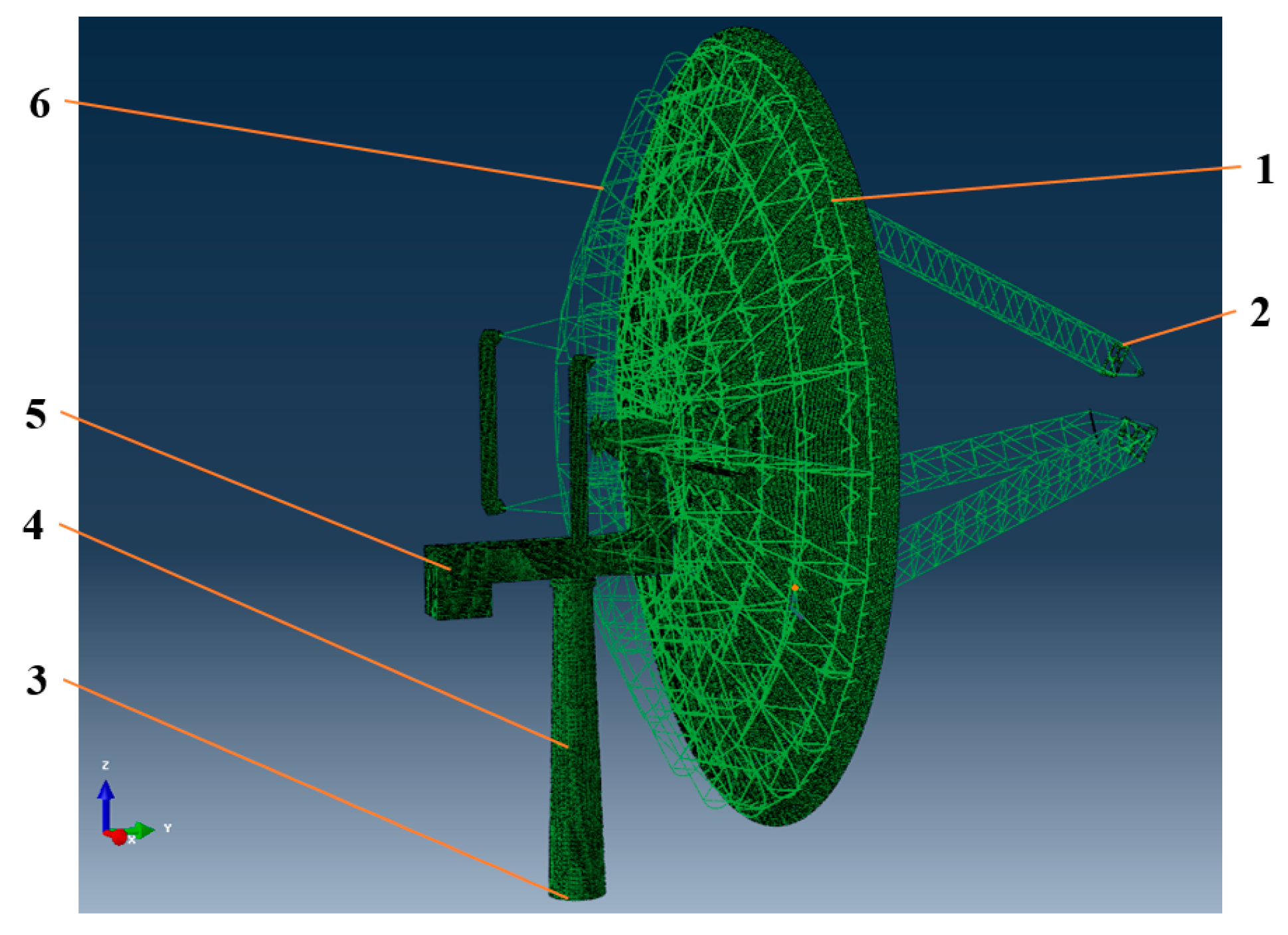
Figure 1. Finite element model. 1—Concentrator of the DSEHPGS, 2—cantilever beam, 3—constraint, 4—base, 5—balance block, and 6—support frame.
Energies 19 00182 g001
Figure 2. Force and moment analysis of the DCSTPS. (a) Altitude angle α and azimuth angle β. (b) Force and moment analysis of the DSC.
Energies 19 00182 g002
Figure 3. Fluid domain mesh division of the computational domain. (a) Altitude view. (b) Left view. (c) Computational domain and its encrypted area mesh. (d) Mesh encryption area.
Energies 19 00182 g003
Figure 4. Node distribution of the DCSTPS.
Energies 19 00182 g004
Figure 5. Wind speed time history chart and power spectrum chart of the representative nodes in the DSC. (a) The 7# node in the DSC. (b) The 8# node in the DSC. (c) The 9# node in the DSC. (d) The 12# node in the DSC. (e) The 13# node in the DSC. (f) The 14# node in the DSC. (g) The 17# node in the DSC. (h) The 18# node in the DSC. (i) The 19# node in the DSC.
Energies 19 00182 g005aEnergies 19 00182 g005bEnergies 19 00182 g005cEnergies 19 00182 g005dEnergies 19 00182 g005e
Figure 6. Comparative analysis on cross-correlation function curves of the simulated value and target value. (a) Cross-correlation function curves of the 7# node and 8#. (b) Cross-correlation function curve of the 8# node and 9#.
Energies 19 00182 g006
Figure 7. Verification of the grid independence of the DCSTPS under α = 0° and β = 0°.
Energies 19 00182 g007
Figure 8. Comparison of drag coefficient and lift force coefficient of the DCSTPS at different altitude angles for azimuth 0°. (a) Drag coefficient. (b) Lift force coefficient. [56].
Energies 19 00182 g008
Figure 9. Relationship between wind force coefficient and iteration steps under α = 0° and β = 0°. (a) Relationship between drag coefficient and iteration steps. (b) Relationship between lift force coefficient and iteration steps. (c) Relationship between lateral force coefficient and iteration steps.
Energies 19 00182 g009
Figure 10. Relationship between wind moment coefficient and iteration steps under α = 0° and β = 0°. (a) Relationship between rollover moment coefficient and iteration steps. (b) Relationship between pitching moment coefficient and iteration steps. (c) Relationship between azimuthal moment coefficient and iteration steps.
Energies 19 00182 g010
Figure 11. Overall wind vibration coefficient under β = 0° based on different altitude angles. (a) Maximum coefficient value of wind force. (b) Maximum coefficient value of wind moment.
Energies 19 00182 g011
Figure 12. Overall wind vibration coefficient under β = 45° based on different altitude angle. (a) Maximum coefficient value of wind force. (b) Maximum coefficient value of wind moment.
Energies 19 00182 g012
Figure 13. Maximum wind vibration coefficient of node 9 under β = 0° based on different altitude angles. (a) Maximum coefficient value of wind force. (b) Maximum coefficient value of wind moment.
Energies 19 00182 g013
Figure 14. Wind vibration coefficient of node 9 under β = 45° based on different altitude angles. (a) Maximum coefficient value of wind force. (b) Maximum coefficient value of wind moment.
Energies 19 00182 g014
Figure 15. Flow chart of the improved phase space delay reconstruction method.
Energies 19 00182 g015
Figure 16. Optimal delay time of X-phase time-series data obtained using different methods. (a) X-phase time-series data. (b) Autocorrelation method. (c) Mutual information methods.
Energies 19 00182 g016
Figure 17. Embedding dimension and Lyapunov exponent under the final delay time. (a) Final delay time τ = 16 based on original phase space reconstruction method; (b) Final delay time τ = 17 based on original phase space reconstruction method.
Energies 19 00182 g017
Figure 18. MLE changes in the overall wind vibration coefficient at different altitude angles and α = 0°. (a) MLE changes in the wind force coefficient. (b) MLE changes in the wind moment coefficient.
Energies 19 00182 g018
Figure 19. MLE changes in the overall wind vibration coefficient at different altitude angles and α = 45°. (a) MLE changes in the wind coefficient. (b) MLE changes in the wind moment coefficient.
Energies 19 00182 g019
Figure 20. MLE changes in the wind vibration coefficient of node 9 at different altitude angles and α = 0°. (a) MLE changes in the wind coefficient. (b) MLE changes in the wind moment coefficient.
Energies 19 00182 g020
Figure 21. MLE changes in the wind vibration coefficient of node 9 at different altitude angles and α = 45°. (a) MLE changes in the wind coefficient. (b) MLE changes in the wind moment coefficient.
Energies 19 00182 g021
Figure 22. KE changes in the overall wind vibration coefficient at different altitude angles and α = 0°. (a) KE changes in the wind coefficient. (b) KE changes in the wind moment coefficient.
Energies 19 00182 g022
Figure 23. KE changes in the overall wind vibration coefficient at different altitude angles and α = 45°. (a) KE changes in the wind coefficient. (b) KE changes in the wind moment coefficient.
Energies 19 00182 g023
Figure 24. KE changes in the wind vibration coefficient of node 9 at different altitude angles and α = 0°. (a) KE changes in the wind coefficient. (b) KE changes in the wind moment coefficient.
Energies 19 00182 g024
Figure 25. KE changes in the wind vibration coefficient of node 9 at different altitude angles and α = 45°. (a) KE changes in the wind coefficient. (b) KE changes in the wind moment coefficient.
Energies 19 00182 g025
Table 1. Changes in some wind force coefficients and wind momentum coefficients of node 9.
Some Data on Force and Moment Coefficientsα = 0°α = 45°α = 135°α = 180°
Cx1 under β = 0°1.750.5170.8761.97
Cx2 under β = 45°0.3770.2920.2241.02
η1 = (Cx2Cx1)/Cx1−3.64−0.770−2.91−0.930
CMy1 under β = 0°8.364.916.017.99
CMy2 under β = 45°1.342.470.9803.01
η2 = (CMy2CMy1)/CMy1−5.24−0.990−5.13−1.65
CMz1 under β = 0°8.363.184.928.81
CMz2 under β = 45°1.870.3250.9246.68
η3 = (CMz2CMz1)/CMz1−3.47−8.78−4.32−0.319
Table 2. Phase space reconstruction parameters under α = 0°, β = 0° and α = 45°, β = 0°.
α = 0°, β = 0°α = 45°, β = 0°
τ1τ2τdτ1τ2τd
Cx323932312
Cy3125842412
Cz361832832311
CMx171717123233
CMy261924132713248
CMz31151292812
Cx(9)3231242410
Cy(9)3231032311
Cz(9)3231082710
CMx(9)30202898279
CMy(9)323128278
CMz(9)3231232311
Disclaimer/Publisher’s Note: The statements, opinions and data contained in all publications are solely those of the individual author(s) and contributor(s) and not of MDPI and/or the editor(s). MDPI and/or the editor(s) disclaim responsibility for any injury to people or property resulting from any ideas, methods, instructions or products referred to in the content.