Article

Differential Mechanisms of Tight Sandstone Reservoirs and Their Impact on Gas-Bearing Characteristics in the Shaximiao Formation, Southwestern Sichuan Basin

1
Exploration and Development Research Institute, PetroChina Southwest Oil & Gasfield Company, Chengdu 610051, China
2
State Key Laboratory of Petroleum Resources and Engineering, China University of Petroleum, Beijing 102249, China
3
College of Geosciences, China University of Petroleum, Beijing 102249, China
*
Author to whom correspondence should be addressed.
Energies 2025, 18(24), 6501; https://doi.org/10.3390/en18246501
Submission received: 21 October 2025 / Revised: 18 November 2025 / Accepted: 9 December 2025 / Published: 11 December 2025

Abstract

To identify the principal controls on gas-bearing property heterogeneity in tight reservoirs of the Shaximiao Formation in the southwestern Sichuan Basin, this study systematically examines pore structure characteristics and their influence on reservoir quality through an integrated approach incorporating cast thin sections, X-ray diffraction (XRD), high-pressure mercury injection (HPMI), and parameters such as homogeneity and variation coefficients. The research has indicated that the following findings: (1) The reservoir lithology in the study area is predominantly lithic arkose, with pore types dominated by residual intergranular pores and intragranular dissolution pores, and pore-throat radii ranging from 5 nm to 1 μm. (2) The disparity in reservoir quality is attributed to two primary factors. Firstly, diverse sediment provenance directions and varying mineral compositions directly influence the internal pore structure of the reservoirs. Secondly, differences in diagenetic minerals lead to heterogeneity in pore space development. Specifically, early carbonate cementation in the Pingluoba reservoir occluded porosity, resulting in poor physical properties. In the Yanjinggou reservoir, clay mineral cementation and pore-filling activities significantly reduced reservoir quality. In contrast, the presence of chlorite coatings in the Baimamiao and Guanyinsi reservoirs helped preserve primary porosity, contributing to superior reservoir properties. (3) The variation in gas content between different gas reservoirs is primarily attributed to differences in reservoir heterogeneity on a planar scale, whereas the gas content variation within different intervals of the same gas reservoir is controlled by differences in pore structure among various sand units. Furthermore, gas content heterogeneity within the same interval of a single reservoir results from variations in sand body thickness and connectivity.

1. Introduction

In the field of unconventional oil and gas, tight gas has become a focus of research and is playing a significant role in global exploration and development [1,2]. The successful development of the Barnett shale gas reservoir in the Fort Worth Basin, the Deep Basin gas field in Western Canada, and other global tight sandstone gas fields has provided valuable insights and experience for increasing global natural gas reserves and production [3,4,5]. The 21st century has seen a substantial rise in China’s natural gas demand and a high external dependency of 40%, making the enhancement of gas reserves and production a critical priority [6]. The Sichuan Basin, the country’s third-largest oil and gas basin, holds vast exploration potential where many large tight sandstone gas fields have been discovered [7,8]. Continental tight sandstone gas in the Jurassic Shaximiao Formation is the principal reservoir. The Tianfu Gas Field’s exploration success has increased China’s natural gas geological reserves by approximately 3 × 10¹² cubic meters [3,9]. The new reserves in the Chuanzhong Tianfu Gas Field have fully confirmed the richness of the natural gas resources in the Shaximiao Formation. To further develop these resources in the Sichuan Basin, exploration efforts are now focused on four gas reservoirs in the southwestern part of the basin: PingLuoBa, BaiMaMiao, GuanYinSi, and YanJingGou [8]. The gas reservoirs in southwestern Sichuan exhibit considerable heterogeneity in production, both among different reservoirs and within each one. The PingLuoBa reservoir has a total daily output of 82,600 m3, compared with 210,400 m3 for GuanYinSi and 27,600 m3 for YanJingGou [8,10]. In previous studies, some scholars have suggested that the differences in gas content between reservoirs are primarily due to their varying distances from the hydrocarbon generation center, which affects the charging dynamics and ultimately leads to differences in productivity [8,11]. Additionally, differences in the source–reservoir configuration are also considered a factor affecting gas content. Variations between the source rock and the reservoir result in different levels of gas charging efficiency during migration, consequently leading to variations in gas content [11]. Furthermore, reservoir property heterogeneity has been identified as a key factor causing production variations among these gas reservoirs in southwestern Sichuan [10].
Owing to their location in a low-steep structural zone of a depression, the gas reservoirs in southwestern Sichuan benefit from proximity to the source kitchen and a consistent accumulation history, resulting in a limited impact of charging dynamics and source–reservoir configuration on productivity variations. Although there are some differences in the source–reservoir configuration among the gas reservoirs, their similar tectonic and depositional settings mean that the production variation is primarily controlled by internal reservoir heterogeneity and local physical properties. Previous research on gas content variation in this area has centered on accumulation conditions rather than on differences in the internal structure of the reservoirs. Therefore, this study comprehensively utilizes experimental methods such as cast thin sections, X-ray diffraction (XRD), high-pressure mercury injection, and nuclear magnetic resonance to systematically analyze the reservoir architecture and physical properties of the Shaximiao Formation gas reservoirs, comparing their differences. Furthermore, from the perspectives of sedimentation and diagenesis, it reveals the formation mechanisms of internal reservoir heterogeneity. By introducing parameters such as the homogeneity coefficient and coefficient of variation, the study investigates the control of reservoir heterogeneity on gas content and the influencing factors of gas content variations within the same gas reservoir.

2. Geological Background

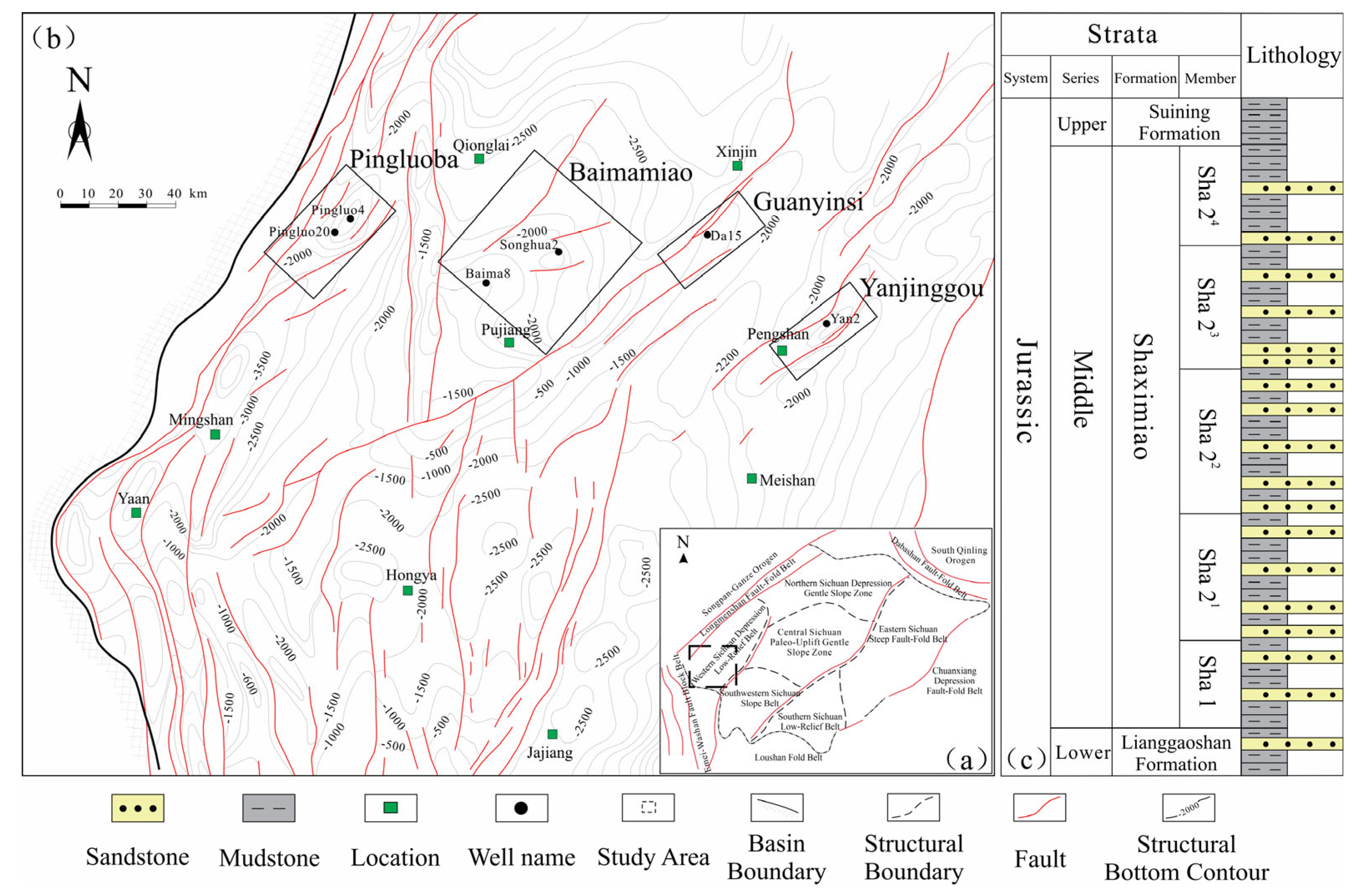
The southwestern Sichuan region is located on the southwestern margin of the Sichuan Basin, within the southern part of the low-steep structural zone of the Chuanxi Depression. It is bounded by the Longmenshan Fault Zone to the west, adjacent to the Longmenshan Nappe Structural Belt. It is adjacent to the Chuanzhong Uplift to the east, by the Longquanshan Fault Zone to the north, and constrained by the Emei-Washan Fault Zone and the Emei-Washan Fault Block to the south [12]. On the basis of distinct geological structural features, the study area is subdivided into several tectonic zones: the Longmenshan Nappe Front Fault-Fold Structural Zone, the Emei-Washan Fault-Fold Structural Zone, the Western Sichuan Faulted Sag Low-Gentle Structural Zone, and the Xiongpo-Longquanshan Fault-Fold Structural Zone (Figure 1).
The sedimentary systems in the study area are primarily characterized by an alluvial fan-shallow water delta system. The sedimentary rock exhibits a typical NE-trending distribution and shows characteristics of multistage stacked channel sandstone. The area contains widely distributed channel sandstone with good connectivity, exhibiting characteristics of a shallow-water delta front environment. The lithology here is primarily gray–green siltstone and fine sandstone, with the reservoir porosity dominated by intergranular pores, although secondary dissolution pores and fractured pores are also observed locally. The target Jurassic Shaximiao Formation, lying below the Suining and Penglaizhen Formations and above the Lianggaoshan and Xujiahe Formations, constitutes the main reservoir. Its gas accumulations follow a “lower source and upper reservoir” model, whereby hydrocarbons generated from the Xujiahe Formation source rocks migrate upward into the Shaximiao Formation reservoirs via tectonic and depositional pathways [8]. Multiple tectonic events during deposition led to complex variations in sedimentary facies, environment, grain size, and mineral composition, thereby significantly influencing reservoir properties and the subsequent formation of oil and gas accumulations in the area (Figure 1).

3. Samples and Methods

This study employed core samples from four hydrocarbon reservoirs (Guanyinsi, Baimamiao, Yanjinggou, and Pingluoba). A suite of experiments was performed, including basic analyses of reservoir physical properties and cast thin sections, as well as advanced techniques such as nuclear magnetic resonance (NMR) and high-pressure mercury injection (HPMI). The characteristics of the samples analyzed by HPMI and NMR are detailed below.
This study incorporates a relatively large number of planar figures, which were developed based on laboratory experiments combined with previous research findings. Specifically, the depositional system maps (Figure 2 and Figure 3) were redrawn from seismic interpretation results. The well-tie cross-section was generated using professional logging software to emphasize the vertical distribution of sand bodies, as the distribution of mudstone was not a focus of this study. Finally, a comprehensive model (Figure 2) was constructed to synthesize the research outcomes by integrating reservoir characteristics, heterogeneity, differences in gas-bearing properties, and key controlling factors.

3.1. Methods for Characterization of Reservoir Petrology

The reservoir petrological characteristics were analyzed primarily through two techniques: macroscopic core observation and microscopic analysis of cast thin sections. The mineral distribution within the Shaximiao Formation rocks was examined using a Zeiss Axio Scope.A1 ApoL polarizing microscope (Carl Zeiss, Jena, Germany). The mineral composition of the samples was determined by X-ray diffraction (XRD) performed on a Bruker D8 Advance diffractometer (Bruker, Mannheim, Germany) [13,14]. The experimental results pertaining to the “three-end-member” method were derived from an analysis of 12 samples collected from the four aforementioned gas reservoirs. The mineral composition of the samples was determined through point counting analysis of cast thin sections under a microscope. Multiple images of different fields of view were captured and analyzed for each sample to accurately characterize the petrological properties of the reservoir (Table 1).

3.2. Methods for Characterization of Reservoir Storage Space

The characterization of the reservoir pore system was conducted by integrating qualitative and quantitative analytical methods. Qualitatively, pore structure and pore-throat size distribution were examined primarily through cast thin-section observation. Quantitatively, a suite of techniques was employed, including porosity-permeability measurements, high-pressure mercury injection (HPMI), and nuclear magnetic resonance (NMR). The HPMI technique is based on the capillary bundle model. During the measurement, mercury (as a non-wetting phase) is injected into the core sample. When the injection pressure surpasses the capillary pressure of a particular pore throat, mercury enters the connected pores. The applied pressure correlates with the throat radius, and the cumulative volume of intruded mercury corresponds to the volume of the pores accessible through that throat [15,16]. By progressively increasing the pressure, a capillary pressure curve is obtained, which reflects the pore-throat size distribution. NMR involves the absorption and re-emission of electromagnetic waves at a specific frequency by atomic nuclei (e.g., hydrogen protons) under a static magnetic field. The application of NMR for pore size evaluation is based on the dependence of the transverse relaxation time (T2) of hydrogen nuclei on pore size. Shorter T2 relaxation times indicate smaller pores. Consequently, the T2 relaxation spectrum, derived from the detection and inversion of NMR signals, provides a profile that correlates with the pore size distribution within the core sample.

3.3. Methods for Analyzing Differentiation Mechanisms of Tight Reservoir

This study focuses on the differentiation mechanisms of tight reservoirs, primarily conducting analysis from three aspects: the influence of sedimentation and mineral composition on reservoir formation, and the impact of diagenesis on the reservoir. During the analytical process, through the comparison of the reservoir’s planar distribution, profile distribution, and internal heterogeneity, the formation mechanisms of reservoir differentiation were revealed. Regarding the impact on gas-bearing characteristics, the research employed three perspectives: planar, interlayer, and intralayer. Using parameters such as sand body thickness, coefficient of variation, and homogeneity coefficient, the influence of different reservoirs on gas content was analyzed. Among these, the coefficient of variation is a statistical indicator measuring the dispersion degree of sand body permeability. It is defined as the ratio of the standard deviation of a certain geological attribute value to its mean value. The coefficient of variation refers to the degree to which the permeability within a layer deviates from the mean value. The closer its value is to 1, the stronger the degree of deviation, and thus the stronger the heterogeneity (Formula (1)). The homogeneity coefficient is the ratio of the average permeability to the maximum permeability within a layer. The closer its value is to 0, the stronger the heterogeneity.
V k = i = 1 n ( k i k ¯ ) 2 / n k ¯
Vk: the coefficient of variation; ki: the permeability at a specific depth within the layer; k ¯ the average permeability of the layer; n: the number of samples.

4. Results

4.1. Sedimentary Characteristics of Southwestern Sichuan

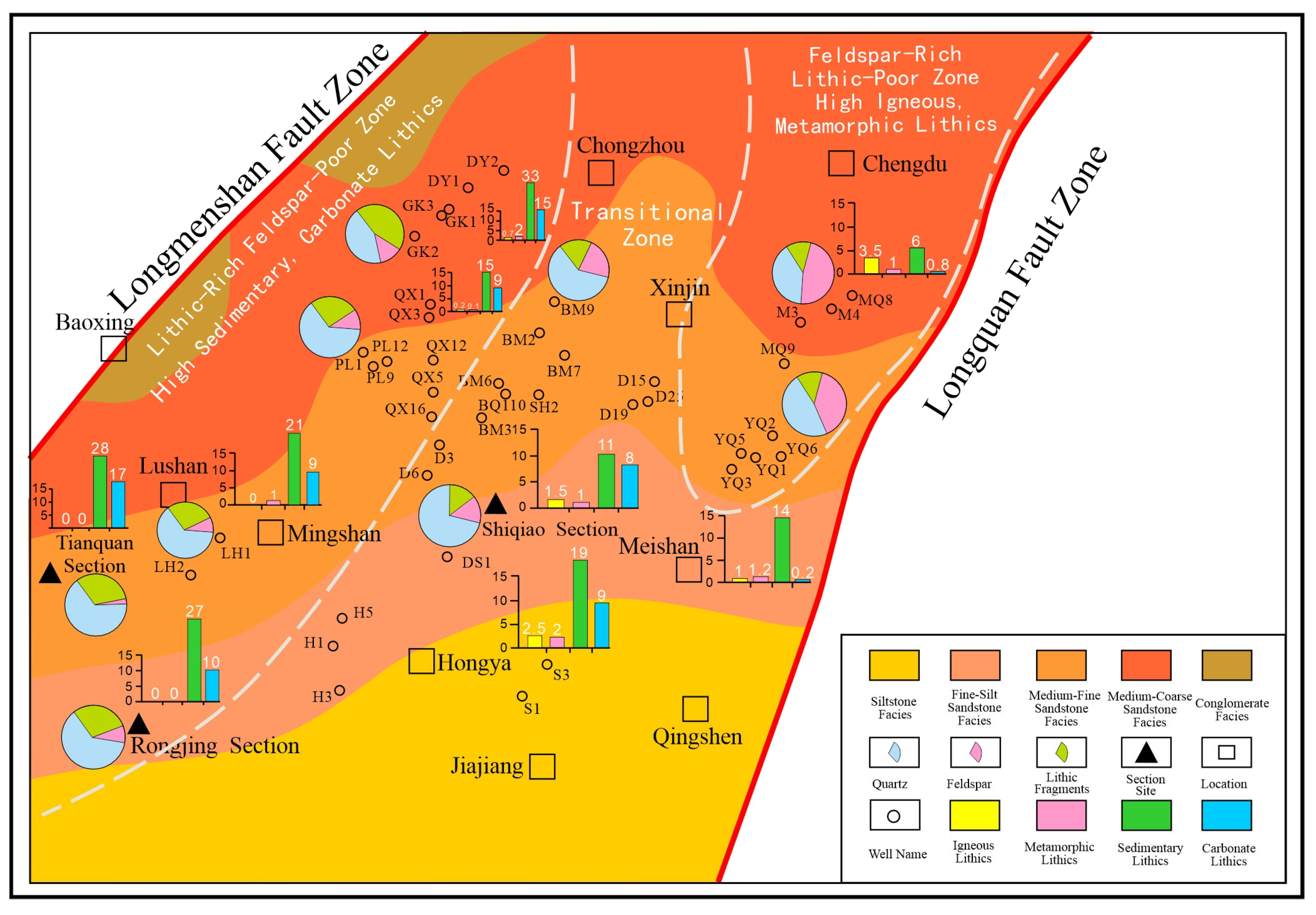
The reservoirs in this area are rich in carbonate rock fragments, which constitute about 35–40% of the total composition. In contrast, the Yanjinggou and Matou gas reservoirs, dominated by the long-axis provenance from the northern Longmen Mountains–Micang Mountain area after long-distance transport, contain lower percentages of total lithic fragments. These reservoirs are primarily composed of igneous rock fragments (Well YQ2: 15%) and metamorphic rock fragments (Well YQ3: 10%). The Baimamiao-Guanyinsi gas reservoirs, located in the transitional zone between the two provenances, exhibit a grain size intermediate between that of the Pingluoba and Yanjinggou reservoirs. The lithic fragments include both carbonate (12–15%) and igneous rocks (8–10%). The mineral composition is balanced, with quartz (40–50%), feldspar (25–30%), and total lithic fragments (20–30%). Weakened cementation in this zone has optimized the pore structure, resulting in the reservoir unit with the most favorable physical properties (Figure 2).
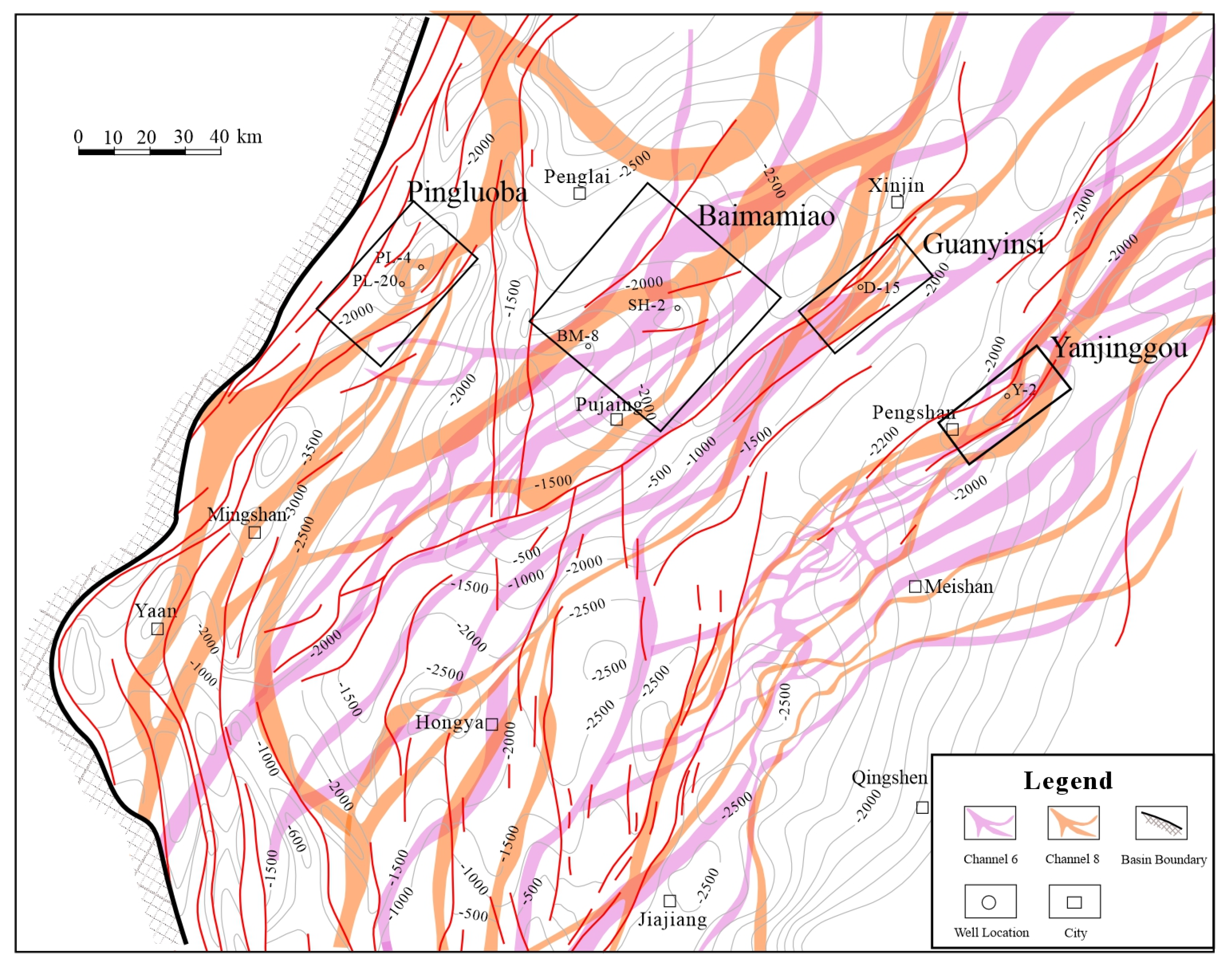
During the deposition of the Shaximiao Formation reservoirs in the southern Sichuan Basin, the dual provenance supply led to significant differences in the distribution of sand bodies and their internal sedimentary composition. These differences ultimately resulted in variations in reservoir physical properties and gas content among the different gas reservoirs (Figure 3).
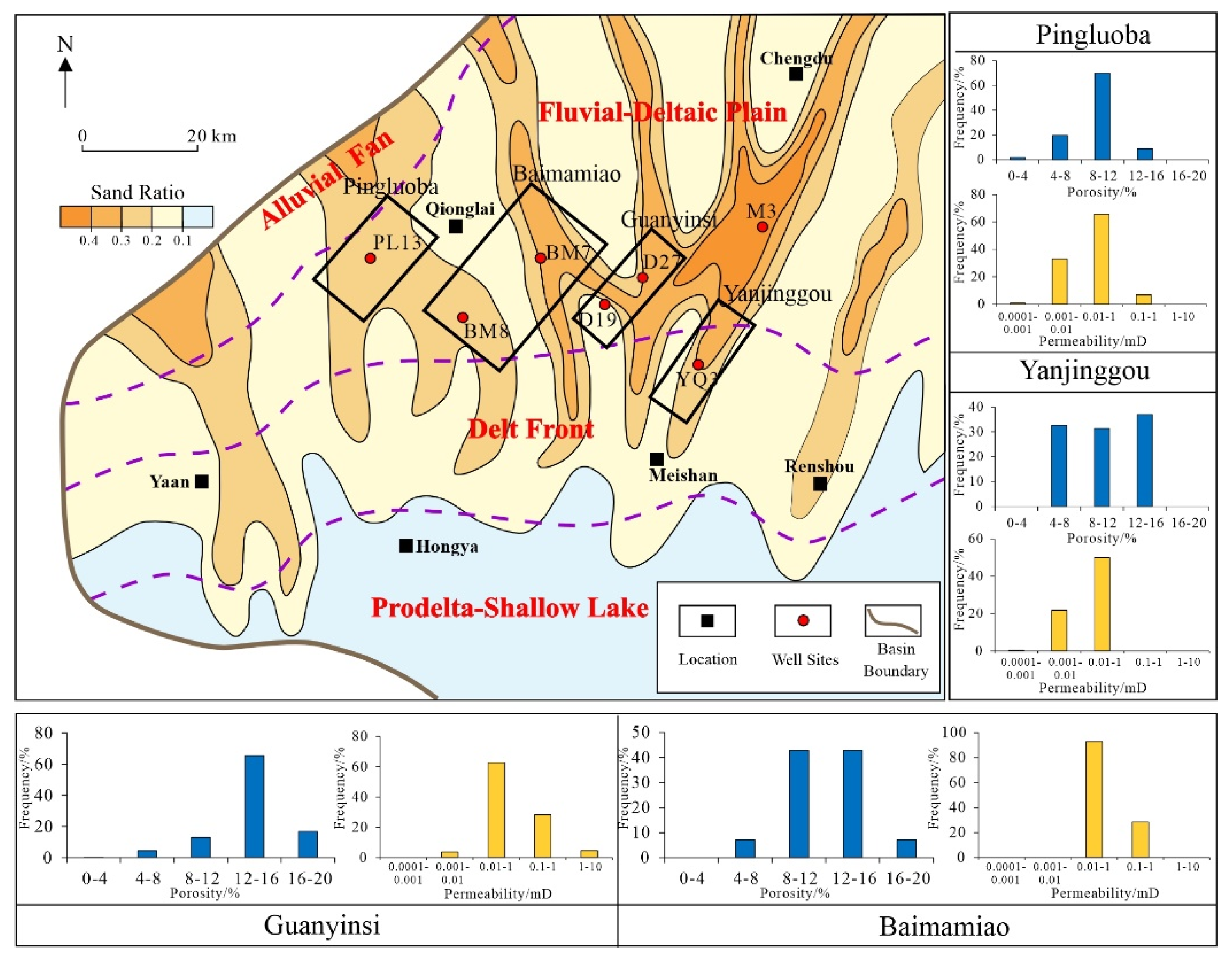
An analysis of the planar distribution of fluvial sand bodies in the Shaximiao Formation reveals that the Baimamiao, Guanyinsi, and Yanjinggou gas reservoirs contain both Channel 6 and 8, while the Pingluoba gas reservoir contains only Channel 8. As shown in Figure 3, the channel systems in the Guanyinsi and Baimamiao gas reservoirs are characterized by numerous distributary channels with a high degree of overlap and interconnection. In contrast, the channel system in the Pingluoba gas reservoir is relatively singular. Since it develops only Channel 8 and exhibits fewer channel branches within the reservoir boundary, its productivity is comparatively lower. Although the overall channel distribution around the Yanjinggou gas reservoir is favorable, the degree of channel stacking and connectivity within the reservoir itself is poor, resulting in inferior gas accumulation.
As presented in Table 2, the Yanjinggou gas reservoir exhibits a greater average formation thickness, while the Pingluoba reservoir has a smaller average thickness. The Baimamiao reservoir is characterized by a relatively large maximum thickness, in contrast to the Guanyinsi reservoir, which shows a smaller maximum thickness. The sand-to-ground ratio ranges from 10.54% to 36.76% (averaging 21.02%) in the Baimamiao reservoir, and from 15.89% to 32.27% (averaging 21.99%) in the Guanyinsi reservoir. The ratio for the Pingluoba reservoir is between 8.45% and 26.22%, with an average of 16.60%. The Yanjinggou gas reservoir has the lowest ratio, ranging from 9.47% to 15.89% and averaging 13.19%.

4.2. Reservoir Petrological Characteristics

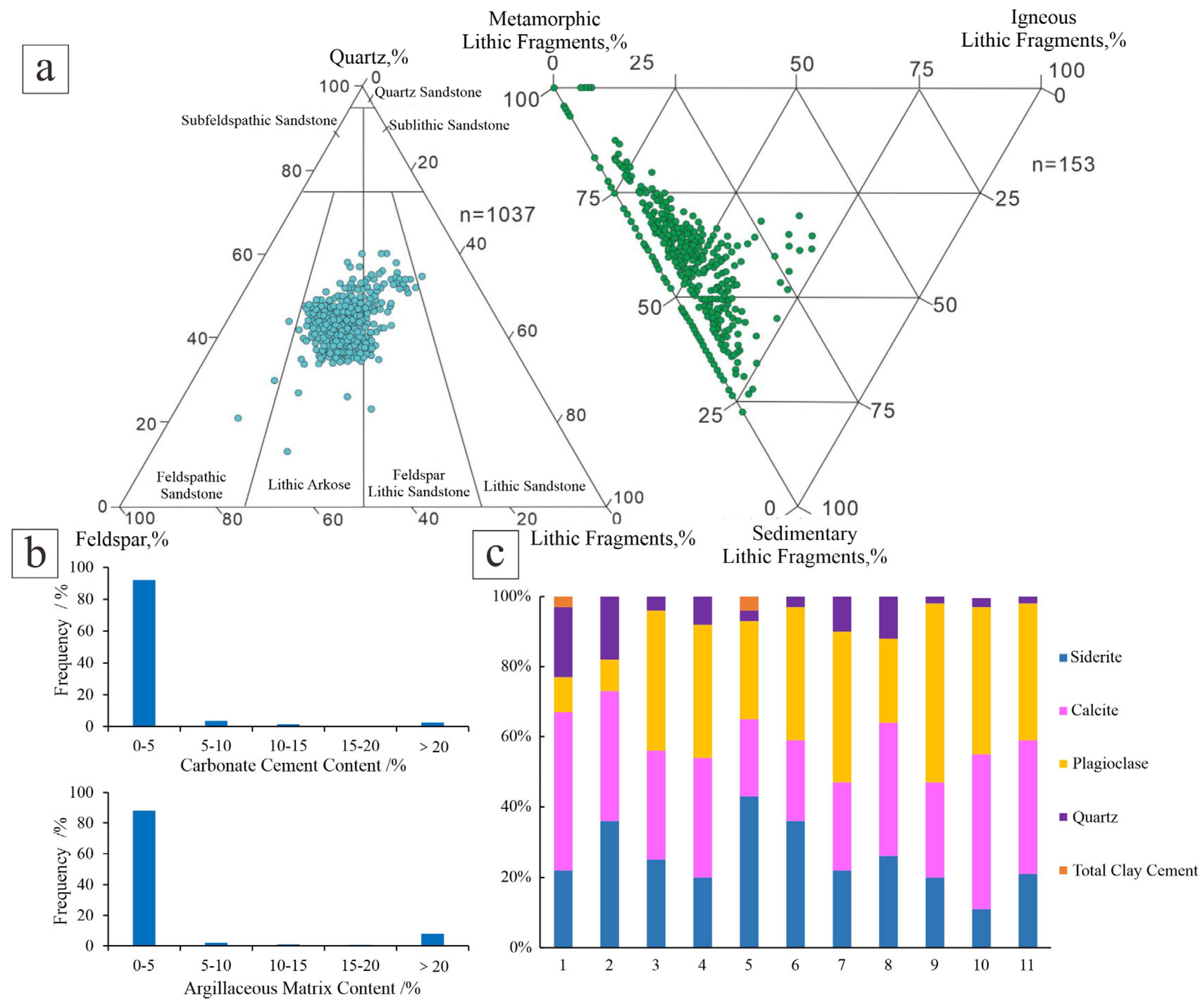
Analysis of core observations and thin-section identifications from the Shaximiao Formation reservoirs in the southwestern Sichuan Basin indicates the following average composition: quartz (Q) = 42.7%, feldspar (F) = 32.5%, and rock fragments (R) = 24.8%. According to the sandstone ternary classification scheme, the reservoirs are predominantly composed of lithic feldspar sandstone, followed by feldspar lithic sandstone, with minor amounts of feldspathic sandstone. The lithic fragments are mainly metamorphic and sedimentary rock types, with minor igneous rock fragments. XRD analysis confirms that the sandstone is dominated by quartz, followed by plagioclase and clay minerals, with minor amounts of calcite, orthoclase, and analcime, which is generally consistent with the thin-section results. Thin-section analysis further indicates an average carbonate cement content of 4.19% and an average argillaceous content of 7.63% (Figure 4).

4.3. Reservoir Physical Properties Characteristics

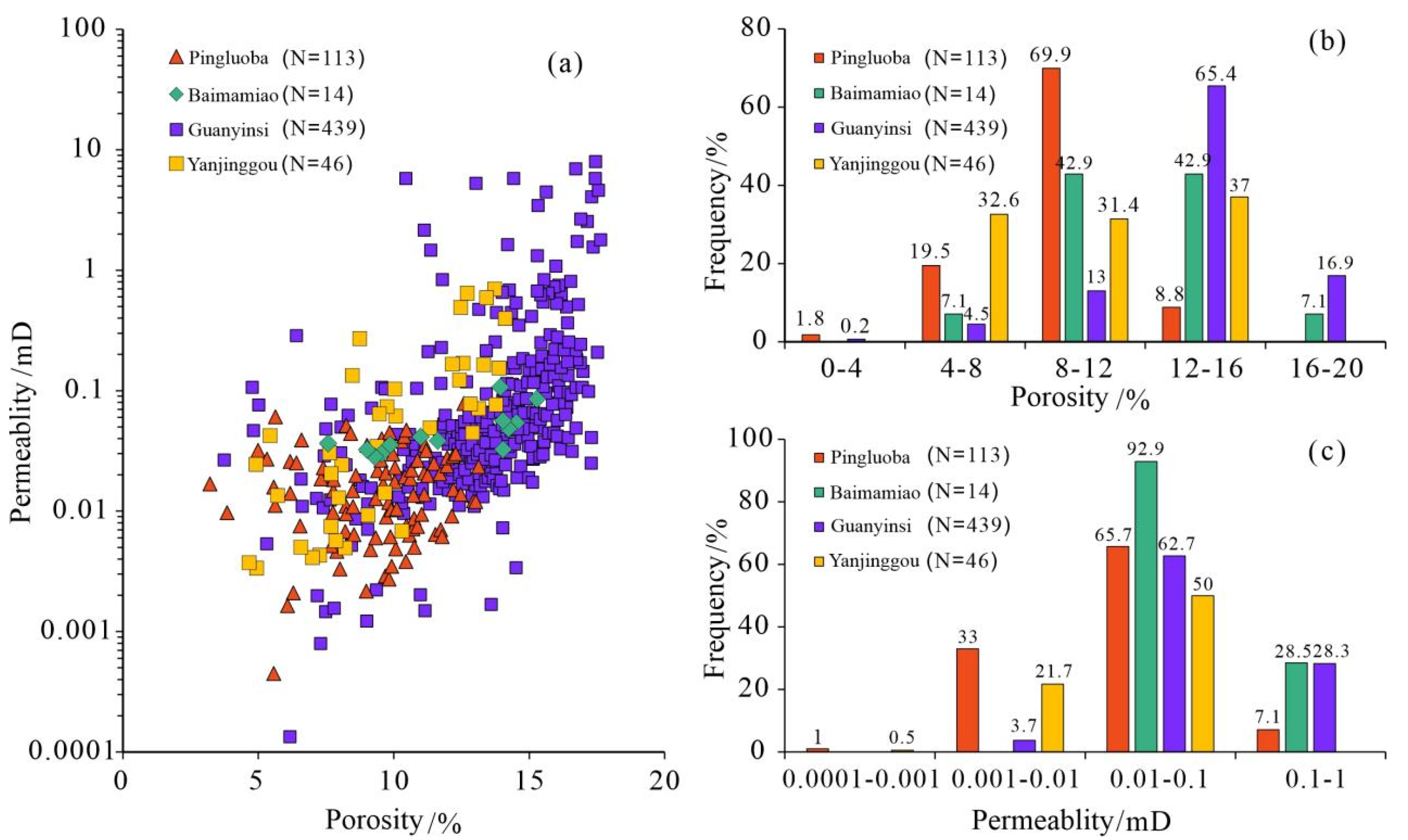
The reservoirs in the southwestern Sichuan Basin are characterized by low porosity and extra-low–low permeability. In the Sha-2 Member, the maximum porosity is 18.76%, with an average of 12.6% and a median of 13.4%; the maximum permeability is 7.65 mD, with an average of 0.202 mD and a median of 0.045 mD. In the Guanyinsi Gas Reservoir, the maximum porosity is 17.66%, with an average of 13.79% and a median of 14.32%; the maximum permeability is 7.65 mD, with an average of 0.26 mD and a median of 0.061 mD. In the Baimamiao Gas Reservoir, the maximum porosity is 18.76%, with an average of 12.34% and a median of 12.76%; the maximum permeability is 0.104 mD, with an average of 0.046 mD and a median of 0.035 mD. In the Pingluoba Gas Reservoir, the maximum porosity is 13.24%, with an average of 9.46% and a median of 9.84%; the maximum permeability is 0.075 mD, with an average of 0.018 mD and a median of 0.014 mD. In the Yanjingou Gas Reservoir, the maximum porosity is 14.11%, with an average of 9.80% and a median of 9.58%; the maximum permeability is 0.643 mD, with an average of 0.129 mD and a median of 0.046 mD. As shown in Figure 5, the Guanyinsi Gas Reservoir exhibits relatively better physical properties, with significantly higher permeability compared to the other gas reservoirs. The porosity of the Pingluoba Gas Reservoir is predominantly distributed in the 8–12% range, indicating noticeably inferior physical properties relative to the other reservoirs (Figure 5).

4.4. Reservoir Pore Structure Characteristics

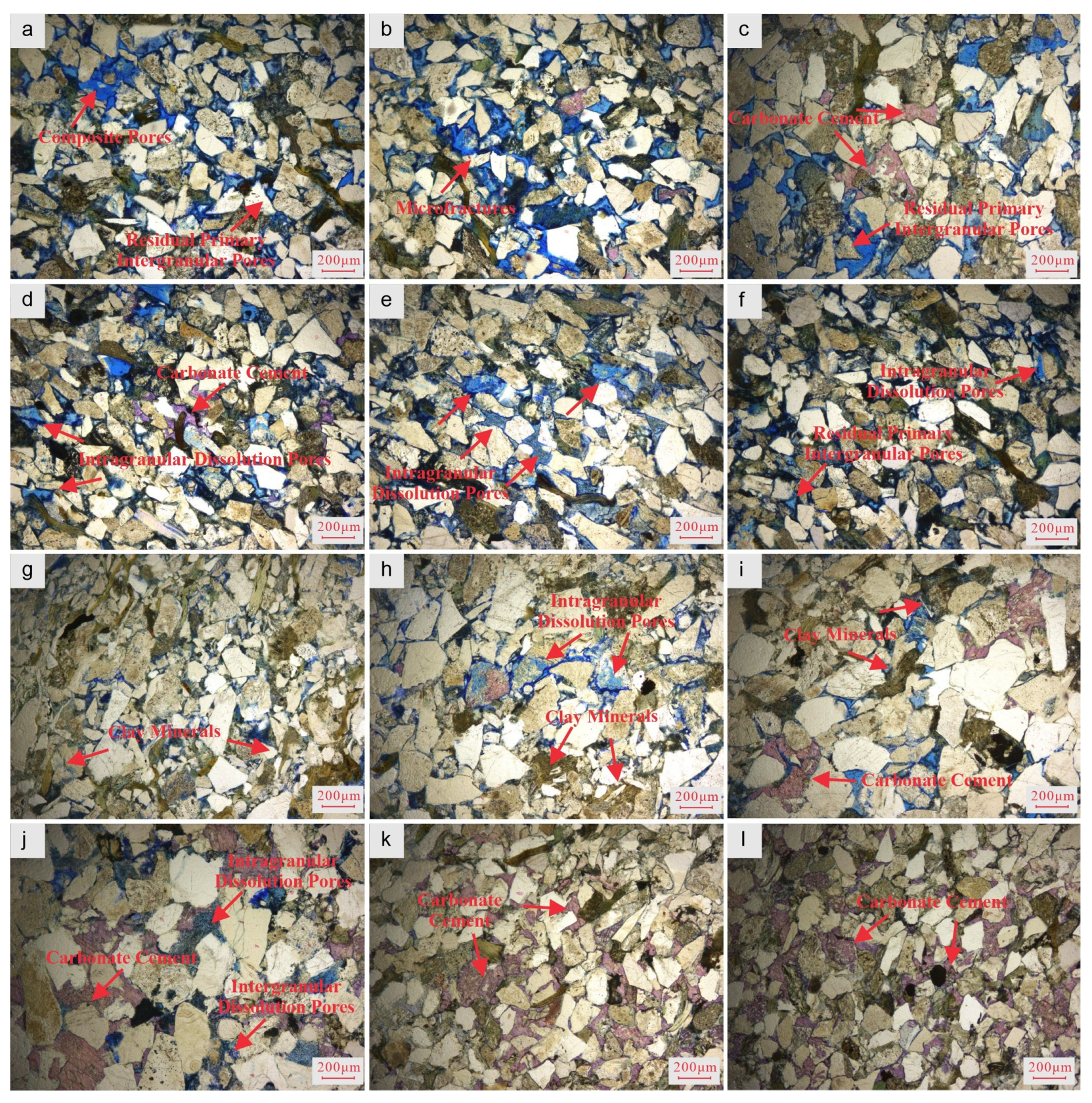
The pore spaces within the Shaximiao Formation sandstone reservoirs of the southwestern Sichuan Basin comprise residual primary intergranular pores, secondary dissolution pores, and composite pores. Composite pores refer to a type of pore that forms on the basis of primary pores and incorporates other pore types. Composite pores mean pore systems that originate from primary pores but have been modified, either by connectivity with secondary pores from dissolved detrital grains or by partial filling with authigenic minerals, resulting in a mixed pore system with two or more pore types. In the gas-bearing intervals of the Guanyinsi Gas Reservoir, the pore space is relatively well-developed. Residual intergranular pores dominate, with locally well-developed composite pores exhibiting good connectivity; microfractures are also observed. In some local gas-bearing intervals, reservoir connectivity is moderate, with portions of the pore space filled with carbonate cement. Compared to Guanyinsi, the Baimamiao Gas Reservoir exhibits relatively more developed intragranular dissolution pores, followed by residual primary intergranular pores. Local carbonate cementation is present, and the matrix content is relatively high. The Yanjingou Gas Reservoir contains relatively high clay mineral content and a well-developed matrix. These minerals occupy the primary intergranular pores, resulting in poor internal pore connectivity. Intragranular dissolution pores are relatively developed, and local carbonate cement is observed. In the Pingluoba Gas Reservoir, the sandstone is largely cemented by carbonate minerals. Locally, connected pores composed of residual primary intergranular pores and intragranular dissolution pores facilitate natural gas accumulation; however, the overall pore space is limited (Figure 6).
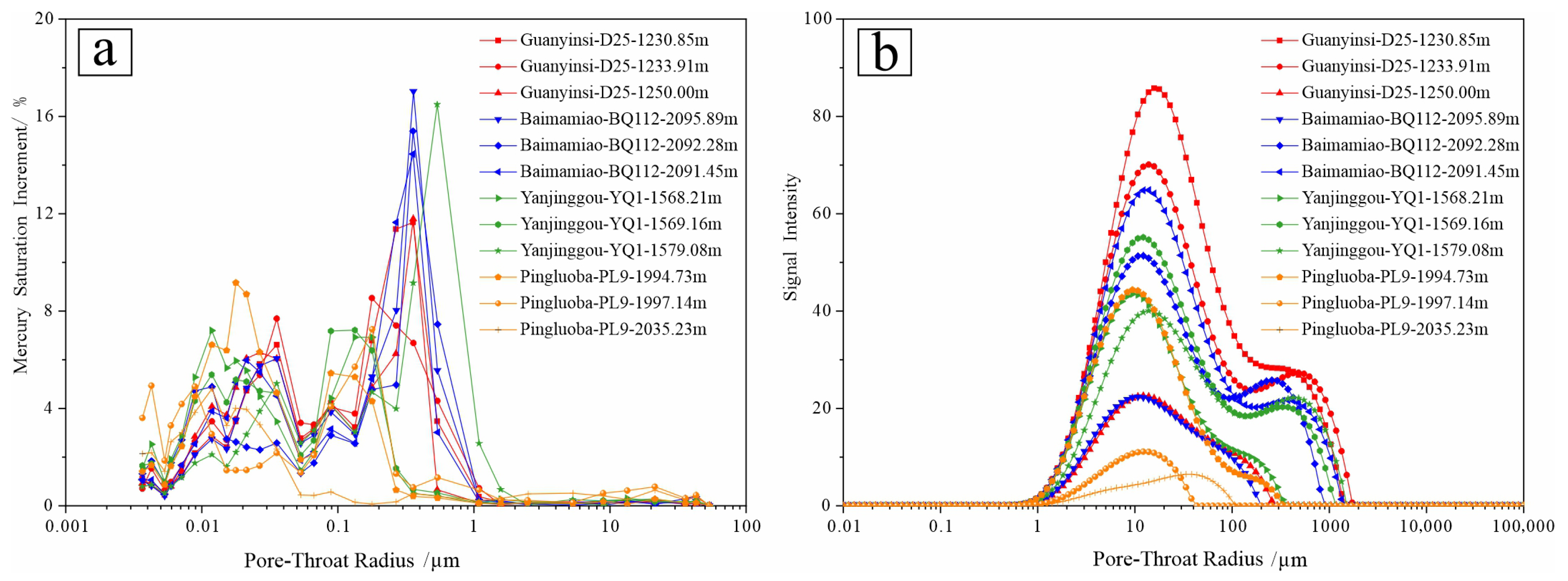
Based on the experimental results of high-pressure mercury intrusion and nuclear magnetic resonance, the pore size distribution of the tight sandstone reservoirs in the Shaximiao Formation of the southwestern Sichuan Basin ranges from 1 nm to 1 μm, with the main distribution between 5 nm and 1 μm. The pore size distributions of the Guanyinsi and Baimamiao gas reservoirs are relatively similar, primarily concentrated in the ranges of 0.1–1 μm and 0.01–0.05 μm, indicating a favorable pore size distribution. Furthermore, the relatively high proportion of larger pores reflects a comparatively well-developed pore space. In contrast, the Yanjingou gas reservoir exhibits an uneven pore size distribution, predominantly with pores below 1 μm. High-pressure mercury intrusion results reveal differences in the range of larger pores; for instance, sample YQ1 shows a broader distribution of larger pores compared to samples YQ2 and YQ4. The Pingluoba gas reservoir demonstrates poorer pore throat characteristics and greater variability in pore size distribution compared to the other reservoirs, along with a lower mercury intrusion saturation. Its pores are mainly distributed between 0.01 and 0.1 μm. The distinct pore size distributions observed among the three samples indicate significant heterogeneity in the pore systems of the Yanjingou and Pingluoba gas reservoirs (Figure 7).

5. Discussion

5.1. Differentiation Mechanisms of Tight Reservoir and Its Implications for Gas-Bearing Properties

5.1.1. Controls of Deposition on the Spatial Distribution and Physical Property of Reservoir

The Shaximiao Formation in the southern Sichuan Basin received sediments from two provenance systems: a short-axis provenance from the central Longmen Mountains and a long-axis provenance from the northern Longmen Mountains–Micang Mountain area. During the Jurassic, the Longmen Mountain fault zone experienced continuous uplift, with intense tectonic activity in the northern Longmen Mountains–Micang Mountain area making it a significant sediment source [14,15]. During the deposition of the Shaximiao Formation, continued uplift in the central Longmen Mountains, coupled with a lake-level drop and a lacustrine regression, led to the development of relatively small and isolated alluvial fans along the mountain front [16]. Narrow fluvial channels, roughly parallel to the Longmen Mountains, formed near this short-axis provenance, supplying coarse-grained sediments to the Pingluoba gas reservoir.
In this high-energy environment, carbonate fragments were broken and filled the pores, significantly reducing primary porosity in the Pingluoba gas reservoir. As a result, the average porosity of the reservoir is only 9.46%, with an average permeability of 0.018 mD. In contrast, the long-axis provenance experienced long-distance transport and sorting, resulting in relatively better grain sorting. In the delta front facies, a rigid framework dominated by quartz (50–65%) and compaction-resistant igneous fragments developed. In the Yanjinggou and Matou gas reservoirs, primary porosity was relatively well preserved. However, during the middle to late diagenetic stage, the transformation of metamorphic rocks into clay minerals again reduced reservoir quality, resulting in a porosity of 9.80–12.34% and a permeability of 0.046–0.129 mD. In the transitional zone influenced by both provenance systems, mixed lithic fragments developed, but their content is relatively low, while quartz and feldspar contents are relatively high, favoring pore preservation. Consequently, the Guanyinsi and Baimamiao gas reservoirs exhibit better physical properties, with porosities of 12.34–13.79% and permeabilities of 0.035–0.26 mD (Figure 8).
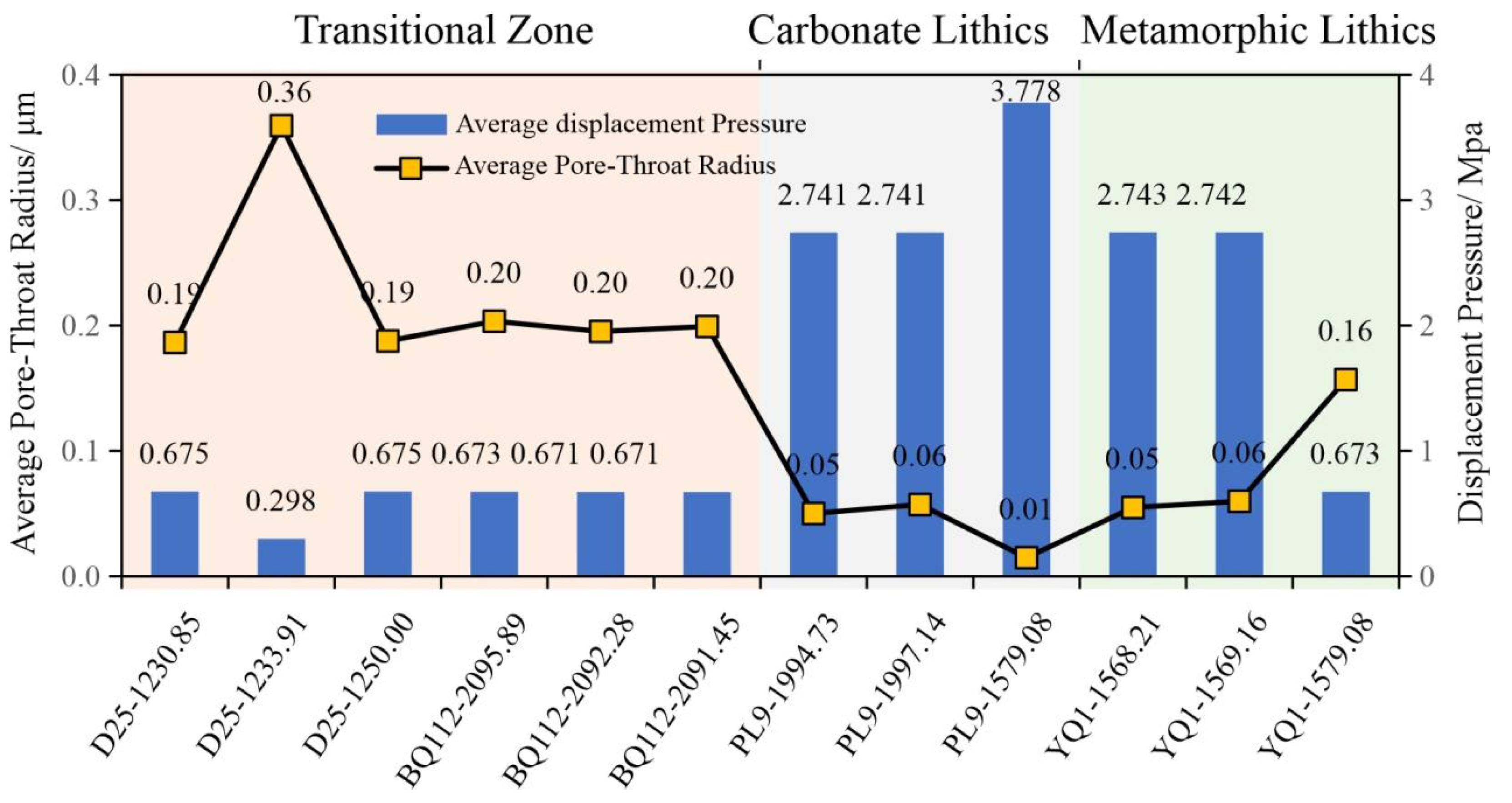
Based on the displacement pressure and average pore throat radius of different gas reservoirs, it is evident that the Pingluoba gas reservoir with high carbonate lithic fragments content and the Yanjingou gas reservoir with high metamorphic lithic fragments content exhibit significantly higher displacement pressures compared to the Baimamiao and Guanyinsi gas reservoirs. The abundant lithic fragments in these reservoirs obstruct pore connectivity, resulting in displacement pressures mostly above 2.7 MPa and average pore throat radii generally below 0.16 μm (Figure 9).

5.1.2. Controls of Diagenesis on Reservoir Connectivity

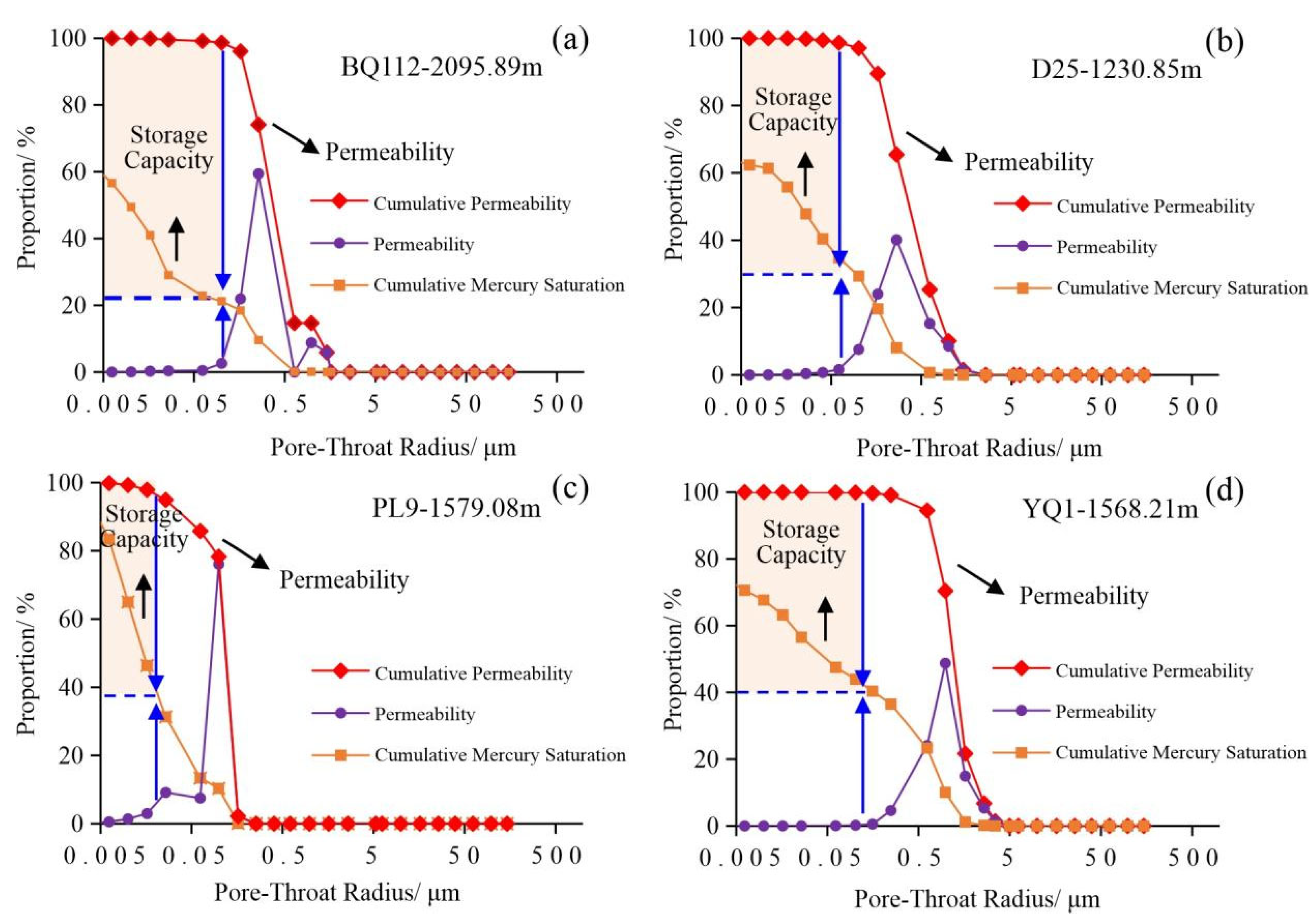
Impact of compaction action on reservoir connectivity: Differential compaction is observed across the gas reservoirs. he pore spaces in the Guanyinsi and Baimamiao gas reservoirs exhibit relatively well-developed residual primary porosity. In contrast, most of the primary pores in the Pingluoba gas reservoir are filled with carbonate cement, which is attributed to its high content of carbonate fragments. During the early diagenetic stage, compaction was the primary factor responsible for porosity reduction. In environments with relatively high pH, early calcite cementation occurred, forming abundant calcite cements. This early-formed calcite provided a buttressing effect on brittle minerals within the pores, thereby reducing the impact of subsequent compaction. The Yanjingou gas reservoir exhibits lower carbonate mineral content but higher clay mineral content compared to the Pingluoba reservoir, with the clay occurring mainly as pore-filling material. During early diagenesis, compaction led to compression of clay minerals and expulsion of material internal water, which partially offset compaction effects but concurrently resulted in pore blockage. The reservoirs in the Guanyinsi and Baimamiao gas fields exhibit relatively low lithic content. Although the primary pores have been subjected to some degree of compression, the low content of clay minerals and carbonate cements within the residual primary pores has preserved relatively good pore space. Based on high-pressure mercury intrusion data, parameters such as permeability contribution, cumulative permeability contribution, and cumulative mercury saturation can be used to evaluate the storage capacity of reservoir samples. As shown in Figure 10, the storage capacity of Guanyinsi and Baimamiao is significantly higher than that of Pingluoba and Yanjingou. Furthermore, compared to the Yanjingou gas reservoir, the Pingluoba gas reservoir demonstrates relatively poorer storage capacity, which also verifies that differences in compaction have led to variations in reservoir pore space (Figure 10).
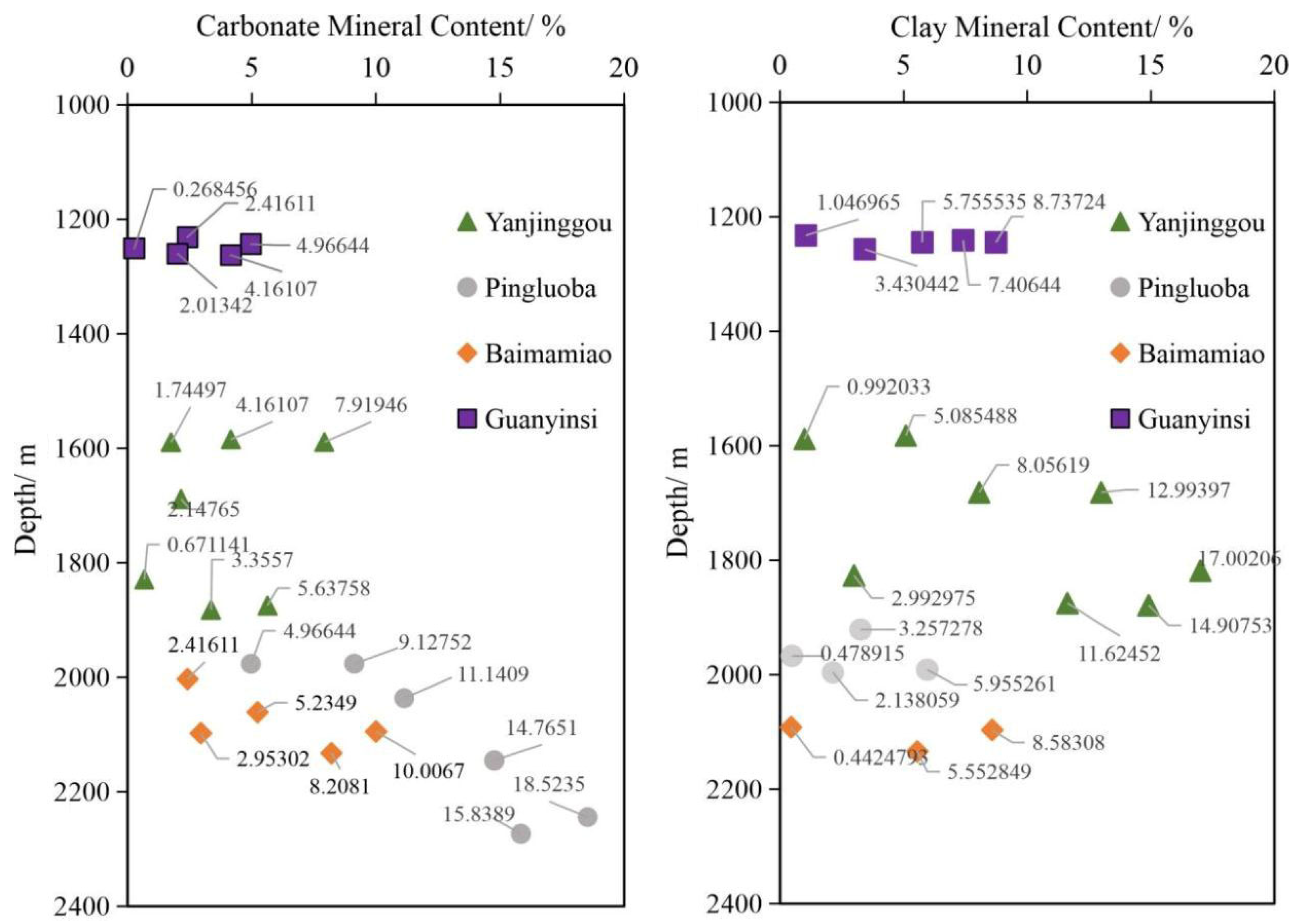
Control of Cementation on Reservoir Connectivity: Cements in the Shaximiao Formation reservoirs, primarily comprising calcite and clay minerals, significantly degrade reservoir quality. Calcite cement is the most abundant type in Shaximiao sandstone. Distribution characteristics of carbonate mineral content across different gas reservoirs reveal that the Pingluoba gas reservoir contains notably higher calcite cement compared to the others. This is attributed to its proximity to the Longmenshan Fault Zone, where the fan delta facies exhibited steep topographic gradients, resulting in relatively poor sorting ability of the sediment provenance and high carbonate lithic content. Consequently, most of the primary pores are filled with these cements.
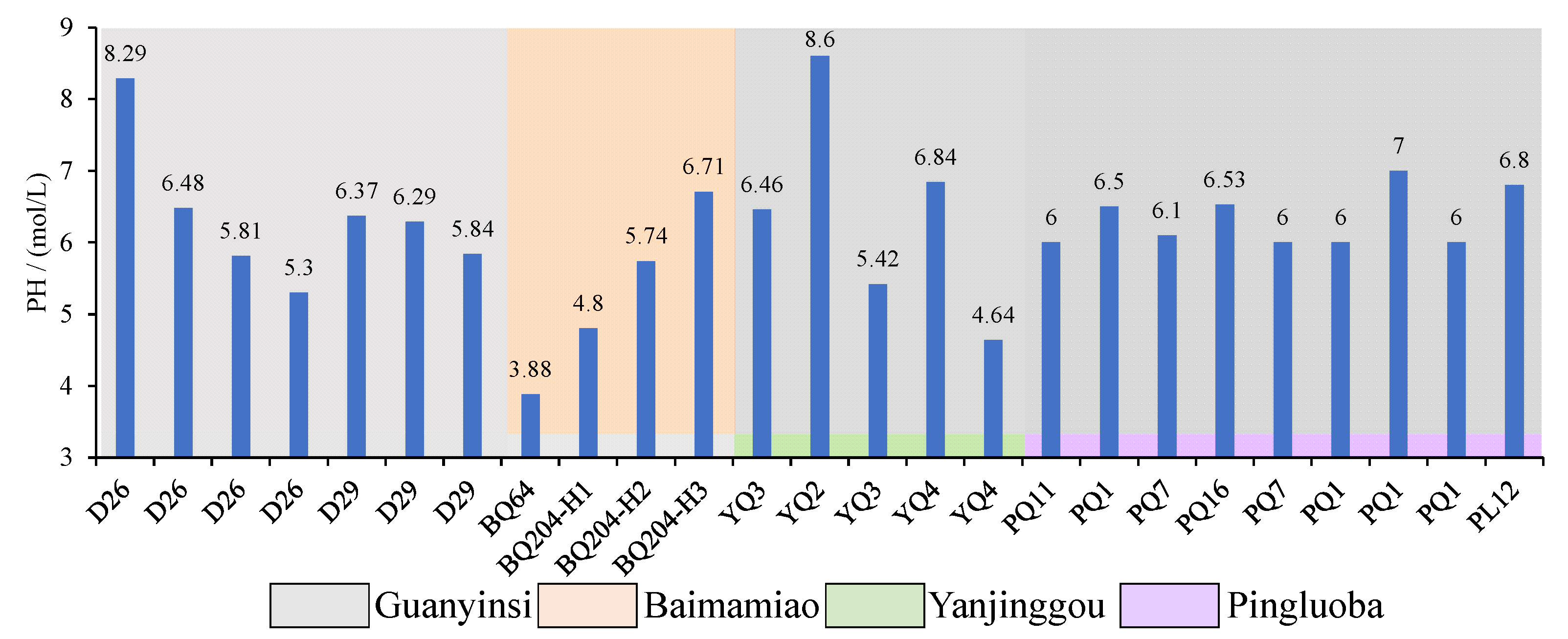
Regarding the impact of calcite cement on reservoirs, previous studies primarily hold two contrasting views. On one hand, calcite filling reservoir pores reduces storage space and impedes hydrocarbon migration and accumulation. On the other hand, during early diagenesis, early-formed calcite provides a buttressing effect on brittle minerals within the pores, mitigating the impact of compaction and thereby preserving more pore space. Subsequently, in late diagenesis, interaction with pore water can lead to water-rock reactions, forming dissolution pores that enhance reservoir storage capacity [17]. Analysis of strata water pH from various gas reservoirs in the southwestern Sichuan Basin indicates that a pH above 7 suggests alkaline conditions, signifying significant water-rock reactions between the strata water and the surrounding rock. Dissolution of carbonate minerals would typically release alkaline components, thereby increasing the pH of the water. However, the pH of the strata water in the Pingluoba gas reservoir shows no notable increase, remaining around 6–7, which is neutral or near-neutral. This is attributed to the depositional setting of the Shaximiao Formation in the southwestern Sichuan region. During its deposition, the lacustrine basin was in a subsiding stage. Fan deltas developed along the Longmenshan front fault zone carried large volumes of freshwater into the basin, leading to a paleo-water transition from brackish–saline to freshwater [15,18]. Due to the proximity of the Pingluoba gas reservoir to the Longmenshan front fault zone, it experienced a brackish–saline depositional environment with a high paleo-water pH. This promoted early diagenetic cementation of the abundant carbonate fragments within Pingluoba. As basin subsidence continued and freshwater influx increased, the paleo-water pH gradually decreased. However, because the primary intergranular pores had already been cemented and filled by carbonate minerals, it was difficult for later strata water to penetrate the reservoir and create significant dissolution pores during late diagenesis. Consequently, the pore spaces in the Pingluoba reservoir are largely filled with calcite, adversely affecting natural gas accumulation.
In the southwestern Sichuan Basin, the predominant clay minerals are illite–smectite mixed-layer and kaolinite. Kaolinite occurs in booklet-like and vermicular forms, distributed within intragranular and intergranular pores, with tiny intercrystalline micropores developed between its crystals. Illite–smectite mixed-layer occurs as flaky coatings attached to grain edges. Among the gas reservoirs, the Yanjingou gas reservoir has the highest relative content of clay minerals. This is attributed to its lithic fragments being primarily igneous and metamorphic rocks. When the sediment provenance contains relatively high proportions of volcaniclastic rocks and tuff, the clay mineral assemblage is enriched in smectite. During the accumulation period, the strata temperature of the Shaximiao Formation reservoirs in the southwestern Sichuan Basin ranged between 90 °C and 120 °C. The strata water in the Yanjingou gas reservoir was acidic, with a pH ranging from 4.6 to 8.6. Under these acidic conditions, potassium feldspar underwent dissolution, releasing a amount of K+ ions. During the early diagenetic stage, the strata was in an open system. Due to the high migration capacity of K+ and the high H+/K+ ratio in the strata fluid, conditions were unfavorable for illite precipitation. Instead, kaolinite was the primary mineral formed during this stage. As the strata temperature increased, the continuous rise in K+ content gradually shifted the strata fluid from acidic to alkaline. When the temperature reached 120 °C, kaolinite began to transform into illite. Additionally, due to the high volcanic material content in the Yanjingou reservoir, when the strata temperature exceeded 70 °C, smectite started to transform into illite. Both the transformation of kaolinite and smectite resulted in the precipitation of clay minerals within intergranular pores, reducing reservoir connectivity (Figure 11).
In other gas reservoirs, clay minerals are predominantly chlorite, which primarily occurs in leaf-like coatings attached to mineral grain surfaces. These coatings mainly formed during early diagenesis through the transformation of precursor clay membranes on grain surfaces. The chlorite coating effectively isolates quartz from contact with strata water, creating a physical barrier that inhibits quartz overgrowth, thereby promoting porosity preservation. Simultaneously, it suppresses the development of quartz secondary enlargement. However, in smaller pores, the coating also occupies original pore space, which can inhibit porosity preservation. Given that the pore in tight sandstone reservoirs of the southwestern Sichuan Basin are primarily at the micrometer scale, the chlorite coating predominantly plays a protective role (Figure 12).
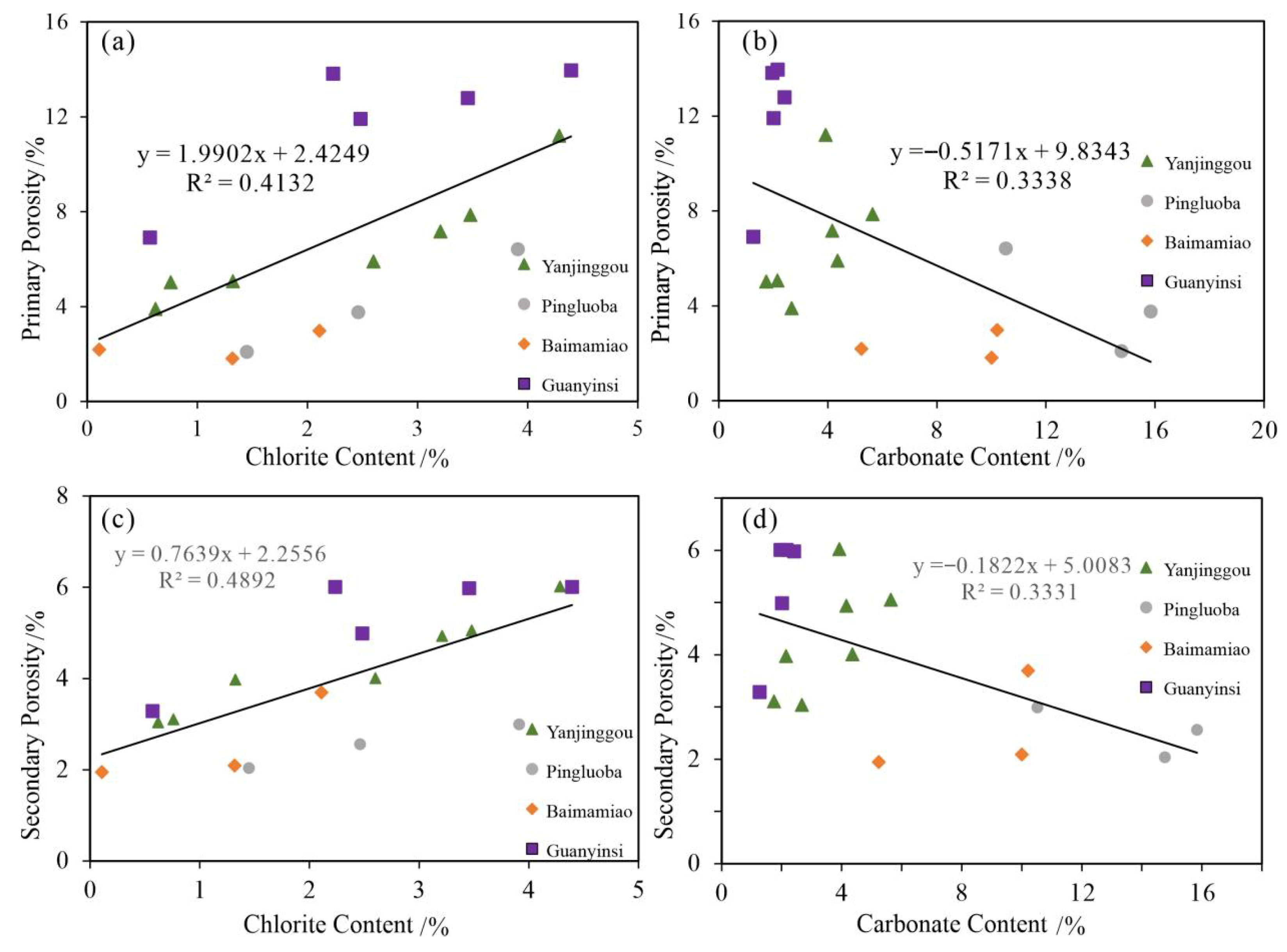
Based on cast thin-section observations, this study conducted separate statistical analyses of primary and secondary pores in the reservoirs of each gas field and performed linear regression with the content of carbonate minerals and chlorite. The correlation between carbonate minerals and reservoir porosity indicates a significant negative relationship in the various gas fields of the southwestern Sichuan Basin, suggesting that carbonate minerals primarily play a destructive role in reservoir pore space. In contrast, chlorite shows a significant positive correlation with both primary and secondary porosity, indicating a protective effect on reservoir pore space. These findings are consistent with the results discussed above (Figure 13).

5.2. Influence of Reservoir Heterogeneity on Gas-Bearing Properties

5.2.1. Influence of Reservoir Areal Heterogeneity on Gas-Bearing Properties

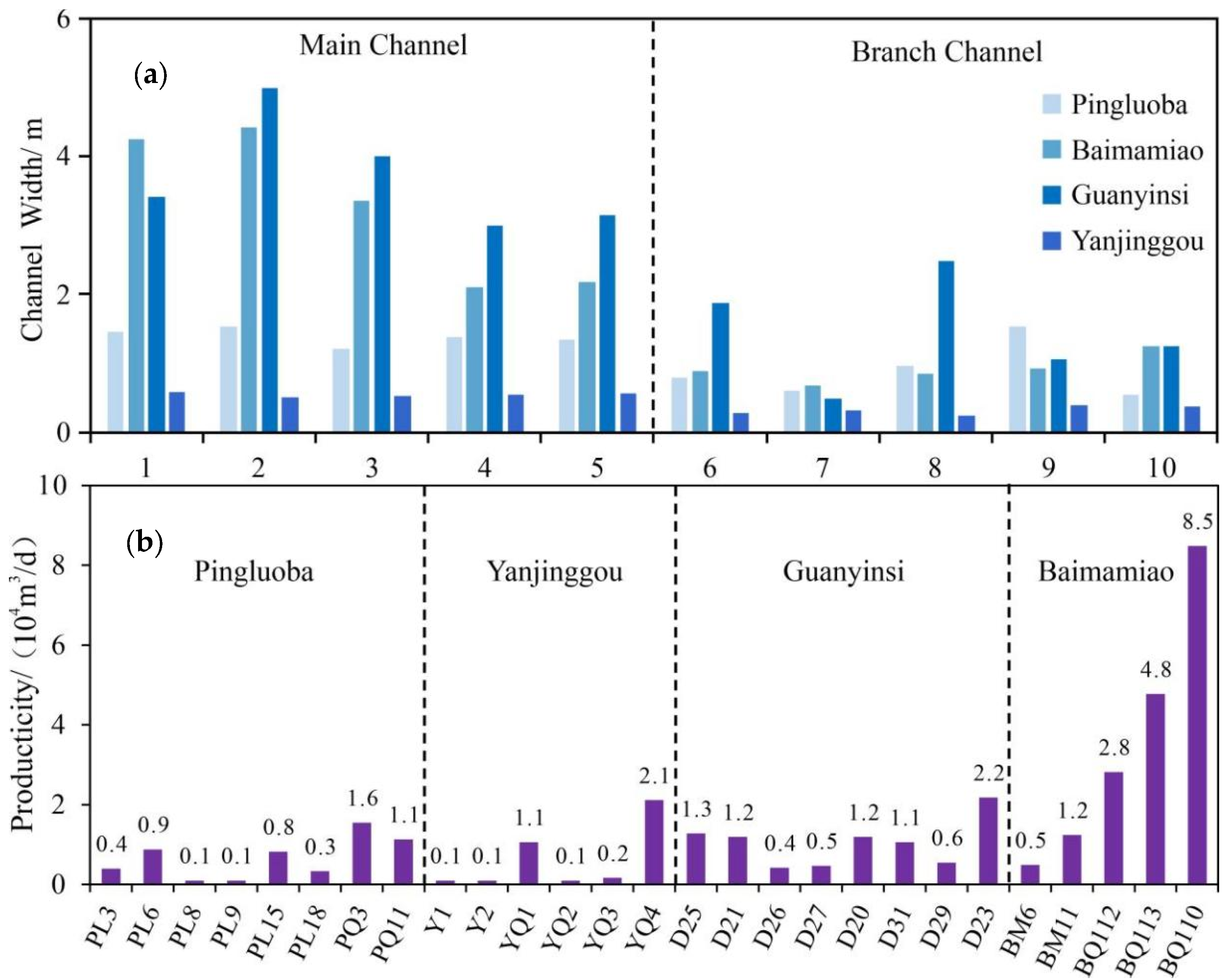
This study conducted statistical analysis of the widths of main channels and distributary channels in different gas reservoirs, with five measurement points collected for each channel type. Figure 14a demonstrates that the main channels in the Baimamiao and Guanyinsi gas reservoirs are significantly wider than those in the Pingluoba and Yanjingou gas reservoirs, with Yanjingou having the narrowest main channels. Regarding distributary channels, Guanyinsi and Baimamiao again exhibit wider channels, while Yanjingou shows the narrowest distributary channels. Based on the sand ratio statistics from actual well in different gas reservoirs, we established the local sand ratio distribution characteristics of the Shaximiao Formation in the southwestern Sichuan Basin. The sand ratio ranges from 10.54% to 36.76% (average: 21.02%) in Baimamiao, 15.89% to 32.27% (average: 21.99%) in Guanyinsi, 8.45% to 26.22% (average: 16.60%) in Pingluoba, and 9.47% to 15.89% (average: 13.19%) in Yanjingou. Although Pingluoba and Yanjingou have relatively greater strata thicknesses, their sandstone thickness and sand ratio are significantly lower than those of Baimamiao and Guanyinsi, resulting in poorer lateral reservoir connectivity. Analysis of daily gas production from individual wells in different gas reservoirs reveals that Baimamiao and Guanyinsi have higher daily production, while Pingluoba and Yanjingou show lower daily production (Figure 14b).
In summary, due to provenance differences, the Pingluoba gas reservoir, receiving sediments from alluvial fan systems, exhibits complex mineral composition, resulting in lower porosity and permeability, poor connectivity, and consequently inferior gas content. In contrast, the Baimamiao and Guanyinsi gas reservoirs, where sediments underwent longer transport distances, possess a more homogeneous mineral composition, leading to better gas-bearing capacity and higher productivity. The Yanjingou gas reservoir, characterized by its high clay mineral content, demonstrates moderate reservoir properties and average gas content. Overall, the differences in channel width, channel sandstone overlap ratio, and sand connectivity within the gas reservoirs collectively lead to the relatively poor gas-bearing potential of the Pingluoba and Yanjingou gas reservoirs. In contrast, reservoirs with better connectivity and wider channels, such as Guanyinsi and Baimamiao, provide more favorable conditions for natural gas accumulation.

5.2.2. Influence of Inter-Layer Heterogeneity on Gas-Bearing Properties

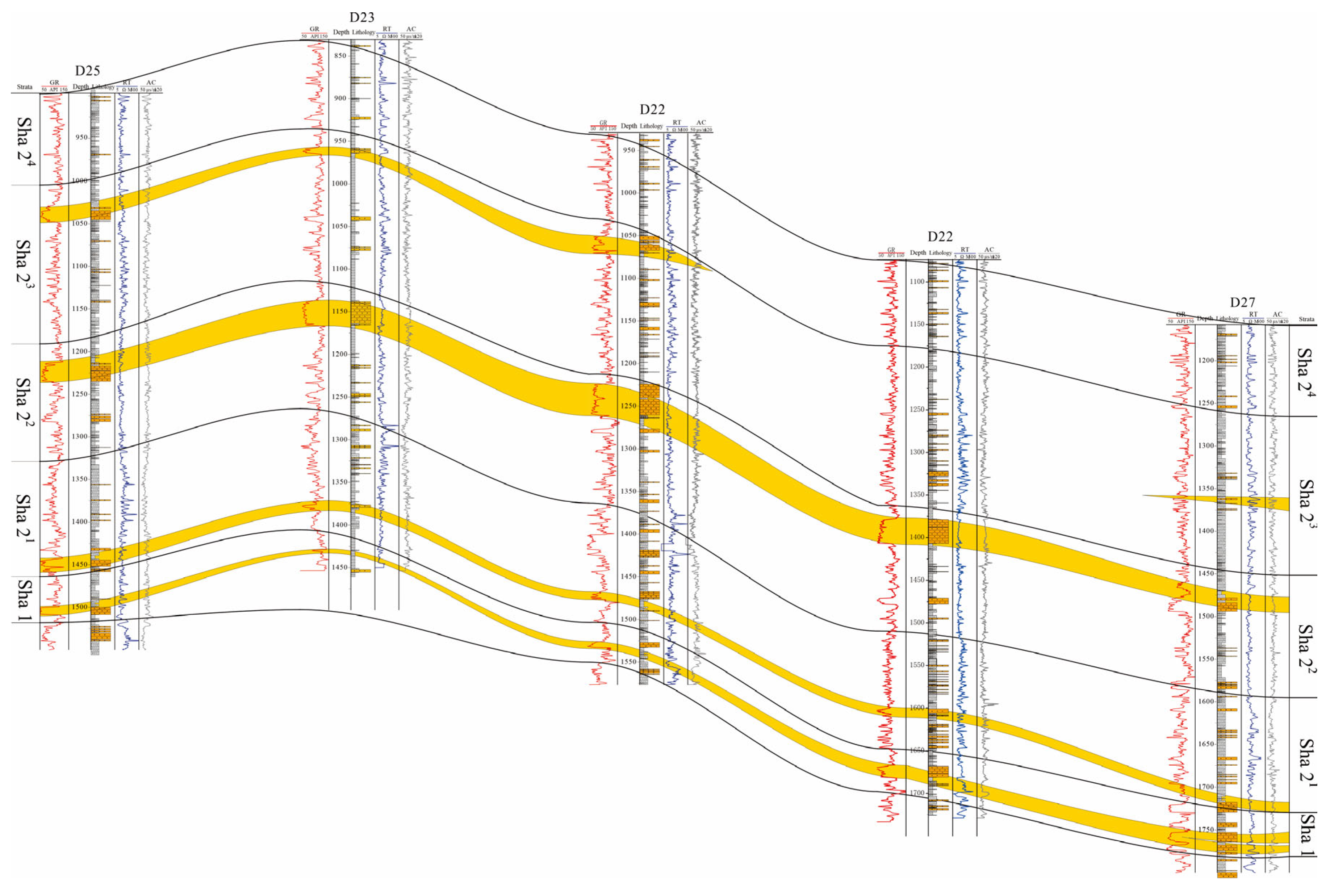
Analysis of Sand Groups 1, 2, 8, and 12 in the Guanyinsi Gas Reservoir reveals that Sand Group 1 has the highest sand ratio at 21.45%, followed by Sand Group 8, while Sand Group 3 has the lowest ratio of 9.41%. The relatively high sand ratio in Sand Group 1 is primarily because it was deposited in the Sha-1 Member. According to Table 3, the actual sandstone thickness of Sand Group 1 is smaller than that of Sand Group 8, but the formation thickness of the Sha-1 Member is relatively thin, resulting in a higher ratio. Based on the coefficients of variation and homogeneity, Sand Groups 1 and 12 have coefficients of variation close to 1, indicating strong heterogeneity within these sandstones. In contrast, Sand Group 8 has an average coefficient of variation of 0.51, and Sand Group 3 has a coefficient of variation of 0.696. Sand Group 8 also has the highest average homogeneity coefficient of 0.577. Combined with its greater sandstone thickness, Sand Group 8 exhibits the weakest heterogeneity among the groups. As visible in Figure 15, Sand Group 8 displays better sandstone continuity, which is favorable for natural gas migration and accumulation. Data on cumulative production from individual wells show that, compared to the other sand groups, the less heterogeneous and better connected Sand Group 8 has the highest cumulative production, reaching 16.029 (Table 4). In summary, the analysis above demonstrates that variations in sandstone thickness, degree of internal heterogeneity, and lateral continuity of the reservoir across different intervals within the same gas reservoir lead to differences in internal reservoir architecture, consequently influencing the migration and accumulation of natural gas (Figure 15).

5.2.3. Influence of In-Layer Heterogeneity on Gas-Bearing Properties Within a Single Reservoir

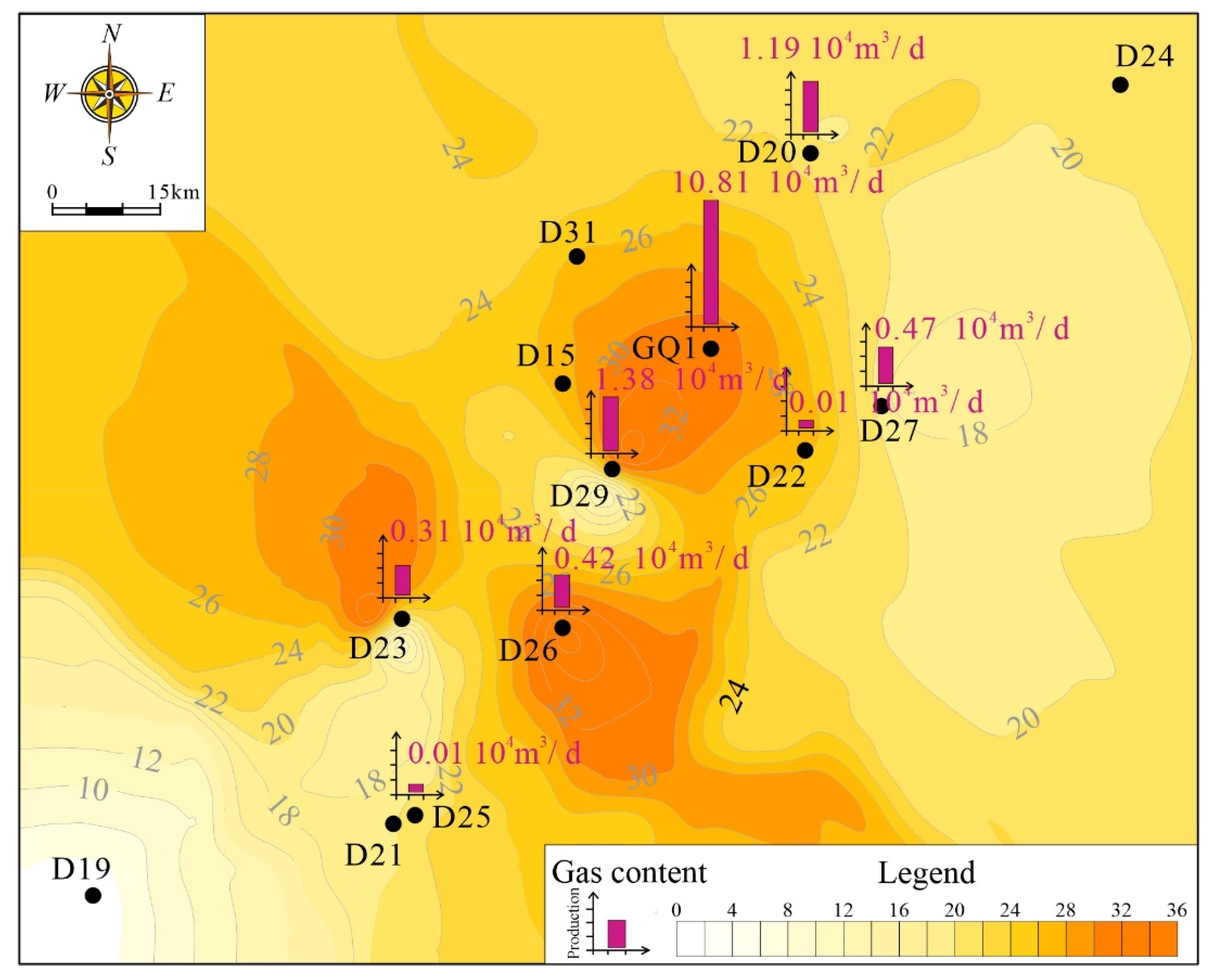
Building upon the previous analysis of inter-layer heterogeneity, Sand Group 8 demonstrates the most favorable reservoir capacity. However, even within the planar distribution of Sand Group 8 itself, productivity varies significantly at different locations. Higher production rates are observed in areas with greater sand body thickness, while thinner sections correspond to lower productivity. Analysis of the relationship between sand body thickness and reservoir physical property parameters reveals that as the sand body thins, both porosity and permeability decrease. Data from Table 5 indicate a concurrent increase in the coefficient of variation with decreasing thickness, reflecting enhanced reservoir heterogeneity. Furthermore, the relationship between sand body thickness and the homogeneity coefficient shows that thinner reservoir sections exhibit smaller homogeneity coefficients, also indicating stronger heterogeneity. Analysis of the reservoir pore structure indicates that intervals with superior gas-bearing properties are characterized by a relatively homogeneous pore structure and minimal cement fill within intergranular pores. In contrast, intervals with poorer gas content contain higher abundances of carbonate cements and clay minerals, which occupy a significant space of the original intergranular pore space, resulting in significant heterogeneity. Consequently, in-layer heterogeneity arises primarily from lateral variations in thickness within the same sand group. These thickness differences lead to pronounced variations in internal reservoir homogeneity, which in turn directly controls the gas-bearing characteristics within a single reservoir (Figure 16).

5.3. Differential Reservoir Development Model

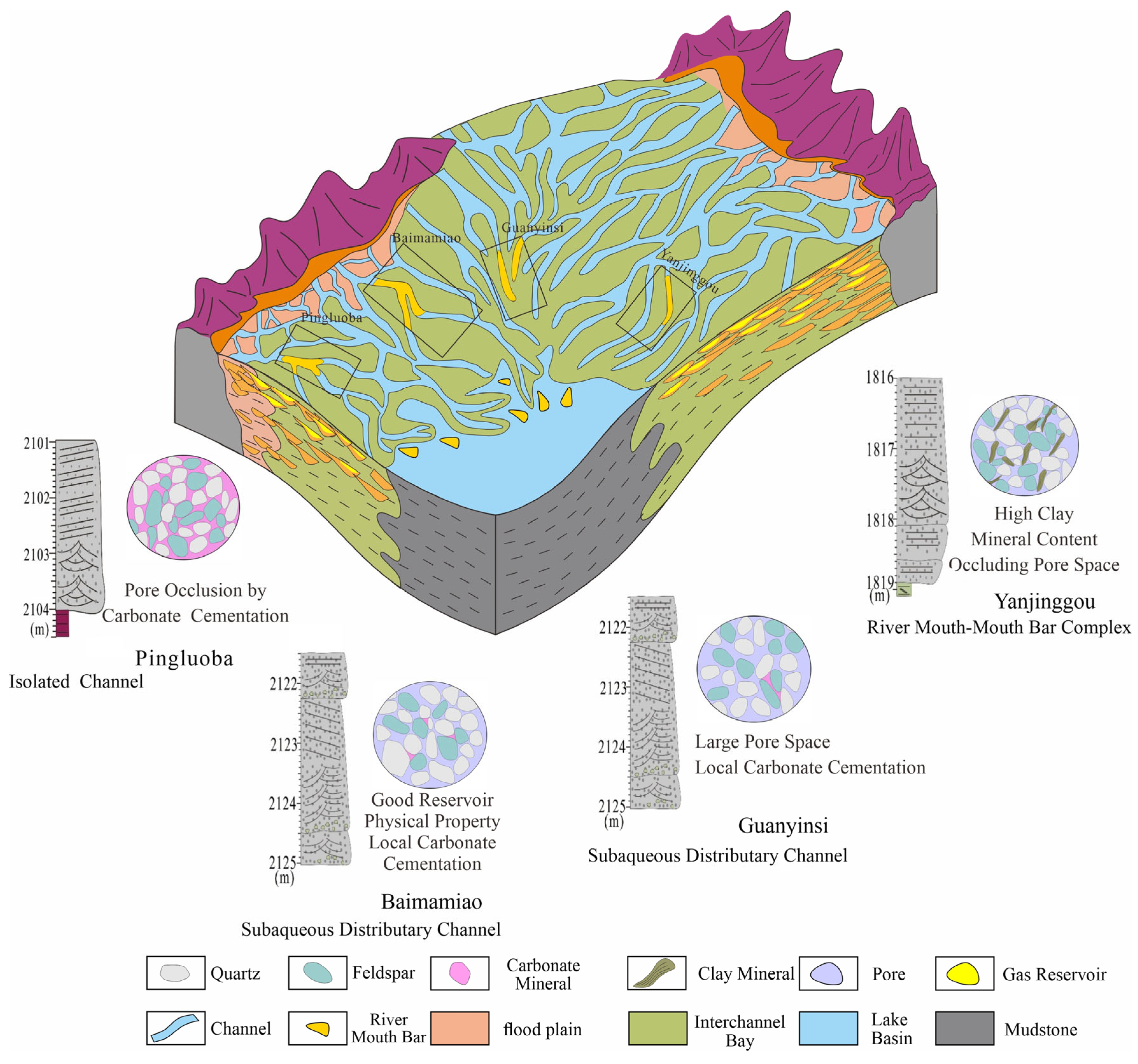
Based on the comprehensive characterization of reservoir pore structure and the analysis of variations in pore space, the mechanisms behind the differences in reservoir storage capacity across gas fields have been revealed. Furthermore, analysis of the areal, inter-layer, and in-layer heterogeneity has clarified the origins of variations in gas-bearing property. Integrating this with the depositional system of the Shaximiao Formation in the southwestern Sichuan Basin, a differential reservoir development model for the various gas fields is established (Figure 17).
Overall, the Shaximiao Formation in this area represents a shallow-water deltaic system, exhibiting a distinct dendritic distribution pattern and characterized by relatively extensive delta plain facies. Nearshore sand bodies are predominantly distributary channels, which transition lakeward into channel-mouth bar complexes and finally into inversely graded mouth bars. Due to differences in sediment provenance and depositional facies, the Guanyinsi and Baimamiao gas reservoirs exhibit larger pore space, superior pore structure, and better connectivity. In contrast, the Pingluoba and Yanjingou gas reservoirs contain higher proportions of carbonate and clay minerals, which occlude pores and degrade reservoir quality. Consequently, the poorer reservoir quality in Pingluoba and Yanjingou compared to the transitional zone gas fields has resulted in the predominant development of gas accumulations within the Guanyinsi and Baimamiao fields.

5.4. Limitations of the Study and Future Prospects

This study characterized the reservoir properties of different gas reservoirs, identified the factors influencing the variability in reservoir storage space, and revealed the impact of reservoir heterogeneity on gas-bearing potential. Future work should focus on establishing quantitative relationships between microscopic pore-throat parameters and production data, which will provide practical guidance for the exploration and development of analogous tight sandstone reservoirs in the Sichuan Basin.

6. Conclusions

(1) The Shaximiao Formation reservoirs in the southwestern Sichuan Basin are predominantly composed of lithic arkose, with lithic fragments consisting mainly of metamorphic and sedimentary rock fragments. Significant differences exist in the reservoir space among the various gas reservoirs. The Guanyinsi and Baimamiao gas reservoirs exhibit relatively better reservoir physical properties and superior internal connectivity. Their pore structure is dominated by residual intergranular pores, followed by intragranular dissolution pores, with pore-throat radii ranging between 0.1~1 μm and 0.01~0.05 μm. In contrast, the Pingluoba and Yanjingou gas reservoirs demonstrate comparatively poorer reservoir quality and consequently inferior gas-bearing property.
(2) The differential characteristics within the Shaximiao Formation reservoirs are attributed to two main factors. First, variations in sediment supply from different provenances resulted in differences in mineral composition, interstitial materials, and grain size distribution. Second, distinct diagenetic processes occurred in different reservoirs: pore occlusion is dominated by carbonate cementation in Pingluoba, while clay mineral cementation prevails in Yanjingou, with Baimamiao and Guanyinsi representing intermediate between these two.
(3) Variations in gas content within the Shaximiao Formation reservoirs are primarily controlled by the degree of areal heterogeneity among the gas reservoirs. The Guanyinsi and Baimamiao gas reservoirs possess significantly better gas-bearing properties than the Pingluoba and Yanjingou reservoirs. Differences in gas content between various intervals within a single gas reservoir are mainly attributable to variations in pore structure among different sand groups. Meanwhile, gas content variations within the same reservoir interval are primarily caused by differences in sand body thickness and connectivity.

Author Contributions

Conceptualization, X.W.; Methodology, D.C., L.L. and K.T.; Software, K.T.; Validation, S.C. and Y.L.; Formal analysis, X.G. and S.C.; Investigation, D.C., Y.L. and M.W.; Resources, K.T.; Data curation, X.G.; Writing—original draft, X.W., K.P., D.C. and Q.W.; Writing—review & editing, K.P. and Z.Y.; Visualization, M.W.; Project administration, L.L.; Funding acquisition, Q.W. All authors have read and agreed to the published version of the manuscript.

Funding

We thank PetroChina Southwest Oil & Gasfield Oilfield Company for providing samples and data access. This study is supported by the National Natural Science Foundation of China (No. 42302141). We sincerely appreciate all anonymous reviewers and the handling editor for their comments and suggestions.

Data Availability Statement

The original contributions presented in this study are included in the article. Further inquiries can be directed to the corresponding author.

Conflicts of Interest

Author Xiaojuan Wang, Ke Pan, Xu Guan, Shuangling Chen, Lan Li, Yilin Liang, and Kaijun Tan was employed by the PetroChina Southwest Oil & Gasfield Company. The remaining authors declare that the research was conducted in the absence of any commercial or financial relationships that could be construed as a potential conflict of interest.

References

  1. Song, Y.; Li, Z.; Jiang, Z.X.; Luo, Q.; Liu, D.D.; Gao, Z.Y. Research progress and development trend of unconventional petroleum geology. Pet. Explor. Dev. 2017, 44, 638–648. [Google Scholar] [CrossRef]
  2. Jia, C.Z.; Zheng, M.; Zhang, Y.F. Unconventional oil and gas resources and exploration and development prospects in China. Pet. Explor. Dev. 2012, 39, 129–136. [Google Scholar] [CrossRef]
  3. Patzek, T.W.; Saputra, W.; Kirati, W.; Marder, M. Generalized Extreme Value Statistics, Physical Scaling, and Forecasts of Gas Production in the Barnett Shale. Energy Fuels 2019, 33, 12154–12169. [Google Scholar] [CrossRef]
  4. MacKay, P.; Pedersen, P.K. The Western Canada Sedimentary Basin: A confluence of science, technology, and ideas. AAPG Bull. 2022, 106, 655–676. [Google Scholar] [CrossRef]
  5. Tang, L.; Song, Y.; Jiang, S.; Li, L.X.; Li, Z.; Li, Q.W.; Yang, Y.D. Sealing Mechanism of the Roof and Floor for the Wufeng-Longmaxi Shale Gas in the Southern Sichuan Basin. Energy Fuels 2020, 34, 6999–7018. [Google Scholar] [CrossRef]
  6. Zou, C.N.; Pan, S.Q.; Zhao, Q. On the connotation, challenge and significance of China’s “energy independence” strategy. Pet. Explor. Dev. 2020, 47, 416–426. [Google Scholar] [CrossRef]
  7. Wei, H.Y.; Xie, R.H.; Wang, Y.X.; Xie, B.; Lai, Q.; Guo, J.F. Nuclear Magnetic Resonance T2 Distribution-Based Gas–Water Relative Permeability Prediction in Tight Sandstone Reservoirs: A Case Study on Central Sichuan Basin, China. Energy Fuels 2024, 38, 3598–3608. [Google Scholar] [CrossRef]
  8. Wen, L.; Zhang, B.J.; Jin, Z.M.; Wu, C.J.; Wang, X.J.; Qiu, Y.C.; Wang, Z.J.; Li, Y.; Chen, D.X. Accumulation sequence and exploration domain of continental whole petroleum system in Sichuan Basin, SW China. Pet. Explor. Dev. 2024, 51, 997–1007. [Google Scholar] [CrossRef]
  9. Yang, C.L.; Su, N.; Rui, Y.R.; Zheng, Y.; Wang, X.B.; Zhang, Y.Q.; Jin, H. Conditions of tight gas formation and exploration potential of Shaximiao Formation in the Middle Jurassic of Sichuan Basin. China Pet. Explor. 2021, 26, 98–109. [Google Scholar]
  10. Liu, J.L.; Liu, Z.Q.; Xiao, K.H.; Huang, Y.Q.; Jin, W.J. Characterization of favorable lithofacies in tight sandstone reservoirs and its significance for gas exploration and exploitation: A case study of the 2nd Member of Triassic Xujiahe Formation in the Xinchang area, Sichuan Basin. Pet. Explor. Dev. 2020, 47, 1194–1205. [Google Scholar] [CrossRef]
  11. Guo, T.L.; Xiong, L.; Ye, S.J.; Dong, X.X.; Wei, L.M.; Yang, Y.T. Theory and practice of unconventional gas exploration in carrier beds:Insight from the breakthrough of new type of shale gas and tight gas in Sichuan Basin, SW China. Pet. Explor. Dev. 2023, 50, 24–37. [Google Scholar] [CrossRef]
  12. Chen, Z.X.; Wang, L.N.; Yang, G.; Zhang, B.J.; Ying, D.L.; Yuan, B.G.; Pei, S.Q.; Li, W. Geological structures and potential petroleum exploration areas in the southwestern Sichuan fold-thrust belt, SW China. Pet. Explor. Dev. 2020, 47, 653–667. [Google Scholar] [CrossRef]
  13. Jiang, T.; Jin, Z.; Liu, G.; Hu, Z.; Chen, X.; Liu, Z.; Wang, G. Investigating the pore structure characteristics and reservoir capacities of lower Jurassic continental shale reservoirs in the northeastern Sichuan Basin, China. Front. Earth Sci. 2022, 10, 886907. [Google Scholar] [CrossRef]
  14. Liu, Z.; Liu, D.; Cai, Y.; Yao, Y.; Pan, Z.; Zhou, Y. Application of nuclear magnetic resonance (NMR) in coalbed methane and shale reservoirs: A review. Int. J. Coal Geol. 2020, 218, 103261. [Google Scholar] [CrossRef]
  15. Zhang, F.; Jiang, Z.; Sun, W.; Li, Y.; Zhang, X.; Zhu, L.; Wen, M. A multiscale comprehensive study on pore structure of tight sandstone reservoir realized by nuclear magnetic resonance, high pressure mercury injection and constant-rate mercury injection penetration test. Mar. Pet. Geol. 2019, 109, 208–222. [Google Scholar] [CrossRef]
  16. Clarkson, C.; Solano, N.; Bustin, R.; Bustin, A.; Chalmers, G.; He, L.; Melnichenko, Y.; Radliński, A.; Blach, T. Pore structure characterization of North American shale gas reservoirs using USANS/SANS, gas adsorption, and mercury intrusion. Fuel 2013, 103, 606–616. [Google Scholar] [CrossRef]
  17. Chen, S.R.; Xian, B.Z.; Ji, Y.L.; Li, J.Q.; Tian, R.H.; Wang, P.Y.; Tang, H.Y. Influences of burial process on diagenesis and high-quality reservoir development of deep–ultra-deep clastic rocks: A case study of Lower Cretaceous Qingshuihe Formation in southern margin of Junggar Basin, NW China. Pet. Explor. Dev. 2024, 51, 323–336. [Google Scholar] [CrossRef]
  18. Chen, S.Y.; Yang, Y.Q.; Jiang, Z.X.; Qiu, L.W.; Wang, X.J. Insights into the formation and growth of authigenic chlorite in sandstone: Analysis of mineralogical and geochemical characteristics from Shaximiao Formation, Sichuan Basin, SW China. Mar. Pet. Geol. 2024, 170, 107112. [Google Scholar] [CrossRef]
Figure 1. Tectonic map depicting the lower boundary of the J2s2 in the southwestern region of Sichuan (a), location map of the study area (b), and comprehensive histogram illustrating the Jurassic stratigraphy of the study area (c).
Energies 18 06501 g001
Figure 2. Characteristics of grain size and source distribution of various gas reservoirs. in Shaximiao Formation, southwest Sichuan.
Energies 18 06501 g002
Figure 3. Plane spread of the river channel and sand ratio of the Shaximiao Formation in southwestern Sichuan.
Energies 18 06501 g003
Figure 4. Three-terminal meta-plot of mineral fraction content of the Shaximiao Formation, southwestern Sichuan (a), frequency distribution of clay content (b), and mineral composition (c).
Energies 18 06501 g004
Figure 5. Relationship between porosity and permeability (a), porosity frequency distribution (b) and permeability frequency distribution (c) of Shaximiao Formation reservoir in southwestern Sichuan.
Energies 18 06501 g005
Figure 6. Characteristics of the pore structure of the Shaximiao Formation reservoir in southwestern Sichuan Province; (a) D25, 1230.85 m, gas layer: residual intergranular pores; (b) D25, 1233.91 m, gas layer: residual intergranular pores, with microfractures; (c) D26, 1250.00 m, gas layer: residual intergranular pores, with carbonate cement; (d) BQ112, 2091.45 m, gas layer: intragranular dissolution pores, containing residual intergranular pores; (e) BQ112, 2092.28 m, gas layer: intragranular dissolution pores; (f) BQ112, 2095.89 m, gas layer: intragranular dissolution pores and residual intergranular pores; (g) YQ1, 1568.21 m, poor gas layer: intergranular pores filled with clay minerals; (h) YQ1, 1569.16 m, poor gas layer: intragranular dissolution pores; numerous intergranular pores filled with clay minerals; (i) YQ1, 1579.08 m, gas layer: residual intergranular pores; numerous intergranular pores filled with clay minerals; (j) PL9, 1994.73 m, dry layer: numerous intergranular pores filled with carbonate cement; (k) PL9, 1997.14 m, dry layer: most intergranular pores filled with carbonate cement; (l) PL9, 2035.23 m, dry layer: most intergranular pores filled with carbonate cement.
Energies 18 06501 g006
Figure 7. Characteristics of pore size distribution in reservoirs of Shaximiao Formation, southwestern Sichuan. (a) the HPMI aperture distribution diagram, (b) the NMR aperture distribution diagram.
Energies 18 06501 g007
Figure 8. Sedimentary zones of Shaximiao Formation, southwest Sichuan.
Energies 18 06501 g008
Figure 9. Distribution of reservoir discharge pressure and average pore throat radius in Shaximiao Formation, southwestern Sichuan.
Energies 18 06501 g009
Figure 10. Comprehensive evaluation of Baimamiao reservoir properties (a), Guanyinji reservoir properties (b), Pingluba reservoir properties (c), and Yanjinggou reservoir properties (d) in the Shaximiao Formation, southwestern Sichuan.
Energies 18 06501 g010
Figure 11. PH value of stratigraphic water in Shaximiao Formation, southwestern Sichuan.
Energies 18 06501 g011
Figure 12. Variation of carbonate minerals and clay minerals with depth in Shaximiao Formation, southwest Sichuana.
Energies 18 06501 g012
Figure 13. Chlorite–primary pore correlation (a), carbonate–primary pore correlation (b), chlorite–secondary pore correlation (c), and carbonate-secondary pore correlation (d) in the reservoirs of the Shaximiao Formation, southwestern Sichuan.
Energies 18 06501 g013
Figure 14. Channel width distribution of Shaximiao Formation in southwestern Sichuan (a) and capacity distribution of different gas reservoirs (b).
Energies 18 06501 g014
Figure 15. Guanyin Temple gas reservoir D25-D23-D26-D22-D27 connecting well profile.
Energies 18 06501 g015
Figure 16. Plane spread of sand body and capacity distribution of Guanyinsi gas reservoir in southwestern Sichuan Province.
Energies 18 06501 g016
Figure 17. Differential development pattern of reservoirs in Shaximiao Formation, southwestern Sichuan.
Energies 18 06501 g017
Table 1. Sample information for NMR and HPMI experiments.
Gas ReservoirWellDepth (m)Length (cm)Radius (cm)
GuanYinSiD251230.855.312.52
D251233.915.242.53
D251250.005.362.50
BaiMaMiaoBQ1122059.895.152.52
BQ1122092.285.332.51
BQ1122091.455.482.56
YanJingGouYQ1-11568.215.202.54
YQ1-11569.165.472.50
YQ1-11579.085.322.51
PingLuoBaPL91994.735.462.52
PL91997.145.182.50
PL92035.235.222.51
Table 2. Stratigraphic thicknesses, sand ratios, and sand body thicknesses of various gas reservoirs in the Shaximiao Formation, southwestern Sichuan.
ParameterGas ReservoirPingluobaBaimamiaoGuanyinsiYanjinggou
Stratum Thickness
(m)
Maximum763.08966.96673.58770.81
Minimum387.50294.50424.59666.74
Average579.91589.87585.39733.59
Sand Ratio
(%)
Maximum26.2236.7632.2715.89
Minimum8.4510.5415.899.47
Average16.6021.0221.9913.19
Sand Body Thickness
(m)
Maximum145.76297.69166.82122.49
Minimum58.2658.5467.4671.31
Average95.44121.76127.9896.94
Table 3. Physical parameters of reservoirs in Shaximiao Formation, southwestern Sichuan.
StratumGas ReservoirPorosity/%Permeability/mD
Number MaximumAverageMedianNumber MaximumAverageMedian
Shaximiao
Formation
Pingluoba11313.249.469.841050.0750.0180.014
Baimamiao1418.7612.3412.76140.1040.0460.035
Guanyinsi43917.6613.7914.324347.650.2600.061
Yanjinggou4614.119.809.58460.6430.1290.046
Table 4. Non-homogeneous parameters of reservoir sands in Guanyin Temple gas reservoir.
Gas ReservoirSand GroupSand Thickness (m)Sand Ratio (%)Variation CoefficientHomogeneity CoefficientPorosity (%)Permeability (mD)Well
Cumulative
Production (m)
Guanyinsi18.5~15.315.29~36.380.57~1.610.377~0.61510.52~14.690.047~0.6762.66
10.57221.450.9230.47912.400.385
39.37~16.736.70~12.370.497~0.9540.303~0.4995.51~12.860.026~0.5491.59
12.9499.410.6960.3789.470.209
818.44~38.12512.86~25.090.347~0.8490.419~0.70112.15~15.430.077~0.37216.03
28.63919.50.510.57713.830.150
129.93~21.8755.57~11.960.58~1.3550.298~0.5688.40~12.700.012~0.0931.19
16.7489.141.0290.47010.970.056
Table 5. Reservoir non-homogeneous parameters of No. 8 sand group in Guanyinsi gas reservoir.
Sand GroupParameterWell Name
D25D23D26D22D27
8Sand Thickness (m)38.12531.1930.4924.9518.44
Porosity (m)14.6113.1515.4314.4011.58
Permeability (m)0.3250.3720.1840.0770.094
Homogeneity Coefficient0.6940.7010.6110.4190.459
Variation Coefficient0.3470.3610.3650.630.849
Disclaimer/Publisher’s Note: The statements, opinions and data contained in all publications are solely those of the individual author(s) and contributor(s) and not of MDPI and/or the editor(s). MDPI and/or the editor(s) disclaim responsibility for any injury to people or property resulting from any ideas, methods, instructions or products referred to in the content.