Article

Animal Waste-Based Biogas—Toward Closing the Loop in the EU Countries

Department of Economics, Koszalin University of Technology, 75-343 Koszalin, Poland
*
Author to whom correspondence should be addressed.
Energies 2025, 18(23), 6201; https://doi.org/10.3390/en18236201
Submission received: 10 October 2025 / Revised: 18 November 2025 / Accepted: 25 November 2025 / Published: 26 November 2025

Abstract

The production and use of biogas can play a key role in the transition to a low-emission and circular economy. Animal waste is an available, local substrate for biogas plants, although it is used less frequently than plant waste. Therefore, the main aim of this research is to assess the potential of animal biomass and the possibility of producing biogas from it to meet energy needs in EU countries. The potential was estimated for the 27 European Union Member States. Data comes from the Statistical Office of the European Union from 2024. Biomass volumes and the potential for biogas production were estimated using formulas available in the literature. Analyses indicate that European Union countries have significant potential for biogas production from existing biomass from animal waste. Even in countries with relatively high current production, there is significant potential for the production and use of larger quantities of biogas. To achieve climate goals, besides large investments, micro-biogas plants are gaining importance. Small installations may prove to be a solution for countries with quite small and dispersed animal production. Widespread utilization of the potential of biomass from animal waste requires institutional support as well as dissemination of knowledge among various stakeholder groups.

1. Introduction

Current climate policy, as well as the challenges associated with the energy crisis, necessitate the search for alternative energy sources [1,2]. In response to the growing demand for sustainable energy and the environmental impact of fossil fuels, renewable sources such as biomass have become crucial. This may be one of the key directions of energy management in regions rich in agricultural and animal waste [3]. Currently, agriculture has a significant impact on the environment, ranging from greenhouse gas (GHG) emissions, through air and water pollution, to biodiversity loss [4,5]. The increase in livestock numbers supports producers’ incomes but has negative impacts on the environment [6,7]. Increased greenhouse gas (GHG) emissions from agriculture may exacerbate climate change, resulting in increasingly frequent extreme weather events (droughts, floods, storms), which negatively impact agricultural production [8]. This is also confirmed by the research by Ma et al. [9], which indicates that energy consumption and livestock production correlate positively with GHG emissions and reveals a bidirectional relationship between climate change and soil emissions. These conclusions point to the importance of adopting sustainable agricultural practices to reduce emissions. Therefore, for environmental reasons (the need to reduce GHG emissions) and economic reasons (improving the sustainability of energy supplies), anaerobic digestion, which produces biogas, is gaining increasing attention. Biogas is a versatile source of renewable energy as it can be used to generate heat, electricity, and as a fuel for vehicles [10,11].
The main advantages of biogas include renewable energy production, waste reduction, pathogen reduction, conversion of waste containing organic matter into high-quality fertilizer, protection of vegetation, soil, and water, and increased productivity in animal husbandry and agriculture [12]. Furthermore, the production and use of biogas using anaerobic digestion can play a key role in addressing pressing sustainable development issues, including renewable energy production, waste management, climate change mitigation, and sustainable agriculture [13]. The development and widespread adoption of biogas technology is an integral part of the transition to a low-emission and circular economy. Biogas use can close the loop by reducing waste [14,15]. According to Honharuch, biogas production and use is a component of almost all areas of the green economy and makes a significant contribution to building a climate-neutral economy [16]. Furthermore, increasing the use of renewable greenhouse gases is currently presented as a critical and effective element of the EU’s long-term decarbonization strategy [17]. This is particularly important in the context of the EU’s pursuit of climate neutrality [18] and energy independence [19]. These actions are also part of the EU’s efforts to close the loop [20].
Regarding the challenges and benefits of biogas use, it should be noted that the factors that determine the level of development of the renewable gas market include the availability of raw materials, geographic structure, and economic structure of the country. Therefore, due to the promising importance of using biogas resources recognized as sustainable, challenges such as the availability of raw materials for its production should be addressed [21]. In the context of biomass potential, researchers point to the need to interest business practices and investors in research, as well as the need for further research [6], including the development of sustainable economic models integrating technology, the energy market and recycling [22]. The need to conduct broader analyses of the diversity of raw materials used for biogas production and their impact on the composition and efficiency of digestate is emphasized [1]. Researchers also point to the problem of insufficient use of available substrates for biogas production, especially since the amount of animal manure and agricultural waste is large [23,24]. In relation to European Union countries, it is important to compare the methods of management and efficiency of using this type of waste in different economies [25].
To partially fill this research gap, the main aim was to assess the potential of animal biomass and the possibility of producing biogas from it to meet the energy needs of EU countries. In relation to this aim, the following research questions were addressed:
RQ1: How much biomass from animal production does EU member states have available?
RQ2: How much biogas can be produced from identified biomass from animal production in individual EU member states?
RQ3: What portion of energy needs can be met from produced biomethane in individual EU member states?
The article is structured as follows: Section 2 contains references to animal biomass and its importance in the circular economy. Section 3 provides the research context related to the European Union situation. Section 4 presents the research method used. Section 5 contains the results of the conducted research. Section 6 discusses the results. Section 7 presents the conclusions.

2. Animal Biomass in the Circular Economy

Agricultural waste, including animal waste, is an excellent substrate for producing clean and sustainable energy in the context of a circular bioeconomy [1]. Transitioning from the linear economy to a circular economy is crucial for redirecting the value of lost resources into cost-effective products and developing a sustainable system [26]. A circular economy is based on the zero-waste concept, where resources are not only transformed into value-added products, but also the waste generated during the process is used sustainably. Anaerobic digestion is a step that integrates the cascade system of agricultural waste, simultaneously producing a renewable energy carrier (biogas) with the digestate. This creates a closed loop. Agricultural waste is transformed into value-added products, which are then used to produce new products and by-products, thus maximizing energy, economic, and environmental benefits [27]. Therefore, a circular economy strives to minimize waste by utilizing seemingly useless raw materials. Biogasification, on the other hand, is where energy can be recovered from waste. However, for biogasification to align with the circular economy goals, it must be local in nature, meaning it must utilize substrates derived from local agricultural production [28].
Agriculture has the potential to produce manure, which is traditionally used as a fertilizer in crop production [29]. However, improper use of manure can pose a problem in terms of environmental pollution [30]. Therefore, biogas production plants can contribute to environmental safety by utilizing agricultural by-products while simultaneously reducing odors associated with agricultural production. Moreover, biogas offers the greatest potential for cooperation with local authorities and society among all renewable sources. Furthermore, the biogas sector can play a strategic role in increasing the resilience of energy systems in the context of sudden changes such as the current situation, especially in countries with scarce fossil fuel resources [31]. The use of agricultural manure for biogas production can bring many environmental benefits, primarily in terms of reducing greenhouse gas (GHG) emissions, especially methane, and odors in the case of manure storage [6,30,32]. The use of animal manure can also bring economic benefits, including income from energy production and organic fertilizers [7,33] or reducing the costs of biofuel production [34]. In the socio-economic dimension, it also includes the development of rural areas and the creation of new jobs [32,35].
It should be emphasized that biomass produced in agriculture should be used sustainably without negatively impacting other agricultural activities [36]. In practice, this means that energy purposes cannot compete with food production, which is the primary function of agriculture. By-products not used for food purposes can be used for energy production. [37]. In the case of natural fertilizers, this has so far meant their use in plant production prior to energy use [38]. However, current research shows that digestate from anaerobic digestion (a byproduct of biogas) can be treated as a soil additive and fertilizer in plant production, replacing synthetic fertilizers [1,39]. Recently, digestate has gained importance due to the rising prices of mineral fertilizers, as well as difficulties with their availability and purchase. Furthermore, the numerous benefits of digestate use are gaining increasing recognition, especially since they are linked to the promotion of sustainable development and a circular economy [40]. As indicated by Weiland [10] and Arthurson [41], the resulting digestate is a valuable fertilizer due to increased nitrogen availability and better short-term fertilization efficiency. Furthermore, the anaerobic digestion process minimizes pathogen survival, which is important for the use of digestate as a fertilizer. Additionally, using digestate as an organic fertilizer closes carbon and nutrient cycles and can reduce dependence on inorganic fertilizers [42]. The use of post-fermentation mass also influences the properties of fertilized soils by: increasing the soil’s ability to retain nutrients and water [43], activating microbiological processes [44], improving soil structure [45,46], and improving soil enzymatic activity [47]; increasing the content of organic carbon [48] and humus substances in the soil, improving its fertility [49]. In addition, during biogas production, the post-fermentation mass is rich in nutrients (nitrogen, phosphorus, and potassium), which can be returned to the soil and provide nutrients for crops [1]. A literature review conducted by Szymańska [50] indicates that the use of fertilization in the form of post-fermentation products results in increased plant yields. However, such fertilization requires balanced doses [51].
Moreover, as Pilarski et al. [14] emphasize, the use of natural fertilizers as a substrate for biogas production contributes to a faster transition to a low-emission and circular economy. Bentivoglio et al. [15] also agrees, pointing up that the use of waste from the agri-food sector has enormous potential to facilitate the transformation in line with the principles of a circular economy. Biogas production is an environmentally friendly strategy enabling the effective recovery of large quantities of waste and by-products for the production of renewable energy. Furthermore, in light of the growing demand for green biofuels, biogas can be converted into biomethane, enabling the implementation of a fully circular economy.

3. The Situation in the European Union

In the European Union, promoting energy from renewable sources has been a priority since the 1990s [1]. The latest EU package from 2021, Fit for 55, sets an ambitious target of reducing greenhouse gas emissions by at least 55% by 2030, as well as putting the EU on a path to climate neutrality by 2050. The package assumes that the share of renewable energy will reach 45% by 2030. Regarding greenhouse gas emissions, it also addresses sectors not covered by the EU Emissions Trading System (EU ETS), including agriculture. It assumes an increase in greenhouse gas reduction from 29% to 40% by 2030 compared to 2005 [18]. Greenhouse gas reduction also applies to the transport sector, where a 13% reduction in emissions is considered by increasing the share of renewable fuels. Moreover, the Fit for 55 package expects a 30% reduction in gas consumption by 2030, with one third of such savings to result from achieving the EU energy efficiency target [19]. According to the adopted assumptions, the share of advanced biofuels and biogas is to be increased to at least 2.2% by 2030 [52]. Furthermore, in 2022, due to the energy crisis resulting from Russia’s aggression against Ukraine, the EU intensified its efforts to improve energy security and reduce dependence on fossil fuel imports by launching the REPowerEU program. This program assumes an increase in sustainable biomethane production to 35 million m3 by 2030. During this period, investments of EUR 37 billion are planned for activities related to increasing biogas production and promoting its conversion to biomethane [18]. Particular emphasis was placed on sustainable production ensuring the production of biomethane from organic waste and forestry and agricultural residues in order to avoid impacts on land use and food security.
Biogas is a renewable energy source of paramount importance for development in many countries due to the abundant access to biomass. Therefore, wider use of biogas could meet sustainable renewable energy goals [53]. The European Union is a significant biogas producer, and according to research forecasts, its global production is expected to increase by 2.7% by 2026. Biogas-based electricity is expected to increase in most EU countries by that time [30]. This sector currently supplies Europe with 18.4 billion cubic meters of renewable gas (biogas, biomethane). However, there is a tendency for biomethane production to develop faster than biogas. It is forecasted that by 2050 it could supply up to 167 billion cubic meters, covering 35–62% of gas demand [16]. The European Commission’s report on the sustainability of bioenergy in the EU shows that the dominant source of renewable energy is bioenergy produced from agricultural and forestry raw materials and organic waste. The share of this type of energy is 59% (148 Mtoe) of all renewable energy consumption in the EU. The largest share of bioenergy is held by primary solid biofuels (70.3%). Liquid biofuels account for 12.9%, biogas/biomethane for 10.1%, and the share of municipal waste constituting a renewable energy source for 6.6% [54].
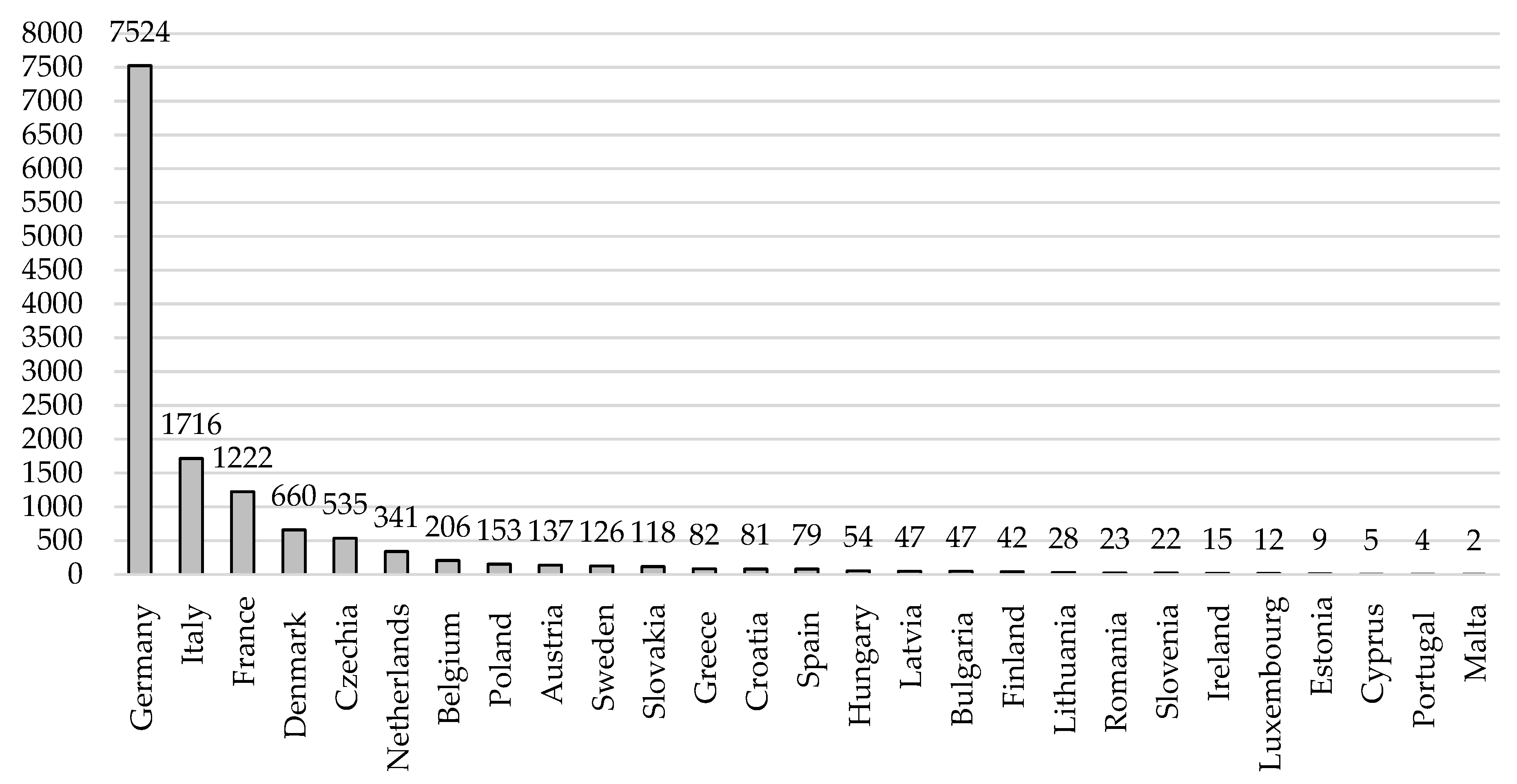
In the European Union, biogas is produced primarily from crops, but also from animal manure and municipal solid waste [30]. In Europe, approximately 70% of biogas plants use raw materials from the agricultural sector [53]. According to the EurOb-serv’ER report, 15,763.3 ktoe of energy was produced from biogas in 2022. The largest share of energy in EU countries was generated from “other” biogas, which includes agricultural biogas resulting from the decomposition of agricultural raw materials, agricultural-utilization biogas, and landfill gas derived from the limited biodegradable fraction of municipal waste. Energy generated from this category amounted to 13,287.5 ktoe, accounting for 84.3% of total production. The largest amounts of this type of biogas were produced in Germany, Italy, and France. Denmark, the Czech Republic, and the Netherlands are also worth mentioning. Small quantities of this type of biogas were produced in Cyprus, Malta, Portugal, and Estonia. Production was also small in other countries (Figure 1) [55].
Although the majority of biogas plants worldwide are located within the European Union, the potential of existing waste streams is insufficiently utilized in the current industrial landscape [56]. Factors determining the level of development of the renewable gas market include the availability of raw materials, the geographical and economic structure of the country [17]. Hence, transformations in the EU energy sector are spatially diversified both in terms of scope and pace of change [57]. Agricultural biogas plants in Western Europe were designed largely for substrates derived from the target crops. Currently, the best substrate for biogas plants is available locally on the farm and does not involve additional transportation costs [35]. Therefore, the agricultural sector plays a key role and will continue to gain importance in biogas production, as much of the potential lies in agricultural substrates, including animal waste [58].
The possibilities of using animal waste from agriculture for biogas production are influenced by the structure of agriculture and the support policies in countries. According to the Agricultural Census, the average farm size in the EU is 17.4 hectares (only 18% of farms are this size or larger). Nearly two-thirds of farms in the EU are smaller than 5 hectares. Small farms often combine different crops and livestock, varying land ownership, and diverse and limited topographic conditions. Furthermore, small farms are at the lower end of the commercial farming scale, producing primarily for subsistence. Agrarian fragmentation is particularly visible in the countries of Central and Eastern Europe (Romania, Hungary, Bulgaria, Poland), and in the Mediterranean countries (Mata, Cyprus, Greece, Portugal, Croatia, Spain, Italy). It is worth noting that the majority of farms in EU countries are family farms, primarily small and medium-sized. Larger farms (50 hectares or more) are typical of Western European countries (Luxembourg, France, Germany) and Scandinavian countries (Finland, Denmark). Large farms are oriented towards market production and more often have a specific legal form or are cooperatives [59,60].
Livestock production plays an important role in the EU agricultural sector, but there are significant differences between countries. In general, in Mediterranean countries, as well as in Finland, the dominant type of farm is specialized crop production. However, in Western Europe specialized livestock farming is the dominant activity. In other regions, agricultural production is mixed. The high degree of specialization in animal breeding occurs primarily in the regions along the Atlantic coast and in the northern and mountainous regions. In terms of cattle, breeding is concentrated primarily in the Western Europe countries, characterized by a moderate climate and relatively high rainfall. These conditions support pasture-based farming, both for dairy and beef. The largest cattle populations are found in Ireland and northwestern France. Also characteristic is the area covering northwestern Spain, central France, the Alpine regions of southern Germany and northern Italy. Additionally, northern Germany and some regions of Poland are among the most intensive cattle breeding regions. Pig breeding in the EU occurs primarily in regions characterized by intensive livestock production. This production largely takes place on large-scale commercial farms. Intensive pig farming is typical of northern Spain, as well as in an area encompassing Denmark, northern Germany, and the Netherlands. Pig farming is also concentrated in northwestern France and northern Italy. Whereas poultry farming is primarily concentrated in France, Poland and Spain. Other countries include Germany, Italy, and the Netherlands [59,61].
Support for investments in biogas production is included in the Common Agricultural Policy. However, EU countries are implementing different support strategies for the development of the biogas sector, including biomethane. Most countries are focusing on upgrading biogas to biomethane and injecting it into the gas grid. Denmark aims to increase the share of biomethane in its gas grid to 100% by 2030. Some countries are focusing on supporting supply. This includes establishing feed-in tariffs and feed-in premiums, as well as investment subsidies. These forms of support are characteristic primarily of Western European and Scandinavian countries. However, a growing number of countries are seeking to promote demand-side incentives, particularly through quotas and market organization. Central and Eastern European countries have more lenient targets but are positive about biogas development. Some of these countries, such as Poland, are seeking to increase biogas production by reducing permit requirements and introducing various support schemes, including financial support. In some countries, such as Romania, support for the development of biogas plants is limited [62,63].

4. Materials and Methods

Biogas is a mixture of gases produced by the decomposition of organic substances in anaerobic conditions, which mainly consists of methane, carbon dioxide and water, but the final composition depends on the substrate used [64]. Biogas, sometimes referred to as agrogas in the literature, is produced by methane fermentation. This process is one method for neutralizing animal excrements while simultaneously producing biogas. Methane fermentation can be applied to almost all organic wastes in agricultural production [65,66,67]. The methane fermentation process is composed by four stages: hydrolysis, acidogenesis, acetogenesis and methanogenesis. The methane fermentation process takes place in three stages: hydrolysis, acid fermentation, and methane fermentation. Since this process is carried out by bacteria, it is necessary to provide them with the best possible living conditions to maximize biogas production. The most important parameters that determine the correct conduct of fermentation and the amount of biogas obtained are [68]:
Temperature (must be adapted to the type of bacteria involved in the process);
Retention time determined by the ratio of substrate inflow to the digester capacity (it must be long enough to prevent bacteria from being washed out of the tank);
Optimal organic matter loading (too high could overload the system, and too low could result in reaction failure);
Content of process inhibitors, such as antibiotics or plant protection products.
Animal production waste, such as slurry, manure, and chicken droppings, is particularly useful for methane production. Waste containing higher amounts of lignin is less useful due to its slower decomposition rate [67]. Therefore, this article focuses on estimating the amount of agricultural biogas that can be obtained from animal production, i.e., cattle, pig, and poultry breeding.
The theoretical potential of biogas production in EU countries is assessed in this article. Therefore, this potential does not take into account requirements related to the microbiological process, such as the carbon-to-nitrogen (C:N) ratio or animal production systems—litter-based or litter-free (due to the significant variation in this regard across individual countries, this is difficult to determine and can lead to significant estimation errors [38]). The estimated potential indicates production possibilities resulting from the energy stored in natural fertilizers. In the European Union countries, in accordance with the Nitrogen Directive [69], the maximum dose is 170 kg N∙ha−1. It should be emphasized that in the European Union countries, the surpluses of this raw material are small, assuming the priority use of biomass as a fertilizer (instead of mineral fertilizers). Consequently, the energy potential is also limited. Therefore, in this study it is assumed that the fertilizer needs resulting from plant production will be satisfied by the use of post-fermentation mass, which is a side effect of the biogas plant operation.
To achieve the research aim, the potential theoretical amount of biogas was estimated based on animal production waste. The analyses covered 27 European Union countries. Data on the population of individual livestock species were downloaded from the database of the Statistical Office of the European Union (Eurostat) [70].
The potential theoretical agricultural biogas production was estimated separately for each animal species, based on the following assumptions [71,72]:
Pbr = L∙Wd.m.∙365/1000∙Pb
where Pbr—potential agricultural biogas production for a given animal species—cattle, pig and poultry (in m3∙year−1); L—number of livestock units of a given animal species (LSU); Wd.m.—average daily manure production expressed in kg of dry matter converted to LSU (kg d.m.∙LSU−1∙d−1); 365—number of days in a year; Pb—average biogas production from a ton of dry matter of manure (m3/t d.m.).
Theoretical biomethane production for each animal species was estimated using the following formula:
Pba = L∙Wd.m.∙365/1000∙Pm
where Pba—potential biomethane production for a given animal species—cattle, pig and poultry (in m3∙year−1); L—number of livestock units of a given animal species (LSU); Wd.m.—average daily manure production expressed in kg of dry matter converted to LSU (kg d.m.∙LSU−1∙d−1); 365—number of days in a year; Pm—average biomethane production from a tonne of dry matter of manure (m3/t d.m.).
Data on cattle and pigs refer to 2024. However, due to the lack of complete data on the poultry population for 2024 in the database, data from the general agricultural census held in 2020 were used. The downloaded data on the number of individual livestock species were converted into livestock units. A livestock unit (LSU) is a reference unit that facilitates the aggregation of livestock of different species and ages, by using specific coefficients established based on the nutritional or feed requirements of each type of animal. The reference unit used to calculate livestock units (=1 LSU) is the grazing equivalent of one adult dairy cow producing 3000 kg of milk per year, without additional feed concentrates [73].
To convert the physical units of livestock population to livestock units (LSU), the methodology of the European Union’s Statistical Office (Eurostat) was used, taking into account individual livestock species. The following conversions were used for individual cattle species: under 1 year old—0.4; 1 but less than 2 years old—0.7; male, 2 years old and over—1; heifers, 2 years old and over—0.8; dairy cows—1; female buffalo—1; other cows, 2 years old and over—0.8. The following indicators were used for individual pig species: piglets having a live weight of under 20 kg—0.027; breeding sows weighing 50 kg and over—0.5; other pigs—0.3. Individual poultry species were converted according to the following indicators: broilers—0.007; laying hens—0.014; other poultry (turkeys, ducks, geese, ostriches, other poultry fowls n.e.c.)—0.03 [74]. Empirical data for calculating the theoretical potential of biogas and biomethane from animal manure for individual farm animal species are presented in Table 1 [75,76].
Heating value is one of the factors determining the quality of fuel. Heating value is the amount of heat released during complete combustion of a unit of fuel mass or a unit of fuel volume in an oxygen atmosphere, with the starting substances and combustion products under standard conditions (1013.25 hPa, 298.15 K) [77]. The heating value of pure methane is approximately 36 MJ∙m−3 (LHV) [78]. The heating value of raw biogas depends on the methane content, which can range from 45 to 70% of methane [67], although some authors also provide other content shares, e.g., 52–85% [79,80] or 55–85% [81]. Therefore, the lower heating value (LHV) usually ranges from 16.7 to 23 MJ m−3 [77], some authors also provide wider ranges, i.e., 17–25 MJ m−3 [82] or 16–28 MJ m−3 [64]. Typically, the energy potential is calculated for a 65% methane share and a calorific value of 23 MJ/m−3 [79,81,83]. However, the article presents three scenarios of potential biogas production possibilities—the lowest potential production (biogas heating value of 16 MJ/m−3), medium potential production (biogas heating value of 22 MJ/m−3), and high potential production (biogas heating value of 28 MJ/m−3). Research on biogas composition shows that a heating value of 28 MJ/m−3 is characteristic for biogas with a methane content of approximately 75% [84].

5. Results

In the European Union, the livestock population amounts to 95,320.26 thousand livestock units (LSU). Cattle dominates among livestock, accounting for 54.39%. The pig and poultry populations are 25.41% and 20.20%, respectively (Table 2). The cattle population in the European Union amounts to 51,847.87 thousand livestock units. Livestock sizes in individual countries range from 10.32 to 11,739.67, with an average of 1920.29 livestock units. The largest shares in cattle farming are held by France with 22.64% (11,739.67 LSU), Germany with 14.72% (7629.82 LSU), and Italy with 8.76% (4539.50 LSU). The pig population in the European Union amounts to 24,220.06 thousand LSU. The population sizes in individual countries range from 6.78 LSU to 6203.32 LSU, with an average of 897.04 LSU. The largest shares in pig farming are held by Spain—25.61% (6203.32 LSU), Germany—16.83% (4075.89 LSU), and France—8.75% (2118.46 LSU). The poultry population in the European Union amounts to 19,252.33 thousand LSU. The population sizes in individual countries range from 1.79 LSU to 4414.39 LSU, with an average of 713.05 LSU. The largest share in poultry farming is held by France—22.93% (4414.39 LSU), Poland—13.62% (2621.73 LSU) and Spain—11.92% (2295.06 LSU).
Based on the adopted assumptions, the potential biogas yield from animal production was estimated. Based on existing agricultural resources generated by animal production, a total of 68,714.1 million m3 of biogas could be produced in all European Union countries. Since biogas may contain varying amounts of methane, its energy potential may vary. It has been estimated that, depending on the assumed heating value (16 MJ/m3, 22 MJ/m3, 28 MJ/m3), the energy potential of biogas from animal manure may range from 1,099,425.9 to 1,923,995.3 million TJ (Table 3).
However, only biomethane, which constitutes approximately 63% of biogas, can be directly fed into the grid (after appropriate purification). Therefore, the total biomethane potential in European Union countries is 43,216.5 million m3. The energy value of the estimated biomethane is 1,555,782.4 TJ. The identified potential values in individual countries ranged from 496.0 TJ to 314,872.5 TJ, with an average of 57,621.6 TJ. The highest energy potential for biomethane from farm animal manure was identified in France—314,872.5 TJ (20.2%), Germany—206,853.1 TJ (13.3%) and Spain—199,299.1 TJ (12.8%). It is worth noting that together these countries accumulate 46.3% of the total biomethane potential identified in the European Union countries. The smallest potential was identified in the smallest European Union countries, i.e., Malta—496.0 TJ (0.0%), Luxembourg—1836.8 TJ (0.1%) and Cyprus—2690.8 TJ (0.2%).
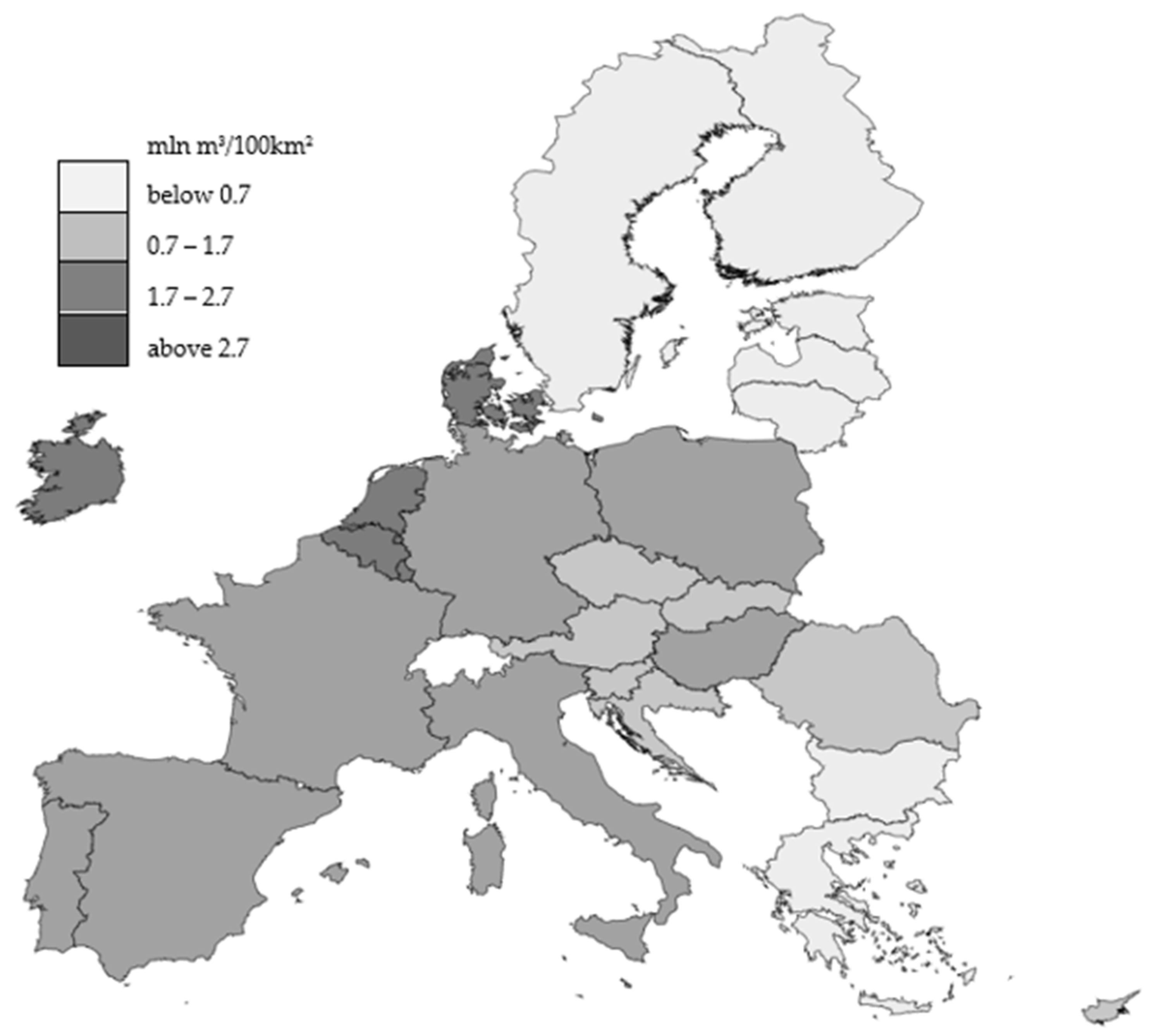
Figure 2 presents the density of potential biogas production per 100 km2 of the country’s area. Values for this indicator ranged from 0.2 million m3/100 km2 to 11.4 million m3/100 km2, with an average for all countries of 2.31 million m3/100 km2. Only eight countries were above the average overall. The lowest values were recorded in northeastern Europe (Finland, Sweden, Estonia, Latvia, and Lithuania) and southeastern Europe (Bulgaria, Greece). The lowest values were recorded in northwestern Europe (the Netherlands, Belgium, Denmark, Ireland, Luxembourg) and Malta.
From an economic perspective, it is also important to determine what portion of energy needs can be met from the identified energy potential available from natural fertilizers derived from the main groups of farm animals. Therefore, Table 4 compares the identified potential with the current consumption of natural gas in individual European Union countries.
In the European Union, 12,835,046.08 TJ of energy from gas was consumed in 2024. This means that the identified potential of biomethane from livestock manure could meet approximately 12.1% of the demand for this resource. This share varied across countries, with values ranging from 0.00% to 61.9%, with an average of 16.4%. The highest potential for meeting natural gas demand with biomethane from livestock manure was noted in Sweden (61.9%), Denmark (43.9%), and Ireland (31.5%). Significantly smaller shares were recorded in countries such as Cyprus (0.00%—according to Eurostat data, the country did not use natural gas), Malta (3.4%), and Slovakia (5.4%).
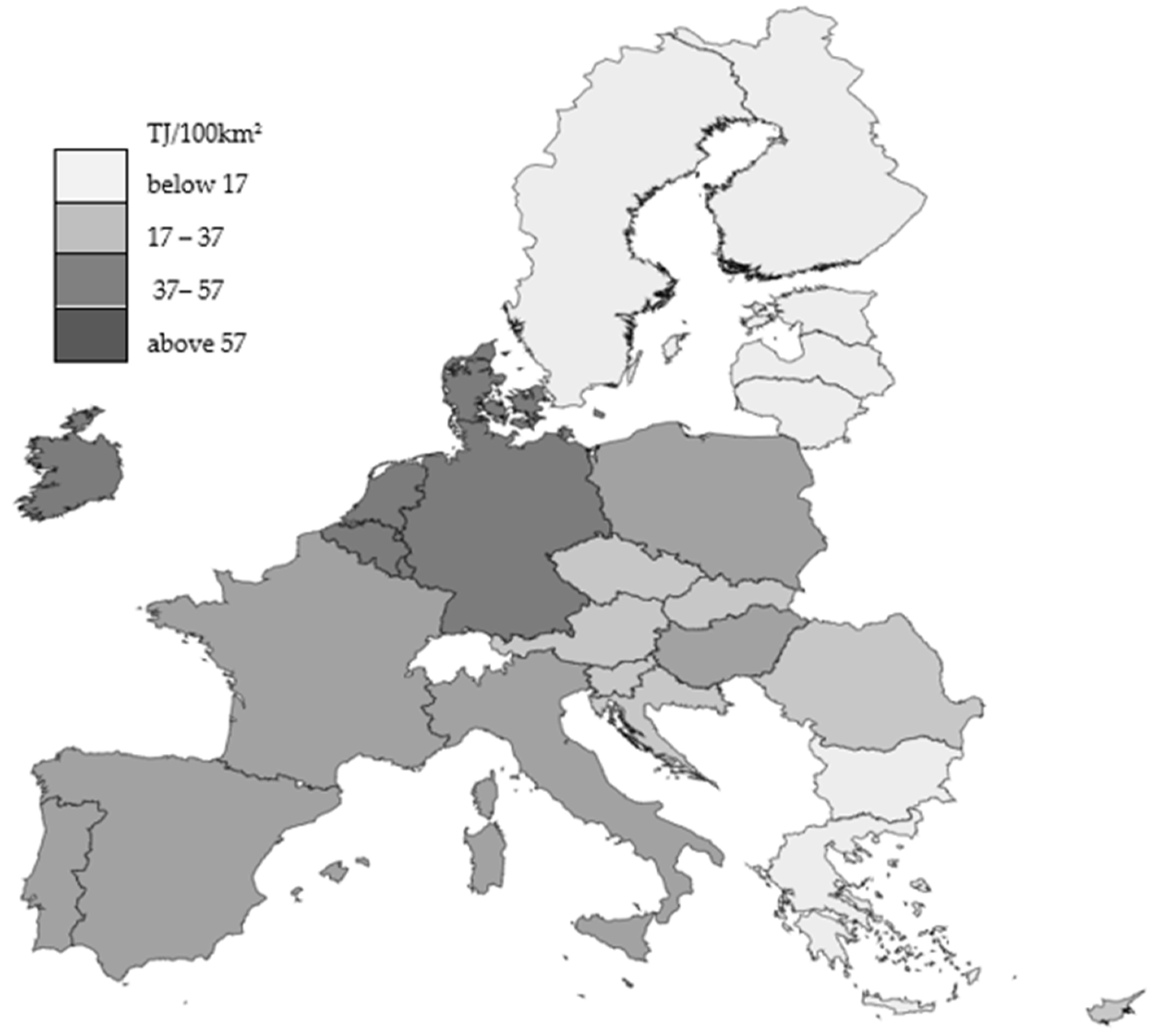
Figure 3 presents the biomethane energy potential in TJ per 100 km2 of surface area. The index values ranged from 4.2 TJ/100 km2 to 257.9 TJ/100 km2, with an average of 52.3 TJ/100 km2. Only eight countries were above average. The highest values were recorded in northwestern European countries (the Netherlands, Belgium, Denmark, Ireland, Luxembourg, and Germany) and Malta. The lowest values were recorded in northwestern European countries (Finland, Sweden, Estonia, Latvia, and Lithuania) and southeastern European countries (Greece, Bulgaria).
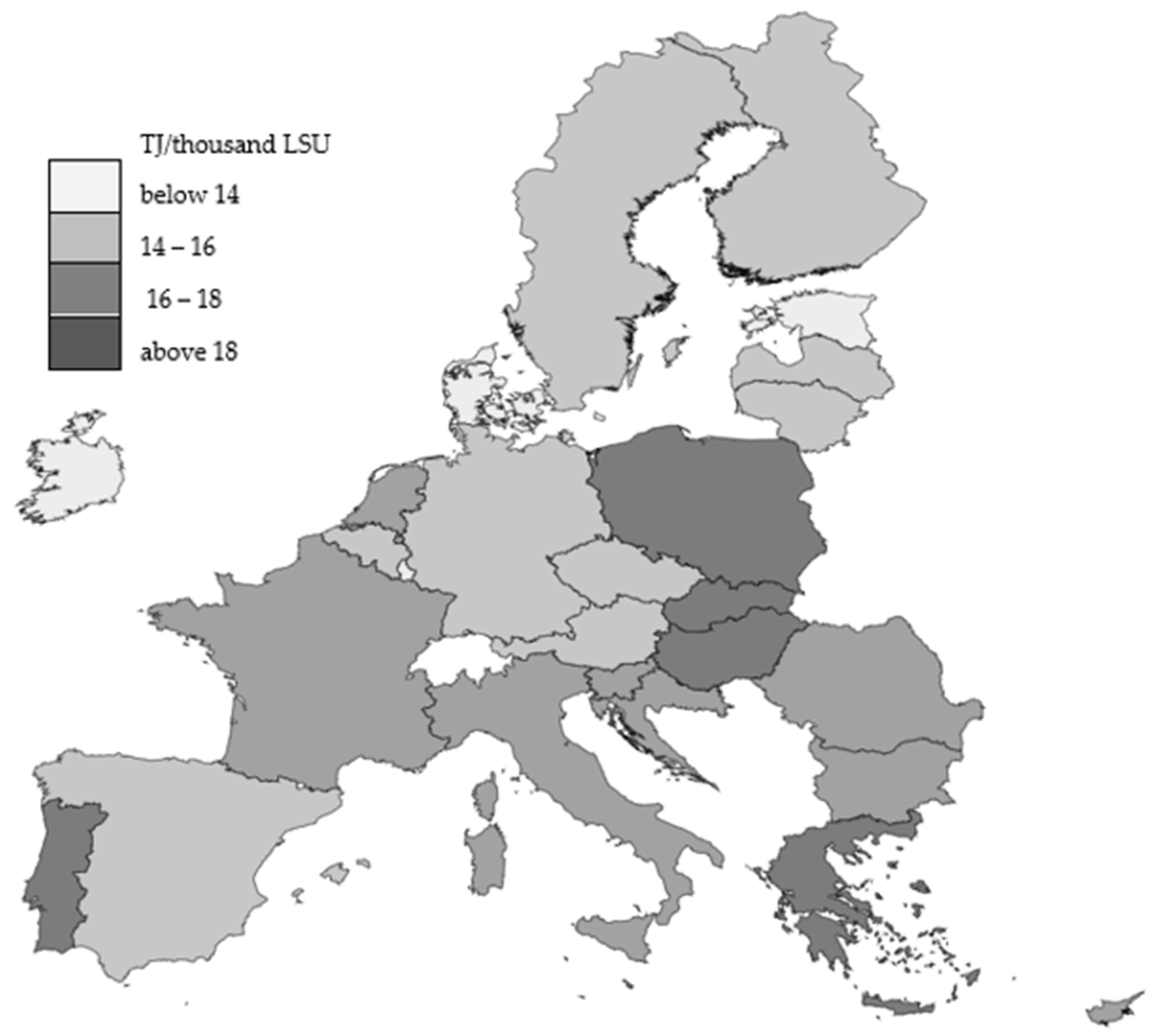
Figure 4 presents the biomethane energy potential in TJ per thousand livestock units (LSU). The index values ranged from 12.3 TJ/thousand LSU to 19.2 TJ/thousand LSU, with an average of 16.2 TJ/100 km2. In this case, more than half of the European Union countries were above average. The highest values were recorded in Eastern European countries (Hungary, Poland, Greece, and Slovakia), Malta, and Portugal. The lowest values were recorded in Northern European countries (Luxembourg, Ireland, Denmark, and Estonia).
Analyses show that biomethane produced from animal manure represents a small share of the European Union’s biogas energy strategy. However, it should be emphasized that biogas can also be produced from many other substrates, such as crop residues (e.g., residues from wheat, corn, rice, and other coarse grain crops, sugar beets, etc.), organic substances of agricultural origin generated as waste in the agri-food industry, or energy crops from purpose-built energy crops [85]. Using the potential from these sources may satisfy another part of the energy needs of European Union countries for gas.

6. Discussion

In line with the research aim, the potential of animal biomass for energy purposes was assessed for EU countries. The study included natural fertilizers from the main groups of farm animals—cattle, pigs, and poultry. Summary of the research results is presented in Table 5). The conducted research indicates that these raw materials have the potential to be used for energy purposes. These findings are consistent with the research of Sher et al. [53], who indicate that biogas is a significant energy source in European Union countries due to the extensive access to biomass. Furthermore, considering the current biogas production in European Union countries and the identified potential, our findings are consistent with Bórawski et al. [30], according to which this source also has the potential to increase in the future. In the context of the current climate policy and the energy crisis [18,86], renewable energy production from biogas can contribute to energy independence. However, it should be noted that the identified resources for biogas production are spatially diverse, as also pointed out by other researchers [36,87,88]. As pointed out by Singh et al. [21], the availability of raw materials for biogas production is one of the main factors determining the level of development of renewable gases. For this reason, the availability of raw materials for biogas production should be taken into account in investment planning.
In agreement with Gustafsson and Anderberg [13], it should be emphasized that there is significant potential for producing and utilizing larger amounts of biogas in EU countries, even in countries with relatively high production, such as Germany, Italy, and France. The level reached in Germany is considered achievable by other countries in the future. Countries such as Spain, Portugal, Romania, and Poland, with a large number of small farms, have significant untapped potential for animal waste-based biogas.
According to our findings, some European Union countries are characterized by both agricultural fragmentation and dispersed animal production. The overall biomass potential from animal waste in these countries is relatively small, but worth considering in the context of building micro-biogas plants. This applies largely to the Central and Eastern European and Southern European countries. For these countries micro-biogas plants could prove to be a multifaceted solution to environmental and energy problems on a micro scale, enabling the closing of the loop. As Levstek and Rozman [89] emphasize, achieving climate goals requires not only large investments, but also smaller ones, such as micro-biogas plants. Their significance for the future of the agricultural and energy sectors in EU countries with fragmented and dispersed livestock farming should be emphasized. Such installations could become not only instruments of energy transformation but also catalysts for the development of rural areas and the agriculture of the future. Energy production integrated with local material cycles promotes more efficient waste utilization and the development of more sustainable agricultural models [32]. The main advantages of micro biogas plants are independence from biomass price fluctuations and ensuring energy self-sufficiency of farms [90]. Allocating land for the installation of a micro-biogas plant is usually not a problem even for small farmers [33]. Moreover, in southern countries, all produced biogas can be used as an energy source due to the negligible heating costs [7]. Sobczak et al. [35] point to another benefit of micro-biogas plants—assistance in selling products thanks to the possibility of labeling their carbon footprint (the expectations of large retail chains towards producers in this regard are already visible). To meet these needs, there is a need to develop a simplified business model for agricultural biogas plants for individual farms [91].
Institutional support for the production and consumption of biogas is a necessary condition due to high investment costs and also for technological reasons [23]. Gustafsson and Anderberg [13] point out that long-term strategies and policy instruments can be a good way to create favorable conditions for the biogas sector. It is important to ensure stable and predictable conditions for both producers and consumers. However, it is important to remember that strategies and policy instruments stimulating biogas development should not be directly transferred from one country to another, as they depend on the context and national conditions. However, as Chodkowska-Miszczuk et al. [57] emphasize, a major challenge, especially for Central and Eastern European countries, is to shift from direct public incentives to a more self-sufficient business model focused on collaboration between local stakeholders and the use of energy from local agricultural waste. Supporting measures, such as research and development funds, tax exemptions, and incentives, are also needed [34]. In this context, it seems reasonable to disseminate knowledge about the environmental and economic benefits that can be brought about by the development of the agricultural biogas industry [23]. The Polish example demonstrates that expedited procedures and regulations for biogas plants support the creation of renewable energy and contribute to increasing farmers’ energy independence. Micro-biogas plant construction procedures are optimized to minimize bureaucracy and adapt to farmers’ specific needs. Farmers can speed up and facilitate the investment process by using simplified procedures for building micro-biogas plants [92]. Some types of biomass are exempt from the most restrictive waste regulations thanks to specific regulations [93]. The biomass exemption from the regulations mainly applies to materials that are considered safe and easy to recycle, such as agricultural waste. According to data from the National Support Centre for Agriculture, these regulations contributed to the increase in the number of micro-biogas plants in rural areas in Poland [94]. The study conducted has its limitations. First, the identified biogas potential was estimated based on secondary data, which constitutes a limited resource on the phenomenon under study. These data are collected and standardized by Eurostat. The need for Eurostat to introduce standardized criteria stems from the diversity of individual countries. This leads to simplifications that facilitate comparisons, while on the other, limit the detail of the collected data. This compromise allows for a general overview of EU countries in the area under study, but requires further, more detailed, complementary analyses. Second, due to the diversity of animal husbandry practices across countries, it is difficult to determine the size of individual fractions of natural fertilizers, which may influence the differences in estimates of the existing biogas potential from this source. It should be emphasized that biomass potential is estimated based on the size of livestock units (LSUs). A more detailed and realistic picture would include the actual size of farm animal waste. Therefore, further research should focus on more detailed analyses at regional and local levels. The proposed research methods can be applied at the NUTS 2, NUTS 3, and even Local Administrative Unit levels. Regional and local analysis is more detailed than the national level and allows for the identification of specific characteristics of a given area. It allows for the consideration of differences between regions and areas not only in terms of substrates but also energy demand and the potential for real-world use of biomass from animal waste. Based on more detailed regional and local analyses, it is possible to formulate support programs and strategies tailored to the actual needs of the supported areas. This translates into greater support effectiveness and better utilization of available substrates. This will allow for better localization of investments within individual EU countries. Furthermore, only local installations are compliant with the principles of the circular economy. However, due to the significant costs associated with the construction of biogas and biomethane production facilities, future research should also focus on analyzing possible sources of investment financing. Institutional and financial support for the biogas sector varies across countries, impacting the sector’s development opportunities. These investments are typically associated with relatively high initial costs, making overcoming this barrier difficult, if not impossible, for many farmers. Appropriate support can improve profitability and reduce financial risk. In this regard, it is also worthwhile to identify good practices that could be disseminated to other countries.

7. Conclusions

Using natural manures from animal production for energy purposes brings many benefits, both economic (renewable energy production) and environmental (appropriate waste management, climate change mitigation). Such activities contribute to the achievement of low-emission and circular economy goals. Another advantage of biogas as a renewable energy source is its versatility. It can be used to produce heat and electricity, as well as fuel for vehicles.
Estimates indicate that there is significant potential for biogas production from manure generated in livestock production in European Union countries. Taking into account the population of the main livestock groups (cattle, pigs, and poultry), it is possible to produce 68,714.1 million m3 of biogas, of which 63% is biomethane (26,993.43 million m3), which can be fed directly into the grid. The identified potential could meet approximately 12.1% of the gas demand of European Union countries.
In 2022, 12,287.5 ktoe of energy from biogas was produced in European Union countries, so these estimates indicate significant development potential for this renewable energy source. Furthermore, the energy crisis resulting from the geopolitical situation, as well as the European Union’s assumptions regarding increasing biomethane production and investment in this area, indicate the significant importance of this source in the future. This is especially true given that biogas is a stable energy source, due to its dependence on livestock production, which must be implemented at an appropriate level to meet the food needs of individual European Union countries.
Widespread application of the potential of biomass from animal waste requires institutional support. Beyond the EU framework, national regulations are needed, taking into account specific conditions. Some countries are implementing such regulations and support systems, and positive effects are already visible. Therefore, this should become a more widespread phenomenon, based on best practices. In particular, universal procedures are needed to simplify the use of animal biomass from agriculture and facilitate investment in biogas plants, including micro-biogas plants. Broadly understood, universal support for the development of the biogas sector in EU countries requires a system of incentives, including subsidies and loans, as well as mechanisms relating to purchase prices (e.g., guaranteeing a fixed purchase price). Furthermore, knowledge about the potential use of biomass should be disseminated among various stakeholder groups, especially at the local level. Awareness is a tool that influences the development of the biogas sector. Research and development activities are also necessary to improve existing technological solutions. Therefore, comprehensive and interdisciplinary efforts are necessary.

Author Contributions

Conceptualization, D.J. and L.O.; methodology, D.J. and L.O.; software, D.J. and L.O.; formal analysis, D.J. and L.O.; investigation, D.J. and L.O.; resources, D.J. and L.O.; data curation, D.J. and L.O.; writing—original draft preparation, D.J. and L.O.; writing—review and editing, D.J. and L.O.; visualization, D.J. and L.O. All authors have read and agreed to the published version of the manuscript.

Funding

This research received no external funding.

Institutional Review Board Statement

Not applicable.

Data Availability Statement

The original contributions presented in this study are included in the article. Further inquiries can be directed to the corresponding author.

Conflicts of Interest

The authors declare no conflicts of interest.

References

  1. Mignogna, D.; Ceci, P.; Cafaro, C.; Corazzi, G.; Avino, P. Production of Biogas and Biomethane as Renewable Energy Sources: A Review. Appl. Sci. 2023, 13, 10219. [Google Scholar] [CrossRef]
  2. Okeke, U.G. Renewable Energy from Agricultural Waste: Biogas Potential for Sustainable Energy Generation in Nigeria’s Rural Agricultural Communities. J. Eng. Res. Rep. 2024, 26, 341–367. [Google Scholar] [CrossRef]
  3. Motevakel, P.; Roldán-Blay, C.; Roldán-Porta, C.; Escrivá-Escrivá, G.; Dasí-Crespo, D. Strategic Resource Planning for Sustainable Biogas Integration in Hybrid Rsenewable Energy Systems. Appl. Sci. 2025, 15, 642. [Google Scholar] [CrossRef]
  4. Yang, Y.; Tilman, D.; Jin, Z.; Smith, P.; Barrett, C.B.; Zhu, Y.G.; Burney, J.; D’Odorico, P.; Fantke, P.; Fargione, J.; et al. Climate change exacerbates the environmental impacts of agriculture. Science 2024, 385, 6713. [Google Scholar] [CrossRef] [PubMed]
  5. Padhiary, M.; Kumar, R. Assessing the Environmental Impacts of Agriculture, Industrial Operations, and Mining on Agro-Ecosystems. In Smart Internet of Things for Environment and Healthcare; Studies in Computational Intelligence; Azrour, M., Mabrouki, J., Alabdulatif, A., Guezzaz, A., Amounas, F., Eds.; Springer Nature: Cham, Switzerland, 2024; pp. 107–126. [Google Scholar] [CrossRef]
  6. Aksay, M.V.; Abdulsamed Tabak, A. Mapping of biogas potential of animal and agricultural wastes in Turkey. Biomass Convers. Biorefinery 2022, 12, 5345–5362. [Google Scholar] [CrossRef]
  7. Atılgan, A.; Saltuk, B.; Ertop, H.; Aksoy, E. Determiınation of the Potential Biogas Energy Value of Animal Wastes: Case of Antalya. Eur. J. Sci. Tech. 2021, 22, 263–272. [Google Scholar] [CrossRef]
  8. Vărzaru, A.A. Assessing Agricultural Impact on Greenhouse Gases in the European Union: A Climate-Smart Agriculture Perspective. Agronomy 2024, 14, 821. [Google Scholar] [CrossRef]
  9. Ma, B.; Karimi, M.S.; Si Mohammed, K.; Shahzadi, I.; Dai, J. Nexus between climate change, agricultural output, fertilizer use, agriculture soil emissions: Novel implications in the context of environmental management. J. Clean. Prod. 2024, 450, 141801. [Google Scholar] [CrossRef]
  10. Weiland, P. Biogas production: Current state and perspectives. Appl. Microbiol. Biotechnol. 2010, 85, 849–860. [Google Scholar] [CrossRef] [PubMed]
  11. Murray, B.C.; Galik, C.S.; Vegh, T. Biogas in the United States: Estimating future production and learning from international experiences. Mitig. Adapt. Strateg. Glob. Change 2017, 22, 485–501. [Google Scholar] [CrossRef]
  12. Jameel, M.K.; Mustafa, M.A.; Ahmed, H.S.; Mohammed, A.J.; Ghazy, H.; Shakir, M.N.; Lawas, A.M.; Mohammed, S.K.; Idan, A.H.; Mahmoud, Z.H.; et al. Biogas: Production, properties, applications, economic and challenges: A review. Results Chem. 2024, 7, 101549. [Google Scholar] [CrossRef]
  13. Gustafsson, M.; Meneghetti, R.; Souza Marques, F.; Trim, H.; Dong, R.; Al Saedi, T.; Rasi, S.; Thual, J.; Kornatz, P.; Wall, D.; et al. A perspective on the state of the biogas industry from selected member countries. IEA Bioenergy Task 2024, 37, 2. [Google Scholar]
  14. Pilarski, K.; Pilarska, A.A.; Dach, J. Biogas as renewable energy source: A brief overview. J. Ecol. Eng. 2025, 26, 408–416. [Google Scholar] [CrossRef]
  15. Bentivoglio, D.; Chiaraluce, G.; Finco, A. Economic assessment for vegetable waste valorization through the biogas-biomethane chain in Italy with a circular economy approach. Front. Sustain. Food Syst. 2022, 6, 1035357. [Google Scholar] [CrossRef]
  16. Honcharuk, I.; Tokarchuk, D.; Gontaruk, Y.; Kolomiiets, T. Production and Use of Biogas and Biomethane from Waste for Climate Neutrality and Development of Green Economy. J. Ecol. Eng. 2024, 25, 20–32. [Google Scholar] [CrossRef]
  17. Sesini, M.; Cretì, A.; Massol, O. Unlocking European biogas and biomethane: Policy insights from comparative analysis. Renew. Sustain. Energy Rev. 2024, 199, 114521. [Google Scholar] [CrossRef]
  18. Fit for 55. Available online: https://www.consilium.europa.eu/en/policies/fit-for-55/ (accessed on 20 June 2025).
  19. European Commission. Communication from the Commission to the European Parliament, the European Council, the Council, the European Economic and Social Committee and the Committee of the Regions, REPowerEU Plan; 18.5.2022 COM(2022) 230 Final; European Commission: Brussels, Belgium, 2022. [Google Scholar]
  20. European Commission. Communication from the Commission to the European Parliament, the European Council, the Council, the European Economic and Social Committee and the Committee of the Regions, A New Circular Economy Action Plan For a Cleaner and More competitive Europe; Brussels, 11.3.2020 COM(2020) 98 Final; European Commission: Brussels, Belgium, 2020. [Google Scholar]
  21. Singh, A.K.; Pal, P.; Rathore, S.S.; Sahoo, U.K.; Sarangi, P.K.; Prus, P.; Dziekański, P. Sustainable Utilization of Biowaste Resources for Biogas Production to Meet Rural Bioenergy Requirements. Energies 2023, 16, 5409. [Google Scholar] [CrossRef]
  22. Ellacuriaga, M.; García-Cascallana, J.; Gómez, X. Biogas Production from Organic Wastes: Integrating Concepts of Circular Economy. Fuels 2021, 2, 144–167. [Google Scholar] [CrossRef]
  23. Ignaciuk, W.; Sulewski, P. Conditions of development of the agricultural biogas industry in Poland in the context of historical experiences and challenges of the European Green Deal. Probl. Agric. Econ. 2021, 3, 55–77. [Google Scholar] [CrossRef]
  24. Xu, X.; Ma, Z.; Chen, Y.; Gu, X.; Liu, Q.; Wang, Y.; Sun, M.; Chang, D. Circular economy pattern of livestock manure management in Longyou, China. J. Mater. Cycles Waste Manag. 2018, 20, 1050–1062. [Google Scholar] [CrossRef]
  25. Szymańska, E.J.; Mroczek, R.; Drożdż, J. A Closed-Loop Economy in the Meat Industry for Generating Alternative Energy from Biogas Plants. Energies 2024, 17, 6172. [Google Scholar] [CrossRef]
  26. Szara, E. Fertilizing potential of the main wastes in Poland. In Fertilizers from Waste as a Source of Nutrients in the Fertilization of Crops—Agricultural Use of Waste and by-Products as a Link in the Circular Economy; Łabętowicz, J., Stępień, W., Eds.; Publishing House of the Warsaw University of Life Sciences & Pro Civis Foundation: Warsaw, Poland; Kielce, Poland, 2020; pp. 29–70. (In Polish) [Google Scholar]
  27. Dhungana, B.; Lohani, S.P.; Marsolek, M. Anaerobic Co-Digestion of Food Waste with Livestock Manure at Ambient Temperature: A Biogas Based Circular Economy and Sustainable Development Goals. Sustainability 2022, 14, 3307. [Google Scholar] [CrossRef]
  28. Kapoor, R.; Ghosh, P.; Kumar, M.; Sengupta, S.; Gupta, A.; Kumar, S.S.; Vijay, V.; Kumar, V.; Kumar Vijay, V.; Pant, D. Valorization of agricultural waste for biogas based circular economy in India: A research outlook. Bioresour. Technol. 2020, 304, 123036. [Google Scholar] [CrossRef]
  29. Lubańska, A.; Kazak, J.K. The Role of Biogas Production in Circular Economy Approach from the Perspective of Locality. Energies 2023, 16, 3801. [Google Scholar] [CrossRef]
  30. Bórawski, P.; Bełdycka-Bórawska, A.; Kapsdorferová, Z.; Rokicki, T.; Parzonko, A.; Holden, L. Perspectives of Electricity Production from Biogas in the European Union. Energies 2024, 17, 1169. [Google Scholar] [CrossRef]
  31. Sica, D.; Esposito, B.; Supino, S.; Malandrino, O.; Sessa, M.S. Biogas-based systems: An opportunity towards a post-fossil and circular economy perspective in Italy. Energy Policy 2023, 182, 113719. [Google Scholar] [CrossRef]
  32. Kochanek, A.; Ciuła, J.; Cembruch-Nowakowski, M.; Zacłona, T. Polish Farmers′ Perceptions of the Benefits and Risks of Investing in Biogas Plants and the Role of GISs in Site Selection. Energies 2025, 18, 3981. [Google Scholar] [CrossRef]
  33. Khan, M.U.; Ahmad, M.; Sultan, M.; Sohoo, I.; Ghimire, P.C.; Zahid, A.; Sarwar, A.; Farooq, M.; Sajjad, U.; Abdeshahian, P.; et al. Biogas Production Potential from Livestock Manure in Pakistan. Sustainability 2021, 13, 6751. [Google Scholar] [CrossRef]
  34. Ardebili, S.M.S.; Khademalrasoul, A. An assessment of feasibility and potential of gaseous biofuel production from agricultural/animal wastes: A case study. Biomass Convers. Biorefin. 2022, 12, 5105–5114. [Google Scholar] [CrossRef]
  35. Sobczak, A.; Chomać-Pierzecka, E.; Kokiel, A.; Różycka, M.; Stasiak, J.; Soboń, D. Economic Conditions of Using Biodegradable Waste for Biogas Production, Using the Example of Poland and Germany. Energies 2022, 15, 5239. [Google Scholar] [CrossRef]
  36. Scarlat, N.; Martinov, M.; Dallemand, J.F. Assessment of the availability of agricultural crop residues in the European Union: Potential and limitations for bioenergy use. Waste Manag. 2010, 30, 1889–1897. [Google Scholar] [CrossRef] [PubMed]
  37. Gavrilescu, M. Biomass power for Energy and sustainable development. Environ. Eng. Manag. J. 2008, 7, 617–640. [Google Scholar] [CrossRef]
  38. Pudełko, R. Assessment of By-Product and Waste Biomass Potentials in the EU-27 and Switzerland and Their Regionalization; Institute of Soil Science and Plant Cultivation State Research Institute: Puławy, Poland, 2013; pp. 40–57. (In Polish) [Google Scholar]
  39. Dahlin, J.; Nelles, M.; Herbes, C. Biogas digestate management: Evaluating the attitudes and perceptions of German gardeners towards digestate-based soil amendments. Resour. Conserv. Recycl. 2017, 118, 27–38. [Google Scholar] [CrossRef]
  40. Ablieieva, I.Y.; Geletukha, G.G.; Kucheruk, P.P.; Enrich-Prast, A.; Carraro, G.; Berezhna, I.O.; Berezhnyi, D.M. Digestate potential to substitute mineral fertilizers: Engineering approaches. Int. J. Eng. Sci. 2022, 9, H1–H10. [Google Scholar] [CrossRef]
  41. Arthurson, V. Closing the global energy and nutrient cycle through application of biogas residues to agriculture land—Potential benefits and drawbacks. Energies 2009, 2, 226–242. [Google Scholar] [CrossRef]
  42. Akpan, J.F.; Isong, I.A.; Asikong, E.B.E. Anaerobic digestion of organic waste for the production of biogas in Calabar, Cross River State, Nigeria. World News Nat. Sci. 2019, 24, 9–21. [Google Scholar]
  43. Nabel, M.; Schrey, S.D.; Poorter, H.; Koller, R.; Jabłonowski, A.D. Effect of digestate fertilization on Sida hermaphrodita: Boosting biomass Fields on marginal soils by increasing soil fertility. Biomass Bioenergy 2017, 107, 207–213. [Google Scholar] [CrossRef]
  44. Hupfauf, S.; Bachmann, S.; Fernandez-Delgado, J.M.; Insam, H.; Eichler-Löbermann, B. Biogas didestate affdect crop P uptake and soil microbial community composition. Sci. Total Environ. 2016, 542, 1144–1154. [Google Scholar] [CrossRef]
  45. Manasa, M.R.K.; Katukuri, N.R.; Xu, X.; Guo, R. Rehabilitation of saline soil with biogas digestate, humic acid, calcium humate and their amalgamations. Commun. Soil Sci. Plant. Anal. 2020, 51, 1707–1724. [Google Scholar] [CrossRef]
  46. Różyło, K.; Oleszczuk, P.; Kraska, P.; Kiecińska-Poppe, E.; Andruszczak, S. An ecotoxicological evaluation of soil fertilized with biogas residues or mining waste. Environ. Sci. Pollut. Res. 2015, 22, 7833–7842. [Google Scholar] [CrossRef] [PubMed]
  47. Galvez, A.; Sinicco, T.; Cayuela, M.L.; Mingorance, M.D.; Fornasier, F.; Mondini, C. Short term effects of bioenergy by-products on soil C and N dynamics, nutrient availability and biochemical properties. Agric. Ecosyst. Environ. 2012, 160, 3–14. [Google Scholar] [CrossRef]
  48. Odlare, M.; Pell, M.; Svensson, K. Changes in soil chemical and microbiological properties during 4 years of application of various organic residues. Waste Manag. 2008, 28, 1246–1253. [Google Scholar] [CrossRef]
  49. Elsayed, M.; Abomohra, A.E.F.; Ai, P.; Jin, K.; Fan, Q.; Zhang, Y. Acetogenesis and methanogenesis liquid digestates for pretreatment of rice straw: A holistic approach for efficient biomethane production and nutrient recycling. Energy Convers. Manag. 2019, 195, 447–456. [Google Scholar] [CrossRef]
  50. Szymańska, M. Methane fermentation and fertilizer utilization of digestate. In Fertilizers from Waste as a Source of Nutrients in the Fertilization of Crops—Agricultural Use of Waste and By-Products as a Link in the Circular Economy; Łabętowicz, J., Stępień, W., Eds.; Publishing House of the Warsaw University of Life Sciences & Pro Civis Foundation: Warsaw, Poland; Kielce, Poland, 2020; pp. 157–172. (In Polish) [Google Scholar]
  51. Pivato, A.; Vanin, S.; Raga, R.; Lavagnolo, M.C.; Barausse, A.; Rieple, A.; Laurent, A.; Cossu, R. Use of digestate from a decentralized on-farm biogas plant as fertilizer in soils: An ecotoxicological study for future indicators in risk and life cycle assessment. Waste Manag. 2016, 49, 378–389. [Google Scholar] [CrossRef]
  52. Schlacke, S.; Wentzien, H.; Thierjung, E.M.; Köster, M. Implementing the EU Climate Law via the ‘Fit for 55’ package. Oxf. Open Energy 2022, 1, oiab002. [Google Scholar] [CrossRef]
  53. Sher, F.; Smječanin, N.; Hrnjić, H.; Karadža, A.; Omanović, R.; Šehović, E.; Sulejmanović, J. Emerging technologies for biogas production: A critical review on recent progress, challenges and future perspectives. Process Saf. Environ. Prot. 2024, 188, 834–859. [Google Scholar] [CrossRef]
  54. European Commission. Report from the Commission to the European Parliament, the Council, the European Economic and Social Committee and the Committee of the Regions State of the Energy Union Report 2023 (Pursuant to Regulation (EU) 2018/1999 on the Governance of the Energy Union and Climate Action); COM/2023/650 Final; European Commission: Brussels, Belgium, 2023. [Google Scholar]
  55. Raport Biogas Barometer. EUROBSERV’ER. 2023. Available online: https://www.eurobserv-er.org/biogas-barometer-2023/ (accessed on 20 June 2025).
  56. Bumharter, C.; Bolonio, D.; Amez, I.; García Martínez, M.J.; Ortega, M.F. New opportunities for the European Biogas industry: A review on current installation development, production potentials and yield improvements for manure and agricultural waste mixtures. J. Clean. Prod. 2023, 388, 135867. [Google Scholar] [CrossRef]
  57. Chodkowska-Miszczuk, J.; Martinat, S.; Kulla, M.; Novotný, L. Renewables projects in peripheries: Determinants, challenges and perspectives of biogas plants—Insights from Central European countries. Reg. Stud. Reg. Sci. 2020, 7, 362–381. [Google Scholar] [CrossRef]
  58. Gustafsson, M.; Anderberg, S. Biogas policies and production development in Europe: A comparative analysis of eight countries. Biofuels 2022, 13, 931–944. [Google Scholar] [CrossRef]
  59. Statistics Explained. Farms and Farmland in the European Union—Statistics. Available online: https://ec.europa.eu/eurostat/statistics-explained/index.php?title=Farms_and_farmland_in_the_European_Union_-_statistics (accessed on 7 November 2025).
  60. A Look at European Farms—Agricultural Census Results. Eurostat. 2025. Available online: https://ec.europa.eu/eurostat/web/products-catalogues/w/ks-01-24-024 (accessed on 7 November 2025).
  61. Publications Office of the European Union. Eurostat Regional Yearbook 2025 Edition; Publications Office of the European Union: Luxembourg, 2025; pp. 216–241. [Google Scholar]
  62. Van Gelder, J.W.; Boev, P.; Laplane, J.; Sanchez, J.; Schepers, D.; Stravens, M.; Witkowska, A. Biogas in the EU: A Policy and Financial Analysis; Profundo Report: Amsterdam, The Netherlands, 2025; pp. 11–16. Available online: https://changingmarkets.org/report/biogas-in-the-eu-a-policy-and-financial-analysis/ (accessed on 7 November 2025).
  63. De Lorgerile, C. European Biometane Benchmark; Sia-Partners Report: Paris, France, 2022; Available online: https://www.sia-partners.com/system/files/document_download/file/2022-05/Sia%20Partners%20Benchmark%20Europe%20Biomethane.pdf (accessed on 7 November 2025).
  64. Chmielewski, A. Technical and economic analysis of the use of agricultural biogas. Gaz Woda I Tech. Sanit. (Gas Water Sanit. Technol. 2024, 11, 28–36. (In Polish) [Google Scholar] [CrossRef]
  65. Szlachta, J. Possibilities of obtaining agricultural biogas as a renewable energy source. In Modern Agricultural Engineering—Achievements and New Challenges; Hołownicki, R., Kuboń, M., Eds.; Polish Society of Agricultural Engineering: Cracow, Poland, 2013; pp. 385–425. (In Polish) [Google Scholar]
  66. Kuczyńska, I.; Nogaj, A.; Pomykała, R. Waste in biogas production. Part II. Recykling 2011, 10, 23–26. (In Polish) [Google Scholar]
  67. Igras, J. Natural fertilizers—The use of agricultural and agri-food industry by-products for the production of renewable energy. In Renewable Energy Sources—Agricultural Energy Resources; Kołdziej, B., Matyka, M., Eds.; Agricultural and Forestry Publishing House: Poznan, Poland, 2012; pp. 467–472. (In Polish) [Google Scholar]
  68. Oniszk-Popławska, A.; Zowsik, M.; Wisniewski, G. Production and Use of Agricultural Biogas; European Centre for Renewable Energy & Institute of Construction; Mechanization and Electrification of Agriculture: Gdańsk, Polish; Warsaw, Polish, 2003; pp. 14–16. (In Polish) [Google Scholar]
  69. Council Directive of 12 December 1991 Concerning the Protection of Waters Against Pollution Caused by Nitrates from Agricultural Sources (91/676/EEC) (1991L0676—EN—11.12.2008—002.001—2). Available online: https://eur-lex.europa.eu/legal-content/EN/TXT/PDF/?uri=CELEX:01991L0676-20081211 (accessed on 24 November 2025).
  70. Agriculture Database. Available online: https://ec.europa.eu/eurostat/web/agriculture/database (accessed on 7 November 2025).
  71. Marczak, H. Aspects of the energy use of biogas from waste on the example of the Lubuskie Voivodeship. Inżynieria Ekol. (Ecol. Eng.) 2009, 21, 97–108. (In Polish) [Google Scholar]
  72. Curkowski, A.; Mroczkowski, P.; Oniszk-Popławska, A.; Wiśniewski, G. Agricultural biogas—Production and use. In Biogas Guide; Masovian Energy Agency: Warsaw, Poland, 2009; p. 64. (In Polish) [Google Scholar]
  73. Klugmann-Radziemska, E. Renewable Energy Sources—Calculation Examples; Gdańsk University of Technology Publishing House: Gdańsk, Poland, 2009; pp. 50–55. (In Polish) [Google Scholar]
  74. Statistics Explained. Glossary: Livestock Unit (LSU). Available online: https://ec.europa.eu/eurostat/statistics-explained/index.php?title=Glossary:Livestock_unit_(LSU) (accessed on 7 November 2025).
  75. Schulz, E.; Eder, B. Biogas Praxis; Oekobuch: Hemsbach, Germany, 2001; p. 237. [Google Scholar]
  76. Skoczkowski, T.; Mikucki, O.; Choromański, P.; Grzybek, A.; Kaniszewska, A.; Ludwicka, A.; Mazurkiewicz, M.; Wasiak, A.; Wnuk, R. Legal Assessment and Economic Analysis of the Possibilities of Achieving the Objectives Resulting from the Renewable Energy Strategy and Directive 2001/77/EC of the European Parliament and of the Council of 27 September 2001 on the Promotion of Electricity Produced from Renewable Energy Sources in the Internal Electricity Market; National Energy Conservation Agency: Warsaw, Poland, 2007; p. 76. (In Polish) [Google Scholar]
  77. Wiącek, D.; Tytus, J. Biogas—Production and Possibilities of Its Use; Institute of Agrophysics of the Polish Academy of Sciences: Lublin, Poland, 2015; p. 9. (In Polish) [Google Scholar]
  78. Kowalczyk-Juśko, A. Assessment of biomass resources for biogas production—Organization of renewable energy production. In Renewable Energy Sources—Agricultural Energy Resources; Kołdziej, B., Matyka, M., Eds.; Agricultural and Forestry Publishing House: Poznan, Poland, 2012; pp. 445–449. (In Polish) [Google Scholar]
  79. Gostomczyk, W. Raw materials for biogas production and their efficiency of use (in Polish). In Regional and Local Biomass Energy Potential; Jasiulewicz, M., Ed.; Koszalin University of Technology Publishing House: Koszalin, Poland, 2010; p. 119. [Google Scholar]
  80. Paska, J.; Sałek, M.; Surma, T. Electric Energy Generation with Use of Renewable Energy Resources. Energetyka 2005, 3, 153–172. (In Polish) [Google Scholar]
  81. Assessment of the Renewable Energy Development Strategy and Directions for the Development of Energy Use of Biogas, Along with Proposed Actions; Expertise; National Fund for Environmental Protection and Water Management: Warsaw, Poland, 2005; p. 90. (In Polish)
  82. Rejman-Burzyńska, A.; Maksymiak-Lach, H.; Jędrysik, E. The energy potential of biogas—An estimation of biogas production resources in Poland. Chemik (Chemistry) 2013, 67, 446–453. [Google Scholar]
  83. Szubska-Włodarczyk, N. Biogas production from animal production waste as a support for climate neutrality in a regional perspective—The example of Wielkopolska. Rozw. Reg. I Polityka Reg. (Reg. Dev. Reg. Policy) 2024, 72, 193–211. (In Polish) [Google Scholar] [CrossRef]
  84. Wojtowicz, R. Analysis of the possibility of supplying certified gas devices with treated agricultural Biogas. Nafta-Gaz (Oil-Gas) 2022, 8, 608–617. (In Polish) [Google Scholar] [CrossRef]
  85. Ministry of Regional Development. Determining the Energy Potential of Polish Regions in the Field of Renewable Energy Sources—Applications for Regional Operational Programmes for the Programming Period 2014–2020; Ministry of Regional Development: Warsaw, Poland, 2011; p. 146. (In Polish) [Google Scholar]
  86. Nagy, D.; Princz-Jakovics, T. Biogas regulatory frameworks in Europe: Comparative analysis of biomethane usage in transport. Energy Rep. 2025, 13, 6397–6410. [Google Scholar] [CrossRef]
  87. Hamelin, L.; Borzęcka, M.; Kozak, M.; Pudełko, R. A spatial approach to bioeconomy: Quantifying the residual biomass potential in the EU-27. Renew. Sustain. Energy Rev. 2019, 100, 127–142. [Google Scholar] [CrossRef]
  88. Ericsson, K.; Nilsson, L.J. Assessment of the potential biomass supply in Europe using a resource focused approach. In Proceedings of the World Conference and Technology Exhibition on Biomass for Energy and Industry ETA Florence Renewable Energies, Rome, Italy, 10–14 May 2004. [Google Scholar]
  89. Levstek, T.; Rozman, Č. A Model for Finding a Suitable Location for a Micro Biogas Plant Using Gis Tools. Energies 2022, 15, 7522. [Google Scholar] [CrossRef]
  90. Rozakis, S.; Bartoli, A.; Dach, J.; Jędrejek, A.; Kowalczyk-Juśko, A.; Mamica, Ł.; Pochwatka, P.; Pudelko, R.; Shu, K. Policy Impact on Regional Biogas Using a Modular Modeling Tool. Energies 2021, 14, 3738. [Google Scholar] [CrossRef]
  91. Klimek, K.; Kapłan, M.; Syrotyuk, S.; Bakach, N.; Kapustin, N.; Konieczny, R.; Dobrzyński, J.; Borek, K.; Anders, D.; Dybek, B.; et al. Investment Model of Agricultural Biogas Plants for Individual Farms in Poland. Energies 2021, 14, 7375. [Google Scholar] [CrossRef]
  92. Act of 7 July 1994—Building Law. Prepared on the Basis of: Consolidated Text Journal of Laws of 2025, Item 418, 1080. Available online: https://isap.sejm.gov.pl/isap.nsf/DocDetails.xsp?id=wdu19940890414 (accessed on 10 November 2025). (In Polish)
  93. Act of 13 July 2023 on Facilitating the Preparation and Implementation of Investments in Agricultural Biogas Plants, as Well as Their Operation, Prepared on the Basis of Journal of Laws of 2023, Item 1597, of 2025, Item 527. Available online: https://isap.sejm.gov.pl/isap.nsf/DocDetails.xsp?id=WDU20230001597 (accessed on 10 November 2025). (In Polish)
  94. Service of the Republic of Poland—National Support Centre for Agriculture. Available online: https://www.gov.pl/web/kowr/odnawialne-zrodla-energii-zyskuja-sprzymierzencow2 (accessed on 10 November 2025). (In Polish)
Figure 1. Primary production from other biogases from anaerobic fermentation in the countries of European Union in 2022 (in ktoe).
Energies 18 06201 g001
Figure 2. Potential biogas production in million m3 per 100 km2 of the country’s area.
Energies 18 06201 g002
Figure 3. Energy potential of biomethane in TJ per 100 km2 of the country’s area.
Energies 18 06201 g003
Figure 4. Energy potential of biomethane in TJ per thousand LSU.
Energies 18 06201 g004
Table 1. Empirical data for calculating the theoretical potential of biogas and biomethane from animal manure.
SpecificationMeasurement UnitSpecies of Farm Animals
CattlePigPoultry
Production of dry matter (Wd.m.)kg s.m.o/LSU/d3.0–5.4
Average: 4.2
2.5–4.0
Average: 3.3
5.5–10
Average: 7.78
Biogas production (Pb)m3/t s.m.o175–520
Average: 347
220–637
Average: 428
327–722
Average: 524
Biomethane production (Pm)m3/s.m.oAverage: 218Average: 269Average: 330
Table 2. The size of the livestock population and its share in the total livestock population of the European Union countries.
CountryCattlePigPoultryTotalCattlePigPoultryTotal
in Thousands of LSUin %
Belgium1532.271039.08501.383072.732.964.292.603.22
Bulgaria453.22133.60225.32812.140.870.551.170.85
Czechia994.66265.25250.221510.141.921.101.301.58
Denmark1018.041704.98223.742946.771.967.041.163.09
Germany7629.824075.892001.3313,707.0414.7216.8310.4014.38
Estonia173.7152.0420.35246.100.340.210.110.26
Ireland4440.38275.18173.274888.838.561.140.905.13
Greece427.74157.23244.03829.000.820.651.270.87
Spain4115.716203.322295.0612,614.087.9425.6111.9213.23
France11,739.672118.464414.3918,272.5222.648.7522.9319.17
Croatia282.20178.90119.10580.200.540.740.620.61
Italy4539.501671.452249.738460.688.766.9011.698.88
Cyprus62.7952.0839.36154.230.120.220.200.16
Latvia261.0561.7766.30389.120.500.260.340.41
Lithuania445.7598.6598.15642.550.860.410.510.67
Luxembourg134.3613.721.79149.860.260.060.010.16
Hungary643.77555.93590.261789.961.242.303.071.88
Malta10.326.788.6825.780.020.030.050.03
Netherlands2547.501634.251124.595306.344.916.755.845.57
Austria1294.91488.50191.771975.182.502.021.002.07
Poland4474.561755.622621.738851.918.637.2513.629.29
Portugal1024.97394.86604.082023.911.981.633.142.12
Romania1525.79738.90566.712831.402.943.052.942.97
Slovenia313.4148.6288.79450.820.600.200.460.47
Slovakia304.7766.48144.82516.070.590.270.750.54
Finland534.57174.94129.52839.031.030.720.670.88
Sweden922.46253.56257.861433.881.781.051.341.50
Total51,847.8724,220.0619,252.3395,320.2654.3925.4120.20100.00
Table 3. Potential biogas production from animal manure and its energy potential depending on the assumed heating value.
CountryProduction of BiogasLHV (Lower Heating Value)
16 MJ/m322 MJ/m328 MJ/m3
in Million m3in TJ
Belgium2096.833,549.146,130.058,710.9
Bulgaria645.210,323.914,195.418,066.8
Czechia1038.216,611.022,840.129,069.2
Denmark1753.428,055.038,575.649,096.2
Germany9137.9146,206.4201,033.8255,861.2
Estonia149.52392.23289.34186.4
Ireland2761.844,188.060,758.577,329.1
Greece671.710,747.414,777.618,807.9
Spain8802.4140,838.1193,652.4246,466.7
France13,905.7222,490.8305,924.8389,358.9
Croatia419.66713.19230.511,747.9
Italy6624.1105,985.2145,729.6185,474.0
Cyprus118.81901.12614.03326.9
Latvia269.44309.85926.07542.2
Lithuania434.06944.39548.412,152.6
Luxembourg81.21299.31786.52273.8
Hungary1507.424,117.733,161.942,206.0
Malta21.9350.4481.8613.2
Netherlands3871.061,936.685,162.8108,389.0
Austria1226.019,616.326,972.434,328.6
Poland7186.5114,983.3158,102.1201,220.8
Portugal1647.726,362.736,248.746,134.7
Romania2035.832,573.344,788.357,003.3
Slovenia323.95182.47125.99069.3
Slovakia411.96590.29061.511,532.9
Finland567.39076.412,480.115,883.7
Sweden1005.116,081.922,112.628,143.3
Total68,714.11,099,425.91,511,710.61,923,995.3
Minimum21.9350.4481.8613.2
Maximum13,905.7222,490.8305,924.8389,358.9
Average2545.040,719.555,989.371,259.1
Table 4. Potential biomethane production, the energy potential of biomethane, and the possibility of meeting energy needs for gas in EU countries with biomethane derived from natural fertilizers.
SpecificationBiomethane ProductionEnergy Value BiomethaneInland Consumption—Natural Gas% of Gas Needs Satisfied by Biomethane
in Million m3in TJin %
Belgium1318.647,469.3552,905.48.6
Bulgaria405.914,612.4108,528.913.5
Czechia652.823,502.1267,560.48.8
Denmark1102.339,683.690,473.643.9
Germany5745.9206,853.13,031,675.96.8
Estonia94.03383.412,269.8 *27.6
Ireland1735.562,477.3198,263.731.5
Greece422.615,212.6242,035.16.3
Spain5536.1199,299.11,120,770.417.8
France8746.5314,872.51,316,223.223.9
Croatia263.99499.997,877.29.7
Italy4166.9150,007.22,367,060.66.3
Cyprus74.72690.80.000.0
Latvia169.46097.933,725.5 *18.1
Lithuania272.99824.667,874.014.5
Luxembourg51.01836.824,289.4 *7.6
Hungary948.434,142.6330,805.010.3
Malta13.8496.014,575.23.4
Netherlands2434.787,650.21,058,806.78.3
Austria770.727,746.6271,481.710.2
Poland4521.0162,757.3789,653.920.6
Portugal1036.637,316.2147,172.825.4
Romania1280.446,093.8381,461.012.1
Slovenia203.77333.134,235.221.4
Slovakia259.19327.7173,835.05.4
Finland356.712,841.464,712.019.8
Sweden632.122,754.836,774.661.9
Total43,216.21,555,782.412,835,046.1-
Minimum13.8496.00.000.0
Maximum8746.5314,872.53,031,675.961.9
Average1600.657,621.6475,372.1-
* Due to the lack of data in the Eurostat database for 2024 on natural gas consumption, data for 2023 were used.
Table 5. Summary of research results.
Biogas Production Results
Energy potential of biogas depending on calorific value (in TJ)16 MJ/m322 MJ/m328 MJ/m3
1,099,425.91,511,710.61,923,995.3
Total biogas production (in million m3)68,714.1
Biomethane Production Results
Total biomethane production (in million m3)43,216.2
Energy potential of biomethane (in TJ)1,555,782.4
Share of gas demand satisfied by biomethane (%)12.1
Disclaimer/Publisher’s Note: The statements, opinions and data contained in all publications are solely those of the individual author(s) and contributor(s) and not of MDPI and/or the editor(s). MDPI and/or the editor(s) disclaim responsibility for any injury to people or property resulting from any ideas, methods, instructions or products referred to in the content.