Article

Vibration Model of ±800 kV Converter Transformers Under Varying Load Conditions

1
College of Biomedical Engineering & Instrument Science, Zhejiang University, Hangzhou 310058, China
2
Electric Power Research Institute of China Southern Grid, Guangzhou 510623, China
*
Author to whom correspondence should be addressed.
Energies 2025, 18(22), 5968; https://doi.org/10.3390/en18225968
Submission received: 11 October 2025 / Revised: 4 November 2025 / Accepted: 10 November 2025 / Published: 13 November 2025
(This article belongs to the Section F2: Distributed Energy System)

Abstract

Understanding the relationship between current harmonics and vibration is crucial for accurately modeling converter transformer vibrations, particularly under varying load conditions. In this study, vibrations of six converter transformers were monitored during the commissioning of the ±800 kV/8000 MW DC system, from no-load to full-load. A multi-frequency vibration model was established by considering the currents’ interactions and the phase effects. The model demonstrates that the phase relationship between current harmonics is essential for predicting vibrations at specific frequencies and successfully explains the non-monotonic trend observed in the 300 Hz component under increasing load. Analysis further indicates that winding vibration was concentrated in the 100–400 Hz range and exhibited strong load dependence, becoming predominant above 2500 MW. More importantly, whereas the amplitude of these components increased significantly with load, their phase remained stable beyond this load threshold, showing potential for diagnostic applications. In contrast, the 1300 Hz vibration originated primarily from the core and showed a weaker correlation with load variation. These findings provide valuable insights for improving vibration models and advancing fault diagnosis methods for converter transformers.

1. Introduction

High voltage direct current (HVDC) transmission has become increasingly popular due to its advantages in transmitting large amounts of electrical power over long distances. In the HVDC system, converter transformers are the critical devices whose reliability is the main concern for plant maintenance [1]. Therefore, it is necessary to develop an on-line diagnostic algorithm to detect and localize the failures inside converter transformers [2].
Numerous vibration-based fault diagnosis methods have been proposed for power transformers [3,4]. However, most existing approaches rely on vibration characteristics extracted from conventional AC transformers [5]. The vibration mechanism of converter transformers is considerably more complex due to the significant presence of current harmonics. Some initial efforts have been made to address this challenge: Jiang et al. measured vibrations of converter transformers under both no-load and on-load conditions during factory tests, proposing a fault diagnosis and condition monitoring method based on frequency energy ratios [6]. Xiao et al. introduced a multi-scale fusion feature extraction model that converts vibration signals into two-dimensional images for analysis [7]. Despite these promising attempts, the development of effective diagnostic methods remains constrained by the insufficient understanding of the underlying mechanisms of the vibration under multi-frequency excitation.
The vibration characteristics of the AC power transformers under operation have been extensively studied and are well-documented in the literature [8,9,10]. In contrast, the vibration behaviors of an on-site converter transformer have been relatively less investigated. As a link between AC and DC systems, the voltage and current of a converter transformer contain a large number of harmonics. While the winding structure of a converter transformer resembles that of an AC transformer, the presence of these harmonics introduces distinct dynamic excitation mechanisms. It is well-established that both the harmonics and the loading condition can significantly influence the vibration characteristics of the winding structure [11,12]. Therefore, the key research challenge is to clarify the influence of the current harmonics on the transformer vibration.
Efforts have been made to address this issue through modeling approaches. For example, a vibration model of converter transformer based on electromagnetic-structure coupling was developed by Jiang et al.; however, the model only considers the fundamental current as the excitation source [13]. Shao et al. analyzed the winding vibration of a prototype converter transformer. Based on a 3D FEM model, the electromagnetic forces and displacements in the radial and axial directions of the windings under the current harmonics were simulated [14]. Jiang et al. analyzed the vibration harmonics using a 3D electromagnetic winding vibration model, and it was proven that the 5th and 7th current harmonics are important for the vibration intensity [15]. However, these modeling efforts mainly address steady-state vibration without considering the loading conditions. Similarly, most experimental studies have relied on short-term vibration data collected in laboratory or field-test environments, where the loading level is typically held constant during measurement [16]. As a result, the research on the dynamic vibration behavior of converter transformers under varying operational loads, particularly across the full range from no-load to full-load conditions, are still limited.
Recently, Qian et al. investigated the vibration of ±800 kV converter transformers under various conditions, including the no-load and full-load condition [17,18]. Their studies provide valuable information about the effect of the operating condition on certain vibration characteristics such as amplitude, dominant frequency, vibration power ratio, etc. However, the underlying relationship between load level, harmonic currents, and the resulting multi-frequency vibration components remains unclear.
To better characterize the contributions of different vibration sources across operating conditions, this study monitored six on-site converter transformers throughout a continuous loading process from no-load to full-load. The primary aim was to explore the relationship between the transformer vibration and the DC load level, with a focus on the multi-frequency excitation mechanism. The rest of this paper is organized as follows. The HVDC transmission system and its vibration mechanism under different loading conditions are introduced in Section 2. Section 3 presents the experimental setup for the full-load test. In Section 4, the vibration patterns under different load conditions are shown and the results are discussed. Conclusions are given in Section 5.

2. Theory

2.1. HVDC Transmission System

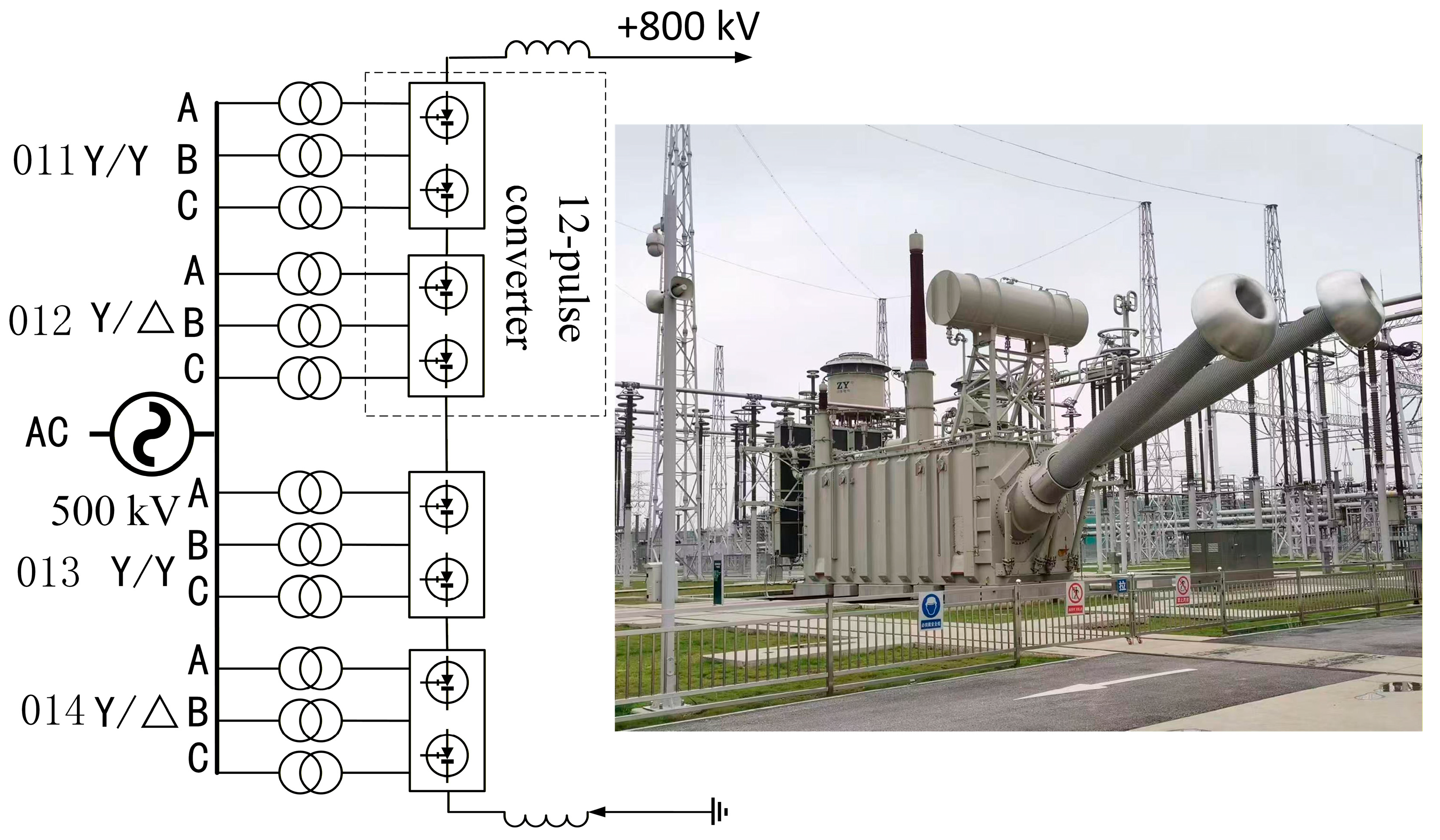
In this study, we focused on the sending terminal of a bipolar DC transmission system with a rated capacity of 8000 MW, which converts 500 kV AC to ±800 kV DC. As shown in Figure 1, there are two poles on the rectifier side (Poles 1 and 2), operating at +800 kV and −800 kV, respectively. Each pole is equipped with 12 converters. The structure of Pole 1 is also shown in Figure 1, which consists of two sets of 12-pulse converters connected in series. Each set consists of two converter transformer groups with Y/Y and Y/Δwinding connections, with models of ZZDFPZ-406000/500-800 and ZZDFPZ-406000/500-600 (TBEA Co. Ltd., Hengyang, China), respectively. Each group has three converter transformers, and the four groups in Pole 1 are labeled 011, 012, 013, and 014. The primary purpose of this connection configuration is to eliminate higher-order harmonics, particularly the 3rd order.

2.2. Vibration Mechanism Under No-Load Condition

The main vibration sources in a transformer are the core vibration from magnetostriction and magnetic forces and the winding vibration from electrodynamic forces. The vibration measured on the transformer tank is a superposition of these two components.
Under no-load conditions, winding vibration is very weak and is commonly neglected, making core vibration the dominant source. According to the literature, the core vibration exhibits a strong correlation with the applied voltage [19,20]. Assuming that the voltage is u ( t ) = U 0 sin w t , the magnetostriction forces are proportional to voltage squared [19]:
f C ( t ) u 2 ( t )
The acceleration of the core is given by [21]:
a C ( t ) = 2 ε S L U 0 2 ( N 1 S B S ) 2 cos ( 2 ω t )
where ε S is the saturation magnetostriction coefficient, L is the length of the silicon steel plate, N 1 is the number of turns in the coil, S is the cross-sectional area of the core, B S stands for the saturated magnetic flux density, and ω is the power angular frequency. It can be seen that the frequency of a C is twice the power frequency. Therefore, with a fundamental power frequency at 50 Hz, the dominant frequency of a C is supposed to be 100 Hz.
However, during the operation, due to the influence of the saturation characteristics of the iron core, the main magnetic flux contains many harmonic components. Under the influence of harmonics, the acceleration becomes [21]:
a C ( t ) = 2 ε S L U 0 2 ( N 1 S B S ) 2 cos ( 2 ω t ) k = 2 n 2 ε S L U k 2 ( N 1 S B S ) 2 cos ( 2 k ω t )
where k is the harmonic order.

2.3. Vibration Mechanism Under Load Condition

When the transformer is under loading conditions, the vibration of the winding becomes significantly stronger and therefore cannot be neglected. The electromagnetic force acting on the windings is caused by the interaction between the coil current and the leakage magnetic field. According to the literature, the electromagnetic forces are proportional to current squared [16]:
f ( t ) i 2 ( t )
Assuming that the current is i ( t ) = I 0 sin w t , the electromagnetic forces are obtained according to Ampere’s Law and the theory of Lorentz Force [16]:
f W = π R k B I 1 2 ( 1 + cos ( 2 ω t ) )
where f W is the electromagnetic force, R is the radius of winding, and k B is a proportional coefficient.
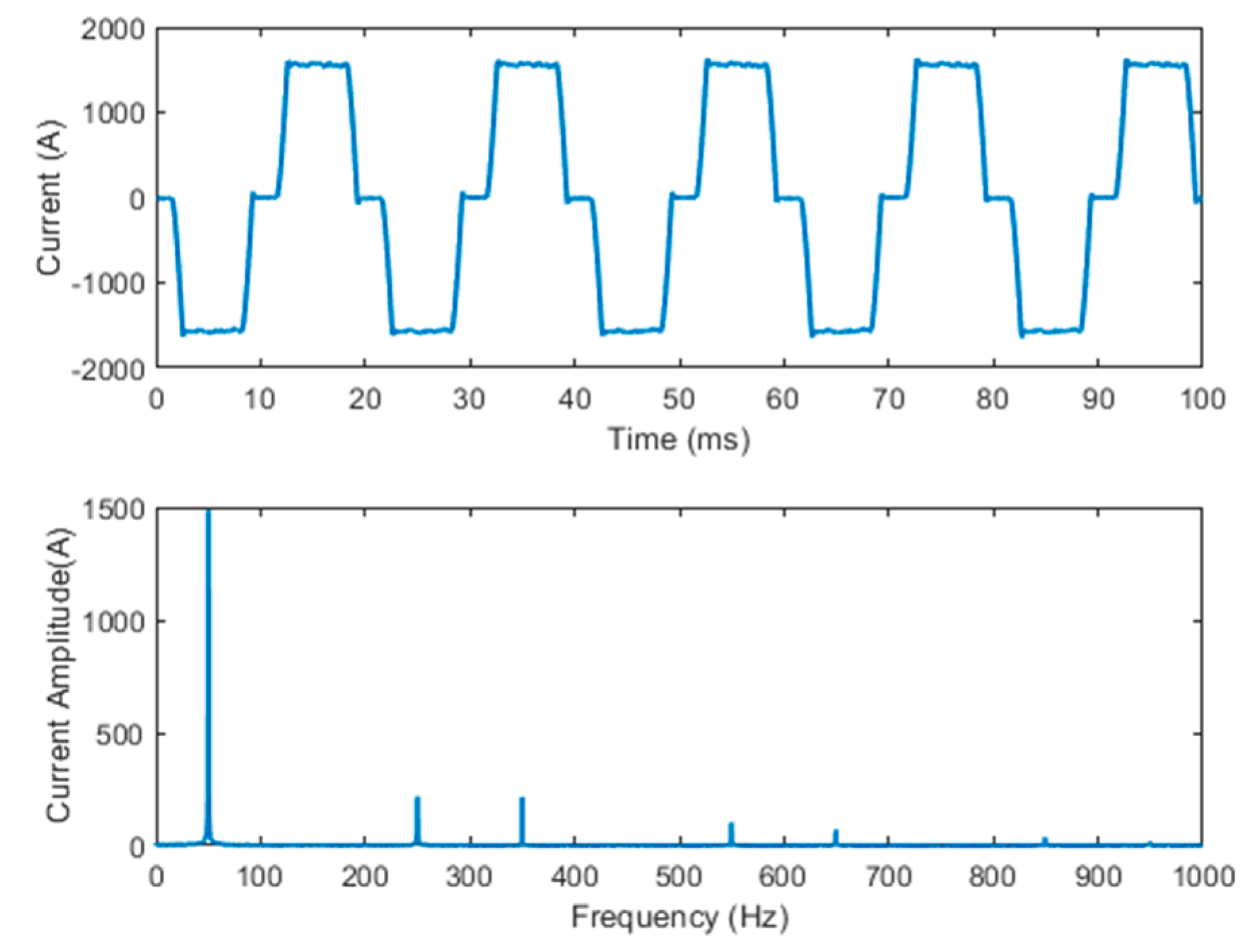
However, the current of converter transformers has abundant harmonics. The valve-side current is influenced by the switching operation of the valves, which includes not only the fundamental frequency component at 50 Hz, but also its harmonics with the order of 6N ± 1. The 3rd-order harmonics is significantly suppressed due to the connection configuration. The grid-side current is proportional to the valve-side current, therefore has a similar spectrum as the valve-side [22].
As illustrated in Figure 2, the current can be described as [15]:
i ( t ) = I 1 cos ω t + θ 1 + I k cos k ω t + θ k
where I k and θ k are the amplitude and phase angle of the k-th harmonic (k = 6N ± 1), respectively. Since the amplitude of the fundamental current is significantly larger than the higher-order harmonics, the multi-frequency electromagnetic force is mainly generated by the interaction of the fundamental current and the harmonic currents, which can be written as:
f ( t ) I 1 2 cos 2 ω t + θ 1 + I 1 I k cos ω t + θ 1 cos k ω t + θ k
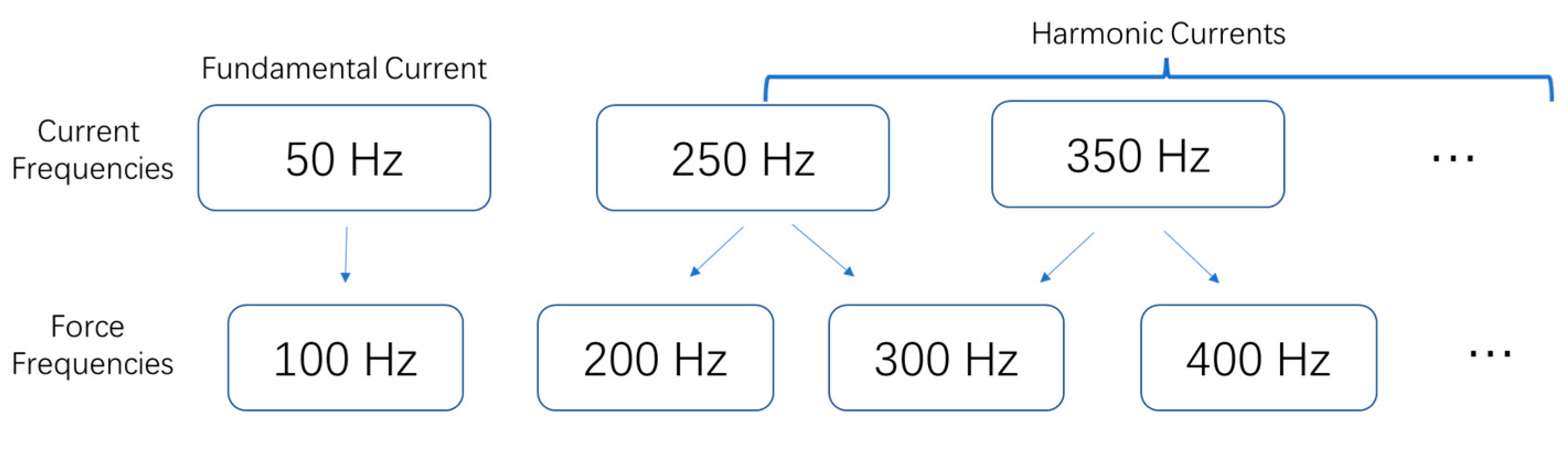
The mechanism of multi-frequency electromagnetic force generation is shown in Figure 3, where the first four orders are presented as an illustrative example. While interactions among harmonic currents can also produce electromagnetic forces (e.g., 250 Hz and 350 Hz current yielding 100 Hz forces), they were neglected in this analysis due to the significantly smaller amplitudes of higher-order harmonics. It should be noted that the fundamental current also participates in the generation of the higher order force components.
Therefore, the electromagnetic force component Fi can be obtained by:
F 100 = I 1 2 , F 200 = I 1 I 5 , F 400 = I 1 I 7 ,
F 300 = I 1 2 I 5 2 + I 1 2 I 7 2 + 2 I 1 2 I 5 I 7 cos θ Δ ,
θ Δ = 2 θ 1 + θ 5 θ 7

3. Experimental Setup

3.1. Full-Load Thermal Stability Test

The full-load thermal stability test was conducted before the HVDC system was officially put into operation. The test includes various operating conditions, such as no load, load increase, load decrease, and long-term operation at full load (8000 MW), which provides valuable information for investigating the vibration characteristics of the transformers under different loads.
The detailed procedure of the entire test, with specific time points recorded to track operational phases, is as follows. The test begins with the energization of the grid-side winding. The converter transformers operate under the no-load condition for 84 min. The rectifier is then connected to the converter transformers, while remaining in the no-load state. At 97 min, the DC load rises to 800 MW, after which it increases gradually at a rate of 58.5 MW/min until reaching 8000 MW. Then, the system remains at full load (8000 MW) for 9.2 h, from 225 min to 777 min. At the end of the test, the DC load gradually decreases from 8000 MW to 5000 MW, and then to 2000 MW.

3.2. Vibration Measurement

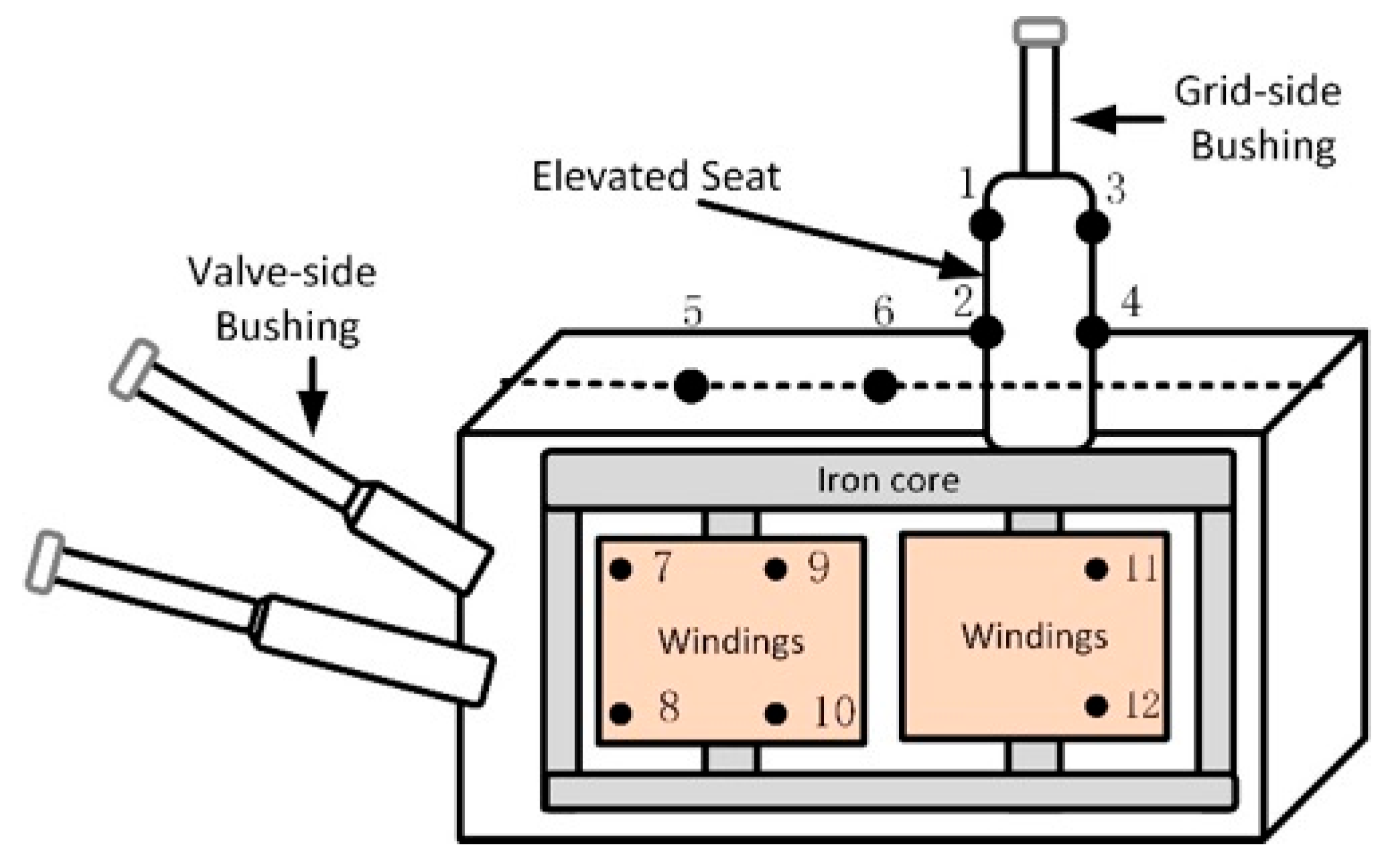
During the experiment, six converter transformers of 011 and 012 group in Pole 1 were selected as the test objects. Vibration was measured using ICP piezoelectric accelerometers with a sensitivity of 500 mV/g and a supply voltage of 24 V. As shown in Figure 4, 12 accelerometers were installed on each transformer. The sensor placement followed a key principle derived from prior experience to improve the signal-to-noise ratio [17]: close to the winding vibration propagation path while avoiding potential noise sources such as cooling units. Specifically, sensors 1 to 4 were installed on the elevated seat to monitor the vibration of the grid-side bushing. Sensors 5 and 6 were used to measure the vibrations of the tank top. Sensors 7 to 12 were located on the tank surface near the winding structure. Therefore, a total of 72 accelerometers were used for measurement. The sampling system (Hangzhou Kelin Electric Co. Ltd., Hangzhou, China) collected one-second vibration signals every 3 min with a sampling rate of 8192 Hz, while current signals were recorded synchronously. The 3 min interval strategy was used due to the slow change of the current and vibration signal, and could also reduce the data size to prevent risks to the sampling system. Such an approach is standard practice in transformer vibration monitoring [4,23].

4. Results and Discussions

4.1. General Trend During Stability Test

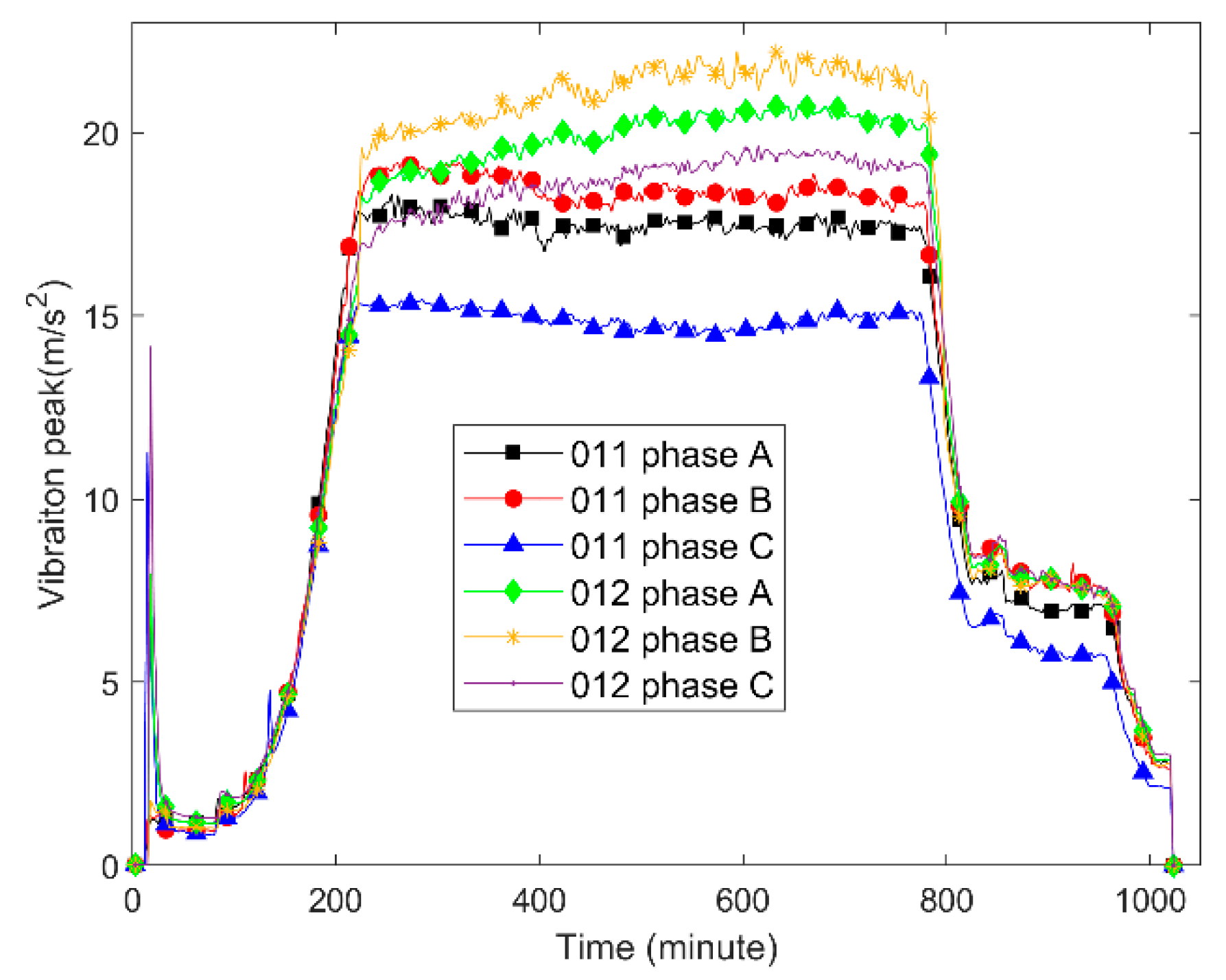
Figure 5 shows the trend of the vibration peak measured from the six converter transformers during the experiment. Each point in the figure represents the average vibration of the corresponding 12 sensors. Generally, the 011-type converter transformers have a smaller vibration compared with the 012-type converter transformers. When these transformers are first energized, the vibration peak increases rapidly (14.1 m/s2) due to the influence of the inrush current, and then gradually decreases to the no-load stable state (0.9 m/s2). After a 136 min load ramp process, the DC system operates at full load (8000 MW) for 9.2 h. During full-load operation, the vibration of the 012-type converter transformer gradually increases, which may relate to the rise of the oil temperature, from 41 °C to 60.2 °C. The DC filters are turned off at 397 min and turned on again at 646 min. However, the vibration peaks are not affected.
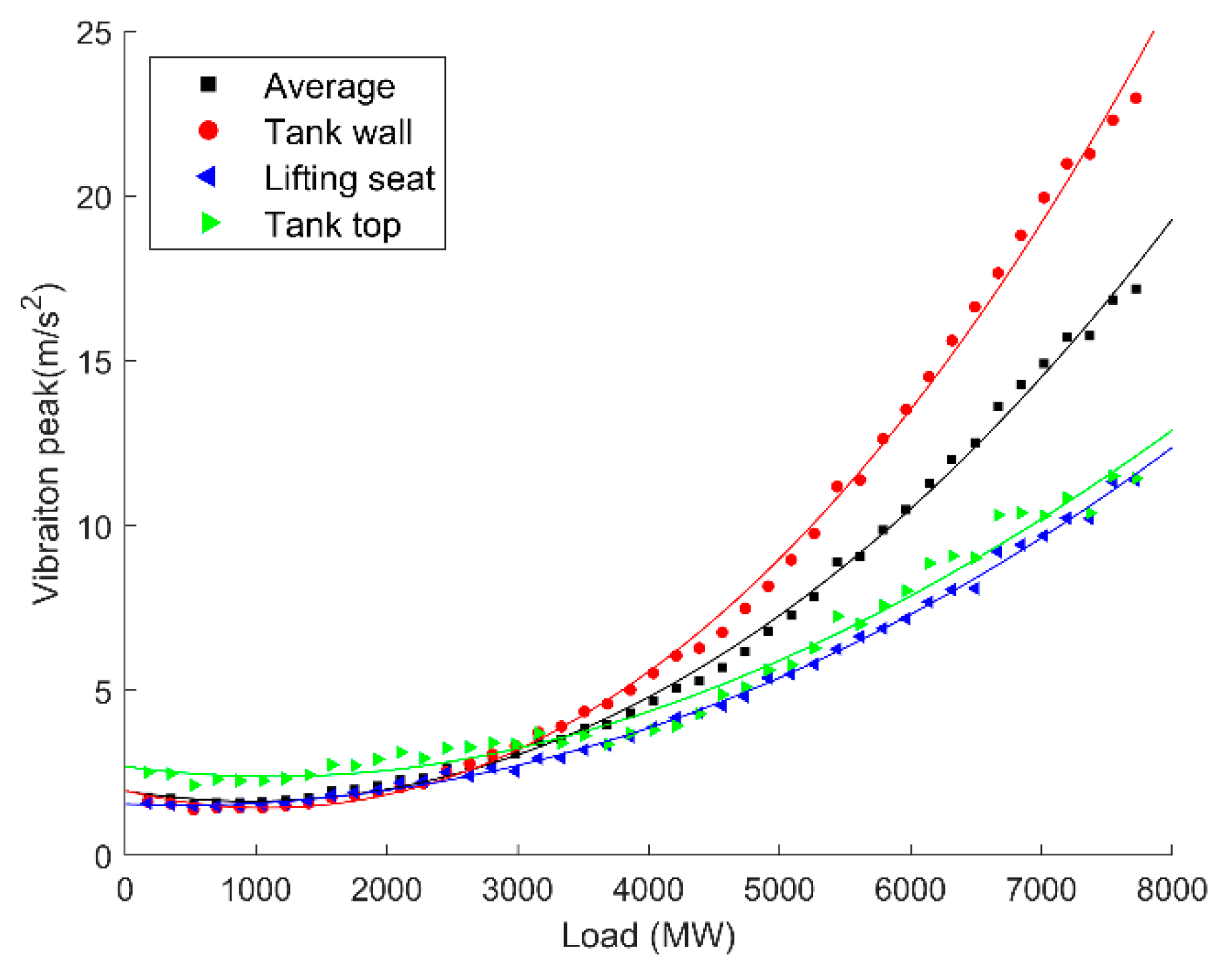
Next, 011A was selected as a representative transformer, and the vibration peaks under different loads are shown in Figure 6. Below 2500 MW, the peak amplitudes remained stable, whereas beyond this threshold, they increased significantly with load, following a polynomial trend. Figure 6 also shows distinct trends across the measurement areas. Below 3000 MW, vibration levels on the tank top were larger than those in other areas. As the load surpassed 3000 MW, however, the tank wall showed the greatest vibration amplitudes. Given that converter transformers typically operate above 4000 MW, the tank wall is supposed to be the ideal area for vibration monitoring.

4.2. Multi-Frequency Component of Vibration

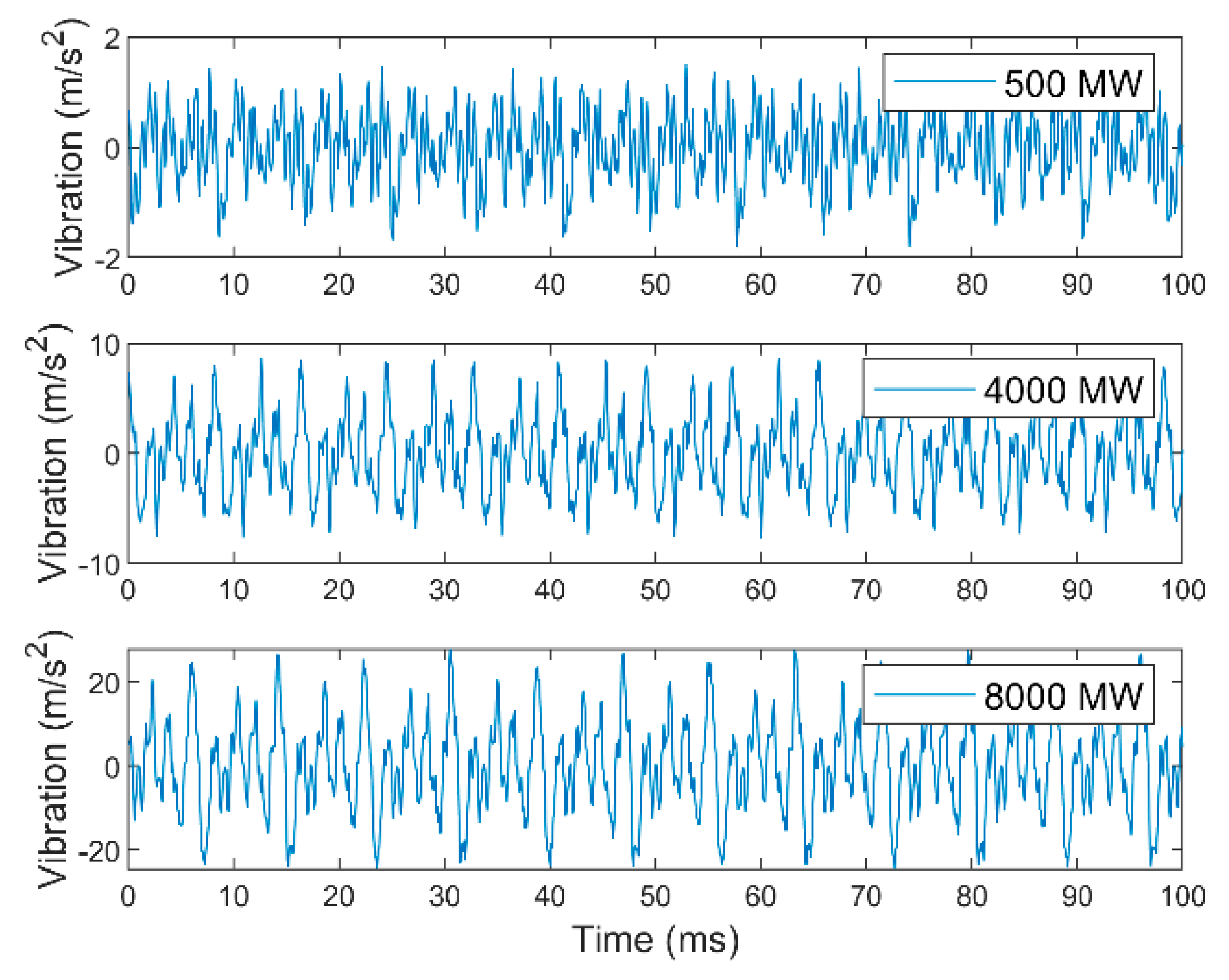
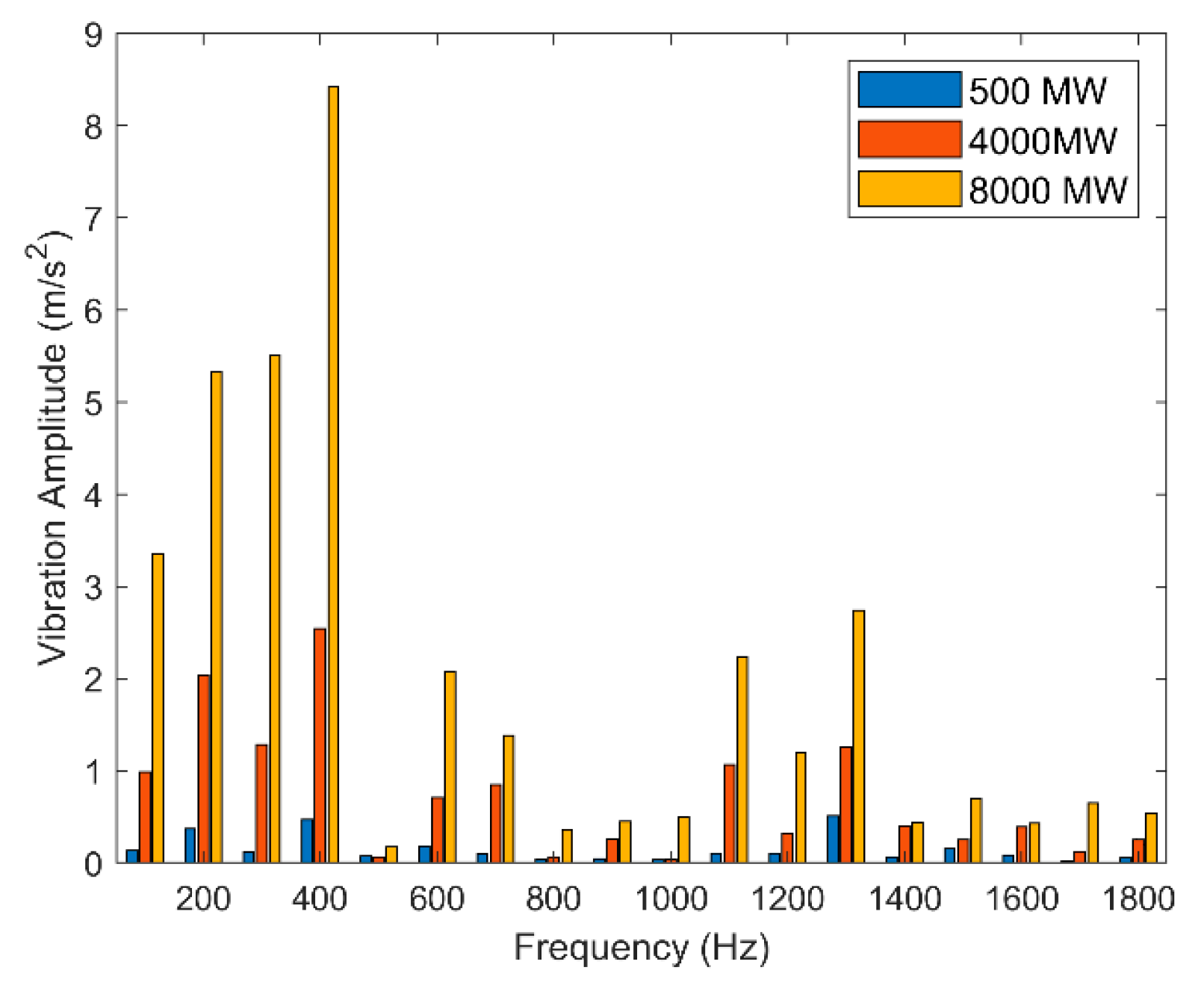
The time domain vibrations of sensor 9 (011A) under different loads are shown in Figure 7, and the corresponding harmonic components are compared in Figure 8. The vibration at 500 MW, the minimum load condition, is defined as the baseline vibration. It can be seen that the converter transformer generated a large number of harmonics under both no-load and full-load conditions. Under no-load condition, the vibration was mainly dominated by 200 Hz, 400 Hz and 1300 Hz. These frequency components are regarded as the main vibration components of the core. Under the loading condition, the vibration components within 100–400 Hz increased significantly, and accounted for the largest proportion when the load was over 4000 MW.
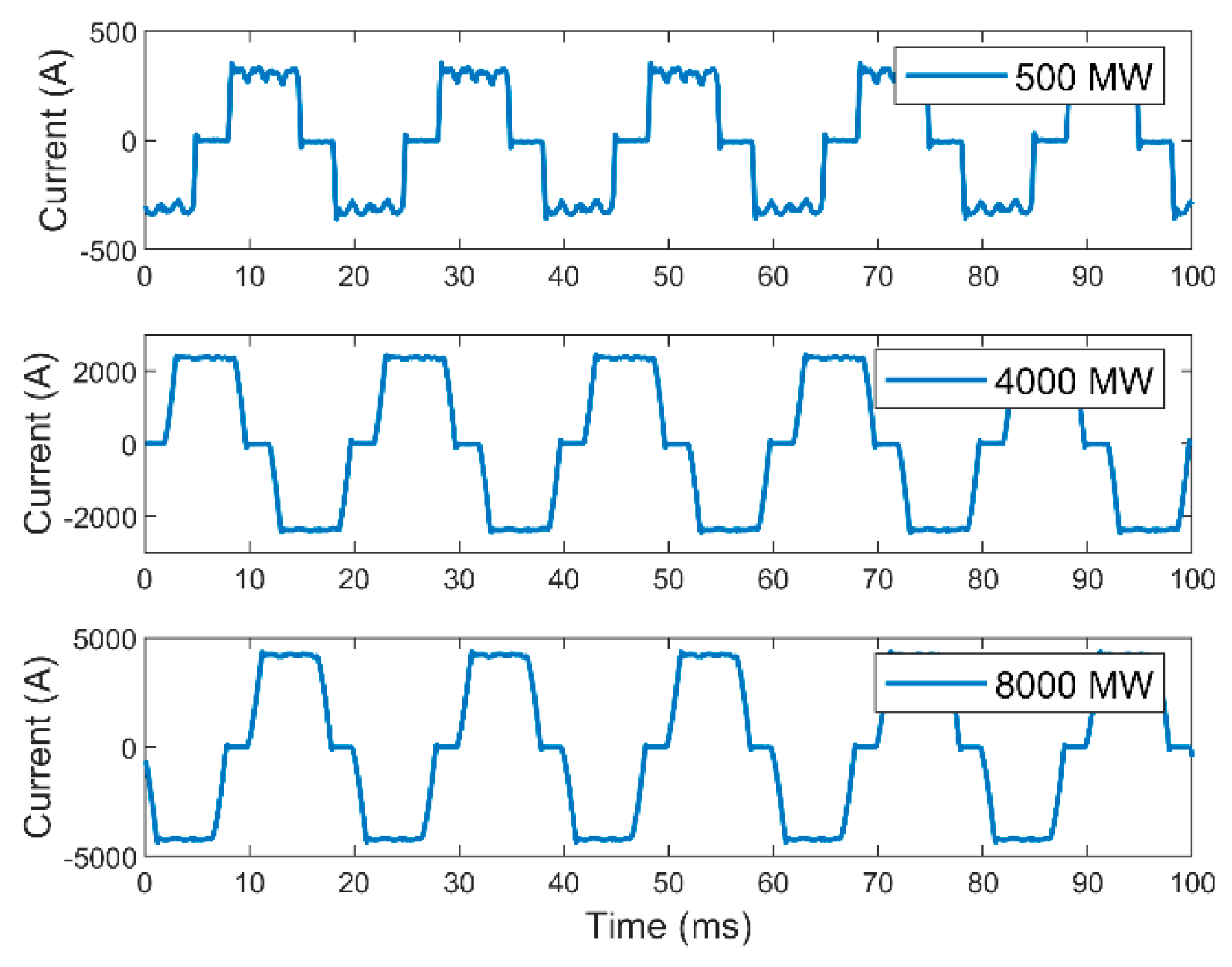
To investigate the generation of the multi-frequency component of the winding vibration, the currents under different loading conditions were measured. The valve-side currents of the 011A CT, as shown in Figure 9, contained a large number of harmonics. The proportion of the j-th current harmonic is defined as
K ( I j ) = I j / k I k
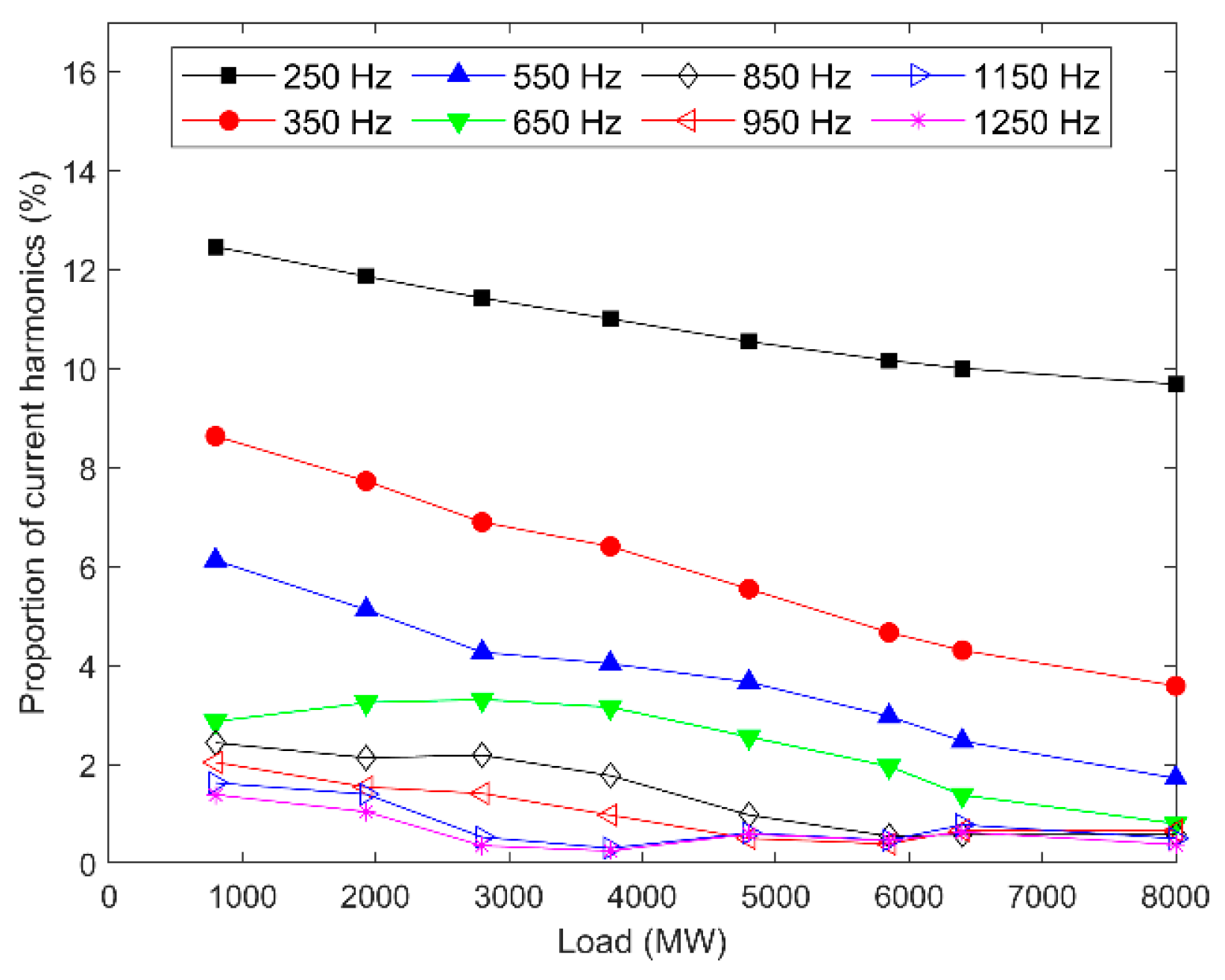
As shown in Figure 10, the proportions of the harmonic components varied with the loading condition. The proportions of the 5th and 7th harmonics were relatively high, while the harmonic content generally decreased as the order increased. With a higher loading level, the 50 Hz component increased, resulting in a further reduction in the proportion of higher-order harmonics.
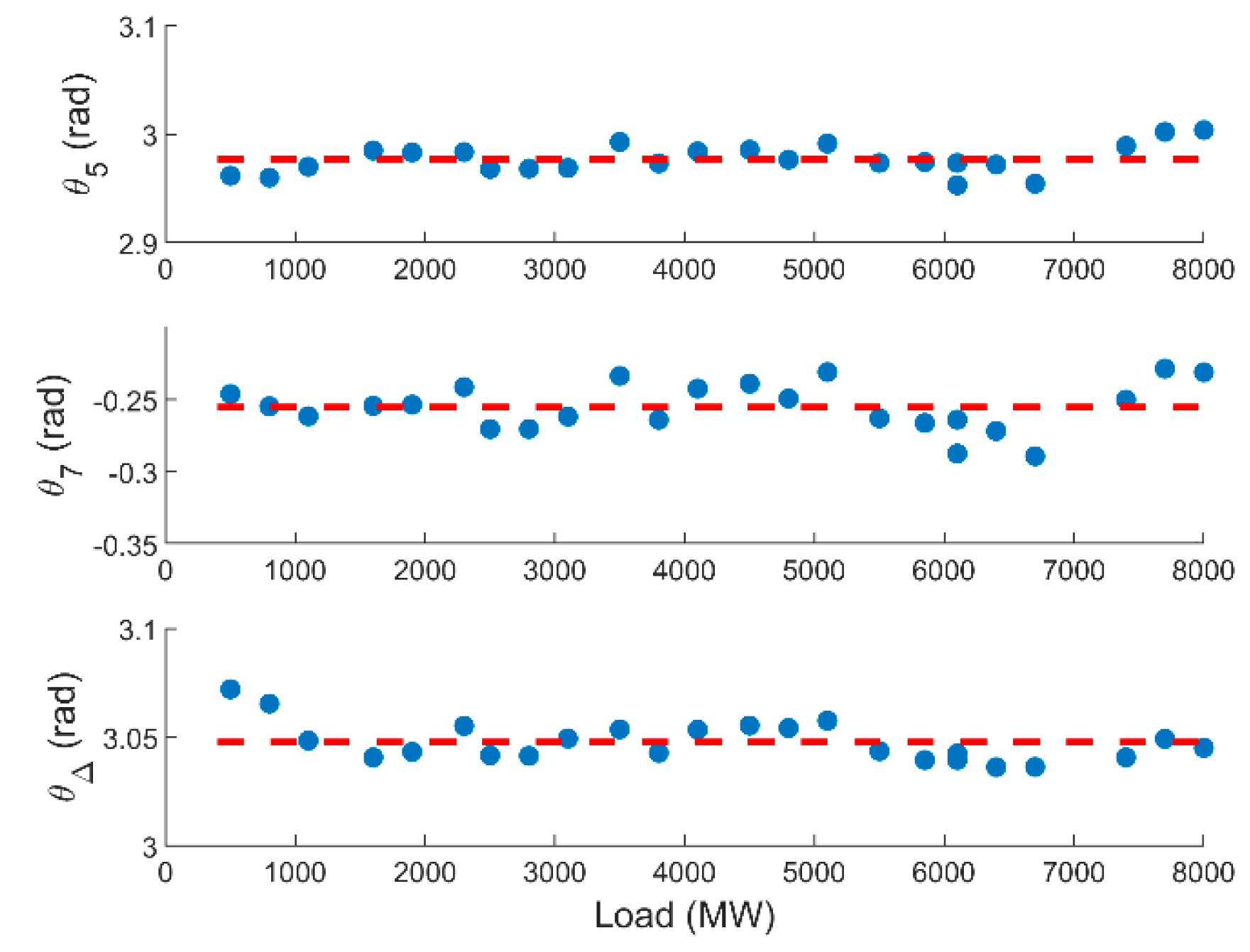
The phase values θ k (k = 1, 5, 7) and θ Δ were also obtained from the current sequence, where the phase of the fundamental frequency was set as the reference ( θ 1 = 0). As shown in Equations (9) and (10), these phase values serve as key parameters for calculating the electromagnetic force. The relationship between the relative phase angle and the load is shown in Figure 11. It is noted that while the proportion of the current harmonics varied with the loading level, the phase values remained relatively stable across all loading conditions. Therefore, the phase angle of the forces and the resulting winding vibrations are supposed to be insensitive to load variations under normal condition. Furthermore, since θ Δ is close to π, the third term in Equation (9) has an opposite phase to the other components, leading to a reduction in the force amplitude as a result of destructive superposition.
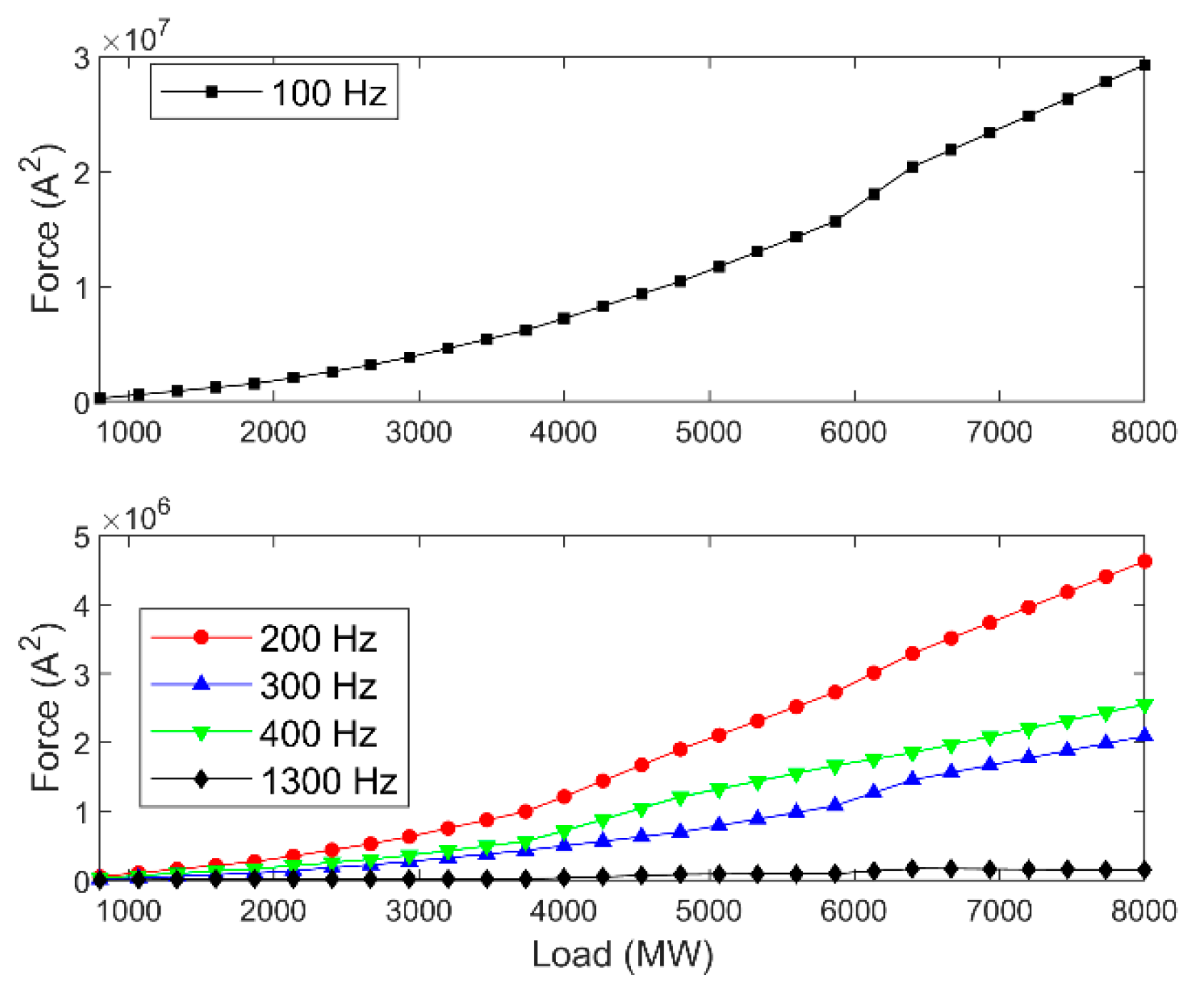
Accordingly, the harmonic components of the electromagnetic force were calculated and are shown in Figure 12. It is clear that all of the components showed a similar increasing trend. The amplitude of the fundamental (100 Hz) electromagnetic force was at least 6 times larger than other harmonic components, and both 200 Hz and 400 Hz forces showed larger amplitude than the 300 Hz component. According to Figure 3, the 300 Hz component originated not only from the interaction between the 50 Hz and 250 Hz components, but also from the interaction between the 50 Hz and 350 Hz components. According to Equations (9) and (10), the superposition of the two vectors is determined by their phase difference. A phase difference exceeding 90 degrees resulted in a cancellation effect that weakened the 300 Hz component, making it smaller than those at 200 Hz and 400 Hz. In contrast, the amplitude of the higher-order 1300 Hz component remained relatively low.
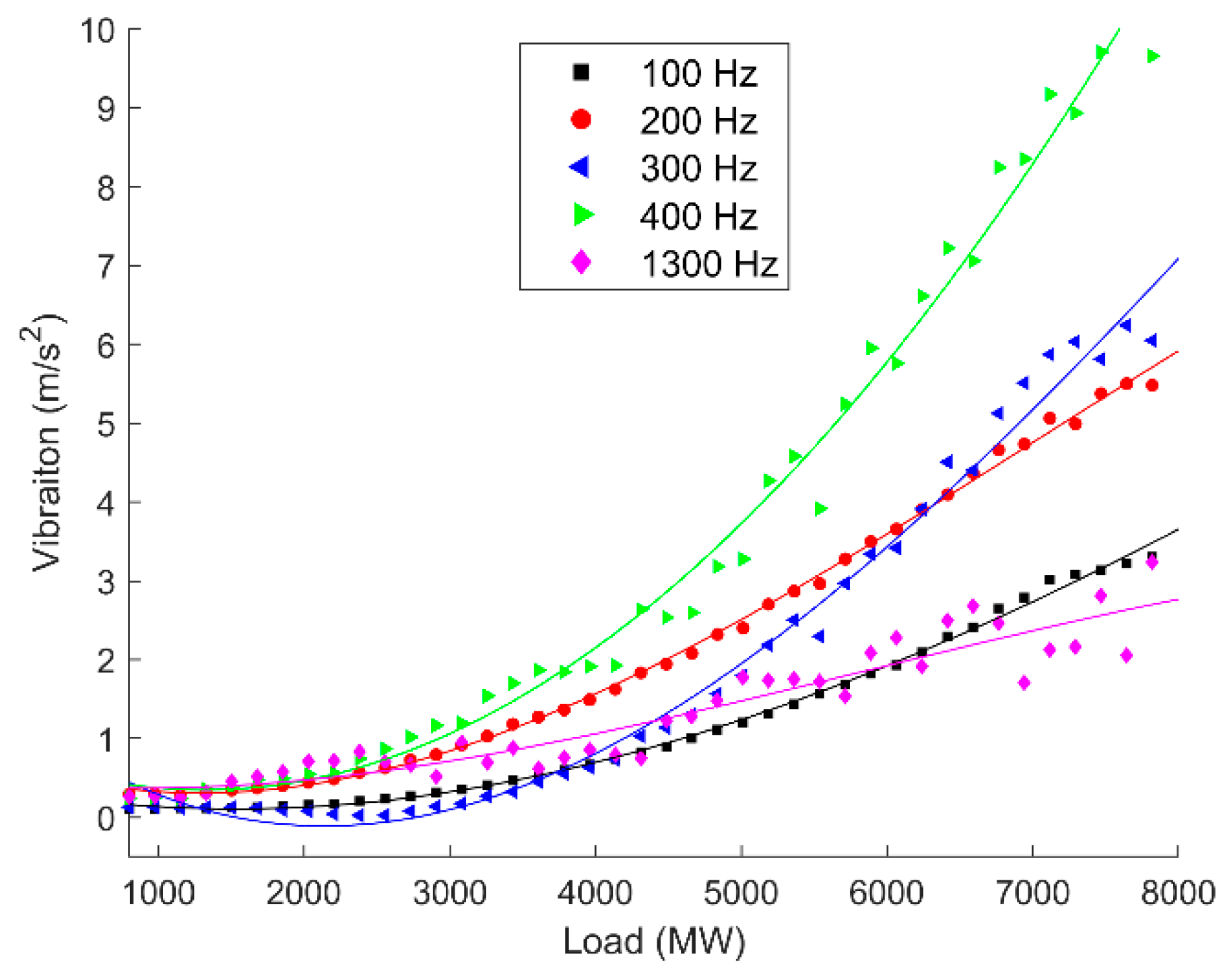
Figure 13 displays the vibration amplitude measured at point P9 (011A) as a function of load. The curves represent polynomial fits to the experimental data. The good agreement between the fitted curves and the measured data for the 100–400 Hz components, especially at high loading levels, indicates a strong correlation with the DC load, suggesting that these components are primarily contributed by the winding vibration. It is also noted that the vibration amplitude at 300 Hz showed a decreasing trend before 2500 MW, and then increased. This was due to the counteraction between winding and core vibration, and will be demonstrated later.
In contrast, the 1300 Hz data points deviated significantly from the fitted curve when the DC load was above 5000 MW. Together with the previously observed low amplitude of the current and electromagnetic force at this frequency, it was therefore concluded that the electromagnetic force in the winding is not the dominant source of the 1300 Hz vibration component.
As noted earlier, the 200 Hz and 400 Hz components are also the main vibration components of the core. To further distinguish the contributions of the winding and core, the phase variations of the 100–400 Hz vibration harmonics under varying load conditions were examined. In this analysis, the phase of the fundamental current was again taken as the reference (0°), and the phase angle of each vibration component at the 800 MW load level was used as the baseline for comparison.
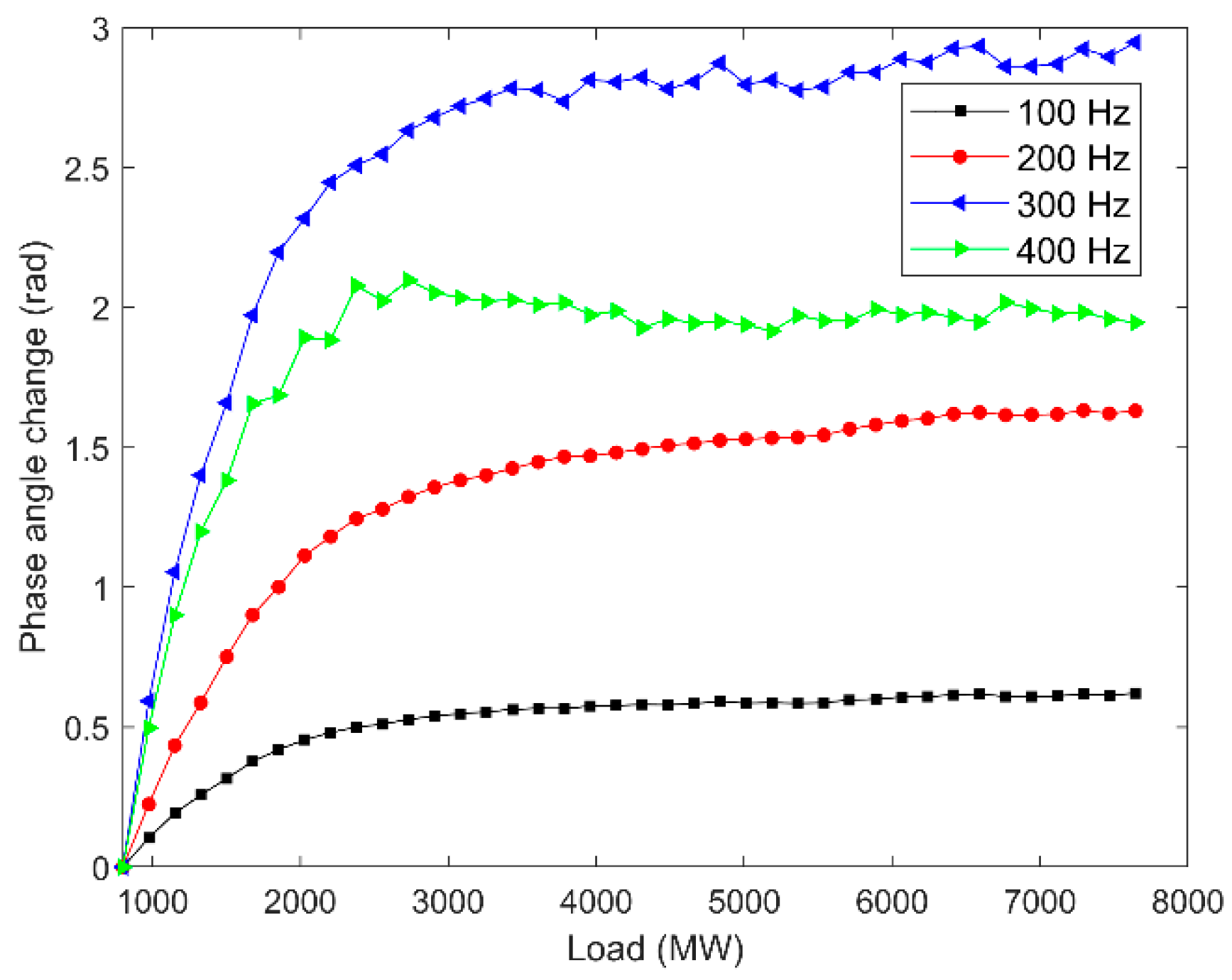
Since the tank vibration is a mixture of iron core vibration and winding vibration, its phase angle is therefore a load-dependent quantity. As shown in Figure 14, all the phase values exhibited a relatively sharp increase as the loading increased before approximately 2500 MW. For example, a load change from 800 MW to 2000 MW produced a 0.48 rad phase shift in the 100 Hz component. Above 2500 MW, however, the phase values of the four frequency components remained relatively stable. This transition indicates a shift in the dominant vibration source from the core to the windings. The phase value of 300 Hz experienced an almost complete reversal, changing from 0 to π, which also explains the corresponding decrease and subsequent increase in its vibration amplitude.

4.3. Vibration Energy Proportion of Four Frequency Bands

To show the overall trend of the frequency spectrum under different loading levels, the vibration energy proportion of four frequency bands: 0–400 Hz, 500–900 Hz, 1000–1900 Hz, and 2000–4000 Hz were calculated. The vibration energy ratio is calculated by dividing the energy of a specified frequency band by the total energy. After obtaining the frequency domain of the vibration signal via Fourier Transform, the total energy Etotal and the energy of the j-th band Ej are defined as:
E t o t a l = i = 1 40 A i 2 , E j = i = f L , j f R , j A i 2
where Ai is the vibration amplitude of the i-th order (i × 100 Hz), and fR,j and fL,j are the left and right limits of the j-th frequency band, respectively. Then, the vibration energy proportion of the j-th band Rj is defined as follows:
R j = E j / E t o t a l
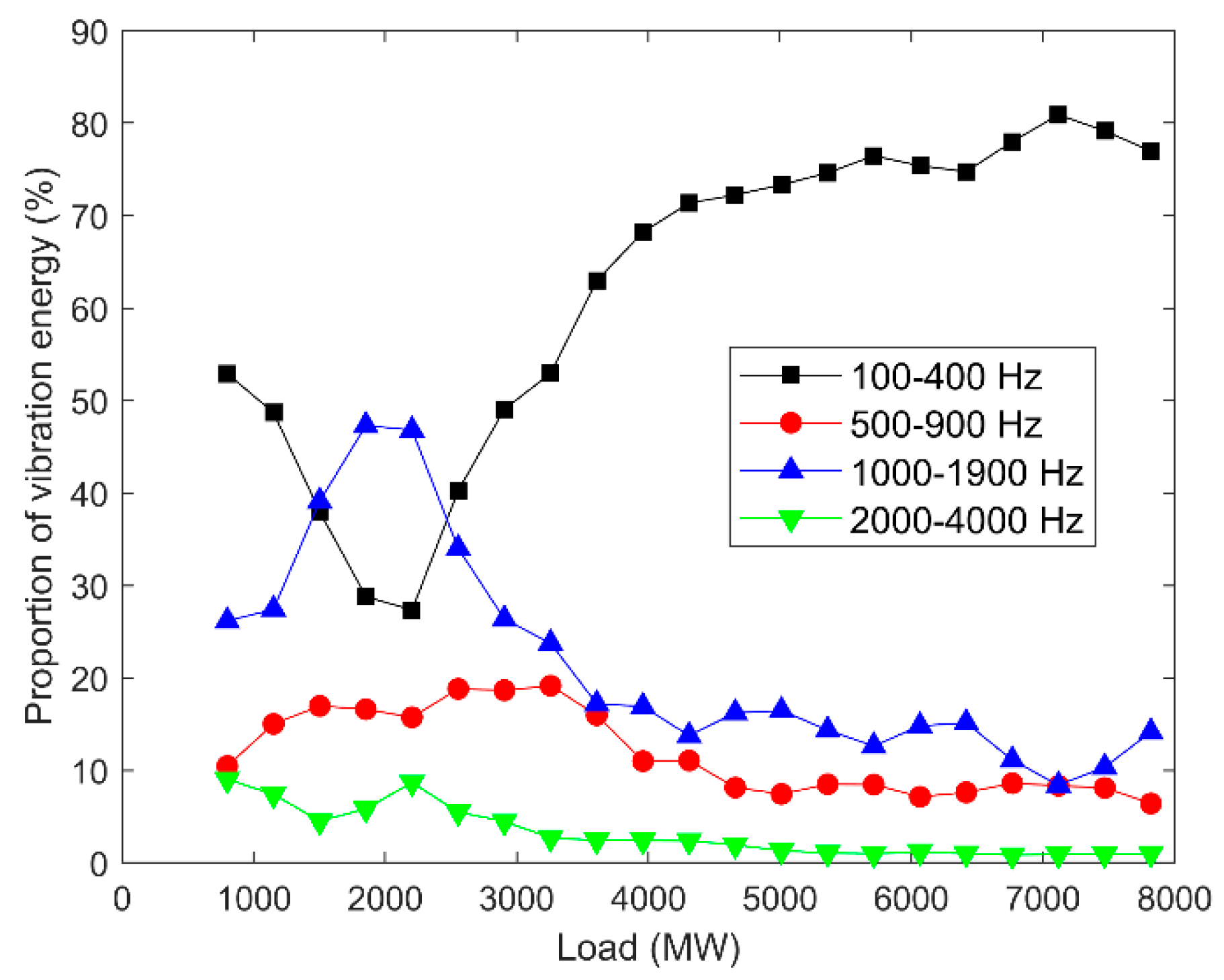
Figure 15 compares the average vibration energy proportions obtained from 72 sensors across six converter transformers. Below 2500 MW, the proportion of the 100–400 Hz band decreased with increasing load, suggesting that the winding vibration partially cancelled out the core vibration in this frequency range. Above that, the proportion of the 0–400 Hz band increased significantly. In contrast, the energy proportions of the three higher-frequency bands declined as the load increased. This trend confirms that winding vibration becomes the dominant contributor to the overall transformer vibration once the load exceeds 2500 MW.

5. Conclusions

This study presents a comprehensive investigation into the vibration characteristics of converter transformers from no-load to full-load conditions. A multi-frequency electromagnetic force model was developed to clarify the relationship between current harmonics and the resulting vibration spectrum. Based on the model, it was found that the phase angles between current harmonics must be considered to correctly predict vibrations at certain frequencies. A key example is the 300 Hz component, the amplitude of which showed an initial decrease and then an increase with rising load.
When the load was larger than 2500 MW, the 100–400 Hz vibrations of the transformer, as dominated by the winding vibration, showed a close relationship to the current harmonics. While the amplitude of these 100–400 Hz components showed strong load dependence, their phase angles remained relatively stable above 2500 MW. The load-insensitive nature of the phase values could be beneficial for potential diagnostic methods. In contrast, the 1300 Hz vibration component was shown to be largely attributable to core vibration and demonstrated a weaker correlation with load variations.
In summary, this work demonstrates the vibration characteristics of converter transformers under varying loads, shows a clear relationship between current harmonics and the multi-frequency vibration spectrum, and provides valuable insights for improving vibration models and advancing fault diagnosis methods for converter transformers.
However, there are still lots of studies that need to be conducted in the future. For example, the relationship between the vibration and the current under transient condition such as energization and short-circuit should be further investigated. Given that these transients typically generate large vibrations, they are critical for a complete understanding of the dynamic behavior of a converter transformer. Moreover, the stable phase values observed above a certain load threshold reveal diagnostic potential. Therefore, future work should focus on developing fault diagnosis algorithms based on the phase responses of tank vibrations.

Author Contributions

Writing—original draft, N.W.; investigation, N.W.; methodology, N.W.; writing—review and editing, J.Z. and Y.Y.; supervision, J.Z.; project administration, J.Z.; funding acquisition, Y.Y. All authors have read and agreed to the published version of the manuscript.

Funding

This research was funded by the State Key Laboratory of HVDC (SKLHVDC-2024-KF-15).

Data Availability Statement

The data presented in this study are available on request from the corresponding author due to policy restrictions, as important power equipment data cannot be publicly disclosed.

Conflicts of Interest

Author Yao Yuan was employed by the Electric Power Research Institute of China Southern Grid. The remaining authors declare that the research was conducted in the absence of any commercial or financial relationships that could be construed as potential conflicts of interest.

References

  1. Bhuvaneswari, G.; Mahanta, B.C. Analysis of Converter Transformer Failure in HVDC Systems and Possible Solutions. IEEE Trans. Power Deliv. 2009, 24, 814–821. [Google Scholar] [CrossRef]
  2. Martin, D.; Marks, J.; Saha, T.K.; Krause, O.; Mahmoudi, N. Investigation into Modeling Australian Power Transformer Failure and Retirement Statistics. IEEE Trans. Power Deliv. 2018, 33, 2011–2019. [Google Scholar] [CrossRef]
  3. Bartoletti, C.; Desiderio, M.; Di Carlo, D.; Fazio, G.; Muzi, F.; Sacerdoti, G.; Salvatori, F. Vibro-acoustic techniques to diagnose power transformers. IEEE Trans. Power Deliv. 2004, 19, 221–229. [Google Scholar] [CrossRef]
  4. Hong, K.; Huang, H.; Fu, Y.; Zhou, J. A vibration measurement system for health monitoring of power transformers. Measurement 2016, 93, 135–147. [Google Scholar] [CrossRef]
  5. Nezhad, A.E.; Samimi, M.H. A review of vibration-based techniques for the condition assessment and failure detection of transformers. J. Vib. Eng. Technol. 2025, 13, 95–107. [Google Scholar] [CrossRef]
  6. Jiang, P.; Zhang, Z.; Zhang, J.; Deng, B.; Deng, J.; Pan, Z. Research on vibration characteristics and multi-parameter state recognition of ±500 kV converter transformer under fluctuating conditions. Int. J. Electr. Power Energy Syst. 2022, 136, 107748. [Google Scholar] [CrossRef]
  7. Xiao, R.; Zhang, Z.; Dan, Y.; Yang, Y.; Pan, Z.; Deng, J. Multifeature Extraction and Semi-Supervised Deep Learning Scheme for State Diagnosis of Converter Transformer. IEEE Trans. Instrum. Meas. 2022, 71, 1–12. [Google Scholar] [CrossRef]
  8. Beltle, M.; Tenbohlen, S. Power transformer diagnosis based on mechanical oscillations due to AC and DC currents. IEEE Trans. Dielectr. Electr. Insul. 2016, 23, 1515–1522. [Google Scholar] [CrossRef]
  9. Wang, T.; He, Y.; Luo, Q.; Deng, F.; Zhang, C. Self-Powered RFID Sensor Tag for Fault Diagnosis and Prognosis of Transformer Winding. IEEE Sens. J. 2017, 17, 6418–6430. [Google Scholar] [CrossRef]
  10. Zhou, H.; Hong, K.; Huang, H.; Zhou, J. Transformer winding fault detection by vibration analysis methods. Appl. Acoust. 2016, 114, 136–146. [Google Scholar] [CrossRef]
  11. Wang, H.; Zhang, L.; Sun, Y.; Zou, L. Research on the influence mechanism of harmonic components on the noise distribution characteristics of converter transformers. Int. J. Electr. Power Energy Syst. 2024, 160, 110095. [Google Scholar] [CrossRef]
  12. Correia, A.F.M.; Silva, A.M.; Ferreira, F.J.T.E. Experimental Study on the Impact of MMF Spatial Harmonics in the Mechanical Vibration of a Three-Phase Induction Motor. In Proceedings of the 2020 International Conference on Electrical Machines (ICEM), Gothenburg, Sweden, 23–26 August 2020; pp. 1560–1566. [Google Scholar]
  13. Jiang, P.; Yin, F.; Wang, L. Modeling, simulation and measurement of converter transformer winding multi-frequency vibration based on electromagnetic structure coupling. Int. J. Electr. Power Energy Syst. 2025, 166, 110587. [Google Scholar] [CrossRef]
  14. Shao, P.; Luo, L.; Li, Y.; Rehtanz, C. Electromagnetic Vibration Analysis of the Winding of a New HVDC Converter Transformer. IEEE Trans. Power Deliv. 2012, 27, 123–130. [Google Scholar] [CrossRef]
  15. Jiang, P.; Zhang, Z.; Dong, Z.; Yang, Y.; Pan, Z.; Deng, J. Axial and radial electromagnetic-vibration characteristics of converter transformer windings under current harmonics. High Volt. 2023, 8, 477–491. [Google Scholar] [CrossRef]
  16. Jiang, P.; Zhang, Z.; Dong, Z.; Wu, Y.; Xiao, R.; Deng, J.; Pan, Z. Research on distribution characteristics of vibration signals of ±500 kV HVDC converter transformer winding based on load test. Int. J. Electr. Power Energy Syst. 2021, 132, 107200. [Google Scholar] [CrossRef]
  17. Qian, M.; Yin, F.; Yuan, Y.; Jiang, P.; Wang, L.; Zhao, L. Vibration characteristics of ±800 kV converter transformers part I: Under no-load conditions. Int. J. Electr. Power Energy Syst. 2024, 159, 110060. [Google Scholar] [CrossRef]
  18. Qian, M.; Yin, F.; Yuan, Y.; Jiang, P.; Wang, L.; Zhao, L. Vibration characteristics of ±800 kV converter transformers part II: Under load conditions. Int. J. Electr. Power Energy Syst. 2024, 159, 110026. [Google Scholar] [CrossRef]
  19. Garcia, B.; Burgos, J.; Alonso, A. Transformer Tank Vibration Modeling as a Method of Detecting Winding Deformations—Part I: Theoretical Foundation. IEEE Trans. Power Deliv. 2006, 21, 157–163. [Google Scholar] [CrossRef]
  20. Ji, S.; Luo, Y.; Li, Y. Research on Extraction Technique of Transformer Core Fundamental Frequency Vibration Based on OLCM. IEEE Trans. Power Deliv. 2006, 21, 1981–1988. [Google Scholar] [CrossRef]
  21. Jiang, P.; Zhang, Z.; Dong, Z.; Yang, Y. Vibration Measurement and Numerical Modeling Analysis of Transformer Windings and Iron Cores Based on Voltage and Current Harmonics. Machines 2022, 10, 786. [Google Scholar] [CrossRef]
  22. Wu, S.; Zhang, Z.; Liu, H.; He, G.; Wang, D.; Zhang, F. Analysis of Harmonic Current and Winding Vibration in Converter Transformer. In Proceedings of the 2022 IEEE International Conference on High Voltage Engineering and Applications (ICHVE), Chongqing, China, 25–29 September 2022; pp. 1–5. [Google Scholar]
  23. Hong, K.; Huang, H.; Zhou, J. Winding Condition Assessment of Power Transformers Based on Vibration Correlation. IEEE Trans. Power Deliv. 2015, 30, 1735–1742. [Google Scholar] [CrossRef]
Figure 1. Schematic diagram of a ±800 kV HVDC system.
Energies 18 05968 g001
Figure 2. Valve-side currents in the time and frequency domain.
Energies 18 05968 g002
Figure 3. Generation of multi-frequency electromagnetic force.
Energies 18 05968 g003
Figure 4. Arrangement of the vibration sensors. The numbers 1–12 denote the sensor locations.
Energies 18 05968 g004
Figure 5. Vibration peak during the full-load thermal stability test.
Energies 18 05968 g005
Figure 6. Vibration peaks under different loads for different areas.
Energies 18 05968 g006
Figure 7. Time domain vibrations under different loads.
Energies 18 05968 g007
Figure 8. Comparison of harmonic components under different loads.
Energies 18 05968 g008
Figure 9. Valve-side currents under different loads.
Energies 18 05968 g009
Figure 10. Proportion of current harmonics as a function of load.
Energies 18 05968 g010
Figure 11. Phase angle as a function of load (blue dots: phase values at different loading levels, red line: mean value).
Energies 18 05968 g011
Figure 12. Electromagnetic force harmonics as a function of load.
Energies 18 05968 g012
Figure 13. Relationship between vibration amplitude and load.
Energies 18 05968 g013
Figure 14. Relationship between vibration angle and load.
Energies 18 05968 g014
Figure 15. Vibration energy proportion as a function of load.
Energies 18 05968 g015
Disclaimer/Publisher’s Note: The statements, opinions and data contained in all publications are solely those of the individual author(s) and contributor(s) and not of MDPI and/or the editor(s). MDPI and/or the editor(s) disclaim responsibility for any injury to people or property resulting from any ideas, methods, instructions or products referred to in the content.