Intelligent Load Forecasting for Central Air Conditioning Using an Optimized Hybrid Deep Learning Framework



Abstract
1. Introduction
1.1. Background and Significance
1.2. Literature Review
1.3. Motivation and Contributions
- (1)
- A hybrid deep learning framework is constructed by combining BiTCN and BiGRU, where BiTCN extracts multi-scale temporal patterns, and BiGRU captures long-term bidirectional dependencies.
- (2)
- A self-attention mechanism is embedded to assign adaptive weights to critical features, enhancing interpretability and robustness.
- (3)
- An improved whale optimization algorithm is designed to tune hyperparameters of BiTCN and BiGRU, avoiding manual trial-and-error and improving model generalization.
- (4)
- Experiments based on real CAC operation data validate that the proposed model outperforms multiple benchmark methods in terms of prediction accuracy and stability.
2. Methodology
2.1. Bidirectional Temporal Convolutional Networks
2.1.1. One-Dimensional Convolution
2.1.2. Causal Convolution
2.1.3. Expansion Convolution
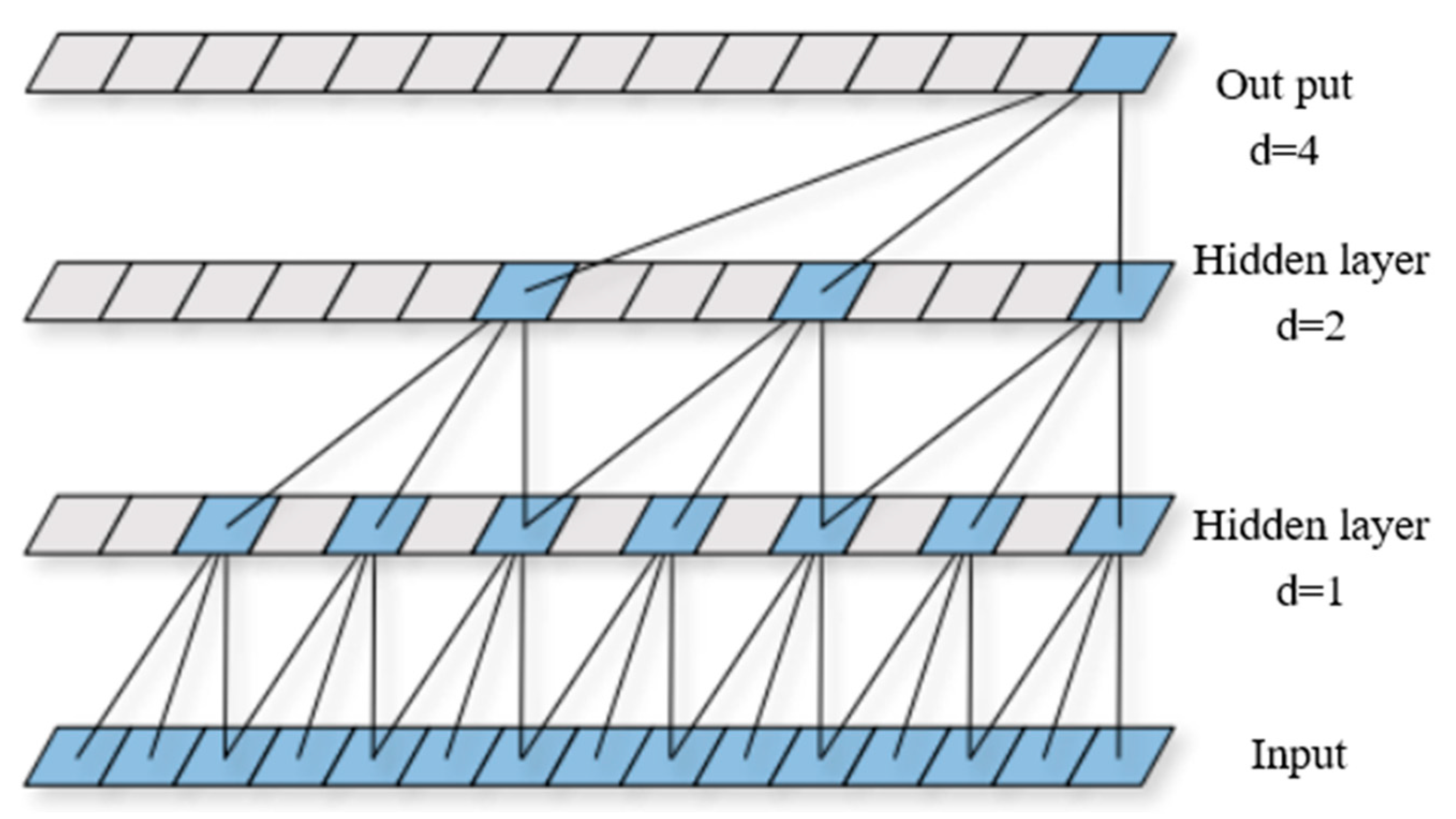
2.1.4. Dilated Causal Convolution Structure
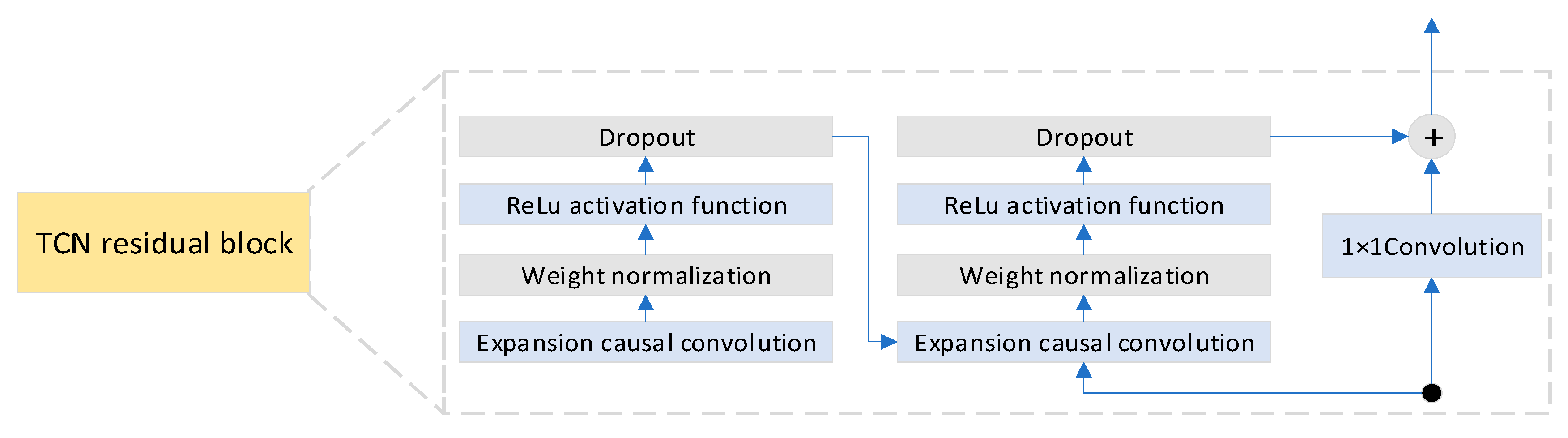
2.1.5. Residual Connection
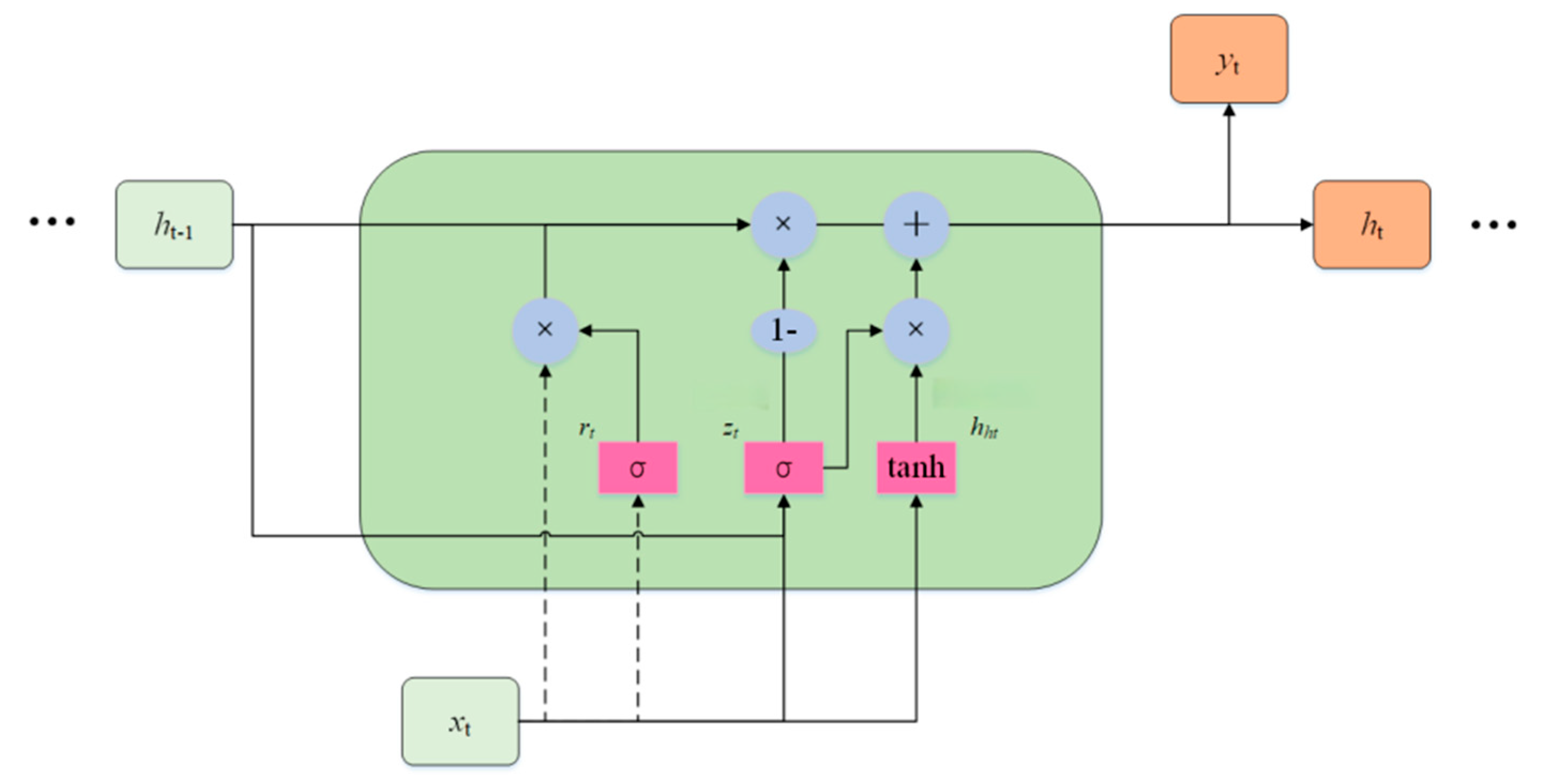
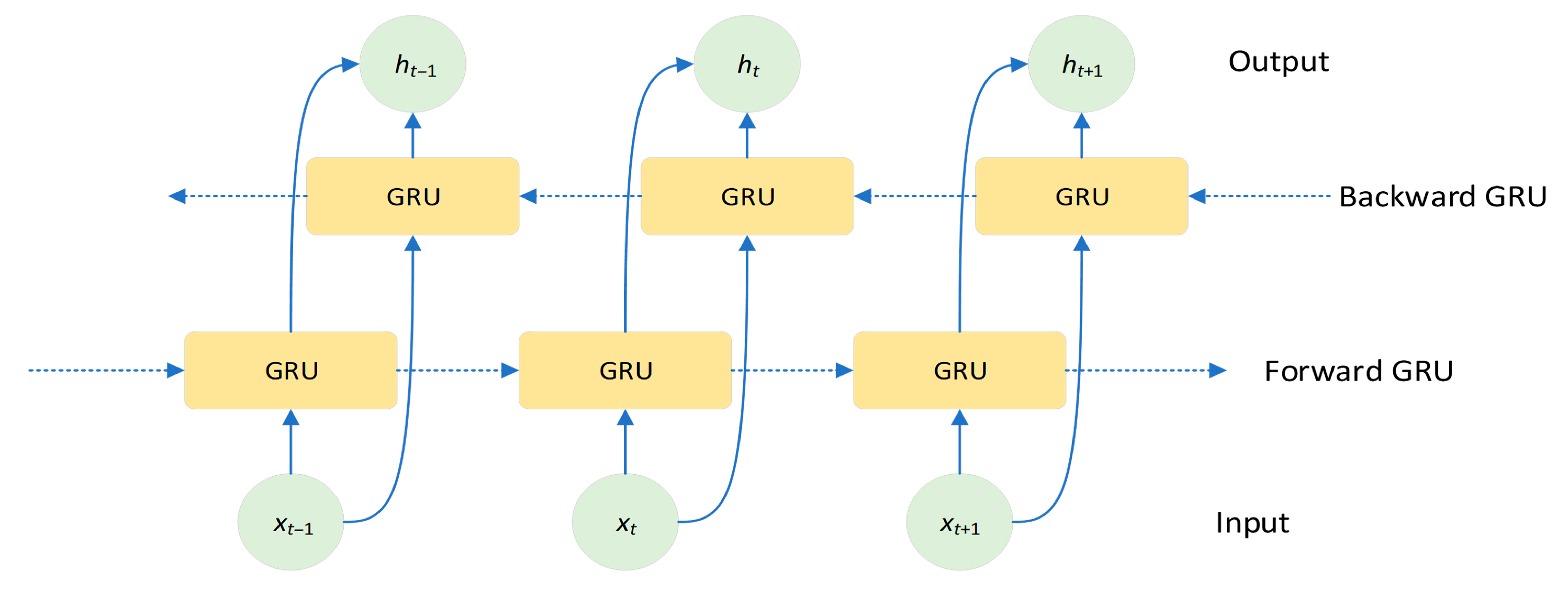
2.2. Bidirectional Gated Recurrent Units
2.3. Self-Attention Mechanism
2.4. Improved Whale Optimization Algorithm
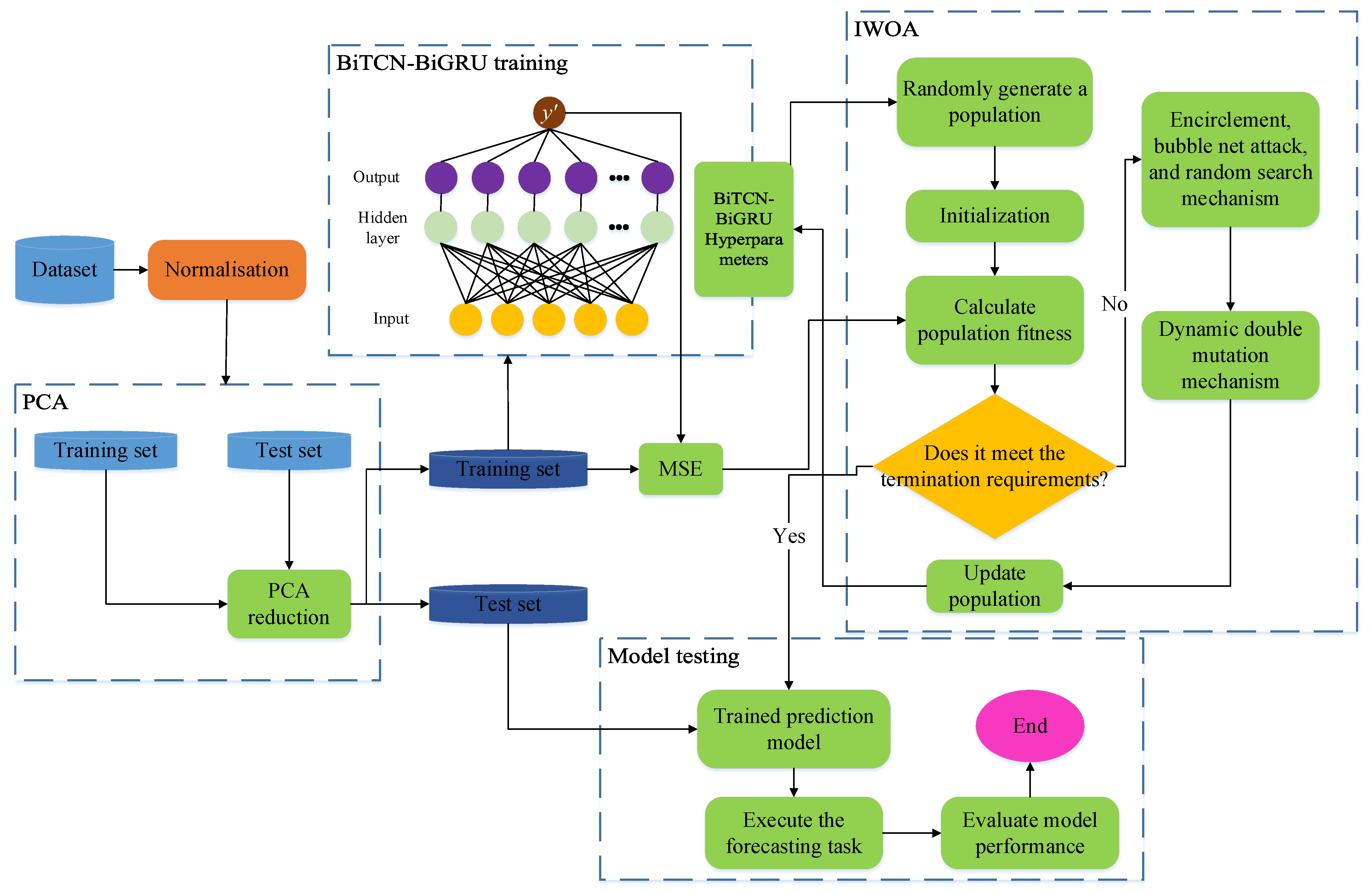
2.5. IWOA-BiTCN-BiGRU-SA Framework
3. Experiments and Discussion
3.1. Datasets Introduction
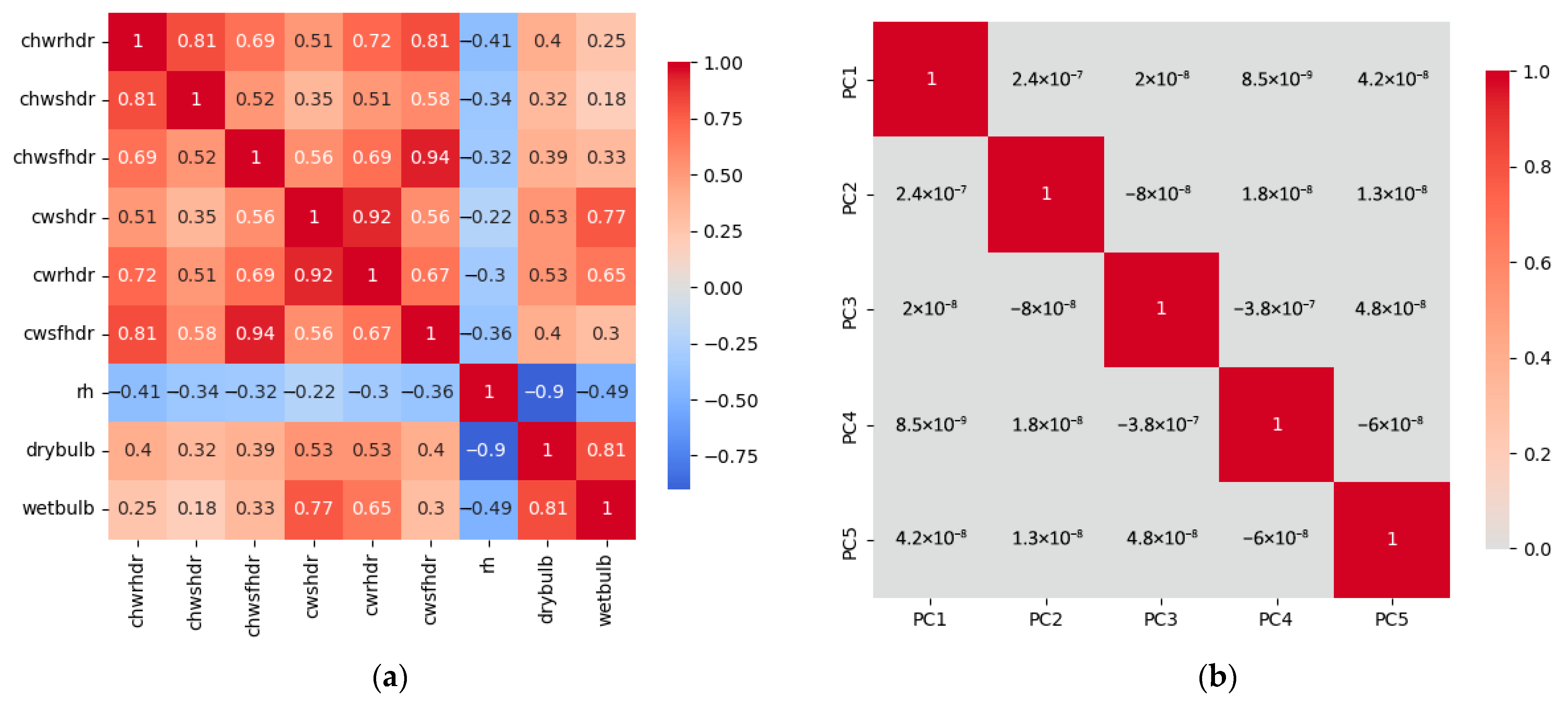
3.2. Input Feature Dimension Reduction
3.3. Performance Criteria
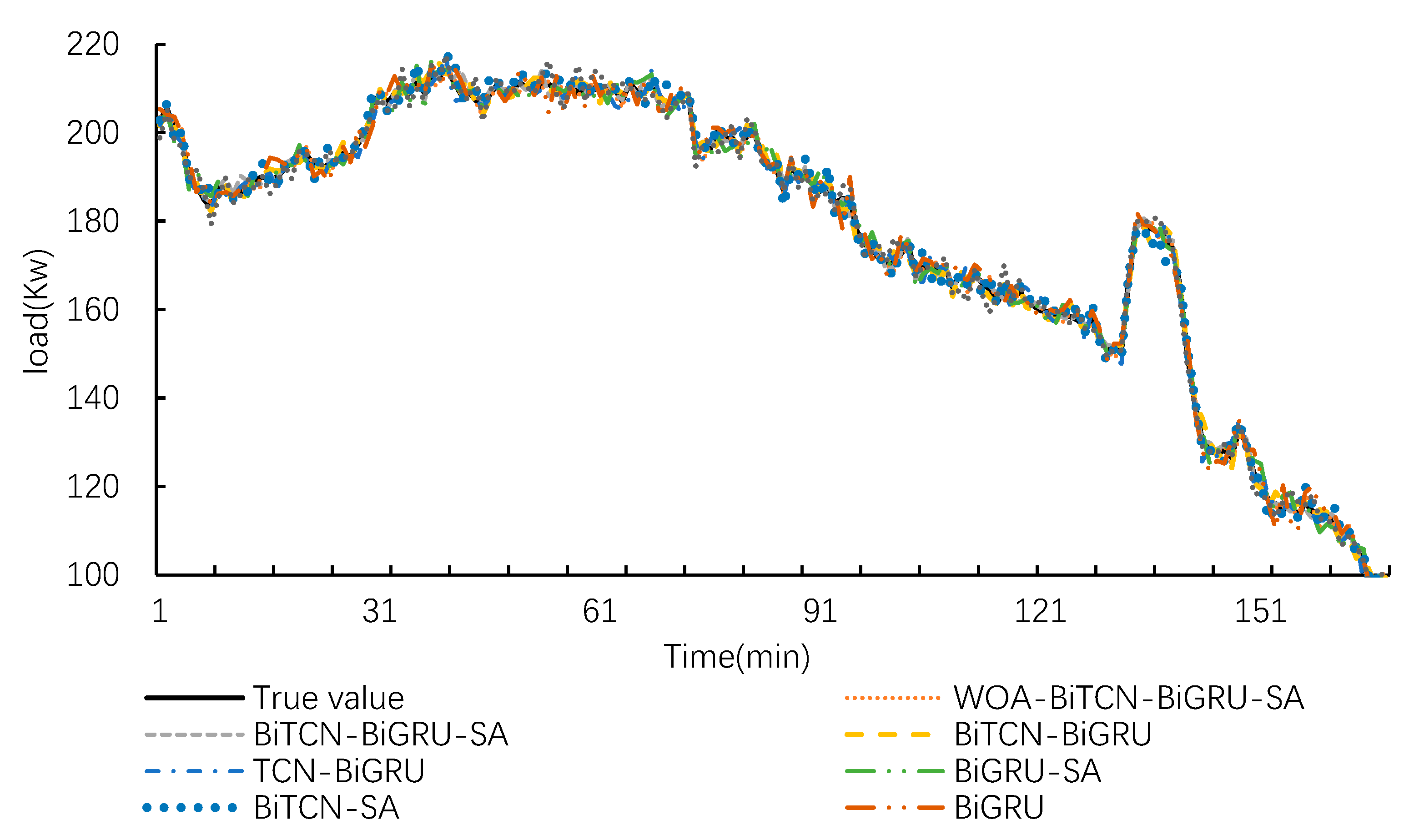
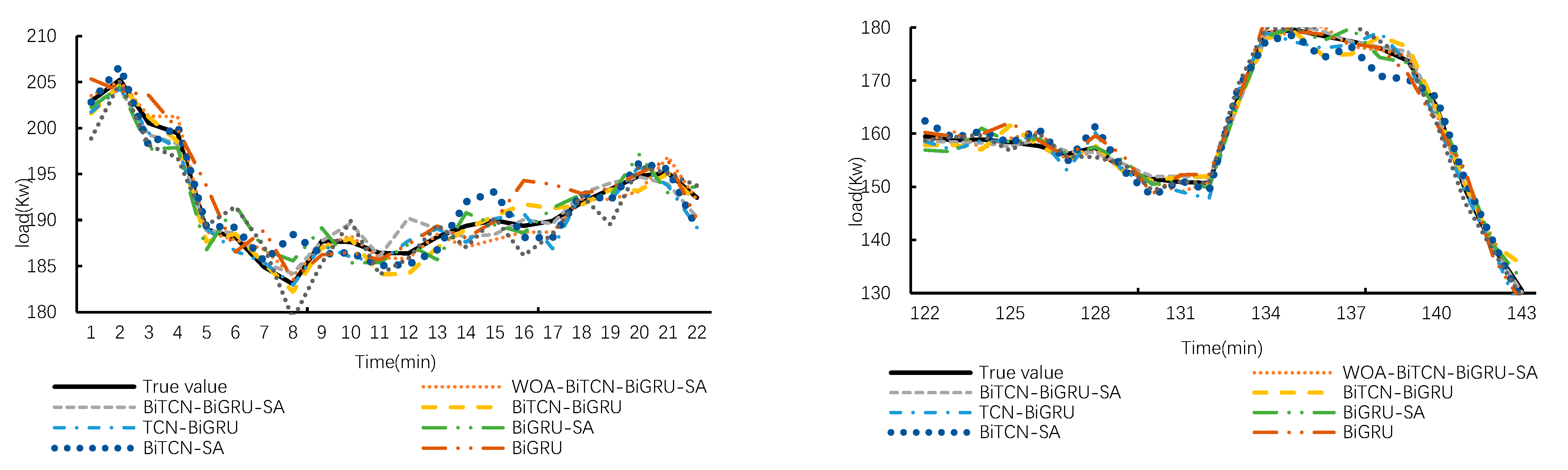
3.4. Comparative Experiment
3.5. Ablation Experiment
4. Conclusions
- The application of the Improved Whale Optimization Algorithm (IWOA) for hyperparameter optimization proved highly effective. The IWOA-optimized model achieved an RMSE of 7.8699 kW, which is 1.2513 kW lower than the same model without IWOA optimization. This demonstrates that IWOA can automatically identify the optimal hyperparameter combination, significantly enhancing the model’s prediction accuracy and stability compared to manual tuning.
- The hybrid BiTCN-BiGRU architecture demonstrated superior capability in extracting complex temporal features. Compared to the standard TCN-BiGRU model, the BiTCN-BiGRU model reduced the RMSE by 1.1647 kW. This confirms that the bidirectional structure of BiTCN can more effectively capture multi-scale temporal dependencies from both past and future contexts, leading to a more comprehensive feature representation than a unidirectional TCN.
- The introduction of the self-attention (SA) mechanism further improved the model’s performance. The BiTCN-BiGRU-SA model reduced the RMSE by 0.5352 kW compared to the BiTCN-BiGRU model. This indicates that the SA mechanism successfully enhances the model’s ability to adaptively focus on critical time steps and features, thereby improving the robustness and interpretability of the predictions.
- Comprehensive comparisons with benchmark models demonstrate the overall superiority of the proposed framework. The IWOA-BiTCN-BiGRU-SA model achieved reductions in RMSE of 8.5568 kW, 8.4728 kW, and 10.2872 kW compared to standalone LSTM, GRU, and SVM models, respectively. These results highlight the significant synergistic effect achieved by integrating the respective advantages of IWOA, BiTCN, BiGRU, and SA into a unified framework.
Author Contributions
Funding
Institutional Review Board Statement
Informed Consent Statement
Data Availability Statement
Conflicts of Interest
Abbreviations
| CAC | Accurate load forecasting of central air conditioning |
| IWOA | Improved Whale Optimization Algorithm |
| BiTCN | Bidirectional Temporal Convolutional Networks |
| BiGRU | Bidirectional Gated Recurrent Units |
| SA | Self-attention |
| RSME | Root mean square error |
| PCA | Principal component analysis |
| CEHT | Incorporating the cumulative effect of high temperature |
| PB-MLR | Physical-Based Multiple Linear Regression |
| SVM | Support Vector Machines |
| ANN | Artificial Neural Networks |
| GBDT | Gradient-Boosted Decision Tree |
| CNN | Convolutional Neural Networks |
| LSTM | Long Short-Term Memory |
| WTD | Wavelet Threshold Denoising |
| GNN | Graph Neural Networks |
| GA | Genetic Algorithm |
| PSO | Particle Swarm Optimization |
| GWO | Grey Wolf Optimization |
| SSA | Sparrow Search Algorithm |
| IVMD | Improved Variational Mode Decomposition |
| LSSVM | Least Squares Support Vector Machine |
| RS | Rough Set |
| DELM | Deep Extreme Learning Machine |
| TCNs | Temporal Convolutional Networks |
| MAE | Mean Absolute Error |
| RMSE | Root Mean Square Error |
| R2 | Coefficient of Determination |
References
- China will Formulate an Action Plan This Year to Achieve Peak Carbon Emissions Before 2030. Available online: https://www.gov.cn/zhengce/2021-03/06/content_5590830.htm (accessed on 28 September 2025).
- Cai, M.; Pipattanasomporn, M.; Rahman, S. Day-ahead building-level load forecasts using deep learning vs. traditional time-series techniques. Appl. Energy 2019, 236, 1078–1088. [Google Scholar] [CrossRef]
- Pallonetto, F.; Jin, C.; Mangina, E. Forecast electricity demand in commercial building with machine learning models to enable demand response programs. Energy AI 2022, 7, 100121. [Google Scholar] [CrossRef]
- Li, W.; Gong, G.; Ren, Z.; Ouyang, Q.; Peng, P.; Chun, L.; Fang, X. A method for energy consumption optimization of air conditioning n load prediction and energy flexibility. Energy 2022, 243, 123111. [Google Scholar] [CrossRef]
- Ma, X.; Chen, F.; Wang, Z.; Li, K.; Tian, C. Digital twin model for chiller fault diagnosis based on SSAE and transfer learning. Build. Environ. 2023, 243, 110718. [Google Scholar] [CrossRef]
- Qiao, Q.; Yunusa-Kaltungo, A.; Edwards, R.E. Towards developing a systematic knowledge trend for building energy consumption prediction. J. Build. Eng. 2021, 35, 101967. [Google Scholar] [CrossRef]
- Eid, E.; Foster, A.; Alvarez, G.; Ndoye, F.-T.; Leducq, D.; Evans, J. Modelling energy consumption in a Paris supermarket to reduce energy use and greenhouse gas emissions using EnergyPlus. Int. J. Refrig. 2024, 168, 1–8. [Google Scholar] [CrossRef]
- Yu, K.; Cao, Z.; Liu, Y. Research on the optimization control of the central air-conditioning system in university classroom buildings based on TRNSYS software. Procedia Eng. 2017, 205, 1564–1569. [Google Scholar] [CrossRef]
- Olu-Ajayi, R.; Alaka, H.; Sulaimon, I.; Sunmola, F.; Ajayi, S. Building energy consumption prediction for residential buildings using deep learning and other machine learning techniques. J. Build. Eng. 2022, 45, 103406. [Google Scholar] [CrossRef]
- Vats, U.; Roga, S.; Sinha, A.; Singh, A.K.; Dharua, S.S.; Shah, H. Design and Performance Analysis of Heating, Cooling and Air Quality in a Sustainable Building using eQUEST. In Proceedings of the 2022 1st International Conference on Sustainable Technology for Power and Energy Systems (STPES), New York, NY, USA, 4–6 July 2022; pp. 1–5. [Google Scholar]
- Qiang, G.; Zhe, T.; Yan, D.; Neng, Z. An improved office building cooling load prediction model based on multivariable linear regression. Energy Build. 2015, 107, 445–455. [Google Scholar] [CrossRef]
- Chen, S.; Zhou, X.; Zhou, G.; Fan, C.; Ding, P.; Chen, Q. An online physical-based multiple linear regression model for building’s hourly cooling load prediction. Energy Build. 2022, 254, 111574. [Google Scholar] [CrossRef]
- Dahl, M.; Brun, A.; Andresen, B.G. Using ensemble weather predictions in district heating operation and load forecasting. Appl. Energy 2017, 193, 455–465. [Google Scholar] [CrossRef]
- Fan, C.; Ding, Y. Cooling load prediction and optimal operation of HVAC systems using a multiple nonlinear regression model. Energy Build. 2019, 197, 7–17. [Google Scholar] [CrossRef]
- Yun, K.; Luck, R.; Mago, J.P.; Cho, H. Building hourly thermal load prediction using an indexed ARX model. Energy Build. 2012, 54, 225–233. [Google Scholar] [CrossRef]
- Li, Q.; Meng, Q.; Cai, J.; Yoshino, H.; Mochida, A. Applying support vector machine to predict hourly cooling load in the building. Appl. Energy 2008, 86, 2249–2256. [Google Scholar] [CrossRef]
- Deb, C.; Eang, S.L.; Yang, J.; Santamouris, M. Forecasting diurnal cooling energy load for institutional buildings using Artificial Neural Networks. Energy Build. 2016, 121, 284–297. [Google Scholar] [CrossRef]
- Yanxiao, F.; Qiuhua, D.; Xi, C.; Yakkali, S.S.; Wang, J. Space cooling energy usage prediction based on utility data for residential buildings using machine learning methods. Appl. Energy 2021, 291, 116814. [Google Scholar] [CrossRef]
- Zhang, W.; Yu, J.; Zhao, A.; Zhou, X. Predictive model of cooling load for ice storage airconditioning system by using GBDT. Energy Rep. 2021, 7, 1588–1597. [Google Scholar] [CrossRef]
- Zhao, R.; Wei, D.; Ran, Y.; Zhou, G.; Jia, Y.; Zhu, S.; He, Y. Building Cooling load prediction based on LightGBM. IFAC Pap. 2022, 55, 114–119. [Google Scholar] [CrossRef]
- Wang, Z.; Hong, T.; Piette, A.M. Building thermal load prediction through shallow machine learning and deep learning. Appl. Energy 2020, 263, 114683. [Google Scholar] [CrossRef]
- Wang, F.; Cen, J.; Yu, Z.; Deng, S.; Zhang, G. Research on a hybrid model for cooling load prediction based on wavelet threshold denoising and deep learning: A study in China. Energy Rep. 2022, 8, 10950–10962. [Google Scholar] [CrossRef]
- Zhao, A.; Zhang, Y.; Zhang, Y.; Yang, H.; Zhang, Y. Prediction of functional zones cooling load for shopping mall using dual attention based LSTM: A case study. Int. J. Refrig. 2022, 144, 211–221. [Google Scholar] [CrossRef]
- Zou, M.; Huang, W.; Jin, J.; Hu, B.; Liu, Z. Deep spatio-temporal feature fusion learning for multistep building cooling load forecasting. Energy Build. 2024, 322, 114735. [Google Scholar] [CrossRef]
- Zhou, M.; Yu, J.; Wang, M.; Quan, W.; Bian, C. Research on the combined forecasting model of cooling load based on IVMD-WOA-LSSVM. Energy Build. 2024, 317, 114339. [Google Scholar] [CrossRef]
- Lei, L.; Shao, S. Prediction model of the large commercial building cooling loads based on rough set and deep extreme learning machine. J. Build. Eng. 2023, 80, 107958. [Google Scholar] [CrossRef]
- Bai, S.; Kolter, J.Z.; Koltun, V. An empirical evaluation of generic convolutional and recurrent networks for sequence modeling. arXiv 2018, arXiv:1803.01271. [Google Scholar] [CrossRef]
- Xiao, Y.; Zou, C.; Chi, H.; Fang, R. Boosted GRU model for short-term forecasting of wind power with feature-weighted principal component analysis. Energy 2023, 267, 126503. [Google Scholar] [CrossRef]
- Yang, X.; Peng, S.; Zhang, Z.; Du, Y.; Linghu, L. Thermal error prediction in dry hobbing machine tools: A CNN-BiGRU network with spatiotemporal feature fusion. Measurement 2025, 256, 118389. [Google Scholar] [CrossRef]
- Chen, W.; Huang, H.; Ma, X. The short-term wind power prediction based on a multi-layer stacked model of BOsingle bondCNN-BiGRU-SA. Digit. Signal Process. 2025, 156, 104838. [Google Scholar] [CrossRef]
- Mirjalili, S.; Lewis, A. The Whale Optimization Algorithm. Adv. Eng. Softw. 2016, 95, 51–67. [Google Scholar] [CrossRef]
- The 5th TipDM Cup Data Analysis Professional Skills Competition. Available online: https://www.tipdm.org (accessed on 28 September 2025).
- Guo, Y.; Chen, M.; Wang, H.; Chu, P.; Sheng, Y.; Li, H. Hybrid forecasting model for central air conditioning load based on CEEMDAN and WTCN-GRU. Int. J. Refrig. 2025, 176, 373–385. [Google Scholar] [CrossRef]


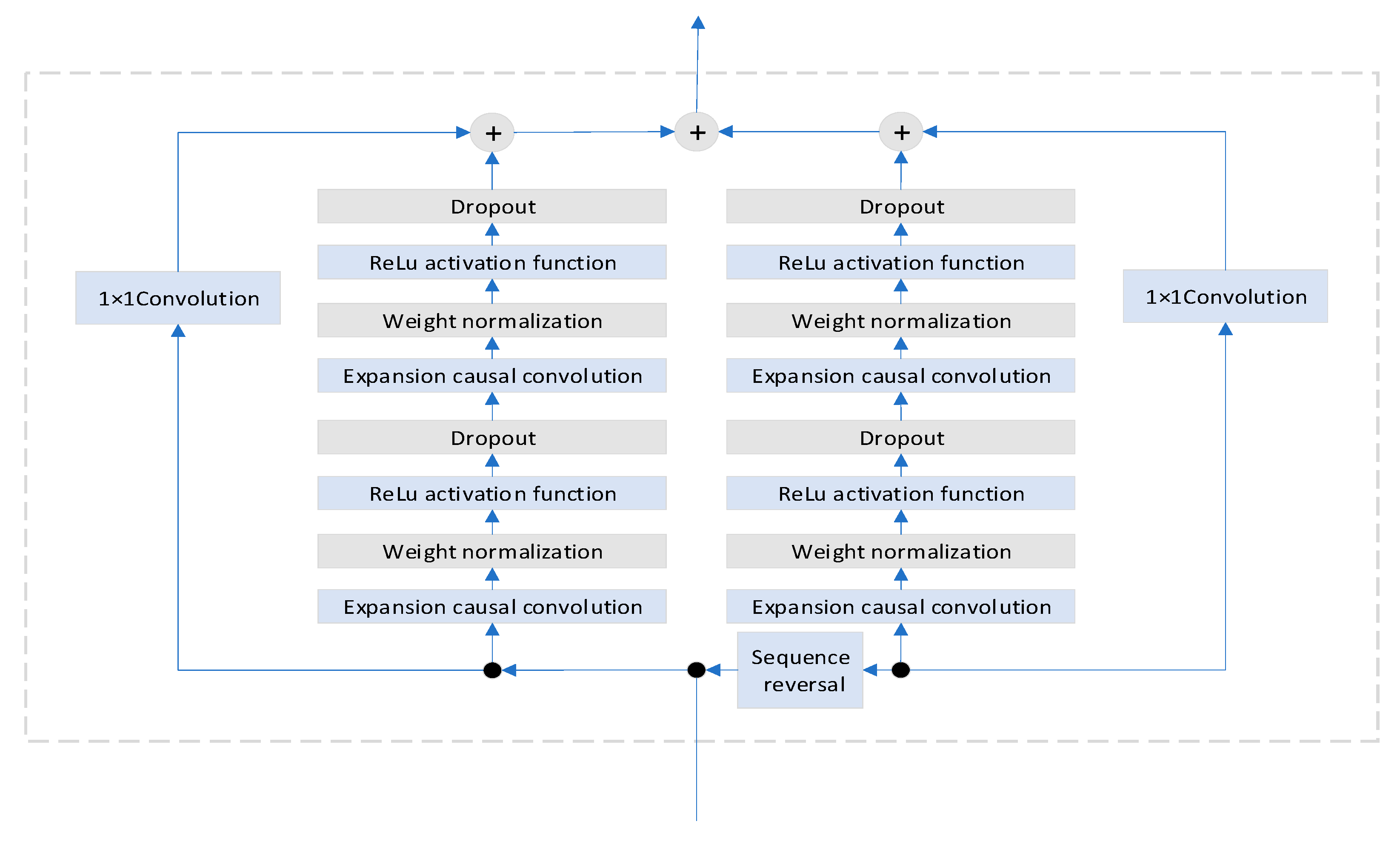


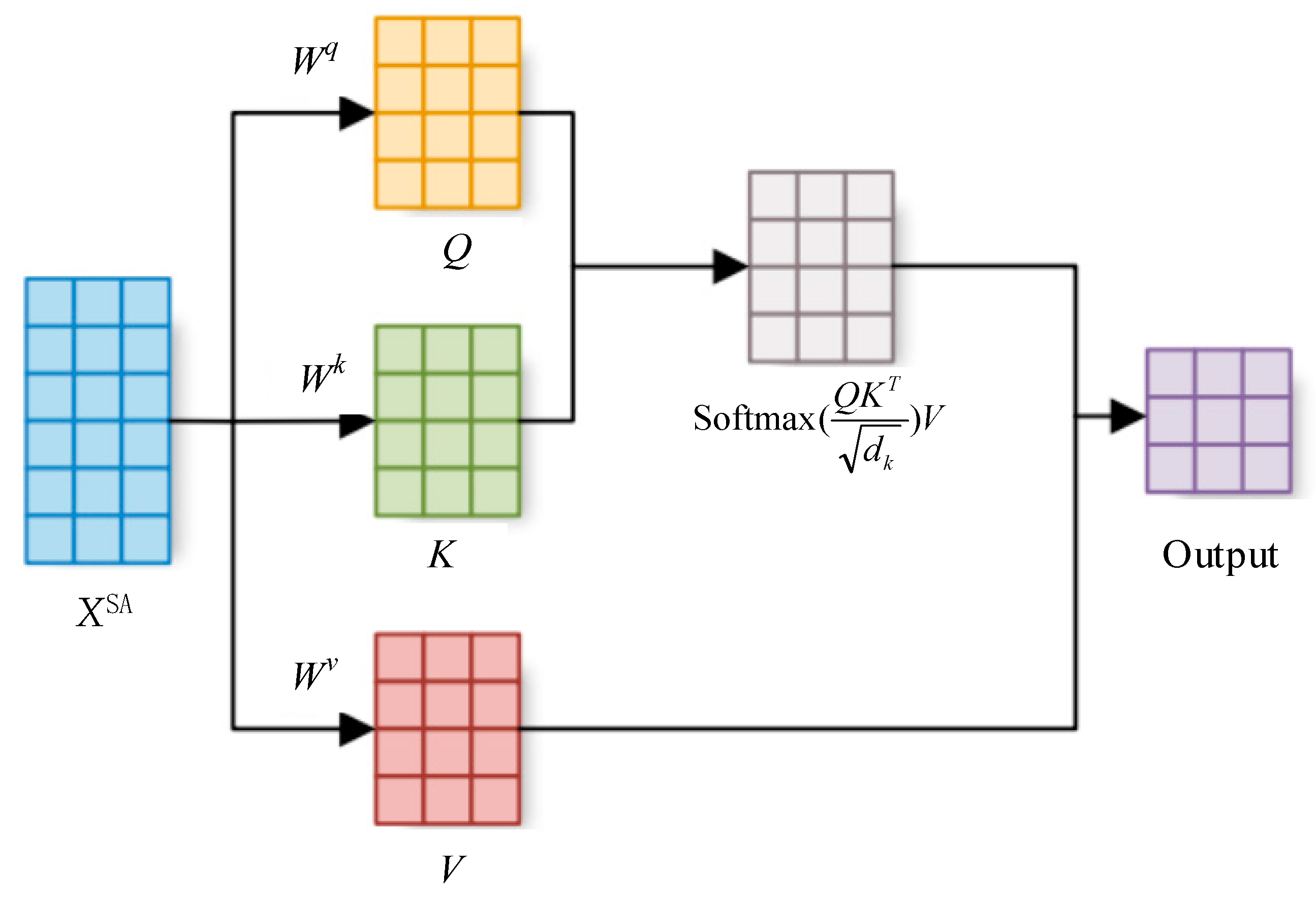

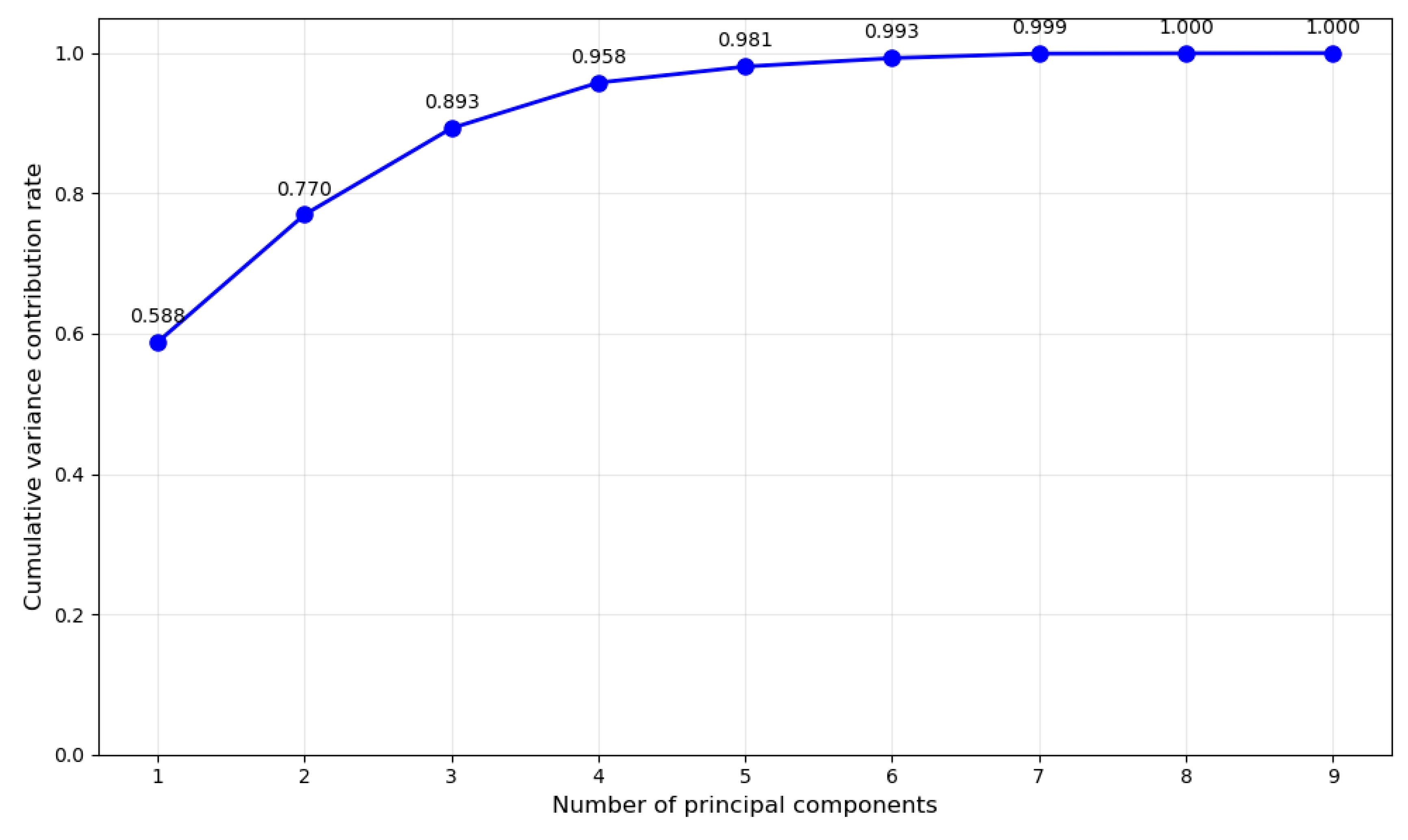



| Dataset Features and Labels | Abbreviation |
|---|---|
| Time (s) | Time Stamp |
| Outdoor Dry Bulb Temperature (°C) | drybuld |
| Outdoor Wet Bulb Temperature (°C) | wetbuld |
| Relative Humidity (%) | rh |
| Inlet Water Temperature to Cooling Device (°C) | chwrhdr |
| Outlet Water Temperature from Cooling Device (°C) | chwshdr |
| Inlet Water Temperature to Condensing Device (°C) | cwshdr |
| Outlet Water Temperature from Condensing Device (°C) | cwrhdr |
| Inlet and Outlet Water Flow Velocity of Cooling Device (gal/min) | chwsfhdr |
| Inlet and Outlet Water Flow Velocity of Condensing Device (gal/min) | cwsfhdr |
| System Cooling Load (KW) | loadays |
| Parameter | Value |
|---|---|
| Whale population size | 50 |
| Maximum Iterations for IWOA | 200 |
| Probability of a Cauchy mutation | 5% |
| Probability of Gaussian mutation | 5% |
| BiTCN convolution kernel size | (2, 10) |
| BiTCN output channel count | (10, 100) |
| BiGRU hidden unit count | (12, 80) |
| Feature dimension of the SA key vector | (10, 100) |
| Learning rate | (0.001, 0.1) |
| Models | MAE/kW | RMSE/kW | R2 |
|---|---|---|---|
| IWOA-BiTCN-BiGRU-SA | 3.9187 | 7.8699 | 0.9986 |
| LSTM | 8.9931 | 16.4267 | 0.9881 |
| GRU | 8.9954 | 16.3427 | 0.9891 |
| RNN | 9.0386 | 16.4892 | 0.9874 |
| CNN | 9.3518 | 16.4918 | 0.9869 |
| SVM | 9.8199 | 18.1571 | 0.9837 |
| Models | MAE/kW | RMSE/kW | R2 |
|---|---|---|---|
| IWOA-BiTCN-BiGRU-SA | 3.9187 | 7.8699 | 0.9986 |
| BiTCN-BiGRU-SA | 4.5849 | 9.1212 | 0.9967 |
| BiTCN-BiGRU | 4.8592 | 9.6564 | 0.9912 |
| TCN-BiGRU | 5.2902 | 10.8211 | 0.9889 |
| BiGRU-SA | 5.5646 | 11.0021 | 0.9879 |
| BiTCN-SA | 5.9956 | 11.9544 | 0.9864 |
| BiGRU | 6.3169 | 12.5761 | 0.9878 |
| BiTCN | 6.7872 | 13.8038 | 0.9833 |
Disclaimer/Publisher’s Note: The statements, opinions and data contained in all publications are solely those of the individual author(s) and contributor(s) and not of MDPI and/or the editor(s). MDPI and/or the editor(s) disclaim responsibility for any injury to people or property resulting from any ideas, methods, instructions or products referred to in the content. |
© 2025 by the authors. Licensee MDPI, Basel, Switzerland. This article is an open access article distributed under the terms and conditions of the Creative Commons Attribution (CC BY) license (https://creativecommons.org/licenses/by/4.0/).
Share and Cite
He, W.; Hua, R.; Xiao, Y.; Liu, Y.; Zhou, C.; Li, C. Intelligent Load Forecasting for Central Air Conditioning Using an Optimized Hybrid Deep Learning Framework. Energies 2025, 18, 5736. https://doi.org/10.3390/en18215736
He W, Hua R, Xiao Y, Liu Y, Zhou C, Li C. Intelligent Load Forecasting for Central Air Conditioning Using an Optimized Hybrid Deep Learning Framework. Energies. 2025; 18(21):5736. https://doi.org/10.3390/en18215736
Chicago/Turabian StyleHe, Wei, Rui Hua, Yulong Xiao, Yuce Liu, Chaohui Zhou, and Chaoshun Li. 2025. "Intelligent Load Forecasting for Central Air Conditioning Using an Optimized Hybrid Deep Learning Framework" Energies 18, no. 21: 5736. https://doi.org/10.3390/en18215736
APA StyleHe, W., Hua, R., Xiao, Y., Liu, Y., Zhou, C., & Li, C. (2025). Intelligent Load Forecasting for Central Air Conditioning Using an Optimized Hybrid Deep Learning Framework. Energies, 18(21), 5736. https://doi.org/10.3390/en18215736