1. Introduction
The growing need for sustainable energy solutions due to climate change has stressed the importance of efficient energy storage technologies. Energy storage is crucial to balance supply and demand, especially for the integration of fluctuating renewable energy sources such as solar and wind power. Many energy storage technologies have been developed to meet various time, space, and functional requirements. These technologies fall into three main categories: thermal, mechanical, and electrical energy storage systems. In renewable energy systems, the selection of an appropriate storage technology is primarily dictated by the required function and the timescale of operation. For short-term balancing, where a fast response and high round-trip efficiency (RTE) are critical (RTE is the ratio of the energy recovered from a storage system during discharge to the energy initially supplied during charging), electrochemical storage, such as batteries, is generally the most suitable option. When the objective is to manage fluctuations in thermal load in heating or cooling networks, thermal storage offers a more direct and efficient solution. In contrast, for medium- to long-duration storage, mechanical technologies, including pumped hydro and compressed air energy storage (CAES), become more attractive, due to their scalability and relatively low cost per unit of stored energy. Each category presents distinct advantages and limitations. Electrical storage provides rapid response and flexibility, but suffers from a limited lifetime, relatively high costs, and challenges in large-scale implementation. Thermal storage is highly efficient for end-use thermal applications and can be integrated with renewable heat sources. However, it is limited to applications where the demand can be met directly in thermal form and conversion back to electricity is inefficient. Mechanical storage systems, such as pumped hydro and compressed air energy storage, can deliver large capacities and long discharge durations at comparatively low cost but require specific geographical conditions and may demonstrate lower round-trip efficiencies than electrochemical storage. Given these various requirements and trade-offs, a deeper examination of the main categories of energy storage is essential to understand their operational principles and application potential. Thermal energy storage (TES), electrical energy storage (EES), and mechanical energy storage (MES) each provide unique approaches to addressing the variability in renewable systems, and their characteristics highlight both the opportunities and challenges associated with their utilization. The following sections present an overview of these three groups, outlining their fundamental mechanisms, advantages, and limitations, with particular emphasis on mechanical storage and, more specifically, compressed air energy storage.
TES technologies are important because they allow energy to be stored for later use, which improves operational flexibility. TES can be divided into three primary approaches: sensible heat storage, latent heat storage, and thermochemical heat storage. In sensible heat storage (SHS), energy is stored by increasing the temperature of a solid or liquid medium (such as water, rocks, or molten salt). SHS is the most common and straightforward TES method, valued for its simplicity and low cost. However, it often requires large volumes because of low energy densities, which is limited by the medium’s specific heat capacity [
1], and can experience significant heat loss over time, reducing overall efficiency. Latent heat storage (LHS) stores energy using phase-change materials (PCM). When a PCM melts or solidifies at its transition temperature, it absorbs or releases large amounts of latent heat at nearly constant temperature. This offers a fundamental advantage over SHS—a higher energy storage density and the ability to charge and discharge isothermally. LHS can provide thermal energy at a stable temperature and in a more compact form. However, its main disadvantages include the costs and the complexities of selecting materials and system integration [
1,
2]. Recent studies have therefore explored techniques to enhance the performance of PCM-based systems, such as the cascading of multiple PCMs with different transition temperatures, which broadens the effective operating range and improves overall thermal performance [
3]. In the final group, thermochemical storage (TCS) involves the storage of energy in chemical bonds through a reversible chemical reaction. During charging, heat drives an endothermic reaction (or desorption) and during discharge, the reverse exothermic reaction releases heat. TCS systems have the highest theoretical energy density and can store energy for long periods, with minimal losses. Additionally, the stored energy can be converted back to other forms—some systems generate gaseous fuels [
4,
5]. However, TCS presents significant challenges. It often involves complex reactors, expensive or risky chemicals, and complicated heat management. Although it shows promise in energy capacity, the processes involved and material stability can be difficult to manage [
6].
While thermal energy storage technologies are well suited for managing heating and cooling demands and offer diverse approaches, with varying energy densities and storage durations, they are by nature limited to applications where thermal energy can be directly utilized. In contrast, balancing electricity supply and demand requires technologies that can store and release energy in electrical form. This role is executed by electrical energy storage systems, which have become increasingly important with the increasing share of variable renewable energy sources. One of the key advantages of EES is its ability to buffer the intermittent nature of renewable energy sources, therefore providing a more stable electricity supply. By coordinating energy production with demand, EES can reduce issues related to supply and demand fluctuations, such as voltage variations and frequency spikes, which traditional power systems often struggle to manage [
7,
8]. Moreover, advancements in battery technologies, especially lithium-ion systems, are leading to decreased costs and improved efficiency, promoting wider adoption of EES systems in residential and commercial applications [
9,
10]. However, there are significant disadvantages associated with EES. The initial capital cost remains a significant obstacle to broad utilization, particularly for large-scale applications, where infrastructure costs can be extremely high. Additionally, while battery technologies are evolving rapidly, concerns about their environmental impacts, specifically regarding resource extraction and battery disposal or recycling, continue to be a critical issue [
8,
11]. The limited energy density and lifespan of some EES technologies also present challenges, particularly for applications requiring rapid discharging and extended durability [
10,
12]. Additionally, the economic practicality of energy storage projects can be negatively affected by regulatory frameworks and market structures that have not yet adapted to the benefits of these technologies [
10,
13,
14]. In conclusion, electrical energy storage systems offer both opportunities and challenges. They have the potential to transform energy utilization by providing essential services like reliability, resilience, and operational efficiency in an evolving energy sector. Ongoing research and development are vital for addressing existing limitations and enhancing the performance and viability of these systems [
7,
10,
11]. Although electrical energy storage provides a rapid response and is well suited for short- to medium-term applications, its limitations in terms of cost, lifetime, and scalability point to the need for supplementary solutions. For large-scale and long-duration storage, mechanical energy storage technologies have proven particularly valuable. Mechanical energy storage is an essential component of modern energy management systems, particularly as reliance on renewable energy sources increases. This category of energy storage primarily includes systems that store energy in a mechanical form, among which pumped hydroelectric storage (PHS) and compressed air energy storage are two of the most significant technologies. Pumped hydro storage utilizes gravitational potential energy by moving water to higher elevations during periods of low electricity demand and releasing it to generate electricity when demand rises [
15]. This method is characterized by its high efficiency, capacity, and established infrastructure, making it an established technology for grid-scale energy storage [
15,
16].
On the other hand, compressed air energy storage operates by compressing air into underground caverns or above-ground tanks during off-peak times and releasing it to generate power when demand spikes [
17]. CAES systems provide a viable complement to renewable sources such as wind and solar, which are inherently intermittent [
18]. These systems can address energy storage needs by stabilizing electricity supply and improving the reliability of the grid [
19]. One of the advantages of CAES is its potential for implementation in various geological settings, although its commercial use is often influenced by geological and economic factors [
20]. Both technologies exhibit unique benefits and challenges: pumped hydro systems require specific geographical considerations, while CAES is dependent on suitable geological formations for effective energy storage [
20,
21]. Ultimately, mechanical energy storage technologies such as PHS and CAES are fundamental to achieving a harmonized energy system that integrates renewable energy efficiently and sustainably. Among the mentioned technologies, CAES has attracted increasing attention as a versatile and scalable option. Unlike pumped hydro, whose deployment is limited by geographical constraints, CAES can be implemented in a broader range of settings and offers the additional possibility of integration with thermal energy storage. These characteristics position CAES as a promising solution for addressing the challenges of variable renewable generation, particularly when medium- to long-duration storage and system flexibility are required.
Existing CAES plants mainly use diabatic systems, which lose considerable energy due to heat loss during compression. This leads to round-trip efficiencies that typically lie between 40% and 70% [
22,
23]. Alternatives like adiabatic CAES (A-CAES) attempt to fix these inefficiencies by capturing and reusing the heat generated during compression. However, traditional CAES systems still face issues such as the dependence on geological formations for storage and the need for extensive infrastructure [
22]. On the utility scale, CAES has proven effective in two long-running projects: the 290 MW Huntorf plant in Germany and the 110 MW McIntosh plant in the USA [
24,
25]. These CAES plants use off-peak electricity to compress air and store it in caverns. When discharging, to increase the output, the compressed air is heated by burning natural gas before expansion.
The introduction of micro-CAES technology indicates a significant development in the CAES field. Micro-CAES involves CAES systems that operate in the tens or hundreds of kW power range, with storage capacities of tens to hundreds of kWh. This is suitable for a microgrid in a community, university, or large building [
26]. Instead of underground caverns, micro-CAES often uses high-pressure tanks or pipes for air storage. Interest in micro-CAES is growing as researchers and companies look for alternatives to electrochemical batteries for stationary storage [
26]. Micro-CAES offers several advantages: it uses readily available materials (air, steel tanks), has the potential for lower costs per kWh, provides long calendar and cycle life (with minimal degradation compared to batteries), and can deliver energy for long periods of time. In remote or off-grid settings, micro-CAES could store excess solar or wind energy during the day and supply it at night, improving reliability [
26]. Some prototype and pilot projects have been reported, such as a 50 kWh micro-CAES studied for a 19-home renewable microgrid in Portugal, along with other experimental setups that have explored near-isothermal compression to improve micro-CAES efficiency.
However, micro-CAES faces significant challenges, mainly in terms of efficiency. Although large CAES systems can handle multistage compression and expansion with heat recovery, a micro-CAES system is used on a smaller scale, leading to higher relative heat losses and fewer compression stages [
18,
27]. They often use simpler machinery (such as reciprocating or screw compressors and expanders, rather than turbomachinery). Hence, the round-trip efficiency for micro-CAES prototypes has remained relatively low.The round-trip energy efficiency is defined as the ratio between the electrical energy consumed by the compressor and the electrical energy delivered by the generation section to the grid. Studies frequently cite a low round-trip efficiency (40–60%) as a key barrier to the competitiveness of micro-CAES [
24,
28]. Recent studies have shown that a key factor in the efficiency of micro-CAES lies in numerical modeling and exergetic analysis. Tumminello [
29] conducted a thorough assessment using numerical methods to find the main exergy losses in micro-CAES systems. He established that addressing these losses is essential for improving efficiency. The findings of his group highlighted that improving thermal management and optimizing compression cycles are crucial. Jia [
30] also pointed out that choosing the right thermal sources and storage materials can significantly increase overall system efficiency. Barbour [
31] provided an overview of various projects and pointed out that the challenges in improving efficiency must be addressed to make micro-CAES a practical energy storage solution.
Among the reasons for the low efficiency of the micro-CAES technology mentioned in the literature, dead volume is cited [
18,
32,
33]. It can cause inefficiencies and lower round-trip efficiencies in energy storage applications. The existing literature suggests that dead volume can greatly reduce the performance of energy storage systems [
34,
35,
36]. Round trip efficiency, as a key measure for assessing energy storage system performance, can change significantly due to the interaction between energy storage parameters and dead volume [
37]. Chen [
38] performed a thermodynamic analysis, showing that reducing dead volume affects not only round-trip efficiency but also electricity storage and exergy efficiencies. Yang [
39] investigated how design choices that limit dead volume could lead to better energy efficiency compared to current systems. Despite this recognition, the specific effects of dead volume within micro-CAES systems remain insufficiently explored.
Given these challenges, this article intends to conduct a detailed sensitivity analysis of how dead volume in the piston affects the efficiency of micro-CAES systems. The originality of this study lies in combining dead volume effects with PWM-based control, providing new insights into efficiency optimization and operational stability that have not been previously reported in the literature. The novelty of the paper is the identification of optimal operating characteristics that balance efficiency, controllability, and stability, offering a practical guideline for the design and implementation of next-generation compressed air energy storage systems. The results provide valuable insights to improve our understanding of m-CAES technologies and their application in future energy systems.
2. Theoretical Background/Mathematical Model
The mathematical model was developed by the authors and thoroughly explained in [
40]. A simplified version, using a set of first-order differential equations to account for the balances of energy and mass, is described below.
The mass flow equations describe how the mass inside the chamber changes over time:
where the subscript denotes the direction of the mass flow into or out of the volume. The positive value indicates mass flow into the chamber, while the negative value indicates flow out.
The energy balance equation for a constant volume describes the temperature change due to air inflow or outflow and the associated heat transfer:
where
T is the temperature inside the chamber,
is the specific heat at constant volume,
is the internal specific enthalpy,
is the input enthalpy,
is the out enthalpy,
U is the heat transfer capacity of the chamber,
is the ambient temperature, and
is the external heat flux supplied to the cylinder.
The piston motion is governed by Newton’s second law:
where
is the mass of the moving part and
is the net force, consisting of a driving force
and a resistance force
.
In a system with variable volume, the energy balance includes the work done by or on the piston. The governing equation is as follows:
where
w is the linear velocity of the piston. The sign of
W indicates whether the work is performed by the system (negative) or on the system (positive).
These equations together describe the dynamic and thermodynamic behavior associated with air expansion in micro-CAES systems. They are essential for the precise modeling, simulation, and control of energy storage and recovery processes.
The piston was controlled using a pulse width modulation (PWM) control system that determined the duration of air injection during each expansion stroke from 1 to k. The PWM control function is defined as
where
and
are the piston positions when the inlet valve opens and closes, and
s is the piston stroke.
To clearly present the results, a coefficient correlated with the piston stroke length was introduced: the Dead Volume Coefficient (DVC). This parameter quantified the ratio of dead volume to piston volume and allows a normalized comparison of the performance of the expander. The dead volume
is calculated using the following equation:
where
denotes the piston volume.
The round trip efficiency (RTE) can be described as
where
is the energy stored in compressed air and
is the electrical energy generated.
3. Results
The results are presented in the following sections, beginning with a description of the simulation and experimental setup, along with model validation. The next section provides computational results for various PWM control configurations and different values of the DVC. This is followed by a sensitivity analysis of the PWM control strategy in relation to the magnitude of the DVC.
3.1. Computational Setup
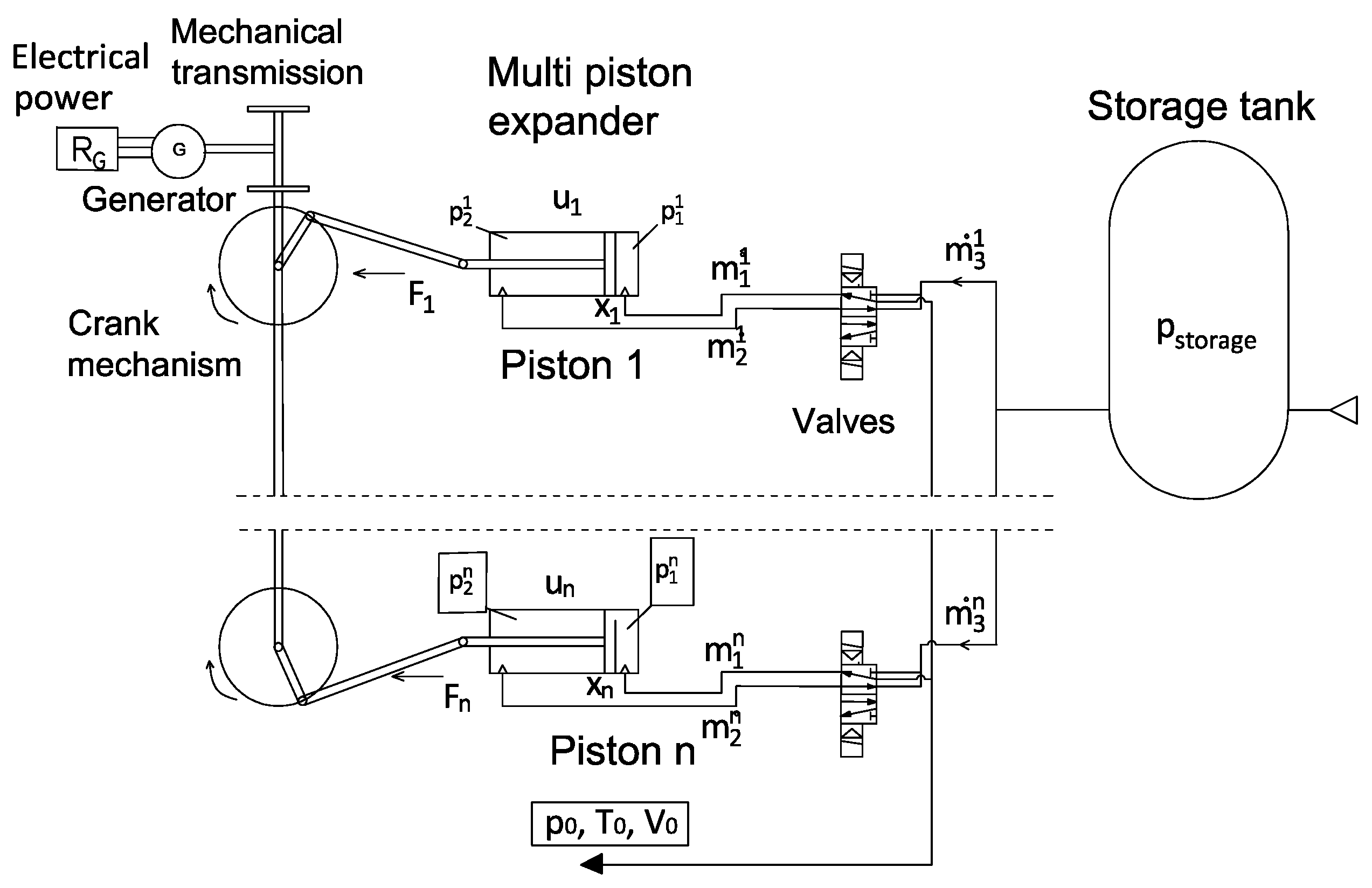
The topology of the m-CAES system with a multi-piston expander is illustrated in
Figure 1. Compressed air is stored in a steel tank at a pressure denoted
. The air supply to the expander is controlled by electrically actuated valves. The linear motion of the piston is converted into the rotary motion of the shaft via a crank mechanism. A mechanical transmission connects the shaft to an electric generator that produces electrical energy.
The input parameters used for the computer simulations are presented in
Table 1.
3.2. Experimental Setup and Validation
A comprehensive validation of the mathematical model was presented in [
40]. The following
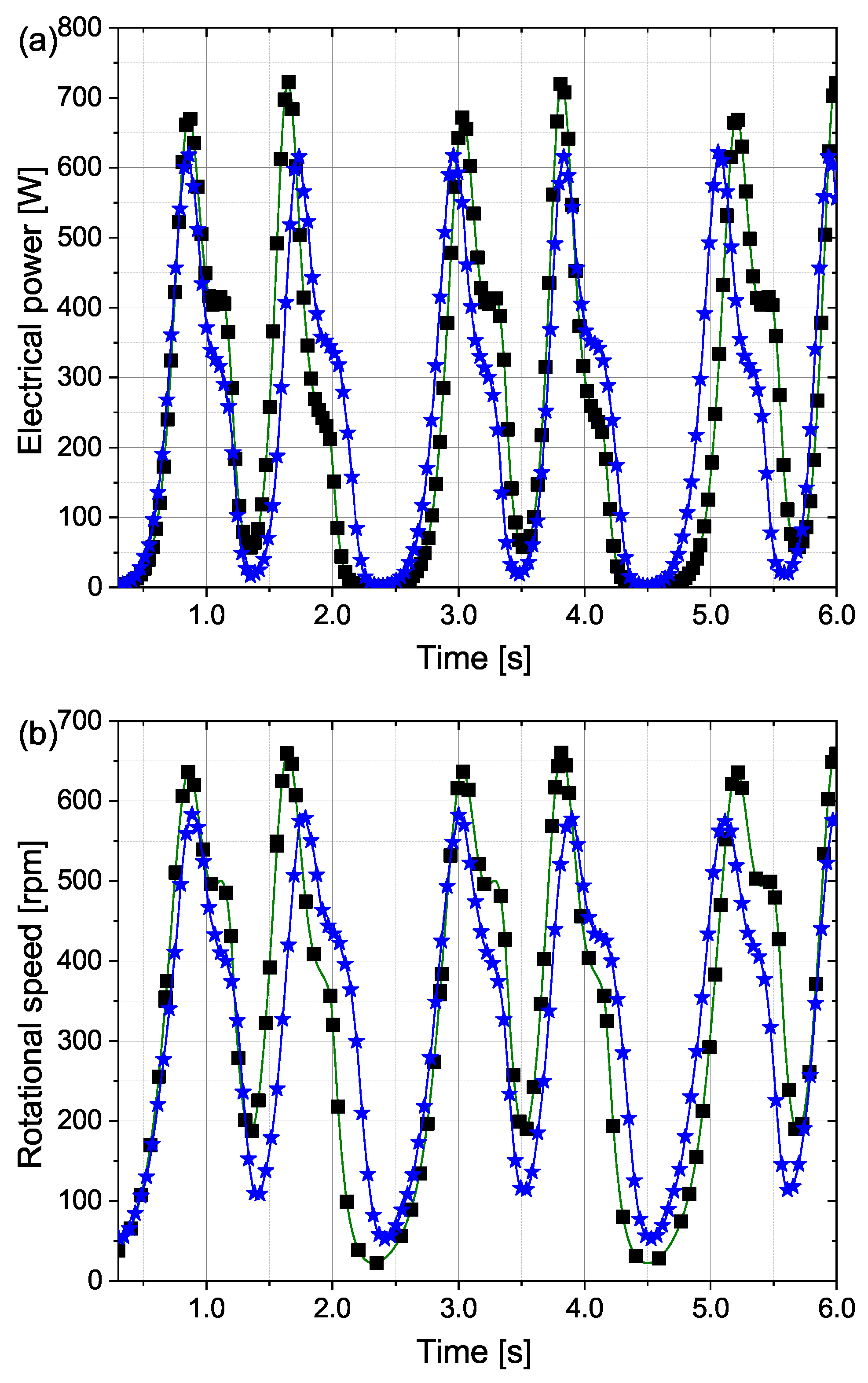
Figure 2 shows a comparative analysis between the experimental data obtained from an air expander with a diameter of 0.2 m and a stroke of 0.2 m, operating at a gauge pressure of 1 bar, and the corresponding results derived from numerical simulations.
The average power obtained from the experimental results within the analyzed interval is , while the average power from the simulation results is , which yields a deviation of . This level of error confirmed the accuracy of the developed model and the reliability of the simulation outcomes. Subsequently, the model was extended to a multi-piston expander installation.
3.3. Sensitivity Analysis
In order to investigate the impact of dead volume on the performance of a piston expander, a numerical simulation was carried out for a three-piston expander powered by compressed air at a gauge pressure of 3 bar.
The following
Figure 3,
Figure 4 and
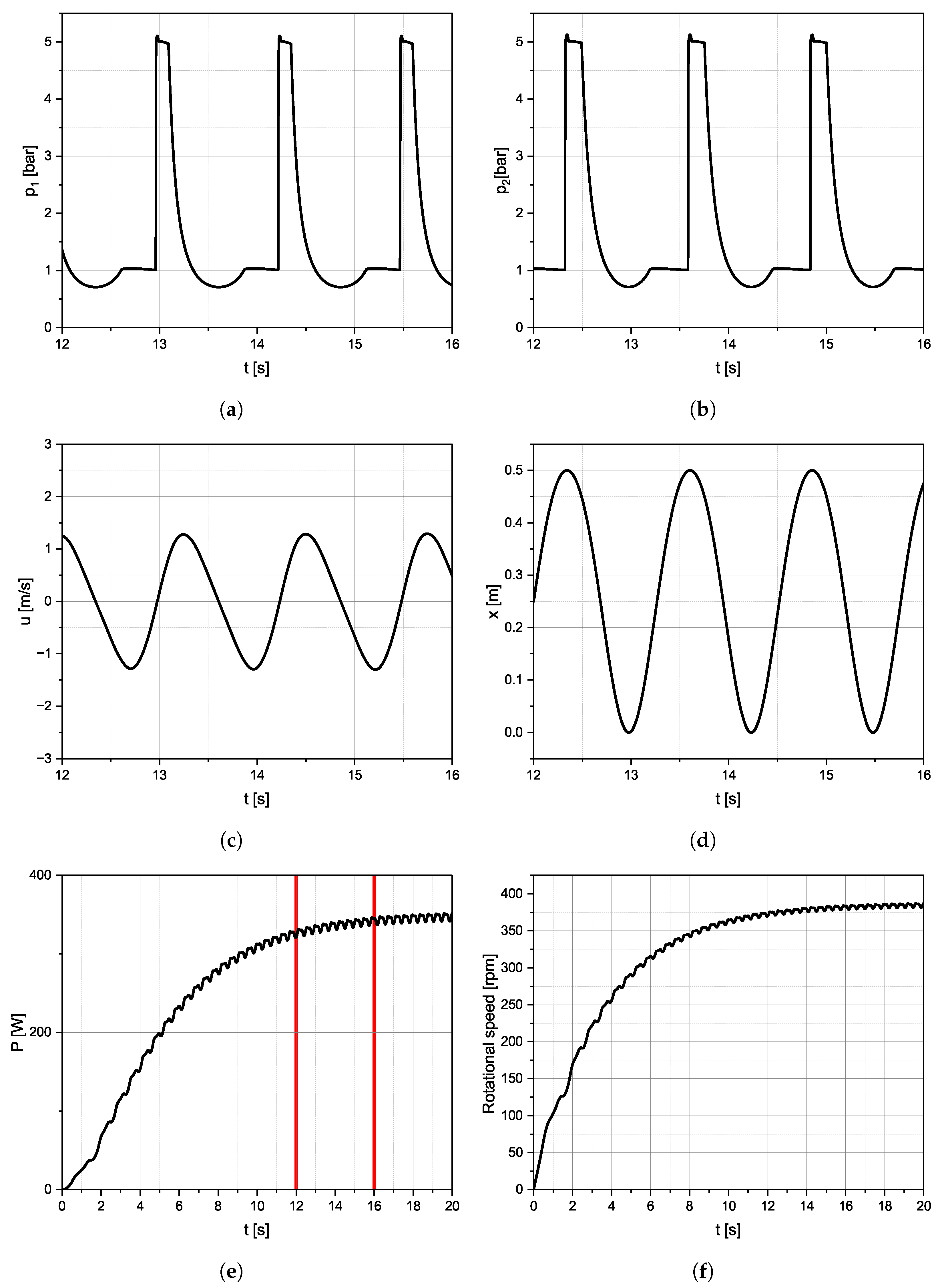
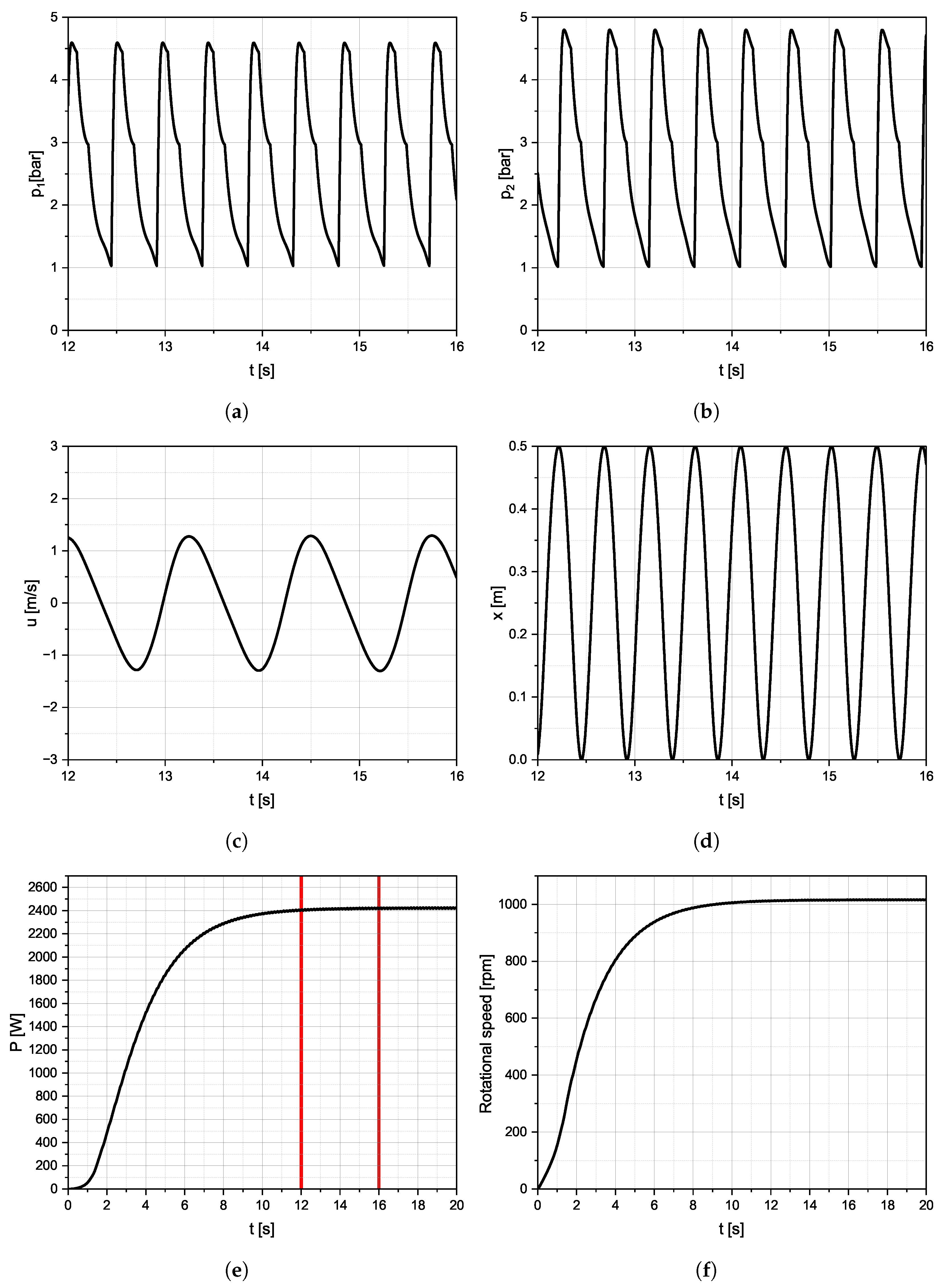
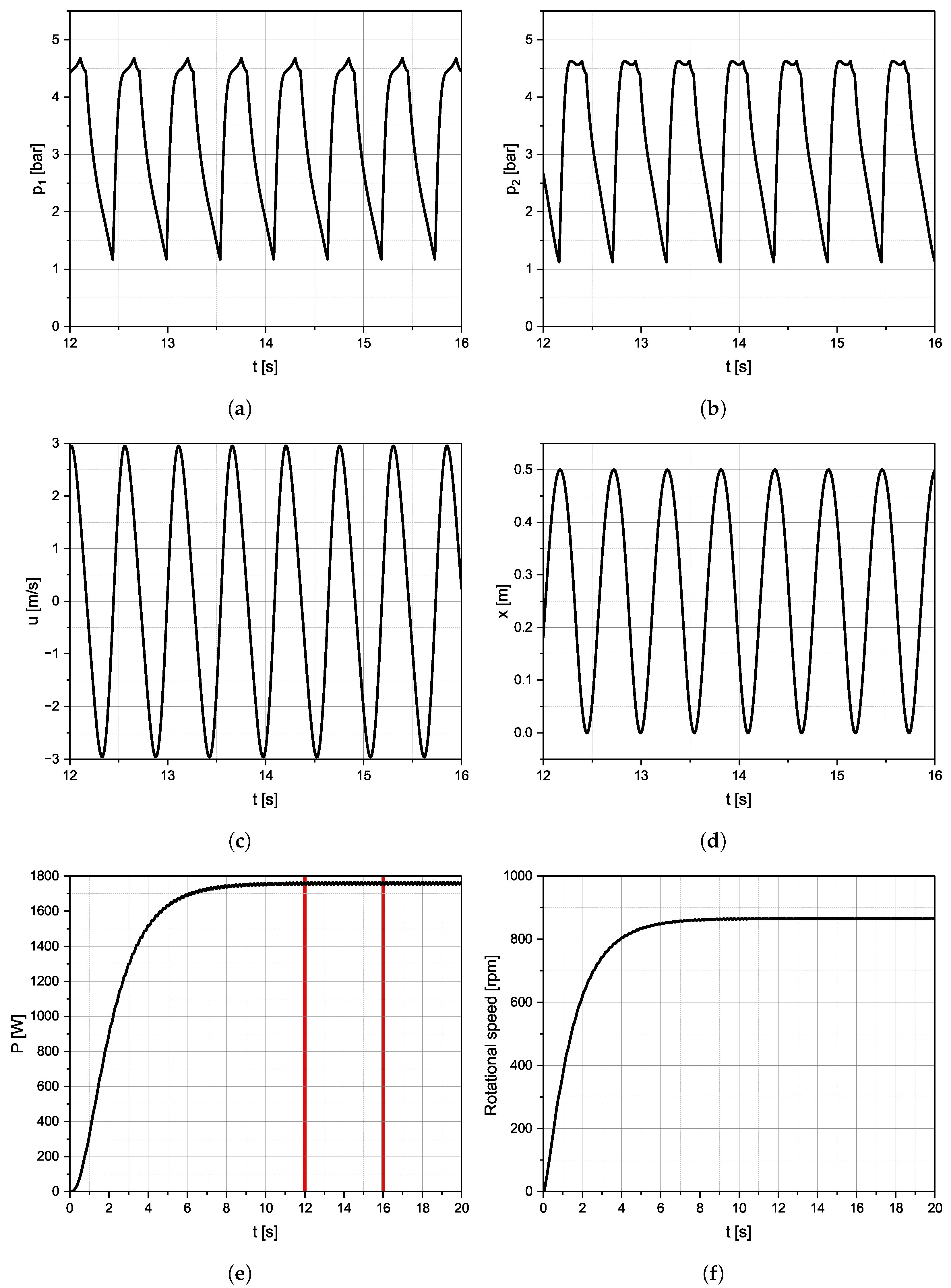
Figure 5 present the time-dependent profiles of key operating parameters for the piston expander, including the piston displacement, pressure in the expansion and compression chambers, piston velocity and instantaneous electrical power output. The red lines on the electrical power chart represent the period of stable expander work, the range of which is shown in the other figures. These results are shown for three cases of DVC:
: representing a configuration with minimal dead volume and PWM = 0.1,
: representing a configuration where the dead volume equaled half the piston stroke and PWM 0.5.
: representing a extreme configuration where the dead volume equaled the full piston stroke and PWM 0.9.
Figure 3.
Simulation results for the piston expander system at DVC=0.05 and PWM = 0.1: (a) pressure in the retract chamber, (b) pressure in the extract chamber, (c) piston linear velocity, (d) piston displacement, (e) generated electrical power, (f) rotational speed of the shaft.
Figure 3.
Simulation results for the piston expander system at DVC=0.05 and PWM = 0.1: (a) pressure in the retract chamber, (b) pressure in the extract chamber, (c) piston linear velocity, (d) piston displacement, (e) generated electrical power, (f) rotational speed of the shaft.
Figure 4.
Simulation results for the piston expander system at DVC 0.5 and PWM = 0.5: (a) pressure in the retract chamber, (b) pressure in the extract chamber, (c) piston linear velocity, (d) piston displacement, (e) generated electrical power, (f) rotational speed of the shaft.
Figure 4.
Simulation results for the piston expander system at DVC 0.5 and PWM = 0.5: (a) pressure in the retract chamber, (b) pressure in the extract chamber, (c) piston linear velocity, (d) piston displacement, (e) generated electrical power, (f) rotational speed of the shaft.
Figure 5.
Simulation results for the piston expander system at DVC 1 and PWM = 0.9: (a) pressure in the retract chamber, (b) pressure in the extract chamber, (c) piston linear velocity, (d) piston displacement, (e) generated electrical power, (f) rotational speed of the shaft.
Figure 5.
Simulation results for the piston expander system at DVC 1 and PWM = 0.9: (a) pressure in the retract chamber, (b) pressure in the extract chamber, (c) piston linear velocity, (d) piston displacement, (e) generated electrical power, (f) rotational speed of the shaft.
Applying a PWM of 0.1 at such a low supply pressure value allowed the expander to fully utilize the energy of air expansion. However, it can be observed that the pistons, by driving each other, also created a suction effect in the cylinder, which is visible in the pressure plot as a vacuum condition. The piston moved the full length of the stroke, reaching a maximum linear velocity of 1.2 m/s. The generated electrical power stabilized after approximately 10 s of expander operation at a level of 320 W, with a rotational speed of 380 rpm.
The application of a PWM value of 0.5 with a corresponding DVC = 0.5 enabled the utilization of air expansion energy. Three distinct operational phases are observed in the actuator chamber:
In the first phase, the chamber is supplied with compressed air. The piston remains stationary, while the pressure inside the chamber increases.
In the second phase, the piston begins to move, leading to a drop in pressure within the chamber.
In the third phase, the piston continues its motion after the air supply is cut off, and the remaining air undergoes expansion within the chamber.
Subsequently, the opposite chamber is supplied, while the previously expanded air is discharged into the atmosphere. As shown in the pressure plot, during the third phase, the air only expanded to a pressure of 2.48 bar, indicating incomplete utilization of the air expansion potential. This led to a relatively low overall system efficiency of 0.42.
The piston achieved a maximum linear velocity of 1.2 m/s. The generated electrical power stabilized after approximately 12 s of expander operation at a steady level of 2400 W, with a corresponding rotational speed of 1020 rpm.
At a high DVC value and with the PWM set to 0.9, the air did not have enough time to expand within the actuator chamber, resulting in incomplete utilization of the expansion energy. This led to a low overall efficiency of 0.36. As shown in the pressure plot, the piston traveled the entire stroke length, reaching a maximum linear velocity of 3.1 m/s. The generated electrical power stabilized after approximately 10 s of expander operation at a level of 1740 W, with a rotational speed of 870 rpm.
In order to obtain the operating characteristics of the expander as a function of PWM and DVC, a series of numerical simulations were carried out. Simulations were performed for DVC values ranging from 0.05 to 1.00, and for each case the expansion operation was analyzed under four different PWM control strategies. This approach allowed a comprehensive assessment of how the varying ratios of dead volumes and air admission durations affected performance metrics such as expansion work, efficiency, and pressure profiles.
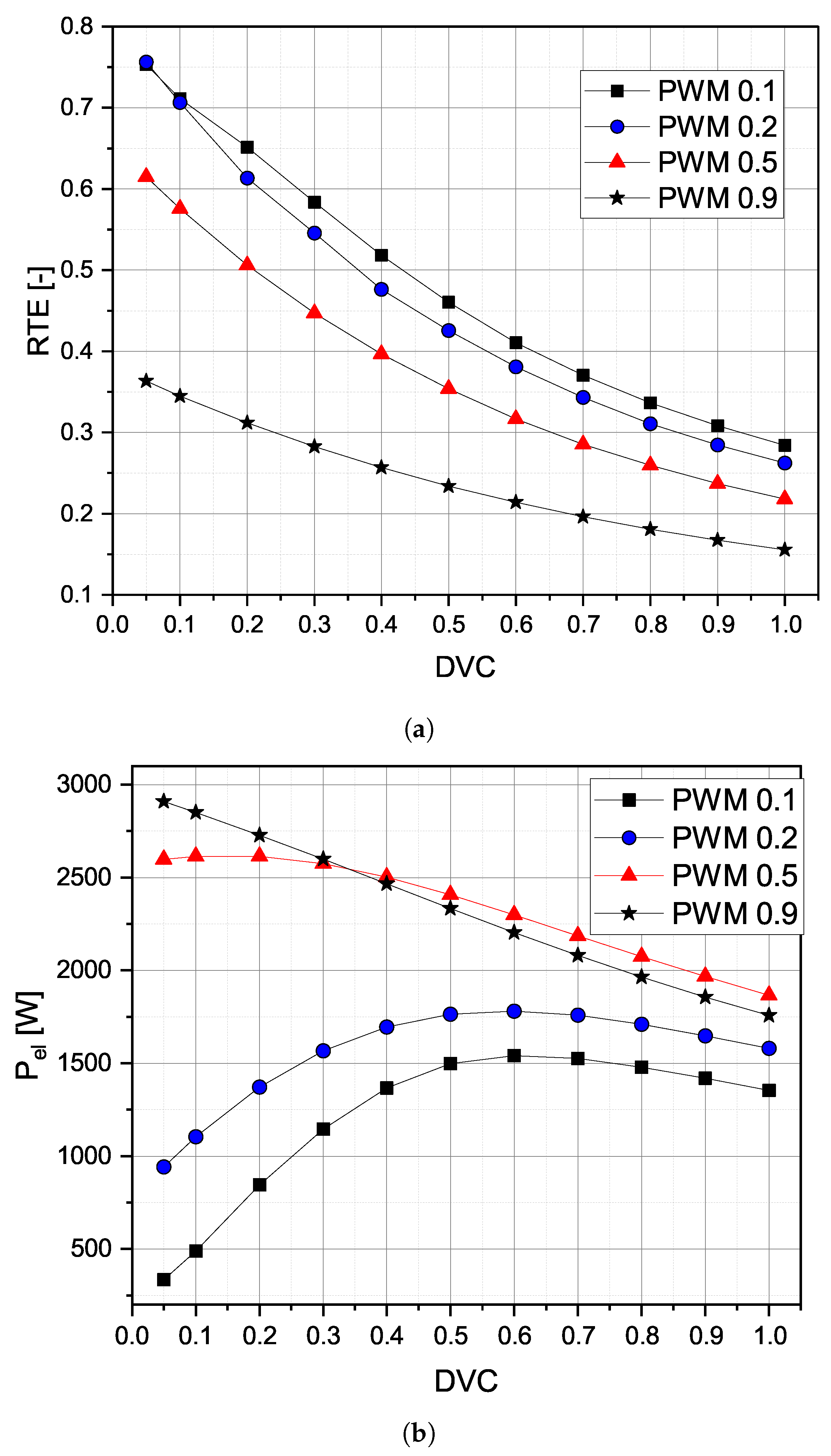
Figure 6a,b illustrate the effect of the DVC on RTE and electrical output power (
) for four different PWM values: 0.1, 0.2, 0.5, and 0.9. Increasing DVC resulted in a decrease in efficiency. This occurred because the amount of air consumed during the expander operating cycle increased. For low PWM values, increasing the amount of air—i.e., the dead volume—led to a rise in power output, which reached a peak and then began to decline. In contrast, for PWM = 0.9, the power output decreased as the DVC increased.
As shown in
Figure 6a, RTE decreased with increasing DVC for all PWM settings. The highest efficiency was achieved for PWM = 0.2, starting at approximately 0.76 for DVC = 0.05 and decreasing to 0.26 at DVC = 1.0. The curve for PWM = 0.1 follows a similar trend with slightly lower values (from 0.75 to 0.28). PWM = 0.5 yielded RTE values ranging from 0.62 to 0.22, while PWM = 0.9 resulted in the lowest efficiency, declining from 0.37 to 0.12. These results indicate that higher dead volumes and higher PWM values significantly reduced system efficiency.
Figure 6b presents the variation in electrical power output with DVC. The highest power output was observed for PWM = 0.9, reaching 2950 W at DVC = 0.05 and gradually decreasing to 1850 W at DVC = 1.0. PWM = 0.5 also ensured high and relatively stable power values between 2600 W and 1750 W. In contrast, PWM = 0.2 exhibited a clear peak of approximately 1780 W at DVC = 0.4, after which the output dropped. Similarly, PWM = 0.1 reached a maximum of about 1550 W at DVC = 0.6 and then declined with increasing DVC.
The results confirm a trade-off between electrical power output and round-trip efficiency. Although higher PWM values generated greater instantaneous power, they led to considerably lower efficiency. The optimal balance was achieved for PWM = 0.2 and DVC values in the range of 0.05 to 0.4. This comparison highlights the significant impact of dead volume on the dynamic behavior of the system. In particular, it allows an assessment of how the piston motion and chamber pressures evolved under varying geometric constraints and how these factors influenced the overall power generation capabilities of the expander. These findings emphasize the importance of proper parameter selection, depending on whether the system prioritizes energy efficiency or peak power output. This analysis is essential for identifying optimal DVC values that balance mechanical feasibility with energy conversion efficiency.
4. Discussion
The simulations conducted demonstrated a significant influence of the DVC and PWM control strategy on the operating characteristics of the piston expander system. For low DVC values () combined with short air supply durations (), the expander effectively utilized the energy of compressed air expansion. This resulted in complete piston stroke utilization, moderate maximum linear velocities, and relatively stable electrical power output. However, an excessively short air supply time in the actuator chamber and mutual actuation of pistons generated suction effects within the chambers, which are observable as negative pressure in the recorded plots. This phenomenon adversely affected the actuator operation by decelerating its movement and decreasing overall efficiency.
Our findings indicate that, depending on the clearance volume (DVC) and the applied PWM control strategy, the overall system efficiency ranged between 0.12 and 0.76. As noted by [
41], achieving an overall efficiency higher than 50% is acceptable from the perspective of commercial deployment. These results are consistent with, but extend beyond, previously reported values in the literature, where efficiencies of 0.3 to 0.63 have been achieved for systems employing isochoric storage tanks [
42,
43,
44,
45,
46], and 0.5–0.72 for more advanced isobaric technologies [
47,
48,
49,
50,
51].
Both the DVC and the PWM showed a direct influence on the overall performance of the micro-CAES system. The development of effective PWM-based control strategies therefore requires a detailed understanding of how geometric parameters, particularly DVC, affect the thermodynamic behavior of the expander and, in turn, the efficiency and stability of the entire installation. An increase in the dead volume tends to increase the power output, as a larger mass of compressed air participates in the cycle, and its transmission energy is effectively converted into mechanical work. However, this is accompanied by a reduction in efficiency, because the available potential energy of air cannot be fully exploited. The associated energy losses become evident in the form of compressed air expelled into the surroundings at a pressure higher than 1 bar absolute, indicating incomplete energy utilization. From a thermodynamic perspective, the most desirable operating scenario is one in which the air expands fully to ambient pressure within the cylinder volume, thus maximizing energy utilization.
To achieve optimal actuator performance, it is essential to adapt the control strategy to the magnitude of the dead volume. The best performance is obtained when the air expands fully within the actuator chamber as the piston performs a full stroke. In contrast, high DVC values (e.g., ) combined with high PWM settings () significantly reduce system efficiency. In such scenarios, the compressed air does not have enough time to expand fully, leading to incomplete energy conversion and excessive air consumption. Although higher piston velocities and power outputs were observed, the overall energy efficiency was substantially diminished and reached the value of 0.12.
In commercial pneumatic actuators, the DVC typically amounts to around 0.05. However, when continuous and precise measurements during operation are required, such as pressure and temperature monitoring, the clearance volume can increase significantly. This is mainly due to the need for extended cylinder covers or additional fittings to accommodate the measurement ports, which considerably enlarges the dead volume.
5. Conclusions
This study presented the results of computer simulations and an analysis of the operation of a micro-CAES storage system. The developed model was validated against the experimental results obtained from a single cylinder air expander prototype, demonstrating credibility, with a deviation of only 6%
A sensitivity analysis revealed that the application of PWM significantly affected expander efficiency. The highest efficiency of 0.76 was achieved for a low dead volume configuration, with and a PWM value of 0.2. Supplied by compressed air at gauge pressure of 3 bar, the expander delivered a generated power output of 970 W. Reducing the PWM value under low dead volume conditions (e.g., ) introduced suction effects that hindered piston motion and lower efficiency. In contrast, increasing the PWM to 0.5 resulted in a disproportionately high increase in power output due to higher air mass flow, thus reducing the overall efficiency. This indicates that the optimization and tuning of the control strategy are essential for the effective operation of a micro-CAES system.
Additionally, the results indicated that distinct performance peaks can be observed for different configurations. Specifically, at PWM = 0.2, the expander achieved a maximum output of approximately 1780 W at DVC = 0.4, after which the power output decreased. Similarly, for PWM = 0.1, the maximum output of 1550 W occurred at DVC = 0.6, followed by a decline as DVC increased further.
PWM control also enables modulation of power output across a range of levels, depending on the desired performance, without altering the geometry of the installation. Transitioning across PWM characteristics allows for regulated power generation. For a given DVC value, adjusting the PWM setting allows the output power to be varied from approximately 300 W up to 2950 W. These findings highlight the necessity of optimizing both the DVC and the PWM parameters when designing or controlling pneumatic expanders for energy recovery applications. Reducing dead volume and appropriately timing the air admission phase are essential to improve the performance and efficiency of the system.
Practical implementation of PWM-based control strategies in piston expanders involves both mechanical and control challenges. High-speed and durable electro-valves are required to ensure reliable operation under frequent switching, while precise control algorithms and accurate measurement systems are necessary to maintain stable pressure and flow conditions. These aspects will be further investigated in our ongoing experimental work, aiming to demonstrate the feasibility of PWM-based control in real applications.
In this study, an isothermal process was assumed during expansion strokes. Since the system operates with compressed air at relatively low pressures, this assumption was considered reasonable to capture the main characteristics of the performance. This simplification has been identified as a limitation of the present work. Future research will focus on extending the model to incorporate heat transfer and full energy balance equations, allowing a more detailed analysis of the temperature trends during compression and expansion, as well as a deeper evaluation of system sensitivity to thermal effects.
This study was limited to numerical simulations under fixed geometric and operating conditions. The analysis focused on the effects of dead volume and PWM control, without considering heat losses, dynamic nonlinearities, or variable system geometry. Future research should include a detailed investigation of the geometric parameters of the system, such as chamber volume, piston stroke, and input ports dimensions, as well as the implementation of intermittent control strategies. Exploring their combined impact on expander performance could lead to more efficient and adaptable micro-CAES designs.