You are currently viewing a new version of our website. To view the old version click .
Energies
  • Article
  • Open Access

14 July 2025

Technical and Economic Feasibility Analysis to Implement a Solid-State Transformer in Local Distribution Systems in Colombia

,
and
1
Grupo de Investigación en Alta Tensión-GRALTA, Escuela de ingeniería Eléctrica y Electrónica, Universidad del Valle, Cali 760015, Colombia
2
Center for Research on Microgrids (CROM), AAU Energy, Aalborg University, 9220 Aalborg, Denmark
*
Author to whom correspondence should be addressed.
This article belongs to the Special Issue Utilization of Power Quality Analysis in Power Systems and Power Distribution Systems

Abstract

Today’s power grids are being modernized with the integration of new technologies, making them increasingly efficient, secure, and flexible. One of these technologies, which is beginning to make great contributions to distribution systems, is solid-state transformers (SSTs), motivating the present technical and economic study of local level 2 distribution systems in Colombia. Taking into account Resolution 015 of 2018 issued by the Energy and Gas Regulatory Commission (CREG), which establishes the economic and quality parameters for the remuneration of electricity operators, the possibility of using these new technologies in electricity networks, particularly distribution networks, was studied. The methodology for developing this study consisted of creating a reference framework describing the topologies implemented in local distribution systems (LDSs), followed by a technical and economic evaluation based on demand management and asset remuneration through special construction units, providing alternatives for the digitization and modernization of the Colombian electricity market. The research revealed the advantages of SST technologies, such as reactive power compensation, surge protection, bidirectional flow, voltage drops, harmonic mitigation, voltage regulation, size reduction, and decreased short-circuit currents. These benefits can be leveraged by distribution network operators to properly manage these types of technologies, allowing them to be better prepared for the transition to smart grids.

1. Introduction

This prefeasibility study sought to determine the feasibility of incorporating new technologies based on high-power converters such as the solid-state transformer in local distribution systems. A reference framework was carried out to establish the topologies associated with applications in distribution systems, followed by a market evaluation that addressed the trend in development projects on solid-state transformers. Subsequently, a technical economic study was elaborated based on real demand behaviors in a Colombian distribution system and an economic outlook based on the current Colombian regulation.
The need to provide an electric service with better quality conditions follows a path that involves the integration of new technologies that point to a digital transformation in the development of renewable energy capacities and the optimization of asset management in addition to improving operational processes. Therefore, it is necessary for local distribution systems to move towards a panorama of innovation and structuring of evaluative models that assess new technologies in a quantitative and qualitative way in order to make appropriate decisions for the technological transformation of electric distribution networks.
For SDL applications, SSTs are usually connected to a medium-voltage network. Therefore, high-voltage circuit breakers are required, and new circuit breakers must be adapted to conventional architectures, considering the advantage of using well-developed and well-known topologies and control methods. The main drawbacks are the cost of new-generation components and problems arising from the selection and sizing of high-voltage filters [1].
One solution to the implementation limitations of SSTs for SDL applications is based on multilevel converters, which allow the use of conventional semiconductor technology [2,3]. The advantages of multilevel converters include higher power ratings, lower common-mode voltage, higher efficiency, smaller input-output filters, and reduced harmonic content. In contrast, they increase circuit complexity and the number of power switches.
A key feature of multilevel converters is module interconnection, which helps overcome the limitations of power switches and magnetic components. This approach has led to the development of SSTs based on modular multilevel converters (MMCs), which can be classified according to their high-voltage/high-power applications in series-parallel configurations [4].
  • Input series output parallel topology (ISOP) can be used in applications where the input voltage is relatively high and the output voltage is relatively low. To ensure integration with electrical distribution systems, the consistency of electrical variables between connected modules must be maintained [5].
  • Input parallel output series (IPOS) topology meets the requirement of improving controllability in the delivery of current to the load of a local distribution system [6].
  • Input parallel output parallel (IPOP) topology allows the use of low-current, low-power converter modules for high-power SDL applications [7].
  • Series input series output topology (ISOS) allows the use of low-voltage switches in high-voltage input and high-voltage output applications that require galvanic isolation [8].
The cost-benefit analyses performed in this work are fundamental for power sector companies to make appropriate and timely decisions for new investments in modern power grids. The analyzed and validated scenarios indicate that the new technology to be implemented (SST) presents a viable remuneration according to the current regulations for the Colombian case. This can be evidenced by the viability indicators used for the implementation of new special construction units, and this is of great value for the companies of the electric sector to apply the current regulations and modernize the conventional electric grids through the remuneration of their assets.
The management tools and evaluative models of new technologies applied to the transformation of electric grids fulfill the purpose of knowing the current state of implementation and capacity of the smart grid within a company of the electric sector and provide a context to establish strategies and future work plans in relation to the implementation of smart grids.
Therefore, this paper introduces a novel approach for estimating the implementation of SST in the SDL Colombia project, projecting it as a profitable and sustainable technology in the long term.
The contributions presented in this paper are as follows:
  • A technical and economic study of the solid-state transformers in level 2 local distribution systems in Colombia.
  • A new methodology for technical evaluation of SSTs, focusing on their impact on the demand curve of a LDS.
  • An economic evaluation of SST implementation in the SDL, projected under the current regulatory conditions in Colombia for the operation of electricity systems.
The paper is organized as follows: Section 2 addresses the methodology of the developed study, presenting the theoretical concepts and topologies of the new technology along with advantages and disadvantages. Section 3 describes a comparison between the conventional transformer and the SST. Section 4 develops the case study. Section 5 deals with the regulation applied to the case study. Section 6 presents the SST analysis model with the demand data. Section 7 presents the applied financial model. Finally, Section 8 presents the conclusions.

2. Methodology

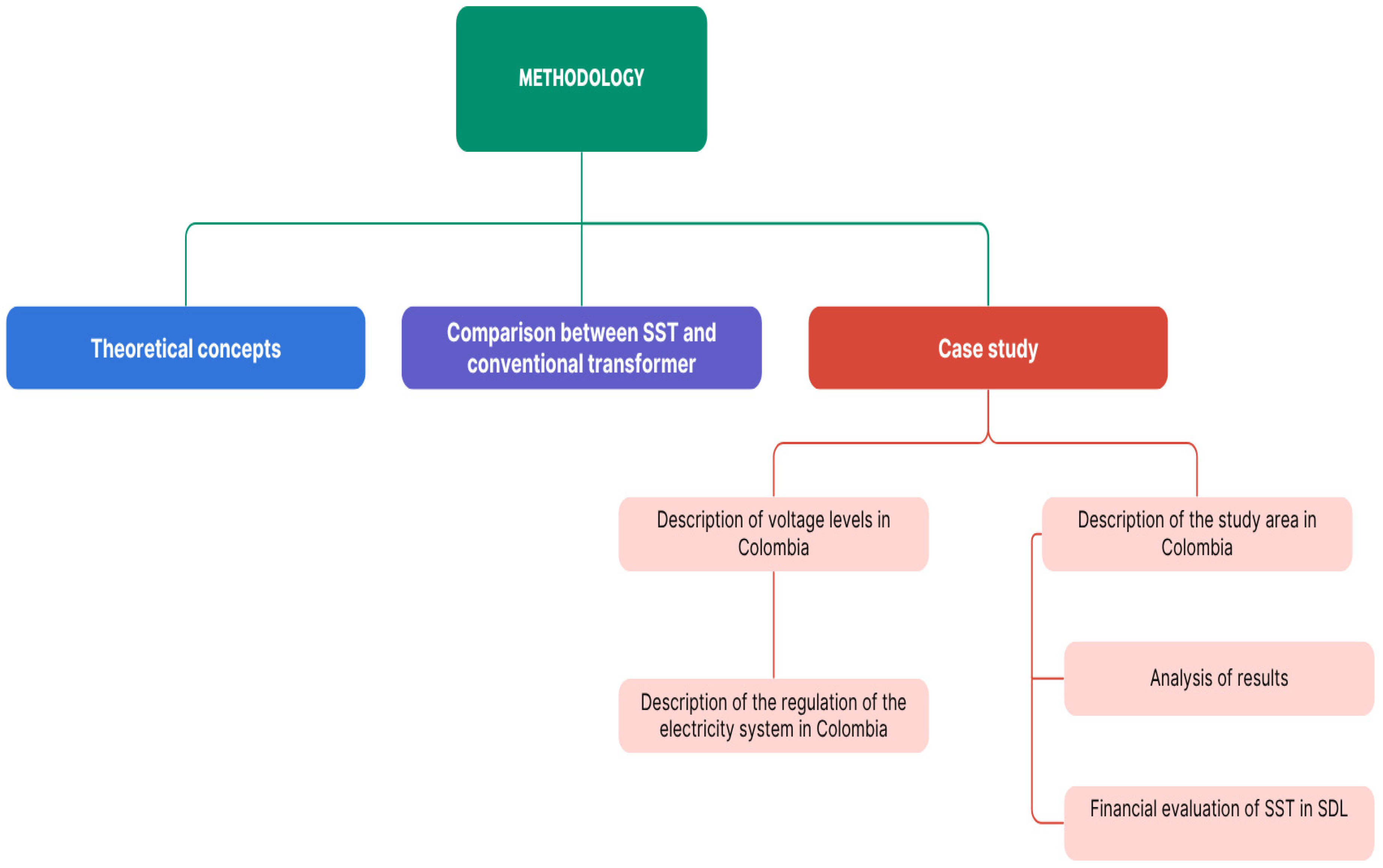
The study of the feasibility of the TSS in level 2 local distribution systems in Columbia is carried out initially with a description of theoretical concepts, comparison between the TSS and the conventional transformer, a case study in Colombia with real data through a graphical analysis of the behavior of demand, a description of the regulation of the electricity system in Colombia, a description of the study model to analyze the study, analysis of results, and finally a financial evaluation of the TSS in the LDS. Figure 1 shows a diagram of the methodology used.
Figure 1. Methodology diagram.

2.1. Theoretical Concepts

2.1.1. Technical Specifications of the SST

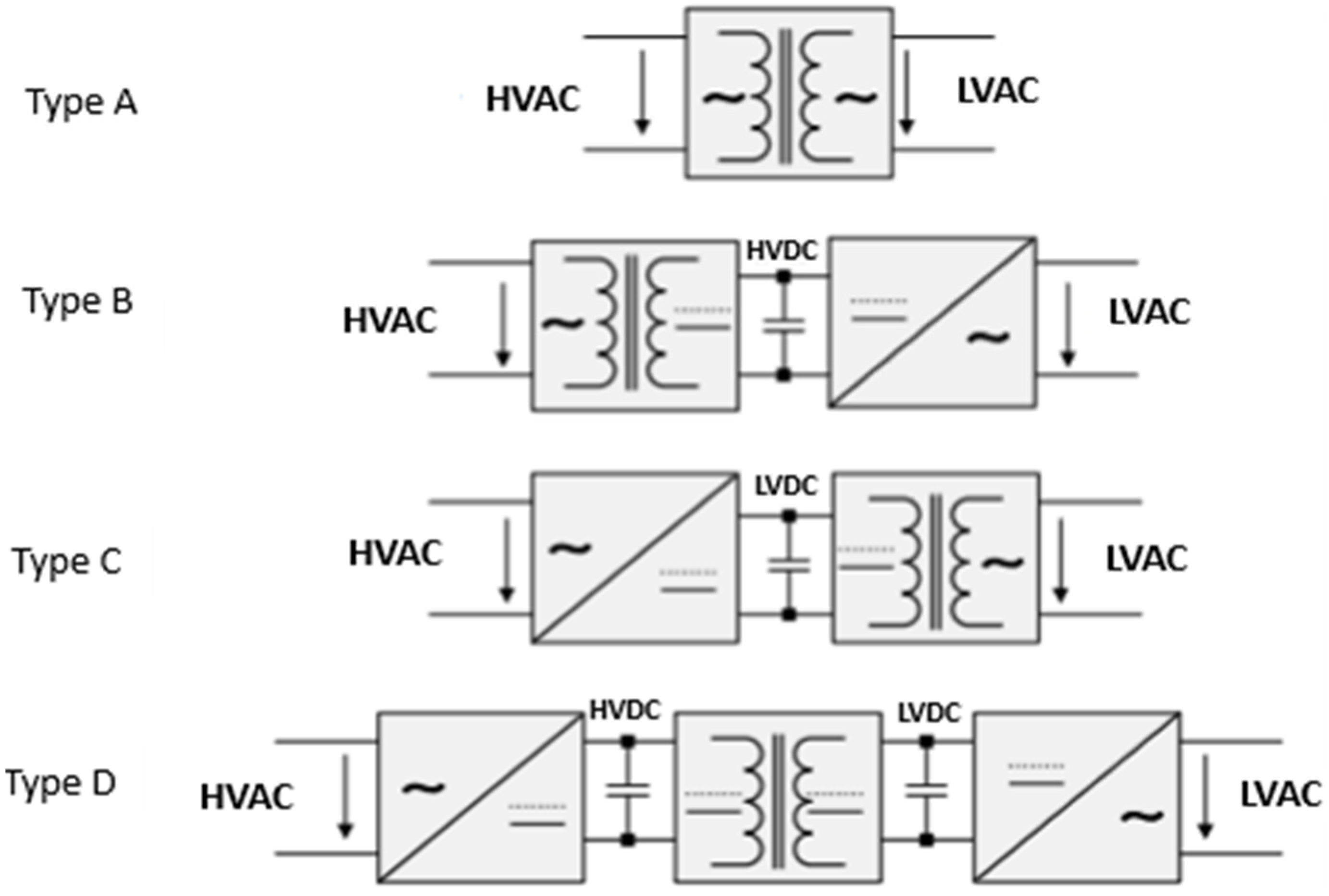
A conventional transformer is a high-efficiency static electrical machine with primary and secondary windings, powered by an AC voltage source that creates magnetic flux. On the other hand, the SST is a power electronics device commonly referred to as a power converter or smart transformer that operates at high frequencies. Its efficiency is lower than that of a conventional transformer; however, its operation at high frequencies allows for a reduction in size and weight [9]. SSTs can be classified into four topologies, as shown in Figure 2.
Figure 2. Solid-state transformer topologies.
Type A
In this configuration, there is a conversion from high voltage (HVAC) to low voltage (LVAC), and it is a simple configuration. It does not have a DC bus, so it does not compensate for reactive power. Since it does not have a DC bus, disturbances occurring on one side will affect the other [10].
Type B
This configuration consists of two stages and a DC link. The first stage isolates and rectifies the input signal, while the second stage converts DC to AC. In this case, this technology can compensate for reactive power. Having a DC link allows for control of the output frequency and power factor correction at the SST input, provided that the operating voltage is low [10].
Type C
Like type B, this configuration has two conversion stages, in this case, with galvanic isolation on the low-voltage side. As the DC link is on the high-voltage side, reactive power can be controlled regardless of the voltage level [10].
Type D
Three-stage technology is the most popular because it offers beneficial features such as reactive power compensation, voltage drop compensation, integration of renewable energy sources, and integration with energy storage systems. It has three conversion stages: the first is AC/DC 17 at high voltage, then a high-frequency transformer galvanically isolates the load from the source, while a DC/DC converter reduces the voltage and subsequently transforms the direct voltage to low-voltage alternating current [11].
Table 1 presents a summary of the advantages and disadvantages of the different topologies, as well as the cost of each type. Type A is less expensive because it has fewer components. In contrast, type D is more complex and has more control components, which makes it considerably more expensive. However, there will be isolated cases where the cost factor can influence the CAPEX of a project. In this particular case, the technology can have a high impact, making a more detailed cost/benefit study necessary.
Table 1. Advantages and disadvantages of the four types of SSTs.
High-Frequency Transformers
The high-frequency transformer acts as a fundamental element of the solid-state transformer, as it reduces its size, volume, and weight. Like a power transformer, it can raise or lower the voltage level at the output, but its operating frequency exceeds 10 KHz [12]. This provides galvanic isolation, meaning that it allows two circuits to be separated, but energy can be transferred from one side to the other. The input voltage signal can be sinusoidal or square. The size of the transformer is inversely proportional to the frequency, which means that it reduces its volume and weight.

2.1.2. SST Requirements in Distribution Networks

The current change in the electrical system due to the connection of new renewable energy sources (RESs) to the power grid requires the use of new or improved technologies to control variables, such as voltage, current, power, harmonics, and power factors, since conventional transformers do not have these capabilities. Several SST prototypes have therefore been developed [13] to meet requirements such as efficiency, voltage regulation, overload protection, short-circuit protection, international standards, and two-way power flow, improving power quality, limiting harmonics, and compensating for reactive power.

3. Comparison of SSTs and Conventional Transformers

Local distribution systems are part of the electricity supply chain for residential, commercial, and industrial loads. Therefore, one of their most important assets in this function are distribution transformers, which are devices that can increase and decrease the voltage of the electrical current. This is essential for the efficient distribution of electrical energy.
A distribution transformer is a static electrical asset that transfers electrical energy from one circuit to another using the principle of electromagnetic induction [14]. Its technical composition consists of two windings, isolated from each other, with a common core that is usually made of material with excellent magnetic properties [15]. Finally, its most relevant feature is that it is electrical equipment that is efficient in the energy conversion process [16].
The efficiency of an electrical transformer has a significant impact on the operating costs of a local distribution system, given that total losses represent the amount of energy consumed by the transformer and are converted into heat [17]. The exploration of new amorphous materials has led to a reduction in no-load losses in transformers, resulting in a 70% reduction in magnetic losses. As a result, the high efficiency and lower cost of the asset are highlighted in applications where the asset is loaded at less than 50% of its power.
In contrast to the characteristics presented by distribution transformers in SDL applications, SSTs stand out as a solution to meet the demands of electrical networks, highlighting their benefits, which include bidirectional flow, reactive power compensation, protection against surges and voltage drops, harmonic control, voltage regulation, size reduction, and decreased short-circuit currents. Despite the great advantages of SSTs for SDL applications, there are also disadvantages that have not yet been overcome, as they impact low efficiency compared to conventional transformers, are not compatible with current protection schemes, and are less robust [18].
Table 2 compares the technical applications offered by conventional distribution transformers with those offered by SSTs in SDL applications. It therefore covers a technical context in which their operating power range and permissible voltages in distribution systems are compared, highlighting current technological advances that offer a wide range of power supplies with the assets compared.
Table 2. Comparison of conventional distribution transformers versus SSTs.

4. Case Study

A case study is presented with the aim of evaluating demand behavior for the distribution area in western Colombia and studying the application of SSTs in electrical systems. Table 3 shows the characteristics of an operational local distribution network. The evaluation of Colombia’s distribution areas focuses on the infrastructure development needs and priorities for extending public utility coverage. It shows that the western region has a total demand capacity of 2421 MVA, distributed across urban and rural centers at voltage level 2.
Table 3. Description of the technical evaluation of the SDL.
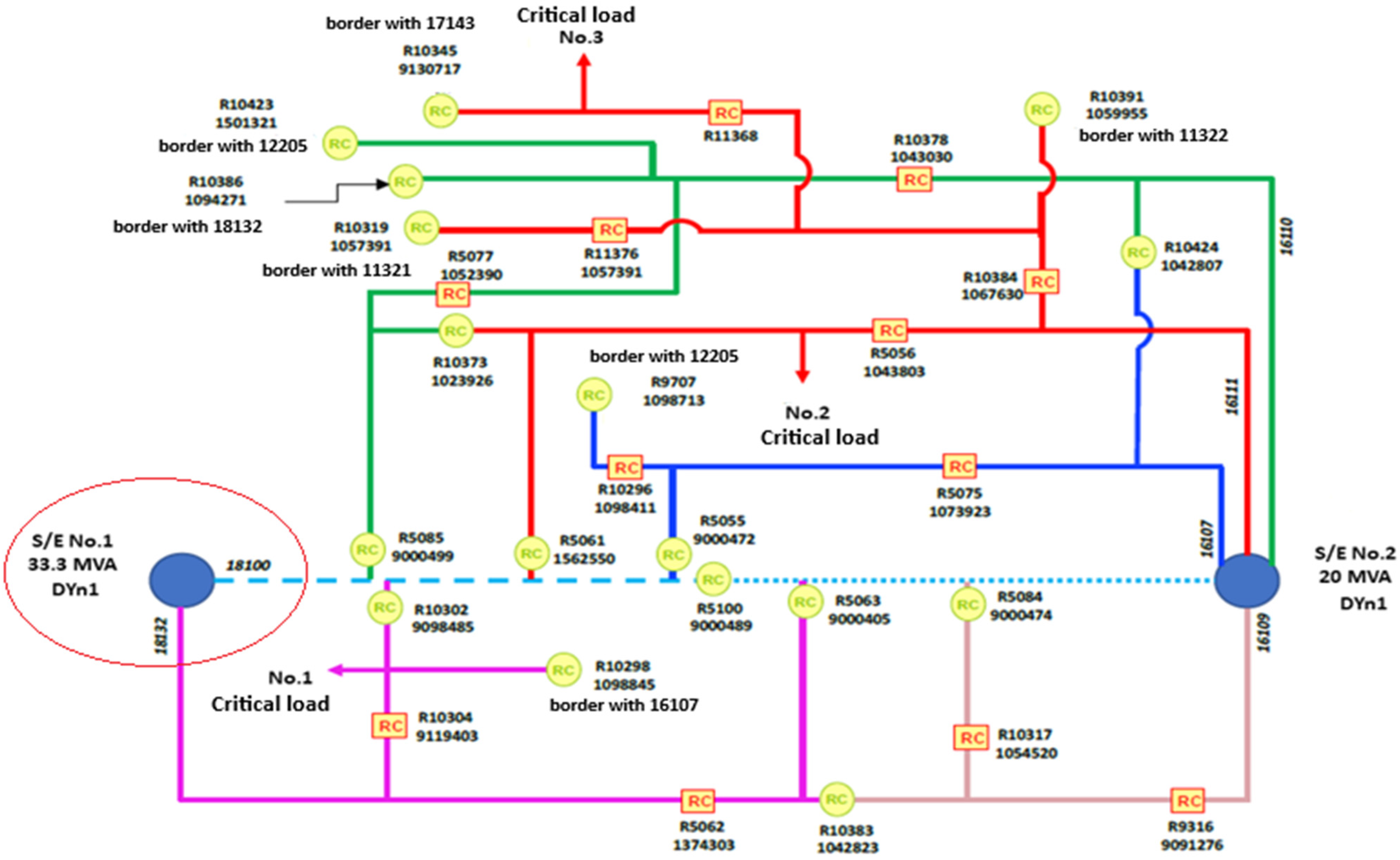
The proposed SDL participates in the Regional Transmission System (STR) with regard to level 4 voltage distribution activity. Therefore, it adds to the operation of 37 substations in the SDL and 209 circuits, totaling approximately 11.60 km in length. For the STR, it operates 5 substations and 11 lines at 115 kV, representing approximately 610 km of network. Figure 3 shows the architecture to be analyzed in light of the technical conditions offered by the SSTs in the SDLs.
Figure 3. Description of SDLs in the analyzed zone.

Local Distribution Systems (LDSs) in Colombia

In Colombia, STRs and SDLs are classified by level, which is based on the nominal operating voltage according to the following definition:
  • Level 4: Systems with a voltage greater than or equal to 57.5 kV and less than 220 kV.
  • Level 3: Systems with a voltage greater than or equal to 30 kV and less than 57.6 kV.
  • Level 2: Systems with a voltage greater than or equal to 1 kV and less than 30 kV.
  • Level 1: Systems with a voltage less than 1 kV.
The first three groups mentioned are considered part of the SDL, while the fourth level of stress is related to the STR [21].
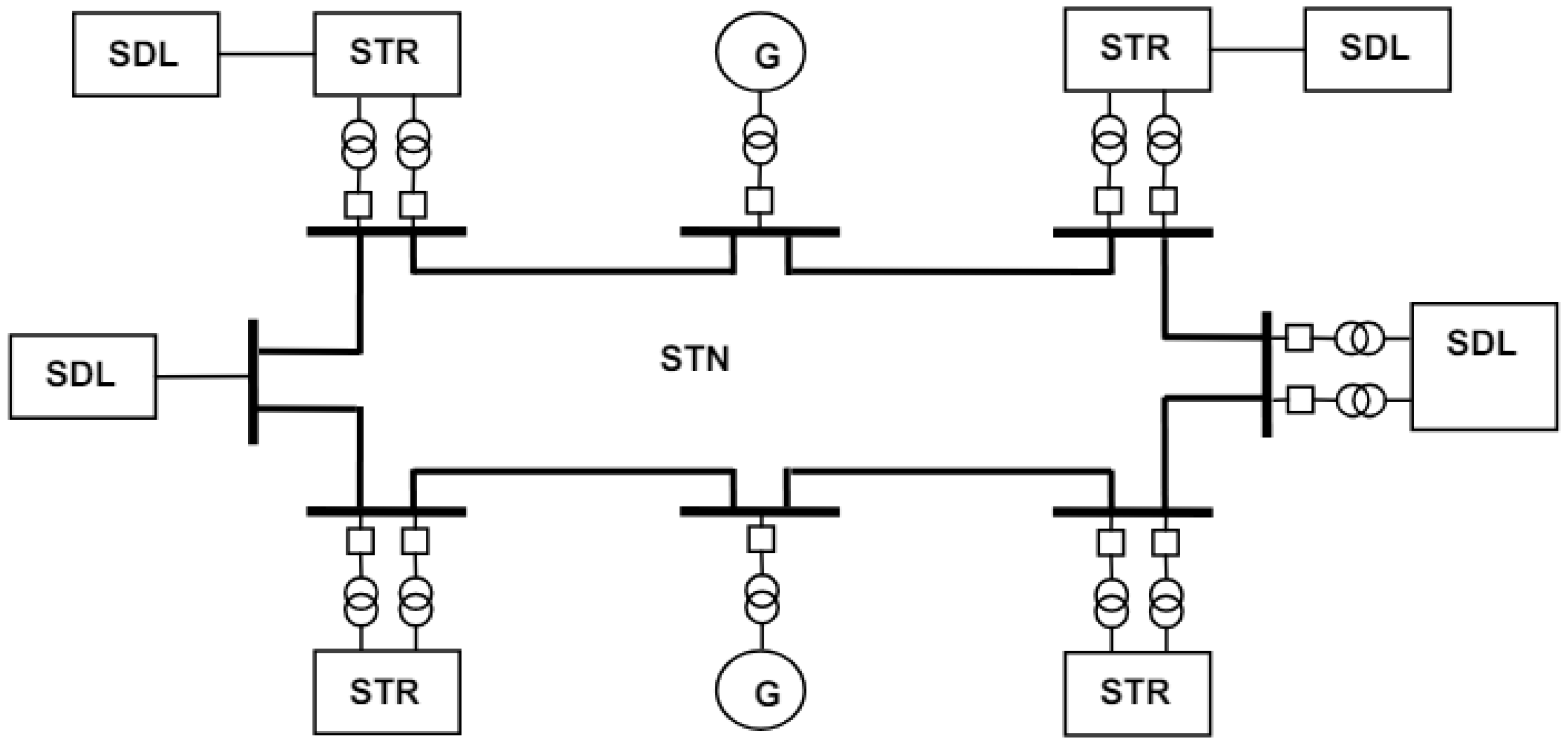
Normally, level 2 circuits are built in an open ring radial configuration. In addition, level 3 circuits focus on serving industrial customers and MV/MV substations. Figure 4 presents a single-line diagram representing the national transmission network (STN), the STR, and the SDL. As of 31 December 2023, there were 3848.21 km of 110 kV networks and 8504.70 km of 115 kV networks [22].
Figure 4. Description of the Colombian transmission and distribution system [18].

5. Regulatory Assessment of SST Integration

Various regulations were compiled in order to carry out the OHS assessment of the SDLs. In this context, it is crucial to highlight that the provision of electricity services in Colombia is based on Laws 142 “Public Services Law” and 143 “Electricity Law” of 1994, which establish the regime for the different activities in the sector and set out the provisions on energy matters.
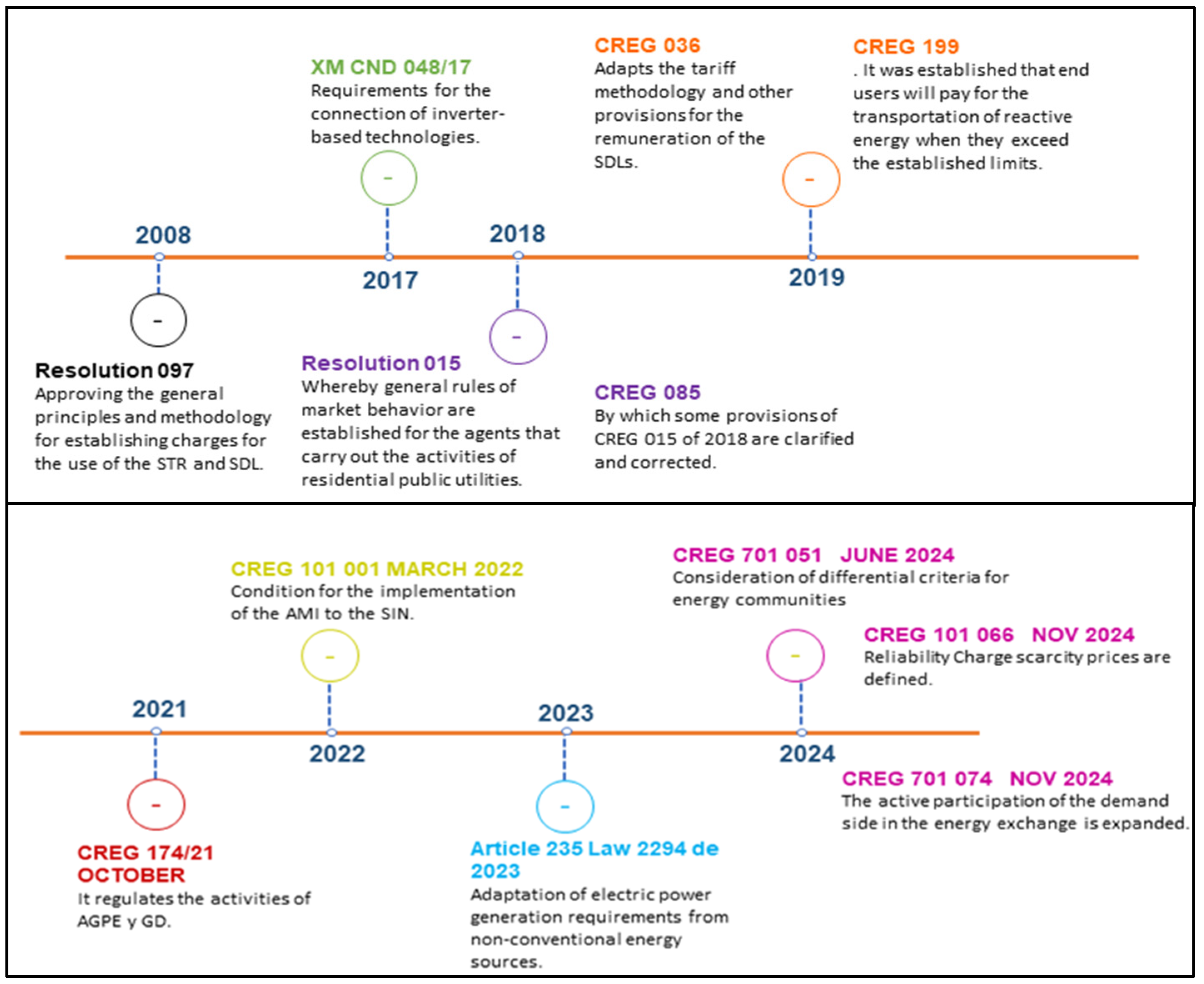
This evaluation of the Colombian regulatory framework focused on the development of SDLs involves reviewing the current state of the sector based on various resolutions issued by the Energy and Gas Regulatory Commission (CREG) and the Ministry of Mines and Energy (MME). Figure 5 below describes the chronological order of resolutions regulating energy distribution activities and new guidelines for new sources of electricity generation in Colombia.
Figure 5. Regulatory landscape in Colombia.

Resolution CREG 015–2018

Resolution CREG 015 of 2018 establishes the methodology for remuneration for electricity distribution activities in the National Interconnected System and for users who require the service. One of the objectives of the resolution is to encourage investment in the incorporation of new technologies into electrical systems.
The resolution defines a construction unit (UC) as the “set of elements that make up a typical unit of an electrical system, intended for the connection of other elements of a network, the transport or transformation of energy, or the supervision or control of the operation of STR or SDL assets” [23].
In the case of SSTs in distribution systems, one approach to consider is to recognize them as a special construction unit, which is defined as “one that contains elements with technical characteristics that make it impossible to assimilate it into the defined UCs.” [23]. However, for the remuneration of this equipment in accordance with CREG 015 of 2018, the following limitation is identified: there are no other suppliers that manufacture SSTs [24].
When there are assets with technical characteristics that differ from those of existing UCs, the DSO may request the CREG to create special UCs. The request must be accompanied by technical considerations justifying the creation of the special UC, the detailed cost of each piece of equipment comprising it, and the associated installation costs.

6. SST Analysis Model for Electricity Demand Operation

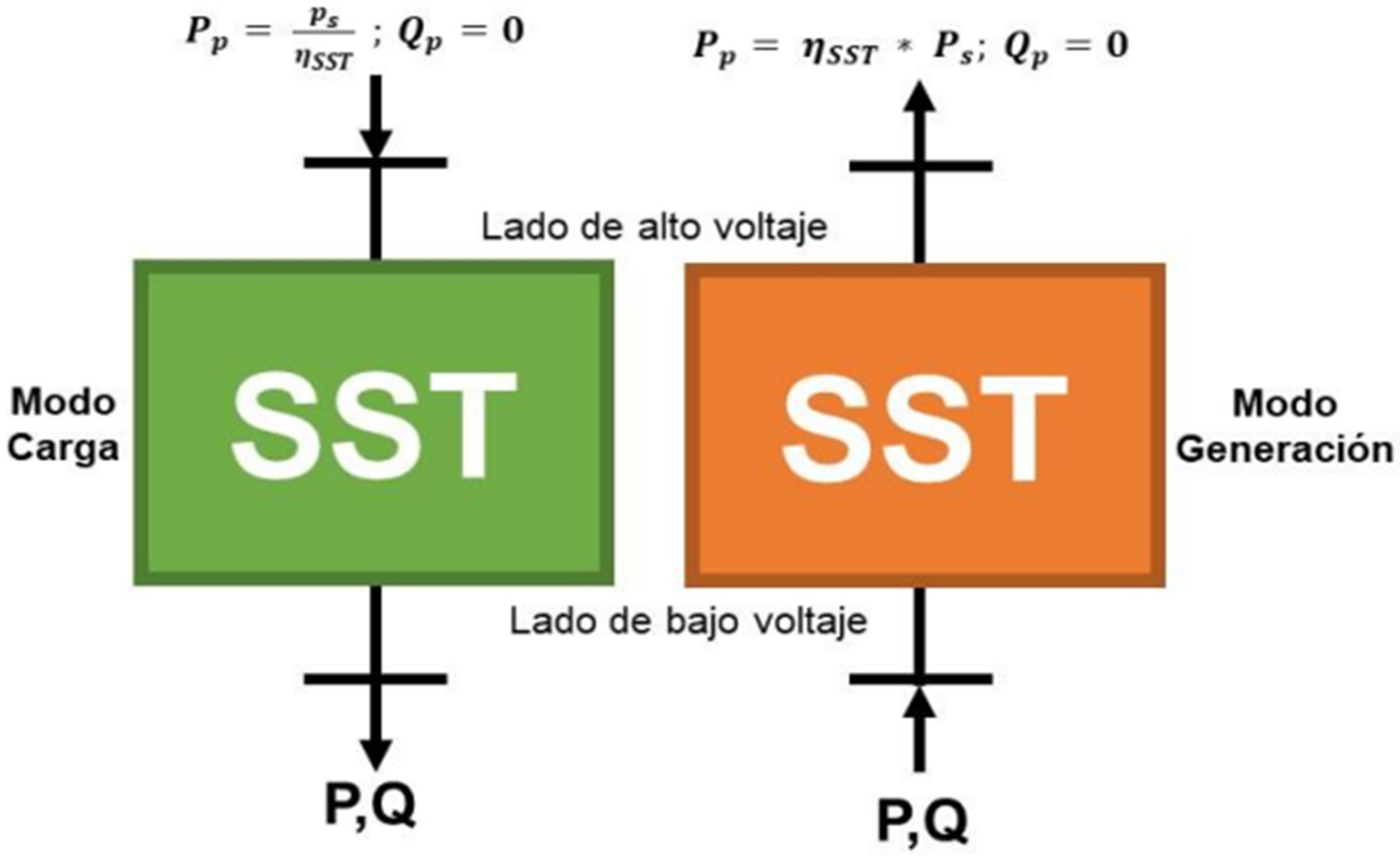
To model an SST under linear flow, it is considered as a two-terminal device. The low-voltage secondary side of the conversion stage provides active power (P) and reactive power (Q) to the loads at a constant voltage. The SST requires only constant power from the primary side of the conversion bus. Due to the bidirectional nature of the SST, there are two distinct operating modes: charging mode and generation mode [25].
Figure 6 shows the operating modes and their fundamental relationship between the active powers of the SST.
Figure 6. SST operating modes.
The fundamental operating relationship of the SST is represented by the following equations:
P P = P S η S S T ;   Q P = 0   C h a r g i n g   M o d e
  P P = η S S T P s   ;   Q P = 0   G e n e r a t i o n   M o d e
The subscripts p and s indicated in Equations (1) and (2) are the primary and secondary sides of the SST, respectively. The efficiency of the SST is related to the power factor of the load and the control techniques implemented in the SST converters.
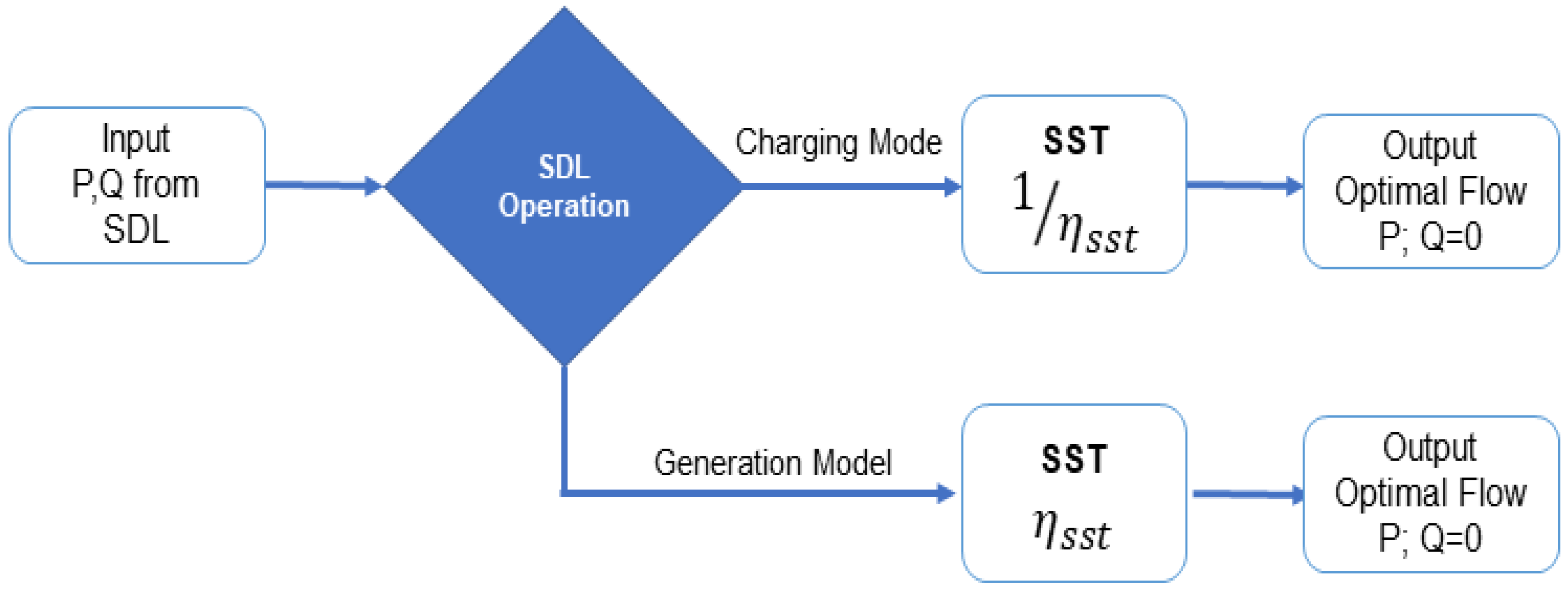
Based on the SST model under a linear flow, an analysis of its applicability in a local distribution system is used. Figure 7 details the mechanism for improving the optimal flow of distribution networks by implementing control over SST efficiency.
Figure 7. Simplified model of the SST under a linear flow for SDL.

6.1. Result of the Impact of SSTs on the Demand Profiles of a Local Distribution System

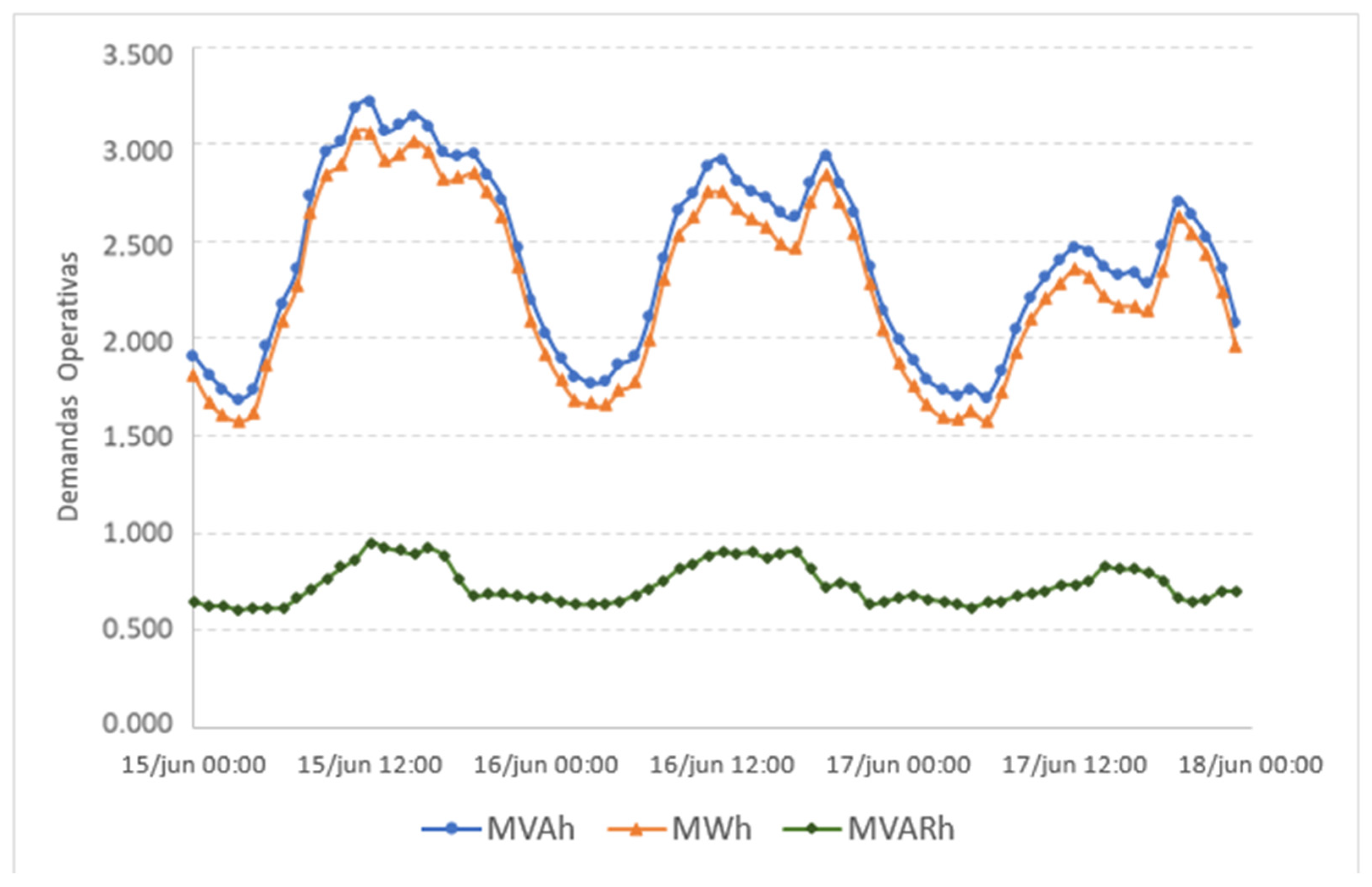
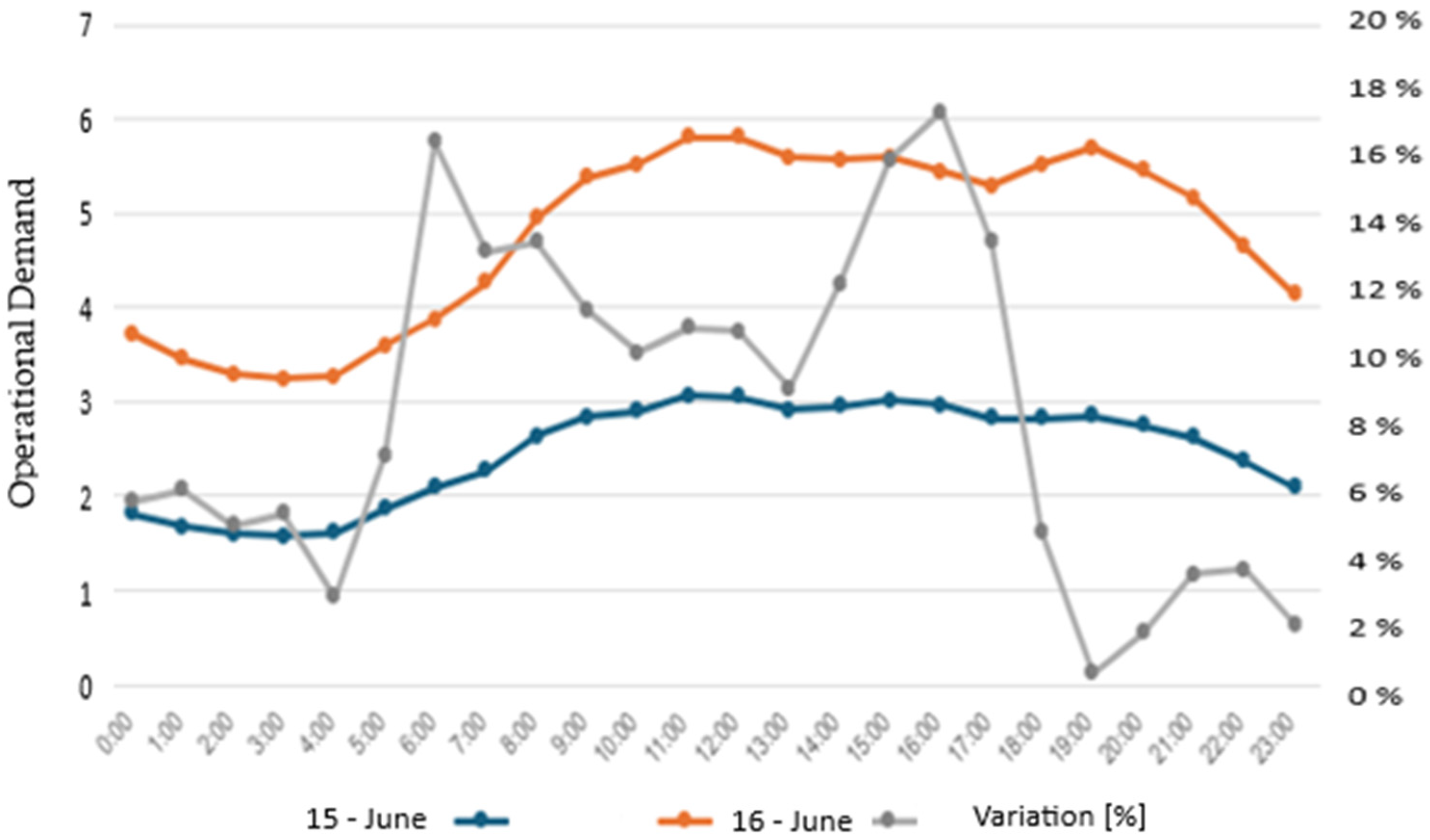
The following section presents the energy demand projection for circuit No. 18132 in Figure 3, which supplies critical load No. 1, with the aim of limiting the hourly behavior of actual energy demand and determining the operational capacity of the SSTs in the SDLs. Figure 8 shows the operational demand for the circuit in question.
Figure 8. Hourly monitoring of electricity demand.
Figure 8 shows that the minimum demand was 1.58 MWh at 3:00 a.m. on 15 June, and the maximum demand was 3.06 MWh at 11:00 a.m. on 15 June. In addition, Figure 9 shows a comparison of the hourly variations in demand presented by circuit No. 18132, with a maximum variation of 17.3% on the days evaluated and an average of 8.34%. These variations affect the operation of the system, reducing its reliability and electrical efficiency.
Figure 9. Time changes on June 15 and June 16.

6.2. Identification of the Solution

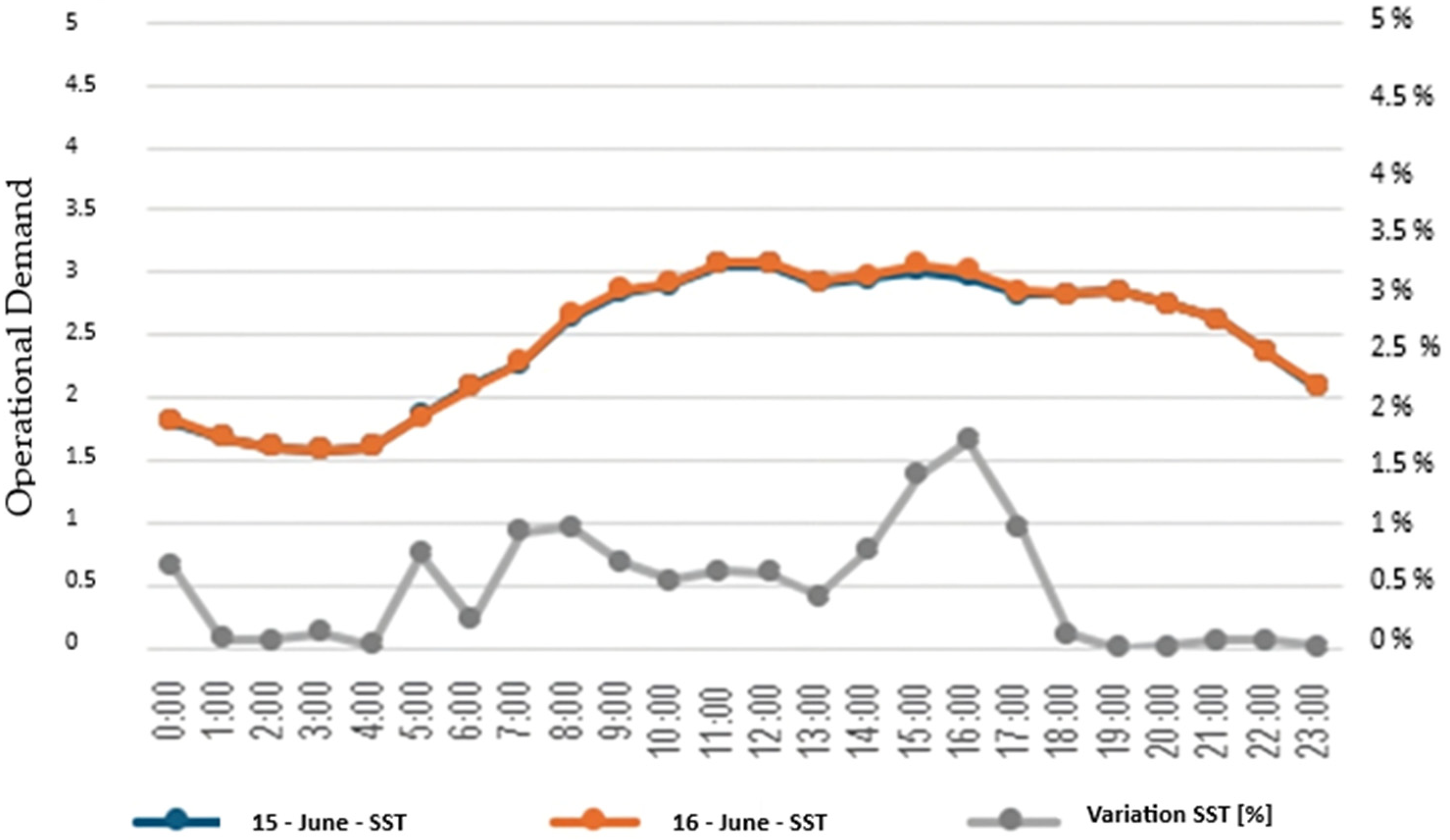
Considering the operating model shown in Figure 8, the behavior of the demand variation in the circuit case is analyzed, obtaining an operating balance given that an optimal hourly demand flow is applied. Table 4 shows a maximum variation of 1.66% and an adjustment of the row behavior.
Table 4. Description of the technical assessment of the SDL.
Figure 10 shows a graphical comparison of hourly demand using the operating mode described in Figure 8, which highlights the load mode operating condition of an SST. For 15 and 16 June, demand follows a balanced pattern.
Figure 10. Hourly monitoring of electricity demand with SSTs in load mode.
The implementation of SSTs configured to control the efficiency variable allows for ideal energy demand efficiency, since the same amount of energy is distributed at any time of day, thus allowing for absolute control over the energy production necessary to meet the demand requested in the systems. The evaluated projection shows a demand variation of 1.6% during peak demand hours. This means that the use of this alternative solution, added to the proposed strategies with variable peak prices, helps to provide an adequate power supply.

7. Financial Evaluation of SST in SDLs

This section explores the SST market, referencing several projects carried out by builders and researchers who have designed equipment based on size segmentation and applications in electrical systems. Finally, it includes a financial analysis of SSTs based on Colombian regulations that remunerate special construction units implemented in SDLs.
Renewable energy generation is the largest application driving the development of solid-state transformers, increasing the global SDL market to USD 123.2 million in 2023, with a projected reach of USD 303.3 million by 2032 [26]. The upgrade of older SDLs to digital systems is expected to drive the growth of the SST market. The demand for smart, modernized energy distribution infrastructure will likely create ample opportunities for the market.
To determine the associated income of each team in terms of power and cost, projects developing SSTs were monitored according to their type of application, the power range of each project, and the development price. The projects are detailed below under their respective applications and developments.
The “Modular Controllable Transformer for Resilient Networks” project, developed by Georgia Tech in partnership with Oak Ridge National Laboratory, Delta Star, and Southern Company, presents an innovative modular controllable transformer (MCT) design that serves as a building block for the transmission network. These standardized transformer blocks operate at powers ranging from 50 to 75 MVA. They are integrated with parallel converters depending on the application to be implemented in the grid, achieving higher rated powers of 100 to 500 MVA. The total cost of the project is USD 355,321 [27].
The National Center for Reliable Electric Power Transmission and Distribution (NCREPT), Nextwatt, and the University of Arkansas, in collaboration with General Electric, designed a modular solid-state high-frequency link (HFL) large power transformer (LPT) with a rated capacity of 100 MVA, a high-side operating voltage of 115 kV, a variable low-side voltage, and variable impedance capacity. The cost estimate is an average of USD 15 to 22 USD/kVA, with a service life of more than 40 years and an efficiency of at least 99% compared to conventional transformers [28].
Table 5 details the operating capacities of the SSTs to be evaluated. Given that there are studies presenting design capacities of 6 kW and projected capacities of 1 MW, this document stipulates capacities of 15 kVA and 75 kVA, as these are common operating capacities in Colombian SDLs.
Table 5. Capital cost of SST projects: CAPEX.
To obtain CAPEX remuneration for an STR, a special construction unit (UCE) must be submitted, which is defined by CREG Resolution 015 of 2018 as a unit containing elements with technical characteristics that make it non-assimilable to the defined UCs.
The CREG 2759 concept of 2020 establishes that when a person owns connection assets that, for any reason, become widely used in the networks of an STR and/or SDL, they are entitled to receive remuneration from those who use them for the provision of electricity services. Consequently, CREG Resolution 015 establishes that for assets with technical characteristics different from the established UCEs, DSOs may request CREG to create a UCE. The request must be accompanied by technical considerations justifying the creation of the special UC, the detailed cost of each of the pieces of equipment that composes it, and the associated installation costs [29]. Table 6 describes the conditions of the SST as a construction unit.
Table 6. Description of the SST as a UCE.
The CAPEX for implementing an SST was defined for SST projects with modular equipment characteristics for operation at voltages ranging from 7.5 kV to 115 kV, depending on the development project. For this study, a CAPEX cost of USD 86/kVA was declared, which is equivalent to USD 1750 for 15 kVA power ratings and USD 6480 for 75 kVA power ratings. However, 15 and 75 kVA powers were chosen because they are the usual demands evidenced in the Colombian SDL, so conventional transformers are normally manufactured with these nominal powers.
Regarding the evaluation of OST investment comparisons, the investment costs of a conventional transformer in the Colombian market are established under the power ratings studied. Table 7 describes the CAPEX costs of both the conventional transformer and the OST under study.
Table 7. Comparison of unit costs of SSTs with conventional transformers.
Finally, the AOM costs of SDL equipment must be considered, which according to CREG Resolution 015 of 2018, refer to 2% of the investment value. This value is used to calculate the OPEX costs of the evaluated SDL.

7.1. Cost Advantage Comparison Between an SST and a Conventional Transformer

The development of projects involving the implementation of new equipment in SDLs must consider performance indicators that evaluate the progress of the SSTs implemented. For SDLs, it is very important to enhance the performance of the distribution network; therefore, SSTs offer advantages in network systems by enabling total control of energy demand.
When comparing the cost and profitability indicators of SSTs with those of conventional transformers, we can see that the costs of AOM are high for SSTs given that their construction is more technologically advanced. In addition, they provide more services for the distribution network. They demonstrate an optimal model of local energy management and do not impact on the additional costs of unsupplied energy.

7.2. Benefit Cost of Implementing an SST in SDL

The rates of return to remunerate electricity distribution activities were calculated using the weighted average cost of capital (WACC) methodology based on the cost of debt and the cost of equity capital. For this research, a rate of return of 11.36% was used, as supported by CREG Resolution 016 of 2018.
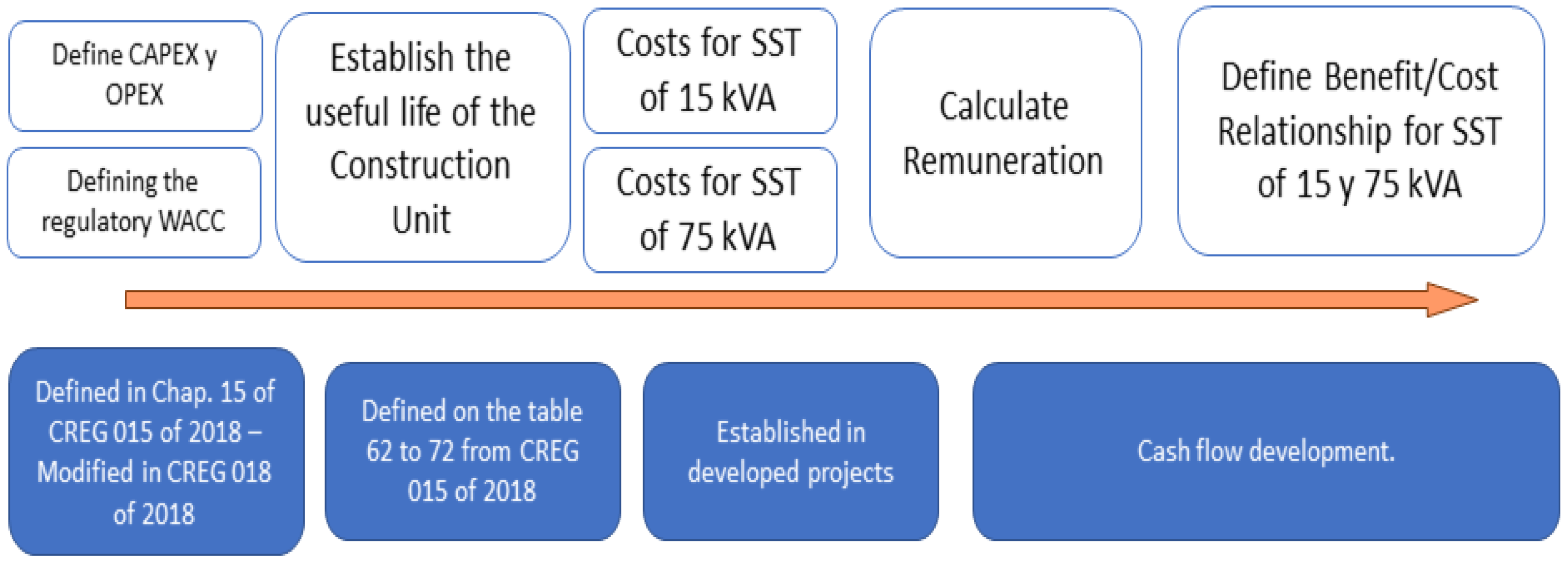
Figure 11 presents the methodology implemented to understand the costs and benefits linked to the research development on implementing a SST (system, service, and technology or safety and health at work system, depending on context) in distribution systems [30,31]. Initially, investment costs are related to projects for creating SSTs, with the associated cost being specific to the special UC.
Figure 11. Financial model for SSTs in SDLs.
For the economic studies, two scenarios were considered, analyzing the implementation and investment costs for 15 kVA and 75 kVA capacity TSMs. For the 15 kVA TSM scenario, a benefit-cost ratio of 0.56 was obtained. For the 75 kVA equipment, the benefit-cost ratio is 1.04. The results indicate that equipment with similar costs to COP 26 million and a 75 kVA capacity show a viable average remuneration according to current regulations. Table 8 presents the viability indicators for the implementation of new special constructive units, where the implementation of a 75 kVA TSM has an IRR (internal rate of return) of 13%, which is higher than the regulatory WACC (weighted average cost of capital) of 11.36%. Therefore, it is considered a viable investment.
Table 8. Economic viability indicators.
Although the results obtained and the study carried out are viable and positive, it should not be forgotten that these technologies are just being consolidated in modern electricity grids, which implies a period of assimilation and adaptation. This explains why, with the new electricity generation systems, the conventional system must be modernized and migrate toward the new technologies. These technologies must be in tune and exhibit the same operating dynamics. For this reason, new technologies are inevitable and necessary to respond to most of the requirements and needs that smart grids demand, with the integration of microgrids and distributed generation. This process is increasing facing more and more technical challenges, such as bidirectional flows, energy management, dynamic reactive compensation, harmonic control, and current and voltage regulation from control centers.
However, the integration of these new technologies, such as SSTs, does not imply the replacement of conventional transformers. Rather, they are a complement and support for cases where it is really necessary to take advantage of all the benefits offered by these technologies due to their advanced control capabilities and flexibility in local distribution systems.
On the other hand, since these technologies are new and are just beginning to be taken into account by some companies in their business models, there are still no norms and standards for their implementation. This implies that the use of these technologies in relation to their cost will depend greatly on the specifics of the application and will require a particular analysis for each project. Thus, the need and relevance of each integration will be something that each company must determine and include it in its CAPEX for each project by performing a cost/benefit study.
As a recommendation of this study, the companies of the electric sector can make adequate and timely decisions for new investments in modern electric grids using SST technology. The analyzed and validated scenarios indicate that the new technology to be implemented presents viable remuneration according to the current regulations for the Colombian case; however, it should always be taken into account that each study is particular and the corresponding analysis should be performed to promote good decision making and adequate remuneration of the assets.
In future work, it is recommended to analyze the nodes of the power grid in which SST technologies have a greater impact according to the characteristics of the distribution networks. In addition, the integration of distributed generation and microgrids is increasing every day, which makes this type of studies more and more necessary.

8. Conclusions

A comparison was made between conventional transformers and SSTs (solid-state transformers), highlighting the advantages of SSTs in areas such as reactive power compensation, bidirectional power flow, and demand management. A significant characteristic of SSTs regarding their construction capacity was emphasized, with projections to reach 1 MVA, while conventional transformers typically have a capacity of 150 kVA in distribution systems.
A prefeasibility study was conducted for the incorporation of SSTs (solid-state transformers) into Colombian distribution systems (SDLs). This analysis covered several aspects, including a reference framework of SST topologies implemented in SDLs, a comparison between SSTs and conventional transformers, and technical and financial studies based on remuneration models applied in SDLs.
The market analysis identified ongoing SST (solid-state transformers) development projects in research centers. Although Colombia has limited suppliers, the research has focused on TSM (transformer for minor services or similar, depending on context) applications for traction systems and microgrid interconnection. Overall, the anticipated widespread adoption of these devices is considered essential for future power grids.
This study identified a key characteristic of SSTs related to multilevel converters: their modular interconnection capabilities improve performance in high-voltage/power applications through series-parallel connection structures. These connection topics are classified as ISOP, IPOS, IPOP, and ISOS.
The technical study developed a methodology to analyze how the capacity of SSTs can flatten demand peaks in SDLs (distribution systems) by controlling the efficiency parameters of solid-state transformers. This demand management function leads to energy savings and reduced infrastructure costs.
The regulatory analysis gathered the necessary information to evaluate the incorporation of special units like SSTs into the SDLs (distribution systems), and solutions were determined using technical and market studies. During this process, the operational framework of the proposed remuneration scheme in CREG Resolution 015 of 2018 was identified for the integration of assets into the grid based on usage charges.
The financial analysis considered a 25-year horizon and evaluated the monetary benefits derived from the remuneration proposed in the current resolution. The cash flow revealed a return on investment starting from year 6 and an IRR (internal rate of return) higher than the evaluated discount rate for the implementation of SSTs (solid-state transformers) with 75 kVA capacities in SDLs (distribution systems).

Author Contributions

Conceptualization, methodology, J.C.R. and E.G.-L.; validation, E.G.-L. and J.C.V.; investigation, J.C.R.; writing—original draft preparation, J.C.R.; writing—review and editing, J.C.R., E.G.-L. and J.C.V.; supervision, E.G.-L. and J.C.V. All authors have read and agreed to the published version of the manuscript.

Funding

This research received no external funding.

Data Availability Statement

The original contributions presented in this study are included in the article. Further inquiries can be directed to the corresponding author.

Acknowledgments

The first and second authors thank the GRALTA research group of the Universidad del Valle, Colombia, for their contributions during the development of this paper.

Conflicts of Interest

The authors declare no conflicts of interest.

Abbreviations

The following abbreviations are used in this manuscript:
AC/ACAlternating Current
AOMAdministration, Operation, Maintenance
LTLow Voltage
DC/DCDirect Current
CREGEnergy and Gas Regulatory Commission
HFTHigh-Frequency Transformer
HVACHigh-Voltage Alternators
kVAKilovolt-Ampere
LVACLow-Voltage Alternators
MCTModular Controllable Transformer
MMCModular Multilevel Converters
MVMedium Voltage
PWMPulse Width Modulation
SDLLocal Distribution System
STRRegional Distribution System
STNNational Transmission System
SSTSolid-State Transformer
UCConstruction Unit
UCESpecial Construction Unit
USDUnited States Dollar

References

  1. Huber, J.E.; Kolar, J.W. Applicability of solid-state transformers in today’s and future distribution grids. IEEE Trans. Smart Grid 2019, 10, 317–326. [Google Scholar] [CrossRef]
  2. Rodriguez, J.; Lai, J.-S.; Peng, F.Z. Multilevel inverters: A survey of topologies, controls, and applications. IEEE Trans. Ind. Electron. 2002, 4, 724–738. [Google Scholar] [CrossRef]
  3. Carpita, M.; Marchesoni, M.; Pellerin, M.; Moser, D. Multilevel converter for traction applications: Small-scale prototype test results. IEEE Trans. Ind. Electron. 2008, 55, 2203–2212. [Google Scholar] [CrossRef]
  4. Mishra, D.K.; Ghadi, M.J.; Li, L.; Hossain, M.J.; Zhang, J.; Ray, P.K.; Mohanty, A. A review on solid-state transformer: A breakthrough tecnology for future Smart distribution grids. Int. J. Electr. Power Energy Syst. 2021, 133, 107255. [Google Scholar] [CrossRef]
  5. Wei, H.; Lei, L. Input-series output-parallel AC/AC convert. In Proceedings of the 2010 5th IEEE Conference on Industrial Electronics and Applications, Taichung, Taiwan, 15–17 June 2010; pp. 1018–1022. [Google Scholar]
  6. Agarwal, A.; Prabowo, Y.; Bhattacharya, S. Analysis and design considerations of input parallel output series-phase shifted full bridge converter for a high-voltage capacitor charging power supply. In Proceedings of the 2021 IEEE 12th Energy Conversion Congress & Exposition-Asia (ECCE-Asia), Singapore, 24–27 May 2021; pp. 1068–1075. [Google Scholar]
  7. Cheng, J.; Shi, J.; He, X. A novel input-parallel output-parallel connected DC-DC converter modules with automatic sharing of currents. In Proceedings of the 7th International Power Electronics and Motion Control Conference, Harbin, China, 2–5 June 2012; pp. 1871–1876. [Google Scholar]
  8. Sha, D.; Guo, Z.; Luo, T.; Liao, X. A general control strategy for input series output series modular DC-DC converters. IEEE Trans. Power Electron. 2014, 29, 3766–3775. [Google Scholar] [CrossRef]
  9. Caipe Quenan, E.A. Critical Review of the Technical Feasibility of SST in Electrical Distribution Networks. Bachelor’s Thesis, Universidad del Valle, Cali, Colombia, 2024. [Google Scholar]
  10. Macías, E.F.A.; Gainaz, F.I.K. Profesional De Alto Nivel. 2019. Available online: https://dspace.ups.edu.ec/bitstream/123456789/21011/1/UPS-GT003411.pdf (accessed on 10 March 2024).
  11. Santos, N.; Chaves, M.; Gamboa, P.; Cordeiro, A.; Santos, N.; Pinto, S.F. High Frequency Transformers for Solid-State Transformer Applications. Appl. Sci. 2023, 13, 7262. [Google Scholar] [CrossRef]
  12. Poojari, M.S.; Joshi, P.M. Advance technology using solid state transformer in power grids. Mater. Today Proc. 2022, 56, 3450–3454. [Google Scholar] [CrossRef]
  13. Volnyi, V.; Ilyushin, P.; Boyko, E. Approaches to Construction of Active Distribution Networks with Distributed Power Sources Based on Solid-State Transformers. In Proceedings of the 2024 International Russian Automation Conference (RusAutoCon), Sochi, Russian, 8–14 September 2024; pp. 492–497. [Google Scholar] [CrossRef]
  14. Yanez, V. Elaborar un manual de procedimientos para el diseño y construcción de transformadores. 2010. Available online: https://bibdigital.epn.edu.ec/bitstream/15000/2030/1/CD-2850.pdf (accessed on 9 July 2025).
  15. Rico, H. Diseño y Construcción de Transformador Monofásico de Media Tensión. Insti. Tecnologico Metropolitano, 2019. Available online: https://repositorio.itm.edu.co/bitstream/handle/20.500.12622/1669/Rep_Itm_pre_Rico.pdf?sequence=1&isAllowed=y (accessed on 9 July 2025).
  16. Camejo, H.A. Método de Diseño Para Transformadores Monofásicos de Distribución. Bachelor’s Thesis, Universidad Central de Venezuela, Caracas, Venezuela, 2017. Available online: https://www.studocu.com/bo/document/instituto-tecnologico-incos-beni/electronica/metodo-de-diseno-para-transformadores-monofasicos-de-distribuciontra-5/98818711 (accessed on 11 July 2025).
  17. Saldívar, J. Estudio de Niveles de Eficiencia en Transformadores de Distribución en Función de Perfil de Carga. 2018. Available online: https://repositorio.tec.mx/bitstream/handle/11285/632565/Tesis%20Eficiencia%20en%20Transformadores%20%28V0%29.pdf?sequence=1&isAllowed=y (accessed on 9 July 2025).
  18. Londero, R.; de Mello, P.; Da Silva, G. Comparison between conventional and solid state transformers in smart distributión grids. In Proceedings of the 2019 IEEE PES Innovative Smart Grid Technologies Conference-Latin America (ISGT Latin America), Gramado, Brazil, 15–18 September 2019. [Google Scholar]
  19. Solid State Transformers for Energy Grid 2.0. Energy Research Institute @NTU. Available online: https://www.celluleenergie.cnrs.fr/wp-content/uploads/2020/02/lecture_7_-_vaisambhayana_brihadeeswara_sriram.pdf (accessed on 11 July 2025).
  20. Wang, K.; Lei, Q.; Liu, C. Methodology of Reliability and Power Density. In Proceedings of the 2017 IEEE Applied Power Electronics Conference and Exposition (APEC), Tampa, FL, USA, 26–30 March 2017. [Google Scholar]
  21. XM Administradores del Mercado. Available online: https://www.xm.com.co/transmisi%C3%B3n/sistema-de-transmision-regional-str (accessed on 11 July 2025).
  22. Dávalos, V.; Luna, N.; Montaño, C.Q.; Salazar, G.; Orbe, D. Modelos de Mercado, Regulación Económica y Tarifas del Sector Eléctrico en América Latina y Caribe–Colombia. 2013. Available online: https://www.olade.org/wp-content/uploads/2021/03/Informe-final-COLOMBIA.pdf (accessed on 11 July 2025).
  23. CREG. Metodología Para La Remuneración de Distribución de Energía Eléctrica; CREG 015; CREG: Bogotá, Colombia, 2018. [Google Scholar]
  24. González, J.; Restrepo, M. Aspectos Técnicos, Regulatorios y Económicos De Los Sistemas FACTS Distribuidos; CIGRE: Medellín, Colombia, 2021. [Google Scholar]
  25. Zahid, J.; Karaagac, U.; Kocar, I.; Holderbaum, W. Solid-State transformer modelling in power flow calculation. Energy Rep. 2023, 9, 448–453. [Google Scholar]
  26. Fortune Business Insights. Solid State Transformer Market Size, Share & Industry Analysis, by Voltage Level (MV/LV and HV/MV), by Application (Renewable Power Generation, Electric Vehicle Charging Stations, Power Grids, Traction Locomotives, and Others), and Regional Forecast, 2024. 2024. Available online: https://www.fortunebusinessinsights.com/solid-statetransformer-market-106374 (accessed on 9 July 2025).
  27. Divan, D.; Kandula, P. Demonstration of 5 Mva Modular Controllable Transformer (MCT) for a Resilient and Controllable Grid; Departmet of Energy Office of Electricity: Washington, DC, USA, 2019. [Google Scholar]
  28. Mazumder, S.K. A Modular and Flexible High-Frequency-Link Transformer with a Reduced Device Count and Zero High-Side Devices; The Department of Energy: Washington, DC, USA, 2018. [Google Scholar]
  29. Resolución CREG-15 de 2018. Comisión de Regulación de Energía y Gas. 2018. Available online: https://gestornormativo.creg.gov.co/gestor/entorno/docs/resolucion_creg_0015_2018.htm (accessed on 9 July 2025).
  30. Ceron, J.A.; Gomez-Luna, E.; Vasquez, J.C. Driving the Energy Transition in Colombia for Off-Grid Regions: Microgrids and Non-Conventional Renewable Energy Sources. Energies 2025, 18, 1010. [Google Scholar] [CrossRef]
  31. Gómez-Luna, E.; Tariacurí, J.; De la cruz, J.; Vasquez, J.C. A Novel Technical Framework for Colombia’s Distribution System Operator with Distributed Energy Resources Integration. Energies 2025, 18, 2881. [Google Scholar] [CrossRef]
Disclaimer/Publisher’s Note: The statements, opinions and data contained in all publications are solely those of the individual author(s) and contributor(s) and not of MDPI and/or the editor(s). MDPI and/or the editor(s) disclaim responsibility for any injury to people or property resulting from any ideas, methods, instructions or products referred to in the content.

Article Metrics

Citations

Article Access Statistics

Multiple requests from the same IP address are counted as one view.