Technical Note

Reliability-Oriented Design of a Solar-PV Deployments
by
Paweł Kut
1,*,
Katarzyna Pietrucha-Urbanik
2,* and
Barbara Tchórzewska-Cieślak
2
1
Department of Heat Engineering and Air Conditioning, Faculty of Civil, Environmental Engineering and Architecture, Rzeszow University of Technology, Al. Powstancow Warszawy 6, 35-959 Rzeszow, Poland
2
Department of Water Supply and Sewerage Systems, Faculty of Civil, Environmental Engineering and Architecture, Rzeszow University of Technology, Al. Powstancow Warszawy 6, 35-959 Rzeszow, Poland
*
Authors to whom correspondence should be addressed.
Energies 2021, 14(20), 6535; https://doi.org/10.3390/en14206535
Submission received: 1 August 2021 / Revised: 5 October 2021 / Accepted: 7 October 2021 / Published: 12 October 2021
(This article belongs to the Special Issue Financial Development and Energy Consumption Nexus)

Abstract

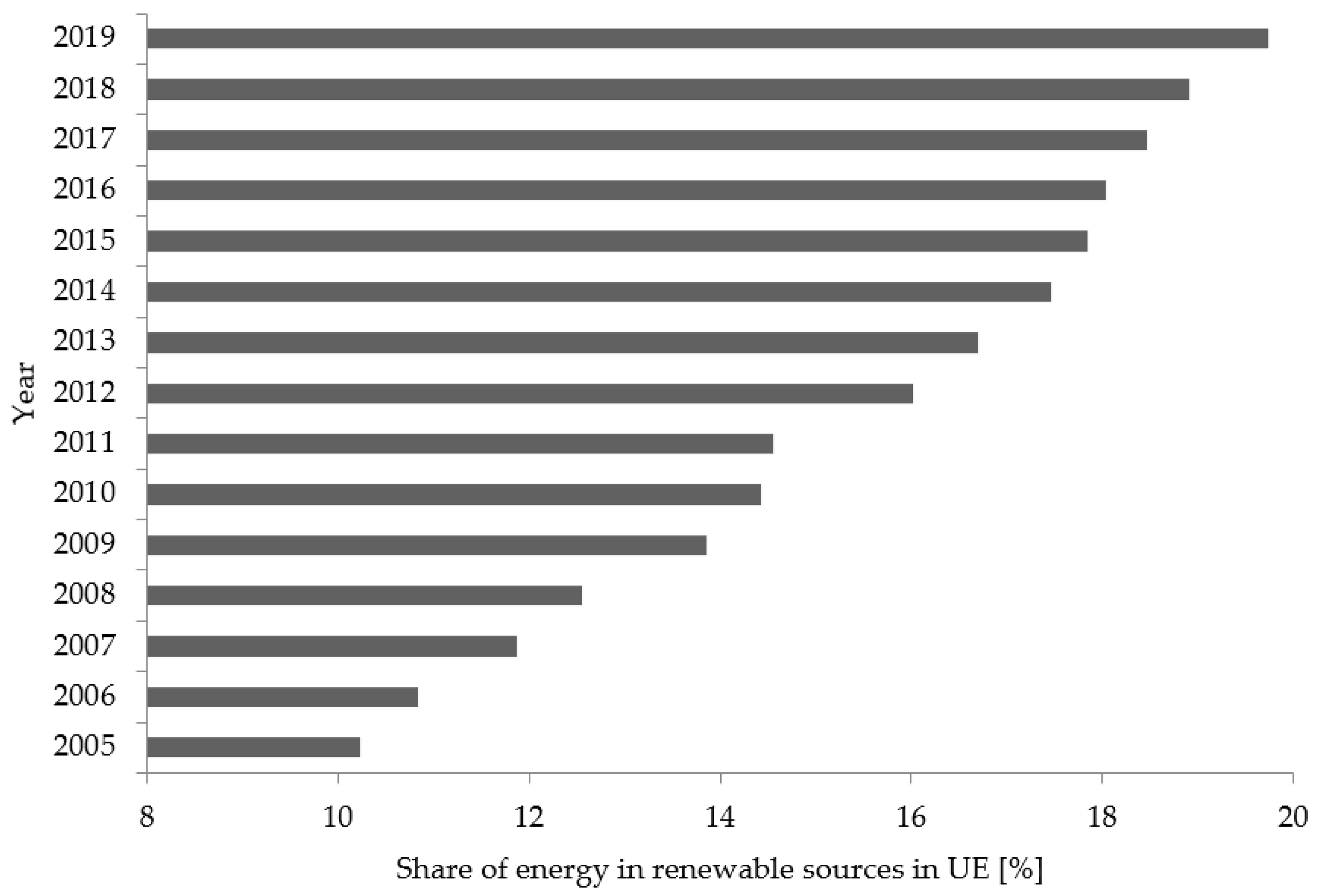
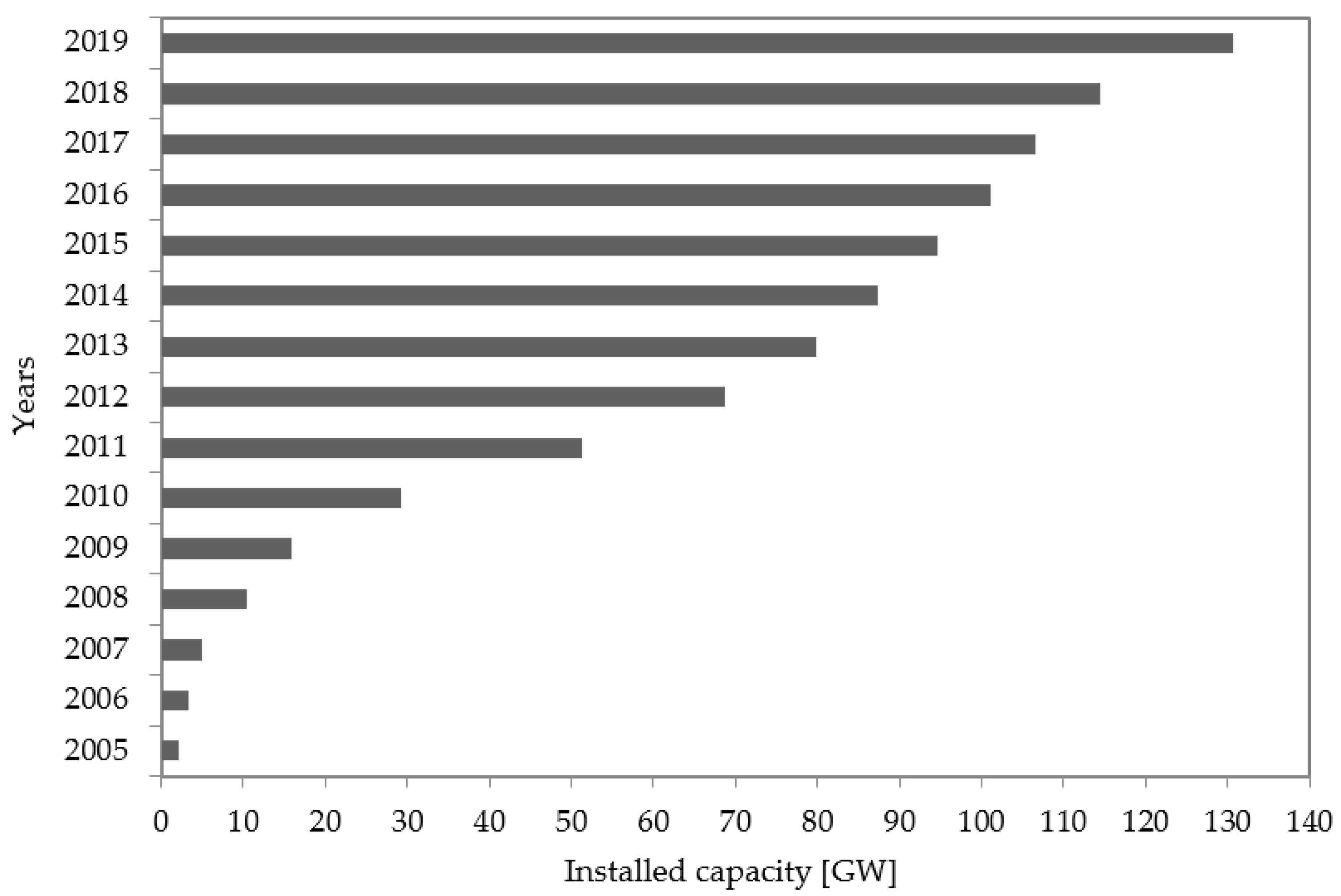
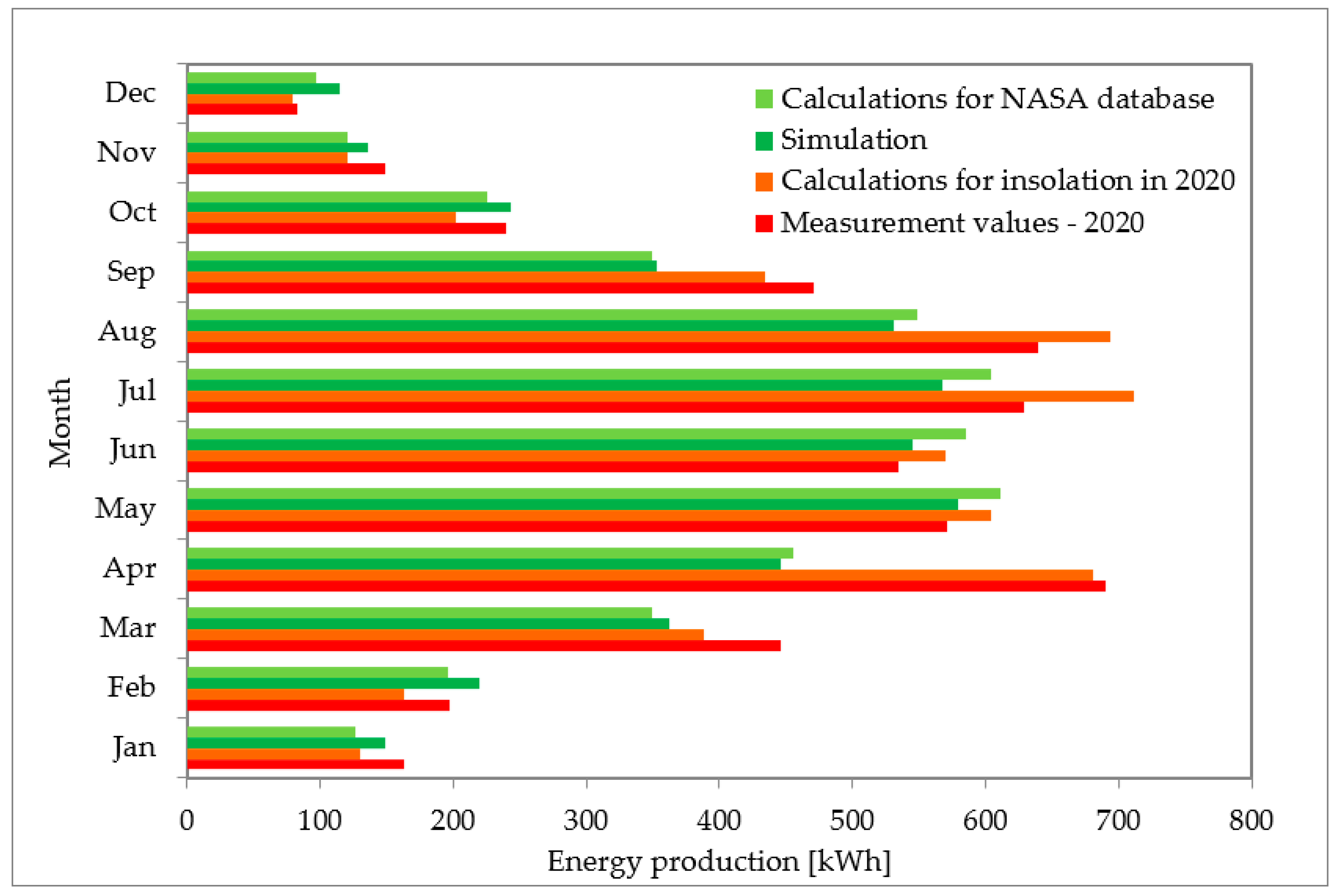
Increasing restrictions on the emission of greenhouse gases by the standards and the European Union’s policy aims at increasing the share of renewable energy sources in the energy mix of the Member States. Subsequently, we observe a rapid increase in the installed capacity of the renewable energy sources. Renewable energy sources are currently the fastest growing sectors of energy generation, specifically the photovoltaic sector. In 2005, the total installed capacity in photovoltaic installations in the European Union was about 2.17 GW, while in 2019 it was already over 130 GW. Currently, due to many forms of incentive governmental measures the construction of photovoltaic installations is rapidly increasing with installations mounted on private houses and buildings. The article presents selected issues concerning the failure modes of photovoltaic installations and a comparative assessment of the estimated and the real measured electrical production of an operational photovoltaic installation. The Solar-PV power plant design approach proposed in the paper considers the failure modes to enhance the plant’s reliability.
Keywords: energy; design; numerical; simulations; failure energy; design; numerical; simulations; failure