Article

Predicting the Amount of Electric Power Transaction Using Deep Learning Methods


1
Department of Electrical and Semiconductor, Chonnam National University, Yeosu 59626, Korea
2
Division of Electrical, Electronic Communication and Computer Engineering, Chonnam National University, Yeosu 59626, Korea
*
Author to whom correspondence should be addressed.
Energies 2020, 13(24), 6649; https://doi.org/10.3390/en13246649
Submission received: 20 November 2020 / Revised: 11 December 2020 / Accepted: 14 December 2020 / Published: 16 December 2020
(This article belongs to the Special Issue Soft Computing Techniques in Energy System)

Abstract

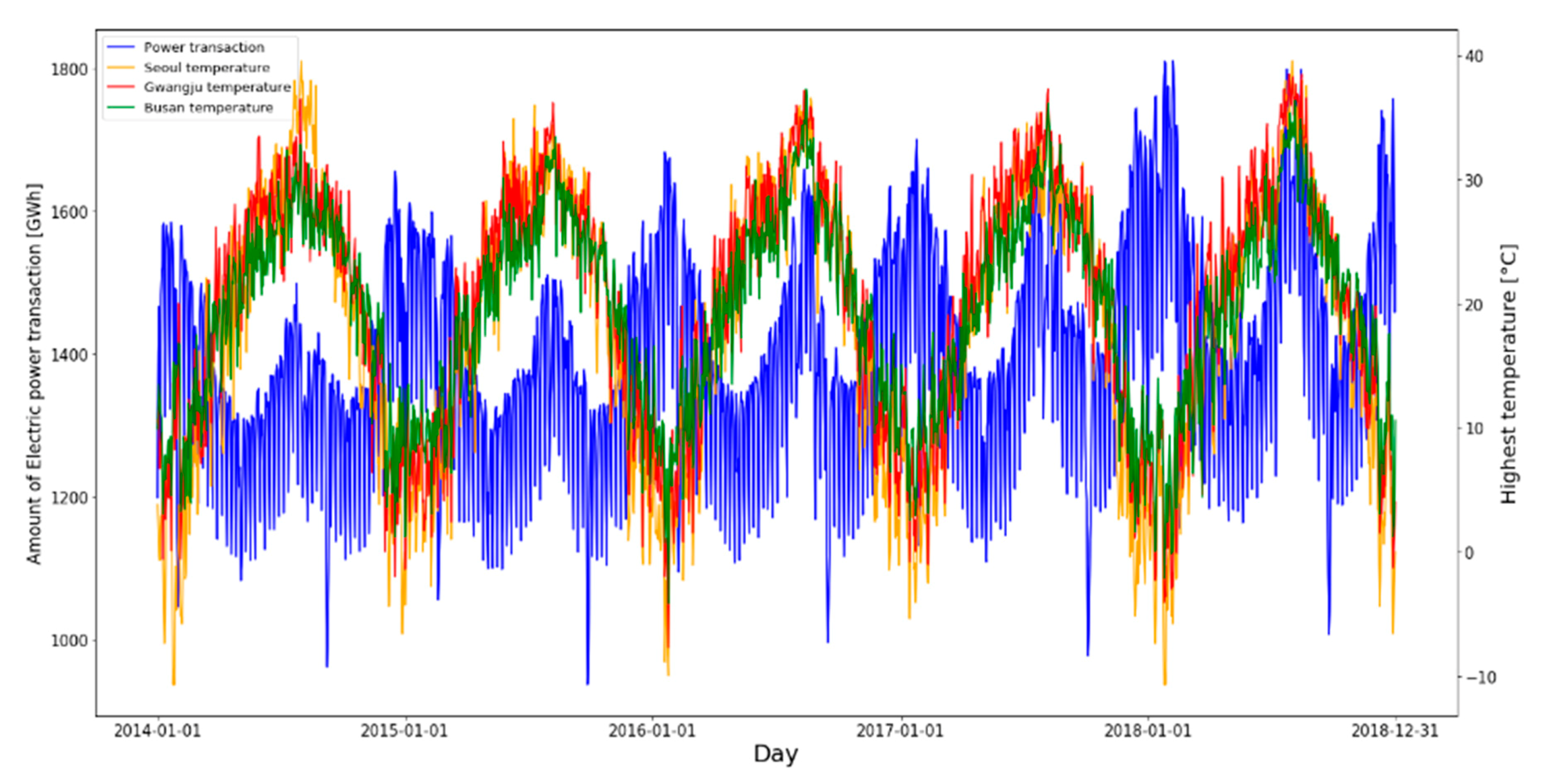
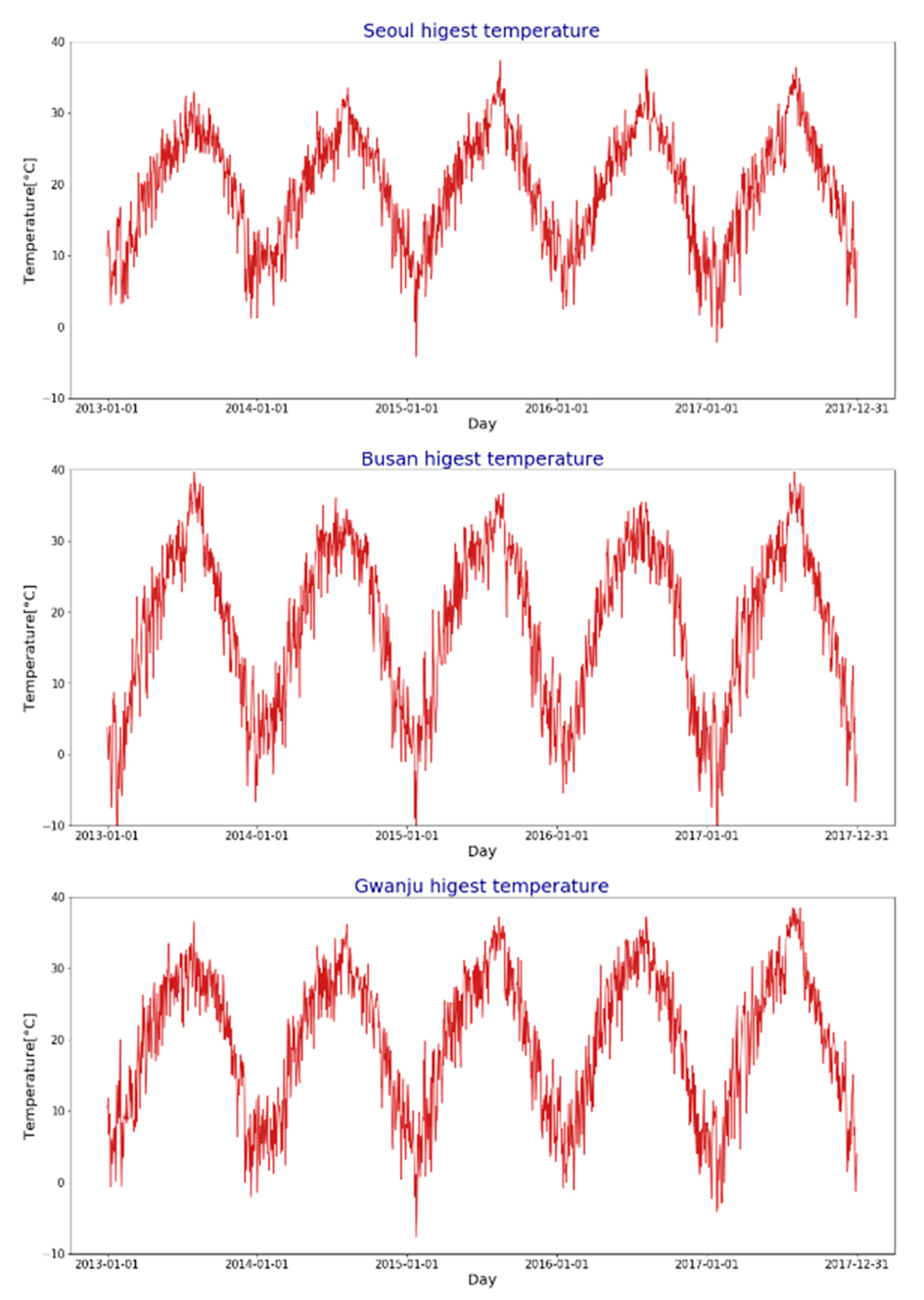
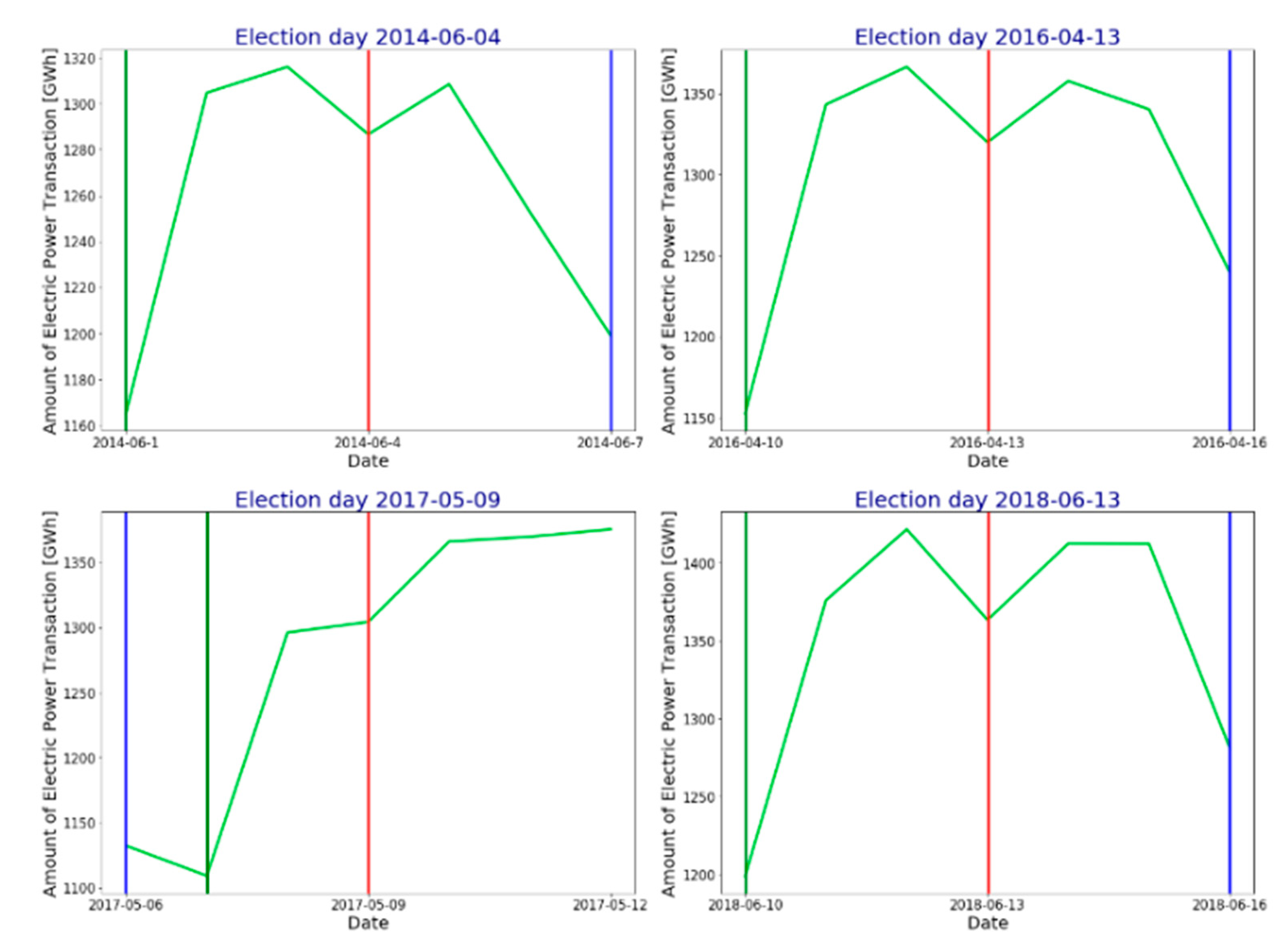
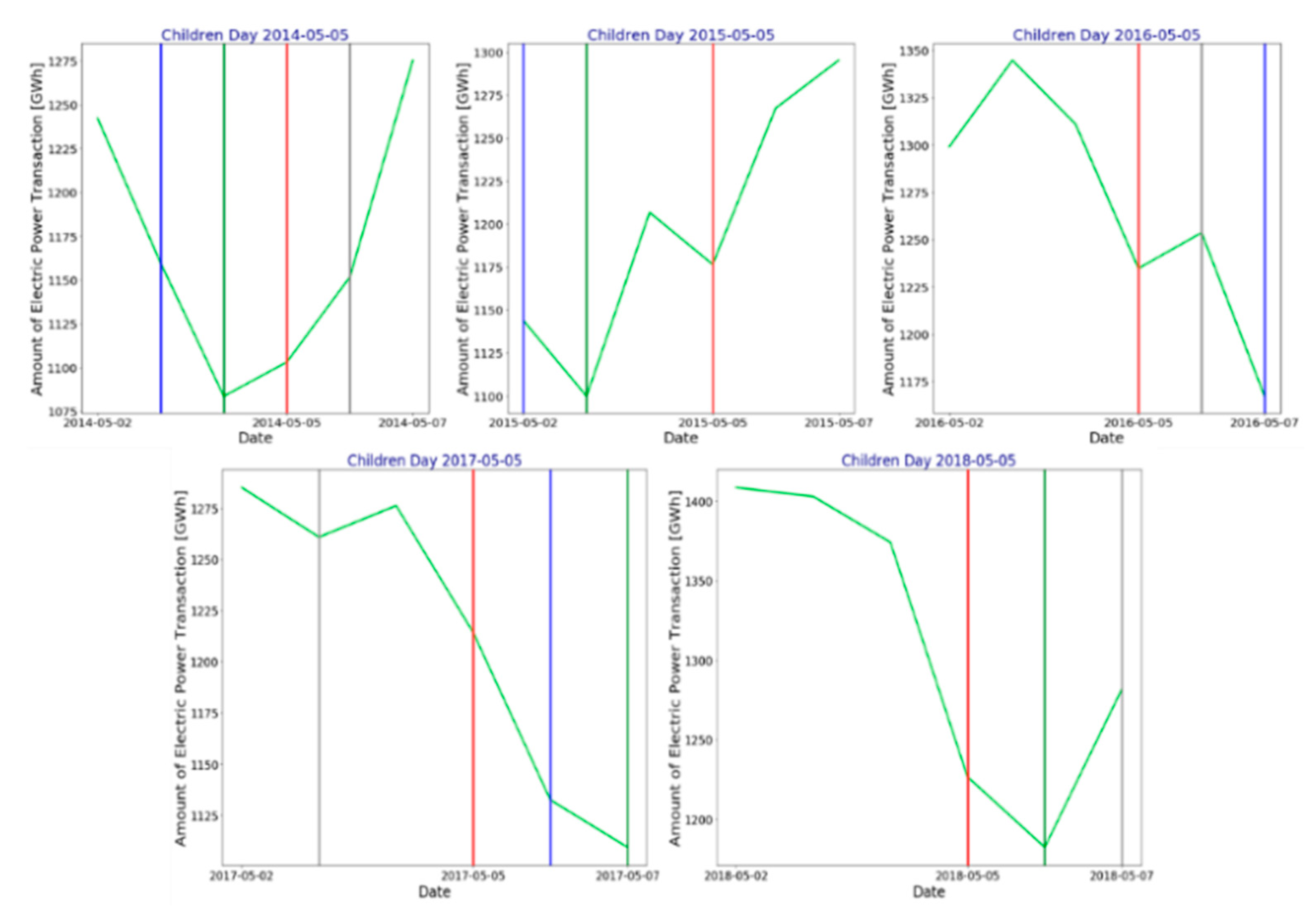
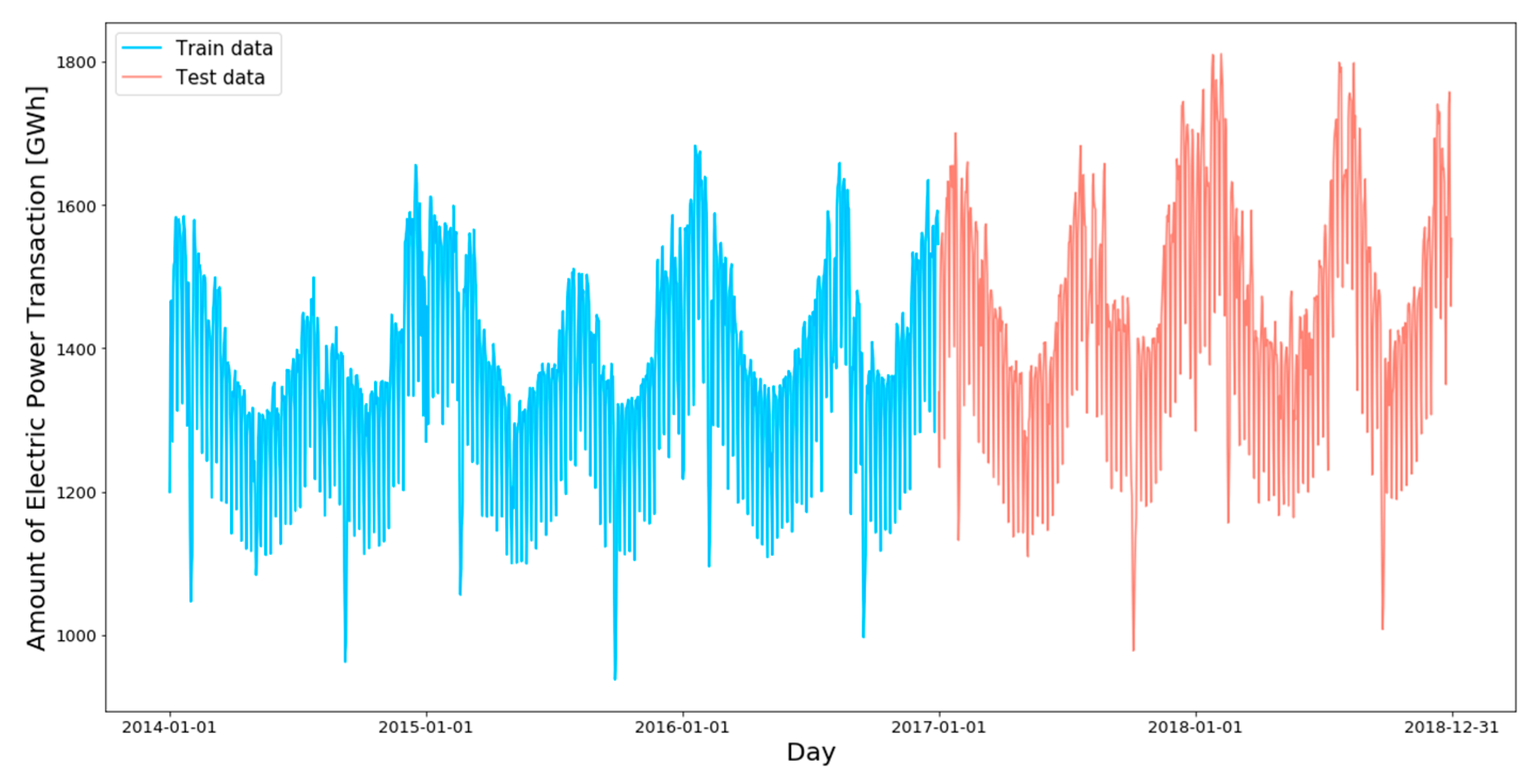
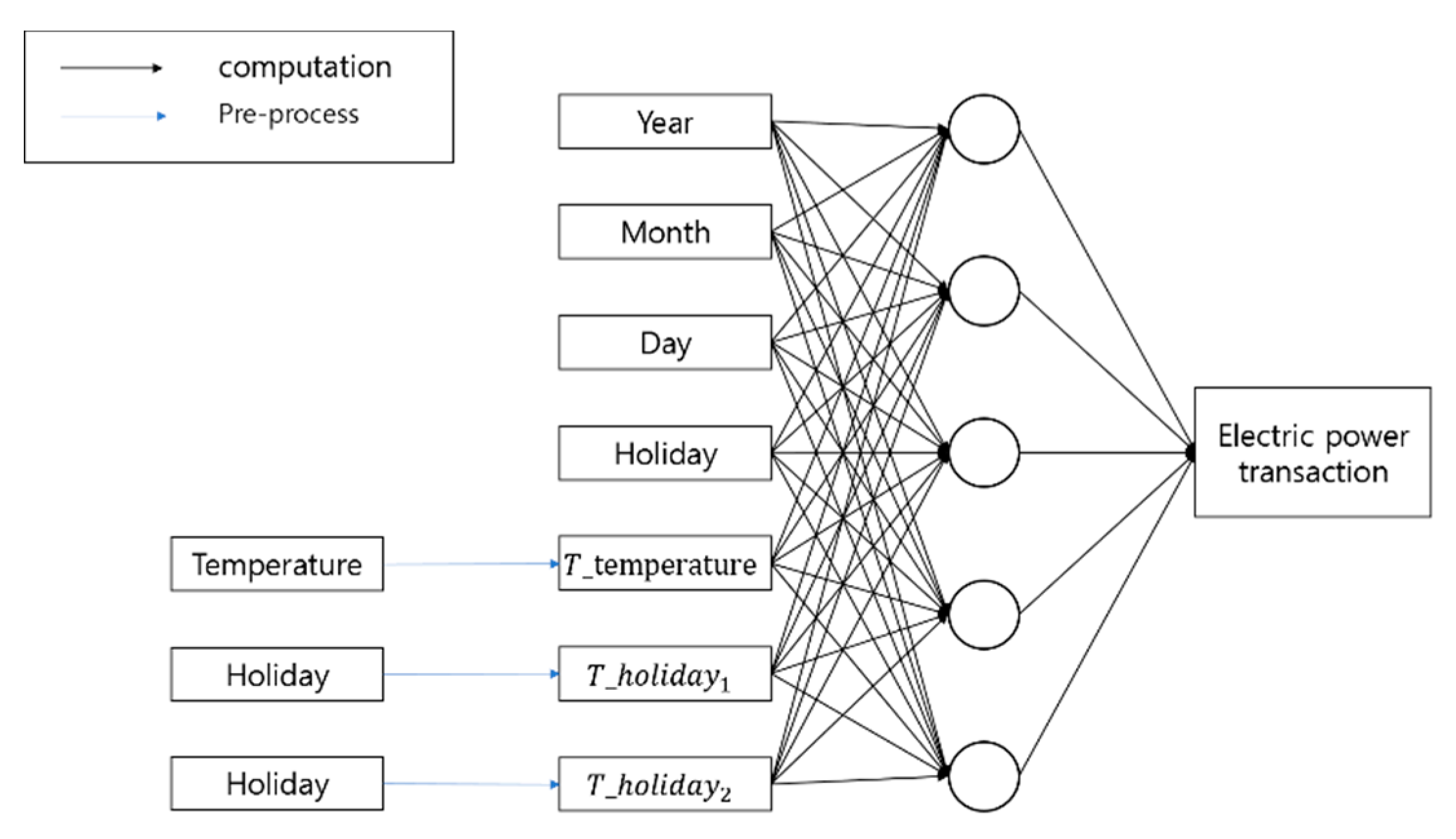
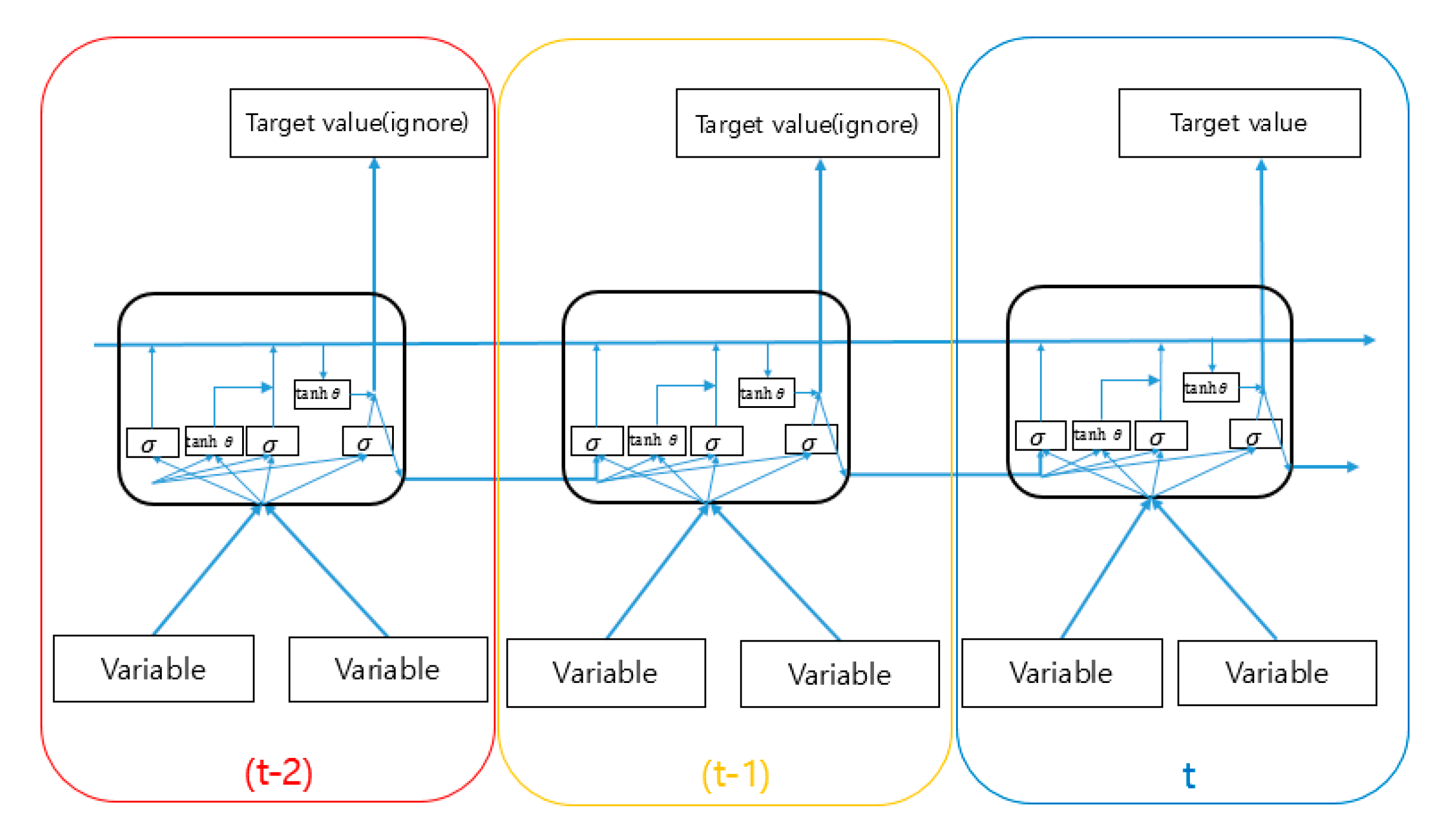
The most important thing to operate a power system is that the power supply should be close to the power demand. In order to predict the amount of electric power transaction (EPT), it is important to choose and decide the variable and its starting date. In this paper, variables that could be acquired one the starting day of prediction were chosen. This paper designated date, temperature and special day as variables to predict the amount of EPT of the Korea Electric Power company. This paper also used temperature data from a year ago to predict the next year. To do this, we proposed single deep learning algorithms and hybrid deep learning algorithms. The former included multi-layer perceptron (MLP), convolution neural network (CNN), long short-term memory (LSTM), gated recurrent unit (GRU), support vector machine regression (SVR), and adaptive network-based fuzzy inference system (ANFIS). The latter included LSTM + CNN and CNN + LSTM. We then confirmed the improvement of accuracy for prediction using pre-processed variables compared to original variables We also assigned two years of test data during 2017–2018 as variable data to measure high prediction accuracy. We then selected a high-accuracy algorithm after measuring root mean square error (RMSE) and mean absolute percent error (MAPE). Finally, we predicted the amount of EPT in 2018 and then measured the error for each proposed algorithm. With these acquired error data, we obtained a model for predicting the amount of EPT with a high accuracy.
Keywords: Korea electric power transaction; short-term load forecasting; prediction; power transaction; deep learning Korea electric power transaction; short-term load forecasting; prediction; power transaction; deep learning