Article

Application of Spectral Clustering Algorithm to ES-MDA with DCT for History Matching of Gas Channel Reservoirs


Petroleum and Marine Research Division, Korea Institute of Geoscience and Mineral Resources, Daejeon 34132, Korea
*
Author to whom correspondence should be addressed.
Energies 2019, 12(22), 4394; https://doi.org/10.3390/en12224394
Submission received: 24 September 2019 / Revised: 4 November 2019 / Accepted: 18 November 2019 / Published: 19 November 2019
(This article belongs to the Section L: Energy Sources)

Abstract

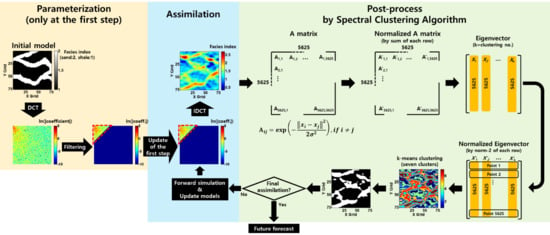
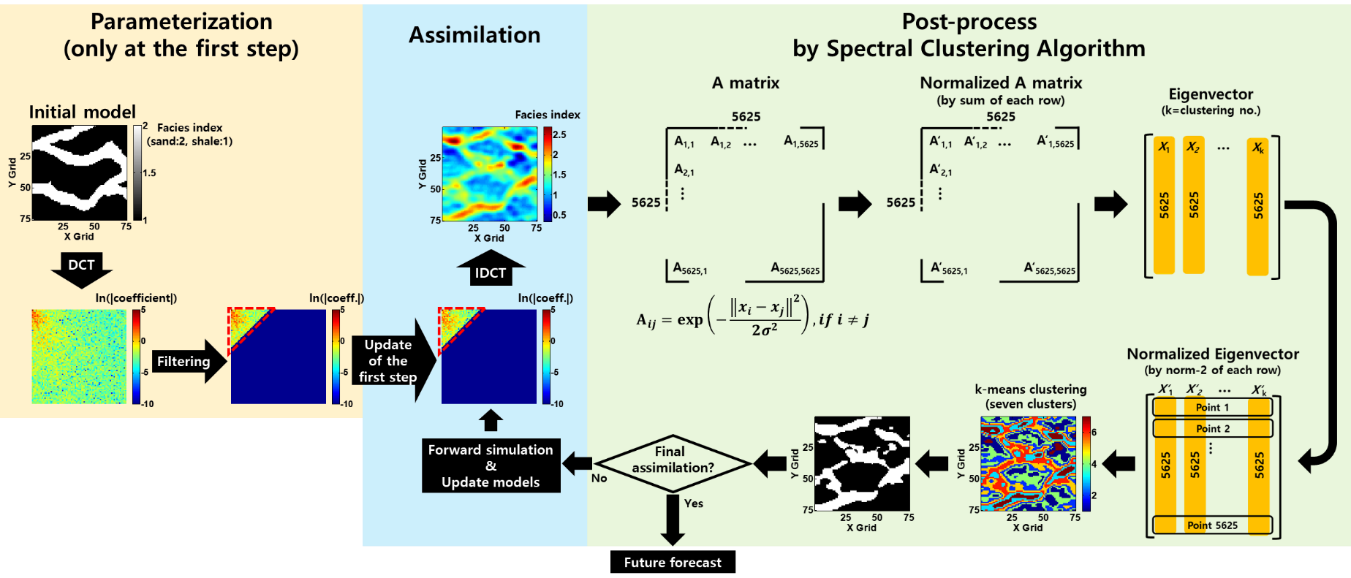
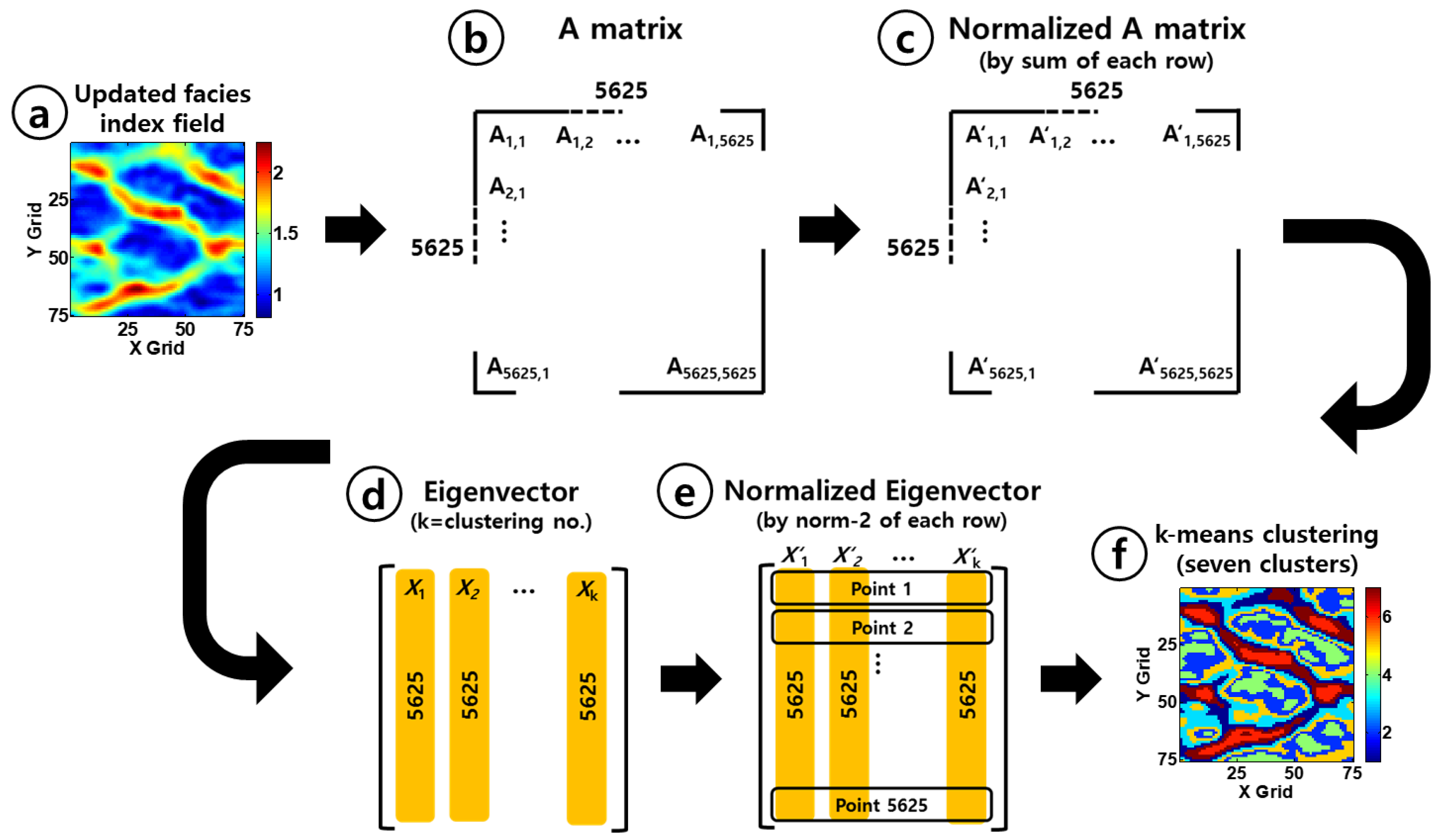
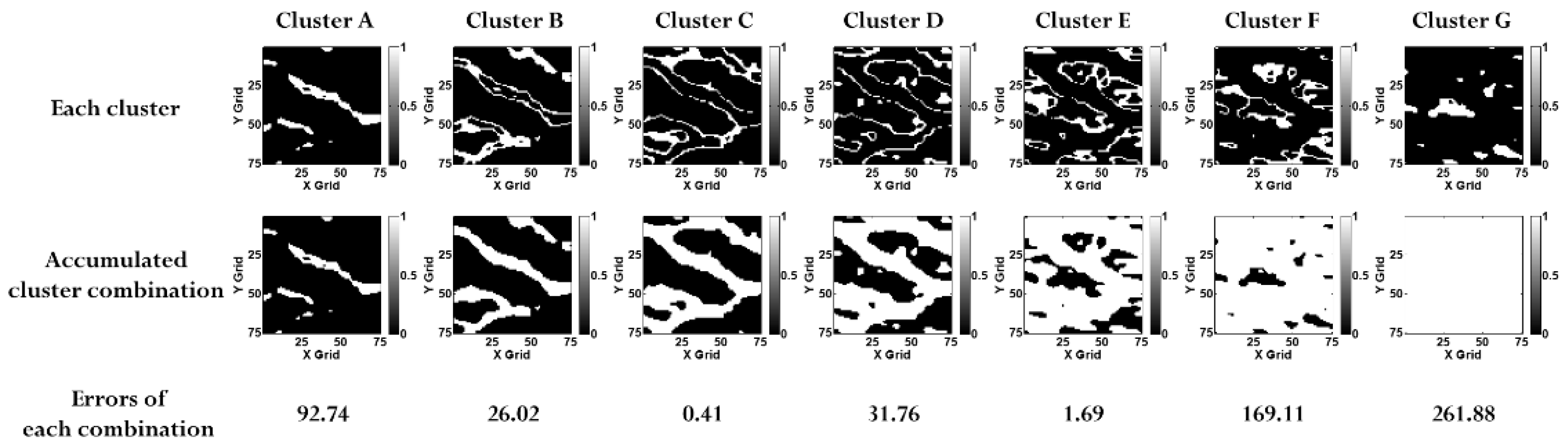
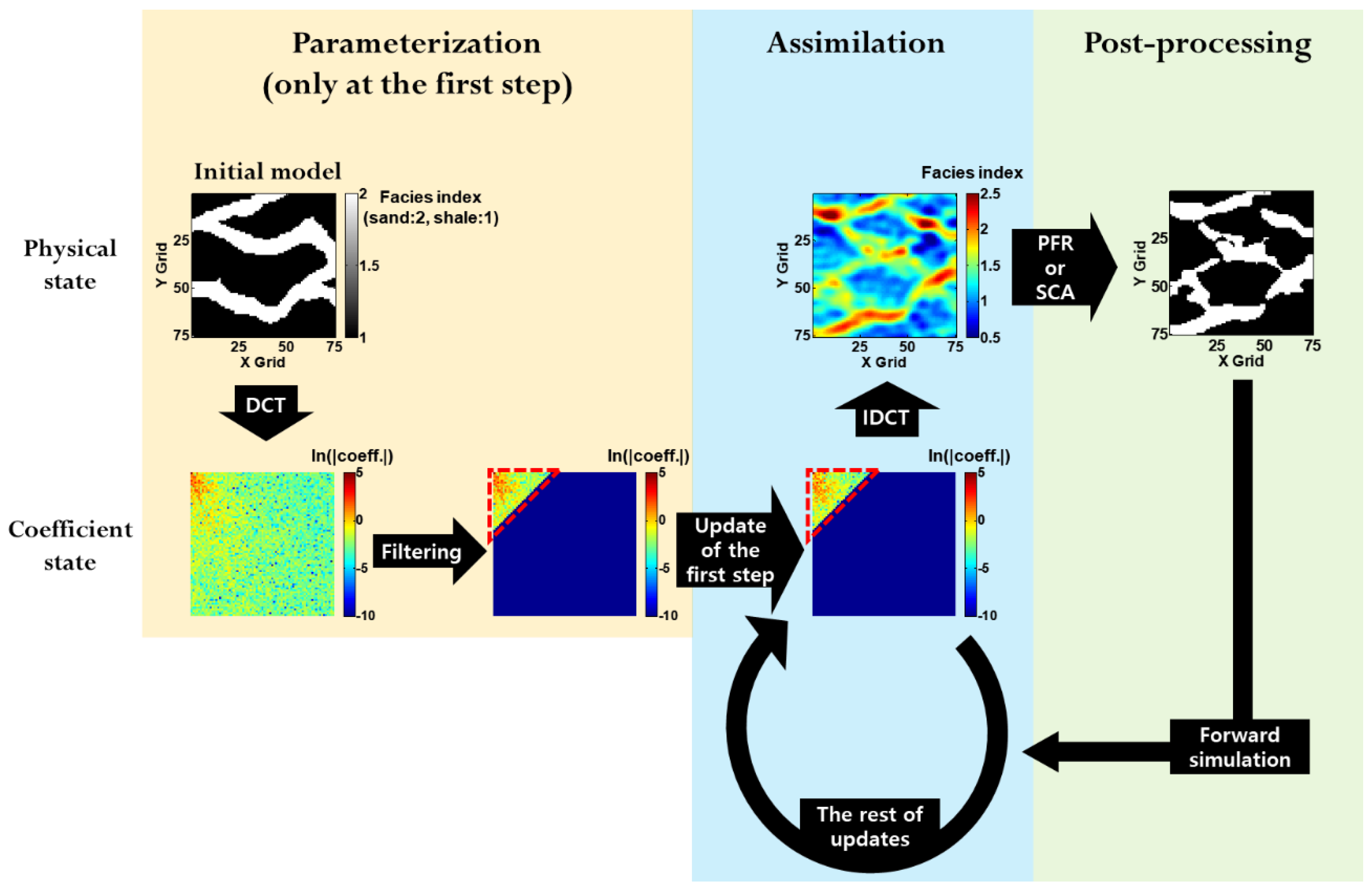
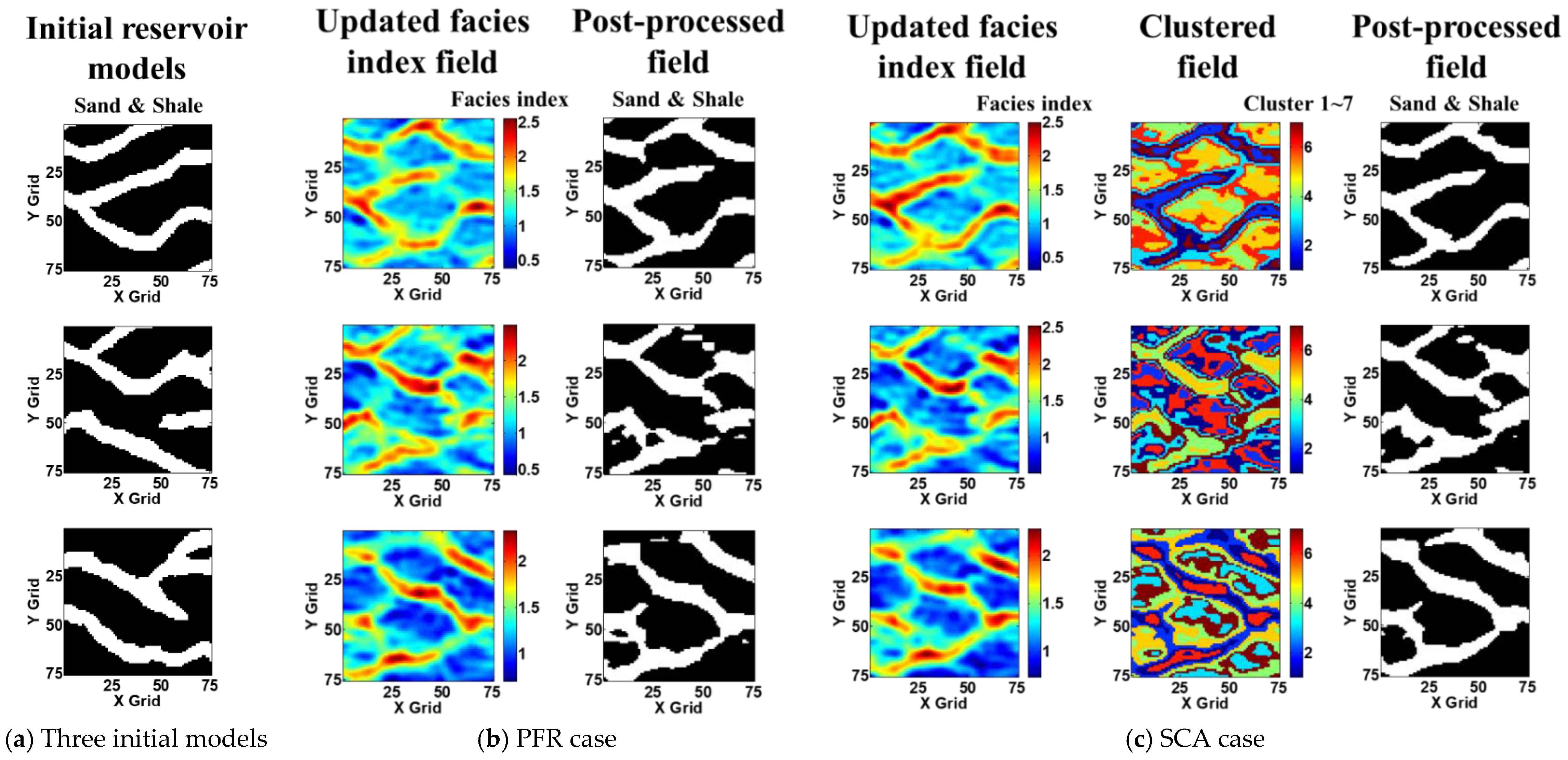
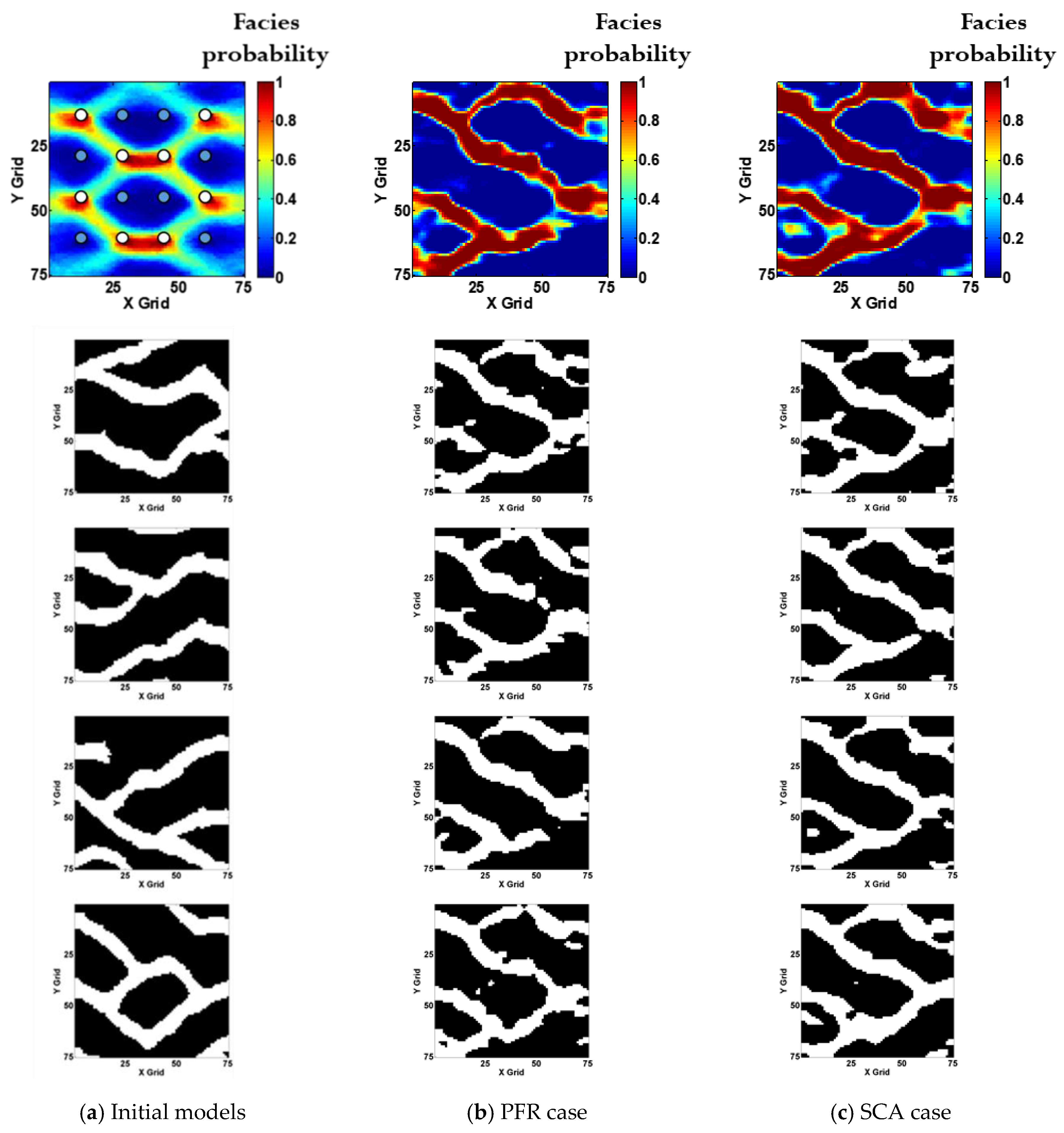
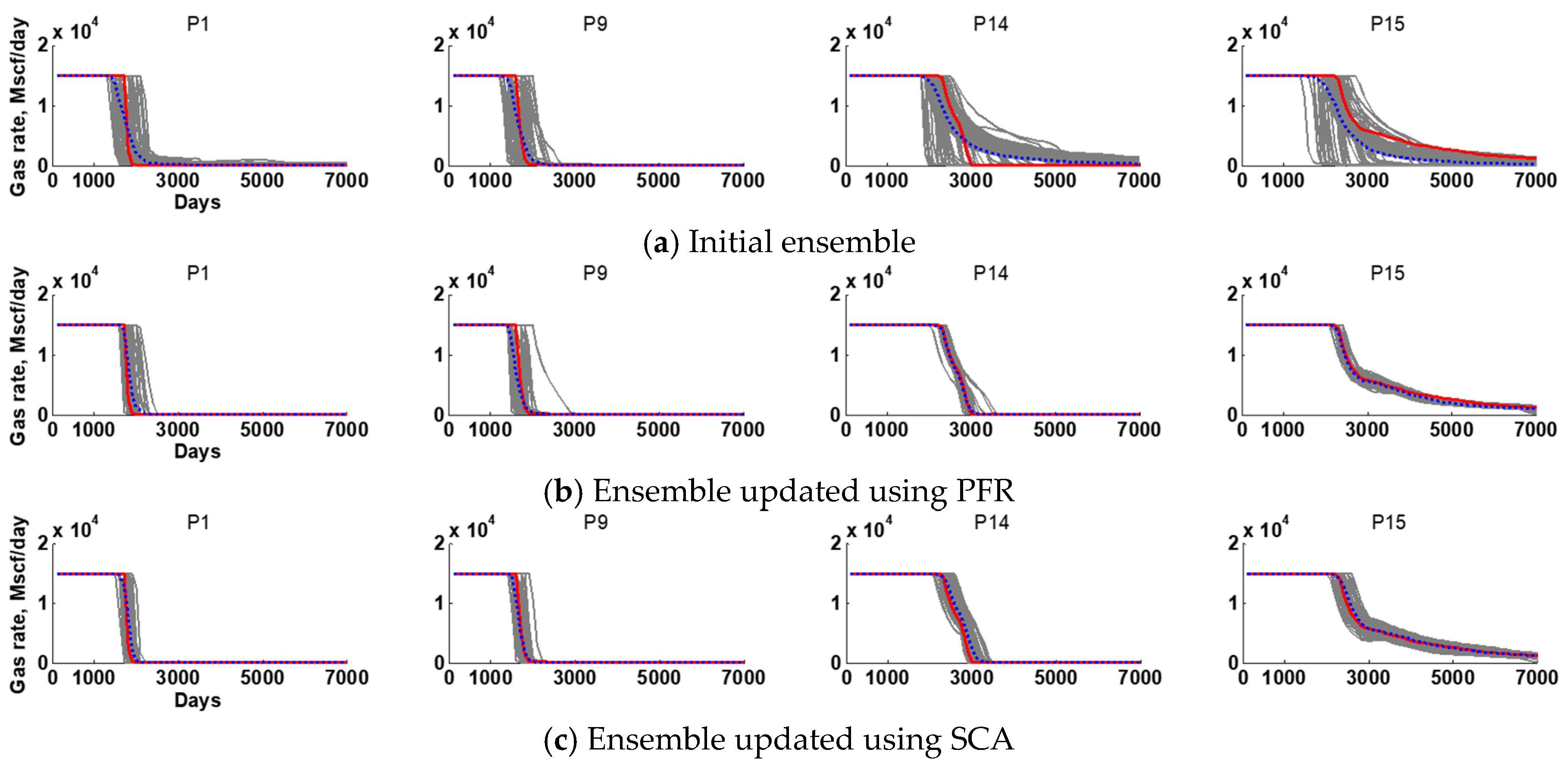
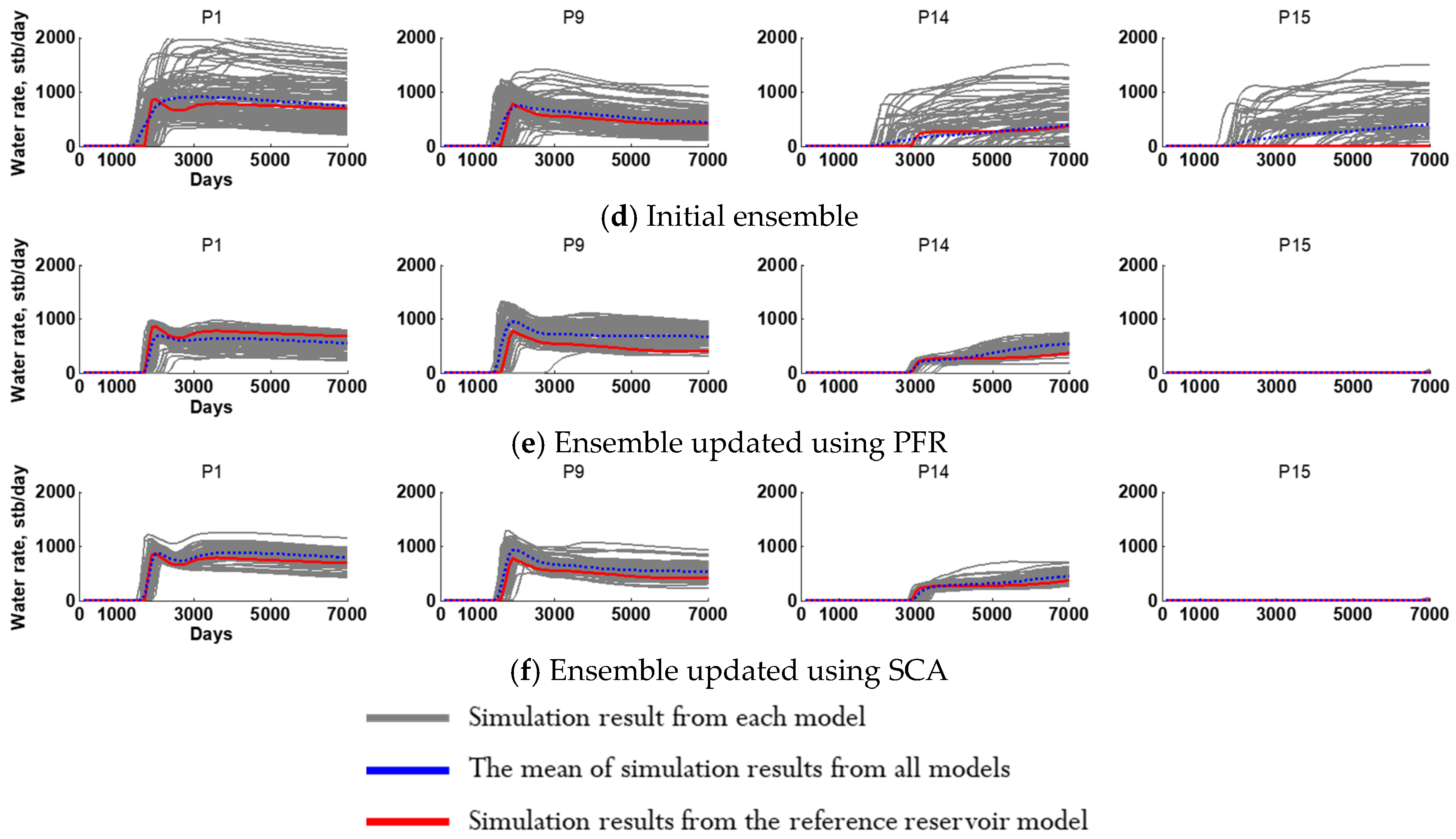
History matching is a calibration of reservoir models according to their production history. Although ensemble-based methods (EBMs) have been researched as promising history matching methods, reservoir parameters updated using EBMs do not have ideal geological features because of a Gaussian assumption. This study proposes an application of spectral clustering algorithm (SCA) on ensemble smoother with multiple data assimilation (ES-MDA) as a parameterization technique for non-Gaussian model parameters. The proposed method combines discrete cosine transform (DCT), SCA, and ES-MDA. After DCT is used to parameterize reservoir facies to conserve their connectivity and geometry, ES-MDA updates the coefficients of DCT. Then, SCA conducts a post-process of rock facies assignment to let the updated model have discrete values. The proposed ES-MDA with SCA and DCT gives a more trustworthy history matching performance than the preservation of facies ratio (PFR), which was utilized in previous studies. The SCA considers a trend of assimilated facies index fields, although the PFR classifies facies through a cut-off with a pre-determined facies ratio. The SCA properly decreases uncertainty of the dynamic prediction. The error rate of ES-MDA with SCA was reduced by 42% compared to the ES-MDA with PFR, although it required an extra computational cost of about 9 min for each calibration of an ensemble. Consequently, the SCA can be proposed as a reliable post-process method for ES-MDA with DCT instead of PFR.
Keywords: spectral clustering algorithm; ensemble smoother with multiple data assimilation; discrete cosine transform; preservation of facies ratio; channel connectivity spectral clustering algorithm; ensemble smoother with multiple data assimilation; discrete cosine transform; preservation of facies ratio; channel connectivity
Graphical Abstract