1. Introduction
Indonesia’s payment system has evolved rapidly in the post-COVID-19 period, largely driven by advancements in financial technology and the growing preference for cashless transactions. This transformation has been further supported by Law Number 4 of 2023 on Financial Sector Development and Strengthening, which emphasizes financial stability, innovation, inclusion, and consumer protection. In response, Bank Indonesia introduced the Indonesian Payment System Blueprint (BSPI) 2025 to build an integrated, secure, and efficient payment infrastructure. This initiative was later extended through BSPI 2030, which envisions a fully digital, inclusive, and interconnected payment ecosystem to support broader digital economic transformation (
Indonesia, 2019,
2024). Furthermore, technologies include QRIS, BI-FAST, and the National Standard for Open API Payment (SNAP) have enhanced the integration of fintech services into the national payment system, making it more efficient and dependable (
Aldi Lutfi & Dika, 2025).
Among the many advancements in digital payments, e-wallets have surfaced as a significant innovation. Indonesia is now recognised as one of the most rapidly expanding digital payment ecosystems in Southeast Asia, bolstered by extensive smartphone penetration, improved internet accessibility, and government efforts such as the National Non-Cash Movement. Popular platforms like GoPay, OVO, DANA, ShopeePay, and LinkAja have become integral to everyday transactions, especially among younger users. However, despite their widespread use, concerns about financial risk, data privacy, and cybersecurity continue to shape users’ decisions when adopting digital financial services.
Generation Z, defined as individuals born between 1997 and 2012, represents the largest share of Indonesia’s population. Data from BSPI 2030 indicates that this group accounted for approximately 75.49 million people, or 27.94% of the total population, in 2020 (
Indonesia, 2024), which aligns with the 2025 Population Census by BPS reporting around 74.9 million individuals (27.9%). Their willingness to adopt digital payment systems is influenced by perceived usefulness, ease of use, and social influence. Prior studies have highlighted the importance of information quality, service quality, environmental factors, and transaction speed in shaping behavioral intention (
Izdiar & Meiranto, 2024). Furthermore, satisfaction, availability of complete features, social support, and relatively lower transaction costs also encourage the use of digital wallets (
Dila & Kristina, 2020).
Having grown up in a highly digital environment, Generation Z tends to be more open to technological innovation, including financial technology. One key factor that drives this openness is personal innovativeness, which reflects an individual’s tendency to experiment with and adopt new technologies earlier than others. In the context of e-wallet usage, individuals with higher innovativeness are generally more receptive to change and more willing to engage with digital payment systems, supported by curiosity and trust in technology (
Bailey et al., 2022;
Jefferson, 2023;
Twum et al., 2021). Moreover,
Meiranto et al. (
2026) emphasize that personal innovativeness not only strengthens behavioral intention but also encourages actual usage of digital financial services among Generation Z.
Simultaneously, perceived security is a crucial determinant affecting the adoption of digital payment systems. This is especially important for Generation Z, who often depend on application-based platforms. Concerns around data breaches, abuse of personal information, cyberattacks, and digital fraud might elevate perceived risk. Consequently, confidence in the system’s capacity to protect data, ensure secure transactions, and mitigate possible financial loss is paramount. Studies have shown that higher perceived security leads to stronger intentions to use e-wallets (
Kinanti & Rahmiati, 2023;
Nguyen & Nguyen, 2026), with similar conclusions reported by
Widyanto et al. (
2021) and
Zhang et al. (
2019) in the context of mobile payment systems.
The Unified Theory of Acceptance and Use of Technology (UTAUT) is widely regarded as a robust framework for understanding technology adoption, particularly in fintech contexts. Many studies have applied UTAUT and its extension, UTAUT2, to examine the use of digital payment systems, including e-wallets and mobile payments. Findings consistently show that UTAUT variables significantly influence both behavioral intention and actual usage (
Alsharo et al., 2025;
Baxi et al., 2023;
Jamaludin et al., 2024;
Shukri et al., 2024). Similar findings were reported by
Timur et al. (
2025) and
Alfa’izy et al. (
2023), who stated that UTAUT variables are able to explain behavioral intention in using electronic and mobile payment systems, while
Prakarsa and Nursyanti (
2025) demonstrated its relevance in predicting e-marketplace usage. Other studies also indicate that UTAUT constructs significantly influence users’ intention to adopt e-wallet services (
Damayanti et al., 2021;
Ompusunggu & Anugrah, 2021;
Suroso & Al Fari, 2021). Moreover, UTAUT2 enhances the model by incorporating consumer-focused variables and has proven effective in predicting mobile and digital wallet usage (
Herzallah et al., 2025;
Lakshmanan & Shanmugavel, 2025;
Rayun et al., 2025), including in the context of e-wallet usage (
Dila & Kristina, 2020;
Hashim et al., 2023;
Hidayat et al., 2020).
The UTAUT3 framework was selected for this study because it provides a more comprehensive explanation of technology adoption behavior in rapidly evolving digital environments. Previous studies have successfully applied UTAUT3 in various contexts, including educational systems and digital banking services, demonstrating its strong ability to predict users’ behavioral intention and actual usage behavior. However, the application of UTAUT3 in financial technology research, particularly in the context of e-wallet adoption, remains relatively limited. Therefore, this study extends the application of UTAUT3 to better understand e-wallet adoption behavior among Generation Z users. UTAUT3 is particularly relevant because it incorporates personal innovativeness, which reflects Generation Z’s strong openness to technological innovation and new digital experiences. As a generation that is highly familiar with technology, Gen Z tends to adopt innovative digital services more quickly than previous generations. In addition, Generation Z is highly sensitive to security-related issues, including system reliability and the protection of personal data. Therefore, the inclusion of personal innovativeness and perceived security makes the UTAUT3 framework suitable for explaining e-wallet adoption behavior among Generation Z.
2. Theoretical Framework
2.1. Unified Theory of Use and Acceptance of Technology (UTAUT)
The acceptance and utilisation of digital financial technology have surged in recent years, propelled by advancements in digital information technology in Indonesia. Electronic wallets (e-wallets) have become a significant kind of digital financial innovation extensively used by consumers, especially Generation Z. One of the most widely used frameworks for explaining technology adoption in both mandatory and voluntary contexts is the Unified Theory of Acceptance and Use of Technology (UTAUT), introduced by
Venkatesh et al. (
2003). This model integrates eight major theories, including the Theory of Reasoned Action, the Theory of Planned Behavior, the Technology Acceptance Model, the Model of PC Utilization, the Innovation Diffusion Theory, the Motivation Model, the Social Cognitive Theory, and the combined TPB–TAM model. UTAUT proposes four main constructs, performance expectancy, effort expectancy, social influence, and facilitating conditions, that are used to predict behavioral intention and actual technology usage.
Venkatesh et al. (
2012) further enhanced the framework into UTAUT2 by integrating three supplementary constructs, which are hedonic motivation, price value, and habit, to more effectively elucidate technology adoption in consumer contexts. Furthermore,
Farooq et al. (
2017) extended UTAUT2 by integrating personal innovativeness to examine its influence on behavioral intention and actual usage of information technology in the education sector, particularly within the lecturer capture system (LCS). The addition of personal innovativeness is considered important because individuals with higher levels of innovativeness tend to be more open to experimenting with and adopting new technologies.
Previous research on e-wallet adoption using UTAUT and UTAUT2 has produced inconsistent findings.
Rayun et al. (
2025) applied UTAUT2 to mobile wallet adoption in Bangladesh and found that performance expectancy and effort expectancy significantly influenced behavioral intention. Meanwhile,
Alsharo et al. (
2025) extended UTAUT by integrating perceived trust and perceived customer value, and introduced awareness of security measures as a moderating variable. Their findings demonstrated that facilitating conditions exerted no significant influence on behavioral intention and that awareness of security measures did not modify the relationship among facilitating conditions, perceived trust, and behavioural intention.
Herzallah et al. (
2025) further developed UTAUT2 by incorporating personal innovativeness and discovered that hedonic motivation did not significantly influence Generation Z’s intention to utilise mobile wallets, and personal innovativeness did not moderate the relationship between performance expectancy, effort expectancy, and behavioral intention. Other studies also reported inconsistent findings. Effort expectancy, hedonic motivation, and price value were found not to influence behavioral intention to use e-wallets (
Wiwik, 2024). Conversely,
Hashim et al. (
2023) found that hedonic motivation, habit, compatibility, and self-efficacy had a substantial effect on e-wallet adoption.
Hidayat et al. (
2020) integrated UTAUT2 with perceived trust and perceived risk, revealing that performance expectancy, hedonic motivation, and price value did not significantly influence consumer acceptance of e-wallets.
Dila and Kristina (
2020) found that performance expectancy, effort expectancy, and hedonic motivation did not significantly affect Generation Z’s propensity to utilise the OVO digital wallet.
Subsequent research on digital payment acceptance utilising the UTAUT framework indicates divergent outcomes.
Timur et al. (
2025) discovered that performance and effort expectancy did not significantly influence the behavioural intention to embrace e-payment systems.
Dinda et al. (
2024) who integrated UTAUT and TAM, revealed that facilitating factors and lifestyle compatibility substantially influenced the inclination to utilise cashless payments.
Jamaludin et al. (
2024), determined that UTAUT variables, including performance expectancy, effort expectancy, and facilitating conditions, are critical factors influencing the desire to use e-wallets. Nonetheless, numerous studies indicated that performance expectancy, effort expectancy, facilitating conditions, and social influence did not significantly impact behavioural intention (
Alfa’izy et al., 2023;
Baxi et al., 2023;
Harahap & Rahmayanti, 2023;
Mulyati et al., 2023). Conversely, other findings indicate that UTAUT variables significantly influence behavioral intention (
Ompusunggu & Anugrah, 2021), while social influence was identified as the strongest predictor (
Suroso & Al Fari, 2021), and performance expectancy was reported as insignificant in another study (
Damayanti et al., 2021).
2.2. Performance Expectancy
Performance expectancy refers to the degree to which an individual believes that using a system or technology will provide benefits and enhance effectiveness as well as performance outcomes in carrying out certain activities (
Venkatesh et al., 2003;
Venkatesh et al., 2012) Generation Z believes that electronic wallets simplify and accelerate transaction processes, improve payment effectiveness, and offer more practical transactions, thereby increasing their behavioral intention to use e-wallets. Individuals’ behavioral intention to adopt financial technology is influenced by performance expectancy (
Amnas et al., 2023;
Bajunaied et al., 2023;
Srivastava et al., 2023;
Xie et al., 2021). Performance expectancy also affects behavioral intention to adopt and use e-wallets and mobile wallets (
Jamaludin et al., 2024;
Ompusunggu & Anugrah, 2021;
Wiwik, 2024).
H1: Performance Expectancy positively affects Generation Z’s behavioral intention to use e-wallets.
2.3. Effort Expectancy
Effort expectancy is the degree of an individual’s belief or the extent to which an individual perceives that a system or technology is easy to use, both in organizational or corporate settings and among consumers (
Venkatesh et al., 2003;
Venkatesh et al., 2012). Effort expectancy reflects the ease of using information technology and the perception that a technology or system does not require excessive effort and is not difficult to use (
Alkhwaldi et al., 2022). In the context of e-wallet usage, Generation Z, an adaptive generation, expects e-wallets to be very easy to use, uncomplicated, and require minimal effort, thereby increasing their intention to use such systems. Consumers using mobile wallets perceive them as easy to use and not requiring excessive effort, which in turn encourages their intention to adopt mobile wallets (
Alsharo et al., 2025;
Herzallah et al., 2025;
Ompusunggu & Anugrah, 2021;
Rayun et al., 2025). Similarly, e-wallet users do not experience significant difficulties, find them easy to learn, and therefore are more likely to intend to use them (
Damayanti et al., 2021;
Jameel et al., 2024;
Mulyati et al., 2023). Effort expectancy has a significant positive influence on individuals’ behavioral intention to adopt financial technology (
Amnas et al., 2023;
Bajunaied et al., 2023;
Srivastava et al., 2023).
H2: Effort expectancy positively affects Generation Z’s behavioral intention to use e-wallets.
2.4. Social Influence
Social influence reflects the extent to which users perceive that important people around them approve of or support the use of a technology (
Hameed et al., 2024). Social influence plays an important role in shaping Generation Z’s behavioral intention to use e-wallets, with encouragement, recommendations, and approval from significant others such as peers, family, and the surrounding social environment increasing their likelihood of adoption and use. The adoption of mobile payment systems is influenced by the social environment, including friends and relatives of the user (
Bailey et al., 2022;
Widyanto et al., 2021). According to
Sivathanu (
2019) and
Padma Kiran and Vedala (
2025), social influence affects users’ behavioral intention to use digital payment systems. The surrounding environment, friends, and relatives play a role in increasing consumers’ behavioral intention to use e-wallets (
Izdiar & Meiranto, 2024;
Rafi et al., 2024;
Zaidan et al., 2024). Social influence also affects the behavioral intention to adopt financial technology and electronic payments (
Alduais & Al-Smadi, 2022;
Chan et al., 2022;
Engku Abdullah et al., 2024).
H3: Social influence positively affects Generation Z’s behavioral intention to use e-wallets.
2.5. Facilitating Conditions
Facilitating conditions refer to the extent to which individuals believe that adequate technical and organizational infrastructure is available to support the use of a system or technology (
Bommer et al., 2022;
Venkatesh et al., 2003). Generation Z, as a digitally native cohort, is more likely to adopt services supported by sufficient infrastructure, such as internet access, smartphones, and technical support, thereby increasing their intention to use e-wallets. Prior studies show that adequate infrastructure and facilitating resources significantly influence consumers’ behavioral intention to use mobile, electronic and digital payment services (
Al-Sabaawi et al., 2021;
Alduais & Al-Smadi, 2022;
Gupta & Arora, 2019;
Matheis et al., 2026;
Nandru et al., 2023;
Negm, 2023;
Pal et al., 2025;
Timur et al., 2025;
Upadhyay et al., 2022), as well as their intention to adopt financial technology, including e-wallets (
Ahmad & Yahaya, 2022;
Alkhwaldi et al., 2022;
Hidayat et al., 2020;
Shukri et al., 2024).
Facilitating conditions also reflect Generation Z’s perception of the availability of resources, knowledge, and technical support in using e-wallets. The better these conditions, the higher the likelihood of both intention and actual usage in daily transactions. Empirical evidence confirms that facilitating conditions influence not only behavioral intention but also actual usage behavior of financial technology, e-wallets and digital payment systems (
Dila & Kristina, 2020;
Rahim et al., 2022;
Sobti, 2019;
Tariq et al., 2024). Overall, the availability of adequate facilities and resources strengthens Generation Z’s behavioral intention, which subsequently leads to actual e-wallet usage. In this relationship, behavioral intention acts as a mediating variable between facilitating conditions and usage behavior across various contexts, such as digital payment systems, e-government (SAKTI), and digital banking (
Manrai et al., 2021;
Meiranto et al., 2024;
Meiranto et al., 2026).
H4: Facilitating conditions positively influence Generation Z’s behavioral intention to use e-wallets.
H5: Facilitating conditions positively influence Generation Z’s usage behavior of e-wallets.
H6: Behavioral intention mediates the relationship between facilitating conditions and Generation Z’s usage behavior of e-wallets.
2.6. Habit
Habit refers to the degree to which individuals use a system or technology automatically as a result of prior learning and accumulated usage experience, so that the behavior is carried out with minimal conscious effort (
Limayem & Hirt, 2003;
Venkatesh et al., 2012). In the context of Generation Z, who are highly familiar with digital technology, repeated use of financial applications such as e-wallets can foster stronger intentions to continue their usage. The greater the level of habit, the higher the likelihood that individuals will develop behavioral intentions to use e-wallets. Users who are accustomed to technology generally show a stronger intention to adopt e-wallets (
Lakshmanan & Shanmugavel, 2025;
Nguyen & Nguyen, 2026;
Ramadhan et al., 2019;
Wiwik, 2024). Furthermore, familiarity with technology also contributes to shaping behavioral intentions toward the use of digital payment systems, financial technology, and pay-later services (
Amnas et al., 2023;
Azman Ong et al., 2023;
Raj et al., 2024).
Habit also has a direct effect on actual usage behavior, as individuals tend to repeatedly perform activities that have become part of their daily routines. Therefore, habit plays a significant role in strengthening both behavioral intention and actual e-wallet usage among Generation Z. Prior studies have confirmed that habit significantly influences e-wallet usage behavior (
Hashim et al., 2023;
Ramadhan et al., 2019). Furthermore, behavioral intention mediates the relationship between habit and usage behavior, where established habits strengthen the intention to use e-wallets, which in turn encourages actual usage. This mediating role has been supported in studies on digital payment systems (
Manrai et al., 2021), the SAKTI e-government system (
Meiranto et al., 2024), and digital banking systems (
Meiranto et al., 2026).
H7: Habit positively influences Generation Z’s behavioral intention to use e-wallets.
H8: Habit positively influences Generation Z’s e-wallet usage behavior.
H9: Behavioral intention mediates the relationship between habit and Generation Z’s e-wallet usage behavior.
2.7. Hedonic Motivation
Hedonic motivation is the level of pleasure or enjoyment experienced by individuals when using technology, as well as the ease they perceive during its use (
Candra et al., 2023;
Venkatesh et al., 2012). Hedonic motivation reflects the degree of enjoyment felt by Generation Z when using e-wallets; thus, the higher the level of enjoyment, the greater their behavioral intention to use e-wallets in daily transactions. Consumers’ behavioral intention to use e-marketplaces and digital wallets is influenced by enjoyment and pleasure (
Baxi et al., 2023;
Lakshmanan & Shanmugavel, 2025;
Prakarsa & Nursyanti, 2025). Hedonic motivation also affects consumers’ behavioral intention to use mobile banking and e-wallets (
Alalwan et al., 2017;
Dila & Kristina, 2020;
Farzin et al., 2021).
H10: Hedonic motivation positively influences Generation Z’s behavioral intention to use e-wallets.
2.8. Price Value
Price value refers to an individual’s cognitive evaluation of the trade-off between the benefits gained and the monetary costs incurred in using technology (
Venkatesh et al., 2012). It is also considered a measure of the net benefits obtained from using technology (
Garcia de Blanes Sebastian et al., 2022). Price value reflects Generation Z’s perception of the balance between the benefits and costs of using e-wallets; thus, the greater the perceived benefits relative to the costs, the stronger their behavioral intention to use e-wallets for daily transactions. Price value influences behavioral intention to use financial technology (
Amnas et al., 2023;
Restuputri et al., 2023). When the perceived benefits outweigh the costs, consumers’ behavioral intention to use mobile banking increases (
Alalwan et al., 2017;
Farzin et al., 2021).
H11: Price value positively influences Generation Z’s behavioral intention to use e-wallets.
2.9. Personal Innovativeness
Personal innovativeness refers to an individual’s tendency to adopt new technologies earlier than others (
Agarwal & Prasad, 1998) and reflects openness to innovation as well as faster adoption behavior (
Li et al., 2021;
Patil et al., 2020). Generation Z, with higher innovativeness, is more receptive to digital innovations such as e-wallets, thereby strengthening their behavioral intention to use them. This trait significantly influences intention to adopt FinTech (
Shaikh & Amin, 2023;
Yuliawati et al., 2023) as well as e-wallets, mobile internet, and mobile self-service banking (
Alalwan et al., 2018;
Giovanis et al., 2019;
Truc, 2024).
Moreover, personal innovativeness indicates the extent to which individuals, especially Generation Z, are motivated to explore new technologies, increasing their likelihood of actively using e-wallets in daily transactions. It also affects actual usage behavior in digital banking (
Bhatnagr & Rajesh, 2023;
Meiranto et al., 2026). Higher innovativeness leads to stronger behavioral intention, which in turn mediates actual usage behavior. In the digital banking context, this mediation effect has been identified as partial (
Meiranto et al., 2026). In the context of e-wallet adoption among Generation Z, the inclusion of behavioral intention as a mediating variable represents a novel extension of the UTAUT model.
H12: Personal innovativeness positively influences Generation Z’s behavioral intention to use e-wallets.
H13: Personal innovativeness positively influences Generation Z’s e-wallet usage behavior.
H14: Behavioral intention mediates the relationship between personal innovativeness and Generation Z’s e-wallet usage behavior.
2.10. Perceived Security
Perceived security refers to users’ perception of safety when using information technology (
Alfa’izy et al., 2023;
Chawla & Joshi, 2019;
Yenisey et al., 2005), including their belief that systems can protect personal data and financial transactions from misuse. For Generation Z, accustomed to digital environments, this perception is essential for building trust in e-wallet usage. Higher perceived security increases their intention to use e-wallets because they feel safer during transactions. When users perceive adequate security in e-wallets and m-wallets, they are more likely to develop behavioral intentions to use them (
Nguyen & Nguyen, 2026;
Salah & Ayyash, 2024), as well as intentions toward m-payment, digital payment, and cashless payment systems (
Alfa’izy et al., 2023;
Azman Ong et al., 2023;
Liu et al., 2024;
Sakib et al., 2024).
Moreover, perceived security directly influences usage behavior by increasing the frequency and consistency of e-wallet use in daily life. Security levels also affect digital payment adoption behavior (
Birigozzi et al., 2025;
Karmaker et al., 2025). Higher perceived security strengthens Generation Z’s intention to use e-wallets, which in turn leads to actual usage, as individuals tend to act on their intentions. Therefore, behavioral intention serves as a mediating variable linking perceived security to e-wallet usage. Incorporating perceived security into the UTAUT framework represents a research novelty, positioning security as a key factor in information technology adoption.
H15: Perceived security positively influences Generation Z’s behavioral intention to use e-wallets.
H16: Perceived security positively influences Generation Z’s e-wallet usage behavior.
H17: Behavioral intention mediates the relationship between perceived security and Generation Z’s e-wallet usage behavior.
2.11. Behavioral Intention
Behavioral intention refers to the degree of an individual’s tendency or motivation to use a system or technology in the future, reflecting their readiness to translate such intention into actual usage (
Patil et al., 2020;
Venkatesh et al., 2003). Behavioral intention significantly influences e-wallet usage among Generation Z. The stronger the intention, the greater the likelihood of actual use, as individuals tend to translate their intentions into action. Therefore, behavioral intention is a key driver of e-wallet usage. The intention to use e-wallets influences millennials’ usage behavior (
Ramadhan et al., 2019), as well as consumers’ behavior in adopting cashless transaction systems (
Sakib et al., 2024).
Bhatnagr and Rajesh (
2023) and
Meiranto et al. (
2026) provide empirical evidence that behavioral intention affects the behavior of using digital banking services.
H18: Behavioral intention positively influences Generation Z’s use of e-wallets.
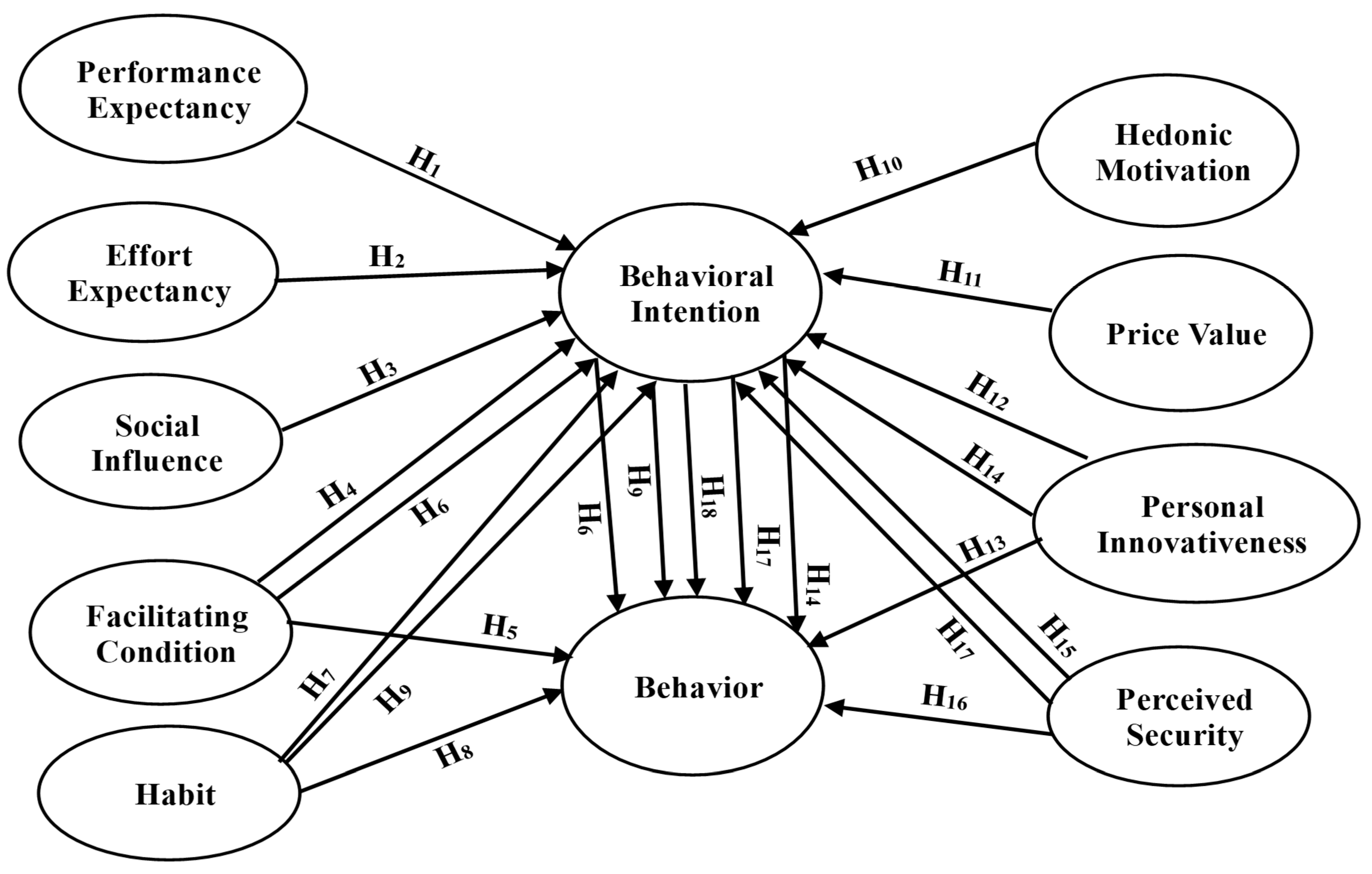
Figure 1 presents the research model illustrating the relationships among variables within the UTAUT framework, including factors influencing behavioral intention and e-wallet usage behavior.
3. Research Methodology
3.1. Research Instrument
The data for this study were collected using a structured questionnaire designed to gather information on respondents’ characteristics and their perceptions of the research variables. In quantitative research, questionnaires are widely used as data collection instruments because they enable researchers to obtain data systematically, in a standardized format, and efficiently from a large number of respondents (
Hazzi & Maldaon, 2015;
Ya’kob et al., 2023). The questionnaire consisted of two main sections.
Section 1 contained questions related to respondents’ demographic characteristics, including age, gender, type of digital wallet (e-wallet) used, and duration of use. These demographic data provide an overview of the respondents’ profiles and serve as contextual information for the data analysis.
Section 2 included a series of statements designed to measure the research constructs. Each variable was operationalized through several indicators adapted from previous studies and adjusted to the context of e-wallet users. The indicators for performance expectancy, effort expectancy, facilitating conditions, social influence, behavioral intention, and use behavior were adapted from
Upadhyay et al. (
2022). Hedonic motivation, habit, and personal innovativeness were adopted from
Hashim et al. (
2023), price value from
Amnas et al. (
2023), and perceived security from
Lim et al. (
2024). All items were measured using a five-point Likert scale ranging from 1 (strongly disagree) to 5 (strongly agree). The Likert scale is considered effective for measuring attitudes, perceptions, and respondents’ levels of agreement systematically (
Huh & Gim, 2025;
Koo & Yang, 2025).
Prior to the main data collection, the questionnaire was tested in a pilot study to ensure wording clarity, instrument reliability, and the appropriateness of the indicators. The pilot study involved 30 respondents who shared characteristics similar to those of the target population. This number is considered sufficient for preliminary reliability and feasibility testing in survey research (
Bujang et al., 2024;
In, 2017). Based on the pilot study results, the questionnaire was refined to improve clarity and readability. Consequently, the number of statements was reduced from 42 to 38 items, as shown in
Appendix A. Research Questionnaire. After these revisions, the final version of the questionnaire was used for the main data collection (
Subhaktiyasa, 2024).
3.2. Research Sample and Methods
This study adopted a quantitative approach using a survey design to investigate the relationships among variables in the proposed research model. The sampling method applied was non-probability sampling with a purposive sampling technique, in which respondents were selected according to specific criteria aligned with the research objectives. The participants were individuals from Generation Z (Gen Z) who use digital wallets (e-wallets) and have used these services for at least 6 months. This method is considered appropriate because it enables the selection of respondents who possess direct experience with the phenomenon under investigation (
Creswell & Creswell, 2018;
Etikan, 2016). Data were gathered through questionnaires distributed both directly by the researcher and indirectly through research assistants. During the direct distribution process, the researcher explained the study’s objectives and the instructions for completing the questionnaire. For indirect distribution, research assistants received prior briefing from the researcher regarding the research procedures. In addition, the questionnaire was distributed online via Google Forms through WhatsApp groups and other social media platforms. Participation in the study was voluntary, and respondents provided informed consent at the beginning of the questionnaire (
Sekaran & Bougie, 2020).
Ethical clearance for this study was secured through an official authorization issued by the Vice Dean for Academic and Student Affairs of the Faculty of Economics and Business, documented under number 295/UN7.F2.1/AK/II/2026. The research was conducted from 15 January to 28 February 2026. This approval confirmed that the study complied with ethical standards, including maintaining confidentiality and anonymity, and ensured that all data were used solely for academic purposes. A total of 491 respondents were contacted directly, of whom 440 provided valid responses, resulting in an 89.6% response rate. In addition, 95 responses were obtained with the assistance of a research assistant, bringing the overall sample size to 535 participants. Of these responses, 18 were identified as late responses. The non-response bias analysis indicated no significant differences between early and late respondents, as shown in
Table 1. Therefore, all collected responses were deemed appropriate and included in the final data analysis (
Hair et al., 2019a).
This study utilizes the Partial Least Squares–Structural Equation Modelling (PLS-SEM) approach due to its ability to produce reliable and robust parameter estimates and to accurately analyse relationships among latent constructs (
Guenther et al., 2025;
Kock, 2023). It is particularly appropriate for examining technology adoption in digital payment systems. Data analysis was performed using SmartPLS version 4.1.1.2. The process began by evaluating the measurement model (outer model) for construct validity and reliability using indicator loadings, average variance extracted (AVE), composite reliability, and discriminant validity. The structural model (inner model) was then examined by analyzing the coefficient of determination (R
2), predictive relevance (Q
2), and the significance of relationships using bootstrapping (
Hair et al., 2022). To ensure data quality and minimize bias, common method bias was tested using the full collinearity variance inflation factor (VIF). Additionally, goodness-of-fit and PLS Predict were used as robustness tests to ensure consistent and reliable results.
4. Result
4.1. Description of Research Respondents
The characteristics of respondents are described using several demographic criteria: gender, age, experience with e-wallets, and e-wallet type. For the type of e-wallet used, respondents could select more than one option; therefore, some reported using up to four different e-wallets. Among Generation Z respondents in this survey, 168 (31.4%) were male, and 357 (68.6%) were female. In terms of age, the majority of respondents were between 17 and 21 years old, totalling 464 individuals (86.7%), while 71 respondents (13.3%) were aged 22–26 years.
Regarding experience in using e-wallets, 249 respondents (46.5%) had used e-wallet services for 1–3 years, while 286 respondents (53.5%) had used them for 3–5 years. The types of e-wallets used by Generation Z respondents include DANA (277 users, 51.7%), GoPay (429 users, 80.1%), ShopeePay (478 users, 89.3%), OVO (206 users, 38.5%), and LinkAja (22 users, 4.1%). The detailed demographic profile of respondents is presented in
Table 2.
4.2. Descriptive Statistics
Descriptive statistics are used to provide an overall summary of the research data, including the minimum, maximum, mean, and standard deviation for each variable. The findings reveal that all variables have relatively high mean scores near the upper limit, indicating that respondents generally gave favorable assessments of the questionnaire. Furthermore, the standard deviation values are lower than their corresponding means, suggesting that the responses are concentrated around the mean and show little variation. The detailed results of the descriptive analysis are presented in
Table 3.
4.3. Evaluation of Measurement Model
The evaluation of the measurement model was conducted by examining outer loadings, construct reliability, convergent, and discriminant validity (
Hair et al., 2022). The results indicate that all indicators have outer loading values above 0.70, thereby meeting the criteria for convergent validity. Reliability testing further shows that Cronbach’s alpha and composite reliability values for all constructs exceed 0.70, indicating good internal consistency. In addition, the AVE values for each variable are above 0.50, confirming that all constructs are both valid and reliable.
Table 4 presents the results of the measurement model (outer model) evaluation, including outer loadings, Cronbach’s alpha, composite reliability, and Average Variance Extracted (AVE). Discriminant validity was assessed to ensure that each construct in the model is clearly distinguishable from other constructs. In this study, the assessment was conducted using the Fornell–Larcker criterion and the Heterotrait–Monotrait Ratio (HTMT) (
Hair et al., 2022). The results in
Table 5 indicate that the square root of the AVE for each construct is higher than the correlations between constructs, thereby satisfying the Fornell–Larcker criterion. Furthermore,
Table 6 shows that all HTMT values are below the 0.90 threshold, indicating no issues with discriminant validity. Therefore, it can be concluded that all constructs in this study meet the requirements for discriminant validity.
4.4. Evaluation of the Structural Model
One of the assessments in structural model evaluation is collinearity testing, which aims to ensure the absence of multicollinearity among indicators and constructs. The results of the outer model evaluation indicate that all Variance Inflation Factor (VIF) values are below the 5 threshold, suggesting no collinearity among the indicators. Similarly, in the inner model, the VIF values for each construct are also below 5, indicating no multicollinearity among the latent variables. As shown in
Table 7, the VIF values for both the outer and inner models meet the recommended criteria. Therefore, the model can be considered free from collinearity issues. The structural model evaluation was also conducted using the R
2 value to measure explanatory power, the Q
2 value to assess predictive relevance, and the Standardized Root Mean Square Residual (SRMR) to assess model fit. The results indicate that the Adjusted R
2 values of 0.599 for behavioral intention and 0.665 for use behavior suggest a moderate level of explanatory power. Meanwhile, the Q
2 values of 0.579 for behavioral intention and 0.633 for use behavior indicate strong predictive relevance, implying that the model has good predictive capability for the endogenous variables (
Hair et al., 2022).
Table 8 presents the R
2 and Q
2 values for behavioral intention and use behavior, which are positioned as endogenous variables in the research model. The effect size analysis presented in
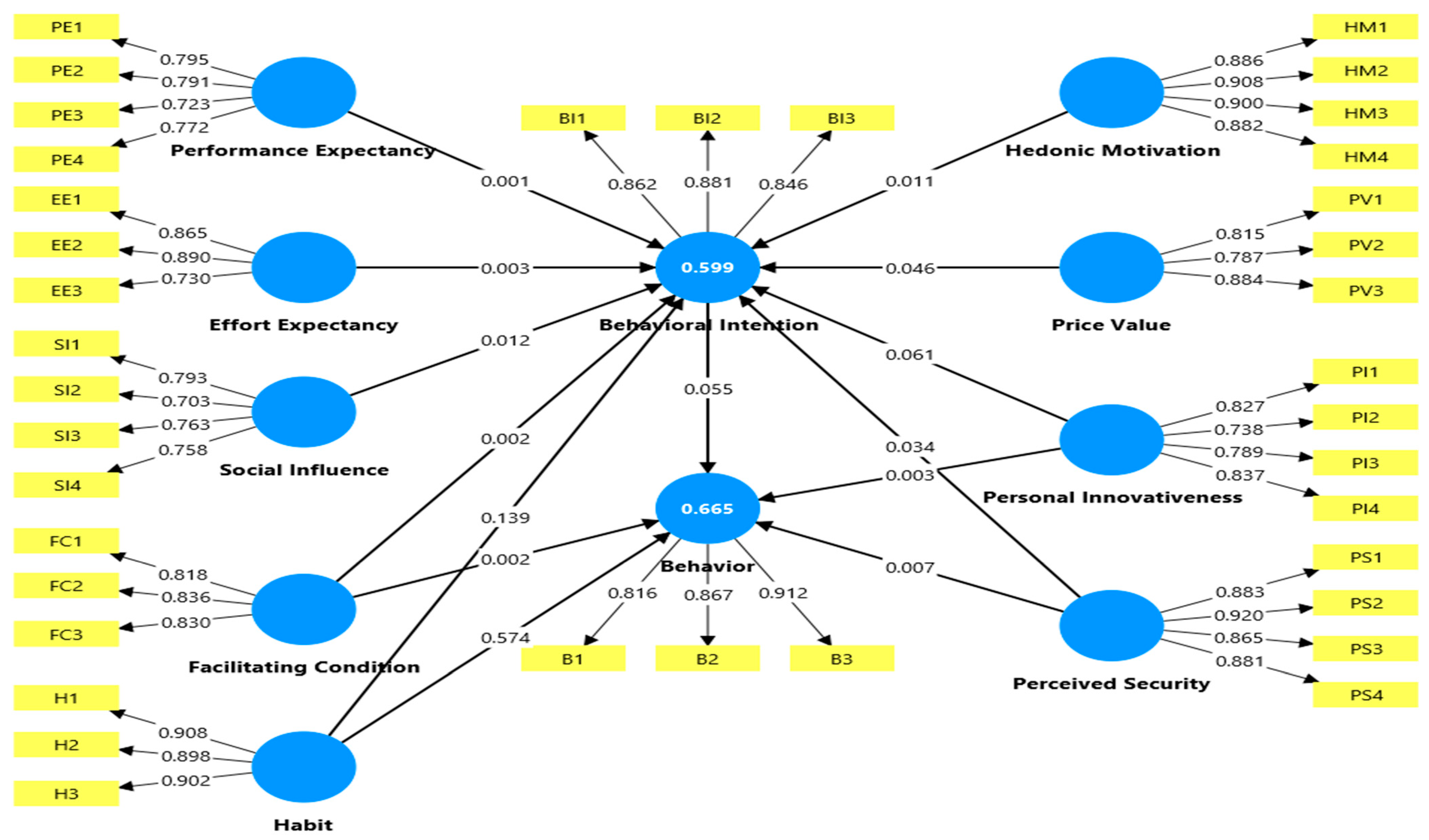
Table 9 indicates that habit exerts the strongest influence on behavioral intention, with an effect size (f
2) value of 0.139, followed by personal innovativeness (0.061), price value (0.046), and perceived security (0.034), with a small effect size (0.02 < x < 0.15) (
Hair et al., 2019b). Furthermore, habit demonstrates a strong effect on behavioral use of e-wallet, with an effect size of 0.574, whereas behavioral intention shows a relatively small effect with a value of 0.055.
Table 10 presents the SRMR value of 0.063, which is below the recommended threshold of 0.08. This indicates that the model has a good fit and low residuals between the observed and predicted correlations. Therefore, the structural model demonstrates an acceptable level of goodness of fit.
Figure 2 presents the path diagram and illustrates the F
2 and adjusted R
2 values for the research model.
4.5. Significance Testing of Relationships Between Variables
The significance of relationships between constructs was tested using a bootstrapping procedure at the 95% confidence level. A relationship is considered significant if the t-statistic > 1.65 or the
p-value < 0.05 (
Hair et al., 2022). Based on
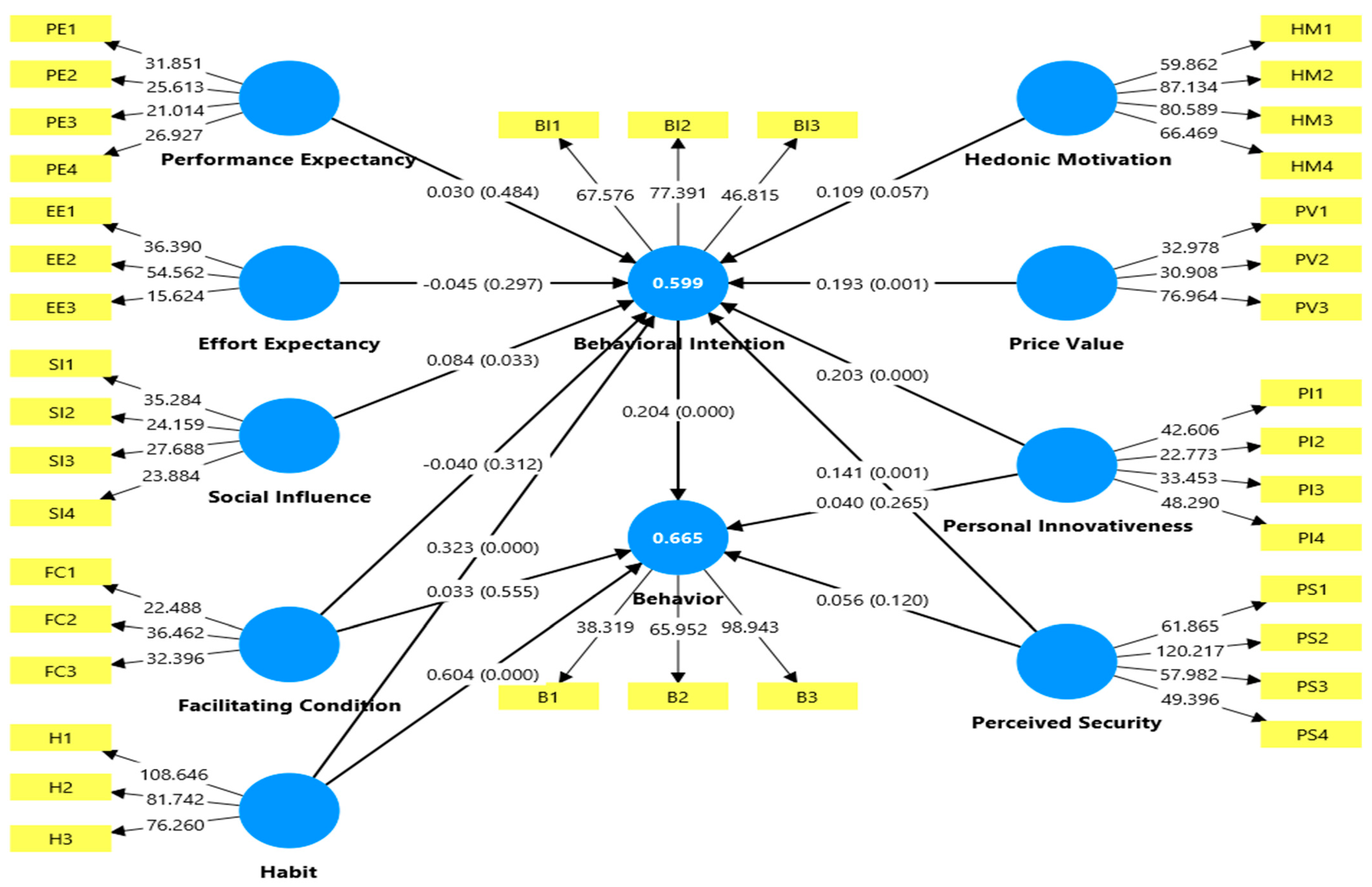
Table 9, the hypothesis testing results indicate that H1, H2, H4, and H10 are not supported, as the t-statistics are <1.65 and the
p-values are >0.05. Performance expectancy, effort expectancy, facilitating conditions, and hedonic motivation do not influence Gen Z’s behavioral intention to use e-wallets. Similarly, the results for H5, H13, and H16 are not supported, with t-statistics < 1.65 and
p-values > 0.05, indicating that facilitating conditions, personal innovativeness, and perceived security do not affect Gen Z’s e-wallet usage behavior. Behavioral intention to use does not mediate the relationship between facilitating conditions and use behavior, as indicated by a t-statistic of 0.0917 and a
p-value of 0.359; thus, H6 is not supported.
The results show that social influence, habit, price value, personal innovativeness, and perceived security significantly influence Gen Z’s behavioral intention to use e-wallets, with t-statistics > 1.65 and
p-values < 0.05; therefore, H3, H7, H11, H12, and H15 are supported. Likewise, the effects of habit and behavioral intention on Gen Z’s e-wallet usage are significant (t-statistics > 1.65 and
p-values < 0.05), supporting H8 and H18. Behavioral intention mediates the relationship between habit and use behavior, with a t-statistic of 3.283 and a
p-value of 0.001; thus, H9 is supported. Furthermore, behavioral intention also mediates the relationships between personal innovativeness and perceived security with use behavior, with t-statistics of 2.512 and 2.246 and
p-values of 0.012 and 0.025, respectively; therefore, H14 and H17 are supported.
Table 11 presents the results of hypothesis testing, while
Figure 3 illustrates the results of the structural model evaluation.
4.6. Common Method Bias
The assessment of common method bias (CMB) was performed using Harman’s Single Factor Test (
Fuller et al., 2016) and the full collinearity approach proposed by
Kock (
2015). Initially, Harman’s test was conducted using an unrotated exploratory factor analysis, loading all indicators into a single-factor model. As shown in
Table 12, the first factor accounts for 37.877% of the total variance, which is below the 50% cutoff, suggesting that no single factor predominates. To further validate the results, a full collinearity test was conducted by examining the Variance Inflation Factor (VIF) values within the inner model. The findings in
Table 7 indicate that all VIF values are below 3.3, confirming the absence of collinearity concerns and CMB. Hence, common method bias is unlikely to pose a significant issue in this study.
4.7. Robustness Analysis (PLS Predict)
Robustness analysis was further conducted using PLS predict to evaluate the model’s out-of-sample predictive performance. Root Mean Square Error (RMSE) and Cross-Validated Predictive Ability Test (CVPAT) were used to further evaluate robustness analysis (
Guenther et al., 2025). The RMSE results suggest that the PLS model yields smaller prediction errors than the benchmark model, indicating higher predictive accuracy. Moreover, the CVPAT findings demonstrate that the model’s predictive performance is significantly better (
p-value < 0.01), thereby reinforcing the robustness and reliability of the results, as shown in
Table 13, which presents the PLS prediction results for RMSE and CVPAT.
5. Discussion
The objective of this study is to examine the factors influencing Generation Z’s behavioral intention and actual usage of e-wallets by extending the UTAUT3 model through the integration of personal innovativeness and perceived security. The hypothesis testing results indicate that performance expectancy has a positive yet insignificant effect on Generation Z’s behavioral intention to use e-wallets. Performance expectancy is generally considered a key determinant of technology adoption, as it reflects individuals’ belief that using a system will enhance their performance. However, the insignificant effect observed in this study suggests that Generation Z users may perceive e-wallet use as a basic or routine technology, thereby reducing the influence of performance-related benefits on their intentions. This finding is consistent with prior studies that also report an insignificant relationship between performance expectancy and behavioral intention (
Harahap & Rahmayanti, 2023;
Shukri et al., 2024;
Suroso & Al Fari, 2021). Similarly, the results for effort expectancy indicate a negative and insignificant effect on Generation Z’s behavioral intention to use e-wallets. Generation Z, being highly accustomed to digital platforms, tends to regard ease of use as a standard feature rather than a distinguishing attribute. Furthermore, the negative, insignificant relationship may suggest that users find current features less appealing and instead seek more innovative and advanced functionality. As a result, ease of use no longer serves as a key determinant of their behavioral intention. This aligns with previous studies that found that effort expectancy negatively influenced behavioural intention to use e-wallets, though the effect was not significant (
Harahap & Rahmayanti, 2023;
Shukri et al., 2024). The results indicate that social influence has a positive and significant effect on Generation Z’s behavioral intention to use e-wallets. From a theoretical perspective, social influence is stronger when technology use is visible and socially integrated, as in the case of e-wallet adoption. Generation Z, highly active on social media, is more influenced by peer opinions, online reviews, and trends. The rapid spread of shared experiences further reinforces social influence as a key driver of behavioral intention. This result aligns with prior studies highlighting the importance of social factors in driving technology adoption, particularly in fintech and e-wallet adoption (
Engku Abdullah et al., 2024;
Rafi et al., 2024).
Facilitating conditions have a negative and insignificant effect on Generation Z’s behavioral intention to use e-wallets. Since Generation Z is highly familiar with technology and generally has sufficient access to supporting infrastructure and resources, facilitating conditions may no longer play a significant role in influencing their intentions to adopt e-wallet services. Moreover, the negative and insignificant relationship may indicate that users perceive existing features as less attractive and expect more innovative and functional solutions. This finding is consistent with prior studies, suggesting that facilitating conditions do not influence behavioral intention (
Baptista & Oliveira, 2017;
Rayun et al., 2025;
Riza & Aditya, 2025). Facilitating conditions show a positive but insignificant effect on actual usage behavior. The insignificant effect of facilitating conditions on actual usage behavior can be explained by the characteristics of Generation Z, who generally have sufficient access to smartphones, internet connectivity, and digital infrastructure. As a result, facilitating conditions are perceived as basic requirements rather than differentiating factors. Consequently, actual usage behavior is more strongly driven by psychological and value-based factors rather than technical support conditions.
Çera et al. (
2020) find that facilitating conditions do not directly influence usage behavior. Facilitating conditions have no significant effect on both behavioral intention and usage behavior, indicating that behavioral intention does not mediate the relationship between facilitating conditions and e-wallet usage behavior. The results show that habit positively and significantly influences both behavioral intention and actual e-wallet usage among Generation Z. Habit reflects automatic behavior shaped by repeated use and prior experience. Frequent interaction with digital technologies has made e-wallet use routine for Gen Z, reducing cognitive effort. Consequently, past behavior strongly drives future intention and usage, highlighting habit as a key factor in sustaining continued adoption. This is in line with previous studies, facilitating conditions influencing behaviour intention and usage behavior (
Raj et al., 2024;
Ramadhan et al., 2019). Behavioral intention partially mediates the link between habit and Generation Z’s e-wallet usage. Habit directly influences behavior through repeated, automatic actions and indirectly by shaping users’ intentions. Due to their frequent engagement with digital technologies, e-wallet usage becomes routine for Generation Z. Nevertheless, behavioral intention remains important, as users still consciously evaluate and reaffirm their decisions to continue using e-wallet services. This finding is in line with prior research, suggesting that behavioral intention acts as a mediator in the relationship between habit and actual usage behavior (
Meiranto et al., 2024;
Meiranto et al., 2026).
The results indicate that hedonic motivation has a positive but insignificant effect on Generation Z’s behavioral intention to use e-wallets. This finding suggests that Generation Z’s intention to use e-wallets is not driven by the fulfilment of hedonic desires, but rather by practical considerations. Generation Z tends to be capable of managing their finances and making transaction decisions based on their needs rather than personal gratification. Consequently, hedonic motivation does not play a significant role in shaping their behavioral intention. This result aligns with previous research by
Rayun et al. (
2025) and
Herzallah et al. (
2025), indicating that hedonic motivation has no significant effect on behavioral intention to use mobile wallet services. Price value has a positive and significant effect on Generation Z’s behavioral intention to use e-wallets. This indicates that Generation Z tends to consider transaction costs and promotional packages offered by e-wallet providers. Through these considerations, Generation Z can manage their expenses more effectively and align their spending with their budget.
Amnas et al. (
2023) and
Restuputri et al. (
2023) provide empirical evidence that price value influences users’ behavioral intention to adopt financial technology. Personal innovativeness has a positive and significant effect on Generation Z’s behavioral intention to use e-wallets. This indicates that individuals with a higher tendency to try new technologies are more likely to adopt e-wallet services. Generation Z, as a digitally native cohort, tends to be more open to innovation, making them more receptive to new financial technologies and more willing to integrate e-wallets into their daily transactions. This finding is consistent with previous studies, which show that personal innovativeness plays an important role in increasing individuals’ behavioral intention to adopt new technologies, including digital financial services (
Shaikh & Amin, 2023;
Yuliawati et al., 2023). Conversely, personal innovativeness has a positive but insignificant effect on the actual use of e-wallets. This may be because, although individuals are open to trying new technologies, such innovativeness does not necessarily translate into consistent usage behavior. Based on the findings of
Ramadhan et al. (
2019), personal innovativeness does not significantly affect the actual use of e-wallets. Behavioral intention fully mediates the indirect relationship between personal innovativeness and e-wallet usage. Individuals with higher personal innovativeness tend to be interested in trying new technologies; however, this tendency first manifests as intention. This behavioral intention then becomes the key driver that leads individuals to actually use e-wallets in their daily activities. Behavioral intention, which acts as a mediating variable in the relationship between personal innovativeness and usage behavior, is consistent with the findings of
Meiranto et al. (
2026).
Perceived security positively affects Generation Z’s behavioral intention to use e-wallets. This indicates that Generation Z pays close attention to security when conducting digital transactions via e-wallets. The higher the level of trust in the system’s security, the greater their intention to use the service. This finding is consistent with previous studies that provide empirical evidence that perceived security significantly influences behavioral intention in the use of digital financial technology (
Alfa’izy et al., 2023;
Azman Ong et al., 2023). However, perceived security does not directly affect e-wallet usage behavior. This indicates that although a sense of security can encourage the formation of intention, actual e-wallet use still requires additional variables, such as behavioral intention itself as a mediator or other supporting factors.
Lim et al. (
2024) found empirical evidence that perceived security does not influence e-wallet usage behavior. Behavioral intention mediates the relationship between perceived security and e-wallet usage behavior, with the mediation being full. This indicates that perceived security does not directly drive usage behavior, but must first shape behavioral intention as the primary mechanism that bridges this relationship. In other words, even if users feel secure, they will not automatically use e-wallets unless they have a strong intention to do so. This finding represents the novelty of this study, as it successfully identifies that the relationship between perceived security and e-wallet usage behavior is fully mediated by behavioral intention. This means the study contributes to the literature by emphasizing that, without behavioral intention, perceived security does not significantly affect usage behavior, particularly among Generation Z’s use of e-wallets. Behavioral intention has a positive and significant effect on Generation Z’s use of e-wallets. This means that the stronger an individual’s intention or willingness to use e-wallets, the higher the likelihood that they will actually use them in their daily activities. This result is consistent with previous studies, which indicate that behavioral intention significantly influences usage behavior in the context of technology adoption (
Bhatnagr & Rajesh, 2023;
Sakib et al., 2024).
6. Theoretical Implications
This study advances theoretical understanding by extending the UTAUT3 framework to integrate personal innovativeness and perceived security in the context of e-wallet adoption among Generation Z. The empirical findings demonstrate that performance expectancy, effort expectancy, facilitating conditions, and hedonic motivation do not significantly influence behavioral intention. This indicates a declining relevance of traditional utilitarian constructs within UTAUT3 in increasingly mature digital environments. For Generation Z, characterized as digitally literate users, ease of use and functional utility are no longer primary determinants of intention. Instead, social influence, price value, habit, personal innovativeness, and perceived security are identified as significant predictors. These results suggest that adoption decisions are more strongly driven by social dynamics, perceived economic value, individual openness to innovation, and trust in system security.
With regard to actual usage behavior, facilitating conditions, personal innovativeness, and perceived security have no direct effect, whereas habit and behavioral intention significantly influence usage. This finding indicates that e-wallet usage among Generation Z is predominantly habitual and shaped by prior intentions rather than resource availability or individual characteristics. Moreover, Generation Z exhibits a high degree of autonomy in managing digital financial activities, thereby reducing dependence on conventional adoption factors. Nevertheless, concerns related to data and transaction security remain salient, underscoring the importance of trust and perceived risk in shaping behavioral intention. Overall, this study refines the UTAUT3 framework by highlighting a shift toward social, habitual, and security-oriented determinants in explaining technology adoption behavior.
7. Empirical Implication
The findings of this study provide meaningful empirical insights for digital payment providers, financial institutions, and policymakers aiming to strengthen e-wallet adoption among Generation Z. The insignificant effects of performance expectancy, effort expectancy, facilitating conditions, and hedonic motivation indicate that basic functional aspects are no longer the primary drivers of adoption in increasingly mature digital environments. Instead, users are increasingly influenced by social interaction, perceived value, and trust-related factors. The significant effects of social influence and price value suggest that fintech providers should strengthen community-based marketing strategies, collaborate with digital influencers, and provide attractive incentives such as cashback programs, loyalty rewards, and discounted transaction fees to improve users engagement, especially Gen Z. Personal innovativeness also play important role, indicating that fintech companies need to continuously introduce innovative features and communicate technological updates effectively to maintain user’s interest. Perceived security emerged as one of the strongest predictors of behavioral intention, highlighting the urgency for regulators and fintech providers to strengthen cybersecurity governance, transparent data privacy policies, reliable fraud prevention systems, and digital trust initiatives. Regulators are encouraged to implement broader cybersecurity awareness campaigns, promote digital literacy programs, and establish stricter consumer data protection standards to enhance public confidence in digital financial services. Fintech firms should also actively develop digital trust initiatives through transparent communication, rapid complaint handling, and continuous education regarding safe digital payment practices. Furthermore, the significant influence of habit and behavioral intention on actual usage underscores the importance of creating seamless, reliable, and integrated digital payment experiences that encourage continuous, routine use.
8. Limitations and Future Study
This study has several limitations that should be considered when interpreting the findings. Although the response rate reached 89%, not all targeted respondents participated, which may introduce non-response bias and limit the extent to which the results represent the broader population. In addition, some delays during data collection could have influenced response consistency and introduced slight timing-related bias. The use of a cross-sectional design also means that this study captures user behavior at a single point in time, making it difficult to observe how intentions and usage may evolve as digital technologies continue to develop. Furthermore, focusing on Generation Z in a specific context may limit the applicability of the findings to other age groups or settings.
Future studies could address these limitations by adopting longitudinal designs to better understand changes in behavior over time. Expanding the sample to include more diverse demographic groups and different geographic contexts would improve generalizability. Additionally, combining quantitative approaches with qualitative methods may provide deeper insights into user perspectives and enrich the understanding of technology adoption.
9. Conclusions
The extended UTAUT3 framework, enriched with personal innovativeness and perceived security, explains 59.9% of Generation Z’s behavioral intention to use e-wallets and 66.5% of their actual usage. The results reveal that social influence, price value, habit, personal innovativeness, and perceived security significantly shape behavioral intention, with habit identified as the most influential factor. Similarly, both habit and behavioral intention significantly affect actual e-wallet usage, where habit again shows the strongest impact. These findings indicate that Generation Z’s frequent interaction with digital technology has made e-wallet use part of their daily transactions. Generation Z demonstrates a strong tendency to use e-wallets because they offer convenience, efficiency, and practical advantages in digital transactions. Moreover, price value plays an essential role, as users are attracted to promotional programs, cashback offers, discounts, and lower transaction costs provided by fintech companies. Perceived security is also an important consideration, since concerns about financial risks, data privacy, and misuse of personal information influence users’ trust and continued intention to use e-wallet services. The novelty of this study lies in extending the UTAUT3 framework by incorporating perceived security as a direct determinant of both behavioral intention and actual usage behavior. Furthermore, behavioral intention fully mediates the relationships between personal innovativeness and usage behavior, and between perceived security and usage behavior.
Author Contributions
Conceptualization: W.M.; Data Curation: W.M., T.A.S.A., A.F.R. and M.M.; Formal Analysis: W.M., T.A.S.A. and A.F.R.; Funding Acquisitions: W.M., T.A.S.A., A.F.R. and M.M.; Investigation: W.M., T.A.S.A., A.F.R. and M.M.; Methodology: W.M., T.A.S.A., A.F.R. and M.M.; Project Administration: W.M.; Resources: W.M., T.A.S.A., A.F.R. and M.M.; Software: W.M., T.A.S.A. and A.F.R.; Supervision: W.M., T.A.S.A., A.F.R. and M.M.; Validation: W.M., T.A.S.A., A.F.R. and M.M.; Visualization: T.A.S.A., A.F.R. and M.M.; Writing—original draft: W.M.; Writing—review and editing: T.A.S.A., A.F.R. and M.M. All authors have read and agreed to the published version of the manuscript.
Funding
This study was supported by a research grant from Universitas Diponegoro under Research Assignment Letter Number 936-03/UN7.D2/PP/XII/2025.
Institutional Review Board Statement
The study was conducted in accordance with the Declaration of Helsinki. Ethical approval was obtained from the institutional ethics committee, and research permission was granted through an official letter issued by the Vice Dean for Academic and Student Affairs with Letter No. 295/UN7.F2.1/AK/II/2026 (approval date 14 January 2026).
Informed Consent Statement
Informed consent was obtained from all subjects involved in the study.
Data Availability Statement
The datasets used and/or analyzed during the current study are available from the corresponding author upon reasonable request.
Acknowledgments
The authors sincerely thank Generation Z participants for their valuable time, insights, and contributions to this research.
Conflicts of Interest
The authors disclosed no potential conflicts of interest.
Appendix A. Research Questionnaire
| Variable | Indicator | References |
Performance
Expectancy | 1 | Using e-wallets helps me complete transactions more quickly. | Upadhyay et al. (2022) |
| 2 | E-wallets improve efficiency in my payment activities. |
| 3 | E-wallets make it easier for me to manage my daily finances. |
| 4 | Using e-wallets increases my productivity. |
| Effort Expectancy | 1 | The e-wallet is easy to learn. | Upadhyay et al. (2022) |
| 2 | Interactions with the e-wallet application are clear and easy to understand. |
| 3 | I do not experience difficulty when using the e-wallet. |
| Social Influence | 1 | People who are important to me encourage me to use e-wallets. | Upadhyay et al. (2022) |
| 2 | My friends or family use e-wallets frequently. |
| 3 | I use e-wallets because of trends in my social environment. |
| 4 | Recommendations from others influence my decision to use e-wallets. |
Facilitating
Condition | 1 | I have a device (smartphone) that supports the use of e-wallets. | Upadhyay et al. (2022) |
| 2 | I have adequate internet access to use e-wallets. |
| 3 | Technological infrastructure supports the use of e-wallets. |
Hedonic
Motivation | 1 | Using e-wallets feels enjoyable. | Hashim et al. (2023) |
| 2 | I feel satisfied when using e-wallets. |
| 3 | Using e-wallets provides an engaging experience. |
| 4 | I enjoy the features available in e-wallets. |
| Habit | 1 | Using e-wallets has become a habit for me. | Hashim et al. (2023) |
| 2 | I automatically use e-wallets for payments. |
| 3 | Using e-wallets has become part of my routine. |
| Price Value | 1 | The benefits I gain from e-wallets outweigh the cost. | Amnas et al. (2023) |
| 2 | Promotions and cashback make e-wallets more valuable to me. |
| 3 | Overall, using e-wallets is beneficial for me. |
Personal
Innovativeness | 1 | I am interested in trying new financial technologies. | Hashim et al. (2023) |
| 2 | I usually enjoy trying new payment applications. |
| 3 | I feel confident using new technologies without assistance. |
| 4 | I enjoy exploring new features in e-wallet applications. |
Behavioral
Intention | 1 | I intend to continue using e-wallets in the future. | Upadhyay et al. (2022) |
| 2 | I will increase the frequency with which I use e-wallets. |
| 3 | I will recommend e-wallets to others. |
| Behavior | 1 | I use e-wallets for various types of transactions. | Upadhyay et al. (2022) |
| 2 | I use e-wallets more often than cash payment methods. |
| 3 | I use e-wallets almost every day. |
Perceived
Security | 1 | I feel that the e-wallet I use has an adequate security system to protect my personal data. | Lim et al. (2024) |
| 2 | I am confident that my financial information is secure when conducting transactions using e-wallets. |
| 3 | I believe that e-wallets can protect me from fraud or account misuse risks. |
| 4 | I trust that service providers have reliable security protection systems. |
References
- Agarwal, R., & Prasad, J. (1998). Conceptual personal and operational definition innovativeness information in the domain technology. Information Systems Research, 9(2), 204–215. [Google Scholar] [CrossRef]
- Ahmad, K., & Yahaya, M. H. (2022). Islamic social financing and efficient zakat distribution: Impact of fintech adoption among the asnaf in Malaysia. Journal of Islamic Marketing, 14(9), 2253–2284. [Google Scholar] [CrossRef]
- Alalwan, A. A., Baabdullah, A. M., Rana, N. P., Tamilmani, K., & Dwivedi, Y. K. (2018). Examining adoption of mobile internet in Saudi Arabia: Extending TAM with perceived enjoyment, innovativeness and trust. Technology in Society, 55, 100–110. [Google Scholar] [CrossRef]
- Alalwan, A. A., Dwivedi, Y. K., & Rana, N. P. (2017). Factors influencing adoption of mobile banking by Jordanian bank customers: Extending UTAUT2 with trust. International Journal of Information Management, 37(3), 99–110. [Google Scholar] [CrossRef]
- Aldi Lutfi, N., & Dika, D. (2025). Kebijakan bank indonesia dalam mendorong perkembangan teknologi melalui sistem pembayaran non tunai. Ekonomi Keuangan Syariah dan Akuntansi Pajak, 2(3), 214–224. [Google Scholar] [CrossRef]
- Alduais, F., & Al-Smadi, M. O. (2022). Intention to use e-payments from the perspective of the unified theory of acceptance and use of technology (UTAUT): Evidence from Yemen. Economies, 10(10), 259. [Google Scholar] [CrossRef]
- Alfa’izy, E. A. F., Pramana, E., & Gunawan. (2023). Mobile payment adoption in generation z using extended unified technology acceptance and use of technology. Indonesian Journal of Information Systems (IJIS), 6(1), 61–73. [Google Scholar] [CrossRef]
- Alkhwaldi, A. F., Alharasis, E. E., Shehadeh, M., Abu-AlSondos, I. A., Oudat, M. S., & Bani Atta, A. A. (2022). Towards an understanding of FinTech users’ adoption: Intention and e-Loyalty post-COVID-19 from a developing country perspective. Sustainability, 14(19), 12616. [Google Scholar] [CrossRef]
- Al-Sabaawi, M. Y. M., Alshaher, A. A., & Alsalem, M. A. (2021). User trends of electronic payment systems adoption in developing countries: An empirical analysis. Journal of Science and Technology Policy Management, 14(2), 246–270. [Google Scholar] [CrossRef]
- Alsharo, M., Alnsour, Y., Tarhini, A., & Eleimat, D. A. (2025). The prevalence of mobile wallets in developing countries: A retailers’ perspective. Review of International Business and Strategy, 36(1), 174–199. [Google Scholar] [CrossRef]
- Amnas, M. B., Selvam, M., Raja, M., Santhoshkumar, S., & Parayitam, S. (2023). Understanding the determinants of fintech adoption: Integrating UTAUT2 with trust theoretic model. Journal of Risk and Financial Management, 16(12), 505. [Google Scholar] [CrossRef]
- Azman Ong, M. H., Yusri, M. Y., & Ibrahim, N. S. (2023). Use and behavioural intention using digital payment systems among rural residents: Extending the UTAUT-2 model. Technology in Society, 74, 102305. [Google Scholar] [CrossRef]
- Bailey, A. A., Bonifield, C. M., Arias, A., & Villegas, J. (2022). Mobile payment adoption in Latin America. Journal of Services Marketing, 36(8), 1058–1075. [Google Scholar] [CrossRef]
- Bajunaied, K., Hussin, N., & Kamarudin, S. (2023). Behavioral intention to adopt FinTech services: An extension of unified theory of acceptance and use of technology. Journal of Open Innovation: Technology, Market, and Complexity, 9(1), 100010. [Google Scholar] [CrossRef]
- Baptista, G., & Oliveira, T. (2017). Why so serious? Gamification impact in the acceptance of mobile banking services. Internet Research, 27(1), 118–139. [Google Scholar] [CrossRef]
- Baxi, C. O., Patel, K. J., Patel, K. M., Patel, V. B., & Acharya, V. A. (2023). Consumers’ digital wallet adoption. International Journal of Asian Business and Information Management, 15(1), 1–23. [Google Scholar] [CrossRef]
- Bhatnagr, P., & Rajesh, A. (2023). Neobanking adoption—An integrated UTAUT-3, perceived risk and recommendation model. South Asian Journal of Marketing, 5(2), 93–112. [Google Scholar] [CrossRef]
- Birigozzi, A., De Silva, C., & Luitel, P. (2025). Digital payments and GDP growth: A behavioural quantitative analysis. Research in International Business and Finance, 75, 102768. [Google Scholar] [CrossRef]
- Bommer, W. H., Rana, S., & Milevoj, E. (2022). A meta-analysis of eWallet adoption using the UTAUT model. International Journal of Bank Marketing, 40(4), 791–819. [Google Scholar] [CrossRef]
- Bujang, M. A., Omar, E. D., Foo, D. H. P., & Hon, Y. K. (2024). Sample size determination for conducting a pilot study to assess reliability of a questionnaire. Restor Dent Endod, 49(1), e3. [Google Scholar] [CrossRef]
- Candra, D. G. A., Nuruzzaman, M. T., Uyun, S., Sugiantoro, B., & Pratiwi, M. (2023). Analysis of factors affecting the students’ acceptance level of e-commerce applications in yogyakarta using modified UTAUT 2. IJID (International Journal on Informatics for Development), 12(1), 326–337. [Google Scholar] [CrossRef]
- Chan, R., Troshani, I., Rao Hill, S., & Hoffmann, A. (2022). Towards an understanding of consumers’ FinTech adoption: The case of open banking. International Journal of Bank Marketing, 40(4), 886–917. [Google Scholar] [CrossRef]
- Chawla, D., & Joshi, H. (2019). Consumer attitude and intention to adopt mobile wallet in India—An empirical study. International Journal of Bank Marketing, 37(7), 1590–1618. [Google Scholar] [CrossRef]
- Creswell, J. W., & Creswell, J. D. (2018). Research design: Qualitative, quantitative, and mixed methods approaches (5th ed.). Sage. [Google Scholar]
- Çera, G., Pagria, I., Khan, K. A., & Muaremi, L. (2020). Mobile banking usage and gamification: The moderating effect of generational cohorts. Journal of Systems and Information Technology, 22(3), 243–263. [Google Scholar] [CrossRef]
- Damayanti, S. L., Yani, Y., Asnaini, A., & Afrianty, N. (2021). Minat menggunakan e-wallet pada generasi milenial dengan pendekatan UTAUT (unified theory of acceptance use of technology). Jurnal Baabu Al-Hilmi: Ekonomi dan Perbankan Syariah, 6(1), 63–74. Available online: http://repository.iainbengkulu.ac.id/id/eprint/5881 (accessed on 4 January 2026). [CrossRef]
- Dila, O., & Kristina, S. (2020). Analisis penerapan unified theory of acceptance and use of technology 2 (UTAUT2) pada adopsi dompet digital OVO dayeuh kolot bandung (studi kasus pada generasi Z sebagai pengguna OVO). Menara Ekonomi, VI(1), 24–36. [Google Scholar] [CrossRef]
- Dinda, R., Alfarisi, M. F., & Rahim, R. (2024). Analysis of cashless payment adoption using the unified theory of acceptance and use of technology (UTAUT). Journal of Accounting and Finance Management (JAFM), 5(3), 508–516. [Google Scholar] [CrossRef]
- Engku Abdullah, E. M., Abdul Rahman, A., & Yakob, R. (2024). The factor influencing the adoption of fintech in investment among malaysians: A unified theory of acceptance and use of technology (UTAUT) perspectives. Journal of Advanced Research in Applied Sciences and Engineering Technology, 49(2), 231–247. [Google Scholar] [CrossRef]
- Etikan, I. (2016). Comparison of convenience sampling and purposive sampling. American Journal of Theoretical and Applied Statistics, 5(1), 1–4. [Google Scholar] [CrossRef]
- Farooq, M. S., Salam, M., Jaafar, N., Fayolle, A., Ayupp, K., Radovic-Markovic, M., & Sajid, A. (2017). Acceptance and use of lecture capture system (LCS) in executive business studies. Interactive Technology and Smart Education, 14(4), 329–348. [Google Scholar] [CrossRef]
- Farzin, M., Sadeghi, M., Yahyayi Kharkeshi, F., Ruholahpur, H., & Fattahi, M. (2021). Extending UTAUT2 in M-banking adoption and actual use behavior: Does WOM communication matter? Asian Journal of Economics and Banking, 5(2), 136–157. [Google Scholar] [CrossRef]
- Fuller, C. M., Simmering, M. J., Atinc, G., Atinc, Y., & Babin, B. J. (2016). Common methods variance detection in business research. Journal of Business Research, 69(8), 3192–3198. [Google Scholar] [CrossRef]
- Garcia de Blanes Sebastian, M., Sarmiento Guede, J. R., & Antonovica, A. (2022). Application and extension of the UTAUT2 model for determining behavioral intention factors in use of the artificial intelligence virtual assistants. Front Psychol, 13, 993935. [Google Scholar] [CrossRef]
- Giovanis, A., Assimakopoulos, C., & Sarmaniotis, C. (2019). Adoption of mobile self-service retail banking technologies. International Journal of Retail & Distribution Management, 47(9), 894–914. [Google Scholar] [CrossRef]
- Guenther, P., Guenther, M., Ringle, C. M., Zaefarian, G., & Cartwright, S. (2025). PLS-SEM and reflective constructs: A response to recent criticism and a constructive path forward. Industrial Marketing Management, 128, 1–9. [Google Scholar] [CrossRef]
- Gupta, K., & Arora, N. (2019). Investigating consumer intention to accept mobile payment systems through unified theory of acceptance model. South Asian Journal of Business Studies, 9(1), 88–114. [Google Scholar] [CrossRef]
- Hair, J. F., Black, W. C., Babin, B. J., & Anders, R. E. (2019a). Multivariate data analysis (8th ed., vol. 1, cengage learning). Cengage. [Google Scholar]
- Hair, J. F., Hult, G. T. M., Ringle, C. M., & Sarstedt, M. (2022). A primer on partial least squares structural equation modelling (PLS-SEM) (3rd ed.). Sage. [Google Scholar] [CrossRef]
- Hair, J. F., Risher, J. J., Sarstedt, M., & Ringle, C. M. (2019b). When to use and how to report the results of PLS-SEM. European Business Review, 31(1), 2–24. [Google Scholar] [CrossRef]
- Hameed, I., Akram, U., Khan, Y., Khan, N. R., & Hameed, I. (2024). Exploring consumer mobile payment innovations: An investigation into the relationship between coping theory factors, individual motivations, social influence and word of mouth. Journal of Retailing and Consumer Services, 77, 103687. [Google Scholar] [CrossRef]
- Harahap, R. A., & Rahmayanti, D. (2023). The influence of utaut 1 model factors on behavioral intention to use ovo e—Wallet in generation z of Bengkulu City. Enrichment: Journal of Management, 13(5), 3571–3579. [Google Scholar] [CrossRef]
- Hashim, N. H., Chan, T. J. C., & Lia, P. (2023). Factors affecting the adoption of e-wallets to enter cashless society: An integration approach. International Journal of Data and Network Science, 7(4), 1848–1860. [Google Scholar] [CrossRef]
- Hazzi, O., & Maldaon, I. (2015). A pilot study: Vital methodological issues. Verslas: Teorija ir Praktika, 16(1), 53–62. [Google Scholar] [CrossRef]
- Herzallah, F., Abosamaha, A. J., Abu-Siam, Y., Amer, M., Sajjad, U., & Hamid, K. (2025). Determinants of mobile wallet usage among Gen Z: Extending the UTAUT2 model with moderating effects of personal innovativeness and gender. International Journal of Information Management Data Insights, 5(1), 100336. [Google Scholar] [CrossRef]
- Hidayat, M. T., Aini, Q. A., & Fetrina, E. (2020). Penerimaan pengguna e-wallet menggunakan UTAUT 2 (studi kasus). Jurnal Nasional Teknik Elektro dan Teknologi Informasi, 9(3), 239–247. [Google Scholar] [CrossRef]
- Huh, I., & Gim, J. (2025). Exploration of Likert scale in terms of continuous variable with parametric statistical methods. BMC Medical Ressearch Methodology, 25(1), 218. [Google Scholar] [CrossRef] [PubMed]
- In, J. (2017). Introduction of a pilot study. Korean Journal Anesthesiol, 70(6), 601–605. [Google Scholar] [CrossRef]
- Indonesia, B. (2019). Blueprint sistem pembayaran Indonesia 2025. Bank Indonesia: Menavigasi sistem pembayaran nasional di era digital. Jakarta. Available online: https://www.bi.go.id/id/publikasi/kajian/Documents/Blueprint-Sistem-Pembayaran-Indonesia-2025.pdf (accessed on 21 May 2025).
- Indonesia, B. (2024). Blueprint sistem pembayaran Indonesia 2030. Bank Indonesia: Mengakselerasi ekonomi digital nasional untuk generasi mendatang. Jakarta. Available online: https://www.bi.go.id/id/publikasi/kajian/Documents/Blueprint-Sistem-Pembayaran-Indonesia-2030.pdf (accessed on 21 May 2025).
- Izdiar, S. Z., & Meiranto, W. (2024). Pengaruh integrasi UTAUT dan D&M IS success model terhadap niat perilaku terhadap niat perilaku penggunaan e-wallet gopay pada generasi Z di kota semarang. Diponegoro Journal of Accounting, 13(3), 1–14. Available online: https://ejournal3.undip.ac.id/index.php/accounting/article/view/46151 (accessed on 16 March 2026).
- Jamaludin, N. A., Zaki, H. O., Ramli, R. M., & Suffarruddin, S. H. (2024). Towards a sustainable financial future: Exploring the influence of e-wallet adoption among gen Z in Malaysia. Jurnal Institutions and Economies, 16(4), 113–138. [Google Scholar] [CrossRef]
- Jameel, A. S., Abdulnabi, S. M., Thabit, T. H., & Alheety, A. S. (2024, August 6–7). Examining the intentions and behaviors of using e-wallets. 4th International Conference on Emerging Smart Technologies and Applications (eSmarTA) (pp. 1–6), Sana’a, Yemen. [Google Scholar] [CrossRef]
- Jefferson, T. C. E. (2023). Personal innovativeness, perceived usefullness, perceived ease of use and trust as determinant of mobile payment utilization. Review of Management and Entrepreneurship, 7(2), 251–270. [Google Scholar] [CrossRef]
- Karmaker, S., Oishi, M. E. F., Qasem, A., Sami, S. B. S., & Noor, J. (2025). Exploring influential factors of consumer purchase behavior on the adoption of digital payment apps in Bangladesh. Computers in Human Behavior Reports, 17, 100587. [Google Scholar] [CrossRef]
- Kinanti, D. T., & Rahmiati, R. (2023). Perceived risk, trustworthiness, and security in E-wallet adoption: A study of DANA in West Sumatra. Marketing Management Studies, 3(3), 228–240. [Google Scholar] [CrossRef]
- Kock, N. (2015). Common method bias in PLS-SEM: A full collinearity assessment approach. International Journal of e-Collaboration, 11(4), 1–11. [Google Scholar] [CrossRef]
- Kock, N. (2023). Contributing to the success of PLS in SEM: An action research perspective. Communications of the Association for Information Systems 52, 730–738. [Google Scholar] [CrossRef]
- Koo, M., & Yang, S.-W. (2025). Likert-type scale. Encyclopedia, 5(1), 18. [Google Scholar] [CrossRef]
- Lakshmanan, K., & Shanmugavel, N. (2025). Investigation on the factors influencing the continuation intention to use digital wallet in the rural parts of India using extended UTAUT2. Asian Journal of Economics and Banking, 9(1), 22–47. [Google Scholar] [CrossRef]
- Li, L., Wang, Z., Li, Y., & Liao, A. (2021). Impacts of consumer innovativeness on the intention to purchase sustainable products. Sustainable Production and Consumption, 27, 774–786. [Google Scholar] [CrossRef]
- Lim, W., Munikrishnan, U. T., Leong, C.-M., Hiew, L.-C., Leong, M.-W., & Yang, L. (2024). Do you want a secure e-wallet Understanding the role of risk and security in e-wallet continuance intention. Information & Computer Security, 32(3), 304–321. [Google Scholar] [CrossRef]
- Limayem, M., & Hirt, S. (2003). Force of habit and information systems usage: Theory and initial validation. Journal of the Association for Information Systems, 4(1), 65–97. [Google Scholar] [CrossRef]
- Liu, M., Li, R. Y. M., & Deeprasert, J. (2024). Factors that affect individuals in using digital currency electronic payment in China: SEM and fsQCA approaches. International Review of Economics & Finance, 95, 103418. [Google Scholar] [CrossRef]
- Manrai, R., Goel, U., & Yadav, P. D. (2021). Factors affecting adoption of digital payments by semi-rural Indian women: Extension of UTAUT-2 with self-determination theory and perceived credibility. Aslib Journal of Information Management, 73(6), 814–838. [Google Scholar] [CrossRef]
- Matheis, T. K., Lehnhart, E. d. R., Costa, A. C. C., Tontini, J., & Vieira, K. M. (2026). Analysis of the determinants of behavioral intention to use digital financial channels: User perspectives. Future Business Journal, 12(1), 59. [Google Scholar] [CrossRef]
- Meiranto, W., Farlyagiza, F., Faisal, F., Nur Afri Yuyetta, E., & Puspitasari, E. (2024). The mediating role of behavioral intention on factors influencing user behavior in the E-government state financial application system at the Indonesian Ministry of Finance. Cogent Business & Management, 11(1), 2373341. [Google Scholar] [CrossRef]
- Meiranto, W., Firman Ramadhan, A., Nur Afri Yuyetta, E., & Marsono. (2026). Extending the UTAUT3 model: The influence of personal innovativeness on generation Z’s behavioral intention to use digital banking in Indonesia. Banks and Bank Systems, 21(1), 126–141. [Google Scholar] [CrossRef]
- Mulyati, Y., Elsandra, Y., & Alfian, A. (2023). Determining factors of e-wallet use behavioral intention: Application and extension of the UTAUT model. Journal of Economics, Finance and Management Studies, 6(12), 5784–5799. [Google Scholar] [CrossRef]
- Nandru, P., Chendragiri, M., & S.A, S. (2023). Factors affecting the adoption of mobile payment services during the COVID-19 pandemic: An application of extended UTAUT2 model. Journal of Science and Technology Policy Management, 16(3), 405–431. [Google Scholar] [CrossRef]
- Negm, E. M. (2023). Consumers’ acceptance intentions regarding e-payments: A focus on the extended unified theory of acceptance and use of technology (UTAUT2). Management & Sustainability: An Arab Review, 3(3), 340–360. [Google Scholar] [CrossRef]
- Nguyen, T. D., & Nguyen, A. T. N. (2026). Habit and perceived safety on e-wallet adoption in Vietnam. In Information Systems for Intelligent Systems (pp. 62–71). Springer Nature. [Google Scholar] [CrossRef]
- Ompusunggu, H., & Anugrah, M. D. (2021). Gender in mobile wallet adoption by using UTAUT model. Jurnal Riset Akuntansi Kontemporer, 13(1), 26–31. [Google Scholar] [CrossRef]
- Padma Kiran, K., & Vedala, N. S. (2025). Exploring behavioral intentions of consumers towards different digital payment services through the interplay of perceived risks and adoption factors. Humanities and Social Sciences Communications, 12(1), 1141. [Google Scholar] [CrossRef]
- Pal, A., Rani, P., Singh, U. P., Rani, R., & Kumar, A. (2025). Why do rural and urban users adopt phygital payments differently? A UTAUT3-based comparative study of mobile wallets and plastic money. Digital Policy, Regulation and Governance, 27(5), 571–589. [Google Scholar] [CrossRef]
- Patil, P., Tamilmani, K., Rana, N. P., & Raghavan, V. (2020). Understanding consumer adoption of mobile payment in India: Extending Meta-UTAUT model with personal innovativeness, anxiety, trust, and grievance redressal. International Journal of Information Management, 54, 102144. [Google Scholar] [CrossRef]
- Prakarsa, G., & Nursyanti, R. (2025). Development of UTAUT model with hedonic motivation to measure the adoption of e-marketplace mobile application in Indonesia. SAINTEKS: Jurnal Sain dan Teknik, 7(1), 160–172. [Google Scholar] [CrossRef]
- Rafi, I. M., Athaya, A. M. A., Ahmad, B. D., & Prajapatisuta, S. M. (2024). Analisis implementasi penggunaan artificial intelligence terhadap e-wallet dana dengan model UTAUT. Prosiding Seminar Nasional Teknologi dan Sistem Informasi, IV(1), 207–216. [Google Scholar] [CrossRef]
- Rahim, N. F., Bakri, M. H., Fianto, B. A., Zainal, N., & Hussein Al Shami, S. A. (2022). Measurement and structural modelling on factors of Islamic Fintech adoption among millennials in Malaysia. Journal of Islamic Marketing, 14(6), 1463–1487. [Google Scholar] [CrossRef]
- Raj, V. A., Jasrotia, S. S., & Rai, S. S. (2024). Role of perceived risks and perceived benefits on consumers behavioural intention to use Buy-Now, Pay-Later (BNPL) services. Journal of Facilities Management, 23(2), 330–351. [Google Scholar] [CrossRef]
- Ramadhan, D., Hurriyati, R., & Lisnawati, L. (2019). Analisis perilaku adopsi teknologi mobile wallet menggunakan model unified theory of acceptance and use of technology3 (UTAUT3) pengguna OVO pada generasi milenial di Indonesia. Journal of Business Management Education, 4(3), 23–29. [Google Scholar] [CrossRef][Green Version]
- Rayun, S. M. N., Salam, M. A., Islam, W., Firmansyah, E. A., & Kalinaki, K. (2025). Unraveling the dynamics of mobile wallets in promoting cashless tourism in Bangladesh: Implementation of UTAUT2 model. Journal of Hospitality and Tourism Technology, 16(5), 1046–1065. [Google Scholar] [CrossRef]
- Restuputri, D. P., Refoera, F. B., & Masudin, I. (2023). Investigating acceptance of digital asset and crypto investment applications based on the use of technology model (UTAUT2). FinTech, 2(3), 388–413. [Google Scholar] [CrossRef]
- Riza, A. A., & Aditya, A. (2025). Evaluating the impact of trust and security on e-wallet adoption: Insights from the UTAUT2 model in Indonesia. Jurnal Simantec, 13(2), 101–110. [Google Scholar] [CrossRef]
- Sakib, M. N., Akter, M., Sahabuddin, M., & Fahlevi, M. (2024). An application of the extended UTAUT model to understand the adoption of cashless transactions: Evidence from developing country. Journal of Science and Technology Policy Management, 16(5), 912–926. [Google Scholar] [CrossRef]
- Salah, O. H., & Ayyash, M. M. (2024). Understanding user adoption of mobile wallet: Extended TAM with knowledge sharing, perceived value, perceived privacy awareness and control, perceived security. VINE Journal of Information and Knowledge Management Systems, 55(5), 1223–1250. [Google Scholar] [CrossRef]
- Sekaran, U., & Bougie, R. (2020). Research methods for business: A skill building process (8th ed.). John Wiley & Sons. [Google Scholar]
- Shaikh, I. M., & Amin, H. (2023). Consumers’ innovativeness and acceptance towards use of financial technology in Pakistan: Extension of the UTAUT model. Information Discovery and Delivery, 52(1), 114–122. [Google Scholar] [CrossRef]
- Shukri, A. F. M., Leong, T. P., Rashid, A. A., & Hanif, A. (2024). The moderating role of structural assurance in the unified theory of acceptance and use of technology (UTAUT): A study of e-wallet behavioural intention of users and non-users among adults in Malaysia. Malaysian Journal of Consumer and Family Economics, 33(1), 490–503. [Google Scholar] [CrossRef]
- Sivathanu, B. (2019). Adoption of digital payment systems in the era of demonetization in India. Journal of Science and Technology Policy Management, 10(1), 143–171. [Google Scholar] [CrossRef]
- Sobti, N. (2019). Impact of demonetization on diffusion of mobile payment service in India. Journal of Advances in Management Research, 16(4), 472–497. [Google Scholar] [CrossRef]
- Srivastava, S., Mohta, A., & Shunmugasundaram, V. (2023). Adoption of digital payment FinTech service by Gen Y and Gen Z users: Evidence from India. Digital Policy, Regulation and Governance, 26(1), 95–117. [Google Scholar] [CrossRef]
- Subhaktiyasa, P. G. (2024). Validitas dan reliabilitas kuesioner. Journal of Education Research, 5(4), 5599–5609. [Google Scholar] [CrossRef]
- Suroso, J. P., & Al Fari, I. (2021). Evaluation of e-wallet usage on retail business in Indonesia. Journal of Theoretical and Applied Information Technology, 99(7), 1621–1631. [Google Scholar]
- Tariq, M., Maryam, S. Z., & Shaheen, W. A. (2024). Cognitive factors and actual usage of Fintech innovation: Exploring the UTAUT framework for digital banking. Heliyon, 10(15), e35582. [Google Scholar] [CrossRef]
- Timur, Y. P., Masrizal, & Trianto, B. (2025). Factors influencing adoption of e-payments by microenterprises’ owners in Indonesia. Journal of Modelling in Management, 20(6), 2054–2085. [Google Scholar] [CrossRef]
- Truc, L. T. (2024). Empowering tomorrow: Unleashing the power of e-wallets with adoption readiness, personal innovativeness, and perceived risk to client’s intention. Journal of Open Innovation: Technology, Market, and Complexity, 10(3), 100322. [Google Scholar] [CrossRef]
- Twum, K. K., Ofori, D., Keney, G., & Korang-Yeboah, B. (2021). Using the UTAUT, personal innovativeness and perceived financial cost to examine student’s intention to use E-learning. Journal of Science and Technology Policy Management, 13(3), 713–737. [Google Scholar] [CrossRef]
- Upadhyay, N., Upadhyay, S., Abed, S. S., & Dwivedi, Y. K. (2022). Consumer adoption of mobile payment services during COVID-19: Extending meta-UTAUT with perceived severity and self-efficacy. International Journal of Bank Marketing, 40(5), 960–991. [Google Scholar] [CrossRef]
- Venkatesh, V., Morris, M. G., Davis, G. B., & Davis, F. D. (2003). User acceptance of information technology: Toward a unified view. MIS Quarterly, 27(3), 425–478. [Google Scholar] [CrossRef]
- Venkatesh, V., Thon, J. Y. L., & Xin, X. (2012). Consumer acceptance and use of information technology: Extending the unified theory of acceptance and use of technology. MIS Quarter, 36(1), 157–178. [Google Scholar] [CrossRef]
- Widyanto, H. A., Kusumawardani, K. A., & Yohanes, H. (2021). Safety first: Extending UTAUT to better predict mobile payment adoption by incorporating perceived security, perceived risk and trust. Journal of Science and Technology Policy Management, 13(4), 952–973. [Google Scholar] [CrossRef]
- Wiwik, N. N. L. (2024). Minat penggunaan e-wallet dengan model Utaut2 pada mahasiswa akuntansi di bali. Management Studies and Entrepreneurship Journal, 5(1), 266–278. [Google Scholar] [CrossRef]
- Xie, J., Ye, L., Huang, W., & Ye, M. (2021). Understanding FinTech platform adoption: Impacts of perceived value and perceived risk. Journal of Theoretical and Applied Electronic Commerce Research, 16(5), 1893–1911. [Google Scholar] [CrossRef]
- Ya’kob, S. A., Baharun, R., & Zaidin, N. (2023). Development of the research instrument for evaluating the desire to live in an industrial city. International Journal of Asian Social Science, 13(6), 175–189. [Google Scholar] [CrossRef]
- Yenisey, M., Ozok, A., & Salvendy, G. (2005). Perceived security determinants in e-commerce among Turkish university students. Behaviour & IT, 24, 259–274. [Google Scholar] [CrossRef]
- Yuliawati, T., Hendrayati, H., Cintyawati, C. C., & Furqon, C. (2023). Adopsi Literasi Fintech untuk E-Money di Kalangan Generasi Z. Image: Jurnal Riset Manajemen, 11(1), 1–12. [Google Scholar] [CrossRef]
- Zaidan, H., Shishan, F., Al-Hasan, M., Al-Mawali, H., Mowafi, O., & Dahiyat, S. E. (2024). Cash or cash-less? Exploring the determinants of continuous intention to use e-wallets: The moderating role of environmental knowledge. Competitiveness Review: An International Business Journal, 35(2), 319–346. [Google Scholar] [CrossRef]
- Zhang, J., Luximon, Y., & Song, Y. (2019). The role of consumers’ perceived security, perceived control, interface design features, and conscientiousness in continuous use of mobile payment services. Sustainability, 11(23), 6843. [Google Scholar] [CrossRef]
| Disclaimer/Publisher’s Note: The statements, opinions and data contained in all publications are solely those of the individual author(s) and contributor(s) and not of MDPI and/or the editor(s). MDPI and/or the editor(s) disclaim responsibility for any injury to people or property resulting from any ideas, methods, instructions or products referred to in the content. |