


Abstract
This paper examines several portfolio rules for comparing performance against the Shanghai Composite Index. The investor can use mutual funds or sector-based Exchange-Traded funds (ETFs). Five different approaches are applied for analysis. Two core approaches are discussed in detail and compared to passive investing: The top-N strategy and the sector rotation strategy. The Top-N strategy shifts capital each period into the last period rank-N fund, and the sector rotation strategy ranks funds based on their performance in the preceding investment period, forming three baskets: “Winners”, “Median”, and “Losers”. Extensive statistical tests on more than 300 equity mutual funds are performed for the top-N strategy to evaluate performance persistence using quintile sorts, winner–loser spreads, and transition tests. In contrast, the sector-rotation strategy and a holdings-based replication strategy (constructed from annual reports and sector funds) are implemented as case studies using the ten largest funds. Their performance is evaluated using multiple return and risk metrics.
1. Introduction
In recent years, China’s capital markets have expanded rapidly, according to Allen et al. (2024) and Hu et al. (2018). The share market is now the world’s second-largest by market capitalization, and public mutual funds are accumulating multi-trillion-dollar assets under management as investors diversify away from bank deposits. Fitch Ratings (2024) notes that Chinese money market funds alone grew about 16.9% from the end of 2023 to a record CNY 13.2 trillion (US $1.87 trillion) after strong inflows in early 2024. This growth has been supported by robust economic conditions—official data from Keju et al. (2024) show GDP expanding by around 5% in 2024—and by pension reforms, rising household wealth, and liberalizing policies such as the Qualified Foreign Institutional Investor and Stock Connect schemes, which are drawing foreign capital and improving market depth. At the same time, the proliferation of digital wealth platforms and mobile apps has made fund investing more accessible to retail savers, accelerating the shift of household savings into professionally managed funds and reinforcing China’s emergence as a pivotal player in global asset management.
In this paper, we compare the following approaches to investing in the Chinese market:
- 1.
- Passive investments in the China Composite index (benchmar).
- 2.
- Passive investments in a large-cap domestic mutual fund.
- 3.
- Replicating the mutual fund manager’s portfolio with Exchange-Traded Funds (ETFs. by examining mutual fund annual reports.
- 4.
- Switching between mutual funds based on last year’s performance.
- 5.
- Simple sector rotation strategies with ETFs by investing in top-tier, middle-tier and bottom-tier (by performance) sector ETFs.
The primary objective of this paper is to analyze the effectiveness of ranking-based investment strategies from 2012 to 2024. Specifically, we examine how dynamically reallocating investments among top-ranked funds at annual, semi-annual, and quarterly intervals compares to a static buy-and-hold approach and the broader performance of the Shanghai Stock Exchange (SSE). Additionally, we investigate whether following the annual sector allocation changes reported by fund managers—thus directly replicating sector proportions without investing through mutual funds—can yield superior returns compared to traditional mutual fund investments. The following sections outline our data selection process, methodology, empirical findings, robustness tests, and practical implications for investors navigating China’s mutual fund industry.
This paper is organized as follows. Section 2 presents a current literature review of strategies focusing on outperforming the Chinese stock market. Section 3 describes the mutual funds and sector ETFs chosen for analysis. Section 4 compares the results of replication based on previous year annual report with passive mutual funds investment. Section 5 compares mutual funds switching strategies based on mutual fund ranking (top-N strategy) and includes several statistical tests to illustrate the difficulty of such a strategy. Appendix A illustrates this difficulty for the largest 10 mutual funds. Section 6 considers simple Winner, Median and Loser strategies of constructing portfolios from sector ETFs based on their performance in the previous investment period. Section 7 presents an overall comparison Finally, Section 8 discusses the limitations and future directions.
2. Literature Review
Early studies on mutual fund performance persistence began with Grinblatt and Titman (1992), who first provided systematic evidence of short-term outperformance for highly ranked funds, yet S. J. Brown and Goetzmann (1995) later highlighted that such apparent persistence was often driven by survivorship and sample selection bias, framing performance ranking as a contentious tool for identifying genuine managerial skill—an enduring tension in the literature.
Against the backdrop of global and Chinese market dynamics, behavioral finance research (Baker et al., 2012; Lemmon & Portniaguina, 2006; Stambaugh et al., 2012) established that market-wide sentiment shapes asset valuations and fund manager behavior, with unique frictions in China’s fund market exacerbating performance instability. Wang and Ko (2017) noted that Chinese fund managers have a far shorter average tenure than their U.S. peers, while Y. Chen and Wei (2025), Chua et al. (2018) and Sha (2020) documented pervasive, value-destroying style drift, and Liang and Yin (2025) reported ab annual portfolio turnover of 300%—all factors that erode persistent excess returns and justify dynamic portfolio adjustment for Chinese investors.
While some evidence points to the viability of ranking-based strategies in China (Chi and Qiao (2022) found a 9.4% annual alpha for top-quartile funds), machine learning and ensemble methods (Chu et al., 2022; DeMiguel et al., 2023; Kaniel et al., 2023) have further refined predictive power, generating annualized alphas near 15% for out-of-sample portfolios (with robustness confirmed by Jones and Mo (2021)). These promising results, however, raise the critical question of skill versus luck: Gao et al. (2021) attributed most Chinese fund persistence to luck, aligning with global evidence (Barras et al., 2010; Fama & French, 2010) that true alpha is rare. A small subset of “star” managers still exhibit repeatable skill (Kosowski et al., 2006), and funds with coherent styles and high active share show stronger long-term persistence (K. C. Brown & Harlow, 2002; K. J. M. Cremers & Petajisto, 2009), though excessive trading and ranking-based rebalancing can erase gains via transaction costs and timing errors (M. Cremers et al., 2019). Collectively, the literature shows data-driven selection can uncover skill under specific conditions, but sustainable success depends on coherence of style—not mechanical reliance on past rankings.
Evaluation frequency is a defining factor in detecting persistence, a key consideration for our empirical design. The “hot-hands” effect (Hendricks et al., 1993) confirms that quarterly high rankings predict near-term outperformance, yet risk-adjusted persistence weakens over longer horizons (Elton et al., 1996), with annual persistence driven more by momentum and fees than skill (Carhart, 1997). Bollen (2005), Vidal-García (2016) and Forsberg et al. (2021, 2022) consistently show short-term (monthly/quarterly) evaluation yields clearer skill signals, while longer horizons dilute detectability, although the higher frequency raises turnover costs (Bessembinder et al., 2022; Cuthbertson et al., 2010). For China’s market, Nickelsen and Stotz (2023) found local managers generate positive risk-adjusted returns, but persistence fades at annual horizons; K. J. M. Cremers and Petajisto (2009) and Pastor et al. (2017) further caution that frequent reassessments may amplify noise or reduce net alpha via excess trading, underscoring the balance between informational advantage and implementation costs—a core rationale for our focus on annual ranking (aligned with retail investor behavior and to avoid exacerbating China’s already high fund turnover).
Complementary research clarifies how evaluation cadence interacts with manager incentives, trading, and fund dynamics to shape persistence. Intentional industry concentration (Kacperczyk et al., 2005) and interim trading skill (Puckett & Yan, 2011) predict better performance, while unobserved actions (Kacperczyk et al., 2008) explain why short-term monitoring captures skill most clearly. Flow-performance dynamics (Berk & Green, 2004; Sirri & Tufano, 1998) and asset growth (J. Chen et al., 2004; Pollet & Wilson, 2008) erode long-term persistence, and manager turnover (Khorana, 2001) modulates persistence signals in China. Methodologically, Huij and Verbeek (2007) and Busse et al. (2010) validate short-run persistence for empirical–Bayes and institutional fund rankings, while Wermers (2000) and Wermers (2003) link fund returns to stock-picking, style, and flow-driven momentum. Tournament incentives (K. C. Brown et al., 1996) also rationalize risk-shifting in annual evaluation, reinforcing the need for disciplined ranking-based strategies—informing our use of equal-weighted quintiles (to avoid size bias and ensure a representative cross-sectional analysis of China’s fund universe, per Kosowski et al. (2006)).
Finally, fund selection criteria extend beyond historical returns: Ferreira et al. (2019) and Mateus et al. (2025) identify large AUM, long operational history, and stable management as markers of persistent outperformance, alongside consistent stock-picking and sector-adjusted market-timing ability. These insights directly guide our sample selection: we chose 10 prominent Chinese equity mutual funds (established pre-2009, with substantial AUM, flagship reputations, and strong managerial pedigrees from leading firms like E Fund and Bosera) as ideal candidates for an empirical analysis of ranking and sector replication strategies.
In summary, the literature confirms short-term (monthly/quarterly) performance persistence across markets, with attenuation at annual horizons and genuine skill being rare after accounting for luck and bias. China’s fund market features unique frictions (short manager tenure, high turnover, style drift) that further weaken persistence, and while ranking-based and machine learning strategies show promise, critical gaps remain: there are no empirical tests of sector ETF replication using Chinese fund annual reports, nor detailed Top-N () analysis for large-cap Chinese funds. Additionally, mature market sector rotation frameworks (Valath & Pinsky, 2023) lack validation in China’s A-share market. These gaps leave a dearth of systematic evidence on strategies to outperform the Shanghai Composite Index (SCI)—a critical void this paper addresses with a unified empirical analysis of passive holding, fund replication, Top-N ranking, and sector rotation strategies for mainland China’s fund market.
Based on these insights, we meticulously selected 10 prominent Chinese equity mutual funds, each established before 2009, boasting substantial AUM, solid reputations as flagship or star products within their respective companies, and robust managerial pedigrees. Firms such as E Fund, ChinaAMC, Bosera, Fullgoal, and China Universal were included, given their long-standing market prominence and extensive investor recognition, making them ideal candidates for our empirical analysis.
3. Methodology and Data Sources
Our analysis examines 313 Chinese equity mutual funds established prior to 2012. All Chinese mutual funds and ETFs analyzed are registered in mainland China and listed on the Shanghai (SSE) and Shenzhen (SZSE) Stock Exchanges; Hong Kong-listed and cross-listed products are excluded. Core benchmarks (e.g., CSI 300) and highly liquid sector ETFs are all domestic, with detailed ticker, type and listing date information provided in Appendix A for reproducibility.
Hong Kong funds are excluded to align with the study’s core goal: evaluating A-share strategies to outperform the SCI. Key reasons include: fundamental differences in their investment assets/benchmarks (e.g., Hong Kong equities, Hang Seng Index) that would break comparison consistency; regulatory/operational disparities (e.g., asset allocation, disclosure rules) introducing unmanageable confounding variables; and a focus on homogeneous domestic fund samples (pre-2012 mainland equity funds) for robust performance persistence tests. This exclusion also ensures practical implications align with mainland investors’ domestic trading channels and needs.
Fund information was obtained from the Tiantian Fund database. This comprehensive dataset encompasses funds from major asset management companies including E Fund Management, China Universal Asset Management, Bosera Asset Management, and Fullgoal Fund Management, representing diverse investment strategies, fund sizes, and management philosophies across the Chinese equity fund industry. The pre-2012 establishment criterion ensures that all funds possess sufficient operational history for a robust performance evaluation and have navigated multiple market cycles characteristic of Chinese equity markets over the 2012–2024 analysis period. As a complementary exercise, we further examined the top 10 funds, which were jointly selected based on assets under management and performance, in order to assess whether the main findings are driven by large and high-performing funds. Detailed information on these funds is reported in Table 1.
Table 1.
Summary of Selected Chinese Mutual Funds and Benchmark Composition (Publicly Disclosed Fund Documents, 2024).
Daily net asset value (NAV) data were obtained from comprehensive financial databases for each fund covering the 2012–2024 period, allowing us to compute annual total returns (with dividend reinvestment, net of management fees and expenses) and construct year-by-year performance rankings. Benchmark indices, including the Shanghai Composite Index, are specified as price return series (excluding dividend reinvestment), consistent with standard database offerings.
These funds represent core equity products from their respective management companies, typically positioned as growth-oriented or broad-based stock funds. Throughout the 2009–2024 period, each of these funds maintained assets under management exceeding approximately $200 million, underscoring their scale and market significance. The funds employ various benchmark compositions, predominantly utilizing the CSI 300 Index for equity exposure, supplemented by bond indices and interbank deposit rates to reflect their mixed-asset strategies. To analyze capital allocation patterns across the economy, we examined annual reports from 2009 onward, extracting detailed portfolio holdings disclosed each year. Each equity holding was systematically classified into one of nine economic sectors, enabling comprehensive tracking of sectoral investment trends throughout the sample period. We then mapped every stock to one of nine sectors:
- 1.
- Financials (Fin.);
- 2.
- Consumer Staples (Staples);
- 3.
- Energy;
- 4.
- Healthcare (Health);
- 5.
- Industrials (Ind.);
- 6.
- Information Technology (Info);
- 7.
- Materials (Mat.);
- 8.
- Telecommunications (Tele);
- 9.
- Utilities (Util).
These sectors are based on the issuer’s primary business, in line with standard industry classifications. As an illustration, Table 2 shows the sector weightings reported for Fund 161005 in its year-end reports since 2009.
Table 2.
Percent Sector Allocation for Fund 161005 (2009–2024) (Eastmoney, 2024b).
By compiling these sector assignments year by year, we constructed a clear picture of how each fund allocated capital across the economy, highlighting shifts in emphasis and underlying strategy over time. For example, for the Mutual Fund 161005 data in Table 2 we see an an increasing exposure to the industrial sector, very low exposure to the energy sector and a decreasing exposure to the telecommunications sector.
To make our analysis practical for private investors, we identified listed exchange-traded funds in China that correspond to each of the above nine sectors.
Some of the largest sector ETFs are presented in Table 3.
Table 3.
Major Market Sectors and Representative ETFs (China Securities Index Co., Ltd., 2024; Eastmoney, 2024a).
An individual could, in principle, shadow a fund’s reported sector mix by investing in these ETFs in the same proportions. This framework enabled us to test whether a portfolio constructed from sector-specific ETFs, rebalanced annually in line with institutional disclosures, could achieve returns comparable to those delivered by the funds themselves over the study period. This investigation is presented in Section 4.
Five approaches were considered to compare performance against the Shanghai Composite Index. One approach is an ex post holdings-based replication allocation strategy (not implementable in real time due to reporting lags):
- 1.
- Shanghai Composite Index buy-and-hold;
- 2.
- Mutual funds Buy-and-Hold strategy from the largest (by assets) 10 large-cap mutual funds from 2012 to 2024;
- 3.
- Sector ETF replication strategy: replicating last year’s reported mutual fund sector allocations with sector ETFs (ex post; not implementable in real-time);
- 4.
- Top-N strategies: switching between funds based on the previous year’s performance rankings;
- 5.
- Simple sector rotation strategies.
The holdings-based replication strategy uses sector weights reported in the previous year’s annual report to construct portfolios for the following year. Since these reports are posted with a reporting lag, the replication strategy is implemented ex post and cannot be executed in real-time. The portfolio is therefore formed at the beginning of the following year once the report becomes available. Sector weights with very small allocations are ignored to avoid excessive portfolio fragmentation. The Top-N strategies allocate capital to the N highest-ranked funds based on the previous year’s performance. This allows us to examine whether investors can benefit from persistence in fund rankings. The sector rotation strategies consider annual, semi-annual, and quarterly evaluation horizons to capture persistence over different investment periods. Portfolios are rebalanced on the first trading day of each period using the information available at the end of the previous period.
For each strategy, we analyzed growth, volatility, the Sharpe ratios, and maximum drawdown (MDD). Portfolio returns are calculated on a gross basis and do not include transaction costs or subscription or redemption fees. Since the replication strategy requires annual rebalancing based on the previous year’s sector weights, portfolio turnover may occur when sector allocations change across years. As a result, implementation costs may reduce the realized performance of the replication strategy. The reported results should therefore be interpreted as an upper bound.
4. Mutual Funds Buy-And-Hold vs. Sector ETF Replication Strategies
In this section, the performance of the Shanghai Composite Index buy-and-hold strategy, mutual fund buy-and-hold, and a sector ETF replication strategy based on annual report holdings is compared.
4.1. Shanghai Composite Index Buy-And-Hold
The Shanghai Composite Index is the main measure of the Chinese stock market. It showcases the performance of numerous listed companies across various industries. This strategy is used to see how much return an investor can achieve by buy-and-hold, and it reflects both gains and losses in the market, including strong growth periods and sharp downturns. Initially, $100 is invested and held for 12 years to compare with other strategies. The passive investment in this index grows to $143 after 12 years.
4.2. Mutual Funds Buy-And-Hold Strategy
In this strategy, we consider passive investment in a mutual fund. We chose the largest mutual funds. We chose 10 funds listed in Table 1. For each fund, we invested $100 for 12 years (2012–2024). in 2012 one mutual fund managed by professionals was chosen at the beginning, and $100 was invested and left for 12 years. The professionals make decisions regarding which stocks to buy and sell. Unlike the index, the investment is more focused, but it may provide better results if the manager does well. In some cases, a fund can also reduce losses during market downturns.
Unlike some other international markets, such as the United States, where many large-cap funds invest only in equities, Chinese mutual funds are required to invest in both stocks and bonds. Therefore, the Shanghai Composite Index is not an appropriate benchmark for these funds. Since we do not have a choice of purely large-cap equity funds, we will consider these funds and use them in some of our strategies. Under the Securities Investment Fund Law of the People’s Republic of China, publicly offered funds are defined as collective investment vehicles conducting securities’ investment activities, with permissible investment instruments including listed stocks, bonds, and other securities approved by the securities’ regulatory authority (Securities Investment Fund Law of the People’s Republic of China, 2013). Moreover, regulations issued by the China Securities Regulatory Commission require public funds to invest within prescribed asset categories and to disclose asset allocation ranges in their fund contracts (Measures for the Administration of the Operation of Publicly Offered Securities Investment Funds, 2014).
In addition, regulatory fund classification standards distinguish equity funds, bond funds, and mixed funds based on minimum asset allocation thresholds, with only funds meeting specific equity exposure requirements permitted to be designated as equity funds. As a result, even large-capitalization or equity-oriented Chinese mutual funds commonly maintain a non-negligible allocation to bonds or other fixed-income instruments for compliance and risk-management purposes. Consequently, purely equity-based benchmarks such as the Shanghai Composite Index may not be fully appropriate for evaluating the performance of these funds.
4.3. Holdings-Based Sector Replication Strategy
In this strategy, next-year sector ETF weights are equal to the sector weights reported in the fund’s previous year’s annual report. However, this is not realistically implementable in real-time: as in many other countries, mutual funds do not report their annual reports until March. Nevertheless, this holdings-based replication strategy is evaluated ex post: the prior-year annual report is assumed to be available when setting the next-year sector ETF weights.
We analyzed annual reports for the 10 funds for 12 years and computed sector allocations. These sector allocations were used to construct a portfolio with sector ETFs for the subsequent year. The allocation strategy spreads money across different sectors based on each fund’s percentage weights from the previous year’s annual report.
Let us illustrate this strategy. Consider the Mutual Fund 161005 with annual sector allocations extracted from annual reports. These allocations are summarized in Table 2. Assume that we have such data at the end of each year (unrealistic in practice). After one year, we have 2012 allocations:
| Fin. | Staples | Energy | Health | Ind. | Info | Mat. | Tele | Util | Total |
| 2.74 | 30.84 | 1.59 | 8.77 | 4.46 | 10.30 | 5.75 | 0.19 | 0.06 | 64.7 |
From the 2012 annual report, we find that equity allocation is 64.7% of fund’s assets with the rest invested in in government bond. We scale the sector percentages by and obtain the scaled sector allocations:
| Fin. | Staples | Energy | Health | Ind. | Info | Mat. | Tele | Util | Total |
| 4.25 | 47.8 | 2.46 | 13.16 | 6.91 | 15.97 | 8.91 | 0.29 | 0.09 | 100.0 |
Once we have the scaled allocations, we buy sector ETFs (listed in Table 3) with the above percentages and hold such a portfolio for 2013. At the end of 2013, we examine the sector allocations from the new annual report for 2013 and repeat the above procedure.
The same steps are repeated for subsequent years for all ten funds, resulting in each fund having its own corresponding allocation strategy line. This method spreads risk across sectors and reflects the fund’s reported sector exposure. However, since it always uses last year’s data, it may miss sudden market changes and react slowly when sector leadership shifts quickly.
4.4. Example: Replication Strategy Comparison for the Ten Largest Funds
We illustrate this strategy by applying this to the top 10 funds summarized in Table 1. For each fund we considered the following three alternatives:
- 1.
- Buy-and-Hold in the Shanghai’s Composite Index;
- 2.
- Buy-and-Hold in a mutual fund;
- 3.
- use previous year annual reports and construct portfolio for next year using sector ETFs.
The comparison of growth for each of the funds is shown in Figure 1.
Figure 1.
Three Investment Strategy Comparison for All Ten Funds in Capital Growth (2012–2024).
In each graph, the blue line is the Shanghai Composite Index B&H, the red line is the corresponding mutual fund B&H, and the green line is the allocation strategy. From 2012 to mid-2014, the three lines moved closely together with small fluctuations. Around 2015, a sharp but short-lived spike occurred, after which the lines fell back and remained within a reasonable range until mid-2018. From 2019 to 2021, the three strategies showed the strongest growth, reaching more than three times the original investment, followed by a drawdown in 2022–2023. Starting in 2024, the lines moved up and down within a reasonable range again.
Comparing the three strategies, the Shanghai Composite Index Buy-and-Hold has the lowest investment value in terms of returns. After each fall, it takes a long time to recover. Mutual funds B&H are almost always the top line by the end of the period (8 out of 10 cases). However, their curves are less stable, rising more in bull markets and falling more in bear markets. This suggests that managers may take higher factor risk or more concentrated positions, increasing both gains and losses. The allocation strategy consistently outperforms the Shanghai Composite Index but does not outperform mutual funds in most cases. It did not reach extreme peaks like mutual funds B&H, but it never dropped to the lowest point either. This means that the allocation strategy looks smoother than the mutual funds B&H. In some funds, the allocation strategy is even closer to mutual funds B&H and achieves similar returns with less volatility.
The fund codes 070002, 110011, 161005, 163402, and 260116 are high-dispersion funds. From 2019 to 2021, they increased sharply, particularly under mutual funds B&H, which grew by 300 to 400. For these funds, mutual fund B&H rises far above the allocation strategy during 2019–2021 and remains at a higher level after the latter downturn. These funds suggest that the allocation strategy functions as a risk-control approach, delivering higher returns than the Shanghai Composite Index B&H but sacrificing upside to avoid higher risk. This helps explain why the allocation strategy has lower returns than mutual funds B&H in these cases.
The fund codes 040001, 050001, 202002, 270006, and 377010 are low-dispersion funds. Although mutual fund B&H is higher than the allocation strategy in most of these funds, the allocation strategy has similar returns or even higher returns in some cases. These funds have more moderate upside. This suggests that the allocation strategy is most competitive when mutual fund B&H grows incrementally rather than explosively.
Overall, the allocation strategy outperforms the Shanghai Composite Index B&H for all ten funds. However, compared with mutual funds, B&H’s performance differs depending on the fund. It is the best strategy for moderate-return funds, but lags high-dispersion funds in bull markets. This reflects a tradeoff in which the allocation strategy sacrifices some upside in exchange for improved drawdown protection.
Table 4 summarizes the allocation strategy performance compared with the Shanghai Composite Index B&H (SCI B&H) and mutual funds B&H using four metrics: growth (final balance), volatility, maximum drawdown (MDD), and the Sharpe ratio (the Sharpe ratios are annualized from daily returns assuming 252 trading days; the risk-free rate is set to zero). These results are the average values computed from the corresponding annual values for 2012–2024.
Table 4.
Risk–Return Measures on Mutual Fund B&H and Allocation Strategies.
As we can see from Table 4, none of the annual report allocation strategies outperform B&H of the underlying mutual fund in terms of the total growth. The top five mutual funds deliver at least 75% more growth with practically the same average volatility and higher MDD. For only one fund (27006) out of 10 was the annual report allocation strategy marginally better.
To evaluate whether the replication strategy differs from mutual funds, a paired t-test compares the final growth of the two approaches across the ten funds. Mutual funds achieve significantly higher growth on average ( vs. , ). This result is consistent with the descriptive evidence in Table 4 and indicates that the replication strategy does not outperform the mutual funds in this sample. Table 5 reports the correlation and tracking error between the sector-based replication portfolios and the corresponding mutual funds. The average correlation is approximately 0.88. This indicates that the replication strategy captures part of the return dynamics of funds. However, the tracking error ranges from about 0.09 to 0.14. This suggests that sector-based replication cannot fully reproduce the performance of actively managed portfolios.
Table 5.
Correlation and tracking error between sector-based replication portfolios and the corresponding mutual funds.
Across all ten funds, mutual funds B&H dominate in high-performing funds in terms of terminal capital.
This suggests that a significant portion of long-term performance in these funds stems from stock selection, timing, or sector positioning, which cannot be replicated by simply holding sector returns based on last year’s weights. The capital results also show that the allocation strategy is more effective for moderate-return funds. For volatility and MDD, it is notable that the allocation strategy has higher volatility than mutual funds B&H and worse MDD. This contradicts the intuitive expectation that investing in diversified sectors should lower risk. One possible explanation is that the benefit of diversification is weakened because the allocation strategy uses lagged weights derived from the previous year’s annual report, which may overweight sectors before they reverse. In addition, the sector replication cannot capture the diversification and security selection within each sector performed by fund managers. As a result, sector proxies may increase exposure to sector-specific fluctuations, leading to higher volatility and deeper drawdowns. Most allocation Sharpe ratios are below the corresponding mutual funds B&H and are also mostly below the Shanghai Composite Index B&H. This implies that the allocation strategy provides some return uplift over the market, but it is not efficient enough to improve risk-adjusted performance and react slowly to sudden market shifts.
Finally, let us show the performance of replication strategies compared to Buy-and-Hold when we start our strategies in January, February or March. Recall that, just as in the U.S., the mutual funds can report their annual holdings up to 90 days late (end of March). The final balances are shown in Figure 2.
Figure 2.
Final balances for Different Starting Months for Replication Strategy.
As we can see, the replication strategies does not outperform the mutual funds if we use this replication strategy in any of the first three months.
The above results suggest that constructing portfolios with sector ETFs based on the previous year’s annual report is not advisable. It is unrealistic in terms of available data, and the resulting performance is worse than passive investing in a mutual fund, even on a gross basis.
5. Top-N Strategies Based on Mutual Fund Performance Rankings
This section evaluates whether mutual fund performance persistence can be exploited through Top-N strategies constructed from previous-period rankings. The following question is addressed: should investors invest in the best-performing mutual funds from the previous year? Since the goal is to use a simple criterion understood by the average investor, the question can be re-phrased as follows: are mutual fund ranks (by return) persistent? What would be the outcome if one always invested in the same rank-N fund based on the previous year’s return? This approach is referred to as the Top-N strategy. To answer this question, the analysis considers data for all stock mutual funds that have existed from 2012 to 2024. There are 313 such funds, as described in Section 3. Such funds are required to hold a portion of their assets in government bonds.
5.1. Performance Persistence Tests in China Equity Funds
We consider all 313 mutual funds with daily data from 2012 to 2024 used to evaluate performance persistence. Each fund has daily NAV data, and the daily returns are constructed from the NAV series and then aggregated to form both annual and monthly return series. The main analysis uses annual formation and test periods. A higher-frequency monthly specification is used as a robustness check.
A year of a fund is kept only if the fund contains at least 200 daily observations in that year. This reduces noise from incomplete trading and data irregularities. The Top-N idea tests whether relative fund performance in year predicts relative performance in year t. In other words, funds that performed well last year are believed to perform well next year. The ranking is formed using year information, and the results are measured in year t.
5.2. Ranking Signal
For the annual specification, the ranking signal for each fund in formation year is defined as the fund’s annual return in excess of the Shanghai Composite Index (SCI):
The Shanghai-excess signal measures how much the fund outperformed or underperformed the SCI in the formation year. Funds are ranked from highest to lowest. Portfolios are formed at the end of year based on this ranking, and the portfolio performance is measured over the subsequent year t. This ensures that no test year returns are used when forming the signal.
5.2.1. Quintile Portfolios and the Winner-Loser Spread
After ranking funds in year , the ranked list is split into five equal-sized groups (quintiles):
- 1.
- is the top 20% by .
- 2.
- is the 20–40% by .
- 3.
- is the 40–60% by .
- 4.
- is the 60–80% by .
- 5.
- is the bottom 20% by .
For each test year t, the return of each quintile is calculated as the equal-weighted average return of the funds assigned to that quintile in :
The statistic is the Top-minus-Bottom (winner–loser) spread:
A positive means the top signal group outperformed the bottom signal group in that year; a negative means the top signal group underperformed the bottom signal group in that year. The spread is reported by year to show whether performance differences are stable or concentrated in some periods. Table 6 reports annual test year returns for quintiles – and the winner–loser spread –. For example, the top quintile from 2021, had the worst performance in 2022 (−19.03%). The worst quintile from 2013 was the best-performing quantile in 2014 (). Figure 3 visualizes the stability of the spread series over time.
Table 6.
Quintile portfolio test-year returns (%) sorted by formation-year () SH-excess signal. is the top-signal quintile; – is the winner–loser spread. Returns are annual arithmetic returns expressed as percentages. Sorting signal is SH-excess in year ; portfolios are evaluated in year t.
Figure 3.
Top-minus-Bottom (winner-loser) Spread by Year.
From the Table 6, in a given year, quintile returns are close to each other most of the time. This shows that cross-sectional dispersion across quintiles relative to the market is not very different in that year. For example, in 2020, all quintiles are highly positive ( to ); in 2018 and 2022, all quintiles are highly negative ( to in 2018 and to in 2022). The winner–loser spread (–) changes sign across the sample. It is negative in 2014, 2016, 2017, 2019, and 2022 and becomes highly positive in 2020, 2021, 2023, and 2024. The largest negative spread is in 2014 () and 2016 (), and the largest positive spread is in 2023 (). This shows that a few years contribute disproportionately to the average spread. Figure 3 shows that is not stable over time and shows alternating positive and negative episodes. The mean (–) spread is from 2013 to 2024, which is small compared to the spread’s year-to-year volatility. This suggests that funds’ quantiles do not maintain their relative rank.
5.2.2. Statistical Inference and Robustness for the Mean Spread
The spread series provides one observation per year, so inference focuses on whether the average spread (mean) is positive:
- Null hypothesis: ;
- Alternative: .
Three statistical inference methods are used for both the annual and monthly specifications:
- 1.
- Newey–West t-statistic for the mean spread (Newey & West, 1987). This adjusts the error for potential serial correlation and heteroscedasticity in the spread series. We use lag 1 for annual results, and we use lag 3 for monthly results.
- 2.
- Bootstrap p-value (10,000 resamples) (Efron, 1979). The spread observations (years for the annual analysis and months for the monthly analysis) are sampled with replacement from the observed spread series. The mean spread is recomputed for each bootstrap sample. This gives a bootstrap p-value for whether the mean spread is ≤0.
- 3.
- Sign-flip p-value (10,000 randomization) (Sprent & Smeeten, 2007). Each spread observation (year for the annual analysis and month for the monthly analysis) is randomly multiplied by or to construct a null distribution that removes systematic direction while keeping the magnitudes. The sign-flip p-value is the fraction of randomization in which the mean spread is ≤0.
The results in Table 7 indicate that the mean winner–loser spread is small (0.38% per year). Both the traditional t-statistic (0.08) and the Newey-West adjusted t-statistic (0.10) are close to zero. This means that there is no evidence that the average spread is positive. The bootstrap and sign-flip methods lead to the same conclusion. The one-sided p-values are approximately 0.50. This implies that a non-positive mean spread cannot be rejected under either resampling approach. Subtracting the SCI shifts both and by the same amount, so it cancels out in the difference (–). As a result, the winner–loser spread is the same for RAW and SCI-excess returns, and the inference results are the same in both table rows. In this sample, last year’s winners do not statistically beat last year’s losers in the next year.
Table 7.
Summary of performance-persistence results for 313 mutual funds (2012–2024).
5.2.3. Persistence in Ranks: Transition Matrix and Pooled Chi-Square Test
Spread profitability is one way to evaluate persistence. The other way is to test whether funds remain in similar ranks from year to year. Each fund is assigned a quintile in each year based on the formation year ranking. Transitions are tracked from year t to . The transition matrix reports:
If there is no persistence, a fund’s next-year quintile should not depend on its current year quintile. In this case, each row should be close to 20% in each column. Table 8 shows the probabilities of quintile transition from year t to year .
Table 8.
Quintile transition probabilities (%) from year t to year t + 1. Entries are row-normalized probabilities. Baseline (no persistence) is 20% in each column for quintiles.
Each row in Table 8 is normalized to sum to 100%. From the results, there are deviations from the 20% no-persistence benchmark. This means that a fund’s next-year quintile depends on its current-year quintile. The diagonal values exceed 20% for several quintiles. For example, the transition from to is 23.68%, and the transition from to is 26.38%. This indicates that both the top and the bottom of the ranking are persistent. Moreover, extreme-to-extreme movements occur more often than under independence. For example, the transition from to is 27.38%, and the transition from to is 22.61%. This indicates that rankings can also reverse in some years. The persistence observed at the extremes ( to and to ) does not necessarily imply managerial skill. Part of this pattern may reflect volatility clustering in fund returns. The funds with higher volatility appear repeatedly in extreme quintiles. This can generate both persistence ( to or to ) and reversals ( to or to ). Therefore, the transition matrix results should be interpreted as rank dependence rather than evidence of persistent outperformance.
A pooled chi-square test is further used to test the independence between the “From” and the “To” quintiles across all transitions in the sample. The results are shown in Table 7.
The annual analysis provides only twelve test observations from 2013 to 2024. To examine whether the results are sensitive to this limited sample size, the same procedure is also applied at the monthly frequency. Funds are ranked using the previous month’s Shanghai-excess return and evaluated in the following month. The results are shown in Table 9.
Table 9.
Summary of performance-persistence results for 313 mutual funds (monthly, 2012–2024).
Based on the results in Table 7, the pooled chi-square test rejects independence between origin and destination quintiles (pooled chi-square p-value ). This provides evidence of persistence in ranks since transition probabilities deviate from the 20% no-persistence benchmark. Table 9 reports the same analysis using monthly formation and test periods. The pooled chi-square test also strongly rejects independence at the monthly frequency (pooled chi-square p-value ), indicating that rank dependence is also present in the monthly results.
5.2.4. Defensiveness: Survival Rate from to t
There may be missing fund-year returns due to incomplete reporting or fund entry and exit. To quantify sample stability, a survival rate is calculated for each adjacent year pair:
High survival rates indicate a stable sample over the years; low survival rates indicate sample attrition and instability due to fund entry or exit, or incomplete reporting. The results are shown in Table 7 and Table 9. Both tables indicate that survival from to t is almost 100%. In the annual results, an average survival rate is 99.97% and a minimum survival rate is 99.68%. The monthly results show a similar pattern: an average survival rate of 99.996% and a minimum survival rate is 99.68%. Since almost all funds used to form the ranking also have returns in the corresponding test period t, sample attrition does not affect the main results. The average survivor count is 312.5 funds per test year in the annual results and 312.63 funds per test month in the monthly results, which further confirms this.
5.2.5. Summary of Analysis Results
Table 7 summarizes the performance-persistence evidence for the annual specification. Panel A shows that the winner–loser spread is small on average (0.38% per year) and not statistically different from zero based on the Newey–West t-statistic and the bootstrap and sign-flip p-values (both ). Therefore, the winner–loser spread does not show a reliable positive average return in this sample. Panel B shows that quintile transitions deviate from the 20% no-persistence benchmark. The funds remain in (23.68%) or (26.38%), and the pooled chi-square test strongly rejects independence of transitions. This implies that ranks depend on the prior year quintile. However, this dependence shows both persistence and reversals in ranks rather than a consistently positive winner–loser spread. Panel C shows that sample attrition is almost zero. The survival rate from to t is near 100% and averages 312.5 funds per test year. Therefore, the results are not driven by changes in the funds. The annual results indicate that although rank dependence exists, it does not translate into a statistically positive winner–loser spread.
Table 9 reports the results using monthly formation and test periods. The mean winner–loser spread increases slightly (0.44% per month), and the Newey–West t-statistic increases to 1.47. The bootstrap and sign-flip p-values are around 0.08. This suggests that the spread is slightly stronger at the monthly frequency, although it still does not reach conventional significance levels. The transition matrix and pooled chi-square test again show dependence in ranks across periods.
These findings are consistent with earlier studies on mutual fund performance persistence. Previous research generally shows limited evidence of reliable winner–loser spreads in fund returns. For example, Carhart (1997) and Fama and French (2010) show that the most apparent persistence in mutual fund performance can be explained by common risk factors and does not translate into persistent abnormal returns. Similarly, the results in this study show that although fund rankings exhibit dependence across periods, the winner–loser spread remains small and statistically insignificant in the annual specification. The monthly specification shows slightly stronger evidence, but the magnitude of the spread remains economically small.
5.2.6. Correlations
We can further illustrate the non-persistence of ranks by computing correlations of ranks between subsequent years. To that end, for year t, we take all 313 funds (sorted by ticker) and compute the vector of 313 ranks for all the funds for that year
The correlations between the ranks of returns of the 313 funds with the previous year, starting from 2014 to 2024 are as shown in Figure 4. The low correlations and change in sign in the graph clearly illustrates no strong pattern with the fund’s returns. This is consistent with our results from statistical tests.
Figure 4.
Correlation across the years.
Additional experiments using concentrated Top-N portfolios (N = 1–10) among the ten largest funds are reported in Appendix A. These results show that selecting only the top-ranked fund from the previous year does not lead to the best long-term performance. This highlights the instability of fund rankings over time.
6. “Winners”, “Median” and “Losers” Sector Rotation Strategies
We now analyze an alternative sector rotation strategy that allocates capital to sectors ranked as winners, median performers, or losers in the previous period among the nine sectors comprising the broad index.
We consider a simple portfolio construction across various rebalancing frequencies. For each rebalancing period (annual, semi-annual, quarterly, and monthly), ETFs’ past-period ETF returns are sorted, and portfolios are formed by equally investing in one three baskets depending on the strategy as follows:
- 1.
- “Winners” (W) strategy: always invest in the top (by return) three ETFs;
- 2.
- “Median” (M) strategy: always invest in the middle-performing (by return) three ETFs;
- 3.
- “Losers” (L) strategy: always invest in the worst (by return) three ETFs.
For each chosen strategy, the ranking of ETFs (by return) is repeated at each rebalancing frequency. The performance of these portfolios is then systematically tracked over time for each rebalancing schedule, ensuring comparability across frequencies.
6.1. Growth Comparison
Table 10 summarizes Final balance for each group (“Winners”, “Median”, “Losers”) under different rebalancing intervals.
Table 10.
Comparison of Growth Values for Each Rebalancing Frequency.
The Quarterly rebalancing with “Losers” gives the best returns of $290, which is 95 percent more than the index. The growth curve in Figure 5 tracks the growth of $100 invested in 2013 during the investment period.
Figure 5.
Growth Curve for Quarterly Rebalancing.
Distinctive performance patterns emerge:
- Annual and Semi-Annual: The gap between groups narrows. “Winners”, “Median”, and “Losers” all cluster in a tighter band. With annual rebalancing, the “Winners” strategy delivers $187, and the “Losers” strategy delivers $198. With semi-annual rebalancing, the “Winners” and “Losers” strategies deliver $180 and $189, respectively.
- Quarterly: The “Losers” strategy notably outperforms ($290) compared to the “Winners” ($198) and “Median” ($133), highlighting the episodic nature of momentum reversals.
- Monthly: The “Winners” yield the highest cash value ($207), outperforming “Losers” ($194) and “Median” ($163) results, respectively.
Performance patterns are visualized in Figure 6, which summarizes the trends for each strategy and frequency.
Figure 6.
Final balance across periods and portfolio groups.
6.2. Subperiods Investment for Quarterly Rebalancing
An exercise was performed to see the results for two 6-month subperiods. Figure 7 shows the results.
Figure 7.
Growth curves for quarterly rebalancing for two six-tear periods.
The Losers outperformed in both 6-year sub-periods, just as they did for the full 12-year period.
6.3. Maximum Drawdown (MDD)
Portfolio risk is quantified via maximum drawdown (MDD) across frequencies. This is shown in Table 11:
Table 11.
Maximum drawdown (MDD) at each rebalancing frequency.
Examining Table 11 we observe the following:
- Annual and Semi-Annual: MDD becomes more uniform: annual Winners report %; Median %; Losers %. For semi-annual, values are %, %, and %, respectively.
- Quarterly: Quarterly intervals see wider variation, with Winners experiencing more severe drawdowns, at %, as compared to % (Median) and % (Losers).
- Monthly: Maximum drawdowns are similar across groups, with Winners at %, Median at %, and Losers at %.
These drawdowns are visualized in Figure 8 which summarizes the average annual drawdowns for each strategy and frequency
Figure 8.
Maximum drawdown (MDD) across periods and portfolio groups.
It is interesting to compare these results with similar sector rotation strategies reported in Valath and Pinsky (2023) for the Dow Jones Industrial Average. For those rotations, the highest growth (as well as maximum drawdown) is achieved for “Losers” with quarterly (not monthly) rebalancing. As with CSI, the “Median” strategy improves and gives the best results for annual rebalancing, both in terms of growth and drawdowns. Such a time frame is attractive for average investors who typically rebalance portfolios once a year.
6.4. Return, Volatility and Sharpe Ratio
In Table 12 we present a comparison of strategies’ performance in terms of (average) annual return, volatility, and Sharpe ratios.
Table 12.
Annual Return, Volatility, and Sharpe Ratio by Frequency and Portfolio Group.
From Table 12, we observe that performance is highly sensitive to both the interval and the sorting strategy. With monthly rebalancing, the “Winner” strategies achieve the highest terminal cash, while with quarterly rebalancing, the “Losers” outperform. These results underscore the cyclical nature of momentum effects in the market. “Median” portfolios generally offer competitive Sharpe ratios, with volatility and drawdowns remaining relatively stable across frequencies. Overall, these results suggest that both return and risk profiles are strongly influenced by rebalancing schedules; practitioners should select strategy parameters aligned with risk tolerance and market conditions.
6.5. Statistical Significance of Performance
To verify that the observed performance differentials are statistically significant and not the result of random variance, a series of paired-sample t-tests were conducted on the annual returns of quarterly rebalancing from 2013 to 2024. This method accounts for year-over-year market volatility by analyzing the mean difference () between the returns of losers and other two groups (median and winners), as in Table 13. The paired sample t-tests were performed on the quarterly rebalancing after offsetting by 1 month and 2 months, as shown in Table 14 and Table 15. In all the cases, losers outperform both winners and losers.
Table 13.
Paired t-Test Results for Annualized Returns (2013–2024).
Table 14.
Paired t-test results for annualized returns with one month offset (2013–2024).
Table 15.
Paired t-test results for annualized returns with two months offset (2013–2024).
These high t-statistics confirm that the “Losers” portfolio’s distinct performance profile is statistically robust and persistent throughout the sample period.
7. Results and Discussion
Table 16 summarizes the main findings of the strategies analyzed in this paper. Panel A reports risk–return measures for the benchmark and portfolio strategies. Growth is measured as cumulative percentage return from an initial investment of $100. Panel B summarizes the key performance-persistence statistics from the quintile analysis.
Table 16.
Summary of Strategy Performance and Persistence Results.
Five strategies were implemented in mutual funds to examine investment performance from 2012 to 2024: the Shanghai Composite Index buy-and-hold, mutual fund buy-and-hold, the holdings-based replication strategy, the top-N ranking strategy, and the rotation strategy. For each fund, capital growth, volatility, Sharpe ratio, and maximum drawdown (MDD) were used to evaluate differences across strategies.
For the example of the replication strategy, we considered the largest 10 mutual funds in Table 1. For the growth comparison, the three lines in Figure 1 shows a clear ordering across most funds. The Shanghai Composite Index B&H remains the weakest in final performance and also shows a slower recovery after major declines. Mutual fund B&H finishes as the highest line in most cases, but the return paths are more aggressive, with stronger upside in bull markets and deeper drops in bear markets. The allocation strategy is typically positioned above the Shanghai Composite Index B&H and below the mutual fund B&H. Its pattern is smoother, and it does not capture the most extreme peaks, but it also avoids the lowest points. This behavior is consistent with the fund-group results. In high-dispersion funds (070002, 110011, 161005, 163402, 260116), mutual fund B&H expands far beyond the allocation line during 2019–2021 and remains higher after the later downturn. This means that the allocation approach sacrifices upside. In low-dispersion funds (040001, 050001, 202002, 270006, 377010), the allocation strategy follows the mutual fund B&H and can achieve similar or even higher outcomes. Table 4 supports the same conclusion across metrics. Mutual fund B&H dominates terminal capital in high-performing funds, while the allocation strategy is more competitive in moderate-return funds. The allocation strategy does not deliver lower volatility or better MDD, and most Sharpe ratios remain below both the mutual fund B&H and the Shanghai Composite Index B&H.
For the Top-N ranking strategy, the analysis uses all 313 equity mutual funds. The average winner–loser spread is small (0.38% annually and 0.44% monthly) and not statistically significant based on the Newey–West t-statistics and bootstrap tests. The transition matrices show dependence in fund rankings across periods, with probabilities of remaining in the top or bottom quintiles slightly above the 20% benchmark. However, this dependence reflects both persistence and reversals rather than a consistently positive winner–loser spread. Therefore, selecting funds based only on previous-period rankings does not deliver a consistent investment advantage.
Finally, for the “Winners”, “Median”, and “Losers” rotation strategies, compared with the 10 largest funds, the results show that performance depends on both the strategy and the rebalancing interval. With quarterly rebalancing, the “Losers” strategy delivers the highest amount $290, while with monthly rebalancing, the “Winners” strategy leads. With annual and semi-annual rebalancing, the strategies end with similar results. Risk patterns also vary by frequency. With quarterly rebalancing, the “Winners” strategy shows larger drawdowns than the “Median” and “Losers” strategies. The results reflect that rotation strategy outcomes are sensitive to the chosen rebalancing period.
8. Limitations and Concluding Remarks
This study evaluates several investment strategies using Chinese equity mutual funds from 2012 to 2024. The results show that directly holding mutual funds generally outperforms the Shanghai Composite Index and portfolios constructed from lagged sector allocations. In addition, the Top-N ranking strategy does not provide a consistent investment advantage, although some persistence exists in fund rankings. Sector rotation strategies can produce strong outcomes in some cases, but their performance depends on the chosen rebalancing frequency.
The annual-report replication strategy relies on portfolio disclosures that are both backward-looking and substantially delayed. In the Chinese mutual fund market, annual reports are typically released in late March of the following year, so the portfolio weights used for investment decisions are already several months stale. As a result, the strategy effectively conditions on outdated information about managers’ beliefs and risk exposures. This limitation is clearly reflected in performance: the average Sharpe ratio of the replication portfolios is approximately 0.4, compared with about 0.6 for directly holding the underlying funds, and their volatility is slightly higher (around 21.7%). These outcomes indicate that the informational content of delayed public disclosures is insufficient to support an economically meaningful replication strategy.
The analysis is conducted entirely in gross returns and therefore abstracts from implementation costs. This simplification is particularly consequential for strategies that require frequent rebalancing, including Top-N fund rotation and sector rotation. In practice, subscription and redemption fees, transaction taxes, and ongoing management fees can materially reduce realized returns. Reported returns for high-turnover strategies should therefore be interpreted as optimistic upper bounds rather than realizable outcomes.
Performance attribution in the replication exercise is necessarily coarse. By mapping fund holdings into sector ETFs, the analysis strips away security-level selection, timing, and intra-sector allocation decisions that are central to active management. While the underperformance of replication portfolios relative to the original funds is consistent with the existence of manager skill, the framework cannot distinguish whether this arises from stock selection, factor tilts, or dynamic rebalancing that is not captured by sector-level proxies.
Attempts to replicate funds using lagged annual-report holdings produce systematically inferior outcomes. Although replication portfolios outperform the market index, they fail to match the performance of the funds themselves and exhibit weaker risk-adjusted returns. The use of stale portfolio weights not only dilutes expected alpha but can also increase portfolio volatility. From a practical perspective, holding the fund directly dominates attempts to reconstruct it using delayed public disclosures.
Fund ranking strategies reveal a pronounced nonlinearity in performance persistence. Portfolios that mechanically select the previous period’s top-ranked fund rarely deliver the best long-run outcomes, as shown by statistical tests across all equity funds. These findings are consistent with the idea that extreme short-term performance reflects a mixture of luck and transient factor exposure, whereas sustained but less spectacular performance is more likely to reflect durable skill.
Finally, sector rotation strategies display a strong dependence on rebalancing frequency. At the quarterly horizon, a contrarian strategy that allocates to the three worst-performing sectors from the previous quarter generates remarkably strong performance. This behavior is consistent with the short-term return reversal in the Chinese equity market. At the annual horizon, however, the most robust performance is obtained not by chasing losers or winners but by holding the median-performing sectors from the previous year, which delivers moderate growth with the smallest drawdowns among sector-based strategies.
Taken together, these results imply a simple set of investment principles. Long-horizon investors who are willing to tolerate volatility are best served by holding a small number of high-quality active funds rather than attempting to time, replicate or switch. More active investors can use ETFs to exploit short-term sector reversals, but only if they are willing to rebalance frequently and absorb the associated risks and costs. Future work will extend this approach to other classes of mutual funds. Alternative specifications, such as value-weighted portfolios or factor-adjusted alpha measures, may also provide additional insights but are unlikely to change the main conclusions.
Author Contributions
Conceptualization, M.L., Y.T., and E.P.; Data curation, M.L. and Y.T.; Methodology, M.L. and Y.T.; Formal analysis, Investigation, and Visualization, M.L.; Writing—original draft preparation, M.L.; Writing—review and editing, M.L., Y.T., S.P., and E.P.; Analytical support for sector rotation strategies, S.P.; Supervision, E.P. All authors have read and agreed to the published version of the manuscript.
Funding
This research was conducted without any external funding. All aspects of the study, including design, data collection, analysis, and interpretation, were carried out using the resources available within the authors’ institution.
Institutional Review Board Statement
Not applicable.
Informed Consent Statement
Not applicable.
Data Availability Statement
All the relevant data, Python version 3.7 code for analysis, detailed annual tables, and graphs are available via: https://github.com/minfei-l/funds_strategies, accessed on 1 February 2026.
Conflicts of Interest
We declare that there are no conflicts of interest regarding the publication of this paper.
Appendix A. Illustration of Top-N with Concentrated Portfolios (Top 1–10)
The Appendix reports Top-N portfolios with , which use only the top 10 largest funds from 2012 to 2024. This illustration evaluates whether investing in ten mutual funds that rank N-th in annual performance based on the previous year’s results is effective.
Consider annual rebalancing. For every year, the annual returns for the previous year’s ten funds were compiled based on daily returns. The funds were ranked from highest (rank = 10) to lowest (rank = 1) according to their annual returns. These ranks for 10 funds are shown in Table A1.
For each strategy rank N, the fund that held the N-th position in the previous year’s ranking was selected. Each strategy began with $100. At the beginning of each year, all capital was invested in the fund that ranked N-th last year, and the capital was updated at the end of the year based on the chosen fund’s actual performance in the current year. This process was repeated annually, switching to the fund that held the same N-th rank based on the previous year’s performance. We will call this the Top-N strategy.
Table A1.
Annualranking (by annual return) of the funds (2012–2024).
For a specific example, consider the Top-3 strategy. In this strategy, we always want to invest in the third-best (by return) fund from the previous year, ranked third. We start at the end of 2012. Examining the annual ranks of funds in Table A1, we see that rank 3 corresponds to Fund 161005. Therefore, for 2013, we invested our money in this fund. At the end of 2013, we see that rank = 3 is for Fund 070002. Therefore, for 2014, we transferred all our money from Fund 161005 into Fund 070002. Continuing in this manner, the sequence of funds to invest is as follows:
| Funds for Investing in Annual Top-3 Strategy | |||||||||||
| 2013 | 2014 | 2015 | 2016 | 2017 | 2018 | 2019 | 2020 | 2021 | 2022 | 2023 | 2024 |
| 161005 | 070002 | 260116 | 377010 | 070002 | 161005 | 163402 | 377010 | 202002 | 270006 | 110011 | 161005 |
We note that this strategy requires changing a mutual fund every year. This is expensive, as a fee of 1.5% of assets is charged for each transfer.
Depending on past annual returns, the growth from following the Top-N fund strategies is shown in Figure A1. The Rank-9 strategy performed the best among all, reaching a final capital of $479. The Rank-1 and Rank-6 strategies followed, ending at $313 and $293 respectively. However, the Rank-5 and Rank-3 strategies had the lowest returns, ending at $191 and $195. All strategies grew steadily until 2019 and began to diverge starting in 2020, but the order of performance remained mostly unchanged. Investing in Rank 9 was the best strategy, as this achieved the highest final capital. This result indicates that the previous year’s winners did not always maintain their winning streak. Although the Rank-1 strategy yielded a strong return, it was not the optimal strategy for continuous investment. However, the Rank-1 and Rank-6 strategies performed well over the long term, making them good strategies for long-term investment.
Based on the calculations, the top three highest return values were 16.4% (Rank 9), 15.4% (Rank-1), and 12.7% (Rank-7), respectively. Additionally, for the Return standard deviations, the three lowest values were 24.3 (Rank-3), 25.2 (Rank-9), and 25.3 (Rank-6), respectively. As for Volatility, the three lowest values were 19.5% (Rank-8), 19.6% (Rank-6), and 19.9% (Rank-5), reflecting lower risk. For the Sharpe Ratio, the three highest values, which represented better risk–return ratios, were 0.83 (Rank-1), 0.67 (Rank-9), and 0.63 (Rank-6). Finally, for MDD, the three least negative values, which indicated smaller worst losses, were −17.8% (Rank-2), −18.1% (Rank-6), and −18.4% (Rank-9).
The summarized results are presented in Table A2.
From Table A2, the Rank-6 strategy appears in the Top-3 for Return Std, Volatility, Sharpe Ratio, and MDD, 4 metrics in total. Rank-9 strategy appears in the Top-3 Mean Return, Return Std, Sharpe Ratio, and MDD, as well as four metrics. These two are the most frequent strategies appearing in the Top-3.
Figure A1.
Capital Growth by Following Top-N Annually (2012–2024).
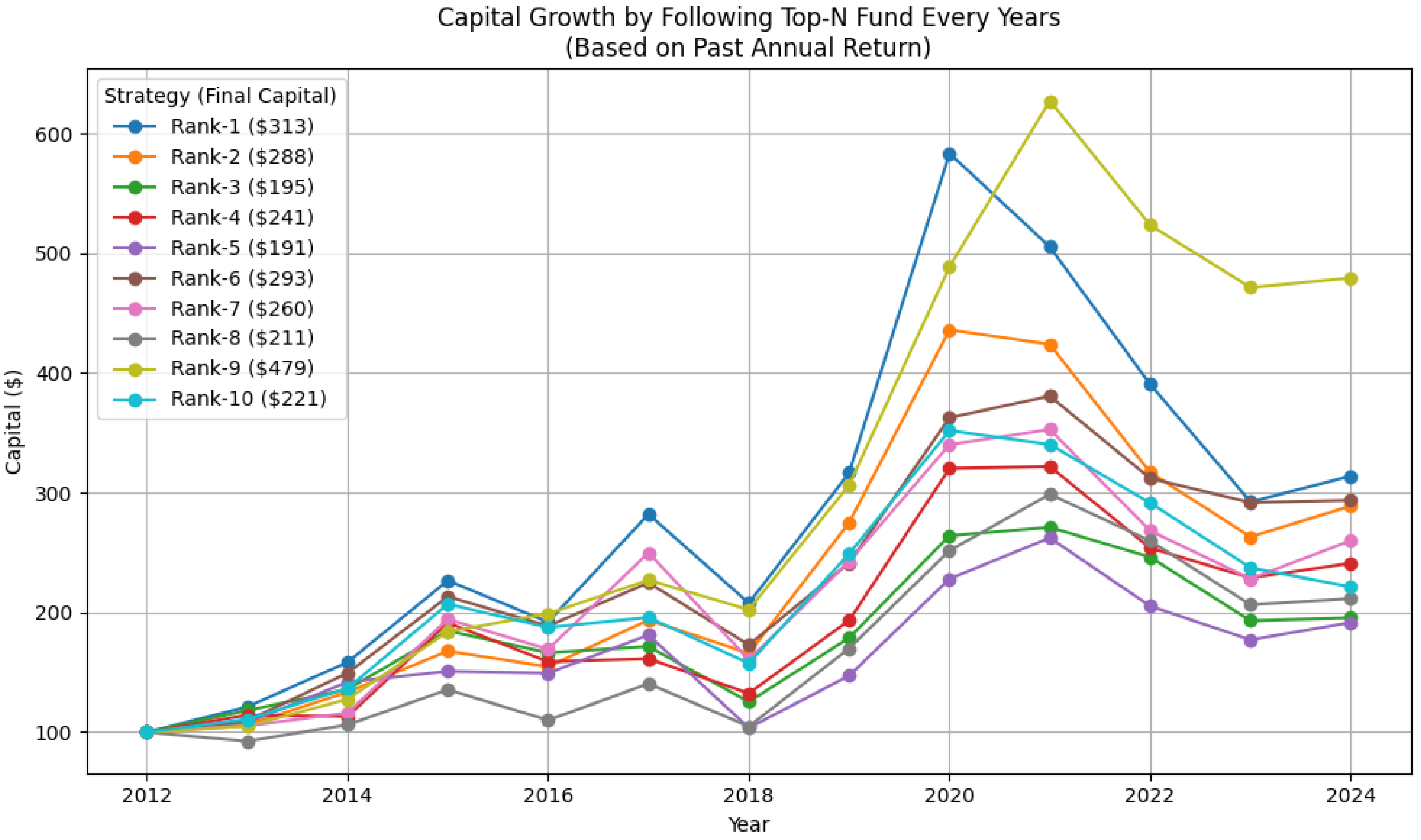
Table A2.
Ranks for the best three top-N strategies for different metrics (annual rebalancing).
According to the results from Figure A1 and Table A2, the Rank-9 and Rank-6 strategies are the most stabilized, most risk-controlled, and best-performing strategies for investors. The Rank-1 strategy was not the best strategy since it was less stable and had a higher risk compared to Rank-6 and Rank-9. These findings showed that the previous year’s top-performing fund strategy is not always optimal for long-term investment. These results illustrate the difficulty of selecting future winning funds based only on past rankings because the relative performance of funds changes from year to year.
Some Statistics on Ranking Dynamics
In this subsection, we present some additional statistics on the ranking dynamics of the 10 funds with annual rebalancing. We start with the rankings in Table A3.
Table A3.
Annual ranking (by annual return) of the funds and the SCI (2012–2024).
Examining this table, we see that SCI had the lowest returns in two consecutive years (rank 11 in 2019 and 2020), and the second lowest (rank 10) in two years (rank 10 in 2013 and 2015). It also had the best performance in two years (rank = 1 in 2014 and 2023).
To illustrate the difficulty of picking up a fund based on ranking, consider the fund #110011. This fund held the highest rank of 1 in three consecutive years (2016, 2019, and 2020) and a rank of 2 in two years (2017 and 2018). However, in 2021, it dropped from the top rank of 1 in 2020 to the 11th rank. This fund generated the second largest growth ($482 from Table 4). From the same Table 4, we see that the highest growth was generated by Fund #26016. This fund also had rank = 1 in three years (2012, 2013, and 2022). We should note that a higher average ranking may not translate to higher growth, as returns vary from year to year.
This simple example with 10 largest mutual funds illustrates the difficulty of choosing next year mutual fund based on rankings.
Appendix B. Appendix: List of Fund Tickers, Types, and Sample Dates
The following table lists all funds included in the analysis, along with their ticker symbols, fund family, full name, fund type (active vs. index), and relevant sample dates to ensure data reproducibility. All funds are classified as actively managed (active) based on their investment strategy descriptions.
Table A4.
Fund Tickers, Types, and Sample Period.
References
- Allen, F., Qian, J., Shan, C., & Zhu, J. L. (2024). Dissecting the long-term performance of the Chinese stock market. Journal of Finance, 79(2), 993–1054. [Google Scholar] [CrossRef] [Scilit]
- Baker, M., Wurgler, J., & Yuan, Y. (2012). Global, local, and contagious investor sentiment. Journal of Financial Economics, 104(2), 272–287. [Google Scholar] [CrossRef] [Scilit]
- Barras, L., Scaillet, O., & Wermers, R. (2010). False discoveries in mutual fund performance: Measuring luck in estimated alphas. The Journal of Finance, 65(1), 179–216. [Google Scholar] [CrossRef] [Scilit]
- Berk, J. B., & Green, R. C. (2004). Mutual fund flows and performance in rational markets. Journal of Political Economy, 112(6), 1269–1295. [Google Scholar] [CrossRef] [Scilit]
- Bessembinder, H., Cooper, A., & Zhang, Z. (2022). Mutual fund performance at long horizons. The Review of Financial Studies, 35(3), 884–932. [Google Scholar] [CrossRef] [Scilit]
- Bollen, N. P. B. (2005). Short-term persistence in mutual fund performance. The Review of Financial Studies, 18(2), 569–597. [Google Scholar] [CrossRef] [Scilit]
- Brown, K. C., & Harlow, W. V. (2002). Staying the course: The impact of investment style consistency on mutual fund performance. SSRN working paper. Available online: https://papers.ssrn.com/sol3/papers.cfm?abstract_id=306999 (accessed on 18 October 2025).
- Brown, K. C., Harlow, W. V., & Starks, L. T. (1996). Of tournaments and temptations: An analysis of managerial incentives in the mutual fund industry. The Journal of Finance, 51(1), 85–110. [Google Scholar] [CrossRef]
- Brown, S. J., & Goetzmann, W. N. (1995). Performance persistence. The Journal of Finance, 50(2), 679–698. [Google Scholar] [CrossRef]
- Busse, J. A., Goyal, A., & Wahal, S. (2010). Performance and persistence in institutional investment management. The Journal of Finance, 65(2), 765–790. [Google Scholar] [CrossRef] [Scilit]
- Carhart, M. M. (1997). On persistence in mutual fund performance. The Journal of Finance, 52(1), 57–82. [Google Scholar] [CrossRef]
- Chen, J., Hong, H., Huang, M., & Kubik, J. D. (2004). Does fund size erode mutual fund performance? The role of liquidity and organization. American Economic Review, 94(5), 1276–1302. [Google Scholar] [CrossRef] [Scilit]
- Chen, Y., & Wei, H. (2025). Fund style drift and fund performance: Evidence from China. PLoS ONE, 20(2), e0316932. [Google Scholar] [CrossRef] [Scilit]
- Chi, Y., & Qiao, X. (2022). Mutual fund investing in the Chinese A-share market. In M. H. Bilgin, H. Danis, & E. Demir (Eds.), Handbook of banking and finance in emerging markets (pp. 32–50). Edward Elgar Publishing. [Google Scholar] [CrossRef] [Scilit]
- China Securities Index Co., Ltd. (2024). China securities index (csi) industry classification standard. Available online: https://www.csindex.com.cn (accessed on 11 January 2026).
- Chu, N., Dao, B., Pham, N., Nguyen, H., & Tran, H. (2022). Predicting mutual funds’ performance using deep learning and ensemble techniques. arXiv. [Google Scholar] [CrossRef] [Scilit]
- Chua, K. P. A., Tam, O. K., & Tan, M. (2018). The presence of style drift in active mutual funds: Evidence from china. SSRN working paper, 22 pages. Available online: https://ssrn.com/abstract=3168407 (accessed on 1 February 2026).
- Cremers, K. J. M., & Petajisto, A. (2009). How active is your fund manager? A new measure that predicts performance. The Review of Financial Studies, 22(9), 3329–3365. [Google Scholar] [CrossRef] [Scilit]
- Cremers, M., Ferreira, M. A., Matos, P., & Starks, L. (2019). Mutual fund performance: A review of the literature. Journal of Financial and Quantitative Analysis, 54(6), 2363–2396. [Google Scholar] [CrossRef] [Scilit]
- Cuthbertson, K., Nitzsche, D., & O’Sullivan, N. (2010). Mutual fund performance: Measurement and Evidence. Financial Markets, Institutions and Instruments, 16(5), 609–628. [Google Scholar] [CrossRef] [Scilit]
- DeMiguel, V., Gil-Bazo, J., Nogales, F. J., & Santos, A. A. P. (2023). Machine learning and fund characteristics help to select mutual funds with positive alpha. Journal of Financial Economics, 150(3), 656–678. [Google Scholar] [CrossRef] [Scilit]
- Eastmoney. (2024a). China ETF database. Available online: https://fund.eastmoney.com/etf.html (accessed on 11 January 2026).
- Eastmoney. (2024b). Fuguo tianhui growth mixed fund (161005)–Annual reports and holdings. Available online: https://fund.eastmoney.com/161005.html (accessed on 11 January 2026).
- Efron, B. (1979). Bootstrap methods: Another look at the jackknife. The Annals of Statistics, 7(1), 1–26. [Google Scholar] [CrossRef] [Scilit]
- Elton, E. J., Gruber, M. J., & Blake, C. R. (1996). The persistence of risk-adjusted mutual fund performance. The Journal of Business, 69(2), 133–157. [Google Scholar] [CrossRef] [Scilit]
- Fama, E. F., & French, K. R. (2010). Luck versus skill in the cross-section of mutual fund returns. The Journal of Finance, 65(5), 1915–1947. [Google Scholar] [CrossRef] [Scilit]
- Ferreira, M. A., Ferreira, A. C., & Matos, P. (2019). Do large pension funds outperform? Evidence from international data. Journal of Financial Economics, 132(2), 337–362. [Google Scholar] [CrossRef] [Scilit]
- Fitch Ratings. (2024, September 30). Chinese MMF inflows drove growth in global money fund sector in 1H24. Fitch ratings research report. Available online: https://www.fitchratings.com/research/fund-asset-managers/chinese-mmf-inflows-drove-growth-in-global-money-fund-sector-in-1h24-30-09-2024 (accessed on 6 January 2026).
- Forsberg, L., Schmidt, P. S., & von Thadden, E.-L. (2021). Hedge fund performance persistence. Journal of Financial and Quantitative Analysis, 56(6), 2107–2141. [Google Scholar] [CrossRef] [Scilit]
- Forsberg, L., Schmidt, P. S., & von Thadden, E.-L. (2022). Ranking-based strategies and performance persistence. Journal of Financial and Quantitative Analysis, 57(5), 1945–1979. [Google Scholar] [CrossRef] [Scilit]
- Gao, J., O’Sullivan, N., & Sherman, M. (2021). Chinese securities investment funds: The role of luck in performance. Review of Accounting and Finance, 20(5), 271–297. [Google Scholar] [CrossRef] [Scilit]
- Grinblatt, M., & Titman, S. (1992). The persistence of mutual fund performance. The Journal of Finance, 47(5), 1977–1984. [Google Scholar] [CrossRef]
- Hendricks, D., Patel, J., & Zeckhauser, R. (1993). Short-run persistence of relative performance, 1974–1988. The Journal of Finance, 48(1), 93–130. [Google Scholar] [CrossRef] [Scilit]
- Hu, G. X., Pan, J., & Wang, J. (2018). Chinese capital market: An empirical overview. (Working Paper No. 24346). National Bureau of Economic Research. Available online: https://www.nber.org/system/files/working_papers/w24346/w24346.pdf (accessed on 6 January 2026). [CrossRef] [Scilit]
- Huij, J., & Verbeek, M. (2007). Cross-sectional learning and short-run persistence in mutual fund performance. Journal of Banking & Finance, 31(3), 973–997. [Google Scholar] [CrossRef] [Scilit]
- Jones, C. S., & Mo, H. (2021). Out-of-sample performance of mutual fund predictors. The Review of Financial Studies, 34(1), 149–193. [Google Scholar] [CrossRef] [Scilit]
- Kacperczyk, M., Sialm, C., & Zheng, L. (2005). On the industry concentration of actively managed equity mutual funds. The Journal of Finance, 60(4), 1983–2011. [Google Scholar] [CrossRef] [Scilit]
- Kacperczyk, M., Sialm, C., & Zheng, L. (2008). Unobserved actions of mutual funds. The Review of Financial Studies, 21(6), 2379–2416. [Google Scholar] [CrossRef] [Scilit]
- Kaniel, R., Lin, Z., Pelger, M., & Nieuwerburgh, S. V. (2023). Machine-learning the skill of mutual fund managers. Journal of Financial Economics, 150(1), 94–138. [Google Scholar] [CrossRef] [Scilit]
- Keju, W., Si, M., & Yu, C. (2024, March 5). Govt report: China pushes for 5% gdp growth, more jobs. China Daily HK. Available online: https://www.chinadailyhk.com/hk/article/379485 (accessed on 6 January 2026).
- Khorana, A. (2001). Performance changes following top management turnover: Evidence from open-end mutual funds. Journal of Financial and Quantitative Analysis, 36(3), 371–393. [Google Scholar] [CrossRef] [Scilit]
- Kosowski, R., Timmermann, A., Wermers, R., & White, H. (2006). Can mutual fund “stars” really pick stocks? New evidence from a bootstrap analysis. The Journal of Finance, 61(6), 2551–2595. [Google Scholar] [CrossRef] [Scilit]
- Lemmon, M., & Portniaguina, E. (2006). Consumer confidence and asset prices: Some empirical evidence. The Review of Financial Studies, 19(4), 1499–1529. [Google Scholar] [CrossRef] [Scilit]
- Liang, Z., & Yin, C. (2025). High portfolio turnover, managerial skills, and fund performance of chinese mutual funds. SSRN Working Paper. Available online: https://ssrn.com/abstract=5048159 (accessed on 1 February 2026).
- Mateus, C., Mateus, I. B., & Todorovic, N. (2025). Mutual fund performance: The model for selecting persistent winners. European Journal of Finance, 31(5), 647–669. [Google Scholar] [CrossRef] [Scilit]
- Measures for the Administration of the Operation of Publicly Offered Securities Investment Funds. (2014). CSRC decree No. 104. Available online: https://www.csrc.gov.cn (accessed on 9 February 2026).
- Newey, W. K., & West, K. D. (1987). A simple, positive semi-definite, heteroskedasticity and autocorrelation consistent covariance matrix. Econometrica, 55(3), 703–708. Available online: http://www.jstor.org/stable/1913610 (accessed on 9 February 2026). [CrossRef] [Scilit]
- Nickelsen, J., & Stotz, O. (2023). Do fund managers in the Chinese mutual fund market deliver positive risk-adjusted returns? Yes, but it is mainly observed for local fund managers. Quantitative Finance and Economics, 7(4), 595–621. [Google Scholar] [CrossRef] [Scilit]
- Pastor, L., Stambaugh, R. F., & Taylor, L. A. (2017). Do funds make more when they trade more? The Journal of Finance, 72(4), 1483–1528. [Google Scholar] [CrossRef] [Scilit]
- Pollet, J. M., & Wilson, M. I. (2008). How does size affect mutual fund behavior? The Journal of Finance, 63(6), 2941–2969. [Google Scholar] [CrossRef] [Scilit]
- Publicly Disclosed Fund Documents. (2024). Chinese mutual fund prospectuses and benchmark information. Tiantian Jijin (Eastmoney Fund Information Platform). Available online: https://fund.eastmoney.com (accessed on 8 January 2026).
- Puckett, A., & Yan, X. S. (2011). The interim trading skills of institutional investors. The Journal of Finance, 66(2), 601–633. [Google Scholar] [CrossRef] [Scilit]
- Securities Investment Fund Law of the People’s Republic of China. (2013). Amended 2015. Available online: https://www.gov.cn/flfg/2012-12/28/content_2305569.htm (accessed on 1 February 2026).
- Sha, Y. (2020). The devil in the style: Mutual fund style drift, performance and common risk factors. Economic Modelling, 86, 264–273. [Google Scholar] [CrossRef] [Scilit]
- Sirri, E. R., & Tufano, P. (1998). Costly search and mutual fund flows. The Journal of Finance, 53(5), 1589–1622. [Google Scholar] [CrossRef] [Scilit]
- Sprent, P., & Smeeten, N. (2007). Applied nonparametric statistical methods. Chapman and Hall/CRC. [Google Scholar]
- Stambaugh, R. F., Yu, J., & Yuan, Y. (2012). The short of it: Investor sentiment and anomalies. Journal of Financial Economics, 104(2), 288–302. [Google Scholar] [CrossRef] [Scilit]
- Valath, S. K., & Pinsky, E. (2023). Sell the losers? Keep the winners? None of the above–Focus on the median! Algorithmic Finance, 10(3–4), 115–135. [Google Scholar] [CrossRef] [Scilit]
- Vidal-García, J. (2016). The short-term persistence of international mutual fund performance. Journal of International Financial Markets, Institutions and Money, 42, 133–149. [Google Scholar] [CrossRef] [Scilit]
- Wang, A., & Ko, B. (2017). Mutual fund manager tenure and performance in emerging markets. Journal of Finance Studies, 12(3), 45–68. [Google Scholar]
- Wermers, R. (2000). Mutual fund performance: An empirical decomposition into stock-picking talent, style, transactions costs, and expenses. The Journal of Finance, 55(4), 1655–1703. [Google Scholar] [CrossRef] [Scilit]
- Wermers, R. (2003). Is money really ‘smart’? New evidence on the relation between mutual fund flows, manager behavior, and performance persistence. SSRN working paper. Available online: https://papers.ssrn.com/sol3/papers.cfm?abstract_id=414420 (accessed on 6 January 2026).
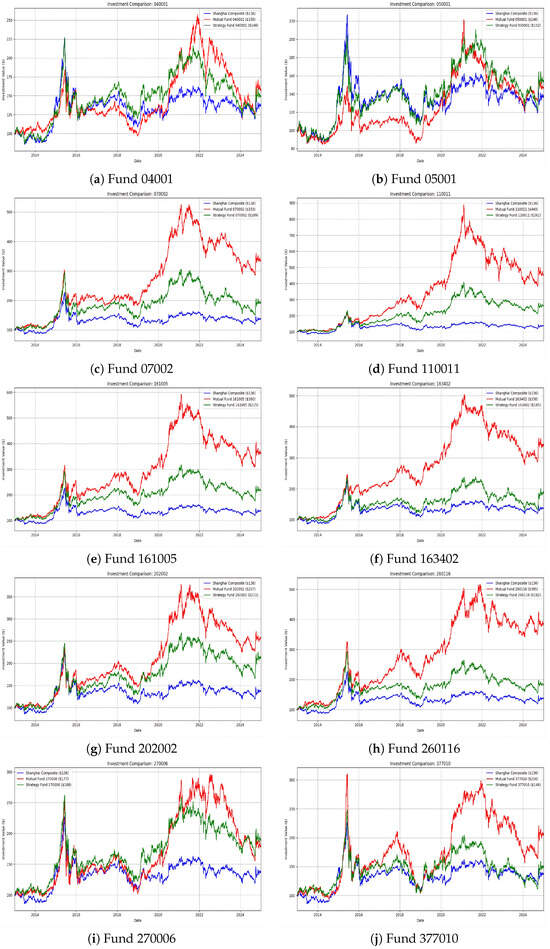
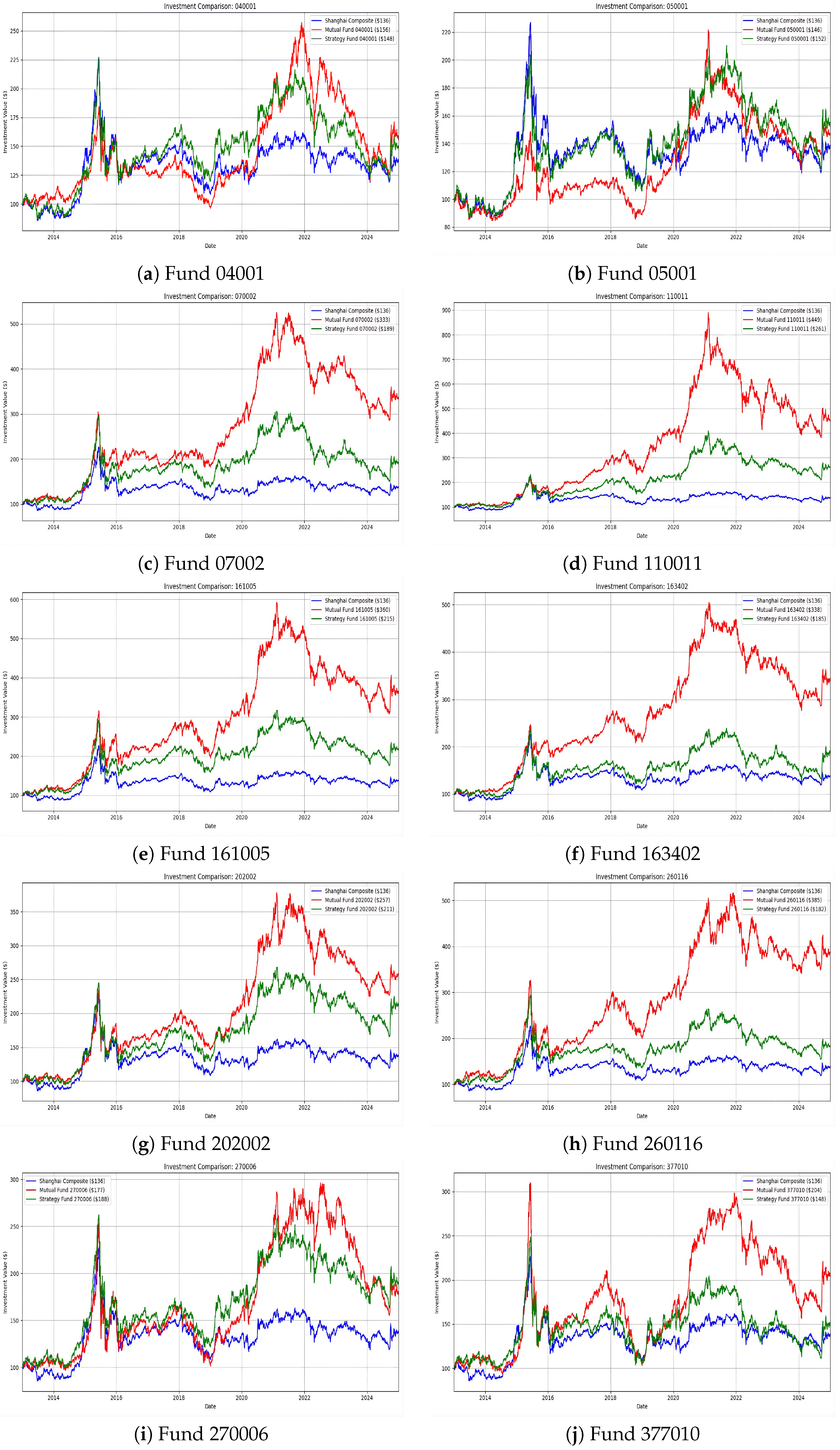
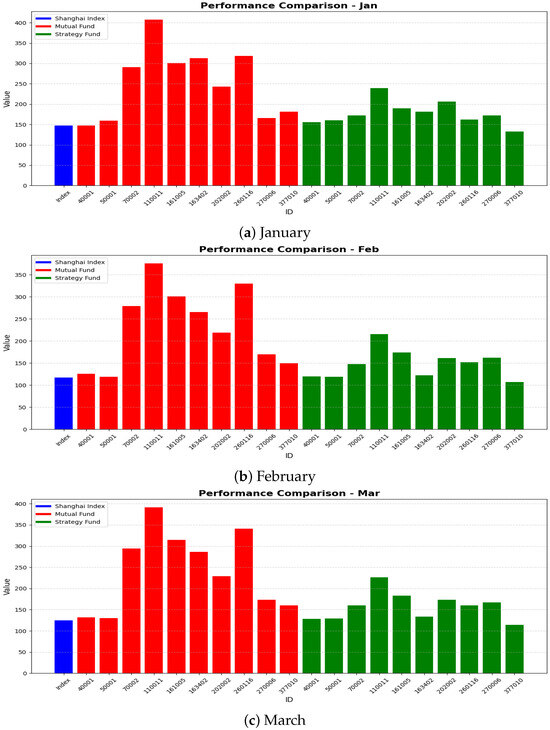
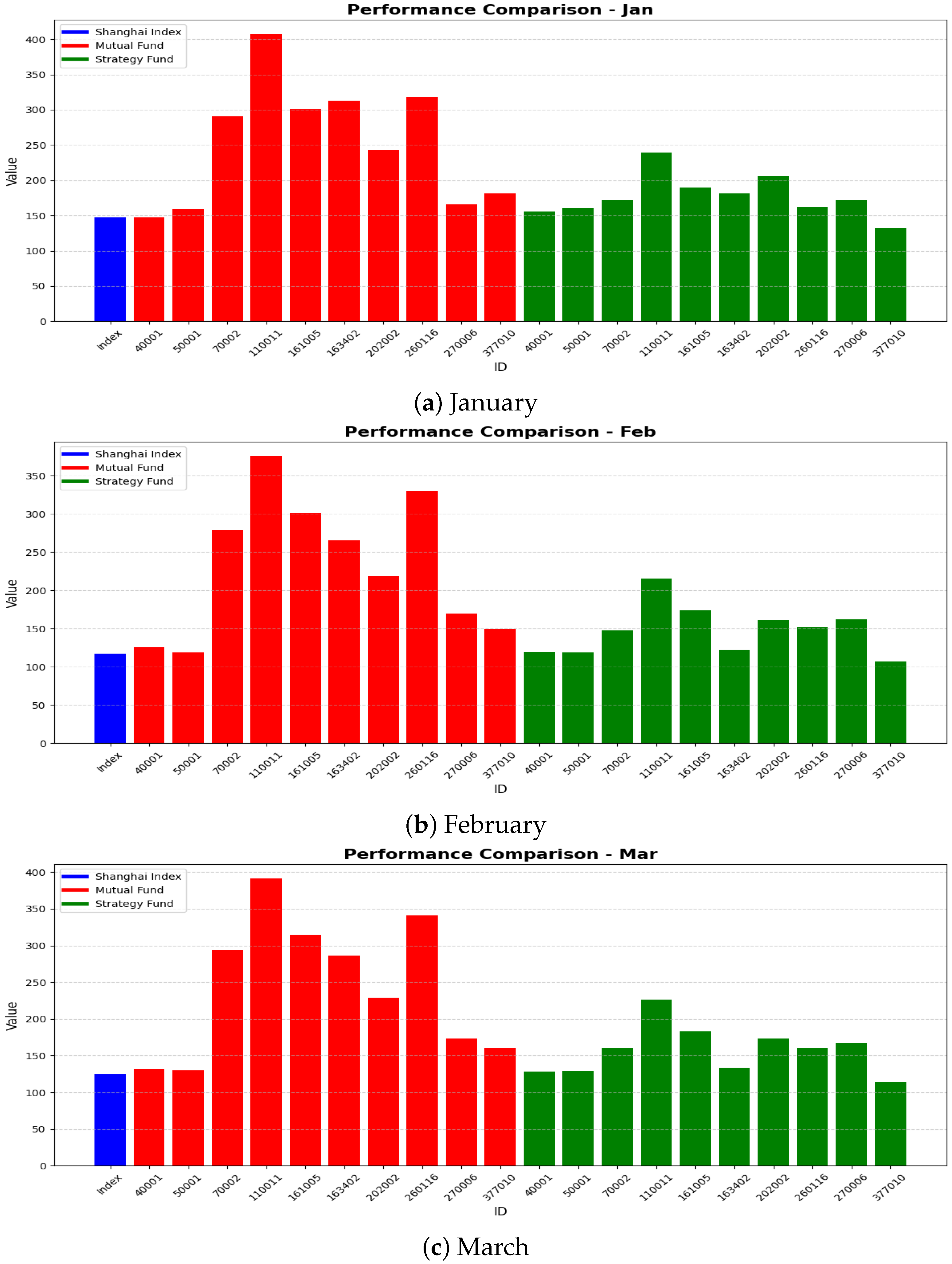
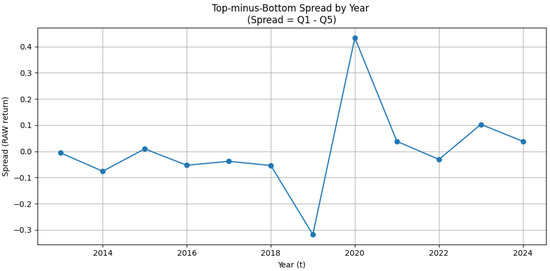
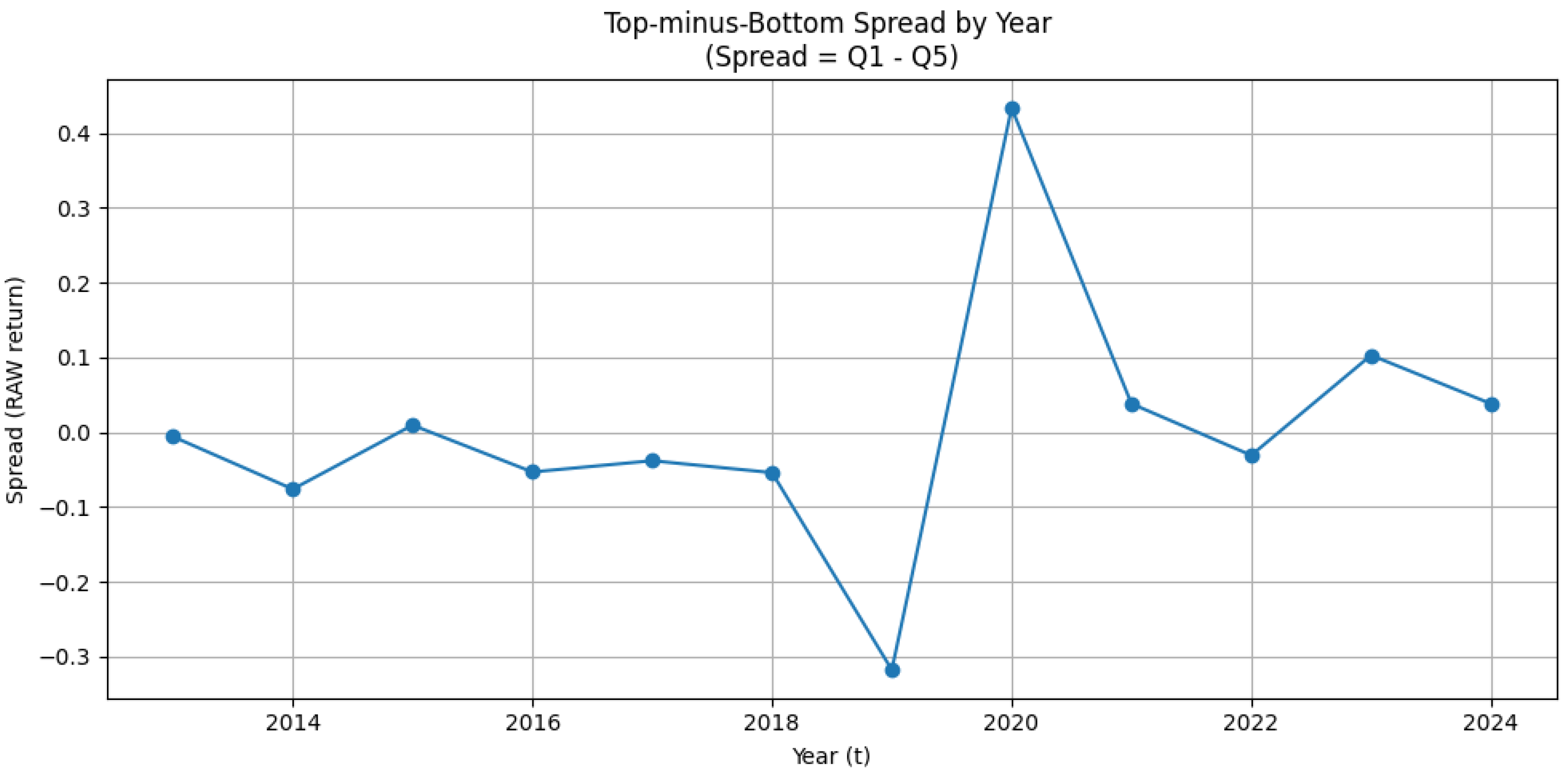
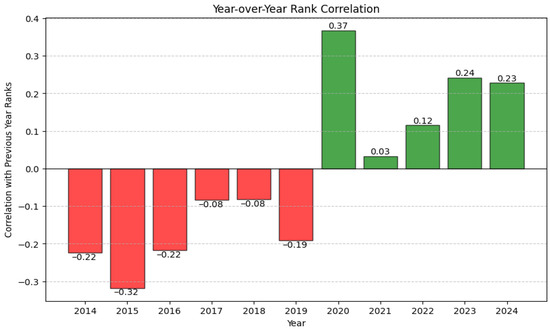
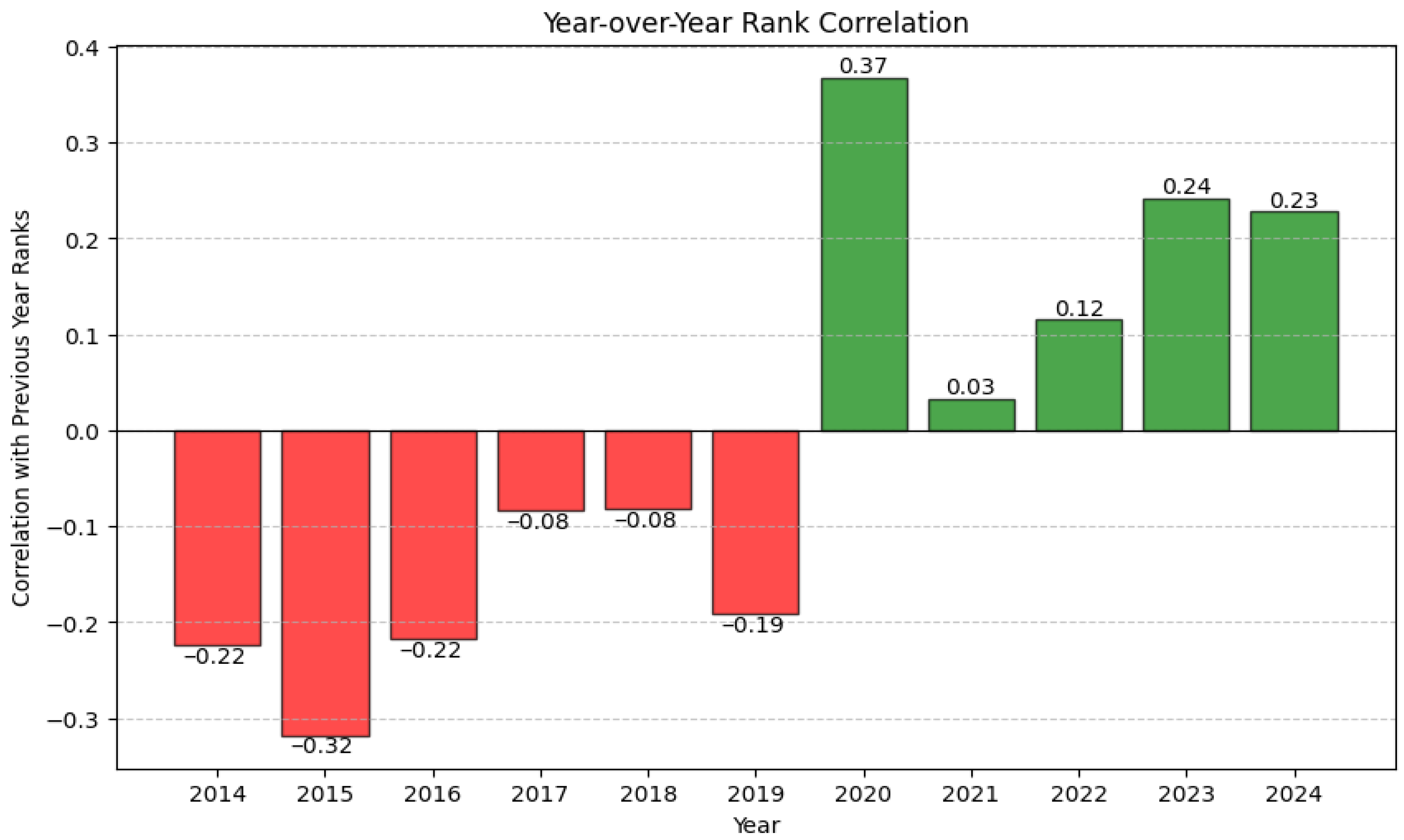
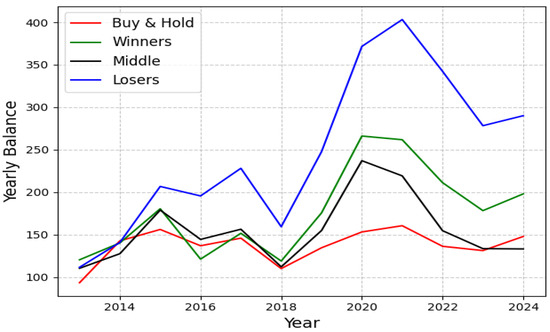
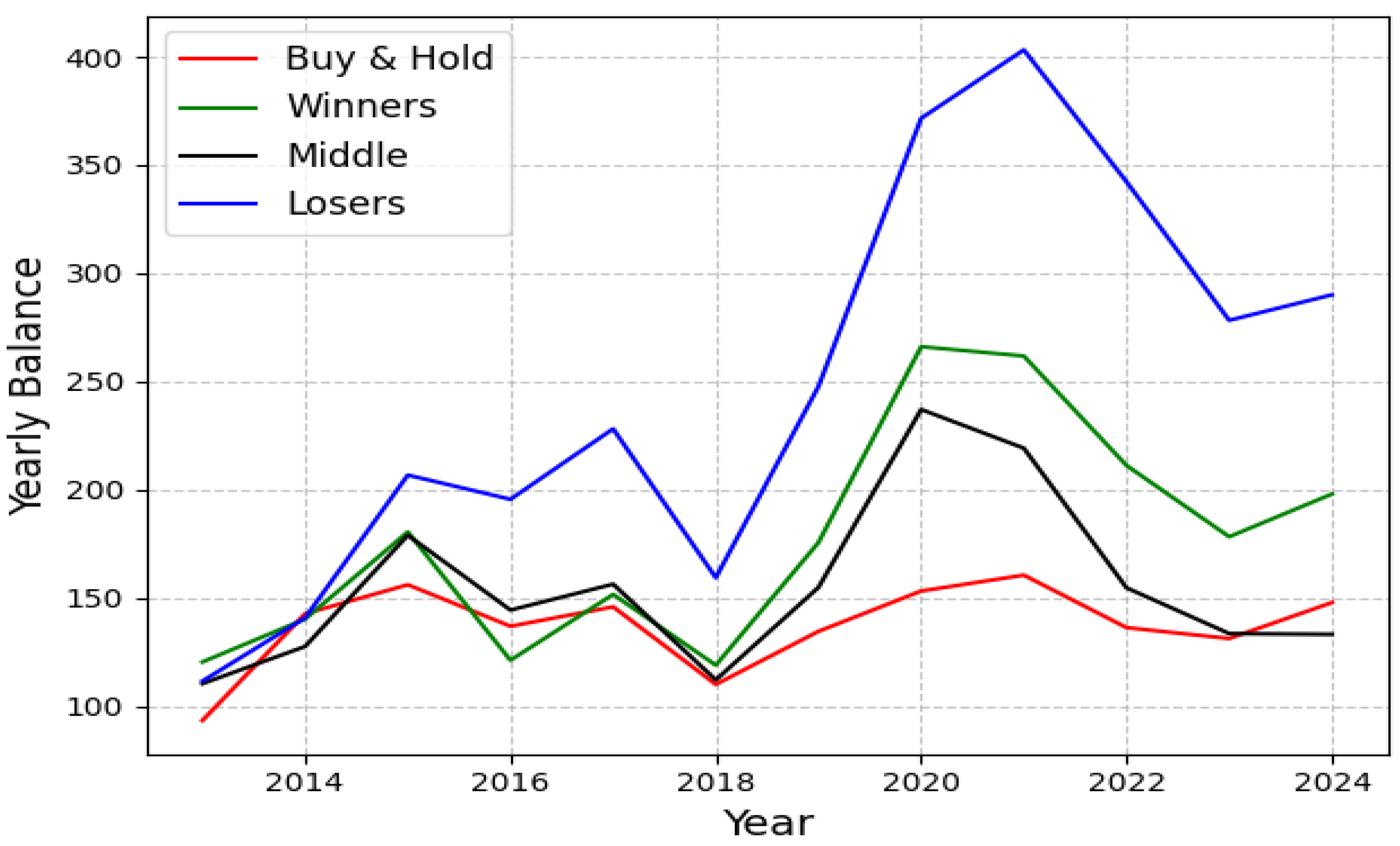
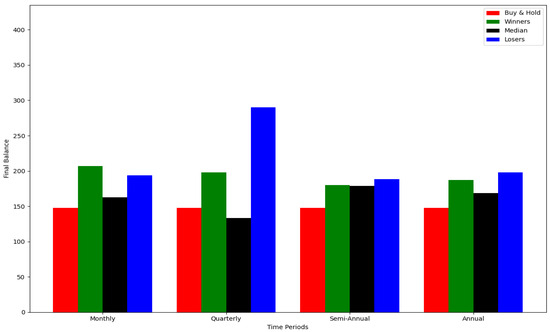
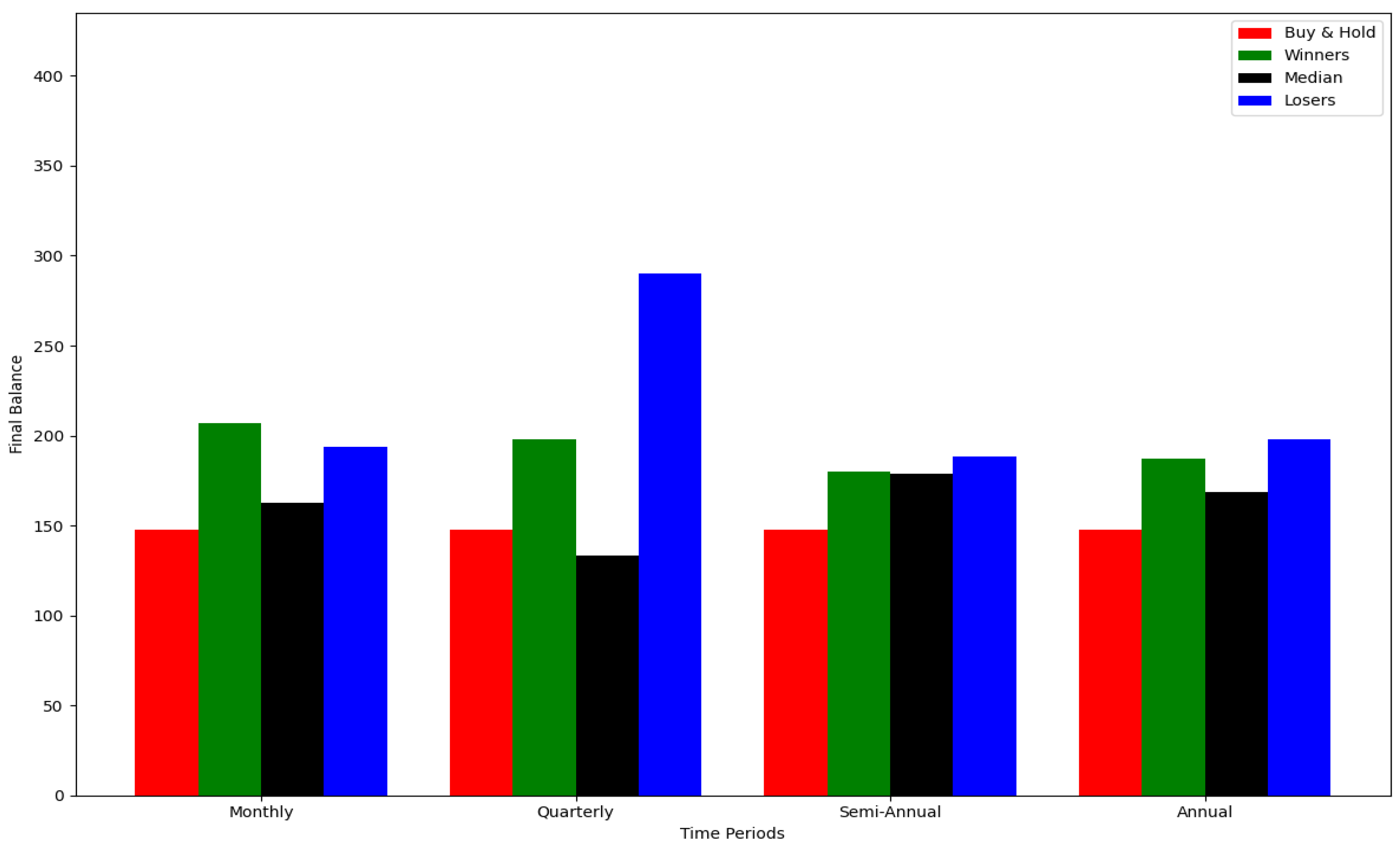
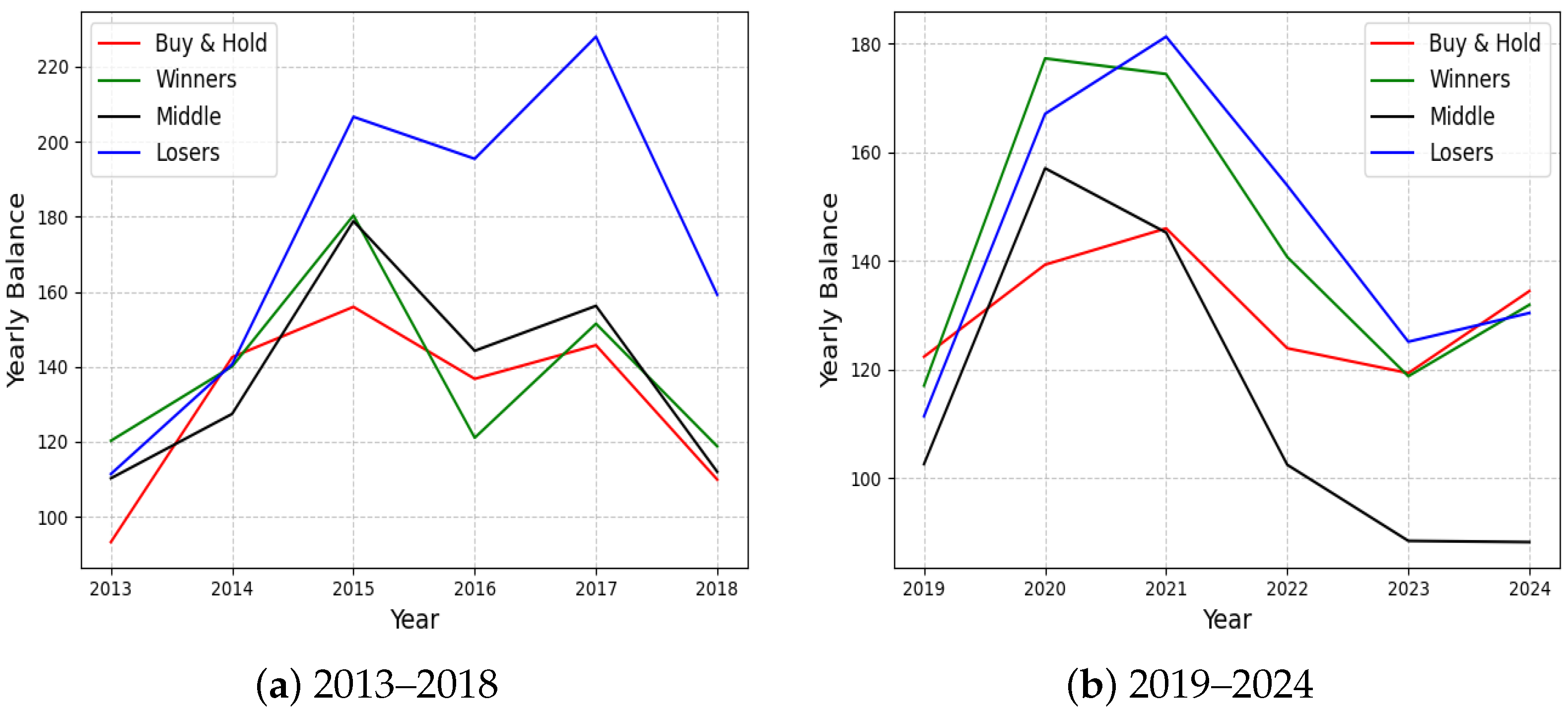
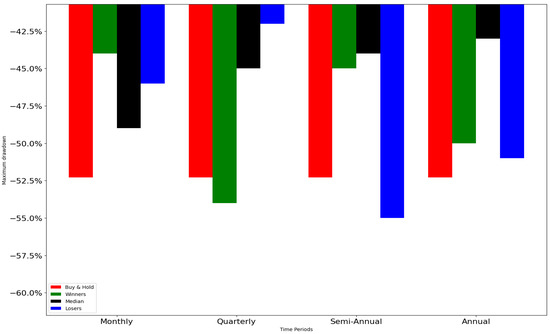
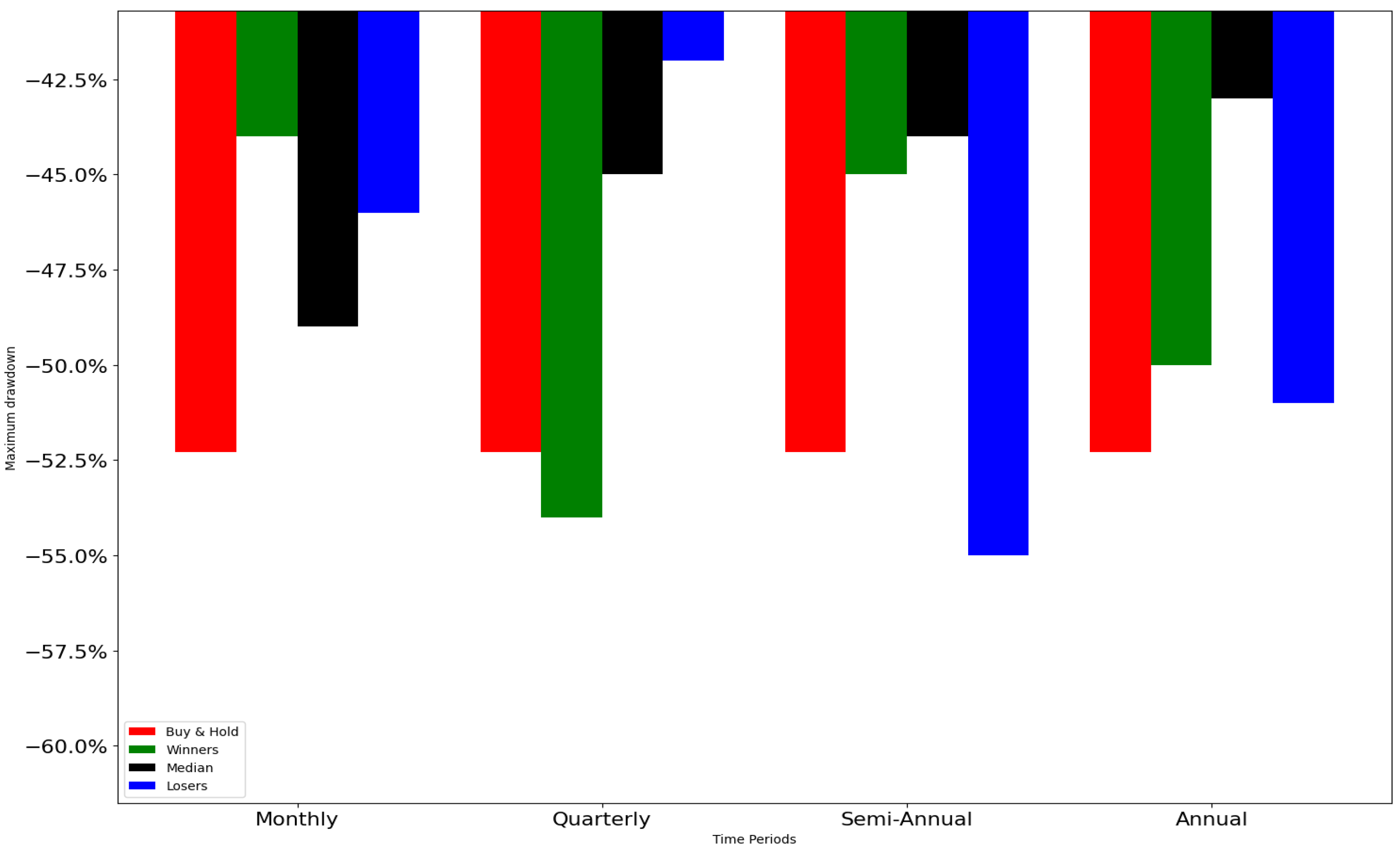

Disclaimer/Publisher’s Note: The statements, opinions and data contained in all publications are solely those of the individual author(s) and contributor(s) and not of MDPI and/or the editor(s). MDPI and/or the editor(s) disclaim responsibility for any injury to people or property resulting from any ideas, methods, instructions or products referred to in the content. |
© 2026 by the authors. Licensee MDPI, Basel, Switzerland. This article is an open access article distributed under the terms and conditions of the Creative Commons Attribution (CC BY) license.