1. Introduction
Education is globally recognized as one of the fundamental pillars of social, economic, and cultural development, serving as the primary mechanism through which a society builds its human capital, cultivates its values, and ensures sustainable progress (
Talan & Tyagi, 2020;
Mbithi et al., 2021). Within this framework, the financing of education becomes a critical component, not only from the perspective of the resources allocated, but also in terms of equity and efficiency in their use. Adequate financial allocation is indispensable for the effective functioning of any educational system, as it determines the quality of infrastructure, technological resources, human capital, and, ultimately, educational performance and the competitiveness of the workforce (
Bharti & Yang, 2024).
A well-funded educational system goes beyond maintaining schools and universities operational; it represents a strategic investment in the future of society. Financial resources enable the modernization of infrastructure, access to advanced technologies and digital resources, as well as the support of scientific research (
Kosova et al., 2023).
Moreover, adequate funding creates the conditions to attract and motivate highly qualified teachers, thereby contributing to the professionalization of the teaching workforce and the development of an academic culture oriented toward excellence (
Salifu, 2013). Investment in the human capital of educators and researchers is essential, as the quality of the educational process directly depends on their competence and motivation (
Lanzi, 2007).
The social dimension of educational financing is equally important. Without equitable distribution of resources, significant imbalances emerge between regions, between urban and rural areas, or between socio-economic groups (
Sall & Biswas, 2025). These disparities translate into unequal access to education, reduced inclusion opportunities for vulnerable groups, and, consequently, the perpetuation of social inequalities (
Aslam, 2023). Thus, the way education is financed becomes a central indicator of social equity and cohesion. For instance, underfunding schools in rural areas leads to lower educational outcomes and reduced social mobility, thereby limiting the development potential of entire communities (
Koswara, 2024).
At the same time, the financing of education has a direct economic dimension, closely linked to a country’s ability to adapt to global transformations and maintain competitiveness. Education is a key determinant of human capital development, which, in turn, drives productivity, innovation, and economic growth (
Podra et al., 2020;
Bykova et al., 2024).
Numerous studies have demonstrated a positive correlation between investment in education and long-term economic development, particularly through its effects on employment, adaptability to technological change, and job creation (
Abid, 2025;
Yulianti & Fitriansyah, 2024). Therefore, educational expenditure should not be perceived as a budgetary burden but as a strategic investment with multiplier effects on both the economy and society (
De Ridder et al., 2020).
In the context of globalization and European integration, educational financing also acquires a specific significance related to the ability of states to access external funds and align educational policies with broader European development strategies. European funding programs such as the European Social Fund or Erasmus+ play a crucial role in modernizing education systems, promoting social inclusion, and enhancing academic mobility (
Arreola & Niemkoff, 2024;
Szolucha, 2009).
In order to ensure conceptual clarity and transparency in the interpretation of bibliometric results, it is necessary to explicitly define the key analytical constructs employed in this study. In the context of education financing, sustainable innovation is understood as the set of policy instruments, funding mechanisms, and institutional arrangements that support long-term efficiency, equity, and adaptability of education systems while responding to economic, technological, and social change. Rather than referring to technological innovation alone, sustainable innovation in this study encompasses performance-oriented funding, digital transformation, governance reforms, and investments in human capital that enhance the resilience and long-term sustainability of education systems. Within this bibliometric analysis, sustainable innovation is treated as a conceptual lens reflected in the thematic structure of the literature, not as a directly measured outcome.
In line with recent research on public sector financing (
Ahmad & Alam, 2025), business models in education are approached as financial and organizational configurations through which resources are mobilized, allocated, and linked to outcomes. Thus, studies highlight that public–private partnerships have become important mechanisms through which financial and technical resources from the private sector are mobilized to support educational infrastructure, technological integration, and capacity building, contributing to system innovation in education (
Ahmad & Alam, 2025;
Kaur, 2013;
Patrinos et al., 2009;
Barrera-Osorio et al., 2009;
Robertson et al., 2012). While this study does not evaluate or compare specific business models, it identifies their presence and evolution as recurring themes within the mapped scientific literature, as revealed through keyword co-occurrence and citation patterns.
Against this background, bibliometric analysis proves to be an essential tool for understanding how the scientific community addresses the issue of educational financing. By mapping publications, authors, institutions, and keywords, bibliometrics enables the identification of dominant trends, research gaps, and the ways in which academic literature reflects the challenges and opportunities in the field (
Roemer & Borchardt, 2015;
G. Badareu et al., 2025a). Unlike traditional approaches based on case studies or statistical evaluations of education budgets, bibliometric analysis provides an integrated overview of academic production, highlighting both quantitative developments (number of publications and citations) and qualitative structures (collaboration networks, core themes, and research focus) (
De Bellis, 2009).
Accordingly, the contribution of this study lies in mapping how concepts related to sustainable innovation and education financing business models are discussed in the academic literature, rather than in assessing their effectiveness or economic impact. This clarification helps establish clear conceptual boundaries and supports a transparent interpretation of the bibliometric results.
Despite its growing relevance, there is still a notable gap in the bibliometric literature regarding the financing of education. While bibliometric approaches have been extensively applied to fields such as medicine, management, or environmental studies (
G. Badareu et al., 2025b;
Cascajares et al., 2021) comprehensive analyses dedicated specifically to education financing remain scarce. Existing studies tend to focus either on broader themes such as educational policy or on specific issues like higher education funding, without systematically mapping the field as a whole. This lack of consolidated bibliometric evidence limits the ability to understand how the topic has evolved, what research agendas dominate, and which areas remain underexplored. Therefore, this study addresses this gap by conducting a systematic bibliometric analysis of the scientific literature on education financing at the European level.
While previous studies have addressed specific aspects of education financing—such as higher education funding, national policy reforms, or institutional case studies—there is a lack of bibliometric research that simultaneously integrates temporal dynamics, thematic structures, citation impact, and country-level collaboration patterns within a unified analytical framework focused on Europe. This study advances existing knowledge by combining publication trend analysis, keyword co-occurrence networks, citation-based influence mapping, and co-authorship analysis at the country level. Through this multi-dimensional bibliometric design, the paper provides a more comprehensive and systematic representation of how education financing research in Europe is structured, evolves, and gains visibility within the academic literature.
From a bibliometric perspective, this study seeks to move beyond descriptive discussions of education financing and to systematically uncover the structural characteristics of the research field itself. Specifically, the analysis aims to identify how scholarly attention to education financing in Europe is distributed over time, how thematic priorities are organized and interconnected, and which actors—publications, authors, institutions, and countries—shape the visibility and direction of research. By doing so, the bibliometric approach allows for an explicit mapping of the intellectual and collaborative architecture of European education financing research, rather than an evaluation of policy outcomes or system performance.
This study aims to map and interpret the existing scientific literature on educational financing in Europe through a bibliometric approach. Methodologically, this choice responds to the need to understand not only the regulatory and institutional framework of education funding but also how the academic community has addressed this topic over time, what major research trends have emerged, and which gaps remain insufficiently explored. To achieve these objectives, the study is guided by the following research questions:
RQ1: How has the scientific literature on education financing in Europe evolved over time in terms of publication output and periods of intensified academic interest?
RQ2: What are the dominant thematic structures and conceptual linkages in the education financing literature, as revealed through keyword co-occurrence and network analysis?
RQ3: Which publications, authors, institutional actors, and countries have exerted the greatest influence on the development and visibility of European research on education financing?
In line with established bibliometric approaches, the analysis of publication dynamics, RQ1, (
Kwiek, 2018;
Hoenig, 2017), keyword co-occurrence and conceptual network analysis inform RQ2 (
Mamanazarov et al., 2025), while citation impact and source analysis are used to identify influential publications and research actors in response to RQ3 (
Mali, 2010;
Horta & Santos, 2016).
To ensure transparency, this bibliometric study adopts clear conceptual boundaries that define the scope and interpretation of the mapped literature. The analysis focuses on peer-reviewed European research on education financing, while related concepts are considered thematic elements reflected in publication patterns rather than empirically assessed outcomes. This clarification supports a consistent interpretation of the bibliometric results and avoids conceptual overextension.
In this sense, the novelty of the study lies not in evaluating education financing policies but in providing a systematic bibliometric mapping of the research landscape itself, offering a structured foundation for future empirical and policy-oriented investigations.
The paper is structured as follows: the introduction establishes the theoretical framework of educational financing, while the literature review highlights the main research gaps and emerging trends in the field. The next section presents the bibliometric methodology applied in this study, followed by the results and discussion, which analyze publication dynamics, keyword networks, and the most influential works in the literature. Finally, the conclusion synthesizes the key findings and outlines recommendations for future research, with particular emphasis on directions such as strengthening comparative analyses, integrating pre-university education, and exploring the impact of digitalization and equity in the financing of education systems.
2. Materials and Methods
Bibliometric analysis is one of the most widely used methods for evaluating and mapping scientific production, as it combines quantitative rigor with the ability to capture conceptual and relational developments within a field. Numerous studies have demonstrated its usefulness in understanding the evolution of a research domain—whether in financial economics, education financing, or educational policies—by identifying dominant themes, relevant authors, and emerging directions (
Roemer & Borchardt, 2015;
G. Badareu et al., 2025a;
De Bellis, 2009). In this regard, bibliometric analysis applied to education financing enables the systematic quantification and structuring of accumulated scientific knowledge and offers insights into how research themes related to public policy and social development are reflected in the academic literature. Thus, bibliometric approaches allow for the identification of research trends, thematic priorities, and knowledge gaps that may inform policy debates and future research directions.
In the specialized literature, the most frequently used databases for bibliometric analyses are Web of Science (WoS) and Scopus, both recognized for their extensive coverage and consistency of results (
G. Badareu et al., 2023;
Donthu et al., 2021;
Karakus et al., 2024). However, for the present research, we opted exclusively for the Web of Science Core Collection, as it is considered a sufficiently robust and relevant source for the objectives of this study. The units of analysis consisted of peer-reviewed scholarly publications, including journal articles, review papers, conference proceedings, and scholarly book chapters, which are regarded as credible and up-to-date sources of scientific knowledge in the field (
Kelly et al., 2014). The selected timeframe was 1995–2025, given that relevant literature on education financing is nearly absent prior to this period.
To ensure transparency and replicability, the search strategy was explicitly defined. The literature search was conducted across the TITLE, ABSTRACT, and AUTHOR KEYWORDS fields. The search string was designed to capture terminological variations associated with education financing and was constructed using Boolean logic as follows:
TS = (“education financing” OR “education funding” OR “financing of education” OR “educational system financing”) AND (“Europe” OR “European Union”);
No language restrictions were applied during the search process in order to avoid limiting the scope of the analysis and to ensure comprehensive coverage of the international literature on education financing;
Document type filters were applied to retain articles, proceedings papers, review articles, book chapters, early access articles, editorial materials and book reviews.
The bibliometric dataset was retrieved from the Web of Science Core Collection and includes publications indexed across multiple Web of Science indexes. Specifically, the analysis covers records from the Social Sciences Citation Index (SSCI), Emerging Sources Citation Index (ESCI), Science Citation Index Expanded (SCI-EXPANDED), Arts and Humanities Citation Index (A&HCI), Conference Proceedings Citation Index-Social Science and Humanities (CPCI-SSH), Conference Proceedings Citation Index-Science (CPCI-S), and the Book Citation Index-Social Sciences and Humanities (BKCI-SSH).
The inclusion of these indexes was intended to ensure comprehensive coverage of peer-reviewed journal articles, conference proceedings, and scholarly books relevant to education financing, public policy, and socio-economic research, while maintaining the quality standards of the Web of Science database.
Following the process of data cleaning and selection (removal of duplicates and exclusion of irrelevant works), a final sample of 168 articles focusing on the European context was obtained as the basis for analysis.
Irrelevant records were excluded based on manual screening of titles and abstracts, removing publications that did not explicitly address education financing or that referred to education systems outside the European context without analytical relevance for Europe.
The software tools used included WoS Analyze Results and VOSviewer_1.6.18 for bibliometric mapping and network visualization (
G. Badareu et al., 2024). In parallel, techniques such as co-word analysis and bibliographic coupling were applied. Co-word analysis enabled the identification of the conceptual structure of the field based on the frequency with which terms co-occur within publications, thereby revealing thematic proximity and cognitive patterns in the literature (
Petrovich, 2021). Bibliographic coupling facilitated the identification of emerging research trends by detecting recent publications that share common references, even when citation counts remain limited (
Grecu et al., 2025;
G. Badareu et al., 2024;
Kleminski et al., 2022;
Biscaro & Giupponi, 2014).
VOSviewer enabled the construction of visual maps of co-occurrence, co-citation, and co-authorship networks, where the units of analysis (authors, keywords, publications) are represented as nodes, and the links between them reflect the strength of relationships. Node size is proportional to frequency of occurrence, while colors indicate membership within a particular thematic cluster. This graphical representation provides an intuitive image of the field’s structure, dominant themes, and emerging research directions (
Mamanazarov et al., 2025).
Thus, the adopted methodology combines the quantitative rigor of bibliometric indicators (number of publications, citations, impact factors) with the power of network visualization and the qualitative interpretation of thematic patterns. This integrated approach allows not only the description of the evolution of literature on education financing in Europe but also the comparison of its maturity and relevance across different contexts. Moreover, by employing both longitudinal and relational analyses, the study provides a solid foundation for interpreting differences in visibility, impact, and development of academic literature in this domain.
For all VOSviewer analyses, full counting was applied, as this approach is recommended for descriptive mapping of research structures. In the keyword co-occurrence analysis, a minimum threshold of two occurrences per keyword was set in order to reduce noise while preserving thematic diversity within the dataset. Keywords were not manually merged or harmonized beyond the standard preprocessing performed by VOSviewer_1.6.18, ensuring objectivity and reproducibility. In the citation-based analysis, publications with a minimum of five citations were retained for mapping influential works, allowing the identification of highly visible contributions while maintaining sufficient analytical coverage. Network normalization was performed using the association strength method, which is the default and recommended normalization technique in VOSviewer_1.6.18 for co-occurrence and co-citation analyses.
To enhance transparency, the literature selection process is summarized using a PRISMA-style flow diagram, which illustrates the number of records identified, screened, excluded, and ultimately included in the final dataset.
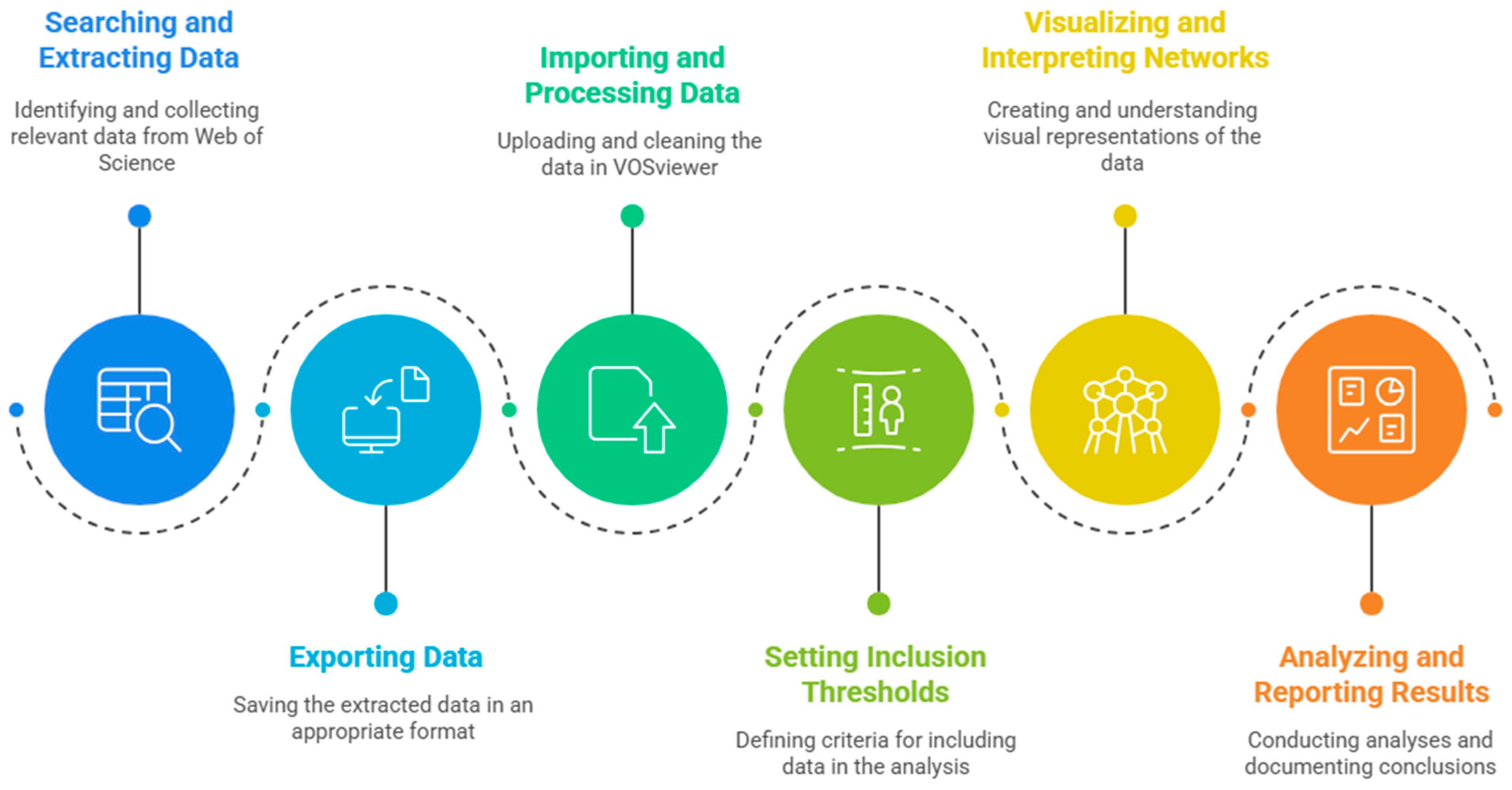
Figure 1 synthesizes the methodological stages followed in the bibliometric analysis, representing both the logic of the research process and the interconnections among the applied techniques.
The implementation of these stages enabled the development of a complex, detailed, and comprehensive bibliometric analysis, which captured the current state of knowledge and identified the main directions of research in the field.
The present research is grounded in a detailed bibliometric analysis, through which both the contributions of highly productive authors and the works with the greatest impact in the field of education financing are identified. In this regard, established methods in the specialized literature were applied, such as author co-citation network analysis, identification of the most cited documents, keyword mapping, and the highlighting of the most prolific institutions—approaches recognized for their capacity to reveal the intellectual structure of a field (
Bernatović et al., 2022;
Castanha & Wolfram, 2018). Such approaches have been validated by previous studies that confirm the usefulness of bibliometrics in quantifying productivity and scientific impact (
Van Raan, 1993;
Shi et al., 2020;
Riddle, 2022). Therefore, the undertaken analysis is not merely descriptive but also contributes to the development of a solid knowledge base, indispensable for advancing innovative theoretical and applied perspectives.
3. Results
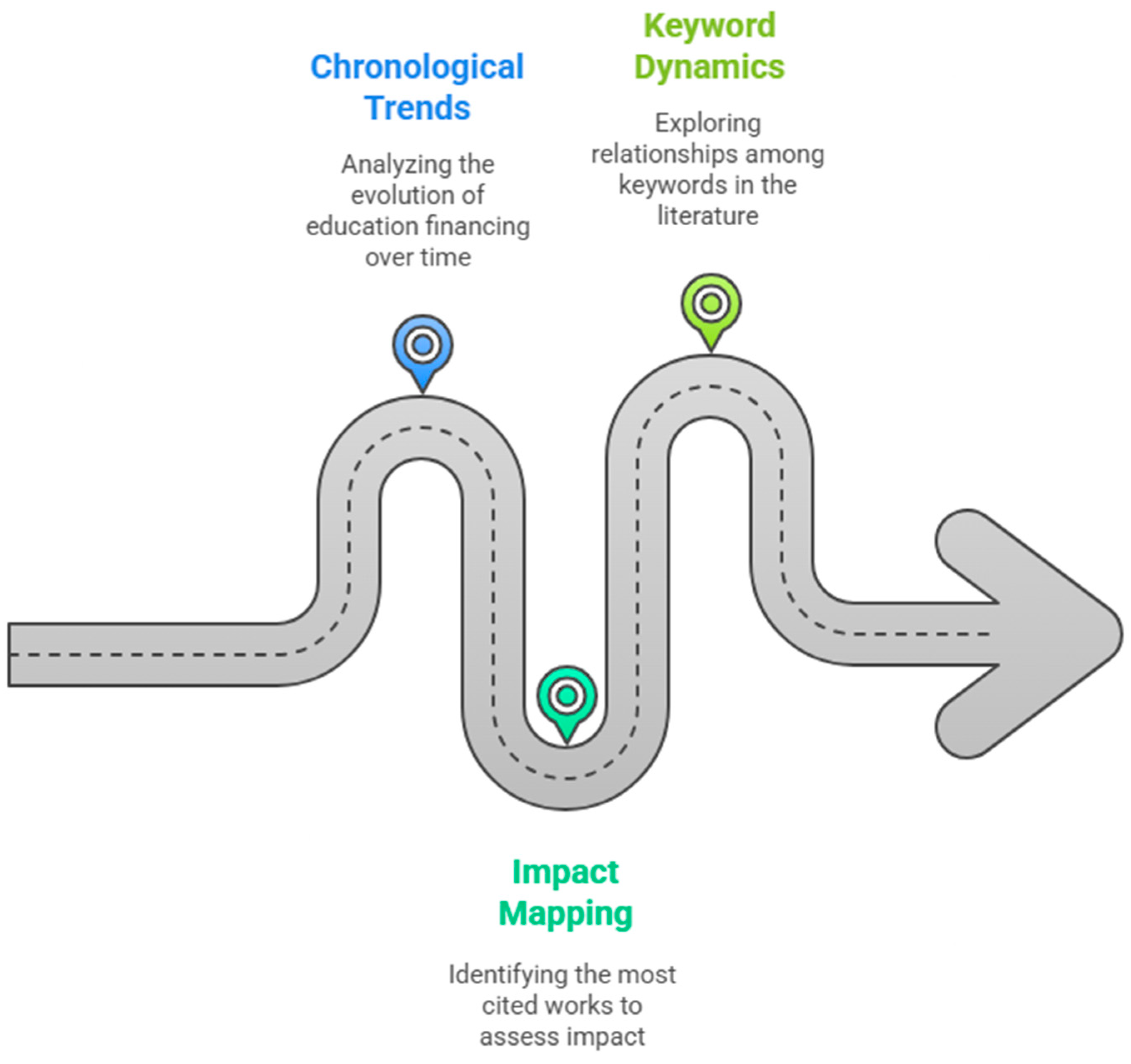
The European-level bibliometric analysis was constructed around three fundamental dimensions—the chronological evolution of publications, the keyword network, and the identification of the most relevant works—since these can capture both commonalities and particularities. The structure of this analysis is visually synthesized in
Figure 2, which illustrates the logic of the stages and the interconnections between the investigated dimensions.
The temporal distribution allows for the identification of moments when scientific interest intensified, as well as the contexts in which educational and funding policies became priorities on the European public agenda, thus confirming the hypothesis that publishing dynamics reflect changes in the political, economic, and institutional context (
Kwiek, 2018;
Hoenig, 2017).
Secondly, the conceptual network provides an overview of dominant themes and their interrelations, highlighting areas such as performance-based financing, the digitalization of education, and human capital development. These themes correspond both to the priorities of European education and training policies (
Koswara, 2024) and to global trends identified in the international literature, thereby confirming the validity and relevance of the European framework. Co-occurrence analysis of keywords, a well-established bibliometric method, has the advantage of revealing the latent structures of knowledge and outlining “cognitive maps” that show how the scientific field is organized and evolves over time (
Grecu et al., 2025;
Rezvani et al., 2023).
Finally, the selection of the most relevant works—based on citations and impact—provides a useful theoretical framework for the interpretation of European studies. These landmark publications not only outline the main directions of research at the European level but also supply conceptual and methodological models, thereby ensuring a solid scientific foundation for comparative analysis (
Mali, 2010;
Horta & Santos, 2016).
For the European-level bibliometric analysis, the Web of Science database was used, selected for its extensive coverage and recognized reliability in the specialized literature (
Donthu et al., 2021;
Karakus et al., 2024). The search process was based on the main phrase “the funding of educational system in Europe”, supplemented by equivalent and synonymous terms such as “education financing” and “the funding of education”, combined with the logical operator OR, so as to capture all relevant works regardless of the terminological variations used by the authors. At the same time, the terms “education funding” and “Europe” were set as mandatory (INCLUDE) to ensure that the analyzed publications explicitly addressed the financing of education in the European context. This process resulted in 168 works, which constituted the bibliometric analysis database. It is important to note that no additional filters (such as language, scientific field, or publication area) were applied, precisely to avoid artificially narrowing the selection and to capture as faithfully as possible the diversity and breadth of research in this field.
3.1. Chronological Trends in the Literature on Education Financing in Europe
The study of the temporal evolution of publications constitutes one of the most relevant stages of a bibliometric analysis, as it not only enables the measurement of the volume of scientific output but also provides an understanding of the processes of consolidation and transformation within a research field (
Hoenig, 2017;
Donthu et al., 2021). In the case of education financing, tracking the annual rhythm of academic publications offers an essential perspective on how this topic has been received by the scientific community and how it has established itself in relation to other competing subjects on the international research agenda.
The importance of such an analysis lies in the fact that yearly evolution does not merely reflect theoretical interest but is often correlated with major shifts in public policy, the launch of European funding programs, or challenges generated by economic, social, and health crises (
Boekholt, 2010;
Peterson, 1991). Thus, periods of growth in the number of publications may be interpreted as direct academic responses to strategic priorities, while phases of stagnation or decline may indicate either conjunctural disinterest or structural difficulties in the development of research.
Moreover, the chronological distribution of studies represents an indirect indicator of the maturity of the field. When output is sparse and limited in number, the field can be considered in an early stage, characterized by exploratory contributions and a scientific community still in formation (
Yamani, 2024;
Çetin et al., 2014). Conversely, the presence of periods of intensification, with recurrent and consistent outputs, suggests the consolidation of a research domain capable of generating debates and influencing both educational policies and institutional practices.
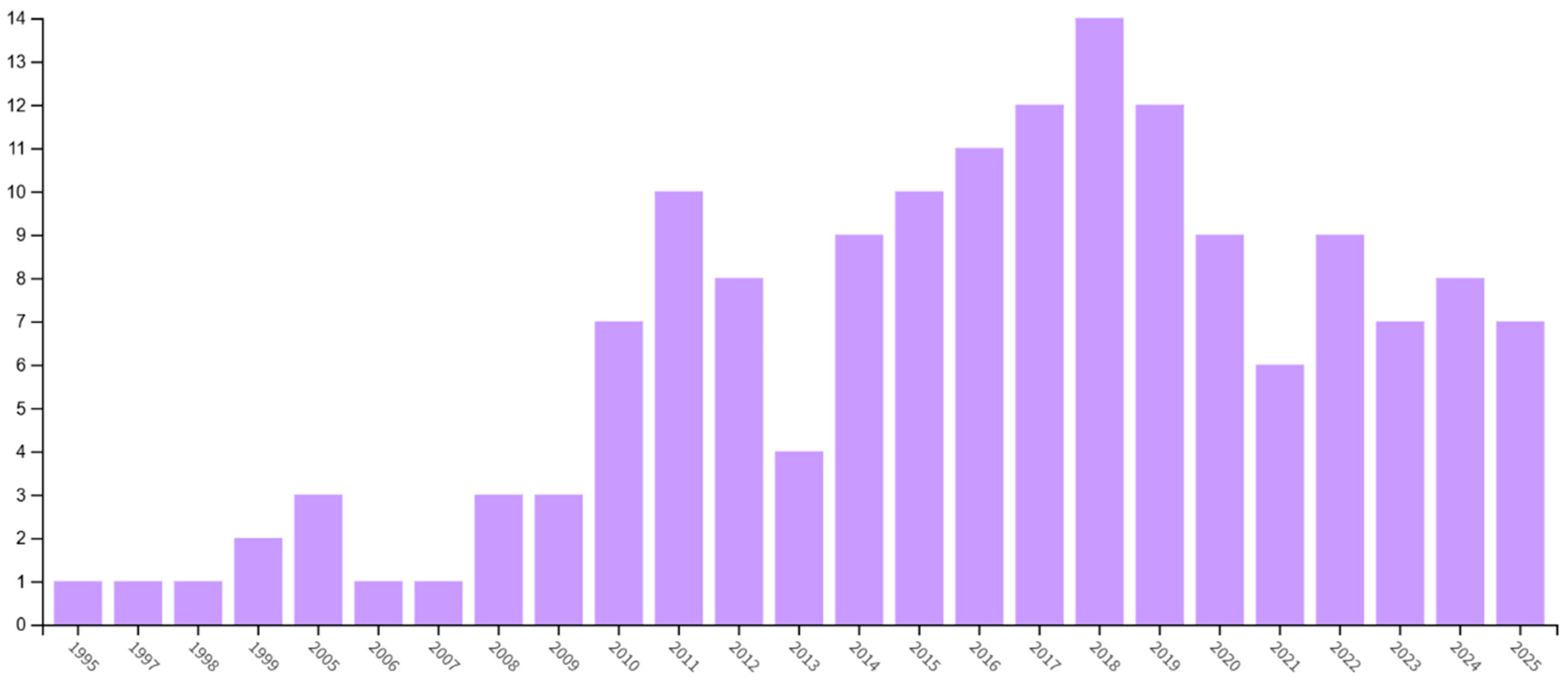
In line with RQ1, the analysis of the annual evolution of publications on education financing in Europe constitutes a key step in examining how the scientific literature has developed over time in terms of research output and periods of intensified academic interest. By tracing publication dynamics, this analysis provides insights into the responsiveness of academic research to major political, economic, and social developments at the European level. Moreover, it facilitates the identification of temporal patterns, including phases of growth and decline, as well as potential discontinuities in research activity. The trends illustrated in
Figure 3 offer a visual framework for interpreting these dynamics and for contextualizing periods of increased scholarly attention within broader European agendas related to education policy, funding reforms, and human capital development.
In the initial stage, between 1995 and 2004, the field appeared only marginally in the specialized literature, with just a few sporadic publications per year (generally 1–3 works, representing less than 2% of the total). This reduced visibility may be associated with the absence of a coherent European political agenda explicitly focused on education financing at that time, as well as with the dominance of global education policy analyses produced by international organizations (OECD, UNESCO), while studies addressing Central and Eastern Europe remained relatively rare and fragmented.
After the 2004 enlargement of the European Union and the launch of the Lisbon Strategy, a phase of consolidation emerged (2005–2013), during which interest in education financing gained steady visibility. Higher values appeared during this period, such as in 2011 with 10 publications (5.95%), marking a maturing of the field. This growth can be interpreted as occurring alongside the 2007–2013 Multiannual Financial Framework, which introduced funding lines dedicated to education and vocational training, potentially providing a broader contextual background for increased scholarly attention to issues of resource allocation and funding mechanisms.
The most intense stage was the field’s maturation (2014–2019), when the number of publications reached its highest levels, ranging between 9 and 14 articles per year (5.3–8.3%). The absolute peak occurred in 2018, with 14 publications (8.33%), followed by 2017 and 2019, each with 12 articles. This phase temporally coincides with the implementation of the Europe 2020 Strategy, which emphasized education and vocational training within the broader discourse on smart, sustainable, and inclusive growth. Similarly, the launch of Horizon 2020 and continued support through the European Social Fund formed part of the broader policy environment during this period. While bibliometric data do not allow causal inference, these contextual developments may have contributed to shaping research agendas addressing education financing, investment priorities, and related socio-economic themes.
After 2020, the annual distribution reveals a stage of continuity and thematic adaptation, in which the number of publications stabilized between 6 and 9 works per year (3.5–5.3%). This thematic reorientation appears consistent with the broader societal context marked by the COVID-19 pandemic, although the observed publication levels remain below those recorded during the peak years. The values recorded for 2024 and 2025, with 8 and 7 articles respectively, indicate the sustained relevance of education financing as a research topic within the evolving European context.
Overall, the chronological distribution of publications highlights fluctuating yet sustained scholarly attention to education financing in Europe, characterized by periods of increased activity and phases of stabilization. These results describe observable trends in publication output and provide a descriptive basis for further contextual interpretation, which is addressed in the
Section 4 Discussion section.
3.2. Dynamics and Interconnection of Keywords in the Specialized Literature on Education Financing in Europe
The analysis of the distribution and relevance of keywords associated with publications on education financing in Europe highlights the conceptual structure and the dominant research directions in this field. As shown in
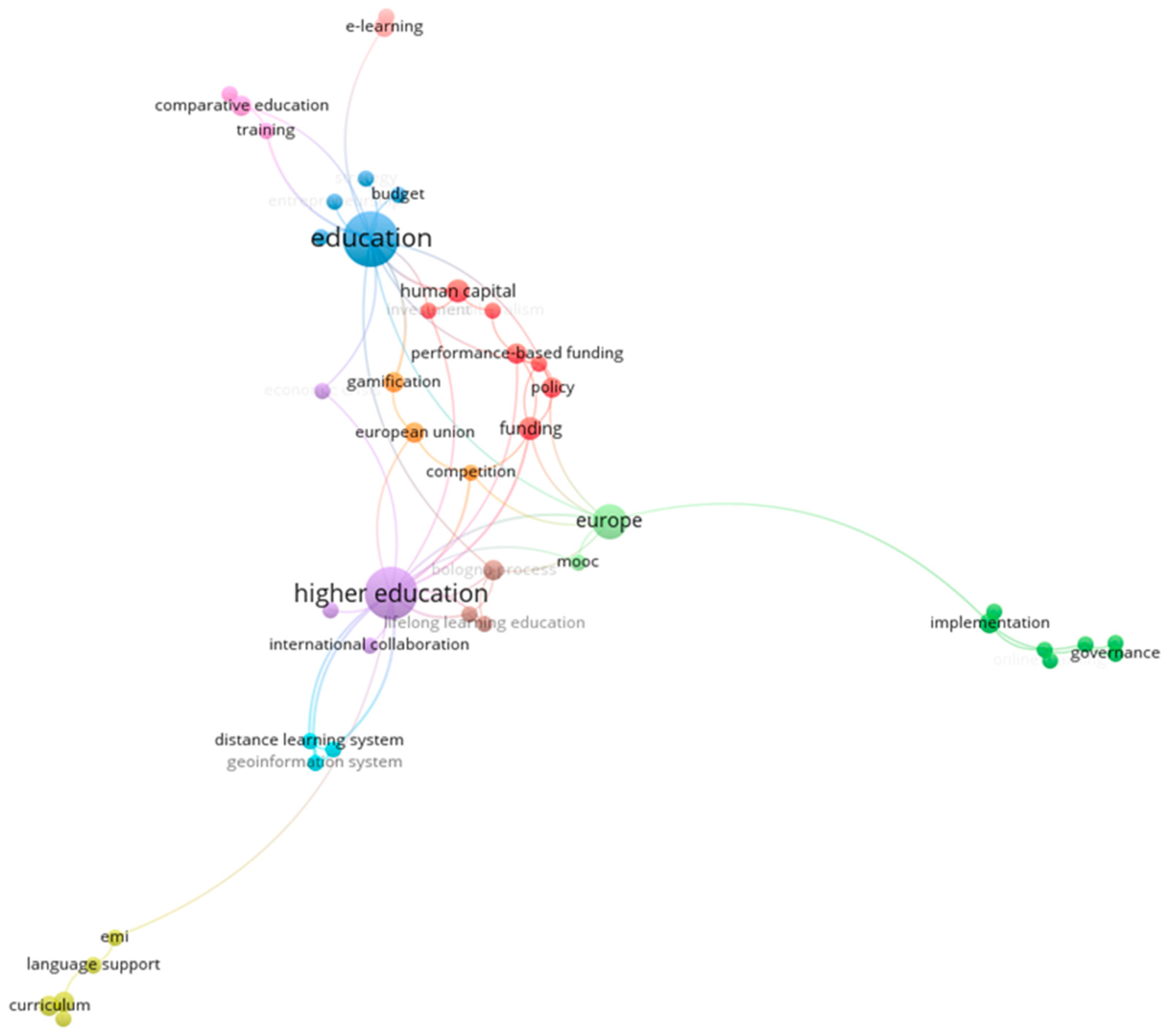
Figure 4, generated through VOSviewer_1.6.18 and as described in the methodology section of the previous chapter, each node represents a selected keyword, with its size proportional to the frequency of the term’s use in the analyzed literature. The links between nodes indicate the co-occurrence of terms within the same articles, signaling thematic proximity and conceptual relationships. This confirms that co-occurrence network analysis is an essential tool for identifying research agendas and connections among different areas of interest (
G. Badareu et al., 2024;
Paletto et al., 2020).
In direct response to RQ2, this keyword co-occurrence and network analysis reveals the dominant thematic structures and conceptual linkages that characterize the education financing literature in Europe, providing a systematic overview of how key topics are interconnected across the research field.
Furthermore, colors reflect membership within distinct clusters, i.e., groups of terms that frequently appear together and suggest coherent thematic areas. This visualization technique is widely used in bibliometric studies precisely because of its capacity to reveal latent knowledge structures and facilitate the interpretation of complex phenomena within the specialized literature (
Liu et al., 2021;
Kumar, 2025). In this sense, clusters not only synthesize already consolidated research directions but may also indicate the emergence of new themes, thus enabling an understanding of the processes of scientific evolution in the field of education financing at the European level.
For this analysis, a threshold of at least two keyword occurrences was applied, which reduced the initial set of 620 terms to 45 significant words (
Figure 4). This filtering makes it possible to focus on relevant concepts and recurrent connections while avoiding the dispersion caused by rare or isolated terms.
To ensure transparency and robustness of the keyword analysis, no manual merging or semantic standardization of keywords was performed beyond the automatic preprocessing implemented by VOSviewer. Keywords were analyzed in their original form as provided by the authors. A minimum threshold of two occurrences per keyword was applied in order to reduce noise while preserving thematic diversity within the dataset.
This approach allows thematic clusters to emerge organically from co-occurrence patterns, minimizing subjective intervention. As a result, the identified clusters reflect structural relationships present in the literature rather than researcher-imposed categorizations. While synonymous terms may therefore appear as separate nodes, this choice enhances reproducibility and avoids potential bias introduced through manual harmonization.
At the center of the network are the terms “education” (22 occurrences; TLS 18) and “higher education” (20 occurrences; TLS 25), the most frequent and strongly connected keywords, confirming their role as the conceptual core of the literature. They structure the entire research field, linking both to general terms—“policy” (3; TLS 5), “quality” (2; TLS 1), “research” (2; TLS 1)—and to specific terms that reflect financing mechanisms and their impact on academic performance. In the analyzed figure, “education” is directly connected to “budget”, “gamification”, and “comparative education”, emphasizing the link between resources, pedagogical innovation, and comparative analysis. Closely associated is the word “funding” (4 occurrences; TLS 7), the pivot of the entire thematic field, connected to “human capital” (4; TLS 4), “performance-based funding” (3; TLS 5), and “policy” (3; TLS 5). This network suggests that the literature conceptualizes financing not only as a resource but also as a governance mechanism and a driver of quality. Links with “competition” (2; TLS 5) and “innovation” (2; TLS 4) further highlight the emphasis on competitive pressure and the modernization of institutions through financial resources.
The red cluster, the densest one, includes terms such as “funding”, “human capital”, “policy”, “performance-based funding”, “competition”, and “economic crisis” (2; TLS 2). This reflects research focused on the relationship between financial resources, human capital development, and the resilience of the education system to macroeconomic pressures. The appearance of “budget” (2; TLS 1) and “investment” (2; TLS 3), connected to “funding” and “policy”, shows that the literature also integrates the strictly economic dimension, analyzing budget allocations, cost–benefit ratios, and investments in education as a development strategy.
A second major group is structured around the concept of “higher education”, associated with terms such as “international collaboration” (2; TLS 1), “research ethics” (2; TLS 0), “science education” (2; TLS 1), “strategy” (2; TLS 1), “network” (2; TLS 1), and “lifelong learning education” (2; TLS 5). In the network, “higher education” is directly linked to “distance learning system” and “Europe”, pointing to interest in internationalization and adaptation to the European context. This cluster marks the line of studies addressing the participation of universities in academic networks, the promotion of lifelong learning, as well as ethical and quality challenges.
Another relevant group is that of digital education, where terms such as “e-learning” (3; TLS 2), “online learning” (2; TLS 1), “MOOC” (2; TLS 2), “gamification” (3; TLS 3), “distance learning system” (2; TLS 6), and “technology” (2; TLS 2) appear. On the map, these terms are frequently linked to “education”, “performance”, and “policy”, showing that digital integration is analyzed not merely as a technological tool but also as part of strategies for financing and educational efficiency.
The green cluster, more peripheral, brings together terms such as “governance” (2; TLS 2), “implementation” (3; TLS 4), “innovation” (2; TLS 4), and “neoliberalism” (2; TLS 2). In the figure, these are directly connected to each other and secondarily linked to “Europe”, suggesting a critical perspective on how educational policies are implemented and on the effects of the neoliberal paradigm on financing. The association with “competition” reinforces the literature’s focus on market pressure in resource allocation.
A smaller but significant cluster includes terms such as “curriculum” (3; TLS 1), “teacher education” (2; TLS 3), “training” (2; TLS 3), “VET”—vocational education and training (2; TLS 1), “language support” (2; TLS 2), and “EMI”—English as a Medium of Instruction (2; TLS 2). In the analyzed figure, these terms are connected to “education” and “higher education”, confirming that financing concerns also address the micro level of educational processes: teacher training, curriculum modernization, language support, and professional integration.
A distinct group brings together terms such as “Europe” (9; TLS 9), “European Union” (3; TLS 3), “comparative education” (3; TLS 3), “Bologna process” (3; TLS 5), “Poland” (2; TLS 4), and “Sweden” (2; TLS 0). In the network, these are directly connected to “funding” and “higher education”, reflecting the comparative and transnational orientation of studies, analyzing the convergence of educational systems within the European Higher Education Area. The presence of geographic terms indicates that the literature focuses on a few national case studies, but the network remains relatively fragmented, suggesting potential for broader comparative analyses.
3.3. Mapping the Impact Literature: The Most Cited Works in the Field of Education Financing in Europe
An analysis of the most cited works on education financing in Europe represents a fundamental undertaking in bibliometric research, as it allows for the identification of the theoretical and empirical benchmarks that have shaped the scientific debate in this field. Citations reflect not only the academic visibility of a publication but also the extent to which it has been integrated and used in subsequent research, serving as an indicator of influence and recognition within the scientific community (
Ioannidis et al., 2016,
Aksnes et al., 2019). Therefore, evaluating the most cited studies makes it possible to outline a core body of literature that has structured both the conceptual framework and the methodological directions of subsequent research on education financing.
It should be noted that the citation counts reported in this study refer to global citation counts indexed in the Web of Science, rather than local citations within the analyzed dataset. As such, the analysis captures the overall academic visibility of publications in the broader scientific literature, not exclusively their centrality within the specific corpus of European education financing studies.
Consequently, highly cited publications are interpreted as influential reference points frequently drawn upon by the research community, while their position does not necessarily indicate dominance within a tightly bounded intellectual core of the dataset. This distinction is taken into account in the interpretation of results and represents an acknowledged limitation of the citation-based analysis.
The relevance of this analysis lies in the fact that highly cited works are often those that have introduced innovative concepts, tested hypotheses with major impact, or provided robust empirical evidence on the relationship between financial resources and the performance of educational systems. Moreover, they have the potential to highlight paradigm shifts within the literature—for example, the transition from a predominantly economic perspective on education financing to an integrated one that also considers social, institutional, and political dimensions (
Chiapello & Knoll, 2020).
Thus, the analysis of the most cited works holds not only descriptive but also interpretive value, contributing to an understanding of how a research field has consolidated and to the identification of inflection points that have shaped its recent developments. In this sense, the examination of these publications functions as an essential benchmark for contextualizing bibliometric results in relation to major trends across the European landscape.
Accordingly, for a more in-depth exploration,
Table 1 presents and discusses in detail the top 10 most cited works, according to the Web of Science database, which represent true reference points for understanding how education financing has been conceptualized and investigated at the European level. While citation-based thresholds are commonly used to identify highly influential studies, the inclusion of publications with a relatively low number of citations—such as those cited only two times—reflects the overall citation structure of the field rather than a methodological inconsistency. Specifically, this pattern highlights the fact that research on education financing in the European context remains fragmented and relatively recent, with limited accumulation of citations across publications. As a result, even the most visible contributions in the field have not yet achieved high citation counts. This finding does not undermine the analysis; instead, it provides an important insight into the developmental stage and scholarly maturity of the domain, suggesting that education financing represents an emerging and still consolidating area of research.
One of the most influential publications is Marginson’s work (
Marginson, 2011, 324 citations), “Higher Education in East Asia and Singapore: Rise of the Confucian Model.” Although focused on the Asia–Pacific region, the study is frequently cited in European education financing research due to its comparative perspective on state intervention and mixed public–private funding models, which are recurrent reference points in European academic discussions.
Another relevant publication,
Meijer and Watkins (
2019, 37 citations), “Financing Special Needs and Inclusive Education—From Salamanca to the Present,” investigates the evolution of funding models for inclusive education in Europe. The study is frequently referenced in European education financing research, as it addresses funding arrangements for inclusive education across multiple European countries, making it a recurrent point of reference in discussions on education financing and inclusion within the European context.
Coren et al. (
2016, 18 citations), Interventions for Promoting Reintegration and Reducing Harmful Behaviour and Lifestyles in Street-Connected Children and Young People, is frequently cited in the literature due to its focus on funding-related aspects of social and educational inclusion programs. Although global in scope, the study is referenced in European education financing research in discussions concerning resource allocation for vulnerable groups.
Another cited contribution is
Chou and Chan (
2017, 10 citations), Governance and Academic Culture in Higher Education: Under the Influence of the SSCI Syndrome. While based on case studies from Asia, the study is recurrently cited in European research addressing governance structures and performance-based funding mechanisms in higher education.
Dettenhofer et al. (
2019, 9 citations), Current State and Prospects of Biotechnology in Central and Eastern European Countries, appears in the dataset due to its analysis of education- and research-related funding frameworks in Central and Eastern Europe, with particular reference to EU structural funds and public–private coordination.
Löffler et al. (
2022, 7 citations), Challenges and Opportunities for General Practice Specific CME in Europe is cited in the literature as a comparative European study addressing financing and regulatory arrangements in continuing medical education across multiple countries.
Nagy et al. (
2014, 5 citations), “Governance and Funding of Higher Education—International Trends and Best Practices,” offers a comparative analysis of funding practices in Germany, the UK, France, and CEE. Using institutional case studies, the authors conclude that Western European models—based on quality assurance and diversification of funding sources—can be adapted in Central and Eastern Europe to increase sustainability.
Cabrales et al. (
2019, 4 citations), “Income Contingent University Loans: Policy Design and an Application to Spain,” proposes a model of income-contingent loans (ICL). The methodology is based on economic simulation using income data from the Spanish social security system. The results show the model to be progressive, protecting disadvantaged groups and reducing the public burden, thus making it a viable alternative for diversifying higher education financing.
Erina and Erins (
2015, 3 citations), “Assessment of Higher Education Financing Models in the CEE Countries,” compare financing models across CEE states through policy analysis and financial formulas. The conclusion highlights that despite differences, common goals exist, such as increased public funding, university autonomy, and diversification of sources—elements relevant for European convergence.
Chuta (
1998, 2 citations), “New Dimensions in Educational Financing: The Nigerian Education Bank,” though focused on Nigeria, includes international comparisons, including with Europe. The study examines the role of educational banks as financial intermediaries and suggests that innovative tools such as specialized education loans can complement traditional financing mechanisms.
Recent contributions in the Journal of Risk and Financial Management demonstrate the journal’s engagement with research at the intersection of finance, risk management, and education. For example,
Frank et al. (
2024) conducted a systematic review of higher education loan schemes, exploring the financial burdens and utility of educational debt in a global context, thereby reflecting the journal’s interest in education-related financial issues. Additionally, bibliometric approaches have been applied in related interdisciplinary contexts—for instance, investigations into Sustainable Development Goal 4 and academic integrity show how bibliometric mapping can uncover dominant trends and thematic structures linked to equity, quality, and innovation in education research (
Artyukhov et al., 2024). These examples provide a relevant foundation for positioning the current bibliometric analysis of education financing within the broader scholarly conversation promoted by JRFM.
In line with RQ3, which aims to identify the most influential publications and actors shaping the research field of education financing in Europe, the analysis of the most cited works presented in
Section 3.3 provides an initial perspective on scholarly impact at the publication level. Citation-based indicators highlight which studies have achieved greater visibility within the academic community and serve as reference points in subsequent research. However, citation analysis alone does not capture the geographic distribution of knowledge production or the extent to which influence is concentrated within specific national research systems.
For this reason, the analysis is extended through a country-level co-authorship examination, which complements the citation-based perspective by addressing where influential research is produced and how countries contribute to the overall structure of the field. While
Section 3.3 focuses on what works are most visible, the country-level analysis provides insight into who and where the main contributors are, thereby offering a more comprehensive understanding of the intellectual landscape of education financing research.
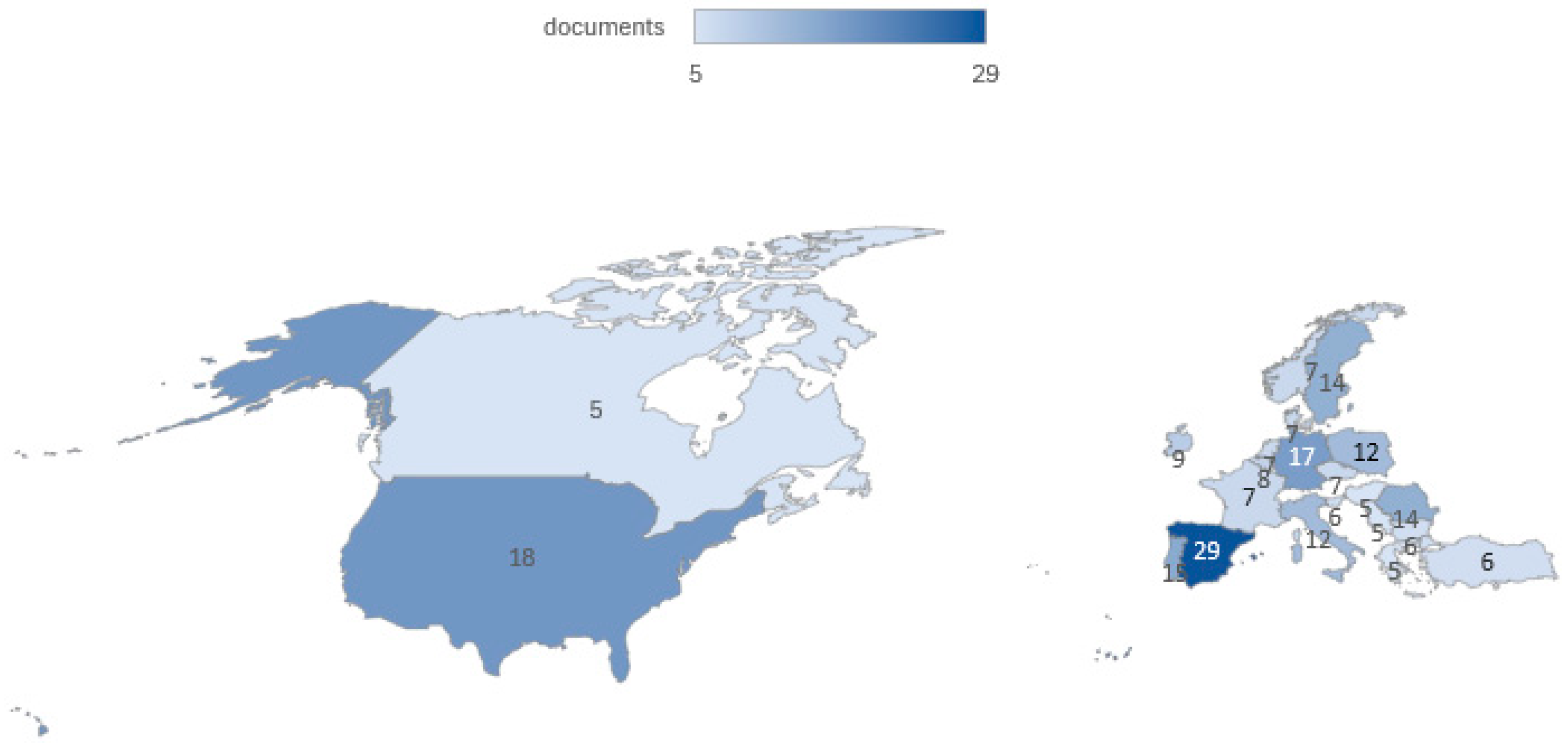
Using the same bibliometric dataset extracted from the Web of Science Core Collection, a co-authorship analysis with countries as the unit of analysis was conducted in VOSviewer, applying the full counting method. This approach assigns one full publication credit to each country represented in a co-authored document and is appropriate for descriptive analyses of national research output and collaboration patterns. To ensure analytical clarity and facilitate network visualization, a minimum threshold of five publications per country was applied. As a result (
Figure 5), 24 out of the 64 countries identified in the dataset met this criterion, indicating that a relatively small subset of countries accounts for a substantial share of the research output in this field.
Thus, the application of co-authorship analysis at the country level is particularly relevant for RQ3, as it allows the identification of national research hubs and the examination of international collaboration structures within the field. Links between countries in the co-authorship network represent jointly authored publications, indicating cross-national research interactions rather than isolated national contributions. This perspective complements citation analysis by revealing how influential research is embedded within collaborative networks that span multiple countries.
Taken together, the findings from
Section 3.3 and a country-level co-authorship examination suggest that influence in the field of education financing in Europe is shaped not only by highly cited individual publications but also by concentrated research activity within a limited number of countries and their collaborative linkages. This combined approach provides a more nuanced and comprehensive bibliometric assessment of impact, aligning directly with the objectives of RQ3.
The results reveal a clear concentration of scientific production in the field of education financing in Europe. England and Spain emerge as the most prolific countries, each contributing 29 publications, followed by the United States (18) and Germany (17). The strong presence of non-EU countries such as the United States—and, at the lower threshold, Canada—does not indicate a shift in focus away from European education systems but rather reflects their frequent involvement in internationally co-authored publications addressing European education financing, often through comparative analyses, policy-oriented studies, or joint research projects with European institutions. In a country-level co-authorship analysis, each participating country receives full credit for jointly authored publications, meaning that international collaboration plays a significant role in shaping the observed geographic distribution of research output.
A second group of countries—including Portugal (15), Romania (14), Sweden (14), Italy (12), and Poland (12)—demonstrates sustained but comparatively lower levels of productivity, suggesting continued engagement with education financing research across diverse national contexts. Additional countries, such as Ireland (9) and Belgium (8), as well as France, Denmark, the Czech Republic, the Netherlands, Norway, and Scotland (each with 7 publications), contribute more modestly to the literature, often through targeted or collaborative research efforts rather than large, sustained national research programs. Countries at the lower bound of the inclusion threshold—namely Greece, Hungary, Serbia, and Canada (each with 5 publications)—further illustrate the broad international reach of the field, while simultaneously underscoring the uneven distribution of scientific output across national research systems. Overall, this country-level distribution should be interpreted as an indicator of research participation and collaboration structures, rather than as a measure of national policy performance or education system effectiveness, highlighting the role of established academic networks and internationally visible institutions in shaping the literature on education financing in Europe.
4. Discussions
The analysis of the temporal evolution of publications highlights several key findings. First, a gradual maturation of the field is evident, beginning with marginal interest in the 1990s and reaching a peak of scientific visibility between 2014 and 2019. This evolution reflects both the consolidation of the European agenda on education and the pressure generated by the need to justify the financial resources invested through structural and cohesion funds. In practice, it can be argued that the field of education financing in Europe has developed in close alignment with European budgetary cycles and community strategies such as Lisbon, Europe 2020, or Horizon 2020.
Second, the analysis reveals notable fluctuations. Some periods of relative decline (for instance, 2012–2013 or after 2020) can be explained by shifts in European priorities or by external shocks such as the global financial crisis or the COVID-19 pandemic. These temporary declines indicate that the literature is not yet fully autonomous and remains largely dependent on political and economic contexts. This reveals a vulnerability of the field, insofar as education financing is not consistently studied as a stand-alone theme but more often as a variable influenced by external circumstances.
Another essential observation emerging from the bibliometric analysis concerns the temporal distribution of publications. Although a total of 168 publications were identified, research output is unevenly distributed over time, with periods of higher activity alternating with phases of limited publication output. Prior to 2010, the number of indexed studies is very low, which constrains longitudinal comparisons and limits the visibility of early research contributions. Following the peak period, publication output does not display exponential growth; instead, it stabilizes at approximately 6–9 articles per year, indicating a relatively moderate and discontinuous level of scholarly production over time.
In addition, the results show that a substantial share of the literature is based on national or regional case studies, while systematic cross-country comparisons among EU member states appear less frequently. This pattern suggests that comparative and integrative perspectives are less prominent within the existing body of research, which may affect the breadth of analytical coverage at the European level. From a bibliometric standpoint, this is reflected in the thematic concentration of publications rather than in balanced coverage across multiple national contexts.
Overall, the observed publication dynamics indicate that research on education financing in Europe exhibits intermittent growth patterns and limited continuity over time. The main characteristics identified through the bibliometric evidence include: (i) uneven temporal distribution of publications, (ii) fluctuations in annual research output, (iii) a predominance of nationally focused studies over transnational comparative analyses, and (iv) varying levels of publication activity across countries. These findings are descriptive in nature and provide an empirical basis for identifying areas where future research activity may expand, particularly through broader comparative designs and sustained international collaboration.
The bibliometric analysis of keywords on education financing in Europe highlights both major directions and research gaps, pointing to future opportunities. First, the conceptual core of the literature is dominated by “education” and “higher education”, strongly connected to dimensions such as educational policy, quality, and academic research. This finding confirms that financing concerns are largely subsumed within debates on the sustainability and competitiveness of the European higher education system, while receiving less attention at other levels such as pre-university education.
Second, the red cluster shapes the strictly financial dimension, where concepts such as funding, budget, investment, policy, and performance-based funding are interconnected with notions of competition, innovation, and human capital. This network suggests that European literature views education financing not only as a resource mechanism but also as a strategic governance tool, with direct effects on the quality, competitiveness, and adaptability of higher education institutions. However, despite its relevance, the analysis shows an excessive focus on universities, to the detriment of other levels of education.
Another important result is the emergence of the digital cluster, where terms such as e-learning, MOOC, distance learning system, and gamification are connected to “performance” and “policy.” This indicates that the digital transformation of education is a priority theme, especially stimulated by recent crises (e.g., the COVID-19 pandemic). Nevertheless, the literature focuses mainly on technical and performance aspects, leaving less explored the issue of equitable access to digital education, particularly in disadvantaged areas.
The green cluster groups keywords related to governance, implementation, innovation, and neoliberalism, indicating that these concepts frequently co-occur within a subset of publications in the analyzed literature. This pattern reflects a recurring thematic association among these terms in the academic discourse on education financing, as captured through keyword co-occurrence analysis, without implying normative positions, policy evaluations, or assessments of social or economic outcomes. The co-occurrence of these terms suggests a thematic focus on the interaction between economic frameworks and education financing arrangements, as reflected in the academic discourse, without implying normative positions or assessments of policy outcomes. However, the reduced connections and the peripheral nature of this cluster suggest that this line of research remains underdeveloped, despite its importance for understanding current transformations in European education.
At the same time, the curricular cluster (including curriculum, teacher education, training, language support, VET, EMI) indicates interest in the micro dimension of the educational process—teacher training, curriculum adaptation, and linguistic support. Although connected to the central terms, this cluster appears weakly integrated into the network, suggesting that the impact of financing on pedagogical practices is still insufficiently explored at the European level.
A distinctive feature is also the presence of the comparative and transnational cluster, where concepts such as Europe, the European Union, and the Bologna Process, along with geographic terms like Poland or Sweden, are linked to “funding” and “higher education.” This orientation shows that education financing is often analyzed in the logic of European convergence and the European Higher Education Area. However, the geographic coverage is narrow, with emphasis on a few national case studies, signaling a gap in the literature regarding the diversity of European experiences and systematic cross-country comparisons.
Final insights: the keyword analysis reveals a research field ascending around higher education and financial governance, but with significant gaps concerning pre-university education, digital equity, policy implementation in practice, and large-scale comparative analyses. Future research should integrate these dimensions to provide a more balanced perspective on education financing in Europe and its research focus on human capital, social cohesion, and sustainable development.
The conclusions drawn from the analysis of the most cited works on education financing in Europe highlight a series of common directions as well as persistent challenges. First, there is a consistent emphasis on diversifying funding sources and reducing exclusive dependence on public funds. Studies such as those by
Nagy et al. (
2014) and
Cabrales et al. (
2019) demonstrate that income-contingent loans, public–private partnerships, and other innovative financial instruments can enhance the sustainability of educational systems. At the same time, these solutions carry the risk of exacerbating inequalities if not designed within a progressive and equitable framework.
A second major direction concerns the pressure of the neoliberal paradigm on universities.
Chou and Chan (
2017) underline that funding excessively conditioned by quantifiable performance indicators—such as the number of articles published in indexed journals—risks creating a homogenized academic culture in which diversity and creativity are sacrificed for global competitiveness indicators. This conclusion aligns with
Marginson’s (
2011) observations, which, although analyzing the Asian model, show that strong state involvement and pressures for excellence may create an unstable balance between massification, quality, and university autonomy—a lesson equally relevant for Europe.
A third common thread is equity and educational inclusion, recurring themes in works such as
Meijer and Watkins (
2019). Although the principles established by the Salamanca Statement 1994 (
UNESCO, 1994). The Salamanca statement and framework for action on special needs education. UNESCO. have been incorporated into European policies, funding mechanisms for inclusive education have changed little in recent decades. The persistence of these challenges suggests that, despite declarative progress, financial resources have not been sufficiently redistributed to correct structural inequalities, thereby maintaining significant gaps between different social groups.
The literature also reveals a growing dependence on structural funds and European programs, especially in Central and Eastern European states. The studies of
Dettenhofer et al. (
2019) and
Erina and Erins (
2015) demonstrate that RIS3 strategies and cohesion policies are essential instruments for human capital development and the modernization of educational institutions. However, the effectiveness of these mechanisms depends on national implementation capacity and the alignment of public and private priorities, which leads to uneven results across countries.
An emerging orientation toward digital education and lifelong learning is also evident, as emphasized by
Löffler et al. (
2022). The financing of e-learning and CME programs is increasingly seen as a solution for adapting educational systems to technological and demographic changes, but research shows significant differences between countries, and the absence of a unified model may undermine the coherence of such initiatives.
Overall, the literature underscores that education financing in Europe is shaped by the tension between competitiveness and equity objectives. While some studies emphasize innovative mechanisms and financial sustainability, others highlight the risks of homogenization, exclusion, or excessive dependence on European funds. The gaps identified are mainly related to the lack of robust comparative evaluations, insufficient linkage between funding and educational outcomes, and the absence of successful models for equity. Consequently, future research directions should integrate more in-depth transnational comparative analyses, assess the direct impact of financing on quality and inclusion in education, and investigate innovative and sustainable approaches to resource mobilization.
The country-level patterns identified in the results point to the importance of international collaboration and institutional connectivity in shaping the literature on education financing in Europe. The prominence of both EU and non-EU countries among the most productive contributors suggests that the field is not confined to nationally bounded research agendas but is instead embedded within broader transnational academic networks. Co-authorship at the country level reflects the extent to which research on education financing is developed through collaborative projects, comparative analyses, and cross-institutional partnerships, often involving universities, research institutes, and policy-oriented organizations from multiple countries. From a bibliometric perspective, these collaboration structures help explain why certain countries achieve higher visibility in the literature, independent of the size or performance of their education systems.
At the same time, the uneven distribution of publication output highlights structural differences in research capacity and academic engagement with education financing as a specialized topic. Countries with sustained productivity appear to host research environments where education financing intersects with economics, public policy, and governance studies, facilitating continuous scholarly output and international dissemination. Conversely, countries with lower publication counts may engage with education financing more episodically or within broader thematic frameworks, resulting in fewer internationally indexed outputs. Importantly, these observations should be interpreted as patterns of knowledge production and collaboration, rather than as indicators of policy effectiveness or funding outcomes. As such, the findings underscore the need for future research to further explore the institutional and network-based factors that shape scholarly visibility in this field, using complementary qualitative and empirical approaches.
5. Conclusions
In light of the results obtained through the bibliometric analysis conducted at the European level, a complex picture emerges of how education financing is investigated and conceptualized in the scholarly literature. This analysis aimed to synthesize the main trends in the field, underline similarities and differences across research directions, and highlight future avenues, while explicitly acknowledging the study’s methodological limitations.
The European-level bibliometric analysis indicates that education financing represents an emerging research field, with scholarly attention increasing gradually after the early 2000s. Publication output displays periods of higher and lower activity over time, with a notable concentration of publications between 2014 and 2019. These temporal patterns reflect fluctuations in research output within the indexed literature, rather than direct causal relationships with specific European policy cycles or funding strategies.
Overall, the literature displays a fragmented structure, as reflected in the presence of multiple thematic clusters with limited overlap, the uneven distribution of research across education levels, and the concentration of publications within specific national and institutional contexts. In this sense, fragmentation is understood as a structural characteristic of the research network, rather than as a qualitative assessment of research coherence.
The conceptual network highlights several dominant thematic orientations, including performance-based funding, digitalization of education, and human capital development. At the same time, the distribution of keywords suggests a stronger emphasis on higher education compared to other education levels, alongside varying degrees of attention to themes related to inclusion and equity. These observations reflect patterns of thematic concentration in the literature, rather than assessments of policy effectiveness or societal outcomes. Similarly, the analysis of highly cited works indicates that diversification of funding sources and alternative financing arrangements are recurrent topics within the academic discourse, while references to governance reforms and market-oriented frameworks reflect scholarly focus on these issues, without implying demonstrated effects on autonomy or equity.
Overall, the findings suggest that the European literature offers a comparative yet incomplete research framework, characterized by thematic diversity alongside fragmentation. The coexistence of multiple research strands points to an evolving field in which different approaches to education financing are discussed, though not always systematically integrated across education levels or national contexts.
The country-level analysis further indicates that research activity is concentrated in a limited number of countries, while broader European and non-European participation occurs primarily through international collaboration. This pattern reflects the geographic distribution of scholarly production and co-authorship networks, rather than differences in national education systems or policy performance. The results thus provide a descriptive overview of where research activity is most visible within the indexed literature.
From a methodological perspective, the bibliometric analysis naturally entails certain limitations. A major limitation derives from the exclusive use of the Web of Science database. While this platform has strong international recognition and high accuracy, relying solely on it inevitably excludes a significant share of literature indexed elsewhere, such as Scopus, ERIC, or partially indexed local journals. The results therefore reflect only the internationally visible segment, while national or regional contributions may be underrepresented.
A second limitation relates to terminology and selection. Although the search strategy was rigorous, based on standardized keywords (“education funding,” “education financing,” “educational system funding”), some relevant studies may have used alternative terminology—such as “public expenditure in education” or “budget allocation in higher education”—leading to potential information loss. This issue is common in bibliometrics, where linguistic and semantic diversity can affect comprehensiveness.
Methodologically, bibliometric analysis also reduces complexity. Tools such as VOSviewer generate visual maps and conceptual networks, but these cannot fully capture the qualitative and argumentative depth of each study. The resulting image is panoramic and indicative, and interpretations should be seen as reference points rather than definitive assessments of scientific value. Furthermore, bibliometrics relies primarily on quantitative indicators (number of publications, citations, co-occurrence of terms), which do not always reflect the research focus on public policies, educational practice, or society. Highly cited works may be overvalued, while locally relevant studies with high practical relevance but lower representation in the academic literature.
These limitations, however, do not diminish the value of the findings. On the contrary, they open opportunities for expanding and refining future investigations by addressing underexplored areas. Based on the results obtained, several research directions emerge that may deepen the understanding of education financing in Europe. First, it is necessary to broaden the empirical base by integrating multiple sources such as Scopus, ERIC, or national databases to obtain a more complete and balanced picture of the literature. This diversification would help capture perspectives that are less prominent in indexed literature, such as local or regional studies and publications appearing in journals with lower citation visibility.
Taken together, these limitations directly shape the interpretation of the results. The observed thematic structures, citation patterns, and country-level distributions should be understood as representative of the internationally indexed and most visible segment of the literature, rather than as an exhaustive map of all research on education financing in Europe. As a result, fragmentation and concentration patterns identified in this study may be amplified by database coverage and indexing practices, while certain nationally oriented or practice-driven research streams may remain less visible.
Another important direction concerns transnational comparative analysis. Studies on education financing in Europe tend to be fragmented and country-centered. Future research should develop systematic comparisons across EU member states, highlighting similarities, differences, and best practices. This approach would provide a stronger understanding of European convergence in education and facilitate policy transfer and mutual learning between countries at different stages of development.
A field with major potential lies in assessing the direct impact of financing on educational quality. Most studies focus on budget allocations or funding mechanisms, yet few explicitly correlate financial resources with educational outcomes, student retention, labor market transitions, or social inclusion. Future research should adopt mixed methodologies—bibliometrics, statistical analysis, case studies—to capture the relationship between resources and results, thereby providing stronger evidence for policy-making.
A further priority is the investigation of new educational paradigms—digitalization and the green transition. Recent crises (COVID-19, climate change) have brought e-learning, digital platforms, and sustainability skills to the forefront, yet these dimensions remain underexplored from a funding perspective. Future analyses should assess how resources are redistributed toward these domains, what access barriers exist for vulnerable groups, and how funding can support education as a driver of adaptation to new economic and social realities.
Finally, there is a need to strengthen academic networks and interdisciplinary projects that approach education financing as a complex phenomenon at the intersection of economics, sociology, public policy, and education sciences. Such an approach could help overcome current fragmentation and foster a scientific community able to provide both theoretical insights and practical recommendations for policymakers.
By emphasizing interdisciplinarity and international collaboration, the implications of bibliometric analysis become particularly relevant, as they highlight not only consolidated research directions but also their role in supporting future scholarly reflection and evidence-informed discussions on education financing across Europe.