Systematic Review

Performance, Fairness, and Explainability in AI-Based Credit Scoring: A Systematic Literature Review


College of Information Technology, University of Bahrain, Sakhir Campus, Zallaq 1054, Bahrain
*
Author to whom correspondence should be addressed.
J. Risk Financial Manag. 2026, 19(2), 104; https://doi.org/10.3390/jrfm19020104
Submission received: 12 January 2026 / Revised: 26 January 2026 / Accepted: 29 January 2026 / Published: 3 February 2026

Abstract

The integration of artificial intelligence (AI) in the financial sector has seen a rapid increase over the past few years, offering new possibilities to streamline processes while ensuring profitability for lending institutions. With its data-driven capability, predicting the creditworthiness of applicants has demonstrated strong predictive performance, particularly for thin-file clients. Despite these advances, growing concerns regarding AI’s fairness, explainability, and regulatory accountability have increasingly limited its adoption in high-stakes credit decision-making. This paper presents a synthesis derived from a systematic literature review (SLR) of 43 peer-reviewed studies published between 2020 and 2025, focusing on AI-based credit scoring and addressing at least one of the performance, fairness, or explainability dimensions. Eligible studies were limited to peer-reviewed journal and conference articles (2020–2025) retrieved from IEEE Xplore, Scopus, Web of Science, and ScienceDirect (last searched: 30 September), examining AI-driven credit scoring in consumer or lending decision contexts. Guided by the Relevance, Rigor, Reproducibility, and Quality (3Rs&Q) appraisal framework, the review analyzes how existing approaches navigate the interplay among performance, fairness, and explainability under regulatory and human oversight considerations. The findings indicate that these dimensions are predominantly addressed in isolation, with limited attention to their joint treatment in regulated deployment settings. By consolidating empirical and conceptual evidence, this review provides actionable guidance for designing and deploying credit scoring models in practice.

1. Introduction

In the continued pursuit of nationwide economic growth, financial institutions provide consumer facilities as one of their core business functions. Credit scoring plays a pivotal role in deciding whether a loan should be granted to an applicant, whereby applicants undergo a rigorous risk assessment process to evaluate their financial stability prior to approving the facility (Adegoke et al., 2024). The problem of assessing the creditworthiness of loan applicants is one risk exposure for lending institutions, among other risk sources that organizations must address. If not properly evaluated, the likelihood of financial loss increases due to higher loan default rates, ultimately putting financial institutions at risk (Xie et al., 2025). In contrast, successfully distinguishing between defaulters and non-defaulters would ensure profitability for the institution. Common credit risk assessments include application and behavioral credit scoring, with other assessments, such as collection, fraud, and credit renewal, also coexisting (Muñoz-Cancino et al., 2023). These risk assessments have been extensively relied upon by financial institutions to minimize potential losses across their product lines. They enable institutions to quantify, monitor, and mitigate associated risks, depending on the type of situational inputs and regulatory mandates (Basel Committee on Banking Supervision, 2013; European Central Bank, 2024).
Application and behavioral scoring differ substantially in the timing of the creditworthiness assessment. On one hand, application scoring aims to assess the eligibility of applicants prior to receiving the loan (Berg et al., 2020). To perform the assessment, customers must undergo a rigorous process known as Know Your Customer (KYC), which mandates that lending institutions capture personal and repayment records, often retrieved from national credit bureaus (Mestiri & Hiboun, 2024). The data include demographic information, loan repayment behavior, and credit bureau data showing outstanding debts and other credit inquiries, all deemed necessary to ensure a data-driven assessment of creditworthiness. On the other hand, behavioral scoring is an ongoing and periodic evaluation procedure used to assess the credit behavior of existing customers, thereby monitoring risk in the active portfolio of an institution (Y. Li et al., 2020). It relies on a subset of the information used in application scoring, such as payment history and arrears patterns, and offers early signs of default for proactive interventions. With these two scoring methods in mind, financial institutions can take preventive measures with applicants who are likely to default on their loans. Together, both methods enable a full credit life-cycle management strategy that ensures the approval of eligible customers and the ongoing monitoring of repayment behavior (Roa et al., 2021).
Beyond institutional risk, the implication of decisions made by credit scoring extends to cover socioeconomic factors, including financial inclusion and exclusion, wealth distribution, equity, and societal well-being (Bartlett et al., 2022). These consequences weigh heavily on financial institutions and, if not addressed, result in exclusionary practices that adversely affect underserved populations. Individuals or entities with access to credit can contribute to social mobility, while unfair credit scoring can lead to inequalities and limited opportunities for minority groups. The consequences of lending decisions have long been the interest of researchers, mainly due to their adverse impact upon fundamental human rights (Jiang et al., 2024). Regardless of whether the outcomes are intentional or driven by algorithmic determination, often influenced by human bias in the form of biased historical data, it is estimated that 1.3 million mortgage loans are rejected in the United States, mainly due to discrimination (Bartlett et al., 2022). Consequently, minority groups, classified based on gender, ethnicity, religion, or nationality, are more vulnerable to rejection, or in the best-case scenario, pay higher interest rates. In the long term, this could lead to unfair wealth accumulation and therefore perpetuate generational poverty.
The socioeconomic factors involved in credit scoring were key motivations for regulators to step in, ensuring ethical practices and proper oversight of the lending process. As a result, countries such as the US and the European Union have passed the Equal Credit Opportunity Act (ECOA) and the EU Charter of Fundamental Rights, respectively, to prohibit discriminatory lending acts against personal characteristics (Griffith, 2023). These protections include race, gender, national origin, and marital status, and, more importantly, they emphasize that lending institutions must rely solely on financial and application attributes. These laws have emerged with the intent to foster transparency in the lending process and reduce mistrust in the financial system that, when undermined, potentially leads to social and political backlashes. From a risk management perspective, failures in fairness or explainability translate directly into regulatory, legal, and reputational risks for lending institutions. Considering the long-standing ethical concerns in credit scoring and their complex relation to societal and economic vectors, credit scoring efficiency does not merely seek to improve lending decision performance, but also accounts for the broader consequences of socially and ethically inadequate decision-making (Chen et al., 2024; Kumar et al., 2022; Talaat et al., 2024). Having said that, despite many efforts to combat biased decisions in algorithmic scoring, there is no consensus on a universal fairness model that is compatible across all jurisdictional settings, considering also that the definition of fairness varies across different notions of fairness (Alves et al., 2023; Caton & Haas, 2024; Goethals et al., 2024).
Given that fairness is crucial in credit scoring practices, explainability is central and enables key stakeholders to interpret and comprehend model outputs, providing them with a rationale behind particular outcomes (Wang et al., 2020). It allows compliance officers to question and correct potentially discriminatory decision patterns, inviting intervention when biased decisions arise, thereby supporting responsible and ethical adoption of AI (Valdrighi et al., 2025). Explainability also helps ensure alignment with local regulations, AI ethics and data privacy guidelines by allowing lenders to respond to audits and justify rejected applications more transparently (Hlongwane et al., 2024). However, as AI models become more sophisticated and capable of achieving record-breaking precision and accuracy, their performance often comes at the cost of explainability (Dessain et al., 2023), resembling a notable tension between model performance and transparency.
Despite all the advancements made across the three dimensions—performance, fairness, and explainability—the current research on the application of AI to solve the credit scoring problem remains fragmented. Across the reviewed literature, these dimensions are most often addressed in isolation rather than treated as jointly optimized objectives. The existing literature often emphasizes one pillar at the expense of others, resulting in models that are highly predictive but lack transparency, underperforming but inherently interpretable, or fair but operationally inconsistent with regulatory mandates. More importantly, the interactions among these three pillars, together with regulatory compliance, remain underexplored, leaving uncertainty around how fairness can be practically implemented without compromising performance or interpretability. In relation to existing SLRs, this review extends prior work by explicitly examining the intersections between performance, fairness, and explainability in AI-based credit scoring, rather than synthesizing these dimensions in isolation. This intersection-oriented synthesis yields new insights into how these pillars interact in practice, where trade-offs are empirically quantified, and which methodological and regulatory constraints remain under-addressed in deployable credit decision pipelines.
In light of that, this study has three core objectives: (i) to systematically survey AI-based credit scoring research published between 2020 and 2025; (ii) to examine how existing approaches address predictive performance, interpretability, and fairness; and (iii) to identify methodological and regulatory gaps that influence the practical deployment of responsible credit scoring models. By consolidating evidence across these dimensions, this review contributes a governance-oriented synthesis of AI-based credit scoring research that clarifies existing trade-offs and highlights gaps relevant to regulated deployment. The remainder of this work is structured as follows. Section 2 outlines the systematic literature review (SLR) methodology, detailing the search strategy, selection criteria, and data synthesis process used to ensure a rigorous and scientifically adequate investigation of the current state of knowledge. Section 3 presents the results of the SLR search that align with the research objectives and outlines the selection and assessment criteria. Section 4 provides a synthesis of the findings to answer the research questions comprehensively across all dimensions discussed earlier. Finally, Section 5 concludes by identifying current research gaps and outlining directions for future work.

2. Methodology

To ensure a comprehensive and unbiased survey of key elements reported in the literature, the SLR protocol was strictly followed to generate the synthesis while maintaining transparency and reproducibility of the results. The Preferred Reporting Items for Systematic Reviews and Meta-Analyses (PRISMA) framework (Moher et al., 2010) was adopted to record the research elements, including the identification, screening, inclusion, and exclusion of research papers. This systematic literature review was conducted and reported in accordance with the PRISMA 2020 guidelines (Page et al., 2021). The review protocol was not registered in PROSPERO or any other public registry.
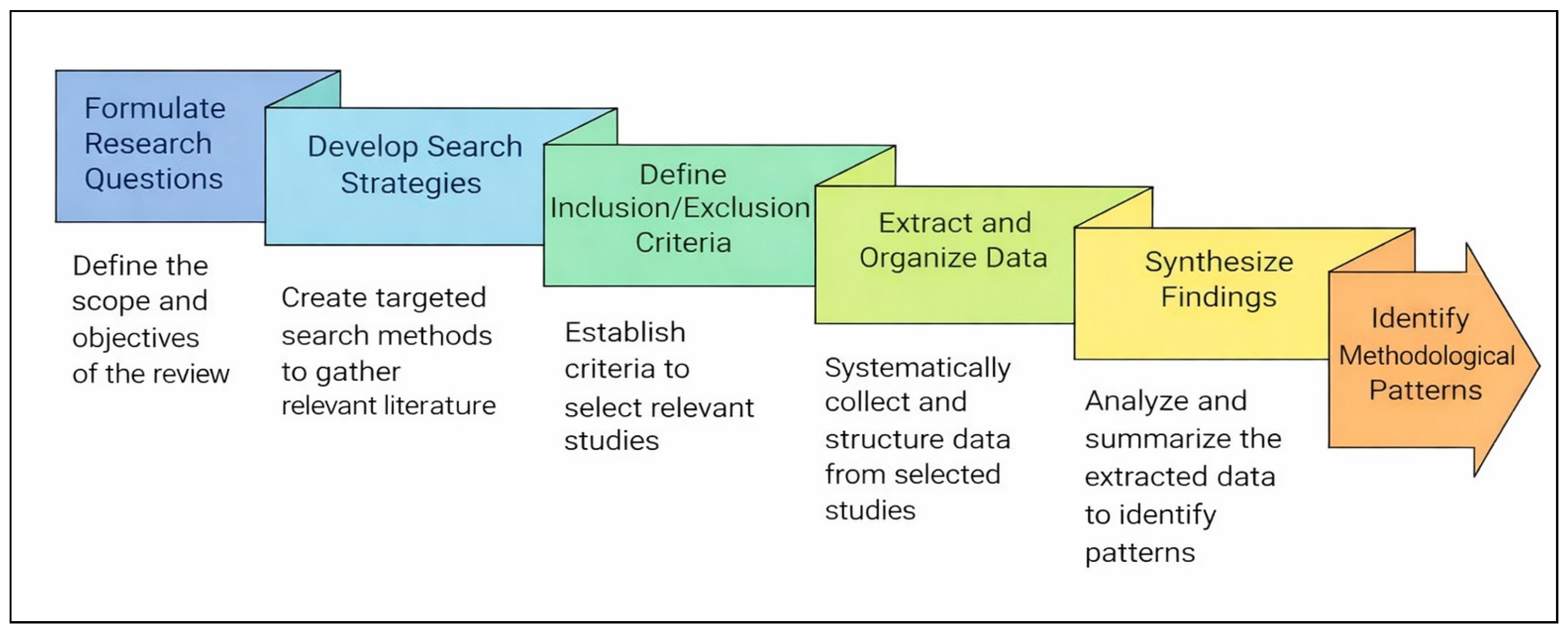
To comply with the review protocol, the process consisted of several phases, beginning with the formulation of research questions and concluding with the identification of methodological patterns. Within this systematic process, an explicit search plan was constructed to locate potentially relevant studies made available in public databases. This step ensures that the evidence base is comprehensive and not selectively gathered. To guide and refine the search prior to the in-depth reading, explicit inclusion and exclusion criteria were defined to determine which studies to include and which to discard. Subsequently, for studies that passed the selection criteria, structured extraction was performed to collect key variables such as methods used for explainability, fairness considerations, or regulatory aspects. These data were later organized in a predefined schema, allowing consistent comparison and tagging across different papers. The extracted information was later synthesized to identify methodological patterns across the literature, from which future directions are anticipated. Figure 1 illustrates the phases involved in formulating the study’s key findings. The review process followed six sequential phases, beginning with defining research questions and developing search strategies, followed by establishing inclusion and exclusion criteria. Data were then systematically extracted, organized, and synthesized to identify methodological patterns.

2.1. Research Questions (RQs) Formulation

To strengthen the goal of this study while ensuring a cohesive and structured approach guiding the formulation of the search strategy across the three main pillars—performance, explainability, and fairness—a Population, Intervention, Comparison, Outcome, and Context (PICOC) framework (Keele, 2007) was adopted to translate the broader topic of employing AI in credit scoring into an operationally precise scope at the planning stage prior to screening. By articulating the Population, Intervention, Comparison, Outcome, and Context, the framework guides the search string construction, reduces bias by making relevance criteria traceable to a predefined scope, and increases reproducibility by formulating auditable selection choices. Using the PICOC framework, this work aims to explore the relationships and interactions among the three pillars, quantify their trade-offs, and acknowledge that more than one pillar can operate jointly and influence another in a quantifiable manner.
Table 1 explains the PICOC components and their relationship to the domain and subject of this research, guiding RQ formulation and the search strategy developed to align the findings with the overall objectives. The PICOC framework defines the domain and subject of deployed AI models highlighted in past studies by referring to credit scoring predictions based on evaluating default risks using historical financial information exclusive to application risk assessments. This reflects the techniques or methods employed to address single or joint challenges in credit scoring, including performance, fairness, and explainability, corresponding to the deployment of AI to solve the credit scoring prediction problem and incorporating multiple pillars. It specifies what the intervention is evaluated against by requiring studies to make use of existing baselines to benchmark their methods or highlight the trade-offs across the pillars, analyzing pillar interactions. It also captures the measured and reported performance indicators, fairness metrics, explainability with human comprehension, and quantitative assessment of trade-off analysis between pillars. Finally, it defines the application environment and publication constraints by determining whether the study is exclusive to the credit scoring domain, published in a peer-reviewed venue, or demonstrates recency in reporting fairness and explainability integrated into modeling, and it identifies where trade-offs or research gaps emerge among the three pillars.
Drawing on the PICOC framework, the following research questions have been formulated to define the context and objectives of this research. Collectively, three research questions were aligned with the study’s overarching aim to explore how credit scoring frameworks can balance predictive performance with fairness, explainability, and regulatory accountability through human-in-the-loop considerations. More specifically, RQ1 examines the trade-offs between performance, interpretability, and fairness, RQ2 investigates the current bias mitigation strategies focusing on their effectiveness, and RQ3 addresses the role of regulation and human oversight in ensuring ethically aligned AI systems.
  • RQ1: To what extent can credit scoring frameworks achieve compelling performance while balancing explainability and fairness trade-offs? The extent to which AI models operate opaquely in determining creditworthiness not only hinders their adoption but also poses threats to their fairness and trustworthiness (Ribeiro-Flucht et al., 2024). In response, numerous efforts within the credit scoring landscape have prioritized transparency and explainability to develop complementary or embedded methods that clarify the rationale and reasoning behind AI-generated outcomes. Model explainability and interpretability are foundational in the deployment of AI and are considered no less important than the performance itself. Apart from describing the motive, both can fundamentally serve the ability to explain causes leading to biased or uncertain decisions (Alufaisan et al., 2021). High-stakes applications depend critically on the ability to reason about and justify model decisions, whereby the lack of transparent decision-making poses a significant drawback and may result in mistrust and non-compliance with local regulations (Wang et al., 2020). Considering the criticality of the three pillars, this research question examines the extent to which these pillars can be elevated jointly or if there are potential trade-offs.
  • RQ2: How do historical repayment data, class imbalance, and protected attributes contribute to biased predictions, and what mitigation strategies are most effective? A common issue across datasets used to train AI models is class imbalance, which hinders AI models from producing accurate results (Chen et al., 2024). This problem is pervasive across credit scoring datasets where the number of defaulters is significantly less than that of non-defaulters. Such an imbalance adversely affects accuracy, suggesting the need for more adaptive techniques that treat all classes equitably. In addition, the presence of protected attributes across different credit scoring datasets potentially amplifies the historical discrimination against minority groups, leaving structural traces in training data (Hurlin et al., 2024; Talaat et al., 2024). For instance, certain ethnic groups have historically been granted credit less frequently, thereby appearing more frequently in the “bad” class, not due to actual risk but because they were denied favorable products or guidance. Addressing this research question reveals the relationships among class imbalance, as well as their potential effect on protected attributes, and provides means to understand the mitigation strategies that eliminate biased decisions.
  • RQ3: How do regulatory frameworks and human-in-the-loop (HITL) approaches influence the interpretation of fairness across different contexts, and how can they be incorporated into ethically aligned AI models? Given that AI models are prone to biased decisions and lack transparency in how their results are determined, the intervention of regulatory bodies underscores the importance of consciously adopting AI in domains involving monetary decisions and fundamental human rights. While precision and accuracy were the ultimate goals sought in the past, the loss of transparency has proven far more costly in critical and regulated domains, making explainability a necessity rather than an option (Chen et al., 2024). Ensuring this balance enables the responsible and accountable deployment of AI in credit scoring domains, supported by adequate human oversight to maintain compliance with local regulations, and ensures that results remain comprehensible to human decision-makers (Peng et al., 2023).
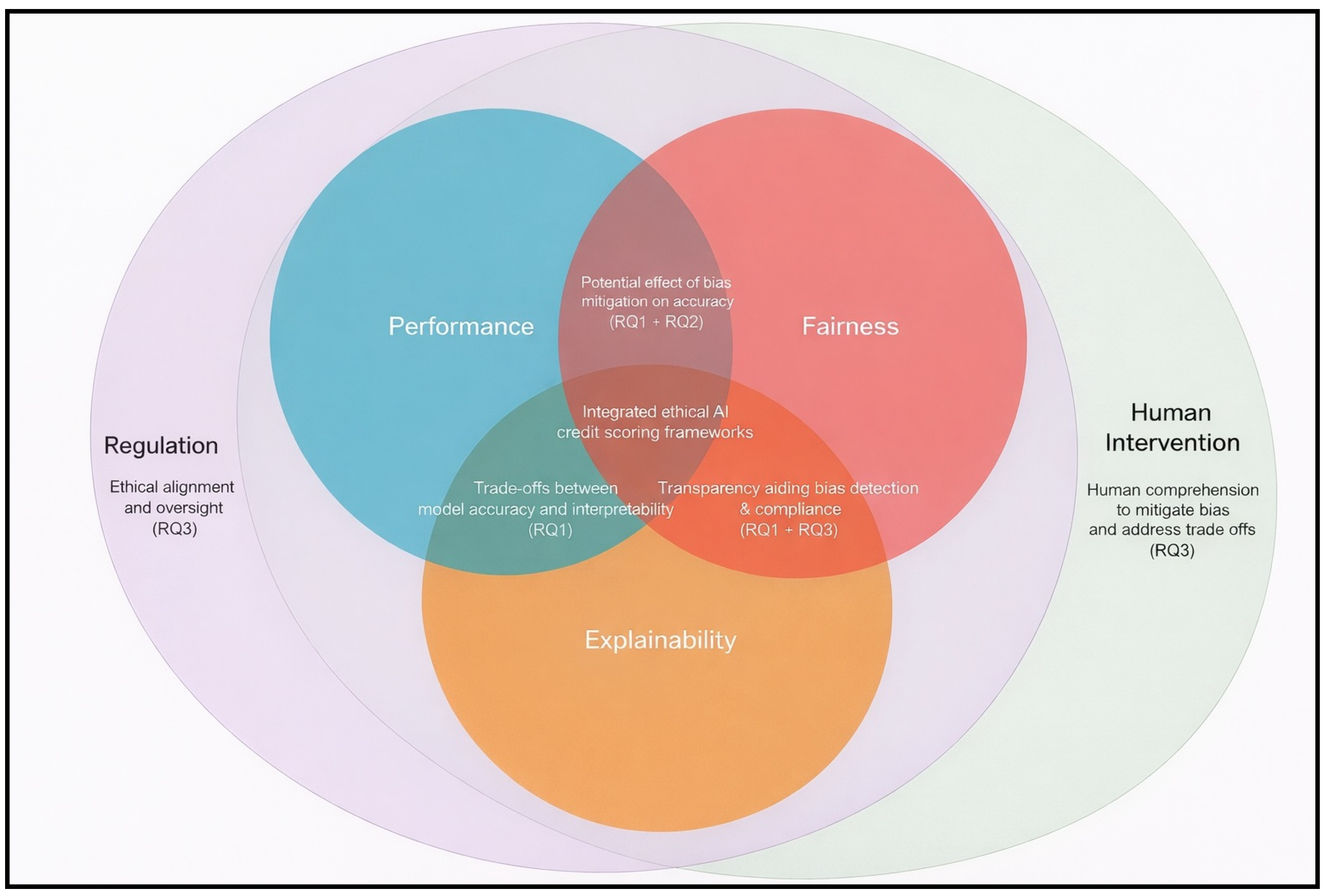
Guided by these research questions, this work aims to explore the potential trade-offs and possibilities to incorporate multiple dimensions to form an intersectional framework built around the triad of performance, explainability, and fairness, with Regulation and HITL. Figure 2 illustrates the conceptual framework showing the intersections among performance, explainability, and fairness in AI-driven credit scoring. The outer layers represent regulatory oversight and human intervention as contextual dimensions influencing all three pillars. Each overlap corresponds to the research questions (RQ1–RQ3) guiding this systematic literature review.

2.2. Search Strategy

To ensure the retrieval of the relevant literature and refine the scope, the search string was carefully crafted to emphasize the intersection between the three pillars highlighted earlier. More importantly, it also highlights recent advancements related to balancing or interaction across these distinct dimensions. Therefore, the study was conducted using the IEEE, Scopus, Web of Science, and Science Direct databases to ensure comprehensive and sufficient coverage of peer-reviewed journal articles and conference proceedings. In addition, Scopus included records from major indexing services such as ScienceDirect, SpringerLink, Wiley Online, Taylor & Francis Online, IEEEXplore, and ACM Digital Library. This ensured broad interdisciplinary coverage of relevant sources and that the search was conducted across multiple major databases to reduce the likelihood of database-specific omission and bias in the retrieval process. Table 2 presents the search string used for literature retrieval.
The search string was designed to locate relevant papers by matching the specified keywords across the titles, abstracts, and keywords sections; therefore, the field code (TITLE-ABS-KEY) was used. In addition, key terms and synonyms were selected to represent the core dimensions of this study, i.e., explainability, fairness and performance. Optionally, papers were required to address at least one secondary dimension related to fairness or explainability, rather than focusing solely on performance. This process initially retrieved a total of 436 papers prior to the selection and screening stages.

2.3. Selection Criteria

To govern the selection of records, a set of selection criteria was established to cover both inclusion and exclusion principles. This includes screening at the title or abstract level and full-text exclusion. It ensures that the selection is structured and reproducible, that the pool of studies aligns well with the research questions, and that biased selection is prevented. Due to the large volume of records, only a representative subset of papers was considered, guided by the PICOC components specified earlier.

2.3.1. Inclusion Criteria

Only studies that were published from 2020 onward in reputable, peer-reviewed venues, such as ACM, IEEE, Springer, and Elsevier, were considered in this work. This temporal scope was intentionally selected to capture the most recent phase of AI-based credit scoring research shaped by the rapid adoption of explainable AI (XAI) and fairness-aware learning, alongside increasing regulatory scrutiny of automated decision-making in high-stakes domains. The period from 2020 onward reflects the growing maturity of explanation techniques, counterfactual recourse, and fairness constraints integrated into modern learning objectives, as well as the increasing emphasis on transparency, non-discrimination, and auditability in credit decision pipelines, aligned with emerging AI governance and accountability requirements. More importantly, restricting the scope to recent studies increases the likelihood of capturing methods and evidence that jointly address multiple pillars within the same experimental setting, which is essential for intersection-oriented assessment.
The eligibility of papers was later assessed based on their coverage of at least one additional dimension beyond the performance of credit scoring models, namely explainability and fairness, as highlighted earlier. In addition, the context and domain of the research must be exclusive to credit scoring or credit risk assessment, and the studies must demonstrate measurable or interpretable outcomes or, at a minimum, conceptually support integrating fairness and explainability into credit scoring frameworks to establish clear links for ethical framework assessment.

2.3.2. Exclusion Criteria

Studies not meeting the inclusion criteria were excluded or deemed insufficient to explicitly integrate the different dimensions of this study. This included studies falling outside the credit scoring domain or addressing irrelevant AI applications such as NLP, fraud detection, or insurance risk. Further, non-peer-reviewed materials, pre-2020 publications, and overly generic works were also omitted. Additional exclusions applied to papers focusing only on performance or feature selection without fairness or explainability, or those addressing corporate lending, profit or loss prediction, or transfer learning based on external datasets. Purely conceptual or regulatory discussions were excluded unless directly relevant to fairness and explainability under RQ3. Lastly, studies addressing credit scoring for corporate loans and Small and Medium Enterprises (SMEs) were also omitted from this study, as they do not relate to data privacy and the inclusion of sensitive (protected) attributes.

2.4. Screening Process

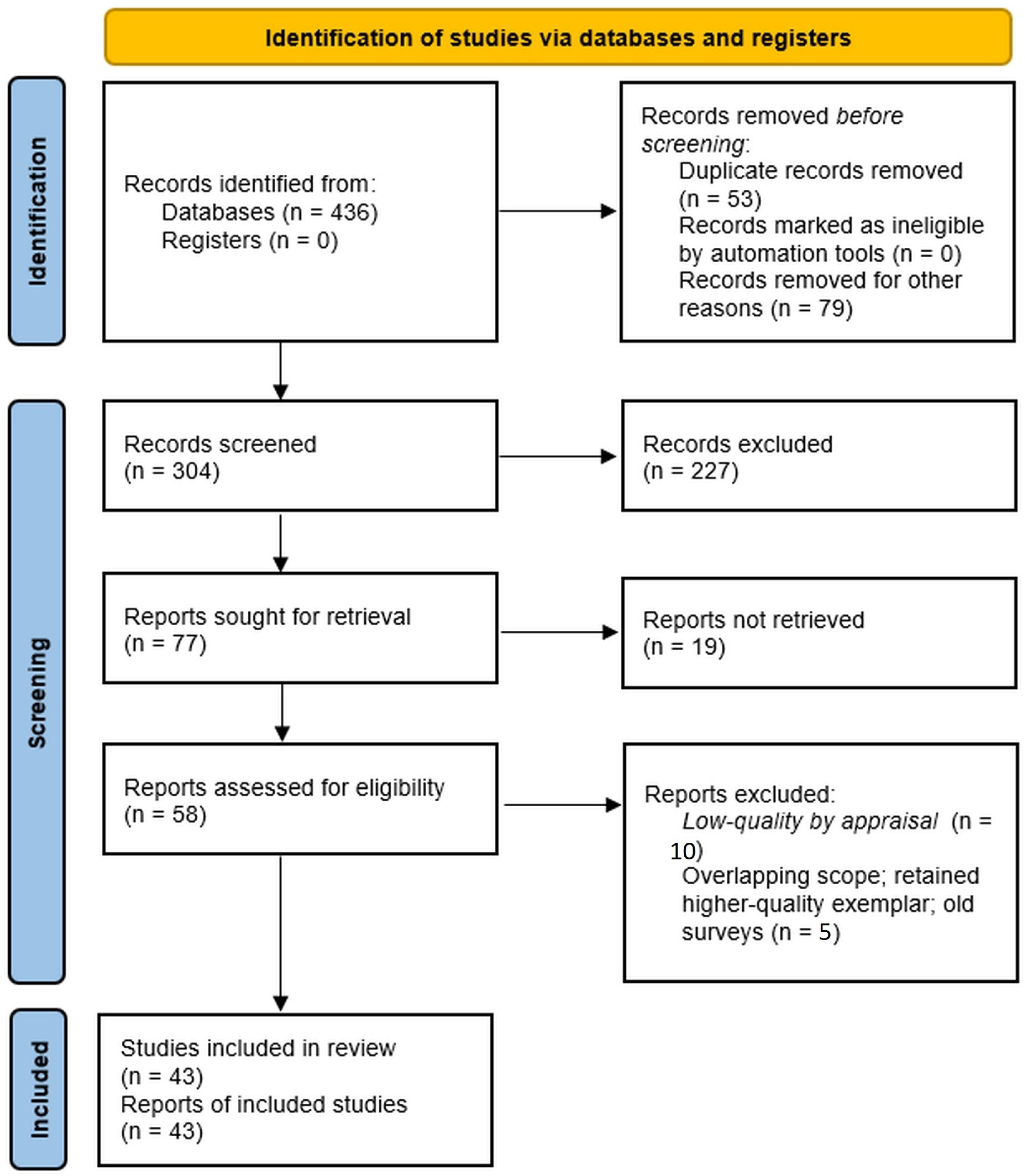
Following the inclusion and exclusion criteria specified in the earlier subsection, the PRISMA 2020 guidelines (Page et al., 2021) were followed, ensuring records identified through database searches were screened by title, abstract, and full text to ensure their alignment with the RQs. Figure 3 provides a summary of the systematic flow of study identification, screening, eligibility assessment, and inclusion.
The initial search result returned 436 records from electronic databases, with no additional records from registers being considered. During the identification phase, 132 records were excluded due to duplication (i.e., identical papers retrieved from multiple databases), irrelevance, methodological overlap, or discrepant metadata. The remaining 304 records were subjected to title and abstract screening, during which 227 records were excluded for failing to meet the inclusion criteria specified. This included, for instance, applications of AI in corporate credit scoring, unrelated domains, or non–peer-reviewed materials.
In the eligibility assessment stage, 77 reports were sought for full-text retrieval, of which 19 could not be accessed due to unavailability or subscription-based restrictions. The remaining 58 reports underwent full-text assessment against the quality assessment, based on which 10 reports were excluded due to low-quality appraisal scores, and 5 were excluded due to overlapping scope or outdated survey content, as detailed in Appendix A. Finally, 43 studies were included in this review, forming the final corpus analyzed across the dimensions of performance, explainability, and fairness.
All records retrieved from the selected databases were screened by one reviewer using the predefined inclusion and exclusion criteria. The screening was performed in two stages, i.e., title/abstract screening followed by full-text assessment. Any uncertainties during screening were resolved through repeated manual verification against the eligibility criteria.

2.5. Data Extraction

To systematically record the bibliographic information, methodological details, and thematic attributions of the 43 included studies, a structured data sheet was created, and the data extraction was performed by one reviewer to ensure consistency and reproducibility. Metadata extracted from the search databases were imported into Zotero as the primary reference management tool, then exported to Excel for coding and synthesis. Bibliographic details such as title, abstract, authors, DOIs, publication year, and venue formed the evidence base for subsequent analysis.
For thematic classification, each study was tagged to reflect its dominant themes across performance, explainability, and fairness, as well as connections to regulatory and HITL concepts. These tags were instrumental in identifying intersections among the dimensions, supporting the conceptual framework described in Figure 2. To minimize transcription errors, the extracted entries were cross-checked against the original articles before synthesis. No automation tools were used for extraction, and the study’s authors were not contacted for additional information.

2.6. Quality Assessment

Since the included studies are methodologically diverse and target at least one pillar, and since the synthesis of this work is narrative rather than effect-size based, this review did not employ a domain-specific risk-of-bias tool. Instead, to ensure the inclusion of methodologically and conceptually aligned studies, a structured multi-criteria appraisal (Keele, 2007) was conducted by leveraging evidence weighting practices to assess the relevance and rigor of each study. To support this, a customized 3Rs&Q framework was designed to assess the contribution of each work toward the interaction among the three main pillars while also accounting for contextual dimensions such as regulation and human intervention. The scoring scale ranged from 0 to 3, whereby values of 0 and 3 indicate the lowest and highest scores, respectively. Considering each 3Rs&Q metric consists of two sub-metrics (R1–R6 and Q1–Q2), the total attainable score was 24, as shown in Table 3. The tier thresholds (high: 17–24; medium: 9–16; low: <9) were determined a priori based on equal distribution across the 24-point scale and reflect increasing levels of methodological alignment with the three pillars. This distribution-based approach also ensures that papers scoring 8 or below fall naturally within the lower-quality tier of the 3Rs&Q scale. Papers demonstrating strong methodological and conceptual rigor were scored between 17 and 24, forming the high-quality tier. In addition, papers that provided partial coverage of isolated dimensions, such as focusing only on fairness, but still offered useful insights, received scores ranging from 9 to 16 and belonged to the medium-quality tier. Lastly, the remainder of the studies that scored below 9 points were not considered due to limited connection to the review’s core dimensions.
This customized 3Rs&Q appraisal framework was applied as a structured rubric to support consistent quality appraisal across included studies. Since rubric-based scoring may introduce assessor subjectivity, scores were assigned using evidence-driven rules that relied only on explicitly reported information within each paper rather than inferred intentions. Borderline cases were re-checked against the original text and scored conservatively when evidence was insufficient, ensuring that the appraisal reflects documented and relevant contributions to the review’s core dimensions.

3. Results

3.1. Study Selection

Following the quality assessment, a total of 58 papers were thoroughly assessed and scored. Among these, 15 papers forming 25.8% of the selected studies were excluded due to low scores (≤8), failure to meet the eligibility criteria and overlapping scopes. Consequently, they were deemed unsuitable to address the objectives of this work. A detailed summary of the 43 studies considered in the analysis and results is provided in Appendix B.

3.2. Characteristics of Selected Studies

Considering the multidisciplinary nature of the credit scoring problem, studies included in this review were published across various venues, with 95.4% and 4.6% published as journal articles and conference papers, respectively. Among indexed sources, 13.95% of studies were retrieved from IEEE Xplore, followed by SpringerLink, with over 11.63%. Both venues represented a substantial portion of technical and computational research in the selected sample. Additionally, smaller but notable portions of the selected studies were obtained from Elsevier’s ScienceDirect and open-access publications, such as PLOS ONE, both equally forming 6.98%. Other publications from ACM Digital Library and MDPI accounted for 2.33% of the final set.
Table 4 shows the distribution of studies categorized by published family. Given that credit scoring intersects finance, statistics, artificial intelligence, and regulatory studies, more than half of the selected sample (55.81%) was elicited from domain-specific journals or conference venues that do not belong to a particular digital library. Furthermore, most of the studies included herein were published between 2023 and 2024, forming 30.2% and 48.8% for the same years, respectively. The remaining studies—published between 2020 and 2022—formed only 21%, thereby confirming the recency of the intersection across dimensions considered in this study.

3.3. Topic Coverage

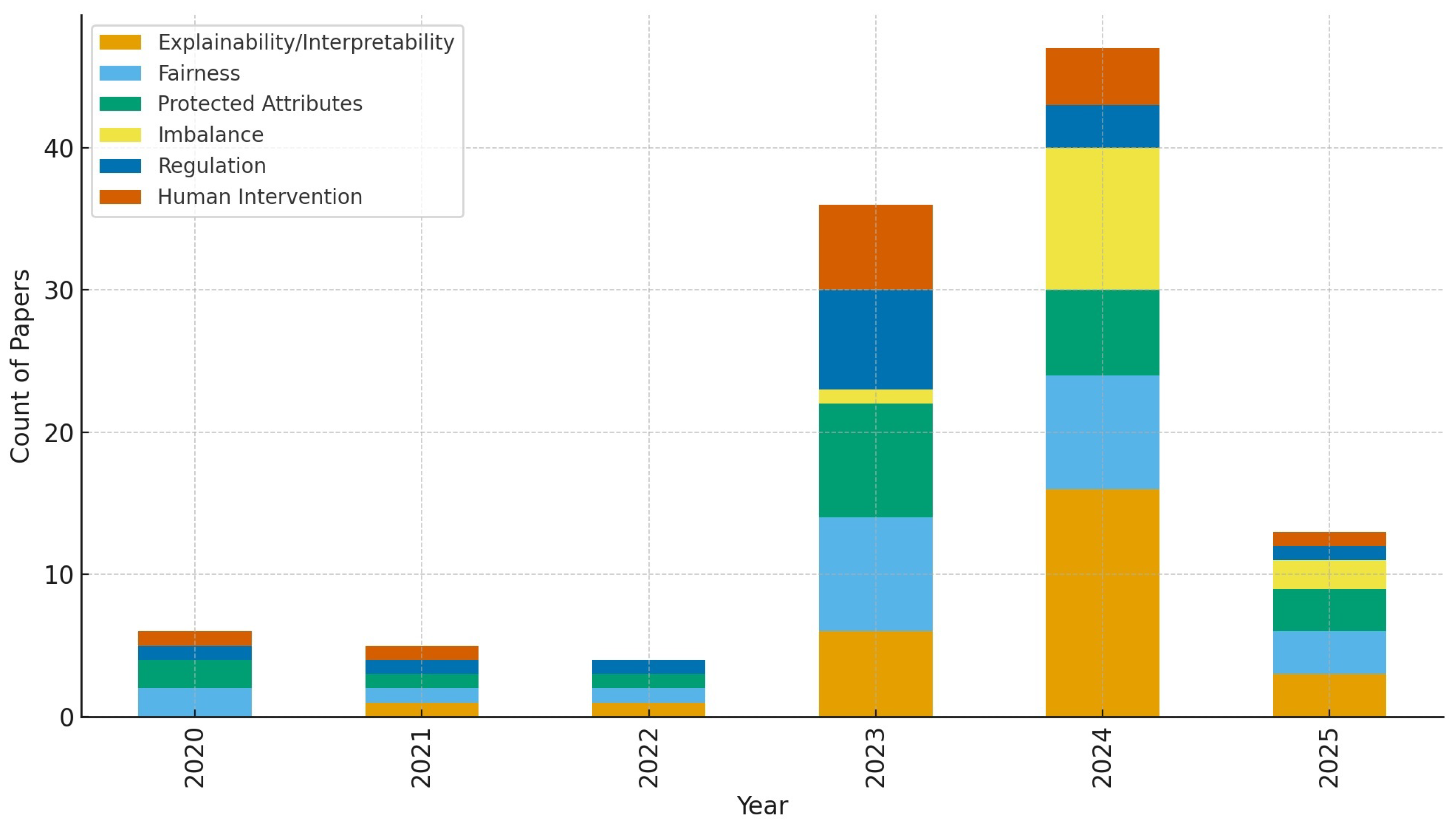
The trends observed in the coverage across dimensions, as shown in Figure 4, reveal a clear shift in the research agenda of credit scoring from 2023 onward, with a lower count for 2025 since the year was still in progress at the time of data collection. Prior to this, a small number of studies covered any of the investigated dimensions and were mostly fragmented. While the concept of fairness was simply being applied in AI disciplines, human intervention and regulatory aspects were almost absent. This suggests that studies prior to 2023 were primarily focused on performance and, to a certain extent, on mitigating bias associated with protected attributes.
However, in 2023, there is an evident surge across all investigated dimensions. It is worth noting that studies increasingly incorporate protected attributes and examine their effects on fairness and explainability, underscoring their growing importance in more recent studies. This suggests a turning point where the field began to operationalize an ethical and transparent model design rather than being merely performance-focused. This shift aligns well with the policy pressure imposed by regulators, which likely stimulated regulatory responses to address ethical and social accountability concerns in the literature.
Among all considered dimensions, explainability showed the strongest expansion between 2023 and 2024, marking it as the dominant and most substantial pillar of recent credit scoring research. On the other hand, studies concerning protected attributes and their regulation in algorithmic decision-making also increased significantly after 2022, signaling a significant surge in compliance with governance and legal frameworks. Human intervention, however, remains comparatively under-represented, despite its significance in high-stakes settings, particularly when the trade-off between performance and fairness is presumed. Overall, this trend represents a major transition from performance-focused representation of the credit scoring problem toward bias and interpretability-aware credit scoring, with regulation and human intervention being central to responsible deployment.
Furthermore, to quantify the intersections between different dimensions, Table 5 presents the pairwise intersections between all considered dimensions grouped by base dimension. Notably, fairness and protected attributes represented the largest portion of studies that accounted for measuring fairness across sensitive/private features, with 21 papers discussing this association. This confirms that fairness discourse is primarily anchored in group fairness definitions. Moreover, the association between fairness and other dimensions, including regulation and human intervention, was ranked second from the point of view of fairness, having 11 papers relating it to human comprehension and regulatory frameworks. This pattern suggests that when fairness and protected attributes are foregrounded, regulatory requirements involving human oversight are simultaneously considered.
Despite that, mid-tier intersections between explainability and other pillars, including fairness, the presence of protected attributes, regulation and human oversight were found in seven or fewer papers, highlighting this association. This suggests that while explainability is increasingly present in bias-aware frameworks, it remains an auxiliary function and not yet central. In other words, explainability in credit scoring tends to serve as a bias-diagnostic rather than a compliance- or fairness-enforcing mechanism.

4. Discussion

This section examines the trade-offs and assesses compatibility across performance, fairness, and explainability as three crucial elements in the ethical and responsible deployment of AI within the credit scoring domain. To achieve that, the interactions among these pillars are synthesized to determine their compatibility and describe observed patterns. In addition, this section highlights common bias mitigation strategies and compares their effectiveness in the deployment pipeline, and it conceptually relates model interpretation to human comprehension to support ethically aligned deployment. Where applicable, the discussion is supported by empirical and conceptual evidence reported in the reviewed literature.

4.1. Compatibilities and Trade-Offs (RQ1)

Performance vs. Explainability
Considering the wide adoption of AI models, ranging from inherently interpretable to black-box models, there is no consensus from the literature confirming the availability of universally compliant models. Although the terms interpretability and explainability are used interchangeably in this work, both denote the conscious adoption of AI aimed at establishing the grounds for understanding model outcomes (Ratul et al., 2021). Over the years, models have been primarily performance-focused, achieving high predictive accuracy but often failing to explain their results due to their complexity. A clear example is the transition from traditional models, such as logistic regression (LR) and shallow decision trees (DTs), to more sophisticated boosting and deep learning (DL) architectures. Arguably, despite both approaches being extensively explored and sharing similarities, deep learning demonstrates greater suitability in addressing modern and complex credit scoring contexts.
However, this advancement comes at the cost of interpretability, which poses challenges in highly regulated, high-stakes domains (Bücker et al., 2022). Understanding the model’s reasons for identifying defaulters is foundational in the financial sector, particularly in credit risk domains (Valdrighi et al., 2025), considering that this opacity poses a limitation for credit assessors in validating and trusting their results. By contrast, traditional and shallow tree-based models are generally more interpretable and can provide insights into how eligibility is determined (Kanaparthi, 2023). For instance, the coefficients optimized in LR reflect the magnitude of feature influence on the output, while DTs offer a transparent tree-like structure showing the collective decision paths leading to the final outcome. Conversely, DL methods rely heavily on post-hoc explainability techniques to compensate for their opacity, which often raises compliance concerns in regulated sectors (Hjelkrem & Lange, 2023).
Consequently, there has been a noticeable expansion in the adoption of post-hoc methods, particularly SHAP and LIME (Aruleba & Sun, 2024; S. Han et al., 2024; Hjelkrem & Lange, 2023; Hlongwane et al., 2024; Nwafor et al., 2024; Zhang et al., 2025), which can operate independently of model design. For example, Nwafor et al. (2024) proposed a hybrid approach combining a single-dimensional CNN and XGBoost to formulate a stacking architecture for credit scoring while ensuring explainability. Their results demonstrated greater performance of the hybrid model when compared with native models, such as CNN, XGBoost, and LR, attaining an accuracy of 96%, exceeding that of the interpretable LR model by 4%. A similar example was observed in the work of Hlongwane et al. (2024). They argued that while tree-based models such as XGBoost and RF provide promising performance results, they lack sufficient interpretability to explain them. By integrating SHAP into their deployment pipeline, they successfully visualized feature attributions toward prediction outcomes. However, when the AUC measures were compared against LR, both RF and XGBoost outperformed LR by only 1%.
These examples provide concrete evidence that the trade-off between explainability and performance is largely assumed rather than empirically measured. This observation is in line with the one highlighted by Dessain et al. (2023), where they explicitly stated that the trade-off between performance and explainability stems from the move toward complex black-box models lacking intrinsic interpretability. In their experiment, they quantified this trade-off across 12 models, including inherently explainable and black-box models. From a business standpoint, they concluded that the performance gap between interpretable and black-box models corresponds to only 0.14–0.21% in annual return on investment. Despite that, they applied isotonic smoothing to GAMs in order to increase interpretability without further financial loss, achieving performance close to that of black-box models. Therefore, the choice between inherently interpretable and black-box models is primarily determined by an institution’s risk tolerance. It is also worth noting that studies measuring this trade-off were relatively limited, underscoring the need for empirical measurement if inherently interpretable models are to be considered.
Overall, the literature indicates that explainability is predominantly introduced as a post-hoc addition to black-box models rather than being embedded or enhanced within inherently interpretable ones. The presumed trade-off between performance and explainability is thus often asserted rather than demonstrated, with a limited number of studies quantifying this cost and observing it to be marginal. In general, it is observed that the current practice in credit scoring favors preserving predictive strength while mitigating opacity through auxiliary explainability methods rather than prioritizing interpretability from the outset.
Despite recurring claims that model transparency degrades predictive strength, empirical evidence shows that the performance gaps between transparent and black-box models are consistently marginal, as illustrated in Table 6, with limited studies demonstrating a substantial performance degradation when using interpretable baselines. It is also worth noting that the comparison results should be perceived under a fair setting, where pre-processing and feature preparation steps are applied consistently across both interpretable and black-box models, ensuring that observed differences reflect model capacity rather than unequal data treatment. In some cases, the gain from complex models was even negligible, denoting that the perceived trade-off is largely assumed but rarely quantified. As a result, model explainability tends to be incorporated after model selection rather than shaping it, implying that the performance and explainability conflict is less structural than commonly portrayed, particularly in regulated credit scoring contexts where even marginal gains rarely justify opacity.
To interpret the performance gap between inherently interpretable and black-box models, the marginal differences reported in Table 6 should be viewed as dataset- and method-dependent rather than consistent across all settings. While most comparisons indicate only minor performance variations, some studies report larger gains when the modelling approach introduces additional capacity to capture higher-order interactions and non-linear decision patterns. Consequently, the observed differences are conditional not only on the characteristics of the underlying datasets but also on the experimental and pre-processing choices adopted in each study. A key driver of reduced performance gaps is the extent of data refinement and feature reduction that simplifies the learning problem. This is demonstrated by Nwafor et al. (2024), where the LendingClub dataset was reduced from over 1 million observations and 145 features to 25,535 observations with 25 features through exploratory analysis and feature filtering. This dimensionality reduction likely decreased redundancy and noise, enabling interpretable baselines such as logistic regression to remain competitive and limiting the incremental gain achieved by XGBoost.
A similar trend is observed in the work of L. H. Li et al. (2025), where extensive pre-processing, feature filtering, and normalization applied to the LendingClub dataset resulted in performance improvements that remain broadly comparable across interpretable and black-box models. Evidence of an even smaller trade-off is provided by Hlongwane et al. (2024), where discretization, feature engineering, and variable selection were used to constrain final scorecard complexity in the Taiwan and Home Credit datasets. Under this controlled setup, performance differences between logistic regression and tree-based models became near-negligible, particularly in Home Credit, where XGBoost yielded only a minimal AUC improvement over logistic regression. Collectively, these findings suggest that when input dimensionality is reduced, noise is controlled, and pre-processing steps are applied uniformly across model families, the advantage of black-box models often becomes marginal.
In contrast, pipelines that do not consider observation and complexity reduction techniques can yield larger gains, particularly when explicitly targeting complex regions of the feature space that interpretable models struggle to capture. Zhang et al. (2025) exemplify this by proposing a boundary-focused hybrid framework that retains logistic regression as a transparent baseline while introducing a deep learning component trained on boundary samples. Rather than simplifying the feature space through reduction techniques, the study applies pre-processing primarily for imbalance mitigation, enabling models to learn more effectively from complex decision boundaries. This design increases model capacity specifically in regions where linear decision functions underperform, helping to explain the comparatively larger improvements reported in their experiments. In conclusion, Table 6 indicates that the trade-off between explainability and performance is not universal but greatly shaped by the complexity of datasets, the extent of pre-processing and feature reduction applied uniformly across different types of models, and whether the black-box approach is a standard global learner or an advanced architecture designed to capture high-order patterns.
Performance vs. Fairness
Fairness represents a long-standing challenge inherently present in credit scoring datasets. It reflects a well-known tension with predictive performance, although this tension is not absolute but conditional in most cases. Its adverse effects on underserved and excluded populations stem primarily from historical data, which are often biased and reflect past human decisions (Das et al., 2023; Valdrighi et al., 2025). When these biased decisions remain unaddressed, the risk of amplifying their impact increases with the integration of AI models, as such models tend to reproduce the embedded biases within accepted loan applications (Chai et al., 2025; Kozodoi et al., 2025). As a result, fairness is integral to any credit scoring practice, whether it is traditional, statistical, or AI-based, and ignoring it perpetuates discrimination.
Across the literature, given that bias is inevitable, fairness is often treated as a multi-objective optimization problem that aims to optimize predictions under soft constraints (S. Liu & Vicente, 2022; Martinez et al., 2020). This means that predictive capability and equitable group treatment are jointly optimized rather than one being maximized at the expense of the other. For instance, Balashankar and Lees (2022) argued that fairness in ML can be achieved by transparently presenting non-dominant and best-performing trade-offs between demographic group accuracy and overall prediction. Using a Pareto frontier, human involvement becomes central to determine the best trade-off between performance and fairness (Zehlike et al., 2025). Similar approaches have been reported in other studies (Badar & Fisichella, 2024; S. Liu & Vicente, 2022; Martinez et al., 2020), confirming that the trade-off between performance and fairness is unavoidable and is typically modeled as an optimization problem seeking to balance both objectives.
Having said that, Kozodoi et al. (2022) and Badar and Fisichella (2024) further noted that fairness can be improved while ensuring minimum loss in profit and performance, provided that parity constraints are not enforced too strictly. In contrast, having strict parity conditions could potentially lead to deterioration in prediction utility. This observation was empirically reported by S. Liu and Vicente (2022), where they concluded that fairness constraints reduce accuracy progressively as they tighten. By adjusting the objective function to minimize prediction loss and fairness violation terms, they derived a curve of optimal trade-offs, demonstrating a proportional relationship between accuracy and fairness violations. In other words, minimizing fairness violation results in degraded accuracy, and vice versa, confirming that fairness is tunable and not strictly achieved. Therefore, data imbalance strategies contribute to fairness to the extent that they restore representativeness and reconstruct missing groups that would otherwise be represented as a structural discrimination.
Furthermore, although fairness and data imbalance are treated separately across the literature, they implicitly influence one another and can potentially degrade fairness across protected groups if not addressed (Brzezinski et al., 2024; J. Liu et al., 2024; Shi et al., 2025). It forms not only a technical issue hindering performance, but also a material exclusion system embedded into credit scoring models. Considering that protected groups are not present at equal rates across different outcomes, data imbalance techniques can rectify the adverse effects by over-representing these minority groups in the minority (default) class.
A similar trade-off pattern can be observed when considering data imbalance mitigation strategies. For instance, the work of Kozodoi et al. (2025) demonstrated a recoverable 36% of performance loss using their proposed BASL rejection inference framework while simultaneously improving fairness compared with traditional sampling techniques. The goal of their framework was to gradually infer labels to unlabeled samples iteratively, until model performance improves. The process of relabeling continues until all samples in a dataset are labeled and ready for final training. However, they simply noted that this iterative process is prone to sampling bias, hence increasing the risk of overconfidence and overfitting of a model, and thereby degrading the generalization of the model. The same observation was also made by Sulastri et al. (2025) and Atif (2025), where strong inclusion adjustments potentially harm generalization and stability.
Overall, the literature suggests that while there exists a notable trade-off, fairness is neither impossible nor completely achievable, but tunable. This indicates that fairness is an optimization decision that is bounded by risk tolerance and societal constraints rather than being a technical impossibility. The literature showed some cases where moderate fairness adjustments achieved compelling results in terms of performance as well as fairness, whereas aggressive corrections tend to distort data distributions and often lead to overfitting and instability.

4.2. Fairness Strategies in Deployment Pipelines (RQ2)

Despite the notable growth in integrating fairness into AI deployments, as shown in Figure 4, out of the selected 43 papers, only 10 explicitly measured the effectiveness of existing mitigation strategies or proposed novel ones to counter bias in the credit scoring domain. This represents no more than 23.25% of the total reviewed studies, despite fairness being an integral and long-standing concern in credit scoring rather than a newly introduced concept (Brzezinski et al., 2024; Kozodoi et al., 2022). As a result, relatively few studies have addressed the adverse implications of protected attributes in lending decisions, particularly in algorithmic decision-making settings that are prone to producing discriminatory outcomes that disproportionately affect minority groups (Moldovan, 2023). This pattern aligns with the observation of Kozodoi et al. (2022), who explicitly stated that fairness remains underexplored relative to explainability and class imbalance.
Before delving into fairness mitigation strategies, it is worth noting that fairness comes in two different notions: individual and group fairness (Valdrighi et al., 2025). The latter is focused on generalizing credit decisions across groups characterized by protected attributes such as gender, ethnicity, and religion. All studies included herein operationalize group fairness, whereas individual fairness was mentioned only conceptually in a few studies, such as the work of Kozodoi et al. (2022), as well as Valdrighi et al. (2025), without empirical implementation. To determine fairness effectiveness, commonly known metrics are used to evaluate their suitability across different notions, which include independence, separation, and sufficiency (Kozodoi et al., 2025; Moldovan, 2023). These metrics were found to be incompatible when combined, and there is no universal agreement on which metric should be prioritized (Brzezinski et al., 2024; Zehlike et al., 2025). Due to this, Zehlike et al. (2025) proposed a novel algorithm called Fair Interpolation Method (FAIM) that interpolates between the three fairness criteria to develop a reward/penalty objective function that relaxes the notion of competing metrics, resulting in a weighted combination of fairness criteria.
Considering that bias may enter the deployment pipeline at multiple stages (Das et al., 2023), fairness metrics are consistently applied as downstream evaluation measures, regardless of the intervention point. Accordingly, the literature organizes fairness interventions into three broad categories based on their position in the deployment pipeline: pre-processing, in-processing, and post-processing (Valdrighi et al., 2025). To date, no consensus exists regarding a universally dominant mitigation strategy, rendering fairness a practical challenge for lending institutions, as each category exhibits distinct strengths and limitations (Kozodoi et al., 2022; Moldovan, 2023). The full set of fairness mitigation strategies identified from the reviewed literature, categorized by intervention stage and methodological characteristics, is summarized in Appendix C. Across categories, no mitigation strategy consistently dominates others, reinforcing the view of fairness as a context-dependent optimization problem rather than a universal correction. Accordingly, the comparison scope is inevitably large, with the existence of common aspects that touch on each mitigation strategy. For example, pre-processing methods intervene before the training phase of AI models and aim to modify the distribution of data prior to training (S. Han et al., 2024). This often leads to lower deployment costs and the ability to improve fairness without having to retrain models, considering model retraining is time-consuming (Kozodoi et al., 2022). Nonetheless, since pre-processing strategies are model agnostic, they often require repeated adjustments to the data pipeline and potentially lead to overfitting when fairness is strictly enforced, making them good strategies to tune and reduce bias, rather than completely eliminate it (Chai et al., 2025).
Additionally, according to Kozodoi et al. (2022), in-processing techniques consistently achieve larger fairness gains with minimal loss in predictive utility, assuming that fairness is embedded into the optimization objective itself. Since they typically report the trade-off between accuracy and equity in a Pareto frontier, in-processing techniques offer better control and oversight to realize Pareto-efficient compromises. Several other studies also reported this behavior, confirming that the trade-off is more tunable while having explicit control over the outcomes (S. Liu & Vicente, 2022; Moldovan, 2023). Conversely, since they account for multiple objectives simultaneously, they incur higher computational cost and often require hyperparameter tuning to identify the optimal configuration due to their model-specific mechanism, thereby resulting in higher implementation burden (Valdrighi et al., 2025).
Similar to pre-processing methods, post-processing is another form of model-agnostic techniques that aim to adjust model outputs post-training to meet fairness criteria (Zehlike et al., 2025). This makes them a versatile option for black-box models and strictly governed scorecards, since bias mitigation is performed in isolation from the model’s training and prediction themselves (Valdrighi et al., 2025). Despite this, they incur the highest utility cost per fairness gain and cannot repair upstream bias since they act solely on the decision boundary. As a result, post-processing techniques exhibit a substantial decrease in profitability relative to in-processing options, and they are less tunable than in-processing techniques since they operate on outputs instead of learned representations (Kozodoi et al., 2022).
Synthesizing the findings across studies reveals that fairness mitigation should be viewed as an optimization problem rather than a one-time corrective step, with trade-offs emerging between predictive performance, implementation complexity, and regulatory suitability. Pre-processing methods intervene before model training by modifying data distributions (S. Han et al., 2024), often offering lower deployment costs and model-agnostic applicability. However, strict enforcement of fairness constraints at the data level may require repeated adjustments and can introduce overfitting risks, making such approaches more suitable for bias reduction rather than complete mitigation (Chai et al., 2025; Kozodoi et al., 2022).
Overall, while each fairness strategy has its own strengths and weaknesses, the literature makes it evident that there exists no universally dominant strategy across the scoring pipeline. Rather, these strategies emerge as a case-dependent optimization problem that is mainly influenced by the regulatory environment and the level of risk appetite within the institution. Consequently, this positions fairness as a continuous process that must be integrated holistically throughout the deployment pipeline, rather than corrected at a single stage, as already highlighted by Das et al. (2023).

4.3. Regulatory, Ethical, and Governance Foundations for Fair AI Credit Scoring (RQ3)

In the United States, the Equal Credit Opportunity Act (ECOA) and the Fair Credit Reporting Act (FCRA) have collectively imposed obligations to ensure equal treatment across protected groups, and more importantly, to provide “adverse decision justifications” within strict timelines (Kumar et al., 2022). These statutory requirements implicitly mandate interpretable AI systems capable of supporting supervisory examinations and consumer recourse. Similarly, in Europe, models that operate opaquely and fail to provide adequate justification for algorithmically determined results were subjected to mistrust, viewed as presenting heightened bias risks, and classified as high-risk applications (Langenbucher, 2020). Accordingly, the European Union enforced fairness-through-explainability requirements under the forthcoming AI Act, emphasizing transparency and adequate fairness measures (Perry et al., 2023). Additionally, privacy laws such as GDPR intersect with these fairness obligations, as sensitive attributes may directly or indirectly influence outcomes, posing discriminatory risks if left unmitigated (Ridzuan et al., 2024).
Beyond Western regulatory frameworks, the ASEAN region also experienced the rise of governance approaches that prioritize fairness in the algorithmic lending process, with additional emphasis on human oversight (Lainez & Gardner, 2023). Similar to the EU AI Act proposal, ASEAN policy guidance encourages the HITL review, particularly in high-stakes and credit scoring domains, while also stressing explainability as a key enabler for a supervised evaluation (Ridzuan et al., 2024). This makes human intervention central to validating outcomes and correcting undesired results. While these laws and acts referenced in the literature might seem less prescriptive, they signal a growing global convergence toward responsible AI credit scoring, with notable variation in maturity and enforcement intensity. However, across multiple jurisdictional settings, these expectations converge on the principle of fairness in algorithmic decision-making, which cannot be achieved without consciously adopting AI systems that provide adequate explainability. Explainability serves as the mechanism through which discriminatory risks can be revealed, adverse effects can be justified, and, in the most severe cases, corrected through human oversight. Thus, it functions not merely as a transparency tool but as a pivotal enabler for equity, accountability, and the ethical deployment of AI (Langenbucher, 2020).
The included literature provides richer detail for Western and ASEAN regions, whereas coverage beyond these settings becomes comparatively sparse and fragmented. In these cases, explicit governance and privacy references appear less frequently and are often discussed at a higher level of abstraction. For example, additional evidence from other Asian settings includes institutional governance signals, such as the Bank of Indonesia supporting credit-related decision-making through MSME profiling (Hartomo et al., 2025) and Hong Kong SAR banking guidance on consumer protection and high-level AI usage principles (Ridzuan et al., 2024). Within ASEAN, Vietnam provides comparatively richer legal framing, where algorithmic credit scoring is described as expanding amid weak oversight, motivating proposals for stronger safeguards, including limits on data collection, consumer rights to explanation and appeal, and inspection powers by regulators such as the State Bank of Vietnam, together with explicit obligations aligned to personal data protection such as consent, correction, deletion after use, and notification of third-party transfers (Lainez & Gardner, 2023). In Africa, one study notes that credit regulators in South Africa require credit decision models to provide human-understandable interpretations (Hlongwane et al., 2024), while evidence linked to Latin America highlights that regulatory and privacy requirements constrain the availability of comprehensive public financial datasets for research and benchmarking, particularly in Brazil (Valdrighi et al., 2025).
Nonetheless, the literature increasingly shifts from treating fairness, often framed through anti-discrimination and consumer protection expectations, and explainability as optional add-ons to recognizing them as foundational necessities in AI credit scoring, reflecting how global laws and regulatory contexts are shaping algorithmic decision-making. Although explainability and fairness were addressed separately in most of the works included herein, the reviewed studies consistently emphasize their conceptual interdependence (Langenbucher, 2020). Model explainability constitutes the operational bridge between fairness goals, compliance and human judgment and thereby supports auditing, adverse-action reasoning, and regulatory disclosure (Das et al., 2023). Although most reviewed studies address these pillars separately, the work of Hickey et al. (2020) operationalized the role of explainability to support fairness in the lending process. They argued that while post-hoc explainability is widely adopted, it does not itself resolve fairness issues but rather guides their operationalization. To address this, they proposed a SHAP-based regularization term that penalizes predictions correlated with protected attributes. This penalty was incorporated into the model’s loss function to discourage it from providing predictions that highly depend on protected attributes. This adversarial technique constrains the attributions to force fairness through explainability, thereby serving as the mechanism that directly exposes and regulates a model’s dependence on protected attributes.
In support of fairness, however, the EU AI Act, as well as ECOA, explicitly emphasize the right to contest adverse action notices, extending auditors’ ability to challenge automated outcomes and obtain meaningful reconsideration to ensure essential procedural safeguards (Kumar et al., 2022; Langenbucher, 2020). This captures a key idea that explainability is not merely for consumers but for supervisory examination and audit trails, enabling individuals to appeal or seek reconsideration when outcomes are doubtful. The concept of challenging outcomes through human oversight and providing means to correct unintentional adverse outcomes aligns well with the qualitative study conducted by Kuiper et al. (2021), where they managed to investigate the disparity between practice and legal frameworks concerning explainability. They reported that when interpretability is inherent, additional explainability becomes less critical. However, they also noted that explainability becomes evidently crucial when advanced AI models produce results that conflict with the outcomes made by traditional models, encouraging human intervention to act as a potential ethical safeguard.
In addition, given the fairness–performance trade-off, human-in-the-loop (HITL) oversight can be operationalized as a recurring governance mechanism across the fairness pipeline, ensuring that human judgment remains embedded throughout model development and deployment. First, HITL can be applied between pre-processing and in-processing stages to certify augmented and rebalanced datasets and verify that augmentation does not amplify historical bias through historical repayment records, particularly given that leakage of protected attributes through proxies is a known risk in credit scoring (Das et al., 2023). Second, HITL can support model selection during in-processing by determining an appropriate trade-off among Pareto non-dominant solutions returned by fairness-aware learning techniques, aligning with the fairness–performance tension discussed in RQ2 and enabling institutions to select models that satisfy regulatory expectations without incurring unjustified performance degradation. Lastly, HITL remains essential in post-processing as a corrective layer that mitigates residual or leaked bias by reviewing flagged outcomes and overriding adverse decisions that conflict with fairness policies or governance requirements. Together, these operational roles demonstrate that HITL is not merely an optional intervention but a practical governance layer that supports certifiable fairness and accountability under realistic deployment conditions.
In summary, while supervisory frameworks do not explicitly state how fairness and explainability must be enforced to ensure ethical deployments, they played a pivotal role in shaping modern credit scoring. Initially, it started by mandating justification of adverse effects and enabling recourse mechanisms, but further extended beyond consumer-facing transparency to enabling contesting and correcting unintended results that potentially lead to discriminatory effects. Moreover, as the legal systems prioritize fairness and explainability equally, they also unveil a well-established tie between the two. Fairness must be operationalized through interpretable and contestable AI systems, with human judgment serving as the ethical safeguard that ensures alignment with regulatory and societal expectations. Therefore, regulatory frameworks and ethical governance do not merely influence fairness interpretation; rather, they structurally integrate explainability as the mechanism through which fairness is evaluated, enforced, and ethically operationalized in AI credit scoring systems.

5. Gaps and Future Directions

Despite various efforts to address performance, fairness, and explainability as three core pillars in the ethical deployment of AI-based credit scoring, several gaps persist that require further investigation. From a technical and methodological standpoint, future research must move beyond post-hoc explainability to develop standardized frameworks that incorporate explainability as a model constraint, enabling a “fairness-through-explainability” paradigm that reduces model opacity. This paradigm aligns well with anticipated regulatory requirements, such as the ability to detect bias in results, including those caused by proxy, protected attributes, correct adverse outcomes through human oversight, and justify adverse decisions to consumers, all of which cannot be achieved without establishing strict ties between fairness and explainability. This transition redefines explainability from a technical add-on to a meaningful capability that facilitates fairness and invites human judgment when necessary.
From a regulatory and auditing perspective, although many studies acknowledge the importance of human-in-the-loop (HITL) oversight, it remains under-specified in terms of practical implementation. In particular, the literature rarely defines measurable escalation triggers such as borderline cases, low-confidence predictions, or fairness-related flags, standardized reviewer actions, or mechanisms for incorporating human feedback into model monitoring and governance. Future work should therefore formalize HITL as an operational protocol within credit scoring pipelines, ensuring traceable review, contestability of adverse outcomes, and consistent alignment with local compliance and auditing requirements. This is especially important when fairness constraints introduce performance trade-offs, where human governance is needed to justify model adoption decisions under institutional risk tolerance.
Furthermore, while the conflict between explainability and performance is widely debated, it is rarely quantified. Since there are no explicit legal mandates dictating the choice between inherently interpretable and black-box models, it signals the need for more standardized methodologies that quantify the performance loss incurred when compromising performance for model transparency. Reporting potential loss in performance for inherently interpretable models can serve as practical guidance for lending institutions, enabling them to select between transparent and black-box models and justify the move toward black-boxes if necessary, all of which depend heavily on the level of risk tolerance and appetite.
In addition, given that no fairness metric or method is universal, and since regulatory frameworks typically mandate fairness outcomes without explicitly specifying technical metrics, it is anticipated that future work must focus on interpolating and reconciling incompatible fairness metrics, ensuring context-aware metric and methodological selection that aligns with the legal definition of non-discrimination across different jurisdictional settings. This includes determining which metric, or combination thereof, aligns well with legal definitions that concern non-discrimination.
Overall, the most significant gap would be the absence of standardized AI credit scoring frameworks that jointly optimize all three pillars simultaneously while establishing well-grounded, structural ties between them. Current methods often involve training for performance, then incorporating explainability methods, and then adjusting for fairness, when in reality, these dimensions intersect across all stages of the deployment pipeline. Therefore, future research must focus on proposing unified, multi-objective frameworks that treat performance, fairness, and explainability as interdependent constraints, addressing HITL and regulatory requirements concurrently.
Finally, this systematic review is intended to serve as a foundation for a future applied study aimed at developing and validating an AI credit scoring model that operationalizes the review conclusions within a deployable pipeline. While this work is an evidence synthesis and does not propose a deployable system, these findings will guide model selection under practical constraints, support integrating explainability as a structural requirement rather than a post-hoc add-on, and evaluate fairness and performance stability under realistic conditions that support human judgment when necessary. Such work would enable empirical verification of unified, multi-objective credit scoring frameworks that align performance, fairness, explainability, and HITL requirements with regulatory and auditing expectations.

6. Conclusions

This systematic literature review (SLR) synthesizes 43 high-quality academic papers published between 2020 and 2025, focusing on the intersection of performance, fairness, and explainability in AI credit scoring. By adhering to PRISMA guidelines and employing a detailed 3Rs&Q appraisal framework, the review established that while credit scoring models continue to grapple with performance trade-offs, explainability has become the dominant research pillar since 2023. This shift is largely driven by regulatory frameworks, such as the EU AI Act, ECOA, and ASEAN principles, which mandate interpretable systems capable of delivering adverse decision justifications, thereby reinforcing the need for human oversight. Although the trade-off between explainability and performance persists, the choice between interpretable and black-box models is shaped primarily by the risk tolerance level of a lending institution, and this trade-off is scarcely measured across the literature.
In relation to the research questions, the review finds that (RQ1) the widely cited trade-off between explainability and performance is largely assumed rather than empirically demonstrated; the limited studies that quantify this relationship show only marginal differences between inherently interpretable and black-box models, indicating that the choice between them is determined primarily by an institution’s risk tolerance rather than measurable predictive loss. In contrast, the trade-off between performance and fairness is consistently confirmed across the literature: fairness is treated as a multi-objective optimization problem, and aggressive enforcement of fairness constraints results in significant performance degradation, whereas moderate fairness adjustments tend to yield balanced improvements. (RQ2) Bias originates primarily from historical data patterns, class imbalance, and the inclusion of protected attributes, with mitigation strategies applied across different stages differing in strengths, but no universally optimal solution. (RQ3) Regulatory and governance frameworks increasingly emphasize explainability and human oversight, yet existing studies have not fully integrated these requirements into unified, end-to-end credit scoring pipelines.
In addition, despite significant research into multi-objective optimization for balancing performance and fairness, the current literature predominantly relies on fragmented and sequential approaches. Models are often optimized for accuracy first, with fairness and explainability applied as adjustments. This deficiency represents the most pressing finding of the review, demonstrating the absence of a unified, holistic AI credit scoring framework that co-optimizes all three pillars simultaneously across all stages. Such sequential methodologies are inadequate for meeting the strict compliance expectations of modern regulatory environments and fail to embed transparency from the ground up.
To address this critical gap, the review recommends three key directions for future research. First, scholars must focus on developing novel, unified co-optimization frameworks that treat performance, fairness, and explainability as interdependent constraints throughout the entire model design life-cycle. Second, research must advance beyond statistical definitions of fairness by developing and validating contextualized fairness metrics tailored to specific lending markets and their socio-economic effects on protected groups. Finally, empirical investigations into human-in-the-loop (HITL) integration are required to examine how auditors and compliance officers can effectively leverage explainability to ensure regulatory compliance and produce credible, real-world outcomes.

Author Contributions

Conceptualization, R.B.; methodology, R.B., N.H. and W.E.; software, R.B.; validation, N.H. and W.E.; formal analysis, R.B.; investigation, R.B.; resources, W.E.; data curation, R.B.; writing—original draft preparation, R.B.; writing—review and editing, N.H. and W.E.; supervision, N.H. and W.E.; project administration, N.H. All authors have read and agreed to the published version of the manuscript.

Funding

This research received no external funding.

Institutional Review Board Statement

Not applicable.

Informed Consent Statement

Not applicable.

Data Availability Statement

This study is based on the previously published literature. No new datasets were generated or analyzed. All referenced datasets are publicly available from the sources cited in the corresponding studies. The study selection protocol and appraisal criteria are available from the corresponding author upon reasonable request.

Conflicts of Interest

The authors declare no conflict of interest.

Appendix A

Table A1. Full-text excluded studies and reasons for exclusion (Part 1: IDs 1–8).
IDAuthor(s)TitleExclusion ReasonPRISMA Bucket
1Zacharias et al. (2022)Designing a feature selection method based on explainable artificial intelligenceExcluded due to overlapping scope, as explainability is applied mainly as post-hoc SHAP-based feature attribution within a performance-driven pipeline that is already well represented among the included studies.Overlapping scope
2Corrales-Barquero et al. (2021)A Review of Gender Bias Mitigation in Credit Scoring ModelsExcluded due to overlapping scope, as a survey-style review summarizing bias mitigation strategies, which is already covered by more recent or synthesis-relevant included sources, contributing limited additional evidence to the review objectives.Overlapping scope
3de Castro Vieira et al. (2025)Towards Fair AI: Mitigating Bias in Credit Decisions—A Systematic Literature ReviewExcluded due to overlapping scope, as the study is primarily a survey summarizing fairness and bias mitigation without providing distinct empirical evidence or integrated analysis across performance, fairness, and explainability beyond included works.Overlapping scope
4Vuković et al. (2025)AI integration in financial services: a systematic review of trends and regulatory challengesExcluded as out of scope, as it addresses AI in financial services broadly rather than AI-based credit scoring and does not provide credit scoring-specific evidence aligned with the review eligibility criteria.Did not meet eligibility
5Cornacchia et al. (2023)A General Architecture for a Trustworthy Creditworthiness-
Assessment Platform in the Financial Domain
Excluded due to overlapping scope, as the study emphasizes a performance-oriented architecture with explainability treated primarily as a post-hoc component, overlapping with included works addressing similar post-hoc explainability configurations.Overlapping scope
6Mou et al. (2024)Cost-aware Credit-scoring Framework Based on Resampling and Feature SelectionExcluded as performance-oriented only, focusing on class imbalance handling, resampling, and feature selection for cost-aware optimization without substantive treatment of fairness or explainability as primary review pillars.Did not meet eligibility
7Cao et al. (2021)Ensemble methods for credit scoring of Chinese peer-to-peer loansExcluded as performance-oriented only, as it evaluates ensemble learning primarily for predictive performance without explicit fairness, explainability, or regulatory/
HITL considerations aligned with the review scope.
Did not meet eligibility
8Wu et al. (2025)A ‘divide and conquer’ reject inference approach leveraging graph-based semi-supervised learningExcluded as reject-inference/performance-oriented, where reject inference is used to address sample selection bias and improve predictive performance without protected-attribute fairness analysis or explainability objectives aligned with the review synthesis goals.Did not meet eligibility
Table A2. Full-text excluded studies and reasons for exclusion (Part 2: IDs 9–15).
IDAuthor(s)TitleExclusion ReasonPRISMA Bucket
9Liao et al. (2022)Combating Sampling Bias: A Self-Training Method in Credit Risk ModelsExcluded as performance/sample-bias oriented, focusing on accepted-only sampling bias using self-training without explicitly addressing fairness across protected attributes or explainability as core objectives.Did not meet eligibility
10C-Rella et al. (2025)Cost-sensitive reinforcement learning for credit riskExcluded as performance-oriented only, proposing cost-sensitive reinforcement learning to optimize credit risk decisioning without operationalizing fairness, explainability, or regulatory/HITL requirements central to the review eligibility criteria.Did not meet eligibility
11Koulu (2019)Human control over automation: EU policy and AI ethicsExcluded as not eligible, as it is primarily a legal/policy discussion of automation and AI ethics without credit scoring-specific empirical methods or operational evidence supporting synthesis across performance, fairness, and explainability.Did not meet eligibility
12Z. Li et al. (2020)Inferring the outcomes of rejected loans: an application of semisupervised clusteringExcluded as reject-inference/performance-oriented, focusing on outcome inference for rejected applicants to enhance prediction performance, with fairness and explainability not treated as central, operationalized objectives.Did not meet eligibility
13Tiukhova et al. (2025)Boosting Credit Risk Data Quality Using Machine Learning and eXplainable AI TechniquesExcluded due to overlapping scope, as XAI is applied mainly for data/model diagnostics, and explainability is treated as post-hoc analysis, closely overlapping with included SHAP-post-hoc explainability studies.Overlapping scope
14W. Li et al. (2022)A data-driven explainable case-based reasoning approach for financial risk detectionExcluded as out of scope, as it targets financial risk detection rather than credit scoring/creditworthiness assessment, and it does not align with the review’s domain-specific eligibility criteria.Did not meet eligibility
15Chacko and Aravindhar (2025)Enhancing Fairness and Accuracy in Credit Score Analysis: A Novel Framework Utilizing Kernel PCAExcluded due to insufficient operationalization of fairness, as fairness is referenced but not clearly defined using explicit metrics or evaluation protocols that support structured synthesis under the review eligibility criteria.Did not meet eligibility

Appendix B

Table A3. Summary of included studies and their mapping to research questions (Part 1: IDs 1–6).
IDAuthor(s)TitleSummaryRelated RQs
1Kozodoi et al. (2022)Fairness in Credit Scoring: Assessment, Implementation and Profit ImplicationsExamines trade-offs between fairness and profitability in credit scoring. Integrates fairness metrics into ML pipelines and evaluates pre-, in-, and post-processing methods (reweighing, prejudice remover, adversarial debiasing, reject option) across seven datasets. Concludes fairness can improve without major performance loss, supporting regulatory compliance and ethical lending.RQ1, RQ2
2Dessain et al. (2023)Cost of Explainability in AI: An Example with Credit Scoring ModelsExplores the explainability–performance trade-off in credit scoring. Compares black-box and interpretable models (XGBoost, NN, LR, GAMs) under ECB compliance. Introduces isotonic smoothing to align expert judgement with regulatory master-scale grading. Finds GAM-style models achieve near-black-box accuracy while preserving inherent interpretability and meeting regulatory standards.RQ1, RQ3
3Moldovan (2023)Algorithmic Decision Making Methods for Fair Credit ScoringAssesses algorithmic bias and compares 12 mitigation strategies across five fairness metrics using German and Romanian datasets. Highlights that no single fairness measure satisfies fairness, performance, and profitability simultaneously. Shows incompatibilities among metrics (independence, separation, sufficiency) and stresses regulatory ambiguity and the need for balanced, multi-method approaches.RQ1, RQ2, RQ3
4Zehlike et al. (2025)Beyond Incompatibility: Trade-offs Between Mutually Exclusive Fairness Criteria in Machine Learning and LawIntroduces the Fair Interpolation Method (FAIM), a post-processing algorithm using optimal transport to interpolate between calibration, balance for positives, and balance for negatives. Motivated by the EU AI Act, it addresses fairness incompatibility and legal ambiguity, emphasizing regulator involvement and human oversight for trade-off management across jurisdictions.RQ1, RQ2, RQ3
5Das et al. (2023)Algorithmic FairnessSituates fairness within ECOA, FCRA, and supervisory rules; distinguishes individual vs. group fairness. Argues bias can enter pre-, in-, or post-training and catalogues dataset biases and metrics (e.g., DI, EO, equalized odds, predictive parity). Advocates a systemic approach combining data quality, interpretability, and regulatory alignment.RQ2, RQ3
6Brzezinski et al. (2024)Properties of Fairness Measures in the Context of Varying Class Imbalance and Protected Group RatiosAnalyzes effects of class imbalance and protected-group ratios on fairness metrics using the UCI Adult dataset. Finds Statistical Parity Difference and Disparate Impact are highly sensitive to imbalance, while Equal Opportunity and Average Odds Difference are more stable. Recommends contextual evaluation combining fairness and performance indicators.RQ2
Table A4. Summary of included studies and their mapping to research questions (Part 2: IDs 7–12).
IDAuthor(s)TitleSummaryRelated RQs
7Langenbucher and Corcoran (2022)Responsible AI Credit Scoring–A Lesson from Upstart.comExamines regulatory and ethical challenges in AI-driven credit scoring under GDPR, ECOA, FCRA, and GLBA. Highlights privacy risks, proxy discrimination, and fairness–accuracy trade-offs. Recommends transparency, fairness audits, human-in-the-loop oversight, and regulator collaboration to ensure compliant and explainable lending decisions.RQ1, RQ3
8Langenbucher (2020)Responsible A.I.-based Credit Scoring–A Legal FrameworkOutlines a legal framework for responsible AI credit scoring based on transparency, fairness, and accountability. Warns opaque models can conflict with GDPR’s “right to explain.” Recommends embedding interpretability, validating fairness throughout model phases, enforcing human oversight, and assigning accountability roles for lawful deployment.RQ3
9Valdrighi et al. (2025)Best Practices for Responsible Machine Learning in Credit ScoringAddresses bias, transparency, and reject inference in AI-based credit scoring across German, Taiwanese, and Home Credit datasets. Discusses bias origins, fairness metrics (group and individual), and mitigation across pre-, in-, and post-processing. Highlights transparency tools (LIME, SHAP, PD, ICE) and emphasizes inclusive, responsible deployment.RQ1, RQ2
10Kuiper et al. (2021)Exploring Explainable AI in the Financial Sector: Perspectives of Banks and Supervisory AuthoritiesReports qualitative findings from Dutch banks and regulators on integrating XAI into credit scoring. Defines explainability as transparency into model reasoning, data, and design. Notes reliance on interpretable traditional models, human safeguards, and phased deployment. Positions explainability as essential for ethical, accountable, regulatory-aligned AI.RQ1, RQ3
11Balashankar and Lees (2022)The Need for Transparent Demographic Group Trade-Offs in Credit Risk and Income ClassificationHighlights fairness as jurisdiction-dependent. Uses Pareto principles to balance group- and overall-level accuracies with human-in-the-loop oversight. Shows intersecting protected attributes reduce sample sizes and degrade accuracy, motivating data improvements. Advocates transparent trade-off visualization to align fairness, performance, and social objectives.RQ1, RQ2, RQ3
12Amekoe et al. (2024)Exploring Accuracy and Interpretability Trade-off in Tabular Learning with Novel Attention-based ModelsQuantifies accuracy–interpretability trade-offs in tabular learning using 45 datasets. Finds less than 4% accuracy loss between black-box and inherently interpretable models. Proposes a TabSRA attention-based ensemble inspired by GAMs, offering feature-level interpretability and stable performance; argues for inherent interpretability in high-stakes domains.RQ1, RQ3
Table A5. Summary of included studies and their mapping to research questions (Part 3: IDs 13–18).
IDAuthor(s)TitleSummaryRelated RQs
13S. Liu and Vicente (2022)Accuracy and Fairness Trade-offs in Machine Learning: A Stochastic Multi-objective ApproachFormulates fairness–accuracy trade-offs as a stochastic multi-objective optimization problem. Proposes the Stochastic Multi-Gradient (SMG) algorithm using Disparate Impact and Equal Opportunity as constraints. Demonstrates Pareto frontiers on the UCI Adult dataset, showing tension between fairness and accuracy driven by proxy and protected attributes.RQ1, RQ2
14Martinez et al. (2020)Minimax Pareto Fairness: A Multi-objective PerspectiveModels group fairness as multi-objective optimization where each sensitive group defines a fairness objective. Proposes Minimum-Maximum Pareto Fairness (MMPF) using neural networks with post-hoc corrections to reduce risk disparity. Evaluated on German Credit and Adult Income datasets with accuracy, Brier score, and cross-entropy metrics.RQ1, RQ2
15Badar and Fisichella (2024)Fair-CMNB: Advancing Fairness-Aware Stream Learning with Naïve Bayes and Multi-Objective OptimizationProposes Fair-CMNB, a fairness- and imbalance-aware Mixed Naïve Bayes model for streaming credit data using multi-objective optimization. Introduces dynamic instance weighting to prioritize minority updates and control discrimination. Reports improved accuracy and fairness over baselines, emphasizing scalability and practicality for high-stakes credit scoring.RQ1, RQ2
16J. Liu et al. (2024)Credit Risk Prediction Based on Causal Machine Learning: Bayesian Network Learning, Default Inference, and InterpretationApplies causal ML with Bayesian networks to model cause–effect relations and enable transparent decision analysis via DAGs. Uses SMOTE and L1 regularization for imbalance handling and feature selection. Supports interpretable, regulation-oriented what-if analysis across six real datasets.RQ1, RQ2, RQ3
17Hickey et al. (2020)Fairness by Explicability and Adversarial SHAP LearningProposes an adversarial SHAP framework linking fairness and explainability by penalizing predictions correlated with protected attributes via SHAP-based regularization. Uses surrogate auditing to mirror oversight. Demonstrates improved fairness and interpretability on Adult Income and proprietary credit datasets while maintaining strong predictive performance.RQ1, RQ2, RQ3
18Lainez and Gardner (2023)Algorithmic Credit Scoring in Vietnam: A Legal Proposal for Maximizing Benefits and Minimizing RisksAnalyzes regulatory gaps and ethical risks in Vietnam’s adoption of algorithmic credit scoring. Highlights discrimination, bias, opacity, and privacy concerns under FCRA, ECOA, FCA, and the EU AI Act. Advocates stronger legal oversight and interpretability standards to restore trust and fairness.RQ3
Table A6. Summary of included studies and their mapping to research questions (Part 4: IDs 19–24).
IDAuthor(s)TitleSummaryRelated RQs
19Nwafor et al. (2024)Enhancing Transparency and Fairness in Automated Credit Decisions: An Explainable Novel Hybrid Machine Learning ApproachProposes a hybrid CNN–XGBoost stacking model to improve accuracy and interpretability in credit scoring. Uses SHAP global explanations to examine feature effects on the Lending Club dataset. Reports high predictive performance while enhancing transparency and trust in automated lending decisions.RQ1, RQ2
20S. Han et al. (2024)NOTE: Non-parametric Oversampling Technique for Explainable Credit ScoringIntroduces NOTE, a non-parametric oversampling approach combining stacked autoencoders and conditional Wasserstein GANs to address severe class imbalance. Evaluated on Home Equity and Give Me Some Credit datasets; reports improved accuracy over ADSGAN and DeepSMOTE. Uses SHAP for global interpretability, linking imbalance correction with explainable credit scoring.RQ1, RQ2
21Kozodoi et al. (2025)Fighting Sampling Bias: A Framework for Training and Evaluating Credit Scoring ModelsProposes BASL, a bias-aware self-learning framework addressing sampling bias from missing rejected applicants. Uses a semi-supervised Bayesian approach to iteratively label unlabeled data while filtering outliers. Applied to Monedo’s real-world dataset; recovers up to 36% performance loss due to sampling bias and outperforms reweighting and Heckman-style methods.RQ1, RQ2
22Shi et al. (2025)Credit Scoring Prediction Using Deep Learning Models in the Financial SectorProposes a hybrid LSTM-based framework capturing temporal borrower behavior for credit scoring. Uses SMOTE, normalization, and one-hot encoding for imbalance handling. Introduces a hybrid loss with interpretability regularization enforcing feature sparsity, aiming to retain transparency without relying on post-hoc explainers.RQ1, RQ2
23Bueff et al. (2022)Machine Learning Interpretability for a Stress Scenario Generation in Credit Scoring Based on CounterfactualsCompares SHAP with counterfactual methods for interpretability in credit scoring. Uses Genetic Algorithms to generate counterfactuals identifying minimal feature changes needed to alter outcomes. Links interpretability to robustness under stress scenarios and highlights how counterfactuals expose sensitive decision boundaries and bias-prone features.RQ1, RQ2
24Kumar et al. (2022)Equalizing Credit Opportunity in Algorithms: Aligning Algorithmic Fairness Research with U.S. Fair Lending RegulationAligns algorithmic fairness research with US anti-discrimination laws (ECOA, FCRA, HMDA). Discusses disparate impact/treatment as legal fairness criteria and the role of proxy attributes in bias. Advocates causal and counterfactual analysis and regulatory oversight for equitable, transparent AI-driven lending practices.RQ2, RQ3
Table A7. Summary of included studies and their mapping to research questions (Part 5: IDs 25–30).
IDAuthor(s)TitleSummaryRelated RQs
25Chai et al. (2025)Farmers’ Credit Risk Evaluation with an Explainable Hybrid Ensemble Approach: A Closer Look in MicrofinanceProposes a hybrid ADASYN–LCE model combining adaptive resampling and local cascading ensembles for microfinance credit scoring. Uses SHAP and LIME for interpretability and fairness validation. Reports improved robustness and visibility for underserved populations through balanced learning and explainable ensemble modeling.RQ1, RQ2
26Hlongwane et al. (2024)A Novel Framework for Enhancing Transparency in Credit Scoring: Leveraging Shapley Values for Interpretable Credit ScorecardsIntegrates SHAP explanations into credit scoring pipelines using XGBoost and Random Forest models. Improves transparency, regulatory alignment, and consumer trust by visualizing feature attributions. Evaluated on Taiwanese and Home Credit datasets, demonstrating interpretable performance aligned with explainability expectations in lending.RQ1
27Zhang et al. (2025)An Interpretable Credit Risk Assessment Model with Boundary Sample IdentificationProposes IAIBS, combining logistic regression and deep learning to handle ambiguous boundary samples. Uses ARPD to classify noise/anomalies and applies SHAP for interpretability. Reports improved AUC while enhancing transparency via boundary-aware pre-processing.RQ1
28Hjelkrem and Lange (2023)Explaining Deep Learning Models for Credit Scoring with SHAP: A Case Study Using Open Banking DataCompares 1D-CNN and transfer-learning BERT models using open banking transactions for credit scoring. Uses SHAP to interpret deep models and support justification under regulatory mandates. Finds that 1D-CNN outperforms BERT in AUC and Brier score, emphasizing explainable deep learning for compliant credit assessment.RQ1
29Bulut and Arslan (2025)A Hybrid Approach to Credit Risk Assessment Using Bill Payment Habits Data and Explainable Artificial IntelligenceAddresses multi-class credit risk prediction using hybrid ensembles (LR, RF, SVM, NB, MLP) with SMOTE and ADASYN. Uses Mutual Information to capture proxy interactions and applies SHAP/LIME for interpretability. Reports strong performance with tree-based models and highlights explainable, balanced risk assessment in alternative-data settings.RQ1, RQ2
30Ali Shahee and Patel (2025)An Explainable ADASYN-Based Focal Loss Approach for Credit AssessmentProposes an ANN integrating ADASYN resampling and Focal Loss to mitigate imbalance. Tested on the German dataset; reports improved accuracy and AUC over baselines. Uses SHAP and LIME for feature attribution, aiming to combine predictive performance with interpretability in credit assessment.RQ1, RQ2
Table A8. Summary of included studies and their mapping to research questions (Part 6: IDs 31–36).
IDAuthor(s)TitleSummaryRelated RQs
31Dastile et al. (2022)Model-Agnostic Counterfactual Explanations in Credit ScoringIntroduces a GA-based counterfactual explanation framework for black-box credit models. Searches neighbouring instances that flip predictions with minimal feature changes, exposing decision boundaries and potential bias sources. Validated on German and HMEQ datasets, supporting model-agnostic interpretability for transparency and auditing.RQ1
32Atif (2025)VAE-INN: Variational Autoencoder with Integrated Neural Network Classifier for Imbalanced Credit ScoringProposes VAE-INN, a variational autoencoder guided by weighted loss to counter class imbalance in latent space. Assigns higher weights to minority classes to reduce Type II errors. Tested on the Taiwanese credit dataset and reports improved balanced accuracy and reliability over SMOTE/ADASYN-based baselines.RQ1, RQ2
33Hartomo et al. (2025)A Novel Weighted Loss TabTransformer Integrating Explainable AI for Imbalanced Credit Risk DatasetsCombines TabTransformer with weighted loss to address class imbalance while preserving interpretability. Applies SHAP for global feature attribution. Evaluated on German and BISAID datasets, reporting accuracy/AUC improvements and demonstrating explainable, balanced performance for tabular credit scoring.RQ1, RQ2
34W. Han et al. (2023)A Multi-layer Multi-view Stacking Model for Credit Risk AssessmentIntroduces MLMVS, a stacking ensemble (LR, MLP, RF, KNN) with multi-view partitioning (personal, behavioral, history features). Uses LIME for instance-level interpretability. Reports gains in accuracy, precision, and specificity over baselines, supporting interpretable ensemble learning for default prediction.RQ1
35Ridzuan et al. (2024)AI in the Financial Sector: The Line Between Innovation, Regulation and Ethical ResponsibilityDiscusses AI governance in finance, emphasizing regulation, ethical responsibility, and human oversight. Identifies key challenges (privacy, fairness, accountability) and positions explainability as central for human decision-making. Advocates governance approaches aligned with societal values to foster trust in regulated financial AI.RQ3
36Perry et al. (2023)Algorithms for All: Can AI in the Mortgage Market Expand Access to Homeownership?Examines whether AI can expand mortgage access while managing bias and equity concerns. Warns historical data may perpetuate discrimination. Recommends aligning AI outcomes with legal and ethical frameworks, ensuring demographic fairness, transparency, and human oversight to prevent disparate impact.RQ2, RQ3
Table A9. Summary of included studies and their mapping to research questions (Part 7: IDs 37–43).
IDAuthor(s)TitleSummaryRelated RQs
37Repetto (2025)Multicriteria Interpretability Driven Deep LearningProposes a deep learning framework that injects interpretability constraints into training via multi-objective optimization. Uses soft constraints and weighted-sum scalarization to balance criteria. Demonstrates on the Polish bankruptcy dataset and visualizes effects using ALE plots, indicating interpretability-aware training can support generalization in high-stakes tasks.RQ1
38Sulastri et al. (2025)Sensitivity Analysis: Improving Inclusive Credit Scoring Algorithm Through Feature Weight and Penalty-Based ApproachProposes feature-weight adjustment, penalty-based modeling, and a hybrid method to enhance inclusion in credit scoring. Evaluates inclusivity and performance across extensive hyperparameter combinations using XGBoost, CatBoost, RF, and DT. Improves inclusion by reweighting sensitive features but notes risks of dataset-specific overfitting and limited generalizability.RQ1, RQ2
39L. H. Li et al. (2025)Explainable AI-based LightGBM Prediction Model to Predict Default Borrower in Social Lending PlatformImplements LightGBM with LIME and SHAP for global/local interpretability in credit scoring. Uses sampling and RFE to address imbalance and dimensionality on the Lending Club dataset. Reports strong predictive performance and provides a reference pipeline for integrating explainability with ensemble models in social lending.RQ1
40Dastile and Celik (2024)Counterfactual Explanations with Multiple Properties in Credit ScoringProposes a counterfactual explanation method optimizing validity and sparsity to improve interpretability. Uses GA and PSO to find minimal feature changes that alter predictions. Highlights challenges such as drift sensitivity and missing data, and positions counterfactuals as a transparent alternative to feature-importance explanations for auditing.RQ1, RQ3
41Aruleba and Sun (2024)Effective Credit Risk Prediction Using Ensemble Classifiers With Model ExplanationPresents an ensemble framework (RF, AdaBoost, XGBoost, LightGBM) with SMOTE-ENN for imbalance correction and SHAP for interpretation. Evaluated on German and Australian datasets; reports improved recall/specificity and argues balanced, explainable ensemble learning improves generalization and auditability.RQ1, RQ2
42Patron et al. (2020)An Interpretable Automated Machine Learning Credit Risk ModelProposes an AutoML framework integrating LIME for local interpretability of complex models. Reports near–deep learning performance while maintaining transparency through local perturbation-based explanations, supporting expert validation and contestability in credit risk decisions.RQ1
43C. Li et al. (2024)The Effect of AI-enabled Credit Scoring on Financial Inclusion: Evidence from an Underserved Population of Over One MillionAnalyzes AI’s impact on financial inclusion using data from over one million underserved borrowers. Introduces weak signals (features weakly tied to financial status) to study inclusion and bias trade-offs. Warns protected attributes may amplify discrimination and argues for balanced adoption to improve access while managing equity risks.RQ2, RQ3

Appendix C

Table A10. Summary of fairness mitigation strategies in credit scoring (Part 1: Rows 1–6).
AuthorCategoryMethodMechanismStrengthsLimitations
Kozodoi et al. (2022)Pre-processingReweighingAdjusts training sample weights so disadvantaged groups receive higher influence during training, targeting independence (parity).Model-agnostic; simple to apply before training; can reduce discrimination at low implementation cost.Smaller fairness gains than the strongest post-
processing option in their comparison; may require repeated data-pipeline adjustments.
Kozodoi et al. (2022)Pre-processingDisparate Impact Remover (DIR)Transforms feature values to reduce distribution differences across protected groups, reducing dependence on protected attributes.Improves fairness without changing model architecture; model-agnostic.Worse profit–fairness trade-off than the best in-processing option (PRR) in their reported results.
Kozodoi et al. (2022)In-processingPrejudice Remover Regularizer (PRR)Adds a regularization term to the training objective that penalizes unfairness using a prejudice index, with a tunable penalty weight.Tunable trade-off; achieves better profit–
fairness trade-off than DIR in their evaluation.
Invasive; modifies the training objective/
scorecards and increases implementation burden.
Kozodoi et al. (2022)In-processingAdversarial DebiasingTrains a predictor while an auxiliary adversary tries to infer the protected attribute; penalizes the predictor when the adversary succeeds.Tunable fairness–profit balance via meta-parameters.Requires retraining and pipeline changes; more invasive than post-processing.
Kozodoi et al. (2022)In-processingMeta-fair ClassificationOptimizes a classifier under fairness constraints (e.g., independence/separation) with trade-off meta-parameters controlling accuracy vs. fairness.Explicit control over fairness–accuracy trade-offs.Model/training specific; requires retraining and integration effort.
Kozodoi et al. (2022)Post-processingReject Option Classification (ROC)Relabels decisions in an uncertainty region in favor of the disadvantaged group to improve group parity.Strong fairness gains; largely preserves the existing scoring pipeline.Can reduce profitability compared to in-processing approaches; acts only on the decision boundary.
Table A11. Summary of fairness mitigation strategies in credit scoring (Part 2: Rows 7–12).
AuthorCategoryMethodMechanismStrengthsLimitations
Kozodoi et al. (2022)Post-processingEqualized Odds Post-processingUses group-specific thresholds to equalize error rates across groups (separation/equalized odds).Post-hoc; model-agnostic; can reduce discrimination at low cost up to a point on the Pareto frontier.Strict fairness may require large profit/utility sacrifices across datasets.
Kozodoi et al. (2022)Post-processingGroup-wise Platt ScalingCalibrates predicted probabilities per group to satisfy sufficiency (risk meaning consistent across groups).Post-hoc; preserves pipeline; supports calibration for sufficiency-
oriented compliance.
Inherits post-processing trade-offs; does not address upstream bias; cannot satisfy all criteria simultaneously.
Moldovan (2023)In-processingGerryFairLearner–auditor adversarial approach minimizing unfairness via iterative constraint enforcement (targets individual fairness).Explicitly targets individual-level unfairness, not only group parity.Hard to tune; may overfit on small credit datasets.
Moldovan (2023)In-processingGrid Search ReductionReformulates learning as a cost-sensitive reduction and searches constraint weights to obtain fairness–accuracy trade-offs.Allows explicit exploration and selection of trade-off points.Accuracy may degrade sharply under strict constraints.
Zehlike et al. (2025)Post-processingFAIMOptimal-transport interpolation between incompatible fairness criteria (calibration, balance for positives, balance for negatives) using weighted constraints.Provides a tunable mechanism to navigate incompatibility between fairness criteria.Weight selection embeds normative/legal judgment; may not match a single regulatory interpretation.
Valdrighi et al. (2025)In-processingDemographic Parity/Equal Opportunity ClassifierModifies LR training to minimize loss subject to a correlation constraint between predictions and sensitive attributes (tunable constant).Simple and interpretable; tunable trade-off.Requires sensitive attributes during training; remains a trade-off rather than a guarantee.
Table A12. Summary of fairness mitigation strategies in credit scoring (Part 3: Rows 13–18).
AuthorCategoryMethodMechanismStrengthsLimitations
Valdrighi et al. (2025)In-processingFairGBM (constrained gradient boosting)Alters boosting to jointly minimize prediction loss and a differentiable proxy of a fairness metric (e.g., DP/EO) during training.Strong tabular performance with embedded fairness control using constrained learning.Model-class specific; depends on proxy design and differentiability of fairness objectives.
Valdrighi et al. (2025)Post-processingThreshold OptimizerBuilds separate ROC curves per group and selects thresholds that minimize loss within the feasible fair region, yielding group-specific thresholds.Consistently reaches fairness targets with minimum accuracy loss in their comparisons.Requires sensitive attributes at prediction time, which may be legally/practically constrained.
Valdrighi et al. (2025)Post-processing (general)Position on post-processing (general)Alters outputs of black-box models to satisfy fairness constraints (e.g., group thresholds) without changing model training.Versatile and suitable for black-boxes and fixed scorecards.Less tunable than in-processing; may yield weaker improvements relative to pre-/in-processing.
S. Liu and Vicente (2022)In-processingStochastic Multi-Gradient (SMG) bi-objective optimizationFrames fairness as stochastic multi-objective optimization and aggregates gradients of prediction loss and fairness penalty along the Pareto frontier (e.g., DI/EO constraints).Produces smooth Pareto frontiers and stable convergence across fairness constraints.Not reported (explicit method-level limitations not stated beyond general trade-offs).
Badar and Fisichella (2024)HybridFair-CMNBStream-learning Mixed Naïve Bayes with multi-objective optimization; dynamic instance weighting for imbalance and discrimination control (targets Statistical Parity; uses causal fairness via ATE/FACE).Low discrimination (SP near 0) while improving accuracy relative to baselines; supports streaming settings.Does not guarantee global fairness across settings; gains are dataset-dependent.
S. Han et al. (2024)Pre-processing (oversampling)NOTENon-parametric stacked autoencoders to learn latent structure, then conditional Wasserstein GAN oversampling for mixed categorical/
numerical features.
Stronger performance than classic oversampling (e.g., SMOTE) in their comparisons.Not reported.
Table A13. Summary of fairness mitigation strategies in credit scoring (Part 4: Rows 19–21).
AuthorCategoryMethodMechanismStrengthsLimitations
Kozodoi et al. (2025)Pre-processing (bias-aware rejection inference)BASL: Bias-Aware Self-LearningSemi-supervised approach that iteratively infers labels for rejected/unlabeled instances to reduce sampling bias and improve training representativeness.Outperforms parceling, reweighting, and Heckman-style correction; recovers a substantial share of predictive loss attributed to sampling bias in their case study.Not reported.
Chai et al. (2025)Pre-processingADASYN-LCECombines ADASYN oversampling with a Local Cascading Ensemble (bagging/boosting/local cascading) to improve robustness for underserved populations under imbalance.Improves generalization under imbalance; LCE balances bias–variance across subsets of the data.May struggle to address bias and variance simultaneously under some conditions (as noted by the authors).
Hartomo et al. (2025)In-processingWeighted TabTransformerIntegrates a weighted cross-entropy objective into TabTransformer to give larger gradients to minority classes.Supports joint improvements in performance under imbalance and fairness-related objectives in their framing.Prone to overfitting if weighting is mis-specified.

References

  1. Adegoke, T., Ofodile, O., Ochuba, N., & Akinrinol, O. (2024). Evaluating the fairness of credit scoring models: A literature review on mortgage accessibility for under-reserved populations. GSC Advanced Research and Reviews, 18(3), 189–199. [Google Scholar] [CrossRef]
  2. Ali Shahee, S., & Patel, R. (2025). An explainable ADASYN-based focal loss approach for credit assessment. Journal of Forecasting, 44, 1513–1530. [Google Scholar] [CrossRef]
  3. Alufaisan, Y., Marusich, L. R., Bakdash, J. Z., Zhou, Y., & Kantarcioglu, M. (2021). Does explainable artificial intelligence improve human decision-making? In Proceedings of the AAAI conference on artificial intelligence (Vol. 35, pp. 6618–6626). AAAI Press. [Google Scholar] [CrossRef]
  4. Alves, G., Bernier, F., Couceiro, M., Makhlouf, K., Palamidessi, C., & Zhioua, S. (2023). Survey on fairness notions and related tensions. EURO Journal on Decision Processes, 11, 100033. [Google Scholar] [CrossRef]
  5. Amekoe, K. M., Azzag, H., Dagdia, Z. C., Lebbah, M., & Jaffre, G. (2024). Exploring accuracy and interpretability trade-off in tabular learning with novel attention-based models. Neural Computing and Applications, 36(30), 18583–18611. [Google Scholar] [CrossRef]
  6. Aruleba, I., & Sun, Y. (2024). Effective credit risk prediction using ensemble classifiers with model explanation. IEEE Access, 12, 115015–115025. [Google Scholar] [CrossRef]
  7. Atif, D. (2025). VAE-INN: Variational autoencoder with integrated neural network classifier for imbalanced credit scoring, utilizing weighted loss for improved accuracy. Computational Economics. [Google Scholar] [CrossRef]
  8. Badar, M., & Fisichella, M. (2024). Fair-CMNB: Advancing fairness-aware stream learning with naïve bayes and multi-objective optimization. Big Data and Cognitive Computing, 8(2), 16. [Google Scholar] [CrossRef]
  9. Balashankar, A., & Lees, A. (2022). The need for transparent demographic group trade-offs in credit risk and income classification. In Proceedings of the international conference on information (pp. 344–354). Springer International Publishing. [Google Scholar]
  10. Bartlett, R., Morse, A., Stanton, R., & Wallace, N. (2022). Consumer-lending discrimination in the FinTech era. Journal of Financial Economics, 143(1), 30–56. [Google Scholar] [CrossRef]
  11. Basel Committee on Banking Supervision. (2013). Principles for effective risk data aggregation and risk reporting (Technical report no. 8, Basel committee publication no. 239). Bank for International Settlements. Available online: https://www.bis.org/publ/bcbs239.htm (accessed on 30 September 2025).
  12. Berg, T., Burg, V., Gombović, A., & Puri, M. (2020). On the rise of Fintechs: Credit scoring using digital footprints. The Review of Financial Studies, 33(7), 2845–2897. [Google Scholar] [CrossRef]
  13. Brzezinski, D., Stachowiak, J., Stefanowski, J., Szczech, I., Susmaga, R., Aksenyuk, S., & Yasinskyi, O. (2024). Properties of fairness measures in the context of varying class imbalance and protected group ratios. ACM Transactions on Knowledge Discovery from Data, 18(7), 1–18. [Google Scholar] [CrossRef]
  14. Bueff, A. C., Cytryński, M., Calabrese, R., Jones, M., Roberts, J., Moore, J., & Brown, I. (2022). Machine learning interpretability for a stress scenario generation in credit scoring based on counterfactuals. Expert Systems with Applications, 202, 117271. [Google Scholar] [CrossRef]
  15. Bulut, C., & Arslan, E. (2025). A hybrid approach to credit risk assessment using bill payment habits data and explainable artificial intelligence. Applied Sciences, 15(10), 5723. [Google Scholar] [CrossRef]
  16. Bücker, M., Szepannek, G., Gosiewska, A., & Biecek, P. (2022). Transparency, auditability, and explainability of machine learning models in credit scoring. Journal of the Operational Research Society, 73(1), 70–90. [Google Scholar] [CrossRef]
  17. Cao, W., He, Y., Wang, W., Zhu, W., & Demazeau, Y. (2021). Ensemble methods for credit scoring of chinese peer-to-peer loans. Journal of Credit Risk, 17, 79–115. [Google Scholar] [CrossRef]
  18. Caton, S., & Haas, C. (2024). Fairness in machine learning: A survey. ACM Computing Surveys, 56(7), 1–38. [Google Scholar] [CrossRef]
  19. Chacko, A., & Aravindhar, D. J. (2025, February 21–22). Enhancing fairness and accuracy in credit score analysis: A novel framework utilizing kernel PCA. 2025 International Conference on Information Technology, Innovation and Intelligent Systems (ICITIIT), Kottayam, India. [Google Scholar] [CrossRef]
  20. Chai, N., Abedin, M. Z., Yang, L., & Shi, B. (2025). Farmers’ credit risk evaluation with an explainable hybrid ensemble approach: A closer look in microfinance. Pacific-Basin Finance Journal, 89, 102612. [Google Scholar] [CrossRef]
  21. Chen, Y., Calabrese, R., & Martin-Barragán, B. (2024). Interpretable machine learning for imbalanced credit scoring datasets. European Journal of Operational Research, 312(1), 357–372. [Google Scholar] [CrossRef]
  22. Cornacchia, G., Anelli, V. W., Narducci, F., Ragone, A., & Di Sciascio, E. (2023). A general architecture for a trustworthy creditworthiness-assessment platform in the financial domain. AETiC, 7, 56–64. [Google Scholar] [CrossRef]
  23. Corrales-Barquero, R., Marín-Raventós, G., & Barrantes, E. G. (2021, October 27–28). A review of gender bias mitigation in credit scoring models. 2021 International Conference on Electrical, Electronics and Related Data Science (EE-RDS), Johannesburg, South Africa. [Google Scholar] [CrossRef]
  24. C-Rella, J., Martínez-Rego, D., & Vilar Fernández, J. M. (2025). Cost-sensitive reinforcement learning for credit risk. Expert Systems with Applications, 272, 126708. [Google Scholar] [CrossRef]
  25. Das, S., Stanton, R., & Wallace, N. (2023). Algorithmic fairness. Annual Review of Financial Economics, 15(1), 565–593. [Google Scholar] [CrossRef]
  26. Dastile, X., & Celik, T. (2024). Counterfactual explanations with multiple properties in credit scoring. IEEE Access, 12, 110713–110728. [Google Scholar] [CrossRef]
  27. Dastile, X., Celik, T., & Vandierendonck, H. (2022). Model-agnostic counterfactual explanations in credit scoring. IEEE Access, 10, 69543–69554. [Google Scholar] [CrossRef]
  28. de Castro Vieira, J. R., Barboza, F. L. D. M., Cajueiro, D. O., & Kimura, H. (2025). Towards fair AI: Mitigating bias in credit decisions—A systematic literature review. Journal of Risk and Financial Management, 18, 228. [Google Scholar] [CrossRef]
  29. Dessain, J., Bentaleb, N., & Viñas, F. (2023). Cost of explainability in AI: An example with credit scoring models. In Proceedings of the world conference on explainable artificial intelligence (pp. 498–516). Springer Nature. [Google Scholar] [CrossRef]
  30. European Central Bank. (2024). Supervisory guide on risk data aggregation and risk reporting (Technical report, supervisory guide). European Central Bank, Banking Supervision. Available online: https://www.bankingsupervision.europa.eu/ecb/pub/pdf/ssm.supervisory_guides240503_riskreporting.en.pdf (accessed on 30 September 2025).
  31. Goethals, S., Martens, D., & Calders, T. (2024). Precof: Counterfactual explanations for fairness. Machine Learning, 113(5), 3111–3142. [Google Scholar] [CrossRef]
  32. Griffith, M. A. (2023). AI lending and the ECOA: Avoiding accidental discrimination. North Carolina Banking Institute, 27, 349–381. Available online: https://scholarship.law.unc.edu/ncbi/vol27/iss1/16 (accessed on 30 September 2025).
  33. Han, S., Jung, H., Yoo, P. D., Provetti, A., & Calì, A. (2024). NOTE: Non-parametric oversampling technique for explainable credit scoring. Scientific Reports, 14(1), 26070. [Google Scholar] [CrossRef]
  34. Han, W., Gu, X., & Jian, L. (2023). A multi-layer multi-view stacking model for credit risk assessment. Intelligent Data Analysis, 27(5), 1457–1475. [Google Scholar] [CrossRef]
  35. Hartomo, K. D., Arthur, C., & Nataliani, Y. (2025). A novel weighted loss tabtransformer integrating explainable AI for imbalanced credit risk datasets. IEEE Access, 13, 31045–31056. [Google Scholar] [CrossRef]
  36. Hickey, J. M., Di Stefano, P. G., & Vasileiou, V. (2020). Fairness by explicability and adversarial SHAP learning. In Joint European conference on machine learning and knowledge discovery in databases (ECML PKDD) (pp. 174–190). Springer International Publishing. [Google Scholar]
  37. Hjelkrem, L. O., & Lange, P. E. D. (2023). Explaining deep learning models for credit scoring with textual transaction data. Journal of Risk and Financial Management, 16(4), 221. [Google Scholar] [CrossRef]
  38. Hlongwane, R., Ramabao, K., & Mongwe, W. (2024). A novel framework for enhancing transparency in credit scoring: Leveraging Shapley values for interpretable credit scorecards. PLoS ONE, 19(8), e0308718. [Google Scholar] [CrossRef] [PubMed]
  39. Hurlin, C., Pérignon, C., & Saurin, S. (2024). The fairness of credit scoring models. Management Science, 70(11), 1234–1256. [Google Scholar] [CrossRef]
  40. Jiang, Y., Fang, X., & Wang, Z. (2024). Disparity and discrimination in consumer credit markets: Evidence from online peer-to-peer lending. Pacific-Basin Finance Journal, 83, 102237. [Google Scholar] [CrossRef]
  41. Kanaparthi, V. (2023, April 26–28). Credit risk prediction using ensemble machine learning algorithms. 2023 International Conference on Inventive Computation Technologies (ICICT) (pp. 41–47), Lalitpur, Nepal. [Google Scholar] [CrossRef]
  42. Keele, S. (2007). Guidelines for performing systematic literature reviews in software engineering (EBSE technical report, version 2.3). Available online: https://www.elsevier.com/__data/promis_misc/525444systematicreviewsguide.pdf (accessed on 17 October 2025).
  43. Koulu, R. (2020). Human control over automation: EU policy and AI ethics. European Journal of Legal Studies, 12, 9–46. [Google Scholar] [CrossRef]
  44. Kozodoi, N., Jacob, J., & Lessmann, S. (2022). Fairness in credit scoring: Assessment, implementation and profit implications. European Journal of Operational Research, 297(3), 1083–1094. [Google Scholar] [CrossRef]
  45. Kozodoi, N., Lessmann, S., Alamgir, M., Moreira-Matias, L., & Papakonstantinou, K. (2025). Fighting sampling bias: A framework for training and evaluating credit scoring models. European Journal of Operational Research, 324(2), 616–628. [Google Scholar] [CrossRef]
  46. Kuiper, O., van den Berg, M., van der Burgt, J., & Leijnen, S. (2021). Exploring explainable AI in the financial sector: Perspectives of banks and supervisory authorities. In Proceedings of the benelux conference on artificial intelligence (pp. 105–119). Springer International Publishing. [Google Scholar]
  47. Kumar, I. E., Hines, K. E., & Dickerson, J. P. (2022). Equalizing credit opportunity in algorithms: Aligning algorithmic fairness research with US fair lending regulation. In Proceedings of the 2022 AAAI/ACM conference on AI, ethics, and society (pp. 357–368). Association for Computing Machinery. [Google Scholar] [CrossRef]
  48. Lainez, N., & Gardner, J. (2023). Algorithmic credit scoring in Vietnam: A legal proposal for maximizing benefits and minimizing risks. Asian Journal of Law and Society, 10(3), 401–432. [Google Scholar] [CrossRef]
  49. Langenbucher, K. (2020). Responsible AI-based credit scoring—A legal framework. European Business Law Review, 31(4), 527–572. [Google Scholar] [CrossRef]
  50. Langenbucher, K., & Corcoran, P. (2022). Responsible AI credit scoring—A lesson from upstart.com. In Digital finance in Europe: Law, regulation, and governance. De Gruyter. [Google Scholar]
  51. Li, C., Wang, H., Jiang, S., & Gu, B. (2024). The effect of AI-enabled credit scoring on financial inclusion: Evidence from an underserved population of over one million. MIS Quarterly, 48(4), 1803–1834. [Google Scholar] [CrossRef]
  52. Li, L. H., Sharma, A. K., & Cheng, S. T. (2025). Explainable AI based LightGBM prediction model to predict default borrower in social lending platform. Intelligent Systems with Applications, 26, 200514. [Google Scholar] [CrossRef]
  53. Li, W., Paraschiv, F., & Sermpinis, G. S. (2022). A data-driven explainable case-based reasoning approach for financial risk detection. Quantitative Finance, 22, 2257–2274. [Google Scholar] [CrossRef]
  54. Li, Y., Wang, X., Djehiche, B., & Hu, X. (2020). Credit scoring by incorporating dynamic networked information. European Journal of Operational Research, 286(3), 1103–1112. [Google Scholar] [CrossRef]
  55. Li, Z., Hu, X., Li, K., Zhou, F., & Shen, F. (2020). Inferring the outcomes of rejected loans: An application of semisupervised clustering. Journal of the Royal Statistical Society: Series A, 183, 631–654. [Google Scholar] [CrossRef]
  56. Liao, J., Wang, W., Xue, J., Lei, A., Han, X., & Lu, K. (2022). Combating sampling bias: A self-training method in credit risk models. Proceedings of the AAAI Conference on Artificial Intelligence, 36, 12566–12572. [Google Scholar] [CrossRef]
  57. Liu, J., Zhang, X., & Xiong, H. (2024). Credit risk prediction based on causal machine learning: Bayesian network learning, default inference, and interpretation. Journal of Forecasting, 43(5), 1625–1660. [Google Scholar] [CrossRef]
  58. Liu, S., & Vicente, L. N. (2022). Accuracy and fairness trade-offs in machine learning: A stochastic multi-objective approach. Computational Management Science, 19(3), 513–537. [Google Scholar] [CrossRef]
  59. Martinez, N., Bertran, M., & Sapiro, G. (2020, July 13–18). Minimax pareto fairness: A multi-objective perspective. International Conference on Machine Learning (ICML) (pp. 6755–6764), Virtual. [Google Scholar]
  60. Mestiri, S., & Hiboun, S. M. (2024). Credit scoring using machine learning and deep learning-based models. Data Science in Finance and Economics, 4(2), 236–248. [Google Scholar] [CrossRef]
  61. Moher, D., Liberati, A., Tetzlaff, J., Altman, D. G., & Group, P. (2010). Preferred reporting items for systematic reviews and meta-analyses: The PRISMA statement. International Journal of Surgery, 8(5), 336–341. [Google Scholar] [CrossRef]
  62. Moldovan, D. (2023). Algorithmic decision making methods for fair credit scoring. IEEE Access, 11, 59729–59743. [Google Scholar] [CrossRef]
  63. Mou, Y., Pu, Z., Feng, D., Luo, Y., Lai, Y., Huang, J., Tian, Y., & Xiao, F. (2025). Cost-aware credit-scoring framework based on resampling and feature selection. Computational Economics, 66, 3007–3032. [Google Scholar] [CrossRef]
  64. Muñoz-Cancino, R., Bravo, C., Ríos, S. A., & Graña, M. (2023). On the dynamics of credit history and social interaction features, and their impact on creditworthiness assessment performance. Expert Systems with Applications, 218, 119599. [Google Scholar] [CrossRef]
  65. Nwafor, C. N., Nwafor, O., & Brahma, S. (2024). Enhancing transparency and fairness in automated credit decisions: An explainable novel hybrid machine learning approach. Scientific Reports, 14(1), 25174. [Google Scholar] [CrossRef]
  66. Page, M. J., McKenzie, J. E., Bossuyt, P. M., Boutron, I., Hoffmann, T. C., Mulrow, C. D., Shamseer, L., Tetzlaff, J. M., Akl, E. A., Brennan, S. E., Chou, R., Glanville, J., Grimshaw, J. M., Hróbjartsson, A., Lalu, M. M., Li, T., Loder, E. W., Mayo-Wilson, E., McDonald, S., & Moher, D. (2021). Updating guidance for reporting systematic reviews: Development of the PRISMA 2020 statement. Journal of Clinical Epidemiology, 134, 103–112. [Google Scholar] [CrossRef]
  67. Patron, G., Leon, D., Lopez, E., & Hernandez, G. (2020). An interpretable automated machine learning credit risk model. In Workshop on engineering applications (pp. 16–23). Springer International Publishing. [Google Scholar]
  68. Peng, Z., Mo, W., Duan, C., Li, Q., & Zhou, B. (2023). Learning from active human involvement through proxy value propagation. In Proceedings of the 37th conference on neural information processing systems (NeurIPS 2023). Curran Associates, Inc. Available online: https://metadriverse.github.io/pvp (accessed on 17 October 2025).
  69. Perry, V. G., Martin, K., & Schnare, A. (2023). Algorithms for all: Can AI in the mortgage market expand access to homeownership? AI, 4(4), 888–903. [Google Scholar] [CrossRef]
  70. Ratul, Q. E. A., Serra, E., & Cuzzocrea, A. (2021, December 15–18). Evaluating attribution methods in machine learning interpretability. 2021 IEEE International Conference on Big Data (Big Data) (pp. 5239–5245), Orlando, FL, USA. [Google Scholar]
  71. Repetto, M. (2025). Multicriteria interpretability driven deep learning. Annals of Operations Research, 346(2), 1621–1635. [Google Scholar] [CrossRef]
  72. Ribeiro-Flucht, L., Chen, X., & Meurers, D. (2024). Explainable AI in language learning: Linking empirical evidence and theoretical concepts in proficiency and readability modeling of portuguese. In Proceedings of the 19th workshop on innovative use of NLP for building educational applications (BEA 2024) (pp. 199–209). Association for Computational Linguistics. Available online: https://aclanthology.org/2024.bea-1.17 (accessed on 4 October 2025).
  73. Ridzuan, N. N., Masri, M., Anshari, M., Fitriyani, N. L., & Syafrudin, M. (2024). AI in the financial sector: The line between innovation, regulation and ethical responsibility. Information, 15(8), 432. [Google Scholar] [CrossRef]
  74. Roa, L., Correa-Bahnsen, A., Suarez, G., Cortés-Tejada, F., Luque, M. A., & Bravo, C. (2021). Super-app behavioral patterns in credit risk models: Financial, statistical and regulatory implications. Expert Systems with Applications, 169, 114486. [Google Scholar] [CrossRef]
  75. Shi, X., Tang, D., & Yu, Y. (2025). Credit scoring prediction using deep learning models in the financial sector. IEEE Access, 13, 130731–130746. [Google Scholar] [CrossRef]
  76. Sulastri, R., Ding, A. Y., & Janssen, M. (2025, June 18–20). Sensitivity analysis: Improving inclusive credit scoring algorithm through feature weight and penalty-based approach. Proceedings of the 2025 Eleventh International Conference on Edemocracy & Egovernment (ICEDEG) (pp. 54–61), Bern, Switzerland. [Google Scholar] [CrossRef]
  77. Talaat, F. M., Aljadani, A., Badawy, M., & Elhosseini, M. (2024). Toward interpretable credit scoring: Integrating explainable artificial intelligence with deep learning for credit card default prediction. Neural Computing and Applications, 36(9), 4847–4865. [Google Scholar] [CrossRef]
  78. Tiukhova, E., Salcuni, A., Oguz, C., Niglio, M., Storti, G., Forte, F., Baesens, B. M., & Snoeck, M. (2025). Boosting credit risk data quality using machine learning and eXplainable AI techniques. In Machine learning and principles and practice of knowledge discovery in databases. Springer. [Google Scholar] [CrossRef]
  79. Valdrighi, G., Ribeiro, A. M., Pereira, J. S. B., Guardieiro, V., Hendricks, A., Miranda Filho, D., & Medeiros Raimundo, M. (2025). Best practices for responsible machine learning in credit scoring. Neural Computing and Applications, 37, 20781–20821. [Google Scholar] [CrossRef]
  80. Vuković, D. B., Dekpo-Adza, S., & Matović, S. (2025). AI integration in financial services: A systematic review of trends and regulatory challenges. Humanities and Social Sciences Communications, 12, 562. [Google Scholar] [CrossRef]
  81. Wang, W., Lesner, C., Ran, A., Rukonic, M., Xue, J., & Shiu, E. (2020). Using small business banking data for explainable credit risk scoring. In Proceedings of the AAAI Conference on Artificial Intelligence (Vol. 34, pp. 13396–13401). AAAI Press. [Google Scholar] [CrossRef]
  82. Wu, Z., Dong, Y., Li, Y., & Liu, Y. (2025). A ‘Divide and Conquer’ reject inference approach leveraging graph-based semi-supervised learning. Annals of Operations Research. [Google Scholar] [CrossRef]
  83. Xie, W., He, J., Huang, F., & Ren, J. (2025). Operational risk assessment of commercial banks’ supply chain finance. Systems, 13(2), 76. [Google Scholar] [CrossRef]
  84. Zacharias, J., von Zahn, M., Chen, J., & Hinz, O. (2022). Designing a feature selection method based on explainable artificial intelligence. Electronic Markets, 32, 2159–2184. [Google Scholar] [CrossRef]
  85. Zehlike, M., Loosley, A., Jonsson, H., Wiedemann, E., & Hacker, P. (2025). Beyond incompatibility: Trade-offs between mutually exclusive fairness criteria in machine learning and law. Artificial Intelligence, 340, 104280. [Google Scholar] [CrossRef]
  86. Zhang, R., Li, I., & Ding, Z. (2025). An Interpretable credit risk assessment model with boundary sample identification. PeerJ Computer Science, 11, e2988. [Google Scholar] [CrossRef] [PubMed]
Figure 1. Phases of the systematic literature review process.
Jrfm 19 00104 g001
Figure 2. Conceptual framework of performance, fairness, and explainability in AI credit scoring.
Jrfm 19 00104 g002
Figure 3. PRISMA 2020 flow diagram for the systematic identification and screening of studies.
Jrfm 19 00104 g003
Figure 4. Topic coverage by year.
Jrfm 19 00104 g004
Table 1. PICOC framework used for research question formulation.
ComponentDefinition
PopulationDefines the domain and subject of deployed AI models highlighted in past studies. It refers to credit scoring predictions that are based on evaluating default risks using historical financial information that is exclusive to application risk assessments.
InterventionRefers to the technique or method employed to tackle single or joint problems given in credit scoring, including performance, fairness and explainability. It corresponds to the deployment of AI to solve the credit scoring prediction problem and can incorporate multiple pillars.
ComparisonSpecifies what the intervention is evaluated against. In this context, studies must make use of existing baselines to benchmark their methods or highlight the trade-offs across the pillars. This element is crucial, as it analyzes pillar interactions.
OutcomeCaptures what was measured and reported, illustrating the outcomes of interest, such as performance indicators, fairness metrics, explainability with human comprehension, and quantitative assessment of the trade-off analysis between pillars.
ContextDefines the application environment and publication constraints. It determines whether the study is exclusive to the credit scoring domain, published in a peer-reviewed journal or conference, or demonstrates recency in terms of reporting fairness and explainability integrated into modeling. In addition, it pinpoints where trade-offs arise or other gaps exist, given the three pillars.
Table 2. Boolean search string used to retrieve publications between 2020 and 2025.
TITLE-ABS-KEY (“credit scoring” OR “credit risk”)
AND TITLE-ABS-KEY (“machine learning” OR “deep learning” OR “artificial intelligence” OR “reinforcement learning” OR “deep reinforcement learning”)
AND TITLE-ABS-KEY (“explainable AI” OR “interpretability” OR “model transparency” OR “XAI” OR “fairness” OR “bias” OR “discrimination” OR “protected attribute*”)
AND PUBYEAR ≥ 2020 AND PUBYEAR ≤ 2025
Table 3. The 3Rs&Q quality assessment framework for evaluating study inclusion.
DimensionSubmetricDescriptionScoring Criteria (0–3)
RelevancePillar Alignment (R1)Does the study explicitly address at least one of the six conceptual pillars (Explainable AI, Fairness, Imbalance, Protected Attributes, Regulation, Human Intervention)?none, peripheral, central and focus
RelevanceRQ Fit (R2)Does the paper contribute evidence toward one or more of the three research questions (RQs)?none, weak, moderate and strong
RigorMethodological Soundness (R3)Are the models or methods clearly described, validated, and reproducible?poor, basic, robust, and state of the art
RigorEvaluation Depth (R4)Does the study use real-world datasets, multiple metrics (e.g., AUC, fairness measures), or comparative baselines?minimal, partial, strong and comprehensive
ReachCross-Context Awareness (R5)Does the study consider regulatory compliance (e.g., ECOA, GDPR) or cross-national fairness transferability?none, partial, clear attempt, and deep analysis
ReachIntegration of Dimensions (R6)Does it combine multiple pillars (e.g., fairness + explainability or imbalance + regulation)?siloed, minor combination, partial integration and holistic framework
QualityTransparency (Q1) and ReproducibilityAre code, data, or supplementary reproducibility resources available?not available, vague, partial and open and reproducible
QualityPractical Relevance (Q2)Does the study provide actionable insights for deployment (e.g., industry adoption, human oversight, legal compliance)?theoretical, limited, moderate and strong
Table 4. Distribution of studies by publisher family.
Database/Publisher FamilyCount%
IEEE Xplore613.95%
SpringerLink511.63%
Elsevier (ScienceDirect)36.98%
Open Access (Public)36.98%
ACM Digital Library12.33%
MDPI12.33%
Other/Misc.2455.81%
Table 5. Pairwise intersections grouped by base dimension.
DimensionIntersectCount
ExplainabilityImbalance10
Fairness7
Protected Attributes6
Regulation6
Human Intervention6
FairnessProtected Attributes21
Regulation11
Human Intervention11
Imbalance6
Protected AttributesRegulation11
Human Intervention11
Imbalance4
RegulationHuman Intervention10
Table 6. Comparison of interpretable vs. black-box model performance in included studies.
PaperDatasetModels ComparedMetricInterp.Black-Box Δ
Nwafor et al. (2024)LendingClubLR vs. XGBAUC0.950.99+0.04
H-score0.950.950.00
Precision (w)0.930.95+0.02
Recall (w)0.920.94+0.02
F1-score (w)0.920.94+0.02
S. Han et al. (2024)HE & GMSC (best-case)LR vs. RF/GBAUC0.97500.9891+0.0141
Chai et al. (2025)Farmers (best-case)DT vs. LCEAUC0.6220.784+0.162
Hlongwane et al. (2024)TaiwanLR vs. RF (best-case)AUC0.748910.75929+0.01038
Home CreditLR vs. XGB (best-case)AUC0.696440.69766+0.00122
Zhang et al. (2025)PCLDT vs. IAIBSAUC86.8189.17+2.36
Accuracy76.9579.32+2.37
F156.7959.39+2.60
FICOLR vs. IAIBSAUC77.4879.86+2.38
Accuracy71.5274.55+3.03
F173.9376.51+2.58
CCFDT vs. IAIBSAUC96.0497.48+1.44
LR vs. IAIBSAccuracy97.4597.56+0.11
F186.7188.69+1.98
VLLR vs. IAIBSAUC61.9166.03+4.12
Accuracy59.3262.70+3.38
F160.1863.31+3.13
Ali Shahee and Patel (2025)ProprietaryDT vs. ANN (ADASYN+FL)Accuracy0.7200.783+0.063
F1-score0.6440.747+0.103
AUC0.7370.812+0.075
G-mean0.6020.747+0.145
L. H. Li et al. (2025)LendingClub (2007–2020)LR vs. LightGBMAUC0.910.94+0.03
LR vs. CatBoostAUC0.910.94+0.03
LR vs. RFAUC0.910.93+0.02
LR vs. MLPAUC0.910.91+0.00
SVM vs. LightGBMAUC0.880.94+0.06
SVM vs. CatBoostAUC0.880.94+0.06
SVM vs. RFAUC0.880.93+0.05
SVM vs. MLPAUC0.880.91+0.03
NB vs. LightGBMAUC0.890.94+0.05
NB vs. CatBoostAUC0.890.94+0.05
NB vs. RFAUC0.890.93+0.04
NB vs. MLPAUC0.890.91+0.02
LR vs. LightGBMAccuracy0.830.87+0.04
LR vs. CatBoostAccuracy0.830.86+0.03
LR vs. RFAccuracy0.830.86+0.03
LR vs. MLPAccuracy0.830.84+0.01
SVM vs. LightGBMAccuracy0.830.87+0.04
SVM vs. CatBoostAccuracy0.830.86+0.03
SVM vs. RFAccuracy0.830.86+0.03
SVM vs. MLPAccuracy0.830.84+0.01
NB vs. LightGBMAccuracy0.810.87+0.06
NB vs. CatBoostAccuracy0.810.86+0.05
NB vs. RFAccuracy0.810.86+0.05
NB vs. MLPAccuracy0.810.84+0.03
Disclaimer/Publisher’s Note: The statements, opinions and data contained in all publications are solely those of the individual author(s) and contributor(s) and not of MDPI and/or the editor(s). MDPI and/or the editor(s) disclaim responsibility for any injury to people or property resulting from any ideas, methods, instructions or products referred to in the content.