Article

Unmasking Short-Term Wealth Effects of M&A Deals in India: A Multi-Model Analysis

by
Debi Prasad Satapathy
1,
Tarun Kumar Soni
2,* and
Ashok Kumar Mishra
1
1
School of Commerce, XIM University, Bhubaneswar 752050, Odisha, India
2
Finance Area, FORE School of Management, New Delhi 110016, India
*
Author to whom correspondence should be addressed.
J. Risk Financial Manag. 2025, 18(12), 718; https://doi.org/10.3390/jrfm18120718
Submission received: 13 October 2025 / Revised: 9 December 2025 / Accepted: 12 December 2025 / Published: 16 December 2025
(This article belongs to the Special Issue Emerging Trends and Innovations in Corporate Finance and Governance)

Abstract

This study analyzes the short-term capital market wealth effects of acquiring companies in India. The study has taken 449 cases of merger and acquisition announcement effects on shareholder wealth by using multiple models, including the market model, CAPM, and matched firm analysis. This study documents that the acquiring firm generates a positive and significant return in the pre-announcement period, suggesting possible market anticipation or possible market reaction, and that the acquiring firm tends to be negative in the post-announcement period. We also find that shareholder wealth is eroded by acquiring firms during the announcement period. These results are consistent with agency theory, which explains how managerial motivations and information asymmetries contribute to the observed erosion of shareholder wealth around M&A announcements, and signaling theory, which suggests that market reactions reflect investors’ interpretations of the quality of the signals. The results of this study point towards improving transparency and compliance standards in the case of Indian M&As, which can help in preventing speculative trading and information asymmetry, which can skew market reactions. The results also highlight the importance of adopting rigorous due diligence and enhanced transparency procedures by firms regarding the strategic rationale for mergers, which could help mitigate negative post-announcement returns and market skepticism.

1. Introduction

Merger and acquisition (M&A) activities can be divided into two categories: financial and strategic. Financial transactions favor short-term stock price returns, whereas strategic M&As refer to actions taken in support of a company’s long-term development strategy (Zhu et al., 2024). The efficient market theory states that stock returns during the announcement period fully reflect the market’s estimate of value creation from M&As (Yang et al., 2019). Accordingly, the purpose of stock prices is “information discovery.” Additionally, investors’ expectations regarding a company’s future performance and cash flow influence the market’s response to M&A announcements. According to the signaling theory, stock returns around M&A announcements are frequently employed to calculate the net market value generated by M&As (Tang et al., 2022b). Various performance measures, such as market- and accounting-based measures, have been used to examine the impact of M&As on acquiring companies’ shareholders. Market-based measures focus on stock returns. However, accounting measures use historical data collected from annual reports after M&As.
This study evaluates the short-term performance of acquiring companies in the Indian context. The short-term wealth effect of acquiring companies is estimated using an event study methodology. In addition, we evaluate the shareholder wealth effect on acquiring companies across different industry groups.
To examine the short-term effect, this study follows previous research (e.g., Aybar & Ficici, 2009; Tang et al., 2022a) and employs the event study approach. Scholars using stock returns worldwide have studied the short- and long-term aspects of market-based measures. The short-term market-based performance of the acquiring companies was investigated using the event study methodology. The impact of M&A announcements on short-term market-based measures has been inconclusive because of mixed results. One group reported the positive and significant impact of M&As on the shareholder wealth of acquiring companies, while others reported negative and significant returns for the shareholders of acquiring companies.
The lack of clarity regarding the wealth effect of M&A announcements on stock returns when using market-based measures requires further research. In this study, we use several window periods for different industries across the manufacturing and service sectors to investigate the impact of M&A transactions on the performance of acquiring corporations in India. Most studies on India rely on market models, which may lead to biased estimates of returns. To address this limitation, this study employs a multi-factor model to calculate abnormal returns. A multi-factor model is more suitable, as it provides direction on the results of acquisition announcements in India and strengthens its findings through matched firm checks, comparing acquiring firms with similar non-acquiring firms to rule out market-wide effects. This study examines investor reactions to pre-, around-, and post-announcement deals, as well as the impact of early announcements on the stock prices of acquiring corporations. Early disclosure attracts abnormal investor attention and processing capacity, leading to an excessive and optimistic reaction that coincides with a surge in stock purchases. The study documents that the early disclosure of acquisitions leads to higher short-term market returns.

2. Theoretical Underpinnings and Literature Review

This study is primarily based on two well-established theories in the finance literature: signaling theory and agency theory. Signaling theory indicates that M&As provide valuable information about market reactions after an event for a firm’s strategic outlook. The positive returns of firms in the pre-announcement period suggest that investors perceive this corporate event as a positive signal of shareholder wealth creation. The negative return during the post-announcement period aligns with agency theory, highlighting potential conflicts between managers and shareholders from an Indian perspective. Managers may undertake M&A decisions based on personal interests rather than maximizing shareholder wealth. These theoretical underpinnings explain the market response observed before and after the announcement period, underlining the importance of investors’ perceptions of M&A outcomes.
Short-term stock market performance is one of the categories of market-based measure studies that are widely used across the globe to evaluate the performance of shareholder wealth in response to M&A announcements. Studies on short-term stock market performance have mostly been conducted using the event study methodology and are predominately conducted in Western countries. However, empirical results on short-run stock market performance are mixed: some studies favor the fact that acquiring companies generate positive abnormal returns to shareholders, whereas others argue that acquiring companies’ wealth negatively affects shareholders. Walker (2000) finds that the acquiring firm generates a significantly negative abnormal return in the market-adjusted model. By contrast, Kohers and Kohers (2000) concluded that returns to the acquirer of high-tech target companies generate positive and significant abnormal returns, irrespective of mergers financed by cash or stock offers. Moeller et al. (2004) report disparities in the equally weighted abnormal returns of bidding firms and shareholders’ wealth upon acquisition announcements. Their study used a sample of 12,023 acquisition firms in the time from 1980 to 2001. A striking difference of two percent is observed in the case of the size effect of the acquiring firms, where the announcement return of the small acquiring firm’s shareholders is comparatively higher.
Among recent studies, Akben Selcuk and Kiymaz (2015) reported that acquiring firms experienced an abnormal return of 2.39 percent during a five-day window period. These findings suggest that acquirers enjoy positive abnormal returns across various event windows. Zaremba and Płotnicki (2016) examine the long- and short-run performance of firms following M&A announcements and find that the shareholders of the target firm generate more positive abnormal returns in the short run compared to the shareholders of the bidding firm.
Amewu and Alagidede (2018) analyzed a sample of 245 M&A announcements between the period of 2002–2015 from 14 African countries using an event study and regression. The results show that African capital markets responded positively to M&A announcements. The cumulative abnormal market returns last up to 25 days before and after the announcement due to widespread information leaks. The results also indicate the significant role of mode of payment, type of acquisition, company size, and return on equity in having a positive impact on investors’ decisions post-announcement. Teti and Tului (2020a) studied the impact of M&As on shareholders’ value creation in the infrastructure market, with special reference to utilities, and found that shareholders of the target utility firms benefitted from acquisitions, whereas the returns from the acquiring firms were not statistically significant. This is attributed to the regulated and less risky nature of the utility sector compared to other industries.
In another study conducted by Tang et al. (2022b), they analyzed the impact of 380 digital M&As on Chinese companies and observed that M&A announcements significantly boost market value in the short term. In addition, the study confirmed a greater positive impact on the market value of digital M&As than non-digital M&As, attributing it to better innovation and analyst coverage. R. Ahmed et al. (2023) examined short-term market responses to Hong Kong domestic acquisitions after the 2007–2008 financial crises, with a focus on Hong Kong and mainland China targets from 2012 to 2016. The authors find positive abnormal returns for bidders in both of the target markets. Several studies have investigated the short-term impacts of M&As on acquiring firms, yielding mixed results. Past studies such as Kohers and Kohers (2000), Fuller et al. (2002), Moeller et al. (2004), and Canadian firms by Yuce and Ng (2005), Akben Selcuk and Kiymaz (2015), and Hamza (2011) found positive returns in short windows. Similarly, Amewu and Alagidede (2018) and Tang et al. (2022b) observed positive returns in African and Chinese markets, respectively. In contrast, some studies have established a negative relationship. For example, Walker (2000) and Graham et al. (2002) reported negative abnormal returns using market-adjusted models, and Sudarsanam and Mahate (2003) also found losses over short event periods. Additional studies by Kiymaz and Baker (2008) and Alexandridis et al. (2010) show negative returns, particularly for large transactions or poor acquisition histories. These mixed results underscore the complex nature of M&A outcomes, with results dependent on multiple factors including target type, market conditions, firm size, and corporate governance.
Few studies have been conducted on short-term stock market performance in India. Studies have yielded mixed results in the context of short-term stock market performance following M&As in India. Positive impacts were observed by Anand and Singh (2008), Kumar (2009), and N. Rani et al. (2014). However, some studies have found negative or non-significant effects. Barai and Mohanty (2010) concluded that acquirers did not make significant abnormal returns overall, although cash-financed acquisitions were generally more valuable than stock-financed ones. Sehgal et al. (2012) note that cash-financed mergers seem value-destroying in the short run despite stock-financed mergers being value-creating.
N. Rani et al. (2015) evaluated the financial performance of 383 Indian acquiring companies in terms of leverage, liquidity, efficiency, expenses, and profitability pre- and post-M&As period of 383 Indian companies within the period of 1998 to 2012. They conclude that the profitability of Indian acquiring firms has improved in the post-M&As period in comparison to their pre-M&As period. More recently, Singh (2018) analyzed the post-merger profitability of acquiring firms in Indian high-tech industries from 1999 to 2011. The results indicate that most acquiring firms outperformed the median firms in the three-digit industry category of the acquirers that were used as a benchmark. In a study conducted by Jain et al. (2020), the author investigated whether frequent acquirers performed better than first-time acquirers in the long term. The results show that neither first-time nor frequent acquirers have an advantage in terms of their prior acquisition experience.
Chakraborty and Kattuman (2023) also examined the impact of M&As on the Indian pharmaceutical industry following the Trade-Related Aspects of Intellectual Property Rights Agreement by applying the DID and propensity score matching approaches. The study concluded that the merged firms’ performance has improved from 1% to 50% during the post-TRIPS period because of the transfer of technology and capability, superior management, and organization of the merged firms.
The market reaction around the announcement date can be an important indicator of whether a proposed transaction is likely to create or destroy value, particularly in emerging Asian markets where weaker information systems, governance mechanisms, and enforcement mechanisms prevail (P. Rani et al., 2020). Positive immediate reactions suggest that investors perceive management motives as strategic or synergistic, whereas negative reactions indicate agency-driven motives or overpayment. These findings are particularly relevant in developing economies with less transparency, where shareholders must be more alert and informed when assessing management decisions in relation to M&As. Evidence also shows that acquirer performance varies according to the institutional context and location of the target (S. Ahmed et al., 2023), underlining the importance of market structure, governance quality, and the information environment in determining shareholder wealth outcomes. In line with this logic, we study M&A announcements in India, a developing economy where ownership concentration, governance diversity, and disclosure asymmetries remain significant factors in investor reactions. Kopecky et al. (2018) provide evidence that firm value moves towards fundamental determinants despite corporate actions, indicating that not all acquisitions, even those made by powerful companies, lead to value creation. Furthermore, Prasad and Bakhshi (2025) attribute strong positive gains to target shareholders with neutral or negative valuations for acquiring firms, which is consistent with agency problems related to information asymmetry and Indian-specific institutional features. In the case of Asia–Pacific M&As, the literature shows that short-term market reactions and long-term performance are deeply conditioned by institutional settings (Faff et al., 2019).
In summary, the literature examining the impact of M&As on the shareholder value of acquiring companies has been studied using a variety of performance measures. The overall results remain inconclusive regarding short-term returns to acquiring firms, suggesting varied outcomes depending on factors such as the financing method and the specific context of the merger or acquisition.
While more research has been conducted following M&As in developed economies, relatively limited empirical evidence is available in India. Prior studies rely more on the market model, and there is a need to test the robustness of the results based on matched firms. This study addresses the gaps in earlier research by employing a robust multi-model event study that offers policy insights into the Indian corporate sector. By comparing acquiring firms with matched non-acquirers and cross validating the findings with parametric and non-parametric tests, as well as alternative return models, our study addresses key methodological and theoretical gaps identified in the region’s literature, based on which the following research questions were framed.
RQ1. Are there significant abnormal returns for acquiring firms in India during the pre-announcement period?
RQ2. How do Indian capital markets react to M&A announcements, and do these reactions imply market efficiency?
RQ3. Do acquiring firms create or destroy shareholder wealth in the post-announcement period, and are these outcomes consistent with agency theory and managerial hubris arguments?
RQ4. Do acquiring firms experience wealth effects around the announcement relative to non-acquiring firms, and are these patterns consistent across both parametric and non-parametric tests?
RQ5. To what extent do our results, using multiple models, support existing M&A theories, such as agency theory, hubris hypothesis, and semi-strong market efficiency?

3. Data and Methodology

3.1. Sample Selection

A sample size of 449 listed firms was used to investigate the short-term impact of M&A performance on shareholder wealth in the Indian context, specifically chosen for this study. Due to their increased exposure to global markets, Indian companies have experienced a sharp rise in M&A activity, driven by both internal consolidation and foreign expansion. Thus, this timeframe is perfect for documenting the development of M&As as a strategic tool and the maturing stage of the Indian corporate strategy. We evaluated 320 manufacturing firms and 129 service firms (see Table 1). The sample of acquiring companies was also subdivided into different industries based on the industry classification proposed by the CMIE. This study examines the impact of M&As on the wealth of shareholders of acquiring companies across different industries.

3.2. Data Sources and Methodology

This study uses event study methodology to evaluate the short-term market performance of acquiring firms following M&As in India. Data were collected from the Prowess database using the CMIE. The event study methodology utilizes the efficient market hypothesis advocated by Fama et al. (1969) and measures how security prices react to M&A announcements, isolating abnormal returns, defined as the deviation of actual returns from expected returns. A 41-day event window spanning 20 days before and after the announcement was considered to capture stock price reactions. The market model was used to calculate abnormal returns complemented by the constant mean return, market-adjusted model, and Capital Asset Pricing Model (CAPM) to ensure the robustness of the results. Furthermore, this study utilizes both parametric and non-parametric statistical tests, including time-series t-tests and Corrado rank tests, to check the significance of abnormal returns. Furthermore, matching-firm analysis is conducted by comparing acquiring firms with similar non-acquiring firms based on industry, size, and price-to-book ratios. This comprehensive approach evaluates the effect of mergers across industrial groups on shareholder wealth. To analyze the short-term market reaction, we adopt the event study methodology, where the daily stock return for firm i on day t is calculated using the logarithmic return formula:
r i , t = I n ( P i , t ) I n ( P i , T 1 )
where (Pi,t) is the closing price of stock i on day t. The abnormal return (AR), which captures the market reaction to an M&A announcement, is defined as
A R i , t = R i , t E ( R i , t )
Here, Ri,t represents the actual return and E(Ri,t) is the expected return based on the market model. The expected return is estimated using Ordinary Least Squares (OLS) regression over an estimation window of [−121, −20] trading days prior to the event. The market model assumes a linear relationship between a firm’s returns and the market index.
The Cumulative Abnormal Return (CAR) for firm i over the window period:
C A R i , T 1 , T 2 = t = T 1 T 2 A R i , t
To calculate the average market response across all the firms in the sample, we compute the following:
Cumulative Average Abnormal Return (CAAR):
C A A R ( T 1 , T 2 ) = 1 N I = 1 N C A R   i ( T 1 , T 2 )

4. Results

4.1. Pre-Announcement Period Results

Table 2 shows the CAAR (Cumulative Average Abnormal Return) of the pre-announcement period of the acquiring firm: full sample (N = 449); OLS market model.
The short-term market performance of the acquiring companies was analyzed by selecting different window periods for the pre-announcement period. This study investigates the effect on shareholder wealth of acquiring companies prior to M&A announcements. Table 2 presents the CAAR of the acquiring firms in the selected window periods. The results provide evidence that the market reacts positively to M&A announcements in all the selected pre-announcement window periods. The Cumulative Average Abnormal Return (CAAR) for the window period [−1, 0] was 0. 27%, which is positive and significant; for the window period [−2, 0], it is 0.48%, which is also positive and significant; for the window period [−5, 0], it is 0.86%, which is again positive and significant; for the window period [−10, 0], it is 1.06%, which is positive and significant; for the window period [−15, 0], it is 0.87%, which is positive and significant; and for the window period [−20, 0], it is 1.08%, which is positive and significant. Thus, the CAAR is statistically significant and positive for different window periods for the selected pre-announcement periods using parametric and non-parametric tests. We observed that the CAAR increased with the duration of the window. Thus, there is a positive and significant abnormal return to the acquiring firm’s shareholders in the short-run period prior to the M&A announcement. This indicates that either the announcement of M&As was anticipated, or there was a leakage of information or insider trading ahead of the M&A announcement date. These findings are consistent with the findings of earlier studies conducted on M&As abroad, such as by Tang et al. (2022a) and R. Ahmed et al. (2023). The above results are similar to those of some studies on Indian M&As, such as Chakraborty and Kattuman (2023) and N. Rani et al. (2015).

4.2. Post-Announcement Period

The Cumulative Average Abnormal Returns (CAARs) of the sample companies for the selected post-event window periods and the parametric and non-parametric tests are presented in Table 3. The CAAR of the post-announcement period shows that the market reacted negatively after the event in most window periods: [0, 5] is −0.47%, window period [0, 10] is −1.46%, window period [0, 15] is −1.70%, and window period [0, 20] is −2.75%. In addition, CAAR was also found to be negative and statistically significant in the [0, 10], [0, 15], and [0, 20] window periods, as confirmed through parametric and non-parametric tests.
Furthermore, it has been observed that there is a sharp decline in CAAR during the [0, 20] window period, as the value of CAAR is 2.75% compared to the [0, 10] window period of −1.46%. This signifies downward pressure in the post-announcement period as we increase the window period. This is probably due to post-announcement corrections, which might occur in stocks after the events were made known to the public.
Investors should note that the market corrects optimistic valuations of M&A announcements. When the terms and conditions of the mergers become clear to the market, the market reviews the quality of the takeover of the bidder, and the return to shareholders is adjusted accordingly. This indicates a change in the market sentiment. Market participants tend to overestimate the potential M&A gains for acquiring firms and revise their expectations downward when more information becomes available over time. These findings contradict those of Tang et al. (2022b) and Teti and Tului (2020a) on foreign M&As.
Table 4 presents the CAAR of selected periods around the announcement window and the proportion of positive and negative abnormal returns for these periods using both parametric and non-parametric tests. An event window was used around the announcement period to evaluate the relationship between the pre- and post-announcement periods. The CAAR for the window periods [−1, 1], [−2, 2], and [−5, 5] was positive, whereas for window periods [−10, 10], [15, 15], and [−20, 20], it was found to be negative. The three-day window period CAAR [−1, 1] was 0.22% positive and statistically significant. The five-day window CAAR [−2, 2] was 0.34%. The 11-day window period CAAR [−5, 5] was 0.22% positive, the 21-day window period CAAR [−10, 10] was −0.58%, the 31-day window period CAAR [−15, 15] was negative −1.02%, and the 41-day window period CAAR [−20, 20] was −1.88%. It was observed that abnormal returns to shareholders decreased when the announcement period increases from a 5-day window period to the 41-day window period. This indicates that the positive impact of M&As in the pre-announcement period is not only set off in the post-announcement period, but that the shareholder who owned the share for the total window period suffered a loss. The short-term market performance of the acquiring companies was found to be negative and significant during the announcement period. We find strong evidence of erosion of the acquiring firms‘ shareholder wealth. These results are consistent with the earlier literature and corroborate the existence of agency and hubris hypotheses in the Indian context. An event study around the announcement period shows that the acquiring firm is negative, indicating value destruction in shareholder wealth.

4.3. Selected Other Window Periods

The short-term market performance of the acquiring companies was analyzed for the other selected window periods. This was performed to investigate the wealth effect on shareholders of the acquiring companies’ overall window period, including the event date. We use the event study methodology with a market model to calculate the acquiring companies’ Cumulative Average Abnormal Return (CAAR). Table 5 presents the results.
Table 5 reports CAAR for different window periods of the 449 acquiring firms. The effect of the M&A announcement on shareholder wealth has been analyzed on a few trading days before the event date, a few trading days after the event date, and the overall window of the [−20,20] period. The CAAR was found before the offer for the window period [−20, −5], which is 0.42% positive and insignificant, and for the window period [−5, −1], which is 0.69% positive and significant. On the event day, we note that the CAAR is 0.19%, which is positive and significant. A few days of trading after the offer, the CAAR for the window period [2, 10] is −1.61%, which is negative, and for the window period [5, 20] is −2.38%, which is negative and statistically significant, reflecting downward pressure, and the sustainability of the positive returns are not shown in the post-trading days of the M&As event. Overall, if the investor holds the shares for a period of 20 days prior to the event date and 20 trading days after the event day, the shareholders of the acquiring companies lose −1.88%. The above results of the different window periods reinforce the earlier results that the shareholders experience positive and significant returns before the event date and positive and significant return on event date itself. However, the acquiring firm’s shareholders have experienced negative returns in the post-announcement period and around the announcement period. The results are also presented in Figure 1.

4.4. Matching-Firm Approach

The short-term market performance of the acquiring companies was analyzed by selecting different window periods and applying a matching-firm approach. Matching firms were selected based on industry, size, and price-to-book value ratio. The effect of shareholder wealth on non-merging peer groups is also investigated. We employed the event study methodology using matching firms as a benchmark to calculate the CAAR of the acquiring companies for the selected window periods.
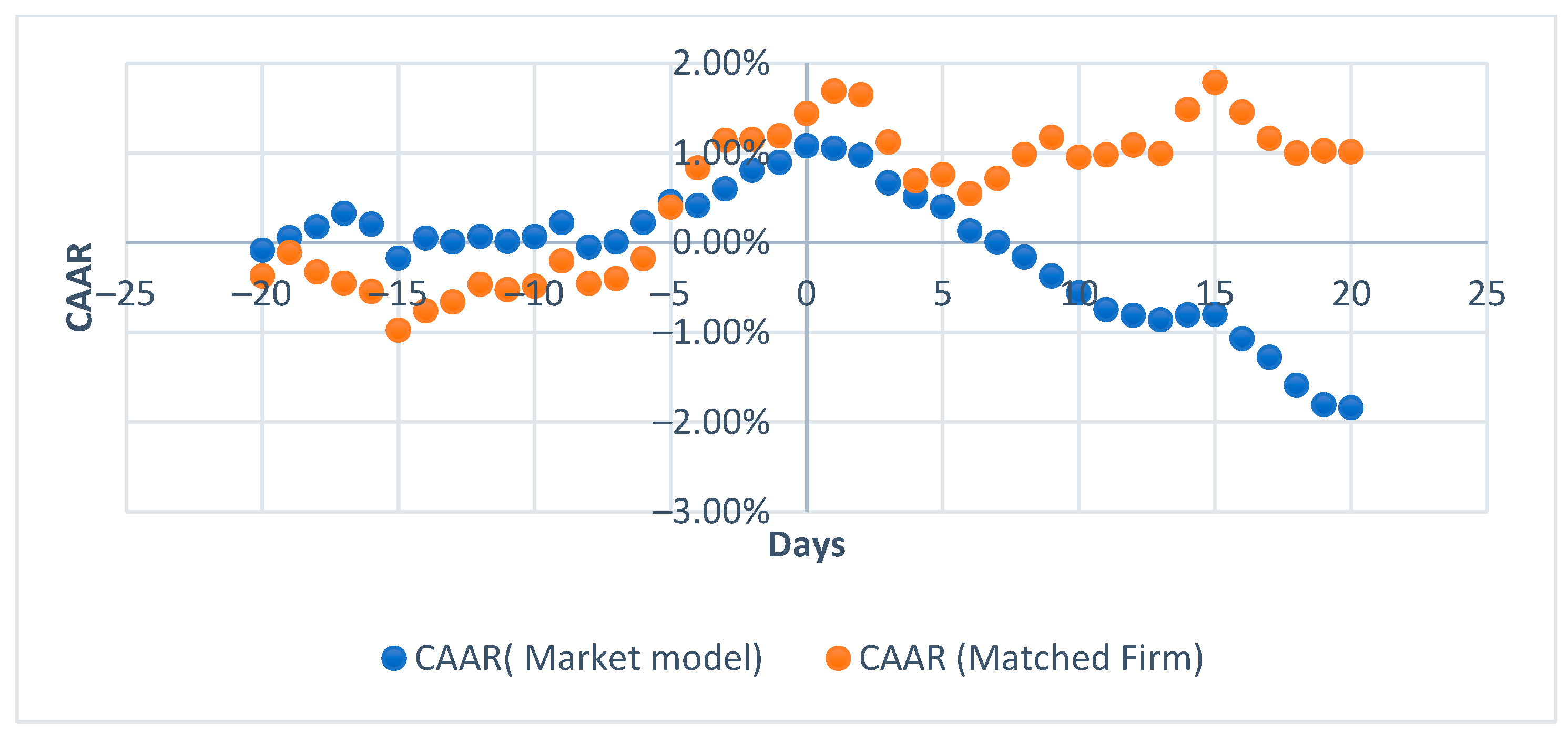
Table 6 reports the CAAR of acquiring firms matched with non-acquiring firms of the different window periods. The significance of the abnormal returns results has been assessed using a parametric cross-sectional t-test and a non-parametric Corrado rank test. The CAAR before the offer for the window period [−20, 5], the event day, the post-announcement return, the window period [5, 20], and window period [−20, 20] is statistically insignificant. The results have also been presented in Figure 2.
Figure 2 shows the CAAR trends for the [−20, 20] window period using both the matched firm and market models. It is evident from both approaches that the acquiring firm’s CAAR shows a similar pattern in the overall window period.

4.5. Robustness Tests

The short-term market performance of acquiring companies has been analyzed by applying different models such as constant mean returns, the market return model, market model (OLS), market model (Scholes & Williams, 1977), and Capital Asset Pricing Model (CAPM).
Table 7 presents the CAAR for various window periods using different alternative models and the corresponding t-statistics. Alternative models are used to estimate abnormal returns, substantiating the results in line with the market models employed earlier during different window periods. The CAAR has been found to be 0.62% for the constant mean return model, 0.95% for the market return model, 0.69% for the market model (OLS), and 0.46% for the market model (Scholes & Williams, 1977) in the pre-announcement window period [−5, −1]. All values were positive and statistically significant. Thus, CAAR is found to be positive and significant in the different models.
On the event day, the CAAR is positive in all models except for the CAPM, where it is slightly negative (−0.20%) and statistically insignificant. The CAAR for the post-announcement window period of [5, 20] in the mean return model was −2.76%, the market-adjusted return model was −1.23%, the market model (OLS) was −2.38%, the market model (Scholes & Williams, 1977) was −2.40%, and for the CAPM, it was −8.60%. Thus, the CAAR was found to be negative in all models in the post-announcement period. The CAAR for the overall window period [−20, 20] in the constant mean return model was −2.83%, the market-adjusted return model was 0.67%, the market model (OLS) was −1.88%, the market model (Scholes & Williams, 1977) was −1.95%, and the CAPM was−17.88%. The results are shown in Figure 3.
Figure 3 shows the trends of CAAR for the [−20, 20] window period using various models: mean return, market-adjusted return, the OLS market model, the Scholes and Williams model, and the CAPM. Figure 3 shows the same pattern of CAAR for the four different models and is highly negative for the CAPM. These findings reinforce the earlier findings on the direction of abnormal returns using different models. Our evidence shows that acquiring firms experience significantly negative abnormal returns around the announcement date when using different models. These findings support the finding that acquiring firm shareholders’ earnings are significantly negative, irrespective of the choice of benchmark.

5. Discussion

This study examines the market reaction to the announcement of Indian mergers by acquiring firms in the selected 449 cases. The short-term stock market performance was investigated using an event study methodology. We find that the acquiring firm generates positive and significant returns in the pre-announcement period. We show that the returns to the acquiring firm tend to be negative in the post-announcement period. We also find that shareholder wealth is eroded by acquiring firms during the announcement period. We also calculated the return to the acquiring firm using the market model and matching-firm approach. Although the matching-firm approach indicates that acquiring firms generate positive returns relative to non-merger peer groups, these returns seem to be insignificant. We used different models to calculate the returns to the acquiring firms to validate the results and found that all models produced similar results. The findings of this study, particularly the patterns of CAAR before and after M&A announcements, are in line with the results of recent studies in various global contexts. For example, Amewu and Alagidede (2018) find initial positive abnormal returns in African capital markets due to speculative trading or expectations of strategic synergies. Additionally, the negative post-announcement CAARs have similar findings by Kopecky et al. (2018) and Teti and Tului (2020b), who point out that, in regulated sectors like utilities, acquiring firm returns can be muted or negative due to complexities and regulatory constraints.
This study’s findings have several important implications. First, the Securities and Exchange Board of India (SEBI) should improve its surveillance mechanism regarding price manipulation and insider trading, particularly before the M&A announcement date. By improving transparency and compliance standards, regulators can prevent speculative trading and information asymmetry, which can influence market participant reactions.
From a corporate governance perspective, encouraging firms to adopt rigorous due diligence and enhanced transparency regarding the strategic rationale for mergers could mitigate negative post-announcement returns and market skepticism. This would involve clear communication about the expected merger benefits. In terms of market stability, policies aimed at preventing speculative volatility, such as temporary trading suspensions following M&A announcements, can allow for more orderly market adjustments.
Additionally, offering incentives for synergistic mergers, particularly in high-impact sectors, such as technology, could promote strategic alignments that benefit industry growth and innovation. Government or industry bodies could establish facilitation programs to aid firms in the post-merger integration process, helping improve synergy realization and long-term outcomes.
Finally, enhancing investor education about typical M&A cycles and potential market reactions could set more realistic expectations, reduce knee-jerk sell-offs, and maintain market stability. These policy measures aim to enhance the strategic execution and market understanding of M&As, ensuring that the intended outcomes of increased organizational efficiency and shareholder value are achieved. The strong pre-announcement results can be attributed to information leakage and insider trading, suggesting an imperfect information environment in the emerging markets. The post-announcement returns and wealth erosion are consistent with both agency and hubris theories, suggesting managerial overconfidence and misalignment between managers and shareholders. Further, the pattern of abnormal returns is inconsistent with the semi-strong market efficiency hypothesis, suggesting partial inefficiencies in the capital markets. These findings also suggest that institutional theory may help explain why M&A outcomes in India vary systematically from those in the developed markets.

6. Managerial Implication

Positive pre-announcement abnormal returns are signs of potential insider trading and information leakage in M&A transactions. Researchers worldwide have documented this pattern (Zhang et al., 2023), specifically in India, due to weak enforcement, a high level of deal-intermediary involvement, and strong informal information networks. Studies have shown that investors revaluate a deal’s true economic value by considering problems with agency-driven motivations, overvaluation, high premiums, integration challenges, and increased financial risk. Consequently, there are negative abnormal returns following announcements (Zhang et al., 2023; Huang et al., 2024).
These results have important implications for both managers and regulators. Pre-announcement gains highlight the need for stronger SEBI surveillance and stricter disclosure laws to curb insider trading and information leakage. This strengthens the case of a stronger governance mechanism that lowers agency and overvaluation risk.
However, the lower returns documented by our study post-announcements point towards issues in emerging markets such as India, where frictions such as heterogeneous investor sophistication, delayed information transmission, and significant information asymmetry still continue to exist. Stronger due diligence, clearer valuation justification, and stricter governance oversight are necessary before approving acquisitions, as evidenced by both pre- and post-announcement effects. When assessing a deal’s long-term strategic value, boards should consider risk-adjusted performance metrics rather than depend only on straightforward market reactions. The existence of a pre-announcement indicates that regulators such as SEBI, stronger surveillance systems, more stringent oversight of questionable trading patterns, and better disclosure standards are necessary to stop information leakage. These findings advise investors not to base their expectations solely on price changes on the day of the announcement because markets in the Indian context often exhibit delayed or partial adjustments. It is advisable to take a more comprehensive look at post-event signals, acquirer fundamentals, and industry conditions.

7. Limitations and Future Scope

Using a comprehensive dataset of Indian listed companies, this study examines the effects of M&A announcements across different periods, including pre-announcement, post-announcement, and around-announcement. Using several models, including market models and CAPM, this study captures their impact. To fully understand how shareholder wealth is impacted, we evaluate the CAAR for various periods using both parametric and non-parametric tests. This study also examines the wealth effects of acquiring firms relative to non-acquiring firms using propensity score matching, which has significant implications.
Future studies could significantly benefit from expanding their geographic scope to include comparative studies between the Indian markets and other emerging or developed economies. This provides insights into global and local trends on the impact of M&As. Additionally, extending the analysis to encompass long-term performance metrics would offer a more holistic view of the sustainability of M&A benefits beyond immediate market reactions. A deeper dive into subsector specifications or the effects of these announcements across different firm sizes within broader industry categories could also yield detailed insights into what drives success or failure in particular economic niches. Incorporating advanced methodologies such as machine learning can allow for more dynamic modeling approaches.
Furthermore, providing new insights into the factors driving abnormal returns in the recent dataset can also be helpful. Moreover, examining behavioral aspects through stakeholder analysis, focusing on reactions from management, employees, and investors pre-announcement can illuminate the broader impacts of M&A activities and inform more effective communication strategies. Finally, integrating macroeconomic factors into the analysis could provide a more comprehensive understanding of how broader economic conditions, such as inflation and currency exchange rates, influence M&A outcomes, offering valuable insights for businesses and policymakers to effectively navigate corporate strategies.

Author Contributions

Conceptualization, D.P.S. and T.K.S.; methodology, D.P.S.; software, T.K.S.; validation, T.K.S., D.P.S. and A.K.M.; formal analysis, D.P.S.; investigation, A.K.M.; resources, A.K.M.; data curation, A.K.M.; writing—original draft preparation, D.P.S.; writing—review and editing, T.K.S.; visualization, A.K.M.; supervision, A.K.M. All authors have read and agreed to the published version of the manuscript.

Funding

This research received no external funding.

Institutional Review Board Statement

Not applicable.

Informed Consent Statement

Not applicable.

Data Availability Statement

Data supporting the findings of this study are available from the corresponding author upon reasonable request.

Acknowledgments

The infrastructure support provided by the FORE School of Management, XIM University, Bhubaneswar, is acknowledged for completing this study. Artificial intelligence (AI) tools, specifically ChatGPT (GPT-5, OpenAI), were used to support the preparation of this manuscript. The tool was assisted by language refinement and improved text clarity. The authors developed all the conceptual ideas, analyses, and interpretations. The authors reviewed and verified all the AI-generated content to ensure its accuracy, originality, and alignment with academic integrity and ethical standards.

Conflicts of Interest

The authors declare no conflicts of interest.

References

  1. Ahmed, R., Chen, Y., Benjasak, C., Gregoriou, A., Nahar Falah Alrwashdeh, N., & Than, E. T. (2023). The performance of bidding companies in merger and acquisition deals: An empirical study of domestic acquisitions in Hong Kong and Mainland China. The Quarterly Review of Economics and Finance, 87, 168–180. [Google Scholar] [CrossRef]
  2. Ahmed, S., Zhang, Y., & Lee, K. (2023). Short-term market reactions to domestic acquisitions in Hong Kong and Mainland China post-financial crisis. Asia-Pacific Journal Finance Studies 52, 5–35. [Google Scholar]
  3. Akben Selcuk, E., & Kiymaz, H. (2015). The impact of diversifying acquisitions on shareholder wealth: Evidence from Turkish acquirers. The International Journal of Business and Finance Research, 9(3), 19–32. [Google Scholar]
  4. Alexandridis, G., Petmezas, D., & Travlos, N. G. (2010). Gains from mergers and acquisitions around the world: New evidence. Financial Management, 39(4), 1671–1695. [Google Scholar] [CrossRef]
  5. Amewu, G., & Alagidede, P. (2018). Do mergers and acquisitions announcements create value for acquirer shareholders in Africa. International Journal of Finance & Economics, 23, 606–627. [Google Scholar] [CrossRef]
  6. Anand, M., & Singh, J. (2008). Impact of merger announcements on shareholders’ wealth: Evidence from Indian private sector banks. Vikalpa, 33(1), 35–54. [Google Scholar] [CrossRef]
  7. Aybar, B., & Ficici, A. (2009). Cross-border acquisitions and firm value: An analysis of emerging-market multinationals. Journal of International Business Studies, 40, 1317–1338. [Google Scholar] [CrossRef]
  8. Barai, P., & Mohanty, P. (2010, October 25). Short term performance of Indian acquirers–effects of mode of payment, industry relatedness and status of target. Industry Relatedness and Status of Target. Available online: https://ssrn.com/abstract=1697564 (accessed on 24 August 2024).
  9. Brown, S. J., & Warner, J. B. (1985). Using daily stock returns: The case of event studies. Journal of Financial Economics, 14(1), 3–31. [Google Scholar] [CrossRef]
  10. Chakraborty, I., & Kattuman, P. (2023). The impact of mergers and acquisitions on performance of firms: A pre- and post-TRIPS analysis of India’s pharmaceutical industry. Asia and the Global Economy, 3, 100059. [Google Scholar] [CrossRef]
  11. Faff, R., Prasadh, S., & Shams, S. (2019). Merger and acquisition research in the Asia-Pacific region: A review of the evidence and future directions. Research in International Business and Finance, 50, 267–278. [Google Scholar] [CrossRef]
  12. Fama, E. F., Fisher, L., Jensen, M. C., & Roll, R. (1969). The adjustment of stock prices to new information. International Economic Review, 10(1), 1–21. [Google Scholar] [CrossRef]
  13. Fuller, K., Netter, J., & Stegemoller, M. (2002). What do returns to acquiring firms tell us? Evidence from firms that make many acquisitions. The Journal of Finance, 57(4), 1763–1793. [Google Scholar] [CrossRef]
  14. Graham, J. R., Lemmon, M. L., & Wolf, J. G. (2002). Does corporate diversification destroy value? The Journal of Finance, 57(2), 695–720. [Google Scholar] [CrossRef]
  15. Hamza, T. (2011). Determinants of short-term value creation for the bidder: Evidence from France. Journal of Management & Governance, 15, 157–186. [Google Scholar]
  16. Huang, X., Yang, H., & Yang, P. (2024). The impact of cross-border mergers and acquisitions on corporate organisational resilience: Insights from dynamic capability theory. Sustainability, 16(6), 2242. [Google Scholar] [CrossRef]
  17. Jain, S., Kashiramka, S., & Jain, P. K. (2020). Do frequent acquirers outperform in cross-border acquisitions? A study of Indian companies. Review of International Business and Strategy, 30, 491–514. [Google Scholar] [CrossRef]
  18. Kiymaz, H., & Baker, H. K. (2008). Short-term performance, industry effects, and motives: Evidence from large M&As. Quarterly Journal of Finance and Accounting, 47(2), 17–44. [Google Scholar]
  19. Kohers, N., & Kohers, T. (2000). The value creation potential of high-tech mergers. Financial Analysts Journal, 56(3), 40–51. [Google Scholar] [CrossRef]
  20. Kopecky, K. J., Li, Z., Sugrue, T. F., & Tucker, A. L. (2018). Revisiting M&A with taxes: An alternative equilibrating process. International Journal of Financial Studies, 6(1), 10. [Google Scholar]
  21. Kumar, R. (2009). Post-merger corporate performance: An Indian perspective. Management Research News, 32(2), 145–157. [Google Scholar] [CrossRef]
  22. MacKinlay, A. C. (1997). Event studies in economics and finance. Journal of Economic Literature, 35(1), 13–39. [Google Scholar]
  23. Moeller, S. B., Schlingemann, F. P., & Stulz, R. M. (2004). Firm size and the gains from acquisitions. Journal of Financial Economics, 73, 201–228. [Google Scholar] [CrossRef]
  24. Prasad, A., & Bakhshi, P. (2025). Shareholders’ wealth dynamics: Study of M&A announcements and target and acquirer financial performance in the Indian corporate landscape. Managerial Finance, 51(10), 1684–1708. [Google Scholar]
  25. Rani, N., Yadav, S. S., & Jain, P. K. (2014). Impact of domestic and cross-border acquisitions on acquirer shareholders’ wealth: Empirical evidence from Indian corporate. International Journal of Business and Management, 9(3), 88. [Google Scholar] [CrossRef]
  26. Rani, N., Yadav, S. S., & Jain, P. K. (2015). Market response to internationalization strategies: Evidence from Indian cross-border acquisitions. IIMB Management Review, 27(2), 80–91. [Google Scholar] [CrossRef]
  27. Rani, P., Shauki, E. R., Darminto, D., & Prijadi, R. (2020). Motives, governance, and long-term performance of mergers and acquisitions in Asia. Cogent Business & Management, 7(1), 1791445. [Google Scholar] [CrossRef]
  28. Scholes, M., & Williams, J. (1977). Estimating betas from nonsynchronous data. Journal of Financial Economics, I(3), 309–327. [Google Scholar] [CrossRef]
  29. Sehgal, S., Banerjee, S., & Deisting. (2012). The impact of M&A announcement and financing strategy on stock returns. Evidence from BRICKS markets. International Journal of Economics and Finance, 4(11), 76. [Google Scholar] [CrossRef]
  30. Singh, S. S. (2018). Profitability of mergers and acquisitions: Evidence from India’s high-tech industries. The Indian Economic Journal, 66, 223–249. [Google Scholar] [CrossRef]
  31. Sudarsanam, S., & Mahate, A. A. (2003). Glamour acquirers, method of payment and post-acquisition performance: The UK evidence. Journal of Business Finance & Accounting, 30(1–2), 299–342. [Google Scholar]
  32. Tang, H., Fang, S., & Jiang, D. (2022a). The market value effect of digital mergers and acquisitions: Evidence from China. Economic Modelling, 116, 106006. [Google Scholar] [CrossRef]
  33. Tang, H., Zhang, C., & Xu, Y. (2022b). The impact of digital mergers and acquisitions on market value in China. Journal Business Research, 139, 1180–1192. [Google Scholar]
  34. Teti, E., & Tului, M. (2020a). Mergers and acquisitions in the infrastructure market: An analysis of the utilities sector. Utilities Policy, 64, 101043. [Google Scholar]
  35. Teti, E., & Tului, S. (2020b). Do mergers and acquisitions create shareholder value in the infrastructure and utility sectors? Analysis of market perceptions. Utilities Policy, 64, 101053. [Google Scholar] [CrossRef]
  36. Walker, M. M. (2000). Corporate takeovers, strategic objectives, and acquiring-firm shareholder wealth. Financial Management, 29, 53–66. [Google Scholar] [CrossRef]
  37. Yang, J. Y., Segara, R., & Feng, J. (2019). Stock price movements and trading behaviors around merger and acquisition announcements: Evidence from the Korean stock market. International Journal of Managerial Finance, 15(4), 593–610. [Google Scholar]
  38. Yuce, A., & Ng, A. (2005). Effects of private and public Canadian mergers. Canadian Journal of Administrative Sciences/Revue Canadienne des Sciences de l’Administration, 22(2), 111–124. [Google Scholar]
  39. Zaremba, A., & Płotnicki, M. (2016). Mergers and acquisitions: Evidence on post-announcement performance from CEE stock markets. Journal of Business Economics and Management, 17(2), 251–266. [Google Scholar] [CrossRef]
  40. Zhang, Y., Zhang, Q., Yu, X., & Ma, Q. (2023). Equity overvaluation, insider trading activity, and M&A premium: Evidence from China. Pacific-Basin Finance Journal, 80, 102047. [Google Scholar] [CrossRef]
  41. Zhu, L., Shen, J., & Yeerken, A. (2024). Impact analysis of mergers and acquisitions on the performance of China’s new energy industries. Energy Economics, 129, 107189. [Google Scholar]
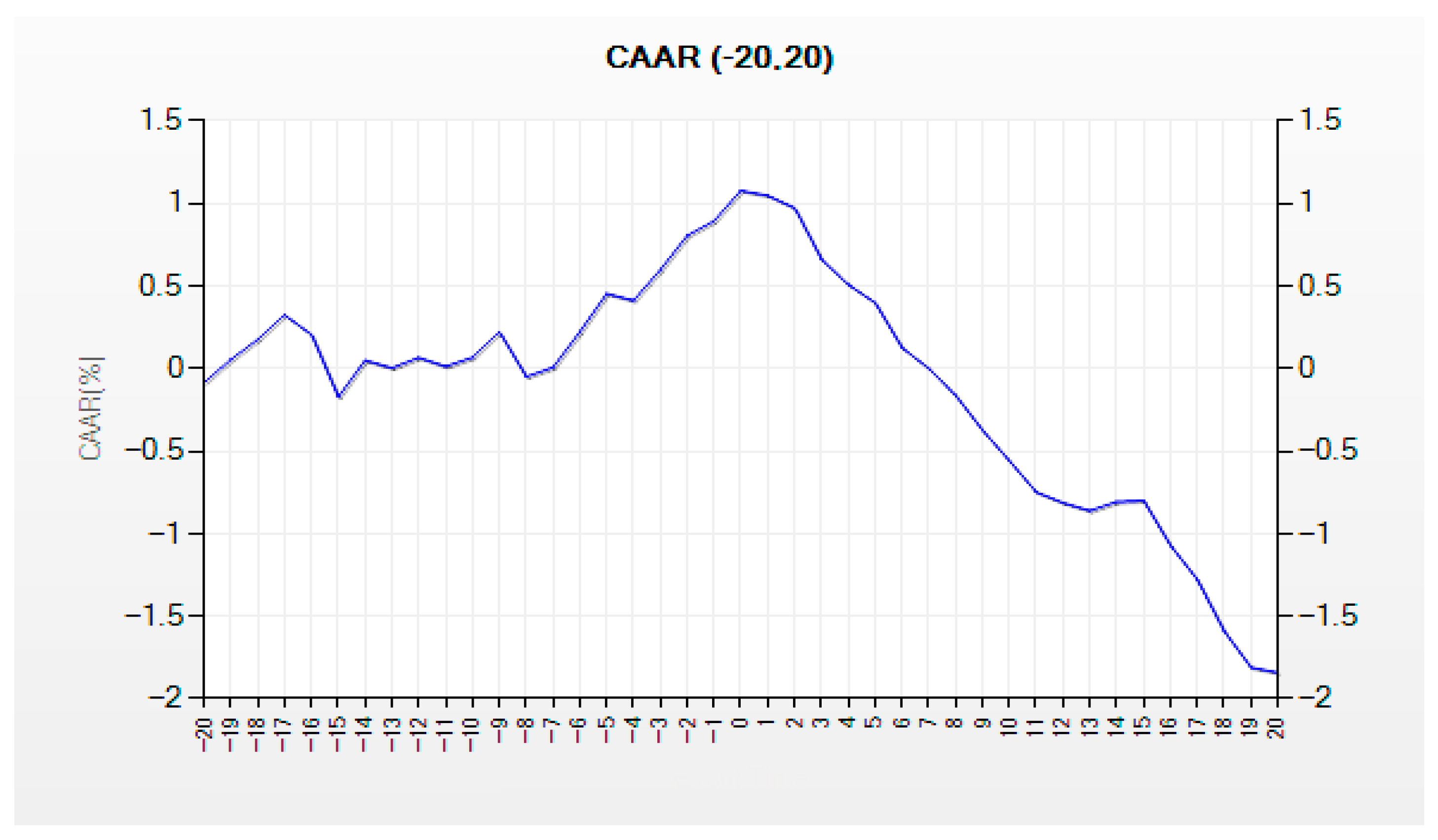
Figure 1. Cumulative Average Abnormal Returns for the acquiring firm by using (market model/matched firm).
Jrfm 18 00718 g001
Figure 2. Cumulative Average Abnormal Returns for the acquiring firm by using (market model/matched firm).
Jrfm 18 00718 g002
Figure 3. Note: CAAR is computed over the [−20, 20] event window using five models: mean return (MR), market-adjusted model (MAM), market model (MM, OLS), market model Scholes/Williams (MM Williams), and the Capital Asset Pricing Model (CAPM). Day 0 marks M&A announcement.
Jrfm 18 00718 g003
Table 1. Industry-Wise distribution of sample firms.
Industry-Wise
Distribution of Firms
Number of FirmsNumber of Firms
(In %)
Manufacturing Sector
I.
Food and Agro-Based Products
306.68
II.
Textiles
276.01
III.
Chemicals and Chemical Products
9120.27
IV.
Consumer Goods
214.68
V.
Construction Material
276.01
VI.
Metals and Metal Products
378.24
VII.
Machinery
368.02
VIII.
Transport Equipment
255.57
IX.
Misc. Manufacturing
92.00
X.
Diversified
173.78
Service Sector
XI.
Hotels and Tourism
112.45
XII.
Wholesale and Retail
245.35
XIII.
Transport Services
51.11
XIV.
Communication Services
71.56
XV.
Information Technology
449.80
XVI.
Misc. Service
276.01
XVII.
Banking
112.45
Total449100
Table 2. Parametric and non-parametric significance tests for market model.
Window
Period
CAAR
(%)
Time-Series
t-Test
Cross-Sectional
t-Test
Patell
Z
Boehmer
Z
Corrado
Rank
Sign
Test
[−1, 0]0.27%1.2091.067−2.742 *−0.7101.884 *1.385
[−2, 0]0.48%1.741 **1.448−2.786 *−0.6721.827 *0.912
[−5, 0]0.86%2.195 *1.972 *−1.254 *−0.4892.331 **2.613 *
[−10, 0]1.06%2.018 *1.767 **−0.995 ***−0.6892.158 *1.479
[−15, 0]0.87%1.3711.199−6.696 ***−0.7842.277 **3.086 **
[−20, 0]1.08%1.4801.288−6.821 ***−0.7932.047 **3.181 **
[0, 0] 0.19%1.2051.042−2.146 *−0.6501.742 *1.194
This table reports the Cumulative Average Abnormal Returns (CAARs) computed using the market model over alternative event windows around the acquisition announcement date (day 0). Parametric tests include the time-series t-test (based on the time-series variance of abnormal returns) and cross-sectional t-test (based on the dispersion of abnormal returns across firms). Non-parametric tests include the Patell z-statistic and the Boehmer et al. z-statistic, which adjust for heteroskedasticity and event-induced variance, and the Corrado rank test and the sign test, which are robust to non-normality of returns. Significance levels: * p < 0.10, ** p < 0.05, and *** p < 0.01 (two-tailed tests).
Table 3. CAAR (Cumulative Average Abnormal Return) of post-announcement period of acquiring firm: full sample (N = 449); OLS market model.
Window PeriodCAAR (%)Time-Series tCross-Sectional tPatell zBoehmer zCorrado RankSign Test
[0, 0] 0.1901.2051.043−2.146 *−0.6501.742 *1.194
[0, 1] 0.1500.6800.569−4.831 ***−0.8561.853 *0.438
[0, 2] 0.0700.2400.195−6.650 ***−1.0050.9000.154
[0, 5] −0.470−1.197−0.978−9.143 ***−1.154−1.094−0.979
[0, 10] −1.460−2.770 *−2.282 *−16.835 ***−1.180−2.165 **−2.208 **
[0, 15] −1.700−2.679 *−2.247 **−10.747 ***−1.231−1.820 *−1.168
[0, 20] −2.750−0.871 *−1.152 **−16.832 ***−1.243−2.594 *−2.398 **
Significance levels: * p < 0.10, ** p < 0.05, and *** p < 0.01 (two-tailed tests).
Table 4. CAAR (Cumulative Average Abnormal Return) of around-announcement period of acquiring firm: full sample (N = 449); OLS market model.
Event WindowCAAR (%)Time-Series tCross-Sectional tPatell zBoehmer zCorrado RankSign Test
[0, 0] 0.1901.2061.043−2.146 **−0.6501.742 *1.194
[−1, 1]0.2200.8160.700−5.008 ***−0.8561.924 *0.438
[−2, 2]0.3400.9570.775−6.416 ***−0.9211.2111.478
[−5, 5]0.2200.4140.357−6.987 ***−0.9560.362−0.035
[−10, 10]−0.580−0.795−0.643−12.180 ***−1.016−0.4240.533
[−15, 15]−1.020−1.149−0.920−12.150 ***−1.011−0.0170.060
[−20, 20]−1.880−1.849 *−1.423−14.320 ***−1.045−0.7370.154
Notes: CAAR is calculated using the OLS market model. Symmetric windows capture both pre- and post-announcement effects. *, **, and *** indicate significance at the 10%, 5%, and 1% levels, respectively (two-tailed tests).
Table 5. CAARS by different event window period of acquiring firm: full sample (N = 449); OLS market model.
Event PhaseWindowCAAR (%)Time-Series tCross-Sectional tPatell zBoehmer zCorrado RankSign Test
Market Anticipation 1[−20, −5]0.4200.6560.570−5.969 ***−0.8351.1861.194
Market Anticipation 2[−5, −1]0.6901.927 *1.788 *−0.348−0.3591.737 *2.045 **
Event Day Reaction [0, 0] 0.1901.2061.043−2.147 **−0.6501.742 *1.194
Centered Reaction[−15, 10]−0.770−0.956−0.756−13.675 ***−0.9960.0020.438
Post-Announcement 1 [2, 10] −1.610−3.384 **−2.939 **−12.740 ***−1.275−3.268 **−2.870 **
Post-Announcement 2 [5, 20] −2.380−0.846 ***−3.394 **−10.621 ***−1.309−2.441 **−1.925 **
Total Abnormal Return[−20, 20]−1.880−1.850 *−1.423−14.323 ***−1.046−0.7370.154
Notes: This table organizes the CAAR results by distinct event phases to illustrate the lifecycle of abnormal returns: initial market anticipation, announcement day reaction, and post-announcement correction. The Patell z-statistics remain highly significant (p < 0.01) across most phases, providing robust evidence of systematic abnormal return patterns. *, **, and *** indicate significance at the 10%, 5%, and 1% levels, respectively (two-tailed tests).
Table 6. CAARs by matched sample of acquiring firm: full sample (N = 449).
Event PhaseWindowCAAR (%)t-Test Cross-SectionalCorrado Rank
Market Anticipation[−20, −5]0.400.4570.059
Market Anticipation[−5, −1]1.372.501 **3.024 ***
Event Day Market Reaction [0, 0] 0.250.9841.103
Market Reaction Centered on the Day[−15, 10]1.481.3190.839
Post-Announcement Market Return [2, 10] −0.74−1.017−1.396
Post-Announcement Market Return [5, 20] 0.320.361−0.158
Total Abnormal Return[−20, 20]1.010.7020.008
Notes: CAARs are computed for the matched sample of acquiring firms using matched firm benchmarking (peer firms are matched by industry, size, and profitability). The cross-sectional t-test evaluates whether CAAR differs from zero across firms; the Corrado rank test provides a non-parametric assessment that is robust to non-normal return distributions. ** and *** indicate significance at the 5% and 1% levels, respectively (two-tailed tests).
Table 7. CAAR by event window: full sample of acquiring firm (N = 449) and estimation of CAAR by using various models.
Event WindowConstant Mean Return Brown and Warner (1985)Market Adjusted Return MacKinlay (1997)Market Model (OLS)Market Model (Scholes/Williams)CAPM
CAARt-StatisticsCAARt-StatisticsCAARt-StatisticsCAARt-StatisticsCAARt-Statistics
[−20, −5]−0.170−0.2051.2201.855 **0.4200.5700.7200.939−5.830−5.524 *
[−5, −1]0.6201.4750.9502.584 *0.6901.788 **0.4601.107−1.270−2.708 *
[0, 0] 0.1300.6350.3301.783 **0.1901.0430.2001.076−0.200−1.065
[−10, 10]−0.970−0.9600.7901.072−0.580−0.644−1.010−1.098−8.790−6.731 *
[2, 10] −1.730−2.899 *−0.990−2.033 *−1.610−2.939 *−1.670−3.034−5.140−7.809 *
[5, 20] −2.760−3.526 *−1.230−2.112 *−2.380−3.394 *−2.400−3.454−8.600−8.730 *
[−20, 20]−2.830−1.905 *0.6700.671−1.880−1.423−1.950−1.551−17.880−7.711 *
Note: * p < 0.10; ** p < 0.05These results reinforce previous findings that the shareholder wealth effect is positive in the pre-announcement period. However, in the case of the CAPM, the CAAR has been negative in the pre-announcement window period [−5, −1] (−1.27%), and the results are statistically significant.
Disclaimer/Publisher’s Note: The statements, opinions and data contained in all publications are solely those of the individual author(s) and contributor(s) and not of MDPI and/or the editor(s). MDPI and/or the editor(s) disclaim responsibility for any injury to people or property resulting from any ideas, methods, instructions or products referred to in the content.