Article

A Time Series Analysis of Judicial Foreclosures in Spain

by
Rafael González-Val
1,2
1
Facultad de Economía y Empresa (Campus Paraíso), Universidad de Zaragoza, c/ Gran Vía 2, 50005 Zaragoza, Spain
2
Institut d’Economia de Barcelona (IEB), Facultat d’Economia i Empresa, Universitat de Barcelona, c/ John M. Keynes, 1-11, 08034 Barcelona, Spain
J. Risk Financ. Manag. 2022, 15(10), 472; https://doi.org/10.3390/jrfm15100472
Submission received: 16 September 2022 / Revised: 8 October 2022 / Accepted: 12 October 2022 / Published: 18 October 2022
(This article belongs to the Special Issue Shocks, Public Policies and Housing Markets)

Abstract

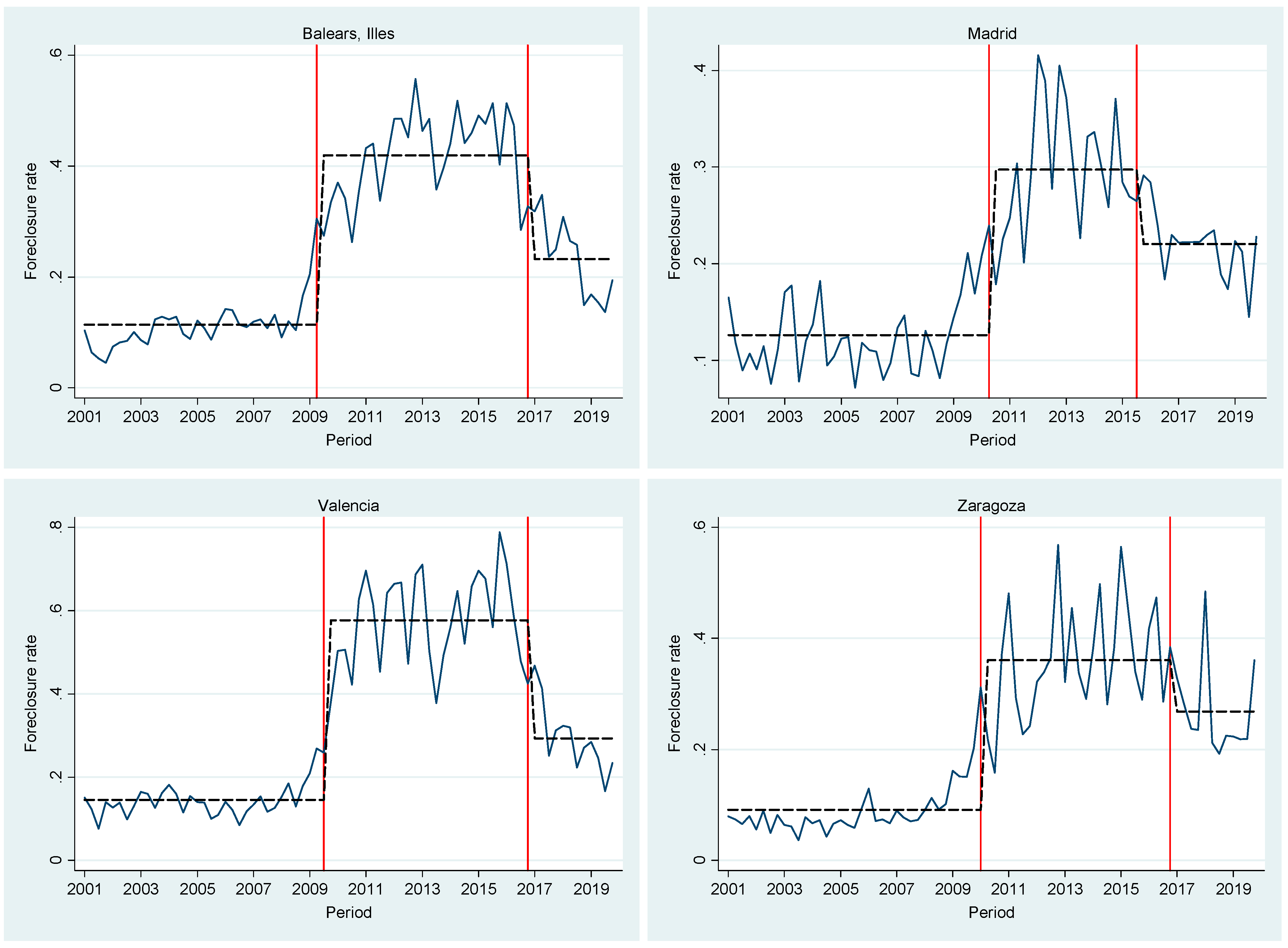
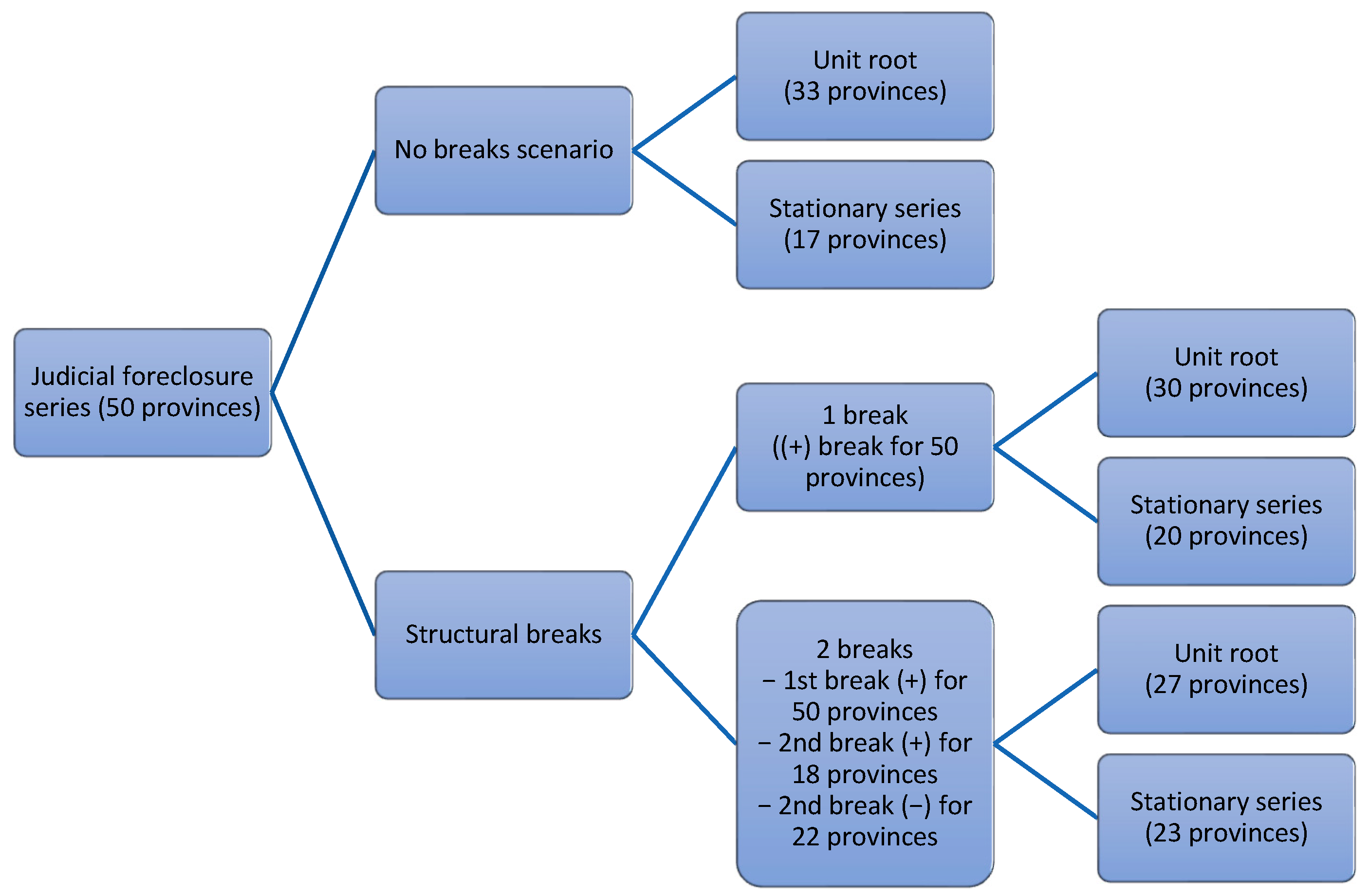
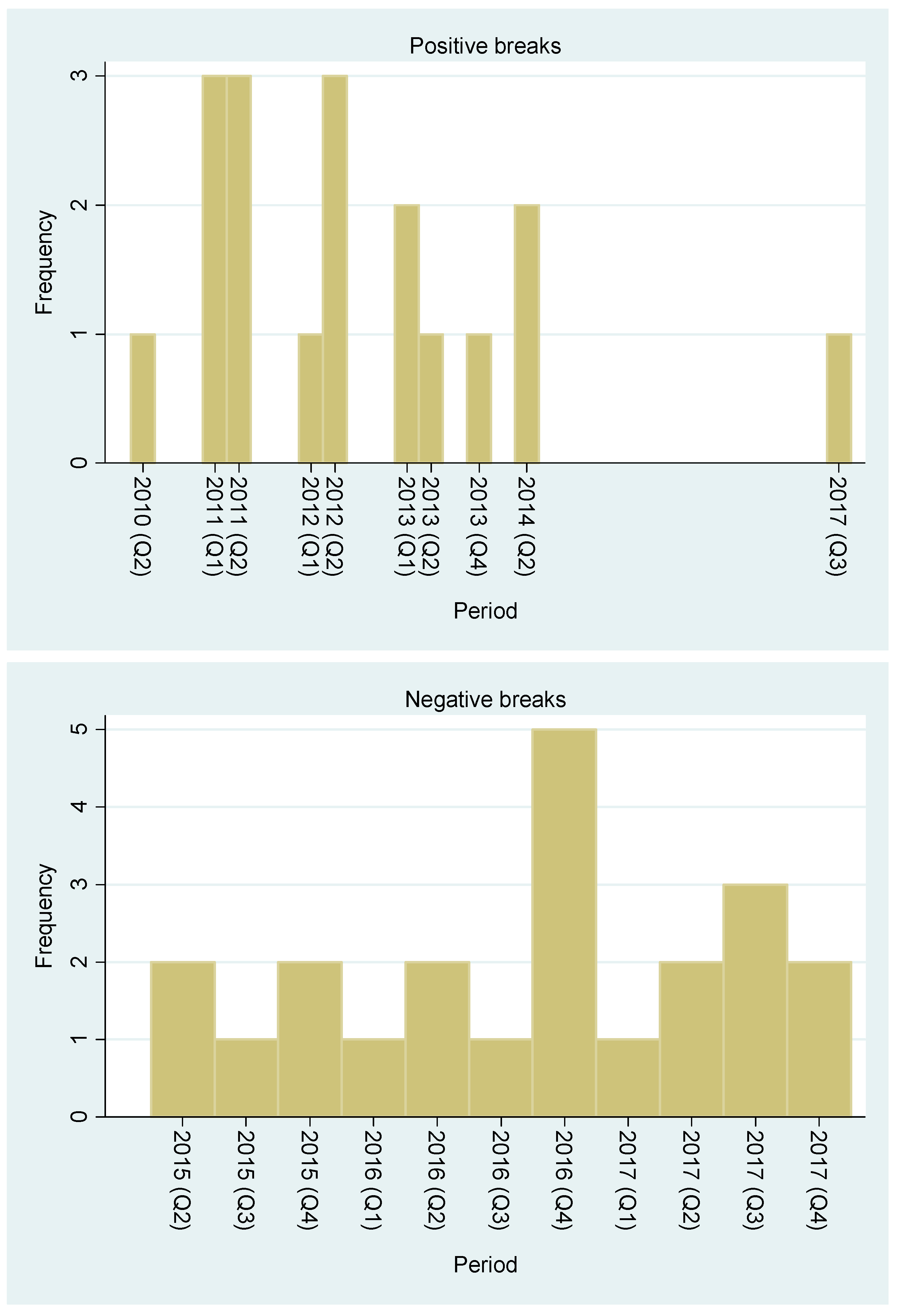
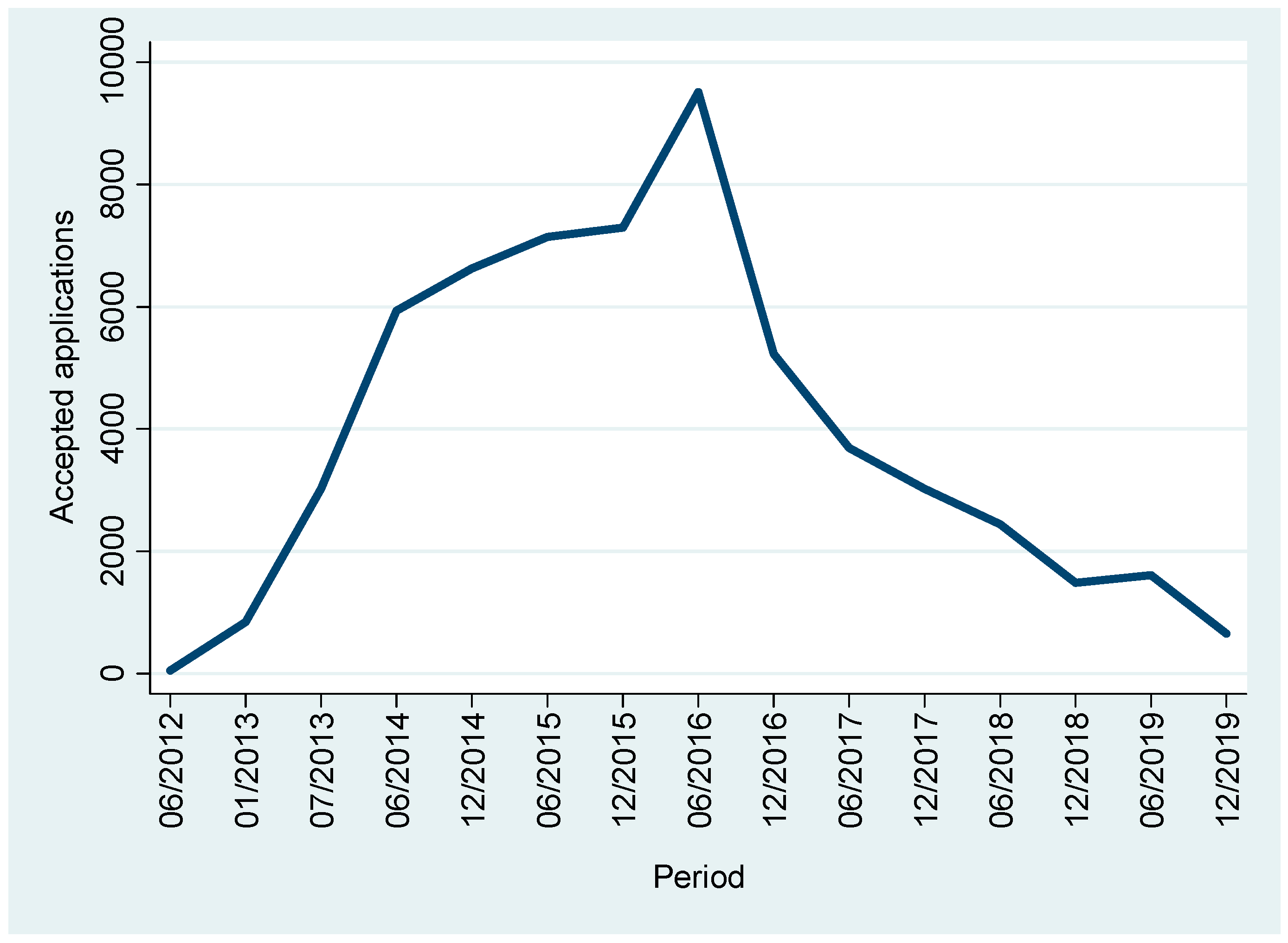
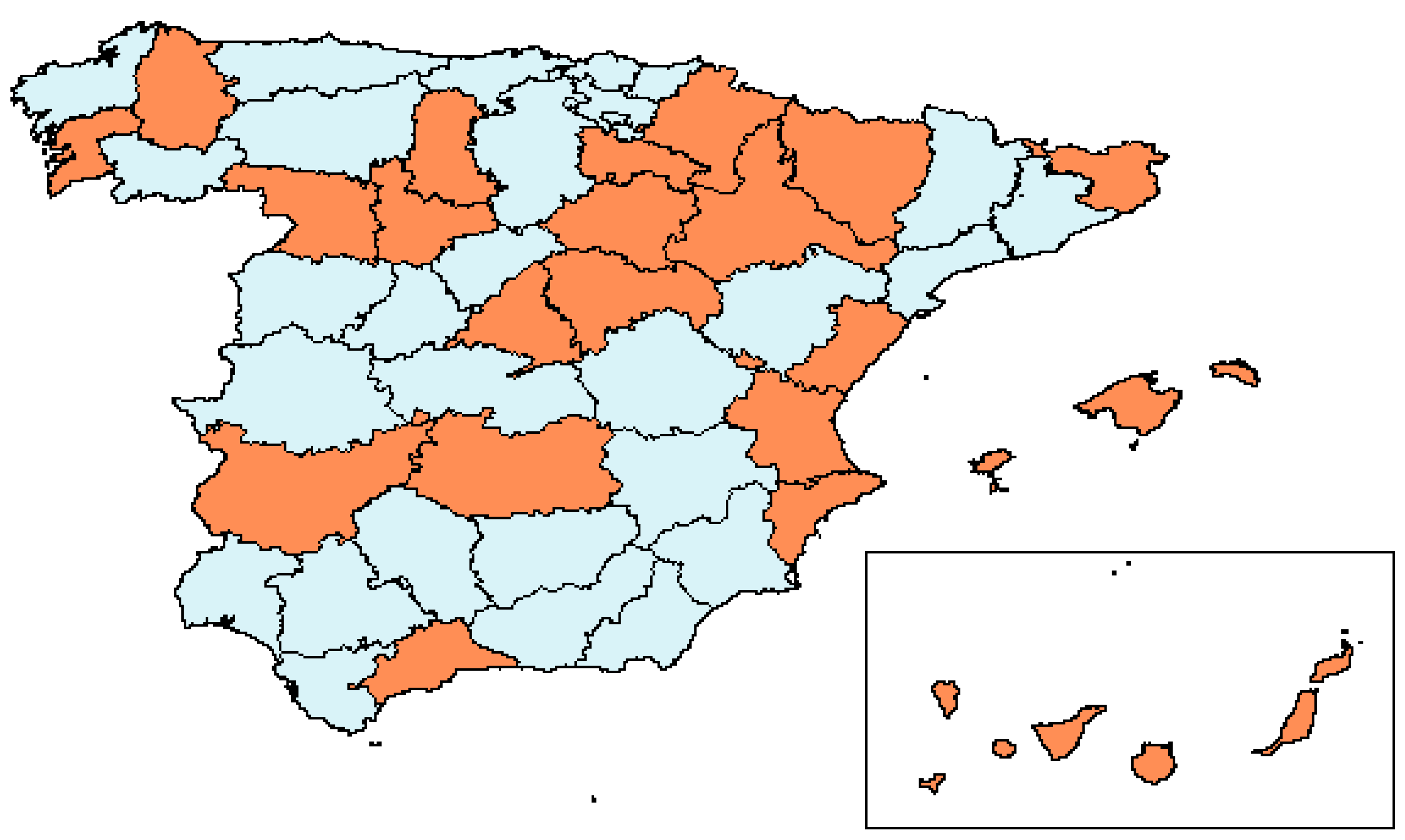
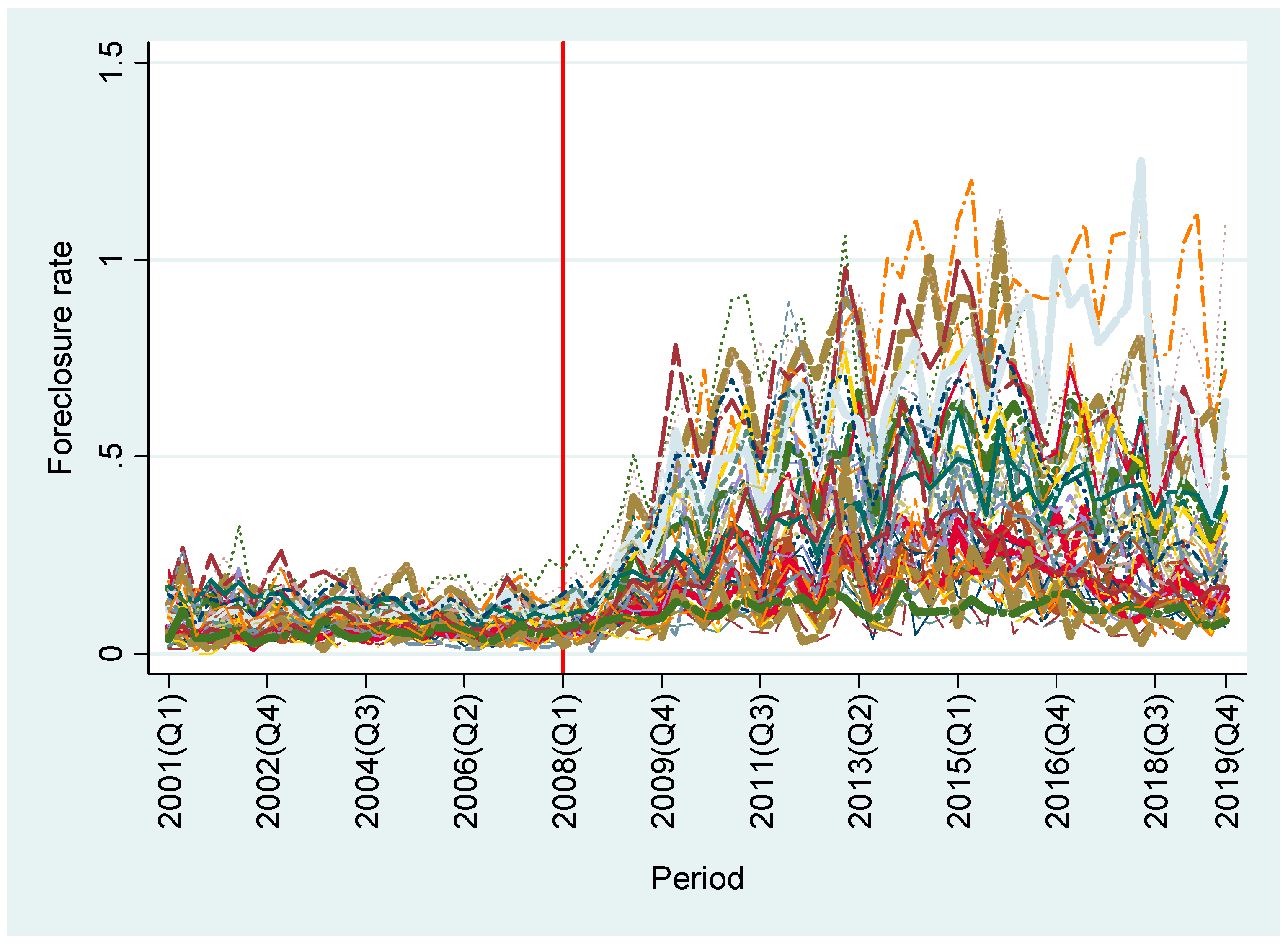
There was an unprecedented wave of foreclosures and evictions in Spain after the 2008 global financial crisis. The subsequent Great Recession had strong economic, social and environmental consequences. This paper explores the frequency of permanent shocks in foreclosure quarterly rates (defined as the number of judicial foreclosures per 1000 inhabitants) for 50 Spanish provinces (NUTS 3 regions) during the period from 2001 (Q1) to 2019 (Q4) using time series analysis. We examine whether the foreclosure rate is a stationary series, exhibits a unit root or is stationary around a process subject to structural breaks. A clear finding from this analysis is that not all shocks have transitory effects on the foreclosure rate. The percentage of unit root rejections is around 40%, thus, providing the evidence of both stationarity around occasional shocks that have permanent effects, and of a unit root, where all shocks have a permanent effect on the foreclosure rate. We also test for unit roots allowing for the presence of one and two structural breaks. Most of the structural breaks are positive, and the majority are grouped from 2008 onwards, coinciding with the financial crisis and the subsequent collapse of the Spanish housing bubble. We also find a later decrease in foreclosures in some regions that can be related to the effectiveness of the Code of Good Practice for banks and financial institutions approved in 2012. Nevertheless, the level of the foreclosure rate time series has not returned to the pre-2008 level in any case.
Keywords: judicial foreclosures; law reform; unit root; structural break judicial foreclosures; law reform; unit root; structural break