Article

An Innovative Dietary Ingredient Complex with Salidroside and L-Malic Acid Improves Markers of Perceived Stress and Anxiety in Adults: A Randomized Double-Blind Placebo-Controlled Clinical Study

1
NutriScience Innovations, LLC, Milford, CT 06460, USA
2
Conley Labs, LLC, Biddeford, ME 04005, USA
*
Author to whom correspondence should be addressed.
These authors contributed equally to this work.
Nutraceuticals 2026, 6(3), 43; https://doi.org/10.3390/nutraceuticals6030043
Submission received: 20 April 2026 / Revised: 15 June 2026 / Accepted: 22 June 2026 / Published: 26 June 2026

Abstract

Adaptogens are substances touted for their ability to promote resilience to stress. With more individuals reporting a greater degree of perceived stress, renewed attention has been focused on novel adaptogen complexes for stress reduction. Salidroside is a potent adaptogen found in the Rhodiola root, traditionally credited with increasing resistance to physical and mental stressors, while recent science has uncovered the neuroprotective effects of L-malic acid. The main objective of this study was to determine if daily supplementation of a novel salidroside and L-malic acid complex, across two dosing levels, could improve markers of perceived stress and its downstream effects, including anxiety and sleep disturbance. A 6-week randomized, double-blind, placebo-controlled, clinical study was conducted on individuals who subjectively reported a 30% room for improvement in perceived stress. Post hoc subgroup analysis was also conducted to determine if subpopulations experienced any enhanced benefits. Clinically meaningful improvements were reported in perceived stress and anxiety across the study population. Furthermore, men and non-premenopausal women saw enhanced benefits in emotional appraisal and sleep, suggesting hormonal interactions may be an underlying factor. SalidroPRO™ is a new dietary ingredient complex that may support rapid and sustained psychological well-being.

1. Introduction

Medicinal plants contain diverse secondary metabolites (e.g., polyphenols, flavonoids, phenolic acids) that possess biologically active properties, such as antioxidant and anti-inflammatory effects. Importantly, several of these phytochemicals may also be classified as adaptogens, a class of compounds defined by their ability to normalize physiological functions while enhancing resistance to physical and psychological stressors [1]. Adaptogens have a longstanding history of traditional use across cultures and have been incorporated into various food and medicinal preparations for their purported ability to support metabolic homeostasis, including the regulation of glucose metabolism, nitric oxide levels, and lactate levels [2].
In recent years, the application of plant-derived adaptogens has increasingly focused on compounds that may alleviate stress, including perceived stress associated with mental burden. Perceived stress is an individual’s subjective evaluation of ongoing stressful situations in their own life. While healthy individuals experience varying degrees of stress due to general life events, persistent stress may predispose individuals to fatigue, anxiety, depressive symptoms, sleep disturbances, and the development of other non-communicable diseases [3,4,5,6]. Accordingly, growing scientific interest has centered on identifying novel, evidence-based strategies to mitigate stress and improve psychological well-being [7]. Parallel to this trend, consumers want safe and effective dietary supplements that support resilience to everyday stressors [8]. Importantly, stress responses vary considerably among individuals due to environmental exposures, genetic predisposition, and lifestyle factors [9,10,11]. Nonetheless, dietary supplementation with adaptogenic compounds may offer a practical approach to supporting stress adaptation, response, and overall mental well-being.
Rhodiola is a perennial plant found in alpine regions that is rich in the bioactive glycoside salidroside, which is metabolized into p-tyrosol in the body [12]. Salidroside has a storied use in increasing resistance to physical, mental, and oxidative stress. Compared to other bioactive components found in the plant’s root, such as rosavin, salidroside offers higher bioavailability [13,14,15]. However, sustainability and conservation concerns surrounding wild-harvested Rhodiola species have highlighted the need for alternative, scalable production methods for salidroside, including precision fermentation [16,17].
Previous animal and human models have characterized salidroside’s ability to help regulate stress responses, improve mood, and exert mild anxiolytic or fatigue-reducing effects [18,19,20].
Mechanistically, these effects are thought to be mediated in part through modulation of the hypothalamus–pituitary–adrenal (HPA) axis and associated neuroendocrine signaling pathways. Stress activates the autonomic nervous system, which is responsible for the body’s “fight-or-flight” response through the HPA axis. When activated, a signaling cascade releases the hormone cortisol from the adrenal glands [21]. Cortisol receptors are widely distributed throughout the body and play an integral role in supporting the circadian rhythm and metabolism [22]. However, chronic stress may result in dysregulation of the HPA axis, leading to sustained elevation of cortisol that is associated with fatigue, anxiety, and impaired sleep [23,24]. Salidroside may help normalize HPA activity through multiple mechanisms, including regulating cortisol secretion, balancing neurotransmitters, and promoting neural plasticity, making it a multi-faceted and desirable adaptogen.
L-malic acid is another dietary compound found predominantly in fruits that plays a critical role in cellular energy production as an intermediate in the tricarboxylic acid (TCA) cycle [25]. In addition to its role in energy metabolism, emerging evidence suggests that L-malic acid may exert neuroactive and antioxidant effects [26]. Furthermore, L-malic acid has demonstrated its ability to enhance paracellular absorption of certain compounds through opening tight junctions in the digestive tract [27]. Based on the properties of salidroside and L-malic acid discussed above, it is hypothesized that complexing these two compounds may enhance bioavailability and facilitate synergistic effects on stress-related pathways [28].
SalidroPRO™ (NutriScience Innovations, LLC, Milford, CT, USA) is a novel patent-pending complex of salidroside produced by precision fermentation, and L-malic acid. This complex allows the final product to be produced at scale while circumventing environmental concerns surrounding the sustainability of the rhodiola plant.
In the present double-blind, randomized, placebo-controlled clinical study, participants with a desire to decrease their subjective perceived stress by at least 30% were enrolled and randomized into three arms: placebo, low-dose (10 mg salidroside + 40 mg L-malic acid), or high dose (20 mg salidroside + 30 mg L-malic acid). The main objective of the study was to determine if daily supplementation of SalidroPRO for six weeks could improve markers of perceived stress and its related symptoms, including anxiety and sleep disturbance.

2. Materials and Methods

2.1. Clinical Study Overview

This randomized, double-blind, placebo-controlled clinical study was conducted by Radicle Science Inc., Del Mar, CA, USA [29]. The study complied with the International Conference on Harmonization (ICH) Guideline for Good Clinical Practice (E6) and the U.S. Code of Federal Regulations for the Protection of Human Subjects (45 CFR Part 46), including all requirements for informed consent. All participants provided electronic informed consent through a secure web portal, confirming their understanding of study procedures, potential risks, and participant rights. They were given the opportunity to ask questions, obtain a copy of the consent form, and withdraw from the study at any time without penalty. The following manuscript was written in accordance with the Consolidated Standards of Reporting Trials (Table S1).
The primary objective of this study was to evaluate the efficacy of SalidroPRO on self-reported perceived stress outcomes using validated electronic questionnaires. Secondary objectives were to assess the effects of the intervention on anxiety, mood, cognitive function, and sleep quality. A total of 896 adults aged 21 and older that resided in the United States with a desire to improve their perceived stress levels were recruited in this fully virtual, direct-to-consumer study. Participants were stratified by assigned sex at birth and baseline self-reported stress scores, blinded, and randomly assigned to the high-dose, low-dose, or placebo group. They were provided with alphanumerically blinded study products to consume once daily in the morning on an empty stomach for 6 weeks. Participant reported assessment data were collected through electronically administered, validated questionnaires on a weekly basis.
This study was approved by the Sterling Institutional Review Board (IRB #13709-SHewlings). The study protocol is registered at clinicaltrials.gov under study number NCT06999629 and was conducted from June 2025 to October 2025.

2.2. Recruitment and Compliance

The study was fully conducted online with no in-person recruitment or visits. Participants were recruited virtually through various digital channels (Facebook, website advertisement campaigns, social media sites, etc.).
Due to the remote design of the study, many lifestyle factors such as dietary intake and physical activity were not controlled for. The self-directed nature of the study introduced additional variability in compliance. Despite these limitations, through this entirely digital approach, this study aimed to mimic real-world conditions, and measures were put in place to maintain validity of the study. For example, participants were required to complete all health-related items within each questionnaire, and automated reminders were issued if responses were skipped. Questionnaires that remained incomplete after 24 h of initial deployment were excluded from analysis.
Additionally, to support adherence monitoring, participants provided weekly self-reported data on product use, including days of consumption and capsule counts. Participants were free to withdraw from the study at any time. Although the study protocol granted the investigator the authority to discontinue participation for medical or compliance related concerns, no participants were removed for these reasons.

2.3. Inclusion and Exclusion Criteria

Inclusion criteria consisted of U.S. adults aged 21 years and older who expressed an interest in improving their mood state relating to perceived stress by at least 30%. Exclusion criteria included:
  • Individuals currently taking supplements with salidroside;
  • Women who were nursing, pregnant, or trying to become pregnant;
  • Heavy drinkers (defined as having more than three or more alcoholic drinks per day);
  • Individuals with current or recent major illnesses or surgery;
  • Diagnosed with cardiac dysfunction or liver/kidney disease;
  • Individuals currently involved in other clinical trials.

2.4. Materials

NutriScience Innovations provided high-dose, low-dose, and placebo products. The high-dose and low-dose products contained SalidroPRO, a complex of salidroside and L-malic acid. Participants in the high-dose group received a daily dose of 50 mg of SalidroPRO, consisting of 20 mg of salidroside and 30 mg of L-malic acid. The low dose consisted of 10 mg of salidroside and 40 mg of L-malic acid. The placebo consisted primarily of maltodextrin due to its physiologically inert nature. All doses were made to look, feel, and taste identical by encapsulating in an identical hydroxy propyl methyl cellulose capsule, using inactive binders and colorants as needed, and were tested for salidroside content, moisture, heavy metals, residual solvents, pesticides, and microbial activity prior to use. Each participant was shipped a bottle of their randomly assigned dose containing 45 capsules, sufficient to complete the 6-week study with a daily capsule dose.
The inclusion/exclusion criteria list was designed to obtain a representative population of the U.S. that could safely use and benefit from the product. A full, comprehensive list of inclusion/exclusion criteria can be found at clinicaltrials.gov study number RADX-P-2408_VNS.

2.5. Questionnaires

Participants were enrolled after completing an inclusion and exclusion criteria questionnaire. Upon enrollment, each participant signed the informed consent and provided demographic, dietary, and health-related information, including assessment of alcohol and cannabinoids use. The information provided at enrollment was used to filter the study population for further post hoc subgroup analysis. To assess improvement throughout the study, validated participants reported health assessments were administered at baseline, weekly throughout the study, and at the study’s conclusion. The validated questionnaires included in this analysis are outlined in (Table 1) [30,31].

2.6. Statistical Analysis

Statistical analysis was performed on the raw data provided to the authors by Radicle Sciences. First, the statistical analysis for this study included all participants who met the modified intent-to-treat (ITT) criteria, which was defined as completing the baseline assessment and at least one weekly survey allowing the trajectory of change to be calculated. ITT is considered more reflective of real-world consumer conditions. The Last Observation Carried Forward (LOCF) methodology was used to address missing data resulting from participant attrition [32]. The method is important in studies where participant stress is monitored due to supplement-related effects being more gradual.
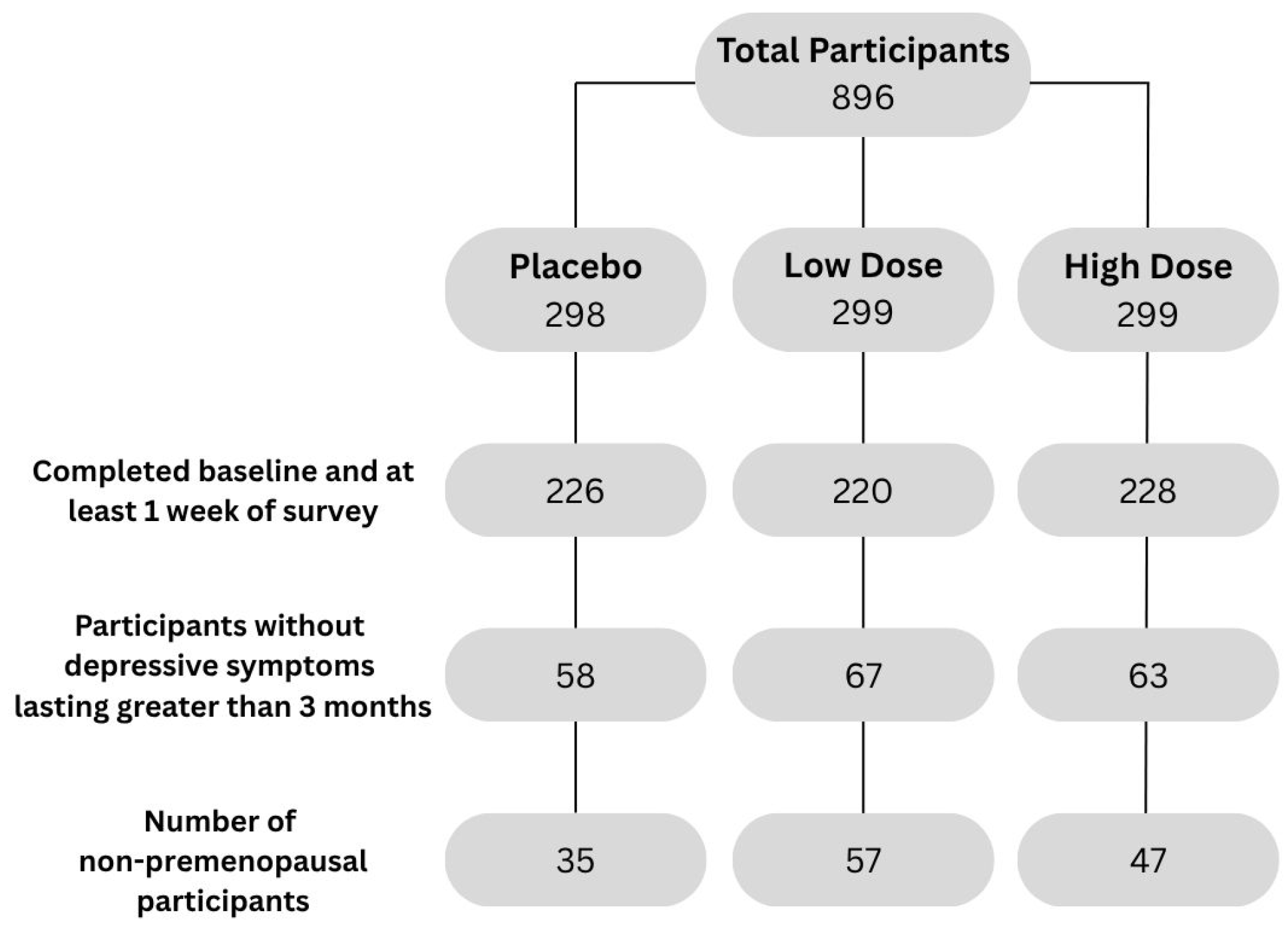
Upstream screening excluded participants who responded “yes” to experiencing low mood or depressive symptoms for more than three months. Persistent depressive disorder is characterized by chronic depressive symptoms that may fluctuate over time but typically do not remit for more than one to two months [33]. There was a significant reduction in participant count for all three arms due to this constraint (Figure 1). It was not possible to remove these participants prior to the start of the study as the IRB-approved protocol was pre-established. Cannabinoid use was determined from the questionnaires; however, reported use was minimal and did not impact the results.
Minimal Clinically Important Difference (MCID) analysis determines the smallest change in a treatment outcome that patients perceive as beneficial. In this study, MCID analysis was used to evaluate the practical likelihood of participants experiencing meaningful improvements in the condition of interest over a fixed period. Specifically, a participant’s weekly survey score is an MCID if the change from their baseline score is greater than or equal to 0.5 standard deviations of the overall measure distribution.
To isolate the effect of the study arm, participant-level results were fitted to a Poisson general linear model to predict the Boolean MCID variable and to control for the covariates sex, age, and body mass index. The risk ratio and confidence interval (C.I.), representing the relative likelihood of an MCID for the study product versus placebo arm, were derived from the learned parameters of this model. A risk ratio greater than 1.0 implies a higher likelihood of improvement for participants who received either low dose or high dose.
The software for data processing and post hoc study analysis was written on Python 3.12.0. The analysis and statistical modeling leveraged a variety of third-party data libraries including NumPy 1.26.0 (numerical operations), Pandas 2.2.3 (data manipulation), SciPy 1.14.0 (significance testing), Statsmodels 0.14.6 (modeling), and Bokeh 3.6.3 (visualizations and charts).

3. Results

3.1. Study Demographics

A total of 674 participants were included in the ITT/LOCF protocol with 226, 220, and 228 participants in placebo, low-dose, and high-dose groups, respectively (Table 2). This study population comprised approximately 65% females and 35% males, with a mean age of 44 years. Participants were recruited from 48 of the 50 U.S. states, supporting geographic diversity. Approximately 30% of participants did not self-report experiencing prolonged mood or depression lasting for greater than three months, and were removed from further statistical analysis, resulting in 58, 67, and 63 participants in the placebo, low-dose, and high-dose groups, respectively.

3.2. Study Compliance

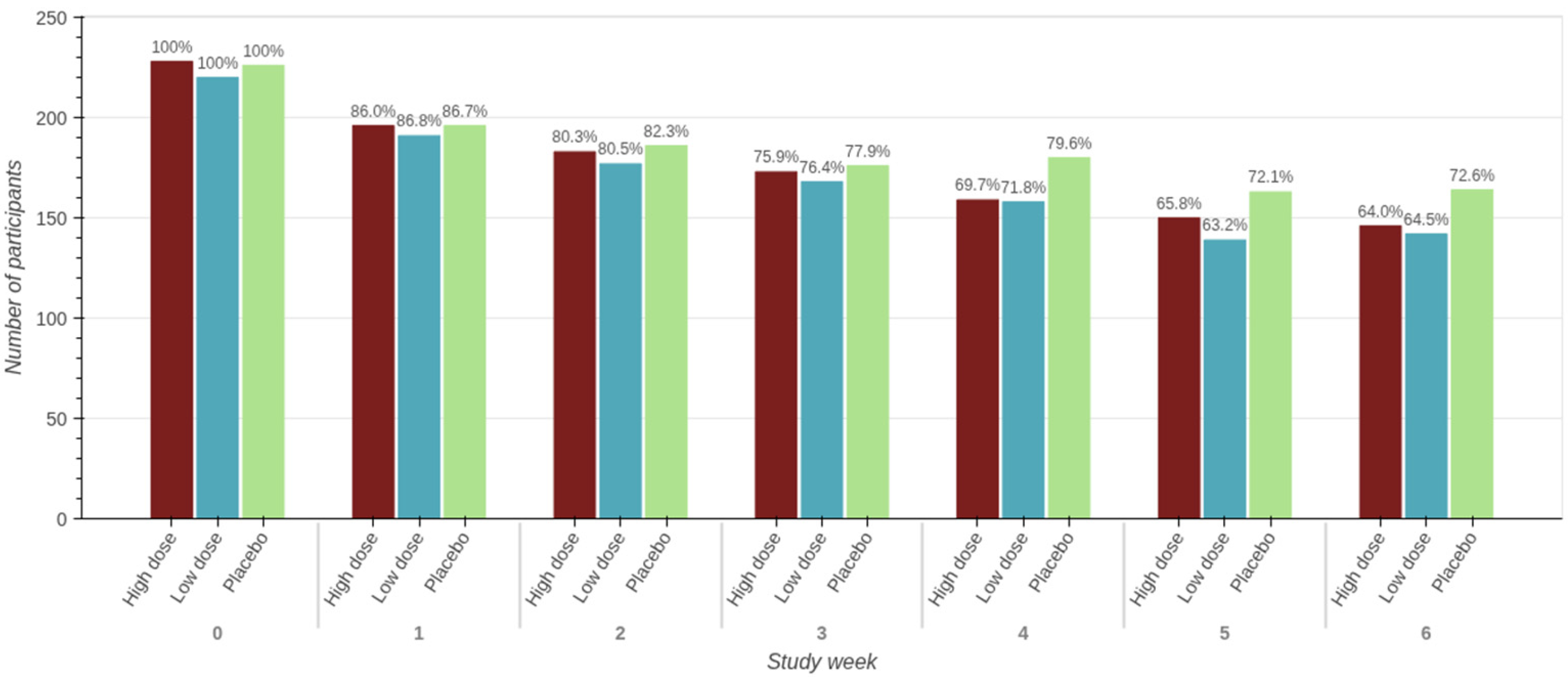
Weekly study participation remained relatively balanced throughout the duration of the study timeline and across study arms (Figure 2).

3.3. Perceived Stress Scale

The Perceived Stress Scale assesses the frequency and severity of stress-related experiences. At the conclusion of the 6-week intervention, participants in the high-dose group were 1.63 times more likely to achieve a clinically meaningful improvement (p = 0.004, risk ratio = 1.63 ± 0.17) at the questionnaire level. Furthermore, 25.15% more high-dose participants experienced clinically meaningful improvement in perceived stress compared to placebo (Table 3).
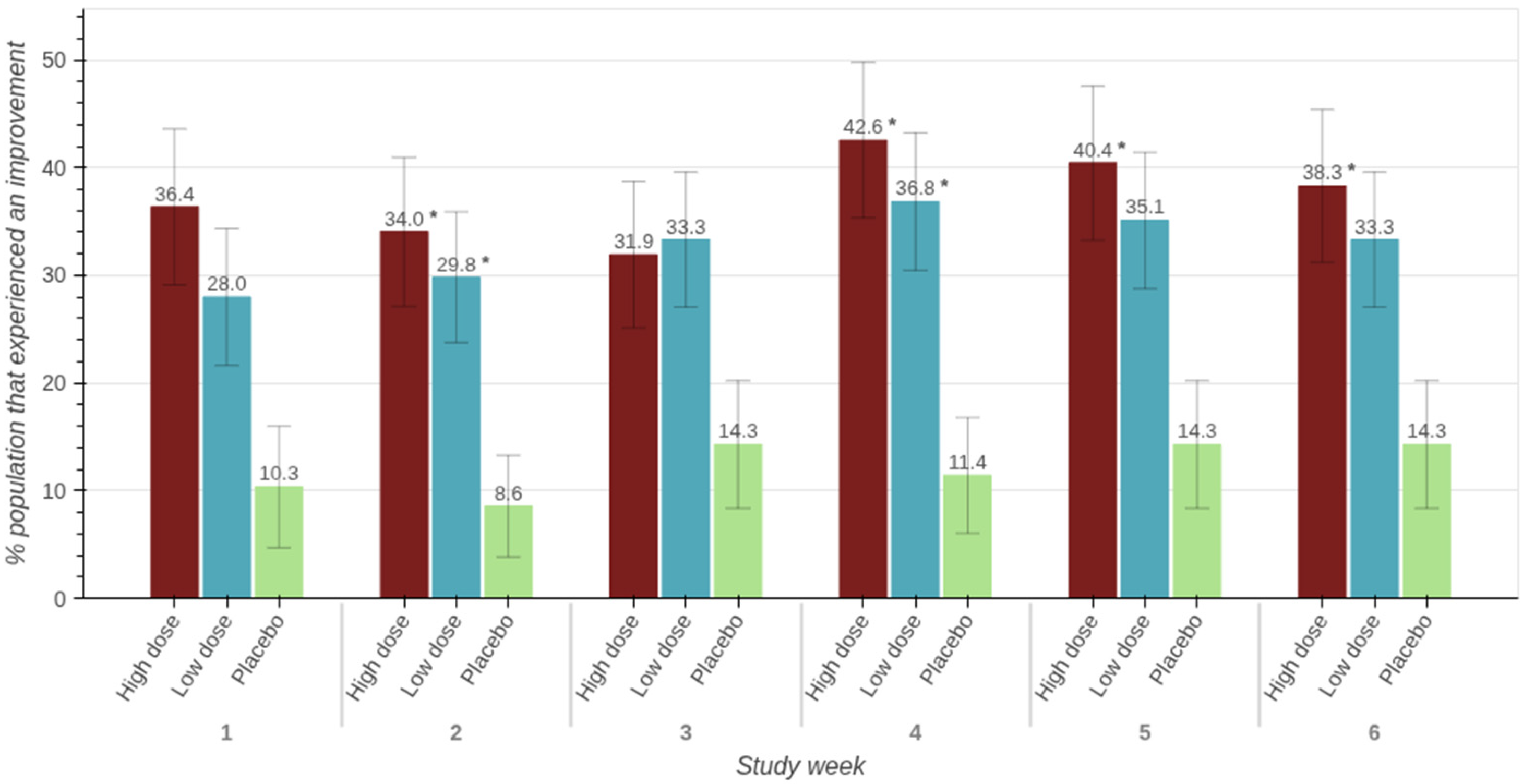
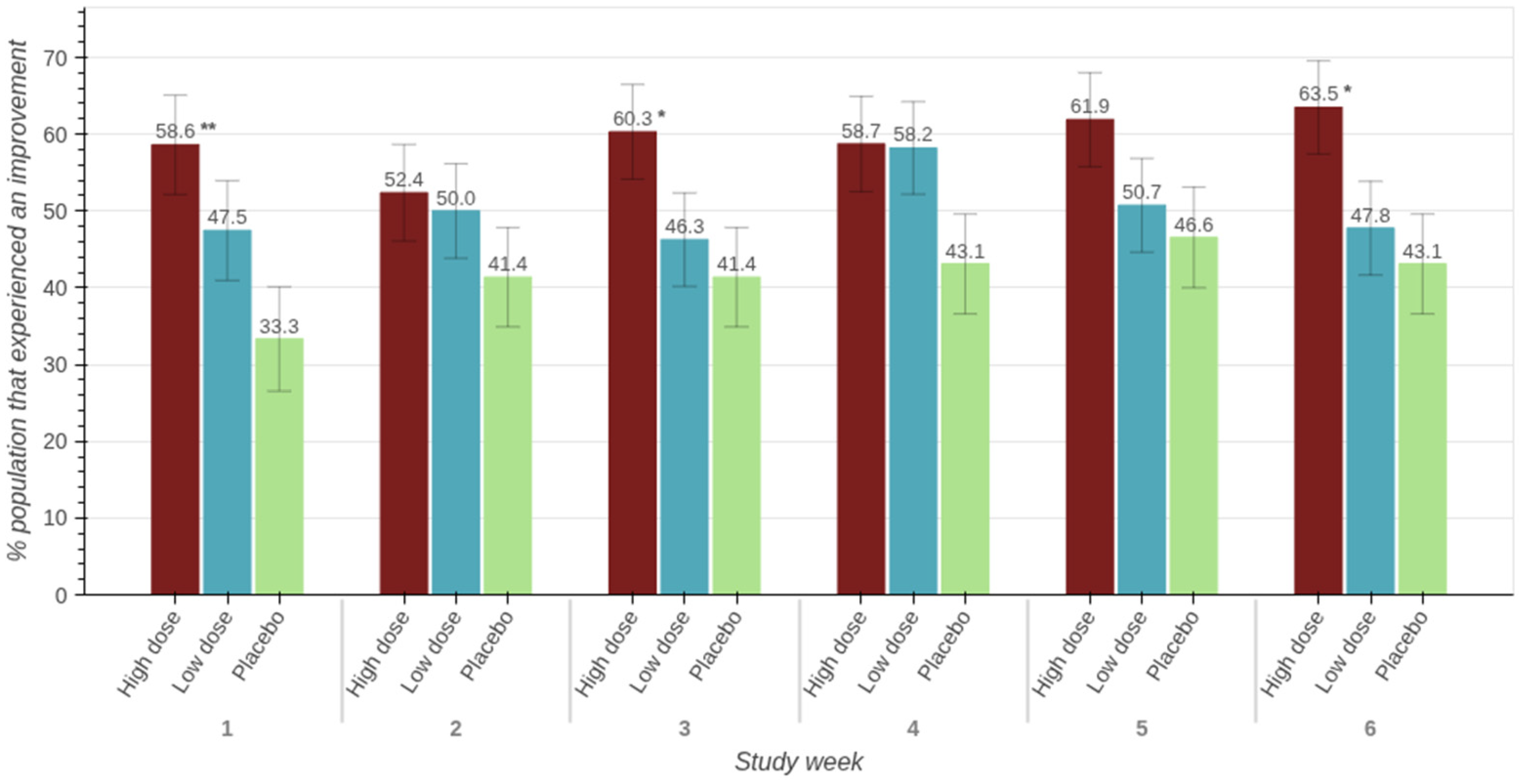
When evaluated longitudinally, participants in the high-dose group demonstrated the most pronounced improvements, with statistically significant effects observed as early as week 1 (p < 0.001) and then again after longer exposure at weeks 3, 5 and 6 (p < 0.05, p < 0.01 and p < 0.001 respectively). The low-dose participants showed significant improvements only in week 1 (p < 0.05) (Figure 3).

3.4. PROMIS Anxiety 4A

The PROMIS Anxiety 4A questionnaire was administered to assess markers of anxiety. Participants receiving the high dose were 1.51 times more likely to achieve a clinically meaningful improvement compared to placebo (p = 0.020; risk ratio = 1.51 ± 0.17), corresponding to 20.39% more high-dose participants achieving this result (Table 4).
Temporal analysis (Figure 4) showed that the high-dose group exhibited a significant improvement relative to placebo at week 1 (p < 0.01) and then again at weeks 3 and week 6 (p < 0.05) while the low-dose group did not show a statistical benefit throughout the 6-week study period.

3.5. Individual Question-Level Items

To further characterize responses, MCID effects were analyzed at the individual question level (i.e., post hoc analysis of individual questions within a questionnaire). Within the Perceived Stress questionnaire, participants in the high-dose group were 1.68 times more likely to report improvements in perceived control over life events “Lack of control” (p = 0.009; risk ratio = 1.68 ± 0.20), and 1.47 times more likely to report reduced anger related to uncontrollable situations “Anger” (p = 0.013; risk ratio = 1.47 ± 0.16). Similarly, in the PROMIS Anxiety 4A questionnaire, participants were 1.48 times more likely to report significant improvements in feeling less overwhelmed by worries “Overwhelmed” (p = 0.028; risk ratio = 1.48 ± 0.18), along with 1.72 and 1.54 times more likely to experience improvements in fear-related “Fearful” and focus-related items “Focus”, (p = 0.023, risk ratio = 1.72 ± 0.24) and (p = 0.040, risk ratio = 1.54 ± 0.21), respectively (Table 5).

3.6. Correlation Between Stress and Anxiety

To assess whether clinically meaningful improvements in perceived stress were accompanied by clinically meaningful improvements in anxiety; individual participants were categorized according to whether they met the prespecified MCID threshold for each outcome. The relationship between stress and anxiety responders was then evaluated by calculating the proportion of stress responders who also met the MCID threshold for anxiety. Of the high-dose participants who achieved a clinically meaningful improvement in perceived stress, 69.4% also achieved a clinically meaningful improvement in anxiety, indicating substantial correlations between stress and anxiety responder populations compared to only 56.2% of placebo participants.

3.7. Sub-Group Analysis

Post hoc analysis was conducted to determine if any sub-groups showed enhanced statistically significant benefits. The only sub-groups to show any enhanced benefits were with men and non-premenopausal women which comprised 79% of the final study population.

3.8. Enhanced Improvements in Men and Non-Premenopausal Women

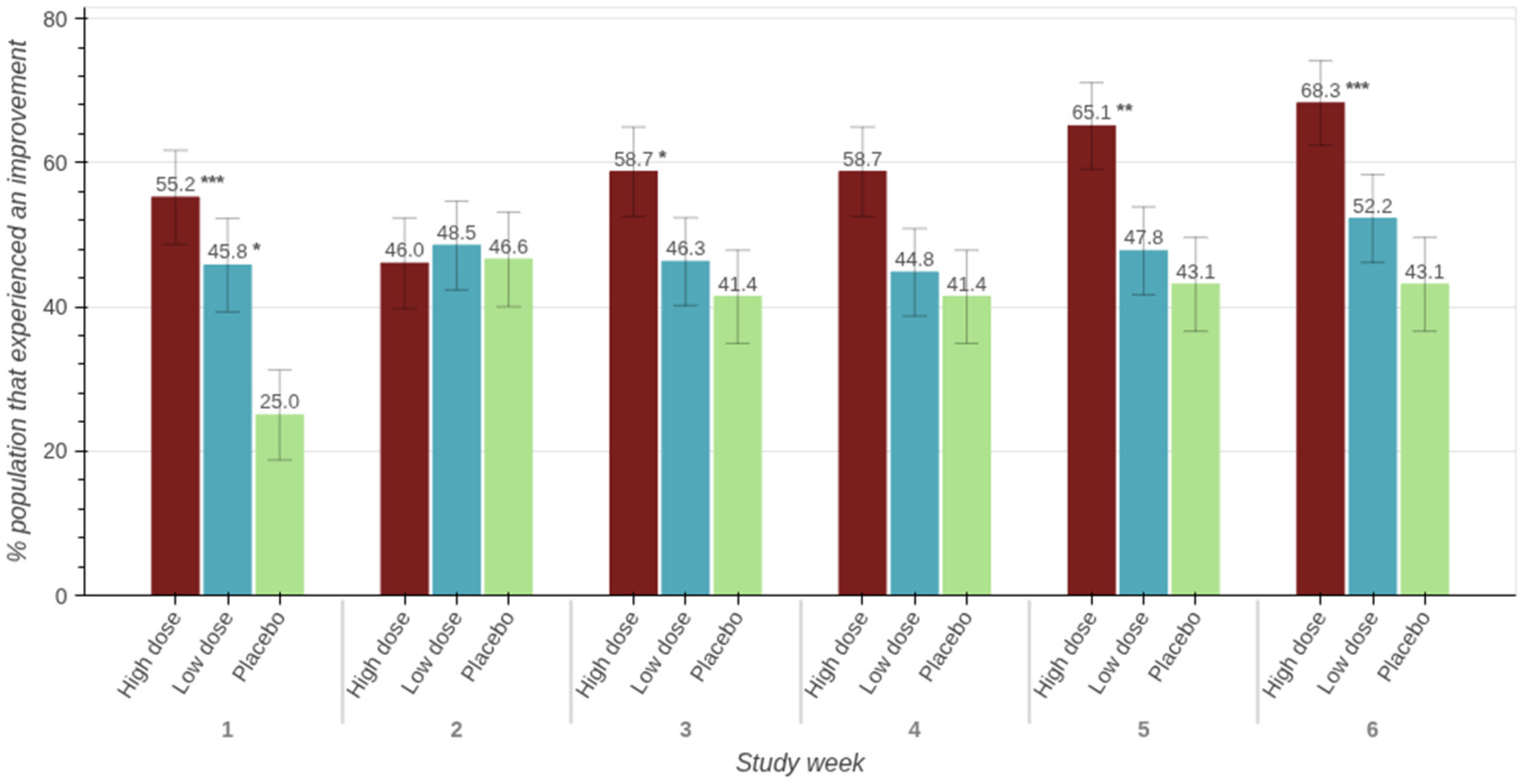
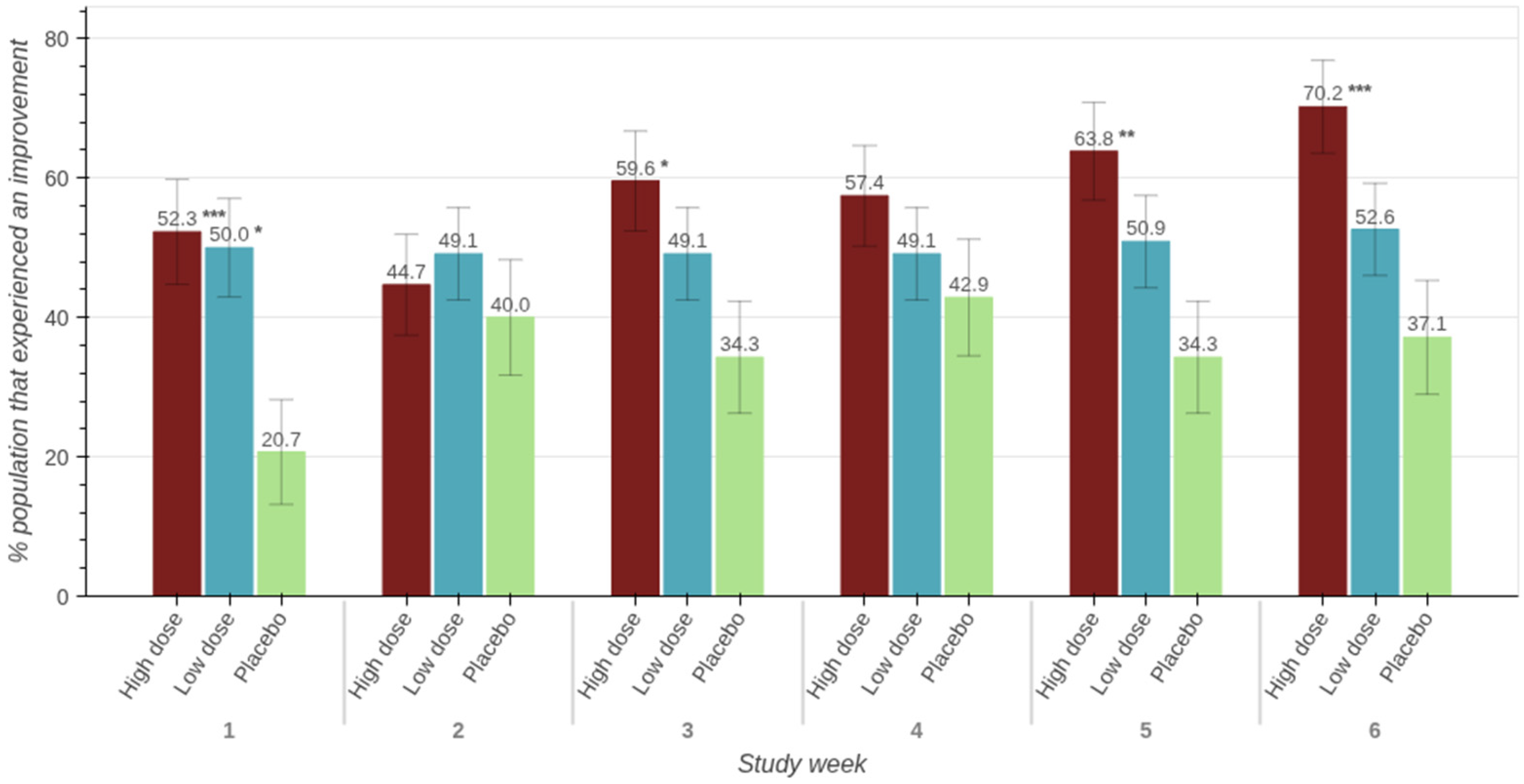
Post hoc analysis of the men and non-premenopausal women sub-group demonstrated a temporal response pattern like the overall population, with indications of enhanced magnitude of effect in perceived stress outcomes (Figure 5). Additionally, within this subgroup, statistically significant improvements were observed in the PROMIS Depression 4A MCID scores in four of the six weeks among high-dose participants (p < 0.05) (Figure 6).
Further question-level analysis revealed that, compared to placebo, participants in this subgroup were 2.41 times more likely to report increased confidence in handling personal problems “Confidence” (p = 0.007; risk ratio = 2.41 ± 0.33), which coincided with high-dose participants being 2.29 times more likely to feel that circumstances were favorable “Optimism” (p = 0.027; risk ratio = 2.29 ± 0.38). Additionally, this same participant sub-group was 1.69 times more likely to report fewer sleep-related disturbances on the PROMIS Sleep Disturbance 4A questionnaire (p = 0.040; risk ratio = 1.69 ± 0.26) and 2.35 times more likely to feel less “Hopeless” as recorded by the PROMIS Depression 4A questionnaire (p = 0.036; risk ratio = 2.35 ± 0.41) (Table 6).

3.9. Other Results

Other questionnaires and post hoc questionnaire statistical analyses were either not significant or were significant for much smaller subset populations and thus are not discussed further here.

4. Discussion

The Rhodiola plant has had a storied use in traditional medicine as an adaptogen, with more recent research focusing on isolation and characterization of the bioactive compounds, particularly salidroside, that may underline its adaptogenic properties [34,35]. In parallel, compounds that may enhance or complement their benefits have drawn attention [36,37]. In the present randomized, double-blind, placebo-controlled, clinical study, participants were supplemented with a novel complex of salidroside and L-malic acid for six weeks to determine if markers associated with stress, anxiety, and sleep could be downregulated. The findings demonstrate that SalidroPRO resulted in significant reductions in perceived stress and anxiety as measured by validated questionnaires. These results support the potential utility of enhanced adaptogenic formulations in modulating stress-related outcomes in real-world populations.

4.1. Improvements in Perceived Stress in the General Population

The Perceived Stress questionnaire is a validated instrument used to assess an individual’s perception of stress over time. In the present study, 25.15% more participants in the high-dose group achieved clinically meaningful improvement in perceived stress, suggesting real-world benefits (Table 3). Furthermore, statistically significant improvements were observed after high-dose SalidroPRO supplementation in four out of the six weeks of the study, with more significant improvements in week one and week six (Figure 3), indicating a rapid onset and sustained benefit over the intervention period. Chronic stress is known to disrupt physiological homeostasis, in part through dysregulation of the HPA axis and altered cortisol secretion [38]. This dysregulation has been associated with fatigue, impaired emotional regulation, sleep disturbances, and depressive symptoms. Salidroside has been shown to modulate HPA axis responsiveness and may help normalize cortisol dynamics under chronic stress conditions [39,40]. Furthermore, salidroside has demonstrated neuroprotective properties, including the regulation of key neurotransmitters dopamine and serotonin while also increasing brain-derived neurotrophic factor, which may help with emotional regulation during stressful scenarios [41,42]. Therefore, SalidroPRO supplementation operates within the definition of a classical adaptogen by maintaining physiological homeostasis and enhancing resilience without suppressing normal stress responses.

4.2. Improvements in Anxiety in the Overall Population

Analysis of the PROMIS Anxiety 4A results demonstrated meaningful improvement in the high-dose SalidroPRO group, with high-dose participants 1.51 times more likely to achieve clinically meaningful improvements relative to the placebo (Table 4). These findings are consistent with the well-established relationship between perceived stress and anxiety, which share overlapping neurobiological pathways [43]. Notably, the interactions are bidirectional; chronic stress sensitizes neural circuits responsible for anxiety, and in turn, anxiety can amplify stress perception [44,45]. SalidroPRO may influence anxiety through the protection of serotonergic and dopaminergic pathways like stress response. Previous research has shown salidroside inhibits monoamine oxidase, the enzyme largely responsible for the degradation of the above neurotransmitters, which further outlines a neuroprotective role and explains how a decrease in stress would lead to a decrease in anxiety. Moreover, temporal analysis showed improvements beginning in week one, suggesting central nervous system involvement corroborating previous findings that highlight acute effects [46] (Figure 4).

4.3. Individual Question Drivers: Item-Level Analysis

Individual question-level analysis provides additional insight into the domains driving overall improvements. Participants receiving SalidroPRO were more likely to report increased perceived control over life events, reduced anger in response to uncontrollable situations, and decreased feelings of being overwhelmed (Table 5). These findings underscore the importance of emotional appraisal in shaping perceived stress. Perceived control is a central factor in psychological resilience which is strongly associated with reduced stress reactivity, improving coping ability, and better emotional regulation [47]. These improvements suggest SalidroPRO may not only directly impact the physiological mechanism behind the stress response but may also influence cognitive-emotional appraisal of ongoing stressful events. These findings align with resilience to stress being defined by perceived coping capacity, emotional regulation, and cognitive reframing of stressors.

4.4. Enhanced Effects in Men and Non-Premenopausal Women

Post hoc subgroup analysis revealed larger and more consistent improvements in men and non-premenopausal women in aspects of perceived stress (Figure 5). The question-level drivers of these results were distinct from those observed in the remaining population, which showed greater improvements in confidence and optimism (Table 6). Furthermore, week-to-week analysis showed significant improvements in PROMIS Depression 4A in four out of the six weeks (Figure 6), which can be attributed to feeling less hopeless (Table 6). These enhanced effects suggest a potential interaction between hormonal status and adaptogenic efficacy.
The primary hormone in males is testosterone, which naturally declines with age and is impacted by various lifestyle factors. Importantly, chronically elevated cortisol levels due to stress can interfere with hypothalamic-pituitary-gonadal (HPG) axis function, leading to diminished circulating testosterone [48,49]. In turn, reduced testosterone has been correlated with increased anxiety, depression, and anti-social behavior [50,51]. These findings highlight the bidirectional relationship between stress and gonadal hormone regulation and suggest that compounds promoting hormonal balance may be beneficial. Furthermore, the dual-hormone hypothesis underscores that the beneficial effects of testosterone on perceived stress are most pronounced when basal cortisol levels are low [52]. Evidence also suggests that salidroside may exert protective effects on testosterone secretion through regulating oxidative stress [53]. Thus, our enhanced benefits for the male subgroup may be explained due to SalidroPRO normalizing testosterone levels during bouts of intense stress via the HPG axis while simultaneously reducing cortisol through disrupted HPA axis signaling.
Pre-menopausal women experience cyclical fluctuations in estrogen and progesterone that influence HPA axis reactivity, serotonergic tone, and stress sensitivity [54,55,56]. Estrogen modulates glucocorticoid receptor function and cortisol feedback regulation, thereby affecting stress reactivity across menstrual phases [57]. Hormonal variability may therefore introduce greater fluctuation in perceived stress measures during short-duration trials where menstrual status is not controlled for. Another potential explanation for why pre-menopausal women did not demonstrate the same improvements in stress outcomes as men, perimenopausal women, and postmenopausal women is the unmeasured influence of oral contraceptive use within the sample. Oral contraceptives are known to alter HPA axis function by elevating circulating cortisol and modifying glucocorticoid feedback sensitivity, in part through changes in regulatory genes such as FKBP5, resulting in a physiological profile that can resemble chronic stress exposure [58]. This altered baseline state may blunt responsiveness to interventions aimed at reducing stress, thereby attenuating observable improvements in women who are actively using hormonal contraception. Because oral contraceptive use was not controlled for in the present study, it is possible that heterogeneity in HPA axis regulation within the female subgroup obscured potential benefits, highlighting the importance of accounting for hormonal status in future research on stress-related outcomes.
Although no statistically significant differences were observed in overall sleep disturbance scores in the full cohort, participants in the men and non-premenopausal subgroups demonstrated improvements in sleep disturbance frequency (Table 6). Cortisol plays a critical role in sleep physiology through the regulation of circadian rhythm and sleep architecture [59]. Under normal conditions, cortisol follows a diurnal pattern characterized by a morning peak and a gradual decline towards the evening, coinciding with increased melatonin production in the evening. Chronic stress disrupts normal cortisol rhythm resulting in elevated evening cortisol, which may translate to delayed sleep onset or fragmented sleep patterns [60]. The observed improvements in sleep-related outcomes within this subgroup may therefore be secondary to improvements in stress regulation, further highlighting the interconnected nature of stress, neuroendocrine function, and sleep physiology.

4.5. Impact of Dose

In this clinical study, two doses of SalidroPRO were evaluated alongside a placebo control. Most statistically significant improvements were observed in the high-dose group, whereas the low-dose complex demonstrated a more limited effect, with improvement primarily observed in perceived stress (Figure 3). These findings suggest a dose-dependent trend in efficacy. The presence of a dose–response relationship provides supportive evidence for the biological activity of the complex and strengthens the overall interpretation of the study outcomes.

4.6. Insights and Opportunities

The large-scale, decentralized study design enabled recruitment of a geographically diverse cohort across 48 U.S. states, enhancing the real-world relevance of the findings. The use of validated clinical instruments, such as the Perceived Stress and PROMIS Anxiety questionnaire, provided robust measures of subjective stress and anxiety outcomes. However, this questionnaire-only-based study design limits the ability to assess objective physiological changes. Future studies incorporating biomarkers such as cortisol and other inflammatory markers to better characterize mechanistic effects and validate the hypotheses are planned based on the outcomes of this study. Additionally, lifestyle factors such as diet, physical activity, and hormonal status were not controlled, which may have contributed to variability in outcomes. In particular, the findings from the subgroup analyses highlight the importance of accounting for menstrual cycle phase and hormonal contraceptive use in future studies.
Real-world recruiting of a large population introduces a stronger likelihood of capturing individuals with prolonged depressive symptoms. Future studies aiming to use dietary supplements for stress and anxiety should control for individuals with chronic depression.
Overall, these findings support the potential of SalidroPRO as a scalable, well-tolerated intervention for improving perceived stress and related outcomes, while also identifying key areas for refinement in future clinical research.


5. Conclusions

In this randomized, double-blind, placebo-controlled trial, supplementation with SalidroPRO, a novel salidroside and L-malic acid complex, resulted in significant improvements in perceived stress and anxiety in a large adult population. Clinically meaningful benefits were observed, particularly in the high-dose group, with effects emerging early and sustained over the 6-week intervention while the low-dose group showed lesser effects, suggesting a dose-dependent response. These findings are consistent with proposed mechanisms involving modulation of the hypothalamic–pituitary–adrenal axis and monoaminergic pathways. Subgroup analyses suggest that individual factors, including hormonal status, may influence responsiveness to intervention. SalidroPRO may represent a promising non-pharmacological approach for supporting stress management and psychological well-being.

Supplementary Materials

The following supporting information can be downloaded at: https://www.mdpi.com/article/10.3390/nutraceuticals6030043/s1, Table S1. CONSORT 2010 checklist of information to include when reporting a randomised trial.

Author Contributions

Conceptualization, E.D. and M.L.; software, D.C.; validation, D.C.; formal analysis, D.C., V.N., I.S., M.L. and E.D.; data curation, D.C., I.S., V.N., M.L. and E.D.; writing—original draft preparation, V.N., I.S., D.C., M.L. and E.D.; writing—review and editing, I.S., V.N., D.C., M.L. and E.D.; visualization, D.C., I.S., V.N., M.L. and E.D.; supervision, E.D. and M.L. V.N. and I.S. contributed equally to this work and are recognized as co-first authors. All authors have read and agreed to the published version of the manuscript.

Funding

This research was funded exclusively by NutriScience Innovations, LLC, Connecticut, USA.

Institutional Review Board Statement

The study was conducted in accordance with the International Conference on Harmonization guidelines for Good Clinical Practice (ICH E6) and the Code of Federal Regulations of the Protection of Human Subjects (45 CFR, Part 46). The study was approved by the Sterling Institutional Review Board (RADX-P-2408_VNS 05/06/2025). The study protocol is registered at clinicaltrials.gov under study number NCT06999629 and was conducted from June 2025 to October 2025.

Informed Consent Statement

Informed consent was obtained from all subjects involved in the study.

Data Availability Statement

The data presented in this study are available upon request from the corresponding author due to legal, proprietary, and confidentiality restrictions associated with the trademarked ingredient. De-identified data may be made available upon reasonable request, subject to review and approval by the sponsor and execution of any required confidentiality or data-use agreements.

Acknowledgments

Radicle Sciences conducted a well-executed study and provided the raw study data and a study report. We thank Kaitlyn White and Susan Hewling from Radicle Sciences for their compilation of the study insight report and robust review of the accuracy of this manuscript.

Conflicts of Interest

V.N., I.S., M.L. and E.D. were employed by NutriScience Innovations, LLC and D.C. was employed by Conley Labs, LLC. This study was designed and executed by Radicle Sciences, a paid contract research organization (CRO). Funding and support for data analysis were provided by NutriScience Innovations. NutriScience Innovations had no role in the details of the protocol design, execution of the study, or data collection. All statistical analyses were independently conducted by a paid author who had no personal conflicts of interest related to the study outcomes. The authors affirm the integrity and objectivity of the research findings.

Abbreviations

The following abbreviations are used in this manuscript:
HPAHypothalamus–Pituitary–Adrenal Axis
TCATricarboxylic Acid Cycle
ITTIntent-to-Treat
LOCFLast Observation Carried Forward
IRBInstitutional Review Board
MCIDMinimal Clinically Important Difference
CIConfidence Interval
HPGHypothalamic-Pituitary-Gonadal Axis

References

  1. Panossian, A. Understanding Adaptogenic Activity: Specificity of the Pharmacological Action of Adaptogens and Other Phytochemicals. Ann. N. Y. Acad. Sci. 2017, 1401, 49–64. [Google Scholar] [CrossRef] [PubMed]
  2. Todorova, V.; Ivanov, K.; Delattre, C.; Nalbantova, V.; Karcheva-Bahchevanska, D.; Ivanova, S. Plant Adaptogens—History and Future Perspectives. Nutrients 2021, 13, 2861. [Google Scholar] [CrossRef] [PubMed]
  3. Weber, J.; Angerer, P.; Apolinário-Hagen, J. Physiological Reactions to Acute Stressors and Subjective Stress during Daily Life: A Systematic Review on Ecological Momentary Assessment (EMA) Studies. PLoS ONE 2022, 17, e0271996. [Google Scholar] [CrossRef] [PubMed]
  4. Steptoe, A.; Kivimäki, M. Stress and Cardiovascular Disease. Nat. Rev. Cardiol. 2012, 9, 360–370. [Google Scholar] [CrossRef] [PubMed]
  5. Falco, G.; Pirro, P.; Castellano, E.; Anfossi, M.; Borretta, G.; Gianotti, L. The Relationship between Stress and Diabetes Mellitus. J. Neurol. Psychol. 2015, 3, 7. [Google Scholar] [CrossRef]
  6. Tafet, G.E.; Nemeroff, C.B. The Links between Stress and Depression: Psychoneuroendocrinological, Genetic, and Environmental Interactions. J. Neuropsychiatry Clin. Neurosci. 2016, 28, 77–88. [Google Scholar] [CrossRef] [PubMed]
  7. Acoba, E.F. Social Support and Mental Health: The Mediating Role of Perceived Stress. Front. Psychol. 2024, 15, 1330720. [Google Scholar] [CrossRef] [PubMed]
  8. Pathak, Y.V.; Acharya, N. (Eds.) Nutraceuticals, 1st ed.; CRC Press: Boca Raton, FL, USA, 2025; p. 362. [Google Scholar]
  9. Russell, G.; Lightman, S. The Human Stress Response. Nat. Rev. Endocrinol. 2019, 15, 525–534. [Google Scholar] [CrossRef] [PubMed]
  10. Ellis, B.; Jackson, J.; Boyce, W. The Stress Response Systems: Universality and Adaptive Individual Differences. Dev. Rev. 2006, 26, 175–212. [Google Scholar] [CrossRef]
  11. Luo, J.; Zhang, B.; Cao, M.; Roberts, B.W. The Stressful Personality: A Meta-Analytical Review of the Relation Between Personality and Stress. Personal. Soc. Psychol. Rev. 2023, 27, 128–194. [Google Scholar]
  12. Guo, N.; Zhu, M.; Han, X.; Sui, D.; Wang, Y.; Yang, Q. The Metabolism of Salidroside to Its Aglycone P-Tyrosol in Rats Following the Administration of Salidroside. PLoS ONE 2014, 9, e103648. [Google Scholar] [CrossRef] [PubMed]
  13. Bernatoniene, J.; Jakstas, V.; Kopustinskiene, D.M. Phenolic Compounds of Rhodiola rosea L. as the Potential Alternative Therapy in the Treatment of Chronic Diseases. Int. J. Mol. Sci. 2023, 24, 12293. [Google Scholar] [CrossRef] [PubMed]
  14. Panossian, A.G.; Efferth, T.; Shikov, A.N.; Pozharitskaya, O.N.; Kuchta, K.; Mukherjee, P.K.; Banerjee, S.; Heinrich, M.; Wu, W.; Guo, D.; et al. Evolution of the Adaptogenic Concept from Traditional Use to Medical Systems: Pharmacology of Stress- and Aging-Related Diseases. Med. Res. Rev. 2021, 41, 630–703. [Google Scholar] [PubMed]
  15. Lelong, C.; Ris, L.; Sytar, O.; Defrère, S.; Villers, A. Rhodiola rosea L. Roots Powder Strongly Reduces Anxiety and Corticosterone Level Induced by Chronic Stress in a Murine Model. J. Pharm. Health Care Sci. 2026, 12, 21. [Google Scholar] [CrossRef] [PubMed]
  16. Tasheva, K.; Kosturkova, G. The Role of Biotechnology for Conservation and Biologically Active Substances Production of Rhodiola rosea: Endangered Medicinal Species. Sci. World J. 2012, 2012, 274942. [Google Scholar] [CrossRef]
  17. Brinckmann, J.A.; Cunningham, A.B.; Harter, D.E.V. Running out of Time to Smell the Roseroots: Reviewing Threats and Trade in Wild Rhodiola rosea L. J. Ethnopharmacol. 2021, 269, 113710. [Google Scholar]
  18. Li, T.; Xu, G.; Wu, L.; Sun, C. Pharmacological Studies on the Sedative and Hypnotic Effect of Salidroside from the Chinese Medicinal Plant Rhodiola sachalinensis. Phytomedicine 2007, 14, 601–604. [Google Scholar] [CrossRef] [PubMed]
  19. Palmeri, A.; Mammana, L.; Tropea, M.R.; Gulisano, W.; Puzzo, D. Salidroside, a Bioactive Compound of Rhodiola rosea, Ameliorates Memory and Emotional Behavior in Adult Mice. J. Alzheimer’s Dis. 2016, 52, 65–75. [Google Scholar] [CrossRef]
  20. Schwarz, N.A.; Stratton, M.T.; Colquhoun, R.J.; Manganti, A.M.; Sherbourne, M.; Mourey, F.; White, C.C.; Day, H.; Dusseault, M.C.; Hudson, G.M.; et al. Salidroside and Exercise Performance in Healthy Active Young Adults—An Exploratory, Randomized, Double-Blind, Placebo-Controlled Study. J. Int. Soc. Sports Nutr. 2024, 21, 2433744. [Google Scholar] [PubMed]
  21. Pawar, V.S.; Shivakumar, H. A Current Status of Adaptogens: Natural Remedy to Stress. Asian Pac. J. Trop. Dis. 2012, 2, S480–S490. [Google Scholar] [CrossRef]
  22. Jones, C.; Gwenin, C. Cortisol Level Dysregulation and Its Prevalence—Is It Nature’s Alarm Clock? Physiol. Rep. 2021, 8, e14644. [Google Scholar] [PubMed]
  23. Agorastos, A.; Chrousos, G.P. The Neuroendocrinology of Stress: The Stress-Related Continuum of Chronic Disease Development. Mol. Psychiatry 2022, 27, 502–513. [Google Scholar] [PubMed]
  24. Anghelescu, I.-G.; Edwards, D.; Seifritz, E.; Kasper, S. Stress Management and the Role of Rhodiola rosea: A Review. Int. J. Psychiatry Clin. Pract. 2018, 22, 242–252. [Google Scholar] [CrossRef] [PubMed]
  25. Chen, Y.-Y.; Liu, L.; Deng, Y.-S.; Hu, J.-J.; Mi, Y.-X.; Li, A.-N.; Wei, T.; Li, Q.; Zhao, X.-F.; Tang, Y. Neuroactive Phytochemicals from Hawthorn: Preliminary Evidence for Malic Acid and Chlorogenic Acid as 5-HTR1A Ligands with Antidepressant Potential. J. Funct. Foods 2025, 134, 107039. [Google Scholar] [CrossRef]
  26. Koriem, K.M.M.; Tharwat, H.A.K. Malic Acid Improves Behavioral, Biochemical, and Molecular Disturbances in the Hypothalamus of Stressed Rats. J. Integr. Neurosci. 2023, 22, 98. [Google Scholar] [CrossRef] [PubMed]
  27. Guo, X.H.; Ding, F.; Lian, X.; Cui, W.; Li, Z.; Xing, Y. The Efficiency and Mechanism of a New Absorption Enhancer, Malic Acid, for Enhancing the Oral Bioavailability of Docetaxel. Pharm. Dev. Technol. 2021, 26, 592–598. [Google Scholar] [CrossRef] [PubMed]
  28. Lelah, M.; Dosz, E.B. Compositions of Glycoside and Edible Acid for Enhanced Absorption of Glycoside When Incorporated into a Consumable Product. U.S. Patent Application US20260102337A1, 16 April 2026. Available online: https://patents.google.com/patent/US20260102337A1/en (accessed on 18 May 2026).
  29. Radicle Science. Radicle Relaxation TM 24_VNS: A Study Assessing the Impact of Health and Wellness Products on Stress and Related Health Outcomes. Available online: https://clinicaltrials.gov/study/NCT06999629 (accessed on 16 March 2026).
  30. Kupst, M.J.; Butt, Z.; Stoney, C.M.; Griffith, J.W.; Salsman, J.M.; Folkman, S.; Cella, D. Assessment of Stress and Self-Efficacy for the NIH Toolbox for Neurological and Behavioral Function. Anxiety Stress Coping 2015, 28, 531–544. [Google Scholar] [PubMed]
  31. Rothrock, N.E.; Amtmann, D.; Cook, K.F. Development and Validation of an Interpretive Guide for PROMIS Scores. J. Patient Rep. Outcomes 2020, 4, 16. [Google Scholar] [CrossRef] [PubMed]
  32. Streiner, D. Last Observation Carried Forward. In Encyclopedia of Research Design; SAGE Publications, Inc.: Thousand Oaks, CA, USA, 2010; pp. 687–688. [Google Scholar]
  33. National Institute of Mental Health. Depression; NIH Publication No. 24-MH-8079; U.S. Department of Health and Human Services, National Institutes of Health: Bethesda, MD, USA, 2024. Available online: https://www.nimh.nih.gov/health/publications/depression (accessed on 18 May 2026).
  34. Jamioł, M.; Wawrzykowski, J.; Dec, M.; Wilk, A.; Czelej, M. Comparison of Various Techniques for the Extraction, Analysis of Compounds and Determination of Antioxidant Activities of Rhodiola spp.—A Review. Food Rev. Int. 2023, 39, 467–487. [Google Scholar]
  35. Jing, F.; Jiang, L.; Zhang, Q.; Jiang, M. Identification of Root-Specific Chemical Markers in Rhodiola sacra by Integrating Untargeted Metabolomics and Targeted Chemometrics. J. Chromatogr. B 2026, 1275, 124983. [Google Scholar] [CrossRef]
  36. Yun, H.; Lu, B.; Su, W.; Wang, J.; Zheng, J.; Wang, J.; Wang, Z.; Li, Y.; Sun, Y.; Liu, C. Combined Effects of Rhodiola rosea and Caffeine Supplementation on Aerobic Endurance and Muscle Explosiveness: A Synergistic Approach. Front. Nutr. 2024, 11, 1335950. [Google Scholar] [CrossRef] [PubMed]
  37. Vasileva, L.V.; Saracheva, K.E.; Ivanovska, M.V.; Petrova, A.P.; Marchev, A.S.; Georgiev, M.I.; Murdjeva, M.A.; Getova, D.P. Antidepressant-like Effect of Salidroside and Curcumin on the Immunoreactivity of Rats Subjected to a Chronic Mild Stress Model. Food Chem. Toxicol. 2018, 121, 604–611. [Google Scholar] [CrossRef] [PubMed]
  38. Knezevic, E.; Nenic, K.; Milanovic, V.; Knezevic, N.N. The Role of Cortisol in Chronic Stress, Neurodegenerative Diseases, and Psychological Disorders. Cells 2023, 12, 2726. [Google Scholar] [CrossRef] [PubMed]
  39. Dai, W.; Feng, K.; Sun, X.; Xu, L.; Wu, S.; Rahmand, K.; Jia, D.; Han, T. Natural Products for the Treatment of Stress-Induced Depression: Pharmacology, Mechanism and Traditional Use. J. Ethnopharmacol. 2022, 285, 114692. [Google Scholar] [CrossRef] [PubMed]
  40. Yang, S.-J.; Yu, H.-Y.; Kang, D.-Y.; Ma, Z.-Q.; Qu, R.; Fu, Q.; Ma, S.-P. Antidepressant-like Effects of Salidroside on Olfactory Bulbectomy-Induced Pro-Inflammatory Cytokine Production and Hyperactivity of HPA Axis in Rats. Pharmacol. Biochem. Behav. 2014, 124, 451–457. [Google Scholar] [PubMed]
  41. Zhu, L.; Wei, T.; Gao, J.; Chang, X.; He, H.; Miao, M.; Yan, T. Salidroside Attenuates Lipopolysaccharide (LPS)-Induced Serum Cytokines and Depressive-like Behavior in Mice. Neurosci. Lett. 2015, 606, 1–6. [Google Scholar] [PubMed]
  42. Li, T.; Zhang, W.; Kang, X.; Yang, R.; Li, R.; Huang, L.; Chen, J.; Yang, Q.; Sun, X. Salidroside Protects Dopaminergic Neurons by Regulating the Mitochondrial MEF2D-ND6 Pathway in the MPTP/MPP+-Induced Model of Parkinson’s Disease. J. Neurochem. 2020, 153, 276–289. [Google Scholar] [PubMed]
  43. Daviu, N.; Bruchas, M.R.; Moghaddam, B.; Sandi, C.; Beyeler, A. Neurobiological Links between Stress and Anxiety. Neurobiol. Stress 2019, 11, 100191. [Google Scholar] [CrossRef] [PubMed]
  44. Herman, J.P. Neural Control of Chronic Stress Adaptation. Front. Behav. Neurosci. 2013, 7, 61. [Google Scholar] [CrossRef] [PubMed]
  45. Luo, X.; Ma, J.; Hu, Y. A Dynamic Bidirectional System of Stress Processes: Feedback Loops between Stressors, Psychological Distress, and Physical Symptoms. Health Psychol. 2025, 44, 154–165. [Google Scholar] [CrossRef] [PubMed]
  46. Perfumi, M.; Mattioli, L. Adaptogenic and Central Nervous System Effects of Single Doses of 3% Rosavin and 1% Salidroside Rhodiola rosea L. Extract in Mice. Phytother. Res. 2007, 21, 37–43. [Google Scholar] [PubMed]
  47. Meier, J.; Kollmann, B.; Meine, L.E.; Meyer, B.; Yuen, K.; Stork, M.; Tüscher, O.; Wessa, M. Perceived Control as a Resilience Factor: Associations with Neural, Physiological and Affective Stress Responses and Mental Health. Transl. Psychiatry 2026, 16, 39. [Google Scholar] [CrossRef] [PubMed]
  48. Mazurkiewicz, D.; Gajda, R.; Ambrozik-Haba, J.; Bożek, W.; Ceremuga, M.; Serek, P. Effects of Lifestyle, Diet, and Body Composition on Free Testosterone and Cortisol Levels in Young Men. Nutrients 2025, 17, 3772. [Google Scholar] [CrossRef] [PubMed]
  49. Domes, G.; Linnig, K.; von Dawans, B. Gonads under Stress: A Systematic Review and Meta-Analysis on the Effects of Acute Psychosocial Stress on Gonadal Steroids Secretion in Humans. Psychoneuroendocrinology 2024, 164, 107004. [Google Scholar] [CrossRef] [PubMed]
  50. Sternbach, H. Age-Associated Testosterone Decline in Men: Clinical Issues for Psychiatry. Am. J. Psychiatry 1998, 155, 1310–1318. [Google Scholar] [CrossRef] [PubMed]
  51. Carré, J.M.; Archer, J. Testosterone and Human Behavior: The Role of Individual and Contextual Variables. Curr. Opin. Psychol. 2018, 19, 149–153. [Google Scholar] [CrossRef] [PubMed]
  52. Ilkevič, E.; Jašinskaitė, E.; Gaižauskaitė, R.; Grikšienė, R. Testosterone and Cortisol Moderate Perception of Mild Psychosocial Stress in Young Males. Psychoneuroendocrinology 2025, 180, 107557. [Google Scholar] [CrossRef] [PubMed]
  53. Wang, Z.; Xu, Y.; Xiong, H. Mechanism of Salidroside Promoting Testosterone Secretion Induced by H2O2 in TM3 Leydig Cells Based on Metabolomics and Network Pharmacology. Front. Chem. 2025, 13, 1544876. [Google Scholar] [CrossRef] [PubMed]
  54. Shansky, R.M.; Glavis-Bloom, C.; Lerman, D.; McRae, P.; Benson, C.; Miller, K.; Cosand, L.; Horvath, T.L.; Arnsten, A.F.T. Estrogen Mediates Sex Differences in Stress-Induced Prefrontal Cortex Dysfunction. Mol. Psychiatry 2004, 9, 531–538. [Google Scholar] [PubMed]
  55. Gonda, X.; Telek, T.; Juhász, G.; Lazary, J.; Vargha, A.; Bagdy, G. Patterns of Mood Changes throughout the Reproductive Cycle in Healthy Women without Premenstrual Dysphoric Disorders. Prog. Neuropsychopharmacol. Biol. Psychiatry 2008, 32, 1782–1788. [Google Scholar] [CrossRef] [PubMed]
  56. Albert, K.M.; Newhouse, P.A. Estrogen, Stress, and Depression: Cognitive and Biological Interactions. Annu. Rev. Clin. Psychol. 2019, 15, 399–423. [Google Scholar] [CrossRef] [PubMed]
  57. Weiser, M.J.; Handa, R.J. Estrogen Impairs Glucocorticoid-Dependent Negative Feedback on the Hypothalamic–Pituitary–Adrenal Axis via Estrogen Receptor Alpha within the Hypothalamus. Neuroscience 2009, 159, 883–895. [Google Scholar] [PubMed]
  58. Nuzzo, M.; Erickson, E.N.; Groth, S.W.; Yu, Y.; Koleck, T.; Li, H.; Martinez, K.; Zaman, A.; Dreisbach, C. Genetic Variation Associated with Side Effects of Hormonal Contraception Exposure: A Narrative Review. Front. Reprod. Health 2025, 7, 1720994. [Google Scholar] [CrossRef] [PubMed]
  59. Elder, G.J.; Wetherell, M.A.; Barclay, N.L.; Ellis, J.G. The Cortisol Awakening Response—Applications and Implications for Sleep Medicine. Sleep Med. Rev. 2014, 18, 215–224. [Google Scholar] [PubMed]
  60. Skubic, C.; Zevnik, U.; Nahtigal, K.; Dolenc Grošelj, L.; Rozman, D. Circadian Biomarkers in Humans: Methodological Insights into the Detection of Melatonin and Cortisol. Biomolecules 2025, 15, 1006. [Google Scholar] [CrossRef] [PubMed]
Figure 1. Number of participants who met criteria for analysis of weekly questionnaire-based data. Participants who received the low dose received 10 mg salidroside + 40 mg of L-malic acid whereas participants in the high-dose group received 20 mg salidroside + 30 mg of L-malic acid.
Nutraceuticals 06 00043 g001
Figure 2. Weekly questionnaire completion rates by trial arm for ITT population. Participants who received the low dose received 10 mg salidroside + 40 mg of L-malic acid whereas participants in the high-dose group received 20 mg salidroside + 30 mg of L-malic acid.
Nutraceuticals 06 00043 g002
Figure 3. Temporal (week-to-week) changes in the percentage of participants achieving MCID improvement in Perceived Stress over 6 weeks. Participants who received the low dose received 10 mg salidroside + 40 mg of L-malic acid whereas participants in the high-dose group received 20 mg salidroside + 30 mg of L-malic acid. Data are represented as the MCID significant statistical differences compared to placebo and reported as mean ± SEM. * p < 0.05, ** p < 0.01, *** p < 0.001.
Nutraceuticals 06 00043 g003
Figure 4. Temporal changes in percentage of participants achieving MCID improvement in PROMIS Anxiety 4A over 6 weeks. Participants who received the low dose received 10 mg salidroside + 40 mg of L-malic acid whereas participants in the high-dose group received 20 mg salidroside + 30 mg of L-malic acid. Data are represented as the MCID significant statistical differences compared to placebo and reported as mean ± SEM. * p < 0.05, ** p < 0.01.
Nutraceuticals 06 00043 g004
Figure 5. Temporal (week-to-week) changes in Perceived Stress for all men and non-premenopausal women with percentage improvement over the course of the 6-week study. Participants who received the low dose received 10 mg salidroside + 40 mg of L-malic acid whereas participants in the high-dose group received 20 mg salidroside + 30 mg of L-malic acid. Data are represented as the MCID significant statistical differences compared to placebo and reported as mean ± SEM. * p < 0.05, ** p < 0.01, *** p < 0.001.
Nutraceuticals 06 00043 g005
Figure 6. Temporal (week-to-week) changes in PROMIS Depression 4A for all men and non-premenopausal women percentage improvement over the course of the 6-week study. Participants who received the low dose received 10 mg salidroside + 40 mg of L-malic acid whereas participants in the high-dose group received 20 mg salidroside + 30 mg of L-malic acid. Data are represented as the MCID significant statistical differences compared to placebo and reported as mean ± SEM. * p < 0.05.
Nutraceuticals 06 00043 g006
Table 1. Summary and scoring guidelines for validated questionnaires used to evaluate changes in mood state throughout the study.
QuestionnaireDescription
Perceived Stress Scale10-item measure assessing perceived stress in the past 7 days
PROMIS™ Anxiety 4A4-item measure assessing feelings of anxiety in the past 7 days
PROMIS™ Cognitive Function 4A4-item measure assessing cognitive function in the past 7 days
PROMIS™ Depression 4A4-item measure assessing mood in the past 7 days
PROMIS™ Sleep Disturbance 4A4-item measure assessing sleep disturbance in the past 7 days
Table 2. Baseline demographic information across study arms. Data are presented as the number of individuals who correspond with a demographic in each study arm. Participants who received the low dose received 10 mg salidroside + 40 mg of L-malic acid whereas participants in the high-dose group received 20 mg salidroside + 30 mg of L-malic acid.
Baseline DemographicCategoryHigh Dose (n = 228)Low Dose (n = 220)Placebo (n = 226)
21–30141414
30–40575456
Age (years)40–50787879
50–60454756
60+342721
Male817380
SexFemale146147145
Undetermined101
American Indian or Alaska Native420
Asian7710
Black20715
Ethnic OriginHispanic or Latino19812
Middle Eastern or North African112
Multi-racial12517
Prefer not to say211
Some other race120
White153167169
Table 3. Participants achieving significant MCID improvement in their Perceived Stress. Participants in the high-dose group received 20 mg salidroside + 30 mg of L-malic acid. MCID was used to analyze the results for meaningful clinical differences, and the associated MCID risk ratio (95% C.I.) was reported. Significant statistical differences were compared to placebo. ** p < 0.01.
QuestionnairePerceived Stress
Population subsetNo subset
Total number of participants121
High dose participants63
Placebo participants58
MCID improvement p value0.004 **
MCID risk ratio (±C.I.)1.63 ± 0.17
Difference in overall MCID (high-dose – placebo)25.15%
Table 4. Participants achieving MCID improvement in PROMIS Anxiety 4A. Participants in the high-dose group received 20 mg salidroside + 30 mg of L-malic acid. MCID was used to analyze the results for meaningful clinical differences, and the associated MCID risk ratio (95% C.I.) was reported. Significant statistical differences were compared to placebo. * p < 0.05.
QuestionnaireAnxiety 4A
Population subsetNo subset
Total number of participants121
High dose participants63
Placebo participants58
MCID improvement p value0.020 *
MCID risk ratio (±C.I.)1.51 ± 0.18
Difference in overall MCID (high-dose – placebo)20.39%
Table 5. Individual question-level MCID improvements for Perceived Stress and PROMIS Anxiety 4A. Participants in the high-dose group received 20 mg salidroside + 30 mg of L-malic acid. MCID was used to analyze the results for meaningful clinical differences, and the associated MCID risk ratio (95% C.I.) was reported. Significant statistical differences compared to placebo. * p < 0.05, ** p < 0.01.
QuestionnaireQuestionMCID Improvement p ValueMCID Risk Ratio (±C.I.)Difference in Overall MCID (High Dose-Placebo)
Perceived Stress“Lack of control”0.009 **1.68 ± 0.2022.52%
“Anger”0.013 *1.47 ± 0.1619.98%
Anxiety 4A“Fearful”0.023 *1.72 ± 0.2418.31%
“Focus”0.040 *1.54 ± 0.2119.35%
“Overwhelmed”0.028 *1.48 ± 0.1818.81%
Table 6. Questionnaire results for the men and non-premenopausal women sub-group. Participants in the high-dose group received 20 mg salidroside + 30 mg of L-malic acid. MCID was used to analyze the results for meaningful clinical difference between high dose (n = 47) and placebo (n =35), and the associated MCID risk ratio (95% C.I.) was reported. Significant statistical differences were compared to placebo: * p < 0.05, ** p < 0.01.
QuestionnaireQuestionMCID Improvement p ValueMCID Risk Ratio (±C.I.)Difference in Overall MCID (High Dose-Placebo)
Perceived Stress“Confidence”0.007 **2.41 ± 0.3332.46%
“Optimism”0.027 *2.29 ± 0.3828.94%
“Coping ability”0.030 *1.72 ± 0.2524.56%
“Anger”0.037 *1.53 ± 0.2020.24%
Depression 4A“Hopeless”0.036 *2.35 ± 0.4125.41%
Sleep Disturbance 4A“Sleep problems”0.040 *1.69 ± 0.2618.18%
Disclaimer/Publisher’s Note: The statements, opinions and data contained in all publications are solely those of the individual author(s) and contributor(s) and not of MDPI and/or the editor(s). MDPI and/or the editor(s) disclaim responsibility for any injury to people or property resulting from any ideas, methods, instructions or products referred to in the content.