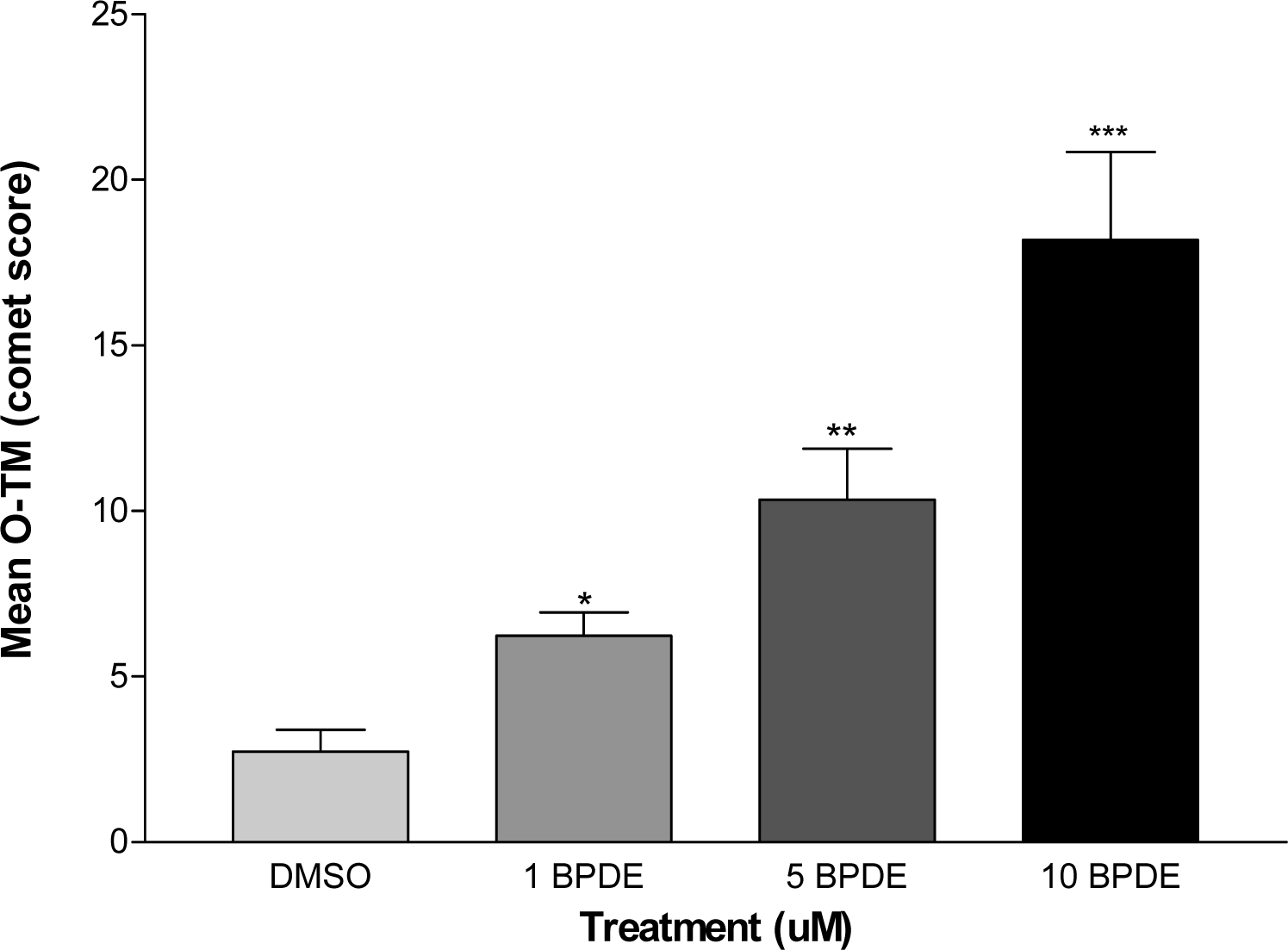
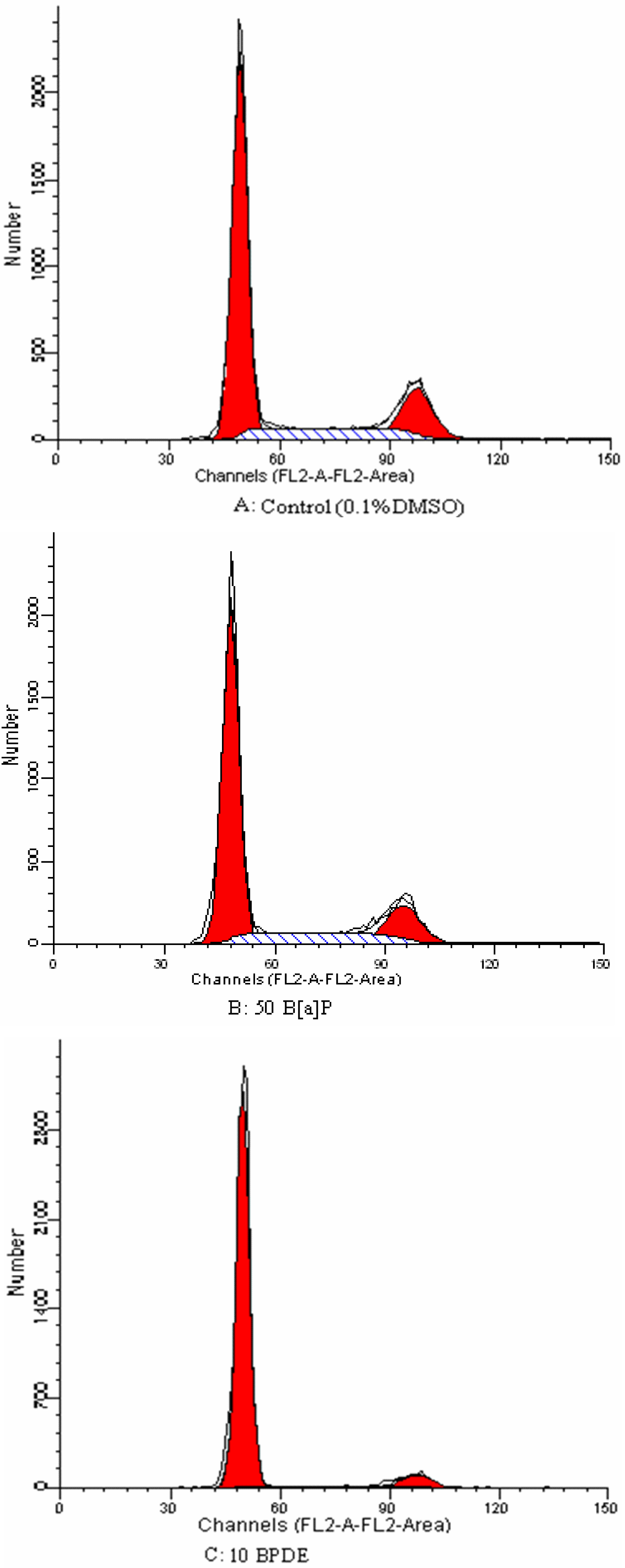
Induction of Cell Death, DNA Strand Breaks, and Cell Cycle Arrest in DU145 Human Prostate Carcinoma Cell Line by Benzo[a]pyrene and Benzo[a]pyrene-7,8-diol-9,10-epoxide

Abstract
Share and Cite
Nwagbara, O.; Darling-Reed, S.F.; Tucker, A.; Harris, C.; Abazinge, M.; Thomas, R.D.; Gragg, R.D. Induction of Cell Death, DNA Strand Breaks, and Cell Cycle Arrest in DU145 Human Prostate Carcinoma Cell Line by Benzo[a]pyrene and Benzo[a]pyrene-7,8-diol-9,10-epoxide. Int. J. Environ. Res. Public Health 2007, 4, 10-14. https://doi.org/10.3390/ijerph2007010002
Nwagbara O, Darling-Reed SF, Tucker A, Harris C, Abazinge M, Thomas RD, Gragg RD. Induction of Cell Death, DNA Strand Breaks, and Cell Cycle Arrest in DU145 Human Prostate Carcinoma Cell Line by Benzo[a]pyrene and Benzo[a]pyrene-7,8-diol-9,10-epoxide. International Journal of Environmental Research and Public Health. 2007; 4(1):10-14. https://doi.org/10.3390/ijerph2007010002
Chicago/Turabian StyleNwagbara, Onyinye, Selina F. Darling-Reed, Alicia Tucker, Cynthia Harris, Michael Abazinge, Ronald D. Thomas, and Richard D. Gragg. 2007. "Induction of Cell Death, DNA Strand Breaks, and Cell Cycle Arrest in DU145 Human Prostate Carcinoma Cell Line by Benzo[a]pyrene and Benzo[a]pyrene-7,8-diol-9,10-epoxide" International Journal of Environmental Research and Public Health 4, no. 1: 10-14. https://doi.org/10.3390/ijerph2007010002
APA StyleNwagbara, O., Darling-Reed, S. F., Tucker, A., Harris, C., Abazinge, M., Thomas, R. D., & Gragg, R. D. (2007). Induction of Cell Death, DNA Strand Breaks, and Cell Cycle Arrest in DU145 Human Prostate Carcinoma Cell Line by Benzo[a]pyrene and Benzo[a]pyrene-7,8-diol-9,10-epoxide. International Journal of Environmental Research and Public Health, 4(1), 10-14. https://doi.org/10.3390/ijerph2007010002