A Scoping Review of IPV Prevention Curricula and Their Implementation in Low- and Middle-Income Countries: Implications for the Next Generation of Programs


Highlights
- Intimate partner violence (IPV) is a preventable global public health crisis: at least one in three women will experience physical or sexual violence from a male partner in their lifetime, with higher past-year prevalence in low- and middle-income countries (LMICs).
- Curriculum-based programs are among the most widely used strategies for preventing IPV in LMICs, yet very little is systematically known about how these programs compare in design, content, and implementation, limiting the field’s capacity to learn and improve.
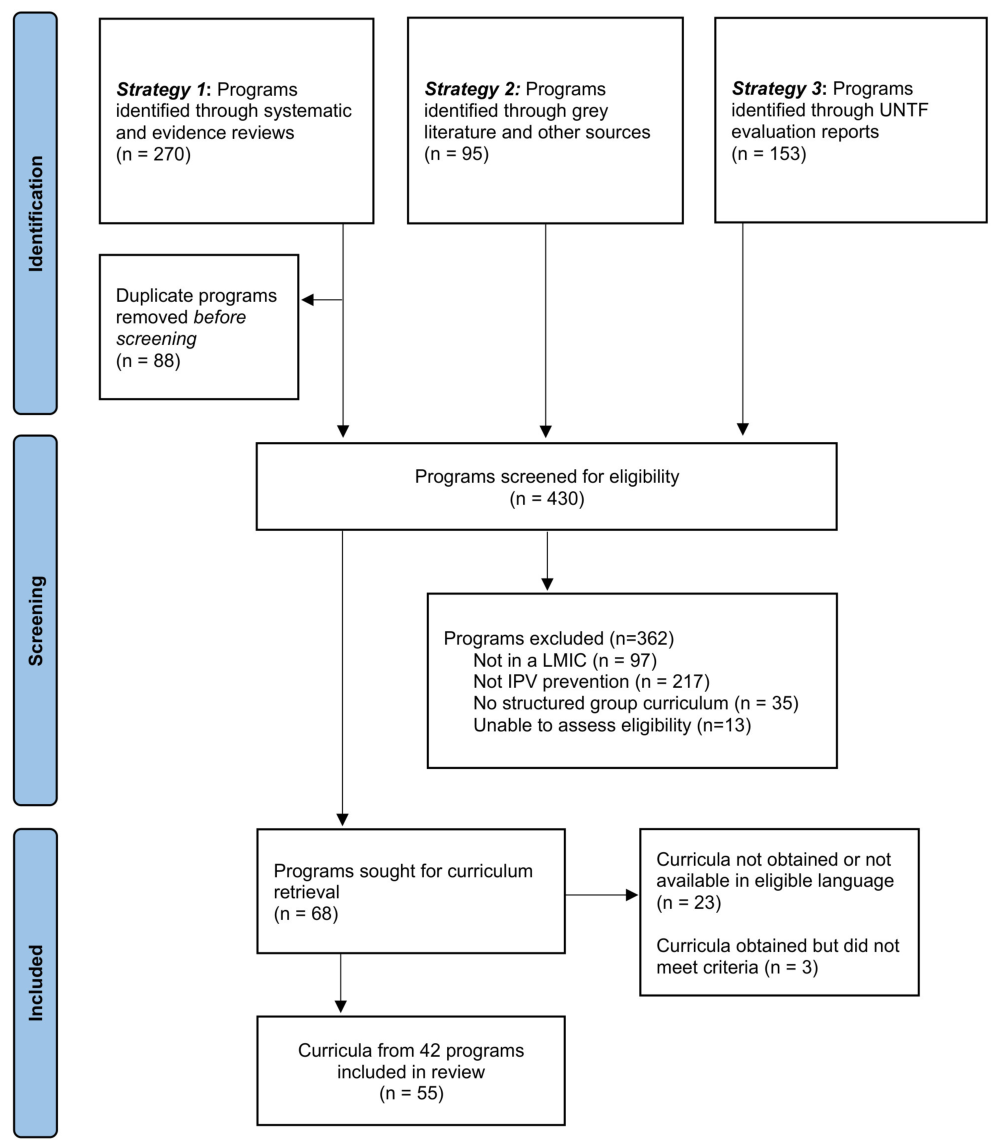
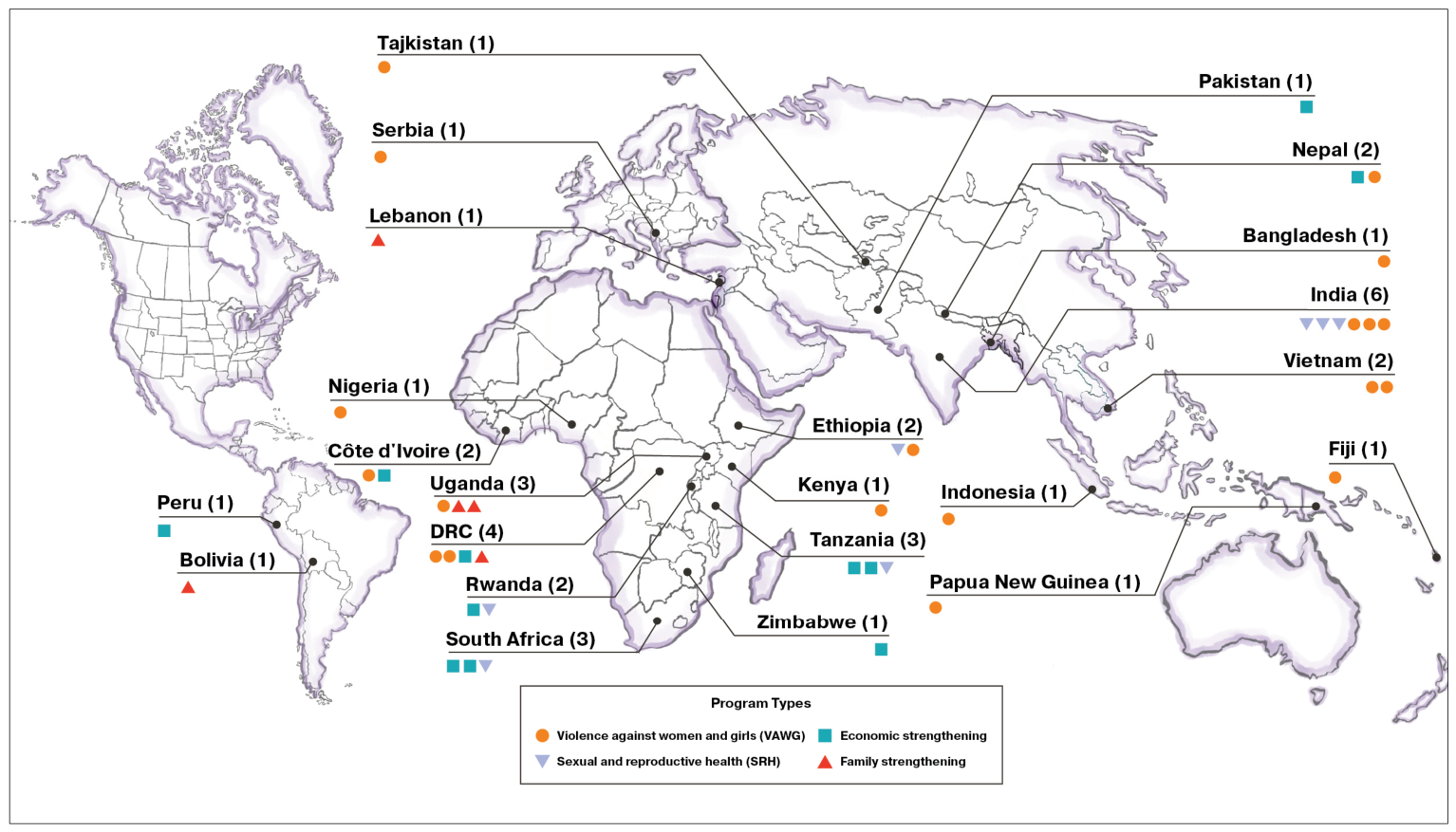
- This is the most comprehensive review of IPV prevention curricula in LMICs to date, examining 55 curricula from 42 programs across 23 countries. Uniquely, it focuses on program design, content, and implementation features rather than outcomes.
- The review identifies considerable variation in program design and implementation but similarity in core content, including widespread adaptation of existing programs and activities, revealing areas to strengthen and innovate in future programs.
- The field should prioritize continued innovation in new program models and content, while strengthening relationship skills-building, including communication and emotional regulation, and more intentionally addressing key risk factors like alcohol and mental health.
- Practitioners, program designers, and funders can support better design, planning, and implementation of programs grounded in evidence and good practice, and improve program documentation to support learning, intentional adaptation, and replication.
Abstract
1. Introduction
- Aim of this study
- (1)
- what design features characterize IPV prevention curricula;
- (2)
- what are their core content and learning methodologies; and
- (3)
- how are curricula implemented and facilitated.
2. Materials and Methods
2.1. Inclusion and Exclusion Criteria
- (a)
- Program was designed with an explicit goal of preventing IPV, as opposed to other forms of violence against women and girls (e.g., non-partner sexual violence or sexual harassment);
- (b)
- Implemented in a low- or middle-income country, as our organization focuses on supporting violence prevention practitioners in these countries;
- (c)
- Engaged participants in facilitated group sessions (with three or more participants) guided by a structured curriculum;
- (d)
- Implemented in 2000 or later given the growth in violence prevention programming and evidence since then; and
- (e)
- Curriculum available for review in English, French, or Spanish.
- (a)
- not intended for full implementation with the same participants (e.g., a compendium of optional activities often used in community mobilization programs); or
- (b)
- designed to guide the training of program facilitators.
2.2. Curricula Identification and Selection
2.3. Data Extraction
2.4. Analysis
3. Results
3.1. Characteristics of Reviewed Curricula
3.1.1. Program Goals and Implementers
3.1.2. Populations
3.2. Findings on Curricula Content and Subject Matter
3.2.1. Curricula Often Used Aspirational Messaging to Highlight the Benefits of Healthier Relationships for Individuals, Families, and Communities
3.2.2. Gender and Power Were Core Topics Within Curricula, Alongside Violence and Healthy Relationships
Topic Area 1: Understanding and Addressing Violence
Topic Area 2: Questioning Gender Norms and Roles
Topic Area 3: Fostering Healthy Relationships
Topic Area 4: Recognizing and Balancing Power
Topic Area 5: Promoting Effective Communication
3.2.3. Relatively Few Curricula Directly Addressed Harmful Alcohol Use or Poor Mental Health, Despite Their Substantiated Links with IPV
3.2.4. Most Curricula Aimed to Strengthen Relationship Skills, but Many Included Relatively Limited Instruction or Time for Learning These Skills
3.3. Findings on Curricula Teaching Approaches, Learning Methods, and Adaptation
3.3.1. Curricula Were Grounded in Participatory Teaching Approaches and Prioritized Creating Conducive Learning Environments
3.3.2. Curricula Used a Variety of Participatory Facilitation Methods to Prompt Discussion and Reflection and Build Skills
3.3.3. Curricula and Their Content Were Often Derivative of Earlier Programs, but the Degree of Adaptation Varied Greatly
3.3.4. Curricula Were Not Always Grounded in Theory and Content Was Not Always Connected to a Theory of Change
3.4. Findings on Curricula Implementation and Facilitation
3.4.1. Session Number, Frequency, and Instruction Time Varied Considerably, but a Sizeable Proportion of Curricula Were of Limited Duration
3.4.2. Participant Recruitment and Attendance Were Common Challenges for Which Programs Adopted Different Strategies
3.4.3. Large Group Sizes for Some Programs May Have Hindered Their Aims for Participatory Learning and Interaction
3.4.4. Most Programs Delivered Curricula to Both Men and Women, Often Separately, and Sometimes with Different Content
3.4.5. Facilitators Were Critical to Program Success, Came from Diverse Backgrounds, and Were Often the Same Sex as Participants
3.4.6. Facilitators Received Vastly Different Amounts of Training Despite Their Crucial Role, and Training Details Were Often Sparse
4. Discussion
- Recommendation 1. Balance innovation in new program models, content, and methodologies, with intentional adaptation of existing ones
- Develop and pilot new curriculum-based programs and content across different contexts and populations, including with under-represented groups
- Ensure content and methodologies are continuously updated to align with current evidence and remove outdated content
- Explore new entry-points and framings to address core concepts like gender and power, building upon local and Indigenous knowledge
- Develop new critical reflection activities that interrogate other beliefs and norms driving violence, such as male headship, respect for male authority in the family, a husband’s perceived entitlement to sex, and family privacy
- Experiment with media and technological solutions to enhance learning, strengthen delivery, and facilitate scale
- Use digital platforms and short videos to standardize content, test digital delivery to complement or reinforce in-person sessions, and develop digital and AI applications to provide facilitators with ongoing support as programs scale
- Further test and evaluate programs to clarify their essential components, illuminate scope for innovation, and better understand which content and models work in different contexts
- Recommendation 2. Ensure greater connection and coherence between curricula pedagogy, content, and a well-articulated theory of change (ToC)
- Ensure organizations devote sufficient time and resources to develop well-defined ToCs that addresses local risk factors for IPV and are clear about how change is expected to occur
- Ensure there are clear links between a curriculum’s ToC and its core content and methodologies, as well as the indicators and outcomes used to monitor and evaluate program effectiveness, including to test hypothesized mechanisms of change [7]
- Recommendation 3. Strengthen focus on relationships skills in curricula and apply evidence-based behavior change approaches
- Organizations should be clear about which skills they aim to build based on their ToC, and ensure appropriate content and methodologies are reflected in curricula
- Expand the strategies used to teach social and emotional skills, integrating evidence-based approaches from the education and mental health fields
- Evaluate program impacts on skills acquisition and assess the relative contribution of different skills and approaches to violence outcomes
- Recommendation 4: Integrate strategies to reduce alcohol use and improve mental health within curricula
- Strengthen practitioner knowledge on how alcohol use and mental health shape risks of IPV perpetration and experience
- Adapt evidence-based and Indigenous approaches for managing alcohol or improving mental health for integration in IPV prevention curricula, including through collaboration with the alcohol reduction and mental health fields [34]
- Evaluate whether integration of these approaches leads to reductions in alcohol consumption, improved mental health, and greater reductions in violence
- Recommendation 5: Encourage more IPV prevention programs to address violence against children, thereby disrupting intergenerational cycles of abuse and supporting long-term IPV prevention
- Strengthen practitioner knowledge on the co-occurrence of IPV and violence against children and their shared risk factors and social norms
- Integrate content on parenting and violence against children within IPV prevention curricula, where it makes sense based on populations and program aims
- Encourage reflection on the links between violence in childhood and adulthood within curricula, regardless of the population
- Collaborate with and learn from the parenting field, to strengthen coordinated violence prevention for women and children
- Recommendation 6: Place greater emphasis on implementation design, planning, quality, and documentation
- Continue generating and disseminating good practice to guide program design, planning, and implementation, based on emerging evidence and practice-based knowledge
- Assess the barriers organizations face in applying good practice, such as knowledge, capacity, funding, or timelines, and advance potential solutions
- Encourage organizations to publicly document the steps taken to develop or adapt programs, and to make curricula openly available
- Develop minimum standards for reporting on program design and implementation, which include facilitator training and support
- Call on journal editors to require detailed descriptions of program design and implementation as appendices to research articles [81]
5. Conclusions
Supplementary Materials
Author Contributions
Funding
Institutional Review Board Statement
Informed Consent Statement
Data Availability Statement
Acknowledgments
Conflicts of Interest
Abbreviations
| IPV | Intimate partner violence |
| SRH | Sexual and reproductive health |
| ToC | Theory of change |
| VAC | Violence against children |
| VAW | Violence against women |
| VAWG | Violence against women and girls |
References
- Sardinha, L.; Maheu-Giroux, M.; Stöckl, H.; Meyer, S.R.; García-Moreno, C. Global, Regional, and National Prevalence Estimates of Physical or Sexual, or Both, Intimate Partner Violence against Women in 2018. Lancet 2022, 399, 803–813. [Google Scholar] [CrossRef] [PubMed]
- Ullman, C.; Amin, A.; Bourassa, A.; Chandarana, S.; Dutra, F.; Ellsberg, M. Interventions to Prevent Violence against Women and Girls Globally: A Global Systematic Review of Reviews to Update the RESPECT Women Framework. BMJ Public Health 2025, 3, e001126. [Google Scholar] [CrossRef] [PubMed]
- Jewkes, R. Intimate Partner Violence: Causes and Prevention. Lancet 2002, 359, 1423–1429. [Google Scholar] [CrossRef] [PubMed]
- Jewkes, R.; Willan, S.; Heise, L.; Washington, L.; Shai, N.; Kerr-Wilson, A.; Gibbs, A.; Stern, E.; Christofides, N. Elements of the Design and Implementation of Interventions to Prevent Violence against Women and Girls Associated with Success: Reflections from the What Works to Prevent Violence against Women and Girls? Global Programme. Int. J. Environ. Res. Public Health 2021, 18, 12129. [Google Scholar] [CrossRef] [PubMed]
- MacArthur, J.; Carrard, N.; Davila, F.; Grant, M.; Megaw, T.; Willetts, J.; Winterford, K. Gender-Transformative Approaches in International Development: A Brief History and Five Uniting Principles. Women’s Stud. Int. Forum 2022, 95, 102635. [Google Scholar] [CrossRef]
- Vo, A.V.; Majnoonian, A.; Shabalala, F.; Masuku, S.; Fielding-Miller, R. “Hope Is Being Stirred up”: Critical Consciousness in Gender-Based Violence Interventions. Soc. Sci. Med. 2024, 357, 117175. [Google Scholar] [CrossRef] [PubMed]
- Leight, J.; Cullen, C.; Ranganathan, M.; Yakubovich, A. Effectiveness of Community Mobilisation and Group-Based Interventions for Preventing Intimate Partner Violence against Women in Low- and Middle-Income Countries: A Systematic Review and Meta-Analysis. J. Glob. Health 2023, 13, 04115. [Google Scholar] [CrossRef] [PubMed]
- Jewkes, R. What Works Full Report: Effective Design and Implementation; What Works To Prevent VAWG? Global Programme Synthesis Product Series; South African Medical Research Council: Pretoria, South Africa, 2020. Available online: https://prevention-collaborative.org/wp-content/uploads/2021/08/What_Works_2020_Effective-design-and-implementation.pdf (accessed on 5 May 2026).
- Mittal, M.; Paden McCormick, A.; Palit, M.; Trabold, N.; Spencer, C. A Meta-Analysis and Systematic Review of Community-Based Intimate Partner Violence Interventions in India. Int. J. Environ. Res. Public Health 2023, 20, 5277. [Google Scholar] [CrossRef] [PubMed]
- Kerr Wilson, A. A Rigorous Global Evidence Review of Interventions to Prevent Violence Against Women and Girls; What Works to Prevent Violence Against Women and Girls: Pretoria, South Africa, 2020; Available online: https://www.whatworks.co.za/resources/item/693-a-rigorous-global-evidence-review-of-interventions-to-prevent-violence-against-women-and-girls (accessed on 5 May 2026).
- Arksey, H.; O’Malley, L. Scoping Studies: Towards a Methodological Framework. Int. J. Soc. Res. Methodol. 2005, 8, 19–32. [Google Scholar] [CrossRef]
- Lockwood, C.; Dos Santos, K.B.; Pap, R. Practical Guidance for Knowledge Synthesis: Scoping Review Methods. Asian Nurs. Res. 2019, 13, 287–294. [Google Scholar] [CrossRef] [PubMed]
- Tricco, A.C.; Lillie, E.; Zarin, W.; O’Brien, K.K.; Colquhoun, H.; Levac, D.; Moher, D.; Peters, M.D.J.; Horsley, T.; Weeks, L.; et al. PRISMA Extension for Scoping Reviews (PRISMAScR): Checklist and Explanation. Ann. Intern. Med. 2018, 169, 467–473. [Google Scholar] [CrossRef] [PubMed]
- Doyle, K.; Levtov, R.G.; Rolleri, L.; Stern, E.; Heise, L. A Scoping Review of Intimate Partner Violence Prevention Curricula and Their implementation in Low- and Middle-Income Countries. Open Science Framework. 2 July 2026. Available online: https://doi.org/10.17605/OSF.IO/DYZH4 (accessed on 18 July 2026).
- Graham, L.M.; Embry, V.; Young, B.-R.; Macy, R.J.; Moracco, K.E.; Reyes, H.L.M.; Martin, S.L. Evaluations of Prevention Programs for Sexual, Dating, and Intimate Partner Violence for Boys and Men: A Systematic Review. Trauma Violence Abus. 2021, 22, 439–465. [Google Scholar] [CrossRef] [PubMed]
- Park, S.; Kim, S.-H. A Systematic Review and Meta-Analysis of Randomized Controlled Trials for Intimate Partner Violence: The Effects of the Programs Based on Their Purposes. Trauma Violence Abus. 2023, 24, 2115–2129. [Google Scholar] [CrossRef] [PubMed]
- Awolaran, O.; Olubumuyi, O.; OlaOlorun, F.; Assink, M.; Van Rooij, F.; Leijten, P. Interventions to Reduce Intimate Partner Violence against Women in Low- and Middle-Income Countries: A Meta-Analysis. Aggress. Violent Behav. 2022, 64, 101746. [Google Scholar] [CrossRef]
- Bacchus, L.J.; Colombini, M.; Pearson, I.; Gevers, A.; Stöckl, H.; Guedes, A.C. Interventions That Prevent or Respond to Intimate Partner Violence against Women and Violence against Children: A Systematic Review. Lancet Public Health 2024, 9, e326–e338. [Google Scholar] [CrossRef] [PubMed]
- McNaughton Reyes, H.L.; Graham, L.M.; Chen, M.S.; Baron, D.; Gibbs, A.; Groves, A.K.; Kajula, L.; Bowler, S.; Maman, S. Adolescent Dating Violence Prevention Programmes: A Global Systematic Review of Evaluation Studies. Lancet Child Adolesc. Health 2021, 5, 223–232. [Google Scholar] [CrossRef] [PubMed]
- UN Women. UN Trust Fund to End Violence Against Women. Available online: https://www.unwomen.org/en/trust-funds/un-trust-fund-to-end-violence-against-women (accessed on 4 May 2026).
- Levac, D.; Colquhoun, H.; O’Brien, K. Scoping Studies: Advancing the Methodology. Implement. Sci. 2010, 5, 69. [Google Scholar] [CrossRef] [PubMed]
- Equimundo; ABAAD. Program ABB—Early Childhood Development: A Manual Promoting Positive Parenting and Strengthening Active Father’s Involvement in Early Childhood Development; Equimundo: Washington, DC, USA; ABAAD: Beirut, Lebanon, 2020; Available online: https://www.equimundo.org/wp-content/uploads/2024/02/Program-ABB-EN-2024.pdf (accessed on 23 April 2026).
- Dutton, M.A.; Osthoff, S.; Dichter, M. Update of the “Battered Woman Syndrome” Critique; VAWnet, National Resource Center on Domestic Violence: Harrisburg, PA, USA, 2009; Available online: https://vawnet.org/sites/default/files/materials/files/2016-09/AR_BWSCritique.pdf (accessed on 5 May 2026).
- Wilson, J.K. Cycle of Violence. In The Encyclopedia of Women and Crime; Bernat, F.P., Frailing, K., Eds.; Wiley: Hoboken, NJ, USA, 2019. [Google Scholar] [CrossRef]
- Kivel, P. Men’s Work: How to Stop the Violence That Tears Our Lives Apart, 2nd ed.; Hazelden Publishing: Center City, MN, USA, 1998. [Google Scholar]
- Galiè, A.; Farnworth, C.R. Power through: A New Concept in the Empowerment Discourse. Glob. Food Secur. 2019, 21, 13–17. [Google Scholar] [CrossRef] [PubMed]
- Michau, L.; Namy, S. SASA! Together: An Evolution of the SASA! Approach to Prevent Violence against Women. Eval. Program Plan. 2021, 86, 101918. [Google Scholar] [CrossRef] [PubMed]
- Raising Voices; Beyond Borders; International Rescue Committee; Women’s Promotion Centre; University of California, San Diego. Learning from SASA! Adaptations in Diverse Contexts: A Summary Brief; Raising Voices: Kampala, Uganda, 2021; Available online: https://raisingvoices.org/wp-content/uploads/2021/12/AdaptationsSASA_AllContextsSum.pdf (accessed on 23 April 2026).
- Instituto Promundo; ECOS; PAPAI; Salud y Genero. Program H: Working with Young Men to Promote Health and Gender Equity; Instituto Promundo: Rio de Janeiro, Brazil, 2002; Available online: https://www.equimundo.org/wp-content/uploads/2014/12/Program-H-Working-With-Young-Men.pdf (accessed on 5 May 2026).
- Raising Voices. SASA! Activist Kit: Awareness Phase, Training: Influencing Attitudes Module; Raising Voices: Kampala, Uganda, 2008; p. 6. Available online: https://raisingvoices.org/resources/sasa-activist-kit-awareness-phase/ (accessed on 5 May 2026).
- Peneva, I.; Mavrodiev, S. A Historical Approach to Assertiveness. Psychol. Thought 2013, 6, 3–26. [Google Scholar] [CrossRef]
- Zaharna, R.S. The Associative Perspective of Communication and Relational Communication in the Arab World. In Proceedings of the Intercultural Competence Conference, Tucson, AZ, USA, 29–31 January 2010; Volume 1, pp. 398–423. [Google Scholar]
- Egitim, S.; Harumi, S. Developing Global Competence in World Language Education: A Four-Step Framework for Success; Routledge: London, UK, 2025. [Google Scholar] [CrossRef]
- Stern, E.; Levtov, R. Addressing Harmful Alcohol Use and Poor Mental Health: Missed Opportunities to Prevent Domestic Violence. Public Health 2026, 254, 106223. [Google Scholar] [CrossRef] [PubMed]
- Promundo; CARE International in Rwanda. Journeys of Transformation: A Training Manual for Engaging Men as Allies in Women’s Economic Empowerment; Promundo and CARE: Washington, DC, USA; Kigali, Rwanda, 2012; pp. 57–58. Available online: https://www.equimundo.org/wp-content/uploads/2014/12/Journeys-of-Transformation.pdf (accessed on 5 May 2026).
- Bandura, A. Social Foundations of Thought and Action: A Social Cognitive Theory; Prentice-Hall: Englewood Cliffs, NJ, USA, 1986. [Google Scholar]
- Ajzen, I. The Theory of Planned Behavior. Organ. Behav. Hum. Decis. Process. 1991, 50, 179–211. [Google Scholar] [CrossRef]
- Kirby, D.; Coyle, K.; Alton, F.; Rolleri, L.; Robin, L. Reducing Adolescent Sexual Risk: A Theoretical Guide for Developing and Adapting Curriculum-Based Programs; ETR Associates: Scotts Valley, CA, USA, 2011. [Google Scholar]
- Freire, P. Pedagogy of the Oppressed, 30th Anniversary ed.; Ramos, M.B., Translator; Continuum: New York, NY, USA, 2000. [Google Scholar]
- Hatcher, A.; De Wet, J.; Bonell, C.P.; Strange, V.; Phetla, G.; Proynk, P.M.; Kim, J.C.; Morison, L.; Porter, J.D.H.; Busza, J.; et al. Promoting Critical Consciousness and Social Mobilization in HIV/AIDS Programmes: Lessons and Curricular Tools from a South African Intervention. Health Educ. Res. 2011, 26, 542–555. [Google Scholar] [CrossRef] [PubMed]
- International Rescue Committee (IRC); World Vision. Becoming One: A Guide for Faith Leaders; International Rescue Committee: New York, NY, USA; Available online: https://prevention-collaborative.org/wp-content/uploads/2021/08/FL-Guide-with-Violence-Content-English.pdf (accessed on 22 April 2026).
- Rolleri, L.; Kotsadam, A.; Villanger, E. Managing Work and Life: A Gender Transformative Intimate Partner Violence Prevention Course for Women in Ethiopia; Chr. Michelsen Institute: Bergen, Norway, 2017. [Google Scholar]
- Jewkes, R.; Nduna, M.; Jama-Shai, N. Stepping Stones South Africa: A Training Manual for Sexual and Reproductive Health Communication and Relationship Skills, 3rd ed.; Medical Research Council: Pretoria, South Africa, 2010; Available online: https://www.lepantoin.org/wp/wp-content/uploads/2024/02/STEPPING-STONES-MANUAL.pdf (accessed on 5 May 2026).
- Welbourn, A. Stepping Stones: A Training Package on HIV/AIDS, Communication and Relationship Skills; Strategies for Hope: Oxford, UK, 1995. [Google Scholar]
- Naker, D.; Michau, L. Rethinking Domestic Violence: A Training Process for Community Activists; Raising Voices: Kampala, Uganda, 2004; Available online: https://raisingvoices.org/resources/rethinking-domestic-violence-a-training-process-for-community-activists-2/ (accessed on 5 May 2026).
- The ACQUIRE Project/EngenderHealth; Promundo. Engaging Boys and Men in Gender Transformation: The Group Education Manual; The ACQUIRE Project/EngenderHealth: New York, NY, USA, 2008; Available online: https://e1.nmcdn.io/assets/engender/wp-content/uploads/2023/07/Group_Education_Manual_final.pdf (accessed on 5 May 2026).
- Raising Voices. SASA! Activist Kit for Preventing Violence Against Women and HIV; Raising Voices: Kampala, Uganda, 2008; Available online: https://raisingvoices.org/women/sasa-approach/sasa-activist-kit/ (accessed on 5 May 2026).
- Sahay, S.; Kalokhe, A. Fly High Together; ICMR National AIDS Research Institute and Emory University: Pune, India, 2018. [Google Scholar]
- Rural AIDS & Development Action Research Program (RADAR), School of Public Health University of the Witwatersrand; Small Enterprise Foundation (SEF). Sisters for Life: Gender & HIV Training Manual; RADAR, University of Witwatersrand: Johannesburg, South Africa; SEF: Tzaneen, South Africa, 2006. [Google Scholar]
- Nazareth Centre for Rehabilitation (NCFR). Planim Save, Kamap Strongpela Curriculum: A Guide for Promoting Community Social Cohesion & Security in Bougainville; Nazareth Centre for Rehabilitation: Bougainville, Papua New Guinea, 2017. [Google Scholar]
- Institute for Reproductive Health, Georgetown University; Save the Children. REAL Fathers Initiative Mentor Group Discussion Guide for Less Literate Mentors; Institute for Reproductive Health, Georgetown University: Washington, DC, USA; Save the Children for the U.S. Agency for International Development (USAID): Washington, DC, USA, 2019; Available online: https://prevention-collaborative.org/wp-content/uploads/2021/08/REAL-Fathers_Mentor-Discussion-Guide-for-Low-Literate-Mentors-FINAL.pdf (accessed on 23 April 2026).
- Kalokhe, A.S.; Iyer, S.; Katendra, T.; Gadhe, K.; Kolhe, A.R.; Paranjape, A.; Del Rio, C.; Stephenson, R.; Sahay, S. Primary Prevention of Intimate Partner Violence Among Recently Married Dyads Residing in the Slums of Pune, India: Development and Rationale for a Dyadic Intervention. JMIR Res. Protoc. 2019, 8, e11533. [Google Scholar] [CrossRef] [PubMed]
- Lehrer, R. Field Notes: A Designer’s Experiment with Rigorous Research. The Airbel Impact Lab (Medium). 8 November 2018. Available online: https://medium.com/airbel/field-notes-a-designers-experiment-with-rigorous-research-592b6859ee0c (accessed on 5 May 2026).
- Kohli, A.; Doyle, K.; Uysal, J.; Ojamuge, D.; Karamage, E.; Lundgren, R. Building a Theory of Change to Guide Fatherhood Programming to Prevent Family Violence: A Comparison of Two Programs. BMC Public Health 2025, 25, 3576. [Google Scholar] [CrossRef] [PubMed]
- World Health Organization. RESPECT Women: Preventing Violence Against Women, 2nd ed.; World Health Organization: Geneva, Switzerland, 2025; Available online: https://www.who.int/publications/i/item/9789240117020 (accessed on 5 May 2026).
- Promundo; Instituto PAPAI; Salud y Género; ECOS. Program H|M|D: A Toolkit for Action/Engaging Youth to Achieve Gender Equity; Promundo: Rio de Janeiro, Brazil, 2013; Available online: https://www.equimundo.org/wp-content/uploads/2015/01/Program-HMD-Toolkit-for-Action.pdf (accessed on 5 May 2026).
- Gevers, A.; Taylor, K.; Droste, M.; Williams, J. Lessons Learned about Primary Prevention of Violence Against Women and Girls in the Asia and the Pacific Region; Partners for Prevention (P4P): Bangkok, Thailand, 2018; Available online: https://prevention-collaborative.org/wp-content/uploads/2021/08/P4P_2018_Lessons-Learned-Prevention-VAWG-Asia-Pacific-1.pdf (accessed on 5 May 2026).
- Burgess, A.; van Diggele, C.; Roberts, C.; Mellis, C. Facilitating Small Group Learning in the Health Professions. BMC Med. Educ. 2020, 20, 457. [Google Scholar] [CrossRef] [PubMed]
- Greene, M.E.; Levack, A. Synchronizing Gender Strategies: A Cooperative Model for Improving Reproductive Health and Transforming Gender Relations; Population Reference Bureau (PRB) on behalf of the Interagency Gender Working Group (IGWG): Washington, DC, USA, 2010; Available online: https://www.igwg.org/wp-content/uploads/2017/06/synchronizing-gender-strategies.pdf (accessed on 5 May 2026).
- Jewkes, R.; Flood, M.; Lang, J. From Work with Men and Boys to Changes of Social Norms and Reduction of Inequities in Gender Relations: A Conceptual Shift in Prevention of Violence against Women and Girls. Lancet 2015, 385, 1580–1589. [Google Scholar] [CrossRef] [PubMed]
- Bartel, D. Training and Mentoring Community Facilitators to Lead Critical Reflection Groups for Preventing Violence Against Women; The Prevention Collaborative: Amherst, MA, USA, 2018; Available online: https://prevention-collaborative.org/wp-content/uploads/2021/08/Prevention-Collaborative_2018_Training-and-Mentoring-Facilitators.pdf (accessed on 5 May 2026).
- Equimundo; Plan International Canada. Role of Facilitation in Gender-Transformative Programs That Engage Men and Boys; Equimundo: Washington, DC, USA, 2020; Available online: https://www.equimundo.org/wp-content/uploads/2020/07/Role-of-Facilitation-in-Gender-Transformative-Programs-That-Engage-Men-and-Boys.pdf (accessed on 5 May 2026).
- Boyer, C.; Levy Paluck, E.; Annan, J.; Nevatia, T.; Cooper, J.; Namubiru, J.; Heise, L.; Lehrer, R. Religious Leaders Can Motivate Men to Cede Power and Reduce Intimate Partner Violence: Experimental Evidence from Uganda. Proc. Natl. Acad. Sci. USA 2022, 119, e2200262119. [Google Scholar] [CrossRef] [PubMed]
- Stern, E. Awareness Raising to Prevent Violence Against Women and Girls; The Prevention Collaborative: Amherst, MA, USA; UN Women: New York, NY, USA, 2021; Available online: https://asiapacific.unwomen.org/sites/default/files/Field%20Office%20ESEAsia/Docs/Publications/2021/12/ap-Awareness-raising-FINAL-20Dec.pdf (accessed on 5 May 2026).
- Dunkle, K.; Stern, E.; Chatterji, S.; Heise, L. Effective Prevention of Intimate Partner Violence through Couples Training: A Randomised Controlled Trial of Indashyikirwa in Rwanda. BMJ Glob. Health 2020, 5, e002439. [Google Scholar] [CrossRef] [PubMed]
- Doyle, K.; Levtov, R.G.; Karamage, E.; Rakshit, D.; Kazimbaya, S.; Sayinzoga, F.; Sibomana, H.; Ngayaboshya, S.; Rutayisire, F.; Barker, G. Long-Term Impacts of the Bandebereho Programme on Violence against Women and Children, Maternal Health-Seeking, and Couple Relations in Rwanda: A Six-Year Follow-up of a Randomised Controlled Trial. eClinicalMedicine 2023, 64, 102233. [Google Scholar] [CrossRef] [PubMed]
- The Prevention Collaborative. Opportunities for Innovation: Strengthening Mental Health and Addressing Alcohol Use through IPV Prevention Curricula; Evidence Report; The Prevention Collaborative: Amherst, MA, USA, 2025; Available online: https://prevention-collaborative.org/wp-content/uploads/2025/04/MH-and-Alcohol-Interviews-Report-FINAL.pdf (accessed on 5 May 2026).
- Lokot, M.; Pichon, M.; Kalichman, B.; Nardella, S.; Falconer, J.; Kyegombe, N.; Buller, A.M. Decolonising the Field of Violence against Women and Girls: A Scoping Review and Recommendations for Research and Programming. Soc. Sci. Med. 2024, 357, 117168. [Google Scholar] [CrossRef] [PubMed]
- Mannell, J.; Tevaga, P.; Heinrich, S.; Fruean, S.; Chang, S.L.; Lowe, H.; Brown, L.J.; Vaczy, C.; Tanielu, H.; Cowley-Malcolm, E.; et al. Love Shouldn’t Hurt—E Le Sauā Le Alofa: Co-Designing a Theory of Change for Preventing Violence against Women in Samoa. Glob. Public Health 2023, 18, 2201632. [Google Scholar] [CrossRef] [PubMed]
- UNRISD; UN Women. Understanding Backlash Against Gender Equality: Evidence, Trends and Policy Responses; UNRISD: Geneva, Switzerland, 2025; Available online: https://www.unwomen.org/sites/default/files/2025-09/understanding-backlash-against-gender-equality-evidence-trends-and-policy-responses-en.pdf (accessed on 7 May 2026).
- Stern, E.; Heise, L.; McLean, L. The Doing and Undoing of Male Household Decision-Making and Economic Authority in Rwanda and Its Implications for Gender Transformative Programming. Cult. Health Sex. 2018, 20, 976–991. [Google Scholar] [CrossRef] [PubMed]
- Pierotti, R.S.; Lake, M.; Lewis, C. Equality on His Terms: Doing and Undoing Gender through Men’s Discussion Groups. Gend. Soc. 2018, 32, 540–562. [Google Scholar] [CrossRef]
- Levtov, R.G.; Doyle, K.; Bingenheimer, J.B.; Lahiri, S.; Kazimbaya, S.; Karamage, E.; Sayinzoga, F.; Mutoni, M.; Rubayita, C.H.; Barker, G. Improved Relationship Quality, Equitable Gender Attitudes, and Reduced Alcohol Abuse as Key Mechanisms to Reduce Intimate Partner Violence in the Bandebereho Couples’ Randomized Trial in Rwanda. Prev. Sci. 2022, 23, 1495–1506. [Google Scholar] [CrossRef] [PubMed]
- Guedes, A.; Bott, S.; Garcia-Moreno, C.; Colombini, M. Bridging the Gaps: A Global Review of Intersections of Violence against Women and Violence against Children. Glob. Health Action 2016, 9, 31516. [Google Scholar] [CrossRef] [PubMed]
- Stern, E.; Heise, L.; Dunkle, K.; Chatterji, S. How the Indashyikirwa Intimate Partner Violence Prevention Programme in Rwanda Influenced Parenting and Violence against Children. J. Fam. Violence 2022, 37, 195–206. [Google Scholar] [CrossRef]
- Alsina, E.; Browne, J.L.; Gielkens, D.; Noorman, M.A.J.; De Wit, J.B.F. Interventions to Prevent Intimate Partner Violence: A Systematic Review and Meta-Analysis. Violence Against Women 2024, 30, 953–980. [Google Scholar] [CrossRef] [PubMed]
- The Prevention Collaborative. Introducing the Prevention Triad: A Tool for Understanding What Works to Prevent Violence Against Women and Girls; The Prevention Collaborative: Amherst, MA, USA, 2022; Available online: https://prevention-collaborative.org/wp-content/uploads/2022/09/Prevention-Triad-Web-File.pdf (accessed on 5 May 2026).
- The Prevention Collaborative. Prevention Triad Case Study: Interpreting Conflicting Results of the Indashyikirwa Programme and Its Adaptation in Rwanda; The Prevention Collaborative: Amherst, MA, USA, 2023; Available online: https://prevention-collaborative.org/wp-content/uploads/2023/08/Indashyikirwa-Prevention-Triad-CS-FINAL.pdf (accessed on 5 May 2026).
- The Prevention Collaborative. Prevention Triad Case Study: Lessons from the Adaptation of a Faith-Based Prevention Programme in the Democratic Republic of Congo; The Prevention Collaborative: Amherst, MA, USA, 2023; Available online: https://prevention-collaborative.org/wp-content/uploads/2023/12/TMMMF-case-study-Prevention-Triad.pdf (accessed on 5 May 2026).
- Jewkes, R.; Ramsoomar, L. Community Interventions to Prevent Violence against Women Must Follow Best Practice. Lancet Glob. Health 2025, 13, e1998–e1999. [Google Scholar] [CrossRef] [PubMed]
- Agha, S.; McLarnon, C.; Rimal, R.N.; Cislaghi, B.; Evans, W.D.; Costenbader, E.; Larson, E.; Smith, S.; Davis, C.H.; Lundgren, R. Norms Shifting and Behavior Change in Uncertain Times: Assessing the State of the Evidence. Glob. Public Health 2026, 21, 2632391. [Google Scholar] [CrossRef] [PubMed]
- Falb, K.L.; Blackwell, A.; Balanchander, M.; Bourey, C.; Yuan, C.T.; Decker, M.R. Adapting, Sustaining and Scaling Violence against Women and Children Prevention Interventions in Low- and Middle-Income Countries: A Scoping Review on the Use of Implementation Science. Trauma Violence Abus. 2025, 26, 15248380251340640. [Google Scholar] [CrossRef] [PubMed]
- The Prevention Collaborative. Adapting Curriculum-Based Violence Prevention Programmes: Guidance Note; The Prevention Collaborative: Amherst, MA, USA, 2022; Available online: https://prevention-collaborative.org/wp-content/uploads/2022/06/4_Adaptation-Guidance-Note.pdf (accessed on 5 May 2026).
- Sharma, V.; Scott, J.; Belen, K.; Dartnall, E.; Gevers, A. The IPV-ADAPT + Framework: How to Adapt Intimate Partner Violence Prevention Programs; Equality Insights Lab, Sexual Violence Research Initiative: Pretoria, South Africa, 2022; Available online: https://svri.org/sites/default/files/attachments/2023-02-10/IPV-ADAPT-Guidance%20Note_DIGITAL_Final_2023.02.09.pdf (accessed on 5 May 2026).
- Gibbs, A.; Mannell, J.; Ndungu, J.; Burgess, R.; Washington, L. Implementing the Co-Development of Interventions to Address Violence Against Women and Girls: A Short Primer; Sexual Violence Research Initiative (SVRI): Pretoria, South Africa, 2023; Available online: https://svri.org/sites/default/files/attachments/2023-06-13/P2_KNOWLEDGE_EXCHANGE_OP1.pdf (accessed on 5 May 2026).
- Nyoni, P.; Tomita, A.; Mkhwanazi, S.; Gibbs, A. Pilot Cluster Randomised Controlled Trial of Stepping Stones and Creating Futures Plus to Reduce Emotional Dysregulation among Young Men in Rural Areas and Urban Informal Settlements in KwaZulu-Natal Province, South Africa. Int. J. Soc. Psychiatry 2025, 71, 863–874. [Google Scholar] [CrossRef] [PubMed]
- Rwanda Men’s Resource Center (RWAMREC); Promundo-US. Facilitator’s Manual: Engaging Fathers in Gender Equality, Maternal and Child Health, Caregiving and Violence Prevention; RWAMREC: Kigali, Rwanda, 2014; Available online: https://prevention-collaborative.org/wp-content/uploads/2021/08/Bandebereho-Facilitators-Manual-Fathers.pdf (accessed on 23 April 2026).
- Rwanda Men’s Resource Center (RWAMREC); Promundo-US. Facilitator’s Manual: Engaging Young Men in Sexual and Reproductive Health and Gender Equality; RWAMREC: Kigali, Rwanda, 2014; Available online: https://www.mencare.org/wp-content/uploads/2015/08/Bandebereho-Facilitators-Manual-Young-Men.pdf (accessed on 23 April 2026).
- Rwanda Men’s Resource Center (RWAMREC); Promundo-US. Facilitator’s Manual: Engaging Young Women in Sexual and Reproductive Health and Gender Equality; RWAMREC: Kigali, Rwanda, 2014; Available online: https://www.mencare.org/wp-content/uploads/2015/08/Bandebereho-Facilitators-Manual-Young-Women.pdf (accessed on 23 April 2026).
- Equal Access International; South African Medical Research Council (SAMRC). BIG Change Curriculum: A Discussion Guide for Prevention of Intimate Partner Violence; Equal Access International: Kathmandu, Nepal, 2017. Available online: https://www.whatworks.co.za/resources/item/494-big-change-curriculum (accessed on 22 April 2026).
- HIAS Refugee Trust of Kenya. Discussion Guide; HIAS Kenya: Nairobi, Kenya.
- CEDPA India; Population Council. Do Kadam: Barabari Ki Ore—Peer Mentors Module for SHG Women and Husband Peer Mentors; CEDPA India: New Delhi, India.
- CEDPA India. Peer Mentors Module for NYKS Clubs; CEDPA India: New Delhi, India.
- International Rescue Committee. EA$E Discussion Series: Facilitator Guide; International Rescue Committee: New York, NY, USA, 2012. [Google Scholar]
- International Rescue Committee. Preventing Violence Against Women and Girls: Engaging Men Through Accountable Practice—Part 3: Implementation Guide; International Rescue Committee: New York, NY, USA, 2014. [Google Scholar]
- Deepan, P. Community Dialogues: Promoting Respectful Relationships and Equitable Communities; Tearfund: Middlesex, UK, 2016. [Google Scholar]
- Plan International Vietnam. Training Manual on School Related Gender Based Violence Prevention and Response for Teachers of Lower Secondary Schools; Plan International Vietnam: Hanoi, Vietnam.
- Plan International Vietnam. Training Manual on School Related Gender Based Violence Prevention and Response for Teachers of High Schools; Plan International Vietnam: Hanoi, Vietnam.
- Oceania Rugby; Child Fund; UN Women. Get Into Rugby Plus Sessions 1-16; Oceania Rugby: Surry Hills, NSW, Australia.
- Yu, M.; Wan, J.; Jewkes, R.; Willian, S.; Huq, N.; Rahman, T. HERrespect Curriculum: Women Workers; Business for Social Responsibility: San Francisco, CA, USA; South African Medical Research Council: Pretoria, South Africa, 2018.
- Yu, M.; Wan, J.; Jewkes, R.; Willian, S.; Huq, N.; Rahman, T. HERrespect Curriculum: Male Workers; Business for Social Responsibility: San Francisco, CA, USA; South African Medical Research Council: Pretoria, South Africa, 2018.
- Yu, M.; Wan, J.; Jewkes, R.; Willian, S.; Huq, N.; Rahman, T. HERrespect Curriculum: Management; Business for Social Responsibility: San Francisco, CA, USA; South African Medical Research Council: Pretoria, South Africa, 2018.
- Rozan. Engaging with Boys and Young Men to Address Gender Based Violence and Masculinities. A Training Module; Rozan: Islamabad, Pakistan, 2011. [Google Scholar]
- Scripture Union West Africa (SUWA). Community Dialogues Facilitators’ Manual on Sexual and Gender Based Violence. A Manual of SUWA; SUWA: Ibadan, Nigeria.
- Yaker, R. Couple Curriculum Training Module; CARE Rwanda and Rwanda Men’s Resource Center (RWAMREC): Kigali, Rwanda, 2018. [Google Scholar]
- Deepan, P.; McLarnon-Silk, C.; Quirke, F. Community Dialogues: Promoting Respectful Relationships and Equitable Communities with Sessions on Child Spacing; Tearfund: Middlesex, UK; Institute of Reproductive Health, Georgetown: Washington, DC, USA, 2020; Available online: https://learn.tearfund.org/en/resources/tools-and-guides/community-dialogues-with-sessions-on-child-spacing (accessed on 23 April 2026).
- International Rescue Committee. Men and Women in Partnership; International Rescue Committee Ivory Coast: Abidjan, Côte d’Ivoire, 2010. [Google Scholar]
- Andras, R.; Ileš, M.; Pavlović, S.; Mészáros, G.; Dés, F.; Cesar, S.; Bijelić, N. Capacity Training Manual to Raise Awareness and Contribute to Ending Cyber Sexual and Gender-Based Violence in Youth Intimate Partner Relationships; Fundación Privada INDERA: Barcelona, Spain, 2020. [Google Scholar]
- Makerere University—Child Health and Development Centre (CHDC). Parenting for Respectability Programme Facilitator’s Manual; Child Health and Development Centre: Kampala, Uganda, 2019. [Google Scholar]
- Banco Interamericano de Desarrollo; CulturaSalud/EME; REDMAS; Promundo. Programa P Bolivia: Un Manual para la Paternidad Activa. Padres y Madres por una Crianza Positiva, Compartida y sin Violencia; Banco Interamericano de Desarrollo: Washington, DC, USA, 2016; Available online: https://www.mencare.org/wp-content/uploads/2016/12/Programa-Bolivia-Manual-para-la-paternidad-activa.pdf (accessed on 23 April 2026).
- Gevers, A.; Hasyim, N. Reimay: Reaching Papuan Prosperity. Adolescent Manual. January 2018. Available online: https://asiapacific.unwomen.org/sites/default/files/2025-05/reimay_reaching_papuan_prosperity_adolescent_manual_2018_comp.pdf (accessed on 23 April 2026).
- Raj, A.; Dasgupta, A.; Nair, S.; Battala, M.; Naik, D.D.; Silverman, J.G.; Saggurti, N.; Donta, B. RHANI Wives HIV Risk Reduction Among at Risk Wives in India Curriculum; Center on Gender Equity and Health, University of California: San Diego, CA, USA; Population Council: Delhi, India; National Institute for Research in Reproductive Health: Mumbai, India, 2015. [Google Scholar]
- International Rescue Committee. Safe at Home Women’s Curriculum; International Rescue Committee: New York, NY, USA, 2021; Available online: https://gbvresponders.org/wp-content/uploads/2022/09/SAH_Module-2_Part-3_Womens-Curriculum.pdf (accessed on 23 April 2026).
- International Rescue Committee. Safe at Home Family Curriculum; International Rescue Committee: New York, NY, USA, 2021; Available online: https://gbvresponders.org/wp-content/uploads/2022/09/SAH_Module-2_Part-3_Family-Curriculum.pdf (accessed on 23 April 2026).
- International Rescue Committee. Safe at Home Men’s Curriculum; International Rescue Committee: New York, NY, USA, 2021; Available online: https://gbvresponders.org/wp-content/uploads/2022/09/SAH_Module-2_Part-3_Mens-Curriculum.pdf (accessed on 23 April 2026).
- Volunteer Services Overseas (VSO) Nepal; South African Medical Research Council (SAMRC). Sammanit Jeevan Living with Dignity Gender Transformative Norms Training Manual; VSO Nepal; SAMRC; What Works to Prevent Violence Against Women and Girls, 2013; (published 2018). Available online: https://prevention-collaborative.org/wp-content/uploads/2021/08/Zindagii-ShoistaPt1.pdf (accessed on 23 April 2026).
- Volunteer Services Overseas (VSO) Nepal; South African Medical Research Council (SAMRC). Sammanit Jeevan Living with Dignity Economic Empowerment and Income Generating Activities Training Manual; VSO Nepal; SAMRC; What Works to Prevent Violence Against Women and Girls, 2013; (published 2018). Available online: https://prevention-collaborative.org/wp-content/uploads/2021/08/Zindagii-ShoistaPt2.pdf (accessed on 23 April 2026).
- Karnataka Health Promotion Trust (KHPT). Reducing Intimate Partner Violence and Increasing Condom Usage in the HIV/STI Response. A Facilitators’ Guide for Training Female Sex Workers; Karnataka Health Promotion Trust: Karnataka, India, 2015; Available online: https://strive.lshtm.ac.uk/sites/strive.lshtm.ac.uk/files/Facilitator%27s%20Guide%20for%20training%20female%20sex%20workers%20Reducing%20IPV%20and%20increasing%20condom%20usage%20in%20the%20HIV%20STI%20response_0.pdf (accessed on 23 April 2026).
- Karnataka Health Promotion Trust (KHPT). Reducing Intimate Partner Violence and Increasing Condom Usage in the HIV/STI Response. A Facilitators’ Guide for Training Intimate Partners of Female Sex Workers; Karnataka Health Promotion Trust: Karnataka, India, 2015. Available online: https://assets.publishing.service.gov.uk/media/594a5277ed915d0baf00000a/Facilitator_s_Guide_for_training_intimate_partners_of_female_sex_workers_Reducing_intimate_partner_violence_and_increasing_condom_usage_in_the_HIV_STI_response.pdf (accessed on 23 April 2026).
- Gupta, A.D.; Nevel, V. Module on Working with Women’s Group to Prevent Violence Against Women and Girls; SNEHA Program on Prevention of Violence Against Women and Children: Mumbai, India, 2024. [Google Scholar]
- Health Economics and HIV and AIDS Research Division (HEARD), University of KwaZulu-Natal, Project Empower, and South African Medical Research Council (SAMRC). Creating Futures: Supporting Young People in Building Their Livelihoods. A Manual for Facilitating Livelihoods; Health Economics and HIV and AIDS Research Division (HEARD), University of KwaZulu-Natal, Project Empower, and South African Medical Research Council (SAMRC): Durban, South Africa, 2013. Available online: https://www.researchgate.net/publication/296637763_Creating_Futures_Facilitator_Manual (accessed on 23 April 2026).
- ECORYS; Social Development Direct. Toose Social Empowerment Facilitator’s Guide. A Guide for Facilitators to Follow as They Take Groups Through the Social Empowerment Component of the Toose Model; Stopping Abuse and Female Exploitation (SAFE) Programme, 2019. Available online: https://www.ecorys.com/app/uploads/2019/02/3.-Toose-Social-Empowerment-Facilitators-Guide.pdf (accessed on 23 April 2026).
- Inter-American Development Bank. Manual de Capacitación sobre Género y Violencia; Inter-American Development Bank: Washington, DC, USA.
- Bantwana World Education Initiative. Male Peer Groups: A Facilitator’s Guide; Bantwana World Education Initiative; South African Medical Research Council (SAMRC): Cape Town, South Africa, 2018. Available online: https://bantwana.org/wp-content/uploads/2018/01/TEVAW-Male-Peer-Groups-Facilitator-Guide.pdf (accessed on 23 April 2026).
- Rolleri, L.; Verani, F.; Tewolde, S. Unite for a Better Life for Women. A Gender Transformative Intimate Partner Violence and HIV Prevention Curriculum for Women; Abdul Latif Jameel Poverty Action Lab (J-PAL) at Massachusetts Institute of Technology, EngenderHealth, Ethiopian Public Health Association: Addis Ababa, Ethiopia, 2014. [Google Scholar]
- Rolleri, L.; Verani, F.; Tewolde, S. Unite for a Better Life for Men. A Gender Transformative Intimate Partner Violence and HIV Prevention Curriculum for Men; Abdul Latif Jameel Poverty Action Lab (J-PAL) at Massachusetts Institute of Technology, EngenderHealth, Ethiopian Public Health Association: Addis Ababa, Ethiopia, 2014. [Google Scholar]
- Rolleri, L.; Verani, F.; Tewolde, S. A Gender Transformative Intimate Partner Violence and HIV Prevention Curriculum for Couples; Abdul Latif Jameel Poverty Action Lab (J-PAL) at Massachusetts Institute of Technology, EngenderHealth, Ethiopian Public Health Association: Addis Ababa, Ethiopia, 2014. [Google Scholar]
- Gevers, A.; Trang, Q.T.; Phuong, L.T.L.; An, P.T. A Manual for Facilitators of Male Advocate Clubs to Prevent Violence Against Women and Girls. Tranforming Masculinities and Building Respectful and Equal Relationships with Women; Da Nang Women’s Union, Partners for Prevention: Da Nang, Viet Nam, November 2016. Available online: https://asiapacific.unwomen.org/en/digital-library/publications/2017/04/the-manual-for-facilitators-of-male-advocate (accessed on 23 April 2026).
- Rolleri, L.; Verani, F.; Lees, S.; Nyalali, K.; Kiswaga, L. Wanawake Na Maisha: A Gender Transformative Intimate Partner Violence Prevention Curriculum for Women in Mwanza, Tanzania. 2014. Available online: https://prevention-collaborative.org/wp-content/uploads/2021/08/Maisha-Wanawake-Na-Maisha_FINAL_Dec2015.pdf (accessed on 23 April 2026).
- EngenderHealth; CHAMPION Project Tanzania. CoupleConnect: A Gender-Transformative HIV Prevention Curriculum for Tanzanian Couples; EngenderHealth: Dar es Salaam, Tanzania, 2014. [Google Scholar]
- Population Council; CORO for Literacy; MAMTA; Instituto Promundo. Yaari Dosti: Young Men Redefine Masculinity. 2006. Available online: https://knowledgecommons.popcouncil.org/cgi/viewcontent.cgi?article=1593&context=departments_sbsr-hiv (accessed on 23 April 2026).
- Jewkes, R.; Jama-Shai, N. Zindagii Shoista Living with Dignity: Workshop Manual. Part 1: Social Empowerment. 2018. Available online: https://www.whatworks.co.za/documents/publications/curricula/221-tajikistan-livingwithdignity-pt1-en-2018-final/file (accessed on 23 April 2026).
- Gulyamova, P.; Balboni, S.; Jewkes, R.; Jama-Shai, N. Zindagii Shoista Living with Dignity: Workshop Manual. Part 2: Enabling Economic Empowerment Through Income Generating Activities. 2018. Available online: https://www.whatworks.co.za/resources/item/540-zindagii-shoista-living-with-dignity-workshop-manual-part-2 (accessed on 23 April 2026).



| Characteristics | Number | Percentage |
|---|---|---|
| Region | ||
| East Asia and the Pacific | 6 | 11% |
| Europe and Central Asia | 2 | 4% |
| Latin America and the Caribbean | 3 | 5% |
| Middle East and North Africa | 1 | 2% |
| South Asia | 15 | 27% |
| Sub Saharan Africa | 28 | 51% |
| Implementation Context | ||
| Conflict-affected or humanitarian a | 7 | 12.7% |
| Rural | 22 | 40.0% |
| Rural and urban | 5 | 9.1% |
| Urban or peri-urban | 21 | 38.2% |
| Program type | ||
| Violence against women and girls (VAWG) | 25 | 45% |
| Sexual and reproductive health (SRH) | 13 | 24% |
| Economic strengthening | 10 | 18% |
| Family strengthening | 7 | 13% |
| Program implementers/developers | ||
| National or local NGO(s) or university(s) | 10 | 26.2% |
| International or regional NGO(s) | 13 | 38.1% |
| Partnership between international and national NGOs or universities | 32 | 35.7% |
| Population curricula designed for | ||
| Men and women (or boys and girls) | 26 | 47.3% |
| Men or boys only | 15 | 25.5% |
| Women or girls only | 14 | 27.3% |
| Age of participants receiving curriculum | ||
| Adults only (aged above 18 years) | 43 | 78% |
| Adolescents only (11 to 18 years) | 5 | 9% |
| Adolescents and adults | 7 | 13% |
| Topic Area | Curricula Including the Topic Area | All Curricula | ||
|---|---|---|---|---|
| Number of Curricula with the Topic (%) | Proportion of Sessions with the Topic, Range a | Average Proportion of Sessions with the Topic | Average Proportion of Sessions with the Topic | |
| Understanding and addressing violence | 54 (98.2%) | 4.8–62.5% | 29.4% | 28.9% |
| Subtopic 1: Understanding violence | 54 (98.2%) | 4.3–50.0% | 19.8% | 19.4% |
| Subtopic 2: Taking action | 37 (67.3%) | 4.5–31.3% | 13.7% | 9.2% |
| Subtopic 3: Supporting survivors | 35 (63.6%) | 4.3–37.5% | 12.9% | 8.2% |
| Gender norms and roles | 52 (94.5%) | 6.7–33.3% | 16.13 | 15.4% |
| Healthy relationships | 47 (85.5%) | 3.4–40.0% | 15.4% | 13.1% |
| Recognizing and balancing power | 42 (76.4%) | 1.7–16.7% | 8.9% | 6.8% |
| Effective communication | 42 (76.4%) | 4.2–55.6% | 18.6% | 14.2% |
| Resolving conflict | 36 (65.5%) | 2.5–25.0% | 9.0% | 5.9% |
| Social and emotional skills | 36 (65.5%) | 4.0–20.0% | 10.3% | 6.8% |
| Division of unpaid care work | 35 (63.6%) | 2.5–22.2% | 9.3% | 5.9% |
| Sexuality and consent | 32 (58.2%) | 5.0–50.0% | 12.4% | 7.2% |
| Sexual and reproductive health | 30 (54.5%) | 2.4–50.0% | 17.3% | 9.4% |
| Laws, rights and policies | 22 (40.0%) | 4.0–27.3% | 11.0% | 4.4% |
| Parenting and child development | 20 (36.4%) | 4.3–39.1% | 21.6% | 7.9% |
| Making (household) decisions | 18 (32.7%) | 4.3–50.0% | 11.5% | 3.8% |
| Violence against children | 17 (30.9%) | 6.3–33.3% | 14.3% | 4.4% |
| Managing alcohol & substance use | 13 (23.6%) | 2.5–50.0% | 9.8% | 2.3% |
| Managing household finances | 12 (21.8%) | 3.4–37.5% | 12.3% | 2.7% |
| Mental health | 9 (16.4%) | 4.5–18.2% | 10.2% | 1.7% |
| Health (other) b | 9 (16.4%) | 2.4–20.0% | 5.9% | 1.0% |
| Characteristics | Number | % | Characteristics | Number | % |
|---|---|---|---|---|---|
| Hours of instruction a | Gender synchronized approach | ||||
| Average hours | 33.8 | - | Both sexes engaged in curricula | 45 | 81.8% |
| <10 h | 1 | 1.8% | One sex engaged in curriculum | 10 | 18.2% |
| 10 to 17 h | 12 | 21.8% | Female participants only | 5 | |
| 18 to 24 h | 15 | 27.3% | Male participants only | 5 | |
| 25 to 39 h | 7 | 12.7% | |||
| 40 to 50 h | 9 | 16.4% | Synchronized approach: sessions | n = 45 | |
| >50 h | 10 | 18.2% | Separate, single-sex sessions | 18 | 40.0% |
| Unclear | 1 | 1.8% | Mixed-sex sessions | 14 | 31.1% |
| Combined single + mixed sessions | 13 | 28.9% | |||
| Total contact points b | |||||
| Average number | 15.3 | - | Group size d | ||
| <10 | 14 | 25.5% | Minimum members, average | 16.8 | - |
| 10 to 15 | 19 | 34.5% | Maximum members, average | 23.1 | - |
| 16 to 20 | 10 | 18.2% | Unknown/not reported | 5 | 9.1% |
| 21 to 30 | 9 | 16.4% | |||
| >30 | 3 | 5.5% | Number of facilitators e | ||
| 1 facilitator | 22 | 40.0% | |||
| Meeting duration | 2+ facilitators | 15 | 27.3% | ||
| Average (hours) | 2.1 | - | Unknown/not reported | 18 | 32.7% |
| <1 h | 2 | 3.6% | |||
| 1–2 h | 24 | 43.6% | Participant compensation or support | ||
| 2–3 h | 26 | 47.3% | Unclear/not reported | 29 | 52.7% |
| >3 h | 3 | 5.5% | None provided | 11 | 20.0% |
| Support provided f | 15 | 27.3% | |||
| Meeting location | Material support | 7 | 12.7% | ||
| Community | 46 | 83.6% | Financial support | 6 | 10.9% |
| School | 3 | 5.5% | Food/drinks | 3 | 5.5% |
| Workplace | 3 | 5.5% | |||
| Place of worship | 1 | 1.8% | Participant attendance rates g | ||
| Community + home | 2 | 3.6% | Not available/reported | 22 | 40.0% |
| Low attendance h | 3 | 5.5% | |||
| Meeting frequency c | Moderate attendance i | 11 | 20.0% | ||
| Twice weekly | 6 | 10.9% | High attendance j | 19 | 34.5% |
| Once weekly | 32 | 58.2% | |||
| Every two weeks | 8 | 14.5% | |||
| Once monthly | 5 | 9.1% | |||
| Intensive workshop | 2 | 3.6% | |||
| Unknown/unclear | 2 | 3.6% |
| Characteristics | Number | Percentage |
|---|---|---|
| Facilitator background | ||
| NGO staff or field agents a | 22 | 40.0% |
| Community leaders b | 15 | 27.3% |
| Peers c | 13 | 23.6% |
| Service providers d | 1 | 1.8% |
| Teachers e | 4 | 7.3% |
| Facilitator sex | ||
| Unknown/not reported | 6 | 10.9% |
| Male only | 16 | 29.1% |
| Female only | 12 | 21.8% |
| Male or female | 6 | 10.9% |
| Male and female | 15 | 27.3% |
| Lead separate, single-sex groups | 1 | 1.9% |
| Co-facilitate mixed-sex groups + lead single-sex groups | 9 | 16.4% |
| Co-facilitate only mixed-sex groups | 5 | 9.1% |
| Length of facilitator training | ||
| <5 days | 6 | 15.8% |
| 5 to 10 days | 20 | 52.6% |
| 11 to 15 days | 10 | 26.3% |
| >16 days | 2 | 5.3% |
| Unknown or unclear | 17 | 30.9% |
Disclaimer/Publisher’s Note: The statements, opinions and data contained in all publications are solely those of the individual author(s) and contributor(s) and not of MDPI and/or the editor(s). MDPI and/or the editor(s) disclaim responsibility for any injury to people or property resulting from any ideas, methods, instructions or products referred to in the content. |
© 2026 by the authors. Licensee MDPI, Basel, Switzerland. This article is an open access article distributed under the terms and conditions of the Creative Commons Attribution (CC BY) license.
Share and Cite
Doyle, K.; Levtov, R.G.; Rolleri, L.; Stern, E.; Heise, L. A Scoping Review of IPV Prevention Curricula and Their Implementation in Low- and Middle-Income Countries: Implications for the Next Generation of Programs. Int. J. Environ. Res. Public Health 2026, 23, 989. https://doi.org/10.3390/ijerph23080989
Doyle K, Levtov RG, Rolleri L, Stern E, Heise L. A Scoping Review of IPV Prevention Curricula and Their Implementation in Low- and Middle-Income Countries: Implications for the Next Generation of Programs. International Journal of Environmental Research and Public Health. 2026; 23(8):989. https://doi.org/10.3390/ijerph23080989
Chicago/Turabian StyleDoyle, Kate, Ruti G. Levtov, Lori Rolleri, Erin Stern, and Lori Heise. 2026. "A Scoping Review of IPV Prevention Curricula and Their Implementation in Low- and Middle-Income Countries: Implications for the Next Generation of Programs" International Journal of Environmental Research and Public Health 23, no. 8: 989. https://doi.org/10.3390/ijerph23080989
APA StyleDoyle, K., Levtov, R. G., Rolleri, L., Stern, E., & Heise, L. (2026). A Scoping Review of IPV Prevention Curricula and Their Implementation in Low- and Middle-Income Countries: Implications for the Next Generation of Programs. International Journal of Environmental Research and Public Health, 23(8), 989. https://doi.org/10.3390/ijerph23080989