Perspective

The Relationship Between Urban Characteristics and Non-Communicable Diseases—Conceptual Framework of the HORUS Project


1
Centre for Biomodelling and Innovations in Medicine, Faculty of Medicine, University of Rijeka, Braće Branchetta 20/1, 51000 Rijeka, Primorje-Gorski Kotar County, Croatia
2
Faculty of Engineering, Juraj Dobrila University of Pula, Negrijeva 6, 52100 Pula, Istarska County, Croatia
3
Department of Social Medicine and Epidemiology, Faculty of Medicine, University of Rijeka, Braće Branchetta 20/1, 51000 Rijeka, Primorje-Gorski Kotar County, Croatia
4
Department of Physiology, Immunology and Pathophysiology, Faculty of Medicine, University of Rijeka, 51000 Rijeka, Primorje-Gorski Kotar County, Croatia
*
Authors to whom correspondence should be addressed.
Int. J. Environ. Res. Public Health 2026, 23(6), 759; https://doi.org/10.3390/ijerph23060759 (registering DOI)
Submission received: 27 April 2026 / Revised: 1 June 2026 / Accepted: 3 June 2026 / Published: 5 June 2026
(This article belongs to the Section Environmental Health)

Highlights

Public health relevance—How does this work relate to a public health issue?
  • Urban characteristics influence exposure to health-promoting or health-damaging conditions linked to non-communicable diseases.
  • The HORUS project addresses public health by linking urban planning, behavioral risk factors, and spatial health inequalities.
Public health significance—Why is this work of significance to public health?
  • The manuscript provides a conceptual framework for integrating urban mapping, GIS, and participatory methods in non-communicable disease prevention.
  • It highlights how vulnerable urban populations may benefit from healthier built environments and evidence-informed planning.
Public health implications—What are the key implications or messages for practitioners, policy makers and/or researchers in public health?
  • Policy makers and urban planners can use the proposed framework to identify health-related urban inequalities and design-targeted interventions.
  • Researchers and public health practitioners may use GIS, participatory approaches, and citizen-generated data to support healthier urban environments.

Abstract

The HORUS project investigates the interface between urban planning and public health, focusing on the reduction in non-communicable diseases through innovative urban planning and technological integration. Using geographic information systems, the project will develop advanced urban mapping and analysis tools to visualize and tackle health inequalities. The participatory approach of technologies will actively engage communities and empower citizens to shape a healthier urban environment. Through multidimensional methodology, including qualitative research and natural experiments, HORUS will align urban planning with public health needs. The project will target modifiable risk factors (physical inactivity, unhealthy diet and substance use) and will promote behavior change and environmental redesign to reduce the prevalence of non-communicable diseases. The integration of digital technologies will not only improve the assessment of urban health but also facilitate evidence-based interventions tailored to vulnerable populations. HORUS will provide practical applications for policy makers and urban planners by providing actionable frameworks for incorporating health-promoting features into urban design. This holistic approach will help create resilient cities that prioritize public health and shape the future urban environment. The project is an example of the transformative potential of aligning technology, policy and community engagement to effectively address the challenges of urbanization, and non-communicable diseases.

1. Introduction

Improving urban design is essential for population health as the urban environment directly impacts health outcomes. Evaluating how built environments promote active transportation requires shifting away from passive scoping reviews. Dynamic interventions are now assessed through advanced human–computer interaction models—specifically ‘walking the digital street’ protocols—which utilize advanced simulations to evaluate real-time human behavior and active urban mobility preferences directly prior to physical municipal execution [1]. Integrating green spaces and reducing urban densities, such as noise and traffic, can enhance mental well-being in cities that are well-planned. While traditional approaches emphasize localized neighborhood master plans to control noise and density factors, forward-looking public frameworks increasingly deploy multi-dimensional ‘digital twins’ [2]. Prioritizing the population health issues in urban architecture is essential for the efficient management of infectious diseases, as exemplified by the COVID-19 pandemic. Zhang and Li [3] noted that densely populated areas lacking proper planning experienced increased rates of the transmission of infective diseases. Healthy urban design promotes the attainment of sustainable development goals by advocating for social equity, guaranteeing access to essential services, healthy food, and active transportation options [4]. The elements have a crucial impact in diminishing health disparities. Moreover, cities that integrate health policies into their urban planning are better equipped to tackle the challenges presented by aging populations by enhancing accessibility and community support networks [5]. Hence, the existing evidence clearly suggests that integrating health promotion into urban design is a vital step towards enhancing public health, resilience, and general quality of life in urban populations.
Healthy cities in Europe exemplify a holistic approach to urban planning and the advancement of public health [1], aiming to create surroundings that foster well-being in various aspects of life. These cities prioritize activities aimed at boosting physical exercise, improving access to green spaces, encouraging sustainable transportation, and assuring equal access to healthcare services. According to a report on the quality of life in European cities [6], Zurich, Copenhagen, and Groningen are acknowledged for their superior quality of life, attributed to resident contentment, inclusion, and safety. They emphasize public health by advocating for physical exercise, facilitating access to green places, supporting sustainable transportation, and guaranteeing accessible healthcare services. These efforts jointly promote inhabitants’ well-being and improve the quality of life in these cities.
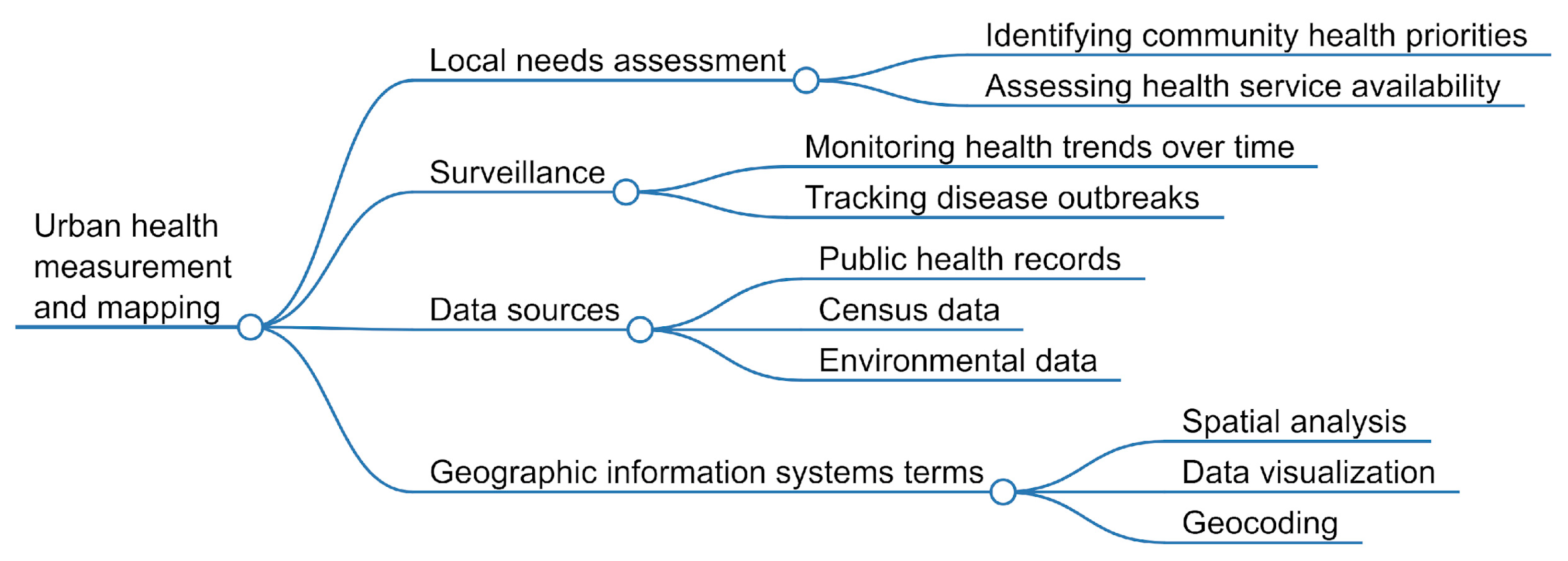
Urbanization has a significant impact on public health and presents both challenges and opportunities. Rather than simply viewing environmental risks through the lens of individual ‘urban-associated diseases’, contemporary public health demands a broader systemic evolution. As established by Hu et al. [7], spatial epidemiology is undergoing a definitive paradigm shift away from reactive infectious tracking toward the continuous monitoring of structural, macro-level chronic disease environments. Addressing these problems requires a comprehensive understanding of the social determinants of health and the use of modern technologies to improve health outcomes in urban populations [8]. Urban areas’ complexity determination involves the use of sophisticated technology for effective mapping and analysis, with computer-aided engineering (CAE) modeling and geographic information system (GIS) mapping being essential tools in this field. Utilizing GIS data and visualization technologies shows great potential for urban health mapping [9,10,11] by providing a detailed representation and study of urban environments as well as making the data more accessible and understandable to a broader audience. This approach helps improve comprehension of the several elements affecting population health indicators. By utilizing urban area mapping, we explore its ability to improve community health programs, enhance public health interventions [12], and offer valuable information on the health trends of urban populations. By combining GIS data with participatory mapping technology, different stakeholders including health professionals, policy makers, and community residents may get better insight and understanding of the important health-related features of metropolitan areas. This collaboration could lead to valuable information for stakeholders regarding urban health environments. Visualizing GIS and other data simplifies complex urban phenomena, allowing public health professionals and policy makers to make evidence-based decisions that improve educational programs and public health strategies [13,14,15,16]. This knowledge can then lead to the deployment of public health strategies that are more targeted and efficient. Some of the main components of urban health assessment and mapping are presented in Figure 1.
The significance of the convergence of urban mapping and health determinants has been investigated in this paper, with a particular focus on the power of contemporary technology and applications. The implementation of the HORUS project in this context could illustrate the potential of innovation to enhance urban environments and public health.

2. Urban Area Mapping

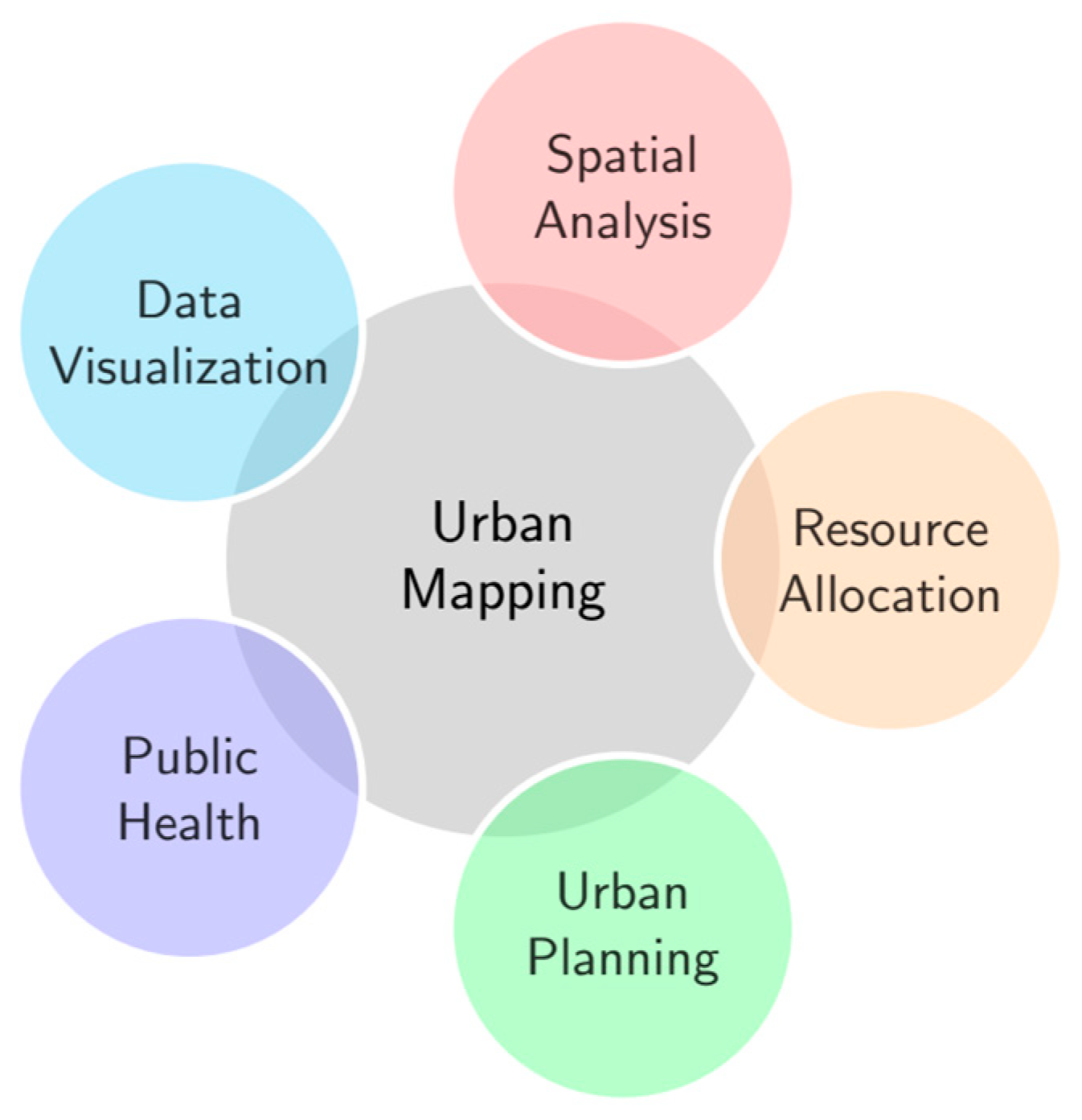
The process of urban mapping, which is an important instrument in the field of public health, acts as an important link between urban planning and the outcomes of healthcare as well identifying present disparities [17,18,19]. Through the utilization of comprehensive geographical data, urban mapping provides professionals in the field of public health with the ability to visualize (Figure 2) the intricate relationship that exists between urban environments and health indicators. As highlighted by Favarão Leão et al. [9], achieving this visualization requires strict conceptual clarity between mere spatial inequalities in resource distribution and actual systemic spatial inequities to ensure that mapping translates into actionable urban planning policies.
This assists in gaining a more profound comprehension of the ways in which factors such as population density, accessibility to healthcare facilities, green spaces availability, and air pollution levels have an impact on public health and overall health of the population [20,21,22,23,24]. It is possible to define regions of health inequalities and vulnerabilities within urban populations with the assistance of this spatial analysis, which facilitates the allocation of resources and the execution of treatments that are specifically targeted. Urban mapping may be significant in promoting physical exercise and improving mental well-being by providing information for projects that increase park accessibility. This is accomplished by identifying places that have restricted access to green spaces. Additionally, in the context of infectious disease outbreaks, urban mapping is crucial for tracking transmission pathways in real time. This spatial data enables rapid, highly efficient intervention planning, a capability clearly demonstrated during the COVID-19 pandemic [3,25,26,27,28]. Moving beyond traditional descriptive mapping, recent advancements are shifting toward Urban Generative Intelligence (UGI) platforms, which anchor large language model agents inside sophisticated city simulators and knowledge graphs to model complex, context-aware human behaviors and mobility dynamics under emergency scenarios [25]. This demonstrates the power of geography in affecting public health policies and practices by demonstrating how cities may become more resilient, egalitarian, and conducive to the health and well-being of their residents through the incorporation of urban mapping into public health measures. Urban spatial structures are not static, they undergo continuous physical, political, and demographic temporal shifts. The HORUS framework models this dynamism by configuring rolling multi-temporal geospatial data tracks, actively calculating temporal data decay rates to prevent legacy artifacts from confounding longitudinal epidemiological validity over decade-long observation thresholds.

2.1. GIS in Public Health

This methodological transition is formally codified in the World Health Organization’s institutional policy. The newly ratified GIS for Health Roadmap 2025–2030 explicitly positions georeferenced spatial tracking as a mandatory structural standard for mapping NCD distributions and identifying pockets of vulnerability across the European region [29,30,31,32,33,34]. Public health professionals can analyze how environmental variables, like accessibility to green spaces and air quality, affect the emergence of NCDs, like type II diabetes, cardiovascular diseases, and asthma with the use of GIS technology, which integrates urban mapping with health data. The robust analytical capacity of GIS makes it possible to precisely identify regions in urban settings where NCDs are disproportionately prevalent. This makes it possible to create and implement extremely targeted public health interventions for those who most need them. To identify patterns and trends in NCDs, GIS combines data on disease prevalence with information about the environment and infrastructure. This information may be used to build proactive health policies and interventions. Researchers, decision-makers, and urban planners may examine the intricate link between rapidly increasing urbanization and how it affects risk factors for NCDs with the use of GIS, an essential tool in this decision-making process [9,35,36]. By using large amounts of data on population density, demographic trends, and municipal infrastructure, stakeholders may develop and put into effect comprehensive strategies aimed at lowering the risks associated with NCDs. This entails creating healthier urban environments via promoting walking and bicycling, enhancing public spaces, and lowering air pollution.
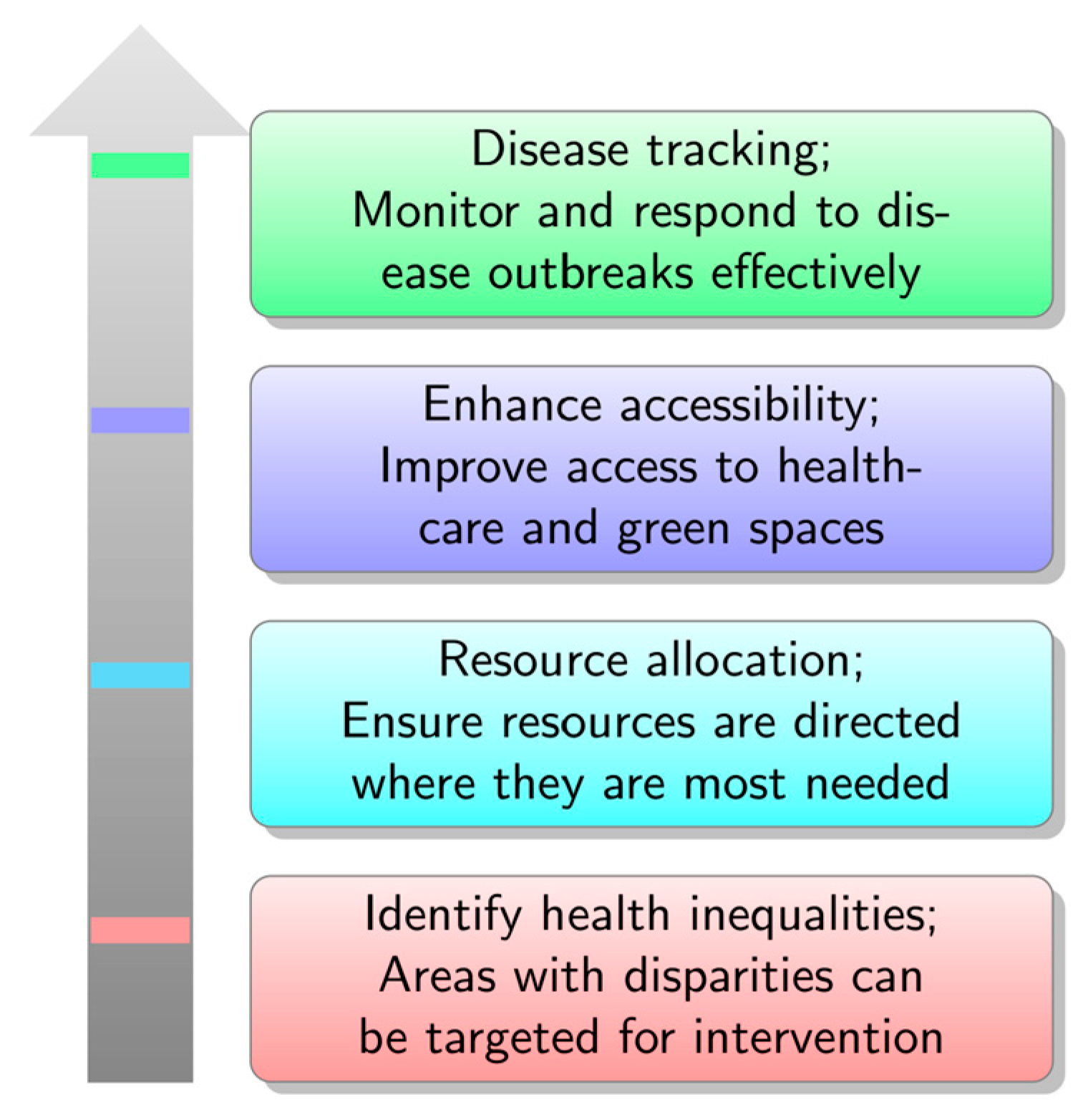
GIS-based impact assessment, as shown in Figure 3, of urban public health initiatives offers a versatile approach to healthcare management. It allows for ongoing adjustments and improvements to plans using comprehensive, region-specific data. This guarantees that treatments may successfully target the needs of urban populations while also being able to adjust to changes in the health environment. GIS plays a critical role in public health by advancing public health policies [29,34,37,38,39] in addressing NCDs in urban environment, enhancing evidence-based decision-making, and providing insight into the socio-environmental elements influencing health.

2.2. Computer-Aided Engineering (CAE), 3D Modeling and Virtual Reality (VR)

Computer-aided engineering (CAE) and Virtual Reality (VR) are crucial technologies that transform several sectors through the integration of simulation, visualization, and real-time interactions [40]. CAE use computer software to simulate performance, aiming to enhance product designs and address challenges in engineering across several sectors. This encompasses simulations in stress analysis, heat analysis, fluid flow analysis, and several other applications. Virtual reality, in contrast, generates an artificial environment that may closely resemble or diverge entirely from reality, enabling users to engage with a three-dimensional (3D) environment [40,41]. It has significant uses in training, education, design, and entertainment by offering immersive experiences.
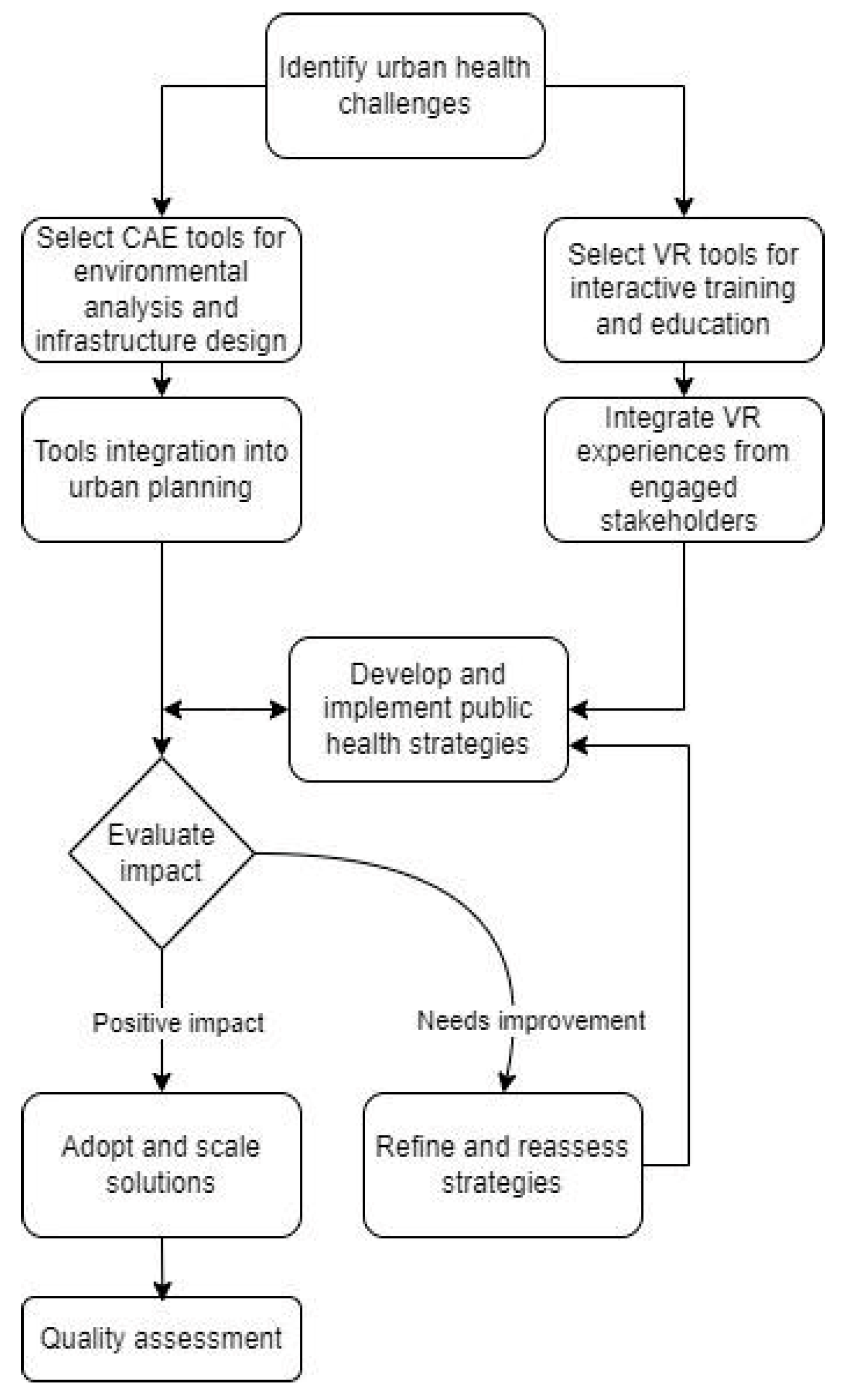
The combination of CAE and VR technologies is of significance in the field of public health urban mapping. Rather than confining virtual reality strictly to clinical psychological diagnosis, contemporary frameworks apply VR to democratize urban architectural planning. By combining immersive environment engineering with real-time biometric eye-tracking, researchers can now isolate and quantify how restorative, biophilic urban modifications reduce ambient anxiety across varying socioeconomic demographics before breaking ground [42]. It has also proven to be a useful training tool for healthcare professionals [43]. The significance of these technologies in public health urban mapping is apparent as they provide thorough and interactive examination of urban surroundings, health facilities, and community requirements. VR can display intricate urban data, simulate hypothetical public health scenarios, and offer immersive experiences that assist in the process of planning and decision-making. CAE facilitates the examination and optimization of health facilities and infrastructure, guaranteeing their compliance with the most stringent safety and efficiency criteria (Figure 4).
Computer-aided engineering with its ability to simulate complex systems and VR with immersive visualization are transforming how we design and experience our cities (Figure 4). These technologies offer powerful tools for understanding and addressing public health challenges in urban environments. Urban design theories emphasize the crucial link between the built environment and public health [44]. By leveraging CAE and VR, planners can create “virtual cities” to test and optimize designs for walkability, access to green spaces, and social interaction—factors with proven impacts on community well-being. Their combination provides novel options for visualizing, evaluating, and optimizing urban health landscapes, eventually boosting community well-being and health outcomes. The use of these technologies in public health urban mapping is not only ground-breaking but also necessary for promoting more habitable, healthy, and environmentally friendly urban settings. Transitioning from traditional 2D overlays to 3D architectural modeling adds essential explanatory value by capturing environmental exposure verticality—such as localized atmospheric layer pooling, floor-level sound reverberation vectors, and localized shade indices within dense urban corridors. Where municipal 3D geometric coverage lacks complete city data files, the framework initiates iterative spatial imputation pipelines, blending satellite radar footprints with synthetic street profiles to patch coverage voids.

2.3. Artificial Intelligence (AI)

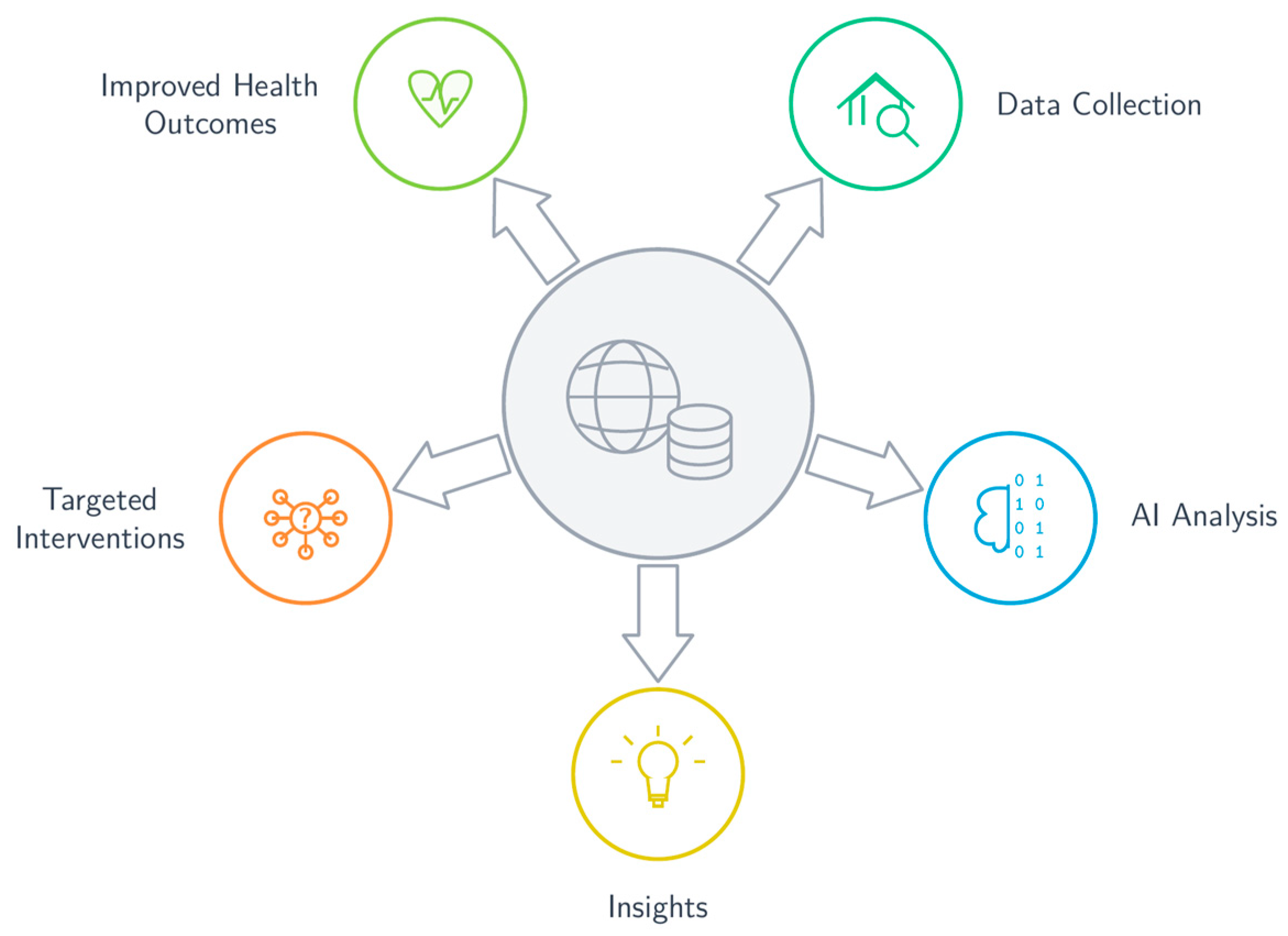
To model and analyze geographical data associated with disease outbreaks, health inequalities, and resource allocation, geographic data for public health employ large datasets and computer science [45]. The confluence of AI and public healthcare, which benefits both parties, is ushering in a new era in medical history. This innovative combination is expected to be a game-changer for the medical and healthcare domains. The use of AI into the mapping of metropolitan areas potentially signifies a crucial progression in public health research and intervention tactics. AI-powered analysis can provide in-depth information about the various elements [46] that contribute to health determinants, including environmental dangers and socioeconomic inequalities. To guarantee external validation generalizability across heterogeneous metropolitan environments, models incorporate standardized cross-geography domain transfer algorithms. Through the utilization of digital technology (Figure 5), such as machine learning algorithms, researchers and policy makers may efficiently evaluate and tackle the various factors that impact population health.
This technology allows for a detailed comprehension of preventative, clinical, and behavioral outcomes, therefore enabling precise treatments customized for specific communities. Implementing AI in urban area mapping may not only improve the accuracy of health interventions but also increase their scalability and effectiveness, eventually promoting better urban settings and enhancing population health outcomes.

3. Urbanization and Non-Communicable Diseases

Research on urbanization planning and its impact on NCDs is necessary to address the health challenges that are brought due to fast growing urban populations. Based on several research studies [47,48,49,50] this field has a significant relationship with the mapping of metropolitan areas. The importance of comprehending the influence that urbanization planning has on NCDs cannot be overstated. Through the process of mapping urban regions, this field of work attempts to address health concerns, especially unhealthy lifestyles and greater NCD rates that are brought by the rapidly expanding urban populations [51,52,53,54,55]. It has been demonstrated via research that urbanization has a significant influence on the epidemiology of NCDs, which include coronary heart disease, type II diabetes, and respiratory disorders. A considerable part of this impact may be linked to changes in lifestyle choices, such as nutrition, physical activity, and exposure to environmental toxins.
Urbanization results in a variety of health issues, such as the increase in NCDs. Urbanization, involving the movement of people from rural to urban regions, leads to lifestyle changes that make individuals more susceptible to it. This is further facilitated by metropolitan surroundings that frequently encourage physical inactivity, sedentary lives and unhealthy diets [56,57,58,59,60].
To identify areas that are at a higher risk of NCDs, Urban Area Mapping for Disease Surveillance requires the utilization of methods such as Bayesian hierarchical models [61,62,63]. This strategy is helpful in recognizing certain spatial patterns and hazard boundaries inside urban contexts, both of which are crucial for taking data-driven actions.
Public health professionals can identify hotspots and trends in NCDs in urban areas using GIS. Health data and urban mapping are used in GIS to examine, for instance, air quality and green space availability affect NCDs like asthma and cardiovascular diseases such as arterial hypertension and type II diabetes [64,65,66]. GIS-based research can identify communities disproportionately affected by NCDs to help design and implement targeted interventions in urban settings. GIS lets academics and policy makers examine how urbanization affects NCD risk factors by integrating data on urban infrastructure, population density, and health outcomes and devise strategies to mitigate them. It can also help evaluate urban public health initiatives for NCDs and improve them by allowing method modifications based on detailed geographical results.

4. The Implementation of the HORUS Project

Grounded in evidence-based interventions, HORUS is designed to support urban residents and, above all, those who are most vulnerable and socially disadvantaged, in taking up behaviors that lower their NCD risk. As the world continues to urbanize, the project positions itself as a driver of healthier urban settings and ways of living. Its central contribution is methodological: HORUS brings the urban and the behavioral together within a single epistemic and analytical framework rather than treating them as separate concerns. By equipping urban planners, policy makers and health professionals with practical instruments for confronting NCDs, the project intends to establish a reference point for urban health promotion and to help steer cities toward a healthier, more resilient, and more sustainable future.
Worldwide, NCDs such as type II diabetes and cardiovascular disease remain the foremost contributors to illness and death. Cardiovascular disease alone claims roughly 17.9 million lives each year, exceeding the toll of any other NCD, while type II diabetes is associated with around 2 million deaths annually [67,68]. The burden of these conditions is not distributed evenly: it falls disproportionately on disadvantaged groups, including low-income communities, migrants and ethnic minorities [69,70]. Several intertwined drivers explain this elevated prevalence, among them social and environmental conditions, ways of living, and behavioral determinants such as tobacco and alcohol consumption, poor diet and physical inactivity, together with aging, social exclusion, limited health literacy and restricted access to care [71]. For this reason, modifying individual-level factors, dietary patterns, physical activity and substance use, calls for behavior change interventions delivered in urban contexts, while environmental factors can be tackled by making better use of health-supportive urban built environments. Collectively, these considerations form the foundation of the HORUS project, which sets out to respond to the following gaps identified in the scientific literature.
Delivering effective responses to the NCD challenge requires the project to act on the underlying risk factors. The ‘4 × 4’ framework for NCDs [72] is instructive here, pairing the four principal NCDs, cardiovascular diseases, cancer, chronic respiratory diseases and type II diabetes, with four leading modifiable behaviors: tobacco and alcohol use, unhealthy diet, and physical inactivity. The framework holds that the majority of NCDs can be averted by acting on this small set of behaviors. Evidence indicates that behavior change techniques are the most effective means of reducing harmful alcohol consumption, smoking, poor dietary habits and inactivity [73,74,75,76,77]. Equally important, curbing the rise in NCDs depends on shaping environments that make healthy living easier. Urbanization stands out as a pivotal socio-environmental driver of this rise, since it limits contact with nature and health-promoting amenities while heightening exposure to climatic and environmental hazards. Much of the public health risk observed in cities arises precisely at the interface between how the physical-social environment functions and how people behave within it, that is, the individual health behaviors that a given setting encourages. The urban physical-social environment is recognized as a force shaping everyday choices: depending on personal characteristics, it can dispose some individuals toward health-risk behaviors and can likewise affect their subjective well-being.
Besides the conduction of qualitative public health methodology (focus groups and interviews) and the natural experiment, a research technique used in the social sciences to assess the causal effect of an intervention or public policy in the real world, the HORUS project will use GIS, allowing the qualitative results reported by the various included stakeholders who are directly or indirectly affected by the NCDs to be linked to a given geographic location and by the Healthy Cities Generator (HCG)-Citizens Module [78] that creates a visual, and scalable approach to collect citizens perception in relation to the use and design of built environment (this evaluation will also link the inputs of citizens with health impacts). The mix of qualitative methodologies with GIS and the HCG will ensure that social information is obtained by identifying the links between the psychosocial and functional characteristics of the urban environment and NCD risk behaviors, as well as the behavioral causal factors that drive the public health impacts of urban interventions, ultimately georeferencing this information by geographically organizing, analyzing and visualizing it through GIS. Thus, Public Participation in the field of GIS (PPSIG) has different implications and offers added benefits to the GIS approach. On the one hand, the PPSIG approach is more context- and problem-based than technology-based and focuses on community participation in the use of geographic information. Thus, the active participation of community members in decision-making processes that directly affect spatial planning is the undisputed key to the PPSIG approach [79]. In terms of added benefits, PPSIG has demonstrated potential to extend the use of spatial information to all relevant stakeholders, to obtain and manage people’s perceptions and conceptualizations of specific spatial contexts, to develop community awareness of specific local situations, and to strengthen community institutions as a promoter of people’s empowerment [79,80]. Given the importance of community involvement, the HORUS project is framed within the notion of the citizen science approach, which is defined as a collaborative approach to research that involves the public not only as research subjects or research advisors, but as direct collaborators in all aspects of the research process itself.
The decision to target these specific four non-communicable diseases is strategically driven by their shared reliance on modifiable built-environment risk behaviors, offering the highest systemic public health ROI for structural environmental redesigns. However, the operational manifestation of these risk behaviors is heavily stratified by neighborhood economic context. In low- and middle-income neighborhoods, the NCD burden is driven primarily by an absolute lack of infrastructure access and high exposure to uncontrolled industrial externalities; conversely, in high-income settings, chronic diseases track more closely with automated sedentary lifestyles and hyper-processed dietary access points, necessitating distinct urban intervention logic across varying socioeconomic thresholds.

5. Conclusions

This manuscript emphasizes the critical role of urban planning in addressing the rising burden of NCDs, a major global health challenge. The urban environment influences health outcomes by shaping behavior, exposure and access to health-promoting resources. The need for integrated and health-conscious urban planning has never been greater, especially as rapid urbanization continues to disproportionately affect vulnerable populations.
The HORUS project is a practical and forward-looking initiative to tackle these challenges. It provides a methodological framework that combines advanced technologies such as GIS and Healthy Cities Generator with community participation. Operationally, this closed-loop lifecycle synchronizes four distinct stages. These comprise GIS-driven baseline data ingestion via macro digital twins, automated predictive vulnerability mapping using multimodal GeoAI foundation models, community-led neighborhood co-design via immersive VR, and clinical validation against primary care digital health records. By mapping and analyzing the urban determinants of health, the project will provide actionable insights into the spatial and behavioral factors that contribute to NCDs. Importantly, the participatory approach will empower citizens and improve public health interventions by addressing both environmental and lifestyle determinants of health.
This work emphasizes the need to align public health and urban planning to mitigate the causes of NCDs and improve overall health equity. By translating research findings into policy-relevant tools and engaging multiple stakeholders, the HORUS project demonstrates how health-centered urban planning can contribute to healthier and more resilient cities. The results of the project will advocate for a shift in urban policy that prioritizes environments that promote well-being, sustainability and inclusion.

Author Contributions

Conceptualization: D.J., V.V. and S.M.; methodology: D.J., T.R. and D.R.; formal analysis: D.J., D.R. and M.M.G.; investigation: D.J., S.M., Z.T. and M.M.G.; resources: L.B., V.V. and T.R.; data curation: D.J., D.R. and S.M.; writing—original draft preparation: D.J., S.M. and M.M.G.; writing—review and editing: V.V., T.R., D.R., Z.T., L.B. and M.M.G.; visualization: D.J., S.M. and D.R.; supervision: V.V. and T.R.; project administration: L.B. and V.V.; funding acquisition: V.V., T.R. and L.B. All authors have read and agreed to the published version of the manuscript.

Funding

The research presented in this article was developed within the framework of the Health Outcomes from Raised Urban Settings (HORUS) project (Grant No. 101136516), which is financed by the European Commission, European Health and Digital Executive Agency (HADEA), type of action: HORIZON Research and Innovation Actions, call: HORIZON-HLTH-2023-DISEASE-03, topic: HORIZON-HLTH-2023-DISEASE-03-03—Interventions in city environments to reduce risk of non-communicable disease.

Institutional Review Board Statement

Not applicable. This study is a conceptual framework review based on previously published literature and did not involve human participants, human data or animals; therefore, ethical review and approval were not required.

Informed Consent Statement

Not applicable. This study did not involve human participants.

Data Availability Statement

No new data were created or analyzed in this study. Data sharing is not applicable to this article, as it is a conceptual framework review based on previously published sources, which are cited throughout and listed in the References.

Acknowledgments

The authors would like to thank all HORUS Project Consortium partners.

Conflicts of Interest

The authors declare no conflicts of interest.

Abbreviations

The following abbreviations are used in this manuscript:
AIArtificial Intelligence
CAEComputer-Aided Engineering
GISGeographic Information Systems
HCGHealthy Cities Generator
HORUSHealth Outcomes from Raised Urban Settings
NCDsNon-Communicable Diseases
PPSIGPublic Participation in Geographic Information Systems
UGIUrban Generative Intelligence
VRVirtual Reality

References

  1. Pham, V.H.; Wagenfeld, M.; Bernhaupt, R. Walking the Digital Street: A VR Tool for Assessing Urban Walkability. In Proceedings of the AlpCHI 2026, Ascona, Switzerland, 1–5 March 2026; Available online: https://alpchi.org/wp-content/uploads/2026/02/AlpCHI2026_Walking_the_Digital_Street.pdf (accessed on 25 May 2026).
  2. Wang, J.; Zhao, L.; Kim, H. Digital Twin Virtual Hospitals and Rural Health Disparities: A Six-Country Comparative Study (2018–2024). Front. Public Health 2026, 14, 1741438. [Google Scholar] [CrossRef] [PubMed]
  3. Zhang, H.; Li, J. Mapping the Urban and Rural Planning Response Paths to Pandemics of Infectious Diseases. Humanit. Soc. Sci. Commun. 2024, 11, 408. [Google Scholar] [CrossRef]
  4. Loureiro, N.A.; Neto, C.R.; Sutton, J.; Perc, M.; Ribeiro, H.V. Impact of inter-city interactions on disease scaling. Sci. Rep. 2025, 15, 498. [Google Scholar] [CrossRef] [PubMed]
  5. Gagnon-Dufresne, M.; Sarmiento, I.; Fortin, G.; Andersson, N.; Zinszer, K. Why Urban Communities from Low-Income and Middle-Income Countries Participate in Public and Global Health Research: Protocol for a Scoping Review. BMJ Open 2023, 13, e069340. [Google Scholar] [CrossRef] [PubMed]
  6. European Commission. Report on the Quality of Life in European Cities, 2023; Publications Office of the European Union: Luxembourg, 2023. [Google Scholar]
  7. Hu, K.; Li, C.; Yang, X.; Ou, S.; Zhang, X.; Xiao, D.; Yu, M. From Infectious Diseases to Chronic Diseases: The Paradigm Shift of Spatial Epidemiology in Disease Prevention and Control. Front. Public Health 2025, 13, 1698964. [Google Scholar] [CrossRef]
  8. Zhang, Z.; Zhao, M.; Zhang, Y.; Feng, Y. How Does Urbanization Affect Public Health? New Evidence from 175 Countries Worldwide. Front. Public Health 2023, 10, 1096964. [Google Scholar] [CrossRef]
  9. Favarão Leão, A.L.; Gierbolini-Rivera, R.D.; Franco Silva, M.; Shaw, C.; O’Connor, Á.; Salvo, D.; Siqueira Reis, R. Spatial indicators of inequity in urban health research: A scoping review. Discov. Public Health 2025, 22, 27. [Google Scholar] [CrossRef]
  10. Lima, L.B.; Franca Rocha, W.J.S.; Souza, D.T.M.; Lobão, J.S.B.; de Santana, M.M.M.; Cambui, E.C.B.; Vasconcelos, R.N. Urban Quality: A Remote-Sensing-Perspective Review. Urban Sci. 2025, 9, 31. [Google Scholar] [CrossRef]
  11. Shafique, S.; Bhattacharyya, D.S.; Hossain, M.T.; Hasan, S.M.; Ahmed, S.; Islam, R.; Adams, A.M. Strengthening Health Service Delivery and Governance through Institutionalizing ‘Urban Health Atlas’—A Geo-Referenced Information Communication and Technology Tool: Lessons Learned from an Implementation Research in Three Cities in Bangladesh. PLoS ONE 2024, 19, e0266581. [Google Scholar] [CrossRef]
  12. Zhang, X.; Warner, M.E. Linking Urban Planning, Community Environment, and Physical Activity: A Socio-Ecological Approach. Int. J. Environ. Res. Public Health 2023, 20, 2944. [Google Scholar] [CrossRef]
  13. Vornhagen, H.; Barrett, S.; Carroll, C.; Iladiva, L.K.; Martin, G.; McKeown, D.; Martin, J. Design Practices for Data Dashboards in Health Care: Scoping Review. J. Med. Internet Res. 2026, 28, e77361. [Google Scholar] [CrossRef]
  14. Praharaj, S.; Solis, P.; Wentz, E.A. Deploying Geospatial Visualization Dashboards to Combat the Socioeconomic Impacts of COVID-19. Environ. Plan. B Urban Anal. City Sci. 2023, 50, 1262–1279. [Google Scholar] [CrossRef] [PubMed]
  15. Carbajales-Dale, P.; Annan-Coultas, D.; Joseph, A.; Thompson, M.P.; Jafarifiroozabadi, R.; Limber, S.P.; Holaday, B.; Mihandoust, S. Using GIS to Improve Public Health Emergency Response in Rural Areas during the COVID-19 Crisis: A Case Study of South Carolina, US. Trans. GIS 2023, 27, 975–995. [Google Scholar] [CrossRef]
  16. Johnson, D.P. Toward AI-Enabled Urban Climate Twins: A Foundation-Model GeoAI Framework for Continuous Heat and Health Risk Mapping. Front. Environ. Sci. 2026, 14, 1770260. [Google Scholar] [CrossRef]
  17. Prior, J.; Legg, R.; McIntyre, E. A Participatory System Map of the Adverse Influence of Urban Environments on Population Health: Integrating Urban Development and Preventive Health Expertise. Public Health Res. Pract. 2023, 33, e3342335. [Google Scholar] [CrossRef]
  18. McCulley, E.M.; Mullachery, P.H.; Ortigoza, A.F.; Rodríguez, D.A.; Diez Roux, A.V.; Bilal, U. Urban Scaling of Health Outcomes: A Scoping Review. J. Urban Health 2022, 99, 409–426. [Google Scholar] [CrossRef]
  19. MacKinnon, N.J.; Emery, V.; Waller, J.; Ange, B.; Ambade, P.; Gunja, M.; Watson, E. Mapping Health Disparities in 11 High-Income Nations. JAMA Netw. Open 2023, 6, e2322310. [Google Scholar] [CrossRef]
  20. Carnegie, E.R.; Inglis, G.; Taylor, A.; Bak-Klimek, A.; Okoye, O. Is Population Density Associated with Non-Communicable Disease in Western Developed Countries? A Systematic Review. Int. J. Environ. Res. Public Health 2022, 19, 2638. [Google Scholar] [CrossRef] [PubMed]
  21. Moeti, T.; Mokhele, T.; Weir-Smith, G.; Dlamini, S.; Tesfamicheal, S. Factors Affecting Access to Public Healthcare Facilities in the City of Tshwane, South Africa. Int. J. Environ. Res. Public Health 2023, 20, 3651. [Google Scholar] [CrossRef]
  22. Guo, S.; Gu, J. Spatial Inequality in Hospital Accessibility and Urban Well-Being: Evidence of a Nonlinear Relationship Mediated by Demographic Change. Land 2026, 15, 323. [Google Scholar] [CrossRef]
  23. Seyler, B.C.; Luo, H.; Wang, X.; Zuoqiu, S.; Xie, Y.; Wang, Y. Assessing the Impact of Urban Greenspace on Physical Health: An Empirical Study from Southwest China. Front. Public Health 2023, 11, 1148582. [Google Scholar] [CrossRef]
  24. La Porta, C.A.M.; Zapperi, S. Urban Scaling Functions: Emission, Pollution and Health. J. Urban Health 2024, 101, 752–763. [Google Scholar] [CrossRef] [PubMed]
  25. Xu, F.; Zhang, J.; Gao, C.; Liu, P.; Feng, J. Towards a Foundational Platform for Generative Agents in Simulated City Environment. PLoS Complex Syst. 2026, 3, e0000093. [Google Scholar] [CrossRef]
  26. Cuadros, D.F.; Branscum, A.J.; Mukandavire, Z.; Miller, F.D.; MacKinnon, N. Dynamics of the COVID-19 Epidemic in Urban and Rural Areas in the United States. Ann. Epidemiol. 2021, 59, 16–20. [Google Scholar] [CrossRef]
  27. Yin, S.; Ren, C.; Shi, Y.; Hua, J.; Yuan, H.Y.; Tian, L.W. A Systematic Review on Modeling Methods and Influential Factors for Mapping Dengue-Related Risk in Urban Settings. Int. J. Environ. Res. Public Health 2022, 19, 15265. [Google Scholar] [CrossRef]
  28. Durski, K.N.; Naidoo, D.; Singaravelu, S.; Shah, A.A.; Djingarey, M.H.; Formenty, P.; Ihekweazu, C.; Banjura, J.; Kebela, B.; Yinka-Ogunleye, A.; et al. Systems Thinking for Health Emergencies: Use of Process Mapping during Outbreak Response. BMJ Glob. Health 2020, 5, e003901. [Google Scholar] [CrossRef] [PubMed]
  29. Turnbull, N.; Som-Ard, J.; Yoosook, W.; Ratanaopad Suwanlee, S.; Chaiyakarm, T.; Yukalang, N.; Mattra, S. Application of Geographic Information Systems (GIS) to Analyse and Detect the Risk of Chronic Diseases in the Elderly. Stud. Health Technol. Inform. 2020, 272, 131–134. [Google Scholar]
  30. Simkovich, S.M.; Foeller, M.E.; Tunçalp, Ö.; Papageorghiou, A.; Checkley, W. Integrating Non-Communicable Disease Prevention and Control into Maternal and Child Health Programmes. BMJ 2023, 381, e071072. [Google Scholar] [CrossRef]
  31. Cuadros, D.F.; Moreno, C.M.; Tomita, A.; Singh, U.; Olivier, S.; Castle, A.; Moosa, Y.; Edwards, J.A.; Kim, H.Y.; Siedner, M.J.; et al. Geospatial Assessment of the Convergence of Communicable and Non-Communicable Diseases in South Africa. J. Multimorb. Comorb. 2023, 13, 26335565231204119. [Google Scholar] [CrossRef] [PubMed]
  32. Cuadros, D.F.; Li, J.; Musuka, G.; Awad, S.F. Spatial Epidemiology of Diabetes: Methods and Insights. World J. Diabetes 2021, 12, 1042–1056. [Google Scholar] [CrossRef]
  33. Nayak, P.P.; Pai, J.B.; Singla, N.; Somayaji, K.S.; Kalra, D. Geographic Information Systems in Spatial Epidemiology: Unveiling New Horizons in Dental Public Health. J. Int. Soc. Prev. Community Dent. 2021, 11, 125–131. [Google Scholar] [CrossRef]
  34. World Health Organization. Geographic Information Systems for Health in the WHO European Region: Roadmap 2025–2030; WHO/EURO:2026-11407-51179-77989; WHO Regional Office for Europe: Copenhagen, Denmark, 2026. Available online: https://iris.who.int/server/api/core/bitstreams/87aff67b-2dcb-4e28-b335-8e3670fe66e7/content (accessed on 25 May 2026).
  35. Ferrario, A.; Doctor, H.; Gupta, K.; Basha, H.; Krishnan, R.; Rashidian, A. Enhancing the Use of Geographic Information Systems for Public Health Planning and Decision-Making in the WHO Eastern Mediterranean Region. East. Mediterr. Health J. 2023, 29, 307–308. [Google Scholar] [CrossRef]
  36. Huang, X.; Zhang, R.; Li, X.; Dadashova, B.; Zhu, L.; Zhang, K.; Li, Y.; Shen, B. Health-Based Geographic Information Systems for Mapping and Risk Modeling of Infectious Diseases and COVID-19 to Support Spatial Decision-Making. Adv. Exp. Med. Biol. 2022, 1368, 167–188. [Google Scholar] [PubMed]
  37. Tan, K.W.; Koo, J.R.; Lim, J.T.; Cook, A.R.; Dickens, B.L. Importance of Geospatial Heterogeneity in Chronic Disease Burden for Policy Planning in an Urban Setting Using a Case Study of Singapore. Int. J. Environ. Res. Public Health 2021, 18, 4406. [Google Scholar] [CrossRef] [PubMed]
  38. Mennis, J.; Matthews, K.A.; Huston, S.L. Geospatial Perspectives on the Intersection of Chronic Disease and COVID-19. Prev. Chronic Dis. 2022, 19, E39. [Google Scholar] [CrossRef]
  39. Hacker, K.; Kaufmann, R. Chronic Disease Mapping, an Important Strategy and Tool for Health Promotion. Prev. Chronic Dis. 2024, 21, E28. [Google Scholar] [CrossRef] [PubMed]
  40. Kukreja, A.; Cox, C.; Gopsill, J.; Snider, C. From Imprecision to Precision in Virtual Reality: A Machine Learning Approach to Parametric CAD Modelling. J. Eng. Des. 2026, 37, 2518–2545. [Google Scholar] [CrossRef]
  41. Mucha, A.; Pollak, A.; Wojtyna, E. Effect of Virtual Walk in Green or Urban Spaces on Pain Perception among Healthy Adults. Sci. Rep. 2025, 15, 27586. [Google Scholar] [CrossRef]
  42. Ferreira, C.; Guil-Jiménez, M.; Latorre, P.; Molina-Muñoz, A.; Castaño-Castaño, S.; Nieto-Escamez, F. Democratizing Urban Well-Being: A Virtual Reality and Eye-Tracking Analysis of Biophilic Interventions across Socioeconomic Contexts. Computers 2026, 15, 149. [Google Scholar] [CrossRef]
  43. Liu, Z.; Ren, L.; Xiao, C.; Zhang, K.; Demian, P. Virtual Reality Aided Therapy towards Health 4.0: A Two-Decade Bibliometric Analysis. Int. J. Environ. Res. Public Health 2022, 19, 1525. [Google Scholar] [CrossRef] [PubMed]
  44. Yang, L.; Wang, R.; He, B.; Ye, Y.; Ao, Y. Editorial: The Built Environment and Public Health: New Insights. Front. Public Health 2023, 10, 1079182. [Google Scholar] [CrossRef]
  45. Zuhair, V.; Babar, A.; Ali, R.; Oduoye, M.O.; Noor, Z.; Chris, K.; Okon, I.; Rehman, L.U. Exploring the Impact of Artificial Intelligence on Global Health and Enhancing Healthcare in Developing Nations. J. Prim. Care Community Health 2024, 15, 21501319241245847. [Google Scholar] [CrossRef]
  46. Sapienza, M.; Nurchis, M.C.; Riccardi, M.T.; Bouland, C.; Jevtic, M.; Damiani, G. The Adoption of Digital Technologies and Artificial Intelligence in Urban Health: A Scoping Review. Sustainability 2022, 14, 7480. [Google Scholar] [CrossRef]
  47. Fazeli Dehkordi, Z.S.; Khatami, S.M.; Ranjbar, E. The Associations between Urban Form and Major Non-Communicable Diseases: A Systematic Review. J. Urban Health 2022, 99, 941–958. [Google Scholar] [CrossRef]
  48. Zhu, R.; Newman, G.; Li, D. The Spatial Relationship between Long-Term Vacant Housing and Non-Communicable Diseases in U.S. Shrinking and Growing Metropolitan Areas. Cities 2024, 145, 104718. [Google Scholar] [CrossRef] [PubMed]
  49. Van Den Akker, A.; Fabbri, A.; Alardah, D.I.; Gilmore, A.; Rutter, H. The Use of Participatory Systems Mapping as a Research Method in the Context of Non-Communicable Diseases and Risk Factors: A Scoping Review. Health Res. Policy Syst. 2023, 21, 69. [Google Scholar] [CrossRef] [PubMed]
  50. Lowe, M.; Adlakha, D.; Sallis, J.F.; Salvo, D.; Cerin, E.; Moudon, A.V.; Higgs, C.; Hinckson, E.; Arundel, J.; Boeing, G.; et al. City Planning Policies to Support Health and Sustainability: An International Comparison of Policy Indicators for 25 Cities. Lancet Glob. Health 2022, 10, e882–e894. [Google Scholar] [CrossRef] [PubMed]
  51. Sivanantham, P.; Sahoo, J.; Lakshminarayanan, S.; Bobby, Z.; Kar, S.S. Profile of Risk Factors for Non-Communicable Diseases (NCDs) in a Highly Urbanized District of India: Findings from Puducherry District-Wide STEPS Survey, 2019–2020. PLoS ONE 2021, 16, e0245254. [Google Scholar] [CrossRef]
  52. Oyeyemi, A.L.; Mabry, R.; Wachira, L.J.; Gomes, A.; De Siqueira, G. Editorial: Addressing the Impact of Urbanization on Health and Well-Being in African and Asian Cities. Front. Public Health 2023, 11, 1193519. [Google Scholar] [CrossRef]
  53. Huang, Z.; Li, Y.; Park, H.; Ho, M.; Bhardwaj, K.; Sugimura, N.; Lee, H.W.; Meng, H.; Ebert, M.P.; Chao, K.; et al. Unveiling and Harnessing the Human Gut Microbiome in the Rising Burden of Non-Communicable Diseases during Urbanization. Gut Microbes 2023, 15, 2237645. [Google Scholar] [CrossRef]
  54. Pheiffer, C.F. Internal Migration, Urban Living, and Non-Communicable Disease Risk in South Africa. Soc. Sci. Med. 2021, 274, 113785. [Google Scholar] [CrossRef] [PubMed]
  55. Colozza, D.; Wang, Y.C.; Avendano, M. Does Urbanisation Lead to Unhealthy Diets? Longitudinal Evidence from Indonesia. Health Place 2023, 83, 103091. [Google Scholar] [CrossRef] [PubMed]
  56. Moreno-Llamas, A.; García-Mayor, J.; De la Cruz-Sánchez, E. Urban–Rural Differences in Trajectories of Physical Activity in Europe from 2002 to 2017. Health Place 2021, 69, 102570. [Google Scholar] [CrossRef]
  57. Boakye, K.; Bovbjerg, M.; Schuna, J., Jr.; Branscum, A.; Varma, R.P.; Ismail, R.; Barbarash, O.; Dominguez, J.; Altuntas, Y.; Anjana, R.M.; et al. Urbanization and Physical Activity in the Global Prospective Urban and Rural Epidemiology Study. Sci. Rep. 2023, 13, 290. [Google Scholar] [CrossRef]
  58. Ghosh, S.; Paul, M.; Mondal, K.K.; Bhattacharjee, S.; Bhattacharjee, P. Sedentary Lifestyle with Increased Risk of Obesity in Urban Adult Academic Professionals: An Epidemiological Study in West Bengal, India. Sci. Rep. 2023, 13, 4895. [Google Scholar] [CrossRef]
  59. Casari, S.; Di Paola, M.; Banci, E.; Diallo, S.; Scarallo, L.; Renzo, S.; Gori, A.; Renzi, S.; Paci, M.; de Mast, Q.; et al. Changing Dietary Habits: The Impact of Urbanization and Rising Socio-Economic Status in Families from Burkina Faso in Sub-Saharan Africa. Nutrients 2022, 14, 1782. [Google Scholar] [CrossRef]
  60. Ren, Y.; Castro Campos, B.; Peng, Y.; Glauben, T. Nutrition Transition with Accelerating Urbanization? Empirical Evidence from Rural China. Nutrients 2021, 13, 921. [Google Scholar] [CrossRef]
  61. Veenman, M.; Stefan, A.M.; Haaf, J.M. Bayesian Hierarchical Modeling: An Introduction and Reassessment. Behav. Res. Methods 2023, 56, 4600–4631. [Google Scholar] [CrossRef]
  62. Perera, T.; McGree, J.; Egodawatta, P.; Jinadasa, K.B.S.N.; Goonetilleke, A. A Bayesian Approach to Model the Trends and Variability in Urban Stormwater Quality Associated with Catchment and Hydrologic Parameters. Water Res. 2021, 197, 117076. [Google Scholar] [CrossRef]
  63. Yu, D.; Fang, C. How Neighborhood Characteristics Influence Neighborhood Crimes: A Bayesian Hierarchical Spatial Analysis. Int. J. Environ. Res. Public Health 2022, 19, 11416. [Google Scholar] [CrossRef] [PubMed]
  64. Niculita-Hirzel, H.; Hirzel, A.H.; Wild, P. A GIS-Based Approach to Assess the Influence of the Urban Built Environment on Cardiac and Respiratory Outcomes in Older Adults. Build. Environ. 2024, 254, 111362. [Google Scholar]
  65. Jimenez, M.P.; Wellenius, G.A.; James, P.; Subramanian, S.V.; Buka, S.; Eaton, C.; Gilman, S.E.; Loucks, E.B. Associations of Types of Green Space across the Life-Course with Blood Pressure and Body Mass Index. Environ. Res. 2020, 185, 109411. [Google Scholar] [CrossRef]
  66. Walker, B.B.; Brinkmann, S.T.; Große, T.; Kremer, D.; Schuurman, N.; Hystad, P.; Rangarajan, S.; Teo, K.; Yusuf, S.; Lear, S.A. Neighborhood Greenspace and Socioeconomic Risk Are Associated with Diabetes Risk at the Sub-Neighborhood Scale: Results from the Prospective Urban and Rural Epidemiology (PURE) Study. J. Urban Health 2022, 99, 506–518. [Google Scholar]
  67. Khaltaev, N.; Axelrod, S. Countrywide Cardiovascular Disease Prevention and Control in 49 Countries with Different Socio-Economic Status. Chronic Dis. Transl. Med. 2022, 8, 296–304. [Google Scholar] [CrossRef] [PubMed]
  68. Fredericks, K.J.; Naidoo, M. Quality of Care of Patients with Type 2 Diabetes Mellitus at a Public Sector District Hospital. S. Afr. Fam. Pract. 2023, 65, e1–e9. [Google Scholar]
  69. Andrade, C.A.S.; Mahrouseh, N.; Gabrani, J.; Charalampous, P.; Cuschieri, S.; Grad, D.A.; Unim, B.; Mechili, E.A.; Chen-Xu, J.; Devleesschauwer, B.; et al. Inequalities in the Burden of Non-Communicable Diseases across European Countries: A Systematic Analysis of the Global Burden of Disease 2019 Study. Int. J. Equity Health 2023, 22, 140. [Google Scholar]
  70. Fiorini, G.; Franchi, M.; Pellegrini, G.; Rigamonti, A.E.; Sartorio, A.; Marazzi, N.; Corrao, G.; Cella, S.G. Characterizing Non-Communicable Disease Trends in Undocumented Migrants over a Period of 10 Years in Italy. Sci. Rep. 2023, 13, 7424. [Google Scholar] [CrossRef] [PubMed]
  71. World Health Organization. World Report on the Health of Refugees and Migrants; World Health Organization: Geneva, Switzerland, 2022. Available online: https://www.who.int/publications/i/item/9789240054462 (accessed on 19 May 2026).
  72. Schwartz, L.N.; Shaffer, J.D.; Bukhman, G. The Origins of the 4 × 4 Framework for Noncommunicable Disease at the World Health Organization. SSM Popul. Health 2021, 13, 100731. [Google Scholar] [CrossRef] [PubMed]
  73. Howlett, N.; García-Iglesias, J.; Bontoft, C.; Breslin, G.; Bartington, S.; Freethy, I.; Huerga-Malillos, M.; Jones, J.; Lloyd, N.; Marshall, T.; et al. A Systematic Review and Behaviour Change Technique Analysis of Remotely Delivered Alcohol and/or Substance Misuse Interventions for Adults. Drug Alcohol Depend. 2022, 239, 109597. [Google Scholar] [CrossRef]
  74. Boumans, J.; van de Mheen, D.; Crutzen, R.; Dupont, H.; Bovens, R.; Rozema, A. Understanding How and Why Alcohol Interventions Prevent and Reduce Problematic Alcohol Consumption among Older Adults: A Systematic Review. Int. J. Environ. Res. Public Health 2022, 19, 3188. [Google Scholar]
  75. Hartmann-Boyce, J.; Livingstone-Banks, J.; Ordóñez-Mena, J.M.; Fanshawe, T.R.; Lindson, N.; Freeman, S.C.; Sutton, A.J.; Theodoulou, A.; Aveyard, P. Behavioural Interventions for Smoking Cessation: An Overview and Network Meta-Analysis. Cochrane Database Syst. Rev. 2021, 1, CD013229. [Google Scholar] [CrossRef]
  76. Timlin, D.; McCormack, J.M.; Kerr, M.; Keaver, L.; Simpson, E.E.A. Are Dietary Interventions with a Behaviour Change Theoretical Framework Effective in Changing Dietary Patterns? A Systematic Review. BMC Public Health 2020, 20, 1857. [Google Scholar] [CrossRef]
  77. Ma, J.K.; Floegel, T.A.; Li, L.C.; Leese, J.; De Vera, M.A.; Beauchamp, M.R.; Taunton, J.; Liu-Ambrose, T.; Allen, K.D. Tailored Physical Activity Behavior Change Interventions: Challenges and Opportunities. Transl. Behav. Med. 2021, 11, 2174–2181. [Google Scholar] [CrossRef]
  78. Healthy Cities. Our Concept|Healthy Cities. Available online: https://healthycitiesgenerator.com/our-concept/ (accessed on 20 May 2026).
  79. McDonald, Y.J.; Caiola, M.A.; Wyman, S.; Crone, E.; Robbins, N.N.; Caballero, M.D.; Bhattacharya, S. Community-Based Participatory Geographic Information Systems: Informing a Long-Term Drinking Water Research Collaboration. Ann. Am. Assoc. Geogr. 2026, 116, 981–1002. [Google Scholar] [CrossRef]
  80. Gonçalves, J.E.; Rocco, R.; Sitzoglou, M.; Michail, N.; Kupper, D.; Grafakos, S.; Djuraskovic, M.; Veeckman, C.; Pantelidis, N.; Gkatsikos, A.; et al. Spatial Justice in Participatory Planning: An Integrated Framework and Lessons from Practice. Front. Sustain. Cities 2025, 7, 1656745. [Google Scholar] [CrossRef]
Figure 1. The main components of health assessment and mapping.
Ijerph 23 00759 g001
Figure 2. Urban mapping components.
Ijerph 23 00759 g002
Figure 3. Benefits of using GIS in public health.
Ijerph 23 00759 g003
Figure 4. CAE and VR Integration in improving urban health planning.
Ijerph 23 00759 g004
Figure 5. Implementation overview.
Ijerph 23 00759 g005
Disclaimer/Publisher’s Note: The statements, opinions and data contained in all publications are solely those of the individual author(s) and contributor(s) and not of MDPI and/or the editor(s). MDPI and/or the editor(s) disclaim responsibility for any injury to people or property resulting from any ideas, methods, instructions or products referred to in the content.