Global Warming and the Elderly: A Socio-Ecological Framework


Highlights
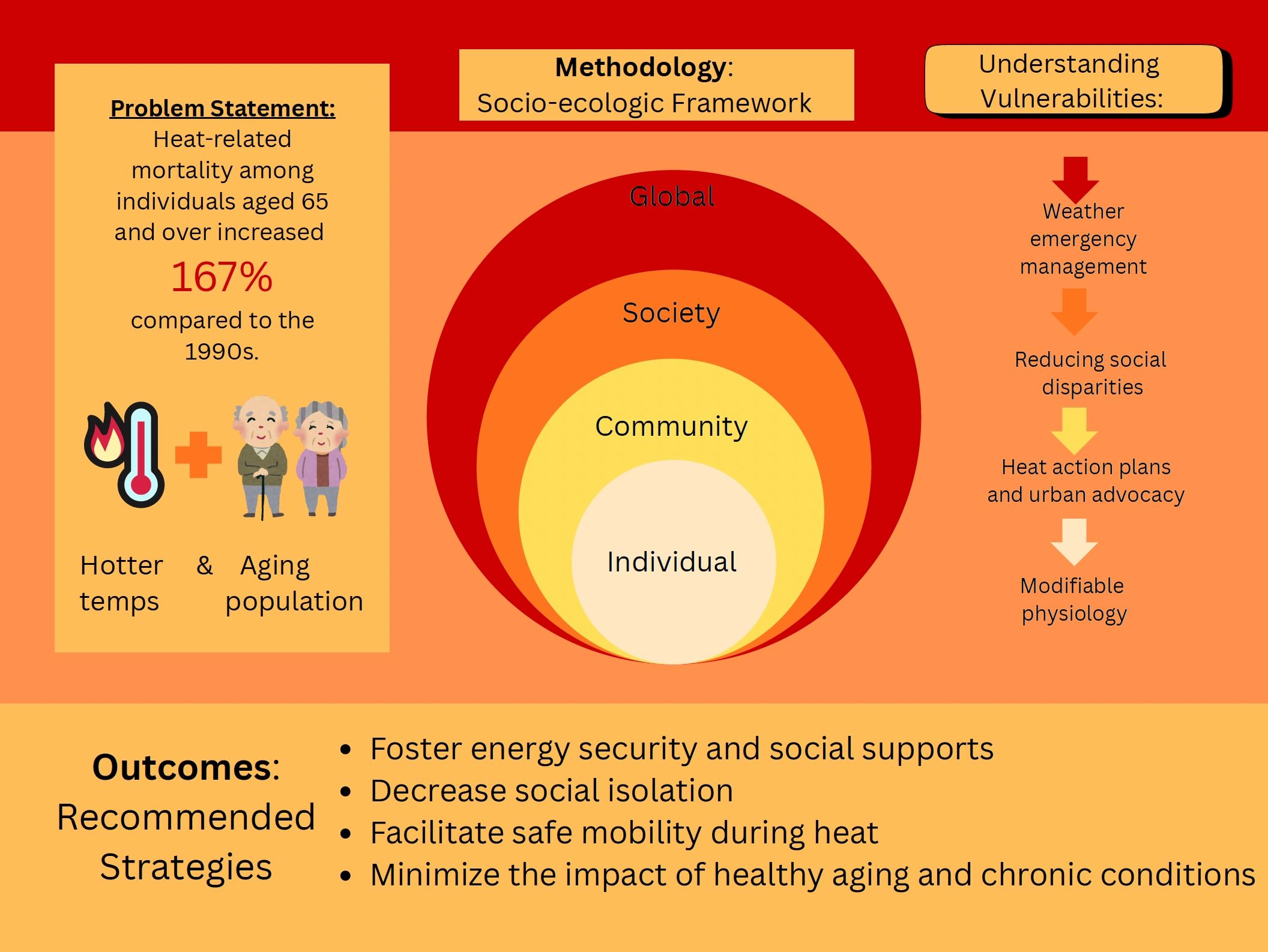
- Two global trends, including the aging of populations worldwide and the acceleration of climate change with increasingly frequent extreme weather events, may contribute to a healthcare crisis toward the end of the current century.
- Heat-related mortality among adults ages 60 and above has increased by 167% since the 1990s, with global warming now occurring at three times the rate of the pre-industrial era.
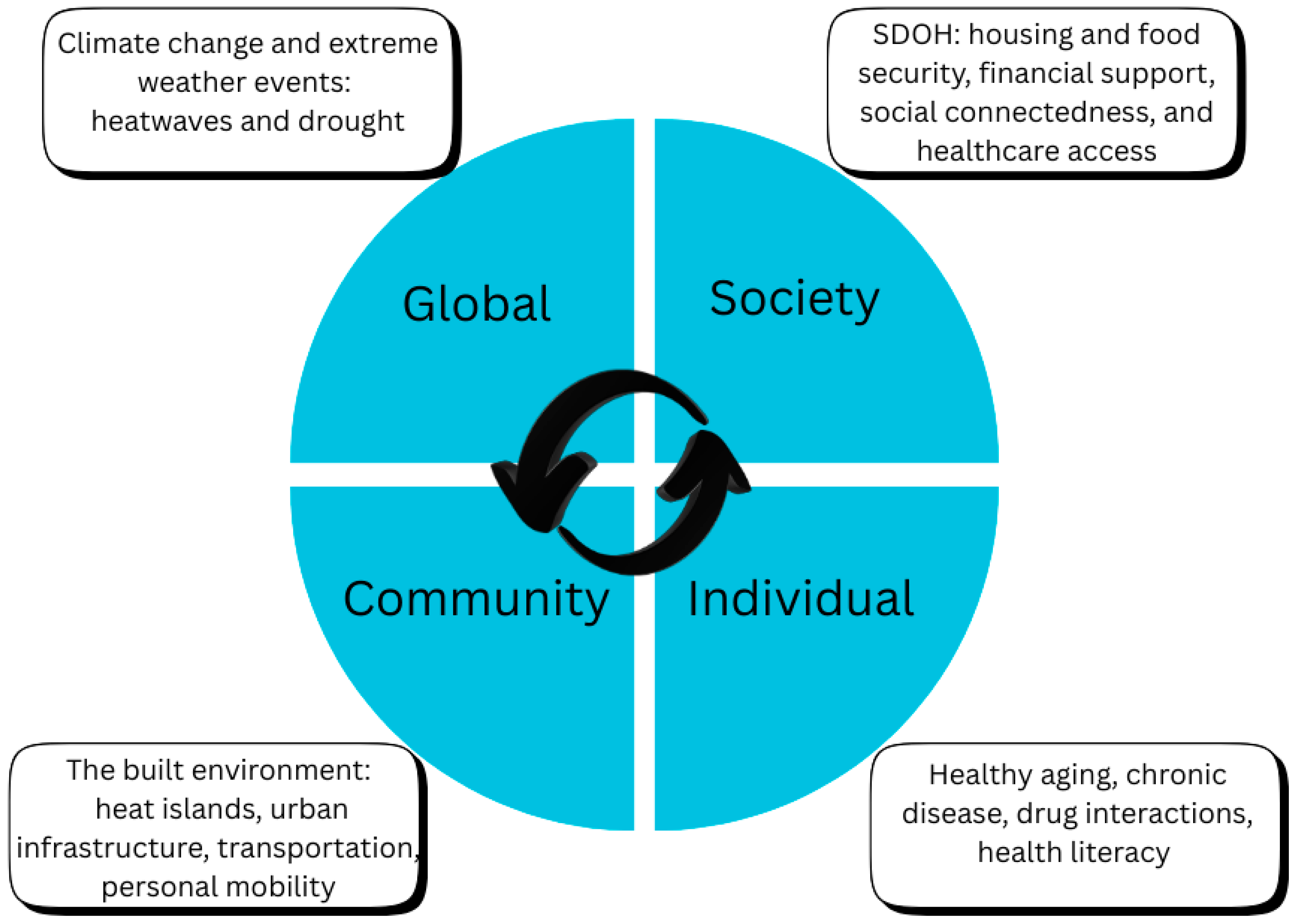
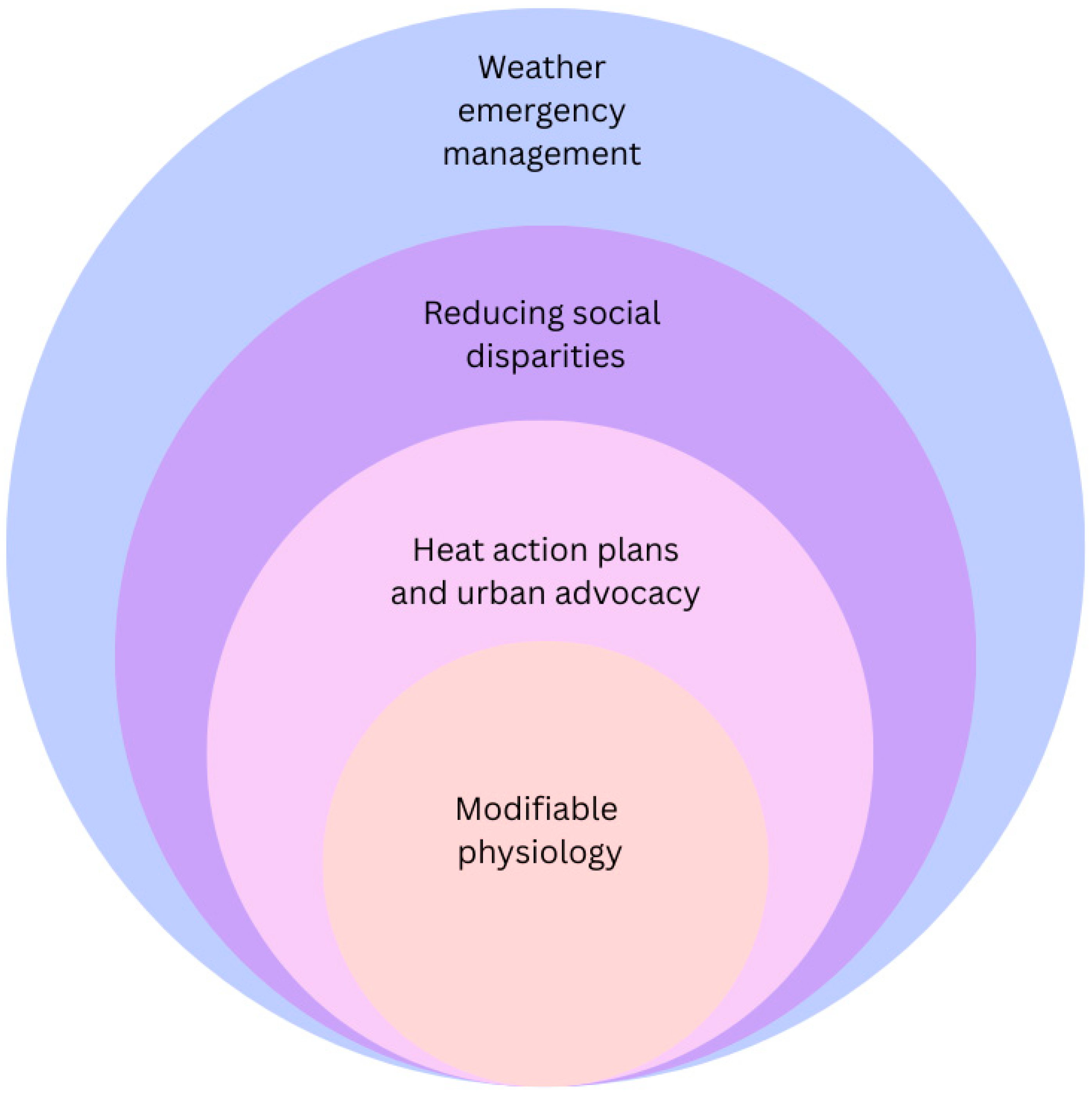
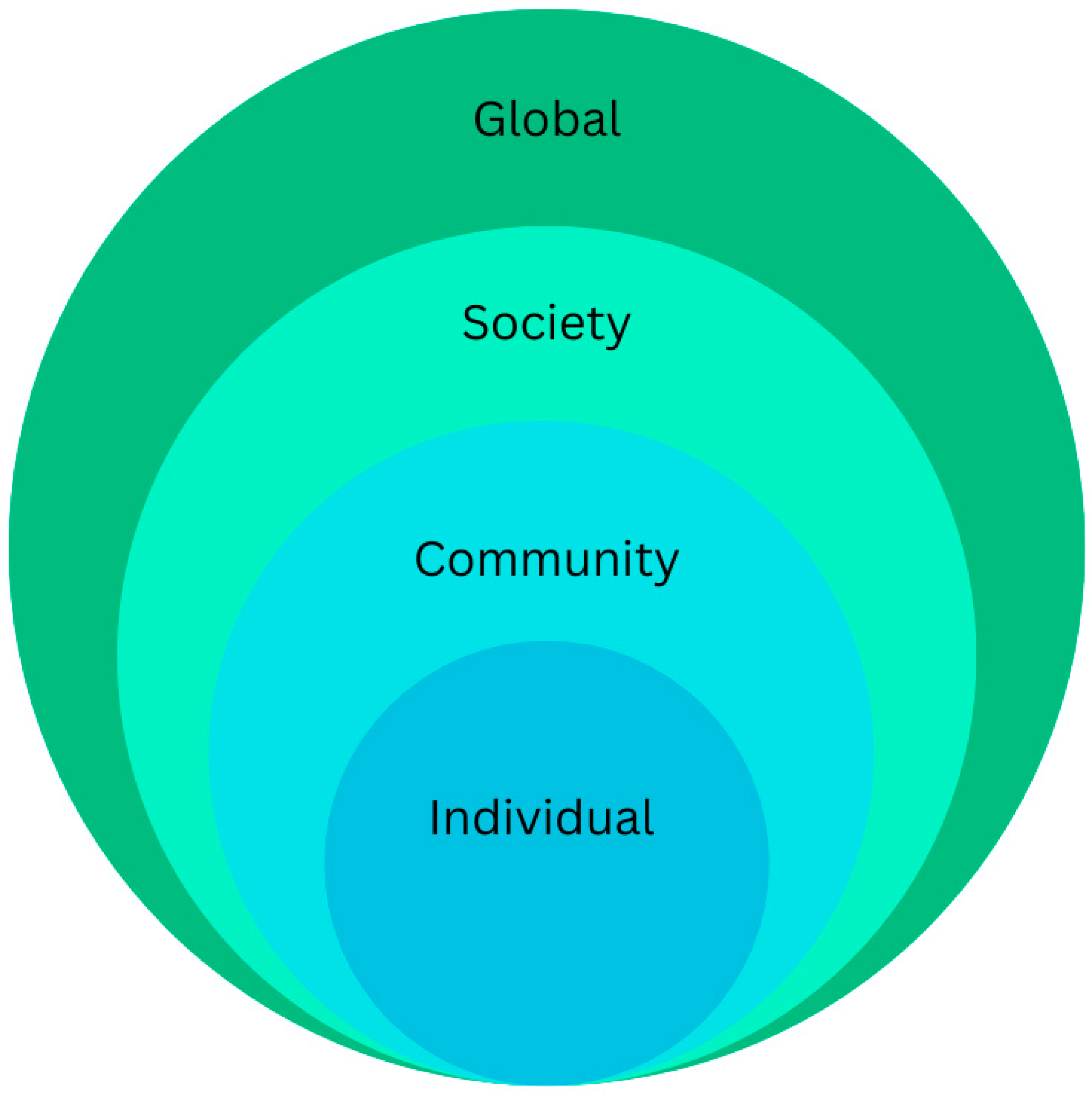
- The study proposes a socio-ecological framework that considers both drivers and mitigation strategies for addressing heat-related illness in the elderly from the perspectives of global climate and policy, social determinants of health, and the individual.
- It will be essential to improve heat emergency warning systems and critical care management for older adults to prevent unnecessary morbidity and mortality in the wake of global warming.
- Healthcare providers play an essential role in reducing the risks for heat-related illness through patient education regarding the symptoms of heat exhaustion and heat stroke.
- Advocacy for changes in public policy related to the built environment will be key to this effort, including addressing the problems of urban heat islands, providing public cooling centers during heat emergencies, and promoting the use of universal design concepts to improve pedestrian pathways for persons with limited mobility
Abstract
1. Introduction
2. Methods
Research Question
3. Results
3.1. A Population Health Approach at the Intersection of Two Global Trends
3.2. Heat Health Terminology
3.3. Physiology and Climatology
3.4. Population Health Planning
3.5. Low- and Middle-Income Nations
4. Discussion
4.1. Population Aging and Physiological Vulnerability
4.1.1. Aging of Global Populations
4.1.2. Physical and Cognitive Decline in Healthy Aging and Chronic Disease
4.2. Heat-Related Illness Pathophysiology in Older Adults
4.2.1. Physiology of Heat Stress, Heat Strain, and Heat-Related Illnesses
4.2.2. Effects of Medications on Heat Tolerance
4.2.3. Classical and Exertional Heatstroke
4.2.4. Contact Burns
4.3. Social and Behavioral Determinants of Heat Vulnerability
4.3.1. Impact of Race, Ethnicity, Economic Status, and Sexuality
4.3.2. Behavioral Factors Influencing Heat Illness Vulnerability
4.4. Integrating Findings Within a Socio-Ecological Framework
Socio-Ecological Framework
4.5. Environmental and Structural Drivers of Heat Risk
4.5.1. Global Warming
4.5.2. Extreme Weather Events
4.5.3. The Built Environment: Urban Heat Islands
4.5.4. Social Drivers of Inequality
4.6. Population Health Strategies and Risk Reduction
4.6.1. Risk Reduction Strategies
4.6.2. Heat Warning Systems
4.6.3. Heat Action Plans
4.6.4. Modifications to the Built Environment
4.6.5. Universal Design and Personal Mobility
4.6.6. Heat Safety Education
4.6.7. Interior Environments
4.6.8. Addressing Health-Related Social Needs
4.7. Implications for Low- and Middle-Income Countries
Community Planning in Low-and-Middle-Income Countries
5. Conclusions
Author Contributions
Funding
Institutional Review Board Statement
Informed Consent Statement
Data Availability Statement
Acknowledgments
Conflicts of Interest
References
- Lindsey, R.; Dahlman, L. Climate Change: Global Temperature. NOAA Climate. 2024. Available online: https://www.energy.gov/sites/default/files/2024-02/093.%20Rebecca%20Lindsey%20and%20Luann%20Dahlman%2C%20NOAA%2C%20Climate%20Change_%20Global%20Temperature.pdf (accessed on 14 June 2025).
- World Health Organization. Ageing and Health. 2025. Available online: https://www.who.int/news-room/fact-sheets/detail/ageing-and-health (accessed on 12 January 2026).
- Lewis, A.M. Heat stroke in older adults: In this population, it’s a short step from heat exhaustion. Am. J. Nurs. 2007, 107, 52–56. Available online: http://www.nursingcenter.com (accessed on 14 June 2025).
- Gauer, R.; Meyers, B.K. Heat-related illnesses. Am. Acad. Fam. Physicians 2019, 8, 482–489. Available online: https://www.aafp.org/pubs/afp/issues/2019/0415/p482.pdf (accessed on 7 January 2026).
- Cabeza, R.; Albert, M.; Belleville, S.; Craik, F.I.M.; Duarte, A.; Grady, C.L.; Lindenberger, U.; Nyberg, L.; Park, D.C.; Reuter-Lorenz, P.A.; et al. Maintenance, reserve and compensation: The cognitive neuroscience of healthy ageing. Nat. Rev. Neurosci. 2018, 19, 701–710. [Google Scholar] [CrossRef] [PubMed]
- Chaseling, G.K.; Vargas, N.T.; Hospers, L.; Barry, H.; Harwood, A.; Graham, C.; Bartlett, A.-A.; Debray, A.; Lynch, G.; Capon, A.; et al. Simple strategies to reduce cardiac strain in older adults in extreme heat. N. Engl. J. Med. 2024, 391, 1754–1757. [Google Scholar] [CrossRef] [PubMed]
- Clark, A.; Grineski, S.; Curtis, D.S.; Cheung, E.S.L. Identifying groups at risk to extreme heat: Intersections of age, race/ethnicity, and socioeconomic status. Environ. Int. 2024, 191, 108988. [Google Scholar] [CrossRef]
- Romanello, M.; Walawender, M.; Hsu, S.-C.; Moskeland, A.; Palmeiro-Silva, Y.; Scamman, D.; Ali, Z.; Ameli, N.; Angelova, D.; Ayeb-Karlsson, S.; et al. The 2024 report of the Lancet Countdown on health and climate change: Facing record-breaking threats from delayed action. Lancet 2024, 404, 1847–1896. [Google Scholar] [CrossRef]
- Wu, X.; Brady, J.E.; Rosenberg, H.; Li, G. Emergency Department Visits for Heat Stroke in the United States, 2009 and 2010. Inj. Epidemiol. 2014, 1, 8. [Google Scholar] [CrossRef] [PubMed][Green Version]
- Zhu, X.; Wang, Z.; Yang, X.; Ning, Z. About half of older adults have two or more chronic conditions at the same time: A systematic review and meta-analysis. Front. Public Health 2025, 13, 1680745. [Google Scholar] [CrossRef]
- Teo, R.H.; Cheng, W.H.; Cheng, L.J.; Lau, Y.; Lau, S.T. Global prevalence of social isolation among community-dwelling older adults: A systematic review and meta-analysis. Arch. Gerontol. Geriatr. 2023, 107, 104904. [Google Scholar] [CrossRef]
- Chow, W.T.L.; Brennan, D.; Brazel, A.J. Urban Heat Island Research in Phoenix, Arizona: Theoretical Contributions and Policy Applications. AMS J. 2012, 93, 517–530. [Google Scholar] [CrossRef]
- ADA.gov. ADA Standards for Accessible Design. Available online: https://www.ada.gov/law-and-regs/design-standards/#:~:text=The%20ADA%20Standards%20for%20Accessible,accessible%20to%20people%20with%20disabilities (accessed on 19 June 2025).
- Anu, A.; Greenstein, L.S.; Kalla, I. Effect of climate change on health in older persons. Wits J. Clin. Med. 2023, 5, 79–84. [Google Scholar] [CrossRef]
- Arnell, N.W. The implications of climate change for emergency planning. Int. J. Disaster Risk Reduct. 2022, 83, 103425. [Google Scholar] [CrossRef]
- Balmain, B.N.; Sabapathy, S.; Louis, M.; Morris, N.R. Aging and thermoregulatory control: The clinical implications of exercising under heat stress in older individuals. BioMed Res. Int. 2018, 2018, 8306154. [Google Scholar] [CrossRef] [PubMed]
- Bouchama, A.; Abuyassin, B.; Lehe, C.; Laitano, O.; Jay, O.; O’Connor, F.G.; Leon, L.R. Classic and exertional heatstroke. Nat. Rev. Dis. Prim. 2022, 8, 8. [Google Scholar] [CrossRef]
- CDC. Heat and Medications: Guidance for Clinicians. 2005. Available online: https://www.cdc.gov/heat-health/hcp/clinical-guidance/heat-and-medications-guidance-for-clinicians.html (accessed on 9 January 2026).
- CDC. Heat-Related Mortality—Chicago, July 1995. MMWR Morb. Mortal. Wkly. Rep. 1995, 44, 577–579. Available online: https://www.cdc.gov/mmwr/preview/mmwrhtml/00038443.htm (accessed on 11 June 2025).
- Cornu, T.; Marchal, B.; Renmans, D. How do urban green spaces influence heat-related mortality in the elderly? A realist synthesis. BMC Public Health 2024, 24, 457. [Google Scholar] [CrossRef]
- Crimmins, A.; Balbus, J.; Gamble, J.L.; Beard, C.B.; Bell, J.E.; Dodgen, D.; Eisen, R.J.; Fann, N.; Hawkins, M.G.; Herring, S.C.; et al. Executive Summary. In The Impacts of Climate Change on Human Health in the United States: A Scientific Assessment; Balbus, J., Gamble, J.L., Beard, C.B., Bell, J.E., Dodgen, D., Eisen, R.J., Fann, N., Hawkins, M.D., Herring, S.C., Jantarasami, L., et al., Eds.; US Global Change Research Program: Washington, DC, USA, 2016; pp. 1–24. [Google Scholar]
- Curran-Groome, W.; Rumbach, A.; Rosenow, A.; Sullivan, E.; Cohen, O. Mobile Homes are Vulnerable to Climate Extremes: Here’s What Policymakers Can Do Before the Next Disaster. Urban Institute. 2025. Available online: https://www.urban.org/urban-wire/mobile-homes-are-vulnerable-climate-extremes-heres-what-policymakers-can-do-next (accessed on 11 June 2025).
- Dalip, J.; Phillips, G.A.; Jelinek, G.A.; Weiland, T.J. Can the elderly handle the heat? A retrospective case-control study of the impact of heat waves on older patients attending an inner-city Australian emergency department. Asia Pac. J. Public Health 2015, 27, NP1837–NP1846. [Google Scholar] [CrossRef]
- Domingo, A.; Little, M.; Beggs, B.; Brubacher, L.; Lau, L.; Dodd, W. Examining the role of community health workers amid extreme weather events in low- and middle-income countries: A scoping review. Public Health 2024, 236, 133–143. [Google Scholar] [CrossRef]
- Eady, A.; Dreyer, B.; Hey, B.; Riemer, M.; Wilson, A. Original mixed methods research-reducing the risks of extreme heat for seniors: Communicating risks and building resilience. Health Promot. Chronic Dis. Prev. Can. 2020, 40, 215–224. [Google Scholar] [CrossRef]
- East-West Center. An Aging Population in Asia Creates Economic Challenges. 2020. Available online: https://www.eastwestcenter.org/news/east-west-wire/aging-population-in-asia-creates-economic-challenges#:~:text=Two%20sources%20of%20income%20for,of%20these%20options%20spells%20trouble (accessed on 12 June 2025).
- Environmental Law Institute. Indoor Air Quality Guide for Tenants. 2017. Available online: https://www.eli.org/sites/default/files/docs/iaq_tenants_guide_10_17.pdf (accessed on 12 June 2025).
- Environmental Protection Agency. Improving Your Indoor Environment (Infographic). 2022. Available online: https://www.epa.gov/system/files/documents/2022-05/IAQ-One-Page-Flyer-Final-508c.pdf (accessed on 12 June 2025).
- European Environment Agency. Global and European Temperatures. 2025. Available online: https://www.eea.europa.eu/en/analysis/indicators/global-and-european-temperatures#:~:text=The%20first%20calendar%20year%20on,(scenario%20SSP1%2D2.6) (accessed on 12 June 2025).
- Fuster, V. Changing demographics: A new approach to global healthcare due to the aging population. J. Am. Coll. Cardiol. 2017, 68, 3002–3005. [Google Scholar] [CrossRef]
- GSA. Universal Design: What Is It? Available online: https://www.section508.gov/blog/Universal-Design-What-is-it/ (accessed on 11 June 2025).
- Harrington, W.Z.; Strohschein, B.L.; Reedy, D.; Harrington, J.E.; Schiller, W.R. Pavement temperature and burns: Streets of fire. Ann. Emerg. Med. 1995, 26, 563–568. [Google Scholar] [CrossRef]
- Harrington, L.J.; Frame, D.J.; Fischer, E.M.; Hawkins, E.; Joshi, M.; Jones, C.D. Poorest countries experience earlier anthropogenic emergence of daily temperature extremes. Environ. Res. Lett. 2016, 11, 055007. [Google Scholar] [CrossRef]
- Harrington, L.J.; Otto, F.E.L. Underestimated climate risks from population ageing. npj Clim. Atmospheric Sci. 2023, 6, 70. [Google Scholar] [CrossRef]
- Hasan, F.; Marsia, S.; Patel, K.; Agrawal, P.; Razzak, J.A. Effective community-based interventions for the prevention and management of heat-related illness: A scoping review. Int. J. Environ. Res. Public Health 2021, 18, 8362. [Google Scholar] [CrossRef]
- Hong, C.; Sun, L.; Liu, G.; Guan, B.; Li, C.; Luo, Y. Response of global health towards the challenges presented by population aging. China CDC Wkly. 2023, 5, 884–887. [Google Scholar]
- Hopp, S.; Dominici, F.; Bobb, J.F. Medical diagnoses of heat wave-related hospital admissions in older adults. Prev. Med. 2018, 110, 81–85. [Google Scholar] [CrossRef] [PubMed]
- Hunter, C.; Goodie, J.L.; Oordt, M.S.; Dobmeyer, A.C. (Eds.) Special considerations for older adults. In Integrated Behavioral Health in Primary Care: Step-by-Step Guidance for Assessment and Intervention, 2nd ed.; American Psychological Association: Washington, DC, USA, 2016; pp. 207–220. [Google Scholar] [CrossRef]
- Governor’s Office of Land Use and Climate Innovation. Executive Order B-30-15. Resiliency Guidebook Vulnerable Communities. Available online: https://www.lci.ca.gov/climate/docs/20180312-Vulnerable_Communities_Descriptions.pdf (accessed on 9 January 2026).
- Jih, J.; Stijacic-Cenzer, I.; Seligman, H.K.; Boscardin, W.J.; Nguyen, T.T.; Ritchie, C.S. Chronic disease burden predicts food insecurity among older adults. Public Health Nutr. 2018, 21, 1737–1742. [Google Scholar] [CrossRef]
- Ji, H.; Shin, S.; Coronado, A.; Lee, H.Y. Extreme heat, functional disability, and social isolation: Risk disparity among older adults. J. Appl. Gerontol. 2025, 44, 561–570. [Google Scholar] [CrossRef] [PubMed]
- Johar, H.; Abdulsalam, F.I.; Guo, Y.; Baernighausen, T.; Jahan, N.K.; Watterson, J.; Leder, K.; Gouwanda, D.; Ramanathan, G.R.L.; Lee, K.K.C.; et al. Community-based heat adaptation interventions for improving heat literacy, behaviors, and health outcomes: A systematic review. Lancet Planet. Health 2025, 9, 101207. [Google Scholar] [CrossRef]
- Jung, J.; Uejio, C.K.; Kintziger, K.W.; Duclos, C.; Reid, K.; Jordan, M.; Spector, J.T. Heat Illness data strengthens vulnerability maps. BMC Public Health 2021, 21, 1999. [Google Scholar] [CrossRef]
- Kenny, G.P.; Yardley, J.; Brown, C.; Sigal, R.J.; Jay, O. Heat stress in older individuals and patients with common chronic diseases. Can. Med Assoc. J. 2010, 182, 1053–1060. [Google Scholar] [CrossRef]
- Kowal-Vern, A.; Matthews, M.R.; Richey, K.N.; Ruiz, K.; Peck, M.; Jain, A.; Foster, K.N. “Streets of Fire” revisited: Contact burns. Burn. Trauma 2019, 7, 32. [Google Scholar] [CrossRef]
- Layton, J.B.; Li, W.; Yuan, J.; Gilman, J.P.; Horton, D.B.; Setoguchi, S. Heatwaves, medications, and heat-related hospitalization in older Medicare beneficiaries with chronic conditions. PLoS ONE 2020, 15, e0243665. [Google Scholar] [CrossRef]
- Liguori, G.; Feito, Y.; Fountaine, C.; Roy, B.A. ACSM’s Guidelines for Exercise Testing and Prescription, 11th ed.; Wolters Kluwer Publishing: Philadelphia, PA, USA, 2022; pp. 175–176. Available online: http://www.lww.com (accessed on 11 June 2025).
- Lyu, C.; Siu, K.; Xu, I.; Osman, I.; Zhong, J. Social Isolation Changes and Long-Term Outcomes Among Older Adults. JAMA Netw. Open 2024, 7, e2424519. [Google Scholar] [CrossRef] [PubMed]
- Meade, R.D.; Notley, S.R.; Akerman, A.P.; McGarr, G.W.; Richards, B.J.; McCourt, E.R.; King, K.E.; McCormick, J.J.; Boulay, P.; Sigal, R.J.; et al. Physiological responses to 9 hours of heat exposure in young and older adults. Part 1: Body temperature and hemodynamic regulation. J. Appl. Physiol. 2023, 135, 673–687. [Google Scholar] [CrossRef]
- National Academies of Sciences, Engineering, and Medicine. Summary. In Social Isolation and Loneliness in Older Adults: Opportunities for the Health Care System; National Academies Press: Washington, DC, USA, 2020. Available online: https://www.ncbi.nlm.nih.gov/books/NBK557972/ (accessed on 8 January 2026).
- National Council on Aging. What Does Living on a Fixed Income Mean? 2024. Available online: https://www.ncoa.org/article/what-does-living-on-a-fixed-income-mean/ (accessed on 16 June 2025).
- Nocentini, M.G. The governance of climate adaptation in metropolitan regions: A systematic review of emerging themes and issues. Urban Clim. 2024, 55, 101944. [Google Scholar] [CrossRef]
- Núñez-Rodríguez, S.; Collazo-Riobó, C.; Sedano, J.; Sánchez-Iglesias, A.I.; González-Santos, J. Heat Tolerance in Older Adults: A Systematic Review of Thermoregulation, Vulnerability, Environmental Change, and Health Outcomes. Healthcare 2025, 13, 2785. [Google Scholar] [CrossRef] [PubMed]
- Parsons, K. Human Heat Stress; CRC Press, Taylor & Francis Group: Boca Raton, FL, USA, 2019; Available online: http://www.crcpress.com (accessed on 12 June 2025).
- Perkins-Kirkpatrick, S.E.; Lewis, S.C. Increasing trends in regional heatwaves. Nat. Commun. 2020, 11, 3357. [Google Scholar] [CrossRef] [PubMed]
- Raihan, A. A review of the global climate change impacts, adaptation strategies, and mitigation options in the socio-economic and environmental sectors. J. Environ. Sci. Econ. 2023, 2, 36–58. [Google Scholar] [CrossRef]
- Ramirez-Saiz, A.; Baquero Larriva, M.T.; Jiménez Martin, D.; Alonso, A. Enhancing urban mobility for all: The role of universal design in supporting social inclusion for older adults and people with disabilities. Urban Sci. 2025, 9, 46. [Google Scholar] [CrossRef]
- Razzak, J.A.; Agrawal, P.; Chand, Z.; Quraishy, S.; Ghaffar, A.; Hyder, A.A. Impact of community education on heat-related health outcomes and heat literacy among low-income communities in Karachi, Pakistan: A randomized controlled trial. BMJ Glob. Health 2022, 7, e006845. [Google Scholar] [CrossRef]
- Renters Rights London. Renter’s Rights in Europe. Available online: https://www.rentersrightslondon.org/wp-content/uploads/2015/07/Renters-Rights-in-Europe_final.pdf (accessed on 12 June 2025).
- Russo, P.G.; Gourevitch, M.N. Population health. In Jonas & Kovner’s Health Care Delivery in the United States, 12th ed.; Knickman, J.R., Elbel, B., Eds.; Springer Publishing: New York, NY, USA, 2019; pp. 101–122. [Google Scholar] [CrossRef]
- Sapari, H.; Selamat, M.I.; Isa, M.R.; Ismail, R.; Wan Mahiyuddin, W.R.W. The Impact of Heat Waves on Health Care Services in Low- or Middle-Income Countries: Protocol for a Systematic Review. JMIR Res. Protoc. 2023, 12, e44702. [Google Scholar] [CrossRef]
- Sarofim, M.C.; Saha, S.; Hawkins, M.D.; Mills, D.M.; Hess, J.; Horton, R.; Kinney, P.; Schwartz, J.; St. Juliana, A. Temperature-related death and illness. In The Impacts of Climate Change on Human Health in the United States: A Scientific Assessment; USGCRP, Ed.; U.S. Global Change Research Program: Washington, DC, USA, 2016; pp. 44–68. [Google Scholar]
- Singh, C.; Vyas, D.; Patil, S.; Ranjit, N.; Poonacha, P.; Surampally, S. How are Indian cities adapting to extreme heat? Insights on heat risk governance and incremental adaptation from ten urban Heat Action Plans. PLoS Clim. 2024, 3, e0000484. [Google Scholar] [CrossRef]
- Sorensen, C.; Hess, J. Treatment and Prevention of Heat-Related Illness. N. Engl. J. Med. 2022, 387, 1404–1413. [Google Scholar] [CrossRef]
- Takeda, R.; Imai, D.; Suzuki, A.; Ota, A.; Naghavi, N.; Yamashina, Y.; Hirasawa, Y.; Yokoyama, H.; Miyagawa, T.; Okazaki, K. Lower thermal sensation in normothermic and mildly hyperthermic older adults. Eur. J. Appl. Physiol. 2016, 116, 975–984. [Google Scholar] [CrossRef] [PubMed]
- U.S. Department of Health and Human Services, Office of Disease Prevention and Health Promotion. Healthy People 2030. Available online: https://health.gov/healthypeople/objectives-and-data/social-determinants-health (accessed on 9 January 2026).
- USGS.gov. What Is the Difference Between Global Warming and Climate Change? Available online: https://www.usgs.gov/faqs/what-difference-between-global-warming-and-climate-change (accessed on 9 January 2026).
- Vardy, D.A.; Khoury, M.; Ben-Meir, P.; Ben-Yakar, Y.; Shoenfeld, Y. Full skin thickness burns caused by contact with the pavement in a heat-stroke victim. Burns J. Int. Soc. Burn. Inj. 1989, 15, 115–116. [Google Scholar] [CrossRef] [PubMed]
- Wang, Y.; Li, D.; Wu, Z.; Zhong, C.; Tang, S.; Hu, H.; Lin, P.; Yang, X.; Liu, J.; He, X.; et al. Development and validation of a prognostic model of survival for classic heatstroke patients: A multicenter study. Sci. Rep. 2023, 13, 19265. [Google Scholar] [CrossRef]
- Weinberger, K.R.; Zanobetti, A.; Schwartz, J.; Wellenius, G.A. Effectiveness of National Weather Service heat alerts in preventing mortality in 20 US cities. Environ. Int. 2018, 116, 30–38. [Google Scholar] [CrossRef]
- Weinberger, K.R.; Wu, X.; Sun, S.; Spangler, K.R.; Nori-Sarma, A.; Schwartz, J.; Requia, W.; Sabath, B.M.; Braun, D.; Zanobetti, A.; et al. Heat warnings, mortality, and hospital admissions among older adults in the United States. Environ. Int. 2021, 157, 106834. [Google Scholar] [CrossRef]
- Wu, Y.; Wang, X.; Wu, J.; Wang, R.; Yang, S. Performance of heat-health warning systems in Shanghai evaluated by using local heat-related illness data. Sci. Total. Environ. 2020, 715, 136883. [Google Scholar] [CrossRef]
- Xu, L.; Chen, N.; Zhang, X. Global drought trends under 1.5 and 2 °C warming. Int. J. Clim. 2019, 39, 2375–2385. [Google Scholar] [CrossRef]
- Yang, L.; Qian, F.; Song, D.-X.; Zheng, K.-J. Research on the urban heat island effect. Procedia Eng. 2016, 169, 11–18. [Google Scholar] [CrossRef]
- Zhou, T.; Liu, P.; Dhruva, S.S.; Shah, N.D.; Ramachandran, R.; Berg, K.M.; Ross, J.S. Assessment of hypothetical out-of-pocket costs of guideline-recommended medications for the treatment of older adults with multiple chronic conditions, 2009 and 2019. JAMA Intern. Med. 2022, 182, 185–195. [Google Scholar] [CrossRef]
- Zubiashvili, T.; Zubiashvili, N. Population aging—A global challenge. Ecoforum 2021, 10, 25. Available online: https://www.researchgate.net/profile/Tamaz-Zubiashvili/publication/355479078_POPULATION_AGING_-A_GLOBAL_CHALLENGE/links/6172fe57a767a03c1496069a/POPULATION-AGING-A-GLOBAL-CHALLENGE.pdf?origin=journalDetail&_tp=eyJwYWdlIjoiam91cm5hbERldGFpbCJ9 (accessed on 19 June 2025).
- World Meteorological Organization; World Health Organization. Heatwaves and Health: Guidance on Warning-System Development; World Health Organization: Geneva, Switzerland, 2015; Available online: https://www.who.int/publications/i/item/9789289071918 (accessed on 8 January 2026).
- Li, S.; Xiao, X.; Zhang, X. Hydration status in older adults: Current knowledge and future challenges. Nutrients 2023, 15, 2609. [Google Scholar] [CrossRef]
- Kear, M.; Wilder, M.O.; Martinez-Molina, K.G.; McCann, L.; Meyer, D. Home thermal security, energy equity and the social production of heat in manufactured housing. Energy Res. Soc. Sci. 2023, 106, 103318. Available online: https://www.sciencedirect.com/science/article/pii/S221462962300378X (accessed on 9 June 2025). [CrossRef]
- Segal, J.B.; Onasanya, O.; Daubresse, M.; Lee, C.-Y.; Moechtar, M.; Pu, X.; Dutcher, S.K.; Romanelli, R.J. Determinants of Generic Drug Substitution in the United States. Ther. Innov. Regul. Sci. 2020, 54, 151–157. [Google Scholar] [CrossRef] [PubMed]
- Medicare.gov. Nutritional Therapy Services. Available online: https://www.medicare.gov/coverage/medical-nutrition-therapy-services (accessed on 16 June 2025).
- Kim, Y.; Lee, W.; Kim, H.; Cho, Y. Social isolation and vulnerability to heatwave-related mortality in the urban elderly population: A time-series multi-community study in Korea. Environ. Int. 2020, 142, 105868. [Google Scholar] [CrossRef]
- CDC. About Heat and Your Health. 2025. Available online: https://www.cdc.gov/heat-health/about/index.html (accessed on 16 June 2025).



| Authors and Publication Date | Country of Origin | Primary Focus |
|---|---|---|
| ADA.gov [13] | USA | Standards/Accessible design |
| Anu et al., 2023 [14] | South Africa | Effects of climate change on older adults |
| Arnell, 2022 [15] | UK | Implications of climate change for emergency planning |
| Balmain et al., 2018 [16] | Australia | Aging and thermoregulatory control |
| Bouchama et al., 2022 [17] | Saudi Arabia | Classical and exertional heatstroke |
| Cabeza et al., 2018 [5] | USA | Neuroscience of healthy aging |
| CDC, US, 2005 [18] | USA | Interaction of medications with heat |
| CDC, US, 1995 [19] | USA | Chicago heatwave of 1995 |
| Chaseling et al., 2024 [6] | USA | Reduction of cardiac strain on older adults in extreme heat |
| Chow et al., 2012 [12] | USA | Heat island effect, policy implications |
| Clark et al., 2024 [7] | USA | Demographic groups at risk from extreme heat |
| Cornu et al., 2024 [20] | Belgium | Urban green spaces and mortality among older adults |
| Crimmins et al., 2016 [21] | USA | Impacts of climate change on human health in the US |
| Curran-Groome et al., 2025 [22] | USA | Mobile homes, climate extremes and policy |
| Dalip et al., 2015 [23] | Australia | ED visits by older adults during an Australian heat wave |
| Domingo et al., 2024 [24] | Canada | Role of CHWs in heat-related illness in LMCs |
| Eady et al., 2016 [25] | Canada | Mixed methods study of perceptions about heat illness among older adult residents in Waterloo, Canada |
| East West Center, 2020 [26] | USA | Economic challenges from an aging population in Asia |
| Environmental Law Institute, 2017 [27] | USA | Indoor air quality guide for renters |
| Environmental Protection Agency, 2022 [28] | USA | Safety of the indoor environment |
| European Environment Agency, 2025 [29] | Denmark | Global and European temperature trends |
| Fuster, 2017 [30] | USA | Changes in global healthcare due to the aging of populations |
| Gauer & Meyers, 2019 [4] | USA | Explanation of heat-related illness |
| GSA, Section 508, n.d. [31] | USA | Universal design |
| Harrington et al., 1995 [32] | USA | Pavement burns |
| Harrington et al., 2016 [33] | New Zealand | Temperature extremes in low-and-middle-income nations |
| Harrington & Otto, 2023 [34] | New Zealand | Underestimated climate risks from population aging |
| Hasan et al., 2021 [35] | Pakistan | Community-based interventions for prevention of heat-related illness |
| Hong et al., 2023 [36] | China | Responses of global health systems to challenges associated with population aging |
| Hopp et al., 2018 [37] | USA | Medical diagnoses for patients admitted to hospitals for heat-related illness |
| Hunter et al., 2016 [38] | USA | Behavioral health considerations for older adults |
| Ica.Ca.gov, n.d. [39] | USA | Overview of vulnerable populations for heat-related illness |
| Jih et al., 2018 [40] | USA | The relationship between chronic disease and food insecurity among older adults |
| Ji et al., 2025 [41] | USA | Functional disability among socially isolated older adults |
| Johar, H. et al., 2025 [42] | Malaysia | Community-based heat adaptation interventions |
| Jung et al., 2021 [43] | USA | Use of heat illness data to create vulnerability maps in the US |
| Kenny et al., 2010 [44] | Canada | Heat stress in older adults with chronic medical conditions |
| Kowal-Vern et al., 2019 [45] | USA | Contact burns |
| Layton et al., 2020. [46] | USA | Heatwaves and hospitalizations in persons with chronic illness |
| Lewis, 2007 [3] | USA | Heatstroke in older adults |
| Liguori et al., 2022 [47] | USA | Physiological effects of aging in relation to extreme heat |
| Lyu et al., 2022 [48] | USA | Social isolation and health outcomes in older adults |
| Meade et al., 2022 [49] | Canada | Hemodynamic regulation during heat exposure: comparison between younger and older adults |
| National Academies of Sciences, Engineering and Medicine, 2020 [50] | USA | Health effects of social isolation and loneliness in older adults |
| National Council on Aging [51] | USA | Effects of fixed income on the quality of life for older adults |
| Nocentini, 2024 [52] | Italy | Metropolitan adaptation plans for climate change |
| Núñez-Rodriguez et al., 2025 [53] | Spain | Heat tolerance in older adults |
| Parsons, K., 2019 [54] | USA | Physiology of human heat stress |
| Perkins-Kirkpatrick & Lewis, 2020 [55] | Australia | Trends in regional heatwaves |
| Raihan, 2023 [56] | Malaysia | Impact of global climate change and adaptation strategies from socio-economic perspectives |
| Ramirez-Saiz et al., 2025 [57] | Spain | Improving urban mobility for older adults |
| Razzak et al., 2022 [58] | Pakistan | Role of CHWs in education and heat emergency preparedness |
| RentersRightsLondon.org [59] | London, UK | Renter’s rights in Europe |
| Romanello et al., 2024 [8] | London, UK | Health and climate change |
| Russo et al., 2019 [60] | USA | Health care policy in the US |
| Sapari et al., 2023 [61] | Malaysia | Impact of heat waves on health care in LMICs |
| Sarofim et al., 2016 [62] | USA | Temperature-related death and illness |
| Singh et al., 2024 [63] | India | Urban heat action plans in India |
| Sorenson & Hess, 2022 [64] | USA | Prevention and treatment of HRI |
| Takeda et al., 2016 [65] | Japan | Lowered thermal sensation in normothermic older adults |
| Teo et al., 2023 [11] | Singapore | Global prevalence of social isolation among older adults |
| USDHHS, n.d. [66] | USA | Optimal health standards for US adults |
| USGS, n.d. [67] | USA | US Geological Service definitions of global warming and climate change |
| Vardy et al., 1989 [68] | USA | Contact burns |
| Wang et al., 2023 [69] | China | Survivability of heatstroke |
| Weinberger et al., 2018 [70] | USA | Role of national weather service heat alerts in population health |
| Weinberger et al., 2021 [71] | USA | Heat warnings, mortality and hospital admissions in the US |
| World Health Organization, 2025 [2] | Switzerland | Aging and health |
| Wu et al., 2020 [72] | China | Performance of heat health warnings in Shanghai |
| Wu et al., 2014 [9] | USA | ED visits for heat stroke in the US |
| Xu et al., 2019 [73] | China | Global drought trends |
| Yang et al., 2016 [74] | China | Urban heat island effect |
| Zhou et al., 2022 [75] | USA | Out-of-pocket costs for prescription medications |
| Zhu et al., 2025 [10] | China | Chronic disease prevalence in older adults |
| Zubaishvili & Zubaishvili, 2021 [76] | Georgia | Population aging as a global challenge |
| Authors, Date | Type of Study or Source | Focus |
|---|---|---|
| Balmain et al., 2018 [16] | Review | Thermoregulatory control and heat stress during exercise among older adults. |
| Bouchama et al., 2022 [17] | Review | Classical and exertional heatstroke |
| Cabeza et al., 2018 [5] | Review | Cognitive neuroscience of healthy aging: maintenance, reserve and compensation |
| CDC, US, 2005 [18] | US government website | Impact of medications on heat tolerance |
| Chaseling et al., 2024 [6] | Correspondence | Strategies to reduce cardiac strain in older adults in extreme heat. |
| Crimmins et al., 2016 [21] | US Global Change Research Program | Impacts of climate change on vulnerable populations |
| Dalip et al., 2015 [23] | Retrospective case–control study | 5-year study of ED admissions during heat waves in an Australian metropolitan hospital |
| Fuster, 2017 [30] | Editorial | Cardiologist’s perspective on emerging healthcare needs of older adults |
| Gauer & Meyers, 2019 [4] | Medical education | Heat-related illnesses |
| Harrington et al., 1995 [32] | Retrospective case series | Study of 23 patients who developed contact burns from pavement in the Southwestern US. |
| Ica.Ca.gov, n.d. [39] | Executive summary | State of California executive study on the impacts of SDOH on heat illness vulnerability |
| Hopp et al., 2018 [37] | Review | Data from US Medicare enrollees: heat wave-related hospital admissions |
| Hunter et al., 2016 [38] | Book | Graduate-level textbook on behavioral health in primary care. |
| Jih et al., 2018 [40] | Secondary analysis of two national studies on older adults | Relationship between food insecurity and chronic disease in older adults. |
| Kenny et al., 2010 [44] | Review | Heat stress in older adults with chronic disease |
| Kowal-Vern et al., 2019 [45] | Retrospective data study | Contact burns from pavement among adults living in the US Southwest |
| Layton et al., 2020 [46] | Original research | US Medicare data on the impact of medications on the risk of HRI in older adults. |
| Lewis [3] | Review with case studies | Heatstroke in older adults |
| Liguori et al., 2022 [47] | American College of Sports Medicine book | Aging and physical activity |
| Meade et al., 2022 [49] | Clinical trial | Evaluation of body temperature and hemodynamic regulation following 9 h of heat exposure |
| National Academies of Sciences, Engineering and Medicine, 2020 [50] | NASEM report | Social isolation and loneliness among older adults |
| Núñez-Rodriguez et al., 2025 [53] | Systematic Review | Heat tolerance in older adults |
| Parsons, K., 2019 [54] | Book | |
| Romanello et al., 2024 [8] | Review | Global perspective on the human costs of climate change. |
| Sarofim et al., 2016 [62] | US Global Health Research Program | Effects of global warming on rates of morbidity and mortality |
| Sorenson & Hess, 2022 [64] | Perspective | Clinical risk reduction strategies for preventing heat-related illness |
| Takeda et al., 2016 [65] | Clinical trial | Comparison of normothermic and hyperthermic older adults to younger adults |
| Wang et al., 2023 [69] | Multi-center study | Prognostic model for survival of classical heatstroke |
| World Health Organization, 2025 [2] | Website | Global perspective on climate change and human health |
| Wu et al., 2014 [9] | Original research | Investigation of US hospital data of ED visits for heat stroke, 2009–2010 |
| Zhou et al., 2022 [75] | Review | Out-of-pocket costs for prescription medications for chronic medical conditions |
| Zhu et al., 2025 [10] | Systematic review and meta-analysis | Almost half of older adults live with multiple chronic conditions |
| Authors and Date | Type of Study or Source | Narrative Focus |
|---|---|---|
| ADA.gov, n.d. [13] | US government website | Accessibility guidelines for persons with physical disabilities |
| Anu et al., 2023 [14] | Review | Impact of housing insecurity, social support, temperature extremes and extreme weather events on older adults |
| Arnell, 2022 [15] | Review | Implications of climate change for emergency planning in the UK |
| CDC. US, 1995 [19] | Weekly morbidity and mortality report | Morbidity and mortality report on the 1995 Chicago heat wave. |
| Chow et al., 2012 [12] | Review | Urban heat island effect |
| Clark et al., 2024 [7] | Review | Effects of age, race, ethnicity and socioeconomic status on risk of HRI |
| Cornu et al., 2024 [20] | Review | Urban green spaces to reduce heat islands and improve socialization |
| Curran-Groome et al., 2025 [22] | Urban Institute Website article | Mobile homes are vulnerable to climate extremes |
| Domingo et al., 2024 [24] | Review | Role of CHWs in LMICs to manage population risks during extreme weather events |
| Eady et al., 2016 [25] | Mixed methods study | Attitudes of older adults living in Waterloo, Canada, about climate change |
| East West Center, 2020 [26] | Review | Economic challenges of increasing older adult populations in Asia |
| Environmental Law Institute, 2017 [27] | Article | Indoor air quality guide for tenants |
| Environmental Protection Agency, 2022 [28] | Infographic from the US EPA | Improving air quality in the indoor environment |
| European Environment Agency, 2025 [29] | Article | Increases in global and European temperatures between 1850 and 2020 due to industrialization |
| GSA, Section 508, n.d [31] | US Government agency website | Universal design |
| Harrington et al., 2016 [33] | Review | Poorest nations experience earlier emergence of daily temperature extremes |
| Harrington & Otto, 2023 [34] | Review | Climate risks for aging populations |
| Hasan et al., 2021 [35] | Review | Community-based interventions for management of HRI |
| Hong et al., 2023 [36] | China CDC perspectives article | Responses of global health toward population aging with a focus on international action plans |
| Ji et al., 2025 [41] | Review of data from 35,000 older adults | Impacts of functional disability and social isolation on risks for HRI |
| Johar et al., 2025 [42] | Systematic review | Community-based adaptation plans to mitigate the impacts of extreme weather events |
| Jung et al., 2021 [43] | Case-crossover study | Use of heat illness data in the state of Florida (US) to assess impacts of heat on human health |
| Nocentini, 2024 [52] | Systematic review | Analysis of metropolitan climate adaptation plans |
| Perkins-Kirkpatrick & Lewis, 2020 [55] | Review | Global and regional trends in heat waves from 1950 to 2000 |
| Raihan, 2023 [56] | Research | Impacts of global climate change and adaptation strategies |
| Ramirez-Saiz et al., 2025 [57] | Review | Importance of universal design for social inclusion of older adults and people with disabilities. |
| Razzak et al., 2022 [58] | Randomized controlled trial | Community education to improve climate literacy |
| Russo et al., 2019 [60] | Textbook on health care delivery in the US | Population health approaches to health care delivery |
| Sapari et al., 2023 [61] | Systematic review | Impacts of heat waves on healthcare in LMICs |
| Singh et al., 2024 [63] | Review | Efficacy of heat action plans in cities in India |
| Teo et al., 2023 [11] | Systematic review and meta-analysis | Global study of social isolation among community-dwelling older adults |
| USGS, n.d. [67] | US government agency website | What is the difference between climate change and global warming? |
| Weinberger et al., 2018 [70] | Research using weather alert data from the US National Weather Service | Effectiveness of heat alerts in preventing mortality in 20 US cities |
| Weinberger et al., 2021 [71] | Review | Heat warnings and hospital admissions among older adults in the US, 2006–2016 |
| Wu et al., 2020 [72] | Case study | Performance of heat health warning systems in Shanghai, China |
| Xu et al., 2019 [73] | Original research | Global drought trends due to climate change |
| Yang et al., 2016 [74] | Original research | Urban heat island effect |
| Zubaishvili & Zubaishvili, 2021 [76] | Review | Impact of global population aging from a social and policy perspective |
Disclaimer/Publisher’s Note: The statements, opinions and data contained in all publications are solely those of the individual author(s) and contributor(s) and not of MDPI and/or the editor(s). MDPI and/or the editor(s) disclaim responsibility for any injury to people or property resulting from any ideas, methods, instructions or products referred to in the content. |
© 2026 by the authors. Licensee MDPI, Basel, Switzerland. This article is an open access article distributed under the terms and conditions of the Creative Commons Attribution (CC BY) license.
Share and Cite
Russin, N.H.; Martin, M.P.; McElhinny, M. Global Warming and the Elderly: A Socio-Ecological Framework. Int. J. Environ. Res. Public Health 2026, 23, 164. https://doi.org/10.3390/ijerph23020164
Russin NH, Martin MP, McElhinny M. Global Warming and the Elderly: A Socio-Ecological Framework. International Journal of Environmental Research and Public Health. 2026; 23(2):164. https://doi.org/10.3390/ijerph23020164
Chicago/Turabian StyleRussin, Nina Hanenson, Matthew P. Martin, and Megan McElhinny. 2026. "Global Warming and the Elderly: A Socio-Ecological Framework" International Journal of Environmental Research and Public Health 23, no. 2: 164. https://doi.org/10.3390/ijerph23020164
APA StyleRussin, N. H., Martin, M. P., & McElhinny, M. (2026). Global Warming and the Elderly: A Socio-Ecological Framework. International Journal of Environmental Research and Public Health, 23(2), 164. https://doi.org/10.3390/ijerph23020164