


Abstract
Objectives: The objective of this study was to examine the impact of the COVID-19 pandemic on racialized communities and individuals in Canada. Methods: This review followed the Joanna Briggs Institute (JBI) methodology and the PRISMA-ScR guidance on reporting scoping reviews. Ovid MEDLINE ALL, Embase Classic + Embase, CINAHL (Ebsco platform), PsycINFO, and Cochrane were searched for documents that were published after March 2020 and that reported on the social and economic impacts and health outcomes of the COVID-19 pandemic on generally healthy racialized populations that reside in Canada. Synthesis: A total of 39 documents were included in this review. Our results show racialized communities faced greater social, economic, and health impacts from the pandemic. These impacts were manifested in the form of high COVID-19 morbidity and mortality rates, increased discrimination, worsening mental health, difficulty in accessing healthcare, and challenges related to accessing food and basic necessities. Conclusion: Canadian racialized groups have been inequitably affected by the COVID-19 pandemic due to pre-existing inequalities and emerging discrimination. Responsive policy action and robust pandemic preparedness efforts are indispensable in adopting a proactive stance to prevent racialized populations from bearing a disproportionate burden of negative health crises in the future. This necessitates addressing pre-existing disparities and targeting social and economic vulnerability areas. By doing so, we can mitigate the reported social, economic, and health impacts experienced by racialized groups, including challenges related to accessing basic necessities, deteriorating mental health, and barriers to healthcare access.
1. Introduction
Early in the pandemic, COVID-19 was hailed a “great equalizer” by some journalists and politicians [1]. However, evidence from the literature showed that racialized individuals were disproportionately impacted by past pandemics [2,3]. During a pandemic, racialized communities often experience higher rates of poverty, unemployment, educational disparities, and encounter barriers in accessing healthcare [4,5,6]. Disparities in wealth and resources due to discriminatory practices of educational, government, and healthcare systems—known as structural inequities—usually worsen during a public health emergency [7,8].
Structural inequities, rooted in systemic racism, not only amplify the disproportionate impact of pandemics on racialized communities but also perpetuate health disparities through interconnected social determinants such as housing, education, and employment. Racial discrimination manifests in exclusionary housing practices that perpetuate segregation and economic disparities [9,10]. Housing is a social determinant of health (SDoH) that significantly influences obtainable opportunities such as education and subsequent employability prospects [11,12]. In Canada, school zoning and funding are based on property taxes [13,14], leading to disparities in housing values and educational resources that affect employment opportunities and income levels, further deepening health inequities.
High-poverty schools, often serving racialized students, faced systemic barriers like inadequate funding and resources, hindering access to technology and quality remote instruction [15,16]. The shift to virtual interactions exposed racialized populations to heightened online discrimination [17]. The pandemic also exacerbated job market challenges, and financial instability [18,19].
In this scoping review, “racialized identities” are understood as groups of people socially and politically constructed as “racially” distinct [20]. These identities are historically and contextually specific, characterized by their malleability and situational nature [20]. In the Canadian context, and for the purposes of this study, “racialized” refers to individuals who do not identify as White.
Recognizing the links between systemic racism, SDoH like income and employment, and the pandemic’s disproportionate impact on racialized communities, this scoping review seeks to enhance understanding of how the pandemic has affected the health, social, and economic well-being of racialized individuals in Canada.
Objectives
This scoping review aims to examine the impact of the COVID-19 pandemic on racialized communities and individuals in Canada by addressing the research question: How did COVID-19 impact racialized communities and individuals across Canada?
2. Methods
We conducted a scoping review in accordance with the Joanna Briggs Institute methodology for scoping reviews [21] and PRISMA-ScR guidance [22] (Supplementary File S1—PRISMA–ScR checklist) to assess the impact of COVID-19 on racialized groups in Canada, including economic, health and social consequences. A scoping review was deemed appropriate due to the expected heterogeneity of the primary data.
The protocol for this scoping review was registered and published on the Open Science Framework [23].
2.1. Eligibility Criteria
This review focused on documents whose focus was on Canada involving generally healthy adults who identify as racialized. Eligible documents assessed the COVID-19 pandemic’s impact on these populations and were published in English after March 2020, following the World Health Organization’s pandemic declaration.
To focus specifically on the broader population’s experiences during the COVID-19 pandemic, we excluded documents involving healthcare workers and individuals with pre-existing comorbidities, as these factors could confound the observed impacts due to heightened exposure risks or underlying health conditions. Additionally, we excluded documents on animals, opinion pieces, commentaries, panel discussions, conference abstracts, news articles, case reports, and those focused on pediatric populations. Systematic reviews were included when relevant. The literature search was limited to documents published up to December 2023.
2.2. Information Sources
An information specialist (KE) developed and tested the search strategies in collaboration with the review team. The literature review was conducted in two phases.
In phase one, a systematic search was conducted across the following databases: Ovid MEDLINE ALL, Embase Classic + Embase, CINAHL (Ebsco platform), PsycINFO, and Cochrane. The search strategies combined controlled vocabulary (e.g., coronavirus infections) and keywords (e.g., racialized), with adjustments made to vocabulary and syntax across the databases (Appendix A). Documents nominated by team members that met the inclusion criteria were considered if they had not been previously identified.
In phase two, a search of grey literature sources was conducted using pre-defined keywords to supplement the initial results. Grey literature repositories searched included Health Canada, Health Quality Ontario, the National Collaborating Centre for Public Health, and the Canadian Institute for Health Information. To enhance the search, the same set of pre-defined keywords was used in a Google search, screening the first 100 results for each keyword (Appendix B). The full electronic search strategy can be found in Appendix A.
2.3. Search Strategy
We utilized the Population, Phenomena of Interest, Context, Outcome, and Time frame (PICOT) framework to create a structured search strategy. The components were defined as follows: Population of interest (P): racialized populations; Phenomena of interest (I): the health, social, and economic impacts of COVID-19; Context (C): the impacts of COVID-19 on racialized populations in Canada; Outcome (O): impact assessment focusing on the SDoH; Time frame (T): March 2020 to December 2023. This period captures the onset of the pandemic, the subsequent waves, and recovery efforts, allowing for an analysis of both immediate and longer-term effects.
2.4. Selection of Sources of Evidence and Data Extraction
A two-stage screening process was conducted using Covidence. First, titles and abstracts were screened by two independent reviewers (MK, IA, HL). Full-text screening followed for eligible documents, with conflicts resolved by a third reviewer (OO). Quality appraisal was not conducted, as this review aimed to capture the breadth of COVID-19’s impact on racialized communities. Given the limited number of documents systematically collecting race-based data, all available sources were included regardless of quality to ensure a diverse range of perspectives.
The reviewers participated in practice exercises and then independently extracted study details. Data extraction was conducted by two reviewers (MK, IA) using a pretested data extraction template (Appendix C). A standardized coding protocol was followed to collect information such as the author, study title, year, setting, design, methodology, study population, and reported impacts.
2.5. Synthesis of Results
We employed Popay et al.’s [24] narrative synthesis approach to integrate the collected data, given the heterogeneity of the included articles. Our review examined a wide range of impacts, extending beyond morbidity and mortality to encompass various socioeconomic effects.
2.6. Synthesis
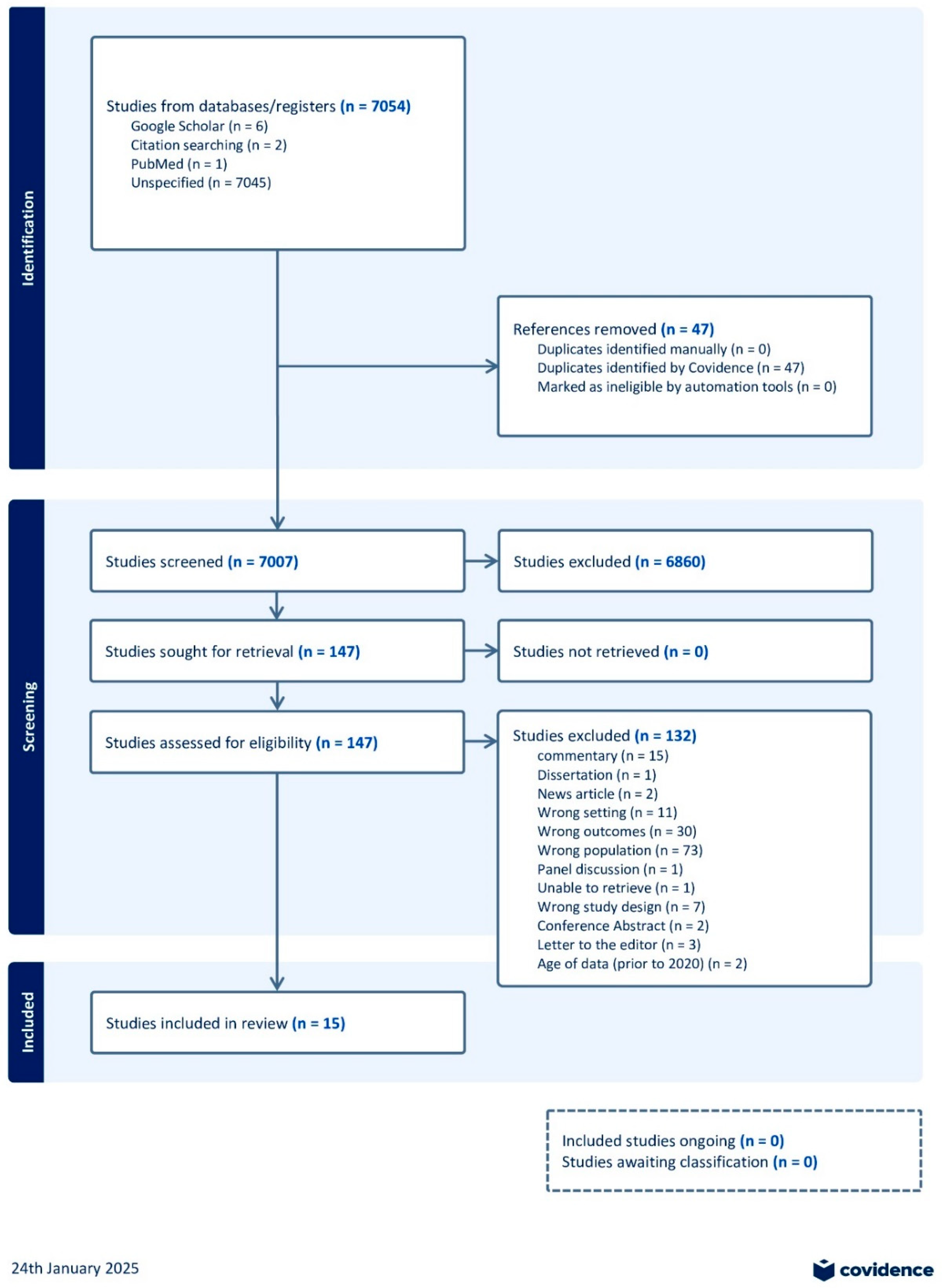
The search identified 7054 citations. After removing 47 duplicates and conducting title and abstract screening, 147 documents were selected for full-text review. Fifteen documents examining the impact of COVID-19 on racial populations were identified, along with twenty-four reports from grey literature sources (Figure 1. PRISMA flowchart of peer-reviewed articles).
Figure 1.
PRISMA flowchart of peer-reviewed articles.
The included documents varied in research design. Four documents adopted mixed-method approaches, three used qualitative methodologies, one was a systematic review, and seven were quantitative investigations (Table 1 and Table 2). Additionally, 24 grey literature articles were included (Table 3). These documents and articles had diverse objectives, including reporting on experiences of racism, understanding disparities in healthcare access, assessing the pandemic’s impact on food insecurity, social connectivity, and mental health, as well as examining disparities in reported mortality and morbidity rates.
Table 1.
Included peer-reviewed articles’ characteristics (n = 15).
Table 2.
Results from peer-reviewed articles (n = 15).
Table 3.
The results from the grey literature—grouped by population (n = 24).
We identified five themes: (1) high COVID-19 morbidity and mortality rates, (2) increasing discrimination during COVID-19, (3) impact of COVID-19 on mental health, (4) difficulty in accessing healthcare, and (5) impact on SDoH. These themes were selected based on the summarized notes of key findings and details from each included article, as outlined in Table 1.
2.7. High COVID-19 Morbidity and Mortality Rates
Three documents reported on COVID-19 morbidity and mortality rates in racialized populations [26,32,36]. One study documented that Black, Arab, and South Asian individuals exhibited a higher incidence of exposure to COVID-19 [32]. One study examined the impact of COVID-19 on the health of the Black Canadian population and revealed notable disparities [26]. Mortality rates were elevated in Montreal neighborhoods with larger Black populations [26]. Morbidity rates were found to be higher among Black communities, with Black populations in Toronto experiencing a disproportionate 16% of hospitalizations despite comprising only 9% of the total population [26]. A study on COVID-19 prevalence in Montreal found that the five neighborhoods most affected by the virus had 1.4 times more residents identifying as visible minority [36].
The results from the grey literature sources indicated similar trends regarding COVID-19 impacts on racialized populations [42,43,44,45,46,54,57]. A report found that regions with 25% or more of visible minorities experienced disproportionately higher mortality rates compared to areas with fewer visible minorities particularly in Ontario, Quebec, and British Columbia, where mortality rates were over three times higher in visible minorities [44].
In the most racially diverse neighborhoods, COVID-19 infection rates were three times higher, hospitalization rates were four times higher, and death rates were twice as high compared to less diverse neighborhoods [46]. In Ontario specifically, White populations had the lowest rates of infection, while racialized populations experienced 1.2 to 7.1 times higher infection rates. Hospitalization rates were 1.7 to 9.1 times higher, and rates of critical illness were 2.1 to 10.4 times higher among racialized populations [43].
During COVID-19 waves 6 and 7, disparities in impacts based on neighborhood diversity diminished [42]. Infection rates among Black Torontonians reached 2400 per 100,000, with racialized individuals accounting for 77% of all COVID-19 cases and 79% of hospitalizations [54]. In Ottawa, racialized populations were also disproportionately represented among diagnosed cases, attributed to their prevalence in frontline jobs, and the lack of paid sick leave [45].
A study on reinfection rates revealed disparities among racialized groups, with Black Canadians experiencing higher frequency of reinfections, followed closely by individuals of Latin American and Chinese descent [57].
2.8. Increasing Discrimination During COVID-19
Seven documents [25,27,29,30,31,32,37] reported on stigmatization and racial discrimination. One study found that Asian Canadian students experienced discrimination on 25% of the days throughout the study, with Asian Canadians encountering direct, indirect, and vicarious discrimination on 10.5%/9.6% and 4.8% of their days, respectively [37]. Two documents identified elevated levels of COVID-19-related discrimination among Asian and Black individuals, highlighting persistent racism concerns expressed by Chinese Canadians [31,32].
Another study on Chinese Canadians revealed that second-generation participants were more apprehensive about employment discrimination, while first-generation individuals were more concerned about school bullying [30].
A study examining the connection between racial discrimination and adverse health behaviors found increased substance use, reduced sleep, and decreased exercise, particularly among Asian adults who associated discrimination with being perceived as carriers of COVID-19 [25]. One study indicated that individuals of East/South Asian were more likely to agree that racist attitudes had intensified in Canada, with South Asians expressing lower levels of comfort in seeking medical care [27].
Findings from the grey literature corroborated peer-reviewed articles [46,62,63,64]. Racialized populations reported heightened instances of harassment, racism, and stigmatization [46]. For example, 27% of respondents identifying as visible minorities felt unsafe when navigating their neighborhoods alone after dark [46]. This perceived escalation in harassment was pronounced among individuals of Chinese, Korean, and Southeast Asian descent [46]. Anti-Asian racism increased by 32%, with Southeast Asians witnessing a 121% rise in such incidences [62]. Assaults targeting individuals of Asian descent increased by 42% in 2021, while online hate incidents increased by 132% [62]. A report noted that Asian Canadians are often reluctant to discuss experiences of anti-Asian hate due to negative past experiences, doubts about the validity of their encounters, and pressure to adhere to the model minority stereotype [63]. This reluctance resulted in a range of negative emotions including fear, anger, helplessness, and frustration [63].
Chinese Canadians experienced high levels of racism during the pandemic [64]. Approximately 50% were subjected to name-calling or insults, while 30% frequently encountered racist graffiti or messages on social media [64]. Over half of Asian parents expressed concerns about their children being bullied due to their ethnicity, illustrating the pervasive impact of racism on families [64].
2.9. Impact of COVID-19 on Mental Health
Six documents examined the impact of COVID-19 on the mental health of racialized individuals [29,30,32,33,35,38]. One study found that resettled Syrian refugee women experienced exacerbated grief and anxiety, attributed to fears of contracting the virus and disrupted expectations of postnatal care due to stringent preventive measures [35]. In an ethno-culturally diverse sample from Québec, the pandemic’s impact on mental health varied by socioeconomic status and ethno-cultural background [32]. Individuals of Arab descent reported elevated psychological distress, while Black community members experienced heightened mental stress [32]. Among older racialized Muslim immigrants surveyed in Alberta, the majority (57.95%) reported no change in their mental health status before and during the pandemic, while approximately 36% indicated a deterioration in their mental health during this period [33]. A qualitative study conducted in the Greater Toronto Area (GTA) found that most participants experienced fear and anxiety related to COVID-19 during routine activities, particularly when accessing in-person healthcare services [38]. Racialized caregivers expressed anxiety about their dependents’ well-being if they (the caregiver) became ill [38]. Despite these challenges, many participants coped by drawing on self-reliance and community support. Over time, they adapted to the realities of the pandemic, with some even viewing the resulting lifestyle changes as a positive development [38].
In a study focusing on Chinese Canadians, first-generation individuals faced greater health, financial, and cultural pandemic-related threats, negatively impacting their mental health more than their second-generation counterparts [30]. For second-generation participants, financial strain was the only threat associated with poorer mental health [30]. Another study highlighted correlation between belief in the “Asian health hazard” stereotype and experiencing higher levels of distress and lower life satisfaction among East and Southeast Asians in both Canada and the US [29].
The negative mental health effects of the “Asian health hazard” were emphasized, linking this stereotype to increased distress and reduced life satisfaction among East and Southeast Asian Canadians [29]. Arab participants reported higher scores on The Hopkins Symptom Checklist-10 (HSCL-10)—a self-report questionnaire assessing depression and anxiety symptoms—and experienced greater pandemic-related mental health impacts compared to other racial and cultural groups, whereas East Asian participants reported lower scores [32]. Although COVID-19-related stigma did not significantly interact with symptoms overall, higher stigma was linked to worse mental health among South Asian and Black participants [32]. For White participants, both exposure to the virus and COVID-19-related discrimination were significantly associated with poorer mental health [32].
The grey literature reported that racialized populations experienced significant negative mental health impacts [51,52,55,60]. A report on racialized communities in the GTA, indicated substantial adversities in mental health during the first three waves of the pandemic, with social isolation cited as the primary stressor [51].
A study on Canadian Arab populations found that newcomers faced challenges due to a lack of social networks, with 77% experiencing increased stress during the pandemic [52].
A survey examining the impact of COVID-19 on sexually transmitted and blood-borne infections (STBBI)-related health services for African, Caribbean, and Black (ABC) individuals in Canada revealed that 33% reported worsened mental health since the pandemic’s onset attributed to challenges in accessing mental health services [55].
A report on Indigenous populations highlighted emerging mental health challenges due to restricted access to cultural practices, heightened fear of contracting the virus, and the inability to travel or engage in recreational activities [60].
2.10. Difficulty in Accessing Healthcare
Three documents examined the challenges faced by racialized communities in accessing healthcare [33,35,38]. A study highlighted the barriers faced by resettled Syrian refugee women in accessing postnatal healthcare services, emphasizing how restrictions on in-hospital support, limited childcare options, the transition to virtual care, and reduced access to interpretation services exacerbated their challenges and feelings of isolation during childbirth [35]. Another study reported unmet healthcare needs among older racialized Albertans, with 3.4% of the sampled population indicating gaps in medical and health service support [33]. Disruptions across the healthcare sector led to significant service interruptions, including in dentistry and ophthalmology, increased wait times, delayed healthcare-seeking behavior until conditions became acute or prolonged, and concerns about the effectiveness of virtual healthcare services in providing accurate diagnosis and treatment [38].
The grey literature had similar findings to those of peer-reviewed articles [45,55,59,60,61]. One report indicated additional barriers faced by racialized communities, such as a lack of family doctors, and limited awareness of available supports services [45].
A report focusing on ABC communities found that 38% of participants living with HIV encountered challenges in accessing care providers or clinics since the onset of the pandemic [55].
During the first year of the pandemic, First Nations, Inuit, and Métis individuals, especially those living off-reserve, faced disproportionate challenges in accessing healthcare services, with nearly half reporting difficulties in scheduling appointments and significant barriers to mental health and addiction therapy, as well as consultations with medical specialists [59]. Another report highlighted that First Nations communities, particularly in remote areas, faced inadequate access to healthcare and emergency services, compounded by the reliance on air transportation for specialized medical care and the lack of reliable, sustainable water systems that hindered basic preventive measures like handwashing [61]. Structural inequalities, including insufficient access to healthcare services, heightened the vulnerability of Indigenous communities to the adverse effects of the pandemic [60].
2.11. Impact on the SDoH
Five documents reported on the impact that COVID-19 had on the SDoH of racialized communities [28,33,34,35,38]. Findings from the grey literature also spoke to the economic and social impact of the pandemic on racialized communities [39,40,41,47,48,49,50,53,55,56,58,61]. Amongst the reported impacts were childcare shortages [35,39,41], food insecurity [28,33,34], and social isolation [33,38]. Economic disruptions disproportionately affected racialized populations due to overrepresentation in precarious sectors, inadequate policy supports, and systemic inequities, especially among Indigenous, Black, Arab, and migrant populations [47,48,49,52,58,65].
2.12. The Childcare Dilemma and Unemployment Struggles
One study highlighted that Syrian refugee women faced heightened childcare responsibilities during COVID-19 due to the loss of informal support networks who were unable to help during childbirth experiences [35].
The childcare crisis, as discussed in two grey literature reports, has become a burden to parents looking for a job due to the scarcity of space and the accompanying costs [39,41]. Immigrant women without support systems face heightened economic insecurity and limited socioeconomic opportunities due to a lack of affordable childcare [39,41]. Statistics reveal that the unemployment rate for women of South Asian descent in Canada soared to nearly double the rate of the general population in July 2020, registering at 20.4% compared to the national average of 11.3% [41].
2.13. Challenges with Accessing Food
One study that recruited older Albertan immigrants disclosed that 2.2% of participants missed supports in accessing nutritious food, while 5.6% lacked assistance with grocery shopping [33]. Another study reporting on the experiences of urban Indigenous people living in Saskatchewan revealed that participants encountered exacerbated food insecurity and access challenges during the pandemic [34]. The study revealed significant food insecurity, with 33.3% experiencing severe, 22.8% moderate, and 12.3% marginal levels [34]. Post-pandemic, 47.1% struggled with rising food costs, 31.7% faced restricted supermarket access, and 41.4% noted limited food availability [34]. Income loss due to the pandemic was reported by 25% [34].
2.14. Coping with Challenges with Accessing Food
To cope, older Albertan immigrants relied on community resources, adjusted eating habits, sought assistance from family and friends, meal-planned, gardened, searched for deals, explored alternative protein sources, and prioritized children’s nutrition [34]. A study on the impact of COVID-19 on food security in Nunavut highlighted the importance of funding programs in improving community food access [28]. The participants stressed that achieving food sovereignty requires decolonization and support for locally harvested foods to strengthen the food economy [28]. They also emphasized the need for community-driven efforts to assist residents during crises and address gaps in support systems [28].
2.15. Feelings of Loneliness and Impact on Social Networks
Amongst racialized Muslim Albertans, 44.32% suffered from loneliness, due to factors like reduced family contact and social exclusion [33]. Most participants (93.18%) preferred in-person events over virtual programming, suggesting virtual options did not meet their social needs [33]. The study highlighted barriers to connectivity, such as technological issues and limited transportation [33]. Additionally, 11.3% lacked affordable housing support and reported reduced community assistance during lockdowns due to funding and resource cuts [33]. A study on predominantly racialized refugees and immigrants in the GTA found that all participants relied on social networks for information about financial subsidies and health awareness [38]. Around one-third faced difficulties accessing food delivery services and personal protective equipment, due to unawareness or resource scarcity [38]. Many expressed frustration with technological issues and disruptions in accessing support systems [38]. The participants noted a decline in social interactions but emphasized their acceptance and tolerance of the changes brought by the pandemic [38].
2.16. Economic Impacts
A report published six months into the pandemic revealed that COVID-19’s economic impact disproportionately affected racialized individuals who are overrepresented in sectors like food and accommodation services, as these sectors had to shut down, operate at reduced hours or capacity, which lead to many individuals losing their jobs [47]. Another report found that 45% of Canadian Arab respondents reported a negative impact on their finances, with a quarter having experienced reduced work hours or job loss attributed to the pandemic [52]. One study highlighted that Black, Indigenous and racialized individuals in Canada shouldered a disproportionate burden of economic insecurity stemming from pandemic-induced job losses [65].
A report covering economic insecurity trends between July 2020 and June 2021 showed that 31% of racialized individuals and 28% of Indigenous individuals faced economic insecurity [61]. It highlighted a growing unemployment gap between racialized and non-racialized workers, partly due to racialized workers being more likely to work in sectors like accommodation and food services, information, culture, recreation, and wholesale and retail trade—industries that accounted for 80% of job losses during the pandemic [61]. Indigenous peoples have experienced significant economic setbacks, characterized by elevated rates of unemployment and financial strain in comparison to non-Indigenous populations [47]. A report on the labor market impacts of COVID-19 on Indigenous people living off-reserve found that Indigenous individuals experienced a slower recovery in employment compared to non-Indigenous people [58]. In regions like British Columbia and Alberta, initial employment declines were significant, and although employment rates increased afterward, they remained below pre-pandemic levels [58]. The recovery was particularly slow in occupations that traditionally employed many Indigenous workers [58].
Black Canadians faced higher rates of layoffs and financial stress, with significant worries about rent payments [53]. A report highlighted the economic challenges faced by Black-led households during the pandemic, noting that from July 2020 to June 2021, the unemployment rate for Black individuals aged 15 to 69 averaged 12.9%, significantly higher than the 7.9% rate for the rest of the non-racialized population [56].
A survey-based report from ABC communities revealed significant economic impacts, with 36% of respondents facing reduced hours, pay cuts, or job loss, while 61% reported difficulties paying bills, and 53% experienced food insecurity [55].
2.17. Essential Workers and Job-Nature-Related Impacts
A report on hotel workers highlighted the severe effects of pandemic-related closures on the hospitality sector, which relies heavily on lower-paid racialized and migrant workers, who faced heightened health and safety risks, including increased exposure to COVID-19 at work, while the widespread closures led to massive job losses, worsening income insecurity and stress [48].
A report on migrant workers, mostly racialized individuals, revealed significant challenges due to their lack of permanent resident status, which hindered their ability to assert rights, access healthcare services, and secure suitable housing—essential for sheltering from the virus and practicing self-isolation [49]. Another report highlighted a troubling rise in wage theft and significant financial repercussions for migrant workers due to border closures, with quarantine requirements failing to meet their needs, resulting in unpaid quarantine periods and limited access to food [50].
3. Discussion
Health inequities between racialized and non-racialized (White) populations have persisted long before the onset of the COVID-19 pandemic; therefore, it was anticipated that the pandemic would exacerbate these existing disparities [66].
A scoping review methodology was selected for this study to facilitate a comprehensive examination of heterogeneous data, which are well-suited to the broad scope of our research objective—namely, to investigate the impact of COVID-19 on health, mortality and morbidity, and the social determinants of health among racialized populations. The use of a narrative synthesis approach to integrate the findings was deemed appropriate, given its suitability for synthesizing diverse and methodologically varied evidence.
Racialized individuals have faced worsened mental health issues, limited access to healthcare, discrimination, job loss, severe economic impacts, and higher rates of morbidity and mortality from COVID-19 compared to non-racialized populations. Additionally, our findings report that COVID-19 disproportionately impacted several SDoH areas including childcare challenges, food insecurity, social isolation, and economic instability. Social networks, crucial for support and information, were disrupted by lockdowns and technological barriers, intensifying loneliness and exclusion. Economically, racialized workers in hard-hit sectors faced greater job losses, slower recovery, and financial stress, with migrant workers experiencing additional vulnerabilities due to precarious status and inadequate protections.
Our findings are consistent with the existing literature, which reports similar impacts in other high-income countries, highlighting common challenges faced by racialized populations [67,68,69]. Data from the United States, the United Kingdom, Sweden, and the Netherlands reveal ethnic inequalities in COVID-19 risks and outcome, which might be attributed in part to institutional racism and discrimination [67,68,69]. These findings suggest that COVID-19 may function as a social disease, with its impact differing based on an individual’s socioeconomic position [70].
Our findings indicate that the impact of the pandemic on racialized groups may have been magnified by compounding factors, such as employment in low-wage occupations, being a new immigrant or migrant worker, residing in rural areas, and having minor dependents, all of which likely worsened the pandemic’s effects on these communities [30,32,33,34,35,38,39,40,41,45,46,47,48,50,51,53,56,58,59,60,61].
Responsive policy action is crucial to mitigate the compounding factors that have exacerbated the negative effects of the COVID-19 pandemic on racialized populations. For example, the lack of universal paid sick leave policies has left low-income racialized populations in a difficult position, forcing them to work while ill [45]. Paid sick leave has been linked to improved mental and self-rated health outcomes and a reduction in the spread of airborne pathogens [71,72]. Another important area for legislative intervention is the implementation of strict anti-racism policies that address covert racism and discriminatory practices in healthcare and public spaces. Racism and discrimination have been shown to reduce trust in the healthcare system, delay healthcare-seeking behaviors, [73,74] and contribute to self-blame [63]. These measures are essential for recovering from the pandemic’s impact, preventing future crises, and ensuring equitable healthcare access and support services for all.
A notable paradox found in our findings was that East Asian participants reported lower HSCL scores despite experiencing disproportionately high levels of COVID-19-related discrimination [32]. This phenomenon may reflect cultural differences in the expression of psychological distress, with East Asians potentially less inclined to report such symptoms compared to other groups [32]. Conversely, among White participants, discrimination correlated with elevated HSCL-10 scores, suggesting greater psychological vulnerability potentially linked to their majority group status and corresponding expectations of social protection [32]. These findings underscore differential impacts of pandemic-related discrimination on mental health across cultural groups and emphasize the importance of addressing biases inherent in self-reported data. Moreover, they call for the development of culturally sensitive assessment tools that better account for normative variations in distress expression.
4. Future Recommendations
Addressing the intersecting challenges faced by racialized populations requires holistic and multi-level interventions aimed at dismantling systemic inequities and promoting health equity across all sectors of society. Legislative action should prioritize the implementation of robust anti-racism policies that target both overt and covert forms of discrimination within healthcare systems and public spaces. Future research should be directed toward the development and evaluation of interventions that specifically address the disproportionate burdens borne by racialized communities. Longitudinal studies are particularly critical to understanding the enduring impacts of the pandemic, especially in relation to widening socioeconomic inequalities. Furthermore, the establishment of a centralized, standardized database for the systematic collection of race-based data is essential. Such a resource would enable more accurate tracking of disease burden, facilitate a deeper understanding of structural disparities, and inform the design of targeted, evidence-based public health responses.
5. Limitations
This review is limited by the scope of the search strategy and the inclusion of grey literature, which may vary in quality and lack peer review. The heterogeneity of the included studies may have introduced measurement, selection, and information biases, potentially affecting the generalizability of the findings. We acknowledge that the results do not capture the experiences of frontline workers or individuals living with comorbidities, further limiting their generalizability. These groups were excluded due to their heightened exposure risks or underlying health conditions, which could confound the observed impacts. While we acknowledge that structural inequities contribute to the increased susceptibility of some racialized groups to comorbidities, the primary objective of this review was to examine the broad impact of COVID-19 on racialized populations. Including the above compounding factors would require a broader analytical scope to fully capture their influence—an undertaking beyond the parameters of the current study. We aimed to provide a comprehensive account of the impacts of COVID-19 on racialized populations, including the identification of coping strategies related to food insecurity. Nonetheless, a key limitation lies in the limited exploration of coping mechanisms addressing financial, health, and social challenges. This gap reflects this study’s primary focus on the direct impacts of the pandemic, rather than the broader spectrum of adaptive responses.
6. Conclusions
COVID-19 has exacerbated existing disparities, disproportionately affecting racialized groups and underscoring the urgent need for equity-focused policies and preparedness strategies. To prevent these communities from bearing unequal burdens in future health crises, we recommend the implementation of anti-racism policies and mandated paid sick leave. Additionally, we call for the establishment of a centralized database to systematically collect race-based data. This system would help track disease burden, identify gaps, and monitor racism and discrimination in healthcare, ultimately guiding data-driven actions and the development of targeted interventions.
Supplementary Materials
The following supporting information can be downloaded at: https://www.mdpi.com/article/10.3390/ijerph22071054/s1, Supplementary File S1: PRISMA-ScR Checklist.
Author Contributions
A.D.P. designed this study, and M.K. and O.J.O. helped develop the protocol. M.K. developed the search strategy. M.K. collected the data. M.K. was primarily responsible for conducting the data analysis and drafting the initial manuscript. All authors provided advice on the study design, data interpretation, and presentation of results. All authors aided in modifying and refining the final manuscript. All authors have read and agreed to the published version of the manuscript.
Funding
This project was primarily supported by a grant from the Emerging and Pandemic Infections Consortium—Institute for Pandemics, University of Toronto. Dr. Andrew Pinto is supported as a Clinician-Scientist by the Department of Family and Community Medicine, Faculty of Medicine at the University of Toronto and at St. Michael’s Hospital, and by the Li Ka Shing Knowledge Institute. Dr. Pinto is also supported by a CIHR Applied Public Health Chair, and in his role as director of the University of Toronto Practice- and Community-Based Learning and Research Network (UPLEARN). The opinions, results, and conclusions reported in this article are those of the authors and are independent from any funding sources.
Institutional Review Board Statement
Not applicable.
Informed Consent Statement
Not applicable.
Data Availability Statement
The data from which the findings are generated are available upon reasonable request to the corresponding author.
Acknowledgments
The authors thank Roxana Rabet, Henry Liu, Geil Astorga, Natricha Levy McFarlane, and Katinka English for their support with this project. This scoping review is part of a series of three scoping reviews that examine the way in which the COVID-19 pandemic has impacted marginalized communities and individuals in Canada.
Conflicts of Interest
The authors declare no conflicts of interest.
Appendix A. Peer-Reviewed Articles’ Search Strategy
The following search strategy was copied to all of the included databases when appropriate.
Ovid MEDLINE
- 1 exp pneumonia, viral/or exp coronavirus infections/
- 2 exp Racial Groups/
- 3 exp “American Indian or Alaska Native”/
- 4 exp Indians, North American/
- 5 middle eastern canadians.mp.
- 6 exp “Health Disparate, Minority and Vulnerable Populations”/
- 7 exp social problems/or exp socioeconomic factors/
- CINAHL (Ebsco platform)
- S79 S76 AND S77
- S78 S76 AND S77
- S77 S28 OR S49 OR S67
- S76 S13 AND S75
- S75 S69 OR S70 OR S71 OR S72 OR S73 OR S74
- S74 SO (canada or canadian* or “british columbia” or “colombie brittanique” or saskatchewan or manitoba or ontario or quebec or “new brunswick” or “nouveau brunswick” or “nova scotia” or “nouvelle ecosse” or “prince edward island” or “ile du prince edouard” or newfoundland or “terre neuve” or labrador or nunavut or nwt or “territoires du nord ouest” or “northwest territor*” or yukon or “north america” or toronto or montreal or vancouver or ottawa” or edmonton or “quebec city” or winnipeg or hamilton…
- S73 (canada or canadian* or “british columbia” or “colombie brittanique” or saskatchewan or manitoba or ontario or quebec or “new brunswick” or “nouveau brunswick” or “nova scotia” or “nouvelle ecosse” or “prince edward island” or “ile du prince edouard” or newfoundland or “terre neuve” or labrador or nunavut or nwt or “territoires du nord ouest” or “northwest territor*” or yukon or “north america*” or toronto or montreal or calgary or ottawa or edmonton or winnipeg or vancouver or gatineau or “queb…
- S72 (canada or canadian* or alberta or “british columbia” or “colombie brittanique” or saskatchewan or manitoba or ontario or quebec or “new brunswick” or “nouveau brunswick” or “nova scotia” or “nouvelle ecosse” or “prince edward island” or “ile du prince edouard” or newfoundland or “terre neuve” or labrador or nun?v?t or nwt or “territoires du nord ouest” or yukon)”
- S71 (MH “Aboriginal Canadians+”)
- S70 (MH “North America+”)
- S69 (MH “Canada+”)
- S68 S29 AND S49
- S67 S64 OR S65 OR S66
- S66 (MM “Intersectionality”)
- S65 S53 AND S62
- S64 S53 AND S62
- S63 s53 NOT s59
- S62 S60 OR S61
- S61 “work outside the home”
- S60 “work onsite”
- S59 S54 OR S55 OR S56 OR S57 OR S58
- S58 “shelter at home”
- S57 (MM “Telecommuting”)
- S56 “work at home”
- S55 “work from home”
- S54 “work remotely”
- S53 S50 OR S51 OR S52
- S52 TX (trustee* or astronaut* or ethicist* or “foreign professional personnel” or “government employee*” or “ metal worker*” or miner* or police or monk* or nun* or “firefighter* or “sex worker*”)
- S51 (MM “Case Managers”) OR (MM “Correctional Facilities Personnel”) OR (MM “Doulas”) OR (MM “Farmworkers”) OR (MH “Military Personnel+”) OR (MM “Pilots”) OR (MM “Blue Collar Workers”)
- S50 TX “essential worker*”
- S49 S29 OR S30 OR S31 OR S32 OR S33 OR S34 OR S35 OR S36 OR S37 OR S38 OR S39 OR S40 OR S41 OR S42 OR S43 OR S44 OR S45 OR S46 OR S47 OR S48
- S48 TX (“economic disparit*” or “structural inequality” or “food insecurity” or deficienc* or “lack of social security” or unemploy* or welfare or intersectionality or “health inequity” or “health inequality”)
- S47 TX (homeless or “loss or dwelling” or unsheltered or “lack of shelter” or “in need of housing” or “housing deprived”)
- S46 “sociology problems”
- S45 “working poor”
- S44 (MM “Homeless Persons”) OR (MM “Indigent Persons”) OR (MM “Medically Underserved”) OR (MM “Medically Uninsured”) OR (MM “Minority Groups”) OR (MM “Transients and Migrants”)
- S43 “ill-housed persons”
- S42 “social stigma”
- S41 “social marginalization”
- S40 (MM “Work-Life Balance”)
- S39 (MM “Comfort”)
- S38 (MH “Social Class+”) OR (MM “Low Socioeconomic Status”) OR (MM “Social Mobility”)
- S37 (MM “Housing Instability”)
- S36 “economic stability”
- S35 (MH “Socioeconomic Factors+”) OR (MM “Economic Factors”) OR (MM “Economic Status”) OR (MM “Educational Status”) OR (MM “Housing Instability”) OR (MM “Low Socioeconomic Status”) OR (MH “Social Class+”) OR (MM “Social Mobility”) OR (MM “Unemployment”)
- S34 TX “child poverty”
- S33 (MM “Child Welfare”)
- S32 (MM “Poverty”)
- S31 TX (“low income” or “low-income” or needy or indigent or impoverished or destitute or penniless or “poverty-stricken” or “poverty stricken” or necessitous or straitened or “lower class” or “lower-class”)
- S30 (MM “Public Housing”)
- S29 (MH “Europeans+”) OR (MM “Eastern Europeans”) OR (MM “Scandinavians and Nordic Persons”) OR (MM “White Persons”)
- S28 S14 OR S15 OR S16 OR S17 OR S18 OR S19 OR S20 OR S21 OR S22 OR S23 OR S24 OR S25 OR S26 OR S27
- S27 TX “black communit*” or “health inequity” or “health inequality” or “black Canadian*” or “african canadian” or caribbean or “caribbean and black commmunit* racial disparit*” or intersectionality or race
- S26 (MM “Stereotyping”)
- S25 (MH “Racism+”) OR (MM “Systemic Racism”)
- S24 TX dene
- S23 TX cree OR TX haudenosaunee OR TX metis
- S22 TX “first nation*”
- S21 (MH “Ethnic Groups+”) OR (MH “Africans+”) OR (MM “Arabs”) OR (MH “Asians+”) OR (MH “Australasians+”) OR (MH “Black Persons+”) OR (MH “Indigenous Peoples+”) OR (MH “Jews+”) OR (MM “Kurds”) OR (MM “Middle Eastern Persons”) OR (MH “North Americans+”) OR (MM “Aboriginal Canadians”) OR (MH “African Americans”) OR (MM “Amish”) OR (MH “Hispanic Americans”) OR (MM “Inuit”) OR (MH “Native Americans”) OR (MM “Roma”) OR (MM “South Americans”)
- S20 (MM “Special Populations”)
- S19 (MM “Minority Groups”)
- S18 “health disparate”
- S17 (MM “Refugees”)
- S16 “population groups”
- S15 (MH “Undocumented Immigrants”)
- S14 (MM “Emigration and Immigration”)
- S13 S1 OR S2 OR S3 OR S4 OR S5 OR S6 OR S7 OR S8 OR S9 OR S11 OR S12
- S12 TX “sars cov 2”
- S11 TX “sever acute respiratory syndrome coronavirus 2” OR TX “severe acute respiratory syndrome coronavirus 2” OR TX wuhan
- S10 TX “2019-nCov disease” OR TX “2019 ncov infection” OR TX “coronavirus disease 19”
- S9 TX 2019-nCoV OR TX COVID-19 OR TX “2019 novel coronavirus disease”
- S8 TX CoV OR TX SARS-CoV OR TX MERS-CoV
- S7 TX “middle east respiratory syndrome” OR TX severe acute respiratory syndrome” AND TX SARS
- S6 TX coronavirus* OR TX “corona virus” OR TX mers
- S5 MH covid 19
- S4 MW covid
- S3 (MH “SARS Virus”)
- S2 (MH “Coronavirus Infections+”) OR (MM “Middle East Respiratory Syndrome”) OR (MH “COVID-19+”) OR (MH “Coronavirus+”) OR (MH “SARS-CoV-2”)
- S1 MH coronavirus
Appendix B. Grey Literature Search Terms
| Context (Applied in Conjugation with the Boolean Operator “AND”) | Target Location (Applied in Conjugation with the Boolean Operator “AND”) | Target Interest (Applied in Conjugation with the Boolean Operator “AND”) | Target Population (Applied in Conjugation with the Boolean Operator “AND”) |
| COVID-19 | Canada | impact | racialized communities |
| COVID-19 | Canada | impact | homeless |
| COVID-19 | Canada | impact | essential workers (Boolean operator NOT healthcare workers) |
| COVID-19 | Canada | impact | African communities |
| COVID-19 | Canada | impact | migrant workers |
| COVID-19 | Canada | impact | low-income |
| COVID-19 | Canada | impact | truckers |
| COVID-19 | Canada | impact | Caribbean communities |
| COVID-19 | Canada | impact | racial + minoritized |
| COVID-19 | Canada | impact | housing challenged |
| COVID-19 | Canada | impact | Asian communities |
| COVID-19 | Canada | impact | South Asian communities |
| COVID-19 | Canada | impact | South American |
| COVID-19 | Canada | impact | North African communities |
| COVID-19 | Canada | impact | Middle eastern |
| COVID-19 | Canada | impact | grocery clerks |
| COVID-19 | Canada | impact | minimum wage workers |
| COVID-19 | Canada | impact | displaced refugees |
| COVID-19 | Canada | impact | transient shelter |
| COVID-19 | Canada | impact | retail workers |
| COVID-19 | Canada | impact | restaurant staff |
| COVID-19 | Canada | impact | farmers |
| COVID-19 | Canada | impact | immigrants |
| COVID-19 | Canada | impact | Indigenous |
Appendix C. Data Extraction Instructions and Data Fields
There are two sections to the data extraction form.
Section 1—general information about the citation/reference.
Section 2—details about the citation/reference.
| General information | |
| Title | |
| Lead author | |
| Year of publication | |
| Publication source | |
| Countries in which the study conducted | |
| Province/territory in which the study conducted | |
| Study Characteristics | |
| Methods | Aim of study |
Study design
| |
| Details of study design | |
| Data source | |
| Context | |
| Participants | Total population size (N) |
| Population description | |
| Sample size of interest (n) | |
| Age | |
| Gender | |
| Income | |
| Race/Ethnicity | |
| Other demographic information | |
| Outcomes | Reported Impact on Health outcomes (quantitative) |
| Reported Impact on Health outcomes (qualitative) | |
| Reported Impact on Social Determinants of Health (SDoH) (quantitative) | |
| Reported Impact on Social Determinants of Health (SDoH) (qualitative) | |
| Reported Impact on Health inequities (quantitative) | |
| Reported Impact on Health inequities (qualitative) | |
| Comparator(s) (group/outcomes) | |
| Reported Effect on Comparator | |
| Other sociodemographic variables | |
References
- Mein, S.A. COVID-19 and Health Disparities: The Reality of “the Great Equalizer”. J. Gen. Intern. Med. 2020, 35, 2439–2440. [Google Scholar] [CrossRef] [Scilit] [PubMed]
- Coulter, K.M.; Benner, A.D. The racialized landscape of COVID-19: Reverberations for minority adolescents and families in the U.S. Curr. Opin. Psychol. 2023, 52, 101614. [Google Scholar] [CrossRef] [Scilit] [PubMed]
- Razai, M.S.; Kankam, H.K.N.; Majeed, A.; Esmail, A.; Williams, D.R. Mitigating ethnic disparities in COVID-19 and beyond. BMJ 2021, 372, m4921. [Google Scholar] [CrossRef] [Scilit]
- Garcia, M.A.; Homan, P.A.; García, C.; Brown, T.H. The Color of COVID-19: Structural Racism and the Disproportionate Impact of the Pandemic on Older Black and Latinx Adults. J. Gerontol. Ser. B 2021, 76, e75–e80. [Google Scholar] [CrossRef] [Scilit] [PubMed]
- Zhang, W.; Kolady, D. The COVID-19 pandemic’s unequal socioeconomic impacts on minority groups in the United States. Demogr. Res. 2022, 47, 1019–1032. [Google Scholar] [CrossRef] [Scilit]
- Kemei, J.; Tulli, M.; Olanlesi-Aliu, A.; Tunde-Byass, M.; Salami, B. Impact of the COVID-19 Pandemic on Black Communities in Canada. Int. J. Environ. Res. Public Health 2023, 20, 1580. [Google Scholar] [CrossRef] [Scilit]
- Yearby, R.; Mohapatra, S. Law, structural racism, and the COVID-19 pandemic. J. Law Biosci. 2020, 7, lsaa036. [Google Scholar] [CrossRef] [Scilit]
- Abraham, P.; Williams, E.; Bishay, A.E.; Farah, I.; Tamayo-Murillo, D.; Newton, I.G. The Roots of Structural Racism in the United States and their Manifestations During the COVID-19 Pandemic. Acad. Radiol. 2021, 28, 893–902. [Google Scholar] [CrossRef] [Scilit]
- Public Health Agency of Canada. Social Determinants and Inequities in Health for Black Canadians: A Snapshot. 2020. Available online: https://www.canada.ca/en/public-health/services/health-promotion/population-health/what-determines-health/social-determinants-inequities-black-canadians-snapshot.html (accessed on 10 April 2024).
- Public Health Agency of Canada. Inequalities in Health of Racialized Adults in Canada. 2022. Available online: https://www.canada.ca/en/public-health/services/publications/science-research-data/inequalities-health-racialized-adults-18-plus-canada.html (accessed on 10 April 2024).
- McKoy, D.L.; Vincent, J.M. Housing and education: The inextricable link. In Segregation: The Rising Costs for America; Routledge: Oxfordshire, UK, 2008; pp. 125–150. [Google Scholar]
- Martens, P.J.; Chateau, D.G.; Burland, E.M.J.; Finlayson, G.S.; Smith, M.J.; Taylor, C.R.; Brownell, M.D.; Nickel, N.C.; Katz, A.; Bolton, J.M. The Effect of Neighborhood Socioeconomic Status on Education and Health Outcomes for Children Living in Social Housing. Am. J. Public Health 2014, 104, 2103–2113. [Google Scholar] [CrossRef] [Scilit]
- Chmielewski, A.K.; Maharaj, S. Socio-Economic Segregation Between Schools in Canada. 2022. Available online: https://tspace.library.utoronto.ca/bitstream/1807/123895/1/RIES%20-%20Technical%20Report%20-%20Socio-Economic%20Segregation.pdf (accessed on 10 April 2024).
- Herman, J. Canada’s Approach to School Funding. 2013. Available online: https://cdn.americanprogress.org/wp-content/uploads/2013/05/HermanCanadaReport.pdf (accessed on 10 April 2024).
- Heard-Garris, N.; Boyd, R.; Kan, K.; Perez-Cardona, L.; Heard, N.J.; Johnson, T.J. Structuring Poverty: How Racism Shapes Child Poverty and Child and Adolescent Health. Acad. Pediatr. 2021, 21, S108–S116. [Google Scholar] [CrossRef] [Scilit]
- Owens, A. Unequal Opportunity: School and Neighborhood Segregation in the USA. Race Soc. Probl. 2020, 12, 29–41. [Google Scholar] [CrossRef] [Scilit]
- Velásquez, N.; Leahy, R.; Restrepo, N.J.; Lupu, Y.; Sear, R.; Gabriel, N.; Jha, O.K.; Goldberg, B.; Johnson, N.F. Online hate network spreads malicious COVID-19 content outside the control of individual social media platforms. Sci. Rep. 2021, 11, 11549. [Google Scholar] [CrossRef] [Scilit] [PubMed]
- Liao, K.T.; Villarreal, A. Unequal effects of the COVID-19 epidemic on employment: Differences by immigrant status and race/ethnicity. PLoS ONE 2022, 17, e0277005. [Google Scholar] [CrossRef] [Scilit] [PubMed]
- Dias, F.A. The Racial Gap in Employment and Layoffs during COVID-19 in the United States: A Visualization. Socius Sociol. Res. A Dyn. World 2021, 7, 237802312098839. [Google Scholar] [CrossRef] [Scilit]
- Veenstra, G. Racialized identity and health in Canada: Results from a nationally representative survey. Soc. Sci. Med. 2009, 69, 538–542. [Google Scholar] [CrossRef] [Scilit]
- Peters, M.D.J.; Marnie, C.; Tricco, A.C.; Pollock, D.; Munn, Z.; Alexander, L.; McInerney, P.; Godfrey, C.M.; Khalil, H. Updated methodological guidance for the conduct of scoping reviews. JBI Evid. Synth. 2020, 18, 2119–2126. [Google Scholar] [CrossRef] [Scilit]
- Tricco, A.C.; Lillie, E.; Zarin, W.; O’Brien, K.K.; Colquhoun, H.; Levac, D.; Moher, D.; Peters, M.D.J.; Horsley, T.; Weeks, L.; et al. PRISMA Extension for Scoping Reviews (PRISMA-ScR): Checklist and Explanation. Ann. Intern. Med. 2018, 169, 467–473. [Google Scholar] [CrossRef] [Scilit]
- Komeiha, M.; Artyukh, I.; Ogundele, O.J.; Zhao, J.; Massaquoi, N.; Liu, H.; Straus, S.; Razak, F.; Hosseini, B.; Shahidi, F.V.; et al. Social Inequalities in the Impact of the COVID-19 Pandemic: A Scoping Review Protocol. 2024. Available online: https://osf.io/y538c/ (accessed on 10 April 2024).
- Popay, J.; Roberts, H.; Sowden, A.; Petticrew, M.; Arai, L.; Rodgers, M.; Britten, N.; Roen, K.; Duffy, S. Guidance on the Conduct of Narrative Synthesis in Systematic Reviews. A Product from the ESRC Methods Programme; Lancaster University: Lancaster, UK, 2006; Volume 1, p. b92. Available online: https://www.researchgate.net/publication/233866356_Guidance_on_the_conduct_of_narrative_synthesis_in_systematic_reviews_A_product_from_the_ESRC_Methods_Programme (accessed on 15 April 2024).
- Currie, C.L.; Higa, E.K. The Impact of Racial and Non-racial Discrimination on Health Behavior Change Among Visible Minority Adults During the COVID-19 Pandemic. J. Racial Ethn. Health Disparities 2022, 9, 2551–2559. [Google Scholar] [CrossRef] [Scilit]
- Ezezika, O.; Girmay, B.; Mengistu, M.; Barrett, K. What is the health impact of COVID-19 among Black communities in Canada? A systematic review. Can. J. Public Health 2023, 114, 62–71. [Google Scholar] [CrossRef] [Scilit]
- Fahim, C.; Cooper, J.; Theivendrampillai, S.; Pham, B.; Straus, S.E. Exploring Canadian perceptions and experiences of stigma during the COVID-19 pandemic. Front. Public Health 2023, 11, 1068268. [Google Scholar] [CrossRef] [Scilit]
- Horlick, S.; Chatwood, S. Exploring community perspectives on the impacts of COVID-19 on food security and food sovereignty in Nunavut communities. Scand. J. Public Health 2023, 51, 1027–1032. [Google Scholar] [CrossRef] [Scilit] [PubMed]
- Lo, R.F.; Padgett, J.K.; Cila, J.; Sasaki, J.Y.; Lalonde, R.N. The reemergence of Yellow Peril: Beliefs in the Asian health hazard stereotype predict lower psychological well-being. Asian Am. J. Psychol. 2022, 13, 339–350. [Google Scholar] [CrossRef] [Scilit]
- Lou, N.M.; Noels, K.A.; Kurl, S.; Zhang, Y.S.D.; Young-Leslie, H. Chinese Canadians’ experiences of the dual pandemics of COVID-19 and racism: Implications for identity, negative emotion, and anti-racism incident reporting. Can. Psychol. Psychol. Can. 2022, 63, 279–297. [Google Scholar] [CrossRef] [Scilit]
- Lou, N.M.; Noels, K.A.; Kurl, S.; Zhang, Y.S.D.; Young-Leslie, H. COVID discrimination experience: Chinese Canadians’ social identities moderate the effect of personal and group discrimination on well-being. Cult. Divers. Ethn. Minor. Psychol. 2023, 29, 132–144. [Google Scholar] [CrossRef] [Scilit]
- Miconi, D.; Li, Z.Y.; Frounfelker, R.L.; Santavicca, T.; Cénat, J.M.; Venkatesh, V.; Rousseau, C. Ethno-cultural disparities in mental health during the COVID-19 pandemic: A cross-sectional study on the impact of exposure to the virus and COVID-19-related discrimination and stigma on mental health across ethno-cultural groups in Quebec (Canada). BJPsych Open 2021, 7, e14. [Google Scholar] [CrossRef] [Scilit]
- Rehmani, A.I.; Abdi, K.; Mabrouk, E.B.; Zhao, T.; Salami, B.O.; Jones, A.; Tong, H.; Salma, J. Impact of the COVID-19 pandemic on Muslim older immigrants in Edmonton, Alberta: A community-based participatory research project with a local mosque. Can. J. Public Health 2023, 114, 378–388. [Google Scholar] [CrossRef] [Scilit]
- Shafiee, M.; Lane, G.; Szafron, M.; Hillier, K.; Pahwa, P.; Vatanparast, H. Exploring the Implications of COVID-19 on Food Security and Coping Strategies among Urban Indigenous Peoples in Saskatchewan, Canada. Nutrients 2023, 15, 4278. [Google Scholar] [CrossRef] [Scilit]
- Stirling Cameron, E.; Ramos, H.; Aston, M.; Kuri, M.; Jackson, L. “COVID affected us all”: The birth and postnatal health experiences of resettled Syrian refugee women during COVID-19 in Canada. Reprod. Health 2021, 18, 256. [Google Scholar] [CrossRef] [Scilit]
- Vitale, M. The social ecology of COVID-19 prevalence and risk in Montreal, QC, Canada. Health Place 2022, 78, 102919. [Google Scholar] [CrossRef] [Scilit]
- Zhang, J.W.; Bui van Snell, A.N.; Howell, R.T.; Bailis, D. Daily self-compassion protects Asian Americans/Canadians after experiences of COVID-19 discrimination: Implications for subjective well-being and health behaviors. Self Identity 2022, 21, 891–913. [Google Scholar] [CrossRef] [Scilit]
- Leung, D.; Lee, C.; Wang, A.H.; Guruge, S. Immigrants’ and refugees’ experiences of access to health and social services during the COVID-19 pandemic in Toronto, Canada. J. Health Serv. Res. Policy 2023, 28, 34–41. [Google Scholar] [CrossRef] [Scilit] [PubMed]
- Ivanova, I. Inequality, Employment and COVID-19 Priorities for Fostering an Inclusive Recovery in BC. 2021. Available online: https://policyalternatives.ca/sites/default/files/uploads/publications/BC%20Office/2021/07/ccpa-bc_Inequality-Employment-COVID_full.pdf (accessed on 18 April 2024).
- Canadian Labour Congress. CLC Submission to the Government of Canada on Labour Shortages, Working Conditions and the Care Economy. 2022. Available online: https://www.ourcommons.ca/Content/Committee/441/HUMA/Brief/BR11689927/br-external/CanadianLabourCongress-e.pdf (accessed on 18 April 2024).
- Gladu, M. Impacts of the COVID-19 Pandemic on Women. 2021. Available online: https://publications.gc.ca/collections/collection_2021/parl/xc71-1/XC71-1-1-432-6-eng.pdf (accessed on 18 April 2024).
- Public Health Ontario. COVID-19 in Ontario—A Focus on Neighbourhood Diversity, February 26, 2020 to December 31, 2022. 2023. Available online: https://www.publichealthontario.ca/-/media/documents/ncov/epi/2020/06/covid-19-epi-diversity.pdf?la=en#:~:text=The%20most%20diverse%20neighbourhoods%20in,diverse%20neighbourhoods%20(Table%201) (accessed on 18 April 2024).
- Ontario Health; Wellesley Institute. Tracking COVID 19 Through Race-Based Data. 2021. Available online: https://www.ontariohealth.ca/system/equity/report-covid-19-race-based-data (accessed on 18 April 2024).
- Statistics Canada. COVID-19 in Canada: A One-Year Update on Social and Economic Impacts. 2021. Available online: https://www150.statcan.gc.ca/n1/pub/11-631-x/11-631-x2021001-eng.htm (accessed on 16 April 2024).
- The Ottawa Local Immigration partnership. The Impact of COVID-19 on Immigrants & Racialized Communities in Ottawa: A Community Dialogue. 2020. Available online: https://olip-plio.ca/wp-content/uploads/2020/11/SummaryReport-OLIP-COVID-CommunityDialogue.pdf (accessed on 17 April 2024).
- Statistics Canada. Impacts on Immigrants and People Designated as Visible Minorities. 2020. Available online: https://www150.statcan.gc.ca/n1/pub/11-631-x/2020004/s6-eng.htm (accessed on 15 April 2024).
- Statistics Canada. The Social and Economic Impacts of COVID-19: A Six-Month Update. 2020. Available online: https://publications.gc.ca/collections/collection_2020/statcan/11-631-x/11-631-x2020004-eng.pdf (accessed on 18 April 2024).
- Cheff, R.; Elliott, S.; Afful, A.; Opoku, E. Mapping the Impacts of COVID-19 on Hotel Workers in the GTA. 2023. Available online: https://www.wellesleyinstitute.com/wp-content/uploads/2023/04/COVID-and-Hotel-Workers.pdf (accessed on 18 April 2024).
- Office of the Auditor General of Canada. Health and Safety of Agricultural Temporary Foreign Workers in Canada During the COVID-19 Pandemic. 2021. Available online: https://www.oag-bvg.gc.ca/internet/English/att__e_43972.html (accessed on 18 April 2024).
- The Migrant Workers Alliance for Change. Unheeded Warnings: COVID-19 & Migrant Workers in Canada. 2020. Available online: https://migrantworkersalliance.org/wp-content/uploads/2020/06/Unheeded-Warnings-COVID19-and-Migrant-Workers.pdf (accessed on 18 April 2024).
- Sanford, S.; Um, S.; Tolentino, M.; Raveendran, L.; Kharpal, K.; Weston, N.A.; Roche, B. COVID-19 and Racialized Communities: Impacts on Mental Health. 2022. Available online: https://www.wellesleyinstitute.com/wp-content/uploads/2022/03/The-Impact-of-COVID-19-on-Mental-Health-and-Well-being-A-Focus-on-Racialized-Communities-in-the-GTA.pdf (accessed on 17 April 2024).
- Fearon, G.; Hejazi, W.; Ciologariu, A.; Murray, S.; Younes, R.; Salti, S.; Abdo, R. Experiences of Racialized Communities During COVID-19 Reflections and a Way Forward. 2021. Available online: https://brocku.ca/community-engagement/wp-content/uploads/sites/31/Final-Brock-Report.pdf (accessed on 18 April 2024).
- African-Canadian Civic Engagement Council; Innovative Research Group. Impact of COVID-19: Black Canadian Perspectives. 2020. Available online: https://innovativeresearch.ca/wp-content/uploads/2020/09/ACCEC01-Release-Deck.pdf (accessed on 18 April 2024).
- The Black Health Alliance. Perspectives on Health & Well-Being in Black Communities in Toronto. 2020. Available online: https://blackhealthalliance.ca/wp-content/uploads/Perspectives-on-Health-Well-Being-in-Black-Communities-in-Toronto-Experiences-through-COVID-19.pdf (accessed on 18 April 2024).
- Public Health Agency of Canada. How Has COVID-19 Impacted Access to STBBI-Related Health Services, Including Harm Reduction Services, for African, Caribbean and Black (ACB) People in Canada? Government of Canada. 2 June 2022. Available online: https://health-infobase.canada.ca/datalab/covid-19-stbbi-acb-people.html (accessed on 17 April 2024).
- Statistics Canada. Housing Challenges Remain for Vulnerable Populations in 2021. 2022. Available online: https://www150.statcan.gc.ca/n1/en/daily-quotidien/220721/dq220721b-eng.pdf?st=M_nrEN1a (accessed on 18 April 2024).
- Kuang, S.; Earl, S.; Clarke, J.; Zakaria, D.; Demers, A.; Aziz, S. Experiences of Canadians with Long-Term Symptoms Following COVID-19. 2023. Available online: https://www150.statcan.gc.ca/n1/pub/75-006-x/2023001/article/00015-eng.htm (accessed on 18 April 2024).
- Bleakney, A.; Masoud, H.; Robertson, H. Labour Market Impacts of COVID-19 on Indigenous People Living off Reserve in the Provinces: March 2020 to August 2021. 2021. Available online: https://www150.statcan.gc.ca/n1/pub/45-28-0001/2021001/article/00037-eng.htm (accessed on 18 April 2024).
- Hahmann, T.; Kumar, M.B. Unmet Health Care Needs During the Pandemic and Resulting Impacts Among First Nations People Living off Reserve, Métis and Inuit. 2022. Available online: https://www150.statcan.gc.ca/n1/pub/45-28-0001/2022001/article/00008-eng.htm (accessed on 17 April 2024).
- Mashford-Pringle, A.; Skura, C.; Stutz, S.; Yohathasan, T. What We Heard: Indigenous Peoples and COVID-19. 2021. Available online: https://www.canada.ca/content/dam/phac-aspc/documents/corporate/publications/chief-public-health-officer-reports-state-public-health-canada/from-risk-resilience-equity-approach-covid-19/indigenous-peoples-covid-19-report/cpho-wwh-report-en.pdf (accessed on 17 April 2024).
- Thompson, S.; Bonnycastle, M.; Hill, S. COVID-19, First Nations and Poor Housing. 2020. Available online: https://policyalternatives.ca/sites/default/files/uploads/publications/Manitoba%20Office/2020/05/COVID%20FN%20Poor%20Housing.pdf (accessed on 17 April 2024).
- Chinese Canadian National Council for Social Justice. Another Year: Anti-Asian Racism Across Canada Two Years into the COVID-19 Pandemic. 2022. Available online: https://ccncsj.ca/wp-content/uploads/2022/03/Anti-Asian-Racism-Across-Canada-Two-Years-Into-The-Pandemic_March-2022.pdf (accessed on 17 April 2024).
- Sakamoto, I.; Lin, K.; Tang, J.; Lam, H.; Yeung, B.; Nhkum, A.; Cheung, E.; Zhao, K.; Quan, P. 2020 in Hindsight: Intergenerational Conversations on Anti-Asian Racism During the COVID-19 Pandemic. 2023. Available online: https://socialwork.utoronto.ca/wp-content/uploads/2023/03/2020-in-Hindsight-English.pdf (accessed on 15 April 2024).
- The Angus Reid Institute. Blame, Bullying and Disrespect: Chinese Canadians Reveal Their Experiences with Racism During COVID-19. 2020. Available online: https://angusreid.org/racism-chinese-canadians-covid19/#gsc.tab=0 (accessed on 15 April 2024).
- Canadian Labour Congress. Canadian Workers to Political Leaders: It’s High Time for Paid Sick Leave. Canadian Labour Congress. Available online: https://canadianlabour.ca/canadian-workers-to-political-leaders-its-high-time-for-paid-sick-leave/ (accessed on 14 April 2024).
- Borras, A.M. The political economy of racialized health inequities: A panoramic view. In Handbook on the Social Determinants of Health; Edward Elgar Publishing: Northampton, MA, USA, 2025; pp. 190–203. [Google Scholar] [CrossRef] [Scilit]
- Hooijer, G.; King, D. The Racialized Pandemic: Wave One of COVID-19 and the Reproduction of Global North Inequalities. Perspect. Politics 2022, 20, 507–527. [Google Scholar] [CrossRef] [Scilit]
- Cecchi Dimeglio, P.; Fullilove, R.E.; Cecchi, C.; Cabon, Y.; Rosenberg, J. Predicting COVID-19 infection and death rates among E.U. minority populations in the absence of racially disaggregated data through the use of US data comparisons. Eur. J. Public Health 2024, 34, 176–180. [Google Scholar] [CrossRef] [Scilit] [PubMed]
- Zaccardi, F.; Tan, P.S.; Shah, B.R.; Everett, K.; Clift, A.K.; Patone, M.; Saatci, D.; Coupland, C.; Griffin, S.J.; Khunti, K.; et al. Ethnic disparities in COVID-19 outcomes: A multinational cohort study of 20 million individuals from England and Canada. BMC Public Health 2023, 23, 399. [Google Scholar] [CrossRef] [Scilit]
- Kerschbaumer, L.; Crossett, L.; Holaus, M.; Costa, U. COVID-19 and health inequalities: The impact of social determinants of health on individuals affected by poverty. Health Policy Technol. 2024, 13, 100803. [Google Scholar] [CrossRef] [Scilit]
- Song, S.; Calhoun, B.H.; Kucik, J.E.; Konnyu, K.J.; Hilson, R. Exploring the association of paid sick leave with healthcare utilization and health outcomes in the United States: A rapid evidence review. Glob. Health J. 2023, 7, 9–17. [Google Scholar] [CrossRef] [Scilit]
- Rochford, H.I.; Le, A.B. Impact of Earned Sick Leave Policy on Worker Wellbeing Across Industries. Saf. Health Work 2025, 16, 164–171. [Google Scholar] [CrossRef] [Scilit]
- Brown, J.A.; Taffe, B.D.; Richmond, J.A.; Roberson, M.L. Racial discrimination and health-care system trust among American adults with and without cancer. J. Natl. Cancer Inst. 2024, 116, 1845–1855. [Google Scholar] [CrossRef] [Scilit]
- Moscou, K.; Bhagaloo, A.; Onilude, Y.; Zaman, I.; Said, A. Broken Promises: Racism and Access to Medicines in Canada. J. Racial Ethn. Health Disparities 2024, 11, 1182–1198. [Google Scholar] [CrossRef] [Scilit]

Disclaimer/Publisher’s Note: The statements, opinions and data contained in all publications are solely those of the individual author(s) and contributor(s) and not of MDPI and/or the editor(s). MDPI and/or the editor(s) disclaim responsibility for any injury to people or property resulting from any ideas, methods, instructions or products referred to in the content. |
© 2025 by the authors. Licensee MDPI, Basel, Switzerland. This article is an open access article distributed under the terms and conditions of the Creative Commons Attribution (CC BY) license (https://creativecommons.org/licenses/by/4.0/).