Perspective

Chronic Cocaine Use and Parkinson’s Disease: An Interpretative Model

by
Manuel Glauco Carbone
1,2,3 and
Icro Maremmani
2,3,4,*
1
Division of Psychiatry, Department of Medicine and Surgery, University of Insubria, Viale Luigi Borri 57, 21100 Varese, Italy
2
VP Dole Research Group, G. De Lisio Institute of Behavioural Sciences, Via di Pratale 3, 56121 Pisa, Italy
3
Saint Camillus International University of Health Sciences, Via di Sant’Alessandro 8, 00131 Rome, Italy
4
Addiction Research Methods Institute, World Federation for the Treatment of Opioid Dependence, 225 Varick Street, Suite 402, New York, NY 10014, USA
*
Author to whom correspondence should be addressed.
Int. J. Environ. Res. Public Health 2024, 21(8), 1105; https://doi.org/10.3390/ijerph21081105

Submission received: 7 May 2024 / Revised: 18 July 2024 / Accepted: 16 August 2024 / Published: 21 August 2024
(This article belongs to the Section Behavioral and Mental Health)

Abstract

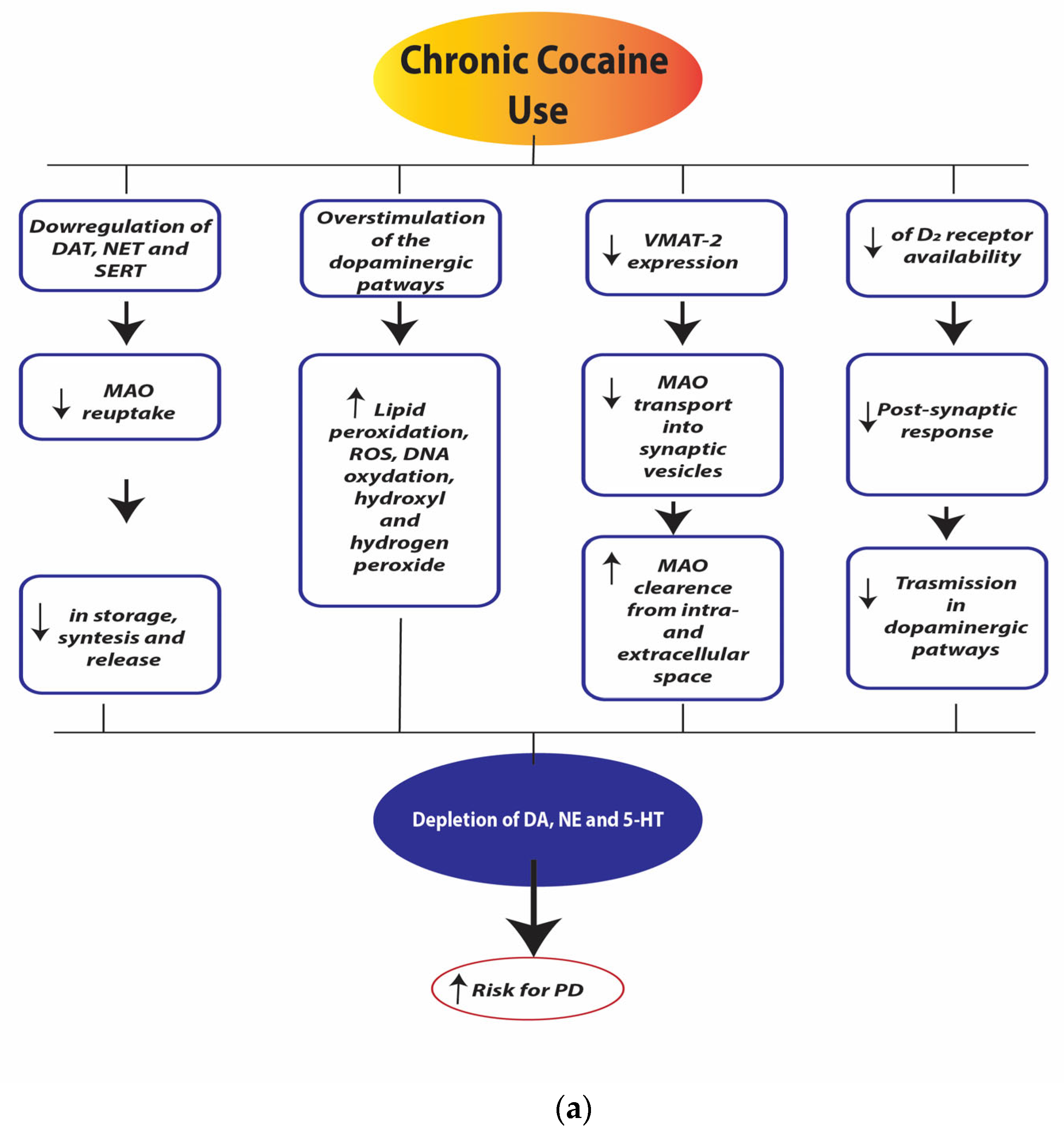
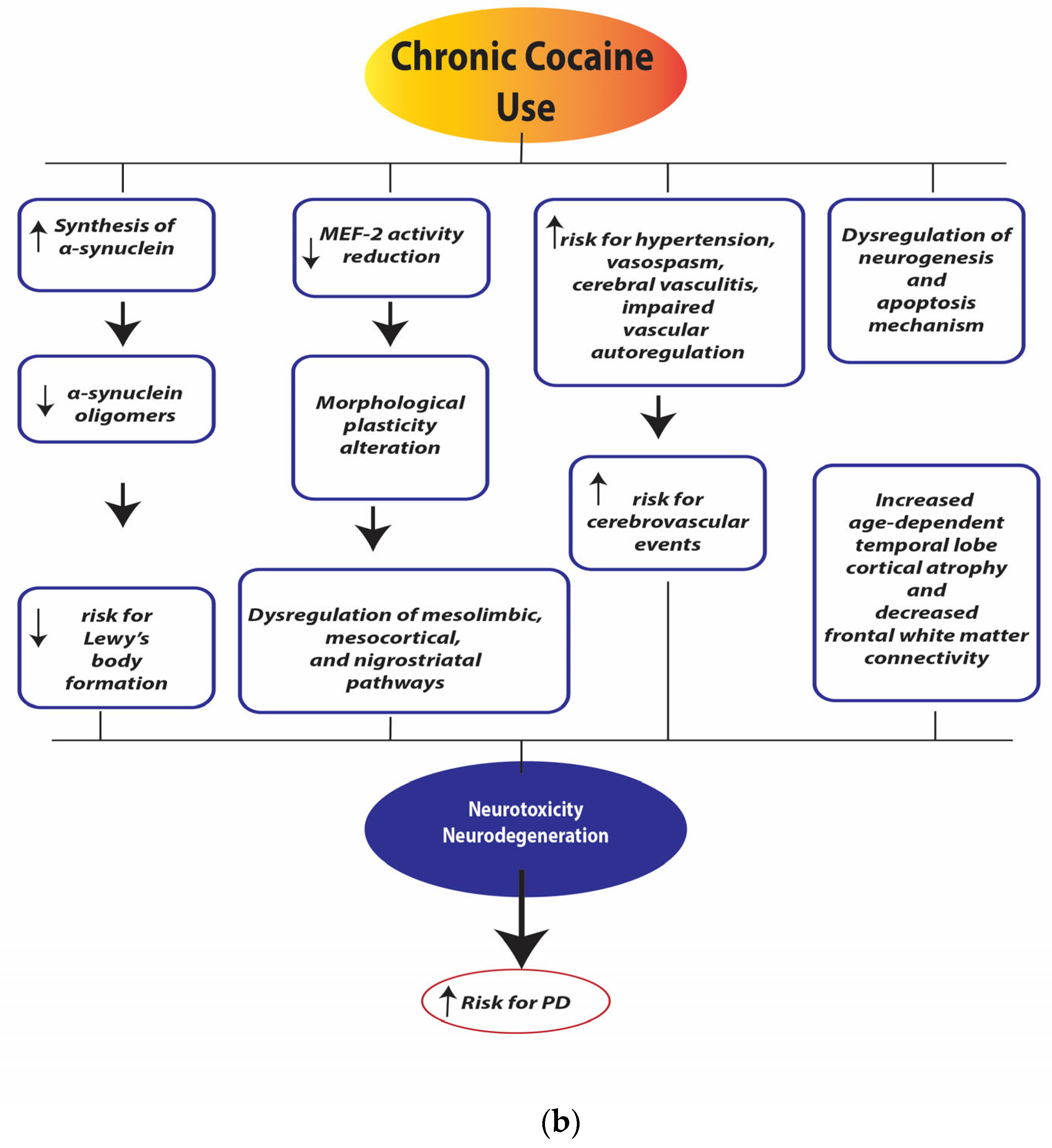
Over the years, the growing “epidemic” spread of cocaine use represents a crucial public health and social problem worldwide. According to the 2023 World Drug Report, 0.4% of the world’s population aged 15 to 64 report using cocaine; this number corresponds to approximately 24.6 million cocaine users worldwide and approximately 1 million subjects with cocaine use disorder (CUD). While we specifically know the short-term side effects induced by cocaine, unfortunately, we currently do not have exhaustive information about the medium/long-term side effects of the substance on the body. The scientific literature progressively highlights that the chronic use of cocaine is related to an increase in cardio- and cerebrovascular risk and probably to a greater incidence of psychomotor symptoms and neurodegenerative processes. Several studies have highlighted an increased risk of antipsychotic-induced extrapyramidal symptoms (EPSs) in patients with psychotic spectrum disorders comorbid with psychostimulant abuse. EPSs include movement dysfunction such as dystonia, akathisia, tardive dyskinesia, and characteristic symptoms of Parkinsonism such as rigidity, bradykinesia, and tremor. In the present paper, we propose a model of interpretation of the neurobiological mechanisms underlying the hypothesized increased vulnerability in chronic cocaine abusers to neurodegenerative disorders with psychomotor symptoms. Specifically, we supposed that the chronic administration of cocaine produces significant neurobiological changes, causing a complex dysregulation of various neurotransmitter systems, mainly affecting subcortical structures and the dopaminergic pathways. We believe that a better understanding of these cellular and molecular mechanisms involved in cocaine-induced neuropsychotoxicity may have helpful clinical implications and provide targets for therapeutic intervention.
Keywords: cocaine addiction; cocaine; Parkinsonism; Parkinson’s disease; extrapyramidal symptoms cocaine addiction; cocaine; Parkinsonism; Parkinson’s disease; extrapyramidal symptoms