Article

Recognizing Patterns of Nature Contact Associated with Well-Being: An Exploratory Cluster Analysis


by
Adriano Bressane
1,2,*,
Joao Pedro da Cunha Pinto
2 and
Líliam César de Castro Medeiros
1
1
Institute of Science and Technology, São Paulo State University (UNESP), São José dos Campos 12209-904, Brazil
2
Graduate Program in Civil and Environmental Engineering, São Paulo State University (UNESP), Bauru 17033-360, Brazil
*
Author to whom correspondence should be addressed.
Int. J. Environ. Res. Public Health 2024, 21(6), 706; https://doi.org/10.3390/ijerph21060706

Submission received: 24 April 2024 / Revised: 23 May 2024 / Accepted: 27 May 2024 / Published: 30 May 2024

Abstract

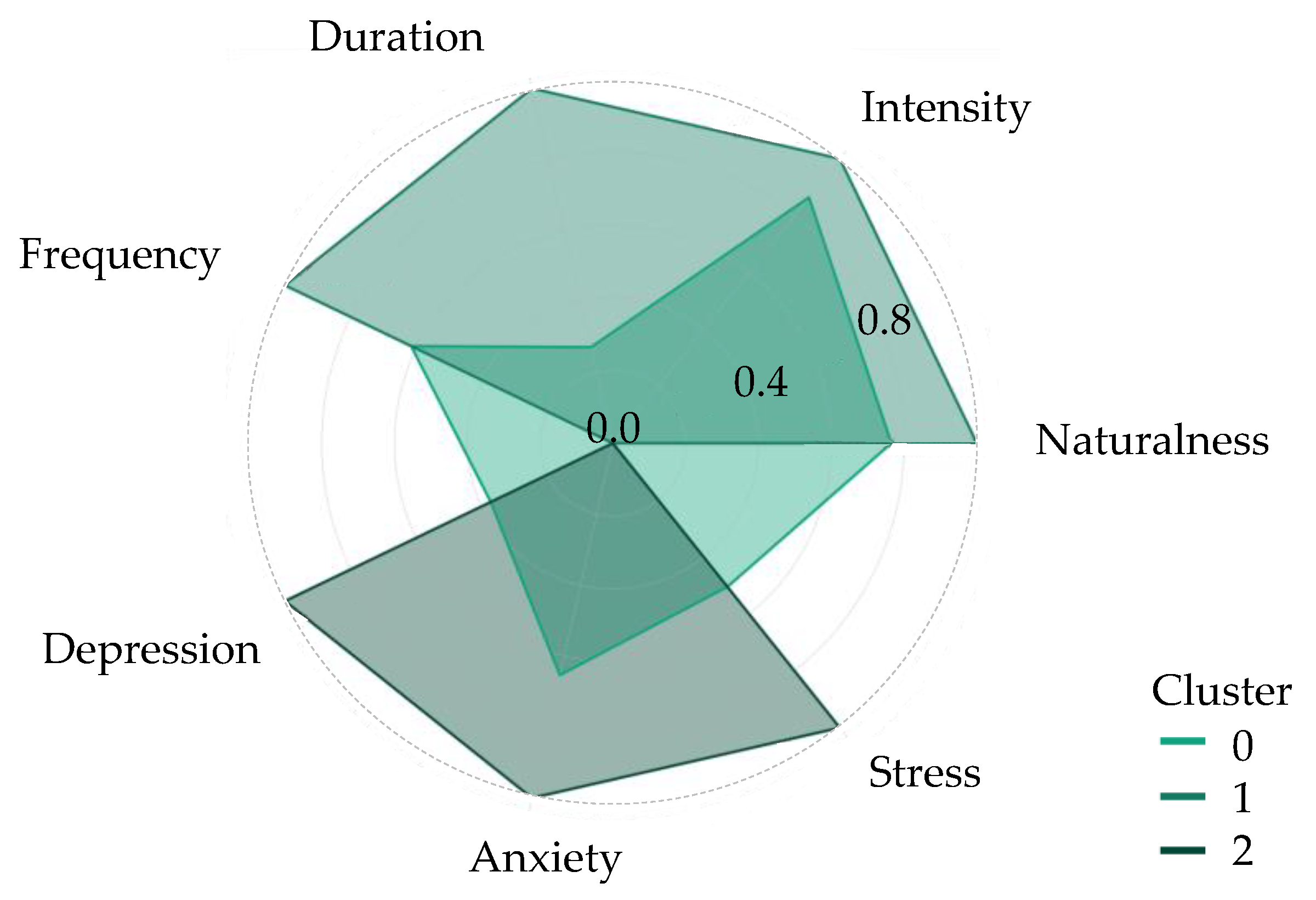
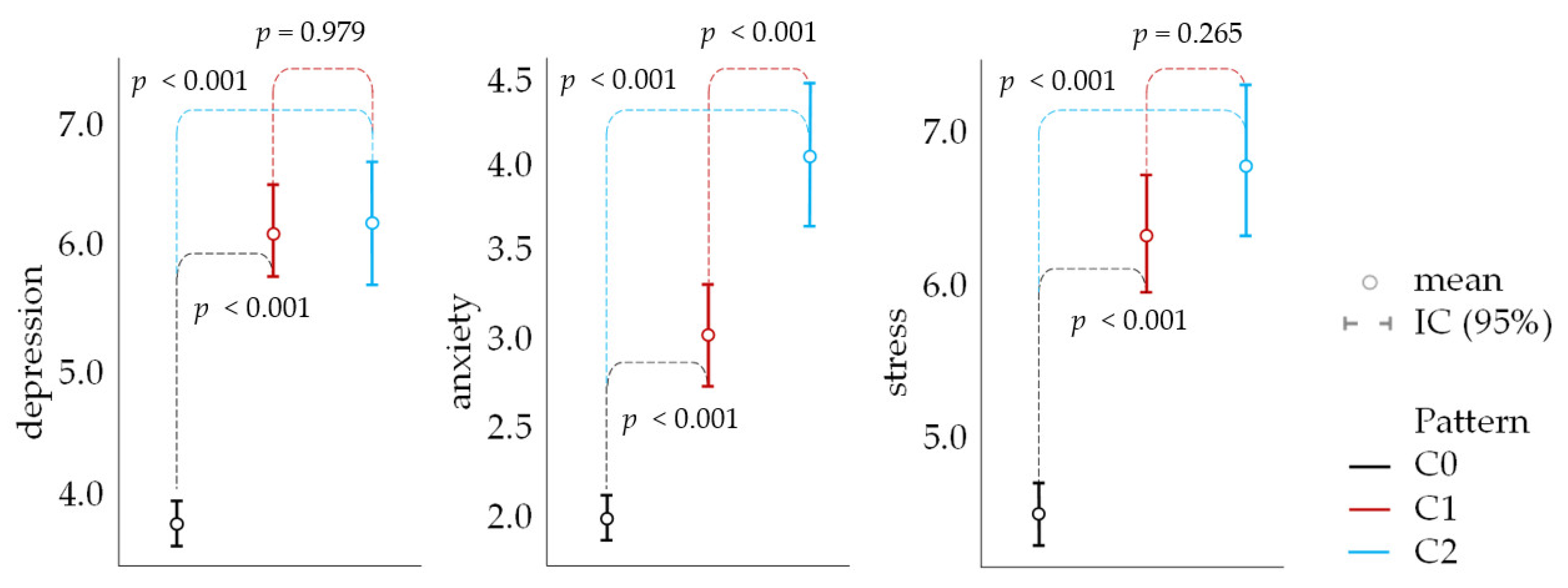
Statement of Problem: Progressive urbanization has reduced human interactions with nature, raising concerns about its impact on mental well-being. Previous research has often focused on specific aspects of nature contact, neglecting its multifaceted dimensions and their effects on mental health, particularly in developing countries. Research Gap: There is a scarcity of studies exploring the comprehensive dimensions of nature contact, such as frequency, duration, intensity, and space naturalness, and their correlation with mental well-being in developing countries’ urban settings. Purpose: This study aims to identify patterns of nature contact related to mental well-being in metropolitan areas of Brazil using exploratory cluster analysis, bridging the existing knowledge gap and informing targeted interventions to enhance mental health through nature contact. Method: An online survey collected data from 2136 participants in Brazil’s metropolitan areas, focusing on their nature interaction patterns and mental health status using the Depression Anxiety and Stress Scale (DASS-21), hierarchical clustering with p-values via multiscale bootstrap resampling, and analysis of variance. Results and Conclusions: Three distinct groups were identified, showing varied patterns of nature contact and demographic profiles. Greater and more frequent nature contact was associated with lower levels of depression, anxiety, and stress. These findings suggest a beneficial relationship between nature contact and mental well-being. Practical Implications: The results underline the importance of urban planning and public health policies that facilitate access to natural spaces, highlighting socioeconomic factors as significant barriers to this access. Future Directions: Further research should explore causal relationships and consider the specific realities and challenges faced by residents of developing nations.
Keywords: cluster approach; nature contact; mental well-being; multidimensional analysis; developing countries cluster approach; nature contact; mental well-being; multidimensional analysis; developing countries