


Abstract
This scoping review mapped and synthesised existing evidence on the influence of individual, parental, peer, and societal-related factors on adolescents’ decisions to use contraception in sub-Saharan Africa (SSA). Peer-reviewed and review articles published before May 2022, targeting adolescents aged 10–19 years were searched in PubMed, MEDLINE with Full Text via EBSCOhost, PsychINFO via EBSCOhost, CINAHL with Full Text via EBSCOhost, Google Scholar, Science Direct, and Scopus databases. Seven studies were included and analysed using thematic analysis based on the social-ecological model (SEM) and reported using the preferred reporting items for systematic reviews and meta-analyses (PRISMA). Individual (fear of side effects, fear of infertility), parental (parental disappointment and disapproval), peer (social stigma), partner (association with promiscuity and multiple sexual partners), societal and community (contraceptive use disapproval and stigma), and institutional and environmental factors (lack of privacy and confidentiality) influence contraceptive decisions among adolescents. These also include a lack of accurate information, social exclusion, negative health provider attitudes, and a lack of infrastructure that provides privacy and safe spaces. Identifying and addressing core issues within the context of local cultural practices that restrict contraceptive use is important. Holistic, inclusive approaches that promote the well-being of adolescents must be utilised to provide a conducive environment that ensures privacy, confidentiality, safety, and easy access to contraceptive services.
1. Introduction
The World Health Organisation (WHO) defines family planning as a voluntary and informed choice that allows individuals and couples to decide how many and when to have their children. This is attained through contraception, which is the act of preventing pregnancy through the use of a device, medication, procedure, or change in behaviour [1]. This involves the use of contraceptive methods [2], including modern contraceptive methods, which are products designed to prevent pregnancy resulting from sexual intercourse [3], such as implants, female sterilisation, male sterilisation, intrauterine devices, condoms, oral contraceptives, emergency contraceptives, and other contraceptives, such as diaphragms, spermicides, and vaginal rings [3].
The prevalence of contraceptive use among women globally varies. According to statistics, in 2015, two out of every three married women or those in a union aged 15 to 49 years used a modern or traditional contraceptive [4]. The lowest numbers were reported in Eastern and Southern Africa (38.6%) and West and Central Africa (17.6%) [4]. A study conducted in 29 countries in sub-Saharan Africa (SSA) found that only 24.7% of adolescent girls and young women aged 15–24 years use modern contraception, with the highest and lowest prevalence reported in Lesotho (59.2%) and Chad (5.1%), respectively [5]. Compared to all women, contraceptive prevalence rates were much lower among adolescents [6,7,8], with only 15% of girls aged 15–19 years who were either married or in a union using modern contraceptives [9]. Adolescents include those aged between 10 and 19 years [10]. They can be further divided into early adolescents (11–13 years), adolescents (14–17 years), and young adults (18–25 years), who include those aged 18–19 years [11].
Low rates of contraception use expose adolescents to the risk of adolescent pregnancy, which remains a serious public health problem, especially in Africa. Statistics from low- and middle-income countries show that for adolescents aged 15–19 years, 50% of the approximately 21 million pregnancies recorded annually are unplanned and result in approximately 12 million births [12]. Adolescent pregnancy is associated with adverse health outcomes in this age group, compared to older women, including higher risks for early neonatal death, anaemia, puerperal endometritis, operative vaginal delivery, and episiotomy [13]. They also face a significantly increased risk of maternal mortality, obstructed labour, and obstetric fistula, which reduces their chances of getting an education or being employed [14,15,16]. Additionally, the children born to these teenage mothers have an increased chance of death, low birth weight, small-for-gestational-age infants, and dropping out of school compared to their peers [13,17].
Factors that are associated with low contraceptive use among adolescents were reported in various studies [18,19,20,21,22,23,24,25]. However, it is particularly important to understand what influences adolescents’ decisions on whether or not to use contraceptives. It is vital to understand the factors that influence adolescents, positively or negatively, as they decide whether to use contraceptives. The decision to use or not to use contraceptives is largely driven by various influences [18,19,20,21,22,23,24,25]. These include individual or intrapersonal influences [18,19,23,24,25], partner influences [19,20,26], peer influences [18,22,24], parental [22,24,25], and societal influences [18,20,22,25]. These include factors such as fear of side effects, fear of infertility at the individual level, parental disappointment and disapproval at the parental level, social stigma at the peer level, association with promiscuity and multiple sexual partners at the partner level and the societal level, as well as societal and cultural norms that disapprove of and stigmatise contraceptive use [18,19,20,21,22,23,24,25].
This information will be useful for policymakers and program managers as they seek to address low contraceptive use in this age group and prevent pregnancy complications. It will also be important for improving and re-shaping health policies and programmes targeted at adolescent sexual and reproductive health.
This scoping review, therefore, was aimed at mapping current literature on what influences decision-making among adolescent girls regarding contraceptive use, especially parental factors, partner factors, societal factors, and peer-related factors, and how they influence adolescent girls’ contraceptive decisions.
2. Methods and Materials
2.1. Design
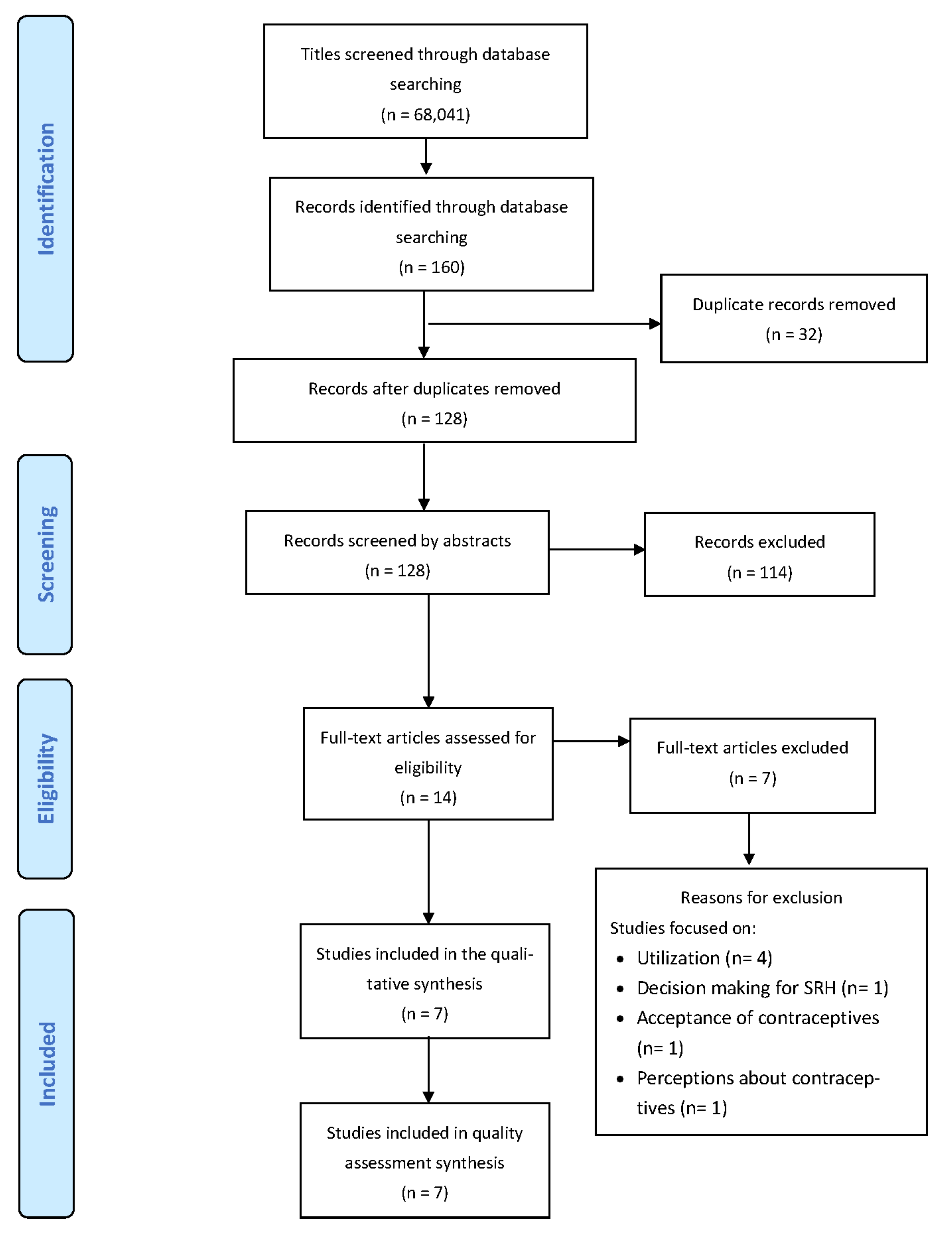
This was a scoping review of published peer-reviewed literature on factors that influence adolescent girls’ decision-making regarding contraceptive use in sub-Saharan Africa (SSA). This review is nested in a larger study, which aimed to examine the levels, patterns, and trends of contraception use among adolescent girls and understand the influencers and motivators of their contraceptive decisions. While the protocol for this review was previously published [27], this scoping review included studies published before May 2022, when the literature search was conducted. The review was guided by the preferred reporting items for systematic review and meta-analysis protocols (PRISMA-P) (Figure 1) [28] and was based on Arksey and O’Malley’s methodological framework for scoping studies [29].
Figure 1.
PRISMA 2009 flow diagram.
2.2. Identifying the Research Question
The research question that guided this scoping review was: what is the available evidence on the individual, parental, peer, societal, and cultural factors that influence decision-making in contraceptive use among adolescents? In answering this research question, the review was guided by the socio-ecological model (SEM).
2.3. Eligibility Criteria
Eligible studies that presented findings on adolescent girls aged 10–19 years; included decision-making in contraceptive use; influences of parents, peers, partners, and society on adolescent girls’ contraceptive decisions, and individual or “self” influences on adolescents’ decisions to use contraceptives, and focused on populations based in SSA that were included in the review. The eligibility of the research question was determined using the population—concept—context (PCC) framework (Table 1) as recommended by the Joanna Briggs Institute for scoping reviews [30].
Table 1.
PCC Framework.
2.4. Identifying Relevant Studies (Search Strategy)
The databases that were searched for articles meeting the eligibility criteria included PubMed, MEDLINE with Full Text via EBSCOhost, PsychINFO via EBSCOhost, CINAHL with Full Text via EBSCOhost, Google Scholar, Science Direct, and Scopus. The search adhered to the PRISMA guidelines [32]. Studies published in SSA before May 2022 were included in the search. The search also included eligible studies listed in the citations of the selected studies. The keywords used to search the databases were: adolescent, girls, contraceptive use, and decision-making. The Boolean term “AND” was used to separate keywords. Medical subject headings (MeSH) terms were included in the keyword search. Only articles published in English were included in the study.
A library was created for this review using EndNote 20 referencing software. The primary investigator conducted a comprehensive search and screening of the study titles from the above-mentioned databases. All studies with eligible titles were exported to the EndNote library, and all duplicates were removed before the abstract screening. Two reviewers independently conducted abstract screening followed by full-article screening of selected studies, using standardised tools, with guidance from the eligibility criteria. Disputes were discussed and resolved based on the eligibility criteria. To optimise the article search strategy, library services at the University of KwaZulu-Natal were utilised to help with retrieving and finding articles to be included in the full-article screening. Reporting on these was conducted using the preferred reporting items for systematic reviews and meta-analyses (PRISMA) chart [32], shown in Figure 1.
2.5. Data Extraction/Charting
Table 2 shows the data extraction form that was developed, piloted, and used to extract and process the relevant information from each of the studies included in the review. All variables that were included in the form were aimed at answering the research question. Data extraction was conducted by the primary author and was reviewed by the other authors. The authors reviewed, discussed all discrepancies, and agreed on the final interpretation. A unique code was assigned to all reviewed articles to assist with keeping track of all reviewed articles and those excluded during the data charting process.
Table 2.
Data extraction form.
2.6. Collating, Summarising, and Reporting the Results
To improve quality, an iterative process was used to continuously review the data. The data were analysed using thematic content analysis. The manuscripts included in the analysis were coded around the following themes: individual, partner, peer, parental, and societal influences on the decision to use contraceptives. These themes are based on McLeroy and colleagues’ social-ecological model (SEM) of health promotion [33]. According to their model, health behaviour and promotion are interrelated and take place across multiple levels at the individual, interpersonal, institutional, community, and policy levels. The model [33] argues that patterned behaviour is determined by the following:
- (1)
- Intrapersonal factors, which are individual characteristics.
- (2)
- Interpersonal factors, which are processes and principal groups that can include social networks (both formal and informal), and social support systems, such as families, and friendship networks.
- (3)
- Institutional factors, including social establishments that have structural characteristics and prescribed (and informal) formalities on how they operate.
- (4)
- Community factors, which include relationships between organisations, institutions, and informal networks within specified borders.
- (5)
- Public policy, which can include local, and national laws, regulations, and policies.
Various studies across different health topics used this model to determine, understand, and describe health issues and patterns that are complex in nature [34,35]. This multidimensional outlook is vital to understanding and explaining the different factors that influence decision-making regarding contraceptive use. Individual level or intrapersonal factors are factors such as lack of or limited knowledge, misaligned concerns, religious beliefs, and misinformation about the safety and effectiveness of contraceptives; interpersonal factors included partner, peer, parental, and societal influences or any interactions with social networks (both formal and informal) and social support systems; institutional level factors included characteristics and health system activities that affect the use of contraceptives; and community-level factors, which included interactions between and within organisations in the health system, community, and other social networks that influence contraceptive use [36]. Policy-level factors are government policies that affect contraceptive use [36]. Based on the themes identified, a narrative was written describing the findings.
Overall, 160 articles were identified based on the title screening search criteria, after screening through 68,041 titles (see Table 3). At the title screening stage, 67,881 articles were removed because they met the exclusion criteria (i.e., those with no evidence on adolescent girls aged 10–19, contraceptive use, decision-making, and those conducted outside of SSA). A total of 32 duplicates were removed, and 128 titles were included for abstract screening. These articles were exported to the Endnote library for abstract screening. Following the screening of the abstracts, 14 were included for full article screening, while 114 were excluded. A total of seven articles were excluded because four focused on the utilisation of contraceptives; one on decision-making for sexual and reproductive health (SRH); one on acceptance of contraceptives; and one on perceptions about contraceptives. Only seven articles met the eligibility criteria and were included in the final analysis and qualitative synthesis.
Table 3.
Title screening search results.
2.7. Characteristics of Studies Included
Table 4 describes the details of the studies that were included in this review. All studies were published before May 2022. All seven studies [18,19,20,22,23,24,25] were qualitative. Two studies were conducted in Malawi [18,20], two in Nigeria [23,24], and one in Ghana [19], Kenya [22], and South Africa [25], respectively. The total sample size of the included studies was 511 participants, the majority of whom were females.
Table 4.
Characteristics of included studies.
3. Results
Contraceptive decisions made by adolescent girls were influenced by various factors and at different levels. These included individual, parental, peer, partner, societal, community, and institutional and environmental influences, which either positively or negatively influenced adolescent girls’ contraceptive decisions, particularly non-barrier, hormonal contraceptives. The findings below are described based on the SEM.
3.1. Intrapersonal or Individual-Level Factors
Individual-level or intrapersonal factors that influence the decision to use contraceptives among adolescent girls were explored in all seven studies [18,19,20,22,23,24,25]. These studies found that, at the individual level, various factors influence the decision to use contraceptives [19].
3.2. Health Concerns
Across all studies, fear of side effects was a major factor in influencing contraceptive decisions. Reported side effects included missing menses and heavy bleeding [20], changes in weight and menstrual cycles, stomach pain, and reduced libido [22]. They also reported ‘‘waist pains’’ following sex, loss of weight, menstrual irregularities, and prolonged absence of menstruation [25]. This was mainly linked to hormonal contraceptives and their reported side effects, which deterred adolescent girls, particularly those who were unmarried and nulliparous, from using them. Adolescent girls in Malawi highlighted a lack of information due to health providers not giving detailed information to adolescents as a factor, while poor knowledge about the various types of hormonal contraceptives and how they work was reported in Ghana [19]. Adolescents in Ghana could name at least one hormonal contraceptive but lacked information on how they work.
3.3. Fertility Concerns
Fear of infertility was also reported among adolescents in Nigeria [23,24]. This was mainly among unmarried women who expressed concerns about having difficulties conceiving once they became married [23]. Peer pressure, encouragement from male sexual partners [25], lack of efficacy to organise hormonal contraceptives [19], and preservation of fertility [24], based on alleged effects that contraceptives have on future fertility, were all factors in the decision to use contraceptives. Fear of the effects of contraception on infertility or future fertility among adolescent girls and community members was a common concern in almost all the studies [18,20,22,23,24,25].
3.4. Stigma Concerns
Adolescent girls in Ghana feared disclosing the use of hormonal contraceptives for fear of being labelled as ‘bad girls’ [19]. In Malawi, adolescent girls’ fears and concerns revolved around misinformation about hormonal contraception, such as the fact that it causes cancer [20]. In Kenya, the fears centred around the shame of dishonouring parents, the stigma from their peers and community, and the social withdrawal that is associated with teenage pregnancy [22]. The stigma towards contraceptive use in their communities was mainly among adults and their peers who related the use of contraceptives with sexual promiscuity and lustful behaviour among girls [22]. Adolescents in South Africa reported fearing being condemned [25]. There were also negative attitudes towards the use of hormonal contraceptives among adolescents, and fear of disclosure of contraceptive use also influenced adolescent girls’ decision to use contraceptives [19]. Beliefs that contraceptives were for married women also influenced adolescent girls’ decisions to use them [20].
Another factor and motivator for contraceptive use among adolescents in Nigeria was the pursuit of education [24], while in Kenya, the consequences of adolescent pregnancy on future educational attainment, which they viewed as leading to poverty, was also a factor in their contraceptive decisions [22].
3.5. Interpersonal Factors
3.5.1. Parental Factors
There was an influence from parents, both positive and negative, on adolescents’ decisions to use contraceptives, as reported in Kenya, Malawi, Nigeria, Ghana, and South Africa, both positively and negatively. On the negative side, adolescent girls in Malawi reported that parents and guardians had negative attitudes toward the use of contraceptives. Parents do not talk about contraceptives and their advantages and disadvantages. They view sex and contraceptives as immoral and do not discuss these issues because of their cultural and religious beliefs [20]. Similar views were expressed by adolescents in Ghana. Adolescents feared that their parents would view them as bad girls because they are not supposed to be having sex, which is viewed as immoral behaviour and a sign of disrespect to their parents [19]. This would result in their parents being disappointed in them and possibly chasing them away from home or disowning them [19,20].
Positive influences were also reported. Adolescents in South Africa reported that their mothers imposed contraceptives on them once their menses started [25], while in Kenya, they reported that their mothers advised or directed them to use condoms and not contraceptives amid concerns about their effects on the health and future fertility of the girls [22]. Some adolescents mentioned that conversations with their mothers helped them make decisions regarding contraceptive use. Adolescents in Ghana were more positive about using hormonal contraceptives, especially when discussing it with their mothers first before choosing a particular method. This gave them some assurance that their mothers would be fine with them using the contraceptives if they knew about it [19]. In Nigeria, conversations with mothers were also instrumental in positively influencing decisions on contraceptive use [24].
3.5.2. Peer Factors
Peers also have an influence, both positive and negative, on adolescent girls’ decisions to use contraceptives. Adolescents in Malawi reported that conversations they had with their peers about infertility and social norms related to contraceptive use reinforced their decision not to use contraceptives, particularly among unmarried, nulliparous adolescents [18]. The implied association, by peers, between contraceptive use and promiscuous behaviour also discouraged contraceptive use [18]. Positive peer influences were reported among adolescents in Nigeria. In Nigeria, however, adolescent girls reported using contraceptives because this was what their peers were doing [24]. The girls would turn to their peers, and those they surrounded themselves with, to inform their decisions.
3.5.3. Partner Factors
Sexual partners have both a positive and negative influence on the contraceptive decisions made by adolescent girls. They either encouraged or discouraged contraceptive use. Some partners positively influence contraceptive decisions among adolescent girls, although the motive is for their benefit. In Kenya, adolescent girls mentioned that they decided to use contraceptives because their partners did not want to endure the embarrassment of impregnating a young girl [22], while others did it because their partners wanted to stop using condoms and have unprotected sex. Where sexual partners negatively influenced adolescent girls’ decisions to use contraceptives and discouraged contraceptive use, it was based on their concerns regarding the effect that contraceptives may have on the future fertility of the girls [22]. Adolescents also made decisions not to use contraceptives due to their partners’ concerns that using contraceptives signified having multiple sexual partners, which discouraged their use [18]. Adolescents in Nigeria, however, reported that sexual partners played a role in deciding which contraceptive method to use, particularly among married adolescents [24]. Other issues, such as the duration of the relationship, also influenced contraception decisions among adolescents [20]. Adolescents who were in long-term relationships, compared to those in short-term relationships, were more likely to choose to use contraceptives [20]. However, the definition of short-term and long-term relationships was not detailed in the articles reviewed [25].
3.5.4. Societal, Cultural and Community Factors
Fear of the effects of contraception on infertility or future fertility among adolescent girls and community members was a common concern in almost all the studies [18,20,22,23,24,25]. Myths about the link between hormonal, non-barrier contraceptives and infertility were widespread, as were fears that using contraceptives causes infertility. It was believed that these methods were to be used by married women or for child spacing [18]. In Kenya, perceptions concerning not being able to give birth to a healthy baby in the future were a major influence on contraceptive decisions among adolescent girls [22]. Women are under social and cultural pressure to prove their fertility and reproduce, especially young women and newlyweds. The threat that infertility places on their future marriage prospects was also a major concern and influenced decisions about contraceptive use [24]. Societal and cultural norms that disapprove of and stigmatise premarital sex and contraceptive use were also key influencers on decisions to use contraceptives [19]. The perception that adolescents who use contraceptives are promiscuous also influenced decisions on contraceptive use [18,22]. Other issues, such as the duration of the relationship, also influenced contraception decisions among adolescents [20]. The fears also centred around the shame of dishonouring parents, the stigma from their peers and community, and the social withdrawal that is associated with teenage pregnancy [22]. Adolescents in South Africa also reported fearing being condemned [25].
3.5.5. Institutional and Environmental Factors
Institutional and environmental factors relating to accessing contraceptives and how they influence decisions to use them were reported among adolescents in Ghana [19], Malawi [20], and South Africa [25]. The absence of privacy in health facilities, and the lack of a conducive environment and policies that hinder access to contraceptives all influence contraception decisions among adolescents in Malawi [20]. In South Africa, the attitudes of healthcare workers, particularly nurses, influenced decisions to use contraception among adolescent girls [25]. Adolescents cited harsh treatment and scolding by nurses as negative influences. They also reported that nurses often attempted to coerce the girls into using injectables, as they were seen as the most reliable contraceptives [25].
4. Discussion
This is the first scoping review to map and synthesize existing evidence on the influence of individual, parental, peer, and societal factors on adolescents’ contraceptive decisions in Sub-Saharan Africa. The results of this study indicate that various individual, parental, peer, and partner, societal and community, and institutional and environmental factors influence, both positively and negatively, adolescents’ decisions on whether to use contraceptives. However, some of the main concerns under these influences were common and cross-cutting and are discussed below.
4.1. Intrapersonal Factors Influencing Adolescent Girls’ Contraceptive Decisions
The fear of the side effects arising from contraceptive use was also reported across all the studies reviewed. Similar studies among adolescents and women, in general, reported comparable findings [37,38,39,40,41]. The fear of side effects is a major hindrance to contraceptive use, thus influencing contraceptive decisions among adolescent girls and women at large. This is due to the consequences that these side effects have on their lives, such as the strain and threats they place on relationships [42], including threats of physical violence [25].
Another major deterrent to contraceptive use was the alleged side effect of it causing sterility. Fears about contraceptive use causing infertility and affecting future fertility were a major influence on decision-making regarding using contraceptives among adolescents in all the studies reviewed [18,19,20,22,23,24,25]. This was explored across all levels in this study, i.e., individual, peer and partner, community, and societal levels. Other studies also reported on this belief that using modern contraceptives can cause infertility [39,40,43,44,45,46,47]. Women believed that infertility caused by contraception was caused by blood accumulation and blockage in the womb [25,41,48,49], damage to or spoiling the womb [44,49], displacement and internal movement of the contraceptive device (particularly the implants and IUD) causing damage to the body organs or going missing in the body [19,40,50], toxicity and contamination of the blood [23,48], and loss of libido, leading to inability to conceive [25,51]. Most women in African societies face enormous pressure to have children, and having children and being a mother are viewed positively and perceived as giving women elevated social status and respect in their communities [52]. As such, adolescent girls and women who cannot bear children may experience challenges socially and culturally, including disruption of their relationships or marriages, boyfriends or husbands resorting to polygamy, divorce, or promiscuity by the boyfriend or husband [41,45]. Therefore, where their ability to reproduce is threatened or is seemingly affected by contraceptive use, adolescent girls and women, in general, will opt to not use contraceptives or discontinue use where they started.
The lack of accurate information about contraceptives could be contributing to the fear of side effects. Studies showed that the information adolescents had about contraceptives, how they work, and how to use them was often inadequate, incomplete, and sometimes wrong [20,23,25], and studies reported similar findings [53]. Lack of information also influences contraceptive decisions, and it was cited as a deterrent to using contraceptives [20,23,41,54]. Adolescent girls also lacked credible sources of information, relying on friends, peers, and parents [18,19,22,24,25]. This lack of accurate information about contraceptives and how they work and the lack of reliable sources for accurate information can result in misconceptions and misinformation. When the fear of infertility, lack of information, and reliable sources are coupled with the high value placed on fertility in most sub-Saharan African cultures, it places great pressure on women to bear children, which contributes to adolescents deciding not to use contraceptives. Having a child accrues certain advantages and status in society, not just to the woman, but to the entire family [48]. Therefore, the fear of infertility and future fertility being affected results in women not using or discontinuing the use of contraceptives, irrespective of marital status, to safeguard their future fertility. The inability to bear children can have drastic consequences for the woman, both socially and culturally, which may include marital disruption, divorce, promiscuity by the husband, or even polygamy [41,45].
4.2. Interpersonal Factors Influencing Adolescent Girls’ Contraceptive Decisions
4.2.1. Parental Factors
As found in other studies, parents, particularly mothers, have a significant influence on the contraceptive decisions of adolescent girls, whether positively or negatively. Their discomfort with discussing sex and sex-related issues with their children [55] can negatively influence contraceptive decisions among adolescent girls. The absence of parental communication on sexuality and sex-related issues with adolescents provides an opportunity for external influencers, such as peers, partners, and the media. Regarding positive parental influences on adolescent contraceptive decisions, studies revealed that conversations between children and their parents are effective at communicating sexual and reproductive information and instilling values in the children [56,57]. As a result of the enormous influence that parents have on adolescent girls’ social, emotional, and cognitive development, they must be more involved in ensuring that the girls’ contraceptive decisions and sexual and reproductive health needs are met [58].
4.2.2. Partner Factors
Sexual partners have a substantial influence on the contraceptive decisions adolescent girls make. Adolescent girls are the principal users of contraceptives and typically bear responsibility for contraceptive use, despite their partners having significant influence in deciding the type of contraceptive used [41]. The demand for their partners’ consent, the denial of their partner’s approval, and the adolescent girls’ inability to seek consent from their partners all negatively affect and influence the contraceptive decisions that the adolescent girls make [59].
However, studies also show the positive influences that partners have on contraceptive decisions. Communication with partners about contraceptive use positively influences the use of contraceptives among adolescent girls and young women, particularly with non-barrier methods [60]. For married adolescents, this is consistent with research findings on spousal communication and decision-making that are husband-centred [61,62,63], which align with family planning interventions that target male involvement, focusing mostly on married couples and husbands [64].
4.2.3. Peer Factors
Peer relationships are a major influence on contraceptive use among adolescent girls. As parental and community influence on adolescents diminishes, peer relationships start to take on a more significant role in adolescents’ lives. The views of peers can negatively influence contraceptive decisions among adolescents and prevent them from using contraceptive services [55]. Peer relationships can also positively influence contraceptive decisions. Conversations about contraceptives with peers were positively associated with the use of non-barrier contraceptives, more so among those who are single, whether they have a child or not [60].
4.3. Society and Community Factors Influencing Adolescent Girls’ Contraceptive Decisions
Studies in this review reported the belief that contraceptives are for married women and those who had children before—not single, nulliparous women. Comparable findings were reported in other studies [65]. This belief and the fear of stigma, social exclusion, and the linking of contraceptive use with promiscuous behaviour contribute to the contraceptive decisions that adolescents make, which lead to the non-use of contraceptives. They fear that if their use of contraceptives became common knowledge, they would be labelled as being promiscuous, ‘bad girls’ with no good morals, or accused of prostitution not only by peers, but also by their parents [18,19,22]. This was also reported in other studies [41,65,66,67]. This could result in social exclusion and their being the centre of gossip among their friends [18,19]. Among married adolescents, they feared that even discussing the use of contraceptives with their partners might imply having multiple sexual partners [18]. With such consequences that would affect their family and social lives, adolescents are inclined to decide against using contraceptives or discontinue their use to avoid the stress that comes with these consequences.
4.4. Institutional Factors Influencing Adolescent Girls’ Contraceptive Decisions
Challenges with access and the availability of a conducive environment were also raised. Health facilities and communities also do not provide a conducive, judgement-free environment in which adolescents can exercise their freedom and make independent decisions [20]. Among the issues raised were lack of privacy, ease of access, youth-friendly services, and services targeting older adolescents. The negative attitude of healthcare staff also discouraged accessing contraceptives from health facilities [54,66,67,68]. Healthcare workers’ negative and paternalistic attitudes towards adolescents’ use of contraceptives were documented in various studies [41,66,69]. They discourage adolescent girls from using contraceptives, holding the view that they should be used by married adults, as they are largely meant for child spacing. Adolescents view communication with nurses as being below standard, incomplete, and often unilateral, with the nurses using technical language and not being in sync with the needs of adolescents [41]. Challenges raised by adolescents in the studies reviewed included being lectured about premarital sex, harassment, being scolded, and being denied services until they answered a barrage of questions. Another concern raised by adolescent girls was that their parents and community members, whom they did not want to know about their contraceptive use, also used the same health facilities. Adolescents, therefore, preferred to access services in other locations, such as drug stores.
5. Conclusions
Our review revealed various individual, parental, peer, and partner, societal and community, and institutional and environmental factors that influence adolescent girls’ contraceptive decisions. However, these factors were common and cross-cutting across these levels. The main factors were the fear of the side effects, particularly infertility and future fertility, lack of accurate information, beliefs, and cultural norms about who can use contraceptives, which contributed to the fear of stigma and social exclusion from friends and society. Other concerns included the impact on relationships and marriages, as well as the connection between the use of contraceptives and promiscuity. Challenges with access to contraceptives, particularly from health facilities, as a result of negative attitudes among health providers and a lack of infrastructure that provides privacy and safe spaces, were another major concern. These barriers remain a major challenge in most African countries and will need to be addressed if contraceptive use among adolescents is to improve.
Identifying and addressing the core issues within the context of local cultural norms is essential. To improve demand, access, and usage of contraceptives among adolescent girls, the implementation of policies and programmes that target this age group must be re-strategised. Ensuring constant engagement to enhance acceptance of contraceptives at the individual and community level, particularly among adolescents and young adults, is essential. To help dispel fears and misconceptions about contraception, communities and intended users should be given complete and accurate information. Accessing information from reliable sources, particularly health providers, should also be actively encouraged. Youth-friendly spaces should be the norm in health facilities. Training health providers and having a younger staff who can identify and communicate with adolescents in a respectful, nonjudgmental manner can help change health staff attitudes toward young people. Infrastructure-wise, locating youth-friendly spaces in more secluded places that afford privacy and confidentiality can help improve access to and uptake of contraceptive services in this age group. In these efforts to address these challenges, it is imperative to adopt holistic and inclusive approaches that embrace broader stakeholder involvement, utilise evidence-based data, and promote the well-being of adolescents.
Author Contributions
M.C. conceptualised the study and prepared the manuscript under the guidance and supervision of T.G.G. and K.W.H. All authors contributed to the development and design of the study. T.G.G. and K.W.H. contributed to the methodology and review of the manuscript. All authors have read and agreed to the published version of the manuscript.
Funding
This research received no external funding.
Institutional Review Board Statement
Not applicable.
Informed Consent Statement
Not applicable.
Data Availability Statement
All data generated from this study will be included in the published scoping review article and will also be available on request.
Acknowledgments
For methodological advice, training, and technical support, the authors would like to acknowledge and appreciate the Systematic Review Services at the Department of Public Health, School of Nursing and Public Health in the College of Health Sciences, University of KwaZulu-Natal. We also thank Margarate Munakampe for reviewing and providing valuable insight during the drafting of this manuscript and Ntazana Sinyangwe for co-screening articles.
Conflicts of Interest
The authors declare no conflict of interest.
Abbreviations
| LMIC | Low-to-Middle-Income-Country |
| MMAT | Mixed Method Appraisal Tool |
| PCC | Population: Concept, Context |
| PICO | Population: Intervention, Comparator and Outcome |
| PRISMA-P | Preferred Reporting Items for Systematic review and Meta-Analysis Protocols |
| SSA | sub-Saharan Africa |
| UKZN | University of KwaZulu-Natal |
| WHO | World Health Organisation |
References
- Bansode, O.M.; Sarao, M.S.; Cooper, D.B. Contraception; StatPearls: Tampa, FL, USA, 2022. [Google Scholar]
- World Health Organisation. Contraception. 2022. Available online: https://www.who.int/health-topics/contraception#tab=tab_1 (accessed on 22 November 2022).
- Hubacher, D.; Trussell, J. A definition of modern contraceptive methods. Contraception 2015, 92, 420–421. [Google Scholar] [CrossRef] [Scilit] [PubMed]
- United Nations. Trends in Contraceptive Use Worldwide 2015; Department of Economic and Social Affairs: New York, NY, USA, 2015. [Google Scholar]
- Ahinkorah, B.O. Predictors of modern contraceptive use among adolescent girls and young women in sub-Saharan Africa: A mixed effects multilevel analysis of data from 29 demographic and health surveys. Contracept. Reprod. Med. 2020, 5, 32. [Google Scholar] [CrossRef] [Scilit] [PubMed]
- Nyarko, S.H. Prevalence and correlates of contraceptive use among female adolescents in Ghana. BMC Womens Health 2015, 15, 60. [Google Scholar] [CrossRef] [Scilit] [PubMed]
- McCurdy, R.J.; Schnatz, P.F.; Weinbaum, P.J.; Zhu, J. Contraceptive use in adolescents in sub-Saharan Africa: Evidence from demographic and health surveys. Conn. Med. 2014, 78, 261–272. [Google Scholar]
- Obare, F.; Birungi, H.; Undie, C.C.; Wanjiru, M.; Liambila, W.; Askew, I. Levels, trends and determinants of contraceptive use among adolescent girls in Kenya. Care Matters 2011, 1–30. [Google Scholar] [CrossRef] [Scilit]
- UNFPA. Universal Access to Reproductive Health—Progress and Challenges; UNFPA: New York, NY, USA, 2016. [Google Scholar]
- Ministry of Health. Adolescent Health Strategic Plan 2011 to 2015; Ministry of Health: Tokyo, Japan, 2015.
- Curtis, A.C. Defining Adolescence. J. Adolesc. Fam. Health 2015, 7, 1–39. [Google Scholar]
- WHO. Adolescent Pregnancy. 2022. Available online: https://www.who.int/news-room/fact-sheets/detail/adolescent-pregnancy#:~:text=Key%20facts%20As%20of%202019%2C%20adolescents%20aged%2015%E2%80%9319,in%20an%20estimated%2012%20million%20births%20%281%29%20%282%29 (accessed on 16 January 2023).
- Conde-Agudelo, A.; Belizan, J.M.; Lammers, C. Maternal-perinatal morbidity and mortality associated with adolescent pregnancy in Latin America: Cross-sectional study. Am. J. Obstet. Gynecol. 2005, 192, 342–349. [Google Scholar] [CrossRef] [Scilit]
- Adedokun, O.; Adeyemi, O.; Dauda, C. Child marriage and maternal health risks among young mothers in Gombi, Adamawa state, Nigeria: Implications for mortality, entitlements and freedoms. Afr. Health Sci. 2016, 16, 986–999. [Google Scholar] [CrossRef] [Scilit]
- Ganchimeg, T.; Ota, E.; Morisaki, N.; Laopaiboon, M.; Lumbiganon, P.; Zhang, J.; Yamdamsuren, B.; Temmerman, M.; Say, L.; Tunçalp, Ö.; et al. Pregnancy and childbirth outcomes among adolescent mothers: A World Health Organization multicountry study. BJOG 2014, 121 (Suppl. S1), 40–48. [Google Scholar] [CrossRef] [Scilit]
- Oyefara, J.L. Socio-Economic Consequences of Adolescent Childbearing in Osun State, Nigeria John Lekan Oyefara. Kasbit Bus. J. 2009, 2, 1–18. [Google Scholar]
- Branson, N.; Ardington, C.; Leibbrandt, M. Health outcomes for children born to teen mothers in Cape Town, South Africa. Econ. Dev. Cult. Change 2015, 63, 589–616. [Google Scholar] [CrossRef] [Scilit]
- Bhushan, N.L.; Phanga, T.; Maseko, B.; Vansia, D.; Kamtsendero, L.; Gichane, M.W.; Maman, S.; Pettifor, A.E.; Rosenberg, N.E. Contraceptive Conversations among Adolescent Girls and Young Women and Their Partners, Peers, and Older Female Family Members in Lilongwe, Malawi: A Qualitative Analysis. Stud. Fam. Plan. 2021, 52, 397–413. [Google Scholar] [CrossRef] [Scilit]
- Boamah-Kaali, E.A.; Mevissen, F.E.F.; Owusu-Agyei, S.; Enuameh, Y.; Asante, K.P.; Ruiter, R.A.C. A Qualitative Exploration of Factors Explaining Non-Uptake of Hormonal Contraceptives among Adolescent Girls in Rural Ghana: The Adolescent Girls’ Perspective. Open Access J. Contracept. 2021, 12, 173. [Google Scholar] [CrossRef] [Scilit] [PubMed]
- Dombola, G.M.; Manda, W.C.; Chipeta, E. Factors influencing contraceptive decision making and use among young adolescents in urban Lilongwe, Malawi: A qualitative study. Reprod. Health 2021, 18, 1–11. [Google Scholar] [CrossRef] [Scilit] [PubMed]
- Bhushan, N.L. Social Influence and Contraceptive Use among Adolescent Girls and Young Women in Malawi; The University of North Carolina at Chapel Hill: Chapel Hill, NC, USA, 2018. [Google Scholar]
- Harrington, E.K.; Casmir, E.; Kithao, P.; Kinuthia, J.; John-Stewart, G.; Drake, A.L.; Unger, J.A.; Ngure, K. “Spoiled” girls: Understanding social influences on adolescent contraceptive decision-making in Kenya. PLoS ONE 2021, 16, e0255954. [Google Scholar] [CrossRef] [Scilit]
- Otoide, V.O.; Oronsaye, F.; Okonofua, F.E. Why Nigerian adolescents seek abortion rather than contraception: Evidence from focus-group discussions. Int. Fam. Plan. Perspect 2001, 27, 77–81. [Google Scholar] [CrossRef] [Scilit]
- Sanchez, E.K.; Speizer, I.S.; Tolley, E.; Calhoun, L.M.; Barrington, C.; Olumide, A.O. Influences on seeking a contraceptive method among adolescent women in three cities in Nigeria. Reprod. Health 2020, 17, 167. [Google Scholar] [CrossRef] [Scilit] [PubMed]
- Wood, K.; Jewkes, R. Blood Blockages and Scolding Nurses: Barriers to Adolescent Contraceptive Use in South Africa. Reprod. Health Matters 2006, 14, 109–118. [Google Scholar] [CrossRef] [Scilit]
- Sanchez, E.K.; McGuire, C.; Calhoun, L.M.; Hainsworth, G.; Speizer, I.S. Influences on contraceptive method choice among adolescent women across urban centers in Nigeria: A qualitative study. Contracept Reprod. Med. 2021, 6, 8. [Google Scholar] [CrossRef] [Scilit]
- Chola, M.; Hlongwana, K.; Ginindza, T.G. Mapping evidence on decision-making on contraceptive use among adolescents: A scoping review protocol. Syst. Rev. 2018, 7, 201. [Google Scholar] [CrossRef] [Scilit]
- Moher, D.; Stewart, L.; Shekelle, P. Implementing PRISMA-P: Recommendations for prospective authors. Syst. Rev. 2016, 5, 15. [Google Scholar] [CrossRef] [Scilit]
- Arksey, H.; O’Malley, L. Scoping studies: Towards a methodological framework. Int. J. Soc. Res. Methodol. 2005, 8, 19–32. [Google Scholar] [CrossRef] [Scilit]
- The Joanna Briggs Institute. The Joanna Briggs Institute Reviewers’ Manual 2015: Methodology for JBI Scoping Reviews; Joanne Briggs Institute: Adelaide, SA, Australia, 2015; pp. 1–24. [Google Scholar]
- World Health Organisation. Adolescent Health. 2023. Available online: https://www.who.int/health-topics/adolescent-health#tab=tab_1 (accessed on 23 January 2023).
- Moher, D.; Liberati, A.; Tetzlaff, J.; Altman, D.G.; PRISMA Group. Preferred reporting items for systematic reviews and meta-analyses: The PRISMA statement. PLoS Med. 2009, 6, e1000097. [Google Scholar] [CrossRef] [Scilit] [PubMed]
- McLeroy, K.R.; Bibeau, D.; Steckler, A.; Glanz, K. An Ecological Perspective on Health Promotion Programs. Health Educ. Q 1988, 15, 351–377. [Google Scholar] [CrossRef] [Scilit] [PubMed]
- White, K.; Ocampo, M.; Scarinci, I.C. A socio-ecological approach for examining factors related to contraceptive use among recent Latina immigrants in an emerging Latino state. Women Health 2017, 57, 872–889. [Google Scholar] [CrossRef] [Scilit]
- Garney, W.; Wilson, K.; Ajayi, K.V.; Panjwani, S.; Love, S.M.; Flores, S.; Garcia, K.; Esquivel, C. Social-Ecological Barriers to Access to Healthcare for Adolescents: A Scoping Review. Int. J. Environ. Res. Public Health 2021, 18, 4138. [Google Scholar] [CrossRef] [Scilit]
- Ajayi, K.V.; Panjwani, S.; Wilson, K.; Garney, W.R. Using the Social-Ecological Model to Understand the Current Perspective of Contraceptive Use in the United States: A Narrative Literature Review. Women 2021, 1, 212–222. [Google Scholar] [CrossRef] [Scilit]
- Ontiri, S.; Mutea, L.; Naanyu, V.; Kabue, M.; Biesma, R.; Stekelenburg, J. A qualitative exploration of contraceptive use and discontinuation among women with an unmet need for modern contraception in Kenya. Reprod. Health 2021, 18, 33. [Google Scholar] [CrossRef] [Scilit]
- Farmer, D.B.; Berman, L.; Ryan, G.; Habumugisha, L.; Basinga, P.; Nutt, C.; Kamali, F.; Ngizwenayo, E.; Fleur, J.S.; Niyigena, P.; et al. Motivations and Constraints to Family Planning: A Qualitative Study in Rwanda’s Southern Kayonza District. Glob. Health Sci. Pract. 2015, 3, 242–254. [Google Scholar] [CrossRef] [Scilit]
- Klinger, A.; Asgary, R. Perceptions and attitudes regarding sexually transmitted infection and family planning among adolescents in Northern Madagascar. Women Health 2017, 57, 599–613. [Google Scholar] [CrossRef] [Scilit]
- Morse, J.E.; Rowen, T.S.; Steinauer, J.; Byamugisha, J.; Kakaire, O. A qualitative assessment of Ugandan women’s perceptions and knowledge of contraception. Int. J. Gynaecol. Obstet. 2014, 124, 30–33. [Google Scholar] [CrossRef] [Scilit] [PubMed]
- Capurchande, R.; Coene, G.; Schockaert, I.; Macia, M.; Meulemans, H. “It is challenging… oh, nobody likes it!”: A qualitative study exploring Mozambican adolescents and young adults’ experiences with contraception. BMC Womens Health 2016, 16, 48. [Google Scholar] [CrossRef] [Scilit] [PubMed]
- Wood, S.N.; Karp, C.; Zimmerman, L. Women’s sexual experiences as a side effect of contraception in low- and middle-income countries: Evidence from a systematic scoping review. Sex Reprod. Health Matters 2020, 28, 1763652. [Google Scholar] [CrossRef] [Scilit]
- Burke Holly, M.C.; Ambasa-Shisanya, C.L.B.B.H. Qualitative study of reasons for discontinuation of injectable contraceptives among users and salient reference groups in Kenya. Afr. J. Reprod. Health 2011, 15, 2. [Google Scholar]
- Sedlander, E.; Bingenheimer, J.B.; Thiongo, M.; Gichangi, P.; Rimal, R.N.; Edberg, M.; Munar, W. “They Destroy the Reproductive System”: Exploring the Belief that Modern Contraceptive Use Causes Infertility. Stud. Fam. Plan. 2018, 49, 345–365. [Google Scholar] [CrossRef] [Scilit] [PubMed]
- Boivin, J.; Carrier, J.; Zulu, J.M.; Edwards, D. A rapid scoping review of fear of infertility in Africa. Reprod. Health 2020, 17, 142. [Google Scholar] [CrossRef] [Scilit]
- Gebremariam, A.; Addissie, A. Intention to use long acting and permanent contraceptive methods and factors affecting it among married women in Adigrat town, Tigray, Northern Ethiopia. Reprod. Health 2014, 11, 24. [Google Scholar] [CrossRef] [Scilit]
- Cover, J.; Lim, J.; Namagembe, A.; Tumusiime, J.; Drake, J.K.; Cox, C.M. Acceptability of Contraceptive Self-Injection with DMPA-SC Among Adolescents in Gulu District, Uganda. Int. Perspect. Sex Reprod. Health 2017, 43, 153–162. [Google Scholar] [CrossRef] [Scilit]
- Castle, S. Factors Influencing Young Malians’ Reluctance to Use Hormonal Contraceptives. Stud. Fam. Plan. 2003, 34, 186–199. [Google Scholar] [CrossRef] [Scilit]
- Chebet, J.J.; McMahon, S.A.; Greenspan, J.A.; Mosha, I.H.; Callaghan-Koru, J.A.; Killewo, J.; Baqui, A.H.; Winch, P.J. “Every method seems to have its problems”—Perspectives on side effects of hormonal contraceptives in Morogoro Region, Tanzania. BMC Womens Health 2015, 15, 97. [Google Scholar] [CrossRef] [Scilit]
- Dalaba, M.A.; Stone, A.E.; Krumholz, A.R.; Oduro, A.R.; Phillips, J.F.; Adongo, P.B. A qualitative analysis of the effect of a community-based primary health care programme on reproductive preferences and contraceptive use among the Kassena-Nankana of northern Ghana. BMC Health Serv. Res. 2016, 16, 80. [Google Scholar] [CrossRef] [Scilit] [PubMed]
- Daniele, M.A.S.; Cleland, J.; Benova, L.; Ali, M. Provider and lay perspectives on intra-uterine contraception: A global review. Reprod. Health 2017, 14, 119. [Google Scholar] [CrossRef] [Scilit] [PubMed]
- Challa, S.; Manu, A.; Morhe, E.; Dalton, V.K.; Loll, D.; Dozier, J.; Zochowski, M.K.; Boakye, A.; Adanu, R.; Hall, K.S. Multiple levels of social influence on adolescent sexual and reproductive health decision-making and behaviors in Ghana. Women Health 2018, 58, 434–450. [Google Scholar] [CrossRef] [Scilit] [PubMed]
- Munakampe, M.N.; Zulu, J.M.; Michelo, C. Contraception and abortion knowledge, attitudes and practices among adolescents from low and middle-income countries: A systematic review. BMC Health Serv. Res. 2018, 18, 909. [Google Scholar] [CrossRef] [Scilit]
- Hokororo, A.; Kihunrwa, A.; Hoekstra, P.; Kalluvya, S.E.; Changalucha, J.M.; Fitzgerald, D.W.; Downs, J.A. High prevalence of sexually transmitted infections in pregnant adolescent girls in Tanzania: A multi-community cross-sectional study. Sex Transm. Infect. 2015, 91, 473–478. [Google Scholar] [CrossRef] [Scilit] [PubMed]
- Ezenwaka, U.; Mbachu, C.; Ezumah, N.; Eze, I.; Agu, C.; Agu, I.; Onwujekwe, O. Exploring factors constraining utilization of contraceptive services among adolescents in Southeast Nigeria: An application of the socio-ecological model. BMC Public Health 2020, 20, 1162. [Google Scholar] [CrossRef] [Scilit]
- Yadeta, T.A.; Bedane, H.K.; Tura, A.K. Factors affecting parent-adolescent discussion on reproductive health issues in Harar, Eastern Ethiopia: A cross-sectional study. J. Environ. Public Health 2014, 2014, 102579. [Google Scholar] [CrossRef] [Scilit]
- Ayalew, M.; Mengistie, B.; Semahegn, A. Adolescent-parent communication on sexual and reproductive health issues among high school students in Dire Dawa, Eastern Ethiopia: A cross sectional study. Reprod. Health 2014, 11, 77. [Google Scholar] [CrossRef] [Scilit]
- Moretti, M.M.; Peled, M. Adolescent-parent attachment: Bonds that support healthy development. Paediatr. Child Health 2004, 9, 551–555. [Google Scholar] [CrossRef] [Scilit]
- Abbey, N.N.K. Perspective Chapter: Factors that Influence Young Women’s Decision-Making in Contraceptive Use in Ashiedu Keteke of Accra, Ghana. In Studies in Family Planning; Amarin, Z.O., Ed.; IntechOpen: Rijeka, Croatia, 2022; p. 2. [Google Scholar] [CrossRef] [Scilit]
- Bhushan, N.L.; Fisher, E.B.; Maman, S.; Speizer, I.S.; Gottfredson, N.C.; Phanga, T.; Vansia, D.; Pettifor, A.E.; Rosenberg, N.E. Communication, social norms, and contraceptive use among adolescent girls and young women in Lilongwe, Malawi. Women Health 2021, 61, 440–451. [Google Scholar] [CrossRef] [Scilit]
- Blackstone, S.R.; Nwaozuru, U.; Iwelunmor, J. Determinants of contraceptive use among Nigerian couples: Evidence from the 2013 Demographic and Health Survey. Contracept Reprod. Med. 2017, 2, 9. [Google Scholar] [CrossRef] [Scilit]
- Mbweza, E.; Norr, K.F.; McElmurry, B. Couple decision making and use of cultural scripts in Malawi. J. Nurs. Scholarsh. 2008, 40, 12–19. [Google Scholar] [CrossRef] [Scilit]
- Vouking, M.Z.; Evina, C.D.; Tadenfok, C.N. Male involvement in family planning decision making in sub-Saharan Africa—What the evidence suggests. Pan. Afr. Med. J. 2014, 19, 349. [Google Scholar] [CrossRef] [Scilit] [PubMed]
- Shattuck, D.; Kerner, B.; Gilles, K.; Hartmann, M.; Ng’ombe, T.; Guest, G. Encouraging Contraceptive Uptake by Motivating Men to Communicate about Family Planning: The Malawi Male Motivator Project. Am. J. Public Health 2011, 101, 1089–1095. [Google Scholar] [CrossRef] [Scilit] [PubMed]
- Rehnström Loi, U.; Otieno, B.; Oguttu, M.; Gemzell-Danielsson, K.; Klingberg-Allvin, M.; Faxelid, E.; Makenzius, M. Abortion and contraceptive use stigma: A cross-sectional study of attitudes and beliefs in secondary school students in western Kenya. Sex Reprod. Health Matters 2019, 27, 20–31. [Google Scholar] [CrossRef] [Scilit]
- Engelbert Bain, L.; Amu, H.; Enowbeyang Tarkang, E. Barriers and motivators of contraceptive use among young people in Sub-Saharan Africa: A systematic review of qualitative studies. PLoS ONE 2021, 16, e0252745. [Google Scholar] [CrossRef] [Scilit]
- Hall, K.; Manu, A.; Morhe, E.; Zochowski, M.; Boakye, A.; Challa, S.; Loll, D.; Dozier, J.; Harris, L.; Adanu, R.; et al. Understanding “Bad Girl:” qualitative findings on stigma and adolescent sexual and reproductive health in Ghana. Contraception 2015, 92, 393–394. [Google Scholar] [CrossRef] [Scilit]
- Tabane, N.S.; Peu, M.D. Perceptions of female teenagers in the Tshwane District on the use of contraceptives in South Africa: Original research. Curationis 2015, 38, 1–7. [Google Scholar] [CrossRef] [Scilit]
- Dioubaté, N.; Manet, H.; Bangoura, C.; Sidibé, S.; Kouyaté, M.; Kolie, D.; Ayadi, A.M.E.; Delamou, A. Barriers to contraceptive use among urban adolescents and youth in Conakry, Guinea. Front. Glob. Womens Health 2021, 2, 42. [Google Scholar]

Disclaimer/Publisher’s Note: The statements, opinions and data contained in all publications are solely those of the individual author(s) and contributor(s) and not of MDPI and/or the editor(s). MDPI and/or the editor(s) disclaim responsibility for any injury to people or property resulting from any ideas, methods, instructions or products referred to in the content. |
© 2023 by the authors. Licensee MDPI, Basel, Switzerland. This article is an open access article distributed under the terms and conditions of the Creative Commons Attribution (CC BY) license (https://creativecommons.org/licenses/by/4.0/).