Multi-Scenario Landscape Ecological Risk Simulation for Sustainable Development Goals: A Case Study on the Central Mountainous Area of Hainan Island

Abstract
1. Introduction
2. Study Area and Materials
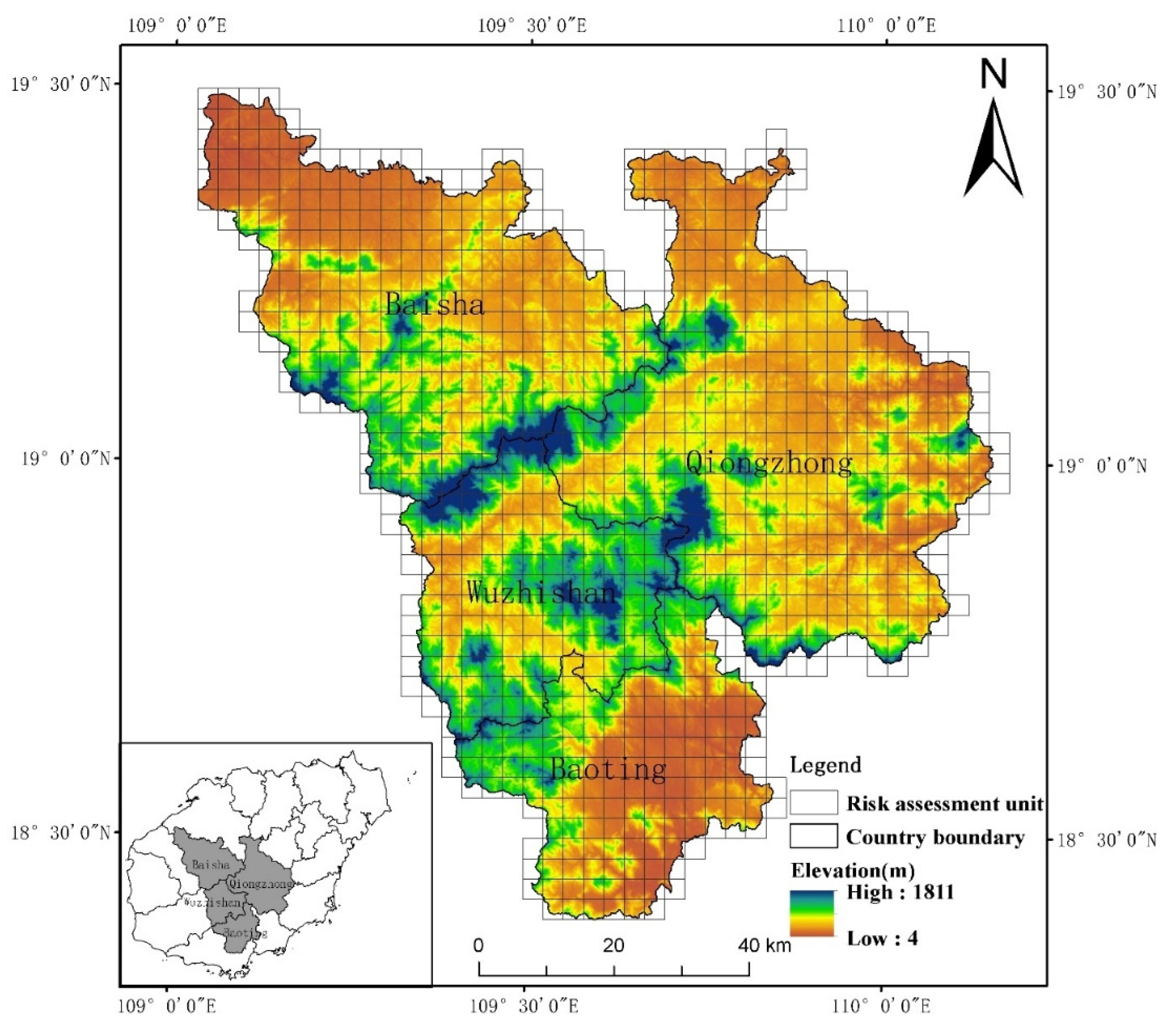
2.1. Study Area
2.2. Materials
3. Methodologies
3.1. Landscape Ecological Risk Assessment
3.2. PLUS Model
4. Results
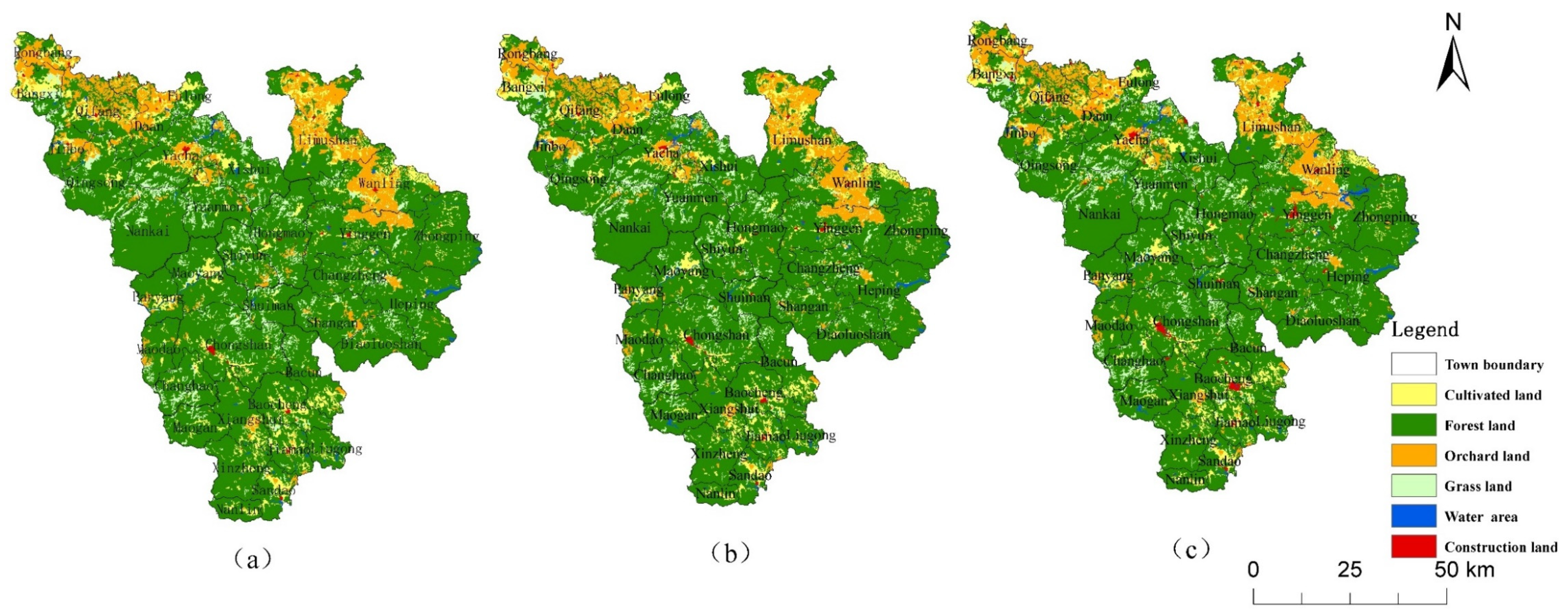
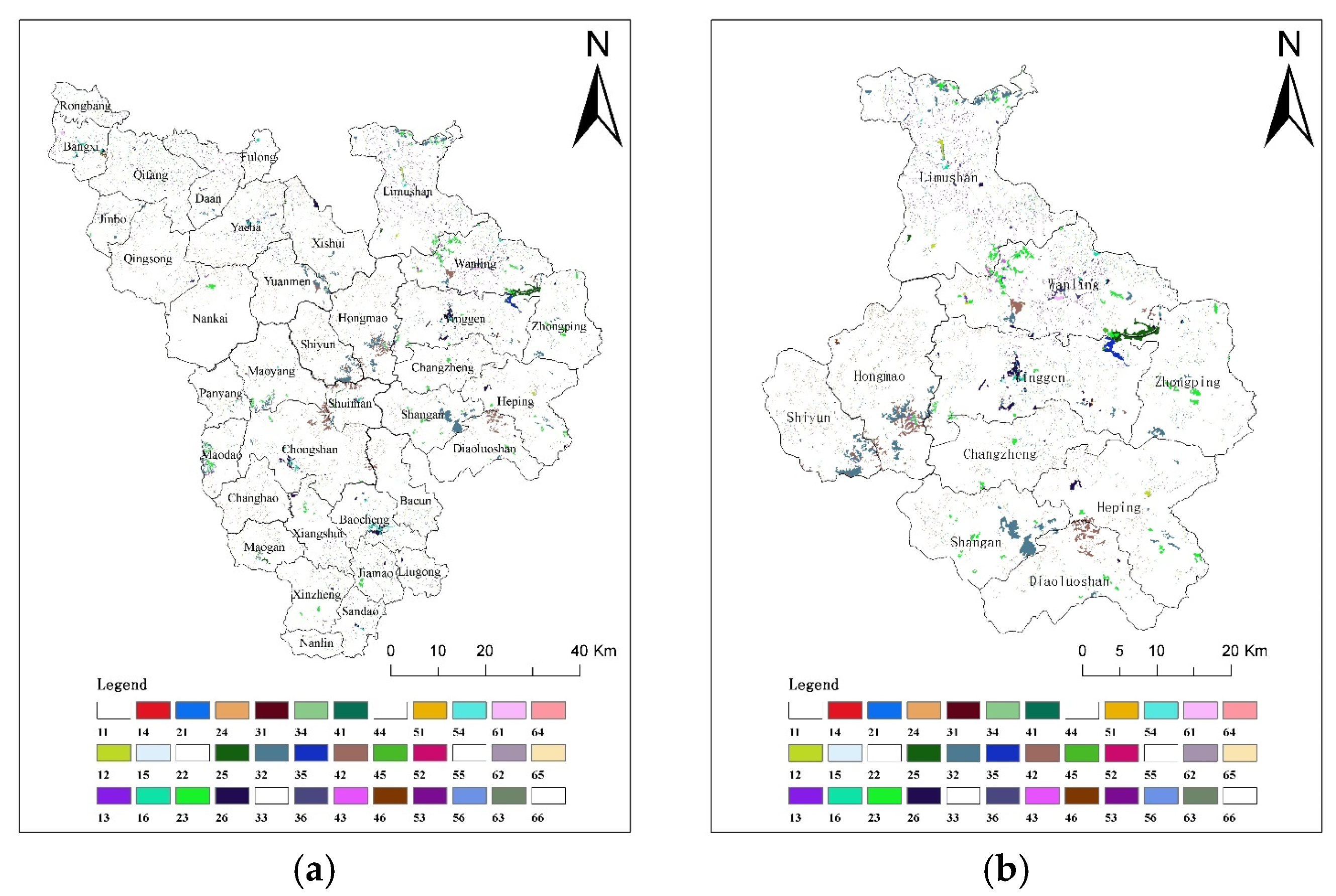
4.1. Land-Use Change from 2000 to 2018
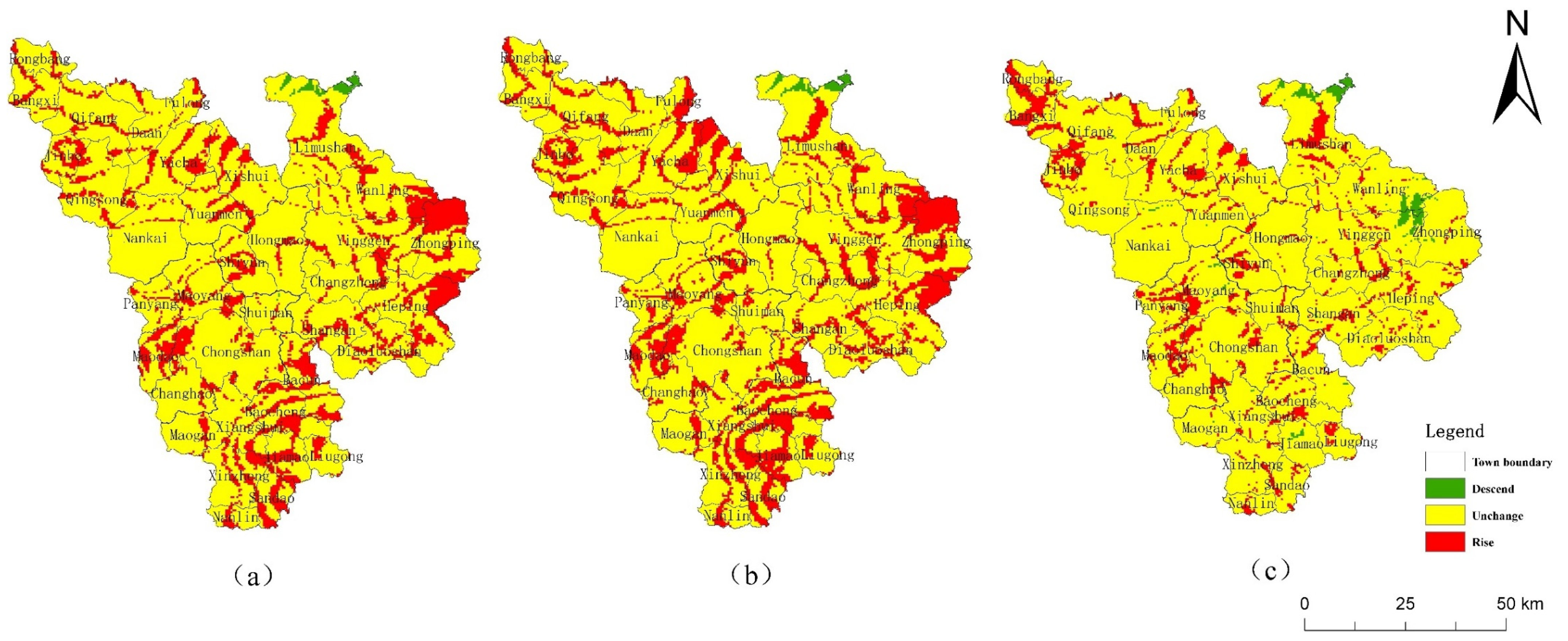
4.2. Spatiotemporal Variation of Landscape Ecological Risk
4.3. Simulation and Analysis of Future Landscape Ecological Risks
4.3.1. Simulation Verification
4.3.2. SDG-Oriented Multi-Scenario Settings
4.3.3. Landscape Ecological Risk Simulation
5. Discussion
6. Conclusions
Author Contributions
Funding
Institutional Review Board Statement
Informed Consent Statement
Data Availability Statement
Acknowledgments
Conflicts of Interest
References
- Carpenter, S.R.; Mooney, H.A.; Agard, J.; Capistrano, D.; DeFries, R.S.; Díaz, S.; Dietz, T.; Duraiappah, A.K.; Oteng-Yeboah, A.; Pereira, H.M.; et al. Science for Managing Ecosystem Services: Beyond the Millennium Ecosystem Assessment. Proc. Natl. Acad. Sci. USA 2009, 106, 1305–1312. [Google Scholar] [CrossRef] [Scilit] [PubMed]
- United Nations (UN). The Sustainable Development Goals Report 2018; United Nations: New York, NY, USA, 2018. [Google Scholar]
- Xu, J.; Zhang, Z.F. Research on Land Sustainbility Evaluation Indices in China for SDGs. Geogr. Geo-Inf. Sci. 2020, 36, 77–84. [Google Scholar]
- Peng, J.; Dang, W.X.; Liu, Y.X.; Zong, M.L.; Hu, X.X. Review on landscape ecological risk assessment. Acta Geogr. Sin. 2015, 70, 664–677. [Google Scholar]
- Li, Y.; Huang, S.L. Landscape Ecological Risk Responses to Land use change in the Luanhe River Basin, China. Sustainability 2015, 7, 5835. [Google Scholar] [CrossRef] [Scilit]
- Liao, C.; Qiu, J.X.; Chen, B.; Chen, D.L.; Fu, B.J.; Georgescu, M.; He, C.; Jenerette, G.D.; Li, X.; Li, X.Y.; et al. Advancing landscape sustainability science: Theoretical foundation and synergies with innovations in methodology, design, and application. Landsc. Ecol. 2020, 35, 1–9. [Google Scholar] [CrossRef] [Scilit]
- Sun, R.M. Achievement, Effect and Perspective on Terrestrial Ecosystems Protection of China: Benchmarking Goals of the 2030 Agenda for Sustainable Development. For. Econ. 2019, 41, 10–16. [Google Scholar]
- Hou, P.; Zhai, J.; Cao, W.; Yang, M.; Cai, M.Y.; Li, J. Evaluation on ecosystem changes and protection of the national key ecological function zones in mountainous areas of central Hainan Island. Acta Geogr. Sin. 2018, 73, 429–441. [Google Scholar]
- Liu, J.B.; Chen, Q.B.; Peng, Y.; Hu, X.C. Forest Ecosystem Services and Their Valuation in the CMAs of Hainan. Ecol. Econ. 2009, 2, 24–30. [Google Scholar]
- Zhang, J. Landscape Ecological Risk Assessment and Prediction in the Dongjiang River Basin. Master’s Thesis, Liaoning Normal university, Dalian City, Liaoning Province, China, 2019. [Google Scholar]
- Yang, Y.; Huang, Y.; Li, X.; Gu, F.; Guo, J. Land use change Simulation and Landscape Ecological Risk Assessment of Haitan Island. Bull. Soil Water Conserv. 2017, 37, 146–151, 156–351. [Google Scholar]
- Zhang, Y.; Zhang, F.; Wang, J.; Ghulam, A.; Kung, H. Ecological risk assessment and prediction of Ebinur Lake region based on Land-use/Land cover change. China Environ. Sci. 2016, 36, 3465–3474. [Google Scholar]
- Amato, F.; Pontrandolfi, P.; Murgante, B. Supporting planning activities with the assessment and the prediction of urban sprawl using spatio-temporal analysis. Ecol. Inform. 2015, 30, 365–378. [Google Scholar] [CrossRef] [Scilit]
- Liang, X.; Guan, Q.F.; Keith, C.C.; Liu, S.S.; Wang, B.Y.; Yao, Y. Understanding the drivers of sustainable land expansion using a patch-generating land-use simulation (PLUS) model: A case study in Wuhan, China. Comput. Environ. Urban Syst. 2021, 85, 101569. [Google Scholar] [CrossRef] [Scilit]
- Hainan Provincial Bureau of Statistics. Hainan Statistical Yearbook 2019~2020; Statistical Publishing House: Beijing, China, 2020; pp. 25–47. [Google Scholar]
- Greenpeace. Report on natural forest changes in tropical Hainan released by Greenpeace. Environ. Prot. 2011, 24, 6–7. [Google Scholar]
- Qiu, M.Y.; Luo, D.P.; Liu, Q.M.; Liu, X.J.; Wang, Z.F. Current situation and Countermeasures of fishery development in Central Hainan. China Fish. 2018, 61, 49–53. [Google Scholar]
- Su, H.M.; He, A.X. Land-use analysis of fuzhou city based on RS and geostatistics. J. Nat. Resour. 2010, 25, 91–99. [Google Scholar]
- LÜ, L.T.; Zhang, J.; Sun, C.Z.; Wang, X.R.; Zheng, D.F. Landscape ecological risk assessment of Xi river Basin based on land use change. Acta Ecol. Sin. 2018, 38, 5952–5960. [Google Scholar]
- Qiu, P.H.; Xu, S.J.; Xie, G.Z.; Tang, B.A.; Bi, B.; Yu, L.S. Analysis on the ecological vulnerability of the western Hainan Island based on its landscape pattern and ecosystem sensitivity. Acta Ecol. Sin. 2007, 27, 1257–1264. [Google Scholar]
- Liu, C.Y.; Zhang, K.; Liu, J.P. A long-term site study for the ecological risk migration of landscapes and its driving forces in the Sanjiang Plain from 1976 to 2013. Acta Ecol. Sin. 2018, 38, 3729–3740. [Google Scholar]
- Kang, Z.W.; Zhang, Z.Y.; Wei, H.; Liu, L.; Ning, S.; Zhao, G.N.; Wang, T.X.; Tian, H. Landscape ecological risk assessment in Manas River Basin based on land use change. Acta Ecol. Sin. 2020, 40, 6472–6485. [Google Scholar]
- Wang, J.; Cui, B.; Yao, H. The temporal and spatial characteristic of landscape ecological security at Lancang River Watershed of longitudinal range gorge region in Southwest China. Acta Ecol. Sin. 2008, 28, 1681–1690. [Google Scholar]
- Sun, C.Z.; Yan, X.L.; Zhong, J.Q. Evaluation of the landscape patterns vulnerability and analysis of spatial correlation patterns in the lower reaches of Liaohe River Plain. Acta Ecol. Sin. 2014, 34, 247–257. [Google Scholar]
- Shi, H.P.; Yu, K.Q.; Feng, Y.J. Ecological risk assessment of rural-urban ecotone based on landscape pattern: Case study in Daiyue District of Tai’an City, Shandong Province of East China. Chin. J. Appl. Ecol. 2013, 24, 705–712. [Google Scholar]
- Chen, Z.H.; Sun, X.Y. Severe Destroy of the Natural Forests of Hainan Province. Green Vis. 2007, 11, 15–17. [Google Scholar]
- Qing, Q.L.; Huang, Y.; Pei, C. Eco-risk Assessment and Management Based on Landscape Structure Changes—A Case Study of Wanzhou District of Chongqing. J. Southwest Univ. (Nat. Sci. Ed.) 2021, 43, 174–184. [Google Scholar]
- Han, N.L.; Zhang, Y.Q.; Zhang, W.X. Simulation of Spatio-Temporal Changes in Land-Use and Water Yield in Hainan Island. Water Resources Protection. Available online: http://kns.cnki.net/kcms/detail/32.1356.TV.20210129.0948.002.html (accessed on 6 June 2021).
- Vörösmarty, C.J.; Osuna, V.R.; Cak, A.D.; Bhaduri, A.; Bunn, S.E.; Corsi, F.; Gastelumendi, J.; Green, P.; Harrison, I.; Lawford, R.; et al. Ecosystem-based water security and the Sustainable Development Goals (SDGs). Ecohydrol. Hydrobiol. 2018, 18, 317–333. [Google Scholar] [CrossRef] [Scilit]
- Okpara, U.T.; Stringer, L.C.; Akhtar-Schuster, M.; Metternicht, G.I.; Dallimer, M.; Requier-Desjardins, M. A social-ecological systems approach is necessary to achieve land degradation neutrality. Environ. Sci. Policy 2018, 89, 59–66. [Google Scholar] [CrossRef] [Scilit]
- Marianela, F.; Colleen, C.; Richard, L.; Jill, E.C. Toward an Understanding of Synergies and Trade-Offs Between Water, Energy, and Food SDG Targets. Front. Environ. Sci. 2018, 6, 112. [Google Scholar]
- Gupta, J.; Vegelin, C. Sustainable development goals and inclusive development. Int. Environ. Agreem. Politics Law Econ. 2016, 16, 433–448. [Google Scholar] [CrossRef] [Scilit]
- Li, Y.R.; Zhang, X.C.; Cao, Z.; Liu, Z.J.; Liu, Y.S. Towards the progress of ecological restoration and economic development in China’s Loess Plateau and strategy for more sustainable development. Sci. Total Environ. 2021, 756, 143676. [Google Scholar]
- Ma, S.; Liang, X.Y.; Liu, D.; Duan, N.; Chen, H. Multi-scale landscape ecological risk assessment in ecologically fragile regions: A case study in Gaoqu Town in Mizhi County, Shaanxi Province. Chin. J. Ecol. 2018, 37, 3171–3178. [Google Scholar]
- Wang, L.; Yuan, Y.B.; Dong, H.; Huang, J.J.; Huang, P.; Zhang, C.F. Research on spatial scale effect of landscape pattern of land-use in Wuhan City. World Reg. Stud. 2020, 29, 96–103. [Google Scholar]
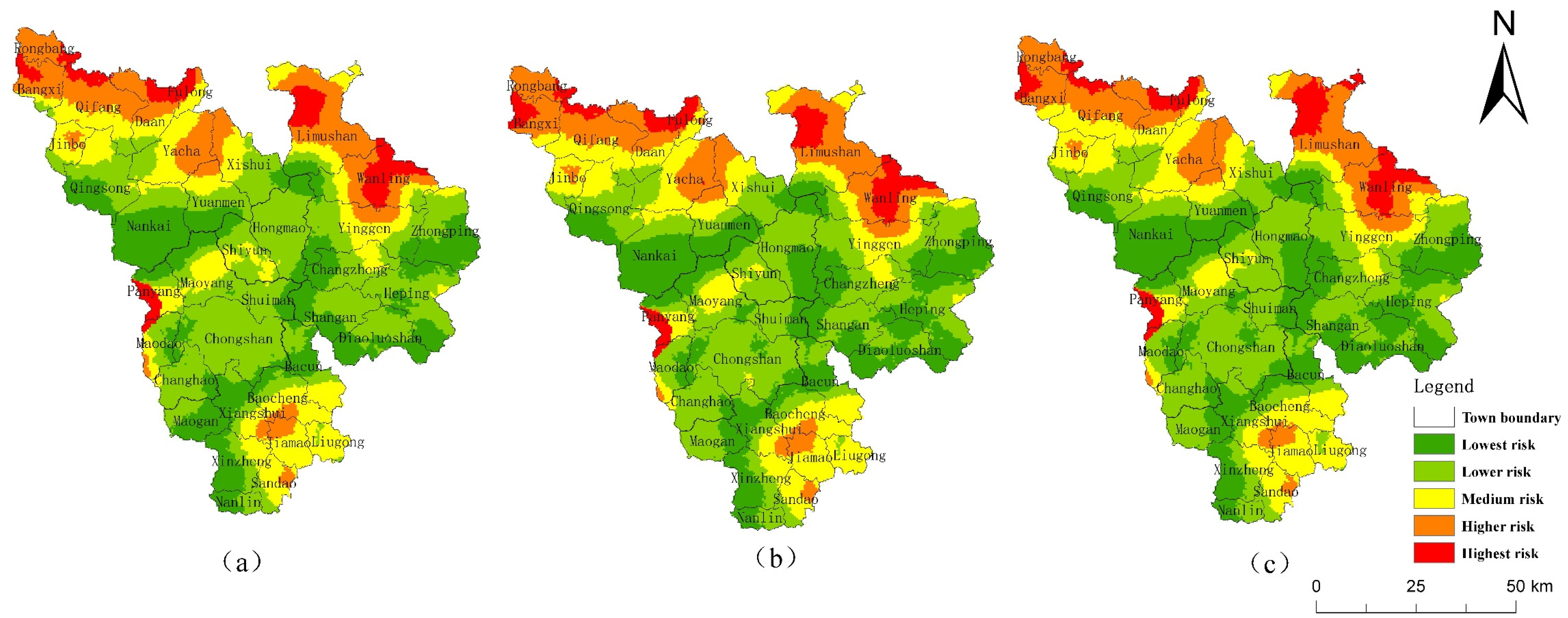
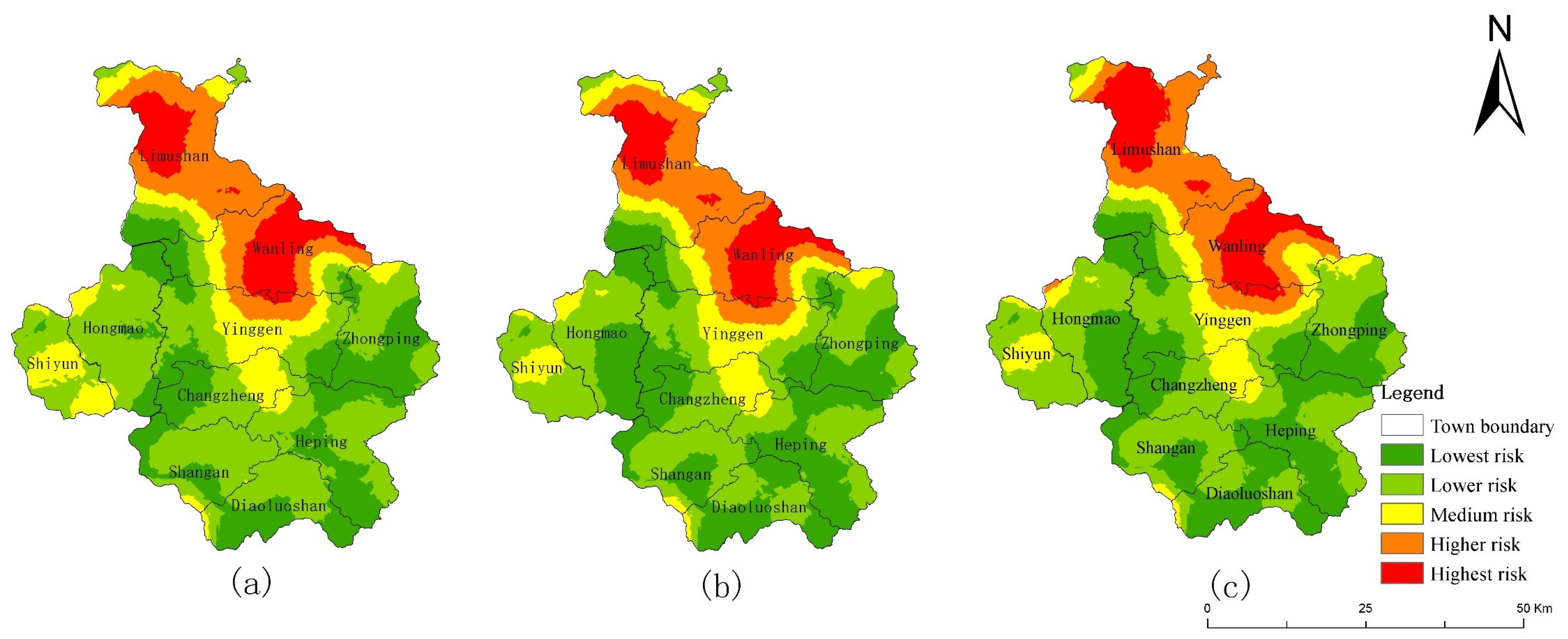
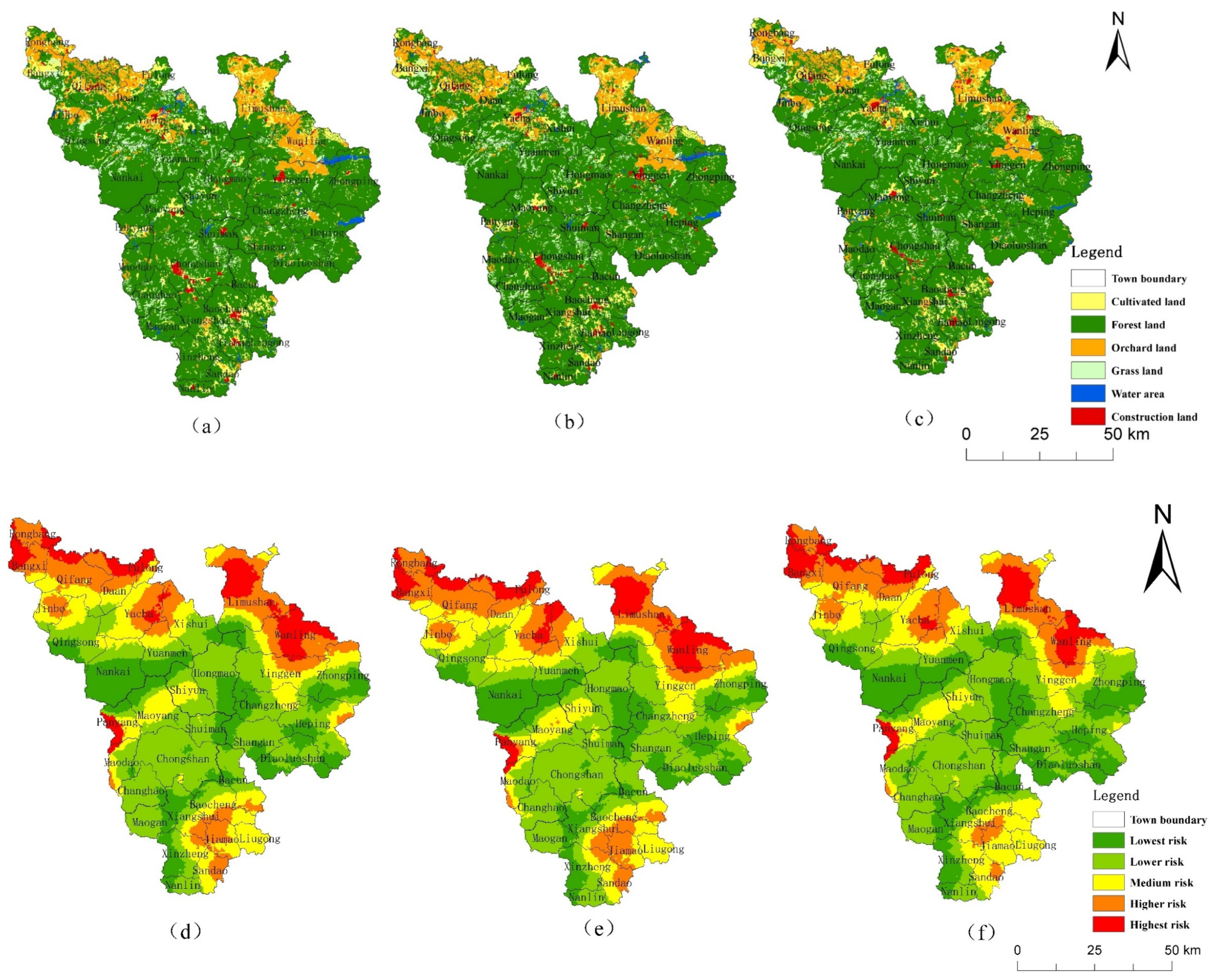

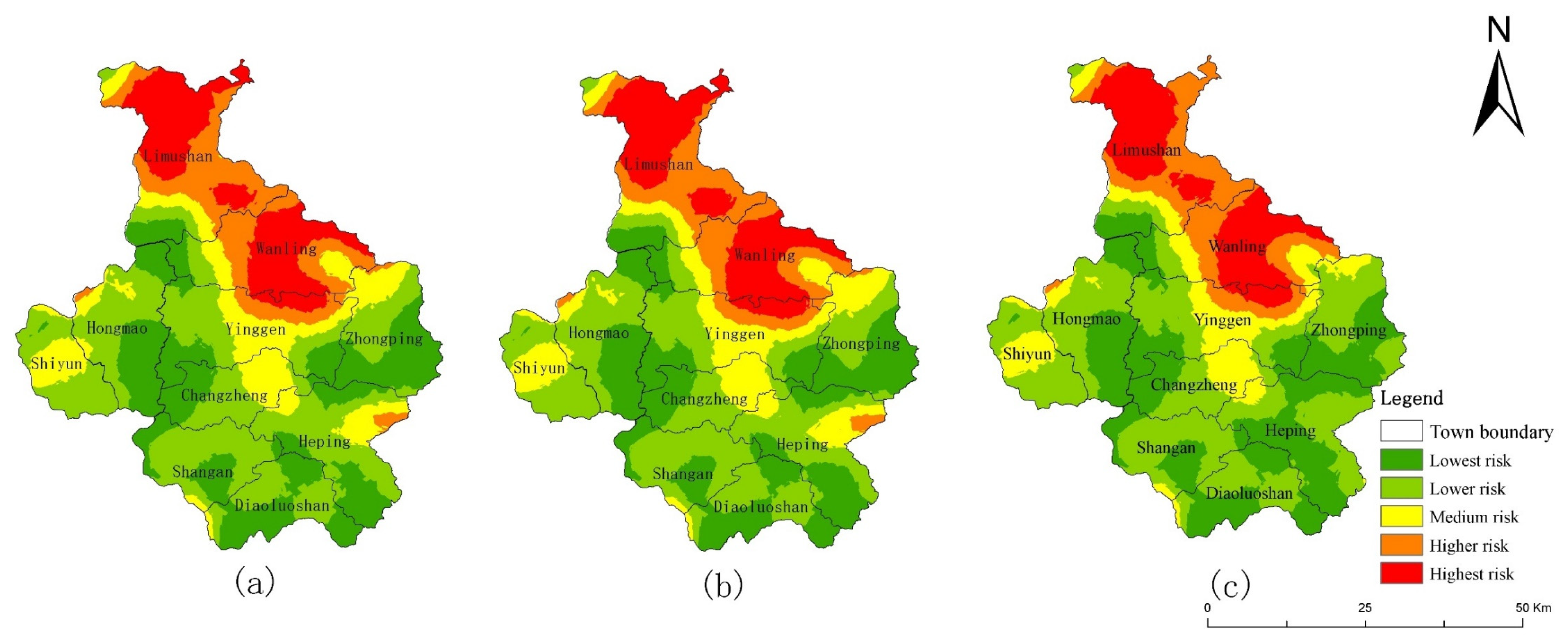

| Goals | Subject | Specific Objectives |
|---|---|---|
| SDG 1 | No Poverty | End poverty in all its forms, everywhere |
| SDG 2 | Zero Hunger | End hunger, achieve food security and improved nutrition, and promote sustainable agriculture |
| SDG 3 | Good Health and Well-Being | Ensure healthy lives and promote well-being for all at all ages |
| SDG 4 | Quality Education | Ensure inclusive and equitable quality education and promote lifelong learning opportunities for all |
| SDG 5 | Gender Equality | Achieve gender equality and empower all women and girls |
| SDG 6 | Clean Water and Sanitation | Ensure availability and sustainable management of water and sanitation for all |
| SDG 7 | Affordable and Clean Energy | Ensure access to affordable, reliable, sustainable, and modern energy for all |
| SDG 8 | Decent Work and Economic Growth | Promote sustained, inclusive and sustainable economic growth, full and productive employment, and decent work for all |
| SDG 9 | Industry, Innovation, and Infrastructure | Build resilient infrastructure, promote inclusive and sustainable industrialization, and foster innovation |
| SDG 10 | Reduced Inequalities | Reduce inequality within and among countries |
| SDG 11 | Sustainable Cities and Communities | Make cities and human settlements inclusive, safe, resilient, and sustainable |
| SDG 12 | Responsible Consumption and Production | Ensure sustainable consumption and production patterns |
| SDG 13 | Climate Action | Take urgent action to combat climate change and its impacts |
| SDG 14 | Life Below Water | Conserve and sustainably use the oceans, seas, and marine resources for sustainable development |
| SDG 15 | Life on Land | Protect, restore, and promote sustainable use of terrestrial ecosystems; sustainably manage forests; combat desertification; halt and reverse land degradation; and halt biodiversity loss |
| SDG 16 | Peace, Justice, and Strong Institutions | Promote peaceful and inclusive societies for sustainable development; provide access to justice for all; and build effective, accountable, and inclusive institutions at all levels |
| SDG 17 | Partnerships for the Goals | Strengthen the means of implementation and revitalize the global partnership for sustainable development |
| Index | Computation | Ecological Meaning of Index |
|---|---|---|
| Landscape fragmentation (Ci) | It indicates the process of land-use type changing from continuous whole patch to complex discontinuous patch under natural or human disturbance. The larger the value is, the lower the stability of the corresponding land-use ecosystem is. ni is the number of patches of land-use type i. | |
| Landscape separation (Ni) | It indicates the degree of separation between different patches in the landscape type. The larger the value is, the more complex the spatial distribution of the land-use type is and the higher the separation degree is. Ai is the area of land-use type i and A is the total area of landscape. | |
| Landscape fractal dimension (Fi) | The value range of Fi is 1–2. The larger the value, the more complex the shape of land-use patches. When Fi < 1.5, the patch shape is relatively simple; when Fi =1.5, the patch is in Brownian random motion state, with poor stability; when Fi > 1.5, the patch shape is complex. Pi is the perimeter of land-use type i. | |
| landscape vulnerability index (Vi) | Obtained by normalization | Based on the relevant research [24,25] and combined with the landscape pattern characteristics in the CMA, the landscape vulnerability was divided into five levels from low to high: 5—water; 4—cultivated and orchard; 3—grassland; 2—forest land; 1—construction land. |
| Year | Cultivated Land (km2) | Forest Land (km2) | Orchard (km2) | Grassland (km2) | Water Area (km2) | Construction Land (km2) |
|---|---|---|---|---|---|---|
| 2000 | 599.16 | 5264.29 | 733.58 | 440.33 | 49.47 | 28.57 |
| 2010 | 592.63 | 5308.71 | 716.57 | 408.68 | 57.41 | 31.42 |
| 2018 | 583.70 | 5286.44 | 707.12 | 407.00 | 69.74 |
| Land Use | Year | Number of Patches | Area | Fragmentation Index (Ci) | Separation Index (Ni) | Fractal Dimension Index (Fi) | Disturbance Index (Ei) |
|---|---|---|---|---|---|---|---|
| Cultivated land | 2000 | 1398 | 59,916 | 0.0233 | 0.2632 | 1.1040 | 0.3114 |
| 2010 | 1311 | 59,263 | 0.0221 | 0.2577 | 1.1104 | 0.3104 | |
| 2018 | 1318 | 58,370 | 0.0226 | 0.2623 | 1.1101 | 0.3120 | |
| Forest land | 2000 | 400 | 526,429 | 0.0008 | 0.0160 | 1.0773 | 0.2206 |
| 2010 | 380 | 530,871 | 0.0007 | 0.0155 | 1.0815 | 0.2213 | |
| 2018 | 419 | 528,644 | 0.0008 | 0.0163 | 1.0828 | 0.2219 | |
| Orchard | 2000 | 481 | 73,358 | 0.0066 | 0.1261 | 1.0901 | 0.2591 |
| 2010 | 490 | 71,657 | 0.0068 | 0.1303 | 1.0884 | 0.2602 | |
| 2018 | 493 | 70,712 | 0.0070 | 0.1324 | 1.0906 | 0.2613 | |
| Grassland | 2000 | 1242 | 44,033 | 0.0282 | 0.3376 | 1.1031 | 0.3360 |
| 2010 | 1216 | 40,868 | 0.0298 | 0.3599 | 1.1043 | 0.3437 | |
| 2018 | 1212 | 40,700 | 0.0298 | 0.3608 | 1.1036 | 0.3438 | |
| Water area | 2000 | 172 | 4947 | 0.0348 | 1.1181 | 1.1102 | 0.5748 |
| 2010 | 162 | 5741 | 0.0282 | 0.9351 | 1.1125 | 0.5172 | |
| 2018 | 175 | 6974 | 0.0251 | 0.8000 | 1.1135 | 0.4752 | |
| Construction land | 2000 | 224 | 2857 | 0.0784 | 2.2092 | 1.0561 | 0.9132 |
| 2010 | 225 | 3142 | 0.0716 | 2.0133 | 1.0586 | 0.8515 | |
| 2018 | 314 | 6142 | 0.0511 | 1.2168 | 1.0596 | 0.6025 |
| Cultivated Land (km2) | Forest Land (km2) | Orchard (km2) | Grassland (km2) | Water Area (km2) | Construction Land (km2) | |
|---|---|---|---|---|---|---|
| 2018 | 583.70 | 5286.44 | 707.12 | 407.00 | 69.74 | 61.42 |
| 2026 NDS | 575.63 | 5262.72 | 698.11 | 405.11 | 80.78 | 89.32 |
| 2026 EDS | 572.12 | 5256.61 | 695.59 | 404.67 | 80.71 | 101.97 |
| 2026 EPS | 557.52 | 5318.12 | 690.24 | 392.89 | 74.45 | 78.44 |
| 2018–2026 NDS | −8.06 | −23.80 | −9.02 | −1.90 | 11.12 | 27.91 |
| 2018–2026 EDS | −11.58 | −29.91 | −11.54 | −2.35 | 11.04 | 40.57 |
| 2018–2026 EPS | −22.45 | 31.6 | −16.88 | −14.12 | 1.07 | 17.04 |
| Year | Lowest Risk (km2) | Lower Risk (km2) | Medium Risk (km2) | Higher Risk (km2) | Highest Risk (km2) |
|---|---|---|---|---|---|
| 2000 | 1667.46 | 2623.59 | 1447.02 | 1020.31 | 356.33 |
| 2010 | 1860.46 | 2472.42 | 1391.25 | 1018.54 | 372.05 |
| 2018 | 1902.95 | 2429.04 | 1381.07 | 1006.37 | 395.29 |
| 2026 NDS | 1405.64 | 2528.86 | 1448.13 | 1183.43 | 548.66 |
| 2026 EDS | 1370.89 | 2512.48 | 1416.04 | 1207.77 | 607.54 |
| 2026 EPS | 1647.77 | 2537.71 | 1408.07 | 975.60 | 545.57 |
| 2018–2026 NDS | −497.32 | 99.82 | 67.06 | 177.06 | 153.38 |
| 2018–2026 EDS | −532.07 | 83.44 | 34.97 | 201.41 | 212.25 |
| 2018–2026 EPS | −255.19 | 108.67 | 27.00 | −30.76 | 150.28 |
Publisher’s Note: MDPI stays neutral with regard to jurisdictional claims in published maps and institutional affiliations. |
© 2022 by the authors. Licensee MDPI, Basel, Switzerland. This article is an open access article distributed under the terms and conditions of the Creative Commons Attribution (CC BY) license (https://creativecommons.org/licenses/by/4.0/).
Share and Cite
Han, N.; Yu, M.; Jia, P. Multi-Scenario Landscape Ecological Risk Simulation for Sustainable Development Goals: A Case Study on the Central Mountainous Area of Hainan Island. Int. J. Environ. Res. Public Health 2022, 19, 4030. https://doi.org/10.3390/ijerph19074030
Han N, Yu M, Jia P. Multi-Scenario Landscape Ecological Risk Simulation for Sustainable Development Goals: A Case Study on the Central Mountainous Area of Hainan Island. International Journal of Environmental Research and Public Health. 2022; 19(7):4030. https://doi.org/10.3390/ijerph19074030
Chicago/Turabian StyleHan, Nianlong, Miao Yu, and Peihong Jia. 2022. "Multi-Scenario Landscape Ecological Risk Simulation for Sustainable Development Goals: A Case Study on the Central Mountainous Area of Hainan Island" International Journal of Environmental Research and Public Health 19, no. 7: 4030. https://doi.org/10.3390/ijerph19074030
APA StyleHan, N., Yu, M., & Jia, P. (2022). Multi-Scenario Landscape Ecological Risk Simulation for Sustainable Development Goals: A Case Study on the Central Mountainous Area of Hainan Island. International Journal of Environmental Research and Public Health, 19(7), 4030. https://doi.org/10.3390/ijerph19074030