Article

How Does Manufacturing Agglomeration Affect Green Development? A Spatial and Nonlinear Perspective


1
Institute of Industrial Economics, Chinese Academy of Social Sciences, Beijing 100006, China
2
School of Economics, Zhongnan University of Economics and Law, Wuhan 430073, China
3
Department of Modern & Classical Language Studies, Kent State University, Kent, OH 44240, USA
4
Department of Civil and Environmental Engineering, University of Wisconsin-Milwaukee, Milwaukee, WI 53211, USA
5
School of Management, Wuhan Institute of Technology, Wuhan 430205, China
*
Author to whom correspondence should be addressed.
Int. J. Environ. Res. Public Health 2022, 19(16), 10404; https://doi.org/10.3390/ijerph191610404

Submission received: 1 July 2022 / Revised: 9 August 2022 / Accepted: 18 August 2022 / Published: 21 August 2022

Abstract

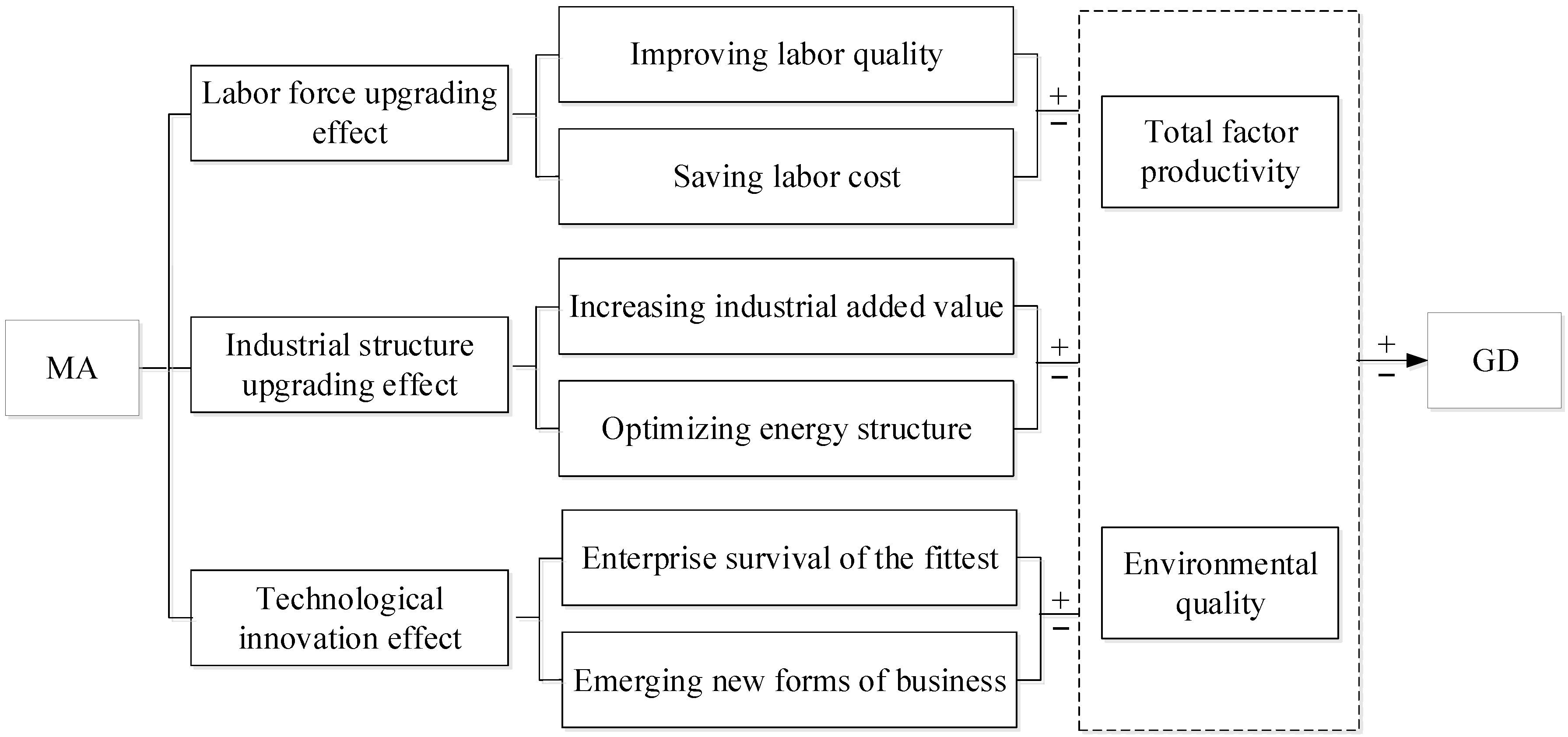
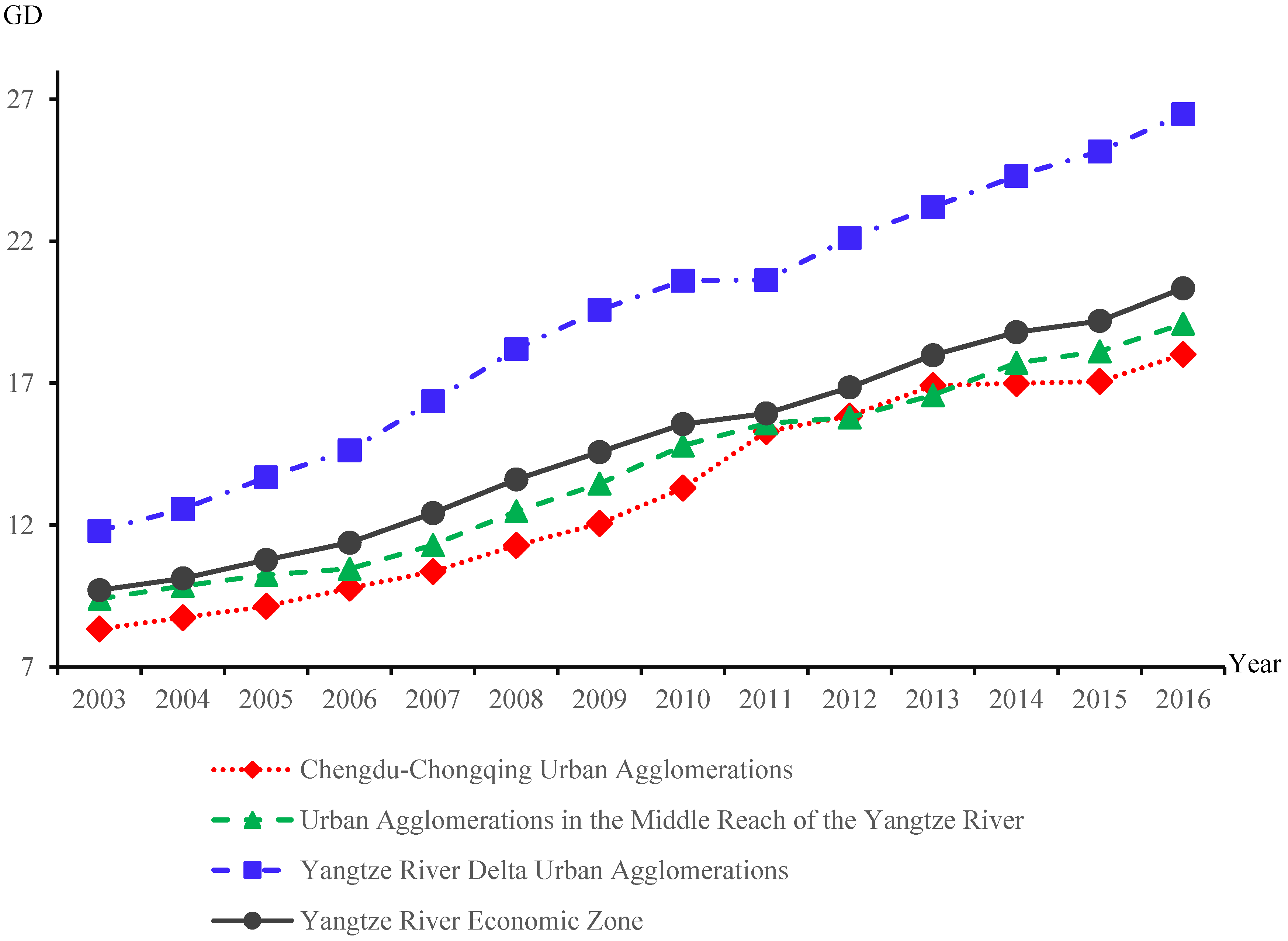
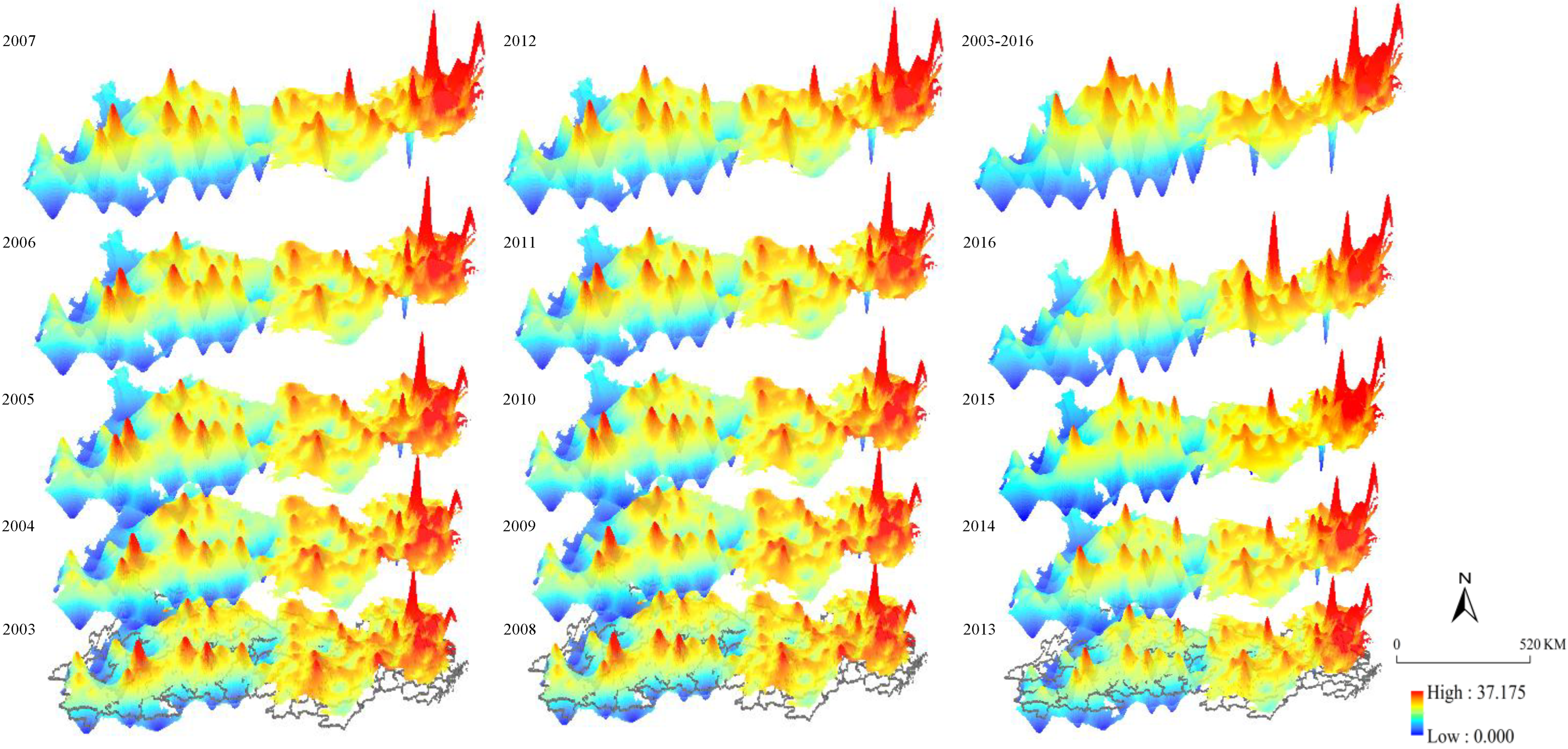
Developing high-quality manufacturing industries and realizing green transformation are relatively pressing issues in the 21st century. Existing studies only focus on the economic or environmental effects of agglomeration, and the combined effects of manufacturing agglomeration have been neglected. Therefore, by referring to industrial agglomeration theory and constructing a theoretical analytical framework for manufacturing agglomeration and green development, this paper adopts the spatial panel Durbin model and mediating effect model with the panel data from China’s Yangtze River Economic Belt to empirically test the influence and its mechanism of manufacturing agglomeration on green development. The results show that: (1) There are significant temporal and spatial differences in green development in the Yangtze River Economic Belt. Overall, green development has maintained a steady increase on the timeline, but each region shows a hierarchical structure of “multiple peaks-multiple centers”. (2) There is a typical inverted U-shaped relationship between manufacturing agglomeration and green development, and the linear and quadratic coefficients of manufacturing agglomeration are −0.585 and −0.167, respectively. (3) Under the constraints of temporal, spatial, and urban heterogeneity, the impacts of manufacturing agglomeration on green development show significant differences. (4) Manufacturing agglomeration affects green development through three paths: the labor force upgrading effect, industrial structure upgrading effect, and technological innovation effect. The study can provide a theoretical and empirical basis for the green development of developing countries around the world.
Keywords: manufacturing agglomeration; green development; GS2SLS; mediating effect; Yangtze River Economic Belt manufacturing agglomeration; green development; GS2SLS; mediating effect; Yangtze River Economic Belt