Article

Contextualizing Risk Perception and Trust in the Community-Based Response to Ebola Virus Disease in Liberia

Department of Sociology, Faculty of Liberal Arts and Professional Studies, Keele Campus, York University, Toronto, ON M3J 1P3, Canada
*
Author to whom correspondence should be addressed.
Int. J. Environ. Res. Public Health 2021, 18(6), 3270; https://doi.org/10.3390/ijerph18063270

Submission received: 8 February 2021 / Revised: 12 March 2021 / Accepted: 17 March 2021 / Published: 22 March 2021
(This article belongs to the Special Issue Infectious Diseases & Epidemiology)

Abstract

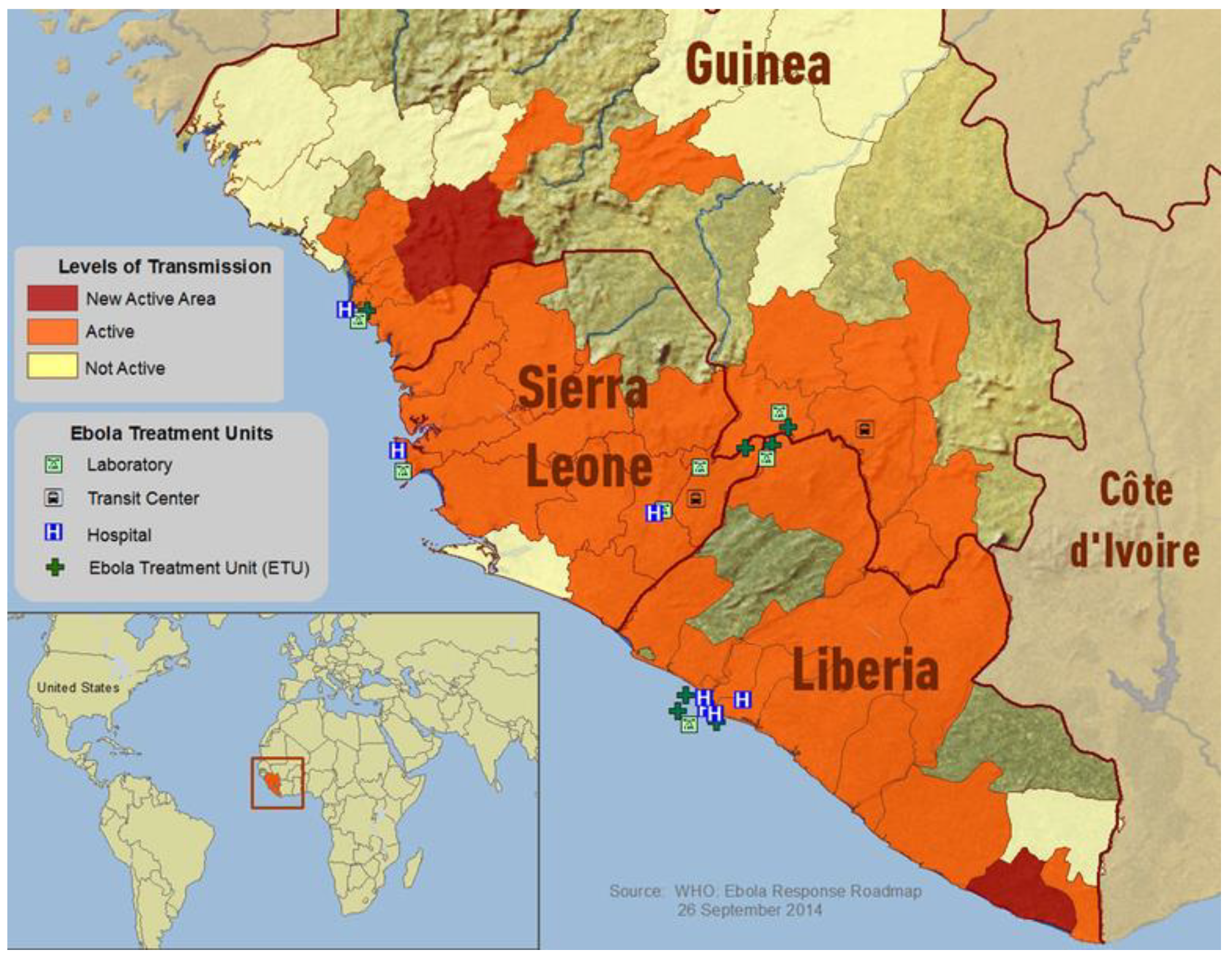
The 2014–15 Ebola Virus Disease (EVD) outbreaks in Western Africa became widespread in primarily three countries, Guinea, Liberia, and Sierra Leone. Unlike all previous outbreaks in Central and East Africa, which were confined to rural areas, the virus spread rapidly through West Africa as a result of transmission through high-density urban centres coupled with the effects of public distrust in outbreak response teams and local government officials. Objective: In this study, we examine the EVD epidemic in Liberia, the first country to implement a community-based response that led to changes in the trajectory of the epidemic. The focus on the role of community-based initiatives in outbreak response is often neglected in conventional epidemiological accounts. In this light, we consider the manner in which community-based strategies enabled a more effective response based on the establishment of better trust relations and an enhanced understanding of the risks that EVD posed for the community. Methodology: We conducted qualitative research in five distinct communities in Liberia three years after the outbreaks subsided. Data collection procedures consisted of semi-structured interviews and focus group discussions with residents. Results: We found that the implementation of a community-based response, which included the participation of Ebola survivors and local leaders, helped curb and ultimately end the EVD epidemic in Liberia. As community members became more directly involved in the EVD response, the level of trust between citizens, local officials, and non-governmental organization response teams increased. In turn, this led to greater acceptance in abiding to safety protocols, greater receptiveness to risk information, and changes in mobility patterns—all of which played a significant role in turning the tide of the epidemic.
Keywords: Ebola virus disease; risk perception; trust; Liberia; community engagement; focus group discussion Ebola virus disease; risk perception; trust; Liberia; community engagement; focus group discussion