Article

Using Ecosystem Service Flows to Inform Ecological Compensation: Theory & Application

1
State Key Laboratory of Urban and Regional Ecology, Research Center for Eco-Environmental Sciences, Chinese Academy of Sciences, Beijing 100085, China
2
University of Chinese Academy of Sciences, Beijing 100049, China
3
Beijing Water Science and Technology Institute, Beijing 100048, China
*
Author to whom correspondence should be addressed.
Int. J. Environ. Res. Public Health 2020, 17(9), 3340; https://doi.org/10.3390/ijerph17093340

Submission received: 9 April 2020 / Revised: 7 May 2020 / Accepted: 7 May 2020 / Published: 11 May 2020
(This article belongs to the Section Environment and Applied Ecology)

Abstract

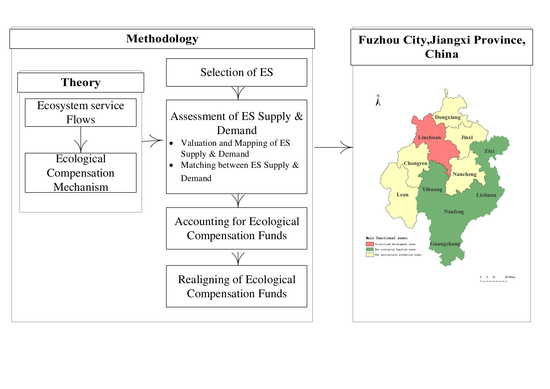
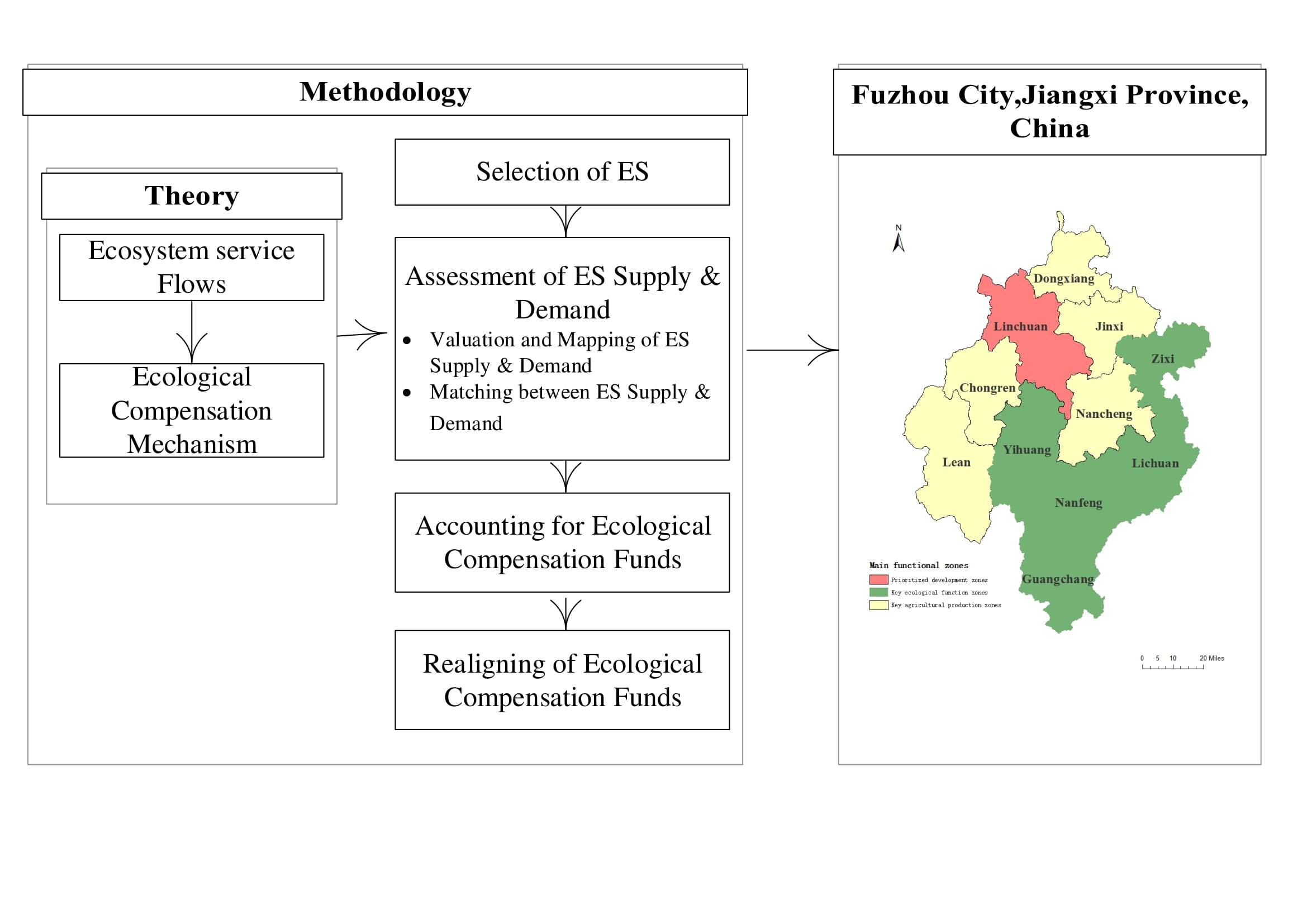
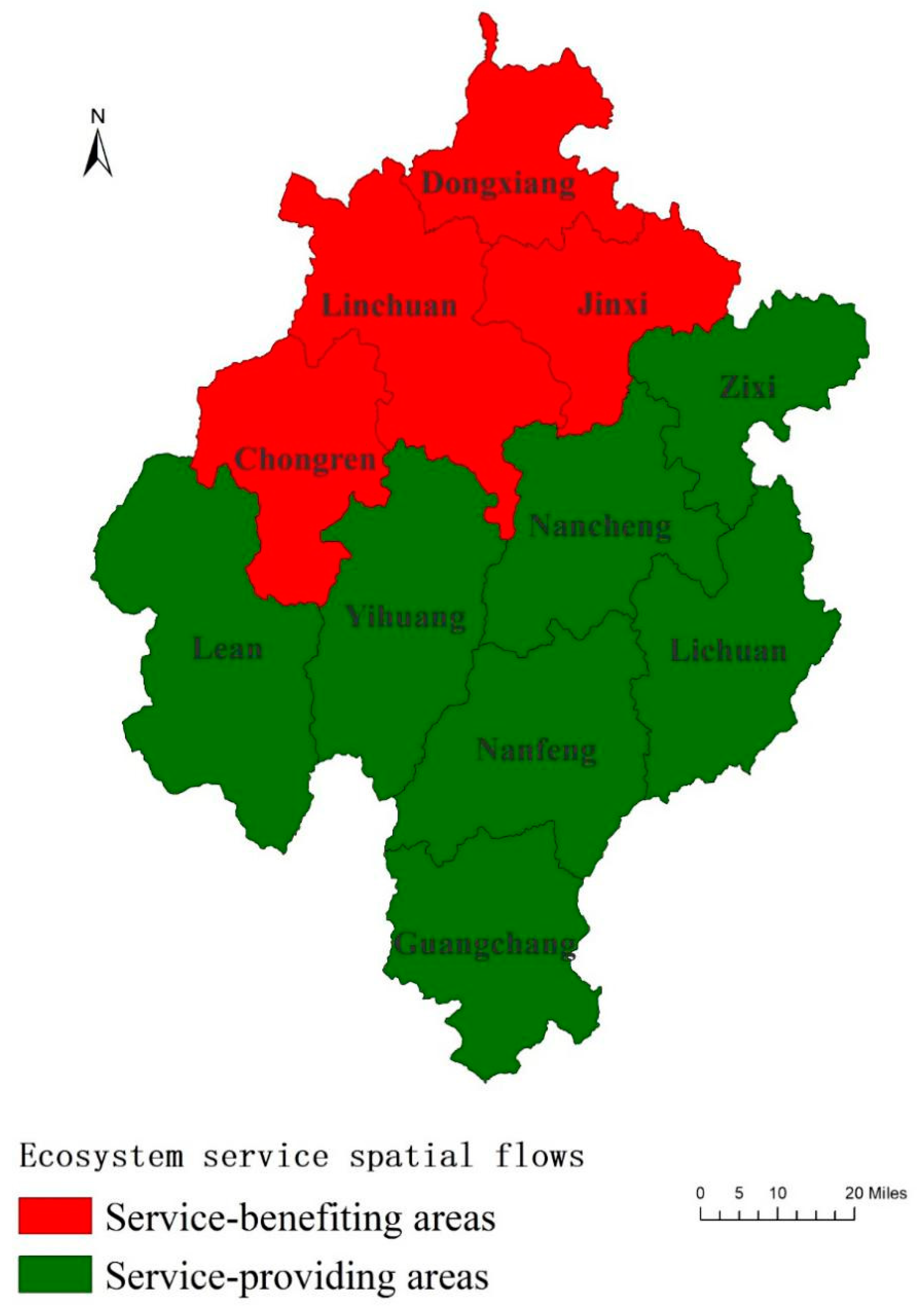
Ecological compensation is a crucial policy instrument that realigns the benefits of stakeholders to the ecosystem service provision. However, the spatial disconnections between locations where ecosystem services produced and used are common. The supply and demand for ecosystem services are calculated to reflect the status of the districts or counties based on ecosystem service flows. The replacement cost methods provide necessary technical supports for the calculation of compensation funds. The realigning of compensation funds between service-benefiting areas and service-providing areas not only identifies the beneficiaries and suppliers but also realizes the connection between them, which may be a feasible methodology. Fuzhou City is the study area, and two ecosystem services of water conservation and soil retention were taken into consideration. The prioritized development zone, Linchuan, and the key agricultural production zones paid ecological compensation funds. Linchuan paid the highest, 5.76 billion yuan. The key ecological function zones and the key agricultural production zones received the ecological compensation funds, of which Yihuang obtained the highest, 1.66 billion yuan. The realigning of compensation funds between the service benefiting and providing areas addresses the trade-offs between ecosystem services, social development, and ecosystem protection. Embedding the ecosystem service flows into the ecological compensation mechanism can most truly realize the value of ecosystem services, achieve the “beneficiary pays” principle, and be conducive to regional sustainable development.
Keywords: ecosystem service flows; ecosystem services; ecological compensation; beneficiary pays; Fuzhou City ecosystem service flows; ecosystem services; ecological compensation; beneficiary pays; Fuzhou City
Graphical Abstract