Article

Assessing the Food Safety Risk Posed by Birds Entering Leafy Greens Fields in the US Southwest


1
United States Department of Agriculture—Agricultural Research Service, Beltsville Agricultural Research Center, Food Quality Laboratory, Beltsville, MD 20705, USA
2
School of Animal & Comparative Biomedical Sciences, University of Arizona, 1117 E. Lowell Street, Tucson, AZ 85721, USA
3
Maricopa Agricultural Center, Department of Environmental Sciences, The University of Arizona, 37860 W. Smith-Enke Rd, Maricopa, AZ 85138, USA
4
Food and Drug administration, Center for Food Safety and Applied Nutrition, Produces Safety Network-Western Region, College Park, MD 20740, USA
*
Author to whom correspondence should be addressed.
Int. J. Environ. Res. Public Health 2020, 17(23), 8711; https://doi.org/10.3390/ijerph17238711

Submission received: 29 September 2020 / Revised: 17 November 2020 / Accepted: 18 November 2020 / Published: 24 November 2020

Abstract

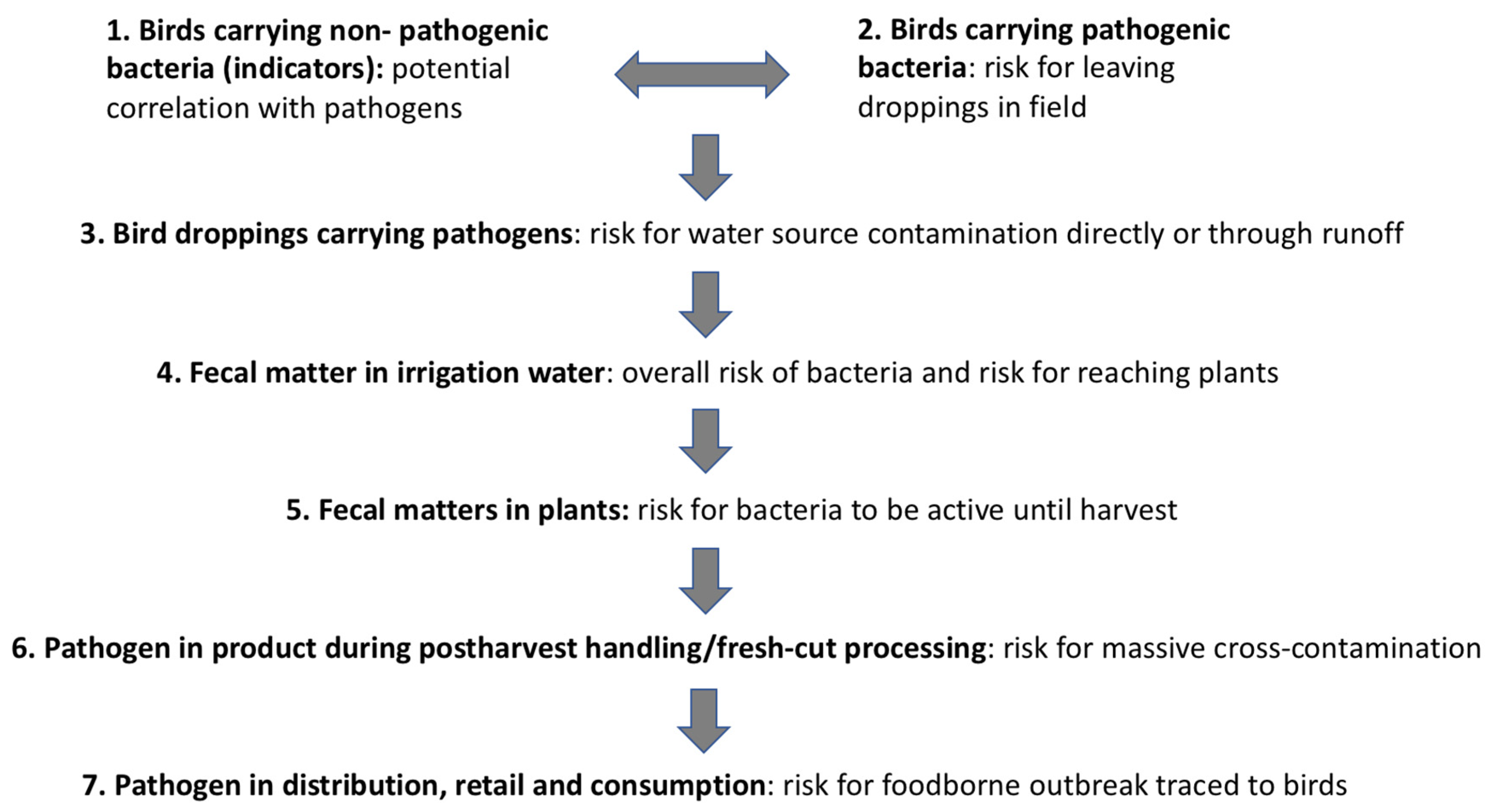
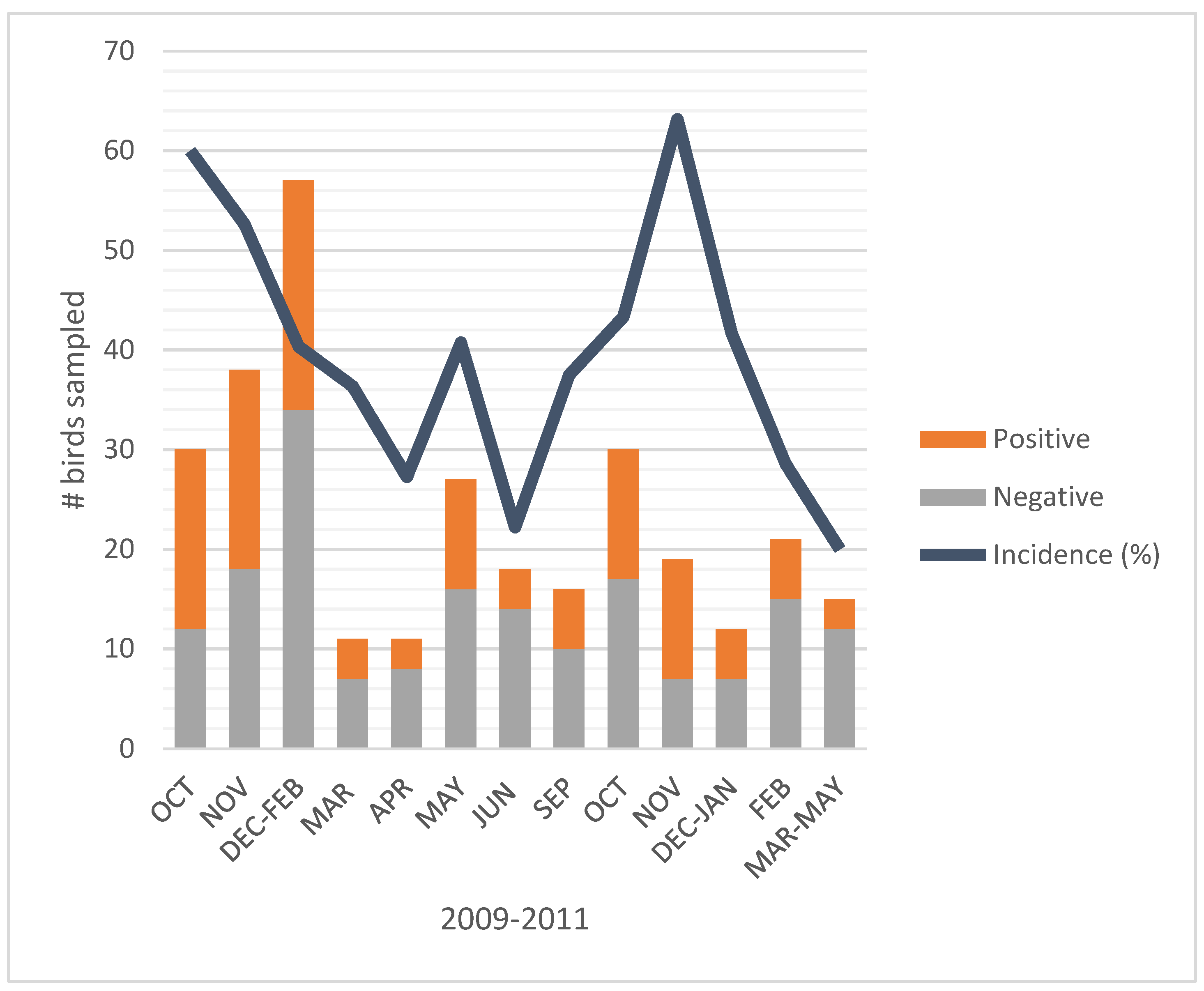
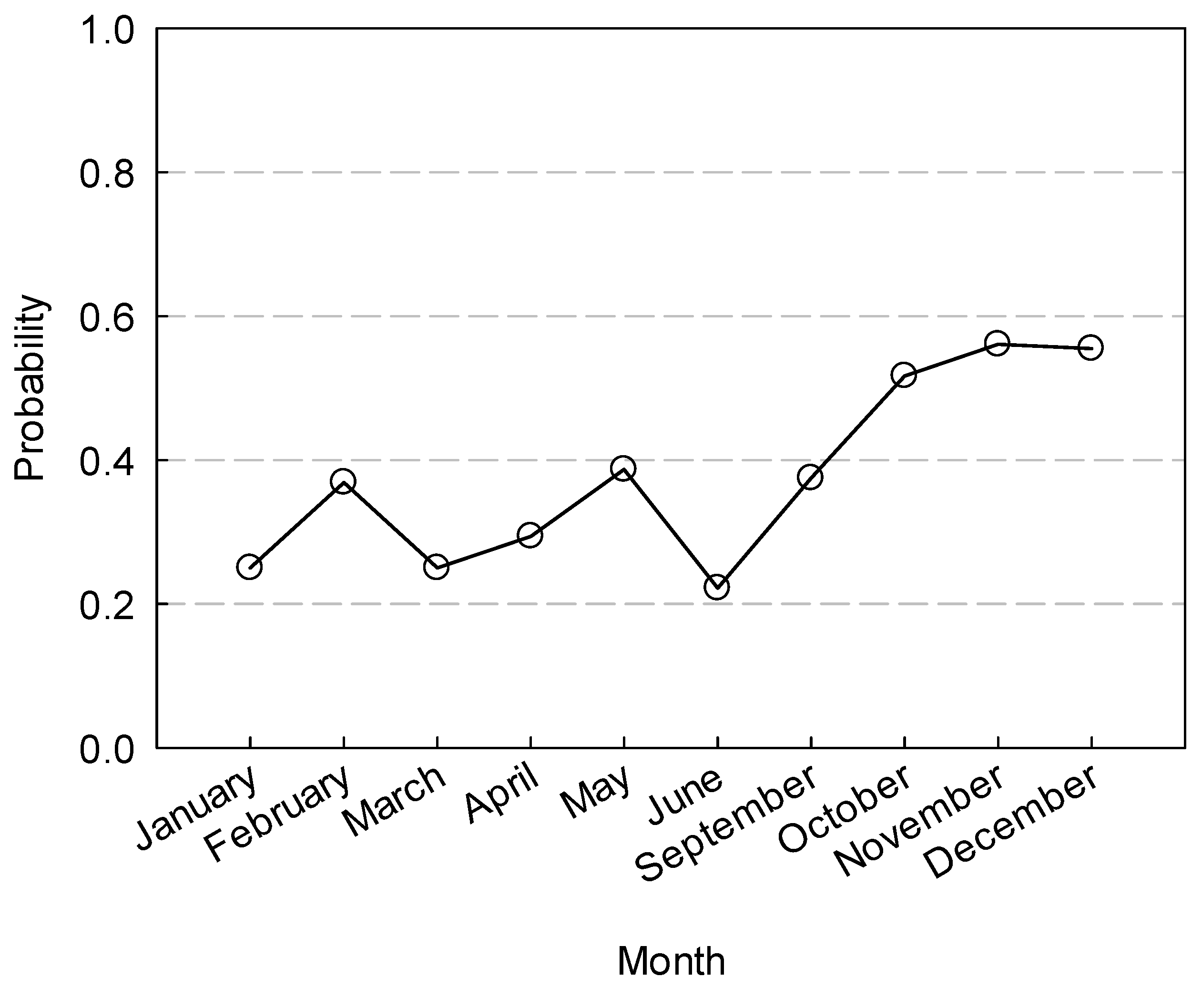
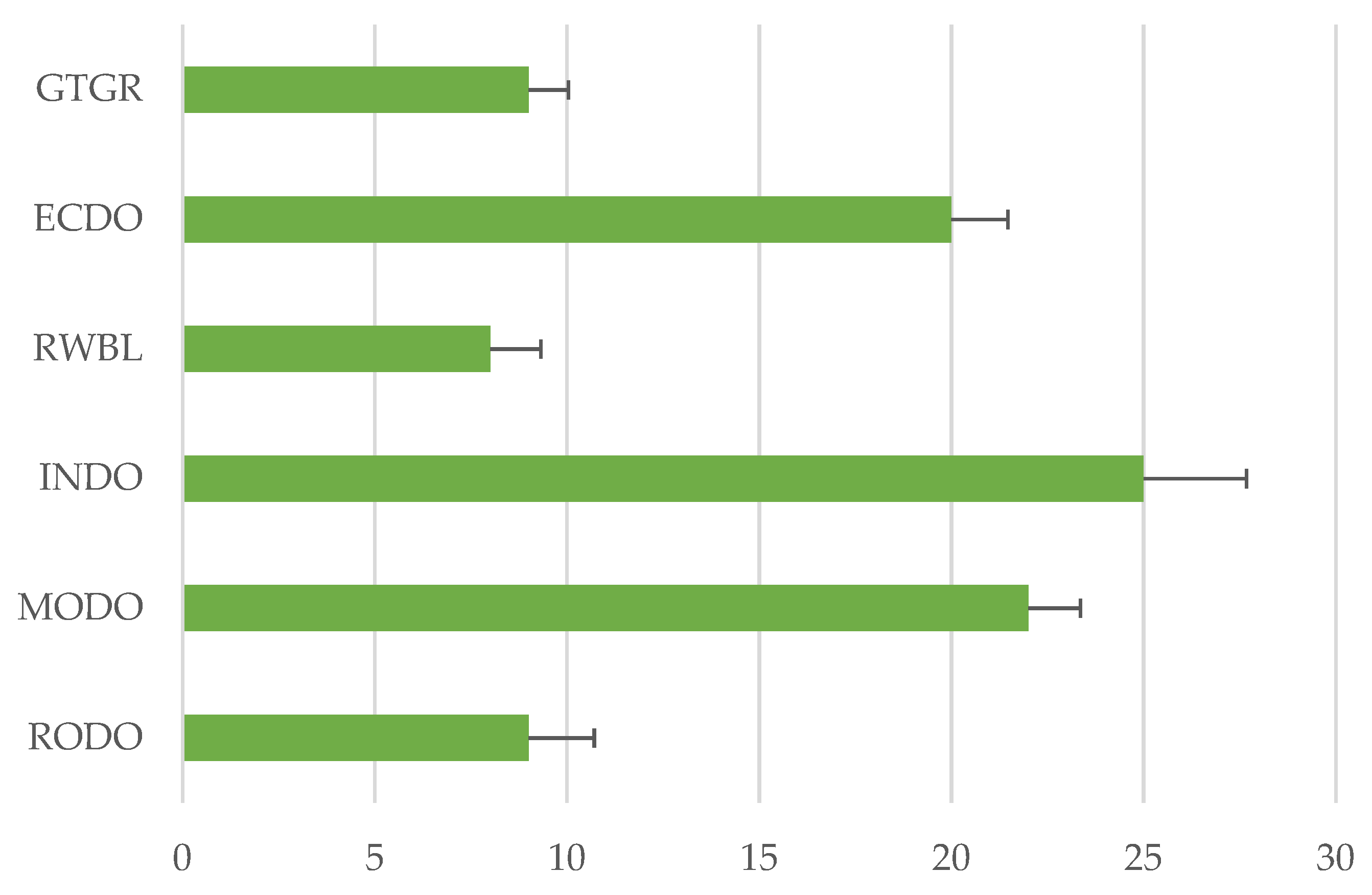
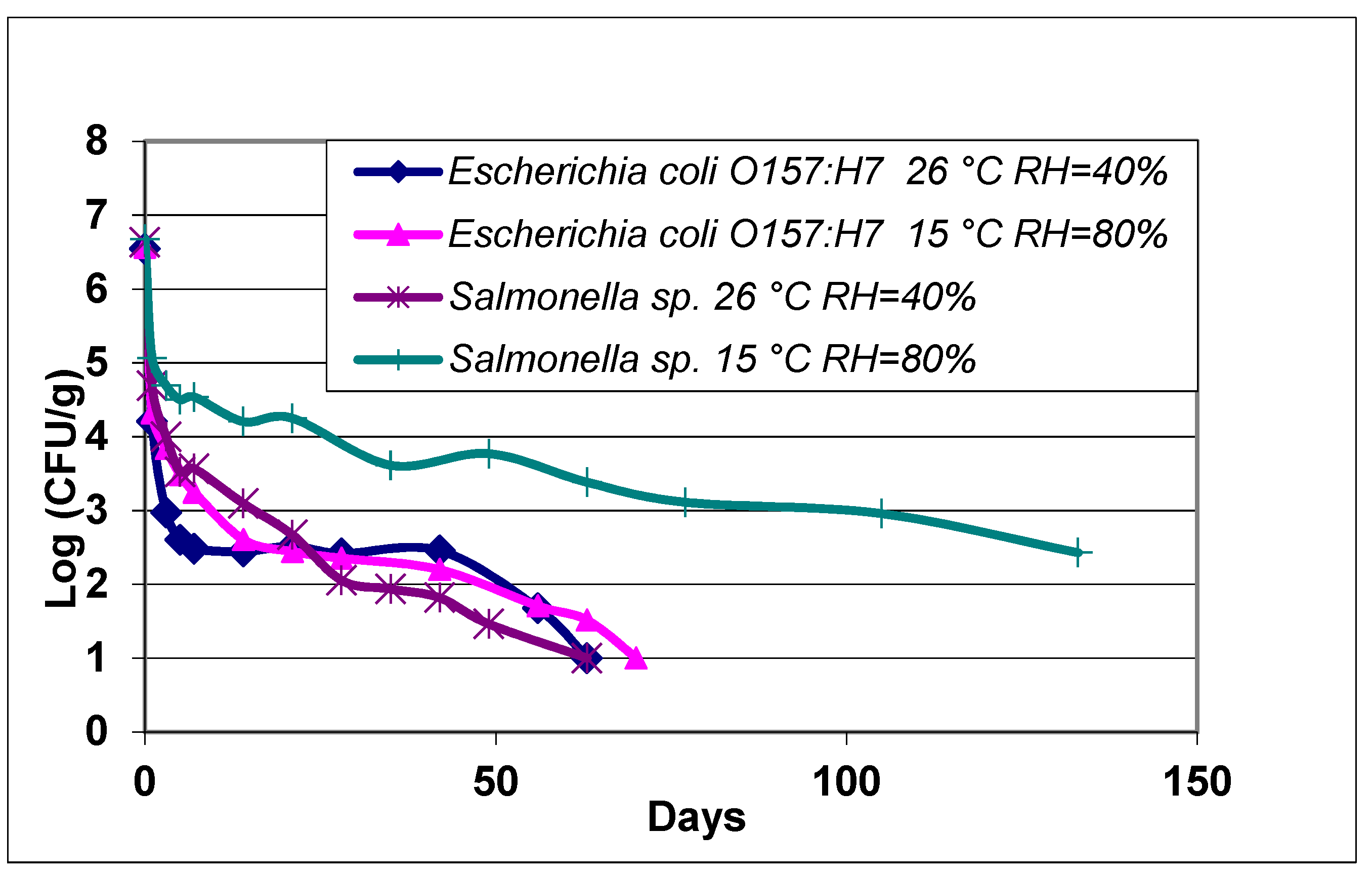
In the US Southwest, it is common to observe birds in leafy green fields, though the risk they contribute to foodborne outbreaks remains unclear. In this study, we investigated and recorded the relationship between birds near leafy green fields and the risk for contaminated irrigation water or leafy green plants. We monitored the presence of birds for over two years and performed cloacal swab analysis for non-pathogenic Escherichia coli, E. coli O157:H7 and Salmonellaenterica, while also monitoring the incidence of other microbial indicators. We also assessed the risks from bird feces by performing observations in a commercial field reported with Salmonella positive samples and by analyzing the survival of foodborne pathogens in bird feces. Our results showed that most of the birds near the crop fields were resident small birds. We did not observe a correlation between the number of birds in sites and the incidence of indicator bacteria (e.g., coliforms, E. coli) in irrigation canal water, with the exception of one out of four sites where water flow was low or stagnant. Using walk-in-traps, 305 birds were captured and placed in short-term captivity to determine the presence of various bacteria. None of the birds tested positive for E. coli O157:H7 or Salmonella. However, nearly 40% of the birds captured were confirmed positive for non-pathogenic E. coli. We found no correlation between age (young, adult, unknown), gender (male, female, unknown) and the incidence of E. coli positive birds, but we observed significantly higher probability of incidence during October–December. The role of relative humidity and temperature on bacterial survival appeared to play a key role in the survival of Salmonella on the leaves of spinach plants in a commercial field. This was also confirmed in laboratory conditions where Salmonella inoculated in bird feces and exposed to 15 °C and 80% RH(Relative humidity) survived beyond 133 days, while at 26 °C and 40% RH, the organism was undetectable after 63 days. Our results suggest that local birds associated with leafy green fields likely pose a minimal impact of risk for food contamination, but also points out the need for increased analysis specifically for E. coli O157:H7. Furthermore, our study suggests the need for expanding research that addresses risks associated with large migratory birds, especially in areas where stagnated water sources would be used for overhead sprinkle irrigation.
Keywords: coliforms; E. coli; irrigation water; migratory birds; Salmonella sp. coliforms; E. coli; irrigation water; migratory birds; Salmonella sp.