Article

Paid Sick Leave and Risks of All-Cause and Cause-Specific Mortality among Adult Workers in the USA


1
Department of Health Sciences, Northeastern University, 360 Huntington Avenue, Robinson Hall, Suite 312C, Boston, MA 02115, USA
2
Department of Social and Behavioral Sciences, EHESP School of Public Health, Sorbonne Paris Cité, Paris Descartes University, 75006 Paris, France
Int. J. Environ. Res. Public Health 2017, 14(10), 1247; https://doi.org/10.3390/ijerph14101247

Submission received: 10 September 2017 / Revised: 6 October 2017 / Accepted: 13 October 2017 / Published: 19 October 2017
(This article belongs to the Special Issue Social Determinants of Health Inequities and Prevention)

Abstract

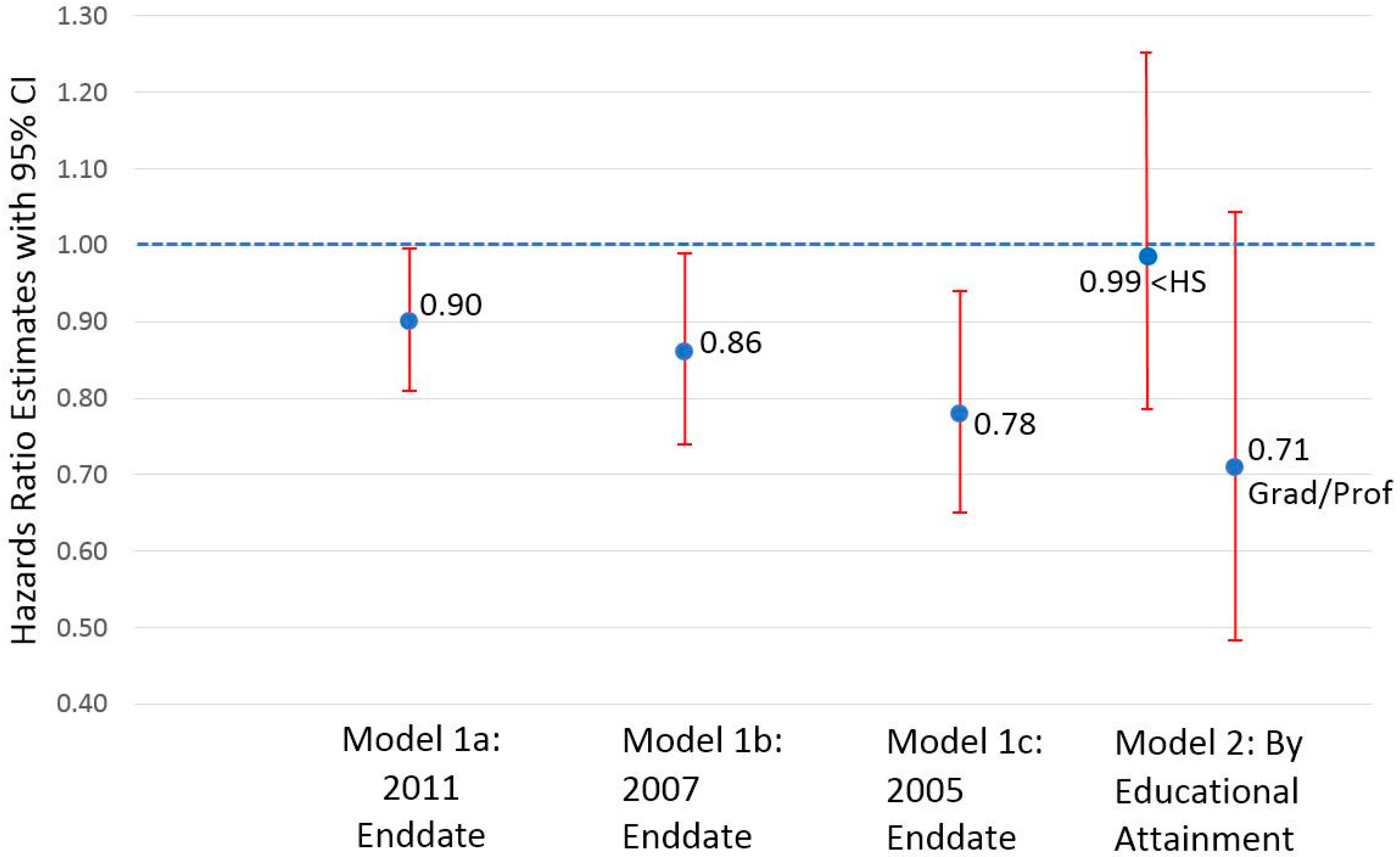
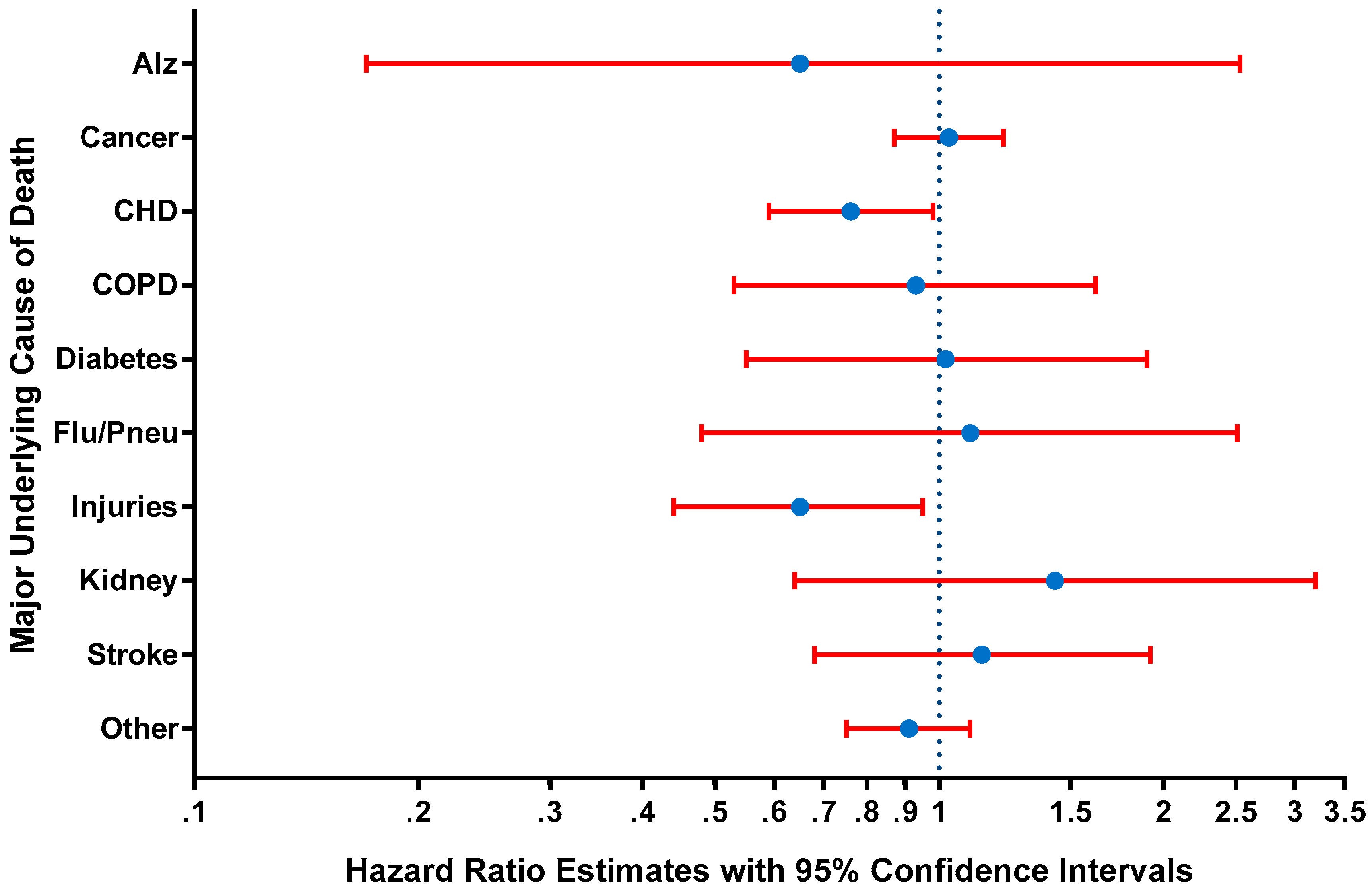
Background: The USA is one of only a few advanced economies globally that does not guarantee its workers paid sick leave. While there are plausible reasons why paid sick leave may be linked to mortality, little is known empirically about this association. Methods: In a pooled USA nationally-representative longitudinal sample of 57,323 working adults aged 18–85 years from the National Health Interview Surveys 2000–2002, paid sick leave was examined as a predictor of all-cause and cause-specific mortality. Multivariate Cox proportional hazards models were used to estimate the impact of paid sick leave on mortality. Results: Having paid sick leave through one’s job was associated with 10% (hazards ratio, HR = 0.90; 95% CI = 0.81–0.996; p = 0.04), 14% (HR = 0.86; 95% CI = 0.74–0.99; p = 0.04), and 22% (HR = 0.78; 95% CI = 0.65–0.94; p = 0.01) significantly lower hazards of all-cause mortality after mean follow-up times of 11.1, 6.5, and 4.5 years, respectively. This study further identified associations of paid sick leave with 24% (HR = 0.76; 95% CI = 0.59–0.98; p = 0.03), and 35% (HR = 0.65; 95% CI = 0.44–0.95; p = 0.03) lower hazards of dying from heart diseases and unintentional injuries, respectively. Conclusions: To the author’s knowledge, this study provides the first empirical evidence on the linkages between paid sick leave and mortality and supports protective effects, particularly against heart diseases and unintentional injuries. The most salient association corresponded to a lag period of just less than five years. Social policies that mandate paid sick leave may help to reduce health inequities and alleviate the population burden of mortality among working adults in the USA.
Keywords: paid leave; social determinants; social factors influencing health; health inequity paid leave; social determinants; social factors influencing health; health inequity