
Manzamine-A: Unraveling the Chemical and Biological Tapestry of a Marine-Derived Drug Lead

Abstract
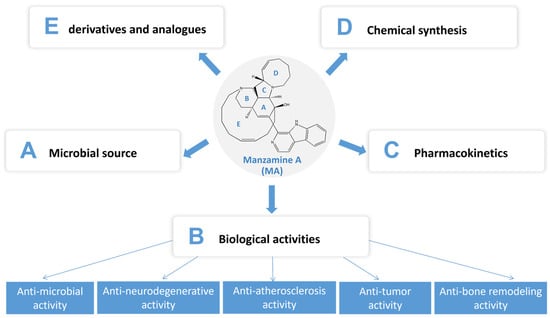
1. Introduction
2. Section Snippets
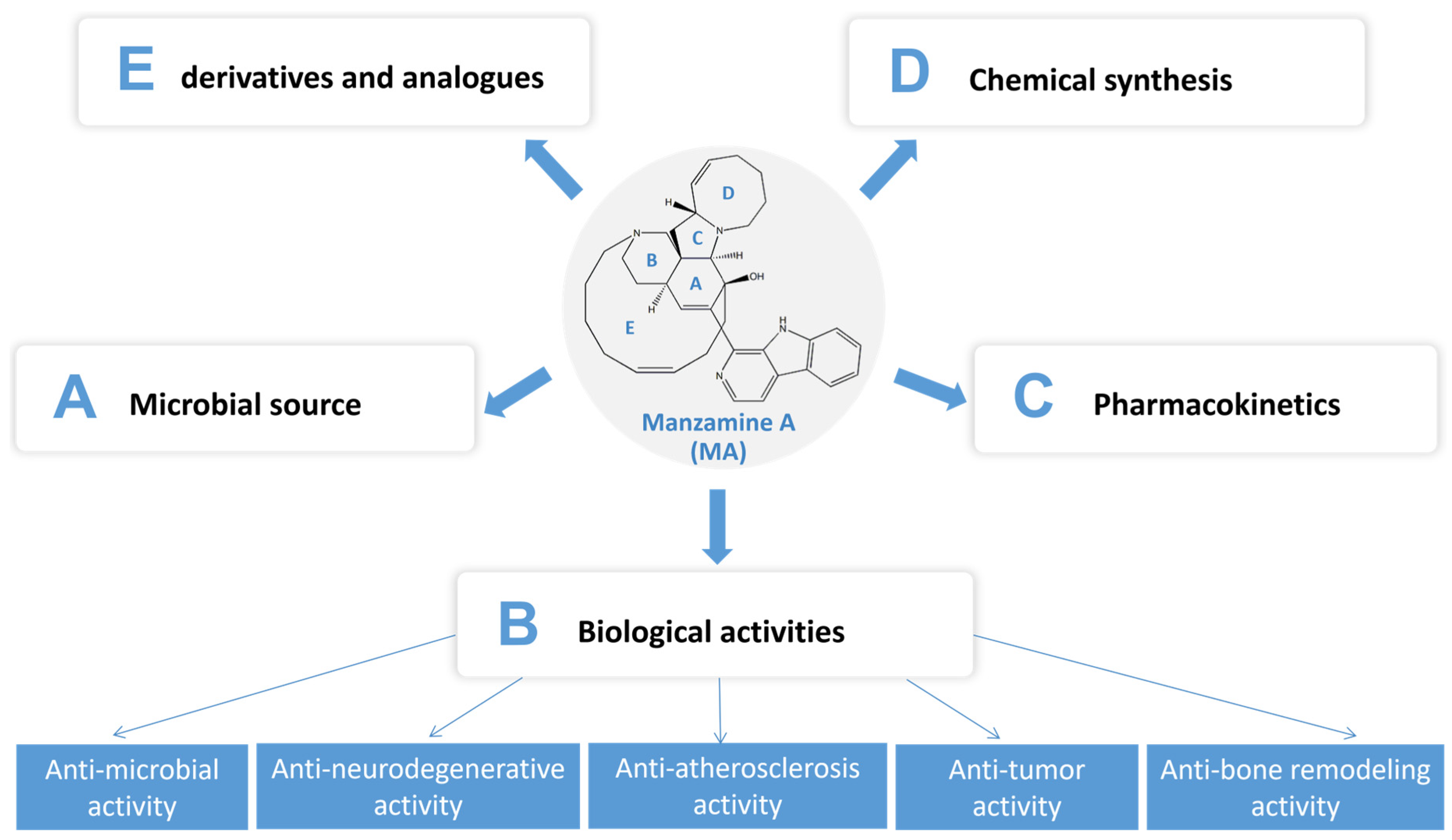
2.1. Microbial Source
2.2. Biological Activities
2.2.1. Anti-Microbial Activity
2.2.2. Anti-Neurodegenerative Activity
2.2.3. Anti-Atherosclerosis Activity
2.2.4. Anti-Tumor Activity
2.2.5. Anti-Bone Remodeling Activity
2.3. Pharmacokinetics
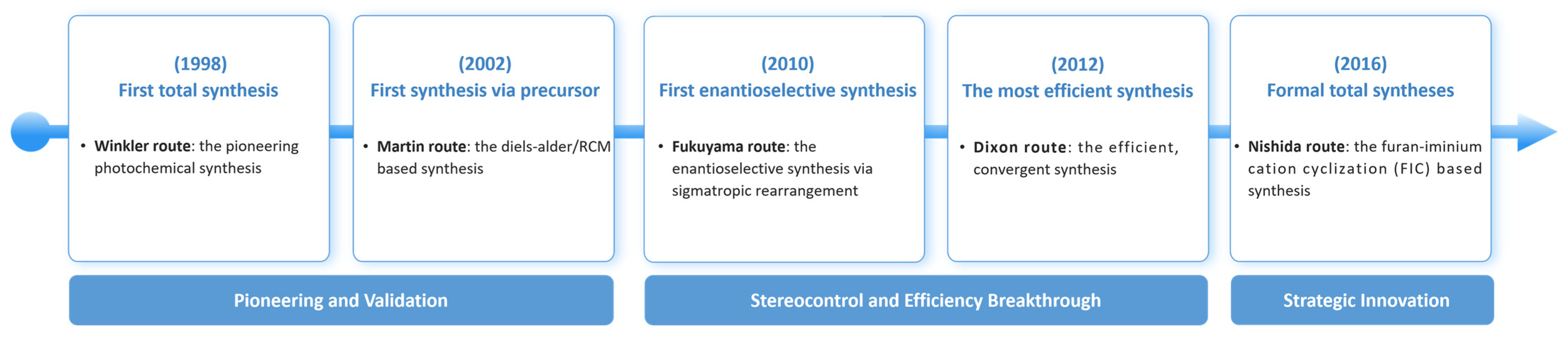
2.4. Chemical Synthesis
2.4.1. Early Explorations and Retrosynthetic Analysis (1990s)
2.4.2. Pioneering Total Syntheses
First Total Syntheses: A Photochemical Synthesis (Winkler Route, 1998)
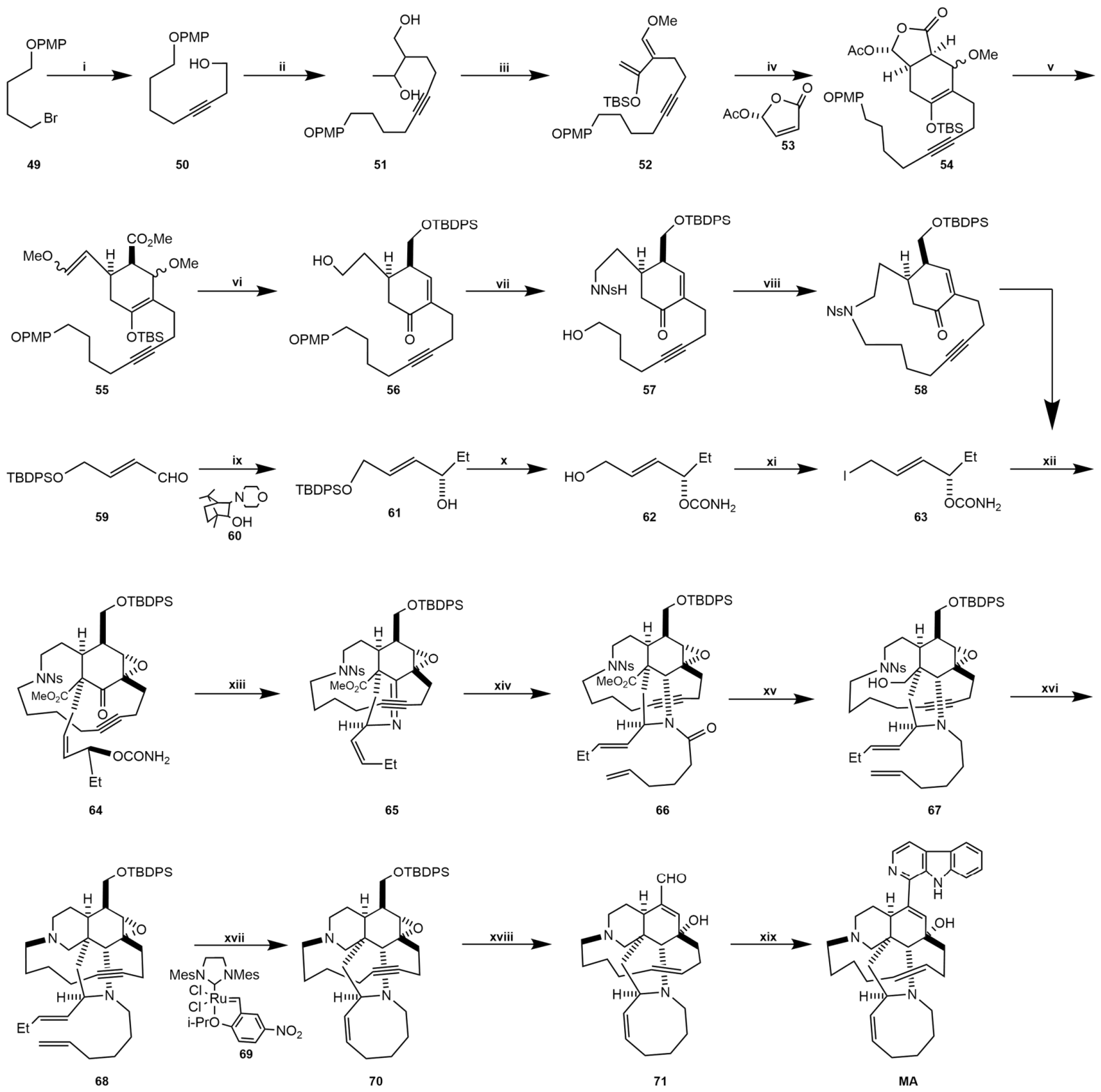
First Synthesis via Precursor Ircinal a: The Diels–Alder/RCM-Based Synthesis (Martin Route, 2002)
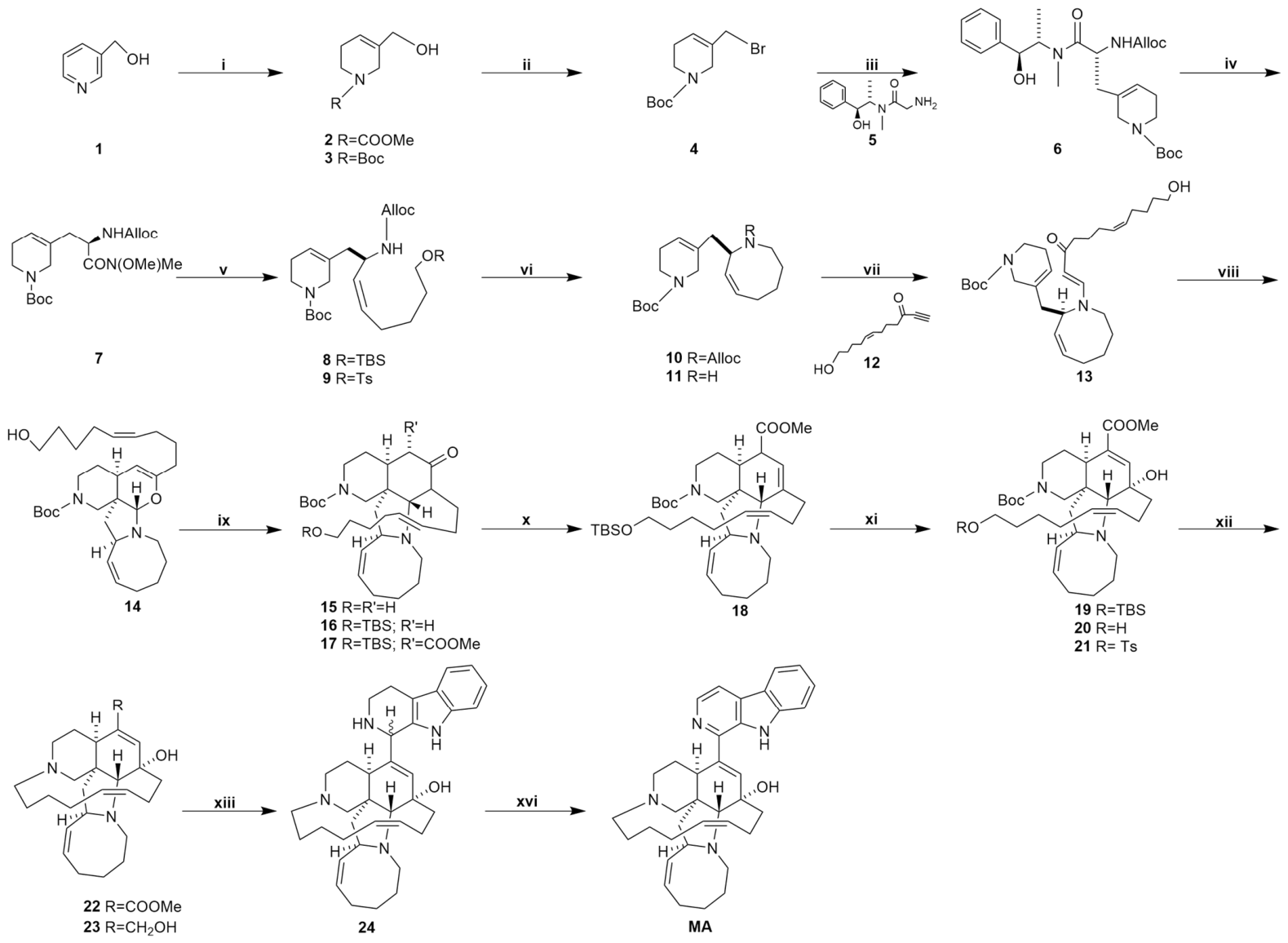
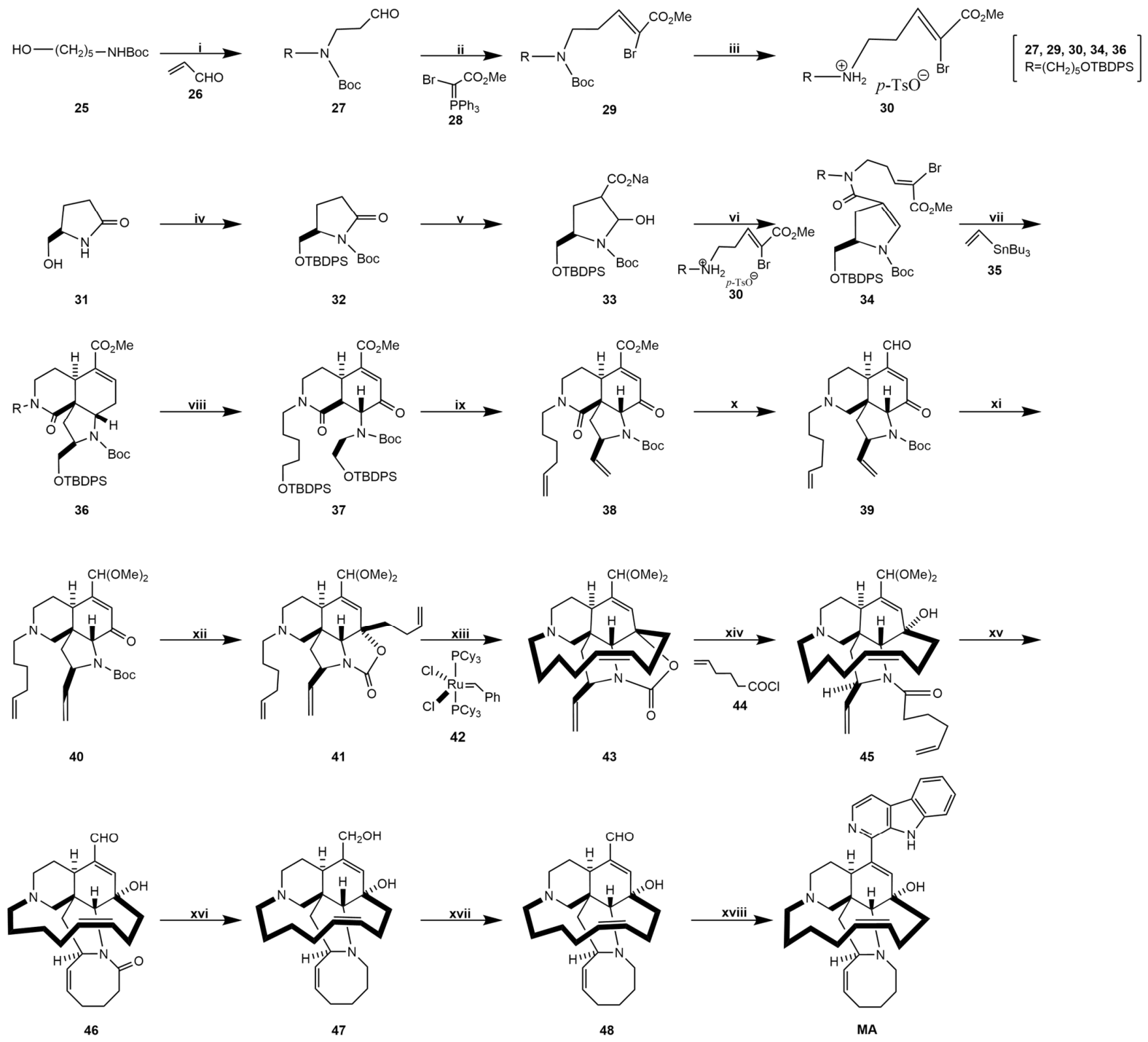
2.4.3. The Quest for Stereocontrol and Efficiency
First Enantioselective Total Synthesis via Sigmatropic Rearrangement (Fukuyama Route, 2010)
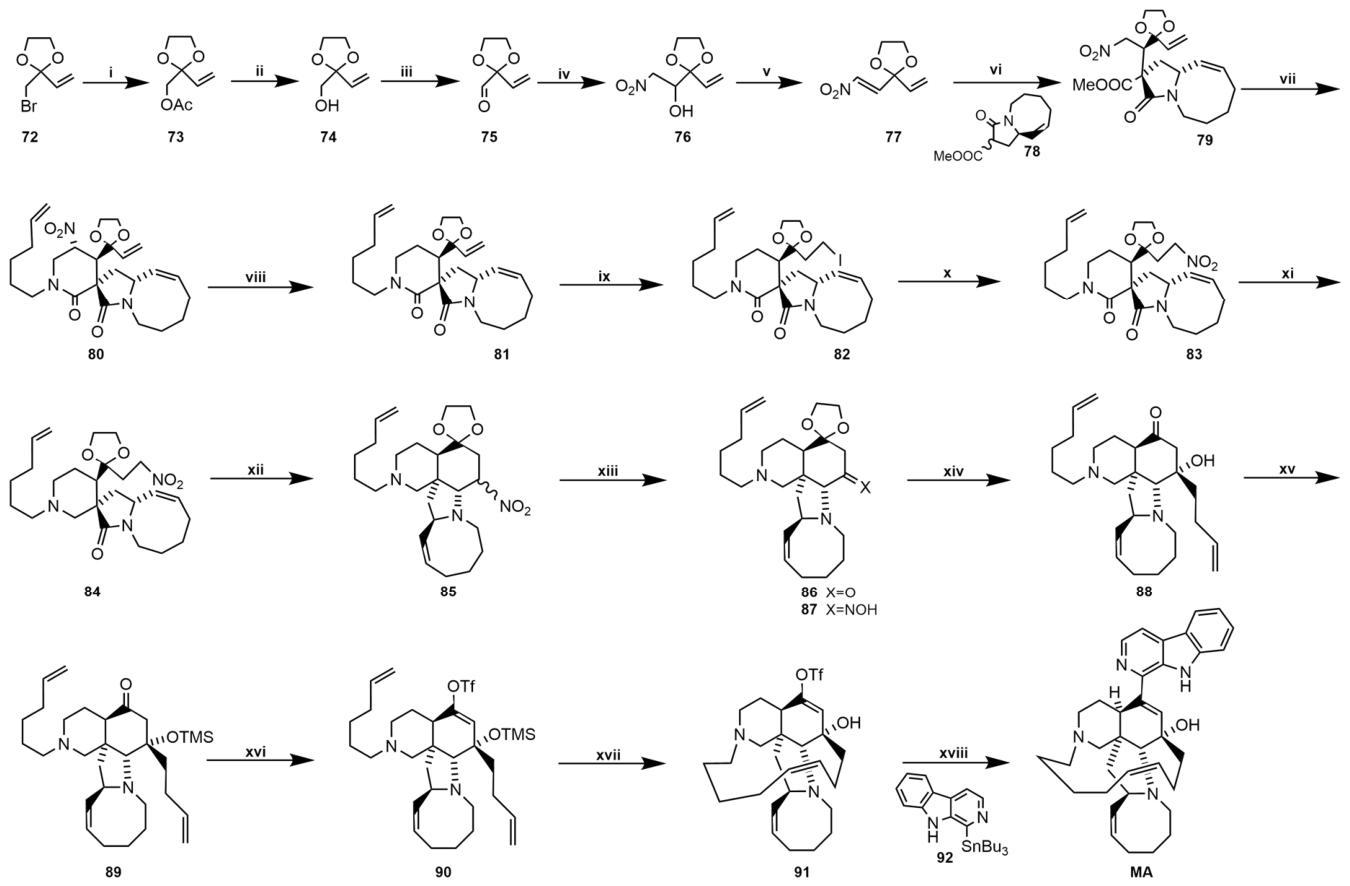
The Most Efficient Synthesis to Date (Dixon Route, 2012)
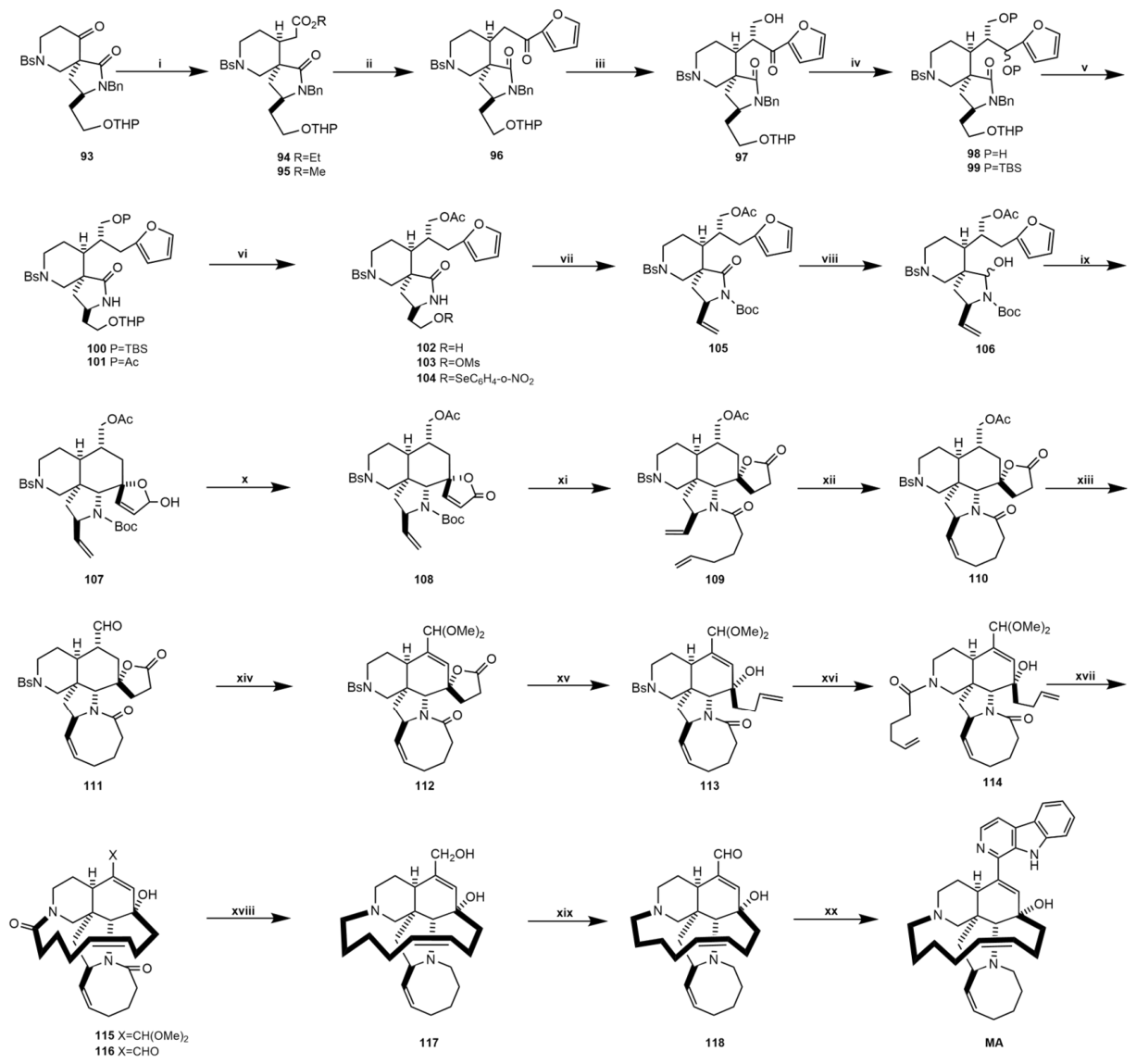
2.4.4. Formal Total Syntheses via Furan–Iminium Cation Cyclization (FIC) (Nishida Route, 2016)
2.5. Derivatives and Analogues
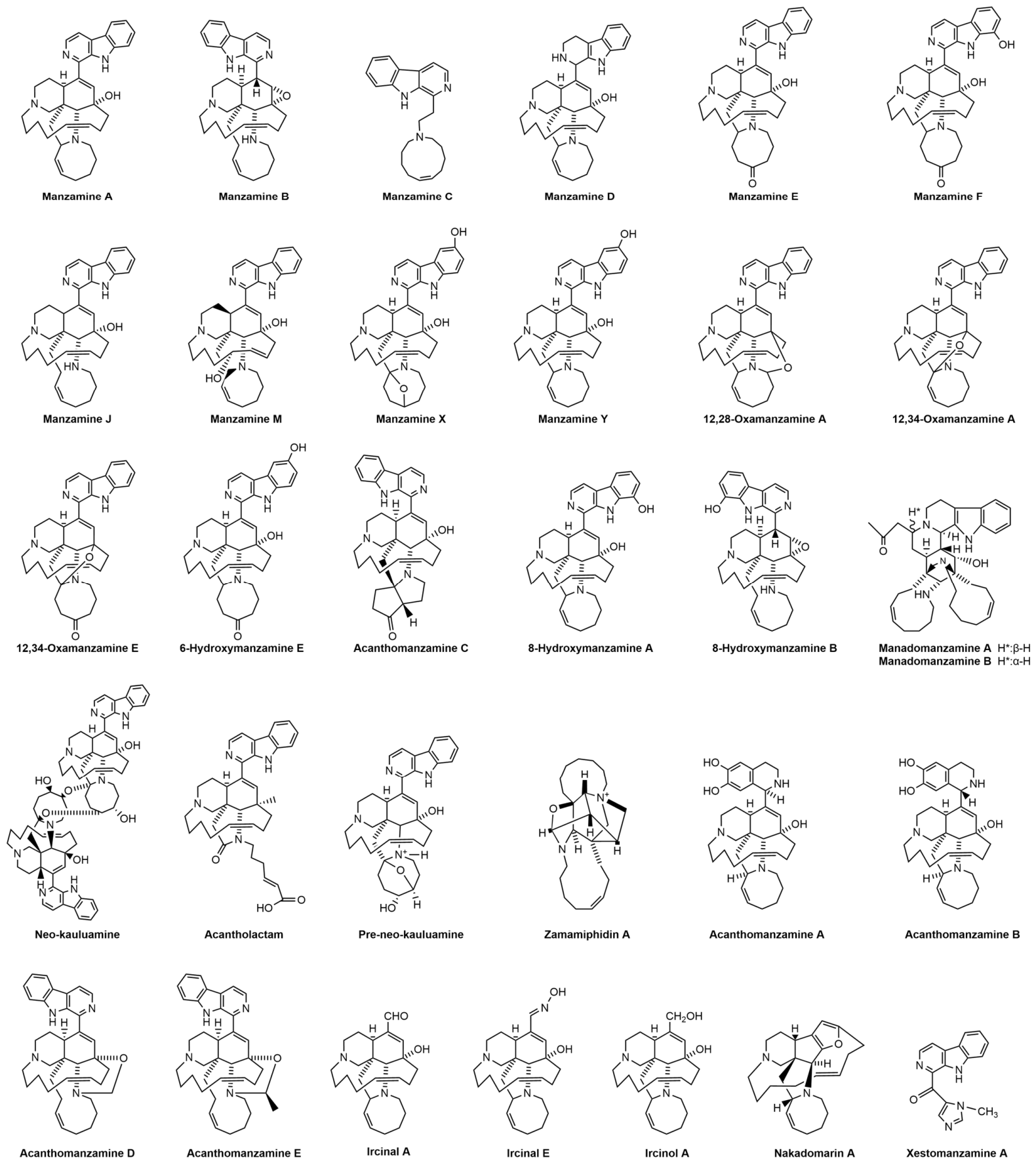
2.5.1. Natural Analogues

| Category | Types | Structural Characteristics | Representative Members | Primary Actions |
|---|---|---|---|---|
| Natural Analogues | Sponge-derived analogues [75,95] | These feature the core manzamine scaffold with variations such as hydroxylation, peroxidation, or ring rearrangement | Manzamine B, C, E, F, X, Y, Ircinals | They exhibit core antimalarial, anticancer, and antiviral activities, with potencies varying based on structural modifications. |
| Symbiont-derived analogues [57] | These share the β-carboline core | Manadomanzamines, 8-hydroxymanzamine A | They exhibit similar bioactivity profiles, showing antimicrobial, anti-inflammatory, and neuroprotective potentials and highlighting a broader ecological and therapeutic role. | |
| Semi-Synthetic Derivatives | Functional group modifications [23,60,74,84,95,97] | These often target the β-carboline core or the complex polycyclic ring system | 2-N-Methylmanzamine A, 8-Acetoxymanzamine A, 8,12-Diacetoxymanzamine A, 8-Methoxymanzamine A, 12,13-Dehydromanzamine A | They generally aim to retain or enhance the parent compound’s bioactivity profile (e.g., antiparasitic, anticancer), improve solubility (e.g., salts), metabolic stability, reduce toxicity or create prodrugs. |
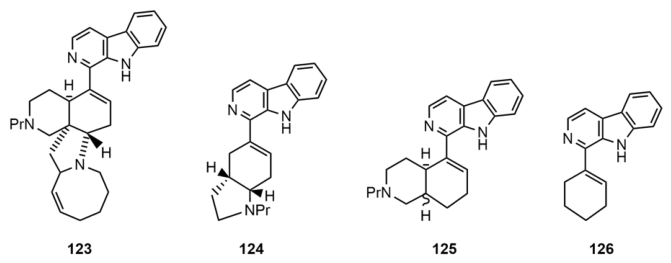
| Simplified Synthetic Analogues | β-Carboline-focused analogues [25] | These retain the β-carboline core but with simplified or replaced polycyclic ring systems | compound 125, compound 126 | They are designed for more feasible synthesis while mimicking MA’s key interactions. These analogues validate the β-carboline moiety as crucial for antimalarial and cytotoxic/anticancer activities, facilitating SAR studies and lead optimization. |
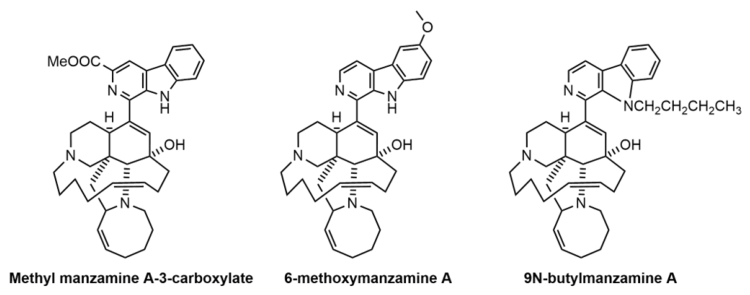
| Mechanism-Oriented Derivatives | Kinase inhibitor probes [25,77] | They are developed based on MA’s identified off-target kinase inhibition | 6-methoxymanzamine A, Methyl manzamine A-3-carboxylate, 9N-butylmanzamine A | They are tools for studying diseases like Alzheimer’s (GSK-3β, CDK5) and cancer (RSK1), representing a repurposing of the scaffold for targeted therapy. |
2.5.2. Semi-Synthetic Derivatives
2.5.3. Simplified Synthetic Analogues
2.5.4. Mechanism-Oriented Derivatives
3. Discussion
Author Contributions
Funding
Institutional Review Board Statement
Data Availability Statement
Conflicts of Interest
References
- Harvey, A.L.; Edrada-Ebel, R.; Quinn, R.J. The re-emergence of natural products for drug discovery in the genomics era. Nat. Rev. Drug Discov. 2015, 14, 111–129. [Google Scholar] [CrossRef]
- Vil, V.; Gloriozova, T.A.; Poroikov, V.V.; Terent’ev, A.O.; Savidov, N.; Dembitsky, V.M. Naturally occurring of α,β-diepoxy-containing compounds: Origin, structures, and biological activities. Appl. Microbiol. Biotechnol. 2019, 103, 3249–3264. [Google Scholar] [CrossRef]
- Yousefzadeh, M.J.; Zhu, Y.; McGowan, S.J.; Angelini, L.; Fuhrmann-Stroissnigg, H.; Xu, M.; Ling, Y.Y.; Melos, K.I.; Pirtskhalava, T.; Inman, C.L.; et al. Fisetin is a senotherapeutic that extends health and lifespan. eBioMedicine 2018, 36, 18–28. [Google Scholar] [CrossRef]
- Liu, J.; Flegel, J.; Otte, F.; Pahl, A.; Sievers, S.; Strohmann, C.; Waldmann, H. Combination of Pseudo-Natural Product Design and Formal Natural Product Ring Distortion Yields Stereochemically and Biologically Diverse Pseudo-Sesquiterpenoid Alkaloids. Angew. Chem. Int. Ed. Engl. 2021, 60, 21384–21395. [Google Scholar] [CrossRef]
- Otero, P.; Carpena, M.; Garcia-Oliveira, P.; Echave, J.; Soria-Lopez, A.; Garcia-Perez, P.; Fraga-Corral, M.; Cao, H.; Nie, S.; Xiao, J.; et al. Seaweed polysaccharides: Emerging extraction technologies, chemical modifications and bioactive properties. Crit. Rev. Food Sci. Nutr. 2023, 63, 1901–1929. [Google Scholar] [CrossRef] [PubMed]
- Nielsen, A.J.; McNulty, J. Polyphenolic natural products and natural product-inspired steroidal mimics as aromatase inhibitors. Med. Res. Rev. 2019, 39, 1274–1293. [Google Scholar] [CrossRef]
- White, N.J.; Pukrittayakamee, S.; Hien, T.T.; Faiz, M.A.; Mokuolu, O.A.; Dondorp, A.M. Malaria. Lancet 2014, 383, 723–735. [Google Scholar] [CrossRef]
- Efferth, T.; Oesch, F. The immunosuppressive activity of artemisinin-type drugs towards inflammatory and autoimmune diseases. Med. Res. Rev. 2021, 41, 3023–3061. [Google Scholar] [CrossRef] [PubMed]
- Patil, P.; Thakur, A.; Sharma, A.; Flora, S.J.S. Natural products and their derivatives as multifunctional ligands against Alzheimer’s disease. Drug Dev. Res. 2020, 81, 165–183. [Google Scholar] [CrossRef] [PubMed]
- Ishikawa, H.; Colby, D.A.; Seto, S.; Va, P.; Tam, A.; Kakei, H.; Rayl, T.J.; Hwang, I.; Boger, D.L. Total synthesis of vinblastine, vincristine, related natural products, and key structural analogues. J. Am. Chem. Soc. 2009, 131, 4904–4916. [Google Scholar] [CrossRef]
- Coombe-Tennant, T.; Zhu, X.; Wu, S.; Loake, G.J. Recent advances in paclitaxel biosynthesis and regulation. J. Exp. Bot. 2025, 76, 124–133. [Google Scholar] [CrossRef]
- Newman, D.J.; Cragg, G.M. Natural Products as Sources of New Drugs from 1981 to 2014. J. Nat. Prod. 2016, 79, 629–661. [Google Scholar] [CrossRef]
- Atanasov, A.G.; Zotchev, S.B.; Dirsch, V.M.; Supuran, C.T. Natural products in drug discovery: Advances and opportunities. Nat. Rev. Drug Discov. 2021, 20, 200–216. [Google Scholar] [CrossRef]
- Cragg, G.M.; Pezzuto, J.M. Natural Products as a Vital Source for the Discovery of Cancer Chemotherapeutic and Chemopreventive Agents. Med. Princ. Pract. 2016, 25, 41–59. [Google Scholar] [CrossRef] [PubMed]
- Walsh, C. Where will new antibiotics come from? Nat. Rev. Microbiol. 2003, 1, 65–70. [Google Scholar] [CrossRef]
- Mann, J. Natural products as immunosuppressive agents. Nat. Prod. Rep. 2001, 18, 417–430. [Google Scholar] [CrossRef]
- Costello, M.J.; Chaudhary, C. Marine Biodiversity, Biogeography, Deep-Sea Gradients, and Conservation. Curr. Biol. 2017, 27, R511–R527. [Google Scholar] [CrossRef]
- Mayer, A.M.; Glaser, K.B.; Cuevas, C.; Jacobs, R.S.; Kem, W.; Little, R.D.; McIntosh, J.M.; Newman, D.J.; Potts, B.C.; Shuster, D.E. The odyssey of marine pharmaceuticals: A current pipeline perspective. Trends Pharmacol. Sci. 2010, 31, 255–265. [Google Scholar] [CrossRef] [PubMed]
- Montaser, R.; Luesch, H. Marine natural products: A new wave of drugs? Future Med. Chem. 2011, 3, 1475–1489. [Google Scholar] [CrossRef] [PubMed]
- Navarro-Muñoz, J.C.; Selem-Mojica, N.; Mullowney, M.W.; Kautsar, S.A.; Tryon, J.H.; Parkinson, E.I.; De Los Santos, E.L.C.; Yeong, M.; Cruz-Morales, P.; Abubucker, S.; et al. A computational framework to explore large-scale biosynthetic diversity. Nat. Chem. Biol. 2020, 16, 60–68. [Google Scholar] [CrossRef]
- Skropeta, D.; Wei, L. Recent advances in deep-sea natural products. Nat. Prod. Rep. 2014, 31, 999–1025. [Google Scholar] [CrossRef] [PubMed]
- Kubota, T.; Kurimoto, S.I.; Kobayashi, J. The manzamine alkaloids. Alkaloids Chem. Biol. 2020, 84, 1–124. [Google Scholar]
- Ang, K.K.; Holmes, M.J.; Higa, T.; Hamann, M.T.; Kara, U.A. In vivo antimalarial activity of the beta-carboline alkaloid manzamine A. Antimicrob. Agents Chemother. 2000, 44, 1645–1649. [Google Scholar] [CrossRef]
- Yousaf, M.; Hammond, N.L.; Peng, J.; Wahyuono, S.; McIntosh, K.A.; Charman, W.N.; Mayer, A.M.; Hamann, M.T. New manzamine alkaloids from an Indo-Pacific sponge. Pharmacokinetics, oral availability, and the significant activity of several manzamines against HIV-I, AIDS opportunistic infections, and inflammatory diseases. J. Med. Chem. 2004, 47, 3512–3517. [Google Scholar] [CrossRef]
- Peng, J.; Kudrimoti, S.; Prasanna, S.; Odde, S.; Doerksen, R.J.; Pennaka, H.K.; Choo, Y.M.; Rao, K.V.; Tekwani, B.L.; Madgula, V.; et al. Structure-activity relationship and mechanism of action studies of manzamine analogues for the control of neuroinflammation and cerebral infections. J. Med. Chem. 2010, 53, 61–76. [Google Scholar] [CrossRef] [PubMed]
- Eguchi, K.; Fujiwara, Y.; Hayashida, A.; Horlad, H.; Kato, H.; Rotinsulu, H.; Losung, F.; Mangindaan, R.E.; de Voogd, N.J.; Takeya, M.; et al. Manzamine A, a marine-derived alkaloid, inhibits accumulation of cholesterol ester in macrophages and suppresses hyperlipidemia and atherosclerosis in vivo. Bioorg. Med. Chem. 2013, 21, 3831–3838. [Google Scholar] [CrossRef]
- Lin, L.C.; Kuo, T.T.; Chang, H.Y.; Liu, W.S.; Hsia, S.M.; Huang, T.C. Manzamine A Exerts Anticancer Activity against Human Colorectal Cancer Cells. Mar. Drugs 2018, 16, 252. [Google Scholar] [CrossRef]
- Kallifatidis, G.; Hoepfner, D.; Jaeg, T.; Guzmán, E.A.; Wright, A.E. The marine natural product manzamine A targets vacuolar ATPases and inhibits autophagy in pancreatic cancer cells. Mar. Drugs 2013, 11, 3500–3516. [Google Scholar] [CrossRef]
- Karan, D.; Dubey, S.; Pirisi, L.; Nagel, A.; Pina, I.; Choo, Y.M.; Hamann, M.T. The Marine Natural Product Manzamine A Inhibits Cervical Cancer by Targeting the SIX1 Protein. J. Nat. Prod. 2020, 83, 286–295. [Google Scholar] [CrossRef] [PubMed]
- Wang, X.; Liu, Y.; Qin, H.; Qi, G.; Chen, X.; Lyu, Y.; Han, Y. RIP1 Mediates Manzamine-A-Induced Secretory Autophagy in Breast Cancer. Mar. Drugs 2023, 21, 151. [Google Scholar] [CrossRef] [PubMed]
- Hardy, S.; Choo, Y.M.; Hamann, M.; Cray, J. Manzamine-A Alters In Vitro Calvarial Osteoblast Function. Mar. Drugs 2022, 20, 647. [Google Scholar] [CrossRef]
- Maykovich, T.; Hardy, S.; Hamann, M.T.; Cray, J. Manzamine-A Alters In Vitro Calvarial Osteoclast Function. J. Nat. Prod. 2024, 87, 560–566. [Google Scholar] [CrossRef] [PubMed]
- El-Demerdash, A.; Tammam, M.A.; Atanasov, A.G.; Hooper, J.N.A.; Al-Mourabit, A.; Kijjoa, A. Chemistry and Biological Activities of the Marine Sponges of the Genera Mycale (Arenochalina), Biemna and Clathria. Mar. Drugs 2018, 16, 214. [Google Scholar] [CrossRef] [PubMed]
- Srivastava, M.; Simakov, O.; Chapman, J.; Fahey, B.; Gauthier, M.E.; Mitros, T.; Richards, G.S.; Conaco, C.; Dacre, M.; Hellsten, U.; et al. The Amphimedon queenslandica genome and the evolution of animal complexity. Nature 2010, 466, 720–726. [Google Scholar] [CrossRef]
- Zocchi, E.; Carpaneto, A.; Cerrano, C.; Bavestrello, G.; Giovine, M.; Bruzzone, S.; Guida, L.; Franco, L.; Usai, C. The temperature-signaling cascade in sponges involves a heat-gated cation channel, abscisic acid, and cyclic ADP-ribose. Proc. Natl. Acad. Sci. USA 2001, 98, 14859–14864. [Google Scholar] [CrossRef]
- Busch, K.; Slaby, B.M.; Bach, W.; Boetius, A.; Clefsen, I.; Colaço, A.; Creemers, M.; Cristobo, J.; Federwisch, L.; Franke, A.; et al. Biodiversity, environmental drivers, and sustainability of the global deep-sea sponge microbiome. Nat. Commun. 2022, 13, 5160. [Google Scholar] [CrossRef]
- Wang, X.; Liu, A.G.; Chen, Z.; Wu, C.; Liu, Y.; Wan, B.; Pang, K.; Zhou, C.; Yuan, X.; Xiao, S. A late-Ediacaran crown-group sponge animal. Nature 2024, 630, 905–911. [Google Scholar] [CrossRef]
- Zhong, W.; Lin, Z.; Schmidt, E.W.; Agarwal, V. Discovery, biosynthesis, and bioactivities of peptidic natural products from marine sponges and sponge-associated bacteria. Nat. Prod. Rep. 2025, 42, 2034–2074. [Google Scholar] [CrossRef]
- Pawlik, J.R.; McMurray, S.E. The Emerging Ecological and Biogeochemical Importance of Sponges on Coral Reefs. Ann. Rev. Mar. Sci. 2020, 12, 315–337. [Google Scholar] [CrossRef] [PubMed]
- Ruperti, F.; Becher, I.; Stokkermans, A.; Wang, L.; Marschlich, N.; Potel, C.; Maus, E.; Stein, F.; Drotleff, B.; Schippers, K.J.; et al. Molecular profiling of sponge deflation reveals an ancient relaxant-inflammatory response. Curr. Biol. 2024, 34, 361–375.e9. [Google Scholar] [CrossRef]
- Asadzadeh, S.S.; Larsen, P.S.; Riisgård, H.U.; Walther, J.H. Hydrodynamics of the leucon sponge pump. J. R Soc. Interface 2019, 16, 20180630. [Google Scholar] [CrossRef] [PubMed]
- Leys, S.P.; Hill, A. The physiology and molecular biology of sponge tissues. Adv. Mar. Biol. 2012, 62, 1–56. [Google Scholar]
- Zhang, L.; Ali, A.; Su, J.; Huang, T.; Wang, Z. Ammonium nitrogen and phosphorus removal by bacterial-algal symbiotic dynamic sponge bioremediation system in micropolluted water: Operational mechanism and transformation pathways. Sci. Total Env. 2024, 947, 174636. [Google Scholar] [CrossRef]
- Kornder, N.A.; Esser, Y.; Stoupin, D.; Leys, S.P.; Mueller, B.; Vermeij, M.J.A.; Huisman, J.; de Goeij, J.M. Sponges sneeze mucus to shed particulate waste from their seawater inlet pores. Curr. Biol. 2022, 32, 3855–3861.e3. [Google Scholar] [CrossRef]
- Stabili, L.; Giangrande, A.; Arduini, D.; Borghese, J.; Petrocelli, A.; Alabiso, G.; Ricci, P.; Cavallo, R.A.; Acquaviva, M.I.; Narracci, M.; et al. Environmental quality improvement of a mariculture plant after its conversion into a multi-trophic system. Sci. Total Env. 2023, 884, 163846. [Google Scholar] [CrossRef]
- Mills, D.B.; Sperling, E.A. Marine sponges in the once and future ocean. Glob. Chang. Biol. 2022, 28, 1953–1955. [Google Scholar] [CrossRef]
- Devkar, H.U.; Thakur, N.L.; Kaur, P. Marine-derived antimicrobial molecules from the sponges and their associated bacteria. Can. J. Microbiol. 2023, 69, 1–16. [Google Scholar] [CrossRef] [PubMed]
- Nielsen, C. Hydrodynamics in early animal evolution. Biol. Rev. Camb. Philos. Soc. 2023, 98, 376–385. [Google Scholar] [CrossRef]
- Varamogianni-Mamatsi, D.; Anastasiou, T.I.; Vernadou, E.; Papandroulakis, N.; Kalogerakis, N.; Dailianis, T.; Mandalakis, M. A Multi-Species Investigation of Sponges’ Filtering Activity towards Marine Microalgae. Mar. Drugs 2021, 20, 24. [Google Scholar] [CrossRef] [PubMed]
- Graham, N.A.J.; Wilson, S.K.; Carr, P.; Hoey, A.S.; Jennings, S.; MacNeil, M.A. Seabirds enhance coral reef productivity and functioning in the absence of invasive rats. Nature 2018, 559, 250–253. [Google Scholar] [CrossRef]
- Brocks, J.J.; Jarrett, A.J.M.; Sirantoine, E.; Hallmann, C.; Hoshino, Y.; Liyanage, T. The rise of algae in Cryogenian oceans and the emergence of animals. Nature 2017, 548, 578–581. [Google Scholar] [CrossRef]
- Li, F.; Kelly, M.; Tasdemir, D. Chemistry, Chemotaxonomy and Biological Activity of the Latrunculid Sponges (Order Poecilosclerida, Family Latrunculiidae). Mar. Drugs 2021, 19, 27. [Google Scholar] [CrossRef]
- Marcella, S.; Afoullouss, S.; Thomas, O.P.; Allcock, A.L.; Murphy, P.V.; Loffredo, S. Immunomodulatory properties of characellide A on human peripheral blood mononuclear cells. Inflammopharmacology 2021, 29, 1201–1210. [Google Scholar] [CrossRef]
- Dharamshi, J.E.; Gaarslev, N.; Steffen, K.; Martin, T.; Sipkema, D.; Ettema, T.J.G. Genomic diversity and biosynthetic capabilities of sponge-associated chlamydiae. Isme J. 2022, 16, 2725–2740. [Google Scholar] [CrossRef]
- Martínez-Poveda, B.; Quesada, A.R.; Medina, M. Pleiotropic Role of Puupehenones in Biomedical Research. Mar. Drugs 2017, 15, 325. [Google Scholar] [CrossRef]
- Varamogianni-Mamatsi, D.; Nunes, M.J.; Marques, V.; Anastasiou, T.I.; Kagiampaki, E.; Vernadou, E.; Dailianis, T.; Kalogerakis, N.; Branco, L.C.; Rodrigues, C.M.P.; et al. Comparative Chemical Profiling and Antimicrobial/Anticancer Evaluation of Extracts from Farmed versus Wild Agelas oroides and Sarcotragus foetidus Sponges. Mar. Drugs 2023, 21, 612. [Google Scholar] [CrossRef] [PubMed]
- Waters, A.L.; Peraud, O.; Kasanah, N.; Sims, J.W.; Kothalawala, N.; Anderson, M.A.; Abbas, S.H.; Rao, K.V.; Jupally, V.R.; Kelly, M.; et al. An analysis of the sponge Acanthostrongylophora igens’ microbiome yields an actinomycete that produces the natural product manzamine A. Front Mar. Sci. 2014, 1, 54. [Google Scholar] [CrossRef] [PubMed]
- Sakai, R.; Higa, T.; Jefford, C.W.; Bernardinelli, G. Manzamine A, a novel antitumor alkaloid from a sponge. J. Am. Chem. Soc. 1986, 108, 6404–6405. [Google Scholar] [CrossRef]
- Ichiba, T.; Corgiat, J.M.; Scheuer, P.J.; Kelly-Borges, M. 8-Hydroxymanzamine A, a beta-carboline alkaloid from a sponge. Pachypellina sp. J. Nat. Prod. 1994, 57, 168–170. [Google Scholar] [CrossRef] [PubMed]
- Edrada, R.A.; Proksch, P.; Wray, V.; Witte, L.; Müller, W.E.; Van Soest, R.W. Four new bioactive manzamine-type alkaloids from the Philippine marine sponge Xestospongia ashmorica. J. Nat. Prod. 1996, 59, 1056–1060. [Google Scholar] [CrossRef]
- Watanabe, D.; Tsuda, M.; Kobayashi, J. Three new manzamine congeners from amphimedon sponge. J. Nat. Prod. 1998, 61, 689–692. [Google Scholar] [CrossRef]
- Wahba, A.E.; Peng, J.; Kudrimoti, S.; Tekwani, B.L.; Hamann, M.T. Structure-activity relationship studies of manzamine A: Amidation of positions 6 and 8 of the beta-carboline moiety. Bioorg. Med. Chem. 2009, 17, 7775–7782. [Google Scholar] [CrossRef] [PubMed]
- Ibrahim, M.A.; Shilabin, A.G.; Prasanna, S.; Jacob, M.; Khan, S.I.; Doerksen, R.J.; Hamann, M.T. 2-N-Methyl modifications and SAR studies of manzamine A. Bioorg. Med. Chem. 2008, 16, 6702–6706. [Google Scholar] [CrossRef] [PubMed]
- Ang, K.K.; Holmes, M.J.; Kara, U.A. Immune-mediated parasite clearance in mice infected with Plasmodium berghei following treatment with manzamine A. Parasitol. Res. 2001, 87, 715–721. [Google Scholar] [CrossRef]
- Samoylenko, V.; Khan, S.I.; Jacoba, M.R.; Tekwani, B.L.; Walker, L.A.; Hufford, C.D.; Muhammad, I. Bioactive (+)-manzamine A and (+)-8-hydroxymanzamine A tertiary bases and salts from Acanthostrongylophora ingens and their preparations. Nat. Prod. Commun. 2009, 4, 185–192. [Google Scholar] [CrossRef]
- Rao, K.V.; Santarsiero, B.D.; Mesecar, A.D.; Schinazi, R.F.; Tekwani, B.L.; Hamann, M.T. New manzamine alkaloids with activity against infectious and tropical parasitic diseases from an Indonesian sponge. J. Nat. Prod. 2003, 66, 823–828. [Google Scholar] [CrossRef]
- Winkler, J.D.; Londregan, A.T.; Hamann, M.T. Synthetic modification of manzamine A via Grubbs metathesis. Novel structures with enhanced antibacterial and antiprotozoal properties. Org. Lett. 2007, 9, 4467–4469. [Google Scholar] [CrossRef]
- Bajorath, J.; Peltason, L.; Wawer, M.; Guha, R.; Lajiness, M.S.; Van Drie, J.H. Navigating structure-activity landscapes. Drug Discov. Today 2009, 14, 698–705. [Google Scholar] [CrossRef]
- Simithy, J.; Fuanta, N.R.; Alturki, M.; Hobrath, J.V.; Wahba, A.E.; Pina, I.; Rath, J.; Hamann, M.T.; DeRuiter, J.; Goodwin, D.C.; et al. Slow-Binding Inhibition of Mycobacterium tuberculosis Shikimate Kinase by Manzamine Alkaloids. Biochemistry 2018, 57, 4923–4933. [Google Scholar] [CrossRef]
- Ashok, P.; Lathiya, H.; Murugesan, S. Manzamine alkaloids as antileishmanial agents: A review. Eur. J. Med. Chem. 2015, 97, 928–936. [Google Scholar] [CrossRef] [PubMed]
- Shilabin, A.G.; Kasanah, N.; Tekwani, B.L.; Hamann, M.T. Kinetic studies and bioactivity of potential manzamine prodrugs. J. Nat. Prod. 2008, 71, 1218–1221. [Google Scholar] [CrossRef] [PubMed]
- Indraningrat, A.A.; Smidt, H.; Sipkema, D. Bioprospecting Sponge-Associated Microbes for Antimicrobial Compounds. Mar. Drugs 2016, 14, 87. [Google Scholar] [CrossRef]
- Palem, J.R.; Mudit, M.; Hsia, S.V.; Sayed, K.A.E. Discovery and preliminary structure-activity relationship of the marine natural product manzamines as herpes simplex virus type-1 inhibitors. Z. Naturforsch C J. Biosci. 2017, 72, 49–54. [Google Scholar] [CrossRef]
- Palem, J.R.; Bedadala, G.R.; El Sayed, K.A.; Hsia, S.C. Manzamine A as a novel inhibitor of herpes simplex virus type-1 replication in cultured corneal cells. Planta Med. 2011, 77, 46–51. [Google Scholar] [CrossRef]
- Rao, K.V.; Donia, M.S.; Peng, J.; Garcia-Palomero, E.; Alonso, D.; Martinez, A.; Medina, M.; Franzblau, S.G.; Tekwani, B.L.; Khan, S.I.; et al. Manzamine B and E and ircinal A related alkaloids from an Indonesian Acanthostrongylophora sponge and their activity against infectious, tropical parasitic, and Alzheimer’s diseases. J. Nat. Prod. 2006, 69, 1034–1040. [Google Scholar] [CrossRef]
- Mayer, A.M.; Hall, M.L.; Lynch, S.M.; Gunasekera, S.P.; Sennett, S.H.; Pomponi, S.A. Differential modulation of microglia superoxide anion and thromboxane B2 generation by the marine manzamines. BMC Pharmacol. 2005, 5, 6. [Google Scholar] [CrossRef] [PubMed]
- Hamann, M.; Alonso, D.; Martín-Aparicio, E.; Fuertes, A.; Pérez-Puerto, M.J.; Castro, A.; Morales, S.; Navarro, M.L.; Del Monte-Millán, M.; Medina, M.; et al. Glycogen synthase kinase-3 (GSK-3) inhibitory activity and structure-activity relationship (SAR) studies of the manzamine alkaloids. Potential for Alzheimer’s disease. J. Nat. Prod. 2007, 70, 1397–1405. [Google Scholar] [CrossRef]
- Mishan, M.A.; Choo, Y.M.; Winkler, J.; Hamann, M.T.; Karan, D. Manzamine A: A promising marine-derived cancer therapeutic for multi-targeted interactions with E2F8, SIX1, AR, GSK-3β, and V-ATPase—A systematic review. Eur. J. Pharmacol. 2025, 990, 177295. [Google Scholar] [CrossRef] [PubMed]
- Guzmán, E.A.; Johnson, J.D.; Linley, P.A.; Gunasekera, S.E.; Wright, A.E. A novel activity from an old compound: Manzamine A reduces the metastatic potential of AsPC-1 pancreatic cancer cells and sensitizes them to TRAIL-induced apoptosis. Investig. New Drugs 2011, 29, 777–785. [Google Scholar] [CrossRef]
- Longley, R.E.; McConnell, O.J.; Essich, E.; Harmody, D. Evaluation of marine sponge metabolites for cytotoxicity and signal transduction activity. J. Nat. Prod. 1993, 56, 915–920. [Google Scholar] [CrossRef]
- Naqvi, M.; Abbasi, W.A.; Samma, M.K.; Gabol, A.A.; Innocent, C.; Iqbal, S.; Fatima, S.; Ali, K. Decoding LY6G6D in colorectal cancer: Unraveling biomarker potential and therapeutic insights. Cell Mol. Biol. 2024, 70, 14–20. [Google Scholar] [CrossRef]
- Islam, M.A.; Hossen, M.B.; Horaira, M.A.; Hossen, M.A.; Kibria, M.K.; Reza, M.S.; Tuly, K.F.; Faruqe, M.O.; Kabir, F.; Mahumud, R.A.; et al. Exploring Core Genes by Comparative Transcriptomics Analysis for Early Diagnosis, Prognosis, and Therapies of Colorectal Cancer. Cancers 2023, 15, 1369. [Google Scholar] [CrossRef] [PubMed]
- Horaira, M.A.; Islam, M.A.; Kibria, M.K.; Alam, M.J.; Kabir, S.R.; Mollah, M.N.H. Bioinformatics screening of colorectal-cancer causing molecular signatures through gene expression profiles to discover therapeutic targets and candidate agents. BMC Med. Genom. 2023, 16, 64. [Google Scholar] [CrossRef] [PubMed]
- Mayer, A.M.S.; Hall, M.L.; Lach, J.; Clifford, J.; Chandrasena, K.; Canton, C.; Kontoyianni, M.; Choo, Y.M.; Karan, D.; Hamann, M.T. RSK1 vs. RSK2 Inhibitory Activity of the Marine β-Carboline Alkaloid Manzamine A: A Biochemical, Cervical Cancer Protein Expression, and Computational Study. Mar. Drugs 2021, 19, 506. [Google Scholar] [CrossRef] [PubMed]
- Wang, X.; Qi, G.; Yang, K.; Ma, L.; Kang, Y.; Tang, X.; Han, Y. Rasal2 inhibits autophagic-exosomes secretion via regulating Rab27a in triple-negative breast cancer progression. J. Transl. Med. 2025, 23, 544. [Google Scholar] [CrossRef]
- Karan, D.; Dubey, S.; Gunewardena, S.; Iczkowski, K.A.; Singh, M.; Liu, P.; Poletti, A.; Choo, Y.M.; Chen, H.Z.; Hamann, M.T. Manzamine A reduces androgen receptor transcription and synthesis by blocking E2F8-DNA interactions and effectively inhibits prostate tumor growth in mice. Mol. Oncol. 2024, 18, 1966–1979. [Google Scholar] [CrossRef]
- Yadav, A.K.; Vashishta, V.; Joshi, N.; Taneja, P. AR-A 014418 Used against GSK3beta Downregulates Expression of hnRNPA1 and SF2/ASF Splicing Factors. J. Oncol. 2014, 2014, 695325. [Google Scholar] [CrossRef]
- Lin, L.C.; Chang, H.Y.; Kuo, T.T.; Chen, H.Y.; Liu, W.S.; Lo, Y.J.; Hsia, S.M.; Huang, T.C. Oxidative stress mediates the inhibitory effects of Manzamine A on uterine leiomyoma cell proliferation and extracellular matrix deposition via SOAT inhibition. Redox Biol. 2023, 66, 102861. [Google Scholar] [CrossRef]
- Winkler, J.D.; Axten, J.M. The First Total Syntheses of Ircinol A, Ircinal A, and Manzamines A and D. J. Am. Chem. Soc. 1998, 120, 6425–6426. [Google Scholar] [CrossRef]
- Humphrey, J.M.; Liao, Y.; Ali, A.; Rein, T.; Wong, Y.L.; Chen, H.J.; Courtney, A.K.; Martin, S.F. Enantioselective total syntheses of manzamine a and related alkaloids. J. Am. Chem. Soc. 2002, 124, 8584–8592. [Google Scholar] [CrossRef]
- Kondo, K.; Shigemori, H.; Kikuchi, Y.; Ishibashi, M.; Sasaki, T.; Kobayashi, J. Ircinals A and B from the Okinawan Marine Sponge Irciniasp.: Plausible Biogenetic Precursors of Manzamine Alkaloids. J. Org. Chem. 1992, 57, 2480–2483. [Google Scholar] [CrossRef]
- Toma, T.; Kita, Y.; Fukuyama, T. Total synthesis of (+)-manzamine A. J. Am. Chem. Soc. 2010, 132, 10233–10235. [Google Scholar] [CrossRef]
- Jakubec, P.; Hawkins, A.; Felzmann, W.; Dixon, D.J. Total synthesis of manzamine A and related alkaloids. J. Am. Chem. Soc. 2012, 134, 17482–17485. [Google Scholar] [CrossRef]
- Tokumaru, K.; Ohfusa, T.; Arai, S.; Nishida, A. Furan-iminium cation cyclization (FIC) in a total synthesis of manzamine alkaloids. J. Antibiot. 2016, 69, 340–343. [Google Scholar] [CrossRef]
- Hu, J.F.; Hamann, M.T.; Hill, R.; Kelly, M. The manzamine alkaloids. Alkaloids Chem. Biol. 2003, 60, 207–285. [Google Scholar] [CrossRef]
- Peng, J.; Hu, J.F.; Kazi, A.B.; Li, Z.; Avery, M.; Peraud, O.; Hill, R.T.; Franzblau, S.G.; Zhang, F.; Schinazi, R.F.; et al. Manadomanzamines A and B: A novel alkaloid ring system with potent activity against mycobacteria and HIV-1. J. Am. Chem. Soc. 2003, 125, 13382–13386. [Google Scholar] [CrossRef] [PubMed]
- Winkler, J.D.; Londregan, A.T.; Hamann, M.T. Antimalarial activity of a new family of analogues of manzamine A. Org. Lett. 2006, 8, 2591–2594. [Google Scholar] [CrossRef] [PubMed][Green Version]
- Gomes, N.G.; Dasari, R.; Chandra, S.; Kiss, R.; Kornienko, A. Marine Invertebrate Metabolites with Anticancer Activities: Solutions to the “Supply Problem. Mar. Drugs 2016, 14, 98. [Google Scholar] [CrossRef]
- Piwko, A.T.; Miller, B.G.; Smith, J.M. Revisiting the manzamine biosynthetic hypothesis. Nat. Prod. Rep. 2023, 40, 964–971. [Google Scholar] [CrossRef]
- Young, I.S.; Kerr, M.A. Total synthesis of (+)-nakadomarin A. J. Am. Chem. Soc. 2007, 129, 1465–1469. [Google Scholar] [CrossRef]


| Drugs | Antimalarial Activities (IC50) | Antileishmanial Activities (IC50) | |||||||||
|---|---|---|---|---|---|---|---|---|---|---|---|
| Plasmodium falciparum [57,63,64,66] (a = Chloroquine-Sensitive Cell Lines; b = Chloroquine-Resistant Cell Lines) | Lesishmania donovani [66] | ||||||||||
| - | a D6 | b W2 | |||||||||
| nM | nM | μM | ng/mL | μg/mL | nM | μM | ng/mL | nM | mg/mL | µg/mL | |
| MA | 25 | 8.0 | 0.017 | 20.8 ± 0.75 | 0.0045 | 11 | 0.020 | 25.8 ± 7.5 /8.0 | 6.2 | 11.15 ± 1.15 | 0.9 |
| chloroquine | 53 | 50 | 0.013 | 10 ± 4.7 /15.5 | - | 484 | 0.135 | 107 ± 17.5 /170 | - | - | - |
| artemisinin | - | 46 | 0.0063 | 4.7 ± 0.3 /10 | - | 28 | 0.0045 | 3.8 ± 0.8 /6.3 | - | - | - |
| pentamidine | - | - | - | - | - | - | - | - | 47 | 1.65 ± 0.05 | 2.1 |
| Drugs | Antibacterial Activities (IC50) | |||||||
|---|---|---|---|---|---|---|---|---|
| Staphylococcus aureus [68] | Mycobacterium intracellular [57,63,66,69] | Mycobacterium tuberculosis [66,68] | Methicillin-Resistant S. aureus (MRSA) [66,68] | |||||
| µg/mL | nM | μM | µg/mL | μg/mL | μM | µg/mL | ||
| MA | 0.5 | 0.36 | 10 | 0.640 | 0.36 ± 0.01 /0.35 | 1.5 | 0.18 | 1.80 ± 0.03 /0.7 |
| ciprofloxacin | 0.10 | 0.18 | 1.1 | 1.056 | 0.48 ± 0.01 /0.25 | - | 0.3 | 0.13 ± 0.02 /0.10 |
| rifampicin | - | - | - | 0.5 | - | - | ||
| Drugs | Antifungal Activities (IC50) | |||||
|---|---|---|---|---|---|---|
| Cryptococcus neoformans [63,64,66,72] | Candida albicans [63,64,66] | |||||
| μM | µg/mL | μM | µg/mL | |||
| MA | 2.7 | 1.848 | 7.25 ± 1.08 /3.0 | 16.4 | 3.656 | Inactive up to 20 |
| amphotericin B | 0.8 | 0.920 /2.705 | 1.14 ± 0.07 /0.15 | 0.3 | 0.487 /1.352 | 0.32 ± 0.04 |
| Drugs | Antiviral Activities (IC50/EC50) | |
|---|---|---|
| HSV-1 [74] | HIV-1 [24] | |
| µM | μM | |
| MA | 1 | 4.2 |
| acyclovir | 50 | - |
| zidovudine | - | 0.004 |
| Tumor Types | Tumor Cells | Anti-Tumor Mechanisms of MA |
|---|---|---|
| Pancreatic cancer [28,80,81] | AsPC-1, PANC-1, BxPC-3, MIA PaCa-2 | MA decreases single cell formation, abrogates cell migration and restores the susceptibility to TRAIL-induced apoptosis |
| MA inhibits vacuolar-ATPase, blocks autophagosome turnover, and impairs autophagy | ||
| Colorectal cancer [27,80,82,83,84] | HCT116, HT-29, DLD-1 | MA induces cell cycle arrest at G0/G1 phase through p53/p21/p27 signalling inhibition, triggers a caspase-dependent apoptotic cell death, and prevents epithelial-mesenchymal transition (EMT) process |
| Cervical cancer [29] | C33A, HeLa, SiHa, CaSki | MA decreases the levels of the oncoprotein SIX1, inhibits the kinase activity of RSK1 and RSK2, and causes cell cycle arrest at the G1/S phase |
| Breast cancer [30,85] | MCF-7, MDA-MB-231 | MA induces secretory autophagy through the RIP1/AKT/mTOR pathway |
| Prostate cancer [86] | LNCaP, 22Rv1, PC3, DU145 | MA targets transcription factor E2F8 to block the transcription of androgen receptor (AR) and its splice variant AR-V7, a key driver of therapy-resistant prostate cancer |
| Glioblastoma [87] | U373, U87 | MA induces apoptosis by inhibiting GSK3β activation, which downregulates oncogenic splicing factors (SRSF1, hnRNPA1) and anti-apoptotic proteins (Survivin, BCL2) while restoring tumor suppressor Anxa7 expression |
| Uterine fibroids [88] | ELT-3, HUtSMC | MA inhibits cell proliferation and extracellular matrix deposition by targeting SOAT/β-catenin to induce oxidative stress and ER stress |
Disclaimer/Publisher’s Note: The statements, opinions and data contained in all publications are solely those of the individual author(s) and contributor(s) and not of MDPI and/or the editor(s). MDPI and/or the editor(s) disclaim responsibility for any injury to people or property resulting from any ideas, methods, instructions or products referred to in the content. |
© 2026 by the authors. Licensee MDPI, Basel, Switzerland. This article is an open access article distributed under the terms and conditions of the Creative Commons Attribution (CC BY) license.
Share and Cite
Wang, X.; Wang, H.; Kang, Y.; Tang, X.; Ma, L. Manzamine-A: Unraveling the Chemical and Biological Tapestry of a Marine-Derived Drug Lead. Mar. Drugs 2026, 24, 190. https://doi.org/10.3390/md24060190
Wang X, Wang H, Kang Y, Tang X, Ma L. Manzamine-A: Unraveling the Chemical and Biological Tapestry of a Marine-Derived Drug Lead. Marine Drugs. 2026; 24(6):190. https://doi.org/10.3390/md24060190
Chicago/Turabian StyleWang, Xuan, Hengbo Wang, Yuansai Kang, Xiaojing Tang, and Linlin Ma. 2026. "Manzamine-A: Unraveling the Chemical and Biological Tapestry of a Marine-Derived Drug Lead" Marine Drugs 24, no. 6: 190. https://doi.org/10.3390/md24060190
APA StyleWang, X., Wang, H., Kang, Y., Tang, X., & Ma, L. (2026). Manzamine-A: Unraveling the Chemical and Biological Tapestry of a Marine-Derived Drug Lead. Marine Drugs, 24(6), 190. https://doi.org/10.3390/md24060190