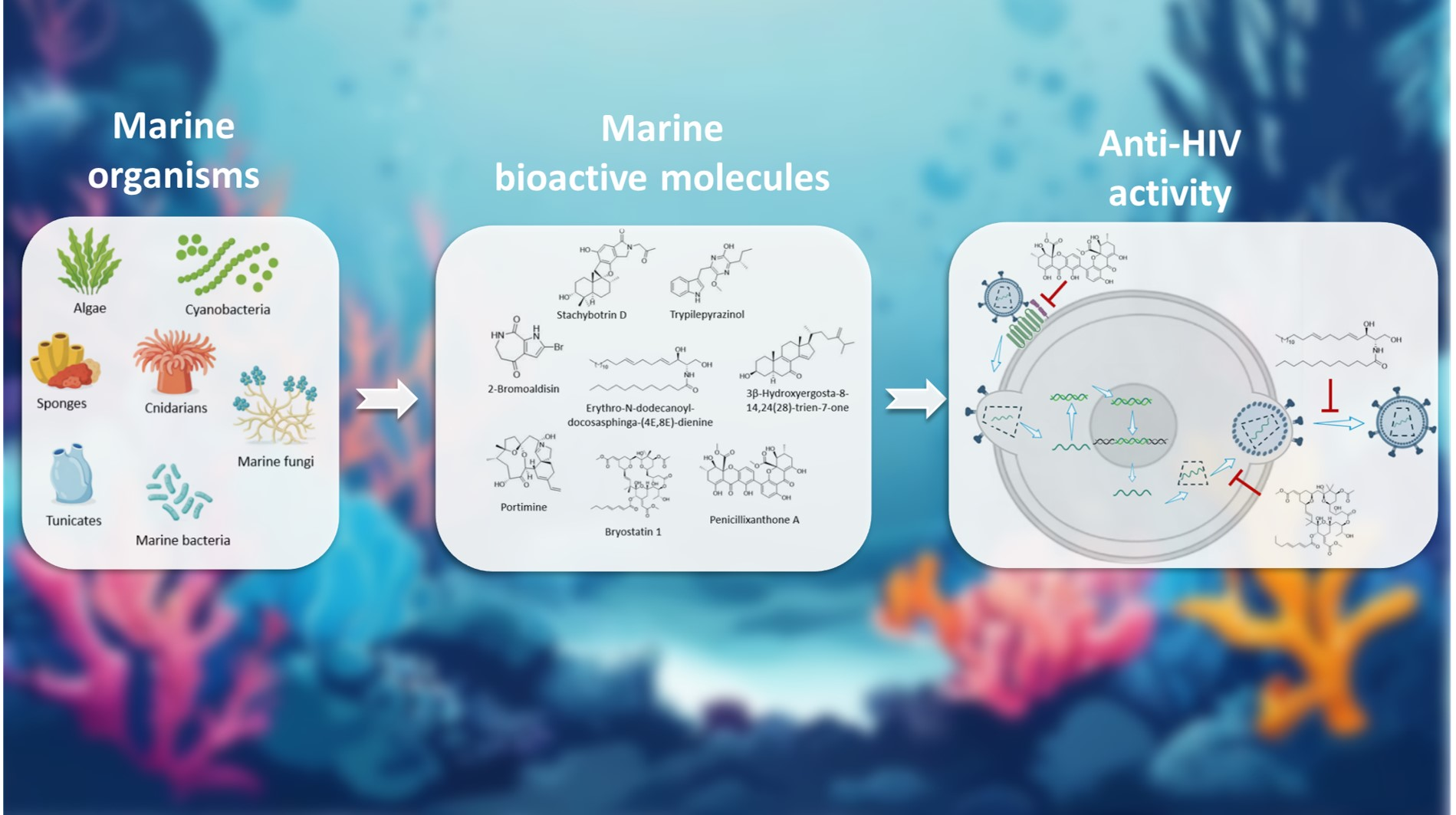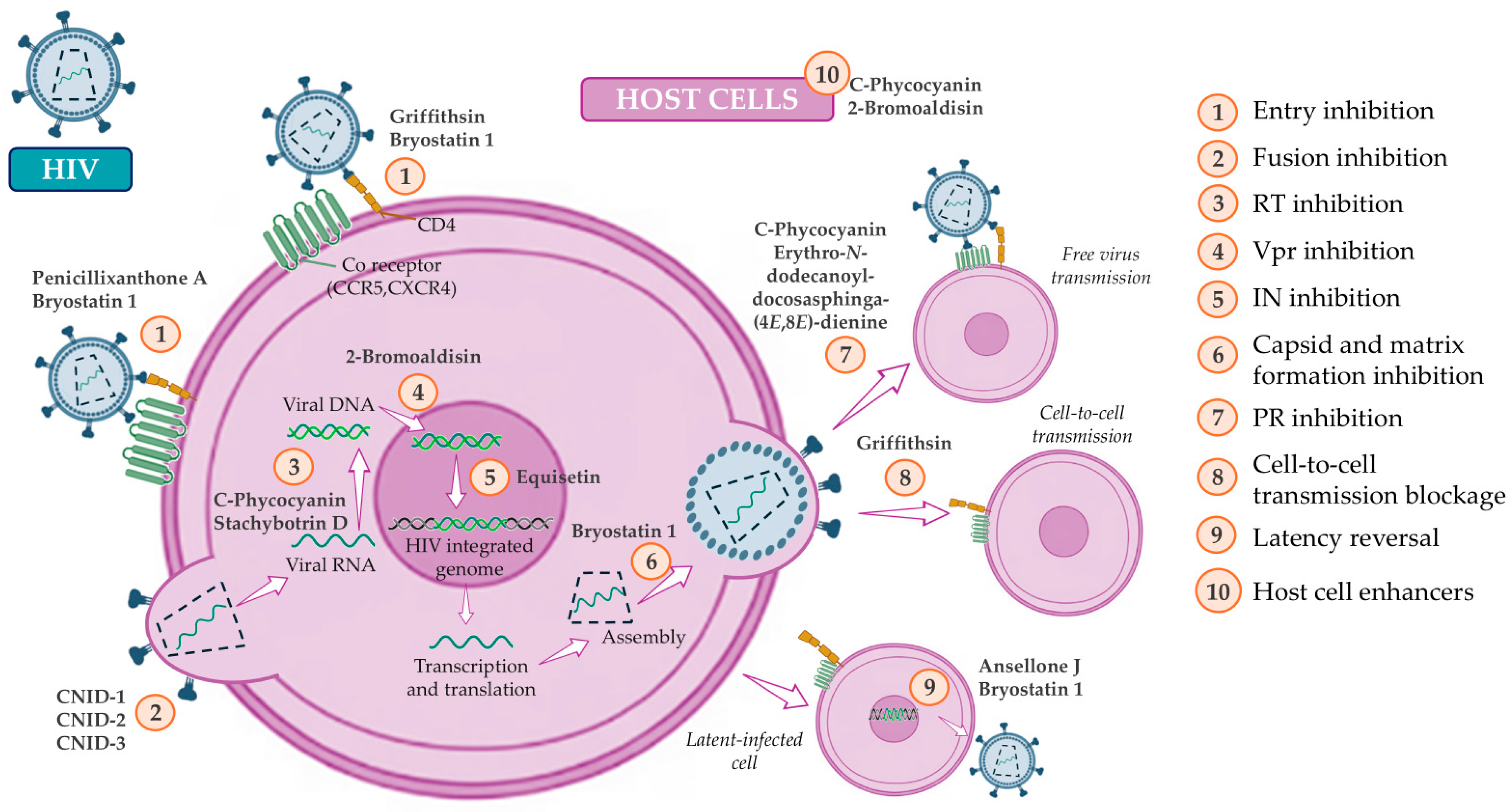

Marine-Derived Defenses Against HIV: Emerging Bioactive Molecules from the Seas



Abstract
1. Introduction
2. Sponges as Sources of Anti-HIV Compounds
3. Tunicates as Sources of Anti-HIV Compounds
4. Cnidarians as Sources of Anti-HIV Compounds
5. Algae as Sources of Anti-HIV Compounds
5.1. Macromolecules—Polysaccharides and Proteins
5.2. Small Molecules
6. Relevant Symbiosis and Microorganisms as Sources of Anti-HIV Compounds
7. Conclusions
Author Contributions
Funding
Institutional Review Board Statement
Data Availability Statement
Conflicts of Interest
References
- Carroll, A.R.; Copp, B.R.; Davis, R.A.; Keyzers, R.A.; Prinsep, M.R. Marine natural products. Nat. Prod. Rep. 2021, 38, 362–413. [Google Scholar] [CrossRef] [PubMed]
- Karthikeyan, A.; Joseph, A.; Nair, B.G. Promising bioactive compounds from the marine environment and their potential effects on various diseases. J. Genet. Eng. Biotechnol. 2022, 20, 14. [Google Scholar] [CrossRef] [PubMed]
- Anjum, K.; Abbas, S.Q.; Shah, S.A.; Akhter, N.; Batool, S.; Hassan, S.S. Marine Sponges as a Drug Treasure. Biomol. Ther. 2016, 24, 347–362. [Google Scholar] [CrossRef] [PubMed]
- Hong, L.-L.; Ding, Y.-F.; Zhang, W.; Lin, H.-W. Chemical and biological diversity of new natural products from marine sponges: A review (2009–2018). Mar. Life Sci. Technol. 2022, 4, 356–372. [Google Scholar] [CrossRef]
- Thomas, T.R.A.; Kavlekar, D.P.; LokaBharathi, P.A. Marine Drugs from Sponge-Microbe Association—A Review. Mar. Drugs 2010, 8, 1417–1468. [Google Scholar] [CrossRef]
- Romano, G.; Almeida, M.; Varela Coelho, A.; Cutignano, A.; Gonçalves, L.G.; Hansen, E.; Khnykin, D.; Mass, T.; Ramšak, A.; Rocha, M.S.; et al. Biomaterials and Bioactive Natural Products from Marine Invertebrates: From Basic Research to Innovative Applications. Mar. Drugs 2022, 20, 219. [Google Scholar] [CrossRef]
- Liao, Q.; Feng, Y.; Yang, B.; Lee, S.M.-Y. Cnidarian peptide neurotoxins: A new source of various ion channel modulators or blockers against central nervous systems disease. Drug Discov. Today 2019, 24, 189–197. [Google Scholar] [CrossRef]
- Laguionie-Marchais, C.; Allcock, A.L.; Baker, B.J.; Conneely, E.-A.; Dietrick, S.G.; Kearns, F.; McKeever, K.; Young, R.M.; Sierra, C.A.; Soldatou, S.; et al. Not Drug-like, but Like Drugs: Cnidaria Natural Products. Mar. Drugs 2022, 20, 42. [Google Scholar] [CrossRef]
- Menaa, F.; Wijesinghe, U.; Thiripuranathar, G.; Althobaiti, N.A.; Albalawi, A.E.; Khan, B.A.; Menaa, B. Marine Algae-Derived Bioactive Compounds: A New Wave of Nanodrugs? Mar. Drugs 2021, 19, 484. [Google Scholar] [CrossRef]
- De Vera, C.R.; Díaz Crespín, G.; Hernández Daranas, A.; Montalvão Looga, S.; Lillsunde, K.-E.; Tammela, P.; Perälä, M.; Hongisto, V.; Virtanen, J.; Rischer, H.; et al. Marine Microalgae: Promising Source for New Bioactive Compounds. Mar. Drugs 2018, 16, 317. [Google Scholar] [CrossRef]
- Cadar, E.; Popescu, A.; Dragan, A.-M.-L.; Pesterau, A.-M.; Pascale, C.; Anuta, V.; Prasacu, I.; Velescu, B.S.; Tomescu, C.L.; Bogdan-Andreescu, C.F.; et al. Bioactive Compounds of Marine Algae and Their Potential Health and Nutraceutical Applications: A Review. Mar. Drugs 2025, 23, 152. [Google Scholar] [CrossRef]
- Minhas, L.A.; Kaleem, M.; Farooqi, H.M.U.; Kausar, F.; Waqar, R.; Bhatti, T.; Aziz, S.; Jung, D.W.; Mumtaz, A.S. Algae-derived bioactive compounds as potential pharmaceuticals for cancer therapy: A comprehensive review. Algal Res. 2024, 78, 103396. [Google Scholar] [CrossRef]
- Barzkar, N.; Sukhikh, S.; Babich, O. Study of marine microorganism metabolites: New resources for bioactive natural products. Front. Microbiol. 2024, 14, 1285902. [Google Scholar] [CrossRef]
- Jaspars, M.; De Pascale, D.; Andersen, J.H.; Reyes, F.; Crawford, A.D.; Ianora, A. The marine biodiscovery pipeline and ocean medicines of tomorrow. J. Mar. Biol. Assoc. U. K. 2016, 96, 151–158. [Google Scholar] [CrossRef]
- Tziveleka, L.A.; Vagias, C.; Roussis, V. Natural products with anti-HIV activity from marine organisms. Curr. Top. Med. Chem. 2003, 3, 1512–1535. [Google Scholar] [CrossRef]
- Zhou, X.; Liu, J.; Yang, B.; Lin, X.; Yang, X.W.; Liu, Y. Marine natural products with anti-HIV activities in the last decade. Curr. Med. Chem. 2013, 20, 953–973. [Google Scholar] [PubMed][Green Version]
- Mirani, A.G.; Shah, T.K.; Patravale, V.B. Marine Source-derived Anti-HIV Therapeutics. In Encyclopedia of Marine Biotechnology; Springer: Berlin/Heidelberg, Germany, 2020; pp. 2725–2753. [Google Scholar]
- Madu, C.V.; Alum, E.U.; Aloh, H.E.; Ugwu, O.P.C.; Obeagu, E.I.; Uti, D.E.; Egba, S.I.; Ukaidi, C.U.A.; Alum, N.B. The price of progress: Assessing the financial costs of HIV/AIDS management in East Africa. Medicine 2025, 104, e42300. [Google Scholar] [CrossRef]
- Hyle, E.P.; Maphosa, T.; Rangaraj, A.; Feser, M.; Singini, G.C.; Shrestha, P.; Shroufi, A.; Reddy, K.P.; Matiya, E.; Dambe, R.; et al. Clinical impact and cost-effectiveness of the WHO-recommended advanced HIV disease package of care. Lancet Glob. Health 2025, 13, e1436–e1447. [Google Scholar] [CrossRef]
- Xu, S.; Sun, L.; Liu, X.; Zhan, P. Opportunities and challenges in new HIV therapeutic discovery: What is the next step? Expert Opin. Drug Discov. 2023, 18, 1195–1199. [Google Scholar]
- Temereanca, A.; Ruta, S. Strategies to overcome HIV drug resistance-current and future perspectives. Front. Microbiol. 2023, 14, 1133407. [Google Scholar] [CrossRef] [PubMed]
- Peng, Y.; Zong, Y.; Wang, D.; Chen, J.; Chen, Z.-S.; Peng, F.; Liu, Z. Current drugs for HIV-1: From challenges to potential in HIV/AIDS. Front. Pharmacol. 2023, 14, 1294966. [Google Scholar] [CrossRef]
- Ahmad, M.; Tahir, M.; Hong, Z.; Zia, M.A.; Rafeeq, H.; Ahmad, M.S.; Rehman, S.U.; Sun, J. Plant and marine-derived natural products: Sustainable pathways for future drug discovery and therapeutic development. Front. Pharmacol. 2024, 15, 1497668. [Google Scholar] [CrossRef]
- Mateos, R.; Pérez-Correa, J.R.; Domínguez, H. Bioactive Properties of Marine Phenolics. Mar. Drugs 2020, 18, 501. [Google Scholar] [CrossRef]
- Mayer, A.M.S.; Mayer, V.A.; Swanson-Mungerson, M.; Pierce, M.L.; Rodríguez, A.D.; Nakamura, F.; Taglialatela-Scafati, O. Marine Pharmacology in 2019–2021: Marine Compounds with Antibacterial, Antidiabetic, Antifungal, Anti-Inflammatory, Antiprotozoal, Antituberculosis and Antiviral Activities; Affecting the Immune and Nervous Systems, and Other Miscellaneous Mechanisms of Action. Mar. Drugs 2024, 22, 309. [Google Scholar] [CrossRef]
- Riccio, G.; Ruocco, N.; Mutalipassi, M.; Costantini, M.; Zupo, V.; Coppola, D.; de Pascale, D.; Lauritano, C. Ten-Year Research Update Review: Antiviral Activities from Marine Organisms. Biomolecules 2020, 10, 1007. [Google Scholar] [CrossRef] [PubMed]
- Rangel, M.; Falkenberg, M. An overview of the marine natural products in clinical trials and on the market. J. Coast. Life Med. 2015, 3, 421–428. [Google Scholar] [CrossRef]
- Mehbub, M.F.; Yang, Q.; Cheng, Y.; Franco, C.M.M.; Zhang, W. Marine sponge-derived natural products: Trends and opportunities for the decade of 2011–2020. Front. Mar. Sci. 2024, 11, 1462825. [Google Scholar] [CrossRef]
- Bergmann, W.; Feeney, R.J. Contributions to the study of marine products. XXXII. The nucleoside of sponges. I. J. Org. Chem. 1951, 16, 981–987. [Google Scholar] [CrossRef]
- Sagar, S.; Kaur, M.; Minneman, K.P. Antiviral lead compounds from marine sponges. Mar. Drugs 2010, 8, 2619–2638. [Google Scholar] [CrossRef]
- Wang, M.; Sciorillo, A.; Read, S.; Divsalar, D.N.; Gyampoh, K.; Zu, G.; Yuan, Z.; Mounzer, K.; Williams, D.E.; Montaner, L.J.; et al. Ansellone J, a Potent in Vitro and ex Vivo HIV-1 Latency Reversal Agent Isolated from a Phorbas sp. Marine Sponge. J. Nat. Prod. 2022, 85, 1274–1281. [Google Scholar] [CrossRef]
- Tioka, L.; Diez, R.C.; Sönnerborg, A.; van de Klundert, M.A.A. Latency Reversing Agents and the Road to an HIV Cure. Pathogens 2025, 14, 232. [Google Scholar] [CrossRef] [PubMed]
- Win, N.N.; Kodama, T.; Aye, A.A.; Lae, K.Z.W.; Ngwe, H.; Han, N.M.; Abe, I.; Morita, H. Pyrrolactams from Marine Sponge Stylissa massa Collected from Myanmar and Their Anti-Vpr Activities. Chem. Pharm. Bull. 2021, 69, 702–705. [Google Scholar] [CrossRef]
- González, M.E. The HIV-1 Vpr Protein: A Multifaceted Target for Therapeutic Intervention. Int. J. Mol. Sci. 2017, 18, 126. [Google Scholar] [CrossRef] [PubMed]
- Plaza, A.; Gustchina, E.; Baker, H.L.; Kelly, M.; Bewley, C.A. Mirabamides A–D, Depsipeptides from the Sponge Siliquariaspongia mirabilis That Inhibit HIV-1 Fusion. J. Nat. Prod. 2007, 70, 1753–1760. [Google Scholar] [CrossRef] [PubMed]
- Oku, N.; Gustafson, K.R.; Cartner, L.K.; Wilson, J.A.; Shigematsu, N.; Hess, S.; Pannell, L.K.; Boyd, M.R.; McMahon, J.B. Neamphamide A, a New HIV-Inhibitory Depsipeptide from the Papua New Guinea Marine Sponge Neamphius huxleyi. J. Nat. Prod. 2004, 67, 1407–1411. [Google Scholar] [CrossRef]
- Zampella, A.; D’Auria, M.V.; Paloma, L.G.; Casapullo, A.; Minale, L.; Debitus, C.; Henin, Y. Callipeltin A, an Anti-HIV Cyclic Depsipeptide from the New Caledonian Lithistida Sponge Callipelta sp. J. Am. Chem. Soc. 1996, 118, 6202–6209. [Google Scholar] [CrossRef]
- Gómez-Archila, L.G.; Zapata, W.; Galeano, E.; Martínez, A.; Díaz Castrillón, F.J.; Rugeles, M.T. Bromotyrosine derivatives from marine sponges inhibit the HIV-1 replication in vitro. Vitae 2014, 21, 114–125. [Google Scholar] [CrossRef]
- Palanisamy, S.K.; Rajendran, N.M.; Marino, A. Natural Products Diversity of Marine Ascidians (Tunicates; Ascidiacea) and Successful Drugs in Clinical Development. Nat. Prod. Bioprospecting 2017, 7, 1–111. [Google Scholar] [CrossRef]
- Ramesh, C.; Tulasi, B.R.; Raju, M.; Thakur, N.; Dufossé, L. Marine Natural Products from Tunicates and Their Associated Microbes. Mar. Drugs 2021, 19, 308. [Google Scholar] [CrossRef]
- Lu, Z.; Harper, M.K.; Pond, C.D.; Barrows, L.R.; Ireland, C.M.; Van Wagoner, R.M. Thiazoline Peptides and a Tris-Phenethyl Urea from Didemnum molle with Anti-HIV Activity. J. Nat. Prod. 2012, 75, 1436–1440. [Google Scholar] [CrossRef]
- Rocha, J.; Peixe, L.; Gomes, N.C.M.; Calado, R. Cnidarians as a Source of New Marine Bioactive Compounds—An Overview of the Last Decade and Future Steps for Bioprospecting. Mar. Drugs 2011, 9, 1860–1886. [Google Scholar] [CrossRef]
- Mariottini, G.L.; Grice, I.D. Antimicrobials from Cnidarians. A New Perspective for Anti-Infective Therapy? Mar. Drugs 2016, 14, 48. [Google Scholar]
- Rashid, M.A.; Gustafson, K.R.; Boyd, M.R. HIV-Inhibitory Cembrane Derivatives from a Philippines Collection of the Soft Coral Lobophytum Species. J. Nat. Prod. 2000, 63, 531–533. [Google Scholar] [CrossRef] [PubMed]
- Ellithey, M.S.; Lall, N.; Hussein, A.A.; Meyer, D. Cytotoxic and HIV-1 enzyme inhibitory activities of Red Sea marine organisms. BMC Complement. Med. Ther. 2014, 14, 77. [Google Scholar] [CrossRef]
- Ellithey, M.S.; Lall, N.; Hussein, A.A.; Meyer, D. Cytotoxic, Cytostatic and HIV-1 PR Inhibitory Activities of the Soft Coral Litophyton arboreum. Mar. Drugs 2013, 11, 4917–4936. [Google Scholar] [CrossRef]
- O’Keefe, B.R.; McMahon, J.B.; Ramessar, K.; Xiong, C.-Y. Anti-Viral Cnidarins. US 11034736 B2, 9 January 2015. [Google Scholar]
- Jayathilake, J.M.N.J.; Gunathilake, K.V.K. Cnidarian toxins: Recent evidences for potential therapeutic uses. Eur. Zool. J. 2020, 87, 708–713. [Google Scholar]
- Guiry, M.D. How many species of algae are there? A reprise. Four kingdoms, 14 phyla, 63 classes and still growing. J. Phycol. 2024, 60, 214–228. [Google Scholar] [CrossRef]
- Gupta, S.; Gaur, P.K.; Lal, N.; Parveen, R.; Kumar, R.; Aashmeen, S. Recent progress in marine algae research: Bridging biodiversity with pharmaceutical potential. Bull. Natl. Res. Cent. 2025, 49, 77. [Google Scholar] [CrossRef]
- Belghit, I.; Rasinger, J.D.; Heesch, S.; Biancarosa, I.; Liland, N.; Torstensen, B.; Waagbø, R.; Lock, E.-J.; Bruckner, C.G. In-depth metabolic profiling of marine macroalgae confirms strong biochemical differences between brown, red and green algae. Algal Res. 2017, 26, 240–249. [Google Scholar] [CrossRef]
- Xia, D.; Qiu, W.; Wang, X.; Liu, J. Recent Advancements and Future Perspectives of Microalgae-Derived Pharmaceuticals. Mar. Drugs 2021, 19, 703. [Google Scholar] [CrossRef]
- Kumar, A.; Soratur, A.; Kumar, S.; Venmathi Maran, B.A. A Review of Marine Algae as a Sustainable Source of Antiviral and Anticancer Compounds. Macromol 2025, 5, 11. [Google Scholar] [CrossRef]
- Thuy, T.T.T.; Ly, B.M.; Van, T.T.T.; Van Quang, N.; Tu, H.C.; Zheng, Y.; Seguin-Devaux, C.; Mi, B.; Ai, U. Anti-HIV activity of fucoidans from three brown seaweed species. Carbohydr. Polym. 2015, 115, 122–128. [Google Scholar] [CrossRef] [PubMed]
- Nosik, M.N.; Krylova, N.V.; Usoltseva, R.V.; Surits, V.V.; Kireev, D.E.; Shchelkanov, M.Y.; Svitich, O.A.; Ermakova, S.P. In Vitro Anti-HIV-1 Activity of Fucoidans from Brown Algae. Mar. Drugs 2024, 22, 355. [Google Scholar] [CrossRef]
- Besednova, N.N.; Zvyagintseva, T.N.; Kuznetsova, T.A.; Makarenkova, I.D.; Smolina, T.P.; Fedyanina, L.N.; Kryzhanovsky, S.P.; Zaporozhets, T.S. Marine Algae Metabolites as Promising Therapeutics for the Prevention and Treatment of HIV/AIDS. Metabolites 2019, 9, 87. [Google Scholar] [CrossRef]
- Shulgin, A.; Spirin, P.; Lebedev, T.; Kravchenko, A.; Glasunov, V.; Yermak, I.; Prassolov, V. Comparative study of HIV-1 inhibition efficiency by carrageenans from red seaweeds family gigartinaceae, Tichocarpaceae and Phyllophoraceae. Heliyon 2024, 10, e33407. [Google Scholar] [CrossRef]
- Suzuki, K.; Terasawa, M. Biological Activities of Rhamnan Sulfate Extract from the Green Algae Monostroma nitidum (Hitoegusa). Mar. Drugs 2020, 18, 228. [Google Scholar] [CrossRef] [PubMed]
- Dong, X.; Qiu, Y.; Jia, N.; Wu, Y.; Nie, Q.; Wen, J.; Zhao, C.; Zhai, Y. Recent advances of edible marine algae-derived sulfated polysaccharides in antiviral treatments: Challenges vs. opportunities. Front. Nutr. 2025, 12, 1561119. [Google Scholar] [CrossRef]
- Besednova, N.N.; Andryukov, B.G.; Zaporozhets, T.S.; Kryzhanovsky, S.P.; Fedyanina, L.N.; Kuznetsova, T.A.; Zvyagintseva, T.N.; Shchelkanov, M.Y. Antiviral Effects of Polyphenols from Marine Algae. Biomedicines 2021, 9, 200. [Google Scholar] [CrossRef]
- de Souza Pereira, H.; Leão-Ferreira, L.R.; Moussatché, N.; Teixeira, V.L.; Cavalcanti, D.N.; da Costa, L.J.; Diaz, R.; Frugulhetti, I.C. Effects of diterpenes isolated from the Brazilian marine alga Dictyota menstrualis on HIV-1 reverse transcriptase. Planta Medica 2005, 71, 1019–1024. [Google Scholar] [CrossRef] [PubMed]
- Stephens, P.R.S.; Cirne-Santos, C.C.; de Souza Barros, C.; Teixeira, V.L.; Carneiro, L.A.D.; Amorim, L.d.S.C.; Ocampo, J.S.P.; Castello-Branco, L.R.R.; de Palmer Paixão, I.C.N. Diterpene from marine brown alga Dictyota friabilis as a potential microbicide against HIV-1 in tissue explants. J. Appl. Phycol. 2017, 29, 775–780. [Google Scholar] [CrossRef]
- Mori, T.; O’Keefe, B.R.; Sowder, R.C., 2nd; Bringans, S.; Gardella, R.; Berg, S.; Cochran, P.; Turpin, J.A.; Buckheit, R.W., Jr.; McMahon, J.B.; et al. Isolation and characterization of griffithsin, a novel HIV-inactivating protein, from the red alga Griffithsia sp. J. Biol. Chem. 2005, 280, 9345–9353. [Google Scholar] [CrossRef] [PubMed]
- Emau, P.; Tian, B.; O’Keefe, B.R.; Mori, T.; McMahon, J.B.; Palmer, K.E.; Jiang, Y.; Bekele, G.; Tsai, C.C. Griffithsin, a potent HIV entry inhibitor, is an excellent candidate for anti-HIV microbicide. J. Med. Primatol. 2007, 36, 244–253. [Google Scholar] [CrossRef]
- Lusvarghi, S.; Bewley, C.A. Griffithsin: An Antiviral Lectin with Outstanding Therapeutic Potential. Viruses 2016, 8, 296. [Google Scholar] [CrossRef] [PubMed]
- Alexandre, K.B.; Gray, E.S.; Mufhandu, H.; McMahon, J.B.; Chakauya, E.; O’Keefe, B.R.; Chikwamba, R.; Morris, L. The lectins griffithsin, cyanovirin-N and scytovirin inhibit HIV-1 binding to the DC-SIGN receptor and transfer to CD4+ cells. Virology 2012, 423, 175–186. [Google Scholar] [CrossRef]
- Ferir, G. Griffithsin, Alone and Combined with All Classes of Antiretroviral Drugs, Potently Inhibits HIV Cell-Cell Transmission and Destruction of CD4+ T cells. J. Antivir. Antiretrovir. 2012, 4, 103–112. [Google Scholar] [CrossRef]
- Clinical Trial NCT02875119: A Phase 1 Trial to Evaluate the Safety, Pharmacokinetics (PK) and Pharmacodynamics (PD) of PC-6500 (Griffithsin [GRFT] in a Carrageenan Gel) in Healthy Women. Available online: https://clinicaltrials.gov/study/NCT02875119 (accessed on 17 January 2026).
- Teleshova, N.; Keller, M.J.; Fernández Romero, J.A.; Friedland, B.A.; Creasy, G.W.; Plagianos, M.G.; Ray, L.; Barnable, P.; Kizima, L.; Rodriguez, A.; et al. Results of a phase 1, randomized, placebo-controlled first-in-human trial of griffithsin formulated in a carrageenan vaginal gel. PLoS ONE 2022, 17, e0261775. [Google Scholar] [CrossRef]
- Corman, J.M.; Hamorsky, K.T.; Shepherd, J.W.; Hiatt, E.; Fuqua, J.L.; Palmer, K.E. Stability of plasmid and viral banks supporting the cGMP manufacture of Q-Griffithsin from a TMV-based viral vector. J. Biotechnol. 2020, 320, 74–76. [Google Scholar] [CrossRef]
- Clinical Trial NCT04032717: A Randomized, Double-Blind Phase 1 Safety and Pharmacokinetic Study of Q-Griffithsin Enema Administered Rectally to HIV-1 Seronegative Adults. Available online: https://clinicaltrials.gov/study/NCT04032717 (accessed on 17 January 2026).
- Franzén Boger, M.; Benhach, N.; Hasselrot, T.; Brand, R.M.; Rohan, L.C.; Wang, L.; McGowan, I.; Edick, S.; Ho, K.; Meyn, L.; et al. A topical rectal douche product containing Q-Griffithsin does not disrupt the epithelial border or alter CD4+ cell distribution in the human rectal mucosa. Sci. Rep. 2023, 13, 7547. [Google Scholar] [CrossRef]
- Borhani, S.G.; Levine, M.Z.; Krumpe, L.H.; Wilson, J.; Henrich, C.J.; O’Keefe, B.R.; Lo, D.C.; Sittampalam, G.S.; Godfrey, A.G.; Lunsford, R.D.; et al. An approach to rapid distributed manufacturing of broad spectrum anti-viral griffithsin using cell-free systems to mitigate pandemics. New Biotechnol. 2023, 76, 13–22. [Google Scholar] [CrossRef] [PubMed]
- Steinbach-Rankins, J.; Palmer, K. Methods and Composition for Trating Microbial Infections. EP 3877012 B1, 5 November 2019. [Google Scholar]
- Jadaun, P.; Seniya, C.; Pal, S.K.; Kumar, S.; Kumar, P.; Nema, V.; Kulkarni, S.S.; Mukherjee, A. Elucidation of Antiviral and Antioxidant Potential of C-Phycocyanin against HIV-1 Infection through In Silico and In Vitro Approaches. Antioxidants 2022, 11, 1942. [Google Scholar] [CrossRef]
- Harb, T.B.; Chow, F. Anti-HIV activity of methanolic and aqueous extracts of fifteen materials of beach-cast macroalgae: Valorization of underused waste biomass. Appl. Phycol. 2022, 3, 236–246. [Google Scholar] [CrossRef]
- Boopathi, S.K.; Subramani, N.; Hanna, L.E.; Karunakaran, L.P.; Joseph, S.J.P.; Murugesan, K. Piperazine derivatives and bioactive compounds from red seaweed Haloplegma duperreyi: A novel source for inhibition of HIV-I. Algal Res. 2025, 86, 103893. [Google Scholar] [CrossRef]
- Abimbola Salubi, C.; Abbo, H.S.; Jahed, N.; Titinchi, S. Medicinal chemistry perspectives on the development of piperazine-containing HIV-1 inhibitors. Bioorganic Med. Chem. 2024, 99, 117605. [Google Scholar] [CrossRef]
- Subramaniam, D.; Hanna, L.E.; Maheshkumar, K.; Ponmurugan, K.; Al-Dhabi, N.A.; Murugan, P. Immune stimulatory and anti-HIV-1 potential of extracts derived from marine brown algae Padina tetrastromatica. J. Complement. Integr. Med. 2020, 17, 20190071. [Google Scholar] [CrossRef]
- Raimundo, I.; Silva, S.G.; Costa, R.; Keller-Costa, T. Bioactive Secondary Metabolites from Octocoral-Associated Microbes—New Chances for Blue Growth. Mar. Drugs 2018, 16, 485. [Google Scholar] [CrossRef] [PubMed]
- Tan, S.; Yang, B.; Liu, J.; Xun, T.; Liu, Y.; Zhou, X. Penicillixanthone A, a marine-derived dual-coreceptor antagonist as anti-HIV-1 agent. Nat. Prod. Res. 2019, 33, 1467–1471. [Google Scholar] [CrossRef] [PubMed]
- Okechukwu, Q.N.; Adepoju, F.O.; Kanwugu, O.N.; Adadi, P.; Serrano-Aroca, Á.; Uversky, V.N.; Okpala, C.O.R. Marine-Derived Bioactive Metabolites as a Potential Therapeutic Intervention in Managing Viral Diseases: Insights from the SARS-CoV-2 In Silico and Pre-Clinical Studies. Pharmaceuticals 2024, 17, 328. [Google Scholar] [CrossRef]
- Li, J.; Wang, Y.; Hao, X.; Li, S.; Jia, J.; Guan, Y.; Peng, Z.; Bi, H.; Xiao, C.; Cen, S.; et al. Broad-Spectrum Antiviral Natural Products from the Marine-Derived Penicillium sp. IMB17-046. Molecules 2019, 24, 2821. [Google Scholar] [CrossRef] [PubMed]
- Ma, X.; Li, L.; Zhu, T.; Ba, M.; Li, G.; Gu, Q.; Guo, Y.; Li, D. Phenylspirodrimanes with Anti-HIV Activity from the Sponge-Derived Fungus Stachybotrys chartarum MXH-X73. J. Nat. Prod. 2013, 76, 2298–2306. [Google Scholar] [CrossRef]
- Izumida, M.; Suga, K.; Ishibashi, F.; Kubo, Y. The Spirocyclic Imine from a Marine Benthic Dinoflagellate, Portimine, Is a Potent Anti-Human Immunodeficiency Virus Type 1 Therapeutic Lead Compound. Mar. Drugs 2019, 17, 495. [Google Scholar] [CrossRef]
- Smith, T.E.; Pond, C.D.; Pierce, E.; Harmer, Z.P.; Kwan, J.; Zachariah, M.M.; Harper, M.K.; Wyche, T.P.; Matainaho, T.K.; Bugni, T.S.; et al. Accessing chemical diversity from the uncultivated symbionts of small marine animals. Nat. Chem. Biol. 2018, 14, 179–185. [Google Scholar] [CrossRef] [PubMed]
- Linneman, J.; Paulus, D.; Lim-Fong, G.; Lopanik, N.B. Latitudinal Variation of a Defensive Symbiosis in the Bugula neritina (Bryozoa) Sibling Species Complex. PLoS ONE 2014, 9, e108783. [Google Scholar] [CrossRef] [PubMed]
- Davidson, S.K.; Allen, S.W.; Lim, G.E.; Anderson, C.M.; Haygood, M.G. Evidence for the biosynthesis of bryostatins by the bacterial symbiont “Candidatus Endobugula sertula” of the bryozoan Bugula neritina. Appl. Environ. Microbiol. 2001, 67, 4531–4537. [Google Scholar] [CrossRef]
- Pettit, G.R.; Herald, C.L.; Doubek, D.L.; Herald, D.L.; Arnold, E.; Clardy, J. Isolation and structure of bryostatin 1. J. Am. Chem. Soc. 1982, 104, 6846–6848. [Google Scholar] [CrossRef]
- Kowalczyk, T.; Staszewski, M.; Markowicz-Piasecka, M.; Sikora, J.; Amaro, C.; Picot, L.; Sitarek, P. Anticancer Activity of the Marine-Derived Compound Bryostatin 1: Preclinical and Clinical Evaluation. Int. J. Mol. Sci. 2025, 26, 7765. [Google Scholar] [CrossRef]
- Tian, Z.; Lu, X.T.; Jiang, X.; Tian, J. Bryostatin-1: A promising compound for neurological disorders. Front. Pharmacol. 2023, 14, 1187411. [Google Scholar] [CrossRef] [PubMed]
- Coates, K.; Cooke, S.J.; Mann, D.A.; Harris, M.P.G. Protein Kinase C-mediated Phosphorylation of HIV-I Nef in Human Cell Lines. J. Biol. Chem. 1997, 272, 12289–12294. [Google Scholar] [CrossRef]
- Harmon, B.; Ratner, L. Induction of the Gαq Signaling Cascade by the Human Immunodeficiency Virus Envelope Is Required for Virus Entry. J. Virol. 2008, 82, 9191–9205. [Google Scholar] [CrossRef]
- Mehla, R.; Bivalkar-Mehla, S.; Zhang, R.; Handy, I.; Albrecht, H.; Giri, S.; Nagarkatti, P.; Nagarkatti, M.; Chauhan, A. Bryostatin Modulates Latent HIV-1 Infection via PKC and AMPK Signaling but Inhibits Acute Infection in a Receptor Independent Manner. PLoS ONE 2010, 5, e11160. [Google Scholar] [CrossRef]
- Díaz, L.; Martínez-Bonet, M.; Sánchez, J.; Fernández-Pineda, A.; Jiménez, J.L.; Muñoz, E.; Moreno, S.; Álvarez, S.; Muñoz-Fernández, M.Á. Bryostatin activates HIV-1 latent expression in human astrocytes through a PKC and NF-ĸB-dependent mechanism. Sci. Rep. 2015, 5, 12442. [Google Scholar] [CrossRef]
- López-Huertas, M.R.; Jiménez-Tormo, L.; Madrid-Elena, N.; Gutiérrez, C.; Rodríguez-Mora, S.; Coiras, M.; Alcamí, J.; Moreno, S. The CCR5-antagonist Maraviroc reverses HIV-1 latency in vitro alone or in combination with the PKC-agonist Bryostatin-1. Sci. Rep. 2017, 7, 2385. [Google Scholar] [CrossRef] [PubMed]
- Li, B.-X.; Zhang, H.; Liu, Y.; Li, Y.; Zheng, J.-J.; Li, W.-X.; Feng, K.; Sun, M.; Dai, S.-X. Novel pathways of HIV latency reactivation revealed by integrated analysis of transcriptome and target profile of bryostatin. Sci. Rep. 2020, 10, 3511. [Google Scholar] [CrossRef] [PubMed]
- Hany, L.; Turmel, M.-O.; Barat, C.; Ouellet, M.; Tremblay, M.J. Bryostatin-1 Decreases HIV-1 Infection and Viral Production in Human Primary Macrophages. J. Virol. 2022, 96, e01953-21. [Google Scholar] [CrossRef]
- Li, L.; Zhao, M.; van Meurs, M.; Brouwers-Haspels, I.; den Dekker, R.J.H.; Wilmsen, M.E.P.; Grashof, D.G.B.; van de Werken, H.J.G.; Rao, S.; Rokx, C.; et al. Bryostatin-1 enhances the proliferation and functionality of exhausted CD8+-T cells by upregulating MAP Kinase 11. Front. Immunol. 2025, 15, 1509874. [Google Scholar] [CrossRef] [PubMed]
- Gutiérrez, C.; Serrano-Villar, S.; Madrid-Elena, N.; Pérez-Elías, M.J.; Martín, M.E.; Barbas, C.; Ruipérez, J.; Muñoz, E.; Muñoz-Fernández, M.A.; Castor, T.; et al. Bryostatin-1 for latent virus reactivation in HIV-infected patients on antiretroviral therapy. AIDS 2016, 30, 1385–1392. [Google Scholar] [CrossRef]
- Bullen, C.K.; Laird, G.M.; Durand, C.M.; Siliciano, J.D.; Siliciano, R.F. New ex vivo approaches distinguish effective and ineffective single agents for reversing HIV-1 latency in vivo. Nat. Med. 2014, 20, 425–429. [Google Scholar] [CrossRef]
- Schaufelberger, D.E.; Koleck, M.P.; Beutler, J.A.; Vatakis, A.M.; Alvarado, A.B.; Andrews, P.; Marzo, L.V.; Muschik, G.M.; Roach, J.; Ross, J.T.; et al. The large-scale isolation of bryostatin 1 from Bugula neritina following current good manufacturing practices. J. Nat. Prod. 1991, 54, 1265–1270. [Google Scholar] [CrossRef]
- Keck, G.E.; Poudel, Y.B.; Cummins, T.J.; Rudra, A.; Covel, J.A. Total Synthesis of Bryostatin 1. J. Am. Chem. Soc. 2011, 133, 744–747. [Google Scholar] [CrossRef]
- Wender, P.A.; Hardman, C.T.; Ho, S.; Jeffreys, M.S.; Maclaren, J.K.; Quiroz, R.V.; Ryckbosch, S.M.; Shimizu, A.J.; Sloane, J.L.; Stevens, M.C. Scalable synthesis of bryostatin 1 and analogs, adjuvant leads against latent HIV. Science 2017, 358, 218–223. [Google Scholar] [CrossRef]
- Marsden, M.D.; Wu, X.; Navab, S.M.; Loy, B.A.; Schrier, A.J.; DeChristopher, B.A.; Shimizu, A.J.; Hardman, C.T.; Ho, S.; Ramirez, C.M.; et al. Characterization of designed, synthetically accessible bryostatin analog HIV latency reversing agents. Virology 2018, 520, 83–93. [Google Scholar] [CrossRef]
- Marsden, M.D.; Loy, B.A.; Wu, X.; Ramirez, C.M.; Schrier, A.J.; Murray, D.; Shimizu, A.; Ryckbosch, S.M.; Near, K.E.; Chun, T.-W.; et al. In vivo activation of latent HIV with a synthetic bryostatin analog effects both latent cell “kick” and “kill” in strategy for virus eradication. PLoS Pathog. 2017, 13, e1006575. [Google Scholar] [CrossRef]
- Kim, J.T.; Zhang, T.-H.; Carmona, C.; Lee, B.; Seet, C.S.; Kostelny, M.; Shah, N.; Chen, H.; Farrell, K.; Soliman, M.S.A.; et al. Latency reversal plus natural killer cells diminish HIV reservoir in vivo. Nat. Commun. 2022, 13, 121. [Google Scholar] [CrossRef]
- Albert, B.J.; Niu, A.; Ramani, R.; Marshall, G.R.; Wender, P.A.; Williams, R.M.; Ratner, L.; Barnes, A.B.; Kyei, G.B. Combinations of isoform-targeted histone deacetylase inhibitors and bryostatin analogues display remarkable potency to activate latent HIV without global T-cell activation. Sci. Rep. 2017, 7, 7456. [Google Scholar] [CrossRef] [PubMed]
- Singh, R.K.; Tiwari, S.P.; Rai, A.K.; Mohapatra, T.M. Cyanobacteria: An emerging source for drug discovery. J. Antibiot. 2011, 64, 401–412. [Google Scholar] [CrossRef]
- Al-Khayri, J.M.; Asghar, W.; Khan, S.; Akhtar, A.; Ayub, H.; Khalid, N.; Alessa, F.M.; Al-Mssallem, M.Q.; Rezk, A.A.-S.; Shehata, W.F. Therapeutic Potential of Marine Bioactive Peptides against Human Immunodeficiency Virus: Recent Evidence, Challenges, and Future Trends. Mar. Drugs 2022, 20, 477. [Google Scholar] [CrossRef] [PubMed]
- Grabowski, Ł.; Wiśniewska, K.; Żabińska, M.; Konarzewska, M.; Zielenkiewicz, M.; Rintz, E.; Cyske, Z.; Gaffke, L.; Pierzynowska, K.; Mazur-Marzec, H.; et al. Cyanobacteria and their metabolites—Can they be helpful in the fight against pathogenic microbes? Blue Biotechnol. 2024, 1, 4. [Google Scholar] [CrossRef]
- Zheng, S.; Lee, V.; Meza-Padilla, I.; Nissimov, J.I. Antiviral discovery in toxic cyanobacteria: Low hanging fruit in the age of pandemics. J. Phycol. 2024, 60, 574–580. [Google Scholar] [CrossRef]
- Mazur-Marzec, H.; Cegłowska, M.; Konkel, R.; Pyrć, K. Antiviral Cyanometabolites-A Review. Biomolecules 2021, 11, 474. [Google Scholar] [CrossRef]
- Gustafson, K.R.; Cardellina, J.H., 2nd; Fuller, R.W.; Weislow, O.S.; Kiser, R.F.; Snader, K.M.; Patterson, G.M.; Boyd, M.R. AIDS-antiviral sulfolipids from cyanobacteria (blue-green algae). J. Natl. Cancer Inst. 1989, 81, 1254–1258. [Google Scholar] [CrossRef]
- Mori, T.; Boyd, M.R. Cyanovirin-N, a potent human immunodeficiency virus-inactivating protein, blocks both CD4-dependent and CD4-independent binding of soluble gp120 (sgp120) to target cells, inhibits sCD4-induced binding of sgp120 to cell-associated CXCR4, and dissociates bound sgp120 from target cells. Antimicrob. Agents Chemother. 2001, 45, 664–672. [Google Scholar][Green Version]
- Xiong, C.; O’Keefe, B.R.; Byrd, R.A.; McMahon, J.B. Potent anti-HIV activity of scytovirin domain 1 peptide. Peptides 2006, 27, 1668–1675. [Google Scholar] [CrossRef] [PubMed]
- Parajuli, B.; Acharya, K.; Bach, H.C.; Zhang, S.; Abrams, C.F.; Chaiken, I. Monovalent Lectin Microvirin Utilizes Hydropathic Recognition of HIV-1 Env for Inhibition of Virus Cell Infection. Viruses 2025, 17, 82. [Google Scholar] [CrossRef] [PubMed]
- Férir, G.; Huskens, D.; Noppen, S.; Koharudin, L.M.I.; Gronenborn, A.M.; Schols, D. Broad anti-HIV activity of the Oscillatoria agardhii agglutinin homologue lectin family. J. Antimicrob. Chemother. 2014, 69, 2746–2758. [Google Scholar] [CrossRef] [PubMed]



| Natural Product | Chemical Class | Source | Mechanism of Action |
|---|---|---|---|
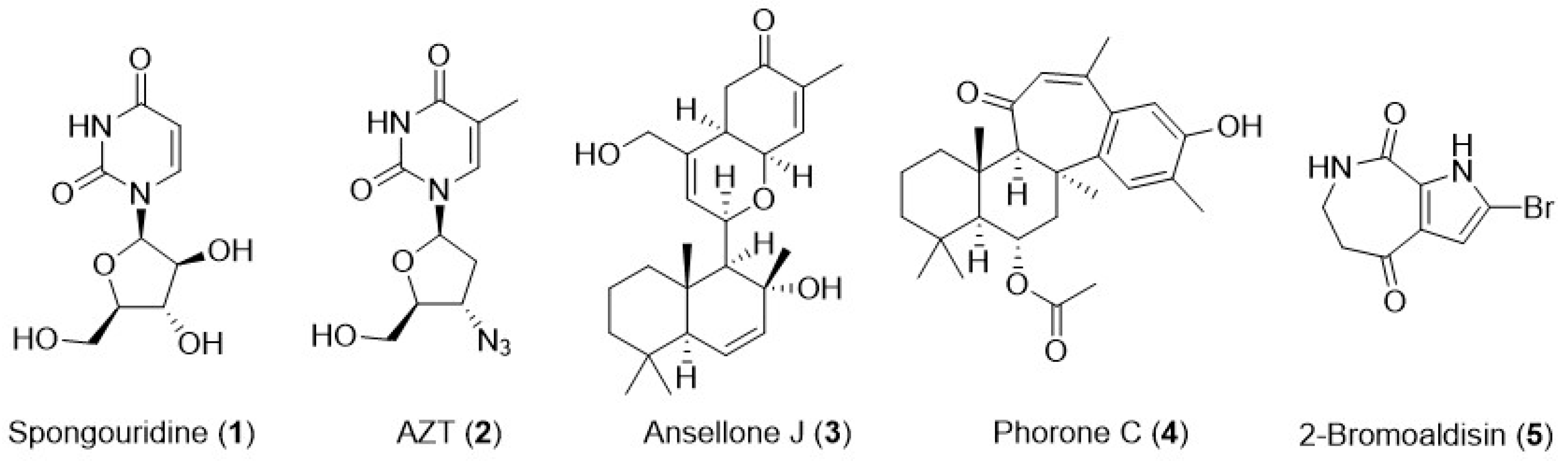
| Spongouridine (1) | Arabinosyl glycoside | Tectitethya crypta | Led to the development of AZT (2), a reverse transcriptase inhibitor and the first approved drug for HIV therapeutics |
| Ansellone J (3) | Sesterterpenoid | Phorbas sp. | HIV-1 latency reversal activity |
| Phorone C (4) | Sesterterpenoid | Phorbas sp. | HIV-1 latency reversal activity |
| 2-Bromoalsidin (5) | Brominated pyrrolactam | Stylissa massa | Viral protein R inhibition |
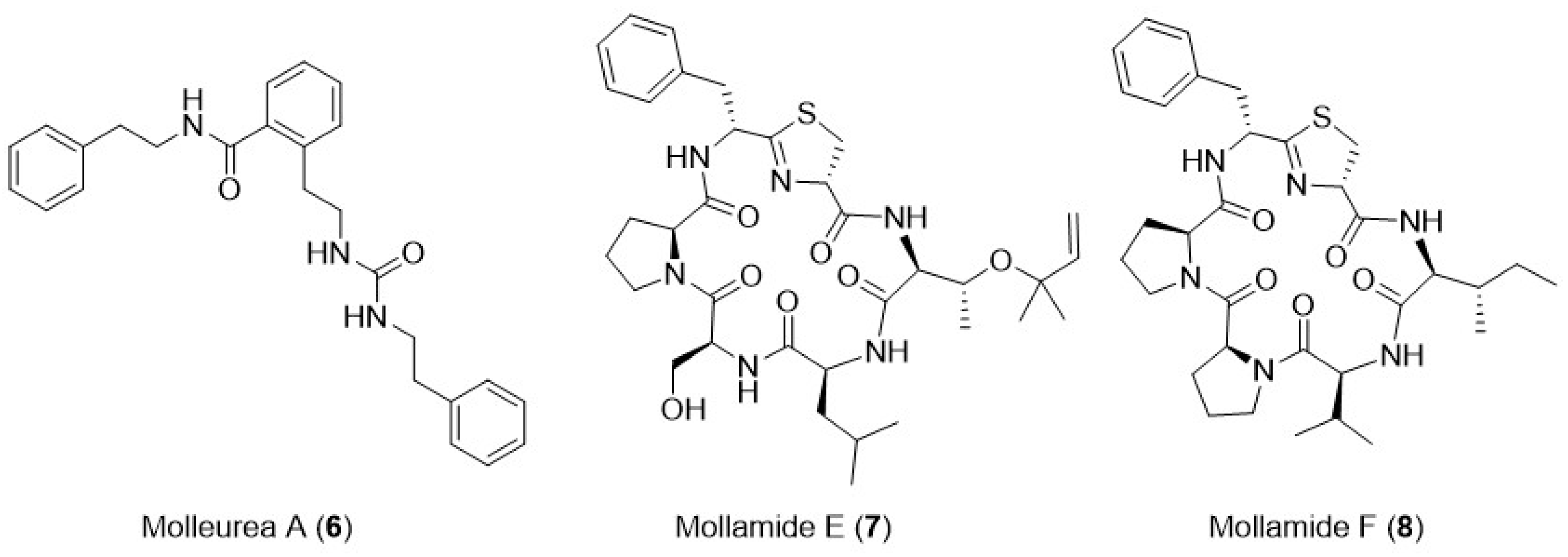
| Mollamide F (8) | Thiazoline peptide | Didemnum molle | HIV integrase inhibition |
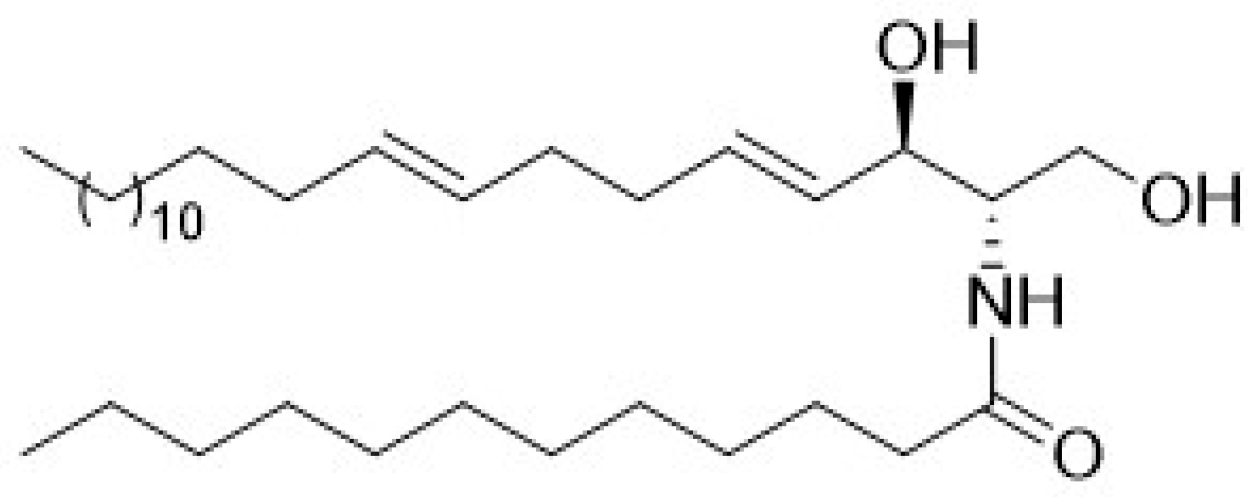
| Erythro-N-dodecanoyl-docosasphinga-(4E,8E)-dienine (9) | Fatty acid derivative | Litophyton arboreum | HIV-1 protease inhibition |
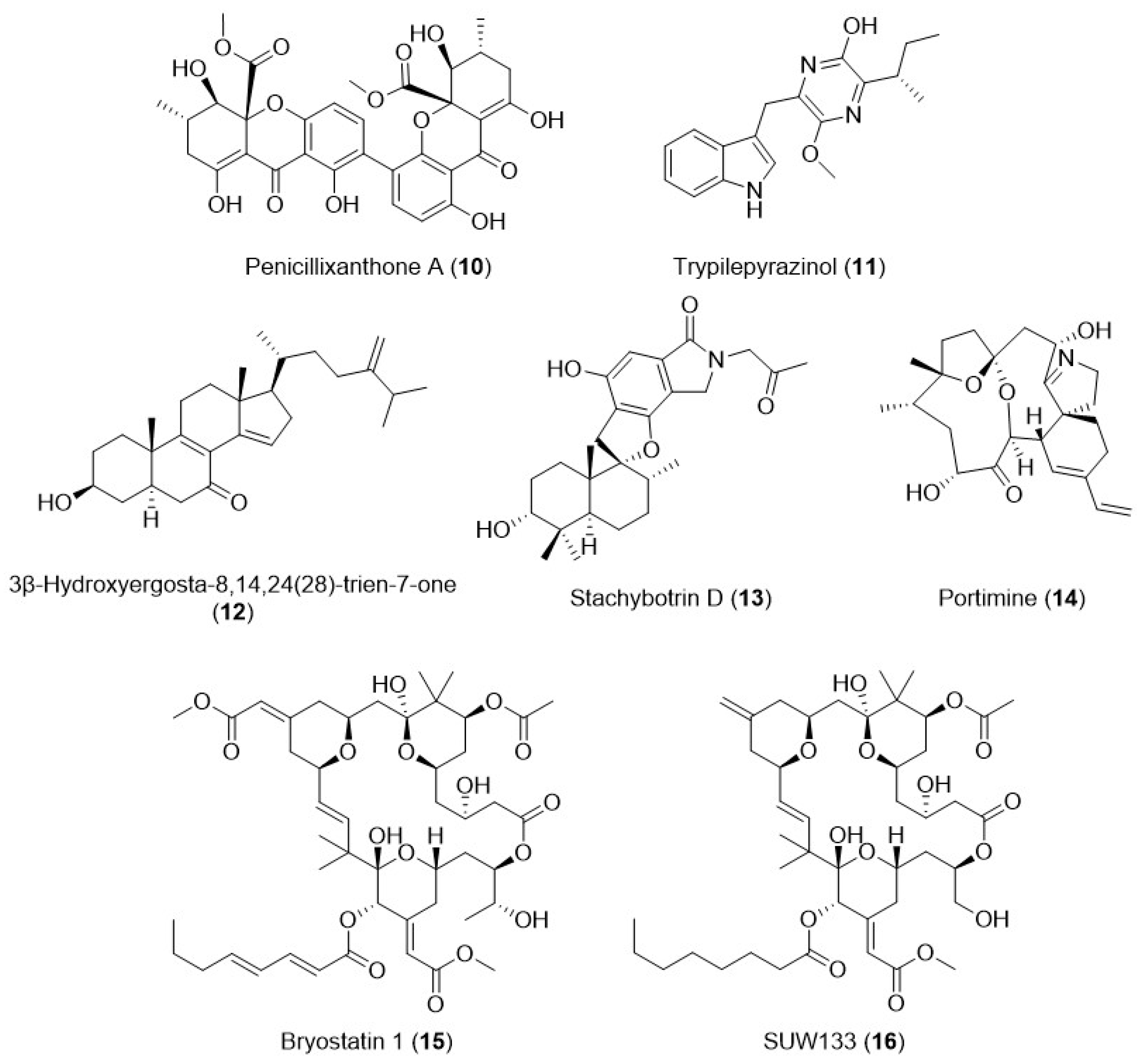
| Penicillixanthone A (10) | Xanthone dimer | Aspergillus fumigatus | Entry inhibition |
| Trypilepyrazinol (11) | Pyrazine derivative | Penicillium sp. | Unknown |
| 3β-Hydroxyergosta-8,14,24(28)-trien-7-one (12) | Ergostane analog | Penicillium sp. | Unknown |
| Stachybotrin D (13) | Phenylspirodrimane derivative | Stachybotrys chartarum | Non-nucleoside reverse transcriptase inhibition |
| Portimine (14) | Polyketide | Vulcanodinium rugosum | Replication and reverse transcriptase inhibition |
| Bryostatin-1 (15) | Macrocyclic lactone derivative | Candidatus Endobugula sertula | Multitarget activity |
| Cnidarins (CNID 1–3) | Protein | Synthecium sp. | Entry/Fusion inhibition |
| Griffithin | Lectin protein | Griffithsia sp. | Entry inhibition |
| Divamides A and B | Lanthipeptides | Symbiotic bacteria living in tunicate Didemnum molle | Unknown |
| C-Phycocyanin | Phycobiliprotein | Spirulina sp. | Multitarget activity |
Disclaimer/Publisher’s Note: The statements, opinions and data contained in all publications are solely those of the individual author(s) and contributor(s) and not of MDPI and/or the editor(s). MDPI and/or the editor(s) disclaim responsibility for any injury to people or property resulting from any ideas, methods, instructions or products referred to in the content. |
© 2026 by the authors. Licensee MDPI, Basel, Switzerland. This article is an open access article distributed under the terms and conditions of the Creative Commons Attribution (CC BY) license.
Share and Cite
Santos, T.; Pintão, A.; Marques, C.S.; Brandão, P. Marine-Derived Defenses Against HIV: Emerging Bioactive Molecules from the Seas. Mar. Drugs 2026, 24, 70. https://doi.org/10.3390/md24020070
Santos T, Pintão A, Marques CS, Brandão P. Marine-Derived Defenses Against HIV: Emerging Bioactive Molecules from the Seas. Marine Drugs. 2026; 24(2):70. https://doi.org/10.3390/md24020070
Chicago/Turabian StyleSantos, Tiago, Ana Pintão, Carolina S. Marques, and Pedro Brandão. 2026. "Marine-Derived Defenses Against HIV: Emerging Bioactive Molecules from the Seas" Marine Drugs 24, no. 2: 70. https://doi.org/10.3390/md24020070
APA StyleSantos, T., Pintão, A., Marques, C. S., & Brandão, P. (2026). Marine-Derived Defenses Against HIV: Emerging Bioactive Molecules from the Seas. Marine Drugs, 24(2), 70. https://doi.org/10.3390/md24020070