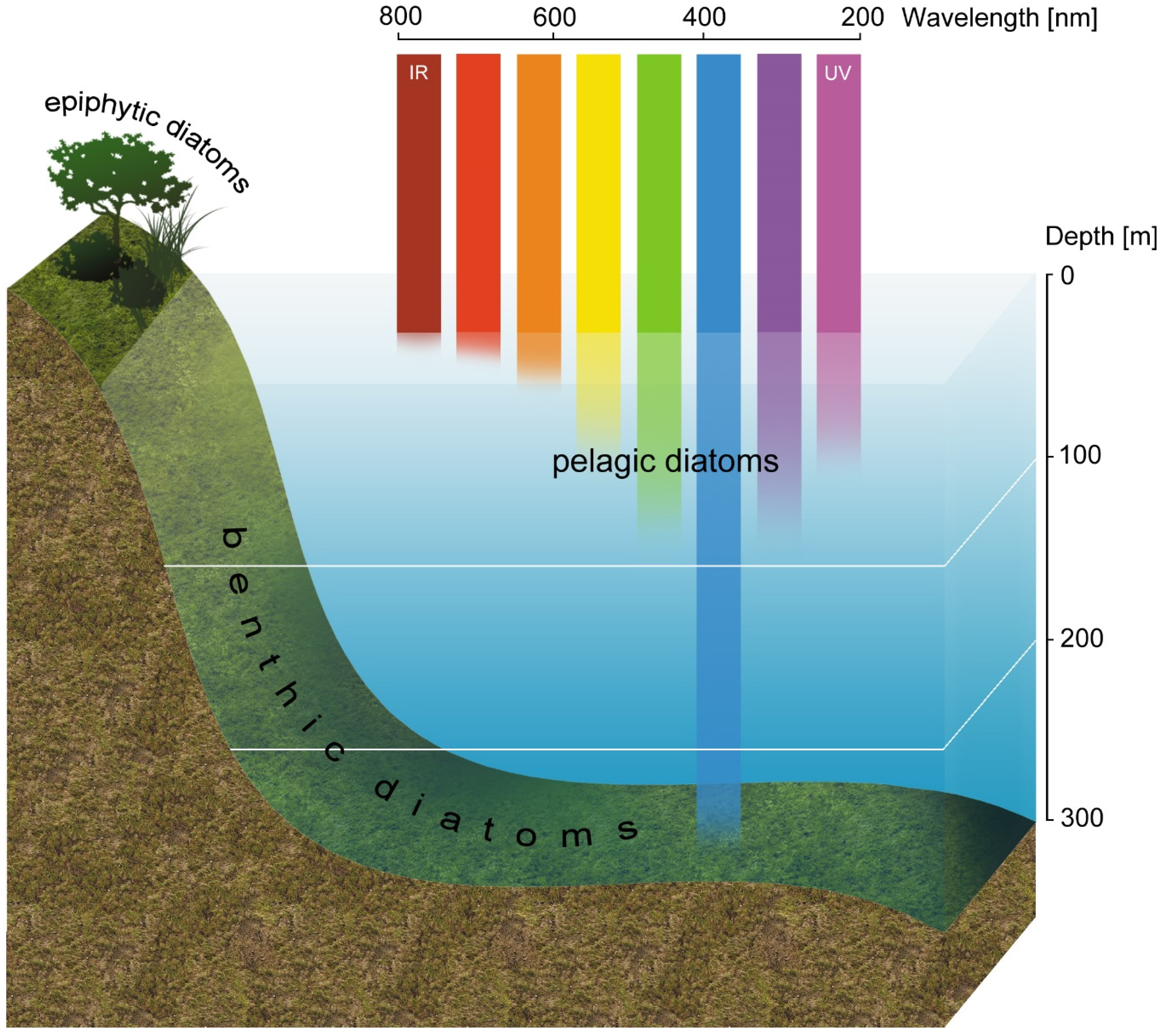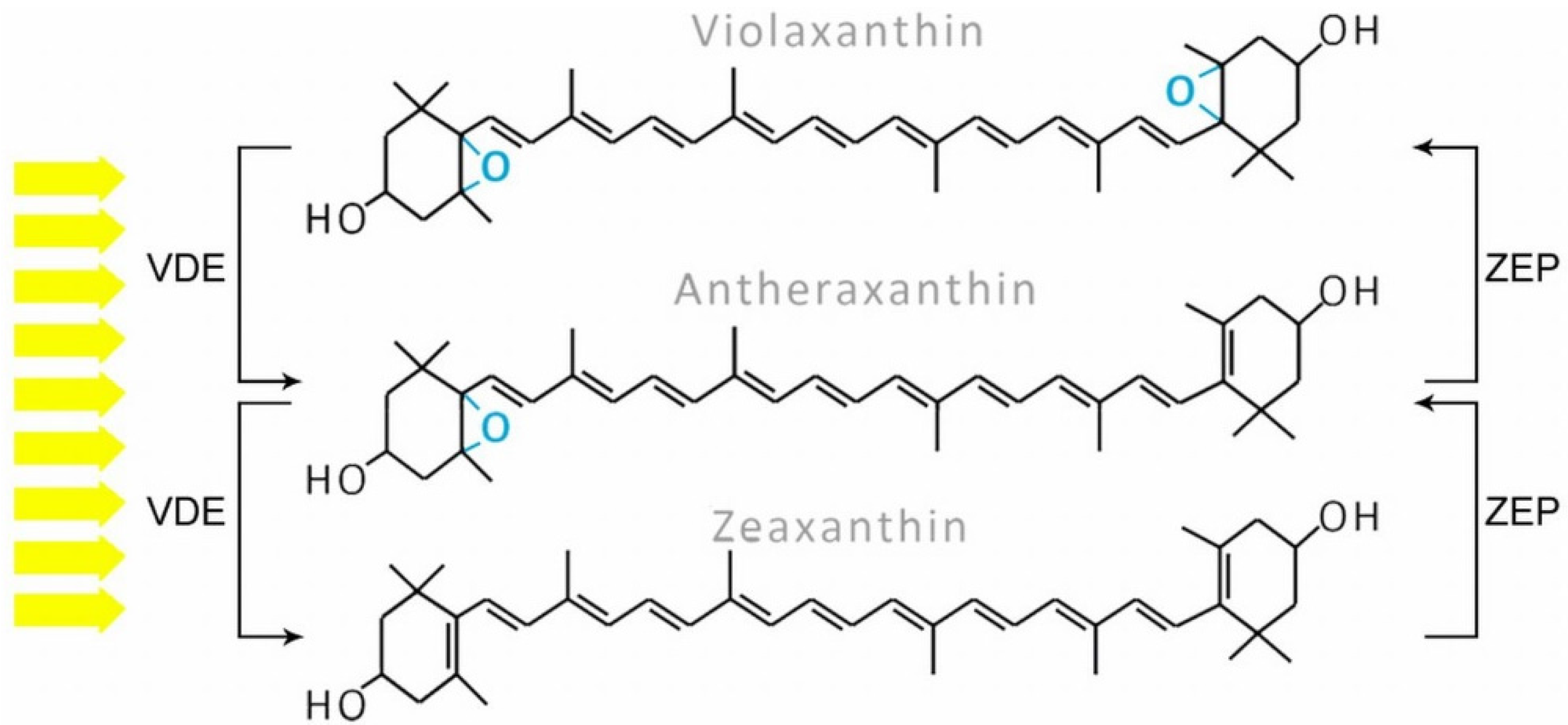

Photosynthetic Pigments in Diatoms
Abstract
1. Introduction
2. Physical and Chemical Properties of Photosynthetic Pigments of Diatoms
2.1. Chlorophylls
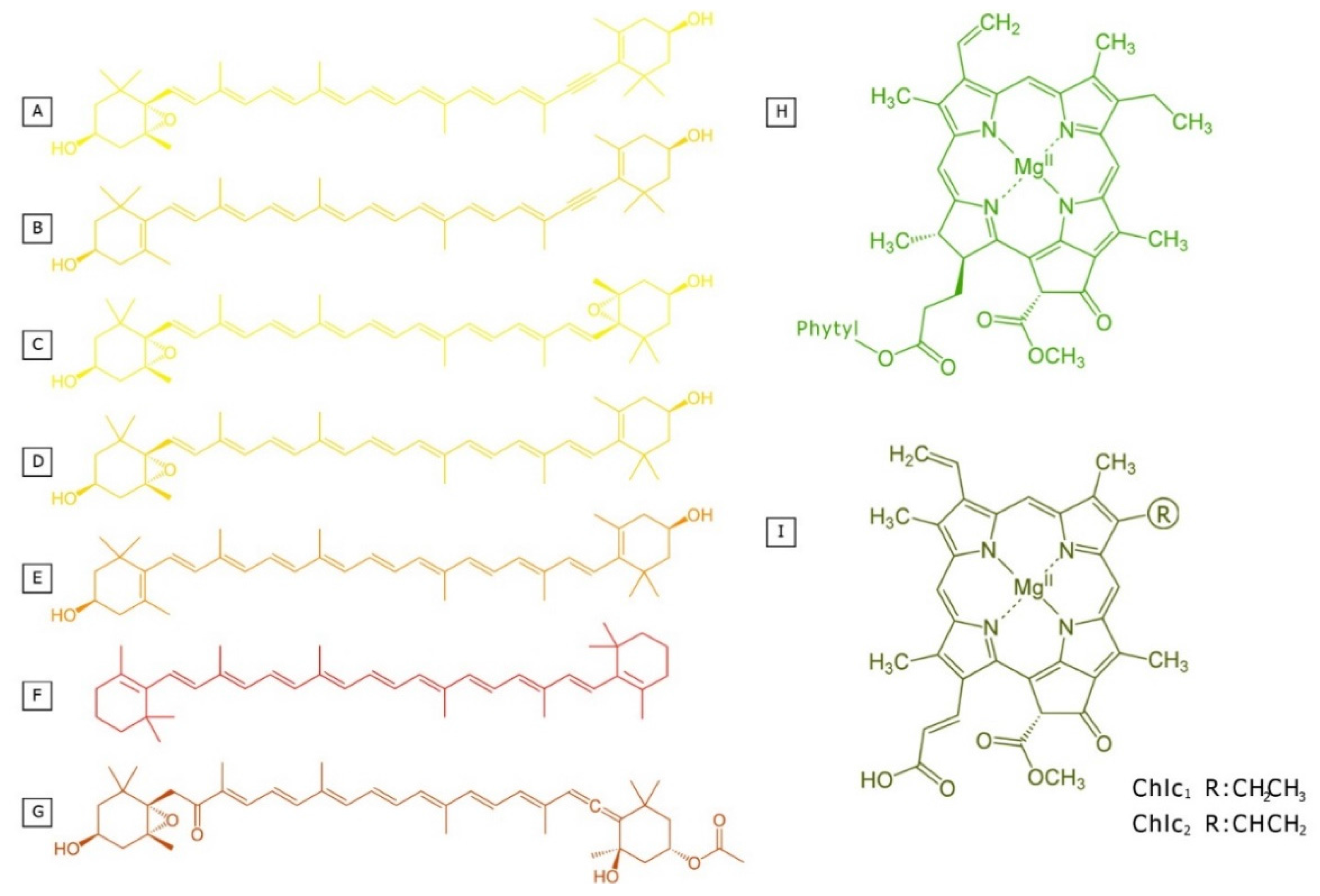
2.2. Carotenoids
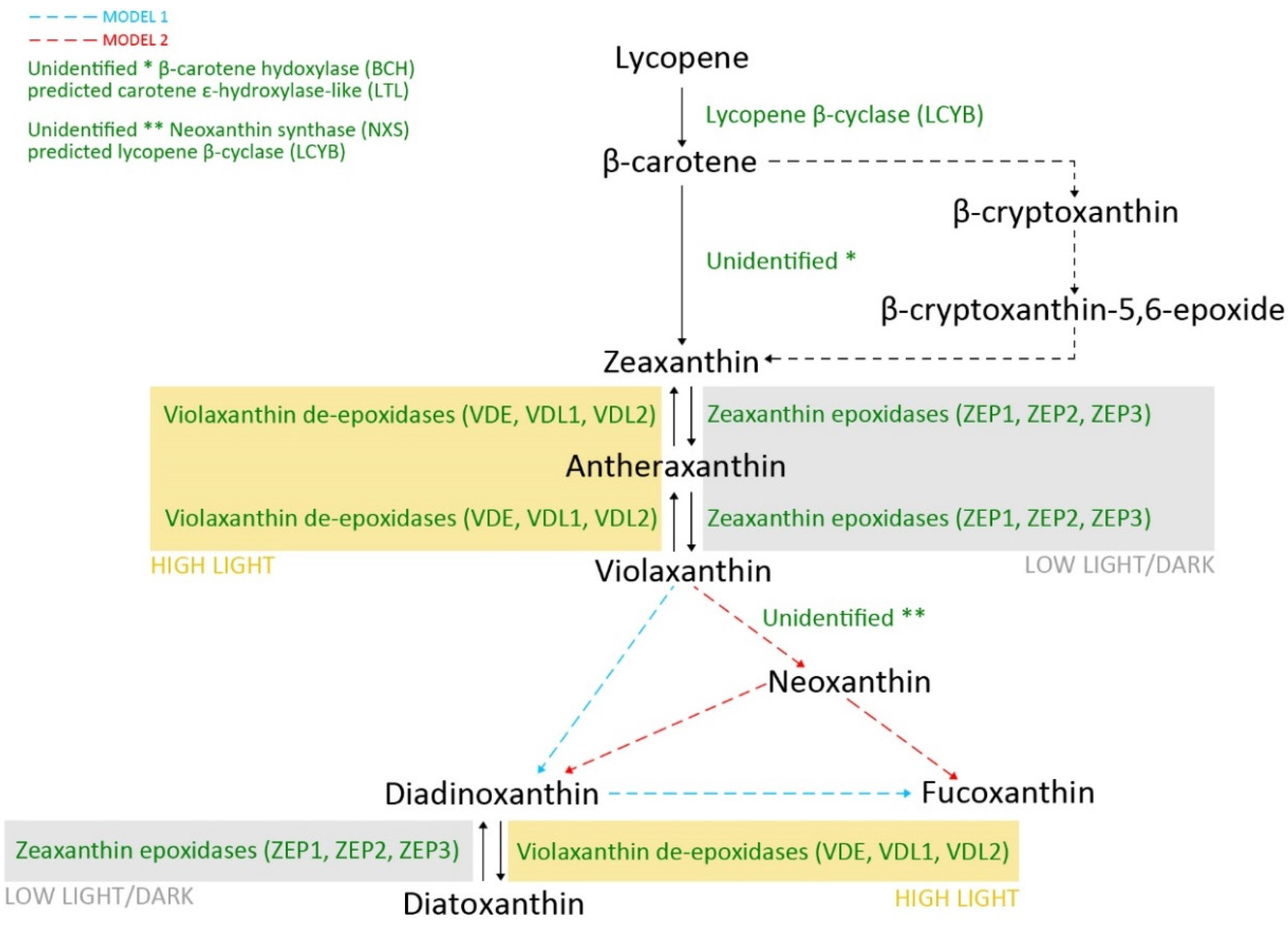
3. Biosynthesis Pathways
4. Regulation of Pigment Level in the Cell

| Conditions | Species | Changes in Pigment Content | ||||||||
|---|---|---|---|---|---|---|---|---|---|---|
| Chl a | Chl c | β-Car | Fx | Ddx | Dtx | Vx | Ax | Zx | ||
| HL (140 μmol photons m−2·s−1) in comparison to LL (40 μmol photons m−2·s−1), 16 h light/8 h dark photoperiod [51] | Cyclotella meneghiniana | N/A | const | const | const | ↑ | ↑ | N/A | N/A | N/A |
| Iron-replete medium (12 μM) compared to iron-reduced medium (1 μM) in HL (140 μmol photons m−2·s−1) [52] | Cyclotella meneghiniana | ↑ | N/A | N/A | N/A | ↓ | N/A | N/A | N/A | |
| Iron-replete medium (12 μM) compared to iron-reduced medium (1 μM) in LL (40 μmol photons m−2·s−1) [52] | Cyclotella meneghiniana | ↑ | N/A | N/A | N/A | const | N/A | N/A | N/A | |
| HL (300 μmol photons m−2·s−1) compared to LL (50 μmol photons m−2·s−1), 14 h light/10 h dark photoperiod [53] | Phaeodactylum tricornutum | N/A | ↓ | ↑ | ↓ | ↑ | ↑ | N/A | N/A | N/A |
| B-HL (450 PFD) compared to BR-HL (450 PFD in R:B ratio 0.25) [43] | Pseudonitzschia multistriata | ↓ | ↑ | const | ↓ | ↓ | ↓ | N/A | N/A | N/A |
| B-LL (250 PFD) compared to BR-LL (250 PFD in R:B ratio 0.25) [43] | Pseudonitzschia multistriata | ↓ | ↑ | const | ↓ | ↓ | ↓ | N/A | N/A | N/A |
| B-LL (24 (10 absorbed) μmol photons m−2·s−1) compared to W-LL (40 (10 absorbed) μmol photons m−2·s−1) [54] | Phaeodactylum tricornutum | ↑ | const | const | const | const | N/A | ↓ | N/A | N/A |
| R-LL (41 (10 absorbed) μmol photons m−2·s−1) compared to W-LL (40 (10 absorbed) μmol photons m−2 s−1) [54] | Phaeodactylum tricornutum | ↑ | ↓ | ↑ | ↓ | ↓ | N/A | ↓ | N/A | N/A |
| HL (1250 μmol photons m−2·s−1) in comparison to LL (40 μmol photons m−2·s−1), 12 h light/12 h dark photoperiod [55] | Phaeodactylum tricornutum | ↓ | const | const | const | ↓ | ↑ | N/A | N/A | N/A |
| 6 days acclimated to shift from BL (24 (10 absorbed) μmol photons m−2·s−1) to RL (40 (10 absorbed) μmol photons m−2·s−1) [45] | Phaeodactylum tricornutum | ↑ | N/A | N/A | N/A | ↓ | N/A | N/A | N/A | N/A |
| 6 days acclimated to shift from RL (40 (10 absorbed) μmol photons m−2·s−1) to BL (24 (10 absorbed) μmol photons m−2·s−1) [45] | Phaeodactylum tricornutum | const | N/A | N/A | N/A | ↑ | N/A | N/A | N/A | N/A |
| 14 days dark storage culture [56] | Thalassiosira weissflogii | ↓ | ↓ | ↓ | ↓ | ↓ | N/A | N/A | N/A | |
| HL (700 μmol photons m−2·s−1) in comparison to LL (40 μmol photons m−2·s−1), 16 h light/8 h dark photoperiod [24] | Cyclotella meneghiniana | N/A | N/A | N/A | N/A | ↓ | ↑ | const | ↑ | ↑ |
| high nitrogen culture (18 mM) compared to low nitrogen culture (6 mM) in LL (100 μmol photons m−2·s−1) [8] | Odontella aurita | N/A | N/A | N/A | ↑ | N/A | N/A | N/A | N/A | N/A |
5. Localization in the Cell
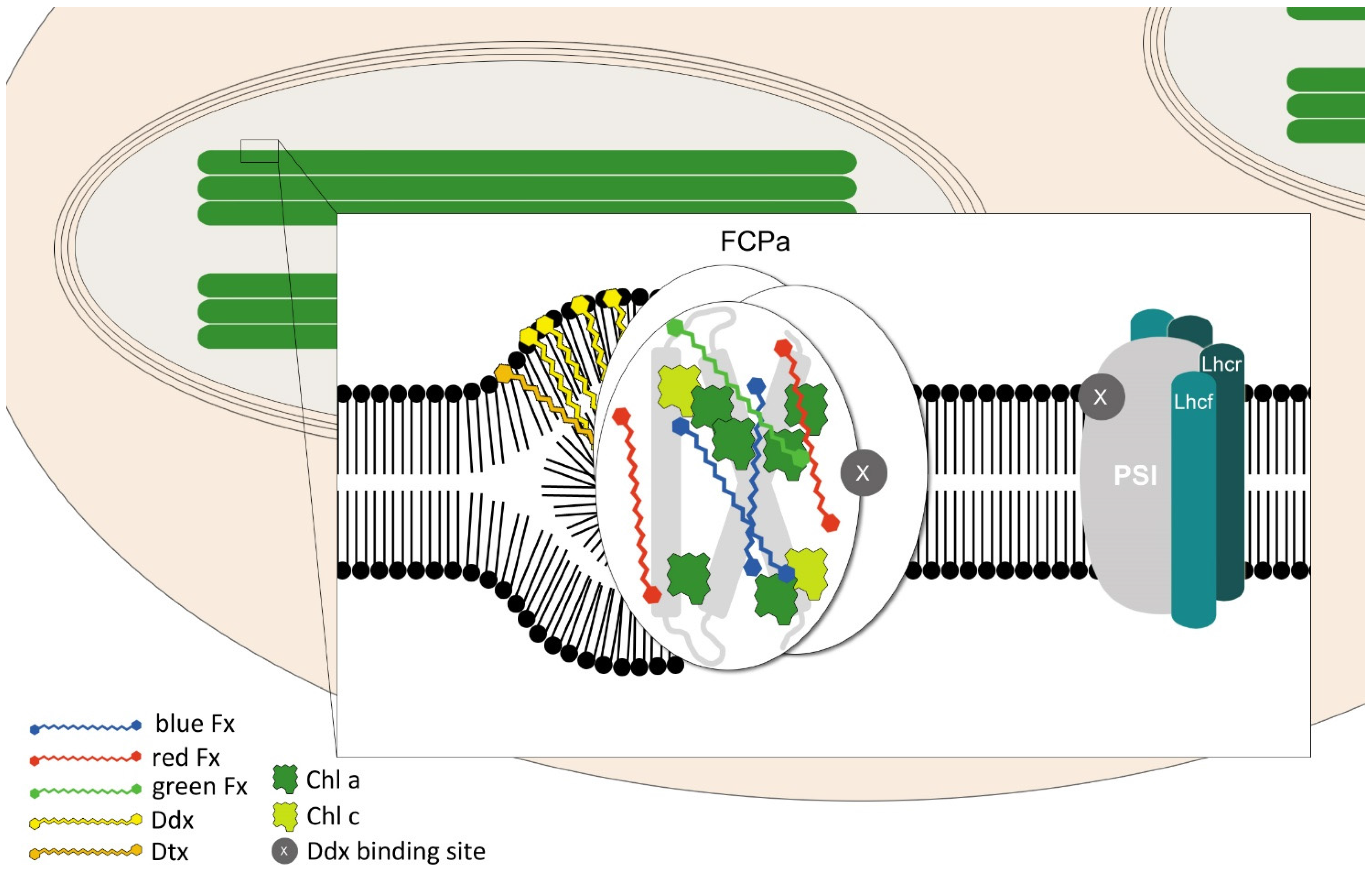
6. Pigments Involved in Photosynthesis
| Species | Morphology | Colony-Forming | Lifestyle | Habitat |
|---|---|---|---|---|
| Actinella punctata | eunotioid | yes | benthic | acidic, humic lakes, and ponds |
| Actinocyclus normanii | centric | no | planktonic | coasts, brackish waters, sediment core |
| Amphora minutissima | asymmetrical biraphid | no | benthic | marine habitats, often epiphytic |
| Bacillaria paradoxa | nitzschioid | yes | benthic | marine, brackish, and freshwaters |
| Campylodiscus hibernicus | surirelloid | no | benthic | epipelon in fresh, brackish, marine waters |
| Cocconeis pediculus | monoraphid | no | benthic | planktonic, epiphytic, epilithic habitats |
| Cyclotella distinguenda | centric | no | planktonic | preferentially alkaline waters |
| Cymbella amplificata | asymmetrical biraphid | yes | benthic | oligotrophic waters |
| Diatoma vulgaris | araphid | yes | benthic | fresh and brackish water |
| Discostella stelligera | centric | no | planktonic | primarily in lakes and large rivers |
| Distrionella incognita | araphid | yes | benthic | alkaline lakes and streams |
| Epithemia turgida | epithemioid | no | benthic | epiphyte on coarse filamentous algae |
| Eucocconeis alpestris | monoraphid | no | benthic | the littoral zone of oligotrophic lakes |
| Eunotia exigua | eunotioid | N/A | benthic | moist soils, wet walls, streams, waterfalls |
| Fragilaria crotonensis | araphid | yes | planktonic | mesotrophic lakes, water column |
| Gyrosigma acuminatum | symmetrical biraphid | no | benthic | primarily an epipelic species |
| Navicula reinhardtii | symmetrical biraphid | no | benthic | fresh water, slightly brackish |
| Nitzschia regula | nitzschioid | no | benthic | cold-water, ponds, and streams |
| Phaeodactylum tricornutum | fusiform, triradiate, oval | no | planktonic | marine coastal waters |
| Pinnularia rabenhorstii | symmetrical biraphid | no | benthic | cold oligotrophic waters in the mountains |
| Pleurosira laevis | centric | yes | benthic | naturally saline or polluted waters |
| Thalassiosira weissflogii | centric | N/A | planktonic | primarily in marine waters |

7. Pigments Involved in Photoprotection
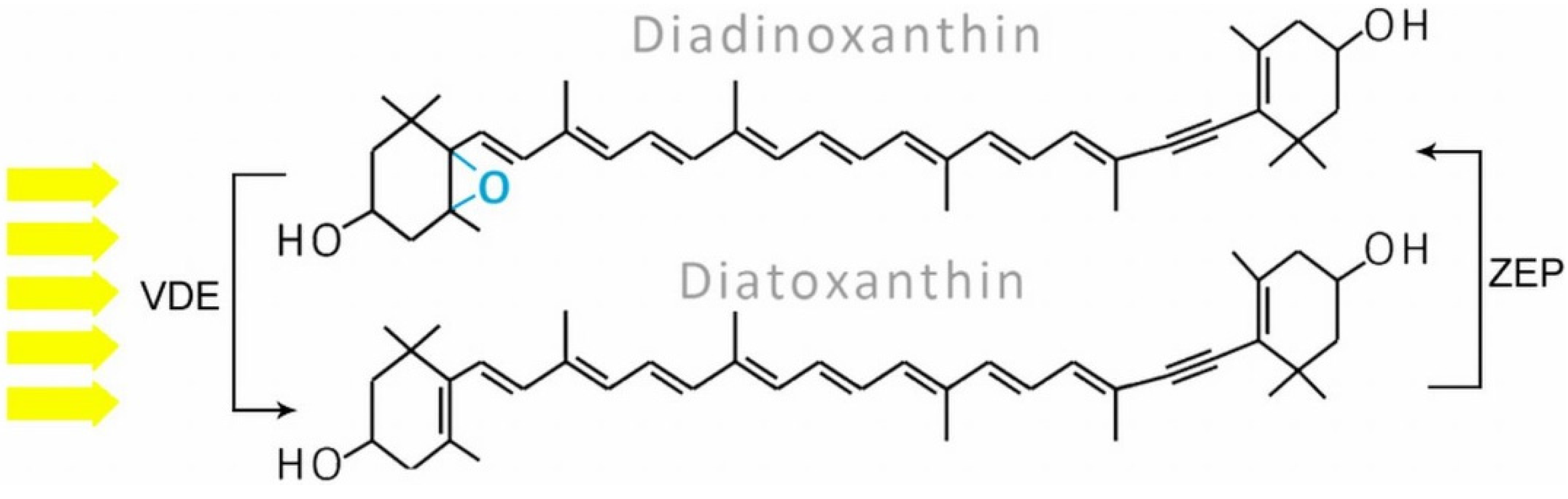

8. Methods of Pigment Analysis and Identification
8.1. Extraction of Pigments
8.2. HPLC Analysis of Pigments
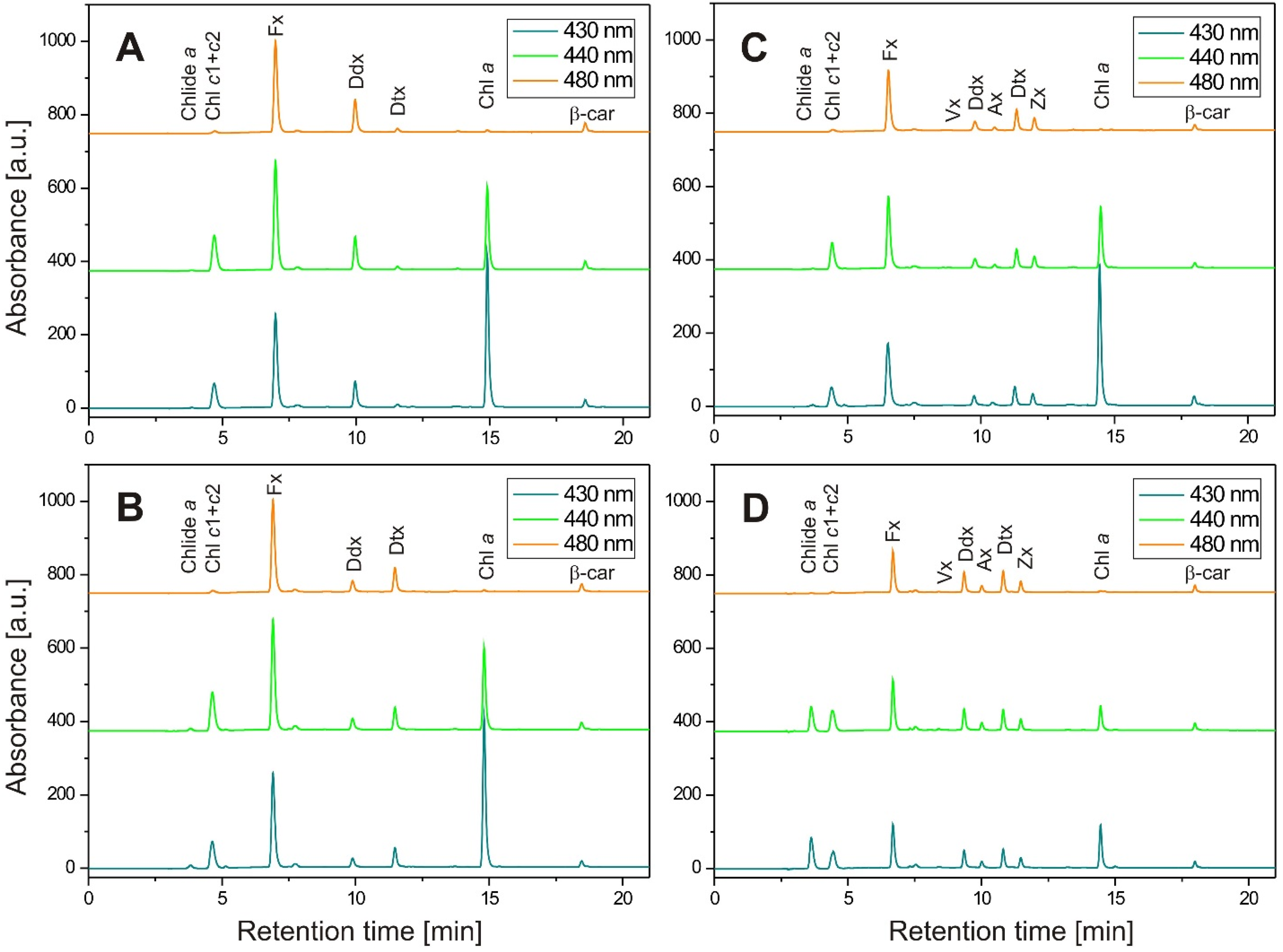
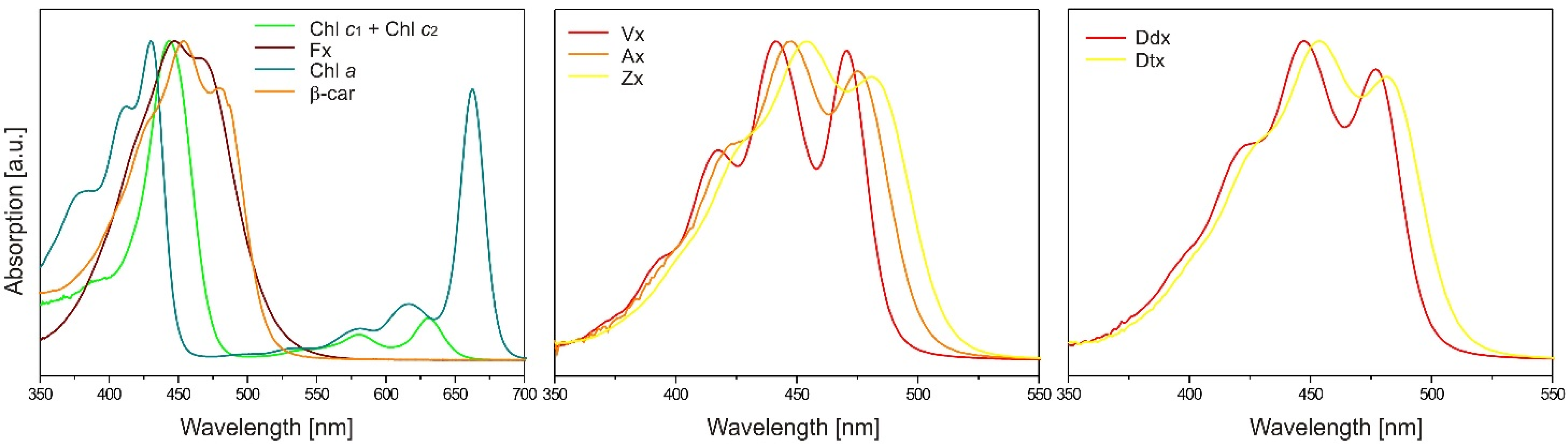
| Pigment | Literature Data | HPLC Data * | ||||
|---|---|---|---|---|---|---|
| Solvent | λmax (nm) | E (L g−1·cm−1) | Reference | λmax (nm) | Retention Time (min) | |
| Chlorophyll c1 | acetone (90%) | 443 | 318 | [120] | ||
| Chlorophyll c2 | acetone (90%) | 444 | 374 | [120] | ||
| Chlorophyll c1 + c2 | N/A | N/A | N/A | N/A | 443 | 4.7 |
| Fucoxanthin | petrol ether | 449 | 165 | [121] | 447 | 7.0 |
| ethanol | 450 | 114 | [122] | |||
| acetone | 443 | 165 | [123] | |||
| Violaxanthin | N/A | 443 | N/A | [114] | 441 | 8.4 |
| Diadinoxanthin | acetone | 448 | 224 | [124] | 447 | 9.9 |
| methanol | 445 | 225 | [124] | |||
| hexane | 446 | 211 | [124] | |||
| Anteraxanthin | ethanol | 446 | 235 | [125] | 447 | 10.8 |
| Diatoxanthin | acetone | 454 | N/A | [114] | 454 | 11.3 |
| Zeaxanthin | ethanol | 452 | 254 | [126] | 453 | 11.9 |
| Chlorophyll a | acetone | 662 | 88.15 | [127] | 429 | 14.9 |
| β-carotene | etanol | 453 | 262 | [128] | 454 | 18.7 |
| hexane | 453 | 259.2 | [128] | |||
| acetone | 454 | 250 | [129] | |||
9. Significance of Diatom Pigments
10. Methods of Purification of Diatom Pigments
11. Conclusions
Acknowledgments
Author Contributions
Conflicts of Interest
Abbreviations
References
- Bozarth, A.; Maier, U.G.; Zauner, S. Diatoms in biotechnology: Modern tools and applications. Appl. Microbiol. Biotechnol. 2009, 82, 195–201. [Google Scholar] [CrossRef] [PubMed]
- Martin-Jézéquel, V.; Hildebrand, M.; Brzezinski, M.A. Silicon metabolisim in diatoms: Implications for growth. J. Phycol. 2000, 36, 821–840. [Google Scholar] [CrossRef]
- Allen, A.E.; Dupont, C.L.; Oborník, M.; Horák, A.; Nunes-Nesi, A.; McCrow, J.P.; Zheng, H.; Johnson, D.A.; Hu, H.; Fernie, A.R.; et al. Evolution and metabolic significance of the urea cycle in photosynthetic diatoms. Nature 2011, 473, 203–207. [Google Scholar] [CrossRef] [PubMed]
- Lee, J.-B.; Hayashi, K.; Hirata, M.; Kuroda, E.; Suzuki, E.; Kubo, Y.; Hayashi, T. Antiviral sulfated polysaccharide from Navicula directa, a diatom collected from deep-sea water in Toyama Bay. Biol. Pharm. Bull. 2006, 29, 2135–2139. [Google Scholar] [CrossRef] [PubMed]
- Perl, T.M.; Bédard, L.; Kosatsky, T.; Hockin, J.C.; Todd, E.C.; Remis, R.S. An outbreak of toxic encephalopathy caused by eating mussels contaminated with domoic acid. N. Engl. J. Med. 1990, 322, 1775–1780. [Google Scholar] [CrossRef] [PubMed]
- Prestegard, S.K.; Oftedal, L.; Nygaard, G.; Skjaerven, K.H.; Knutsen, G.; Døskeland, S.O.; Coyne, R.T.; Herfindal, L. Marine benthic diatoms contain compounds able to induce leukemia cell death and modulate blood platelet activity. Mar. Drugs 2009, 7, 605–623. [Google Scholar] [CrossRef] [PubMed]
- Peng, K.-T. Delta 5 Fatty Acid Desaturase Upregulates the Synthesis of Polyunsaturated Fatty Acids in the Marine Diatom Phaeodactylum tricornutum. J. Agric. Food Chem. 2014, 62, 8773–8776. [Google Scholar] [CrossRef] [PubMed]
- Xia, S.; Wang, K.; Wan, L.; Li, A.; Hu, Q.; Zhang, C. Production, characterization, and antioxidant activity of fucoxanthin from the marine diatom odontella aurita. Mar. Drugs 2013, 11, 2667–2681. [Google Scholar] [CrossRef] [PubMed]
- Gastineau, R.; Turcotte, F.; Pouvreau, J.B.; Morançais, M.; Fleurence, J.; Windarto, E.; Arsad, S.; Prasetiya, F.S.; Jaouen, P.; Babin, M.; et al. Marennine, promising blue pigments from a widespread Haslea diatom species complex. Mar. Drugs 2014, 12, 3161–3189. [Google Scholar] [CrossRef] [PubMed]
- Gastineau, R.; Davidovich, N.A.; Bardeau, J.F.; Caruso, A.; Leignel, V.; Hardivillier, Y.; Rince, Y.; Jacquette, B.; Davidovich, O.I.; Gaudin, P.; et al. Haslea karadagensis (Bacillariophyta): A second blue diatom, recorded from the Black Sea and producing a novel blue pigment. Eur. J. Phycol. 2012, 47, 469–479. [Google Scholar] [CrossRef]
- Gelzinis, A.; Butkus, V.; Songaila, E.; Augulis, R.; Gall, A.; Büchel, C.; Robert, B.; Abramavicius, D.; Zigmantas, D.; Valkunas, L. Mapping energy transfer channels in fucoxanthin-chlorophyll protein complex. Biochim. Biophys. Acta Bioenerg. 2015, 1847, 241–247. [Google Scholar] [CrossRef] [PubMed]
- Jeffrey, S.; Vesk, M. Introduction to marine phytoplankton and their pigment signatures. In Phytoplankton Pigments in Oceanography: Guidelines to Modern Methods; Jeffrey, S., Mantoura, R., Wright, S., Eds.; UNESCO Publishing: Paris, France, 1997; pp. 37–84. [Google Scholar]
- Zapata, M.; Garrido, J.; Jeffrey, S. Chlorophyll c Pigments: Current Status. In Chlorophylls and Bacteriochlorophylls; Grimm, B., Porra, R., Rüdiger, W., Scheer, H., Eds.; Springer Netherlands: Dordrecht, The Netherlands, 2006; pp. 39–53. [Google Scholar]
- Stauber, J.L.; Jeffrey, S.W. Photosynthetic pigments in fifty-one species of marine diatoms. J. Phycol. 1988, 24, 158–172. [Google Scholar] [CrossRef]
- Fookes, C.; Jeffrey, S. The structure of chlorophyll c3, a novel marine photosynthetic pigment. J. Chem. Soc. Chem. Commun. 1989, 23, 1827–1828. [Google Scholar] [CrossRef]
- Britton, G. UV/visible spectroscopy. In Carotenoids: Spectroscopy, Vol 1B; Liaaen-Jensen, S., Britton, G., Pfander, H., Eds.; Birkhäuser Verlag: Basel, Switzerland, 1995; pp. 13–63. [Google Scholar]
- Zigmantas, D.; Hiller, R.G.; Sharples, F.P.; Frank, H.A.; Sundstrom, V.; Polivka, T. Effect of a conjugated carbonyl group on the photophysical properties of carotenoids. Phys. Chem. Chem. Phys. 2004, 6, 3009–3016. [Google Scholar] [CrossRef]
- Rontani, J.-F.; Beker, B.; Raphel, D.; Baillet, G. Photodegradation of chlorophyll phytyl chain in dead phytoplanktonic cells. J. Photochem. Photobiol. A Chem. 1995, 85, 137–142. [Google Scholar] [CrossRef]
- Britton, G.; Liaaen-Jensen, S.; Pfander, H. Carotenoids, 1st ed.; Britton, G., Liaaen-Jensen, S., Pfander, H., Eds.; Birkhäuser Verlag: Basel, Switzerland, 2004. [Google Scholar]
- Subczynski, W.K.; Markowska, E.; Sielewiesiuk, J. Effect of polar carotenoids on the oxygen diffusion-concentration product in lipid bilayers. An EPR spin label study. Biochim. Biophys. Acta Biomembr. 1991, 1068, 68–72. [Google Scholar] [CrossRef]
- Berglund, A.H.; Nilsson, R.; Liljenberg, C. Permeability of large unilamellar digalactosyldiacylglycerol vesicles for protons and glucose—Influence of α-tocopherol, β-carotene, zeaxanthin and cholesterol. Plant Physiol. Biochem. 1999, 37, 179–186. [Google Scholar] [CrossRef]
- Refvem, T.; Strand, A.; Kjeldstad, B.; Haugan, J.A.; Liaaen-Jensen, S. Stereoisomerization of Allenic Carotenoids—Kinetic, Thermodynamic and Mechanistic Aspects. Acta Chem. Scand. 1999, 53, 114–123. [Google Scholar] [CrossRef]
- Haugan, J.A.; Englert, G.; Liaaen-Jensen, S.; Frimpong-Manso, S.; Springborg, J.; Wang, D.-N.; Christensen, S.B. Algal Carotenoids. 50. Alkali Lability of Fucoxanthin—Reactions and Products. Acta Chem. Scand. 1992, 46, 614–624. [Google Scholar] [CrossRef]
- Lohr, M.; Wilhelm, C. Algae displaying the diadinoxanthin cycle also possess the violaxanthin cycle. Proc. Natl. Acad. Sci. USA 1999, 96, 8784–8789. [Google Scholar] [CrossRef] [PubMed]
- Frank, H.A.; Cogdell, R.J. Carotenoids in photosynthesis. Photochem. Photobiol. 1996, 63, 257–264. [Google Scholar] [CrossRef] [PubMed]
- Kim, S.M.; Jung, Y.J.; Kwon, O.N.; Cha, K.H.; Um, B.H.; Chung, D.; Pan, C.H. A potential commercial source of fucoxanthin extracted from the microalga Phaeodactylum tricornutum. Appl. Biochem. Biotechnol. 2012, 166, 1843–1855. [Google Scholar] [CrossRef] [PubMed]
- Lohr, M.; Wilhelm, C. Xanthophyll synthesis in diatoms: Quantification of putative intermediates and comparison of pigment conversion kinetics with rate constants derived from a model. Planta 2001, 212, 382–391. [Google Scholar] [CrossRef] [PubMed]
- Bowler, C.; Allen, A.E.; Badger, J.H.; Grimwood, J.; Jabbari, K.; Kuo, A.; Maheswari, U.; Martens, C.; Maumus, F.; Otillar, R.P.; et al. The Phaeodactylum genome reveals the evolutionary history of diatom genomes. Nature 2008, 456, 239–244. [Google Scholar] [CrossRef] [PubMed]
- Armbrust, E.V.; Berges, J.A.; Bowler, C.; Green, B.R.; Martinez, D.; Putnam, N.H.; Zhou, S.; Allen, A.E.; Apt, K.E.; Bechner, M.; et al. The genome of the diatom Thalassiosira pseudonana: Ecology, evolution, and metabolism. Science 2004, 306, 79–86. [Google Scholar] [CrossRef] [PubMed]
- Bertrand, M. Carotenoid biosynthesis in diatoms. Photosynth. Res. 2010, 106, 89–102. [Google Scholar] [CrossRef] [PubMed]
- Coesel, S.; Oborník, M.; Varela, J.; Falciatore, A.; Bowler, C. Evolutionary origins and functions of the carotenoid biosynthetic pathway in marine diatoms. PLoS ONE 2008, 3, 1–16. [Google Scholar] [CrossRef] [PubMed]
- Stransky, H.; Hager, A. Das Carotinoidmuster und die Verbreitung des lichtinduzierten Xanthophyllcyclus in verschiedenen Algenklassen. Arch. Mikrobiol. 1970, 73, 315–323. [Google Scholar] [CrossRef] [PubMed]
- Montsant, A.; Allen, A.E.; Coesel, S.; Mangogna, M.; Siaut, M.; Heijde, M.; Jabbari, K.; Maheswari, U.; Rayko, E.; Vardi, A.; et al. Identification and comparative genomic analysis of signaling and regulatory components in the diatom Thalassiosira pseudonana. J. Phycol. 2007, 43, 585–604. [Google Scholar] [CrossRef]
- Dambek, M.; Eilers, U.; Bretenbach, J.; Steiger, S.; Büchel, C.; Sandmann, G. Biosynthesis of fucoxanthin and diadinoxanthin and function of initial pathway genes in Phaeodactylum tricornutum. J. Exp. Bot. 2012, 63, 5607–5612. [Google Scholar] [CrossRef] [PubMed]
- Mikami, K.; Hosokawa, M. Biosynthetic pathway and health benefits of fucoxanthin, an algae-specific xanthophyll in brown seaweeds. Int. J. Mol. Sci. 2013, 14, 13763–13781. [Google Scholar] [CrossRef] [PubMed]
- Grimm, B.; Porra, R.J.; Rüdiger, W.; Scheer, H. Chlorophylls and Bacteriochlorophylls: Biochemistry, Biophysics, Functions and Applications, 1st ed.; Grimm, B., Porra, R.J., Rüdiger, W., Scheer, H., Eds.; Springer Netherlands: Dordrecht, The Netherlands, 2006; Volume 25. [Google Scholar]
- Hunsperger, H.M.; Randhawa, T.; Cattolico, R.A. Extensive horizontal gene transfer, duplication, and loss of chlorophyll synthesis genes in the algae. BMC Evol. Biol. 2015, 15, 1–19. [Google Scholar]
- Disch, A.; Schwender, J.; Muller, C.; Lichtenthaler, H.K.; Rohmer, M. Distribution of the mevalonate and glyceraldehyde phosphate/pyruvate pathways for isoprenoid biosynthesis in unicellular algae and the cyanobacterium Synechocystis PCC 6714. Biochem. J. 1998, 333, 381–388. [Google Scholar] [CrossRef] [PubMed]
- Ito, H.; Ohtsuka, T.; Tanaka, A. Conversion of chlorophyll b to chlorophyll a via 7-hydroxymethyl chlorophyll. J. Biol. Chem. 1996, 271, 1475–1479. [Google Scholar] [CrossRef] [PubMed]
- Porra, R.J. Recent Progress in Porphyrin and Chlorophyll Biosynthesis. Photochem. Photobiol. 1997, 65, 492–516. [Google Scholar] [CrossRef]
- Vidoudez, C.; Pohnert, G. Comparative metabolomics of the diatom Skeletonema marinoi in different growth phases. Metabolomics 2012, 8, 654–669. [Google Scholar] [CrossRef]
- Sánchez-Saavedra, M.P.; Voltolina, D. Effect of photon fluence rates of white and blue-green light on growth efficiency and pigment content of three diatom species in batch cultures. Cienc. Mar. 2002, 28, 273–279. [Google Scholar]
- Brunet, C.; Chandrasekaran, R.; Barra, L.; Giovagnetti, V.; Corato, F.; Ruban, A.V. Spectral radiation dependent photoprotective mechanism in the diatom Pseudo-nitzschia multistriata. PLoS ONE 2014, 9, 1–10. [Google Scholar] [CrossRef] [PubMed]
- Lepetit, B.; Goss, R.; Jakob, T.; Wilhelm, C. Molecular dynamics of the diatom thylakoid membrane under different light conditions. Photosynth. Res. 2012, 111, 245–257. [Google Scholar] [CrossRef] [PubMed]
- Jungandreas, A.; Costa, B.S.; Jakob, T.; von Bergen, M.; Baumann, S.; Wilhelm, C. The acclimation of Phaeodactylum tricornutum to blue and red light does not influence the photosynthetic light reaction but strongly disturbs the carbon allocation pattern. PLoS ONE 2014, 9, 1–14. [Google Scholar]
- Veuger, B.; van Oevelen, D. Long-term pigment dynamics and diatom survival in dark sediment. Limnol. Oceanogr. 2011, 56, 1065–1074. [Google Scholar] [CrossRef]
- Järup, L. Hazards of heavy metal contamination. Br. Med. Bull. 2003, 68, 167–182. [Google Scholar] [CrossRef] [PubMed]
- Yoshinaga, R.; Niwa-Kubota, M.; Matsui, H.; Matsuda, Y. Characterization of iron-responsive promoters in the marine diatom Phaeodactylum tricornutum. Mar. Genom. 2014, 16, 55–62. [Google Scholar] [CrossRef] [PubMed]
- Allen, A.E.; Laroche, J.; Maheswari, U.; Lommer, M.; Schauer, N.; Lopez, P.J.; Finazzi, G.; Fernie, A.R.; Bowler, C. Whole-cell response of the pennate diatom Phaeodactylum tricornutum to iron starvation. Proc. Natl. Acad. Sci. USA 2008, 105, 10438–10443. [Google Scholar] [CrossRef] [PubMed]
- Sivaci, R.E.; Sivaci, A.; Eroglu, S. Changes in photosynthetic pigments and species diversity of epiphytic diatoms on Myriophyllum triphyllum exposed to cadmium. ScienceAsia 2013, 39, 100–104. [Google Scholar] [CrossRef]
- Alexandre, M.; Gundermann, K.; Pascal, A.; van Grondelle, R.; Büchel, C.; Robert, B. Probing the carotenoid content of intact Cyclotella cells by resonance Raman spectroscopy. Photosynth. Res. 2014, 119, 273–281. [Google Scholar] [CrossRef] [PubMed]
- Beer, A.; Juhas, M.; Büchel, C. Influence of different light intensities and different iron nutrition on the photosynthetic apparatus in the diatom Cyclotella meneghiniana (bacillariophyceae). J. Phycol. 2011, 47, 1266–1273. [Google Scholar] [CrossRef]
- Brotas, V.; Plante-Cuny, M.R. The use of HPLC pigment analysis to study microphytobenthos communities. Acta Oecol. 2003, 24, 109–115. [Google Scholar] [CrossRef]
- Costa, B.S.; Jungandreas, A.; Jakob, T.; Weisheit, W.; Mittag, M.; Wilhelm, C. Blue light is essential for high light acclimation and methylation and chromatin patterning photoprotection in the diatom Phaeodactylum tricornutum. J. Exp. Bot. 2013, 64, 483–493. [Google Scholar] [CrossRef] [PubMed]
- Domingues, N.; Matos, A.R.; da Silva, J.M.; Cartaxana, P. Response of the Diatom Phaeodactylum tricornutum to photooxidative stress resulting from high light exposure. PLoS ONE 2012, 7, 1–6. [Google Scholar] [CrossRef] [PubMed]
- Katayama, T.; Murata, A.; Taguchi, S. Responses of pigment composition of the marine diatom Thalassiosira weissflogii to silicate availability during. Plankt. Benthos Res. 2011, 6, 1–11. [Google Scholar] [CrossRef]
- Lavaud, J. Fast regulation of photosynthesis in diatoms: Mechanisms, evolution and ecophysiology. Funct. Plant Sci. Biotechnol. 2007, 1, 267–287. [Google Scholar]
- Gibbs, S. The comparative ultrastructure of the algal chloroplast. Ann. N. Y. Acad. Sci. 1970, 175, 454–473. [Google Scholar] [CrossRef]
- Pyszniak, A.; Gibbs, S. Immunocytochemical localization of photosystem I and the fucoxanthinchlorophyll a/c light-harvesting complex in the diatom Phaeodactylum tricornutum. Protoplasma 1992, 166, 208–217. [Google Scholar] [CrossRef]
- Gundermann, K.; Büchel, C. The Structural Basis of Biological Energy Generation, 1st ed.; Hohmann-Marriott, M., Ed.; Springer Netherlands: Dordrecht, The Netherlands, 2014. [Google Scholar]
- Papagiannakis, E.; van Stokkum, I.H.M.; Fey, H.; Büchel, C.; van Grondelle, R. Spectroscopic characterization of the excitation energy transfer in the fucoxanthinchlorophyll protein of diatoms. Photosynth. Res. 2005, 86, 241–250. [Google Scholar] [CrossRef] [PubMed]
- Premvardhan, L.; Sandberg, D.J.; Fey, H.; Birge, R.R.; Büchel, C.; van Grondelle, R. The charge-transfer properties of the S2 state of fucoxanthin in solution and in fucoxanthin chlorophyll-a/c2 protein (FCP) based on stark spectroscopy and molecular-orbital theory. J. Phys. Chem. B 2008, 112, 11838–11853. [Google Scholar] [CrossRef] [PubMed]
- Premvardhan, L.; Bordes, L.; Beer, A.; Büchel, C.; Robert, B. Carotenoid structures and environments in trimeric and oligomeric fucoxanthin chlorophyll a/c2 proteins from resonance raman spectroscopy. J. Phys. Chem. B 2009, 113, 12565–12574. [Google Scholar] [CrossRef] [PubMed]
- Premvardhan, L.; Réfrégiers, M.; Büchel, C. Pigment organization effects on energy transfer and Chl a emission imaged in the diatoms C. meneghiniana and P. tricornutum in vivo: A confocal laser scanning fluorescence (CLSF) microscopy and spectroscopy study. J. Phys. Chem. B 2013, 117, 11272–11281. [Google Scholar] [CrossRef] [PubMed]
- Gundermann, K.; Schmidt, M.; Weisheit, W.; Mittag, M.; Büchel, C. Identification of several sub-populations in the pool of light harvesting proteins in the pennate diatom Phaeodactylum tricornutum. Biochim. Biophys. Acta Bioenerg. 2013, 1827, 303–310. [Google Scholar] [CrossRef] [PubMed]
- Lepetit, B.; Volke, D.; Gilbert, M.; Wilhelm, C.; Goss, R. Evidence for the existence of one antenna-associated, lipid-dissolved and two protein-bound pools of diadinoxanthin cycle pigments in diatoms. Plant Physiol. 2010, 154, 1905–1920. [Google Scholar] [CrossRef] [PubMed]
- Eppard, M.; Rhiel, E. The genes encoding light-harvesting subunits of Cyclotella cryptica (Bacillariophyceae) constitute a complex and heterogeneous family. Mol. Gen. Genet. 1998, 260, 335–345. [Google Scholar] [CrossRef] [PubMed]
- Liu, Z.; Yan, H.; Wang, K.; Kuang, T.; Zhang, J.; Gui, L.; An, X.; Chang, W. Crystal structure of spinach major light-harvesting complex at 2.72 A resolution. Nature 2004, 428, 287–292. [Google Scholar] [CrossRef] [PubMed]
- Falkowski, P.G. Biogeochemical Controls and Feedbacks on Ocean Primary Production. Science 1998, 281, 200–206. [Google Scholar] [CrossRef] [PubMed]
- Stevenson, R.J.; Peterson, C.G. Variation in benthic diatom (Bacillariophyceae) immigration with habitat characteristics and cell morphology. J. Phycol. 1989, 25, 120–129. [Google Scholar] [CrossRef]
- Padisák, J.; Soróczki-Pintér, É.; Rezner, Z. Sinking properties of some phytoplankton shapes and the relation of form resistance to morphological diversity of plankton—An experimental study. Hydrobiologia 2003, 500, 243–257. [Google Scholar] [CrossRef]
- Verleyen, E.; Hodgson, D.A.; Leavitt, P.R.; Sabbe, K.; Vyverman, W. Quantifying habitat-specific diatom production: A critical assessment using morphological and biogeochemical markers in Antarctic marine and lake sediments. Limnol. Oceanogr. 2004, 49, 1528–1539. [Google Scholar] [CrossRef]
- Falkowski, P.G.; Knoll, A.H. Evolution of Primary Producers in the Sea. In Evolution of Primary Producers in the Sea; Falkowski, P., Knoll, A.H., Eds.; Academic Press: New York, NY, USA, 2007; p. 456. [Google Scholar]
- Haxo, F.T.; Blinks, L.R. Photosynthetic action spectra of marine algae. J. Gen. Physiol. 1950, 33, 389–422. [Google Scholar] [CrossRef] [PubMed]
- Nicklisch, A. Growth and light absorption of some planktonic cyanobacteria, diatoms and Chlorophyceae under simulated natural light fluctuations. J. Plankton Res. 1998, 20, 105–119. [Google Scholar] [CrossRef]
- Spaulding, S.A.; Lubinski, D.J.; Potapova, M. Diatoms of the United States. Available online: http://westerndiatoms.colorado.edu (accessed on 6 July 2015).
- Johansen, J.R. Morphological variability and cell wall composition of Phaeodactylum tricornutum (Bacillariophyceae). Great Basin Nat. 1991, 51, 310–315. [Google Scholar]
- Wagner, A.H.; Jakob, T.; Wilhelm, C.; Wagner, H. Balancing the energy captured under fluctuating light conditions to. New Biotechnol. 2005, 169, 95–108. [Google Scholar]
- Holdsworth, E.S. Effect of growth factors and light quality on the growth, pigmentation and photosynthesis of two diatoms, Thalassiosira gravida and Phaeodactylum tricornutum. Mar. Biol. 1985, 86, 253–262. [Google Scholar] [CrossRef]
- Darley, W.; Volcani, B. Role of silicon in diatom metabolism. A silicon requirement for deoxyribonucleic acid synthesis in the diatom Cylindrotheca fusiformis Reimann and Lewin. Exp. Cell Res. 1969, 58, 334–342. [Google Scholar] [CrossRef]
- Lombardi, A.; Wangersky, P. Influence of phosphorus and silicon on lipia class production by the marine diatom Chaetoceros gracilis grown in turbidostat cage cultures. Mar. Ecol. Prog. Ser. 1991, 77, 39–47. [Google Scholar] [CrossRef]
- Brzezinski, M.A.; Baines, S.B.; Balch, W.M.; Beucher, C.P.; Chai, F.; Dugdale, R.C.; Krause, J.W.; Landry, M.R.; Marchi, A.; Measures, C.I.; et al. Co-limitation of diatoms by iron and silicic acid in the equatorial Pacific. Deep. Res. II Top. Stud. Oceanogr. 2011, 58, 493–511. [Google Scholar] [CrossRef]
- Lippemeier, S.; Hartig, P.; Colijn, F. Direct impact of silicate on the photosynthetic performance of the diatom Thalassiosira weissflogii assessed by on- and off-line PAM fluorescence measurements. J. Plankton Res. 1999, 21, 269–283. [Google Scholar] [CrossRef]
- Roberts, K.; Granum, E.; Leegood, R.C.; Raven, J.A. C3 and C4 pathways of photosynthetic carbon assimilation in marine diatoms are under genetic, not environmental, control. Plant Physiol. 2007, 145, 230–235. [Google Scholar] [CrossRef] [PubMed]
- Hopkinson, B.M.; Dupont, C.L.; Allen, A.E.; Morel, F.M.M. Efficiency of the CO2-concentrating mechanism of diatoms. Proc. Natl. Acad. Sci. USA 2011, 108, 3830–3837. [Google Scholar] [CrossRef] [PubMed]
- Goss, R.; Lepetit, B. Biodiversity of NPQ. J. Plant Physiol. 2014, 172, 13–32. [Google Scholar] [CrossRef] [PubMed]
- Lavaud, J.; Rousseau, B.; Etienne, A.L. In diatoms, a transthylakoid proton gradient alone is not sufficient to induce a non-photochemical fluorescence quenching. FEBS Lett. 2002, 523, 163–166. [Google Scholar] [CrossRef]
- Goss, R.; Ann Pinto, E.; Wilhelm, C.; Richter, M. The importance of a highly active and ΔpH-regulated diatoxanthin epoxidase for the regulation of the PS II antenna function in diadinoxanthin cycle containing algae. J. Plant Physiol. 2006, 163, 1008–1021. [Google Scholar] [CrossRef] [PubMed]
- García-Plazaola, J.I.; Matsubara, S.; Osmond, C.B. The lutein epoxide cycle in higher plants: Its relationships to other xanthophyll cycles and possible functions. Funct. Plant Biol. 2007, 34, 759–773. [Google Scholar] [CrossRef]
- Mewes, H.; Richter, M. Supplementary ultraviolet-B radiation induces a rapid reversal of the diadinoxanthin cycle in the strong light-exposed diatom Phaeodactylum tricornutum. Plant Physiol. 2002, 130, 1527–1535. [Google Scholar] [CrossRef] [PubMed]
- Jakob, T.; Goss, R.; Wilhelm, C. Unusual pH-dependence of diadinoxanthin de-epoxidase activation causes chlororespiratory induced accumulation of diatoxanthin in the diatom Phaeodactylum tricornutum. J. Plant Physiol. 2001, 158, 383–390. [Google Scholar] [CrossRef]
- Grouneva, I.; Jakob, T.; Wilhelm, C.; Goss, R. Influence of ascorbate and pH on the activity of the diatom xanthophyll cycle-enzyme diadinoxanthin de-epoxidase. Physiol. Plant. 2006, 126, 205–211. [Google Scholar] [CrossRef]
- Baroli, I.; Do, A.D.; Yamane, T.; Niyogi, K.K. Zeaxanthin accumulation in the absence of a functional xanthophyll cycle protects Chlamydomonas reinhardtii from photooxidative stress. Plant Cell 2003, 15, 992–1008. [Google Scholar] [CrossRef] [PubMed]
- Schumann, A.; Goss, R.; Jakob, T.; Wilhelm, C. Investigation of the quenching efficiency of diatoxanthin in cells of Phaeodactylum tricornutum (Bacillariophyceae) with different pool sizes of xanthophyll cycle pigments. Phycologia 2007, 46, 113–117. [Google Scholar] [CrossRef]
- Pinckney, M.; Micheli, F. Microalgae on seagrass mimics: Does epiphyte community structure differ from live seagrasses. J. Exp. Mar. Biol. Ecol. 1998, 221, 59–70. [Google Scholar] [CrossRef]
- Schagerl, M.; Künzl, G. Chlorophyll a extraction from freshwater algae—A reevaluation. Biol. Bratisl 2007, 62, 270–275. [Google Scholar] [CrossRef]
- Strickland, J.; Parsons, T. A Practical Handbook of Seawater Analysis, 2nd ed.; Stevenson, J.C., Ed.; Fisheries Research Board of Canada: Ottawa, ON, Canada, 1972; Volume 167. [Google Scholar]
- Holm-Hansen, O.; Lorenzen, C.; Holmes, R.; Strickland, J. Fluorometric determination of chlorophyll. J. Cons. Perm. Int. Explor. Mer 1965, 30, 3–15. [Google Scholar] [CrossRef]
- Wright, S.W.; Jeffrey, S.W.; Mantoura, R.F.C. Evaluation of methods and solvents for pigment extraction. In Phytoplankton Pigments in Oceanography: Guidelines to Modern Methods; Wright, S.W., Jeffrey, S.W., Mantoura, R.F.C., Eds.; UNESCO: Paris, France, 1997; pp. 261–282. [Google Scholar]
- Chen, N.; Bianchi, T.; Bland, J. Novel decomposition products of chlorophyll-a in continental shelf (Louisiana shelf) sediments: Formation and transformation of carotenol chlorine esters. Geochim. Cosmochim. Acta 2003, 67, 2027–2042. [Google Scholar] [CrossRef]
- Jeffrey, S. Profiles of photosynthetic pigments in the ocean using thin-layer chromatography. Mar. Biol. 1974, 26, 101–110. [Google Scholar] [CrossRef]
- Mantoura, R.; Llewellyn, C. The rapid determination of algal chlorophyll and carotenoid pigments and their breakdown products in natural waters by reverse-phase high-performance liquid chromatography. Anal. Chim. Acta 1983, 151, 297–314. [Google Scholar] [CrossRef]
- Bowles, N.; Paerl, H.; Tucker, J. Effective solvents and extraction periods employed in phytoplankton carotenoi d and chlorophyll determination. Can. J. Fish. Aquat. Sci. 1985, 42, 1127–1131. [Google Scholar] [CrossRef]
- Shoaf, W.T.; Lium, B.W. Improved extraction of chlorophyll a and b from algae using dimethyl sulfoxide. Limnol. Oceanogr. 1976, 21, 926–928. [Google Scholar] [CrossRef]
- Stock, R.; Rice, C.B.F. Chromatographic Methods, 1st ed.; Springer US: New York, NY, USA, 1974. [Google Scholar]
- Buffan-Dubau, E.; Carman, K.R. Extraction of benthic microalgal pigments for HPLC analyses. Mar. Ecol. Prog. Ser. 2000, 204, 293–297. [Google Scholar] [CrossRef]
- Jeffrey, S.; Hallegraeff, G. Chlorophyllase distribution in ten classes of phytoplankton: A problem for chlorophyll analysis. Mar. Ecol. Prog. Ser. 1987, 35, 293–304. [Google Scholar] [CrossRef]
- Barrett, J.; Jeffrey, S.W. Chlorophyllase and formation of an atypical chlorophyllide in marine algae. Plant Physiol. 1964, 39, 44–47. [Google Scholar] [CrossRef] [PubMed]
- Draziewicz, M. Chlorophyllase: Occurrence, functions, mechanisms of action, effects of external and internal factor. Photosynthesis 1994, 30, 321–331. [Google Scholar]
- Rowan, K. Photosynthetic Pigments of Algae; Cambridge University Press: Cambridge, UK, 1989. [Google Scholar]
- Jeffrey, S.W.; Mantoura, R.F.C.; Wright, S.W. Phytoplankton Pigments in Oceanography: Guidelines to Modern Methods; Jeffrey, S., Mantoura, R., Wright, S., Eds.; UNESCO Publishing: Paris, France, 1997. [Google Scholar]
- Jeffrey, S.; Wright, S.; Zapata, M. Recent advances in HPLC pigment analysis of phytoplankton. Mar. Freshw. Res. 1999, 50, 879–896. [Google Scholar] [CrossRef]
- Wright, S.; Shearer, J. Rapid extraction and HPLC of chlorophylls and carotenoids from marine phytoplankton. J. Chrom. 1984, 294, 281–295. [Google Scholar] [CrossRef]
- Wright, S.W. Improved HPLC method for the analysis of chlorophylls and carotenoids from marine phytoplankton. Mar. Ecol. Prog. Ser. 1991, 77, 183–196. [Google Scholar] [CrossRef]
- Zapata, M.; Rodríguez, F.; Garrido, J.L. Separation of chlorophylls and carotenoids from marine phytoplankton: A new HPLC method using a reversed phase C8 column and pyridine-containing mobile phases. Mar. Ecol. Prog. Ser. 2000, 195, 29–45. [Google Scholar] [CrossRef]
- Van Heukelem, L.; Thomas, C. Computer-assisted high-performance liquid chromatography method development with applications to the isolation and analysis of phytoplankton pigments. J. Chromatogr. A 2001, 910, 31–49. [Google Scholar] [CrossRef]
- Kraay, G.W.; Zapata, M.; Veldhuis, M.J.W. Separation of chlorophylls c1c2, and c3 of marine phytoplankton by reversed-phase-C18-high-performance liquid chromatography. J. Phycol. 1992, 28, 708–712. [Google Scholar] [CrossRef]
- Mendes, C.R.; Cartaxana, P.; Brotas, V. HPLC determination of phytoplankton and microphytobenthos pigments: Comparing resolution and sensitivity of a C18 and a C8 method. Limnol. Oceanogr. Methods 2007, 5, 363–370. [Google Scholar] [CrossRef]
- Jeffrey, S.; Mantoura, R.; Bjørnland, T. Data for the identification of 47 key phytoplankton pigments. In Phytoplankton Pigments in Oceanography: Guidelines to Modern Methods; Jeffrey, S., Mantour, R., Wright, S., Eds.; UNESCO Publishing: Paris, France, 1997; pp. 447–559. [Google Scholar]
- Jeffrey, S.W. Preparation and some properties of crystalline chlorophyll c1 and c2 from marine algae. Biochim. Biophys. Acta 1972, 279, 15–33. [Google Scholar] [CrossRef]
- Jensen, A. Algal carotenoids, I. Fucoxanthin monoacetate. Acta Chem. Scand. 1961, 15, 1604–1628. [Google Scholar] [CrossRef]
- Antia, N.J. The optical activity of fucoxanthin. Can. J. Chem. 1965, 43, 302–303. [Google Scholar] [CrossRef]
- Haugan, J.A.; Liaaen-Jensen, S. Improved isolation procedure for fucoxanthin. Phytochemistry 1989, 28, 2797–2798. [Google Scholar] [CrossRef]
- Johansen, J.E.; Svec, W.A.; Liaaen-Jensen, S. Carotenoids of the Dinophyceae. Phytochemistry 1974, 13, 2261–2271. [Google Scholar] [CrossRef]
- Hager, A.; Meyer-Bertenrath, T. Die Isolierung und quantitative Bestimmung der Carotinoide und Chlorophylle von Blättern, Algen und isolierten Chloroplasten mit Hilfe dünnschichtchromatographischer Methoden. Planta 1966, 69, 198–217. [Google Scholar] [CrossRef] [PubMed]
- Davies, B.H. Carotenoids. In Chemistry and Biochemistry of Plant Pigments Vol. II; Goodwin, T., Ed.; Academic Press: London, UK, 1976; pp. 38–165. [Google Scholar]
- Jeffrey, S.W.; Humphrey, G.F. New spectrophotometric equations for determining chlorophylls a, b, c1 and c2 in higher plants, algae and natural phytoplankton. Biochem. Physiol. Pflanz. 1975, 167, 191–194. [Google Scholar]
- Isler, O.; Lindlar, H.; Montavon, M.; Rüegg, R.; Zeller, P. Die technische Synthese von beta-Carotin. Helv. Chim. Acta 1956, 39, 249–259. [Google Scholar] [CrossRef]
- Hiyama, T.; Nishimura, M.; Chance, B. Determination of carotenes by thin-layer chromatography. Anal. Biochem. 1969, 29, 339–342. [Google Scholar] [CrossRef]
- Pangestuti, R.; Kim, S.K. Biological activities and health benefit effects of natural pigments derived from marine algae. J. Funct. Foods 2011, 3, 255–266. [Google Scholar] [CrossRef]
- Stahl, W.; Sies, H. Bioactivity and protective effects of natural carotenoids. Biochim. Biophys. Acta Mol. Basis Dis. 2005, 1740, 101–107. [Google Scholar] [CrossRef] [PubMed]
- Palozza, P.; Krinsky, N.I. β-Carotene and α-tocopherol are synergistic antioxidants. Arch. Biochem. Biophys. 1992, 297, 184–187. [Google Scholar] [CrossRef]
- Omenn, G.S.; Goodman, G.E.; Thornquist, M.D.; Balmes, J.; Cullen, M.R.; Glass, A.; Keogh, J.P.; Meyskens, F.L.; Valanis, B.; Williams, J.H.; et al. Risk factors for lung cancer and for intervention effects in CARET, the Beta-Carotene and Retinol Efficacy trial. J. Natl. Cancer Inst. 1997, 89, 325–326. [Google Scholar] [CrossRef]
- Krinsky, N.I.; Landrum, J.T.; Bone, R.A. Biologic mechanisms of the protective role of lutein and zeaxanthin in the eye. Annu. Rev. Nutr. 2003, 23, 171–201. [Google Scholar] [CrossRef] [PubMed]
- Pasquet, V.; Morisset, P.; Ihammouine, S.; Chepied, A.; Aumailley, L.; Berard, J.B.; Serive, B.; Kaas, R.; Lanneluc, I.; Thiery, V.; et al. Antiproliferative activity of violaxanthin isolated from bioguided fractionation of Dunaliella tertiolecta extracts. Mar. Drugs 2011, 9, 819–831. [Google Scholar] [CrossRef] [PubMed]
- Peng, J.; Yuan, J.P.; Wu, C.F.; Wang, J.H. Fucoxanthin, a marine carotenoid present in brown seaweeds and diatoms: Metabolism and bioactivities relevant to human health. Mar. Drugs 2011, 9, 1806–1828. [Google Scholar] [CrossRef] [PubMed]
- Heo, S.-J.; Ko, S.-C.; Kang, S.-M.; Kang, H.-S.; Kim, J.-P.; Kim, S.-H.; Lee, K.-W.; Cho, M.-G.; Jeon, Y.-J. Cytoprotective effect of fucoxanthin isolated from brown algae Sargassum siliquastrum against H2O2-induced cell damage. Eur. Food Res. Technol. 2008, 228, 145–151. [Google Scholar] [CrossRef]
- Kim, K.-N.; Heo, S.-J.; Yoon, W.-J.; Kang, S.-M.; Ahn, G.; Yi, T.-H.; Jeon, Y.-J. Fucoxanthin inhibits the inflammatory response by suppressing the activation of NF-κB and MAPKs in lipopolysaccharide-induced RAW 264.7 macrophages. Eur. J. Pharmacol. 2010, 649, 369–375. [Google Scholar] [CrossRef] [PubMed]
- Hosokawa, M.; Wanezaki, S.; Miyauchi, K.; Kurihara, H.; Kohno, H.; Kawabata, J.; Odashima, S.; Takahashi, K. Apoptosis-Inducing Effect of Fucoxanthin on Human Leukemia Cell Line HL-60. Food Sci. Technol. Res. 1999, 5, 243–246. [Google Scholar] [CrossRef]
- Asai, A.; Sugawara, T.; Ono, H.; Nagao, A. Biotransformation of fucoxanthinol into amarouciaxanthin a in mice and HepG2 cells: Formation and cytotoxicity of fucoxanthin metabolites. Drug Metab. Dispos. 2004, 32, 205–211. [Google Scholar] [CrossRef] [PubMed]
- Maeda, H.; Hosokawa, M.; Sashima, T.; Funayama, K.; Miyashita, K. Fucoxanthin from edible seaweed, Undaria pinnatifida, shows antiobesity effect through UCP1 expression in white adipose tissues. Biochem. Biophys. Res. Commun. 2005, 332, 392–397. [Google Scholar] [CrossRef] [PubMed]
- Abidov, M.; Ramazanov, Z.; Seifulla, R.; Grachev, S. The effects of XanthigenTM in the weight management of obese premenopausal women with non-alcoholic fatty liver disease and normal liver fat. Diabetes Obes. Metab. 2010, 12, 72–81. [Google Scholar] [CrossRef] [PubMed]
- Jaswir, I.; Dedi, N.; Salleh, H.M.; Taher, M.; Miyashita, K.; Ramli, N. Analysis of fucoxanthin content and purification of all-trans-fucoxanthin from Turbinaria turbinata and Sargassum plagyophyllum by SiO2 open column chromatography and reversed phase HPLC. J. Liq. Chromatogr. 2013, 36, 1340–1354. [Google Scholar]
- Kim, S.M.; Shang, Y.F.; Um, B.H. A preparative method for isolation of fucoxanthin from Eisenia bicyclis by centrifugal partition chromatography. Phytochem. Anal. 2011, 22, 322–329. [Google Scholar] [CrossRef] [PubMed]
- Rebolloso-Fuentes, M.M.; Navarro-Pérez, A.; García-Camacho, F.; Ramos-Miras, J.J.; Guil-Guerrero, J.L. Biomass nutrient profiles of the microalga Nannochloropsis. J. Agric. Food Chem. 2001, 49, 2966–2972. [Google Scholar] [CrossRef] [PubMed]
- Gómez-loredo, A.; Benavides, J.; Rito-palomares, M. Partition behavior of fucoxanthin in ethanol-potassium phosphate two-phase systems. J. Chem. Technol. Biotechnol. 2014, 89, 1637–1645. [Google Scholar] [CrossRef]
- Kim, S.; Kang, S.-W.; Kwon, O.-N.; Chung, D.; Pan, C.-H. Fucoxanthin as a major carotenoid in Isochrysis aff. galbana: Characterization of extraction for commercial application. J. Korean Soc. Appl. Biol. Chem. 2012, 55, 477–483. [Google Scholar] [CrossRef]
© 2015 by the authors; licensee MDPI, Basel, Switzerland. This article is an open access article distributed under the terms and conditions of the Creative Commons Attribution license (http://creativecommons.org/licenses/by/4.0/).
Share and Cite
Kuczynska, P.; Jemiola-Rzeminska, M.; Strzalka, K. Photosynthetic Pigments in Diatoms. Mar. Drugs 2015, 13, 5847-5881. https://doi.org/10.3390/md13095847
Kuczynska P, Jemiola-Rzeminska M, Strzalka K. Photosynthetic Pigments in Diatoms. Marine Drugs. 2015; 13(9):5847-5881. https://doi.org/10.3390/md13095847
Chicago/Turabian StyleKuczynska, Paulina, Malgorzata Jemiola-Rzeminska, and Kazimierz Strzalka. 2015. "Photosynthetic Pigments in Diatoms" Marine Drugs 13, no. 9: 5847-5881. https://doi.org/10.3390/md13095847
APA StyleKuczynska, P., Jemiola-Rzeminska, M., & Strzalka, K. (2015). Photosynthetic Pigments in Diatoms. Marine Drugs, 13(9), 5847-5881. https://doi.org/10.3390/md13095847