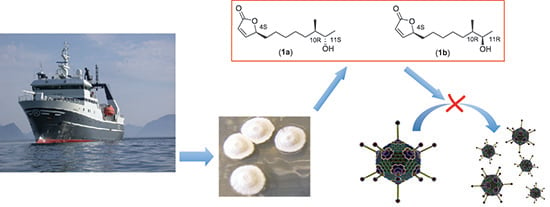
Abstract
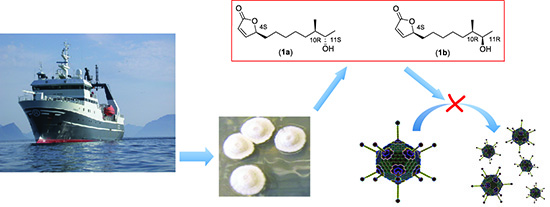
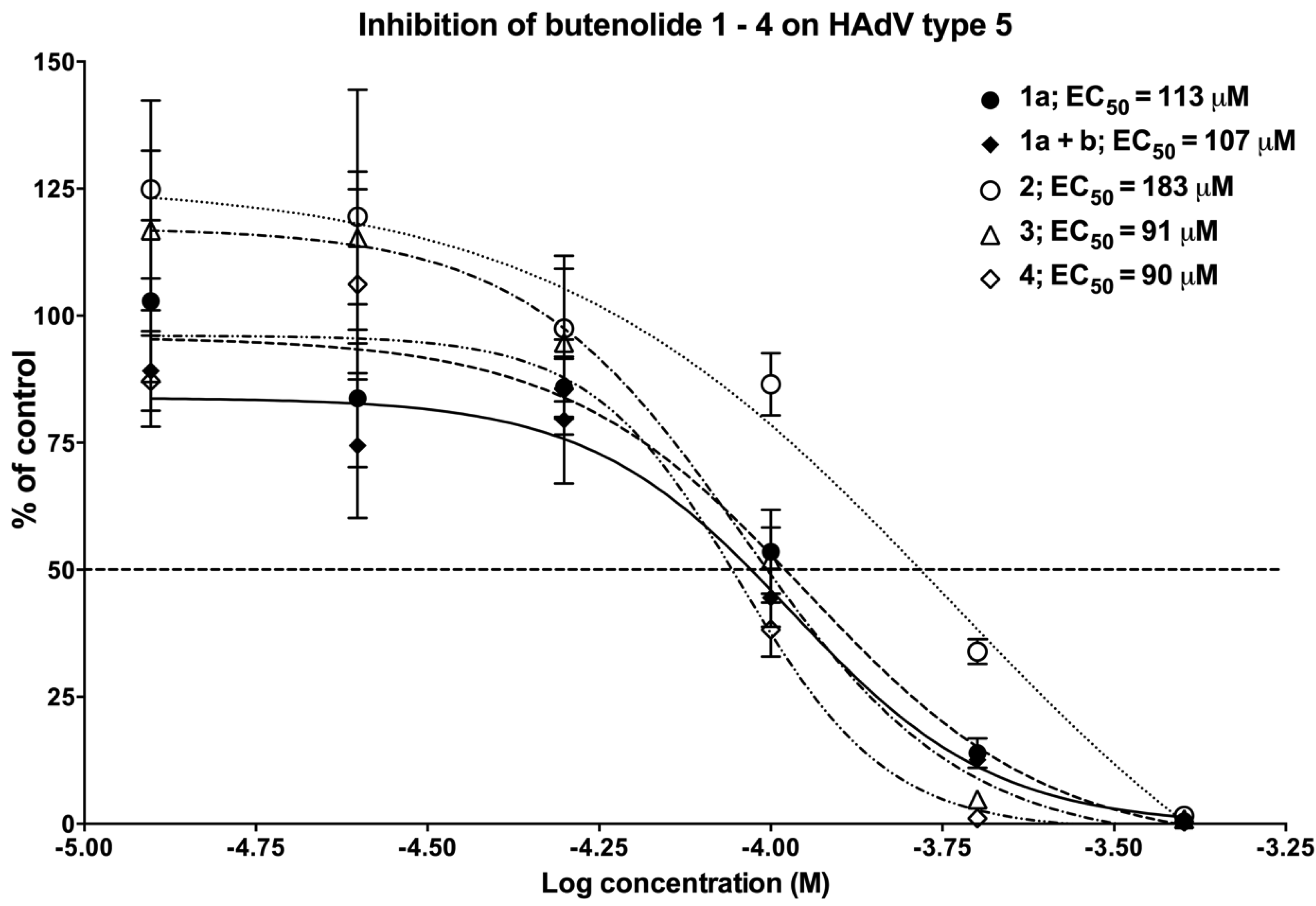
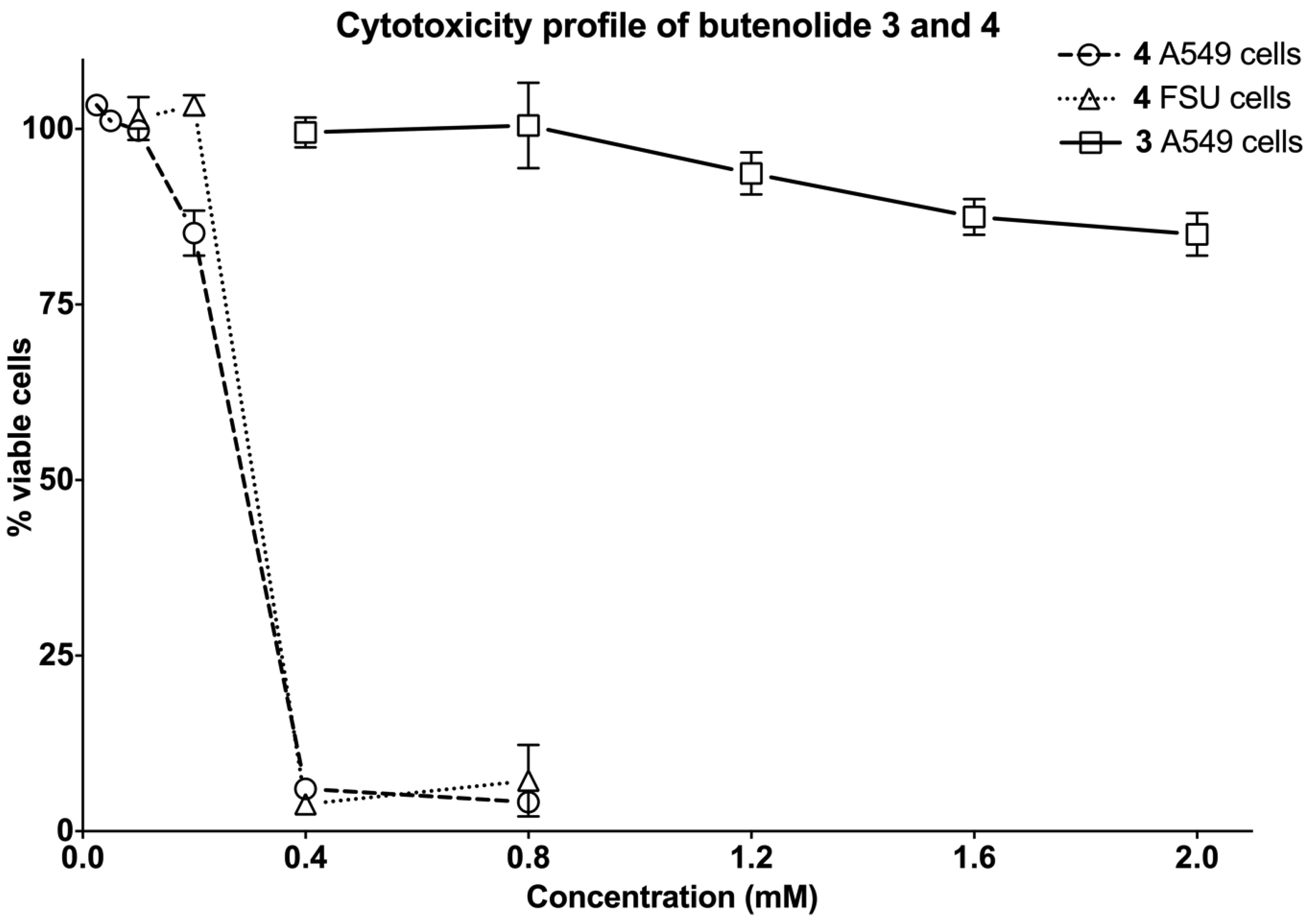
Adenovirus infections in immunocompromised patients are associated with high mortality rates. Currently, there are no effective anti-adenoviral therapies available. It is well known that actinobacteria can produce secondary metabolites that are attractive in drug discovery due to their structural diversity and their evolved interaction with biomolecules. Here, we have established an extract library derived from actinobacteria isolated from Vestfjorden, Norway, and performed a screening campaign to discover anti-adenoviral compounds. One extract with anti-adenoviral activity was found to contain a diastereomeric 1:1 mixture of the butenolide secondary alcohols 1a and 1b. By further cultivation and analysis, we could isolate 1a and 1b in different diastereomeric ratio. In addition, three more anti-adenoviral butenolides 2, 3 and 4 with differences in their side-chains were isolated. In this study, the anti-adenoviral activity of these compounds was characterized and substantial differences in the cytotoxic potential between the butenolide analogs were observed. The most potent butenolide analog 3 displayed an EC50 value of 91 μM and no prominent cytotoxicity at 2 mM. Furthermore, we propose a biosynthetic pathway for these compounds based on their relative time of appearance and structure.
1. Introduction
Secondary metabolites produced by actinobacteria have been studied extensively since the 1950s and have been the most economically and biotechnologically valuable source for discovery of new compounds. The characterization of secondary metabolites from actinobacteria has yielded many important drug leads, later developed into anti-microbial (vancomycin, chloramphenicol and tetracycline) anti-cancer (daunorubicin and bleomycin) and immunosuppressive agents (rapamycin). However, the discovery rate of new drug candidates from terrestrial sources has decreased notably, whereas the re-isolation of known compounds has increased [1,2]. The emerging threat of drug-resistant microbes and the globally increasing cancer rates makes it crucial to produce novel and unique drugs, possibly from new sources of actinobacteria. Likewise, identification of new biological applications for known compounds is equally desirable in drug discovery.
The greatest biodiversity is found in the oceans that cover more than 70% of the Earth’s surface [3]. The marine microbial diversity is largely unexplored but has recently gained much attention as a new source for discovery of new drug candidates [4,5]. In particular, the characterization and the biological evaluation of the secondary metabolites from marine actinobacteria are to a large extent still unexploited and of great interest for research and drug development.
The scope of this paper is to find molecules with anti-adenoviral activity from actinobacteria isolated in the Arctic sea. Today, there is an urgent need for development of new therapeutics for treatment of adenovirus infections. Human adenovirus (HAdV) consists of 57 types divided into seven species (A–G) which can cause disease in the respiratory, intestinal, and urinary tracts as well as in the eyes and liver [6]. These infections are often mild and subclinical in otherwise healthy individuals but in patients with impaired or suppressed immune system, adenovirus infections are associated with disseminated infections with high mortality rates. In hematopoietic bone marrow transplant recipients, a disseminated adenovirus infection is associated with mortality rates up to 60% and even higher rates are found in pediatric patients [7,8]. Currently, there are no approved antiviral therapies for the treatment of adenovirus, although the need is great.
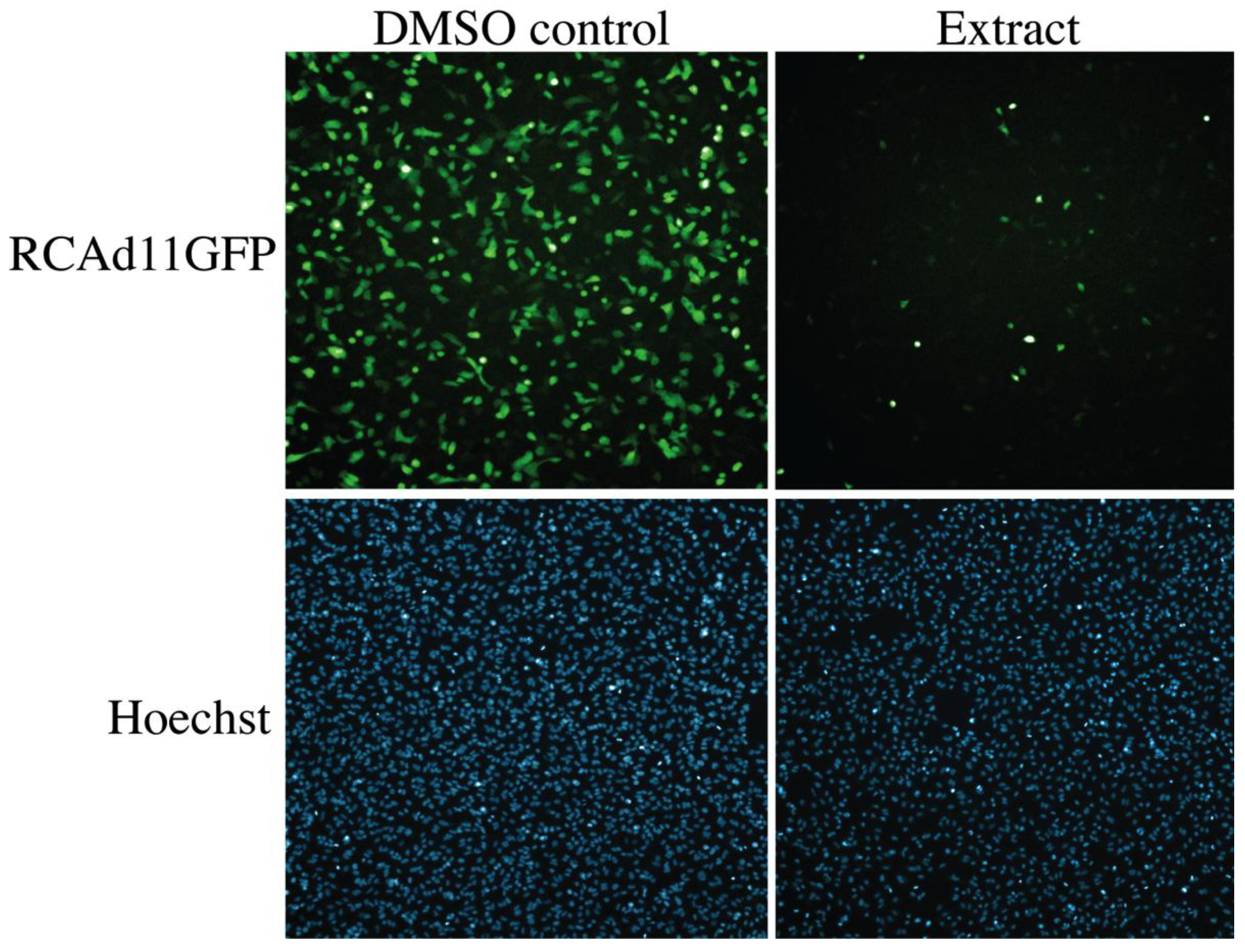
Screening of compound libraries is efficient for the identification of new bioactive compounds that can serve as starting points for drug discovery. We have previously developed a whole-cell based viral replication reporter gene assay utilizing a replication competent green fluorescent protein (GFP) expressing vector based on adenovirus type 11 (RCAd11GFP) [9,10]. This assay was used to screen novel synthetic small molecule inhibitors of viral replication [10] that have been further explored by chemical optimization and evaluation [11,12]. In this paper, we expand our screening-based approach and describe the screening of ethyl acetate (EtOAc) extracts derived from actinobacteria originating from Vestfjorden, Norway, and subsequent isolation and identification of anti-adenoviral butenolides 1–4 (Figure 1 and Figure 2) produced by a marine Streptomyces strain (Streptomyces sp. AW28M48). We propose a biosynthetic pathway for the butenolides 1–4 based on their relative time of appearance during cultivation and their structure.
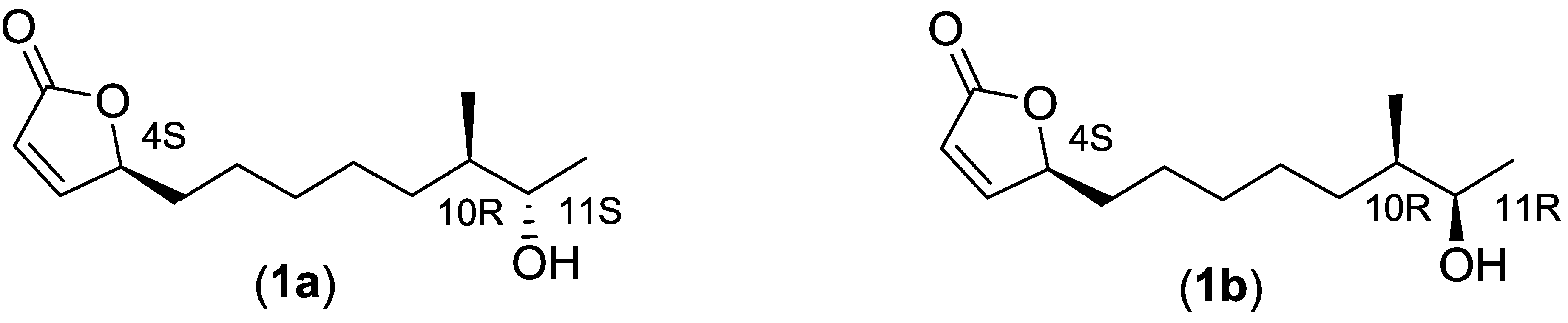
Figure 1.
Structures of the diastereomeric mixture of the butenolides 1a and 1b that was responsible for the anti-adenoviral activity in the identified extract.
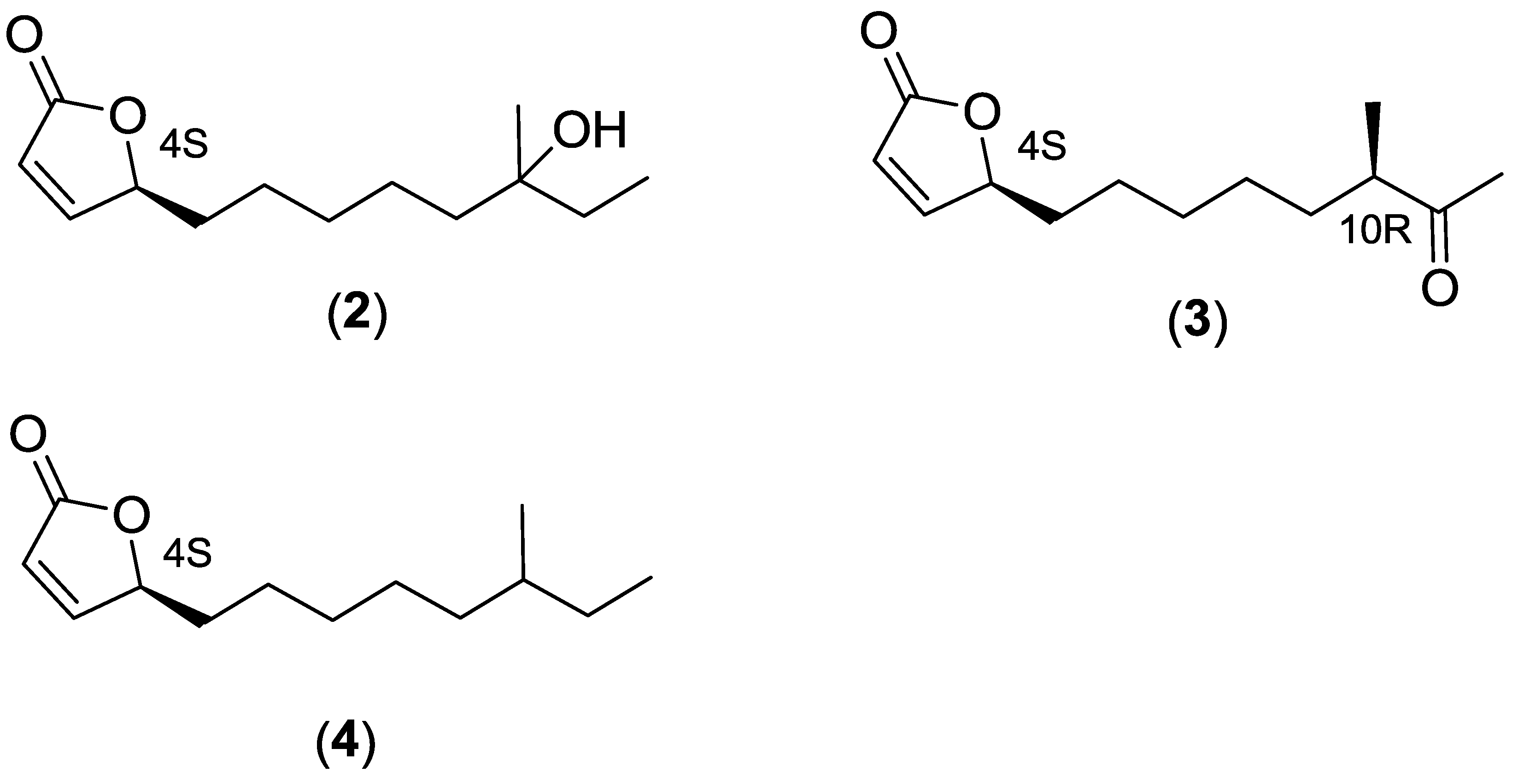
Figure 2.
Structures of the isolated butenolides, 2–4.
2. Results and Discussion
2.2. Isolation and Characterization of Butenolide Analogs
2.2.1. Investigation of the Optimal Time of Cultivation for Production of the Butenolides 1a and 1b
In an attempt to increase the yield of the butenolide secondary alcohols 1a and 1b, an investigation of the cultivation time was performed using HPLC connected with a diode-array and evaporated light scattering detector. To get reproducible results, the same batch of frozen pre-culture was used for all inoculations. Two hundred milliliters media (PM2 with 4% sea salt) was inoculated with 2 mL pre-cultured Streptomyces sp. AW28M48, and cultured in 26 °C at 160 rpm shaking for two to ten days. Each day, a 5 mL sample was removed and extracted with EtOAc and analyzed with HPLC. In the original five day extract the butenolide secondary alcohols 1a and 1b were found in relatively low amounts as an inseparable 1:1 diastereomeric mixture. By shortening the time of cultivation to two days, one of the two diastereomers 1a was isolated in 85% de. This coincides with the highest intensity for the peak corresponding to the butenolides 1a and 1b at the retention time of 9.04 min (Figure S1 in Supplementary Information). The intensity for the peak at 9.04 min decreased with longer cultivation times than two days; interestingly we could detect one peak at 9.55 min that showed inversed pattern, i.e., increased after two days of cultivation. An additional small adjacent peak was also observed at 8.93 min, showing similar time of appearance as the butenolides 1a and 1b. The peaks at 9.55 min and 8.93 min were detected with similar UV-vis profiles (Figure S3 in Supplementary Information) to 1a and 1b, indicative of being analogs to the butenolide secondary alcohols. When the peak at 9.55 min was isolated, it was shown to be the oxidized butenolide ketone 3, while the peak at 8.93 min was found to be the butenolide tertiary alcohol 2. The previously characterized compounds 2 and 3 were first isolated by Mukku et al. and they suggest that the precursor of butenolide alcohols 1a, 1b and 2 is an epoxide [15]. To investigate if a precursor for these isomers could be detected and isolated, a new culture was prepared using the same conditions as above. Samples were taken every hour between 40 and 48 h of cultivation. Supernatant and bacteria were extracted separately with EtOAc and analyzed with reversed-phase HPLC after concentration. Interestingly, we detected a peak at retention time 13.50 min after 46 h of cultivation with similar UV-vis profile as butenolides 1–3 (Figure S2 in Supplementary Information) from the bacterial extract. At this time point, the butenolide alcohols 1a, 1b and 2 were not detected. The peak at 13.41 min was isolated and shown to be the butenolide 4 with a non-functionalized side-chain. Butenolide 4 was primarily found in the bacteria in contrast to butenolide alcohols 1a, 1b and 2 that were mostly present in the supernatant. However, we could not under these conditions detect an epoxide precursor. Therefore, we postulate that the precursor is the butenolide 4 with a non-functionalized side-chain. Compound 4 has not previously been isolated from actinobacteria, however, it has been detected by mass spectroscopy and been synthesized without stereospecificity [16].
2.2.2. Cultivation of Streptomyces sp. AW28M48 and Isolation of Butenolide Analogs
Inoculated media were cultivated for two and four days, respectively, at 26 °C and 160 rpm. After cultivation, the bacteria were separated from the broth and extracted separately. The bacterial pellet from two days of cultivation was mixed with H2O and extracted with EtOAc. The resulting residue was mixed with hexane and filtrated through glass wool to remove an orange-yellow precipitate containing mostly flavanoids. After concentration the residue was fractionated over silica gel using a flash column followed by reversed phase chromatography to yield the butenolide 4 with a non-functionalized side-chain, as a colorless oil. Supernatants from two and four days, respectively, were extracted twice with EtOAc at pH 8. The flavanoid compounds, that complicated the purification of butenolide tertiary alcohol 2, were precipitated off with hexane. Flash chromatography over silica gel followed by reversed phase chromatography gave the butenolide tertiary alcohol 2, secondary alcohol 1a and 1b and ketone 3 as colorless oils. The structures of butenolides 1–4 were confirmed by NMR spectroscopy, HRMS, CD and optical rotation measurements and these were compared with published data [15,17,18,19].
2.2.3. Structure Elucidation of the Butenolide Analogs
The diastereomeric mixture of the butenolide 1a and 1b was first isolated from a Streptomyces sp. by Mukku et al. in 2000 [15]. From 13C and 1H-NMR data it was believed to be a 1:1 mixture of two inseparable diastereomers. The absolute configuration for C-4 could be determined to be S from comparison of the CD-spectra with the absolute stereochemistry of a known butenolide. Later, total synthesis of the four possible stereoisomers was achieved by Karlsson et al. 2007, in order to solve the absolute configuration of the remaining two stereogenic centers C-10 and C-11 [17]. From comparison of the 13C-NMR data with the published data by Mukku et al. [15], it was shown that the stereo configuration should be [4S10R11S or 4S10S11R] and [4S10R11R or 4S10S11S]. Additional optical rotation data for the synthetic isomers published by Wang et al. in 2010 revealed that the two naturally occurring butenolide secondary alcohols were most likely 4S10R11S and 4S10R11R [19]. In this work, we isolated butenolide secondary alcohols 1a and 1b from two different cultivation times with different diastereomeric excesses. The ratio between the two diastereomers of butenolide secondary alcohols 1a and 1b was determined from H-NMR by comparing the integral of the C-11 proton. After two days, the ratio of the diastereomeric mixture was 12:1 in favor of butenolide 1a, in comparison to a 1:1 mixture after the four days cultivation. Optical rotation data (Table 1) and 13C-NMR of the butenolide secondary alcohols 1a and 1b (Table 2), isolated after two days, match the reported data by Wang et al. for the synthetic butenolide secondary alcohol 1a (4S10R11S). Therefore, we conclude that the absolute stereochemistry for the natural butenolide secondary alcohol 1a is 4S10R11S and hence 4S10R11R for 1b. 13C-NMR data for our isolated butenolides 1–4, are consistent with previously reported data (Table 2). Also positive CD absorption, for all isolated butenolides, at 204–208 nm (π-π′) confirms S-configuration at C-4 [15]. Optical rotation data for compound 3 matches the data reported by Wang et al. for the absolute stereochemistry of 4S10R [19].
Table 1.
Optical rotation of butenolide 1–4 in MeOH.
| Compound | Optical Rotations | Optical Rotations from Previous Publications |
|---|---|---|
| 1a and 1b (1:1 mixture) | +80.8° (c 1.15, MeOH) | +84.5° (c 0.119, MeOH)(natural) [15] |
| 1a (4S10R11S) | +74.4° (c 0.926, MeOH) (85% de) | +70.9° (c 0.12, MeOH)(synth.) [17] |
| +78° (c 0.1, MeOH)(synth.) [18] | ||
| 1b (4S10R11R) | +64.3° (c 0.14, MeOH)(synth.) [19] | |
| 2 | +66.5° (c 0.927, MeOH) | +44° (c 0.072, MeOH)(natural) [15] |
| 3 (4S10R) | +48.8° (c 1.475, MeOH) | +45° (c 0.119, MeOH)(natural) [15] |
| +49.4° (c 0.175, MeOH)(synth.) [19] | ||
| 3 (4S10S) | +73.0° (c 0.12, MeOH)(synth.) [19] | |
| 4 | +58° (c 1.033, MeOH) |
Table 2.
13C-NMR chemical shifts (ppm) of butenolide 1–4 in CDCl3.
| Position | 1a | 1a [17] | 1a + (1b) | 1b [19] | 2 | 2 [15] | 3 | 3 [19] | 4 | 4 [16] |
|---|---|---|---|---|---|---|---|---|---|---|
| 1 CO | 173.12 | 173.19 | 173.12 | 173.14 | 173.1 | 173.2 | 173.07 | 173.09 | 173.2 | 173.1 |
| 2 CH | 121.57 | 121.54 | 121.57 | 121.54 | 121.6 | 121.6 | 121.59 | 121.59 | 121.5 | 121.5 |
| 3 CH | 156.20 | 156.30 | 156.3 | 156.23 | 156.2 | 156.2 | 156.16 | 156.17 | 156.3 | 156.3 |
| 4 CH | 83.36 | 83.41 | 83.36 | 83.39 | 83.3 | 83.4 | 83.29 | 83.29 | 83.4 | 83.4 |
| 5 CH2 | 33.16 | 33.15 | 33.16 | 33.15 | 33.1 | 33.1 | 33.05 | 33.06 | 33.2 | 33.2 |
| 6 CH2 | 24.94 | 24.95 | 24.96 | 24.95 | 25.0 | 25.0 | 24.79 | 24.79 | 25.0 | 25.0 |
| 7 CH2 | 29.60 | 29.60 | 29.60 | 29.60 | 29.9 | 29.9 | 29.30 | 29.30 | 29.6 | 29.6 |
| 8 CH2 | 26.97 | 26.98 | 27.11 | 27.10 | 23.6 | 23.6 | 26.94 | 26.96 | 26.8 | 26.8 |
| 9 CH2 | 32.33 | 32.34 | 32.43 | 32.41 | 41.1 | 41.1 | 32.62 | 32.62 | 36.4 | 36.4 |
| 10 | 39.98 CH | 39.97 CH | 39.68 CH | 39.67 CH | 72.8 Cq | 72.9 Cq | 47.10 CH | 47.11 CH | 34.3 CH | 34.3 CH |
| 11 | 71.71 CH | 71.70 CH | 71.29 CH | 71.30 CH | 34.3 CH2 | 34.3 CH2 | 212.77 CO | 212.80 CO | 29.4 CH2 | 29.4 CH2 |
| 12 CH3 | 19.51 | 19.49 | 20.26 | 20.25 | 8.2 | 8.2 | 28.01 | 28.03 | 11.4 | 11.3 |
| 13 CH3 | 14.58 | 14.57 | 14.12 | 14.11 | 26.4 | 26.4 | 16.28 | 16.29 | 19.2 | 19.1 |
2.3. Proposed Biosynthetic Pathway of Butenolide 1–4
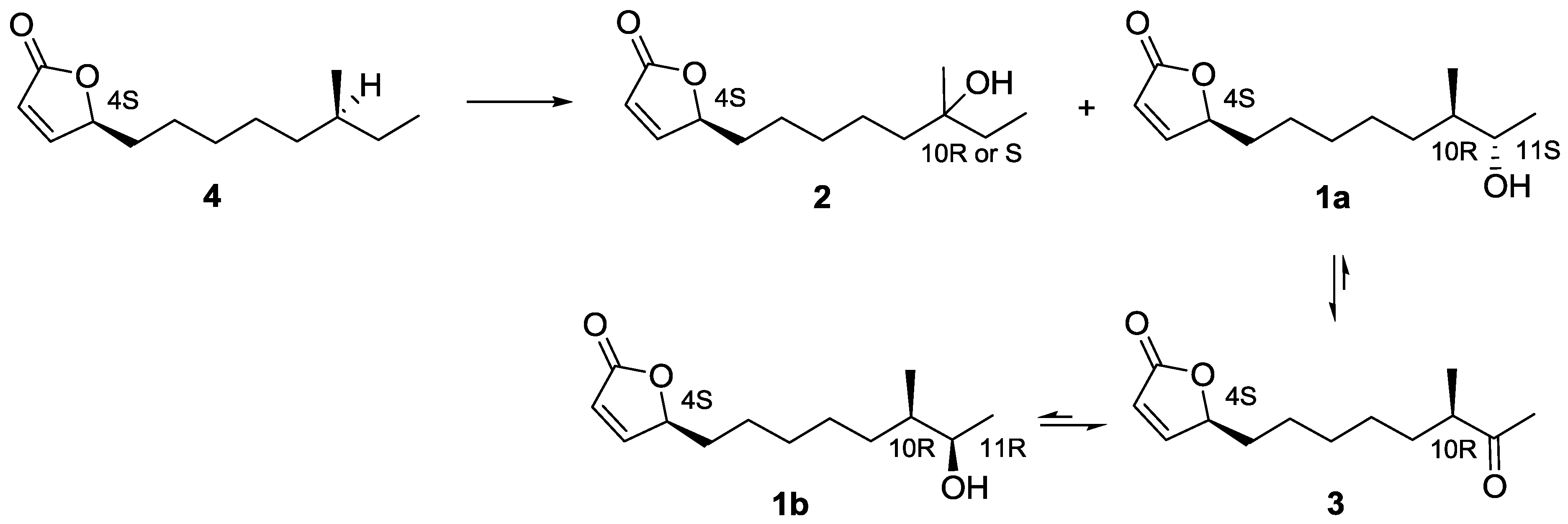
From the time of appearance and structure of the butenolides 1–4, we propose that the butenolide 4 with a non-functionalized side chain is the starting precursor for the biosynthesis of butenolides 1–3. We believe that the side chain in butenolide 4 is oxidized stereo-specifically to one of the two possible diastereomers of the tertiary alcohols 2 (4S10R) or 2 (4S10S) and the secondary alcohol 1a in favor of the latter. If this hypothesis is correct, the absolute stereochemistry for the butenolide 4 with a non-functionalized side chain should be 4S10S. We also propose that the butenolide secondary alcohol 1a is oxidized to the butenolide ketone 3, and during this process epimerization of the hydroxyl at C-11 by unspecific reduction or via reverse oxidation of the ketone results in a 1:1 ratio of the secondary alcohols 1a and 1b (Figure 4). The enzyme(s) responsible for the oxidation in the biosynthetic pathway are currently under investigation.
Figure 4.
The proposed biosynthetic pathway of butenolides 1–4.
2.4. Biological Evaluation of Butenolide Analogs
3. Experimental Section
3.1. General Experimental Procedures
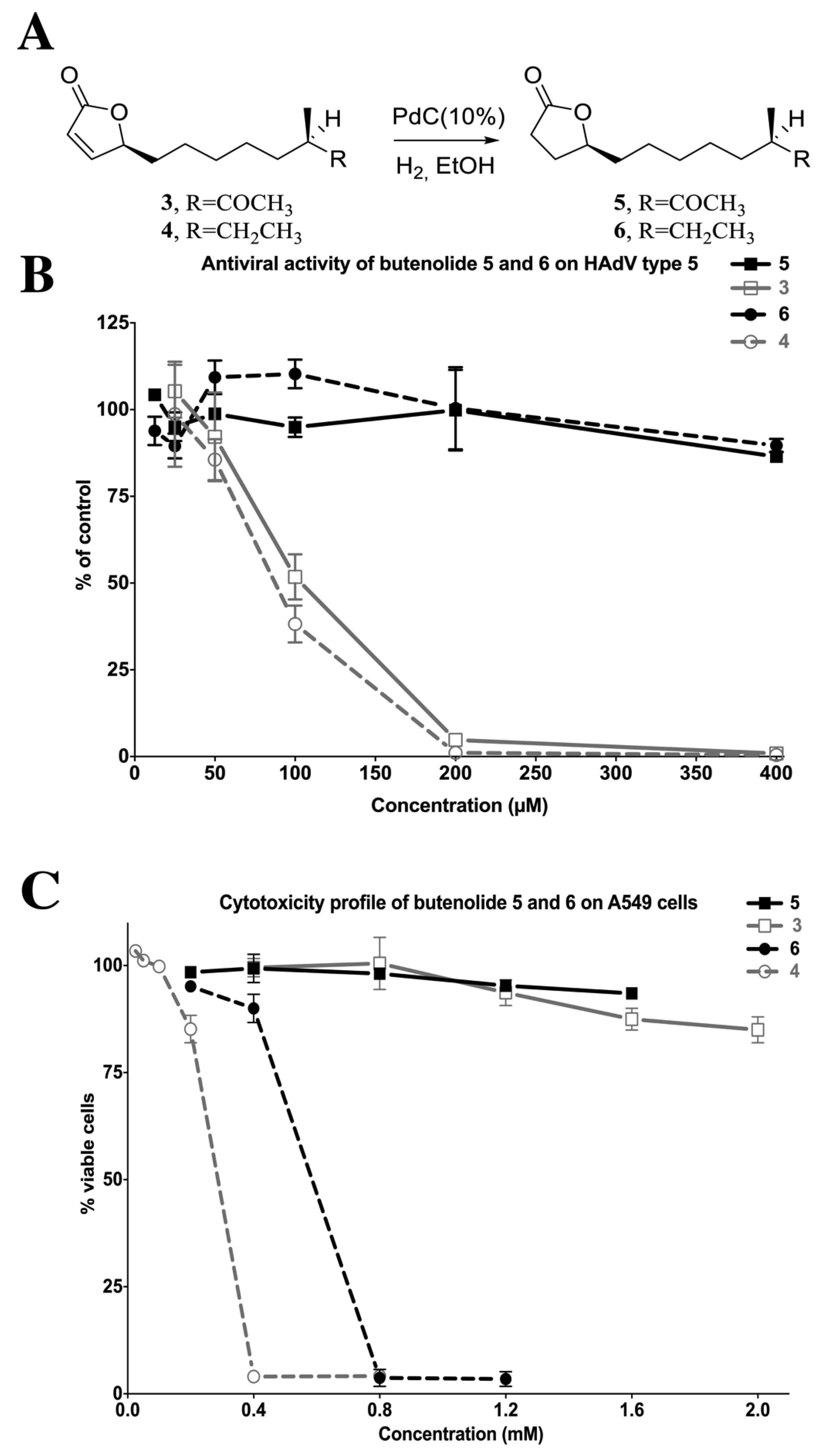
Optical rotations were measured at 589 nm on a 343 polarimeter (Perkin-Elmer, Waltham, MA, USA) at 20 °C. CD spectra were recorded on a J-810 spectropolarimeter (Jasco Corporation, Cremella, Italy) [λ([θ]) in nm]. H1 and C13 NMR spectra were recorded on a DRX-400 spectrometer (Bruker, Billerica, MA, USA) at 298 K. 1H and 13C chemical shifts are reported relative to CHCl3 (δH 7.26 ppm) or CDCl3 (δC 77.0 ppm) as internal reference. 13C chemical shifts for compounds 1a, 1b and 3 is described with two decimals for comparison with previously published data containing two decimals. High resolution mass spectra (HRMS) data was recorded with micrOTOF II (Bruker, Billerica, MA, USA). TLC was performed on silica gel 60 F254 (Sigma-Aldrich, St. Louis, MO, USA) with detection of UV light and anisaldehyde-sulfuric acid as spray reagent. Flash Column chromatography [eluent for flash chromatography is given between brackets in the Experimental Section] was carried out on silica gel (particle size, 60 Å, 230–400 mesh) Sigma-Aldrich. Preparative HPLC was performed using VP 150/10 Nucleodur C-18, HTEC, 5 µm column (Macherey-Nagel, Düren, Germany) on a Gilson 333/334 Prep-Scale system with a flow rate of 7 mL/min, detection at 210 nm Gilson 151 (Gilson, Middleton, WI, USA), and an CH3CN (0.005% HCO2H)/H2O (0.005% HCO2H) eluent system. Analytical HPLC was performed using EC 150/4.6 Nucleodur C18 HTec, 5 µm column (Macherey-Nagel, Düren, Germany) on a Gilson 322 with a diode array detector Gilson 172 and evaporated light scattering detector Sedex 85 (Sedere, Oilvet, France). Reductions were performed using a H-Cube (ThalesNano, Budapest, Hungary) continuous-flow hydrogenation system utilizing a 10% Pd/C CatCart catalyst at 1 bar pressure with a flow rate of 1 mL/min at 20 °C. Cultivation of bacteria was carried out in 500 mL Erlenmeyer flasks with one baffle (Glasgerätebau OCHS, Bovenden, Germany).
3.2. Isolation of Actinobacteria from the Arctic Sea
Various biota and sediment samples were obtained during a research-cruise with R/V Jan Mayen in Vestfjorden, Northern Norway in April 2010. The samples were used as inoculum on different selective agar plates as described [24]. On land the bacterial plates were further incubated at 4–16 °C for up to one month. Single colonies were re-streaked onto new plates and colonies from these were used to inoculate 5 mL cultures kept at 16 °C. One mL of dense culture was cryopreserved in 20% glycerol at −80 °C. For sequencing, 1 mL of culture was harvested by centrifugation using a table-top centrifuge at 12,000 rpm for 3 min, washed once with 1 mL of distilled water and re-centrifuged for 3 min. Instagene matrix (BioRad, Hercules, CA, USA) was used to extract genomic DNA according to the manufacturer’s procedures. The universal primers 27F (5′-AGAGTTTGATCCTGGCTCAG-3′) and 1492R (5′-TACGGYTACCTTGTTACGACTT-3′) were used in standard PCR to obtain a fragment of the 16s rRNA gene. PCR product was purified using PureLink Pro 96 PCR Purification Kit (Invitrogen-Life Technologies, Carlsbad, CA, USA) following manufacturer’s protocols. Further, the sequencing primer 515F (5′-GTGCCAGCAGCCGCGGTAA-3′) was used in the sequencing PCR following the BigDye Terminator v3.1 Cycle Sequencing Kit protocol (Applied Biosystems, Carlsbad, CA, USA). The additional handling was done at the University of Tromsø’s DNA sequencing core facility. The ABI2FASTA converter v 1.1.2 [25] was used to extract FASTA sequence files from ABI output files and low quality ends were trimmed [26]. The trimmed sequences were then checked for chimeras using DECIPHER’s Find Chimeras web tool [27]. Sequence search against GenBank using BLAST was performed to identify the genus each bacterium belongs to [28]. In total, 57 strains of actinobacteria were isolated.
3.3. Extract Library
The 57 actinobacterial strains were re-streaked on M4 agar plates (0.1% malt extract, 0.1% glycerol, 0.1% glucose, 0.1% peptone, 0.1% yeast extract, 2% sea salts (Sigma Aldrich #S9883, St. Louis, MO, USA) and 20% agar in distilled water, pH was adjusted to pH 8.2) and incubated at 4 °C until growth was observed, approximately one week, there-after the plates were stored at 4 °C [24]. Colonies from single cells were inoculated in liquid M4 medium and incubated for two days at 26 °C with shaking (160 rpm). One milliliter of the pre-cultures were added to 120 mL of four different production media (PM1-4) with or without the addition of 4% sea salts yielding eight different production media. PM1 contains 1% glucose, 2% soluble starch, 0.3% Bacto peptone, 0.3% meat extract, 0.5% yeast extract and 0.3% CaCO3 in deionized water, pH was adjusted to 7 prior to sterilization, PM2 contains 1% glucose, 1% glycerol, 0.5% oat meal, 1% soy meal, 0.5% yeast extract, 0.5% bacto casaminoacids and 0.1% CaCO3 in deionized water, pH was adjusted to 7 prior to sterilization, PM3 contains 1% starch, 1% glucose, 1% glycerol, 0.25% corn steep powder, 0.5% peptone, 0.2% yeast extract, 0.1% NaCl and 0.3% CaCO3 in deionized water, pH was adjusted to 7.3 prior to sterilization [29] and PM4 contained 1.7% tryptone, 0.3% soytone, 1% glucose, 0.5% NaCl, 0.25% K2HPO4 in deionized water, pH was adjusted to 7.3 prior to sterilization. The production media were incubated for five days at 26 °C with shaking (160 rpm). At day five, the cultures were centrifuged at 3700 rpm for 10 min to pellet the bacteria, the supernatants were divided into two aliquots and pH was adjusted to 5 and 8, respectively. 1:1 EtOAc was added to the supernatants and mixed by vigorous shaking for one minute. The phases were separated by centrifugation at 3700 rpm for five minutes and the EtOAc phases were evaporated. The residues were re-dissolved in 1 mL DMSO and placed in 96-well plates. In total 912 extracts were yielded. Media controls were added to all 96-well plates.
3.4. Streptomyces sp.
The strain was isolated at: N67 52.11512 E16 22.97003 at a depth of 417 m on 17 April 2010. It was isolated from a sediment sample collected with a Van Veen grab sampler. This strain is preserved and available from an in-house collection at the University of Tromsø, Norway (database index AW28M48). The 16s rRNA gene sequence has been determined and is deposited within European Nucleotide Archive (accession number: HG764583). A phylogenetic analysis has been made based on the 16s rRNA gene sequence (Figure S18 in Supplementary Information).
3.5. Fermentation
Bacteria were pre-cultured in M4 medium for approximately 48 h. One and a half milliliters of the pre-cultured bacteria was added to 200 mL PM2 with 4% sea salt. The bacterial cultures were grown for two to five days at 26 °C, 160 rpm in a rotary shaker incubator. At different time points, the bacteria were pelleted at 3200 rpm for 20 min. For scale-up experiments, the chosen number of flasks was multiplied according to the volume needed.
3.6. Bioactivity Guided Fractionation
The obtained EtOAc extract from a 200 mL culture was re-dissolved in 300 μL DMSO. One hundred and fifty microliters of the re-dissolved extract was fractionated using preparatory HPLC (Nucleodur C18 HTec, 110 Å/5 µm, 10 × 160 mm) using a gradient from 10% to 100% CH3-CN/H2O (0.005% HCO2H) over 14 min followed by 100% CH3-CN (0.005% HCO2H) for 14 min. A total of 130, 1.5 mL fractions were collected at a flow-rate of 7 mL per min. After lyophilization, fractions were dissolved in 50 μL DMSO and transferred to 96-well plates and analyzed for anti-adenoviral activity. Active fractions were further purified to single compound entities with reverse-phase HPLC.
3.7. Extraction and Isolation of Secondary Metabolites from Marine Actinobacteria

The pH of the supernatant from 5 L broth (PM2 with 4% sea salt) was adjusted to pH 8 using 1 M NaOH (aq) and extracted twice with EtOAc, 1:1 v:v. After centrifugation, the organic layer was concentrated under vacuum that gave a residue of 1.8 and 2.2 g for the 48 and 96 h culture, respectively. The bacterial pellet was dissolved in deionized water and extracted with EtOAc, 1:1 v:v. After centrifugation, the organic phase was concentrated which gave an oily residue of 8.5 g. The EtOAc extract of 48 h culture was mixed with hexane and filtrated through glass-wool to remove an orange precipitate. After concentration, the resulting residue was pre-purified with flash chromatography over silica gel [CHCl3:MeOH, 95:5]. Fractions 9–11 (197 mg) contained compounds 3–4, fractions 12–14 (61 mg) contained compounds 1a, 1b, 2 and 3 and fractions 15–19 (36 mg) contained compounds 1a, 1b, and 2. Fractions 9–11 was mixed with 450 μL DMSO and purified with preparatory HPLC (C18, Nucleodur HTEC, 110 Å/5 µm, 10 × 160 mm) using a gradient from 30% to 100% CH3-CN/H2O (0.005% HCO2H) during 10 min. Fractions containing compounds 3 and 4 were neutralized with NaHCO3 (aq) and extracted with CHCl3. Organic phases were concentrated in vacuum which gave 1.5 mg of compound 3 and 1 mg of compound 4 as colorless oils. In the same way, fractions 12–14 and 15–19 were purified using a gradient from 10% to 100% CH3-CN/H2O (0.005% HCO2H) during 40 min which gave 1.3 mg of compound 2, 6 mg of compounds 1a and 1b (12:1) and 0.8 mg of compound 3. The workup of EtOAc extract from 96 h culture was performed in the same way as the 48 h culture that gave 2.1, 5.8 and 8 mg of compounds 1a, 1b, 2 and 3, respectively. The oily residue of the bacterial pellet was mixed with hexane and filtrated through a plug of glass wool to remove an orange precipitate. After concentration the resulting residue was pre-purified with flash chromatography over silica gel [Pentane:Et2O, 3:1]. Fractions containing compound 4 (34–59) was concentrated and mixed with 450 μL DMSO. The resulting mixture was purified using preparatory HPLC, seven injections (Nucleodur C18 HTec, 110 Å/5 µm, 10 × 160 mm) using a gradient from 50% to 100% CH3-CN/H2O (0.005% HCO2H) during 10 min. Fractions containing compound 4 were neutralized with NaHCO3 (aq) and extracted twice with CHCl3. The combined organic phases were concentrated in vacuum that gave 11.4 mg of compound 4 as a colorless oil.
1a: Isolated after 48h, [α]22D +74.4° (c 0.93, MeOH); CD (c 0.110, MeOH) ∆ε208 +15; 1H-NMR (400 MHz CDCl3) δ 7.44 (J1 = 5.7, J2 = 1.4 Hz, 1 H), 6.11 (dd, J1 = 5.7, J2 = 1.9 Hz, 1 H), 5.06–5.01 (m, 1H), 3.68–3.61 (m, 1H), 1.83–1.72 (m, 1H), 1.72–1.61 (m, 1H) 1.59–1.17 (m, 9H), 1.13 (d, J = 6.34 Hz, 3H), 0.86 (d, J = 6.69 Hz, 3H); 13C-NMR data of 1a are listed in Table 1. HRMS (M + Na+) calculated for C13H22O3Na: 249.1467; found, 249.1466.
1a and 1b (1:1 mixture): Isolated after 96 h, [α]22D +80.8° (c 1.15, MeOH), CD (c 0.115, MeOH) ∆ε208 +19; 1H-NMR (400 MHz CDCl3) δ 7.44 (J1 = 5.7, J2 = 1.4 Hz, 1 H), 6.10 (dd, J1 = 5.7, J2 = 1.9 Hz, 1 H), 5.06–5.01 (m, 1H), 3.74–3.67, 3.67–3.60 (each m, 1H), 1.83–1.72 (m, 1H), 1.72–1.61 (m, 1H) 1.59–1.17 (m, 9H), 1.15 (d, J = 6.34 Hz, 3H), 1.12 (d, J = 6.34 Hz, 3H), 0.88 (d, J = 6.69 Hz, 3H), 0.86 (d, J = 6.69 Hz, 3H); 13C-NMR (100 MHz CDCl3) δ 173.3, 156.4, 121.7, 83.5, 71.9, 71.5, 40.1, 39.9, 33.3, 32.6, 32.5, 29.8, 27.3, 27.1, 25.12, 25.10, 20.4, 19.7, 14.7, 14.3; Subtracted 13C-NMR data of 1b are listed in Table 1 as 1a + (1b); HRMS (M + Na+) calculated for C13H22O3Na: 249.1467; found, 249.1474.
2: Isolated after 48h, [α]22D +66.5° (c 0.927, MeOH); CD (c 0.093, MeOH) ∆ε205 +16; 1H-NMR (400 MHz CDCl3) δ 7.44 (dd, J1 = 5.8, J2 = 1.5 Hz, 1 H), 6.11 (dd, J1 = 5.8, J2 = 2.0 Hz, 1 H), 5.05–5.00 (m, 1H), 1.84–1.72 (m, 1H), 1.72–1.61 (m, 1H), 1.53–1.40 (m, 6H), 1.40–1.31 (m, 4H), 1.14 (s, 3H), 1.11 (-OH broad singlett), 0.89 (t, J = 7.5 Hz, 3H); 13C-NMR data of 2 are listed in Table 1; HRMS (M + Na+) calculated for C13H22O3Na: 249.1467; found, 249.1470.
3: Isolated after 48h, [α]22D +48.8° (c 1.475, MeOH); CD (c 0.147, MeOH) ∆ε204 +26; 1H-NMR (400 MHz CDCl3) δ 7.44 (dd, J1 = 5.7, J2 = 1.4 Hz, 1 H), 6.11 (dd, J1 = 5.7, J2 = 2.0 Hz, 1 H), 5.05–5.00 (m, 1H), 2.53–2.44 (m, 1H), 2.13 (s, 3H), 1.82–1.72 (m, 1H), 1.70–1.58 (m, 2H), 1.51–1.38 (m, 2H), 1.39–1.21 (m, 5 H), 1.08 (d, J = 7.4 Hz, 3 H); 13C-NMR data of 3 are listed in Table 1; HRMS (M + Na+) calculated for C13H20O3Na: 247.1310; found, 247.1310.
4: Isolated after 48h, [α]22D +58° (c 1.033, MeOH); CD (c 0.103, MeOH) ∆ε204 +17; 1H-NMR (400 MHz CDCl3) δ 7.45 (dd, J1 = 5.7, J2 = 1.5 Hz, 1 H), 6.11 (dd, J1 = 5.7, J2 = 1.9 Hz, 1 H), 5.06–5.01 (m, 1H), 1.82-–1.62 (m, 2H), 1.51–1.38 (m, 2H), 1.38–1.21(m, 7H), 1.18–1.03 (m, 2H), 0.87–0.82 (m, 6H); 13C-NMR data of 4 are listed in Table 1; HRMS (M + Na+) calculated for C13H22O2Na: 233.1518; found, 233.1517.
5: Compound 3 (4.3 mg, 0.019 mmol) was dissolved in absolute EtOH and hydrogenated utilizing H-cube. The eluate was concentrated and co-concentrated with CHCl3 three times which gave 3.77 mg (0.017 mmol) as a colorless oil in 89% yield. [α]22D −54° (c 0.76, MeOH); 1H-NMR (400 MHz CDCl3) δ 4.53–4.42 (m, 1H), 2.56–2.45 (m, 3H), 2.37–2.27 (m, 1H), 2.13 (s, 3H), 1.90–1.79 (m, 1H), 1.75–1.68 (m, 1H), 1.67–1.57 (m, 2H), 1.51–1.21 (m, 7H), 1.08 (d, J = 7 Hz, 3H); 13C-NMR (100 MHz CDCl3) δ 212.8, 177.2, 80.9, 47.1, 35.5, 32.7, 29.3, 28.8, 28.0, 28.0, 27.0, 25.1, 16.2; HRMS (M + Na+) calculated for C13H22NaO3: 249.1467; found, 249.1473.
6: Compound 4 (3.5 mg, 0.017 mmol) was dissolved in absolute EtOH and hydrogenated utilizing H-cube. The eluate was concentrated followed by Flash chromatography [3:1 pentane:Et2O] over silica gel to give 2.2 mg (0.010 mmol) as a colorless oil in 62% yield. [α]22D −38° (c 0.79, MeOH); 1H-NMR (400 MHz CDCl3) δ 4.52–4.44 (m, 2H), 2.56–2.49 (m, 2H), 2.37–2.26 (m, 1H), 1.92–1.80 (m, 1H), 1.79–1.69 (m, 1H), 1.65–1.54 (m, 1H), 1.50–1.42 (m, 1H), 1.41–1.21 (m, 8H), 1.18–1.03 (m, 2H), 0.91–0.78 (m, 6H); 13C-NMR (100 MHz CDCl3) δ 177.3, 81.1, 36.5, 35.6, 34.3, 29.7, 29.4, 28.9, 28.0, 26.9, 25.2, 19.2, 11.4; HRMS (M+ Na+) calculated for C13H24NaO2: 235.1674; found, 235.1679.
3.8. Cells and Virus
A549 cells (human lung adenocarcinoma epithelial cells) and the diploid fibroblast cell line FSU (Foreskin Umeå, Division of Virology, Umeå, Sweden) were grown in DMEM (Sigma-Aldrich, St. Louis, MO, USA) containing 0.74 g of NaHCO3/L, 20 mM HEPES (Euroclone, Pero, Milano, Italy), 1× PEST and 5% fetal bovine serum (Gibco®, Life Technologies, Grand Island, NY, USA) at 37 °C. The RCAd11GFP vector used in the screening is a replication-competent Ad11 strain with a GFP insertion in the E1 region of the Ad11p genome [9] and the HAdV type 5 (strain F2853-5b) was used in the quantitative PCR assay.
3.11. Cytotoxicity Assessment
The potential cytotoxic effect of the compounds was determined with XTT-based Cell Proliferation Kit II (Roche Applied Science, Penzberg, Germany). This method is a colorimetric assay based on the cleavage of the tetrazolium salt XTT to a soluble formazan salt by viable cells. Approximately, 13,000 A549 cells were seeded per well in 96-well plates on the day before addition of compounds. The next day, the growth medium was removed from the wells and replaced with 100 μL of phenol-red free DMEM with 2% FBS containing compound. In parallel, an amount of DMSO corresponding to the same amount of test compound was added to the cells and the plate was incubated at 37 °C for 20 h. Subsequently, 50 μL of XTT solution was added per well and the plate was incubated at 37 °C for 4 h and finally the intensity of the formazan dye was measured by spectrophotometry at a wavelength of 490 nm [32].
3.12. Binding Assay
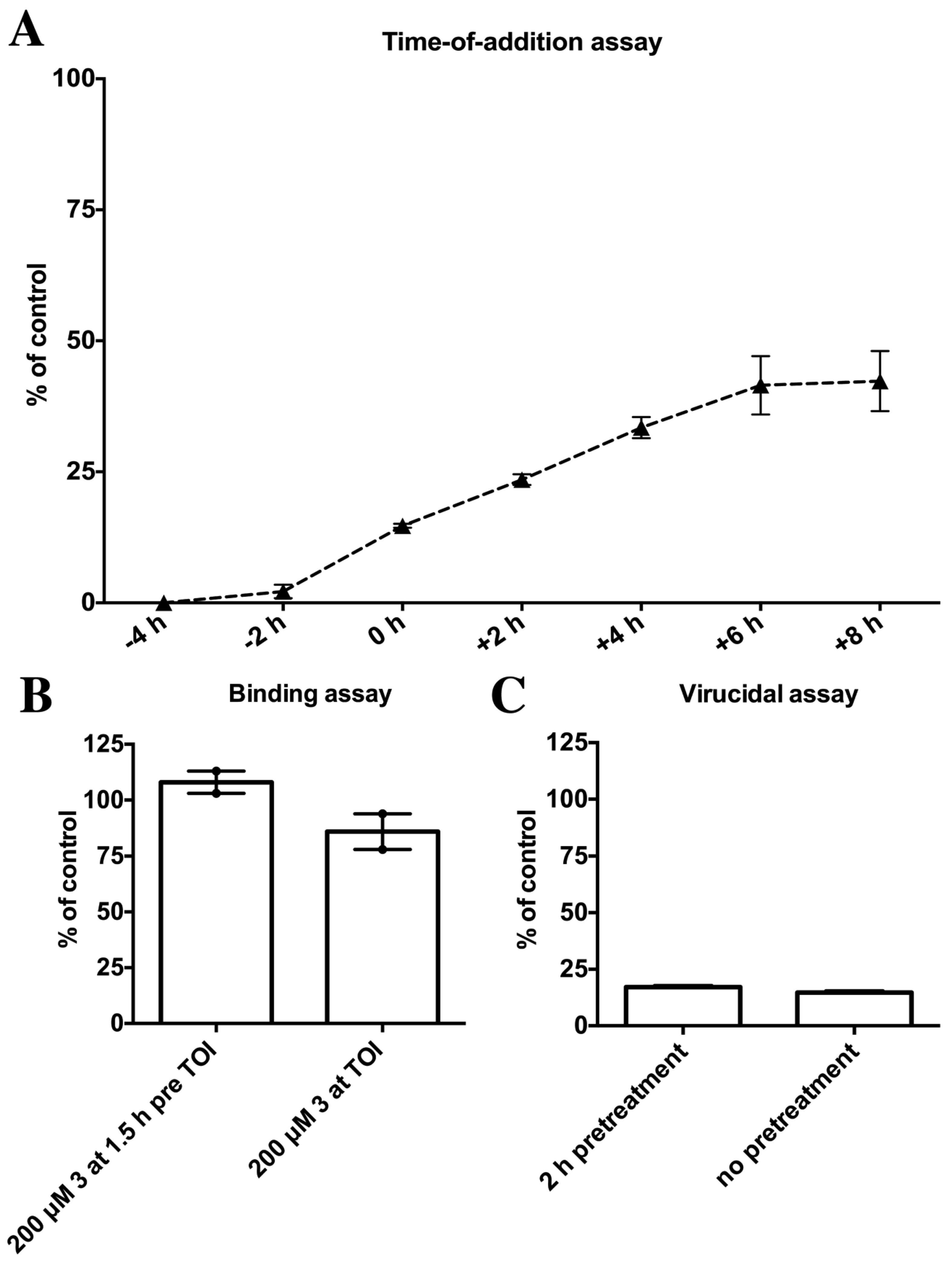
35S labelling of HAdV 5 was performed as previously described [33] as well as the binding experiment [10]. In brief, A549 cells were detached with 0.05% EDTA in PBS and resuspended in growth media and were reactivated for 15 min at 37 °C. Next, 200 μM of compound 3 was added, and the cell suspension was incubated for 1.5 h at 37 °C. The cells were then dispensed in a 96-well plate and centrifuged at 1500 rpm, 5 min, at 4 °C. The pellets were resuspended in DMEM with 1% BSA and 200 μM 3. 35S labelled HAdV 5 (1 pg per cell) was added and the plate was incubated for 1 h at 4 °C. Following, the cells were washed twice with ice-cold DMEM with 1% BSA and were transfered to scintillation tubes with 2 mL scintillation fluid (Optiphase HiSafe 3, Perkin-Elmer, Walltham, MA, USA). The cell-associated radioactivity was measured using a liquid scintillation counter (Wallac 1409, Perkin-Elmer, Waltham, MA, USA).
3.13. Virucidal Assay
The HAdV type 5 stock was diluted in DMEM (Sigma-Aldrich, St. Louis, MO, USA) with 2% FBS (Gibco®, Life Technologies, Grand Island, NY, USA) to the appropriate concentration to be added per well. Then 200 μM of the ketone butenolide 3 was added and the mixture was incubated at 37 °C for 2 h with shaking. Subsequently, the growth medium was removed from the cells and 500 μL of this mixture was added per well with confluent A549 cells in 24 well plates. In parallel, an identical mixture with no incubation time was added to wells as a control and the antiviral activity was analyzed 24 h post infection with qPCR assay.
3.14. Statistical Analysis
Determination of the EC50 values was performed with non-linear regression analysis with a variable slope using GraphPad Prism software version 6.0c (GraphPad Software, San Diego, CA, USA).
4. Conclusions
We have isolated the butenolide analogs 1–4 from marine actinobacteria and have characterized their anti-adenoviral activity. We demonstrate that the 2-furanone moiety in the structures is important for the anti-adenoviral activity, but not for the observed cytotoxicity. Furthermore, considering that the non-toxic butenolide ketone 3 is small and amenable to medicinal chemistry, it is an attractive starting point for further optimization of the anti-adenoviral activity.
Supplementary Files
Acknowledgments
We thank the Knut and Alice Wallenberg Foundation, the Swedish Research Council, the Swedish Cancer Society, the Swedish Governmental Agency for Innovation Systems (VINNOVA), the UCMR Linnaeus program, Insamlingsstiftelsen Umeå University, and the Kempe Foundation for support.
Conflicts of Interest
The authors declare no conflict of interest.
References
- Kwon, H.C.; Kauffman, C.A.; Jensen, P.R.; Fenical, W. Marinomycins a–d, antitumor-antibiotics of a new structure class from a marine actinomycete of the recently discovered genus “marinispora”. J. Am. Chem. Soc. 2006, 128, 1622–1632. [Google Scholar] [CrossRef]
- Zotchev, S.B. Marine actinomycetes as an emerging resource for the drug development pipelines. J. Biotechnol. 2012, 158, 168–175. [Google Scholar] [CrossRef]
- Prudhomme, J.; McDaniel, E.; Ponts, N.; Bertani, S.; Fenical, W.; Jensen, P.; Le Roch, K. Marine actinomycetes: A new source of compounds against the human malaria parasite. PLoS One 2008, 3, e2335. [Google Scholar]
- Dionisi, H.M.; Lozada, M.; Olivera, N.L. Bioprospection of marine microorganisms: Potential and challenges for argentina. Rev. Argent. Microbiol. 2012, 44, 122–132. [Google Scholar]
- Mayer, A.M.; Rodriguez, A.D.; Taglialatela-Scafati, O.; Fusetani, N. Marine pharmacology in 2009–2011: Marine compounds with antibacterial, antidiabetic, antifungal, anti-inflammatory, antiprotozoal, antituberculosis, and antiviral activities; affecting the immune and nervous systems, and other miscellaneous mechanisms of action. Mar. Drugs 2013, 11, 2510–2573. [Google Scholar] [CrossRef]
- Fields, B.N.; Knipe, D.M.; Howley, P.M. Fields Virology, 5th ed.; Wolters Kluwer Health/Lippincott Williams & Wilkins: Philadelphia, PA, USA, 2007. [Google Scholar]
- Hierholzer, J.C. Adenoviruses in the immunocompromised host. Clin. Microbiol. Rev. 1992, 5, 262–274. [Google Scholar]
- Van Tol, M.J.; Kroes, A.C.; Schinkel, J.; Dinkelaar, W.; Claas, E.C.; Jol-van der Zijde, C.M.; Vossen, J.M. Adenovirus infection in paediatric stem cell transplant recipients: Increased risk in young children with a delayed immune recovery. Bone Marrow Transplant. 2005, 36, 39–50. [Google Scholar] [CrossRef]
- Sandberg, L.; Papareddy, P.; Silver, J.; Bergh, A.; Mei, Y.F. Replication-competent ad11p vector (rcad11p) efficiently transduces and replicates in hormone-refractory metastatic prostate cancer cells. Hum. Gene Ther. 2009, 20, 361–373. [Google Scholar] [CrossRef]
- Andersson, E.K.; Strand, M.; Edlund, K.; Lindman, K.; Enquist, P.A.; Spjut, S.; Allard, A.; Elofsson, M.; Mei, Y.F.; Wadell, G. Small-molecule screening using a whole-cell viral replication reporter gene assay identifies 2-[2-(benzoylamino)benzoylamino]benzoic acid as a novel antiadenoviral compound. Antimicrob. Agents Chemother. 2010, 54, 3871–3877. [Google Scholar] [CrossRef]
- Oberg, C.T.; Strand, M.; Andersson, E.K.; Edlund, K.; Tran, N.P.; Mei, Y.F.; Wadell, G.; Elofsson, M. Synthesis, biological evaluation, and structure-activity relationships of 2-[2-(benzoylamino)benzoylamino]benzoic acid analogues as inhibitors of adenovirus replication. J. Med. Chem. 2012, 55, 3170–3181. [Google Scholar] [CrossRef]
- Strand, M.; Islam, K.; Edlund, K.; Oberg, C.T.; Allard, A.; Bergstrom, T.; Mei, Y.F.; Elofsson, M.; Wadell, G. 2-[4,5-difluoro-2-(2-fluorobenzoylamino)-benzoylamino]benzoic acid, an antiviral compound with activity against acyclovir-resistant isolates of herpes simplex virus types 1 and 2. Antimicrob. Agents Chemother. 2012, 56, 5735–5743. [Google Scholar] [CrossRef]
- Li, D.H.; Zhu, T.J.; Liu, H.B.; Fang, Y.C.; Gu, Q.Q.; Zhu, W.M. Four butenolides are novel cytotoxic compounds isolated from the marine-derived bacterium, streptoverticillium luteoverticillatum 11014. Arch. Pharm. Res. 2006, 29, 624–626. [Google Scholar] [CrossRef]
- Xu, Y.; He, H.; Schulz, S.; Liu, X.; Fusetani, N.; Xiong, H.; Xiao, X.; Qian, P.Y. Potent antifouling compounds produced by marine streptomyces. Bioresour. Technol. 2010, 101, 1331–1336. [Google Scholar] [CrossRef]
- Mukku, V.J.; Speitling, M.; Laatsch, H.; Helmke, E. New butenolides from two marine streptomycetes. J. Nat. Prod. 2000, 63, 1570–1572. [Google Scholar] [CrossRef]
- Dickschat, J.S.; Martens, T.; Brinkhoff, T.; Simon, M.; Schulz, S. Volatiles released by a streptomyces species isolated from the north sea. Chem. Biodivers. 2005, 2, 837–865. [Google Scholar] [CrossRef]
- Karlsson, S.; Andersson, F.; Breistein, P.; Hedenström, E. Synthesis of butenolides recently isolated from marine microorganisms. Tetrahedron Lett. 2007, 48, 7878–7881. [Google Scholar] [CrossRef]
- Dai, W.-M.; Shi, L.; Li, Y. Total synthesis of (4s,10r)-4-hydroxy-10-methyl-11-oxododec-2-en-1,4-olide and related bioactive marine butenolides. Tetrahedron Asymmetry 2008, 19, 1549–1556. [Google Scholar] [CrossRef]
- Wang, Y.; Dai, W.-M. Total synthesis of diastereomeric marine butenolides possessing a syn-aldol subunit at c10 and c11 and the related c11-ketone. Tetrahedron 2010, 66, 187–196. [Google Scholar] [CrossRef]
- Zhang, Y.F.; Xiao, K.; Chandramouli, K.H.; Xu, Y.; Pan, K.; Wang, W.X.; Qian, P.Y. Acute toxicity of the antifouling compound butenolide in non-target organisms. PLoS One 2011, 6, e23803. [Google Scholar]
- Zhang, Y.F.; Zhang, H.; He, L.; Liu, C.; Xu, Y.; Qian, P.Y. Butenolide inhibits marine fouling by altering the primary metabolism of three target organisms. ACS Chem. Biol. 2012, 7, 1049–1058. [Google Scholar] [CrossRef]
- Wang, Y.M.; Peng, S.Q.; Zhou, Q.; Wang, M.W.; Yan, C.H.; Yang, H.Y.; Wang, G.Q. Depletion of intracellular glutathione mediates butenolide-induced cytotoxicity in hepg2 cells. Toxicol. Lett. 2006, 164, 231–238. [Google Scholar] [CrossRef]
- Calderon-Montano, J.M.; Burgos-Moron, E.; Orta, M.L.; Pastor, N.; Austin, C.A.; Mateos, S.; Lopez-Lazaro, M. Alpha, beta-unsaturated lactones 2-furanone and 2-pyrone induce cellular DNA damage, formation of topoisomerase i- and ii-DNA complexes and cancer cell death. Toxicol. Lett. 2013, 222, 64–71. [Google Scholar] [CrossRef]
- Bredholt, H.; Fjaervik, E.; Johnsen, G.; Zotchev, S.B. Actinomycetes from sediments in the trondheim fjord, norway: Diversity and biological activity. Mar. Drugs 2008, 6, 12–24. [Google Scholar] [CrossRef]
- Mybiosoftware. Available online: http://www.mybiosoftware.com/file-conversion/1435 (accessed on 21 January 2014).
- DNA Baser Sequence Assembler. Available online: http://www.dnabaser.com (accessed on 21 January 2014).
- Decipher’s Web Tool. Available online: http://decipher.cee.wisc.edu/FindChimeras.html (accessed on 21 January 2014).
- Altschul, S.F.; Gish, W.; Miller, W.; Myers, E.W.; Lipman, D.J. Basic local alignment search tool. J. Mol. Biol. 1990, 215, 403–410. [Google Scholar]
- Riedlinger, J.; Reicke, A.; Zahner, H.; Krismer, B.; Bull, A.T.; Maldonado, L.A.; Ward, A.C.; Goodfellow, M.; Bister, B.; Bischoff, D.; et al. Abyssomicins, inhibitors of the para-aminobenzoic acid pathway produced by the marine verrucosispora strain ab-18-032. J. Antibiot. 2004, 57, 271–279. [Google Scholar] [CrossRef]
- Allard, A.; Albinsson, B.; Wadell, G. Rapid typing of human adenoviruses by a general pcr combined with restriction endonuclease analysis. J. Clin. Microbiol. 2001, 39, 498–505. [Google Scholar] [CrossRef]
- Heid, C.A.; Stevens, J.; Livak, K.J.; Williams, P.M. Real time quantitative pcr. Genome Res. 1996, 6, 986–994. [Google Scholar] [CrossRef]
- Roehm, N.W.; Rodgers, G.H.; Hatfield, S.M.; Glasebrook, A.L. An improved colorimetric assay for cell proliferation and viability utilizing the tetrazolium salt XTT. J. Immunol. Methods 1991, 142, 257–265. [Google Scholar] [CrossRef]
- Segerman, A.; Arnberg, N.; Erikson, A.; Lindman, K.; Wadell, G. There are two different species b adenovirus receptors: Sbar, common to species b1 and b2 adenoviruses, and sb2ar, exclusively used by species b2 adenoviruses. J. Virol. 2003, 77, 1157–1162. [Google Scholar] [CrossRef]
© 2014 by the authors; licensee MDPI, Basel, Switzerland. This article is an open access article distributed under the terms and conditions of the Creative Commons Attribution license (http://creativecommons.org/licenses/by/3.0/).