

Cytotoxic and Antimelanoma Activity of Selected 3-Methyl-1,6-diazaphenothiazines in Human Melanoma Cells—In Vitro Studies

 ,
,  , ,
, ,
Abstract
1. Introduction
2. Materials and Methods
2.1. Chemistry
2.2. Synthesis of 10-Dialkylaminoalkyl 3-Methyl-1,6-diazaphenothiazine Derivatives (2,3,4)
- 3-methyl-10-(2′-diethylaminoethyl)-1,6-diazaphenothiazine (2) (127 mg, 81%); yellow oil
- b.
- 3-methyl-10-(3′-dimethylaminopropyl)-1,6-diazaphenothiazine (3) (114 mg, 76%); yellow oil
- c.
- 3-methyl-10-(3′-dimethylamino-2′-methylpropyl)-1,6-diazaphenothiazine (4) (130 mg, 83%); yellow oil
2.3. Synthesis of 10-Heteroaryl 3-Methyl-1,6-diazaphenothiazine Derivatives (5,6)
- 3-methyl-10-(6-chloropyrazin-2-yl)-1,6-diazaphenothiazine (5) (115 mg, 71%); m.p. 213–214 °C.
- b.
- 3-methyl-10-(3-nitropyridin-4-yl)-1,6-diazaphenothiazine (6) (115 mg, 68%); m.p. 207–209 °C.
2.4. Evaluation of Anticancer Activity in Melanoma Cells
2.4.1. Cell Culture
2.4.2. Cytotoxicity Screening
2.4.3. Cell Count Assay
2.4.4. Assessment of the Level of Cellular Reduced Thiols
2.4.5. Mitochondrial Potential Assay
2.4.6. DNA Fragmentation Assay
2.4.7. Phospho-Histone H2AX Immunofluorescence Assay
2.4.8. Statistical Analysis
3. Results
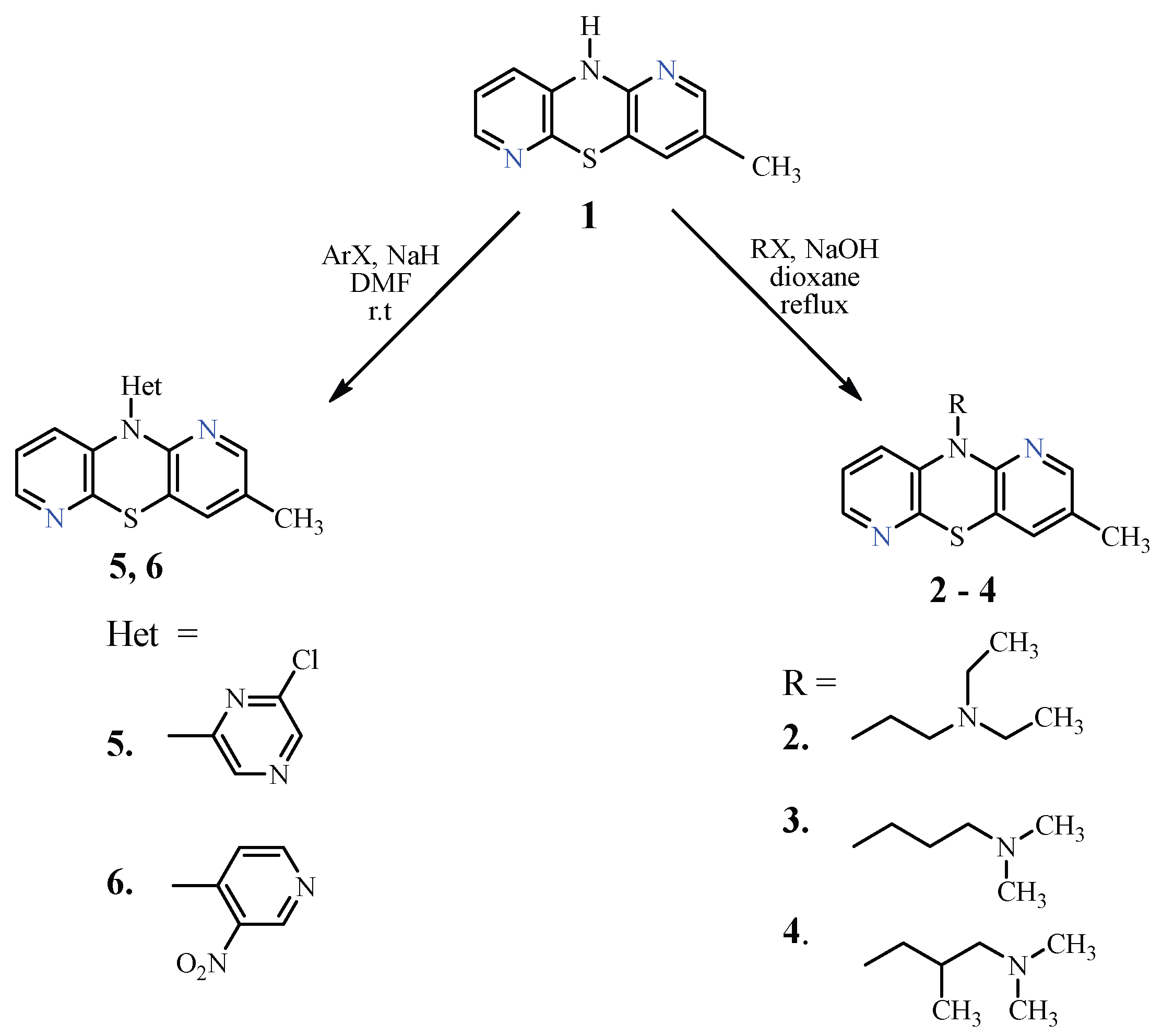
3.1. Chemical Part
3.2. Effects of Novel Derivatives on Melanoma Cells
3.2.1. Cytotoxicity Screening
3.2.2. Cell Count Assay
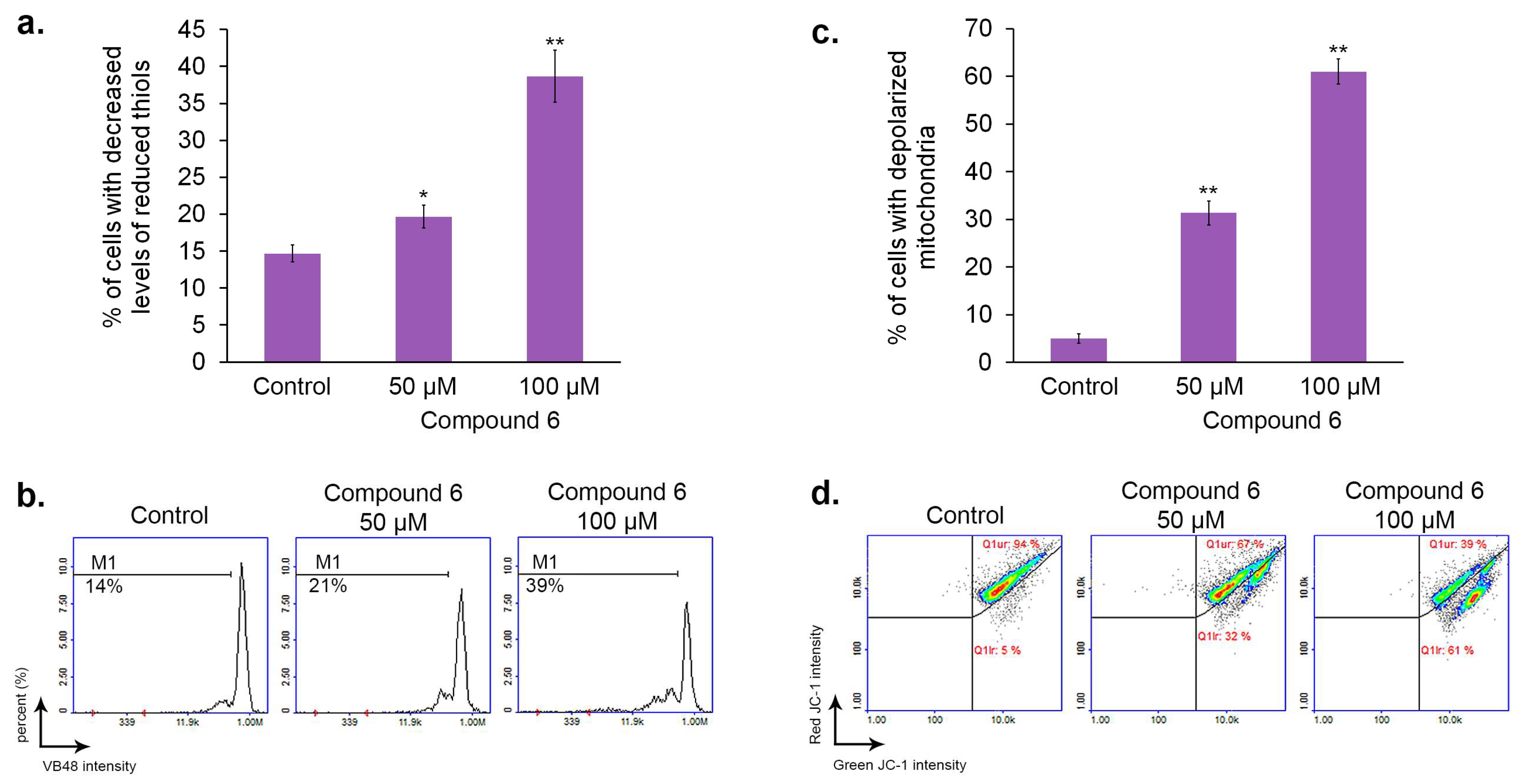
3.2.3. Evaluation of Intracellular Reduced Thiols and Mitochondrial Potential
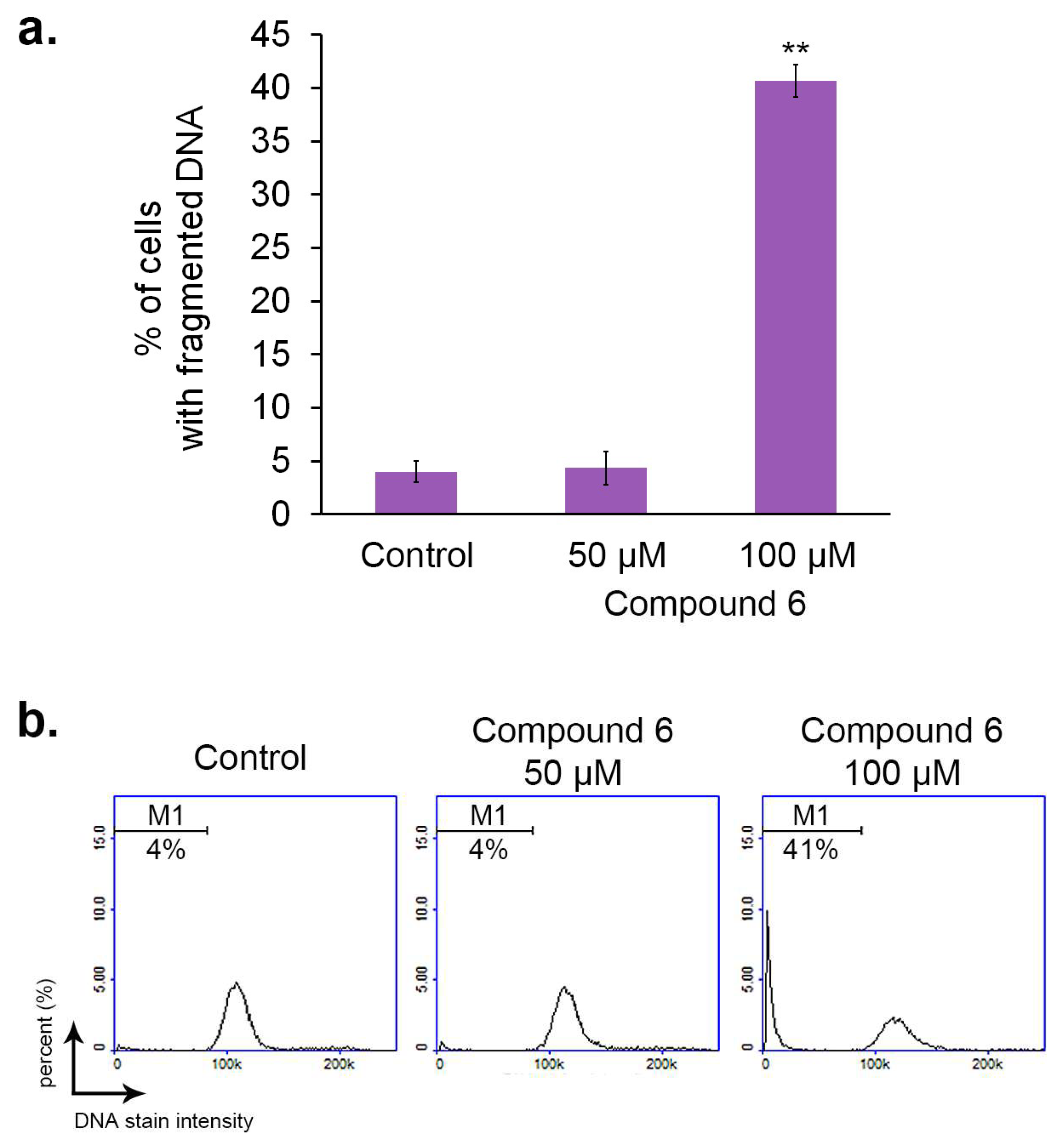
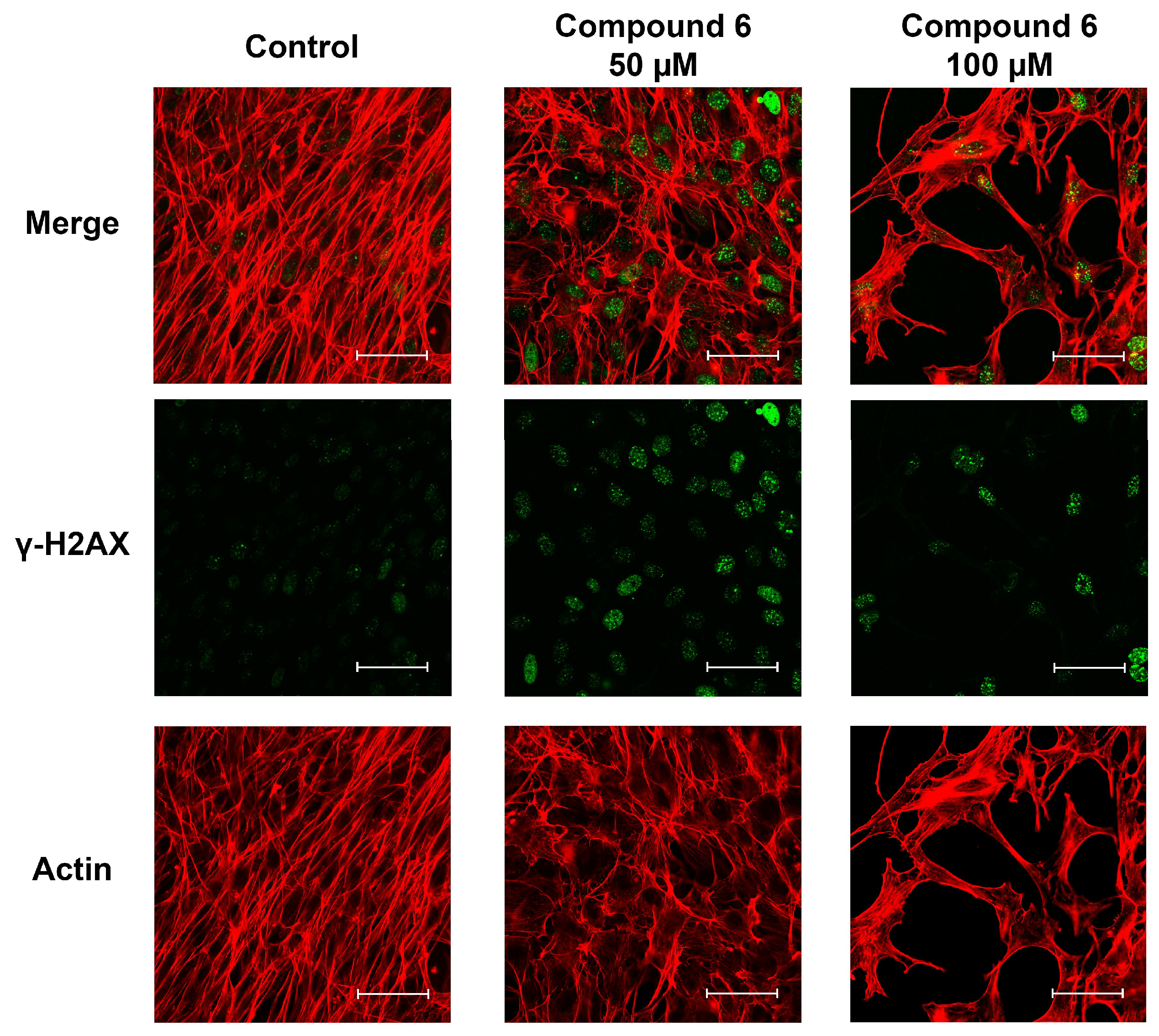
3.2.4. Assessment of DNA Fragmentation and γ-H2AX Levels
4. Discussion
4.1. Chemical Part
4.2. Biological Part
5. Conclusions
Supplementary Materials
Author Contributions
Funding
Institutional Review Board Statement
Informed Consent Statement
Data Availability Statement
Conflicts of Interest
References
- Caraviello, C.; Nazzaro, G.; Tavoletti, G.; Boggio, F.; Denaro, N.; Murgia, G.; Passoni, E.; Mancin, V.; Marzano, A. Melanoma skin cancer: A comprehensive review of current knowledge. Cancers 2025, 17, 2920. [Google Scholar] [CrossRef]
- Saginala, K.; Barsouk, A.; Aluru, J.; Rawla, P.; Barsouk, A. Epidemiology of melanoma. Med. Sci. 2021, 9, 63. [Google Scholar] [CrossRef]
- Arnold, M.; Singh, D.; Laversanne, M.; Vignat, J.; Vaccarella, S.; Meheus, F.; Cust, A.E.; de Vries, E.; Whiteman, D.C.; Bray, F. Global Burden of Cutaneous Melanoma in 2020 and Projections to 2040. JAMA Dermatol. 2022, 158, 495–503. [Google Scholar] [CrossRef] [PubMed]
- Slominski, R.M.; Sarna, T.; Płonka, P.M.; Raman, C.; Brożyna, A.A.; Slominski, A.T. Melanoma, melanin, and melanogenesis: The yin and yang relationship. Front. Oncol. 2022, 12, 842496. [Google Scholar] [CrossRef] [PubMed]
- Brombin, A.; Patton, E.E. Melanocyte lineage dynamics in development, growth and disease. Development 2024, 151, dev201266. [Google Scholar] [CrossRef] [PubMed]
- Misiąg, P.; Molik, K.; Kisielewska, M.; Typek, P.; Skowron, I.; Karwowska, A.; Kuźnicki, J.; Wojno, A.; Ekiert, M.; Choromańska, A. Amelanotic Melanoma—Biochemical and Molecular Induction Pathways. Int. J. Mol. Sci. 2024, 25, 11502. [Google Scholar] [CrossRef]
- Sarna, M.; Krzykawska-Serda, M.; Jakubowska, M.; Zadło, A.; Urbańska, K. Melanin presence inhibits melanoma cell spread in mice in a unique mechanical fashion. Sci. Rep. 2019, 9, 9280. [Google Scholar] [CrossRef]
- Domingues, B.; Lopes, J.M.; Soares, P.; Pópulo, H. Melanoma Treatment in Review. Immunotargets Ther. 2018, 7, 35–49. [Google Scholar] [CrossRef]
- Fateeva, A.; Eddy, K.; Chen, S. Current state of melanoma therapy and next steps: Battling therapeutic resistance. Cancers 2024, 16, 1571. [Google Scholar] [CrossRef]
- He, X.; Deng, H.; Liu, W.; Hu, L.; Tan, X. Advances in understanding drug resistance mechanisms and innovative clinical treatments for melanoma. Curr. Treat. Options Oncol. 2024, 25, 1615–1633. [Google Scholar] [CrossRef]
- Schwartz, S.M. Epidemiology of Cancer. Clin. Chem. 2024, 4, 140–149. [Google Scholar] [CrossRef]
- Rodrigues, T. Repositioning of Antipsychotic Phenothiazines for Cancer Therapy: Nanotechnological Opportunities to Overcome Obstacles. Curr. Pharm. Des. 2023, 29, 1959–1960. [Google Scholar] [CrossRef]
- Ohlow, M.; Moosmann, B. Phenothiazine: The seven lives of pharmacology’s first lead structure. Drug Discov. Today 2011, 16, 119–131. [Google Scholar] [CrossRef]
- Jaszczyszyn, A.; Gąsiorowski, K.; Świątek, P.; Malinka, W.; Cieślik-Boczula, K.; Petrus, J.; Czarnik-Matusewicz, B. Chemical structure of phenothiazines and their biological activity. Pharmacol. Rep. 2012, 64, 16–23. [Google Scholar] [CrossRef]
- Posso, M.C.; Domingues, F.C.; Ferreira, S.; Silvestre, S. Development of Phenothiazine Hybrids with Potential Medicinal Interest: A Review. Molecules 2022, 27, 276. [Google Scholar] [CrossRef]
- Kumar, A.; Vigato, C.; Boschi, D.; Lolli, M.L.; Kumar, D. Phenothiazines as anti-cancer agents: SAR overview and synthetic strategies. Eur. J. Med. Chem. 2023, 254, 115337. [Google Scholar] [CrossRef]
- Mosnaim, A.D.; Ranade, V.V.; Wolf, M.E.; Puente, J.; Valenzuela, M.A. Phenothiazine molecule provides the basic chemical structure for various classes of pharmacotherapeutic agents. Am. J. Ther. 2006, 13, 261–273. [Google Scholar] [CrossRef] [PubMed]
- Fu, D.J.; Zhao, R.H.; Li, J.H.; Yang, J.J.; Mao, R.W.; Wu, B.W.; Li, P.; Zi, X.L.; Zhang, Q.Q.; Cai, H.J.; et al. Molecular diversity of phenothiazines: Design and synthesis of phenothiazine-dithiocarbamate hybrids as potential cell cycle blockers. Mol. Divers. 2017, 21, 933–942. [Google Scholar] [CrossRef] [PubMed]
- Brem, B.; Gal, E.; Găină, L.; Silaghi-Dumitrescu, L.; Fischer-Fodor, E.; Tomuleasa, C.I.; Grozav, A.; Zaharia, V.; Filip, L.; Cristea, C. Novel thiazolo[5,4-b]phenothiazine derivatives: Synthesis, structural characterization, and in vitro evaluation of antiproliferative activity against human leukaemia. Int. J. Mol. Sci. 2017, 18, 1365. [Google Scholar] [CrossRef]
- Al Zahrani, N.A.; El-Shishtawy, R.M.; Elaasser, M.M.; Asiri, A.M. Synthesis of novel chalcone-based phenothiazine derivatives as antioxidant and anticancer agents. Molecules 2020, 25, 4566. [Google Scholar] [CrossRef] [PubMed]
- Qiu, L.; Chen, W.; Wang, J.; Deng, X.; Liu, H.; Qiu, J. Phenothiazines enhance antibacterial activity of macrophage by inducing ROS and autophagy. Front. Immunol. 2025, 28, 1712724. [Google Scholar] [CrossRef]
- Khelwati, H.; van Geelen, L.; Kalscheuer, R.; Müller, T.J.J. Synthesis, Electronic, and Antibacterial Properties of 3,7-Di(hetero)aryl-substituted Phenothiazinyl N-Propyl Trimethylammonium Salts. Molecules 2024, 3, 2126. [Google Scholar] [CrossRef] [PubMed]
- Grimsey, E.M.; Piddock, L.J.V. Do phenothiazines possess antimicrobial and efflux inhibitory properties? EMS Microbiol. Rev. 2019, 43, 577–590. [Google Scholar] [CrossRef]
- Kisiel-Nawrot, E.; Pindjakova, D.; Latocha, M.; Bak, A.; Kozik, V.; Suwinska, K.; Cizek, A.; Jampilek, J.; Zięba, A. Towards Anticancer and Antibacterial Agents: Design and Synthesis of 1,2,3-Triazol-quinobenzothiazine Derivatives. Int. J. Mol. Sci. 2023, 26, 13250. [Google Scholar] [CrossRef]
- Brosend, S.C.; Guin, S.; Giovine, G.; Gadalla, C.; Campos, M.A.; Mara, A.; Jentsch, N.G.; Thakellapalli, H.; Alden, K.M.; Beattie, S.R.; et al. Antifungal Structure-Activity Relationship Studies of Broad-Spectrum Phenothiazines. ACS Omega 2025, 29, 18347–18355. [Google Scholar] [CrossRef]
- Montoya, M.C.; DiDone, L.; Heier, R.F.; Meyers, M.J.; Krysan, D.J. Antifungal Phenothiazines: Optimization, Characterization of Mechanism, and Modulation of Neuroreceptor Activity. ACS Infect. Dis. 2018, 13, 499–507. [Google Scholar] [CrossRef]
- Karwaciak, I.; Karaś, K.; Sałkowska, A.; Pastwińska, J.; Ratajewski, M. Chlorpromazine, a Clinically Approved Drug, Inhibits SARS-CoV-2 Nucleocapsid-Mediated Induction of IL-6 in Human Monocytes. Molecules 2022, 27, 3651. [Google Scholar] [CrossRef] [PubMed]
- Fanelli, G.; Gesualdi, L.; Ascione, B.; Paolini, F.; Gambardella, L.; Sacconi, A.; Paggi, M.G.; Matarrese, P.; Abbruzzese, C. Chlorpromazine activates cGAS-STING signaling and reprograms the immune response in glioblastoma. Front. Immunol. 2026, 17, 1743232. [Google Scholar] [CrossRef]
- Babalola, B.A.; Malik, M.; Sharma, L.; Olowokere, O.; Folajimi, O. Exploring the Therapeutic Potential of Phenothiazine Derivatives in Medicinal Chemistry. Results Chem. 2024, 8, 101565. [Google Scholar] [CrossRef]
- Bandishti, M.; Pramanik, C.; Roychowdury, A.; Kulkarni, K.G.; Thorat, R.G. A Concise Review of Phenothiazine Based Antipsychotic Drugs and Their Syntheses. J. Heterocycl. Chem. 2025, 63, 106–129. [Google Scholar] [CrossRef]
- Ayogu, J.I.; Nwoba, S.T. Phenothiazine Derivatives as Potential Antiproliferative Agents: A Mini-Review. Mini-Rev. Org. Chem. 2022, 19, 272−292. [Google Scholar] [CrossRef]
- González-González, A.; Vazquez-Jimenez, L.K.; Paz-González, A.D.; Bolognesi, M.L.; Rivera, G. Recent Advances in the Medicinal Chemistry of Phenothiazines, New Anticancer and Antiprotozoal Agents. Curr. Med. Chem. 2021, 28, 7910–7936. [Google Scholar] [CrossRef] [PubMed]
- Zieba, A.; Kozik, V.; Suwinska, K.; Kawulok, A.; Pluta, T.; Jampilek, J.; Bak, A. Synthesis and Structure of 5-Methyl-9-(trifluoromethyl)-12H-quino[3,4-b][1,4]benzothiazinium Chloride as Anticancer Agent. Molecules 2024, 12, 4337. [Google Scholar] [CrossRef]
- Morak-Młodawska, B.; Pluta, K.; Jeleń, M. Phenothiazines Modified with the Pyridine Ring as Promising Anticancer Agents. Life 2021, 11, 206. [Google Scholar] [CrossRef]
- Zhang, J.; Chen, M.; Wenzhi, Z.; Okechukwu, N.P.; Morak-Młodawska, B.; Pluta, K.; Jeleń, M.; Md Akim, A.; Ang, K.P.; Ooi, K.K. 10H-3,6-Diazaphenothiazines Induce G2/M Phase Cell Cycle Arrest, Caspase-dependent Apoptosis and Inhibits Cell Invasion of A2780 Ovarian Carcinoma Cells through Regulation on NF-κB and [BIRC6-XIAP] Complexes. Drug Des. Dev. Ther. 2017, 11, 3045–3063. [Google Scholar] [CrossRef] [PubMed]
- Giercuszkiewicz-Haśnik, K.; Pawicka, P.; Jeleń, M.; Morak-Młodawska, B.; Skonieczna, M. The Interaction of Structural Analogues of Phenothiazines in p53- Dependent Cellular Signaling Pathways. ACS Omega 2026, 11, 371−387. [Google Scholar] [CrossRef]
- Martula, E.; Strzyga-Łach, P.; Struga, M.; Żurawska, K.; Bagrowska, W.; Kasprzycka, A.; Jeleń, M.; Morak-Młodawska, B. Design, Synthesis, Analysis, and Cytotoxicity of Novel Heteroaryl Derivatives of Dipyridothiazines. Curr. Issues Mol. Biol. 2026, 48, 128. [Google Scholar] [CrossRef] [PubMed]
- Morak-Młodawska, B.; Pluta, K.; Latocha, M.; Jeleń, M. Synthesis, spectroscopic characterization, and anticancer activity of new 10-substituted 1,6-diazaphenothiazines. Med. Chem. Res. 2016, 25, 2425–2433. [Google Scholar] [CrossRef]
- Morak-Młodawska, B.; Pluta, K.; Latocha, M.; Jeleń, M.; Kuśmierz, D.; Suwińska, K.; Shkurenko, A.; Czuba, Z.; Jurzak, M. 10H-1,9-diazaphenothiazine and its 10-derivatives: Synthesis, characterisation and biological evaluation as potential anticancer agents. J. Enzym. Inhib. Med. Chem. 2019, 34, 1298–1306. [Google Scholar] [CrossRef]
- Morak-Młodawska, B.; Martula, E.; Jeleń, M.; Beberok, A.; Rzepka, Z.; Musiał, S.; Małek, S.; Karkoszka-Stanowska, M.; Wrześniok, D. Novel 3-Methyl-1,6-Diazaphenothiazine as an Anticancer Agent—Synthesis, Structure, and In Vitro Anticancer Evaluation. Molecules 2025, 30, 2779. [Google Scholar] [CrossRef]
- Hermann, C.K.F.; Morrill, T.C.; Shriner, R.L.; Fuson, R.C. The Systematic Identification of Organic Compounds, 9th ed.; Wiley: Hoboken, NJ, USA, 2023; ISBN 978-1-119-79968-9. [Google Scholar]
- Chodurek, E.; Orchel, A.; Gruchlik, A.; Aleksander, E.; Gołabek, K.; Dzierzewicz, Z. Valproic acid enhances cisplatin cytotoxicity in melanoma cells. Acta Pol. Pharm.-Drug Res. 2012, 69, 1298–1302. [Google Scholar]
- Mohammed, M.Q.; Retsas, S. Oxaliplatin is active in vitro against human melanoma cell lines: Comparison with cisplatin and carboplatin. Anticancer Drugs 2000, 11, 859–863. [Google Scholar] [CrossRef]
- Tabandeh, F.; Moradian Tehrani, R.; Sharifi, M.; Toopchi, E. Investigating therapeutic efficacy of dacarbazine and temozolomide, alone and in combination with BRAF(V600E) siRNA in A375 human melanoma cell line. Iran. J. Basic Med. Sci. 2025, 28, 772–783. [Google Scholar]
- Motohashi, N.; Sakagami, H.; Kamata, K.; Yamamoto, Y. Cytotoxicity and Differentiation-Inducing Activity of Phenothiazine and Benzo[a]phenothiazine Derivatives. Anticancer Res. 1991, 11, 1933–1937. [Google Scholar]
- Franco, R.; Cidlowski, J.A. Glutathione Efflux and Cell Death. Antioxid. Redox Signal. 2012, 17, 1694–1713. [Google Scholar] [CrossRef]
- Averill-Bates, D.A. The Antioxidant Glutathione. Vitam. Horm. 2023, 121, 109–141. [Google Scholar] [CrossRef]
- Zhang, Z.; Zhang, M.; Jin, H.; Lv, S.; Li, Y.; Li, Y. Mitochondrial Quality Control and Cell Death. Int. J. Mol. Sci. 2025, 26, 11084. [Google Scholar] [CrossRef]
- Lin, J.; Chen, X.; Du, Y.; Li, J.; Guo, T.; Luo, S. Mitophagy in Cell Death Regulation: Insights into Mechanisms and Disease Implications. Biomolecules 2024, 14, 1270. [Google Scholar] [CrossRef] [PubMed]
- Rok, J.; Rzepka, Z.; Kowalska, J.; Banach, K.; Beberok, A.; Wrześniok, D. The Anticancer Potential of Doxycycline and Minocycline—A Comparative Study on Amelanotic Melanoma Cell Lines. Int. J. Mol. Sci. 2022, 23, 831. [Google Scholar] [CrossRef]
- Nagata, S. Apoptotic DNA Fragmentation. Exp. Cell Res. 2000, 256, 12–18. [Google Scholar] [CrossRef] [PubMed]
- Higuchi, Y. Chromosomal DNA Fragmentation in Apoptosis and Necrosis Induced by Oxidative Stress. Biochem. Pharmacol. 2003, 66, 1527–1535. [Google Scholar] [CrossRef] [PubMed]
- Kinner, A.; Wu, W.; Staudt, C.; Iliakis, G. γ-H2AX in Recognition and Signaling of DNA Double-Strand Breaks in the Context of Chromatin. Nucleic Acids Res. 2008, 36, 5678–5694. [Google Scholar] [CrossRef] [PubMed]



| A375 | C32 | G361 | SK-MEL-28 | HDF | |
|---|---|---|---|---|---|
| 2 | 104 | 131 | 73 | 106 | 134 |
| 3 | 102 | 119 | 76 | 95 | 78 |
| 4 | Neg * | 168 | 72 | 106 | Neg * |
| 5 | Neg * | 89 | 101 | Neg * | Neg * |
| 6 | 127 | 54 | 98 | Neg * | 188 |
Disclaimer/Publisher’s Note: The statements, opinions and data contained in all publications are solely those of the individual author(s) and contributor(s) and not of MDPI and/or the editor(s). MDPI and/or the editor(s) disclaim responsibility for any injury to people or property resulting from any ideas, methods, instructions or products referred to in the content. |
© 2026 by the authors. Licensee MDPI, Basel, Switzerland. This article is an open access article distributed under the terms and conditions of the Creative Commons Attribution (CC BY) license.
Share and Cite
Morak-Młodawska, B.; Jeleń, M.; Rzepka, Z.; Koch, M.; Wrześniok, D. Cytotoxic and Antimelanoma Activity of Selected 3-Methyl-1,6-diazaphenothiazines in Human Melanoma Cells—In Vitro Studies. Curr. Issues Mol. Biol. 2026, 48, 490. https://doi.org/10.3390/cimb48050490
Morak-Młodawska B, Jeleń M, Rzepka Z, Koch M, Wrześniok D. Cytotoxic and Antimelanoma Activity of Selected 3-Methyl-1,6-diazaphenothiazines in Human Melanoma Cells—In Vitro Studies. Current Issues in Molecular Biology. 2026; 48(5):490. https://doi.org/10.3390/cimb48050490
Chicago/Turabian StyleMorak-Młodawska, Beata, Małgorzata Jeleń, Zuzanna Rzepka, Milena Koch, and Dorota Wrześniok. 2026. "Cytotoxic and Antimelanoma Activity of Selected 3-Methyl-1,6-diazaphenothiazines in Human Melanoma Cells—In Vitro Studies" Current Issues in Molecular Biology 48, no. 5: 490. https://doi.org/10.3390/cimb48050490
APA StyleMorak-Młodawska, B., Jeleń, M., Rzepka, Z., Koch, M., & Wrześniok, D. (2026). Cytotoxic and Antimelanoma Activity of Selected 3-Methyl-1,6-diazaphenothiazines in Human Melanoma Cells—In Vitro Studies. Current Issues in Molecular Biology, 48(5), 490. https://doi.org/10.3390/cimb48050490