
Herbal Melanin Inhibits Colorectal Cancer Cell Motility, Invasiveness, and Epithelial–Mesenchymal Transition, Associated with u-PAR Downregulation Through JNK and ERK Pathways


 , ,
, ,
Abstract
1. Introduction
2. Materials and Methods
2.1. Cell Culture and Treatment
2.2. Clonogenic Assay
2.3. Cell Migration and Invasion Assays Using xCELLigence Real-Time Cell Analysis
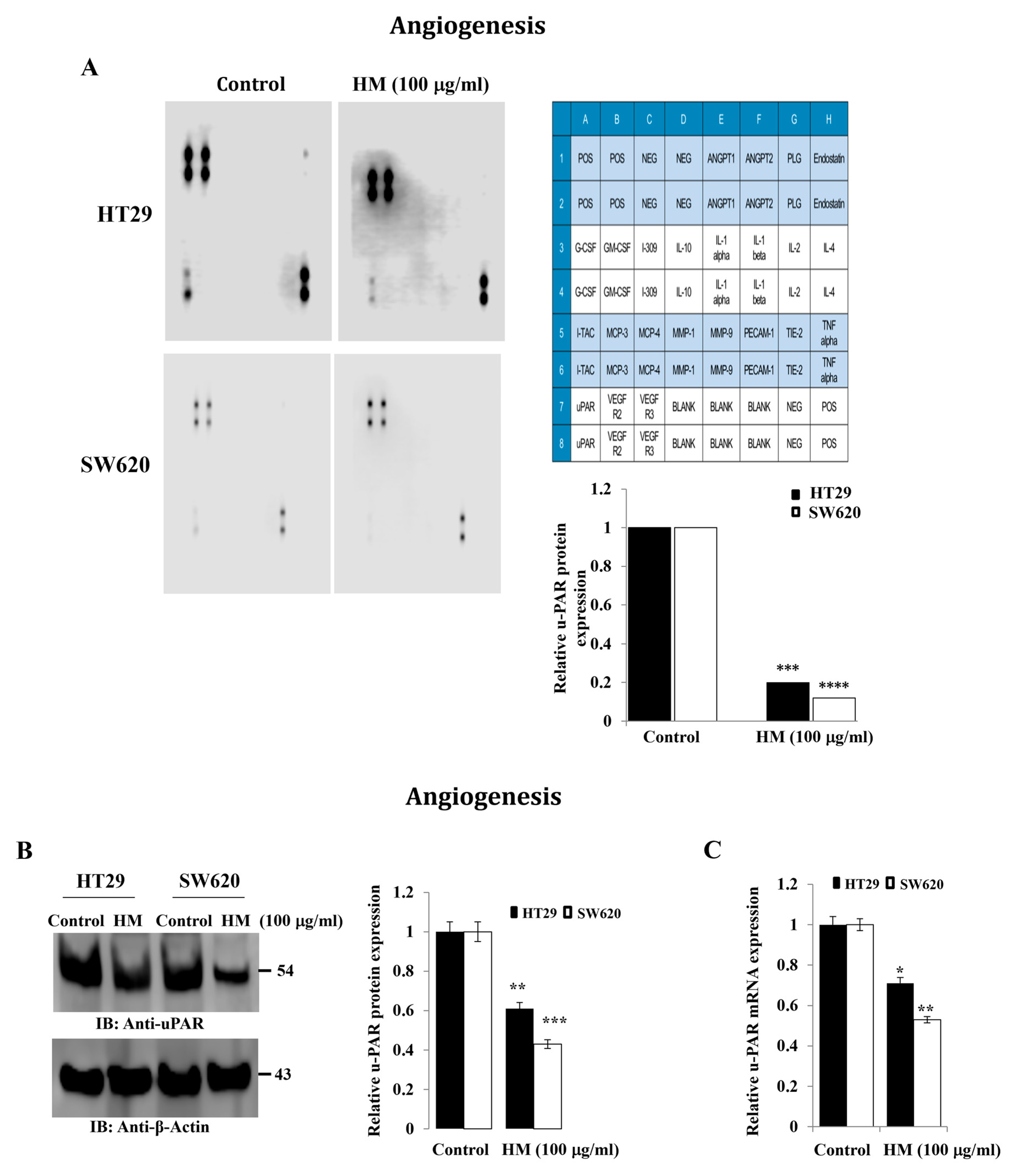
2.4. Angiogenesis-Related Protein Array
2.5. Whole-Cell Lysates and Western Blotting
2.6. RNA Extraction and Reverse-Transcription Polymerase Chain Reaction (RT-PCR)
2.7. Statistical Analysis
3. Results
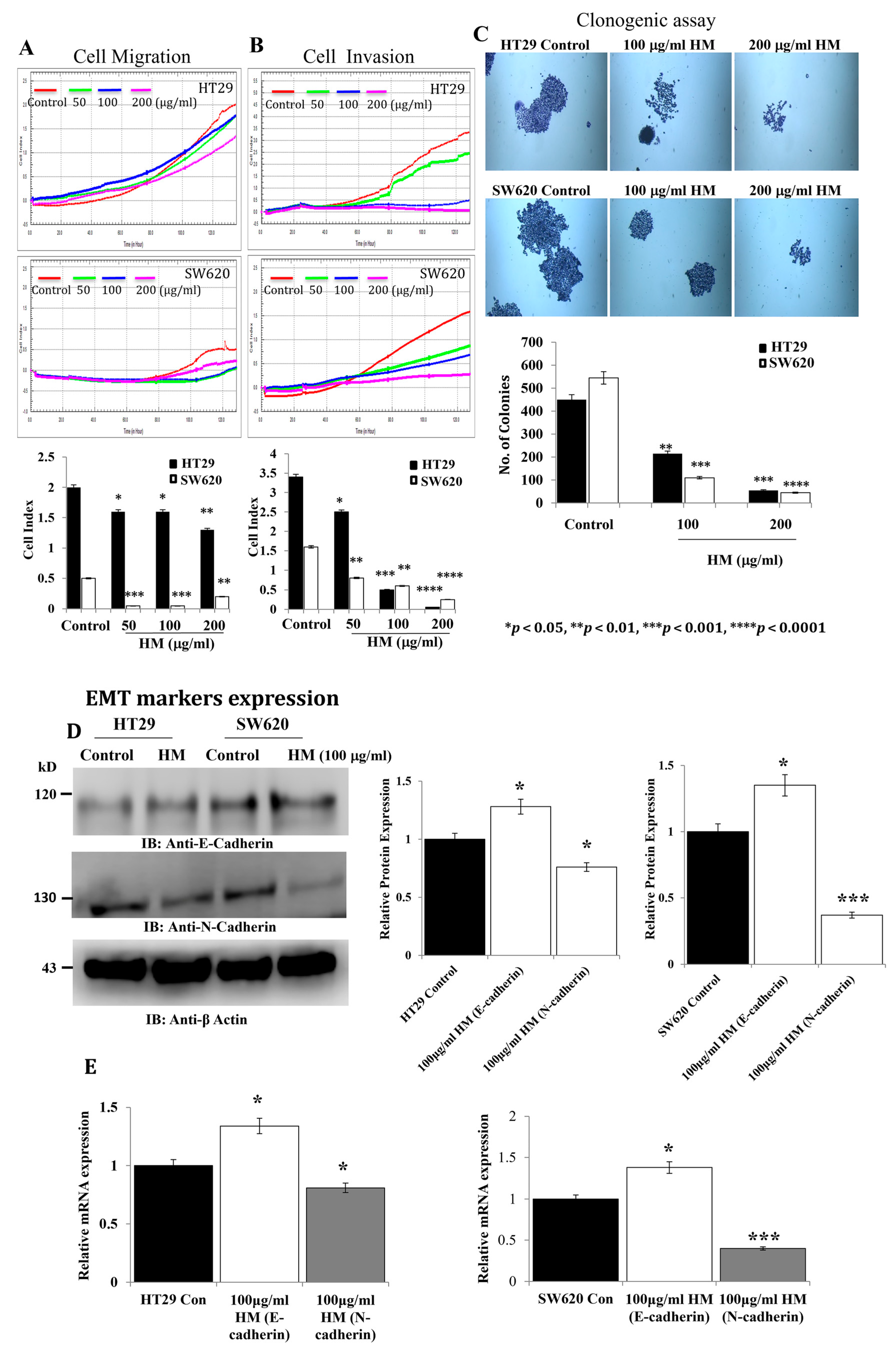
3.1. HM Decreases CRC Cell Motility and Invasiveness and Inhibits Colony Formation Associated with Differential Effects on Epithelial–Mesenchymal Transition (EMT) Marker Expression
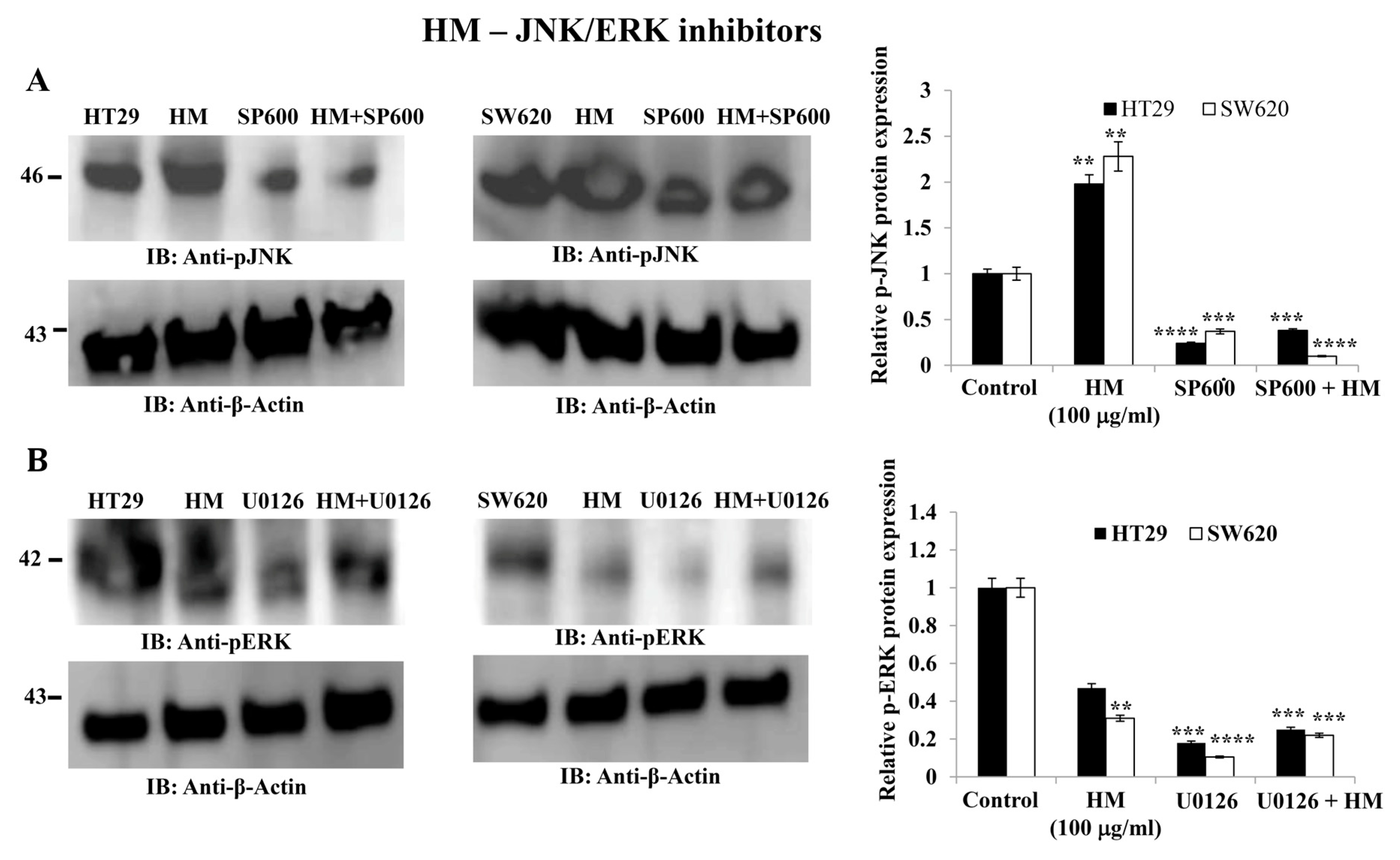
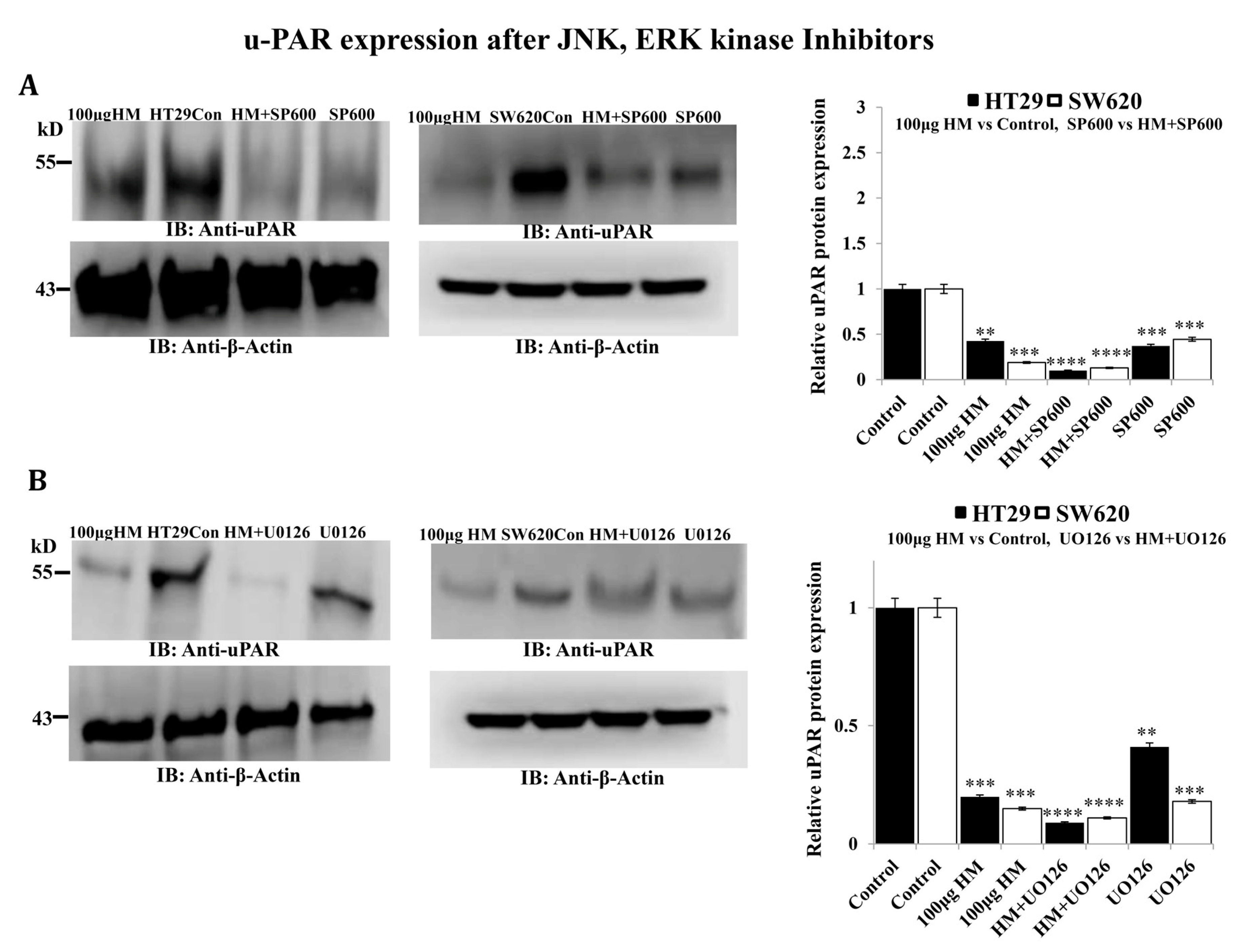
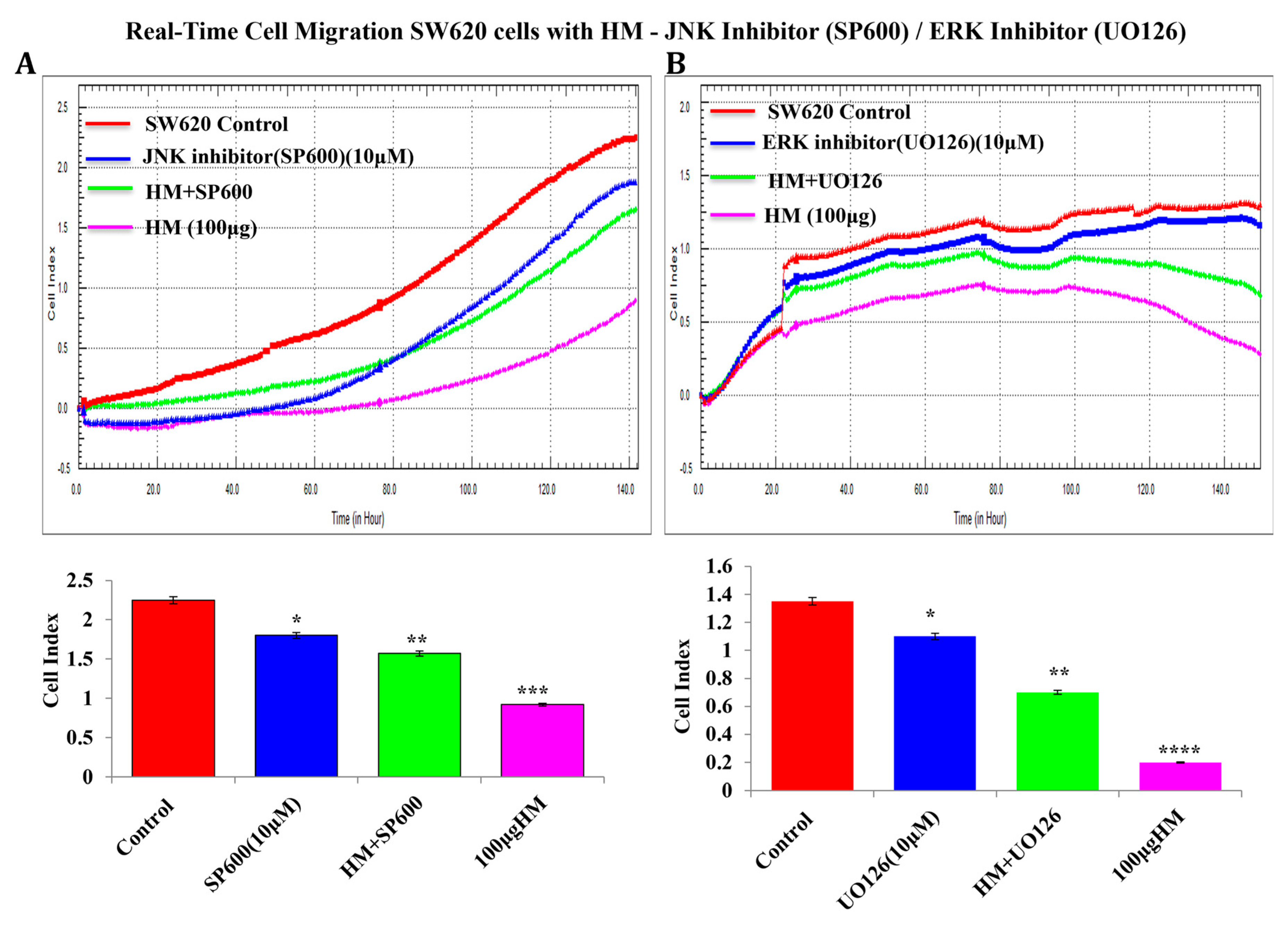
3.2. HM Downregulates uPAR Expression Level Through JNK and ERK Pathways
4. Discussion
5. Conclusions
Author Contributions
Funding
Institutional Review Board Statement
Informed Consent Statement
Data Availability Statement
Conflicts of Interest
References
- Sung, H.; Ferlay, J.; Siegel, R.L.; Laversanne, M.; Soerjomataram, I.; Jemal, A.; Bray, F. Global Cancer Statistics 2020: GLOBOCAN Estimates of Incidence and Mortality Worldwide for 36 Cancers in 185 Countries. CA Cancer J. Clin. 2021, 71, 209–249. [Google Scholar] [CrossRef]
- Ferlay, J.; Colombet, M.; Soerjomataram, I.; Mathers, C.; Parkin, D.M.; Piñeros, M.; Znaor, A.; Bray, F. Estimating the global cancer incidence and mortality in 2018: GLOBOCAN sources and methods. Int. J. Cancer 2019, 144, 1941–1953. [Google Scholar] [CrossRef]
- Zhang, X.; Yang, L.; Liu, S.; Cao, L.L.; Wang, N.; Li, H.C.; Ji, J.F. Interpretation on the report of global cancer statistics 2022. Zhonghua Zhong Liu Za Zhi 2024, 46, 710–721. [Google Scholar] [PubMed]
- Liu, Z.; Xu, Y.; Xu, G.; Baklaushev, V.P.; Checkhonin, V.P.; Peltzer, K.; Ma, W.; Wang, X.; Zhang, C. Nomogram for predicting overall survival in colorectal cancer with distant metastasis. BMC Gastroenterol. 2021, 21, 103. [Google Scholar] [CrossRef]
- Guo, K.; Feng, Y.; Yuan, L.; Wasan, H.S.; Sun, L.; Shen, M.; Ruan, S. Risk factors and predictors of lymph nodes metastasis and distant metastasis in newly diagnosed T1 colorectal cancer. Cancer Med. 2020, 9, 5095–5113. [Google Scholar] [CrossRef] [PubMed]
- Lv, T.; Wu, X.; Sun, L.; Hu, Q.; Wan, Y.; Wang, L.; Zhao, Z.; Tu, X.; Xiao, Z.J. p53-R273H upregulates neuropilin-2 to promote cell mobility and tumor metastasis. Cell Death Dis. 2017, 8, e2995. [Google Scholar] [CrossRef]
- Hu, L.; Liang, S.; Chen, H.; Lv, T.; Wu, J.; Chen, D.; Wu, M.; Sun, S.; Zhang, H.; You, H.; et al. DeltaNp63alpha is a common inhibitory target in oncogenic PI3K/Ras/Her2-induced cell motility and tumor metastasis. Proc. Natl. Acad. Sci. USA 2017, 114, E3964–E3973. [Google Scholar] [CrossRef]
- Lv, T.; Lv, H.; Fei, J.; Xie, Y.; Lian, D.; Hu, J.; Tang, L.; Shi, X.; Wang, J.; Zhang, S.; et al. p53-R273H promotes cancer cell migration via upregulation of neuraminidase-1. J. Cancer 2020, 11, 6874–6882. [Google Scholar] [CrossRef]
- Mohanam, S.; Sawaya, R.E.; Yamamoto, M.; Bruner, J.M.; Nicholson, G.L.; Rao, J.S. Proteolysis and invasiveness of brain tumors: Role of urokinase-type plasminogen activator receptor. J. Neuro Oncol. 1994, 22, 153–160. [Google Scholar] [CrossRef]
- Yonemura, Y.; Nojima, N.; Kawamura, T.; Ajisaka, H.; Taniguchi, K.; Fujimura, T.; Fujita, H.; Bando, E.; Fushida, S.; Endou, Y.; et al. Correlation between expression of urokinase-type plasminogen activator receptor and metastasis in gastric carcinoma. Oncol. Rep. 1997, 4, 1229–1234. [Google Scholar] [CrossRef] [PubMed]
- Park, J.S.; Park, H.J.; Khoi, P.N.; Joo, Y.E.; Jung, Y.D. MSP-induced RON activation upregulates uPAR expression and cell invasiveness via MAPK, AP-1 and NF-κB signals in gastric cancer cells. Carcinogenesis 2011, 32, 175–181. [Google Scholar] [CrossRef] [PubMed]
- Li, Y.; Cozzi, P.J. Targeting uPA/uPAR in prostate cancer. Cancer Treat. Rev. 2007, 33, 521–527. [Google Scholar] [CrossRef] [PubMed]
- Ertongur, S.; Lang, S.; Mack, B.; Wosikowski, K.; Muehlenweg, B.; Gires, O. Inhibition of the invasion capacity of carcinoma cells by WX-UK1, a novel synthetic inhibitor of the urokinase-type plasminogen activator system. Int. J. Cancer 2004, 110, 815–824. [Google Scholar] [CrossRef]
- Hau, A.M.; Leivo, M.Z.; Gilder, A.S.; Hu, J.J.; Gonias, S.L.; Hansel, D.E. mTORC2 activation is regulated by the urokinase receptor (uPAR) in bladder cancer. Cell Signal 2017, 29, 96–106. [Google Scholar] [CrossRef]
- Skovgaard, D.; Persson, M.; Brandt-Larsen, M.; Christensen, C.; Madsen, J.; Klausen, T.L.; Holm, S.; Andersen, F.L.; Loft, A.; Berthelsen, A.K.; et al. Safety, Dosimetry, and Tumor Detection Ability of (68)Ga-NOTA-AE105: First-in-Human Study of a Novel Radioligand for uPAR PET Imaging. J. Nucl. Med. 2017, 58, 379–386. [Google Scholar] [CrossRef] [PubMed]
- Vries, T.J.d.; Quax, P.H.; Denijn, M.; Verrijp, K.N.; Verheijen, J.H.; Verspaget, H.W.; Weidle, U.H.; Ruiter, D.J.; Muijen, G.N. Plasminogen activators, their inhibitors, and urokinase receptor emerge in late stages of melanocytic tumor progression. Am. J. Pathol. 1994, 144, 70–81. [Google Scholar]
- Vecchio, S.D.; Stoppelli, M.P.; Carriero, M.V.; Fonti, R.; Massa, O.; Li, P.Y.; Botti, G.; Cerra, M.; D’Aiuto, G.; Esposito, G.; et al. Human urokinase receptor concentration in malignant and benign breast tumors by in vitro quantitative autoradiography: Comparison with urokinase levels. Cancer Res. 1993, 53, 3198–3206. [Google Scholar]
- Huber, M.C.; Mall, R.; Braselmann, H.; Feuchtinger, A.; Molatore, S.; Lindner, K.; Walch, A.; Gross, E.; Schmitt, M.; Falkenberg, N.; et al. uPAR enhances malignant potential of triple-negative breast cancer by directly interacting with uPA and IGF1R. BMC Cancer 2016, 16, 615. [Google Scholar] [CrossRef]
- Loosen, S.H.; Tacke, F.; Püthe, N.; Binneboesel, M.; Wiltberger, G.; Alizai, P.H.; Kather, J.N.; Paffenholz, P.; Ritz, T.; Koch, A.; et al. High baseline soluble urokinase plasminogen activator receptor (suPAR) serum levels indicate adverse outcome after resection of pancreatic adenocarcinoma. Carcinogenesis 2019, 40, 947–955. [Google Scholar] [CrossRef]
- Keer, H.N.; Gaylis, F.D.; Kozlowski, J.M.; Kwaan, H.C.; Bauer, K.D.; Sinha, A.A.; Wilson, M.J. Heterogeneity in plasminogen activator (PA) levels in human prostate cancer cell lines: Increased PA activity correlates with biologically aggressive behavior. Prostate 1991, 18, 201–214. [Google Scholar] [CrossRef]
- Tjwa, M.; Sidenius, N.; Moura, R.; Jansen, S.; Theunissen, K.; Andolfo, A.; Mol, M.D.; Dewerchin, M.; Moons, L.; Blasi, F.; et al. Membrane-anchored uPAR regulates the proliferation, marrow pool size, engraftment, and mobilization of mouse hematopoietic stem/progenitor cells. J. Clin. Investig. 2009, 119, 1008–1018. [Google Scholar] [CrossRef]
- Laurenzana, A.; Chillà, A.; Luciani, C.; Peppicelli, S.; Biagioni, A.; Bianchini, F.; Tenedini, E.; Torre, E.; Mocali, A.; Calorini, L.; et al. uPA/uPAR system activation drives a glycolytic phenotype in melanoma cells. Int. J. Cancer 2017, 141, 1190–1200. [Google Scholar]
- Laurenzana, A.; Fibbi, G.; Margheri, F.; Biagioni, A.; Luciani, C.; Rosso, M.D.; Chilla, A. Endothelial Progenitor Cells in Sprouting Angiogenesis: Proteases Pave the Way. Curr. Mol. Med. 2015, 15, 606–620. [Google Scholar] [CrossRef] [PubMed]
- Dass, K.; Ahmad, A.; Azmi, A.S.; Sarkar, S.H.; Sarkar, F.H. Evolving role of uPA/uPAR system in human cancers. Cancer Treat. Rev. 2008, 34, 122–136. [Google Scholar]
- Wang, K.; Xing, Z.H.; Jiang, Q.W.; Yang, Y.; Huang, J.R.; Yuan, M.L.; Wei, M.N.; Li, Y.; Wang, S.T.; Liu, K.; et al. Targeting uPAR by CRISPR/Cas9 System Attenuates Cancer Malignancy and Multidrug Resistance. Front. Oncol. 2019, 9, 80. [Google Scholar]
- Ahn, S.B.; Mohamedali, A.; Pascovici, D.; Adhikari, S.; Sharma, S.; Nice, E.C. Baker Proteomics Reveals Cell-Surface Urokinase Plasminogen Activator Receptor Expression Impacts Most Hallmarks of Cancer. Proteomics 2019, 19, 1900026. [Google Scholar] [CrossRef] [PubMed]
- Masucci, M.T.; Minopoli, M.; Carluccio, G.; Motti, M.L.; Carriero, M.V. Therapeutic Strategies Targeting Urokinase and Its Receptor in Cancer. Cancers 2022, 14, 498. [Google Scholar] [CrossRef]
- Xie, S.; Yang, G.; Wu, J.; Jiang, L.; Yuan, C.; Xu, P.; Huang, M.; Liu, Y.; Li, J. In silico screening of natural products as uPAR inhibitors via multiple structure-based docking and molecular dynamic simulations. J. Biomol. Struct. Dyn. 2023, 43, 3064–3075. [Google Scholar] [CrossRef]
- El-Nagger, N.E.A.; Saber, W.I.A. Natural melanin: Current trends, and future approaches, with especial reference to microbial source. Polymers 2022, 14, 1339. [Google Scholar] [CrossRef]
- Alghamdi, K.; Alehaideb, Z.; Kumar, A.; Al-Eidi, H.; Suliman, R.; Ali, R.; Almourfi, F.; Alghamdi, S.M.; Boudjelal, M.; Matou-Nasri, S. Stimulatory effects of Lycium shawii on human melanocyte proliferation, migration, and melanogenesis: In vitro and in silico studies. Front. Pharmacol. 2023, 14, 1169812. [Google Scholar] [CrossRef] [PubMed]
- ElObeid, A.S.; Kama-Eldin, A.; Abdelhalim, M.A.K.; Haseeb, A.M. Pharmacological properties of melanin and its function in health. Basic Clin. Pharmacol. Toxicol. 2017, 120, 515–522. [Google Scholar] [CrossRef] [PubMed]
- El-Obeid, A.; Al-Harbi, S.; Al-Jomah, N.; Hassib, A. Herbal melanin modulates tumor necrosis factor alpha (TNF-α), interleukin 6 (IL-6) and vascular endothelial growth factor (VEGF) production. Phytomedicine 2006, 13, 324–333. [Google Scholar] [CrossRef]
- El-Obeid, A.; Alajmi, H.; Harbi, M.; Bin Yahya, W.; Al-Eidi, H.; Alaujan, M.; Haseeb, A.; Trivilegio, T.; Alhallaj, A.; Alghamdi, S.; et al. Distinct anti-proliferative effects of herbal melanin on human acute monocytic leukemia THP-1 cells and embryonic kidney HEK293 cells. BMC Complement Med. Ther. 2020, 20, 154. [Google Scholar] [CrossRef] [PubMed]
- Al-Obeed, O.; El-Obeid, A.S.; Matou-Nasri, S.; Vaali-Mohammed, M.-A.; AlHaidan, Y.; Elwatidy, M.; Al Dosary, H.; Alehaideb, Z.; Alkhayal, K.; Haseeb, A.; et al. Herbal melanin inhibits colorectal cancer cell proliferation by altering redox balance, inducing apoptosis, and modulating MAPK signaling. Cancer Cell Int. 2020, 20, 126. [Google Scholar] [CrossRef] [PubMed]
- Rajabathar, J.R.; Al-Lohdan, H.; Arokiyaraj, S.; Mohammed, F.; Al-Dhayan, D.M.; Faqihi, N.A.; Al-Saigh, H. Herbal melanin inhibits real-time cell proliferation, downregulates anti-apoptotic proteins and upregulates pro-apoptotic p53 expression in MDA-MB-231 and HCT-116 cancer cell lines. Medicina 2023, 59, 2061. [Google Scholar]
- Marcovici, I.; Coricovac, D.; Pinzaru, I.; Macasoi, I.G.; Popescu, R.; Chioibas, R.; Zupko, I.; Dehelean, C.A. Melanin and melanin-functionalized nanoparticles as promising tools in cancer research—A review. Cancers 2022, 14, 1838. [Google Scholar] [CrossRef]
- Vaali-Mohammed, M.-A.; Abdulla, M.-H.; Matou-Nasri, S.; Eldehna, W.M.; Meeramaideen, M.; Elkaeed, E.B.; El-Watidy, M.; Alhassan, N.S.; Alkhaya, K.; Al Obeed, O. The anticancer effects of the pro-apoptotic benzofuran-isatin conjugate (5a) are associated with p53 upregulation and enhancement of conventional chemotherapeutic drug efficiency in colorectal cancer cell lines. Front. Pharmacol. 2022, 13, 923398. [Google Scholar] [CrossRef]
- Hassib, A. Extraction of Melanin from Nigella sativa L. Patent No. 451; Sudan Patent Office: Khartoum, Sudan, 1998. [Google Scholar]
- Sah, D.K.; Khoi, P.N.; Li, S.; Arjunan, A.; Jeong, J.U.; Jung, Y.D. Epigallocatechin-3-gallate prevents IL-1β-induced uPAR expression and invasiveness via the suppression of NF-κB and AP-1 in human bladder cancer cells. Int. J. Mol. Sci. 2022, 23, 14008. [Google Scholar] [CrossRef]
- Ding, Y.; Niu, W.; Zheng, X.; Zhou, C.; Wang, G.; Feng, Y.; Yu, B. Plasminogen activator, urokinase enhances the migration, invasion, and proliferation of colorectal cancer cells by activating the Src/ERK pathway. J. Gastrointest. Oncol. 2022, 13, 3100–3111. [Google Scholar] [CrossRef]
- Huang, X.M.; Yang, Z.J.; Xie, Q.; Zhang, Z.K.; Zhang, H.; Ma, J.Y. Natural product for treating colorectal cancer: A mechanistic review. Biomed. Pharmacother. 2019, 117, 109142. [Google Scholar] [CrossRef]
- Islam, M.R.; Akash, S.; Rahman, M.M.; Nowrin, F.T.; Akter, T.; Shohag, S.; Rauf, A.; Aljohani, A.S.M.; Simal-Gandara, J. Colon cancer and colorectal cancer: Prevention and treatment by potential natural products. Chem. Biol. Interact. 2022, 368, 110170. [Google Scholar] [CrossRef] [PubMed]
- Honari, M.; Shafabakhsh, R.; Reiter, R.J.; Mirzaei, H.; Asemi, Z. Resveratrol is a prominent agent for colorectal cancer prevention and treatment: Focus on molecular mechanisms. Cancer Cell Int. 2019, 19, 180. [Google Scholar] [CrossRef]
- Anwar, M.J.; Altaf, A.; Imran, M.; Amir, M.; Alsagaby, S.A.; Abdulmonem, W.A.; Mujtaba, A.; El-Ghorab, A.H.; Ghoneim, M.M.; Hussain, M.; et al. Anti-cancer perspectives of resveratrol: A comprehensive review. Food Agric. Immunol. 2023, 34, 2265686. [Google Scholar] [CrossRef]
- He, J.; Chen, S.; Yu, T.; Chen, W.; Huang, J.; Peng, C.; Ding, Y. Harmine suppresses breast cancer cell migration and invasion by regulating TAZ-mediated epithelial-mesenchymal transition. Am. J. Cancer Res. 2022, 12, 2612–2626. [Google Scholar]
- Liang, H.; Chen, Z.; Yang, R.; Huang, Q.; Chen, H.; Chen, W.; Zou, L.; Wei, P.; Wei, S.; Yang, Y.; et al. Methyl Gallate suppresses the migration, invasion, and epithelial-mesenchymal transition of hepatocellular carcinoma cells via the AMPK/NF/kB signaling pathway in vitro and in vivo. Front. Pharmacol. 2022, 13, 894285. [Google Scholar] [CrossRef]
- Oberg, F.; Ahnfelt, M.; Ponten, F.; Westermark, B.; El-Obeid, A. Herbal melanin activates TLR4/NF-kappaB signaling pathway. Phytomoedicine 2009, 16, 477–484. [Google Scholar] [CrossRef] [PubMed]
- El-Naggar, N.E.A.; Al-Ewasy, S.M. Bioproduction, characterization, anticancer and antioxidant activities of extracellular melanin pigment produced by newly isolated microbial cell factories Streptomyces glaucescens NEAE-H. Sci. Rep. 2017, 7, 42129. [Google Scholar] [CrossRef]
- Ye, Y.; Wang, C.; Zhang, X.; Hu, Q.; Zhang, Y.; Liu, Q.; Wen, D.; Milligan, J.; Bellotti, A.; Huang, L.; et al. A melanin-mediated cancer immunotherapy patch. Sci. Immunol. 2017, 2, eaan5692. [Google Scholar] [CrossRef]
- Bharadwaj, A.G.; Holloway, R.W.; Miller, V.A.; Waisman, D.M. Plasmin and Plasminogen System in the Tumor Microenvironment: Implications for Cancer Diagnosis, Prognosis, and Therapy. Cancers 2021, 13, 1838. [Google Scholar] [CrossRef]
- Casalino, L.; Talotta, F.; Cimmino, A.; Verde, P. The Fra-1/AP-1 oncoprotein: From the “undruggable” transcription factor to therapeutic targeting. Cancers 2022, 14, 1480. [Google Scholar] [CrossRef] [PubMed]
- Lian, S.; Li, S.; Sah, D.K.; Kim, N.H.; Lakshmanan, V.K.; Jung, Y.D. Suppression of urokinase-type plasminogen activator receptor by docosahexaenoic acid mediated by heme oxygenase-1 in 12-O-Tetradecanoyphorbol-13-acetate-induced human endothelial cells. Front. Pharmacol. 2020, 11, 577302. [Google Scholar] [CrossRef] [PubMed]
- Piet, M.; Paduch, R. Ursolic and oleanolic acids in combination therapy inhibit migration of colon cancer cells through down-regulation of the uPA/uPAR dependent MMPs pathway. Chem. Biol. Interact. 2022, 368, 110202. [Google Scholar] [CrossRef] [PubMed]
- Uzawa, K.; Amelio, A.L.; Kasamatsu, A.; Saito, T.; Kita, A.; Fukamachi, M.; Sawai, Y.; Toeda, Y.; Eizuka, K.; Hayashi, F.; et al. Resveratrol targets urokinase-type plasminogen activator receptor expression to overcome cetuximab-resistance in oral squamous cell carcinoma. Sci. Rep. 2019, 9, 12179. [Google Scholar] [CrossRef]
- Li, D.; Liu, S.; Shan, H.; Conti, P.; Li, Z. Urokinase plasminogen activator receptor (uPAR) targeted nuclear imaging and radionuclide therapy. Theranostics 2013, 3, 507–515. [Google Scholar] [CrossRef] [PubMed][Green Version]




| Target Genes | Primer Sequences |
|---|---|
| E-cadherin | F: 5′-ACCAGAATAAAGACCAAGTGACCA-3′ |
| R: 5′-AGCAAGAGCAGCAGAATCAGAAT-3′ | |
| N-cadherin | F: 5′-ATTGGACCATCACTCGGCTTA-3′ |
| R: 5′-CACACTGGCAAACCTTCACG-3′ | |
| uPAR | F: 5′-TGCAATGCCGCTATCCTACA-3′ |
| R: 5′-TGGGCATCCGGGAAGACT-3′ | |
| GAPDH | F: 5′-AAGGTCGG AGTCAACGGATTTGGT-3′ |
| R: 5′-ATGGCATGGACTGTGGTCATAGT-3′ |
Disclaimer/Publisher’s Note: The statements, opinions and data contained in all publications are solely those of the individual author(s) and contributor(s) and not of MDPI and/or the editor(s). MDPI and/or the editor(s) disclaim responsibility for any injury to people or property resulting from any ideas, methods, instructions or products referred to in the content. |
© 2026 by the authors. Licensee MDPI, Basel, Switzerland. This article is an open access article distributed under the terms and conditions of the Creative Commons Attribution (CC BY) license.
Share and Cite
Abdulla, M.-H.; Al Zahrani, A.; Vaali-Mohammed, M.-A.; Matou-Nasri, S.; Al Obeed, A.O.; Bin Traiki, T.; Alhassan, N.S. Herbal Melanin Inhibits Colorectal Cancer Cell Motility, Invasiveness, and Epithelial–Mesenchymal Transition, Associated with u-PAR Downregulation Through JNK and ERK Pathways. Curr. Issues Mol. Biol. 2026, 48, 353. https://doi.org/10.3390/cimb48040353
Abdulla M-H, Al Zahrani A, Vaali-Mohammed M-A, Matou-Nasri S, Al Obeed AO, Bin Traiki T, Alhassan NS. Herbal Melanin Inhibits Colorectal Cancer Cell Motility, Invasiveness, and Epithelial–Mesenchymal Transition, Associated with u-PAR Downregulation Through JNK and ERK Pathways. Current Issues in Molecular Biology. 2026; 48(4):353. https://doi.org/10.3390/cimb48040353
Chicago/Turabian StyleAbdulla, Maha-Hamadien, Ahmad Al Zahrani, Mansoor-Ali Vaali-Mohammed, Sabine Matou-Nasri, Abdullah O. Al Obeed, Thamer Bin Traiki, and Noura S. Alhassan. 2026. "Herbal Melanin Inhibits Colorectal Cancer Cell Motility, Invasiveness, and Epithelial–Mesenchymal Transition, Associated with u-PAR Downregulation Through JNK and ERK Pathways" Current Issues in Molecular Biology 48, no. 4: 353. https://doi.org/10.3390/cimb48040353
APA StyleAbdulla, M.-H., Al Zahrani, A., Vaali-Mohammed, M.-A., Matou-Nasri, S., Al Obeed, A. O., Bin Traiki, T., & Alhassan, N. S. (2026). Herbal Melanin Inhibits Colorectal Cancer Cell Motility, Invasiveness, and Epithelial–Mesenchymal Transition, Associated with u-PAR Downregulation Through JNK and ERK Pathways. Current Issues in Molecular Biology, 48(4), 353. https://doi.org/10.3390/cimb48040353