American Ginseng (Panax quinquefolius) Extracts (G1899) Ameliorate Immunosenescence via Regulation of T Cell Populations and Aging-Related Proteins in a Mouse Model Induced by D-Galactose and Tert-Butyl Hydroperoxide


Abstract
1. Introduction
2. Methods
2.1. Preparation of American Ginseng Extract (G1899)
2.2. Cell Culture and Treatment
2.3. Cell Viability Assay
2.4. SA-β-Gal Staining
2.5. Immunofluorescence Confocal Microscopy
2.6. Animal Study Design
2.7. Flow Cytometry Analysis of Thymocyte Populations
2.8. Western Blot Analysis
2.9. Statistical Analysis
3. Results
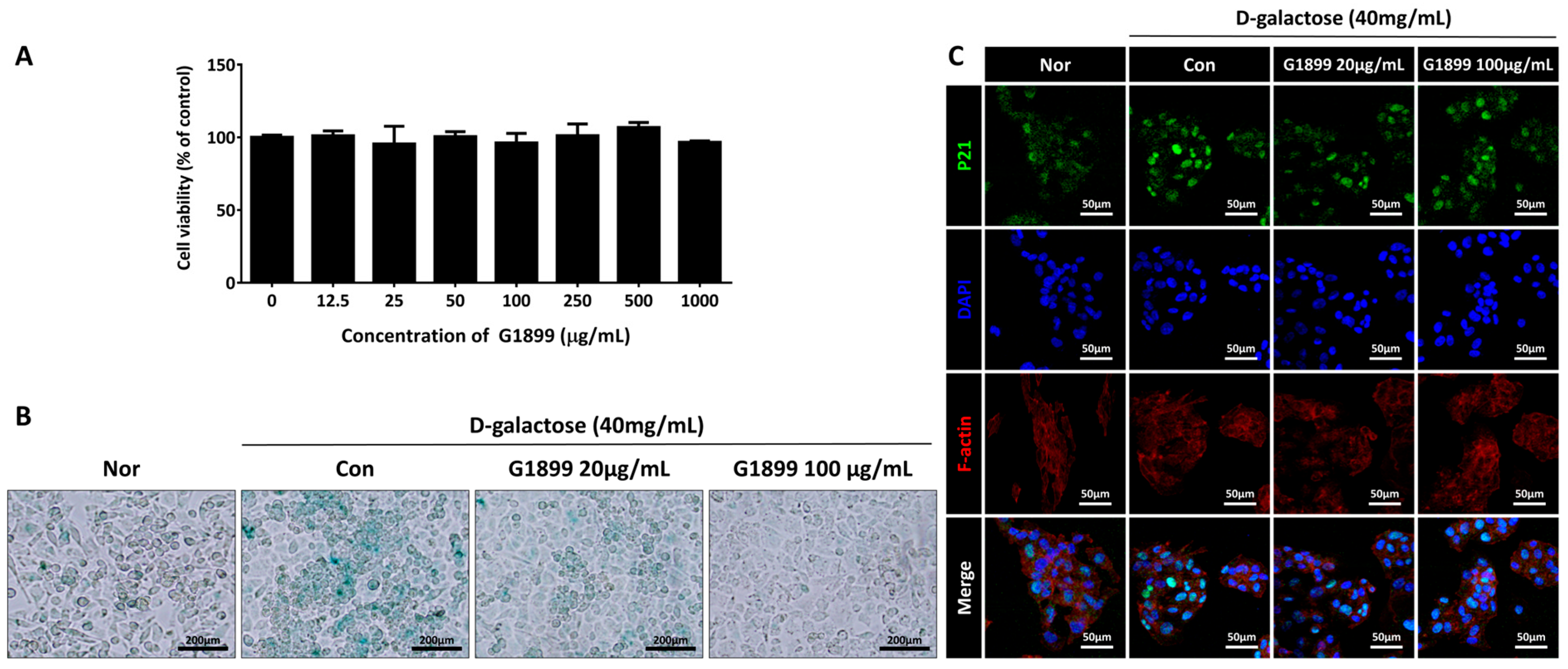
3.1. Effect of American Ginseng Extract G1899 Treatment on Aging-Related Markers in HepG2 Cells
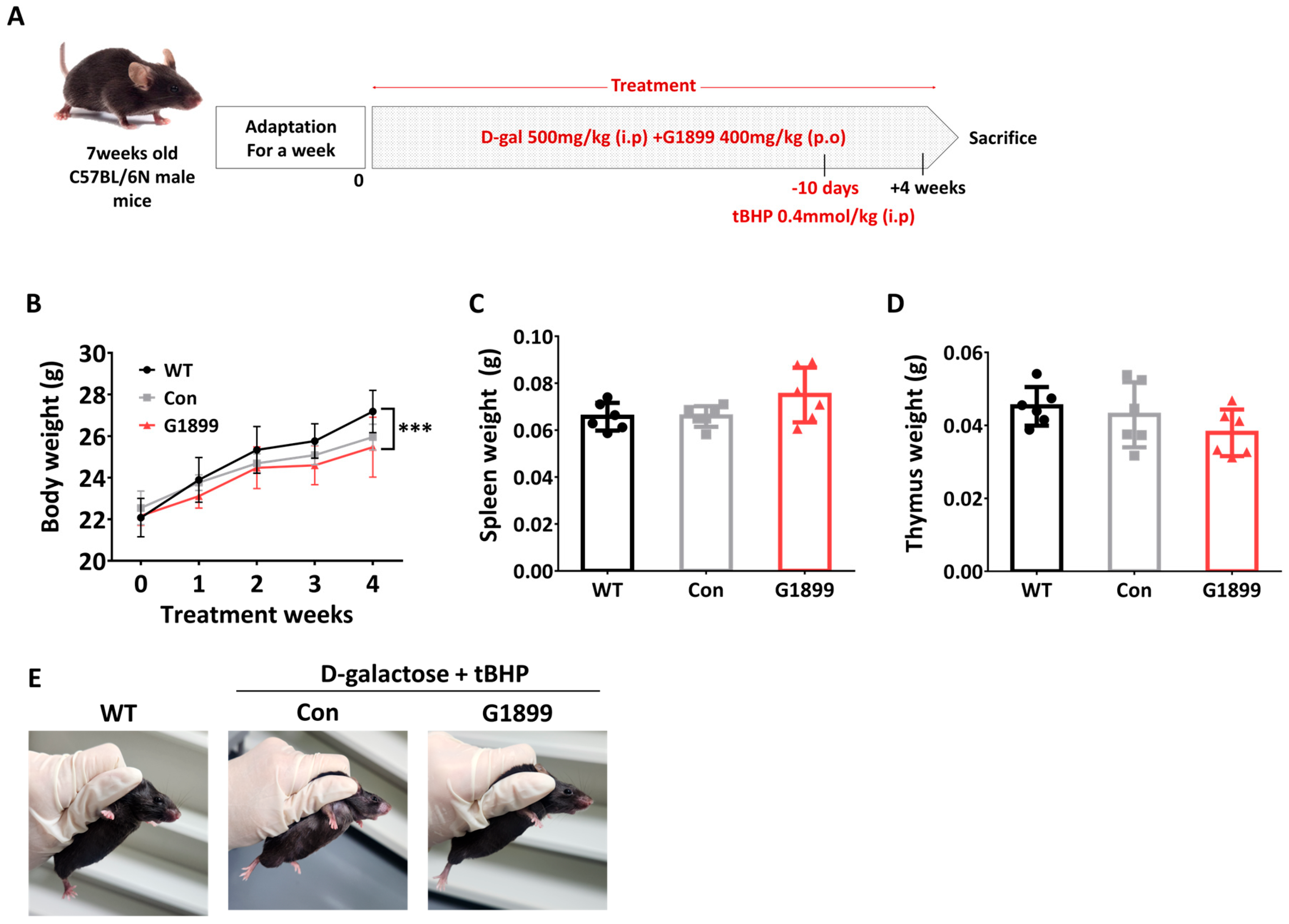
3.2. Effects of G1899 on Body Weight and Immune Organ Weights in D-Galactose and tBHP-Induced Aging Mouse Model
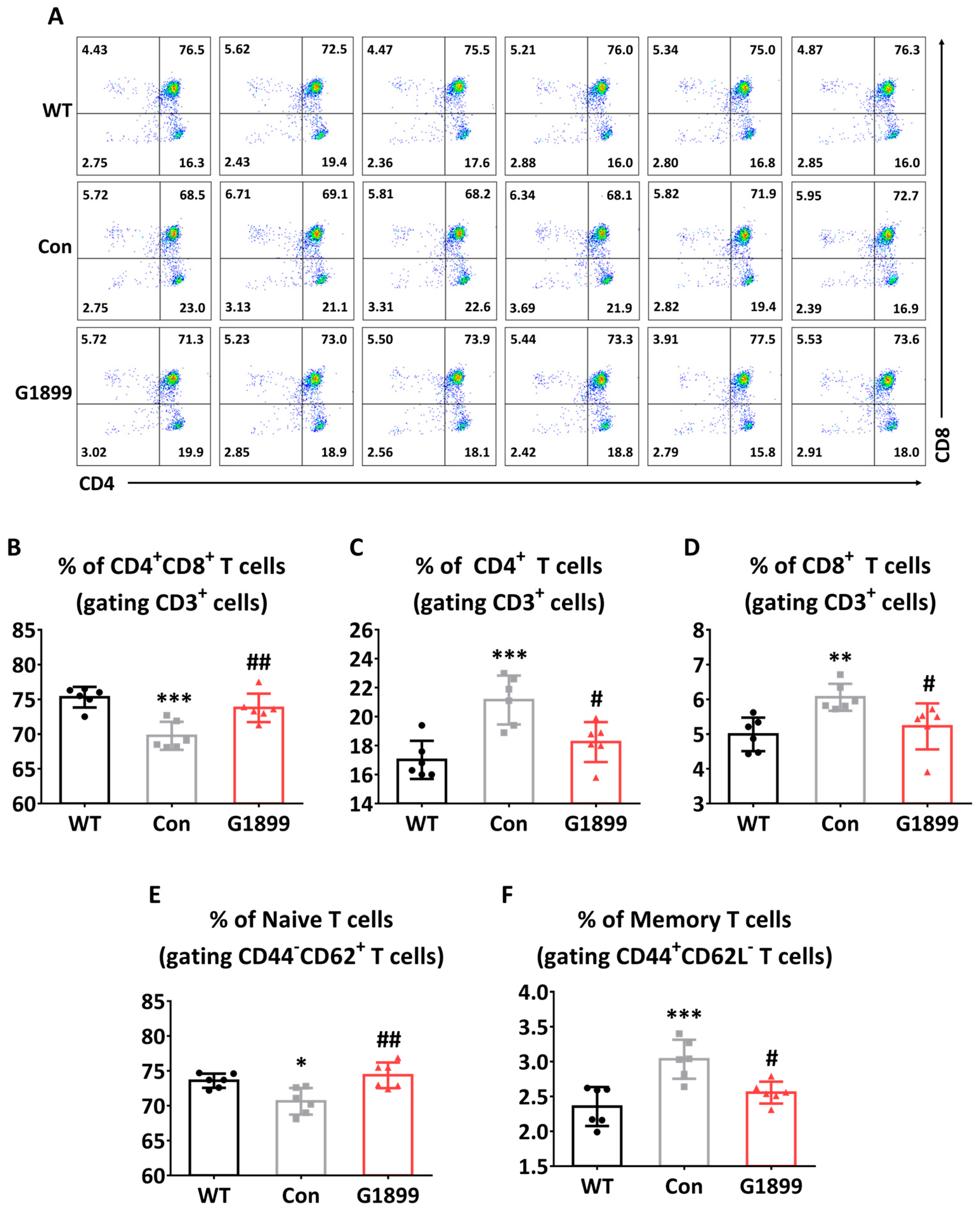
3.3. Recovery Effects of G1899 on Thymic Immune Cell Populations in D-Galactose and tBHP-Induced Aging Mouse Model
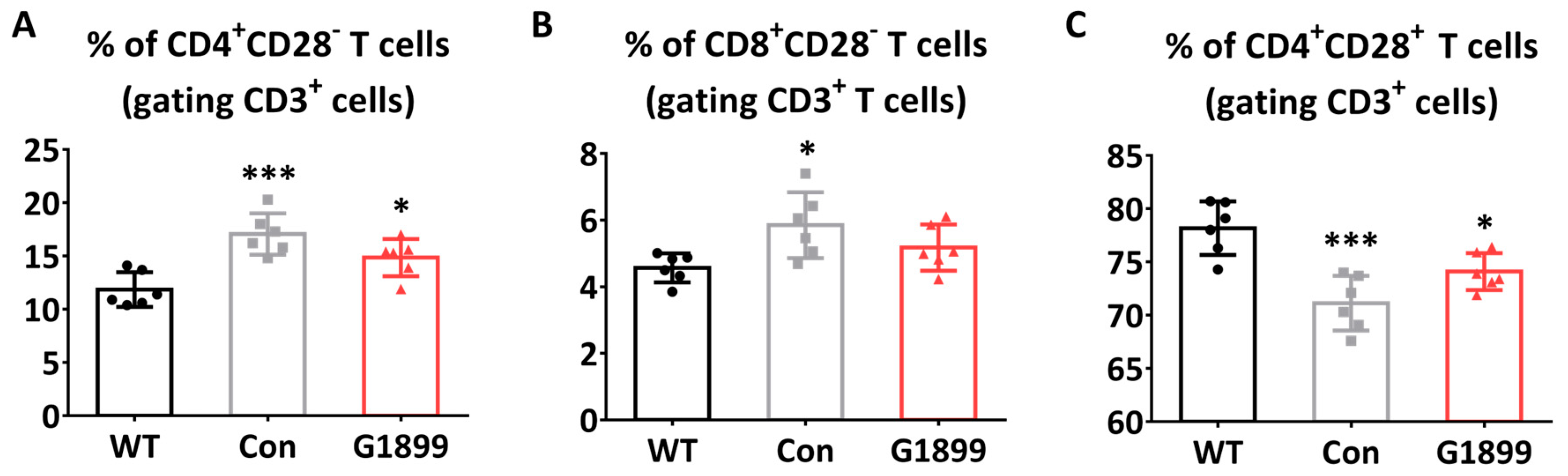
3.4. Reduction Effects of G1899 on T Cell Anergy Populations in D-Galactose and tBHP-Induced Aging Mouse Model
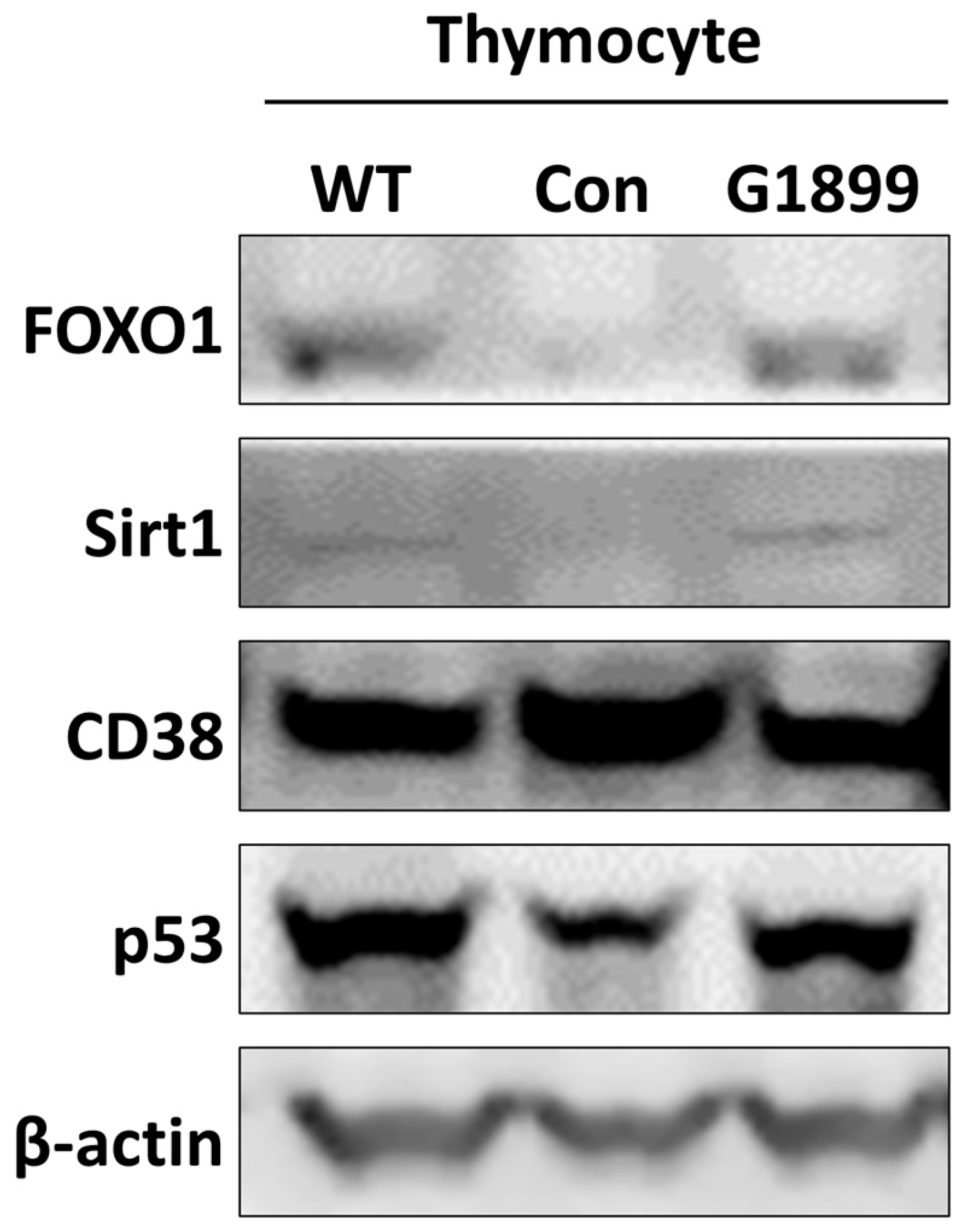
3.5. Regulatory Effects of G1899 on Aging-Related Protein Expression in Thymic Cells in D-Galactose and tBHP-Induced Aging Mouse Model
4. Discussion
5. Conclusions
Author Contributions
Funding
Institutional Review Board Statement
Informed Consent Statement
Data Availability Statement
Acknowledgments
Conflicts of Interest
Abbreviations
| ANOVA | Analysis of variance |
| APC | Allophycocyanin |
| APC-Cy7 | Allophycocyanin-Cyanine 7 |
| CCK-8 | Cell Counting Kit-8 |
| DAPI | 4′,6-diamidino-2-phenylindole |
| DMEM | Dulbecco’s Modified Eagle’s Medium |
| DP | Double positive |
| ECL | Enhanced chemiluminescence |
| FACS | Fluorescence-activated cell sorting |
| FBS | Fetal bovine serum |
| FITC | Fluorescein isothiocyanate |
| i.p. | Intraperitoneally |
| ISO | International Organization for Standardization |
| PBS | Phosphate-buffered saline |
| PE | Phycoerythrin |
| PE-Cy7 | Phycoerythrin-Cyanine 7 |
| PerCP | Peridinin chlorophyll-a protein |
| PVDF | Polyvinylidene difluoride |
| SA-β-gal | Senescence-associated β-galactosidase |
| SDS-PAGE | Sodium dodecyl sulfate-polyacrylamide gel electrophoresis |
| SP | Single positive |
| tBHP | tert-butyl hydroperoxide |
| TBST | Tris-buffered saline with Tween-20 |
| WT | Wild type |
References
- Ventura, M.T.; Casciaro, M.; Gangemi, S.; Buquicchio, R. Immunosenescence in aging: Between immune cells depletion and cytokines up-regulation. Clin. Mol. Allergy 2017, 15, 21. [Google Scholar] [CrossRef] [PubMed]
- Fulop, T.; Larbi, A.; Dupuis, G.; Le Page, A.; Frost, E.H.; Cohen, A.A.; Witkoski, J.M.; Franceschi, C. Immunosenescence and inflamm-aging as two sides of the same coin: Friends or foes? Front. Immunol. 2018, 8, 1960. [Google Scholar] [CrossRef]
- Pawelec, G. Age and immunity: What is “immunosenescence”? Exp. Gerontol. 2018, 105, 4–9. [Google Scholar] [CrossRef] [PubMed]
- Akbar, A.N.; Henson, S.M. Are senescence and exhaustion intertwined or unrelated processes that compromise immunity? Nat. Rev. Immunol. 2011, 11, 289–295. [Google Scholar] [CrossRef] [PubMed]
- Goronzy, J.J.; Weyand, C.M. Mechanisms underlying T cell ageing. Nat. Rev. Immunol. 2019, 19, 573–583. [Google Scholar] [CrossRef]
- Palmer, D.B. The effect of age on thymic function. Front. Immunol. 2013, 4, 316. [Google Scholar] [CrossRef]
- Thapa, P.; Farber, D.L. The role of the thymus in the immune response. Thorac. Surg. Clin. 2019, 29, 123–131. [Google Scholar] [CrossRef]
- Weng, N.-P.; Akbar, A.N.; Goronzy, J. CD28(-) T cells: Their role in the age-associated decline of immune function. Trends Immunol. 2009, 30, 306–312. [Google Scholar] [CrossRef]
- Haynes, L.; Swain, S.L. Why aging T cells fail: Implications for vaccination. Immunity 2006, 24, 663–666. [Google Scholar] [CrossRef] [PubMed]
- Ginaldi, L.; Loreto, M.F.; Corsi, M.P.; Modesti, M.; De Martinis, M. Immunosenescence and infectious diseases. Microbes Infect. 2001, 3, 851–857. [Google Scholar] [CrossRef]
- Cheng, L.; Wang, J.; Li, X.; Xing, Q.; Du, P.; Su, L.; Wang, S. Interleukin-6 induces Gr-1+ CD11b+ myeloid cells to suppress CD8+ T cell-mediated liver injury in mice. PLoS ONE 2011, 14, e0206904. [Google Scholar] [CrossRef]
- Barton, D.L.; Liu, H.; Dakhil, S.R.; Linquist, B.; Sloan, J.A.; Nichols, C.R.; McGinn, T.W.; Stella, P.J.; Seeger, G.R.; Sood, A.; et al. Wisconsin Ginseng (Panax quinquefolius) to improve cancer-related fatigue: A randomized, double-blind trial, N07C2. J. Natl. Cancer Inst. 2013, 102, 1247–1280. [Google Scholar] [CrossRef] [PubMed]
- Qi, L.-W.; Wang, C.-Z.; Yuan, C.-S. Isolation and analysis of ginseng: Advances and challenges. Nat. Prod. Rep. 2011, 28, 467–495. [Google Scholar] [CrossRef] [PubMed]
- Jia, L.; Zhao, Y. Current evaluation of the millennium phytomedicine-ginseng (I): Etymology, pharmacognosy, phytochemistry, market and regulations. Curr. Med. Chem. 2009, 16, 2475–2484. [Google Scholar] [CrossRef]
- Wang, C.-Z.; Kim, K.E.; Du, G.-J.; Qi, L.-W.; Wen, X.-D.; Li, P.; Bauer, B.A.; Bissonnette, M.B.; Musch, M.W.; Chang, E.B.; et al. Ultra-performance liquid chromatography and time-of-flight mass spectrometry analysis of ginsenoside metabolites in human plasma. Am. J. Chin. Med. 2011, 39, 1161–1171. [Google Scholar] [CrossRef]
- Reay, J.L.; Kennedy, D.O.; Scholey, A.B. Single doses of Panax ginseng (G115) reduce blood glucose levels and improve cognitive performance during sustained mental activity. J. Psychopharmacol. 2015, 19, 357–365. [Google Scholar] [CrossRef] [PubMed]
- Shergis, J.L.; Zhang, A.L.; Zhou, W.; Xue, C.C. Panax ginseng in randomised controlled trials: A systematic review. Phytother. Res. 2013, 27, 949–965. [Google Scholar] [CrossRef]
- Wang, J.; Li, S.; Fan, Y.; Chen, Y.; Liu, D.; Cheng, H.; Gao, X.; Zhou, Y. Anti-fatigue activity of the water-soluble polysaccharides isolated from Panax ginseng C.A. Meyer. J. Ethnopharmacol. 2010, 130, 421–423. [Google Scholar] [CrossRef]
- Shwe, T.; Pratchayasakul, W.; Chattipakorn, N.; Chattipakorn, S.C. Role of D-galactose-induced brain aging and its potential used for therapeutic interventions. Exp. Gerontol. 2018, 101, 13–36. [Google Scholar] [CrossRef] [PubMed]
- Azman, K.F.; Zakaria, R. D-galactose-induced accelerated aging model: An overview. Biogerontology 2019, 20, 763–782. [Google Scholar] [CrossRef] [PubMed]
- Franceschi, C.; Campisi, J. Chronic inflammation (inflammaging) and its potential contribution to age-associated diseases. J. Gerontol. A Biol. Sci. Med. Sci. 2014, 69, S4–S9. [Google Scholar] [CrossRef]
- Kim, S.; Lee, R.; Wiles, M.J.; Black, E.R.; Roh, S.; Bouckova, E.; Wustrau, M.H.; Flowers, J.C.; Vetter, P.E.; Lee, J.; et al. American ginseng (Panax quinquefolius L.) extracts (G1899) reverse stress-induced behavioral abnormalities in mice. J. Ginseng Res. 2026, 50, 100905. [Google Scholar] [CrossRef]
- In, G.; Ahn, N.-G.; Bae, B.-S.; Lee, M.W.; Park, H.W.; Jang, K.H.; Cho, B.G.; Han, C.K.; Park, C.K.; Kwak, Y.S. In situ analysis of chemical components induced by steaming between fresh ginseng, steamed ginseng, and red ginseng. J. Ginseng Res. 2017, 41, 361–369. [Google Scholar] [CrossRef] [PubMed]
- Wang, W.; Qian, J.; Shang, M.; Qiao, Y.; Huang, J.; Gao, X.; Ye, Z.; Tong, X.; Xu, K.; Li, X.; et al. Integrative analysis of the transcriptome and metabolome reveals the importance of hepatokine FGF21 in liver aging. Genes Dis. 2024, 11, 101161. [Google Scholar] [CrossRef] [PubMed]
- Newman, D.J.; Cragg, G.M. Natural products as sources of new drugs over the nearly four decades from 01/1981 to 09/2019. J. Nat. Prod. 2020, 83, 770–803. [Google Scholar] [CrossRef]
- Shin, K.K.; Yi, Y.-S.; Kim, J.K.; Kim, H.; Hossain, M.A.; Kim, J.-H.; Cho, J.Y. Korean Red Ginseng plays an anti-aging role by modulating expression of aging-related genese and immune cell subsets. Molecules 2020, 25, 1492. [Google Scholar] [CrossRef]
- Azman, K.F.; Zakaria, R. D-galactose-induced liver aging model: Its underlying mechanisms and potential therapeutic interventions. Exp. Gerontol. 2021, 150, 111372. [Google Scholar] [CrossRef]
- Debacq-Chainiaux, F.; Erusalimsky, J.D.; Campisi, J.; Toussaint, O. Protocols to detect senescence-associated beta-galactosidase (SA-betagal) activity, a biomarker of senescent cells in culture and in vivo. Nat. Protoc. 2009, 4, 1798–1806. [Google Scholar] [CrossRef]
- Roninson, I.B. Tumor cell senescence in cancer treatment. Cancer Res. 2003, 63, 2705–2715. [Google Scholar]
- Campisi, J.; d’Adda di Fagagna, F. Cellular senescence: When bad things happen to good cells. Nat. Rev. Mol. Cell Biol. 2007, 8, 729–740. [Google Scholar] [CrossRef]
- Ho, S.-C.; Liu, J.-H.; Wu, R.-Y. Establishment of the mimetic aging effect in mice caused by D-galactose. Biogerontology 2003, 4, 15–18. [Google Scholar] [CrossRef] [PubMed]
- Chinn, I.K.; Blackburn, C.C.; Manley, N.R.; Sempowski, G.D. Changes in primary lymphoid organs with aging. Semin. Immunol. 2012, 24, 309–320. [Google Scholar] [CrossRef] [PubMed]
- Ventevogel, M.S.; Sempowski, G.D. Thymic rejuvenation and aging. Curr. Opin. Immunol. 2013, 25, 516–522. [Google Scholar] [CrossRef] [PubMed]
- Pawelec, G.; Akbar, A.; Caruso, C.; Solana, R.; Grubeck-Loebenstein, B.; Wikby, A. Human immunosenescence: Is it infectious? Immunol. Rev. 2005, 205, 257–268. [Google Scholar] [CrossRef]
- Vallejo, A.N. CD28 extinction in human T cells: Altered functions and the program of T-cell senescence. Immunol. Rev. 2005, 205, 158–169. [Google Scholar] [CrossRef]
- Hedrick, S.M. The acquired immune system: A vantage from beneath. Immunity 2004, 21, 607–615. [Google Scholar] [CrossRef]
- Palacios, J.A.; Herranz, D.; De Bonis, M.L.; Velasco, S.; Serrano, M.; Blasco, M.A. SIRT1 contributes to telomere maintenance and augments global homologous recombination. J. Cell Biol. 2010, 191, 1299–1313. [Google Scholar] [CrossRef]
- Shi, T.; Dansen, T.B. Reactive oxygen species induced p53 activation: DNA damage, redox signaling, or both? Antioxid. Redox Signal. 2020, 33, 839–859. [Google Scholar] [CrossRef]
- Hogan, K.A.; Chini, C.C.S.; Chini, E.N. The multi-faceted ecto-enzyme CD38: Roles in immunomodulation, cancer, aging, and metabolic diseases. Front. Immunol. 2019, 10, 1187. [Google Scholar] [CrossRef]
- López-Otín, C.; Blasco, M.A.; Partridge, L.; Serrano, M.; Kroemer, G. The hallmarks of aging. Cell 2013, 153, 1194–1217. [Google Scholar] [CrossRef]
- Müller-Röver, S.; Handjiski, B.; van der Veen, C.; Eichmüller, S.; Foitzik, K.; McKay, I.A.; Stenn, K.S.; Paus, R. A comprehensive guide for the accurate classification of murine hair follicles in distinct hair cycle stages. J. Investig. Dermatol. 2001, 117, 3–15. [Google Scholar] [CrossRef] [PubMed]
- Paus, R.; Foitzik, K. In search of the “hair cycle clock”: A guided tour. Differentiation 2004, 72, 489–511. [Google Scholar] [CrossRef]
- Helms, S. Cancer prevention and therapeutics: Panax ginseng. Altern. Med. Rev. 2004, 9, 259–274. [Google Scholar] [PubMed]
- Xiang, Y.-Z.; Shang, H.-C.; Gao, X.-M.; Zhang, B.-L. A comparison of the ancient use of ginseng in traditional Chinese medicine with modern pharmacological experiments and clinical trials. Phytother. Res. 2008, 22, 85–858. [Google Scholar] [CrossRef] [PubMed]
- Wang, C.-Z.; Zhang, B.; Song, W.-X.; Wang, A.; Ni, M.; Luo, X.; Aung, H.H.; Xie, J.-T.; Tong, R.; He, T.-C.; et al. Steamed American ginseng berry: Ginsenoside analyses and anticancer activities. J. Agric. Food. Chem. 2006, 54, 9936–9942. [Google Scholar] [CrossRef] [PubMed]
- Kiefer, D.; Pantuso, T. Panax ginseng. Am. Fam. Physician 2003, 68, 1539–1542. [Google Scholar]
- Cui, X.; Zuo, P.; Zhang, Q.; Li, X.; Hu, Y.; Long, J.; Packer, L.; Liu, J. Chronic systemic D-galactose exposure induces memory loss, neurodegeneration, and oxidative damage in mice: Protective effects of R-alpha-lipoic acid. J. Neurosci. Res. 2006, 83, 1584–1590. [Google Scholar] [CrossRef]
- Chen, B.; Zhong, Y.; Peng, X.; Sun, Y.; Hu, Y.-J.; Yang, Y.; Kong, W.-J. Increased mitochondrial DNA damage and decreased base excision repair in the auditory cortex of D-galactose-induced aging rats. Mol. Biol. Rep. 2011, 37, 3635–3642. [Google Scholar] [CrossRef]
- Weiskopf, D.; Weinberger, B.; Grubeck-Loebenstein, B. The aging of the immune system. Transpl. Int. 2009, 22, 1041–1050. [Google Scholar] [CrossRef]
- Panda, A.; Arjona, A.; Sapey, E.; Bai, F.; Fikrig, E.; Montgomery, R.R.; Lord, J.M.; Shaw, A.C. Human innate immunosenescence: Causes and consequences for immunity in old age. Trends Immunol. 2009, 30, 325–333. [Google Scholar] [CrossRef]




| T Cell Subset | Marker |
|---|---|
| CD4+ single-positive T cells | CD3+CD4+CD8− |
| CD8+ single-positive T cells | CD3+CD4−CD8+ |
| CD4+CD8+ double-positive T cells | CD3+CD4+CD8+ |
| Naïve T cells | CD3+CD44lowCD62Lhigh |
| Memory T cells | CD3+CD44highCD62Llow |
| Anergic T cells | CD3+CD28− |
| Category | Analyte | Content (mg/g) |
|---|---|---|
| Ginsenoside | Rg1 | 1.54 |
| Re | 11.34 | |
| Rf | Not detected | |
| Rh1 | 0.36 | |
| Rg2s | 2.46 | |
| Rb1 | 34.36 | |
| Rc | 6.77 | |
| Rb2 | 0.80 | |
| Rd | 7.94 | |
| Rg3s | 2.20 | |
| Rg3r | 0.56 | |
| F1 | 0.03 | |
| Rb3 | 1.51 | |
| CO | Not detected | |
| Rg6 | 4.93 | |
| F4 | 1.87 | |
| Rh4 | 0.40 | |
| F2 | 0.55 | |
| CY | Not detected | |
| CK | Not detected | |
| Rk1 | 1.58 | |
| Rg5 | 1.42 | |
| Total ginsenoside | 80.62 | |
| Ginseng polysaccharides | Total polysaccharides | 62.69 |
| Others | AF | 5.21 |
| AFG | 41.78 | |
| Maltol | Not detected |
Disclaimer/Publisher’s Note: The statements, opinions and data contained in all publications are solely those of the individual author(s) and contributor(s) and not of MDPI and/or the editor(s). MDPI and/or the editor(s) disclaim responsibility for any injury to people or property resulting from any ideas, methods, instructions or products referred to in the content. |
© 2026 by the authors. Licensee MDPI, Basel, Switzerland. This article is an open access article distributed under the terms and conditions of the Creative Commons Attribution (CC BY) license.
Share and Cite
Park, J.-H.; Lee, J.; Lee, C.H.; Hyun, S.H.; Lee, S.-H. American Ginseng (Panax quinquefolius) Extracts (G1899) Ameliorate Immunosenescence via Regulation of T Cell Populations and Aging-Related Proteins in a Mouse Model Induced by D-Galactose and Tert-Butyl Hydroperoxide. Curr. Issues Mol. Biol. 2026, 48, 315. https://doi.org/10.3390/cimb48030315
Park J-H, Lee J, Lee CH, Hyun SH, Lee S-H. American Ginseng (Panax quinquefolius) Extracts (G1899) Ameliorate Immunosenescence via Regulation of T Cell Populations and Aging-Related Proteins in a Mouse Model Induced by D-Galactose and Tert-Butyl Hydroperoxide. Current Issues in Molecular Biology. 2026; 48(3):315. https://doi.org/10.3390/cimb48030315
Chicago/Turabian StylePark, Ji-Hye, Jaehoon Lee, Chang Hwan Lee, Sun Hee Hyun, and Seung-Ho Lee. 2026. "American Ginseng (Panax quinquefolius) Extracts (G1899) Ameliorate Immunosenescence via Regulation of T Cell Populations and Aging-Related Proteins in a Mouse Model Induced by D-Galactose and Tert-Butyl Hydroperoxide" Current Issues in Molecular Biology 48, no. 3: 315. https://doi.org/10.3390/cimb48030315
APA StylePark, J.-H., Lee, J., Lee, C. H., Hyun, S. H., & Lee, S.-H. (2026). American Ginseng (Panax quinquefolius) Extracts (G1899) Ameliorate Immunosenescence via Regulation of T Cell Populations and Aging-Related Proteins in a Mouse Model Induced by D-Galactose and Tert-Butyl Hydroperoxide. Current Issues in Molecular Biology, 48(3), 315. https://doi.org/10.3390/cimb48030315