
Antitumor Study of the Miao Medicine Indigofera stachyodes by Integrating Multiple Chemometrics Network Pharmacology and Experimental Validation

Abstract
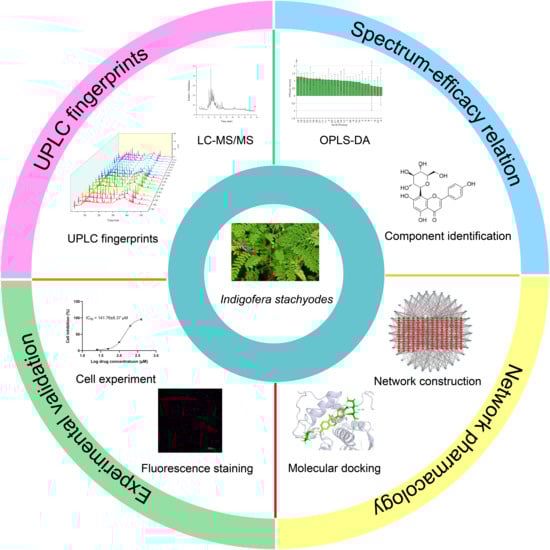
1. Introduction
2. Materials and Methods
2.1. Establishment of Fingerprint Profiles and Evaluation of Pharmacological Activities of Indigofera stachyodes
2.1.1. Medicinal Materials
2.1.2. Extraction of Indigofera stachyodes
2.1.3. Sample Solution Preparation
2.1.4. Preparation of Mixed Standard Solution
2.1.5. Chromatographic Condition
2.1.6. Methodological Validation
2.1.7. Establishment of Fingerprints and Similarity Evaluation
2.1.8. UPLC-Q-TOF-MS/MS Analysis
2.1.9. CCK-8 Cell Inhibition Assay
2.1.10. Validation of Antiproliferative Effect at a Selected Concentration
2.1.11. Statistical Analysis
2.2. Investigation Based on Multiple Chemometric Methods
Chemometric Methods Analysis
2.3. Network Pharmacology and Molecular Docking
2.3.1. Target Prediction for Indigofera stachyodes
2.3.2. Target Prediction for Tumors
2.3.3. Construction of the “Drug and Target” Network
2.3.4. Construction of Protein–Protein Interactions Network
2.3.5. GO Function Analysis and KEGG Pathway Enrichment Analysis
2.3.6. Molecular Docking
2.4. Pharmacological Activity Validation of Monomeric Compounds
2.4.1. In Vitro Experimental Validation
2.4.2. DAPI/PI Fluorescence Staining
3. Results
3.1. UPLC Fingerprints and UPLC-Q-TOF-MS/MS Analysis
3.1.1. Methodological Validation
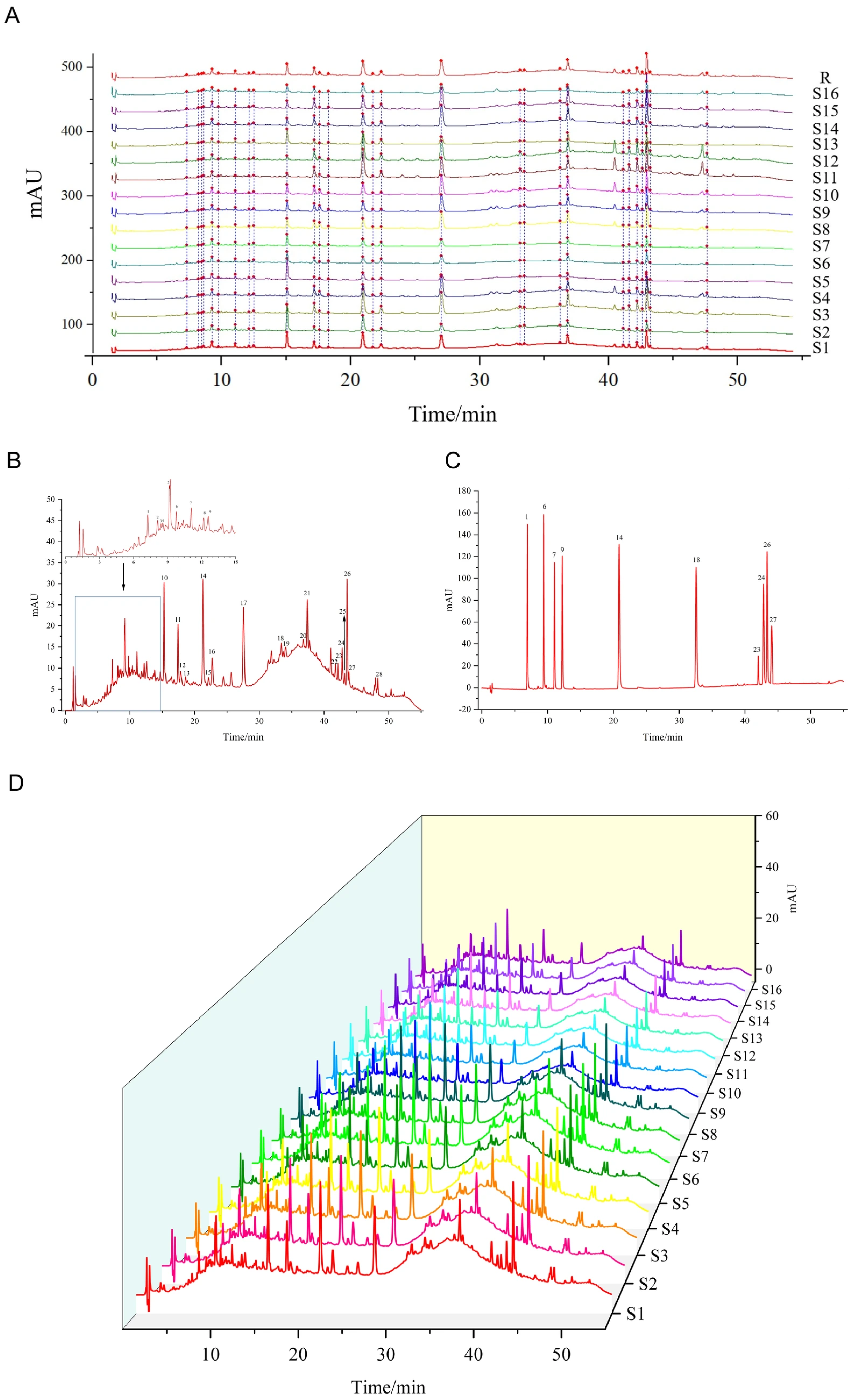
3.1.2. UPLC Fingerprints
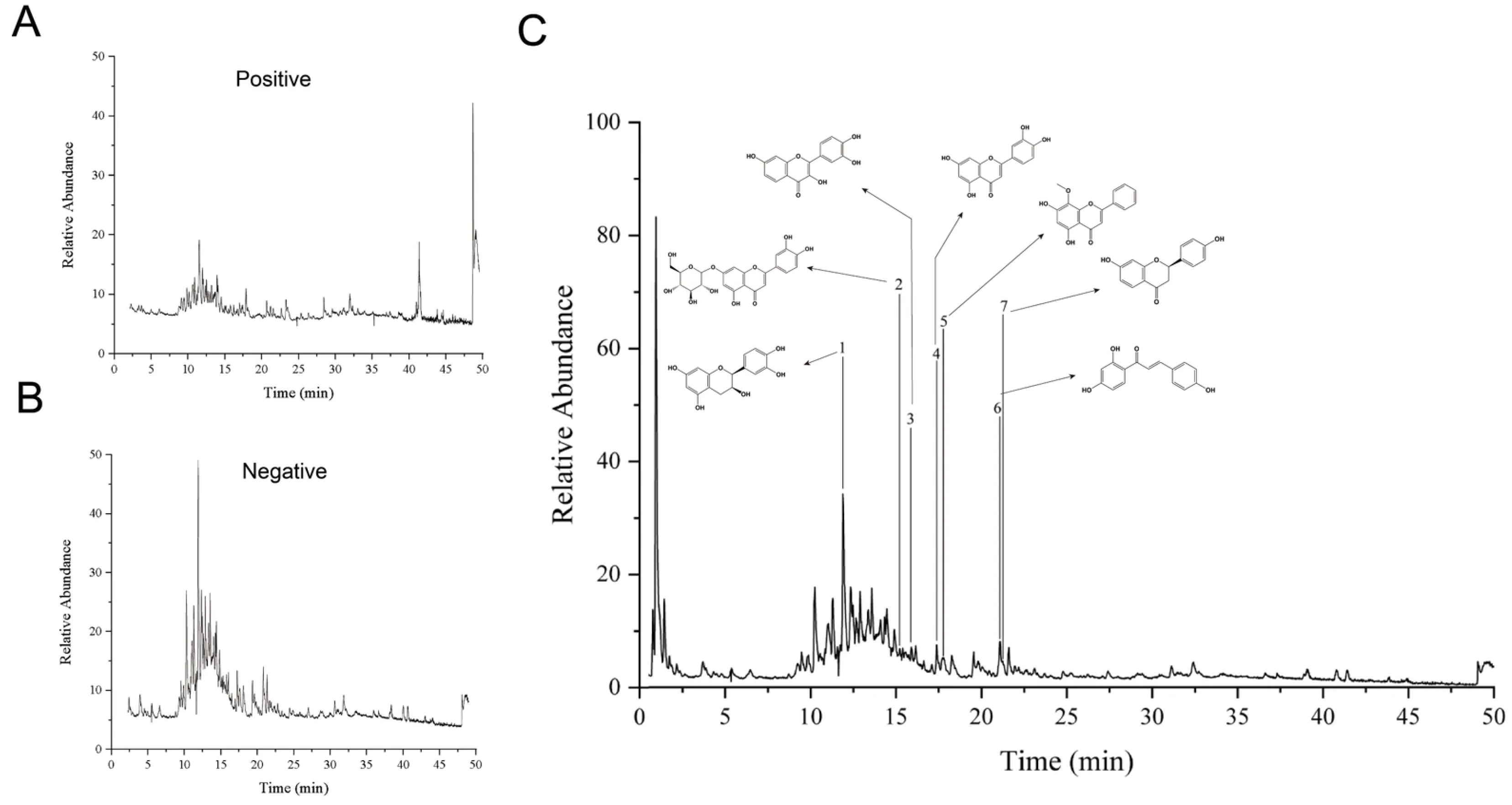
3.1.3. UPLC-Q-TOF-MS/MS Analysis
3.2. Antitumor Activity of Indigofera stachyodes
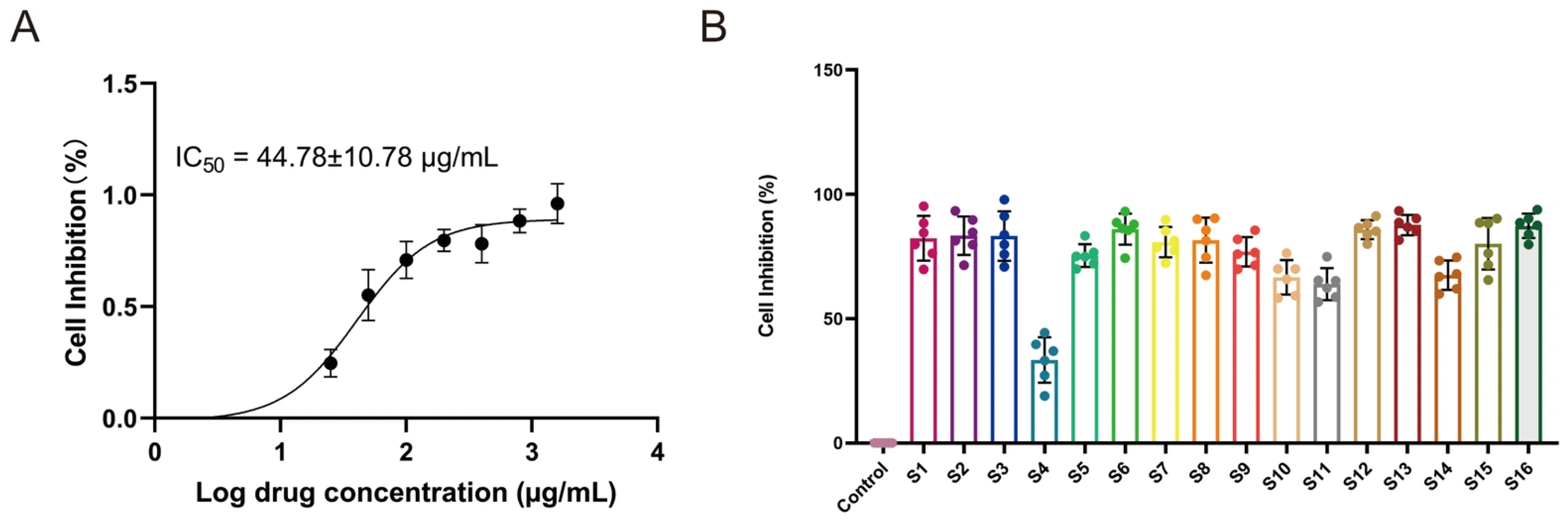
3.2.1. Cell Inhibition
3.2.2. Validation of Antiproliferative Effect at a Selected Concentration
3.3. Spectrum–Efficacy Relationship Results
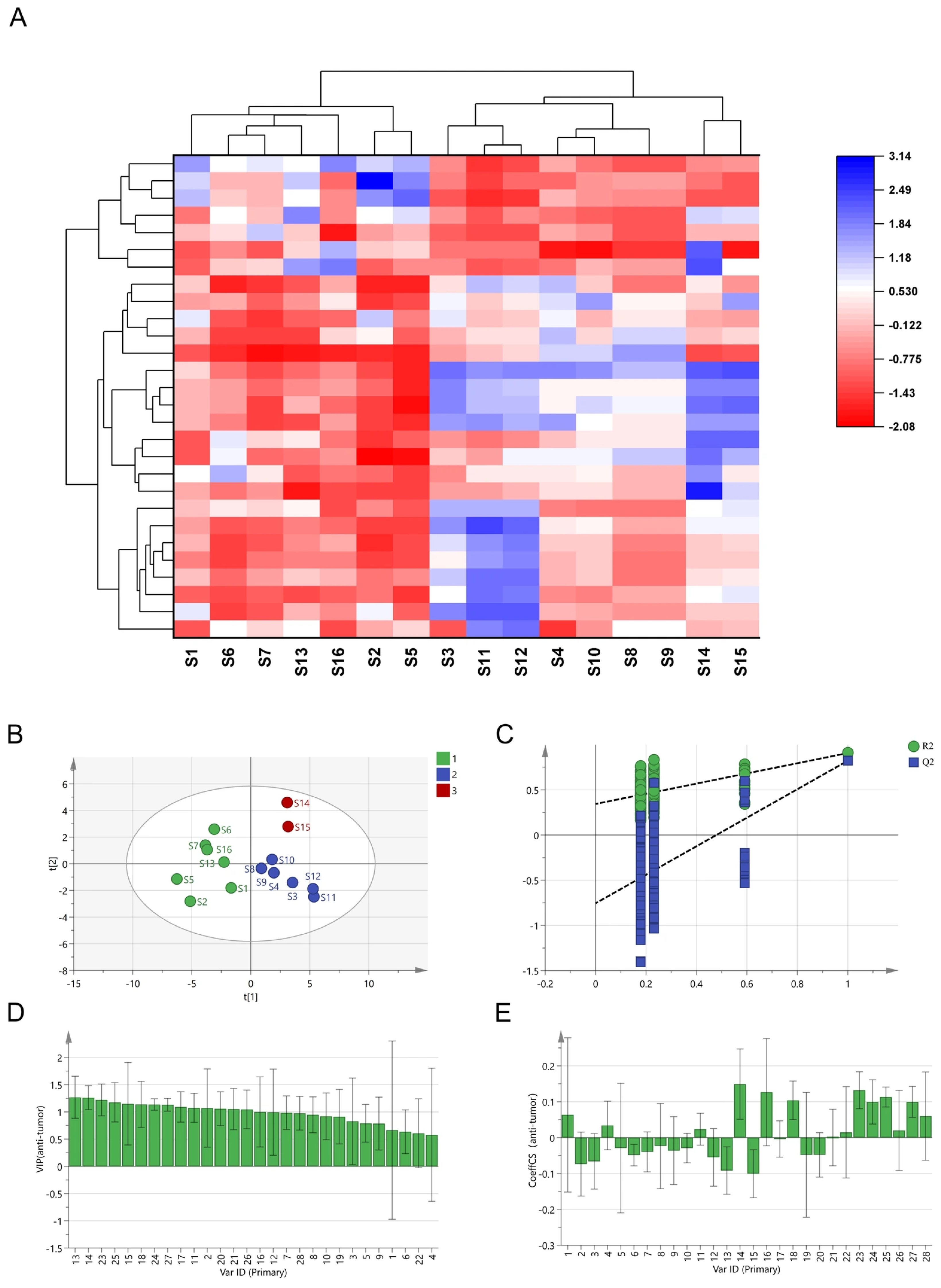
3.3.1. Hierarchical Cluster Analysis (HCA)
3.3.2. Principal Component Analysis (PCA)
3.3.3. Orthogonal Partial Least Squares Discriminant Analysis (OPLS–DA)
3.3.4. Gray Relational Analysis (GRA)
3.4. Network Pharmacology
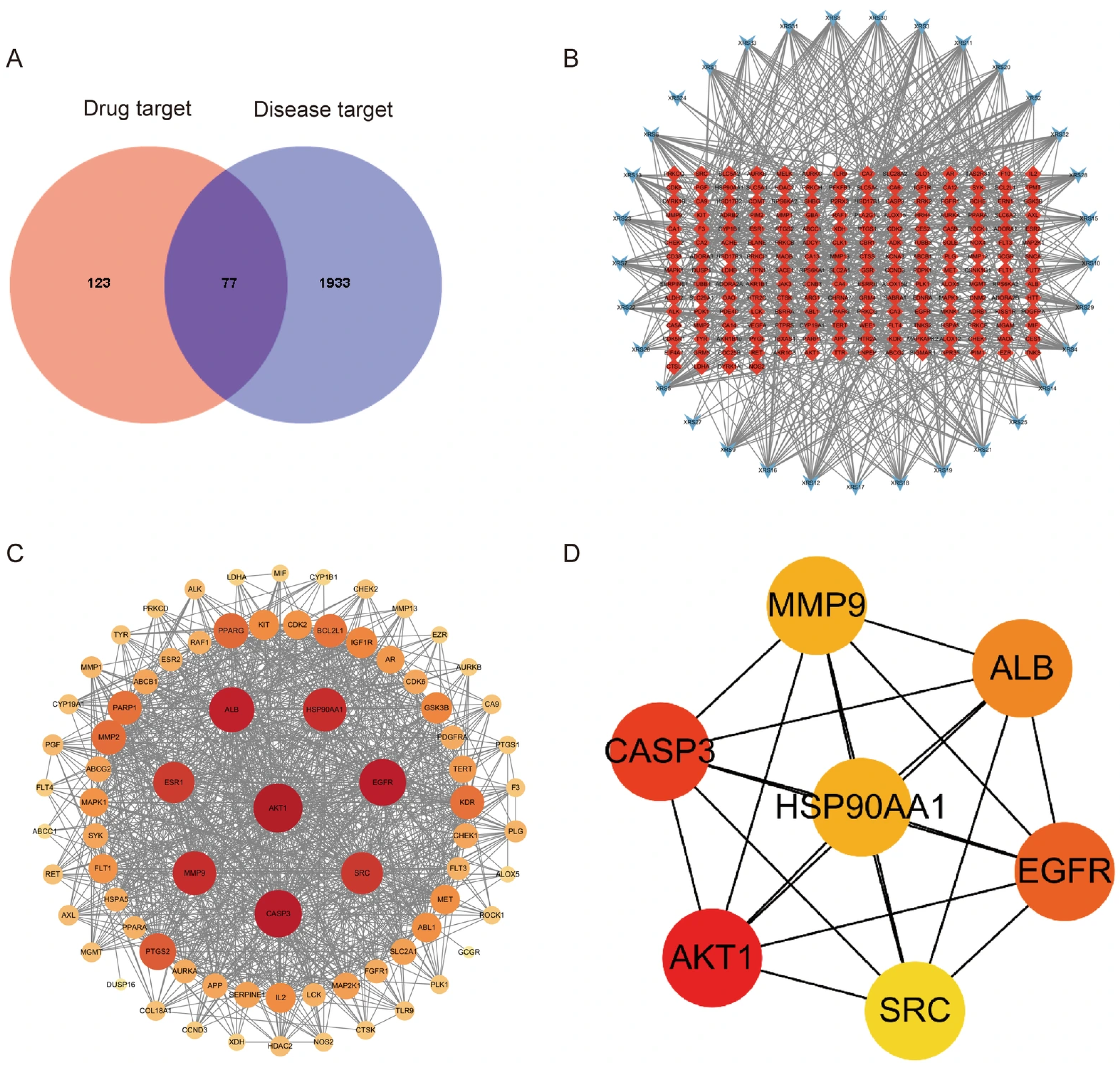
3.4.1. Active Compounds and Potential Targets of Indigofera stachyodes
3.4.2. Screening of Disease Targets
3.4.3. Network of Compounds and Targets
3.4.4. Construction of a Potential Protein Interaction Network
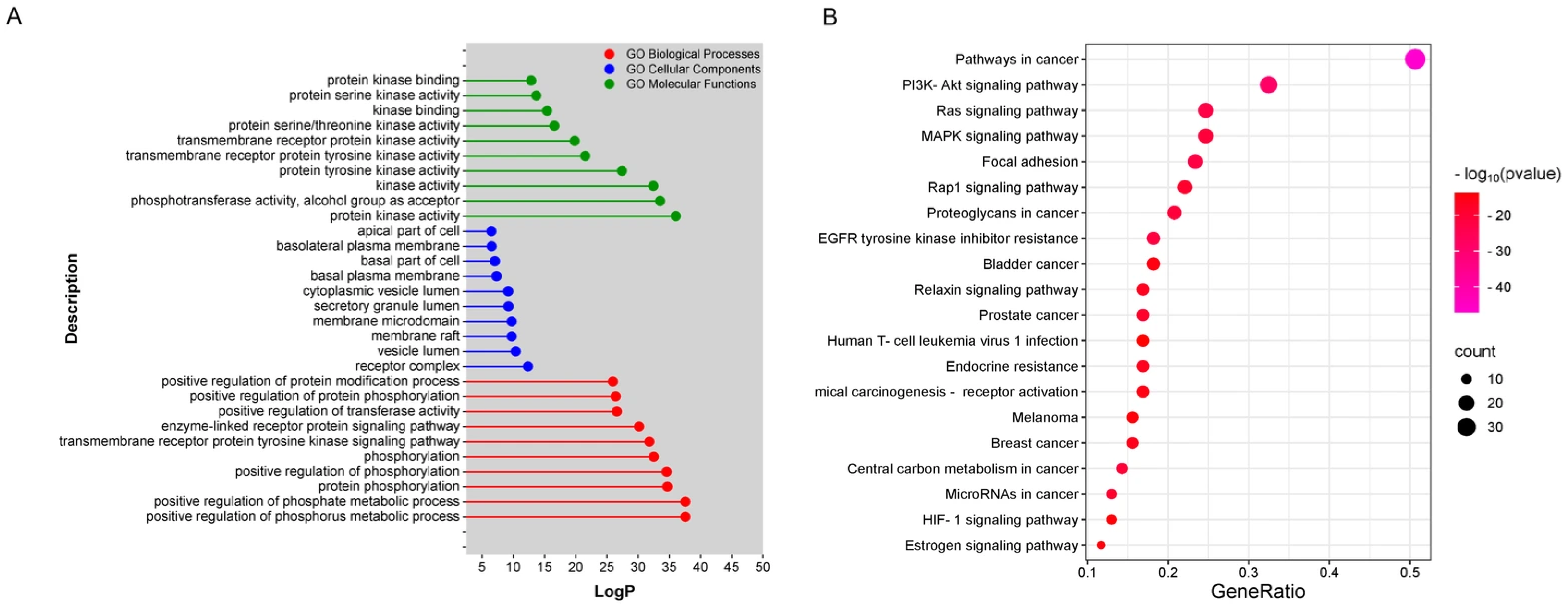
3.4.5. GO and KEGG Analysis
3.4.6. Molecular Docking
3.5. In Vitro Experimental Validation
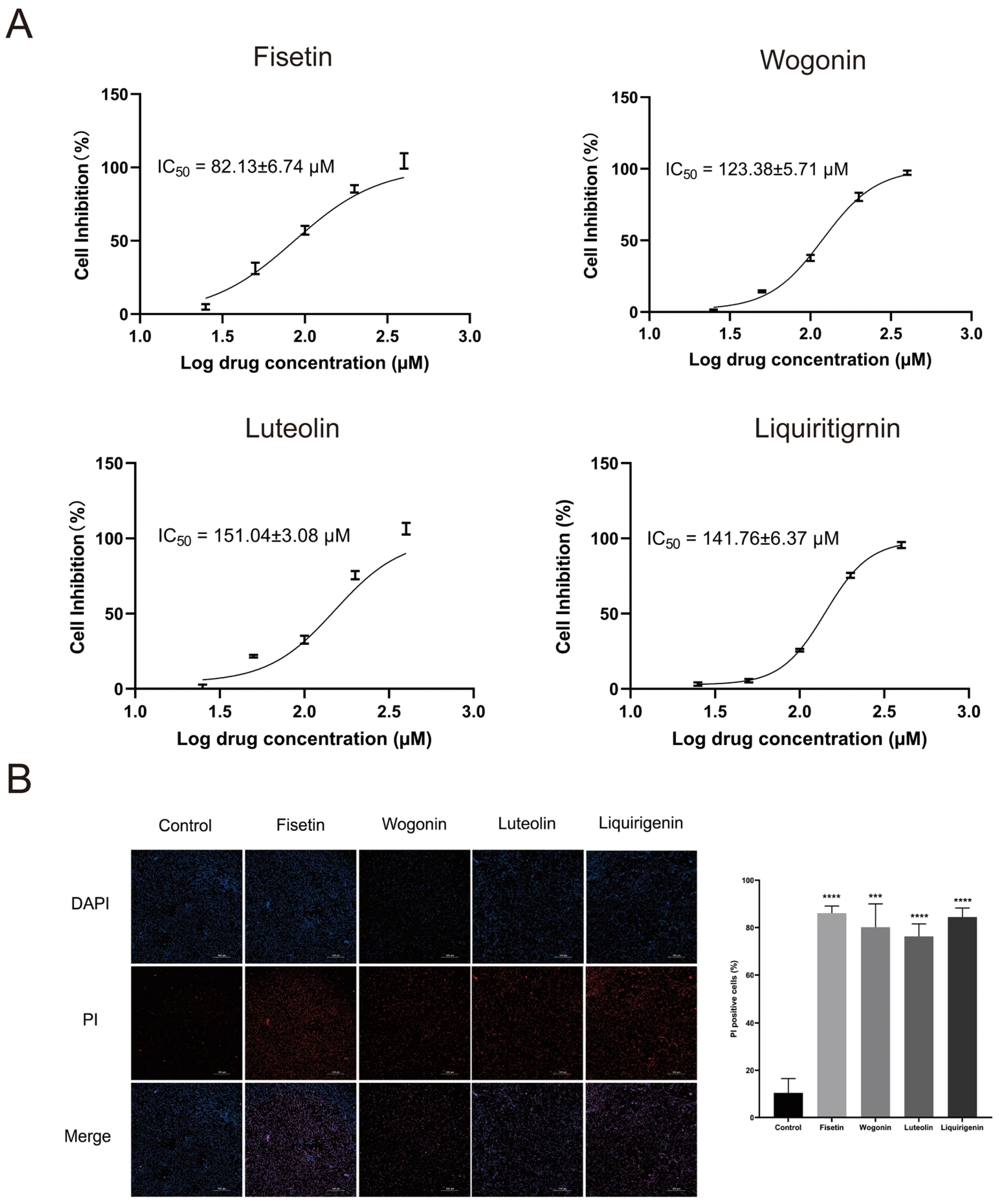
3.5.1. Inhibition of HepG2 Cell Proliferation by the Four Compounds
3.5.2. DAPI/PI Fluorescence Staining
4. Discussion
5. Conclusions
Supplementary Materials
Author Contributions
Funding
Institutional Review Board Statement
Informed Consent Statement
Data Availability Statement
Conflicts of Interest
Correction Statement
Abbreviations
| TCM | Traditional Chinese Medicine |
| PCA | Principal component analysis |
| HCA | Hierarchical cluster analysis |
| GRA | Gray relational analysis |
| OPLS-DA | Orthogonal partial least squares discriminant analysis |
| PPI | Protein–protein interaction |
| GO | Gene Ontology |
| KEGG | Kyoto Encyclopedia of Genes and Genomes |
| AKT1 | AKT serine/threonine kinase 1 |
References
- Zhang, Y.F.; Zhu, Z.X.; Sun, H.; Yao, H.N.; Chen, X.N.; Liu, L.; Zhang, S.L.; Zhao, Y.F.; Tu, P.F.; Li, J. Stachyodin A, a pterocarpan derivative with unusual spirotetrahydrofuran ring from the roots of Indigofera stachyodes. Tetrahedron Lett. 2018, 59, 4514–4516. [Google Scholar] [CrossRef]
- Zhou, W.; Lei, Z.; Lai, D.; Li, G.Q.; Liang, Y.; Zhang, X.Y.; Cho, J.; Hao, X.Y. Natural glycosides from Indigofera stachyoides radix. Rec. Nat. Prod. 2020, 14, 83–88. [Google Scholar] [CrossRef]
- Li, J.; Wang, C.M.; Zhang, Y.P.; Jin, H.J.; Liu, X.Q.; Zhou, T. Analysis of flavonoids from the roots of Indigofera stachyodes. Mol. Plant Breed. 2023, 21, 3079–3087. [Google Scholar]
- Zhang, Y.F.; Zan, N.L.; Zhu, Z.X.; Wang, W.X.; Liu, L.; Zhang, S.L.; Song, Y.L.; Huo, H.X.; Tu, P.F.; Zhao, Y.F. Flavonoids from roots of Miao medicine Indigofera stachyodes. Chin. Tradit. Herb. Drugs 2021, 52, 3485–3492. [Google Scholar] [CrossRef]
- Lou, H.Y.; Yi, P.; Liu, H.F.; Wang, H.; Fu, J.; Li, J.Y.; Yang, Q.P.; Zhang, S.L.; Hao, X.J.; Pan, W.D. Novel flavonolignans from the roots of Indigofera stachyodes. Fitoterapia 2022, 160, 105217. [Google Scholar] [CrossRef]
- Qiu, L.; Liang, Y.; Tang, G.H.; Yuan, C.M.; Zhang, Y.; Hao, X.Y.; Hao, X.J.; He, H.P. Two new flavonols, including one flavan dimer, from the roots of Indigofera stachyodes. Phytochem. Lett. 2013, 6, 368–371. [Google Scholar] [CrossRef]
- Zhang, Y.F.; Zhu, Z.X.; Wang, W.X.; Zhang, H.; Liu, L.; Zhang, S.L.; Zhao, Y.F.; Song, Y.L.; Zheng, J.; Tu, P.F. Condensed tannins from roots of Indigofera stachyodes. China J. Chin. Mater. Med. 2021, 46, 4131–4138. [Google Scholar] [CrossRef]
- Lei, Z.; Zhu, X.Y.; Yang, Y.S.; Zhou, W.; Liang, Y.; Hao, X.Y. Hepatoprotective chemical constituents from thylacetate extract of Indigofera stachyodes Radix. Chin. J. Exp. Tradit. Med. Formulae. 2022, 24, 56–63. [Google Scholar] [CrossRef]
- Liao, Z.Y.; Fu, J.; Fu, H.X.; He, X.; Xu, J.; Wu, J.L.; Zhang, Y.P. Research progress on chemical constituents and pharmacological effects of Indigofera stachyodes Lindl. and predictive analysis of Q-marker. Chin. J. Ethnomed. Ethnopharm. 2023, 32, 37–47. [Google Scholar] [CrossRef]
- Yang, H.; Yang, Y.S.; Peng, F.; Liu, J.; Wu, Q.; Hao, X.Y.; Shi, J.Z. Protective effect and mechanism of active extracts from Indigofera stachyodes on carbon tetrachloride-induced liver injury. Lishizhen Med. Mater. Med. Res. 2018, 29, 2354–2357. [Google Scholar] [CrossRef]
- Yang, Y.S.; Shi, J.Z.; Lei, Z.; Zhou, W.; Liang, Y.; Liu, J.; Hao, X.Y.; Yang, H. Protective effect of acetic ether extraction of the alcoholic extract of roots of Indigofera stachyodes on the acute liver injury induced by APAP in mice. Lishizhen Med. Mater. Med. Res. 2018, 29, 786–789. [Google Scholar] [CrossRef]
- Fu, J.; Fu, H.X.; Zhang, Y.P.; Li, Y.L.; Tong, L.; Yang, S.; Wu, J.L. Extraction, separation and antibacterial activity analysis of total flavonoids from Miao medicine Indigofera stachyodes. Guizhou Sci. 2020, 38, 5. [Google Scholar] [CrossRef]
- Duan, L.; Zhang, Y.P.; Miao, Y.Y.; Fu, J. In vivo and in vitro effects of Miao medicine Indigofera stachyodes extracts on breast cancer 4T1 cells. Chin. Tradit. Herb. Drugs 2018, 49, 2902–2907. [Google Scholar] [CrossRef]
- Dan, C.L.; Zhang, Y.Y.; Zhang, Y.P.; Qin, S.; Huang, Y. Study on antiinflammatory activity of Indigofera stachyodes extract based on transgenic zebrafish mode-screening. Lishizhen Med. Mater. Med. Res. 2016, 27, 2617–2620. [Google Scholar] [CrossRef]
- Lou, H.Y.; Liu, H.F.; Wang, H.; Zhao, Y.M.; Huang, L.; Fu, J.; Hao, X.J.; Pan, W.D. Diverse flavonoids from the roots of Indigofera stachyodes. Chem. Biodivers. 2022, 19, e202200676. [Google Scholar] [CrossRef]
- Wang, W.X.; Zhang, Y.F.; Luo, Y.G.; Liao, H.J.; Liu, L.; Zhang, S.L.; Tu, P.F.; Zhu, Z.X.; Li, J. Effect of isoliquiritigenin isolated from Indigofera stachyodes on macrophages and its antiinflammatory mechanism. Global Tradit. Chin. Med. 2022, 15, 976–983. [Google Scholar]
- Li, Y.Y.; Li, C.Q.; Xu, Q.T.; Kang, W.Y. Antioxidant, α-glucosidase inhibitory activities in vitro and alloxan-induced diabetic rats’ protective effect of Indigofera stachyodes Lindl. root. J. Med. Plants Res. 2011, 5, 3321–3328. [Google Scholar]
- Hou, X.J.; Li, W.; Zhang, J.F. Progress in pharmacological and clinical research of Qijiaoshengbai capsule. Stud. Trace Elem. Health. 2018, 35, 74–76. [Google Scholar]
- Liu, X.; Jiang, W.; Su, M.; Sun, Y.; Liu, H.; Nie, L.; Zang, H. Quality evaluation of traditional Chinese medicines based on fingerprinting. J. Sep. Sci. 2020, 43, 6–17. [Google Scholar] [CrossRef] [PubMed]
- Zhou, Z.C.; Chen, B.; Chen, S.M.; Lin, M.Q.; Chen, Y.D.; Jin, S.; Chen, W.Y.; Zhang, Y.Y. Applications of network pharmacology in traditional Chinese medicine research. J. Evid.-Based Complement. Altern. Med. 2020, 2020, 1646905. [Google Scholar] [CrossRef] [PubMed]
- Liao, M.; Yan, P.; Liu, X.C.; Du, Z.F.; Jia, S.L.; Aybek, R.; Li, A.Q.; Kaisa, S.; Jiang, H.L. Spectrum-effect relationship for antitumor activity of shikonins and shikonofurans in medicinal Zicao by UHPLC–MS/MS and chemometric approaches. J. Chromatogr. B. 2019, 1136, 121924. [Google Scholar] [CrossRef]
- Qin, Q.; Jiang, L.J.; Huang, C.Y.; Yu, L.F.; Zhen, D.D.; Ye, M.F.; Liu, Y.Y.; Shi, J.H.; Liu, X.F.; Gu, B.J.; et al. Study on the spectrum–effect correlation of antiinflammatory active extract of sauropus spatulifolius Beille. J. Anal. Methods Chem. 2022, 2022, 9. [Google Scholar]
- Olaharski, A.J.; Mondrala, S.T.; Eastmond, D.A. Chromosomal malsegregation and micronucleus induction in vitro by the DNA topoisomerase II inhibitor fisetin. Mutat. Res. Genet. Toxicol. Environ. Mutagen. 2005, 582, 79–86. [Google Scholar] [CrossRef] [PubMed]
- Jankun, J.; Selman, S.H.; Aniola, J.; Skrzypczak, J.E. Nutraceutical inhibitors of urokinase: Potential applications in prostate cancer prevention and treatment. Oncol. Rep. 2006, 16, 341–346. [Google Scholar] [CrossRef]
- Lin, Y.; Shi, R.; Wang, X.; Shen, H.M. Luteolin, a flavonoid with potential for cancer prevention and therapy. Curr. Cancer Drug Tar. 2008, 8, 634–646. [Google Scholar] [CrossRef] [PubMed]
- Huynh, D.L.; Sharma, N.; Singh, A.K.; Sodhi, S.S.; Zhang, J.J.; Mongre, R.K.; Ghosh, M.; Kim, N.; Park, Y.H.; Jeong, D.K. Antitumor activity of wogonin, an extract from Scutellaria baicalensis, through regulating different signaling pathways. Chin. J. Nat. Med. 2017, 15, 15–40. [Google Scholar]
- Yu, C.S.; Yu, F.S.; Chuang, Y.C.; Lu, H.F.; Lin, S.Y.; Chiu, T.H.; Chung, J.G. Wogonin inhibits N-acetyltransferase activity and gene expression in human leukemia HL-60 cells. Anticancer Res. 2005, 25, 127–132. [Google Scholar]
- Ji, Y.; Hu, W.; Jin, Y.; Yu, H.; Fang, J. Liquiritigenin exerts the anticancer role in oral cancer via inducing autophagy-related apoptosis through PI3K/AKT/mTOR pathway inhibition in vitro and in vivo. Bioengineered 2021, 12, 6070–6082. [Google Scholar] [CrossRef]
- He, Y.; Sun, M.M.; Zhang, G.G.; Yang, J.; Chen, K.S.; Xu, W.W.; Li, B. Targeting PI3K/Akt signal transduction for cancer therapy. Signal Transduct. Targeted Ther. 2021, 6, 425. [Google Scholar] [CrossRef] [PubMed]
- Wang, L.H.; Cheng, G.Z.; Park, S.; Shu, S.K.; He, L.L.; Kong, W.; Zhang, W.Z.; Yuan, Z.Q.; Cheng, J.Q. Advances of AKT pathway in human oncogenesis and as a target for anticancer drug discovery. Curr. Cancer Drug Tar. 2008, 8, 2–6. [Google Scholar] [CrossRef]
- Stephen, S.; Jayaraman, A.; Chapkin, R.S.; Howard, M.; Mohankumar, K.; Shrestha, R. Flavonoids: Structure-function and mechanisms of action and opportunities for drug development. Toxicol. Res. 2021, 37, 147–162. [Google Scholar]
- Niu, N.; Yu, Y.; Zhang, Z.J.; Kang, M.M.; Wang, L.; Zhao, Z.; Wang, D.; Tang, B.Z. A cell membrane-targeting AIE photosensitizer as a necroptosis inducer for boosting cancer theranostics. Chem. Sci. 2022, 13, 5929–5937. [Google Scholar] [CrossRef] [PubMed]
- Wu, J.S.; Zhang, F.Q.; Li, Z.Z.; Jin, W.Y.; Shi, Y. Integration strategies of network pharmacology in traditional chinese medicine: A review. J. Tradit. Chin. Med. 2022, 42, 479–486. [Google Scholar]
- Lee, W.Y.; Lee, C.Y.; Kim, Y.S.; Kim, C.E. Systematic methodological trends in traditional herbal medicine-network pharmacology studies. Biomolecules 2019, 9, 362. [Google Scholar] [CrossRef] [PubMed]




| No. | Origin of Medicinal Materials |
|---|---|
| S1 | Guiding county in Guizhou province, China |
| S2 | Xiuwen county in Guizhou province, China |
| S3 | Wudang District in Guizhou province, China |
| S4 | Dejiang county in Guizhou province, China |
| S5 | Libo county in Guizhou province, China |
| S6 | Dushan county in Guizhou province, China |
| S7 | Longli county in Guizhou province, China |
| S8 | Yuqing county in Guizhou province, China |
| S9 | Meitan county in Guizhou province, China |
| S10 | Bozhou District in Guizhou province, China |
| S11 | Pingba District in Guizhou province, China |
| S12 | Kaiyang county in Guizhou province, China |
| S13 | Panzhou City in Guizhou province, China |
| S14 | Huaxi District in Guizhou province, China |
| S15 | Xishui county in Guizhou province, China |
| S16 | Liuzhi Special District in Guizhou province, China |
| No. | Retention Time | Theoretical m/z | Measured m/z | Molecular Formula | MS/MS Fragments | Compound |
|---|---|---|---|---|---|---|
| 1 | 11.95 | 290.0790 | 290.0710 | C15H14O7 | 245.0811 137.0228 109.0280 | Epicatechin |
| 2 | 15.38 | 448.1005 | 448.0921 | C21H20O11 | 285.0396 257.0448 151.0023 | Luteolin 7-O-glucoside |
| 3 | 16.14 | 286.0477 | 286.0396 | C15H10O6 | 257.0456 135.0073 121.0280 | Fisetin |
| 4 | 17.36 | 286.0477 | 286.0758 | C15H10O6 | 257.0456 239.0344 151.0392 | Luteolin |
| 5 | 17.81 | 284.0684 | 284.0759 | C16H12O5 | 285.0759 270.0522 253.0494 | Wogonin |
| 6 | 21.66 | 256.0735 | 256.0654 | C15H12O4 | 153.0178 135.0073 119.0488 | Liquiritigenin |
| 7 | 21.88 | 256.0735 | 256.0654 | C15H12O4 | 153.0178 135.0073 119.0487 | Isoliquiritigenin |
| No. | GRG | No. | GRG |
|---|---|---|---|
| P1 | 0.6801 | P15 | 0.7121 |
| P2 | 0.7432 | P16 | 0.6875 |
| P3 | 0.6690 | P17 | 0.6267 |
| P4 | 0.7604 | P18 | 0.7074 |
| P5 | 0.8064 | P19 | 0.6961 |
| P6 | 0.6939 | P20 | 0.6759 |
| P7 | 0.7170 | P21 | 0.6560 |
| P8 | 0.7888 | P22 | 0.7155 |
| P9 | 0.7237 | P23 | 0.7247 |
| P10 | 0.7108 | P24 | 0.7752 |
| P11 | 0.6178 | P25 | 0.7052 |
| P12 | 0.7016 | P26 | 0.7857 |
| P13 | 0.6790 | P27 | 0.5997 |
| P14 | 0.7799 | P28 | 0.8336 |
| No. | Compounds Name |
|---|---|
| XRS1 | 7,3′,5′-Trihydroxyflavanone |
| XRS2 | 7-Hydroxyl-4′-methoxyflayanone |
| XRS3 | Liquiritigenin |
| XRS4 | 3′-Methoxydaidzein |
| XRS5 | Calycosin |
| XRS6 | Formononetin |
| XRS7 | Daidzein |
| XRS8 | Catechin |
| XRS9 | Farnisin |
| XRS10 | Garbanzol |
| XRS11 | Luteolin |
| XRS12 | 3-(3,4-Dimethoxyphenyl)-3,4-dihydro-2H-chromen-7-ol |
| XRS13 | Genistein |
| XRS14 | Maackiain |
| XRS15 | Fisetin |
| XRS16 | (2Z)-6-Hydroxy-2-[(3-hydroxy-4-methoxyphenyl)methylidene]-1-benzofuran-3-one |
| XRS17 | Sulfuretin |
| XRS18 | 7-Hydroxy-4-benzopyrone |
| XRS19 | 5,7-Dihydroxychromone |
| XRS20 | Wogonin |
| XRS21 | Sativan |
| XRS22 | 9-Methoxy-6a,11a-dihydro-6H-[1]benzofuro [3,2-c]chromen-3-ol |
| XRS23 | 2′,4′-Dihydroxychalcone |
| XRS24 | (+) Stachyols A |
| XRS25 | (−) Stachyols B |
| XRS26 | (−) Stachyols A |
| XRS27 | (+) Stachyols B |
| XRS28 | Stachyols C |
| XRS29 | Stachyols D |
| XRS30 | Protocatechuic acid |
| XRS31 | Gallic acid |
| XRS32 | Gentisic acid |
| XRS33 | Protocatechualdehyde |
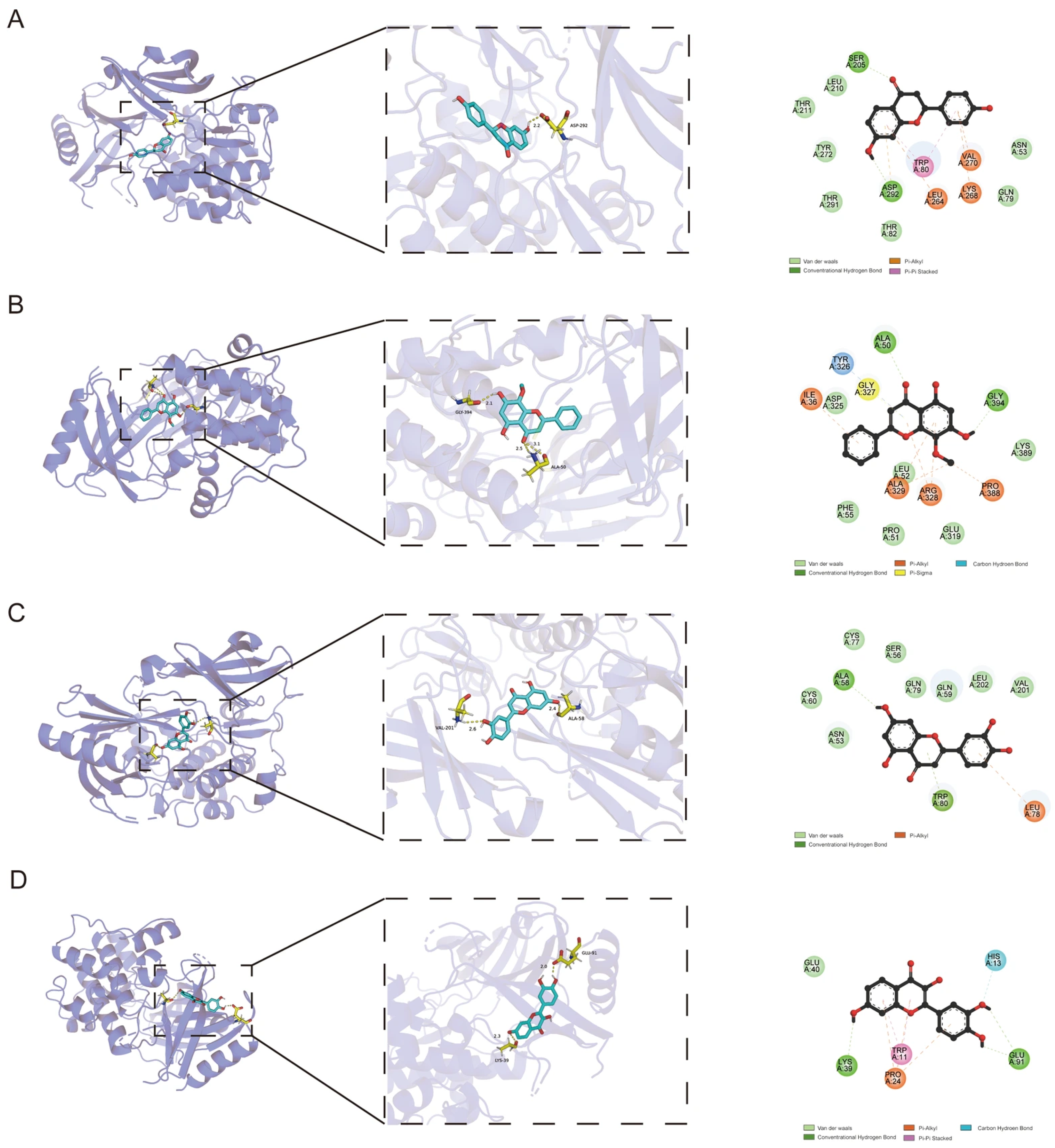
| Compounds | Target | Binding Energy (Kcal/mol) |
|---|---|---|
| Liquiritigenin | AKT1 | −4.87 |
| Wogonin | AKT1 | −4.44 |
| Luteolin | AKT1 | −3.25 |
| Fisetin | AKT1 | −3.12 |
| MK-2206 | AKT1 | −6.13 |
Disclaimer/Publisher’s Note: The statements, opinions and data contained in all publications are solely those of the individual author(s) and contributor(s) and not of MDPI and/or the editor(s). MDPI and/or the editor(s) disclaim responsibility for any injury to people or property resulting from any ideas, methods, instructions or products referred to in the content. |
© 2026 by the authors. Licensee MDPI, Basel, Switzerland. This article is an open access article distributed under the terms and conditions of the Creative Commons Attribution (CC BY) license.
Share and Cite
Zhang, J.; Wang, D.; Nie, Q.; Lou, H.; Zhang, Y.; Xu, J.; Fu, J. Antitumor Study of the Miao Medicine Indigofera stachyodes by Integrating Multiple Chemometrics Network Pharmacology and Experimental Validation. Curr. Issues Mol. Biol. 2026, 48, 302. https://doi.org/10.3390/cimb48030302
Zhang J, Wang D, Nie Q, Lou H, Zhang Y, Xu J, Fu J. Antitumor Study of the Miao Medicine Indigofera stachyodes by Integrating Multiple Chemometrics Network Pharmacology and Experimental Validation. Current Issues in Molecular Biology. 2026; 48(3):302. https://doi.org/10.3390/cimb48030302
Chicago/Turabian StyleZhang, Junhang, Dan Wang, Qin Nie, Huayong Lou, Yongping Zhang, Jian Xu, and Jian Fu. 2026. "Antitumor Study of the Miao Medicine Indigofera stachyodes by Integrating Multiple Chemometrics Network Pharmacology and Experimental Validation" Current Issues in Molecular Biology 48, no. 3: 302. https://doi.org/10.3390/cimb48030302
APA StyleZhang, J., Wang, D., Nie, Q., Lou, H., Zhang, Y., Xu, J., & Fu, J. (2026). Antitumor Study of the Miao Medicine Indigofera stachyodes by Integrating Multiple Chemometrics Network Pharmacology and Experimental Validation. Current Issues in Molecular Biology, 48(3), 302. https://doi.org/10.3390/cimb48030302