
Mitochondrial Long Non-Coding RNAs in Gynecological Cancers: Pathogenic Signaling Pathways and Therapeutic Opportunities


 , , ,
, , ,  ,
,  ,
, 

Abstract
1. Introduction
2. Nuclear lncRNAs Versus Mitochondrial lncRNAs
3. The Nuclear–Mitochondrial Regulatory Axis in Gynecologic Malignancies
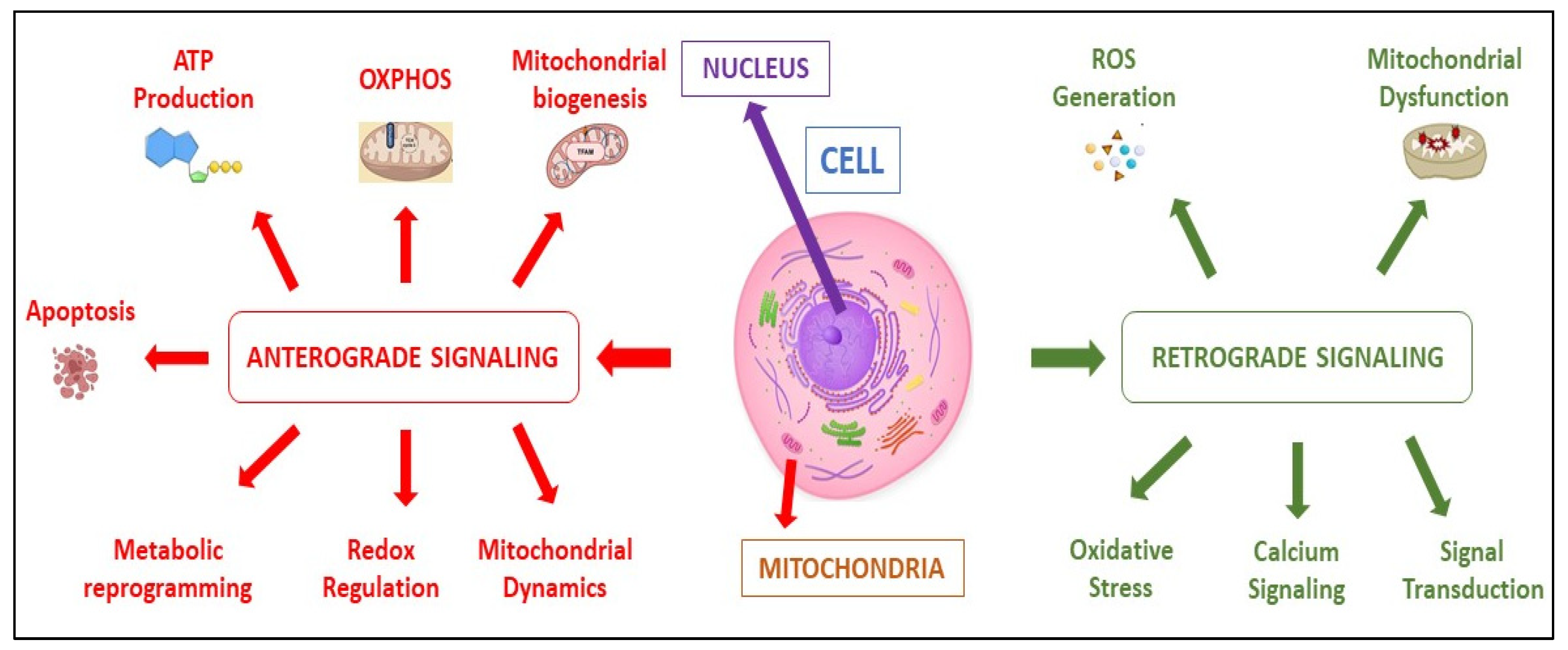
3.1. Roles of the Mitochondrial Anterograde Signaling Pathway in Gynecological Cancers
3.1.1. MAS Pathways Control the Glycolysis–OXPHOS Balance in Tumor Cells
3.1.2. Regulatory Functions of MAS Pathways in Redox Balance, Antioxidant Protection, and Mitochondrial Structural Dynamics in Tumor Cells
3.1.3. MAS Pathways as Key Regulators of Apoptotic and Cell Survival Programs in Tumor Cells
3.1.4. MAS Pathways in Immune Modulation and Tumor Microenvironment (TME) Adaptation in Gynecological Cancers
3.2. Roles of the Mitochondrial Retrograde Signaling (MRS) Pathway in Gynecological Cancers
3.2.1. MRS Pathways Role in Metabolic Reprogramming of Tumor Cells
3.2.2. Regulatory Functions of MRS Pathways in Redox and Calcium Homeostasis, Mitochondrial Biogenesis & Dynamics in Tumor Cells
3.2.3. Retrograde Signaling Pathways as Key Regulators of Apoptotic and Cell Survival Programs in Tumor Cells
3.2.4. MRS Pathways in Immune Modulation and Tumor Microenvironment Adaptation in Gynecological Cancers
3.3. Comparative Roles of MAS and MRS in Cancer
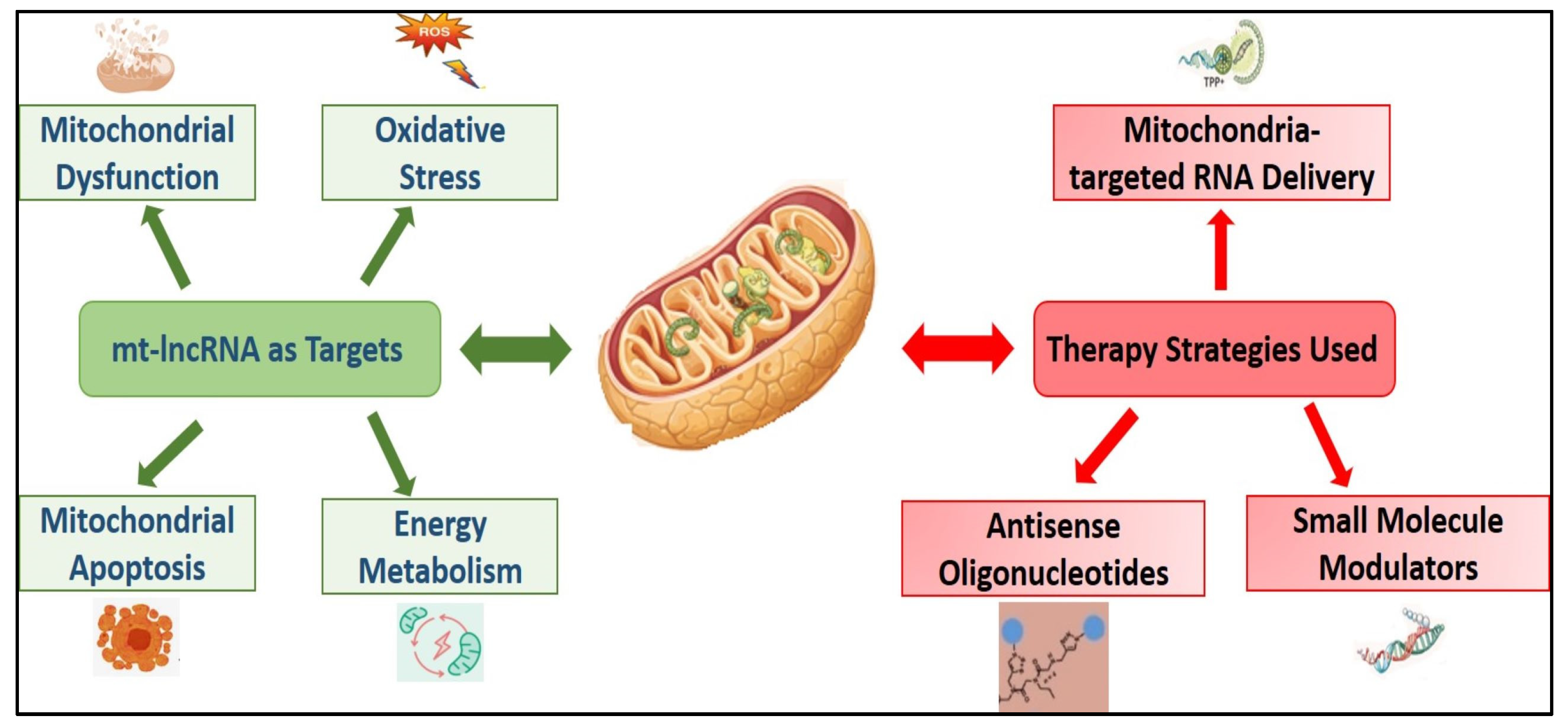
4. The Therapeutic Potential of Mitochondrial lncRNA in Cancer
Therapeutic Targeting/Emerging Strategies
5. Conclusions and Future Perspectives
Author Contributions
Funding
Data Availability Statement
Conflicts of Interest
References
- O’Neill, D.; El-Ghobashy, A. Impact of COVID-19 on Gynecological oncology; a global perspective. Heliyon 2021, 7, e06658. [Google Scholar] [CrossRef]
- Sung, H.; Ferlay, J.; Siegel, R.L.; Laversanne, M.; Soerjomataram, I.; Jemal, A.; Bray, F. Global Cancer Statistics 2020: GLOBOCAN estimates of incidence and mortality worldwide for 36 cancers in 185 countries. CA Cancer J. Clin. 2021, 71, 209–249. [Google Scholar] [CrossRef]
- Zhu, B.; Gu, H.; Mao, Z.; Beeraka, N.M.; Zhao, X.; Anand, M.P.; Zheng, Y.; Zhao, R.; Li, S.; Manogaran, P.; et al. Global burden of gynaecological cancers in 2022 and projections to 2050. J. Glob. Health 2024, 14, 04155. [Google Scholar] [CrossRef]
- Ghose, A.; McCann, L.; Makker, S.; Mukherjee, U.; Gullapalli, S.V.N.; Erekkath, J.; Shih, S.; Mahajan, I.; Sanchez, E.; Uccello, M.; et al. Diagnostic biomarkers in ovarian cancer: Advances beyond CA125 and HE4. Ther. Adv. Med. Oncol. 2024, 16, 17588359241233225. [Google Scholar] [CrossRef]
- Englisz, A.; Smycz-Kubańska, M.; Mielczarek-Palacz, A. Sensitivity and Specificity of Selected Biomarkers and Their Combinations in the Diagnosis of Ovarian Cancer. Diagnostics 2024, 14, 949. [Google Scholar] [CrossRef]
- Romeo, C.; Le Saux, O.; Jacobs, M.; Joly, F.; Ferron, G.; Favier, L.; Fumet, J.D.; Isambert, N.; Colombo, P.E.; Sabatier, R.; et al. Therapeutic Challenges in Patients with Gynecologic Carcinosarcomas: Analysis of a Multicenter National Cohort Study from the French Prospective TMRG Network. Cancers 2022, 14, 354. [Google Scholar] [CrossRef] [PubMed]
- Hamoud, B.H.; Sima, R.M.; Vacaroiu, I.A.; Georgescu, M.T.; Bobirca, A.; Gaube, A.; Bobirca, F.; Georgescu, D.E. The Evolving Landscape of Immunotherapy in Uterine Cancer: A Comprehensive Review. Life 2023, 13, 1502. [Google Scholar] [CrossRef] [PubMed]
- Weinberg, S.; Chandel, N. Targeting mitochondria metabolism for cancer therapy. Nat. Chem. Biol. 2015, 11, 9–15. [Google Scholar] [CrossRef] [PubMed]
- Holvoet, P. Noncoding RNAs Controlling Oxidative Stress in Cancer. Cancers 2023, 15, 1155. [Google Scholar] [CrossRef]
- Wang, S.F.; Tseng, L.M.; Lee, H.C. Role of mitochondrial alterations in human cancer progression and cancer immunity. J. Biomed. Sci. 2023, 30, 61. [Google Scholar] [CrossRef]
- Awad, A.M.A.M.; Abdul Karim, N. Dysregulation of Mitochondrial Function in Cancer Cells. Int. J. Mol. Sci. 2025, 26, 6750. [Google Scholar] [CrossRef]
- Albulescu, A.; Fudulu, A.; Mihaila, M.A.; Iancu, I.; Plesa, A.; Bostan, M.; Botezatu, A.; Brasoveanu, L.I.; Hotnog, C.M. Epigenetic Remodeling in Thyroid Cancer: New Dimensions of Targeted Therapy Through lncRNA Modulation. Curr. Issues Mol. Biol. 2025, 47, 863. [Google Scholar] [CrossRef]
- Solati, A.; Thvimi, S.; Khatami, S.H.; Shabaninejad, Z.; Malekzadegan, Y.; Alizadeh, M.; Mousavi, P.; Taheri-Anganeh, M.; Razmjoue, D.; Bahmyari, S.; et al. Non-coding RNAs in gynecologic cancer. Clin. Chim. Acta 2023, 1, 551. [Google Scholar] [CrossRef]
- Hotnog, C.M.; Bostan, M.; Anghelescu, M.; Roman, V.; Bleotu, C.; Hainarosie, R.; Voiosu, C.; Marineata, S.; Bostan, I.-S.; Diaconu, C.C.; et al. Long Non-Coding RNAs: Significant Drivers of Carcinogenesis Mechanisms in Head and Neck Squamous Cell Carcinoma. Curr. Issues Mol. Biol. 2025, 47, 698. [Google Scholar] [CrossRef]
- Farzaneh, M.; Najafi, S.; Dari, M.A.G.; Sheykhi-Sabzehpoush, M.; Dayer, D.; Cheraghzadeh, M.; Azizidoost, S. Functional roles of long noncoding RNA MALAT1 in gynecologic cancers. Clin. Transl. Oncol. 2023, 25, 48–65. [Google Scholar] [CrossRef]
- Lv, N.; Shen, S.; Chen, Q.; Tong, J. Long noncoding RNAs: Glycolysis regulators in gynecologic cancers. Cancer Cell Int. 2023, 23, 4. [Google Scholar] [CrossRef]
- Li, S.; Li, B.; Zheng, Y.; Li, M.; Shi, L.; Pu, X. Exploring functions of long noncoding RNAs across multiple cancers through co-expression network. Sci. Rep. 2017, 7, 754. [Google Scholar] [CrossRef] [PubMed]
- Tiwari, P.; Tripathi, L.P. Long Non-Coding RNAs, Nuclear Receptors and Their Cross-Talks in Cancer-Implications and Perspectives. Cancers 2024, 16, 2920. [Google Scholar] [CrossRef] [PubMed]
- Dadlani, K.; Lopez, C. Assessment of the expression of long noncoding mitochondrial RNAs (lncmtRNAs) during cervical cancer progression and cervical carcinoma. J. Cancer Sci. Ther. 2016, 8, 1000386. [Google Scholar] [CrossRef]
- Liang, H.; Liu, J.; Su, S.; Zhao, Q. Mitochondrial noncoding RNAs: New wine in an old bottle. RNA Biol. 2021, 18, 2168–2182. [Google Scholar] [CrossRef] [PubMed]
- Dong, Y.; Yoshitomi, T.; Hu, J.F.; Cui, J. Long noncoding RNAs coordinate functions between mitochondria and the nucleus. Epigenet. Chromatin 2017, 10, 41. [Google Scholar] [CrossRef]
- Vidaurre, S.; Fitzpatrick, C.; Burzio, V.A.; Briones, M.; Villota, C.; Villegas, J.; Echenique, J.; Oliveira-Cruz, L.; Araya, M.; Borgna, V.; et al. Down-regulation of the antisense mitochondrial non-coding RNAs (ncRNAs) is a unique vulnerability of cancer cells and a potential target for cancer therapy. J. Biol. Chem. 2014, 289, 27182–27198. [Google Scholar] [CrossRef] [PubMed]
- Vendramin, R.; Marine, J.; Leucci, E. Non-coding RNAs: The dark side of nuclear-mitochondrial communication. EMBO J. 2017, 36, 1123–1133. [Google Scholar] [CrossRef] [PubMed]
- Li, Y.; Li, W.; Hoffman, A.R.; Cui, J.; Hu, J.F. The Nucleus/Mitochondria-Shuttling LncRNAs Function as New Epigenetic Regulators of Mitophagy in Cancer. Front. Cell Dev. Biol. 2021, 9, 699621. [Google Scholar] [CrossRef]
- Quirós, P.M.; Mottis, A.; Auwerx, J. Mitonuclear communication in homeostasis and stress. Nat. Rev. Mol. Cell Biol. 2016, 17, 213–226. [Google Scholar] [CrossRef] [PubMed]
- Vyas, S.; Zaganjor, E.; Haigis, M.C. Mitochondria and cancer. Cell 2016, 166, 555–566. [Google Scholar] [CrossRef]
- Vafai, S.B.; Mootha, V.K. Mitochondrial disorders as windows into an ancient organelle. Nature 2012, 491, 374–383. [Google Scholar] [CrossRef]
- Fiorese, C.J.; Schulz, A.M.; Lin, Y.F.; Rosin, N.; Pellegrino, M.W.; Haynes, C.M. The transcription factor ATF5 mediates a mammalian mitochondrial UPR. Curr. Biol. 2016, 26, 2037–2043. [Google Scholar] [CrossRef]
- Shadel, G.S.; Horvath, T.L. Mitochondrial ROS signaling in organismal homeostasis. Cell 2015, 163, 560–569. [Google Scholar] [CrossRef]
- Scarpulla, R.C. Transcriptional Paradigms in Mammalian Mitochondrial Biogenesis and Function. Physiol. Rev. 2008, 88, 611–638. [Google Scholar] [CrossRef]
- Martínez-Reyes, I.; Chandel, N.S. Mitochondrial Metabolism in Cancer. Nat. Rev. Cancer 2021, 21, 181–197. [Google Scholar]
- Weigelt, J.; Petrosyan, M.; Oliveira-Ferrer, L.; Schmalfeldt, B.; Bartmann, C.; Dietl, J.; Stürken, C.; Schumacher, U. Ovarian cancer cells regulate their mitochondrial content and high mitochondrial content is associated with a poor prognosis. BMC Cancer 2024, 24, 43. [Google Scholar] [CrossRef]
- DeBerardinis, R.J.; Chandel, N.S. Fundamentals of Cancer Metabolism. Sci. Adv. 2016, 2, e1600200. [Google Scholar] [CrossRef]
- Finley, L.W.; Haigis, M.C. The coordination of nuclear and mitochondrial communication during aging and calorie restriction. Ageing Res. Rev. 2009, 8, 173–188. [Google Scholar] [CrossRef]
- Kobayashi, H. Recent advances in understanding the metabolic plasticity of ovarian cancer: A systematic review. Heliyon 2022, 8, e11487. [Google Scholar] [CrossRef]
- Czegle, I.; Huang, C.; Soria, P.G.; Purkiss, D.W.; Shields, A.; Wappler-Guzzetta, E.A. The Role of Genetic Mutations in Mitochondrial-Driven Cancer Growth in Selected Tumors: Breast and Gynecological Malignancies. Life 2023, 13, 996. [Google Scholar] [CrossRef]
- Du, H.; Xu, T.; Yu, S.; Wu, S.; Zhang, J. Mitochondrial metabolism and cancer therapeutic innovation. Signal Transduct. Target. Ther. 2025, 10, 245. [Google Scholar] [CrossRef] [PubMed]
- Wang, Y.; Peng, J.; Yang, D.; Xing, Z.; Jiang, B.; Ding, X.; Jiang, C.; Ouyang, B.; Su, L. From metabolism to malignancy: The multifaceted role of PGC1α in cancer. Front. Oncol. 2024, 14, 1383809. [Google Scholar] [CrossRef] [PubMed]
- Wersäll, O.C.; Löfstedt, L.; Govorov, I.; Mints, M.; Gabrielson, M.; Shoshan, M. PGC1α and VDAC1 expression in endometrial cancer. Mol. Clin. Oncol. 2021, 14, 42. [Google Scholar] [CrossRef] [PubMed]
- Hu, W.; Ma, S.L.; Liu, L.L.; Zhu, Y.H.; Zeng, T.T.; Li, Y.; Guan, X.Y. Impact of mitochondrial transcription factor A expression on the outcomes of ovarian, endometrial and cervical cancers. Am. J. Transl. Res. 2020, 12, 5343–5361. [Google Scholar]
- Lei, T.; Rui, Y.; Xiaoshuang, Z.; Jinglan, Z.; Jihong, Z. Mitochondria transcription and cancer. Cell Death Discov. 2024, 10, 168. [Google Scholar] [CrossRef] [PubMed]
- Sun, L.; Ouyang, N.; Shafi, S.; Zhao, R.; Pan, J.; Hong, L.; Song, X.; Sa, X.; Zhou, Y. NRF1 Regulates the Epithelial Mesenchymal Transition of Breast Cancer by Modulating ROS Homeostasis. Technol. Cancer Res. Treat. 2023, 22, 15330338231161141. [Google Scholar] [CrossRef]
- Shen, L.; Zhou, L.; Xia, M.; Lin, N.; Ma, J.; Dong, D.; Sun, L. PGC1α regulates mitochondrial oxidative phosphorylation involved in cisplatin resistance in ovarian cancer cells via nucleo-mitochondrial transcriptional feedback. Exp. Cell Res. 2021, 398, 112369. [Google Scholar] [CrossRef]
- Shen, L.; Sun, B.; Sheng, J.; Yu, S.; Li, Y.; Xu, H.; Su, J.; Sun, L. PGC1α promotes cisplatin resistance in human ovarian carcinoma cells through upregulation of mitochondrial biogenesis. Int. J. Oncol. 2018, 52, 404–416. [Google Scholar] [CrossRef]
- Koc, Z.C.; Sollars, V.E.; Bou Zgheib, N.; Rankin, G.O.; Koc, E.C. Evaluation of mitochondrial biogenesis and ROS generation in high-grade serous ovarian cancer. Front. Oncol. 2023, 13, 1129352. [Google Scholar] [CrossRef] [PubMed]
- Guan, Y.; Wang, Y.; Li, B.; Shen, K.; Li, Q.; Ni, Y.; Huang, L. Mitophagy in carcinogenesis, drug resistance and anticancer therapeutics. Cancer Cell Int. 2021, 21, 350. [Google Scholar] [CrossRef] [PubMed]
- Xie, C.; Lu, H.; Zhang, X.; An, Z.; Chen, T.; Yu, W.; Wang, S.; Shang, D.; Wang, X. Mitochondrial abnormality in ovarian granulosa cells of patients with polycystic ovary syndrome. Mol. Med. Rep. 2024, 29, 27. [Google Scholar] [CrossRef]
- Liu, L.; Li, Y.; Wang, J.; Zhang, D.; Wu, H.; Li, W.; Wei, H.; Ta, N.; Fan, Y.; Liu, Y.; et al. Mitophagy receptor FUNDC1 is regulated by PGC-1α/NRF1 to fine tune mitochondrial homeostasis. EMBO Rep. 2021, 22, e50629. [Google Scholar] [CrossRef]
- Chen, W.; Zhao, H.; Li, Y. Mitochondrial dynamics in health and disease: Mechanisms and potential targets. Signal Transduct. Target. Ther. 2023, 8, 333. [Google Scholar] [CrossRef]
- Fetoni, A.R.; Paciello, F.; Rolesi, R.; Paludetti, G.; Troiani, D. Targeting dysregulation of redox homeostasis in noise-induced hearing loss: Oxidative stress and ROS signaling. Free Radic. Biol. Med. 2019, 135, 46–59. [Google Scholar] [CrossRef]
- Kim, Y.S.; Gupta Vallur, P.; Jones, V.M.; Worley, B.L.; Shimko, S.; Shin, D.H.; Crawford, L.C.; Chen, C.W.; Aird, K.M.; Abraham, T.; et al. Context-dependent activation of SIRT3 is necessary for anchorage-independent survival and metastasis of ovarian cancer cells. Oncogene 2020, 39, 1619–1633. [Google Scholar] [CrossRef]
- Tossetta, G.; Fantone, S.; Montanari, E.; Marzioni, D.; Goteri, G. Role of NRF2 in Ovarian Cancer. Antioxidants 2022, 11, 663. [Google Scholar] [CrossRef]
- Ma, Q. Role of NRF2 in oxidative stress and toxicity. Annu. Rev. Pharmacol. Toxicol. 2013, 53, 401–426. [Google Scholar] [CrossRef] [PubMed]
- Mishra, P.; Chan, D.C. Metabolic Regulation of Mitochondrial Dynamics. J. Cell Biol. 2016, 212, 379–387. [Google Scholar] [CrossRef] [PubMed]
- Liesa, M.; Shirihai, O.S. Mitochondrial Dynamics in the Regulation of Nutrient Utilization and Energy Expenditure. Cell Metab. 2013, 17, 491–506. [Google Scholar] [CrossRef] [PubMed]
- Zou, G.P.; Yu, C.X.; Shi, S.L.; Li, Q.G.; Wang, X.H.; Qu, X.H.; Yang, Z.J.; Yao, W.R.; Yan, D.D.; Jiang, L.P.; et al. Mitochondrial Dynamics Mediated by DRP1 and MFN2 Contributes to Cisplatin Chemoresistance in Human Ovarian Cancer SKOV3 Cells. J. Cancer 2021, 12, 7358–7373. [Google Scholar] [CrossRef]
- Shukla, P.; Singh, K.K. The mitochondrial landscape of ovarian cancer: Emerging insights. Carcinogenesis 2021, 42, 663–671. [Google Scholar] [CrossRef]
- You, J.; Chen, J.; Wang, C.; Fang, Z.; Tong, H. DRP1 activation induces mitochondrial fission and apoptosis in cervical cancer cells. Front. Pharmacol. 2020, 11, 271. [Google Scholar] [CrossRef]
- Zhang, L.; Zhang, Y.; Fei, M.; Zhang, L.; Zhang, S. Hypoxia-Inducible Factor-1α Promotes Chemoresistance in Cervical Cancer by Regulating Mitochondrial Function and Apoptosis. Oncol. Lett. 2020, 20, 267. [Google Scholar] [CrossRef]
- Lee, H.; Yoon, Y. Mitochondrial Fission and Fusion in Cancer: A Balancing Act of Life and Death. Cancers 2020, 12, 1116. [Google Scholar] [CrossRef]
- Cannon, M.V.; Houtkooper, R.H. Mitochondrial Dynamics and Apoptosis: Complex Crosstalk in Cancer Biology. Cells 2020, 9, 2381. [Google Scholar] [CrossRef]
- Wang, Y.; Qi, H.; Liu, Y.; Duan, C. FOXO3a Suppresses Cervical Cancer Progression by Restoring Apoptotic Sensitivity Through Mitochondrial Pathway Regulation. Biomedicines 2022, 10, 1412. [Google Scholar] [CrossRef]
- Wallace, D.C. Mitochondrial-Nuclear Communication in Stress Responses. Cell 2018, 175, 1633–1650. [Google Scholar]
- Su, P.; Yu, L.; Mao, X.; Sun, P. Role of HIF-1α/ERRα in Enhancing Cancer Cell Metabolism and Promoting Resistance of Endometrial Cancer Cells to Pyroptosis. Front. Oncol. 2022, 12, 881252. [Google Scholar] [CrossRef] [PubMed]
- Preston, C.C.; Goode, E.L.; Hartmann, L.C.; Kalli, K.R.; Knutson, K.L. Immunity and immune suppression in human ovarian cancer. Immunotherapy 2011, 3, 539–556. [Google Scholar] [CrossRef] [PubMed]
- Zhang, H.; Li, S.; Wang, D.; Liu, S.; Xiao, T.; Gu, W.; Yang, H.; Wang, H.; Yang, M.; Chen, P. Metabolic reprogramming and immune evasion: The interplay in the tumor microenvironment. Biomark. Res. 2024, 12, 96. [Google Scholar] [CrossRef] [PubMed]
- Zhang, T.; Ma, C.; Zhang, Z.; Zhang, H.; Hu, H. NF-κB signaling in inflammation and cancer. MedComm 2021, 2, 618–653. [Google Scholar] [CrossRef]
- Zou, S.; Tong, Q.; Liu, B.; Huang, W.; Tian, Y.; Fu, X. Targeting STAT3 in Cancer Immunotherapy. Mol. Cancer 2020, 19, 145. [Google Scholar] [CrossRef]
- Choudhuri, S.; Chowdhury, I.H.; Garg, N.J. Mitochondrial Regulation of Macrophage Response Against Pathogens. Front. Immunol. 2020, 11, 622602. [Google Scholar] [CrossRef]
- Nirala, B.K.; Yustein, J.T. The Role of MYC in Tumor Immune Microenvironment Regulation: Insights and Future Directions. Front. Biosci. 2025, 30, 37304. [Google Scholar] [CrossRef]
- Martin-Orozco, E.; Wang, L.; Chatterjee, S.; Hanks, B.A. Editorial: Signaling pathways behind immune evasion and therapy resistance. Front. Immunol. 2022, 13, 1104167. [Google Scholar] [CrossRef]
- Aloraini, G.S. Mitochondrial DNA release and cGAS-STING activation: Emerging insights into anti-tumor immunity. Pathol. Res. Pract. 2025, 273, 156158. [Google Scholar] [CrossRef]
- Shakfa, N.; Li, D.; Nersesian, S.; Wilson-Sanchez, J.; Koti, M. The STING pathway: Therapeutic vulnerabilities in ovarian cancer. Br. J. Cancer 2022, 127, 603–611. [Google Scholar] [CrossRef]
- Yang, D.; Kim, J. Mitochondrial Retrograde Signalling and Metabolic Alterations in the Tumour Microenvironment. Cells 2019, 8, 275. [Google Scholar] [CrossRef]
- da Cunha, F.M.; Torelli, N.Q.; Kowaltowski, A.J. Mitochondrial Retrograde Signaling: Triggers, Pathways and Outcomes. Oxid. Med. Cell. Longev. 2015, 2015, 482582. [Google Scholar] [CrossRef]
- Otakhor, K.O.; Soladoye, E.O. A review of metabolic reprogramming in cancer cells: Mechanisms and therapeutic targets. World J. Adv. Res. Rev. 2024, 23, 530–539. [Google Scholar] [CrossRef]
- Jia, D.; Park, J.H.; Jung, K.H.; Levine, H.; Kaipparettu, B.A. Elucidating the Metabolic Plasticity of Cancer: Mitochondrial Reprogramming and Hybrid Metabolic States. Cells 2018, 7, 21. [Google Scholar] [CrossRef]
- Vousden, K.; Ryan, K. p53 and metabolism. Nat. Rev. Cancer 2009, 9, 691–700. [Google Scholar] [CrossRef] [PubMed]
- Labuschagne, C.F.; Zani, F.; Vousden, K.H. Control of metabolism by p53—Cancer and beyond. Biochim. Biophys. Acta Rev. Cancer 2018, 1870, 32–42. [Google Scholar] [CrossRef] [PubMed]
- Li, C.; Liu, F.Y.; Shen, Y.; Tian, Y.; Han, F.J. Research progress on the mechanism of glycolysis in ovarian cancer. Front. Immunol. 2023, 14, 1284853. [Google Scholar] [CrossRef] [PubMed]
- Wang, X.; Du, Z.W.; Xu, T.M.; Wang, X.J.; Li, W.; Gao, J.L.; Li, J.; Zhu, H. HIF-1a Is a Rational Target for Future Ovarian Cancer Therapies. Front. Oncol. 2021, 11, 785111. [Google Scholar] [CrossRef]
- Nieman, K.M.; Kenny, H.A.; Penicka, C.V.; Ladanyi, A.; Buell-Gutbrod, R.; Zillhardt, M.R.; Romero, I.L.; Carey, M.S.; Mills, G.B.; Hotamisligil, G.S.; et al. Adipocytes promote ovarian cancer metastasis and provide energy for rapid tumor growth. Nat. Med. 2011, 17, 1498–1503. [Google Scholar] [CrossRef] [PubMed]
- Yang, B.; Hu, M.; Fu, Y.; Sun, D.; Zheng, W.; Liao, H.; Zhang, Z.; Chen, X. LASS2 mediates Nrf2-driven progestin resistance in endometrial cancer. Am. J. Transl. Res. 2021, 13, 1280–1289. [Google Scholar] [PubMed]
- Kasai, S.; Yamazaki, H.; Tanji, K.; Engler, M.J.; Matsumiya, T.; Itoh, K. Role of the ISR-ATF4 pathway and its cross talk with Nrf2 in mitochondrial quality control. J. Clin. Biochem. Nutr. 2019, 64, 1–12. [Google Scholar] [CrossRef]
- Gore, M.; Kabekkodu, S.P.; Chakrabarty, S. Exploring the metabolic alterations in cervical cancer induced by HPV oncoproteins: From mechanisms to therapeutic targets. Biochim. Biophys. Acta Rev. Cancer 2025, 1880, 189292. [Google Scholar] [CrossRef] [PubMed]
- Hu, C.; Liu, T.; Han, C.; Xuan, Y.; Jiang, D.; Sun, Y.; Zhang, X.; Zhang, W.; Xu, Y.; Liu, Y.; et al. HPV E6/E7 promotes aerobic glycolysis in cervical cancer by regulating IGF2BP2 to stabilize m6A-MYC expression. Int. J. Biol. Sci. 2022, 18, 507–521. [Google Scholar] [CrossRef]
- Arizmendi-Izazaga, A.; Navarro-Tito, N.; Jiménez-Wences, H.; Evaristo-Priego, A.; Priego-Hernández, V.D.; Dircio-Maldonado, R.; Zacapala-Gómez, A.E.; Mendoza-Catalán, M.A.; Illades-Aguiar, B.; De Nova Ocampo, M.A.; et al. Bioinformatics Analysis Reveals E6 and E7 of HPV 16 Regulate Metabolic Reprogramming in Cervical Cancer, Head and Neck Cancer, and Colorectal Cancer through the PHD2-VHL-CUL2-ELOC-HIF-1α Axis. Curr. Issues Mol. Biol. 2024, 46, 6199–6222. [Google Scholar] [CrossRef]
- Kong, B.; Tsuyoshi, H.; Orisaka, M.; Shieh, D.B.; Yoshida, Y.; Tsang, B.K. Mitochondrial dynamics regulating chemoresistance in gynecological cancers. Ann. N. Y. Acad. Sci. 2015, 1350, 1–16. [Google Scholar] [CrossRef] [PubMed]
- Guerra, F.; Arbini, A.A.; Moro, L. Mitochondria and cancer chemoresistance. Biochim. Biophys. Acta Bioenerg. 2017, 1858, 686–699. [Google Scholar] [CrossRef]
- Butow, R.A.; Avadhani, N.G. Mitochondrial signaling: The retrograde response. Mol. Cell 2004, 14, 1–15. [Google Scholar] [CrossRef]
- O’Malley, J.; Kumar, R.; Inigo, J.; Yadava, N.; Chandra, D. Mitochondrial Stress Response and Cancer. Trends Cancer 2020, 6, 688–701. [Google Scholar] [CrossRef] [PubMed]
- Szatrowski, T.P.; Nathan, C.F. Production of large amounts of hydrogen peroxide by human tumor cells. Cancer Res. 1991, 51, 794–798. [Google Scholar]
- Liou, G.Y.; Storz, P. Reactive Oxygen Species in Cancer. Free Radic. Res. 2010, 44, 479–496. [Google Scholar] [CrossRef]
- Blignaut, M.; Loos, B.; Botchway, S.W.; Parker, A.W.; Huisamen, B. Ataxia-Telangiectasia Mutated is located in cardiac mitochondria and impacts oxidative phosphorylation. Sci. Rep. 2019, 9, 4782. [Google Scholar] [CrossRef]
- He, L.; He, T.; Farrar, S.; Ji, L.; Liu, T.; Ma, X. Antioxidants maintain cellular redox homeostasis by elimination of reactive oxygen species. Cell. Physiol. Biochem. 2017, 44, 532–553. [Google Scholar] [CrossRef]
- Lei, J.; Deng, F.; Ding, H.; Fu, M.; Xu, T.; Ji, B.; Feng, L.; Li, M.; Qiu, J.; Gao, Q. Recent Developments on the Roles of Calcium Signals and Potential Therapy Targets in Cervical Cancer. Cells 2022, 11, 3003. [Google Scholar] [CrossRef] [PubMed]
- Caravia, L.; Staicu, C.E.; Radu, B.M.; Condrat, C.E.; Crețoiu, D.; Bacalbașa, N.; Suciu, N.; Crețoiu, S.M.; Voinea, S.C. Altered Organelle Calcium Transport in Ovarian Physiology and Cancer. Cancers 2020, 12, 2232. [Google Scholar] [CrossRef] [PubMed]
- Ivanova, H.; Kerkhofs, M.; La Rovere, R.M.; Bultynck, G. Endoplasmic Reticulum-Mitochondrial Ca2+ Fluxes Underlying Cancer Cell Survival. Front. Oncol. 2017, 7, 70. [Google Scholar] [CrossRef]
- Simoes, I.C.M.; Morciano, G.; Lebiedzinska-Arciszewska, M.; Aguiari, G.; Pinton, P.; Potes, Y.; Wieckowski, M.R. The mystery of mitochondria-ER contact sites in physiology and pathology: A cancer perspective. Biochim. Biophys. Acta Mol. Basis Dis. 2020, 1866, 165834. [Google Scholar] [CrossRef]
- Deng, F.; Fu, M.; Zhao, C.; Lei, J.; Xu, T.; Ji, B.; Ding, H.; Zhang, Y.; Chen, J.; Qiu, J.; et al. Calcium signals and potential therapy targets in ovarian cancer. Int. J. Oncol. 2023, 63, 125. [Google Scholar] [CrossRef]
- Zakrzewski, P.K. Calcium Homeostasis Machinery in the Human Uterus-A Potential Therapeutic Target in Endometrial Cancer. Int. J. Mol. Sci. 2025, 26, 10253. [Google Scholar] [CrossRef] [PubMed]
- Archer, S.L. Mitochondrial Dynamics in Disease. N. Engl. J. Med. 2013, 369, 2236–2251. [Google Scholar] [CrossRef]
- Wang, Y.; Dai, X.; Li, H.; Jiang, H.; Zhou, J.; Zhang, S.; Guo, J.; Shen, L.; Yang, H.; Lin, J.; et al. The role of mitochondrial dynamics in disease. MedComm 2023, 4, e462. [Google Scholar] [CrossRef]
- Adebayo, M.; Singh, S.; Singh, A.P.; Dasgupta, S. Mitochondrial fusion and fission: The fine-tune balance for cellular homeostasis. FASEB J. Off. Publ. Fed. Am. Soc. Exp. Biol. 2021, 35, e21620. [Google Scholar] [CrossRef]
- Caino, M.C.; Altieri, D.C. Mitochondrial Dynamics in Cancer Metabolism. Cell Cycle 2016, 15, 324–330. [Google Scholar]
- Brandl, N.; Seitz, R.; Sendtner, N.; Müller, M.; Gülow, K. Living on the Edge: ROS Homeostasis in Cancer Cells and Its Potential as a Therapeutic Target. Antioxidants 2025, 14, 1002. [Google Scholar] [CrossRef] [PubMed]
- Piktel, E.; Ościłowska, I.; Suprewicz, Ł.; Depciuch, J.; Marcińczyk, N.; Chabielska, E.; Wolak, P.; Wollny, T.; Janion, M.; Parlinska-Wojtan, M.; et al. ROS-Mediated Apoptosis and Autophagy in Ovarian Cancer Cells Treated with Peanut-Shaped Gold Nanoparticles. Int. J. Nanomed. 2021, 16, 1993–2011. [Google Scholar] [CrossRef]
- Wei, H.; Xiong, M.; Min, L. ROS-mediated cell death and phase separation in gynecological malignancies. Eur. J. Med. Res. 2025, 30, 578. [Google Scholar] [CrossRef]
- Lee, J.; Yeo, S.G.; Lee, J.M.; Kim, S.S.; Jeong, Y.J.; In Oh, T.; Park, D.C. The role of reactive oxygen species in the pathogenesis and treatment of endometrial cancer. Front. Med. 2025, 12, 1662794. [Google Scholar] [CrossRef]
- Huang, R.; Chen, H.; Liang, J.; Li, Y.; Yang, J.; Luo, C.; Tang, Y.; Ding, Y.; Liu, X.; Yuan, Q.; et al. Dual Role of Reactive Oxygen Species and their Application in Cancer Therapy. J. Cancer 2021, 12, 5543–5561. [Google Scholar] [CrossRef]
- Gorrini, C.; Harris, I.; Mak, T. Modulation of oxidative stress as an anticancer strategy. Nat. Rev. Drug Discov. 2013, 12, 931–947. [Google Scholar] [CrossRef] [PubMed]
- Guha, M.; Srinivasan, S.; Raman, P.; Jiang, Y.; Kaufman, B.A.; Taylor, D.; Dong, D.; Chakrabarti, R.; Picard, M.; Carstens, R.P.; et al. Aggressive triple negative breast cancers have unique molecular signature on the basis of mitochondrial genetic and functional defects. Biochim. Biophys. Acta Mol. Basis Dis. 2018, 1864, 1060–1071. [Google Scholar] [CrossRef]
- Berber, M.; Leng, S.; Wengi, A.; Winter, D.V.; Odermatt, A.; Beuschlein, F.; Loffing, J.; Breault, D.T.; Penton, D. Calcineurin regulates aldosterone production via dephosphorylation of NFATC4. JCI Insight 2023, 8, e157027. [Google Scholar] [CrossRef]
- Cole, A.J.; Iyengar, M.; Panesso-Gómez, S.; O’Hayer, P.; Chan, D.; Delgoffe, G.M.; Aird, K.M.; Yoon, E.; Bai, S.; Buckanovich, R.J. NFATC4 promotes quiescence and chemotherapy resistance in ovarian cancer. JCI Insight 2020, 5, e131486. [Google Scholar] [CrossRef]
- Pan, M.G.; Xiong, Y.; Chen, F. NFAT gene family in inflammation and cancer. Curr. Mol. Med. 2013, 13, 543–554. [Google Scholar] [CrossRef]
- Harrington, B.S.; Annunziata, C.M. NF-κB Signaling in Ovarian Cancer. Cancers 2019, 11, 1182. [Google Scholar] [CrossRef]
- Fiorese, C.J.; Haynes, C.M. Mitochondrial stress responses. Annu. Rev. Biochem. 2017, 86, 445–470. [Google Scholar]
- Xu, S.; Liu, H.; Wang, C.; Deng, Y.; Xu, B.; Yang, T.; Liu, W. Study of ATF4/CHOP axis-mediated mitochondrial unfolded protein response in neuronal apoptosis induced by methylmercury. Food Chem. Toxicol. 2023, 182, 114190. [Google Scholar] [CrossRef] [PubMed]
- Xia, L.; Yan, X.; Zhang, H. Mitochondrial DNA-activated cGAS-STING pathway in cancer: Mechanisms and therapeutic implications. Biochim. Biophys. Acta Rev. Cancer 2025, 1880, 189249. [Google Scholar] [CrossRef] [PubMed]
- Assmann, N.; Finlay, D.K. Metabolic regulation of immune responses: Therapeutic opportunities. J. Clin. Investig. 2016, 126, 2031–2039. [Google Scholar] [CrossRef]
- Yang, M.Q.; Zhang, S.L.; Sun, L.; Huang, L.T.; Yu, J.; Zhang, J.H.; Tian, Y.; Han, C.B.; Ma, J.T. Targeting mitochondria: Restoring the antitumor efficacy of exhausted T cells. Mol. Cancer 2024, 23, 260. [Google Scholar] [CrossRef]
- Cheng, X.; Wang, Y.; Johnson, B.; You, M. Mitochondria-targeted strategies in tumor immunity. Front. Immunol. 2025, 16, 1646138. [Google Scholar] [CrossRef]
- Kuo, C.L.; Lin, Y.C.; Lo, Y.K.; Lu, Y.Z.; Babuharisankar, A.P.; Lien, H.W.; Chou, H.Y.; Lee, A.Y. The mitochondrial stress signaling tunes immunity from a view of systemic tumor microenvironment and ecosystem. iScience 2024, 27, 110710. [Google Scholar] [CrossRef]
- Wang, Z.; Wang, Q.; Cao, H.; Wang, Z.; Wang, D.; Liu, J.; Gao, T.; Ren, C.; Liu, J. Mitochondrial Localized In Situ Self-Assembly Reprogramming Tumor Immune and Metabolic Microenvironment for Enhanced Cancer Therapy. Adv. Mater. 2024, 36, e2311043. [Google Scholar] [CrossRef]
- Wang, J.; He, Y.; Hu, F.; Hu, C.; Sun, Y.; Yang, K.; Yang, S. Metabolic Reprogramming of Immune Cells in the Tumor Microenvironment. Int. J. Mol. Sci. 2024, 25, 12223. [Google Scholar] [CrossRef] [PubMed]
- Ou, Y.; Cannon, M.J.; Nakagawa, M. Regulatory T Cells in Gynecologic Cancer. MOJ Immunol. 2018, 6, 34–42. [Google Scholar] [CrossRef]
- Garg, P.; Ramisetty, S.K.; Raghu Subbalakshmi, A.; Krishna, B.M.; Pareek, S.; Mohanty, A.; Kulkarni, P.; Horne, D.; Salgia, R.; Singhal, S.S. Gynecological cancer tumor Microenvironment: Unveiling cellular complexity and therapeutic potential. Biochem. Pharmacol. 2024, 229, 116498. [Google Scholar] [CrossRef] [PubMed]
- Zakic, T.; Kalezic, A.; Drvendzija, Z.; Udicki, M.; Ivkovic Kapicl, T.; Srdic Galic, B.; Korac, A.; Jankovic, A.; Korac, B. Breast Cancer: Mitochondria-Centered Metabolic Alterations in Tumor and Associated Adipose Tissue. Cells 2024, 13, 155. [Google Scholar] [CrossRef]
- Fan, M.; Shi, Y.; Zhao, J.; Li, L. Cancer stem cell fate determination: Mito-nuclear communication. Cell Commun. Signal. 2023, 21, 159. [Google Scholar] [CrossRef]
- Wagner, A.; Kosnacova, H.; Chovanec, M.; Jurkovicova, D. Mitochondrial Genetic and Epigenetic Regulations in Cancer: Therapeutic Potential. Int. J. Mol. Sci. 2022, 23, 7897. [Google Scholar] [CrossRef] [PubMed]
- Harutyunyan, T. The Known Unknowns of Mitochondrial Carcinogenesis: De Novo NUMTs and Intercellular Mitochondrial Transfer. Mutagenesis 2024, 39, 1–12. [Google Scholar] [CrossRef] [PubMed]
- Kopinski, P.K.; Singh, L.N.; Zhang, S.; Lott, M.T.; Wallace, D.C. Mitochondrial DNA Variation and Cancer. Nat. Rev. Cancer 2021, 21, 431–445. [Google Scholar] [CrossRef] [PubMed]
- Piergentili, R.; Sechi, S. Non-Coding RNAs of Mitochondrial Origin: Roles in Cell Division and Implications in Cancer. Int. J. Mol. Sci. 2024, 25, 7498. [Google Scholar] [CrossRef]
- Borgna, V.; Lobos-González, L.; Guevara, F.; Landerer, E.; Bendek, M.; Ávila, R.; Silva, V.; Villota, C.; Araya, M.; Rivas, A.; et al. Targeting antisense mitochondrial noncoding RNAs induces bladder cancer cell death and inhibition of tumor growth through reduction of survival and invasion factors. J. Cancer 2020, 11, 1780–1791. [Google Scholar] [CrossRef] [PubMed]
- Fitzpatrick, C.; Bendek, M.F.; Briones, M.; Farfan, N.; Silva, V.A.; Nardocci, G.; Montecino, M.; Boland, A.; Deleuze, J.-F.; Villegas, J.; et al. Mitochondrial ncRNA targeting induces cell cycle arrest and tumor growth inhibition of MDA-MB-231 breast cancer cells through reduction of key cell cycle progression factors. Cell Death Dis. 2019, 10, 423. [Google Scholar] [CrossRef]
- Thirunavukkarasu, S.; Banerjee, S.; Tantray, I.; Ojha, R. Non-coding RNA and reprogrammed mitochondrial metabolism in genitourinary cancer. Front. Genet. 2024, 15, 1364389. [Google Scholar] [CrossRef]
- Li, S.; Peng, M.; Tan, S.; Oyang, L.; Lin, J.; Xia, L.; Wang, J.; Wu, N.; Jiang, X.; Peng, Q.; et al. The roles and molecular mechanisms of non-coding RNA in cancer metabolic reprogramming. Cancer Cell Int. 2024, 24, 37. [Google Scholar] [CrossRef]
- Sobhani, N.; Chahwan, R.; Roudi, R.; Morris, R.; Volinia, S.; Chai, D.; D’Angelo, A.; Generali, D. Predictive and Prognostic Value of Non-Coding RNA in Breast Cancer. Cancers 2022, 14, 2952. [Google Scholar] [CrossRef]
- Ansari, A.; Szczesnowska, A.; Haddad, N.; Elbediwy, A.; Wehida, N. The Role of Non-Coding RNAs in the Regulation of Oncogenic Pathways in Breast and Gynaecological Cancers. Non-Coding RNA 2025, 11, 61. [Google Scholar] [CrossRef]
- Ghasemian, M.; Babaahmadi-Rezaei, H.; Khedri, A.; Selvaraj, C. The oncogenic role of SAMMSON lncRNA in tumorigenesis: A comprehensive review with especial focus on melanoma. J. Cell. Mol. Med. 2023, 27, 3966–3973. [Google Scholar] [CrossRef]
- Lin, W.; Zhou, Q.; Wang, C.Q.; Zhu, L.; Bi, C.; Zhang, S.; Wang, X.; Jin, H. LncRNAs regulate metabolism in cancer. Int. J. Biol. Sci. 2020, 16, 1194–1206. [Google Scholar] [CrossRef]
- Orre, C.; Dieu, X.; Guillon, J.; Gueguen, N.; Ahmadpour, S.T.; Dumas, J.F.; Khiati, S.; Reynier, P.; Lenaers, G.; Coqueret, O.; et al. The Long Non-Coding RNA SAMMSON Is a Regulator of Chemosensitivity and Metabolic Orientation in MCF-7 Doxorubicin-Resistant Breast Cancer Cells. Biology 2021, 10, 1156. [Google Scholar] [CrossRef] [PubMed]
- Crooke, S.T.; Liang, X.H.; Crooke, R.M.; Baker, B.F.; Geary, R.S. Antisense drug discovery and development technology considered in a pharmacological context. Biochem. Pharmacol. 2021, 189, 114196. [Google Scholar] [CrossRef] [PubMed]
- Quemener, A.M.; Centomo, M.L.; Sax, S.L.; Panella, R. Small Drugs, Huge Impact: The Extraordinary Impact of Antisense Oligonucleotides in Research and Drug Development. Molecules 2022, 27, 536. [Google Scholar] [CrossRef]
- Kulkarni, J.A.; Cullis, P.R.; van der Meel, R. Lipid Nanoparticles Enabling Gene Therapies: From Concepts to Clinical Utility. Nucleic Acid Ther. 2018, 28, 146–157. [Google Scholar] [CrossRef]
- Hald Albertsen, C.; Kulkarni, J.A.; Witzigmann, D.; Lind, M.; Petersson, K.; Simonsen, J.B. The role of lipid components in lipid nanoparticles for vaccines and gene therapy. Adv. Drug Deliv. Rev. 2022, 188, 114416. [Google Scholar] [CrossRef] [PubMed]
- Chen, P.; Fang, X.; Xia, B.; Zhao, Y.; Li, Q.; Wu, X. Long noncoding RNA LINC00152 promotes cell proliferation through competitively binding endogenous miR-125b with MCL-1 by regulating mitochondrial apoptosis pathways in ovarian cancer. Cancer Med. 2018, 7, 4530–4541. [Google Scholar] [CrossRef]
- Sheikhvatan, M.; Chaichian, S.; Moazzami, B. A Systematic Review and Bioinformatics Study on Genes and micro-RNAs Involving the Transformation of Endometriosis into Ovarian Cancer. MicroRNA 2020, 9, 101–111. [Google Scholar] [CrossRef]
- Golara, A.; Kozłowski, M.; Cymbaluk-Płoska, A. The Role of Long Non-Coding RNAs in Ovarian Cancer Cells. Int. J. Mol. Sci. 2024, 25, 9922. [Google Scholar] [CrossRef]
- Beg, A.; Parveen, R.; Fouad, H.; Yahia, M.E.; Hassanein, A.S. Role of different non-coding RNAs as ovarian cancer biomarkers. J. Ovarian Res. 2022, 15, 72. [Google Scholar] [CrossRef]
- Li, J.; Huang, Y.; Deng, X.; Luo, M.; Wang, X.; Hu, H.; Liu, C.; Zhong, M. Long noncoding RNA H19 promotes transforming growth factor-β-induced epithelial-mesenchymal transition by acting as a competing endogenous RNA of miR-370-3p in ovarian cancer cells. OncoTargets Ther. 2018, 11, 427–440. [Google Scholar] [CrossRef] [PubMed]
- Ma, J.; Yao, Z.; Ma, L.; Zhu, Q.; Zhang, J.; Li, L.; Liu, C. Glucose metabolism reprogramming in gynecologic malignant tumors. J. Cancer 2024, 15, 2627–2645. [Google Scholar] [CrossRef]
- Kaur, J.; Salehen, N.; Norazit, A.; Rahman, A.A.; Murad, N.A.A.; Rahman, N.M.A.N.A.; Ibrahim, K. Tumor Suppressive Effects of GAS5 in Cancer Cells. Non-Coding RNA 2022, 8, 39. [Google Scholar] [CrossRef] [PubMed]
- Zhou, L.; Jiang, H.; Lin, L.; Li, Y.; Li, J. lncRNA GAS5 suppression of the malignant phenotype of ovarian cancer via the miR-23a-WT1 axis. Ann. Transl. Med. 2023, 11, 119. [Google Scholar] [CrossRef] [PubMed]
- Gao, J.; Liu, L.; Li, G.; Cai, M.; Tan, C.; Han, X.; Han, L. LncRNA GAS5 confers the radio sensitivity of cervical cancer cells via regulating miR-106b/IER3 axis. Int. J. Biol. Macromol. 2019, 126, 994–1001. [Google Scholar] [CrossRef]
- Yang, W.; Hong, L.; Xu, X.; Wang, Q.; Huang, J.; Jiang, L. LncRNA GAS5 suppresses the tumorigenesis of cervical cancer by downregulating miR-196a and miR-205. Tumor Biol. J. Int. Soc. Oncodev. Biol. Med. 2017, 39, 1010428317711315. [Google Scholar] [CrossRef]
- Lambrou, G.I.; Hatziagapiou, K.; Zaravinos, A. The Non-Coding RNA GAS5 and Its Role in Tumor Therapy-Induced Resistance. Int. J. Mol. Sci. 2020, 21, 7633. [Google Scholar] [CrossRef]



| lncRNA Nuclear | lncRNA Mitochondrial | ||
|---|---|---|---|
| Origin | Genetic origin | Nuclear genome (nuclear DNA) | Mitochondrial genome (mtDNA) |
| Cellular location | Nucleus, cytoplasm | Mitochondria (in the matrix or membranes) | |
| Functions | Transcriptional regulation | Regulates nuclear gene expression | Regulates mitochondrial gene expression |
| Epigenetic regulation | Recruits chromatin remodeling complexes | Regulate mtDNA (circular, histone-free) | |
| Metabolism regulation | Indirectly influences mitochondria through signaling | Directly affects OXPHOS, ATP production, mitophagy |
| Origin | Genomic Source | Examples | Function |
|---|---|---|---|
| Mitochondria-encoded | mtDNA | SncmtRNA, ASncmtRNA-1/2, lncND5/6, lncCytb/COX2 | Retrograde stress signaling, apoptosis regulation, electron transport chain (ETC) modulation |
| Nuclear-encoded (mitochondria-localized) | Nuclear DNA | SAMMSON, LINC00116-related (mitoregulin lncRNA) | MAS regulation, mitochondrial translation, metabolic adaptation, ROS modulation |
| Function | Impact of MAS Pathway |
|---|---|
| Mitochondrial biogenesis & dynamics | Nuclear transcription factors (PGC-1α, NRF1/2, TFAM) enhance mtDNA replication, OXPHOS protein expression, and fission/fusion balance, supporting proliferation and metastatic potential. |
| Mitochondrial metabolism regulation | Nuclear-encoded metabolic genes (c-Myc, HIF-1α, PPARs) modulate OXPHOS, TCA cycle enzymes, and fatty acid oxidation, promoting metabolic plasticity and survival under hypoxia or nutrient stress. |
| Stress adaptation & ROS buffering | Nuclear stress response genes (SOD2, NRF2, HSPs) induce antioxidant defenses and mitochondrial proteostasis, reducing ROS-induced damage and maintaining cell survival. |
| Apoptosis regulation | Nuclear BCL-2 family proteins modulate mitochondrial outer membrane permeabilization and cytochrome c release, promoting survival and chemoresistance. |
| Immune modulation | Reshapes TME, promotes immune evasion. |
| DNA damage & mitochondrial quality control | Nuclear p53, ATM/ATR signaling pathways regulate mitophagy, fission/fusion, and mtDNA repair, preserving mitochondrial integrity and promoting survival under chemotherapy stress. |
| Function | Impact of Retrograde Signaling Pathway |
|---|---|
| Metabolic reprogramming | Converts mitochondrial dysfunction into nuclear transcriptional programs, promoting glycolysis/OXPHOS flexibility and metabolic plasticity; supports tumor growth under hypoxic or nutrient-limited conditions. |
| Oxidative stress adaptation | Activates ROS-responsive pathways (NF-κB, MAPK/ERK, PI3K/AKT, STAT3), enhancing survival, DNA damage tolerance, and pro-inflammatory TME signaling. |
| Cell survival & proliferation | Alters Ca2+ signaling and stress-response transcription factors (Calcineurin → NFAT/CREB), supporting proliferation, survival, and apoptosis resistance. |
| Epithelial–Mesenchymal Transition (EMT) & metastasis | Activates HIF-1α, TGF-β, SNAIL/TWIST transcription programs, facilitating EMT, invasion, and metastatic dissemination, while modulating the immunosuppressive TME. |
| Cancer stemness maintenance | Engages NF-κB, Wnt/β-catenin, and STAT3 pathways to sustain cancer stem cell phenotypes, promoting tumor heterogeneity and therapy resistance. |
| Therapy adaptation/chemoresistance | Retrograde activation of p53, BCL-2 family, and NRF2 pathways enhances antioxidant defenses and anti-apoptotic signaling, enabling survival under chemotherapy. |
| Process | MAS | MRS |
|---|---|---|
| Metabolic plasticity | Programs baseline metabolism | Rewires metabolism after stress |
| Glycolysis–OXPHOS switching | Establishes preferred metabolic phenotype | Triggers emergency metabolic switching |
| Hypoxia adaptation | Anticipatory hypoxia programming | ROS-driven adaptive hypoxic signaling |
| Chemoresistance | Intrinsic resistance programs | Acquired stress-induced resistance |
| Redox regulation | Baseline ROS tuning | Stress-driven ROS defense |
| Antioxidant programs | Intrinsic antioxidant capacity | Acute emergency antioxidant activation |
| Mitochondrial dynamics | Programmed DRP1/MFN2 balance | Damage-induced remodeling |
| Fusion/fission plasticity | Metabolic phenotype architecture | Mitochondrial quality control |
| ROS buffering | Steady-state redox control | Survival under oxidative stress |
| Immune Modulation | Indirect Immune Shaping via Metabolic Reprogramming Supports immune evasion via metabolic fitness | Direct via inflammatory signaling Strong activation (NF-κB, IFNs) |
| TME adaptation | Driven tumors adapt by becoming metabolically efficient and competitive | Creates inflammatory but often immunosuppressive TME (Suppression of CD8+ T cells; Polarization of TAMs toward M2 phenotype) |
| Molecules | MAS | MRS |
|---|---|---|
| HIF-1α | Pre-programs glycolysis and suppresses OXPHOS during planned hypoxia responses | Activated by mitochondrial ROS or ETC dysfunction → emergency metabolic switching |
| NRF2 | Controlled by oncogenic pathways to establish an antioxidant baseline | Activated by mitochondrial stress → acute redox defense & survival signaling |
| PGC-1α | Drives mitochondrial biogenesis & metabolic phenotype specification | Induced after mitochondrial damage → compensatory mitochondrial repair/adaptation |
| DRP1 | Structural remodeling to match metabolic demand | Stress-induced fragmentation and signal amplification |
| MFN2 | Establishes mitochondrial fusion and OXPHOS efficiency | Modulates stress signaling and ER-mitochondria crosstalk |
| PD-L1 | Its expression is a consequence of metabolic rewiring and hypoxia-driven adaptation | Its expression is directly linked to mitochondrial stress-induced inflammatory signaling pathways |
| lncRNA | MAS or MRS | Key Molecular Markers Linked | Functional Impact | Cancer Context (Evidence) |
|---|---|---|---|---|
| SncmtRNA | MRS | ROS, ΔΨm, apoptosis regulators | Associated with proliferative state; altered during transformation | Cervical cancer |
| ASncmtRNA-1 | MRS | Caspases, mitochondrial stress, NF-κB (indirect) | Downregulated in tumors; knockdown induces apoptosis | Cervical cancer |
| ASncmtRNA-2 | MRS | ROS, apoptosis pathways | Processed into small RNAs; inhibition reduces tumor cell viability | Cervical cancer |
| lncND5/lncND6 | Likely MRS-associated | Complex I (ND5/ND6), ROS, ETC dysfunction | Proposed regulation of respiratory chain gene expression under stress | Reported in mitochondrial transcriptome analyses (limited gynecologic-specific data) |
| lncCytb/lncCOX2 | Likely MAS/MRS interface | Complex III (Cytb), Complex IV (COX2), OXPHOS efficiency | Potential modulation of ETC assembly and mitochondrial bioenergetics | Identified in mitochondrial transcript studies |
| SAMMSON | MAS | p32 (C1QBP), mitochondrial ribosome, OXPHOS proteins | Regulates mitochondrial translation; supports metabolic fitness and survival | Ovarian cancer |
| LINC00116-related (mitoregulin transcript) | MAS | OXPHOS complexes, mitochondrial membrane potential | Encodes a micropeptide regulating mitochondrial respiration and bioenergetics | Ovarian cancer |
| H19 | MAS | PGC-1α, NRF1/2, TFAM, OXPHOS complex proteins, NAD+/NADH | Promotion of mitochondrial biogenesis, oxidative metabolism, chemoresistance | Ovarian (HGSOC) |
| Targeting Strategy | lncRNA | Genome Origin | Signaling Direction | Gynecologic Cancers |
|---|---|---|---|---|
| ASOs | ASncmtRNA-1/2 | Mitochondrial | Retrograde | Cervical, ovarian |
| ASO, OXPHOS inhibitors | lncND5 | Mitochondrial | Retrograde | Ovarian |
| ASOs, chemo-combination | SAMMSON | Nuclear | Anterograde/ bidirectional | Ovarian, cervical |
| siRNA, nanoparticles | LINC00152 | Nuclear | Anterograde | Ovarian |
| ASOs, siRNA, transcriptional modulators | H19 | Nuclear | Anterograde | Cervical, ovarian, endometrial |
| ASOs, RNA modulation | GAS5 (mitochondrial pool) | Nuclear | bidirectional | Ovarian, cervical, endometrial |
Disclaimer/Publisher’s Note: The statements, opinions and data contained in all publications are solely those of the individual author(s) and contributor(s) and not of MDPI and/or the editor(s). MDPI and/or the editor(s) disclaim responsibility for any injury to people or property resulting from any ideas, methods, instructions or products referred to in the content. |
© 2026 by the authors. Licensee MDPI, Basel, Switzerland. This article is an open access article distributed under the terms and conditions of the Creative Commons Attribution (CC BY) license.
Share and Cite
Bostan, I.-S.; Gica, N.; Mihaila, M.; Bostan, M.; Radu, N.; Roman, V.; Dinu-Pirvu, C.-E.; Uivarosi, V. Mitochondrial Long Non-Coding RNAs in Gynecological Cancers: Pathogenic Signaling Pathways and Therapeutic Opportunities. Curr. Issues Mol. Biol. 2026, 48, 261. https://doi.org/10.3390/cimb48030261
Bostan I-S, Gica N, Mihaila M, Bostan M, Radu N, Roman V, Dinu-Pirvu C-E, Uivarosi V. Mitochondrial Long Non-Coding RNAs in Gynecological Cancers: Pathogenic Signaling Pathways and Therapeutic Opportunities. Current Issues in Molecular Biology. 2026; 48(3):261. https://doi.org/10.3390/cimb48030261
Chicago/Turabian StyleBostan, Ioana-Stefania, Nicolae Gica, Mirela Mihaila, Marinela Bostan, Nicoleta Radu, Viviana Roman, Cristina-Elena Dinu-Pirvu, and Valentina Uivarosi. 2026. "Mitochondrial Long Non-Coding RNAs in Gynecological Cancers: Pathogenic Signaling Pathways and Therapeutic Opportunities" Current Issues in Molecular Biology 48, no. 3: 261. https://doi.org/10.3390/cimb48030261
APA StyleBostan, I.-S., Gica, N., Mihaila, M., Bostan, M., Radu, N., Roman, V., Dinu-Pirvu, C.-E., & Uivarosi, V. (2026). Mitochondrial Long Non-Coding RNAs in Gynecological Cancers: Pathogenic Signaling Pathways and Therapeutic Opportunities. Current Issues in Molecular Biology, 48(3), 261. https://doi.org/10.3390/cimb48030261