
The Disruption of the HIV-1 Gag Start Codon via Editing Using MmCas12m-Dual Base Editor-Loaded Virus-like Particles

 , ,
, ,
Abstract
1. Introduction
2. Materials and Methods
2.1. Cells
2.2. Plasmids
2.3. Plasmids Transfection
2.4. The Genome Editing Analysis by T7EI Assay
2.5. Virus-like Particles Production
2.6. Lentiviral Vector Production
2.7. VLPs Treatment
2.8. NGS of TZM-bl DNA Samples
2.9. Western Blot
2.10. VLPs Electron Microscopy
2.11. Flow Cytometry
2.12. Statistical Analysis
2.13. DNA Plasmid Detection in Genomic DNA Samples
3. Results
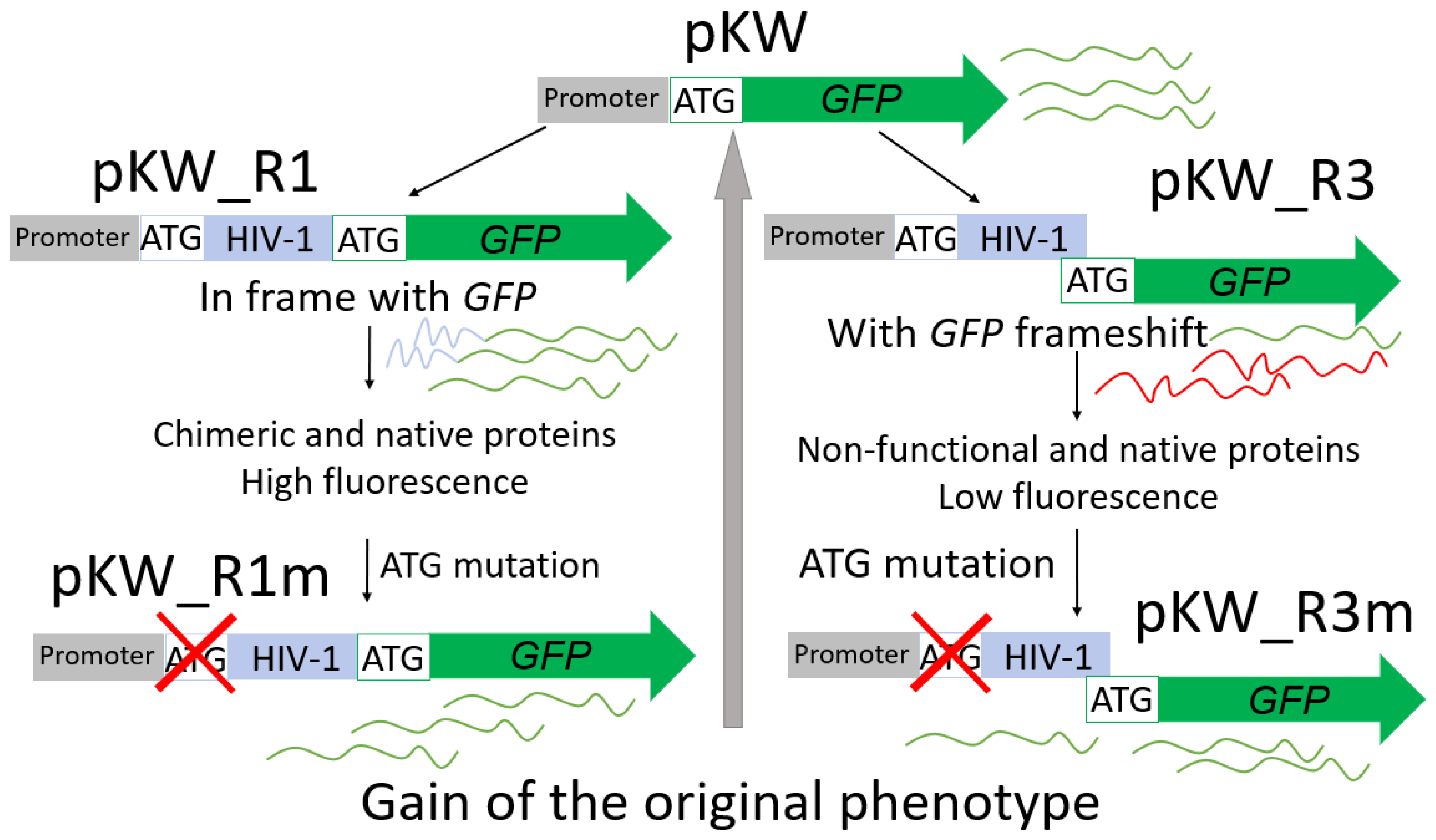
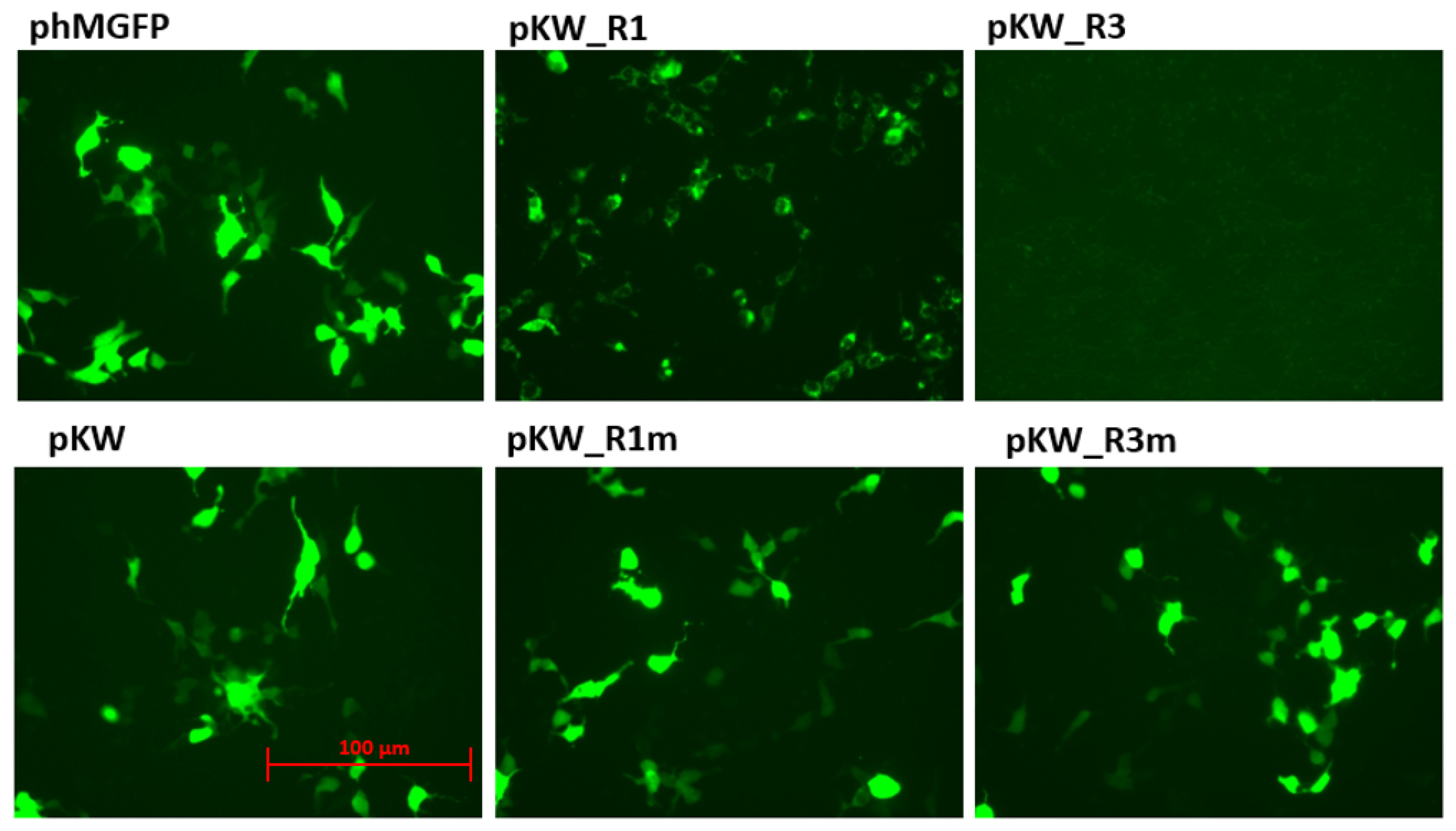
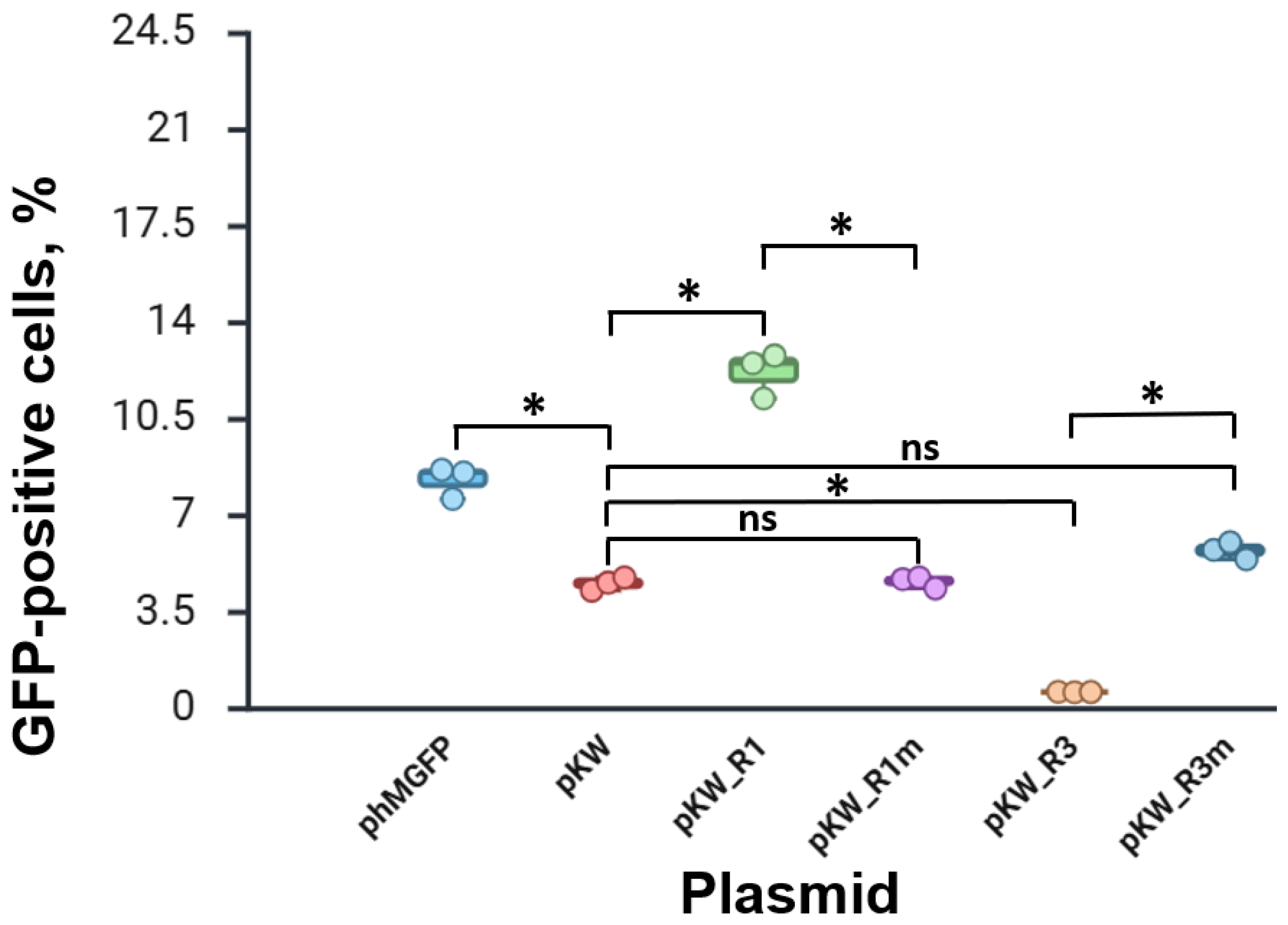
3.1. Plasmids for Screening Cas Protein–DNA Interactions
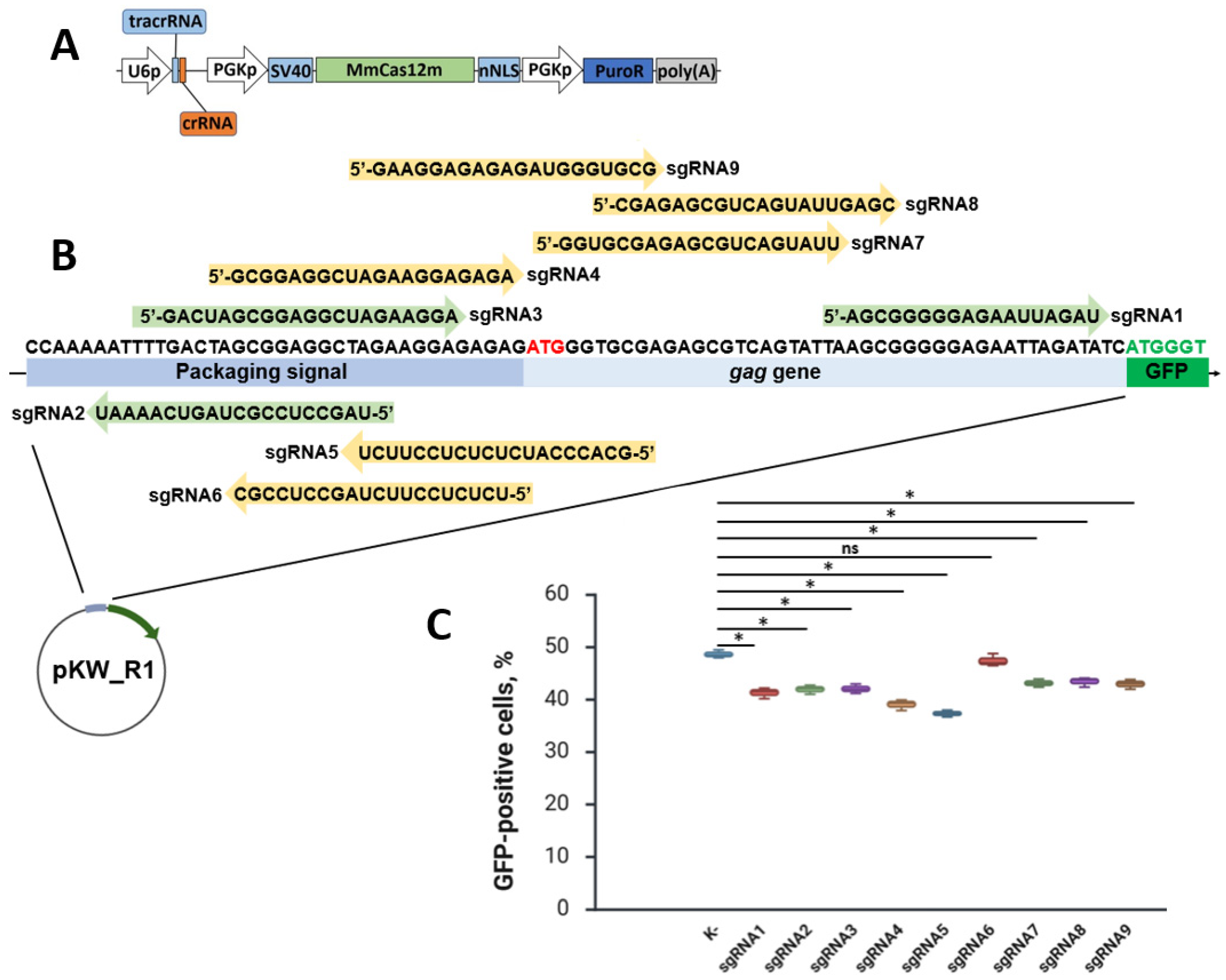
3.2. In Vitro Testing of sgRNAs for Targeting MmCas12m to the Gag Start Codon Region
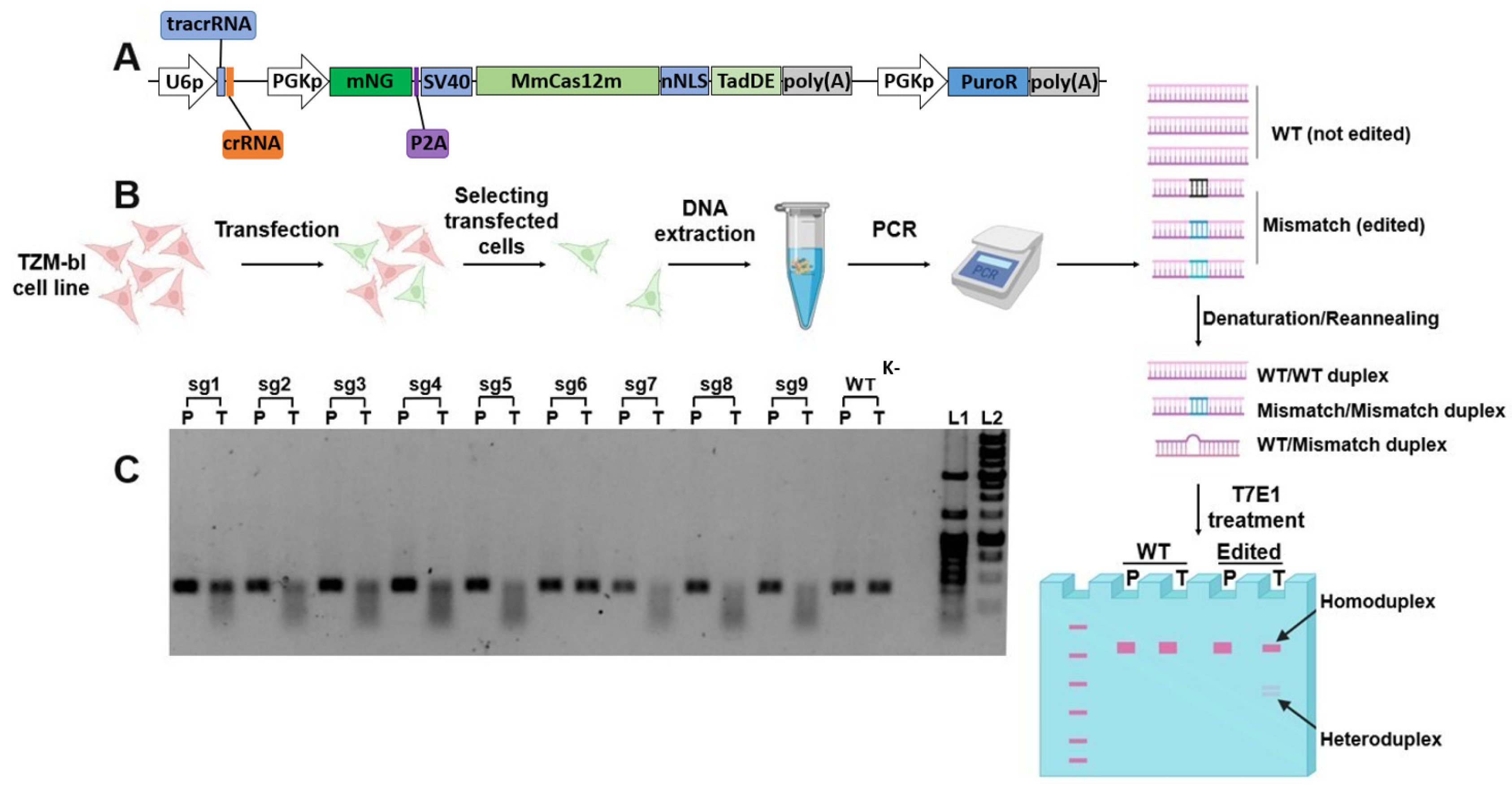
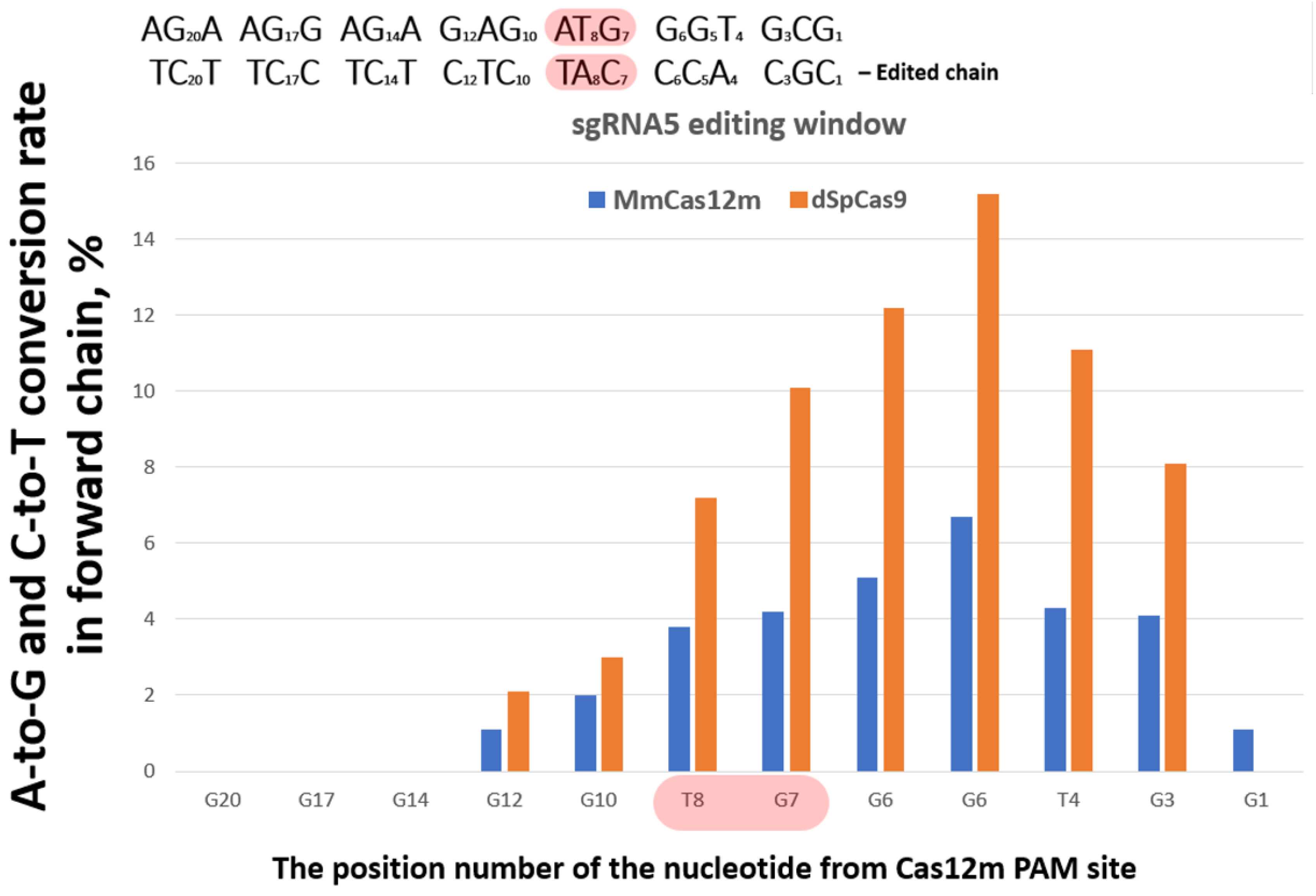
3.3. The TZM-bl Genome Editing
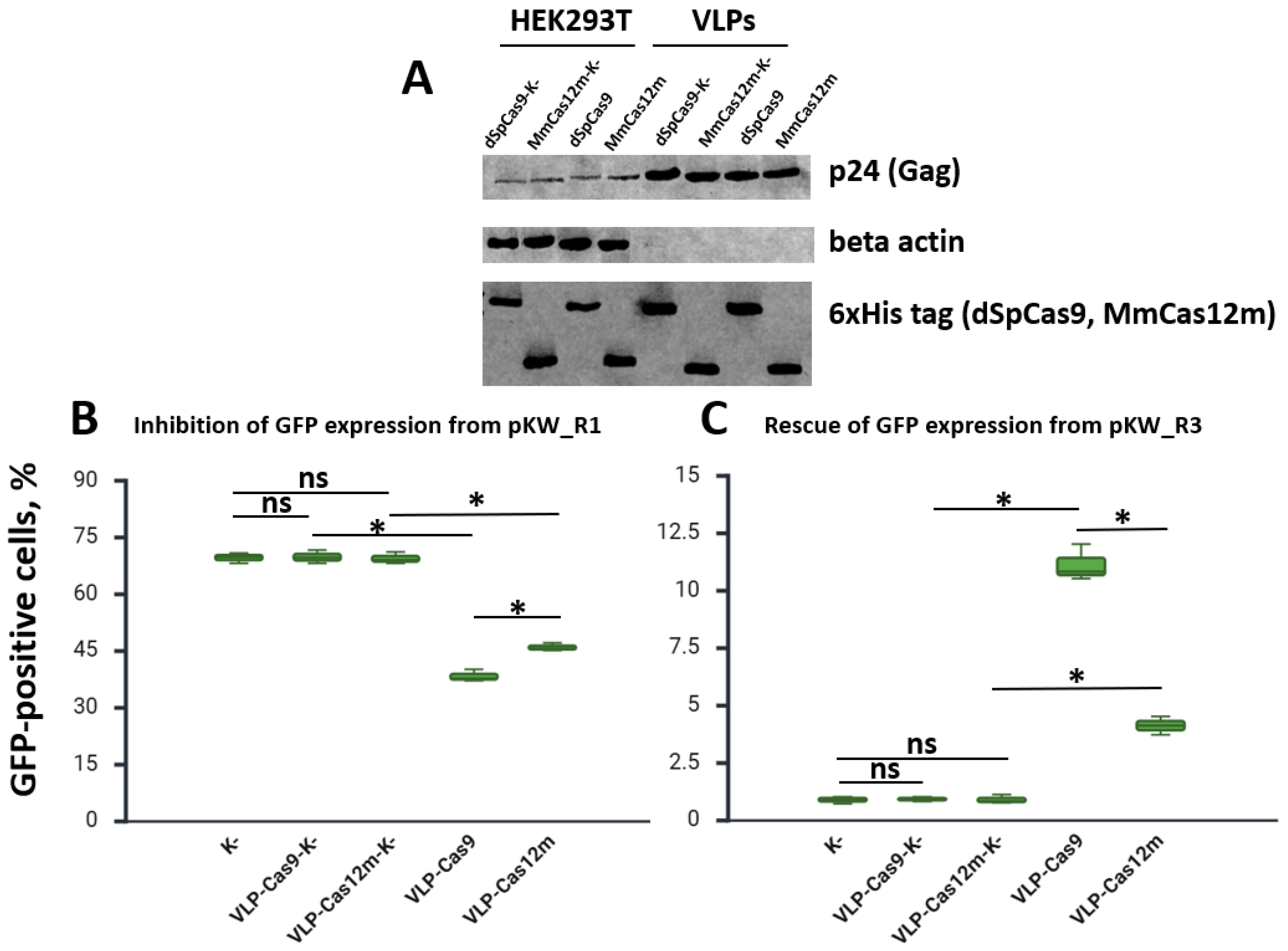
3.4. VLP-MmCas12m-TadDE Creation
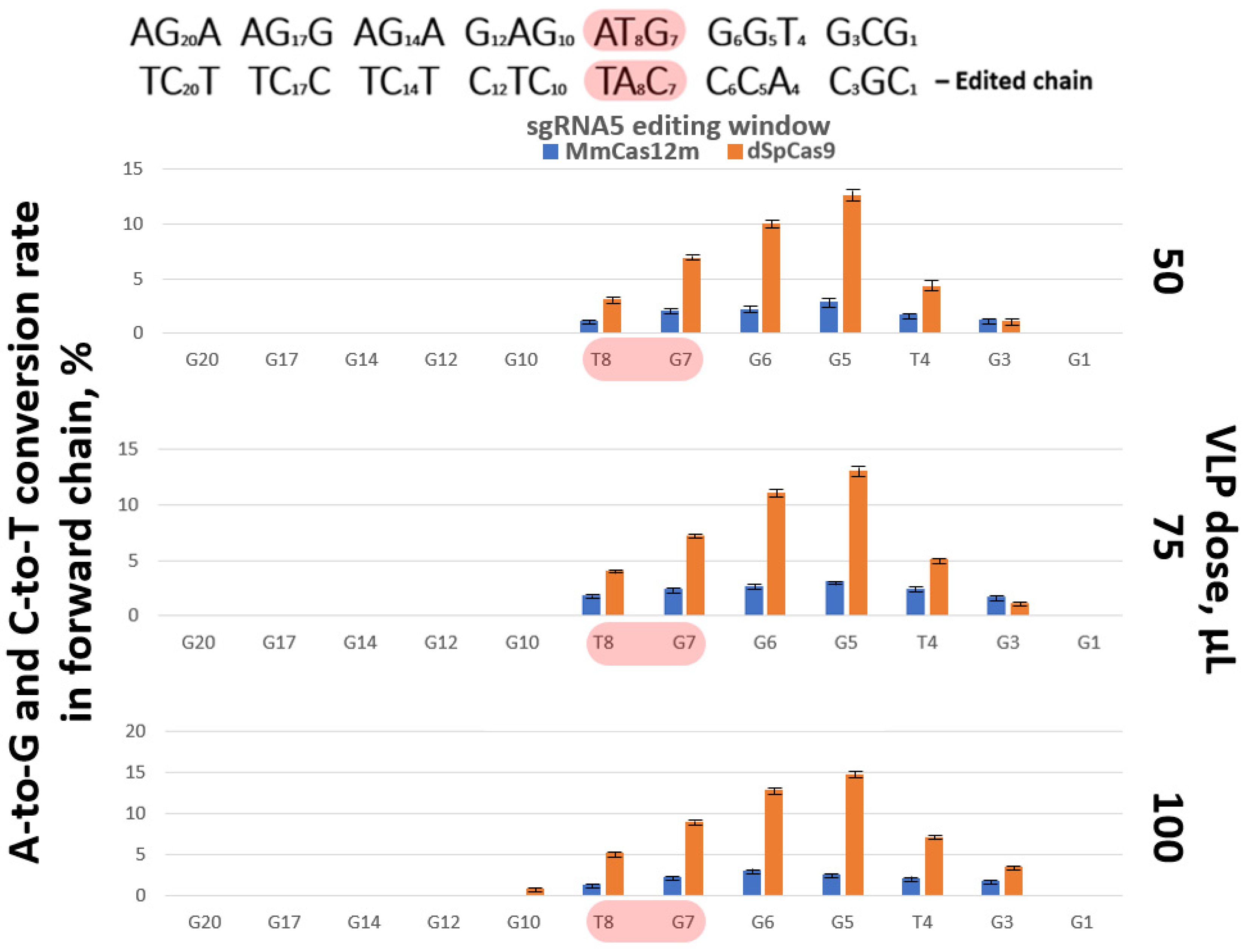
3.5. VLP-Mediated Genome Editing
4. Discussion
5. Conclusions
Supplementary Materials
Author Contributions
Funding
Institutional Review Board Statement
Informed Consent Statement
Data Availability Statement
Conflicts of Interest
Abbreviations
| VLPs | Virus-like particles |
| sgRNA | Single-guide RNA |
| AAV | Adeno-associated virus |
| HIV | Human immunodeficiency virus |
| VSV | Vesicular stomatitis virus |
| CMV | Cytomegalovirus |
| TadDE | TadA-8e dual base editor |
| LV | Lentivirus |
| FBS | Fetal bovine serum |
| GFP | Green fluorescent protein |
| NLS | Nuclear localization signal |
| NGS | Next-generation sequencing |
| PCR | Polymerase chain reaction |
| PBS | Phosphate-buffered saline |
| Tris | Tris(hydroxymethyl)aminomethane |
| SDS-PAGE | Sodium dodecyl sulfate–polyacrylamide gel electrophoresis |
| PAM | Protospacer adjacent motif |
References
- Nooraei, S.; Bahrulolum, H.; Hoseini, Z.S.; Katalani, C.; Hajizade, A.; Easton, A.J.; Ahmadian, G. Virus-like particles: Preparation, immunogenicity and their roles as nanovaccines and drug nanocarriers. J. Nanobiotechnol. 2021, 19, 59. [Google Scholar] [CrossRef]
- Martins, S.A.; Santos, J.; Silva, R.D.M.; Rosa, C.; Cabo Verde, S.; Correia, J.D.G.; Melo, R. How promising are HIV-1-based virus-like particles for medical applications. Front. Cell Infect. Microbiol. 2022, 12, 997875. [Google Scholar] [CrossRef]
- Jia, J.; Hao, Y.; Zhang, L.; Cao, X.; An, L.; Wang, H.; Ma, Q.; Jin, X.; Ma, X. Development and validation of optimized lentivirus-like particles for gene editing tool delivery with Gag-Only strategy. Eur. J. Med. Res. 2025, 30, 242. [Google Scholar] [CrossRef]
- Lyu, P.; Wang, L.; Lu, B. Virus-Like Particle Mediated CRISPR/Cas9 Delivery for Efficient and Safe Genome Editing. Life 2020, 10, 366. [Google Scholar] [CrossRef] [PubMed]
- Raguram, A.; An, M.; Chen, P.Z.; Liu, D.R. Directed evolution of engineered virus-like particles with improved production and transduction efficiencies. Nat. Biotechnol. 2025, 43, 1635–1647. [Google Scholar] [CrossRef]
- Choi, J.G.; Dang, Y.; Abraham, S.; Ma, H.; Zhang, J.; Guo, H.; Cai, Y.; Mikkelsen, J.G.; Wu, H.; Shankar, P.; et al. Lentivirus pre-packed with Cas9 protein for safer gene editing. Gene Ther. 2016, 23, 627–633. [Google Scholar] [CrossRef]
- Campbell, L.A.; Coke, L.M.; Richie, C.T.; Fortuno, L.V.; Park, A.Y.; Harvey, B.K. Gesicle-mediated delivery of CRISPR/Cas9 ribonucleoprotein complex for inactivating the HIV provirus. Mol. Ther. 2019, 27, 151–163. [Google Scholar] [CrossRef]
- Lyu, P.; Javidi-Parsijani, P.; Atala, A.; Lu, B. Delivering Cas9/sgRNA ribonucleoprotein (RNP) by lentiviral capsid-based bionanoparticles for efficient ‘hit-and-run’ genome editing. Nucleic Acids Res. 2019, 47, e99. [Google Scholar] [CrossRef] [PubMed]
- Mangeot, P.E.; Risson, V.; Fusil, F.; Marnef, A.; Laurent, E.; Blin, J.; Mournetas, V.; Massouridès, E.; Sohier, T.J.M.; Corbin, A.; et al. Genome editing in primary cells and in vivo using viral-derived Nanoblades loaded with Cas9–sgRNA ribonucleoproteins. Nat. Commun. 2019, 10, 45. [Google Scholar] [CrossRef]
- Gee, P.; Lung, M.S.Y.; Okuzaki, Y.; Sasakawa, N.; Iguchi, T.; Makita, Y.; Hozumi, H.; Miura, Y.; Yang, L.F.; Iwasaki, M.; et al. Extracellular nanovesicles for packaging of CRISPR–Cas9 protein and sgRNA to induce therapeutic exon skipping. Nat. Commun. 2020, 11, 1334. [Google Scholar] [CrossRef] [PubMed]
- Lu, C.; Li, Y.; Cummings, J.R.; Banskota, S. Delivery of genome editors with engineered virus-like particles. Methods Enzymol. 2025, 712, 475–516. [Google Scholar]
- Zoratto, S.; Weiss, V.U.; Friedbacher, G.; Buengener, C.; Pletzenauer, R.; Foettinger-Vacha, A.; Graninger, M.; Allmaier, G. Adeno-associated Virus Virus-like Particle Characterization via Orthogonal Methods: Nanoelectrospray Differential Mobility Analysis, Asymmetric Flow Field-Flow Fractionation, and Atomic Force Microscopy. ACS Omega 2021, 6, 16428–16437. [Google Scholar] [CrossRef] [PubMed]
- Wu, D.T.; Roth, M.J. MLV based viral-like-particles for delivery of toxic proteins and nuclear transcription factors. Biomaterials 2014, 35, 8416–8426. [Google Scholar] [CrossRef]
- Vahdat, M.M.; Hemmati, F.; Ghorbani, A.; Rutkowska, D.; Afsharifar, A.; Eskandari, M.H.; Rezaei, N.; Niazi, A. Hepatitis B core-based virus-like particles: A platform for vaccine development in plants. Biotechnol. Rep. 2021, 29, e00605. [Google Scholar]
- Banskota, S.; Raguram, A.; Suh, S.; Du, S.W.; Davis, J.R.; Choi, E.H.; Wang, X.; Nielsen, S.C.; Newby, G.A.; Randolph, P.B.; et al. Engineered virus-like particles for efficient in vivo delivery of therapeutic proteins. Cell 2022, 185, 250–265.e16. [Google Scholar] [CrossRef] [PubMed]
- Zuris, J.A.; Thompson, D.B.; Shu, Y.; Guilinger, J.P.; Bessen, J.L.; Hu, J.H.; Maeder, M.L.; Joung, J.K.; Chen, Z.Y.; Liu, D.R. Cationic lipid-mediated delivery of proteins enables efficient protein-based genome editing in vitro and in vivo. Nat. Biotechnol. 2015, 33, 73–80. [Google Scholar] [CrossRef]
- Rees, H.A.; Komor, A.C.; Yeh, W.H.; Caetano-Lopes, J.; Warman, M.; Edge, A.S.B.; Liu, D.R. Improving the DNA specificity and applicability of base editing through protein engineering and protein delivery. Nat. Commun. 2017, 8, 15790. [Google Scholar] [CrossRef]
- Ramos-Cela, M.; Forconi, V.; Antonelli, R.; Manenti, A.; Montomoli, E. Exploring the Use of Viral Vectors Pseudotyped with Viral Glycoproteins as Tools to Study Antibody-Mediated Neutralizing Activity. Microorganisms 2025, 13, 1785. [Google Scholar] [CrossRef]
- Ling, S.; Zhang, X.; Dai, Y.; Jiang, Z.; Zhou, X.; Lu, S.; Qian, X.; Liu, J.; Selfjord, N.; Satir, T.M.; et al. Customizable virus-like particles deliver CRISPR–Cas9 ribonucleoprotein for effective ocular neovascular and Huntington’s disease gene therapy. Nat. Nanotechnol. 2025, 20, 543–553. [Google Scholar] [CrossRef]
- Wu, W.Y.; Mohanraju, P.; Liao, C.; Adiego-Pérez, B.; Creutzburg, S.C.A.; Makarova, K.S.; Keessen, K.; Lindeboom, T.A.; Khan, T.S.; Prinsen, S.; et al. The miniature CRISPR-Cas12m effector binds DNA to block transcription. Mol. Cell 2022, 82, 4487–4502.e7. [Google Scholar] [CrossRef]
- Bigelyte, G.; Duchovska, B.; Zedaveinyte, R.; Sasnauskas, G.; Sinkunas, T.; Dalgediene, I.; Tamulaitiene, G.; Silanskas, A.; Kazlauskas, D.; Valančauskas, L.; et al. Innate programmable DNA binding by CRISPR-Cas12m effectors enable efficient base editing. Nucleic Acids Res. 2024, 52, 3234–3248. [Google Scholar] [CrossRef] [PubMed]
- Neugebauer, M.E.; Hsu, A.; Arbab, M.; Krasnow, N.A.; McElroy, A.N.; Pandey, S.; Doman, J.L.; Huang, T.P.; Raguram, A.; Banskota, S.; et al. Evolution of an adenine base editor into a small, efficient cytosine base editor with low off-target activity. Nat. Biotechnol. 2023, 41, 673–685. [Google Scholar] [CrossRef]
- Borovikova, S.E.; Shepelev, M.V.; Mazurov, D.V.; Kruglova, N.A. Efficient Genome Editing Using ‘NanoMEDIC’ AsCas12a-VLPs Produced with Pol II-Transcribed crRNA. Int. J. Mol. Sci. 2024, 25, 12768. [Google Scholar] [CrossRef]
- ter Brake, O.; Konstantinova, P.; Ceylan, M.; Berkhout, B. Silencing of HIV-1 with RNA interference: A multiple shRNA approach. Mol. Ther. 2006, 14, 883–892. [Google Scholar] [CrossRef] [PubMed]
- Resh, M.D. Intracellular trafficking of HIV-1 Gag: How Gag interacts with cell membranes and makes viral particles. AIDS Rev. 2005, 7, 84–91. [Google Scholar] [PubMed]
- Yin, S.; Zhang, M.; Liu, Y.; Sun, X.; Guan, Y.; Chen, X.; Yang, L.; Huo, Y.; Yang, J.; Zhang, X.; et al. Engineering of efficiency-enhanced Cas9 and base editors with improved gene therapy efficacies. Mol. Ther. 2023, 31, 744–759. [Google Scholar] [CrossRef]
- Kempton, H.R.; Love, K.S.; Guo, L.Y.; Qi, L.S. Scalable biological signal recording in mammalian cells using Cas12a base editors. Nat. Chem. Biol. 2022, 18, 742–750. [Google Scholar] [CrossRef]
- Standage-Beier, K.; Tekel, S.J.; Brookhouser, N.; Schwarz, G.; Nguyen, T.; Wang, X.; Brafman, D.A. A transient reporter for editing enrichment (TREE) in human cells. Nucleic Acids Res. 2019, 47, e120. [Google Scholar] [CrossRef]
- Jiang, L.; Long, J.; Yang, Y.; Zhou, L.; Su, J.; Qin, F.; Tang, W.; Tao, R.; Chen, Q.; Yao, S. Internally inlaid SaCas9 base editors enable window specific base editing. Theranostics 2022, 12, 4767–4778. [Google Scholar] [CrossRef]
- Nguyen Tran, M.T.; Mohd Khalid, M.K.N.; Wang, Q.; Walker, J.K.R.; Lidgerwood, G.E.; Dilworth, K.L.; Lisowski, L.; Pébay, A.; Hewitt, A.W. Engineering domain-inlaid SaCas9 adenine base editors with reduced RNA off-targets and increased on-target DNA editing. Nat. Commun. 2020, 11, 4871. [Google Scholar] [CrossRef]
- Zhang, X.; Tao, C.; Li, M.; Zhang, S.; Liang, P.; Huang, Y.; Liu, H.; Wang, Y. Engineering of SauriCas9 with enhanced specificity. Mol. Ther. Nucleic Acids 2025, 36, 102455. [Google Scholar] [CrossRef] [PubMed]
- Li, X.; Wang, Y.; Liu, Y.; Yang, B.; Wang, X.; Wei, J.; Lu, Z.; Zhang, Y.; Wu, J.; Huang, X.; et al. Base editing with a Cpf1–cytidine deaminase fusion. Nat. Biotechnol. 2018, 36, 324–327. [Google Scholar] [CrossRef] [PubMed]
- Chen, F.; Lian, M.; Ma, B.; Gou, S.; Luo, X.; Yang, K.; Shi, H.; Xie, J.; Ge, W.; Ouyang, Z.; et al. Multiplexed base editing through Cas12a variant-mediated cytosine and adenine base editors. Commun. Biol. 2022, 5, 1163. [Google Scholar] [CrossRef]
- Yoon, D.E.; Kim, N.R.; Park, S.J.; Jeong, T.Y.; Eun, B.; Cho, Y.; Lim, S.Y.; Lee, H.; Seong, J.K.; Kim, K. Precise base editing without unintended indels in human cells and mouse primary myoblasts. Exp. Mol. Med. 2023, 55, 2586–2595. [Google Scholar] [CrossRef] [PubMed]





| Plasmid Name | Description |
|---|---|
| psPAX2 (#12260, Addgene) | Lentiviral packaging plasmid |
| pCMV-VSV-G (#8454, Addgene) | Lentiviral envelope plasmid |
| pLenti CMV GFP Puro (#17448, Addgene) | Lentiviral transfer plasmid |
| dSpCas9 (#201953, Addgene) | Mammalian expression plasmid of catalytically inactive SpCas9 |
| SpCas9_sgRNA (#122089, Addgene) | U6 driven sgRNA expression vector for cloning own guides |
| phMGFP | Codes green fluorescent protein under the control of the CMV promoter |
| pKW | Identical to phMGFP, but Kozak sequence has been replaced from GCCACCAUG to GATATCAUG |
| pKW_R1 | Identical to pKW, but contains a gag gene fragment of the HIV genome in-frame with GFP |
| pKW_R1m | Identical to pKW_R1, but contains a mutation in the start codon of the gag gene fragment |
| pKW_R3 | Identical to pKW, but contains a gag gene fragment of the HIV genome with reading frameshift of GFP |
| pKW_R3m | Identical to pKW_R3, but contains a mutation in the start codon of the gag gene |
| pMmCas12m-sgRNAN | Codes sgRNA and MmCas12m, N is number of sgRNAs |
| pdSpCas9-sgRNAN | Codes sgRNA and catalytically inactive SpCas9, N is number of sgRNAs |
| pMmCas12m-TadDE-sgRNAN | Codes sgRNA, MmCas12m and TadA-8e dual base editor (TadDE), N is number of sgRNAs |
| pdSpCas9-TadDE-sgRNAN | Codes sgRNA, catalytically inactive SpCas9 and TadA-8e dual base editor (TadDE), N is number of sgRNAs |
| pGag-MmCas12m-TadDE | Codes VLP-Cas12m-TadDE components fused with 6×His tag |
| pGag-dSpCas9-TadDE | Codes VLP-dSpCas9-TadDE components fused with 6×His tag |
| psgRNA-MmCas12m | U6-driven MmCas12m sgRNA expression vector for cloning own guides for VLP production |
| psgRNA-dSpCas9 | U6-driven SpCas9 sgRNA expression vector for cloning own guides for VLP production |
Disclaimer/Publisher’s Note: The statements, opinions and data contained in all publications are solely those of the individual author(s) and contributor(s) and not of MDPI and/or the editor(s). MDPI and/or the editor(s) disclaim responsibility for any injury to people or property resulting from any ideas, methods, instructions or products referred to in the content. |
© 2026 by the authors. Licensee MDPI, Basel, Switzerland. This article is an open access article distributed under the terms and conditions of the Creative Commons Attribution (CC BY) license.
Share and Cite
Aliev, T.; Imatdinov, A.; Prudnikova, E.; Taranov, O.; Emtsova, K.; Imatdinov, I.; Agafonov, A. The Disruption of the HIV-1 Gag Start Codon via Editing Using MmCas12m-Dual Base Editor-Loaded Virus-like Particles. Curr. Issues Mol. Biol. 2026, 48, 241. https://doi.org/10.3390/cimb48030241
Aliev T, Imatdinov A, Prudnikova E, Taranov O, Emtsova K, Imatdinov I, Agafonov A. The Disruption of the HIV-1 Gag Start Codon via Editing Using MmCas12m-Dual Base Editor-Loaded Virus-like Particles. Current Issues in Molecular Biology. 2026; 48(3):241. https://doi.org/10.3390/cimb48030241
Chicago/Turabian StyleAliev, Timur, Almaz Imatdinov, Elena Prudnikova, Oleg Taranov, Ksenia Emtsova, Ilnaz Imatdinov, and Alexander Agafonov. 2026. "The Disruption of the HIV-1 Gag Start Codon via Editing Using MmCas12m-Dual Base Editor-Loaded Virus-like Particles" Current Issues in Molecular Biology 48, no. 3: 241. https://doi.org/10.3390/cimb48030241
APA StyleAliev, T., Imatdinov, A., Prudnikova, E., Taranov, O., Emtsova, K., Imatdinov, I., & Agafonov, A. (2026). The Disruption of the HIV-1 Gag Start Codon via Editing Using MmCas12m-Dual Base Editor-Loaded Virus-like Particles. Current Issues in Molecular Biology, 48(3), 241. https://doi.org/10.3390/cimb48030241