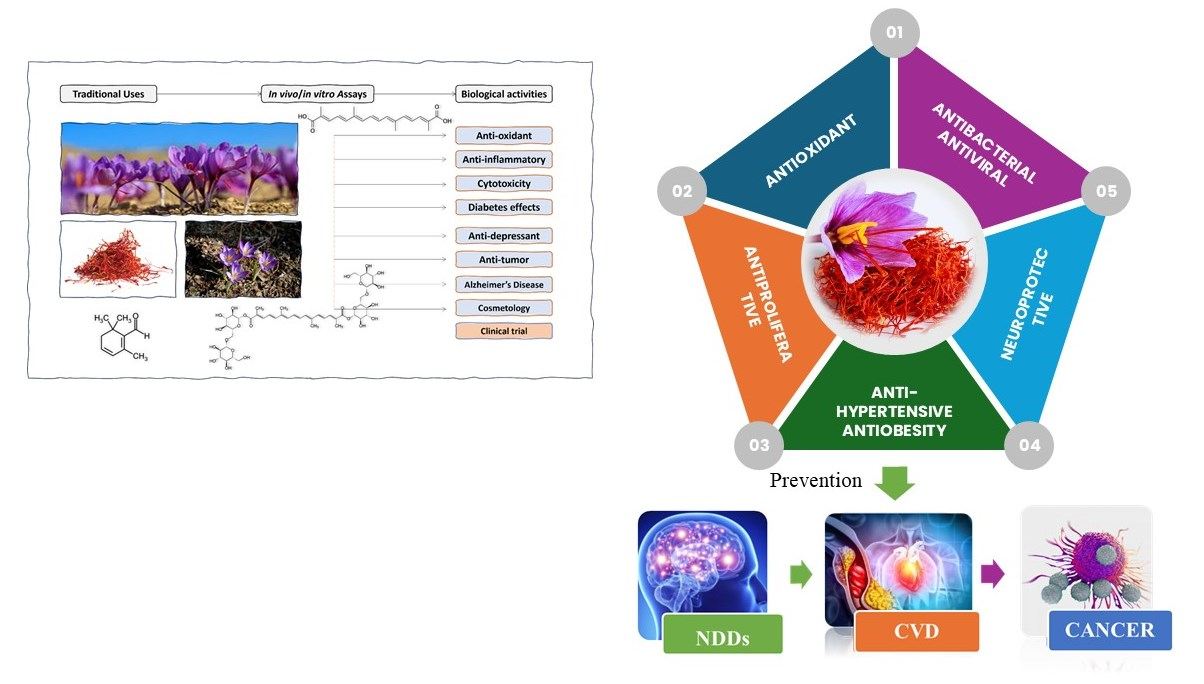
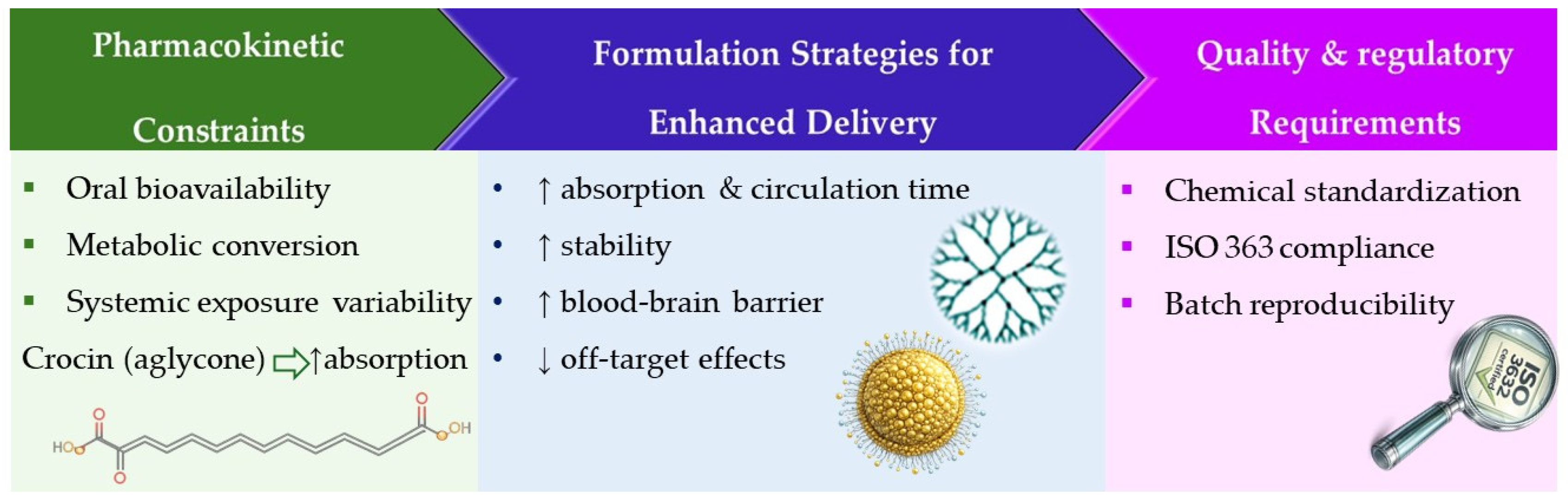
From Stigma to Therapy: Pharmacological Insights into Saffron Bioactives for Major Non-Communicable Diseases

 ,
,  , ,
, ,  ,
,  and
and
Abstract
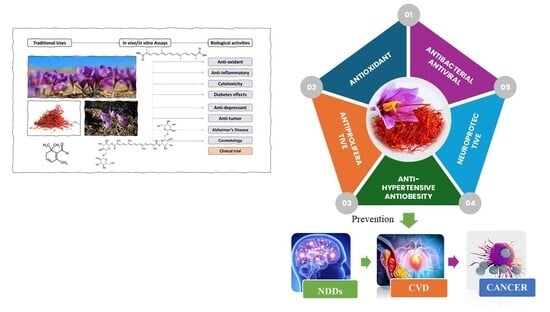
1. Introduction
2. Method
3. BACs with Pharmaceutical Relevance
4. Pharmacological Effects of Saffron in Non-Communicable Diseases
4.1. Neurodegenerative and Neuropsychiatric Disorders
4.1.1. Alzheimer’s Disease
4.1.2. Parkinson’s Disease
4.1.3. Multiple Sclerosis
4.1.4. Cerebral Ischemia
4.1.5. Mental Illness
4.2. Oncological Disease
4.3. Cardiovascular and Metabolic Disorders
5. Pharmacokinetics, Bioavailability, Formulation Challenges, and Toxicological Considerations of Saffron BACs
6. Conclusions
Author Contributions
Funding
Institutional Review Board Statement
Informed Consent Statement
Data Availability Statement
Conflicts of Interest
Abbreviations
| Aβ | amyloid beta |
| BACs | bioactive compounds |
| BDNF | brain-derived neurotrophic factor |
| G6Pase | glucose 6-phosphatase |
| GABAergic | gamma-aminobutyric acid neurotransmission-related |
| HMGR | 3-hydroxy-3-methylglutaryl-CoA reductase |
| MACC1 | metastasis-associated in colon cancer 1 |
| MAPK | mitogen-activated protein kinase |
| MMP | matrix metalloproteinase |
| NF-κB | nuclear factor kappa B |
| Nrf2 | nuclear factor erythroid 2-related factor 2 |
| PCNA | proliferating cell nuclear antigen |
| PCSK9 | proprotein convertase subtilisin/kexin type 9 |
| PI3K/Akt | phosphatidylinositol 3-kinase/protein kinase B |
| SIRT1 | sirtuin 1 |
| SSRI | selective serotonin reuptake inhibitors |
| TGF-β1 | transforming growth factor beta-1 |
| TIMP | tissue inhibitor of metalloproteinase-1 |
| TNF-α | tumor necrosis factor alpha |
| VEGF | vascular endothelial growth factor |
References
- Elfardi, Y.R.; El Boukhari, R.; Fatimi, A.; Bouissane, L. The Multifaceted Therapeutic Potential of Saffron: An Overview Based on Research and Patents. Drugs Drug Candidates 2024, 3, 437–454. [Google Scholar] [CrossRef]
- Marrone, G.; Urciuoli, S.; Di Lauro, M.; Cornali, K.; Montalto, G.; Masci, C.; Vanni, G.; Tesauro, M.; Vignolini, P.; Noce, A. Saffron (Crocus sativus L.) and Its By-Products: Healthy Effects in Internal Medicine. Nutrients 2024, 16, 2319. [Google Scholar] [CrossRef]
- Spence, C. Saffron: The Colourful Spice. Int. J. Gastron. Food Sci. 2023, 34, 100821. [Google Scholar] [CrossRef]
- Acharya, B.S.; Ghalehgolabbehbahani, A.; Hamido, S.; Zinati, G.; Bozzolo, A.; Archer, L.; Wendelberger, K.; Das, S.; Thapa, R.; Panday, D. Saffron (Crocus sativus L.): The Golden Spice—Management, Challenges, and Opportunities for Sustainable Production in the United States. J. Agric. Food Res. 2025, 21, 101970. [Google Scholar] [CrossRef]
- Chauhan, S.; Tiwari, A.; Verma, A.; Padhan, P.K.; Verma, S.; Gupta, P.C. Exploring the Potential of Saffron as a Therapeutic Agent in Depression Treatment: A Comparative Review. Yale J. Biol. Med. 2024, 97, 365–381. [Google Scholar] [CrossRef]
- Sut, S.; Gherardi, G.; Ruzza, F.; Caudullo, G.; Shrestha, S.S.; Sorrenti, V.; Dall’Acqua, S. Saffron the “Red Gold” and Its CNS Activity: A Challenge for Future Applications in Nutraceuticals. J. Food Biochem. 2024, 2024, 6672608. [Google Scholar] [CrossRef]
- Ziani, A.; Bekkouch, O.; Ouahhoud, S.; Baddaoui, S.; Ben’Mbarek, S.; Bekkouch, A.; Khoulati, A.; Jaouadi, B.; Choi, J.; Choi, M.; et al. Phytochemistry, Biological Activities, Molecular Mechanisms, and Toxicity of Saffron (Crocus sativus L.): A Comprehensive Overview. Antioxidants 2025, 14, 1433. [Google Scholar] [CrossRef] [PubMed]
- Di Paolo, M.; Corsi, F.; Cerri, C.; Bisti, S.; Piano, I.; Gargini, C. A Window to the Brain: The Retina to Monitor the Progression and Efficacy of Saffron Repron® Pre-Treatment in an LPS Model of Neuroinflammation and Memory Impairment. Pharmaceuticals 2023, 16, 1307. [Google Scholar] [CrossRef]
- El Midaoui, A.; Ghzaiel, I.; Vervandier-Fasseur, D.; Ksila, M.; Zarrouk, A.; Nury, T.; Khallouki, F.; El Hessni, A.; Ibrahimi, S.O.; Latruffe, N.; et al. Saffron (Crocus sativus L.): A Source of Nutrients for Health and for the Treatment of Neuropsychiatric and Age-Related Diseases. Nutrients 2022, 14, 597. [Google Scholar] [CrossRef]
- Paudel, P.; Gharai, P.K. Crocin Modified Drugs for Neuronal Trans-Differentiation: A Future Regenerative Approach. Sci. Pharm. 2026, 94, 6. [Google Scholar] [CrossRef]
- Gandomzadeh, D.; Saeidirad, M.H.; Sabeghi, Y.; Rohani, A.; Azarpazhooh, E.; Saeidirad, Y.; Ramaswamy, H.S. A Comprehensive Review of Drying Techniques and Quality for Saffron. J. Food Meas. Charact. 2024, 18, 8218–8232. [Google Scholar] [CrossRef]
- Tang, Y.; Yang, H.; Yu, J.; Li, Z.; Xu, Q.; Xu, Q.; Jia, G.; Sun, N. Network Pharmacology-Based Prediction and Experimental Verification of the Involvement of the PI3K/Akt Pathway in the Anti-Thyroid Cancer Activity of Crocin. Arch. Biochem. Biophys. 2023, 743, 109643. [Google Scholar] [CrossRef]
- Xu, Q.; Yu, J.; Jia, G.; Li, Z.; Xiong, H. Crocin Attenuates NF-ΚB-Mediated Inflammation and Proliferation in Breast Cancer Cells by down-Regulating PRKCQ. Cytokine 2022, 154, 155888. [Google Scholar] [CrossRef]
- Bej, E.; Volpe, A.R.; Cesare, P.; Cimini, A.; d’Angelo, M.; Castelli, V. Therapeutic Potential of Saffron in Brain Disorders: From Bench to Bedside. Phytother. Res. 2024, 38, 2482–2495. [Google Scholar] [CrossRef] [PubMed]
- Manhas, D.; Dhiman, S.; Kour, H.; Kour, D.; Sharma, K.; Wazir, P.; Vij, B.; Kumar, A.; Sawant, S.D.; Ahmed, Z.; et al. ADME/PK Insights of Crocetin: A Molecule Having an Unusual Chemical Structure with Druglike Features. ACS Omega 2024, 9, 21494–21509. [Google Scholar] [CrossRef]
- García, C.J.; Beltrán, D.; Frutos-Lisón, M.D.; García-Conesa, M.T.; Tomás-Barberán, F.A.; García-Villalba, R. New Findings in the Metabolism of the Saffron Apocarotenoids, Crocins and Crocetin, by the Human Gut Microbiota. Food Funct. 2024, 15, 9315–9329. [Google Scholar] [CrossRef]
- Singh, S.; Sharma, K. Review on the Phytochemistry and Pharmacological Potential of Saffron (Crocus sativus L.). Curr. Top. Med. Chem. 2025, 25, 1999–2018. [Google Scholar] [CrossRef]
- Gupta, V.; Jamwal, G.; Rai, G.K.; Gupta, S.K.; Shukla, R.M.; Dadrwal, B.K.; Prabhakar, P.; Tripathy, S.; Rajpoot, S.K.; Singh, A.K.; et al. Biosynthesis of Biomolecules from Saffron as an Industrial Crop and Their Regulation, with Emphasis on the Chemistry, Extraction Methods, Identification Techniques, and Potential Applications in Human Health and Food: A Critical Comprehensive Review. Biocatal. Agric. Biotechnol. 2024, 59, 103260. [Google Scholar] [CrossRef]
- Mir, R.A.; Tyagi, A.; Hussain, S.J.; Almalki, M.A.; Zeyad, M.T.; Deshmukh, R.; Ali, S. Saffron, a Potential Bridge between Nutrition and Disease Therapeutics: Global Health Challenges and Therapeutic Opportunities. Plants 2024, 13, 1467. [Google Scholar] [CrossRef] [PubMed]
- Rasi Marzabadi, L.; Fazljou, S.M.B.; Araj-Khodaei, M.; Sadigh-Eteghad, S.; Naseri, A.; Talebi, M. Saffron Reduces Some Inflammation and Oxidative Stress Markers in Donepezil-Treated Mild-to-Moderate Alzheimer’s Disease Patients: A Randomized Double-Blind Placebo-Control Trial. J. Herb. Med. 2022, 34, 100574. [Google Scholar] [CrossRef]
- Mazani, M.; Mahdavifard, S.; Koohi, A. Crocetin Ameliorative Effect on Diabetic Nephropathy in Rats through a Decrease in Transforming Growth Factor-β and an Increase in Glyoxalase-I Activity. Clin. Nutr. ESPEN 2023, 58, 61–66. [Google Scholar] [CrossRef] [PubMed]
- Wani, A.; Al Rihani, S.B.; Sharma, A.; Weadick, B.; Govindarajan, R.; Khan, S.U.; Sharma, P.R.; Dogra, A.; Nandi, U.; Reddy, C.N.; et al. Crocetin Promotes Clearance of Amyloid-β by Inducing Autophagy via the STK11/LKB1-Mediated AMPK Pathway. Autophagy 2021, 17, 3813–3832. [Google Scholar] [CrossRef]
- Baluchnejadmojarad, T.; Mohamadi-Zarch, S.-M.; Roghani, M. Safranal, an Active Ingredient of Saffron, Attenuates Cognitive Deficits in Amyloid β-Induced Rat Model of Alzheimer’s Disease: Underlying Mechanisms. Metab. Brain Dis. 2019, 34, 1747–1759. [Google Scholar] [CrossRef]
- Jiang, X.; Li, Y.; Feng, J.; Nik Nabil, W.N.; Wu, R.; Lu, Y.; Liu, H.; Xi, Z.; Xu, H. Safranal Prevents Prostate Cancer Recurrence by Blocking the Re-Activation of Quiescent Cancer Cells via Downregulation of S-Phase Kinase-Associated Protein 2. Front. Cell Dev. Biol. 2020, 8, 598620. [Google Scholar] [CrossRef]
- Esmaealzadeh, D.; Moodi Ghalibaf, A.; Shariati Rad, M.; Rezaee, R.; Razavi, B.M.; Hosseinzadeh, H. Pharmacological Effects of Safranal: An Updated Review. Iran. J. Basic Med. Sci. 2023, 26, 1131–1143. [Google Scholar] [CrossRef]
- Frattaruolo, L.; Marra, F.; Lauria, G.; Siciliano, C.; Curcio, R.; Muto, L.; Brindisi, M.; Aiello, D.; Napoli, A.; Fiermonte, G.; et al. A Picrocrocin-Enriched Fraction from a Saffron Extract Affects Lipid Homeostasis in HepG2 Cells through a Non-Statin-like Mode. Int. J. Mol. Sci. 2023, 24, 3060. [Google Scholar] [CrossRef] [PubMed]
- Tufail, T.; Ain, H.B.U.; Ikram, A.; Arshad, M.T.; Abdullahi, M.A. Functional, Nutraceutical and Health Endorsing Perspectives of Saffron. Food Sci. Nutr. 2025, 13, e70721. [Google Scholar] [CrossRef]
- Li, L.; Wang, K. Integrative Effects of Saffron and Physical Activity on Endurance Performance, Quality of Life, Cognitive, Emotional, and Metabolic Outcomes in Age-Related and Neurodegenerative Diseases. Front. Nutr. 2025, 12, 1698135. [Google Scholar] [CrossRef] [PubMed]
- Khan, M.; Hearn, K.; Parry, C.; Rashid, M.; Brim, H.; Ashktorab, H.; Kwabi-Addo, B. Mechanism of Antitumor Effects of Saffron in Human Prostate Cancer Cells. Nutrients 2023, 16, 114. [Google Scholar] [CrossRef]
- Ghodrati Shahtouri, M.; Fooladi, E.; Feizy, J.; Jahani, M.; Marrazza, G. Valorization of Saffron Production Waste: Isolation of Anthocyanins from Saffron Petal Extract by Zirconium-Based Adsorbents. LWT 2024, 201, 116233. [Google Scholar] [CrossRef]
- Sánchez-Vioque, R.; Girón-Calle, J.; Alaiz, M.; Vioque-Peña, J.; Mena-Morales, A.; García-Romero, E.; Marchante-Cuevas, L.; Ortiz de Elguea-Culebras, G. Isolation of a Novel Bioactive Fraction from Saffron (Crocus sativus L.) Leaf Waste: Optimized Extraction and Evaluation of Its Promising Antiproliferative and Chemoprotective Effects as a Plant-Based Antitumor Agent. Appl. Sci. 2025, 15, 7376. [Google Scholar] [CrossRef]
- Long, Y.; Tao, H.; Wang, S.; Xing, B.; Wang, Z.; Liu, K.; Shao, Q.; Gao, F. Identification and Functional Validation of Two Novel Antioxidant Peptides in Saffron. Antioxidants 2024, 13, 378. [Google Scholar] [CrossRef]
- Koulakiotis, N.S.; Purhonen, P.; Gikas, E.; Hebert, H.; Tsarbopoulos, A. Crocus-Derived Compounds Alter the Aggregation Pathway of Alzheimer’s Disease—Associated Beta Amyloid Protein. Sci. Rep. 2020, 10, 18150. [Google Scholar] [CrossRef] [PubMed]
- Wang, J.; Ke, Y.; Shu, T. Crocin Has Pharmacological Effects against the Pathological Behavior of Colon Cancer Cells by Interacting with the STAT3 Signaling Pathway. Exp. Ther. Med. 2019, 19, 1297–1303. [Google Scholar] [CrossRef]
- Hadipour, M.; Meftahi, G.H.; Afarinesh, M.R.; Jahromi, G.P.; Hatef, B. Crocin Attenuates the Granular Cells Damages on the Dentate Gyrus and Pyramidal Neurons in the CA3 Regions of the Hippocampus and Frontal Cortex in the Rat Model of Alzheimer’s Disease. J. Chem. Neuroanat. 2021, 113, 101837. [Google Scholar] [CrossRef]
- Tamegart, L.; Abbaoui, A.; Makbal, R.; Zroudi, M.; Bouizgarne, B.; Bouyatas, M.M.; Gamrani, H. Crocus sativus Restores Dopaminergic and Noradrenergic Damages Induced by Lead in Meriones Shawi: A Possible Link with Parkinson’s Disease. Acta Histochem. 2019, 121, 171–181. [Google Scholar] [CrossRef]
- Mohammad Soleymani, S.; Assarzadegan, F.; Habibi, S.A.H.; Mahboubi, A.; Esmaily, H. The Effect of Crocin on Movement Disorders and Oxidative DNA Damage in Parkinson’s Disease: Insights from a Randomized Controlled Trial. Park. Relat. Disord. 2024, 126, 107051. [Google Scholar] [CrossRef]
- Salama, R.M.; Abdel-Latif, G.A.; Abbas, S.S.; El Magdoub, H.M.; Schaalan, M.F. Neuroprotective Effect of Crocin against Rotenone-Induced Parkinson’s Disease in Rats: Interplay between PI3K/Akt/MTOR Signaling Pathway and Enhanced Expression of MiRNA-7 and MiRNA-221. Neuropharmacology 2020, 164, 107900. [Google Scholar] [CrossRef]
- Tashakori, A.; Hassanpour, S.; Vazir, B. Protective Effect of Crocin on Cuprizone-Induced Model of Multiple Sclerosis in Mice. Naunyn Schmiedebergs Arch. Pharmacol. 2023, 396, 1713–1725. [Google Scholar] [CrossRef] [PubMed]
- Rezaeimanesh, N.; Rafiee, P.; Saeedi, R.; Khosravian, P.; Sahraian, M.A.; Eskandarieh, S.; Moghadasi, A.N.; Jahromi, S.R. The Effect of Crocin-Selenium Nanoparticles on the Cognition and Oxidative Stress Markers of Multiple Sclerosis Patients: A Randomized Triple-Blinded Placebo-Controlled Clinical Trial. BioMetals 2024, 37, 305–319. [Google Scholar] [CrossRef] [PubMed]
- Ghasemi Sakha, F.; Azimi Saeen, A.; Moazzeni, S.M.; Etesam, F.; Vaezi, G. A Randomized, Triple-Blind Placebo-Controlled Trial to Determine the Effect of Saffron on the Serum Levels of MMP-9 and TIMP-1 in Patients with Multiple Sclerosis. Iran. J. Allergy Asthma Immunol. 2020, 19, 297–304. [Google Scholar] [CrossRef]
- Abdel-Rahman, R.F.; El Awdan, S.A.; Hegazy, R.R.; Mansour, D.F.; Ogaly, H.A.; Abdelbaset, M. Neuroprotective Effect of Crocus sativus against Cerebral Ischemia in Rats. Metab. Brain Dis. 2020, 35, 427–439. [Google Scholar] [CrossRef]
- Zhong, K.; Wang, R.-X.; Qian, X.-D.; Yu, P.; Zhu, X.-Y.; Zhang, Q.; Ye, Y.-L. Neuroprotective Effects of Saffron on the Late Cerebral Ischemia Injury through Inhibiting Astrogliosis and Glial Scar Formation in Rats. Biomed. Pharmacother. 2020, 126, 110041. [Google Scholar] [CrossRef]
- Asadollahi, M.; Nikdokht, P.; Hatef, B.; Sadr, S.S.; Sahraei, H.; Assarzadegan, F.; Pirzad Jahromi, G. Protective Properties of the Aqueous Extract of Saffron (Crocus sativus L.) in Ischemic Stroke, Randomized Clinical Trial. J. Ethnopharmacol. 2019, 238, 111833. [Google Scholar] [CrossRef] [PubMed]
- Wang, Y.; Zhou, S.; Song, X.; Ding, S.; Wang, B.; Wen, J.; Chen, C. Study on Antidepressant Effect and Mechanism of Crocin Mediated by the MTOR Signaling Pathway. Neurochem. Res. 2022, 47, 3126–3136. [Google Scholar] [CrossRef]
- Wauquier, F.; Boutin-Wittrant, L.; Pourtau, L.; Gaudout, D.; Moras, B.; Vignault, A.; Monchaux De Oliveira, C.; Gabaston, J.; Vaysse, C.; Bertrand, K.; et al. Circulating Human Serum Metabolites Derived from the Intake of a Saffron Extract (Safr’InsideTM) Protect Neurons from Oxidative Stress: Consideration for Depressive Disorders. Nutrients 2022, 14, 1511. [Google Scholar] [CrossRef] [PubMed]
- Orio, L.; Alen, F.; Ballesta, A.; Martin, R.; Gomez de Heras, R. Antianhedonic and Antidepressant Effects of Affron®, a Standardized Saffron (Crocus sativus L.) Extract. Molecules 2020, 25, 3207. [Google Scholar] [CrossRef]
- Amadieu, C.; Leyrolle, Q.; Farneti, M.; Anesi, A.; Bruchet, E.; Montet, J.; Dexpert, S.; Gaudout, D.; Mattivi, F.; Pourtau, L.; et al. Effect of Saffron Extract Supplementation on Mood in Healthy Adults with Subclinical Symptoms of Depression: A Randomized, Double-Blind Placebo-Controlled Study. Am. J. Clin. Nutr. 2025, 122, 1625–1635. [Google Scholar] [CrossRef]
- Ahmadpanah, M.; Ramezanshams, F.; Ghaleiha, A.; Akhondzadeh, S.; Sadeghi Bahmani, D.; Brand, S. Crocus sativus L. (Saffron) versus Sertraline on Symptoms of Depression among Older People with Major Depressive Disorders–a Double-Blind, Randomized Intervention Study. Psychiatry Res. 2019, 282, 112613. [Google Scholar] [CrossRef] [PubMed]
- Hamedani, S.G.-; Pourmasoumi, M.; Zarifi, S.H.; Askari, G.; Jamialahmadi, T.; Bagherniya, M.; Sahebkar, A. Therapeutic Effects of Saffron and Its Components on Neurodegenerative Diseases. Heliyon 2024, 10, e24334. [Google Scholar] [CrossRef]
- Ghaffari, S.; Roshanravan, N. Saffron; An Updated Review on Biological Properties with Special Focus on Cardiovascular Effects. Biomed. Pharmacother. 2019, 109, 21–27. [Google Scholar] [CrossRef]
- Hashemi, S.A.; Bathaie, S.Z.; Mohagheghi, M.A. Crocetin and Crocin Decreased Cholesterol and Triglyceride Content of Both Breast Cancer Tumors and Cell Lines. Avicenna J. Phytomed. 2020, 10, 384–397. [Google Scholar]
- Nasimian, A.; Farzaneh, P.; Tamanoi, F.; Bathaie, S.Z. Cytosolic and Mitochondrial ROS Production Resulted in Apoptosis Induction in Breast Cancer Cells Treated with Crocin: The Role of FOXO3a, PTEN and AKT Signaling. Biochem. Pharmacol. 2020, 177, 113999. [Google Scholar] [CrossRef] [PubMed]
- Chavoshi, H.; Taheri, M.; Wan, M.L.Y.; Sabzichi, M. Crocin-Loaded Liposomes Sensitize MDA-MB 231 Breast Cancer Cells to Doxorubicin by Inducing Apoptosis. Process Biochem. 2023, 130, 272–280. [Google Scholar] [CrossRef]
- Zarrineh, M.; Ashrafian, S.; Jensen, P.; Nawrocki, A.; Ansari, A.M.; Rezadoost, H.; Ghassempour, A.; Larsen, M.R. Comprehensive Proteomics and Sialiomics of the Anti-Proliferative Activity of Safranal on Triple Negative MDA-MB-231 Breast Cancer Cell Lines. J. Proteom. 2022, 259, 104539. [Google Scholar] [CrossRef]
- Arzi, L.; Hoshyar, R.; Jafarzadeh, N.; Riazi, G.; Sadeghizadeh, M. Anti-Metastatic Properties of a Potent Herbal Combination in Cell and Mice Models of Triple Negative Breast Cancer. Life Sci. 2020, 243, 117245. [Google Scholar] [CrossRef]
- Farahi, A.; Abedini, M.R.; Javdani, H.; Arzi, L.; Chamani, E.; Farhoudi, R.; Talebloo, N.; Hoshyar, R. Crocin and Metformin Suppress Metastatic Breast Cancer Progression via VEGF and MMP9 Downregulations: In Vitro and In Vivo Studies. Mol. Cell. Biochem. 2021, 476, 3341–3351. [Google Scholar] [CrossRef] [PubMed]
- Zhang, J.; Yang, S.; Wang, K.; Huang, Y.; Yang, N.; Yang, Z.; Zheng, Z.; Wang, Y. Crocin Induces Autophagic Cell Death and Inhibits Cell Invasion of Cervical Cancer SiHa Cells through Activation of PI3K/AKT. Ann. Transl. Med. 2020, 8, 1180. [Google Scholar] [CrossRef]
- Sawant, A.V.; Srivastava, S.; Prassanawar, S.S.; Bhattacharyya, B.; Panda, D. Crocin, a Carotenoid, Suppresses Spindle Microtubule Dynamics and Activates the Mitotic Checkpoint by Binding to Tubulin. Biochem. Pharmacol. 2019, 163, 32–45. [Google Scholar] [CrossRef]
- Bi, X.; Jiang, Z.; Luan, Z.; Qiu, D. Crocin Exerts Anti-Proliferative and Apoptotic Effects on Cutaneous Squamous Cell Carcinoma via MiR-320a/ATG2B. Bioengineered 2021, 12, 4569–4580. [Google Scholar] [CrossRef]
- Abdu, S.; Juaid, N.; Amin, A.; Moulay, M.; Miled, N. Therapeutic Effects of Crocin Alone or in Combination with Sorafenib against Hepatocellular Carcinoma: In Vivo & In Vitro Insights. Antioxidants 2022, 11, 1645. [Google Scholar] [CrossRef]
- Elsherbiny, N.M.; Eisa, N.H.; El-Sherbiny, M.; Said, E. Chemo-Preventive Effect of Crocin against Experimentally-Induced Hepatocarcinogenesis via Regulation of Apoptotic and Nrf2 Signaling Pathways. Environ. Toxicol. Pharmacol. 2020, 80, 103494. [Google Scholar] [CrossRef] [PubMed]
- Tang, Y.; Yang, H.; Yu, J.; Li, Z.; Xu, Q.; Ding, B.; Jia, G. Crocin Induces ROS-Mediated Papillary Thyroid Cancer Cell Apoptosis by Modulating the MiR-34a-5p/PTPN4 Axis in Vitro. Toxicol. Appl. Pharmacol. 2022, 437, 115892. [Google Scholar] [CrossRef] [PubMed]
- Zhang, Y.; Zhu, M.; Krishna Mohan, S.; Hao, Z. Crocin Treatment Promotes the Oxidative Stress and Apoptosis in Human Thyroid Cancer Cells FTC-133 through the Inhibition of STAT/JAK Signaling Pathway. J. Biochem. Mol. Toxicol. 2021, 35, e22608. [Google Scholar] [CrossRef]
- Bakshi, H.A.; Quinn, G.A.; Nasef, M.M.; Mishra, V.; Aljabali, A.A.A.; El-Tanani, M.; Serrano-Aroca, Á.; Webba Da Silva, M.; McCarron, P.A.; Tambuwala, M.M. Crocin Inhibits Angiogenesis and Metastasis in Colon Cancer via TNF-α/NF-KB/VEGF Pathways. Cells 2022, 11, 1502. [Google Scholar] [CrossRef]
- Feng, S.; Li, S.; Wu, Z.; Li, Y.; Wu, T.; Zhou, Z.; Liu, X.; Chen, J.; Fu, S.; Wang, Z.; et al. Saffron Improves the Efficacy of Immunotherapy for Colorectal Cancer through the IL-17 Signaling Pathway. J. Ethnopharmacol. 2025, 337, 118854. [Google Scholar] [CrossRef] [PubMed]
- Zhang, Y.; Zhao, Y.; Guo, J.; Cui, H.; Liu, S. Anticancer Activity of Safranal against Colon Carcinoma Is Due to Induction of Apoptosis and G2/M Cell Cycle Arrest Mediated by Suppression of MTOR/PI3K/Akt Pathway. J. BUON 2021, 26, 297. [Google Scholar]
- Amin, A.; Farrukh, A.; Murali, C.; Soleimani, A.; Praz, F.; Graziani, G.; Brim, H.; Ashktorab, H. Saffron and Its Major Ingredients’ Effect on Colon Cancer Cells with Mismatch Repair Deficiency and Microsatellite Instability. Molecules 2021, 26, 3855. [Google Scholar] [CrossRef]
- Güllü, N.; Kobelt, D.; Brim, H.; Rahman, S.; Timm, L.; Smith, J.; Soleimani, A.; Di Marco, S.; Bisti, S.; Ashktorab, H.; et al. Saffron Crudes and Compounds Restrict MACC1-Dependent Cell Proliferation and Migration of Colorectal Cancer Cells. Cells 2020, 9, 1829. [Google Scholar] [CrossRef]
- Hosseini, S.S.; Reihani, R.Z.; Doustvandi, M.A.; Amini, M.; Zargari, F.; Baradaran, B.; Yari, A.; Hashemi, M.; Tohidast, M.; Mokhtarzadeh, A. Synergistic Anticancer Effects of Curcumin and Crocin on Human Colorectal Cancer Cells. Mol. Biol. Rep. 2022, 49, 8741–8752. [Google Scholar] [CrossRef] [PubMed]
- Akbarpoor, V.; Karimabad, M.N.; Mahmoodi, M.; Mirzaei, M.R. The Saffron Effects on Expression Pattern of Critical Self-Renewal Genes in Adenocarcinoma Tumor Cell Line (AGS). Gene Rep. 2020, 19, 100629. [Google Scholar] [CrossRef]
- Luo, Y.; Yu, P.; Zhao, J.; Guo, Q.; Fan, B.; Diao, Y.; Jin, Y.; Wu, J.; Zhang, C. Inhibitory Effect of Crocin Against Gastric Carcinoma via Regulating TPM4 Gene. Onco Targets Ther. 2021, 14, 111–122. [Google Scholar] [CrossRef]
- Shariat Razavi, S.M.; Mahmoudzadeh Vaziri, R.; Karimi, G.; Arabzadeh, S.; Keyvani, V.; Behravan, J.; Kalalinia, F. Crocin Increases Gastric Cancer Cells’ Sensitivity to Doxorubicin. Asian Pac. J. Cancer Prev. 2020, 21, 1959–1967. [Google Scholar] [CrossRef]
- Bakshi, H.; Zoubi, M.; Faruck, H.; Aljabali, A.; Rabi, F.; Hafiz, A.; Al-Batanyeh, K.; Al-Trad, B.; Ansari, P.; Nasef, M.; et al. Dietary Crocin Is Protective in Pancreatic Cancer While Reducing Radiation-Induced Hepatic Oxidative Damage. Nutrients 2020, 12, 1901. [Google Scholar] [CrossRef] [PubMed]
- Colapietro, A.; Mancini, A.; Vitale, F.; Martellucci, S.; Angelucci, A.; Llorens, S.; Mattei, V.; Gravina, G.L.; Alonso, G.L.; Festuccia, C. Crocetin Extracted from Saffron Shows Antitumor Effects in Models of Human Glioblastoma. Int. J. Mol. Sci. 2020, 21, 423. [Google Scholar] [CrossRef] [PubMed]
- Mir, A.H.; Iqbal, M.K.; Banday, M.Z.; Balkhi, H.M.; Haq, E. Combination of Caffeic Acid Phenethyl Ester and Crocin Realign Potential Molecular Markers in U87-MG Glioma Cells. Curr. Ther. Res. Clin. Exp. 2023, 98, 100695. [Google Scholar] [CrossRef]
- Mokhtari, Z.; Seyedhashemi, E.; Eftekhari, M.; Ghasemi, S.; Sabouri, A.; Abbaszadeh-Goudarzi, K.; Abuali, M.; Azimi, H.; Kesharwani, P.; Pourghadamyari, H.; et al. Enhancement of Cisplatin-Induced Apoptosis by Saffron in Human Lung Cancer Cells. J. Trace Elem. Med. Biol. 2023, 79, 127229. [Google Scholar] [CrossRef]
- Sabeti Akbar-Abad, M.; Farkhondeh, T.; Majidpour, M.; Samini, F.; Aschner, M.; Alemzadeh, E.; Samarghandian, S. The Therapeutic Role of Saffron and Its Components Mediated Through Nrf2 in Diabetes and Related Pathologies. J. Med. Food 2025, 28, 309–324. [Google Scholar] [CrossRef]
- Siddiq A, A.; Dileep, S.A.; SJ, A.R.; Singam, S.S.R.; Martin, A. Saffron and Its Active Constituents Ameliorate Hypercholesterolemia by Inhibiting PCSK9 and Modulating Sortilin, LDLR, and SREBP-2 Signaling in High Fat Diet Induced Hypercholesterolemic C57BL/6 Mice. J. Ethnopharmacol. 2025, 346, 119697. [Google Scholar] [CrossRef]
- Plangar, A.F.; Anaeigoudari, A.; KhajaviRad, A.; Shafei, M.N. Beneficial Cardiovascular Effects of Hydroalcoholic Extract from Crocus sativus in Hypertension Induced by Angiotensin II. J. Pharmacopunct. 2019, 22, 95–101. [Google Scholar] [CrossRef]
- Abedimanesh, N.; Motlagh, B.; Abedimanesh, S.; Bathaie, S.Z.; Separham, A.; Ostadrahimi, A. Effects of Crocin and Saffron Aqueous Extract on Gene Expression of SIRT1, AMPK, LOX1, NF-κB, and MCP-1 in Patients with Coronary Artery Disease: A Randomized Placebo-controlled Clinical Trial. Phytother. Res. 2020, 34, 1114–1122. [Google Scholar] [CrossRef] [PubMed]
- Mojtahedi, S.; Hooshmand-Moghadam, B.; Rosenkranz, S.; Shourideh, Z.; Amirshaghaghi, F.; Shabkhiz, F. Improvement of Inflammatory Status Following Saffron (Crocus sativus L.) and Resistance Training in Elderly Hypertensive Men: A Randomized Controlled Trial. Exp. Gerontol. 2022, 162, 111756. [Google Scholar] [CrossRef]
- Motamedrad, M.; Shokouhifar, A.; Hemmati, M.; Moossavi, M. The Regulatory Effect of Saffron Stigma on the Gene Expression of the Glucose Metabolism Key Enzymes and Stress Proteins in Streptozotocin-Induced Diabetic Rats. Res. Pharm. Sci. 2019, 14, 255. [Google Scholar] [CrossRef]
- Nassar, S.A.; Hashim, A.M.; Al-Shaer, N.H.; Abd El-Salam, S.M. The Ameliorative Potential of Saffron Against the Histological and Immunohistochemical Changes in Kidney of Albino Mice Due to Streptozotocin-Induced Diabetes Mellitus. Egypt. J. Hosp. Med. 2019, 77, 5733–5741. [Google Scholar] [CrossRef]
- Samaha, M.M.; Said, E.; Salem, H.A. A Comparative Study of the Role of Crocin and Sitagliptin in Attenuation of STZ-Induced Diabetes Mellitus and the Associated Inflammatory and Apoptotic Changes in Pancreatic β-Islets. Environ. Toxicol. Pharmacol. 2019, 72, 103238. [Google Scholar] [CrossRef] [PubMed]
- Soheilifar, M.H.; Dastan, D.; Masoudi-Khoram, N.; Keshmiri Neghab, H.; Nobari, S.; Tabaie, S.M.; Amini, R. In Vitro and in Vivo Evaluation of the Diabetic Wound Healing Properties of Saffron (Crocus sativus L.) Petals. Sci. Rep. 2024, 14, 19373. [Google Scholar] [CrossRef]
- Mobasseri, M.; Ostadrahimi, A.; Tajaddini, A.; Asghari, S.; Barati, M.; Akbarzadeh, M.; Nikpayam, O.; Houshyar, J.; Roshanravan, N.; Alamdari, N.M. Effects of Saffron Supplementation on Glycemia and Inflammation in Patients with Type 2 Diabetes Mellitus: A Randomized Double-Blind, Placebo-Controlled Clinical Trial Study. Diabetes Metab. Syndr. Clin. Res. Rev. 2020, 14, 527–534. [Google Scholar] [CrossRef]
- Baiseitova, A.; Lee, G.; Shah, A.B.; Yoon, S.; Kim, J.H.; Lee, Y.H.; Park, K.H. New Dihydrobenzoxanthone Derivatives with Bacterial Neuraminidase Inhibitory Activity Isolated from Artocarpus elasticus. Bioorg. Chem. 2022, 127, 105978. [Google Scholar] [CrossRef]
- Baiseitova, A.; Shah, A.B.; Khan, A.M.; Idrees, M.; Kim, J.H.; Lee, Y.H.; Kong, I.-K.; Park, K.H. Antioxidant Potentials of Furanodihydrobenzoxanthones from Artocarpus elasticus and Their Protection against OxLDL Induced Injury in SH-SY5Y Cells. Biomed. Pharmacother. 2023, 165, 115278. [Google Scholar] [CrossRef] [PubMed]
- Lai, Z.; Cao, Y.; Zhang, Y.; Cai, Y.; Zhang, S.; Li, Y.; Wang, H.; Sabihi, S. The Antidepressant Potential of Saffron (Crocus sativus L.): Molecular Mechanisms, Neurotransmitter Modulation, Gut-Brain Axis Interactions, and Clinical Efficacy in Major Depressive Disorder. Phytochem. Rev. 2025, 25, 273–304. [Google Scholar] [CrossRef]
- Wong, K.H.; Xie, Y.; Huang, X.; Kadota, K.; Yao, X.-S.; Yu, Y.; Chen, X.; Lu, A.; Yang, Z. Delivering Crocetin across the Blood-Brain Barrier by Using γ-Cyclodextrin to Treat Alzheimer’s Disease. Sci. Rep. 2020, 10, 3654. [Google Scholar] [CrossRef] [PubMed]
- Parikh, N.A.; Patel, K.; Dharamsi, A. Fabrication of Carotenoid Enriched Crocus sativus w/o Nanoemulsion: Optimization and Pharmaceutical Characterization. J. Appl. Pharm. Sci. 2024, 14, 225–238. [Google Scholar] [CrossRef]
- Almodóvar, P.; Briskey, D.; Rao, A.; Prodanov, M.; Inarejos-García, A.M. Bioaccessibility and Pharmacokinetics of a Commercial Saffron (Crocus sativus L.) Extract. Evid. Based Complement. Altern. Med. 2020, 2020, 1575730. [Google Scholar] [CrossRef]
- Karim, M.; Pirzad, S.; Shirsalimi, N.; Hosseini, M.H.; Ebrahimi, P.; Khoshdooz, S.; Rashidian, P. Effects of Saffron (Crocus sativus L.) Supplementation on Cardiometabolic Indices in Diabetic and Prediabetic Overweight Patients: A Systematic Review and Meta-Analysis of RCTs. Diabetol. Metab. Syndr. 2024, 16, 286. [Google Scholar] [CrossRef] [PubMed]
- Jarukas, L.; Vitkevicius, K.; Mykhailenko, O.; Bezruk, I.; Georgiyants, V.; Ivanauskas, L. Effective Isolation of Picrocrocin and Crocins from Saffron: From HPTLC to Working Standard Obtaining. Molecules 2022, 27, 4286. [Google Scholar] [CrossRef]
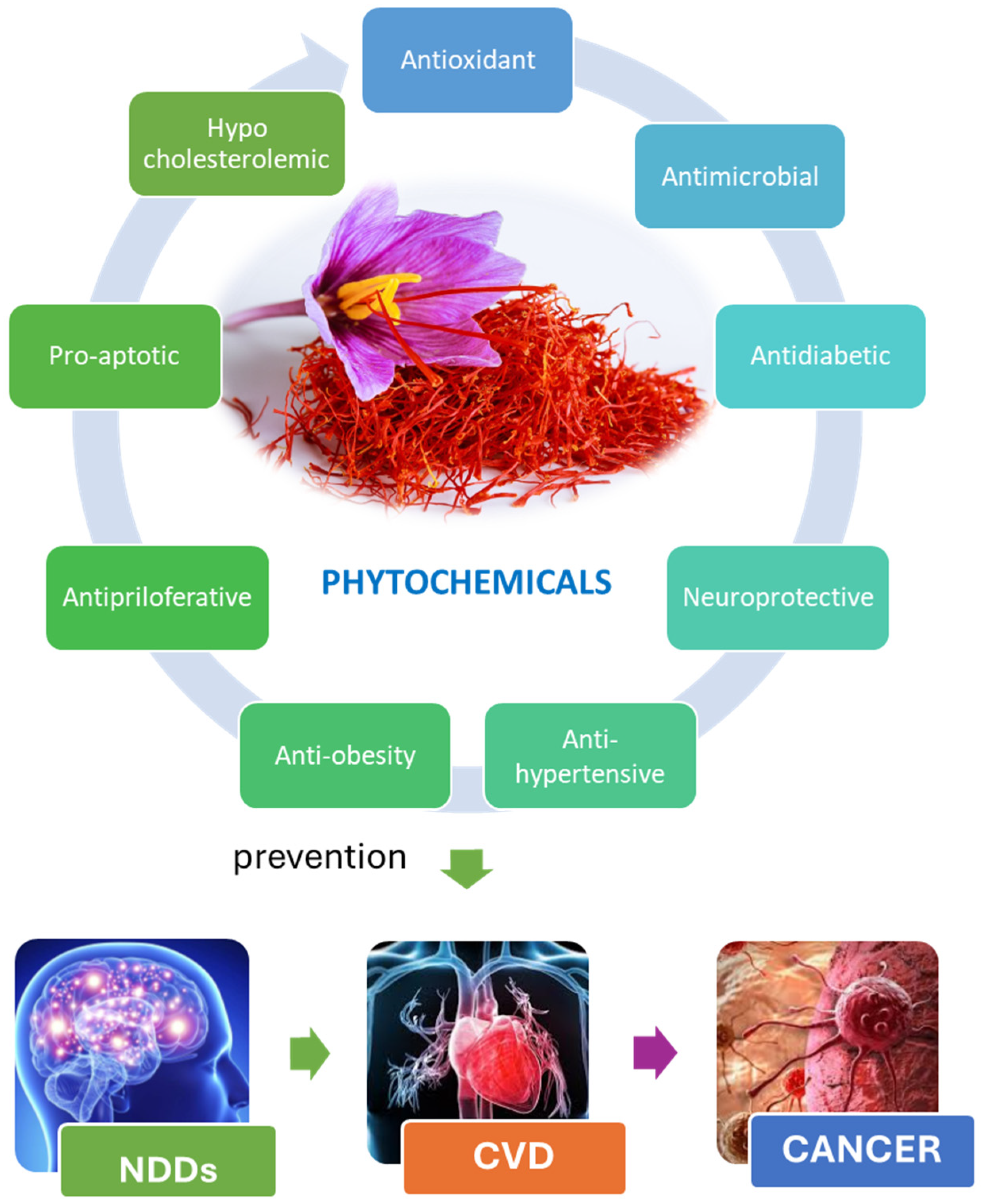


| BACs | Main Mechanisms of Action | Pharmacological/Therapeutic Relevance | Refs. |
|---|---|---|---|
| Crocins |
|
| [7,9,10,12,13,18,19,20] |
| Crocetin |
|
| [7,9,15,19,20,21,22] |
| Safranal |
|
| [7,9,19,23,24,25] |
| Picrocrocin |
|
| [7,9,19,26,27] |
| Study Model | BAC/Extract | Dose (Duration) | Main Outcomes | Proposed Mechanisms | Ref. |
|---|---|---|---|---|---|
| Alzheimer’s disease | |||||
| Aβ1–40 aggregation model | trans-Crocin 4 | 320 µM | Altered Aβ monomer/ oligomer distribution | Redirection of Aβ aggregation towards non-toxic species | [33] |
| Microglial and neuron cells | Crocetin | 25 µM (6–96 h) | ↑ Aβ clearance | Autophagy induction via STK11/LKB1–AMPK signaling | [22] |
| AlCl3/ d-gal mice | Crocin | 5–20 mg/kg/day (8 weeks); HDE (25–100 mg/day) | ↓ Aβ deposition; ↑ antioxidant enzymes | Antioxidant and cholinergic modulation | [34] |
| Aβ1–42 rats | Crocin | 30 mg/kg/day (12 days); HDE (290 mg/day) | ↑ cognitive performance; ↓ neuronal apoptosis | Inhibition of c-Fos-dependent apoptotic signaling | [35] |
| C57BL/6J mice | Saffron formulation (Repron®) | 10 mg/kg/day (20 days); HDE (50 mg/day) | ↓ β-amyloid accumulation; partial modulation of neuroinflammation; | Anti-inflammatory and antioxidant activity; modulation of microglial activation | [8] |
| Clinical (n = 60; DBPC) | Saffron | 15 mg twice daily (12 weeks) | ↓ IL-1β and MDA; ↑ TAC | Systemic antioxidant and anti-inflammatory effects | [20] |
| Parkinson’s disease | |||||
| Pb-intoxicated rodents | Saffron extract | 50 mg/kg/day (3 days); HDE (480 mg/day) | ↑ dopaminergic integrity and locomotor function | Neuroprotection against heavy-metal-induced oxidative damage | [36] |
| Clinical (RCT, n = 53) | Crocin | 60 mg/day (8 weeks) | ↓ movement disorder severity; ↑ activities of daily living; | Dopaminergic modulation and antioxidant activity | [37] |
| Rotenone rats | Crocin | 30 mg/kg/day (30 days); HDE (290 mg/day) | ↑ motor function; ↓ α-synuclein accumulation | PI3K/Akt/mTOR modulation; miRNA regulation | [38] |
| Multiple sclerosis | |||||
| Cuprizone mice | Crocin | 100 mg/kg, 3×/week (5 weeks); HDE (480 mg/day) | ↑ motor coordination and behavioral performance | Antioxidant and anti-inflammatory effects | [39] |
| Clinical (RCT, n = 60) | Crocin-selenium nanoparticles | 1 capsule/day (12 weeks) | ↑ cognitive performance; ↑ TAC; no change in lipid peroxidation or systemic inflammation | Restoration of redox homeostasis; selenoprotein-mediated neuroprotection | [40] |
| Clinical (RCT, n = 43) | Saffron | 500 mg/day (12 months) | ↓ MMP-9; ↑ TIMP-1 | Modulation of extracellular matrix remodeling and immune cell trafficking | [41] |
| Cerebral ischemia | |||||
| Ischemia/reperfusion rats | Saffron extract | 100–200 mg/kg/day (3 weeks); HDE (960–1900 mg/day) | ↓ apoptosis and lipid peroxidation | Antioxidant and proangiogenic modulation | [42] |
| Late phase ischemia rats | Saffron extract | 30–300 mg/kg/day (40 days); HDE (290–2900 mg/day) | ↑ neurological and cognitive outcomes | Anti-inflammatory and anti-gliotic effects | [43] |
| Clinical (RCT, n = 39) | Saffron extract | 200 mg/day (4 days) | ↓ stroke severity; ↑ BDNF | Neurotrophic and neuroprotective effects | [44] |
| Mental illness | |||||
| PC12 cells | Crocin | 1–30 µM | ↑ neuronal survival and morphology | Neurotrophic and antioxidant effects | [45] |
| Ex vivo human neurons | Saffron-derived metabolites | 300 mg (oral dose) | Neuroprotection; ↑ BDNF | Monoaminergic modulation and neurotrophic signaling | [46] |
| Depression animal models | Saffron extract | 50–200 mg/kg; HDE (480–1900 mg/day) | ↓ depressive-like behaviors | Antianhedonic and antioxidant effects | [47] |
| Clinical (n = 48, DBPC) | Saffron extract | 30 mg/day (6 weeks) | ↑ perceived mental health; ↓ N-acetyl-phenylalanine; equal depressive/anxiety scores | Modulation of amino-acid metabolism and neuromodulator pathways | [48] |
| Clinical (RCT, n = 50) | Saffron | 30–60 mg/day | ↓ depressive symptoms | Serotonergic modulation | [49] |
| Study Model | BAC/Extract | Dose (Duration) | Main Outcomes | Proposed Mechanisms | Refs. |
|---|---|---|---|---|---|
| Breast cancer | |||||
| MDA-MB-231 cells, BALB/c mice | Crocin; Crocetin | 150 mg/kg/day (4 weeks); HDE (730 mg/day) | ↓ lipid accumulation; ↓ tumor burden | Metabolic disruption; antiproliferative effects | [52] |
| MCF-7, 293T, MDA-MB-231 cells | Crocin | 2.7–3 mM | Induction of apoptosis | ROS generation; FOXO3a nuclear translocation | [53] |
| MDA-MB-231 cells | Crocin + Doxorubicin | 1.5–6 µM; 0.25–6 µM (24–48 h) | ↑ doxorubicin cytotoxicity | Chemosensitization via apoptosis induction | [54] |
| MDA-MB-231, BT-549, MCF-7 cells | Crocin | 0.5–4 mg/mL | Suppressed cell viability and proliferation | PRKCQ downregulation; NF-κB inhibition | [13] |
| MDA-MB-231, MDA-MB-468 cells | Safranal | 30 min–24 h | Anti-proliferative and apoptotic effects | Mitochondrial dysfunction; metabolic inhibition | [55] |
| 4T1 cells, BALB/c mice | Crocin + Crocetin | 2–2.5 mM; 0.05–0.1 mM (3×/week) | ↓ migration, invasion, and adhesion | Wnt/β-catenin signaling modulation; anti-metastatic synergy | [56] |
| 4T1 cells, BALB/c mice | Crocin + Metformin | 0–4.5 mM; 0–20 mM (3×/week) | ↓ viability and migration; ↑ survival | Metabolic interference; VEGF and MMP-9 downregulation | [57] |
| Prostate cancer | |||||
| SiHa cells; BALC/c mice | Saffron extract | 0–4 mg/mL | ↓ proliferation; induced apoptosis | DNA methyltransferase downregulation | [29] |
| PCa cells, BALB/c mice | Safranal | 100 mg/kg/day (24–32 h); HDE (490 mg/day) | Suppressed cell cycle re-entry | CDK2/4/6; Akt; NF-κB inhibition | [24] |
| Cervical cancer | |||||
| SiHa cells, BALB/c mice | Crocin | 50 mg/kg/day (4 weeks); HDE (245 mg/day) | ↓ viability and invasion; ↑ autophagy | AMPK/mTOR activation; antiproliferative effects | [58] |
| HeLa cells | Crocin | 5–10 mM | Disruption of spindle microtubule dynamics | Mitotic disruption and apoptosis | [59] |
| Skin cancer | |||||
| BALB/c mice | Crocin | 50 mg/kg/day (3 weeks); HDE (245 mg/day) | ↓ tumor growth | Apoptosis induction | [60] |
| Liver cancer | |||||
| HepG2, HCC rats | Crocin + Sorafenib | 50 + 50 mg/kg/day (6 weeks); HDE (490 mg/day) | ↑ antitumor effects and hepatoprotection | Suppression of inflammation and oxidative stress | [61] |
| HCC rats | Crocin | 10 mg/kg/day (4 weeks); HDE (1.6 mg/day) | ↓ tumor progression and liver injury | Nrf2/HO-1 activation; Keap1 suppression | [62] |
| Thyroid cancer | |||||
| TPC-1, IHH-4 cells | Crocin | 0–40 µM | ↓ viability; apoptosis induction | miR-34a-5p/PTPN4 axis; ROS induction | [63] |
| FTC-133 cells | Crocin | 0–45 µM | Anti-proliferative and apoptotic effects | ERK and STAT/JAK inhibition | [64] |
| 8305c, TPC-1 cells | Crocin | 0–40 µM | Suppressed proliferation; apoptosis | PI3K/Akt inhibition | [12] |
| Colorectal cancer | |||||
| HT-29, Caco-2 cells; NCR nu/nu mice | Crocin | 0–40 µM | ↓ proliferation, migration, invasion; inhibited angiogenesis | TNF-α/NF-κB/VEGF blockade; anti-angiogenic activity | [65] |
| CT26, HCT16 cells | Saffron extract | 25–400 µg/mL | ↓ tumor growth; ↓ proliferation; ↑ immunotherapy efficacy | ↓ PD-1/PD-L1-mediated immune evasion; T-cell activation | [66] |
| Colo-205 cells | Safranal | 0–200 µM | Cell cycle arrest; apoptosis | PI3K/Akt/mTOR inhibition | [67] |
| MMR-deficient HCT116 variants | Saffron; Safranal; Crocin | 0–15 mg/mL; 0–900 µM; 0–1000 µM | Suppressed proliferation; apoptosis | CDC25b inhibition; caspase activation | [68] |
| SW480, SW620 cells | Saffron extracts | 1–10% | ↓ proliferation and migration | MACC1-dependent regulation | [69] |
| SW-480 cells | Crocin + Curcumin | 1–50 µM | ↑ chemosensitivity; ↓ inflammation | Oxidative stress modulation | [70] |
| Gastric cancer | |||||
| AGS cells | Saffron extract | 20–100 µg/mL | ↓ viability; ↑ apoptosis | Downregulation of stemness-associated genes | [71] |
| Balb/c nude mice | Crocin | 6.25 mg/kg/day; HDE (30 mg/day) | ↓ tumor progression | TPM4 modulation | [72] |
| EPG85-257RDB, EPG85-257 cells | Crocin + Doxorubicin | 0–100 µM; 0–500 nM | ↑ doxorubicin cytotoxicity | Chemosensitization via apoptosis induction | [73] |
| Pancreatic cancer | |||||
| Capan-2 cells, NCR nu/nu mice | Crocin | 50–100 mg/kg; HDE (245–490 mg/day) | ↓ viability; induced apoptosis | Caspase activation; mitochondrial dysfunction | [74] |
| Brain cancer | |||||
| U251, U373, U138; CD1-nu/nu mice | Crocetin | 100 mg/kg (35 days); HDE (490 mg/day) | ↓ tumor growth; ↑ survival | Antiproliferative effects | [75] |
| U87-MG cells | Crocin + CAPE | 1–13 mM; 10–110 µM | ↑ apoptosis | p53 activation; PCNA downregulation | [76] |
| Lung cancer | |||||
| A549, QU-DB cells | Saffron extract + Cisplatin | 500–5000 µg/mL; 0–50 µM | ↑ cisplatin cytotoxicity | ROS modulation; apoptosis induction | [77] |
| Study Model | BAC/Extract | Dose (Duration) | Main Outcomes | Proposed Mechanisms | Refs. |
|---|---|---|---|---|---|
| Cardiovascular disorders | |||||
| HepG2 cells | Picrocrocin | 1–300 µg/mL (24–72 h) | ↓ cholesterol synthesis; ↓ triglyceride synthesis; ↑ LDLR expression | Modulation of SREBP-2 activation; LDLR-mediated LDL uptake; regulation of HMGR, GPAT expression | [26] |
| C57BL/6 mice | Saffron extract | 50 mg/kg/day (12 weeks); HDE (245 mg/day) | ↓ cholesterol synthesis; ↓ triglyceride synthesis; ↑ LDLR expression | PCSK9 inhibition; upregulation of LDLR expression; modulation of SREBP-2 and SREBP-1c signaling | [79] |
| Hypertensive rat models | Saffron extract | 10–40 mg/kg; HDE (100–390 mg/day) | ↓ systolic and diastolic blood pressure | Inhibition of the renin–angiotensin system; vascular relaxation | [80] |
| Coronary artery disease patients | Crocin/ Saffron extract | 30 mg/day (8 weeks) | ↓ ox-LDL; ↑ SIRT1 and AMPK expression | Suppression of NF-κB signaling; improvement of metabolic and endothelial regulation | [81] |
| Hypertensive patients | Saffron extract | 200 mg/day (12 weeks) | ↓ inflammatory markers; improved lipid profile | Anti-inflammatory effects synergy with physical exercise | [82] |
| Diabetes mellitus | |||||
| STZ-induced diabetic rats | Saffron extract | 25–100 mg/kg/day (21 days); HDE (245–970 mg/day) | ↓ blood glucose; ↑ insulin levels; ↑ β-cell function | Modulation of glucose metabolism enzymes (↓ G6Pase, ↑ GK) | [83] |
| STZ-induced diabetic mice | Saffron extract | 80 mg/kg/day (45 days); HDE (390 mg/day) | ↓ blood glucose; ↓ caspase-3; ↑ renal histological | Anti-apoptotic and antioxidant effects | [84] |
| STZ-induced diabetic rats | Crocin; Sitagliptin | 10 mg/kg/day (4 weeks); HDE (100 mg/day) | ↑ glucose reduction and β-islet restoration | Antioxidant, anti-inflammatory, and anti-apoptotic actions | [85] |
| STZ-induced diabetic rats DN | Crocetin | 100 mg/kg/day (3 months); HDE (970 mg/day) | ↑ renal function; ↓ oxidative stress and inflammation | Downregulation of TGF-β1 signaling; antifibrotic effects | [21] |
| STZ-induced diabetic rats | Saffron extract | 0–320 µg/mL (24–72 h) | ↑ cell migration; ↑ angiogenesis; ↑ collagen deposition; | VEGF-dependent angiogenesis; suppression of TNF-α/NF-κB-mediated inflammation | [86] |
| T2DM patients | Saffron | 100–400 mg/day (8–12 weeks) | ↓ glycemia and dyslipidemia; ↑ quality of life | Anti-inflammatory and antioxidant effects | [87] |
Disclaimer/Publisher’s Note: The statements, opinions and data contained in all publications are solely those of the individual author(s) and contributor(s) and not of MDPI and/or the editor(s). MDPI and/or the editor(s) disclaim responsibility for any injury to people or property resulting from any ideas, methods, instructions or products referred to in the content. |
© 2026 by the authors. Licensee MDPI, Basel, Switzerland. This article is an open access article distributed under the terms and conditions of the Creative Commons Attribution (CC BY) license.
Share and Cite
Campos, C.; Elfardi, Y.R.; Darrag, E.M.; Laouane, H.; Perestrelo, R.; Bouissane, L.; Câmara, J.S. From Stigma to Therapy: Pharmacological Insights into Saffron Bioactives for Major Non-Communicable Diseases. Pharmaceuticals 2026, 19, 484. https://doi.org/10.3390/ph19030484
Campos C, Elfardi YR, Darrag EM, Laouane H, Perestrelo R, Bouissane L, Câmara JS. From Stigma to Therapy: Pharmacological Insights into Saffron Bioactives for Major Non-Communicable Diseases. Pharmaceuticals. 2026; 19(3):484. https://doi.org/10.3390/ph19030484
Chicago/Turabian StyleCampos, Catarina, Yahya Ramadan Elfardi, El Mehdi Darrag, Hassan Laouane, Rosa Perestrelo, Latifa Bouissane, and José S. Câmara. 2026. "From Stigma to Therapy: Pharmacological Insights into Saffron Bioactives for Major Non-Communicable Diseases" Pharmaceuticals 19, no. 3: 484. https://doi.org/10.3390/ph19030484
APA StyleCampos, C., Elfardi, Y. R., Darrag, E. M., Laouane, H., Perestrelo, R., Bouissane, L., & Câmara, J. S. (2026). From Stigma to Therapy: Pharmacological Insights into Saffron Bioactives for Major Non-Communicable Diseases. Pharmaceuticals, 19(3), 484. https://doi.org/10.3390/ph19030484