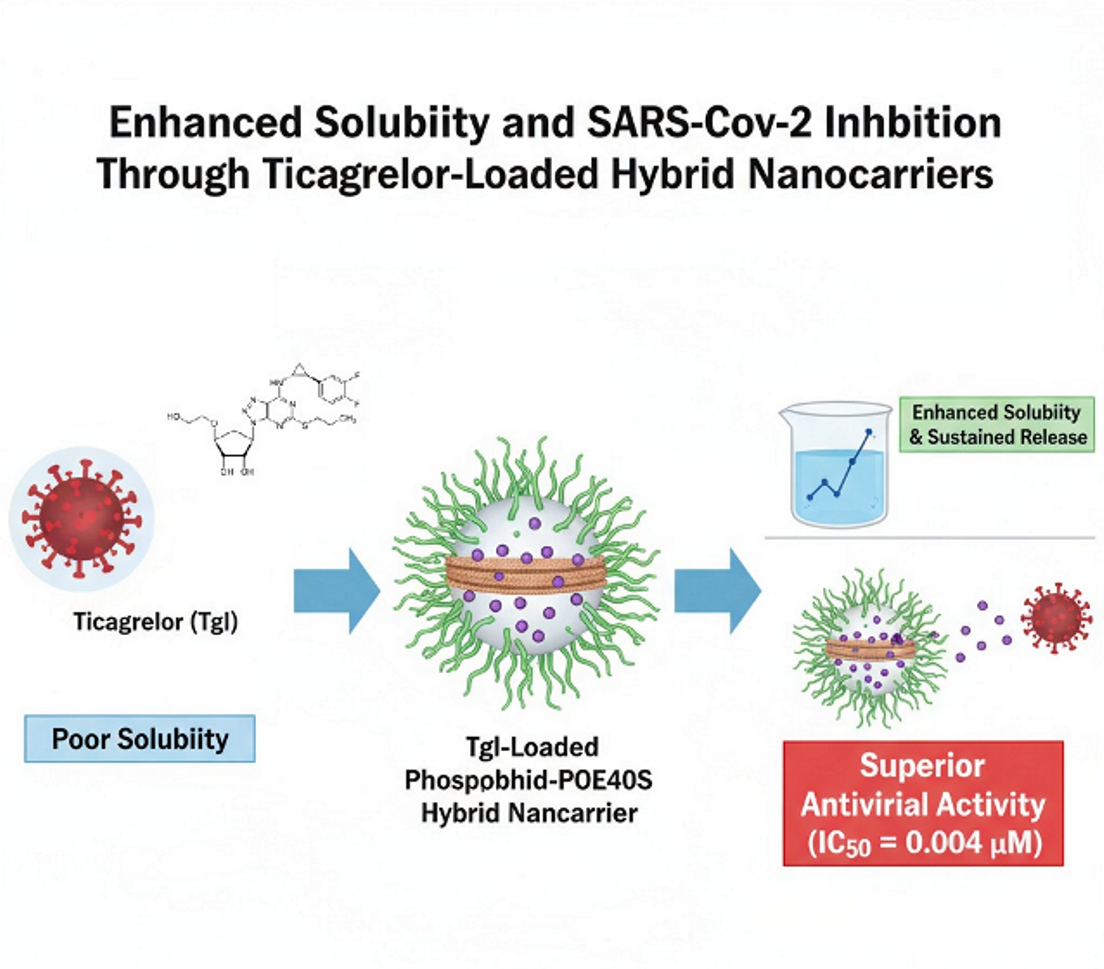
Ticagrelor-Loaded Phospholipid–Polyoxyethylene Hybrid Nanocarriers: Enhanced Solubility and Efficacy Against SARS-CoV-2
 ,
,  , , and
Abstract
1. Introduction
2. Results
2.1. Particle Size, PDI, and Z-Potential
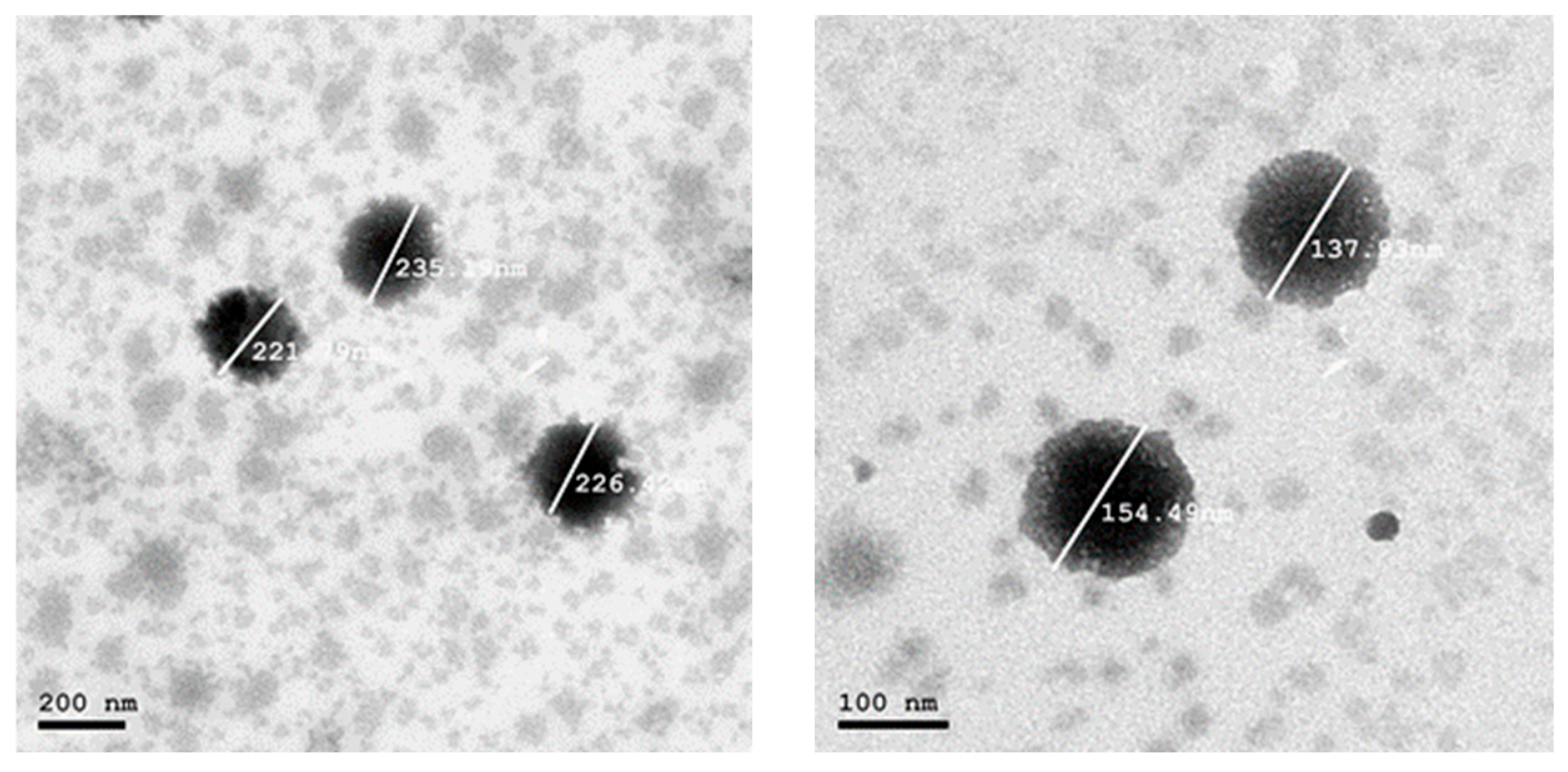
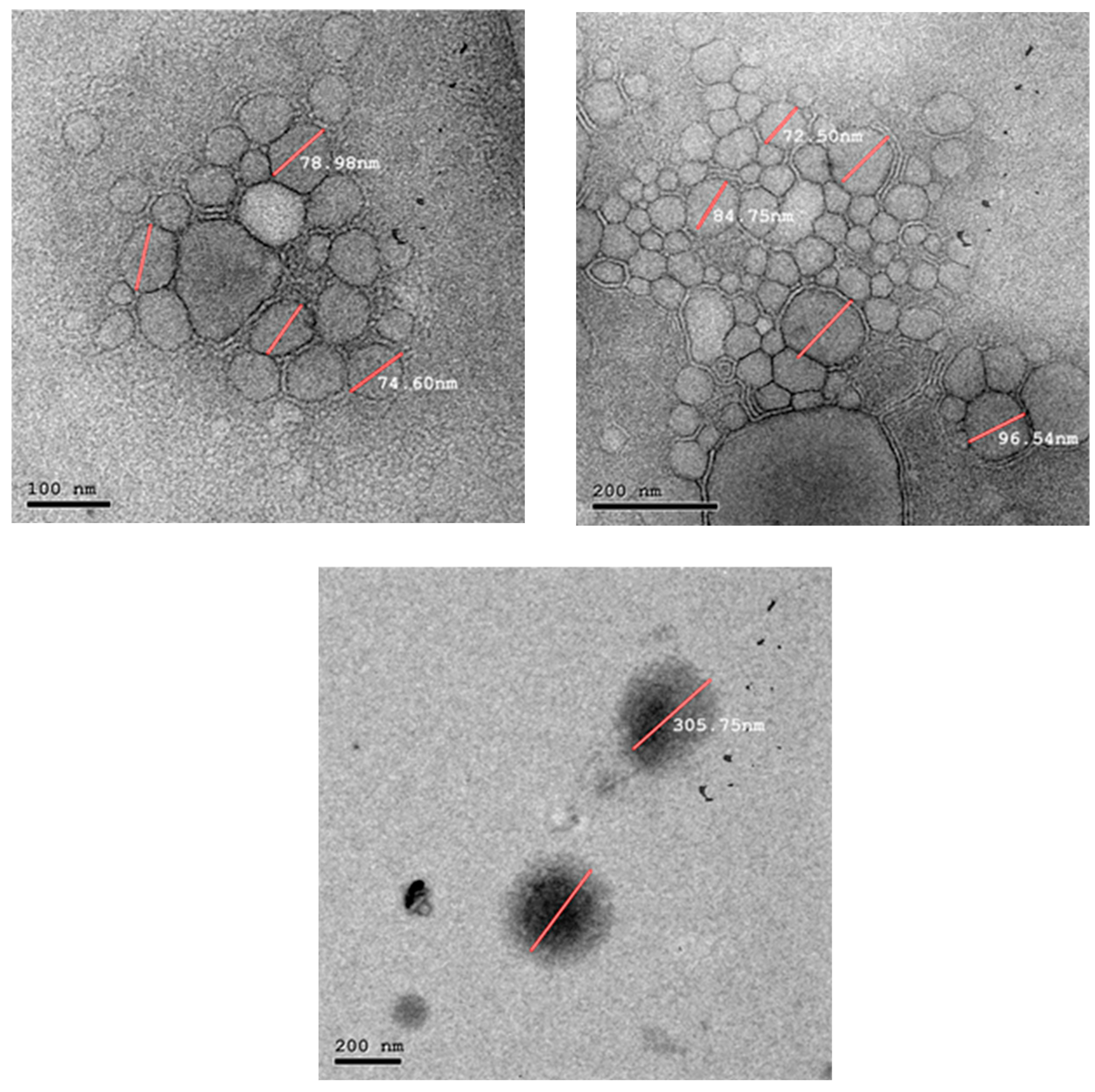
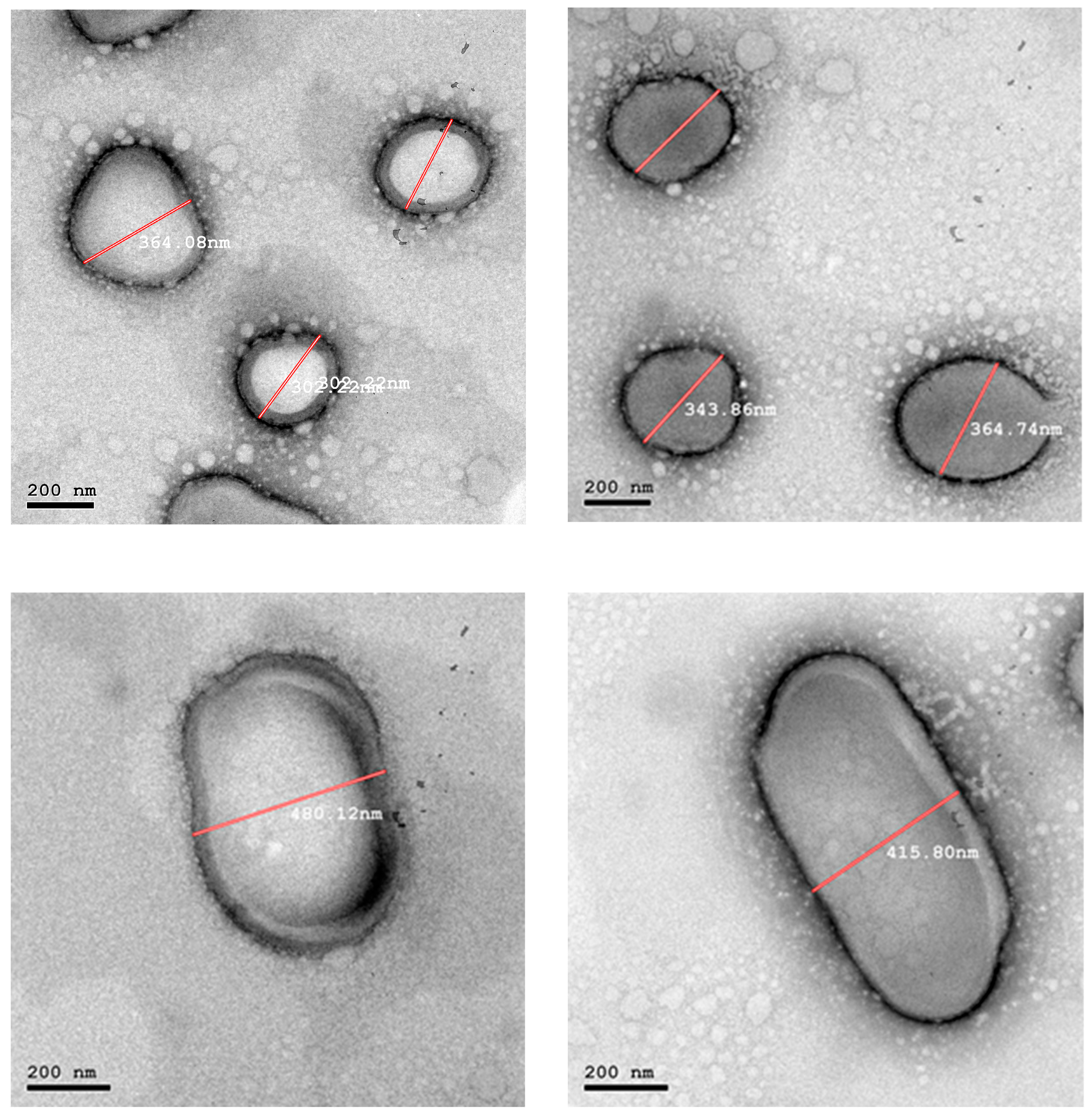
2.2. Morphological Examination of the Prepared Hybrid Nanocarriers
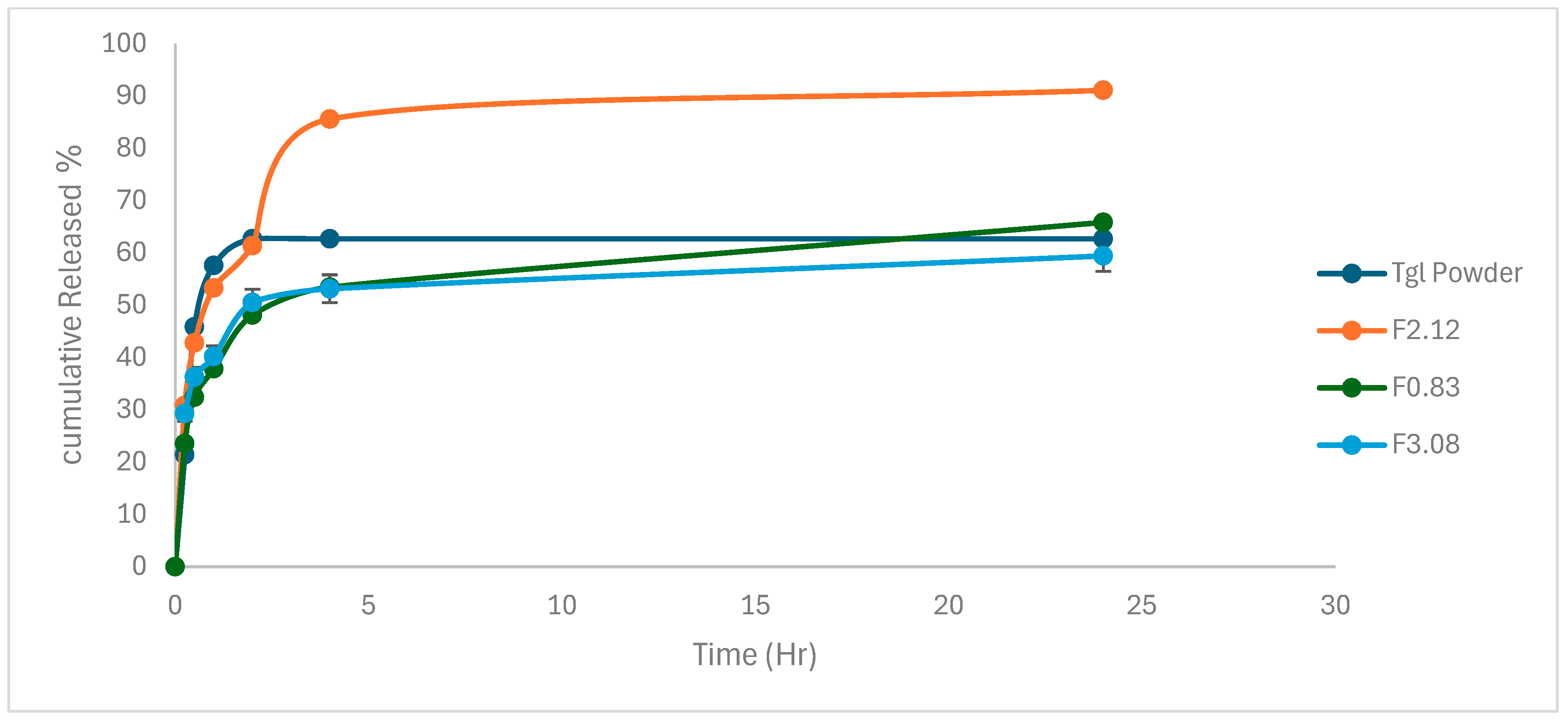
2.3. In Vitro Release Test
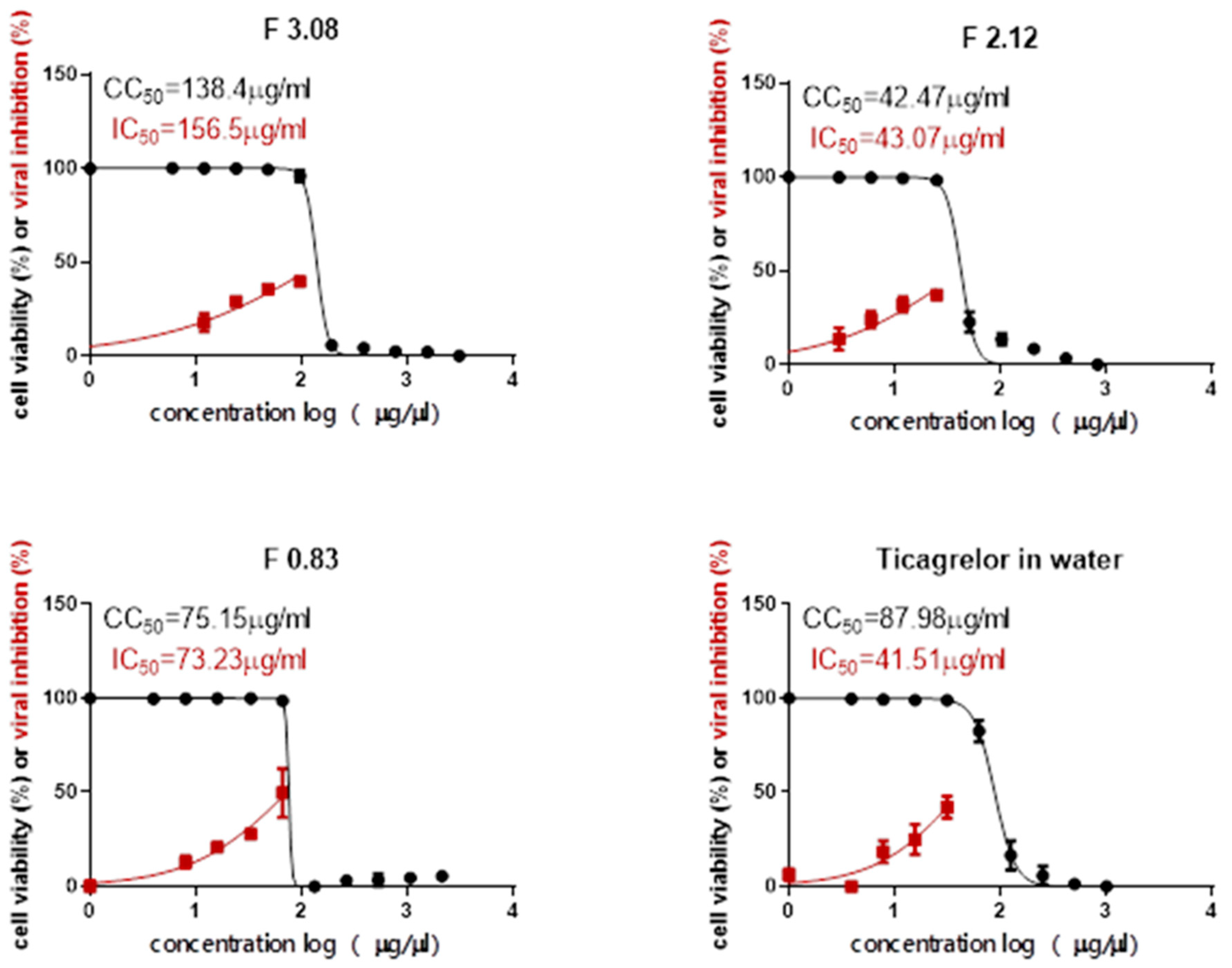
2.4. In Vitro Cytotoxicity and Antiviral Activity Against SARS-CoV-2
3. Discussion
- Charge Masking: The PEG chains can physically cover the charged groups on the phospholipid surface, effectively “hiding” them from the bulk medium. This charge masking effect reduces the measured absolute zeta potential, moving it closer to zero. One study using PEG 660-stearate and lecithin explicitly noted that the zeta potential was reduced with an increase in the PEG-stearate concentration, with values reaching as low as −5 mV [46].
- Steric Stabilization: Although the electrostatic repulsion is reduced, the PEG chains provide a powerful alternative stabilization mechanism known as steric stabilization. The bulky, hydrated polymer layer creates a physical barrier that prevents vesicles from approaching each other closely enough for van der Waals attractive forces to cause aggregation [46,64]. Therefore, a low zeta potential in a PEGylated system does not necessarily imply poor stability, a rule that applies more strictly to systems stabilized only by electrostatic repulsion [46].
4. Materials and Methods
4.1. Materials
4.2. Methods
4.2.1. Preparation of Hybrid Nanocarriers
4.2.2. Particle Size, Poly Dispersibility Index, and Z-Potential Measurements
4.2.3. Hybrid Nanocarriers Morphology Analysis
4.2.4. In Vitro Tgl Release Test
4.2.5. In Vitro Cytotoxicity and Antiviral Activity Against SARS-CoV-2 Test
5. Conclusions
Author Contributions
Funding
Institutional Review Board Statement
Informed Consent Statement
Data Availability Statement
Acknowledgments
Conflicts of Interest
References
- Paules, C.I.; Marston, H.D.; Fauci, A.S. Coronavirus infections—More than just the common cold. JAMA 2020, 323, 707–708. [Google Scholar] [CrossRef]
- Ramphul, K.; Mejias, S.G. Coronavirus disease: A review of a new threat to public health. Cureus 2020, 12, e7276. [Google Scholar] [CrossRef]
- Salata, C.; Calistri, A.; Parolin, C.; Palù, G. Coronaviruses: A paradigm of new emerging zoonotic diseases. Pathog. Dis. 2019, 77, ftaa006. [Google Scholar] [CrossRef]
- Sohag, A.A.M.; Hannan, A.; Rahman, S.; Hossain, M.; Hasan, M.; Khan, K.; Khatun, A.; Dash, R.; Uddin, J. Revisiting potential druggable targets against SARS-CoV-2 and repurposing therapeutics under preclinical study and clinical trials: A comprehensive review. Drug Dev. Res. 2020, 81, 919–941. [Google Scholar] [CrossRef]
- Ashour, H.M.; Elkhatib, W.F.; Rahman, M.M.; Elshabrawy, H.A. Insights into the recent 2019 novel coronavirus (SARS-CoV-2) in light of past human coronavirus outbreaks. Pathogens 2020, 9, 186. [Google Scholar] [CrossRef]
- Kumar, Y.; Singh, H.; Patel, C.N. In silico prediction of potential inhibitors for the main protease of SARS-CoV-2 using molecular docking and dynamics simulation based drug-repurposing. J. Infect. Public Health 2020, 13, 1210–1223. [Google Scholar] [CrossRef]
- Hilgenfeld, R. From SARS to MERS: Crystallographic studies on coronaviral proteases enable antiviral drug design. FEBS J. 2014, 281, 4085–4096. [Google Scholar] [CrossRef]
- Jia, Y.; Fu, B.; Dong, L.; Zhao, M. Sweet syndrome induced by SARS-CoV-2 vaccines: A systematic review of patient-report studies. Hum. Vaccines Immunother. 2023, 19, 2217076. [Google Scholar] [CrossRef]
- Zhang, H.-Q.; Cao, B.-Z.; Cao, Q.-T.; Hun, M.; Cao, L.; Zhao, M.-Y. An analysis of reported cases of hemophagocytic lympho-histiocytosis (HLH) after COVID-19 vaccination. Hum. Vaccines Immunother. 2023, 19, 2263229. [Google Scholar] [CrossRef]
- Xu, K.; Gao, B.; Li, J.; Xiang, Y.; Cao, L.; Zhao, M. Clinical features, diagnosis, and management of COVID-19 vaccine-associated Vogt-Koyanagi-Harada disease. Hum. Vaccines Immunother. 2023, 19, 2220630. [Google Scholar] [CrossRef]
- Abosheasha, M.A.; El-Gowily, A.H.; Elfiky, A.A. Potential antiviral properties of antiplatelet agents against SARS-CoV-2 infection: An in silico perspective. J. Thromb. Thrombolysis 2022, 53, 273–281. [Google Scholar] [CrossRef]
- Elmaaty, A.A.; Eldehna, W.M.; Khattab, M.; Kutkat, O.; Alnajjar, R.; El-Taweel, A.N.; Al-Rashood, S.T.; Abourehab, M.A.S.; Binjubair, F.A.; Saleh, M.A.; et al. Anticoagulants as potential SARS-CoV-2 Mpro inhibitors for COVID-19 patients: In vitro, molecular docking, molecular dynamics, DFT, and SAR studies. Int. J. Mol. Sci. 2022, 23, 12235. [Google Scholar] [CrossRef]
- Dobesh, P.P.; Oestreich, J.H. Ticagrelor: Pharmacokinetics, pharmacodynamics, clinical efficacy, and safety. Pharmacother. J. Hum. Pharmacol. Drug Ther. 2014, 34, 1077–1090. [Google Scholar] [CrossRef]
- Teng, R. Ticagrelor: Pharmacokinetic, Pharmacodynamic and Pharmacogenetic Profile: An Update. Clin. Pharmacokinet. 2015, 54, 1125–1138. [Google Scholar] [CrossRef]
- Birkeland, K.; Parra, D.; Rosenstein, R. Antiplatelet therapy in acute coronary syndromes: Focus on ticagrelor. J. Blood Med. 2010, 1, 197–219. [Google Scholar] [CrossRef]
- Srivastava, A.; Khan, M.A.; Bedi, S.; Bhandari, U. A Review on Different Solubility Enhancement Techniques of Ticagrelor. Int. J. Pharm. Investig. 2023, 13, 1–6. [Google Scholar] [CrossRef]
- Kim, S.-J.; Lee, H.-K.; Na, Y.-G.; Bang, K.-H.; Lee, H.-J.; Wang, M.; Huh, H.-W.; Cho, C.-W. A novel composition of ticagrelor by solid dispersion technique for increasing solubility and intestinal permeability. Int. J. Pharm. 2019, 555, 11–18. [Google Scholar] [CrossRef]
- Na, Y.-G.; Byeon, J.-J.; Wang, M.; Huh, H.W.; Son, G.-H.; Jeon, S.-H.; Bang, K.-H.; Kim, S.-J.; Lee, H.-J.; Lee, H.-K.; et al. Strategic approach to developing a self-microemulsifying drug delivery system to enhance antiplatelet activity and bioavailability of ticagrelor. Int. J. Nanomed. 2019, 14, 1193–1212. [Google Scholar] [CrossRef]
- Son, G.-H.; Na, Y.-G.; Huh, H.W.; Wang, M.; Kim, M.-K.; Han, M.-G.; Byeon, J.-J.; Lee, H.-K.; Cho, C.-W. Systemic design and evaluation of ticagrelor-loaded nanostructured lipid carriers for enhancing bioavailability and antiplatelet activity. Pharmaceutics 2019, 11, 222. [Google Scholar] [CrossRef]
- Shahid, N.; Erum, A.; Zaman, M.; Tulain, U.R.; Shoaib, Q.-U.; Malik, N.S.; Kausar, R.; Rashid, A.; Rehman, U. Synthesis and evaluation of chitosan based controlled release nanoparticles for the delivery of ticagrelor. Des. Monomers Polym. 2022, 25, 55–63. [Google Scholar] [CrossRef]
- Saleem, U.; Khalid, I.; Hussain, L.; Alshammari, A.; Albekairi, N.A. Crosslinked PVA-g-poly (AMPS) nanogels for enhanced solubility and dissolution of ticagrelor: Synthesis, characterization, and toxicity evaluation. ACS Omega 2024, 9, 21401–21415. [Google Scholar] [CrossRef]
- Marei, H.F.; Arafa, M.F.; El Maghraby, G.M. Eudragit S100 coated surfactant vesicles for boosted oral bioavailability of ticagrelor. J. Drug Deliv. Sci. Technol. 2024, 101, 106234. [Google Scholar] [CrossRef]
- Cheng, X.; Wang, C.; Xu, J.; Huang, Y.; Chen, Z.; Zhong, L.; Du, C.; Nie, G.; Zhang, Y. Clickable liposomes for on-demand reversal of antiplatelet drugs: Towards a safe management of bleeding risks associated with antithrombotic therapy. J. Control. Release 2025, 378, 1103–1113. [Google Scholar] [CrossRef]
- Kabil, M.F.; Attallah, K.M.; El-Sherbiny, I.; Nasr, M. Ticagrelor-loaded lipid nanocapsules as a promising nebulizable system for lung cancer: In-vitro characterization, 131I radiolabeling and in-vivo biodistribution. J. Drug Deliv. Sci. Technol. 2025, 114, 107560. [Google Scholar] [CrossRef]
- Lila, A.S.A.; Ishida, T. Liposomal delivery systems: Design optimization and current applications. Biol. Pharm. Bull. 2017, 40, 1–10. [Google Scholar] [CrossRef] [PubMed]
- Kraft, J.C.; Freeling, J.P.; Wang, Z.; Ho, R.J. Emerging research and clinical development trends of liposome and lipid nanoparticle drug delivery systems. J. Pharm. Sci. 2014, 103, 29–52. [Google Scholar] [CrossRef] [PubMed]
- Nsairat, H.; Khater, D.; Sayed, U.; Odeh, F.; Al Bawab, A.; Alshaer, W. Liposomes: Structure, composition, types, and clinical applications. Heliyon 2022, 8, e09394. [Google Scholar] [CrossRef]
- Pande, S. Liposomes for drug delivery: Review of vesicular composition, factors affecting drug release and drug loading in liposomes. Artif Cells Nanomed Biotechnol. 2023, 51, 428–440. [Google Scholar] [CrossRef]
- Ganta, S.; Devalapally, H.; Shahiwala, A.; Amiji, M. A review of stimuli-responsive nanocarriers for drug and gene delivery. J. Control. Release 2008, 126, 187–204. [Google Scholar] [CrossRef]
- Karal, M.A.S.; Sultana, S.; Billah, M.; Moniruzzama, M.; Wadud, A.; Gosh, R.C. Effects of polyethylene glycol-grafted phospholipid on the anionic magnetite nanoparticles-induced deformation and poration in giant lipid vesicles. PLoS ONE 2023, 18, e0289087. [Google Scholar] [CrossRef]
- Khalil, H.M.A.; Mahmoud, D.B.; El-Shiekh, R.A.; Bakr, A.F.; Boseila, A.A.; Mehanna, S.; Naggar, R.A.; Eliwa, H.A. Antidepressant and cardioprotective effects of self-nanoemulsifying self-nanosuspension loaded with Hypericum perforatum on post-myocardial infarction depression in rats. Aaps Pharmscitech 2022, 23, 243. [Google Scholar] [CrossRef]
- Yeap, S.P.; Lim, J.; Ngang, H.P.; Ooi, B.S.; Ahmad, A.L. Role of particle–particle interaction towards effective interpretation of Z-average and particle size distributions from dynamic light scattering (DLS) analysis. J. Nanosci. Nanotechnol. 2018, 18, 6957–6964. [Google Scholar] [CrossRef] [PubMed]
- Boseila, A.A.; Ghareeb, A.Z.; AbdElwahab, M.G.; Seadawy, M.G.; Al-Karmalawy, A.A.; Yassa, N.W.; Ghareeb, D.A. Throat spray formulated with virucidal pharmaceutical excipients as an effective early prophylactic or treatment strategy against pharyngitis post-exposure to SARS-CoV-2. Eur. J. Pharm. Biopharm. 2024, 199, 114279. [Google Scholar] [CrossRef] [PubMed]
- Cheu, C.; Yang, L.; Nieh, M.-P. Refining internal bilayer structure of bicelles resolved by extended-q small angle X-ray scattering. Chem. Phys. Lipids 2020, 231, 104945. [Google Scholar] [CrossRef]
- McCalpin, S.D.; Kassinger, K.; Gilmore, M.; Ramamoorthy, A. Characterization of lipid solubilization, bicelle formation, and magnetic-alignment induced by saponins. J. Colloid Interface Sci. 2026, 702, 139008. [Google Scholar] [CrossRef] [PubMed]
- Chan, S.-W.; Shafi, T.; Ford, R.C. Kite-shaped molecules block SARS-CoV-2 cell entry at a post-attachment step. Viruses 2021, 13, 2306. [Google Scholar] [CrossRef]
- Boseila, A.A.; Rashed, H.M.; Sakr, T.M.; Abdel-Reheem, A.Y.; Basalious, E.B. Superiority of DEAE-Dx-stabilized cationic bile-based vesicles over conventional vesicles for enhanced hepatic delivery of daclatasvir. Mol. Pharm. 2019, 16, 4190–4199. [Google Scholar] [CrossRef]
- Choi, S.; Kang, B.; Shimanouchi, T.; Kim, K.; Jung, H. Continuous preparation of bicelles using hydrodynamic focusing method for bicelle to vesicle transition. Micro Nano Syst. Lett. 2021, 9, 7. [Google Scholar] [CrossRef]
- Diller, A.; Loudet, C.; Aussenac, F.; Raffard, G.; Fournier, S.; Laguerre, M.; Grélard, A.; Opella, S.J.; Marassi, F.M.; Dufourc, E.J. Bicelles: A natural ‘molecular goniometer’ for structural, dynamical and topological studies of molecules in membranes. Biochimie 2009, 91, 744–751. [Google Scholar] [CrossRef]
- Matsuo, S.; Higashi, K.; Moribe, K.; Kimura, S.-I.; Itai, S.; Kondo, H.; Iwao, Y. Combination of roll grinding and high-pressure homogenization can prepare stable bicelles for drug delivery. Nanomaterials 2018, 8, 998. [Google Scholar] [CrossRef]
- Phanchana, M.; Phetruen, T.; Harnvoravongchai, P.; Raksat, P.; Ounjai, P.; Chankhamhaengdecha, S.; Janvilisri, T. Repurposing a platelet aggregation inhibitor ticagrelor as an antimicrobial against Clostridioides difficile. Sci. Rep. 2020, 10, 6497. [Google Scholar] [CrossRef]
- Rowe, R.C.; Sheskey, P.J.; Weller, P.J. Handbook of Pharmaceutical Excipients; Pharmaceutical Press: London, UK, 2006. [Google Scholar]
- Viitala, L.; Pajari, S.; Gentile, L.; Määttä, J.; Gubitosi, M.; Deska, J.; Sammalkorpi, M.; Olsson, U.; Murtomäki, L. Shape and phase transitions in a PEGylated phospholipid system. Langmuir 2019, 35, 3999–4010. [Google Scholar] [CrossRef] [PubMed]
- Le, N.T.T.; Du Cao, V.; Nguyen, T.N.Q.; Le, T.T.H.; Tran, T.T.; Thi, T.T.H. Soy lecithin-derived liposomal delivery systems: Surface modification and current applications. Int. J. Mol. Sci. 2019, 20, 4706. [Google Scholar] [CrossRef] [PubMed]
- Wolf, J.D.; Kurpiers, M.; Götz, R.X.; Zaichik, S.; Hupfauf, A.; Baecker, D.; Gust, R.; Bernkop-Schnürch, A. Phosphorylated PEG-emulsifier: Powerful tool for development of zeta potential changing self-emulsifying drug delivery systems (SEDDS). Eur. J. Pharm. Biopharm. 2020, 150, 77–86. [Google Scholar] [CrossRef]
- Hädrich, G.; Monteiro, S.O.; Rodrigues, M.R.; de Lima, V.R.; Putaux, J.-L.; Bidone, J.; Teixeira, H.F.; Muccillo-Baisch, A.L.; Dora, C.L. Lipid-based nanocarrier for quercetin delivery: System characterization and molecular interactions studies. Drug Dev. Ind. Pharm. 2015, 42, 1165–1173. [Google Scholar] [CrossRef] [PubMed]
- Rodríguez, G.; Soria, G.; Coll, E.; Rubio, L.; Barbosa-Barros, L.; López-Iglesias, C.; Planas, A.M.; Estelrich, J.; de la Maza, A.; López, O. Bicosomes: Bicelles in dilute systems. Biophys. J. 2010, 99, 480–488. [Google Scholar] [CrossRef]
- Ahmed, S.A.; Salama, A.A.; Gaber, M.H.; Ali, S.A. Development and characterization of soy lecithin liposome as potential drug carrier systems for doxorubicin. J. Pharm Innov. 2023, 18, 1415–1426. [Google Scholar] [CrossRef]
- Clementino, A.R.; Marchi, C.; Pozzoli, M.; Bernini, F.; Zimetti, F.; Sonvico, F. Anti-inflammatory properties of statin-loaded biodegradable lecithin/chitosan nanoparticles: A step toward nose-to-brain treatment of neurodegenerative diseases. Front. Pharmacol. 2021, 12, 716380. [Google Scholar] [CrossRef]
- Elsayad, M.K.; Mowafy, H.A.; A Zaky, A.; Samy, A.M. Chitosan caged liposomes for improving oral bioavailability of rivaroxaban: In vitro and in vivo evaluation. Pharm. Dev. Technol. 2021, 26, 316–327. [Google Scholar] [CrossRef]
- Danaei, M.; Kalantari, M.; Raji, M.; Fekri, H.S.; Saber, R.; Asnani, G.; Mortazavi, S.; Mozafari, M.; Rasti, B.; Taheriazam, A. Probing nanoliposomes using single particle analytical techniques: Effect of excipients, solvents, phase transition and zeta potential. Heliyon 2018, 4, e01088. [Google Scholar] [CrossRef]
- Pourmadadi, M.; Eshaghi, M.M.; Ostovar, S.; Mohammadi, Z.; Sharma, R.K.; Paiva-Santos, A.C.; Rahmani, E.; Rahdar, A.; Pandey, S. Innovative nanomaterials for cancer diagnosis, imaging, and therapy: Drug delivery applications. J. Drug Deliv. Sci. Technol. 2023, 82, 104357. [Google Scholar] [CrossRef]
- Sriwongsitanont, S.; Ueno, M. Effect of a PEG lipid (DSPE-PEG2000) and freeze-thawing process on phospholipid vesicle size and lamellarity. Colloid Polym. Sci. 2004, 282, 753–760. [Google Scholar] [CrossRef]
- Garbuzenko, O.; Barenholz, Y.; Priev, A. Effect of grafted PEG on liposome size and on compressibility and packing of lipid bilayer. Chem. Phys. Lipids 2005, 135, 117–129. [Google Scholar] [CrossRef] [PubMed]
- Shen, H.; Zhang, C.; Wang, C.; Jiang, J.; Tang, F.; Li, C.; Yuan, H.; Yang, X.; Tong, Z.; Huang, Y. Lutein-Based pH and Photo Dual-Responsive Novel Liposomes Coated with Ce6 and PTX for Tumor Therapy. ACS Omega 2023, 8, 31436–31449. [Google Scholar] [CrossRef]
- Mahendra, A.; James, H.P.; Jadhav, S. PEG-grafted phospholipids in vesicles: Effect of PEG chain length and concentration on mechanical properties. Chem. Phys. Lipids 2019, 218, 47–56. [Google Scholar] [CrossRef]
- Almgren, M.; Edwards, K.; Karlsson, G. Cryo transmission electron microscopy of liposomes and related structures. Colloids Surf. A Physicochem. Eng. Asp. 2000, 174, 3–21. [Google Scholar] [CrossRef]
- El-Hashemy, H.A.; Salama, A.; Rashad, A. Experimental design, formulation, and in-vivo evaluation of novel anticoagulant Rivaroxaban loaded cubosomes in rats model. J. Liposome Res. 2022, 33, 189–196. [Google Scholar] [CrossRef]
- Bhargav, E.; Koteshwara, K.; Reddy, Y.P.; Sowmya, C.; Ramalingam, P. Development of Curcumin nanophytosomes surface functionalized with Chondroitin sulfate-A for treating k1 Plasmodium falciparum drug-resistant malaria. J. Drug Deliv. Sci. Technol. 2023, 87, 104788. [Google Scholar] [CrossRef]
- Zhou, Y.; Dai, G.; Xu, J.; Xu, W.; Li, B.; Chen, S.; Zhang, J. Enhancing the Solubility and Oral Bioavailability of Trimethoprim Through PEG-PLGA Nanoparticles: A Comprehensive Evaluation of In Vitro and In Vivo Performance. Pharmaceutics 2025, 17, 957. [Google Scholar] [CrossRef]
- Shah, H.; Tariq, I.; Engelhardt, K.; Bakowsky, U.; Pinnapireddy, S.R. Development and Characterization of Ultrasound Activated Lipopolyplexes for Enhanced Transfection by Low Frequency Ultrasound in In Vitro Tumor Model. Macromol. Biosci. 2020, 20, e2000173. [Google Scholar] [CrossRef]
- Elshafeey, A.H.; Zayed, R.; Shukr, M.H.; Elsayed, I. Sucrose acetate isobutyrate based nanovesicles: A promising platform for drug delivery and bioavailability enhancement. J. Drug Deliv. Sci. Technol. 2020, 58, 101806. [Google Scholar] [CrossRef]
- Li, X.; Zhao, Y. Protection/Deprotection of Surface Activity and Its Applications in the Controlled Release of Liposomal Contents. Langmuir 2012, 28, 4152–4159. [Google Scholar] [CrossRef] [PubMed][Green Version]
- Mita, S.R.; Abdassah, M.; Supratman, U.; Shiono, Y.; Rahayu, D.; Sopyan, I.; Wilar, G. Nanoparticulate System for the Transdermal Delivery of Catechin as an Antihypercholesterol: In Vitro and In Vivo Evaluations. Pharmaceuticals 2022, 15, 1142. [Google Scholar] [CrossRef]
- Akram, S.; Zaman, M.; Almas, M.; Hassan, S.A.; Siddique, W. Enhancing Ticagrelor Solubility Through the Solid Dispersion Method. Curr. Pharm. Res. 2024, 2, 48–76. [Google Scholar] [CrossRef]
- Kandeil, A.; Mostafa, A.; El-Shesheny, R.; Shehata, M.; Roshdy, W.H.; Ahmed, S.S.; Gomaa, M.; Taweel, A.E.; Kayed, A.E.; Mahmoud, S.H.; et al. Coding-complete genome sequences of two SARS-CoV-2 isolates from Egypt. Microbiol. Resour. Announc. 2020, 9, e00489-20. [Google Scholar] [CrossRef]
- Feoktistova, M.; Geserick, P.; Leverkus, M. Crystal violet assay for determining viability of cultured cells. Cold Spring Harb. Protoc. 2016, 2016, pdb-prot087379. [Google Scholar] [CrossRef]
- Mostafa, A.; Kandeil, A.; Elshaier, Y.A.M.M.; Kutkat, O.; Moatasim, Y.; Rashad, A.A.; Shehata, M.; Gomaa, M.R.; Mahrous, N.; Mahmoud, S.H.; et al. FDA-approved drugs with potent in vitro antiviral activity against severe acute respiratory syndrome coronavirus 2. Pharmaceuticals 2020, 13, 443. [Google Scholar] [CrossRef]



| Formula | Z-Average (nm) | Peak 1 (nm) | PDI | ZP (mV) |
|---|---|---|---|---|
| F3.08 | 230.7 ± 6.6 | 370 ± 101 | 0.497 ± 0.035 | −41.7 ± 0.67 |
| F2.12 | 412.9 ± 68.9 | 258.2 ± 51.8 | 0.496 ± 0.074 | −37.4 ± 0.21 |
| F0.83 | 2459.3 ± 333.7 | 90.83 ± 11.4 | 1 ± 0 | −36.7 ± 0.93 |
| Parameter | Weight | F0.83 | F2.12 | F3.08 | Statistical Test |
|---|---|---|---|---|---|
| Particle size (nm) | 20% | 2459 ± 156 | 90.85 ± 3.4 * | 145 ± 8.2 | One-way ANOVA, p < 0.001 |
| PDI | 15% | 0.562 ± 0.04 | 0.234 ± 0.02 * | 0.298 ± 0.03 | One-way ANOVA, p < 0.001 |
| Zeta potential (mV) | 15% | −36.7 ± 2.1 | −41.7 ± 1.8 * | −38.5 ± 1.9 | One-way ANOVA, p < 0.05 |
| Drug release (% at 5 h) | 25% | 65 ± 4.2 | 90 ± 2.8 * | 78 ± 3.5 | One-way ANOVA, p < 0.001 |
| IC50 (μg/mL) | 15% | 8.5 ± 0.6 | 3.2 ± 0.3 * | 5.1 ± 0.4 | One-way ANOVA, p < 0.001 |
| CC50 (μg/mL) | 10% | 45 ± 3.2 | 78 ± 4.1 * | 62 ± 3.8 | One-way ANOVA, p < 0.001 |
Disclaimer/Publisher’s Note: The statements, opinions and data contained in all publications are solely those of the individual author(s) and contributor(s) and not of MDPI and/or the editor(s). MDPI and/or the editor(s) disclaim responsibility for any injury to people or property resulting from any ideas, methods, instructions or products referred to in the content. |
© 2026 by the authors. Licensee MDPI, Basel, Switzerland. This article is an open access article distributed under the terms and conditions of the Creative Commons Attribution (CC BY) license.
Share and Cite
Katamesh, A.A.; Sayed, O.M.; Almansour, K.; Hassoun, S.M.; Subaiea, G.M.; Boseila, A.A. Ticagrelor-Loaded Phospholipid–Polyoxyethylene Hybrid Nanocarriers: Enhanced Solubility and Efficacy Against SARS-CoV-2. Pharmaceuticals 2026, 19, 373. https://doi.org/10.3390/ph19030373
Katamesh AA, Sayed OM, Almansour K, Hassoun SM, Subaiea GM, Boseila AA. Ticagrelor-Loaded Phospholipid–Polyoxyethylene Hybrid Nanocarriers: Enhanced Solubility and Efficacy Against SARS-CoV-2. Pharmaceuticals. 2026; 19(3):373. https://doi.org/10.3390/ph19030373
Chicago/Turabian StyleKatamesh, Ahmed A., Ossama M. Sayed, Khaled Almansour, Shimaa M. Hassoun, Gehad Mohammed Subaiea, and Amira A. Boseila. 2026. "Ticagrelor-Loaded Phospholipid–Polyoxyethylene Hybrid Nanocarriers: Enhanced Solubility and Efficacy Against SARS-CoV-2" Pharmaceuticals 19, no. 3: 373. https://doi.org/10.3390/ph19030373
APA StyleKatamesh, A. A., Sayed, O. M., Almansour, K., Hassoun, S. M., Subaiea, G. M., & Boseila, A. A. (2026). Ticagrelor-Loaded Phospholipid–Polyoxyethylene Hybrid Nanocarriers: Enhanced Solubility and Efficacy Against SARS-CoV-2. Pharmaceuticals, 19(3), 373. https://doi.org/10.3390/ph19030373