Systematic Investigation of Tumor Immune Microenvironment Modulation by Cynomorium songaricum Against Breast Cancer Through Integrated Chemomics, Network Pharmacology and Molecular Docking



Abstract
1. Introduction
2. Results
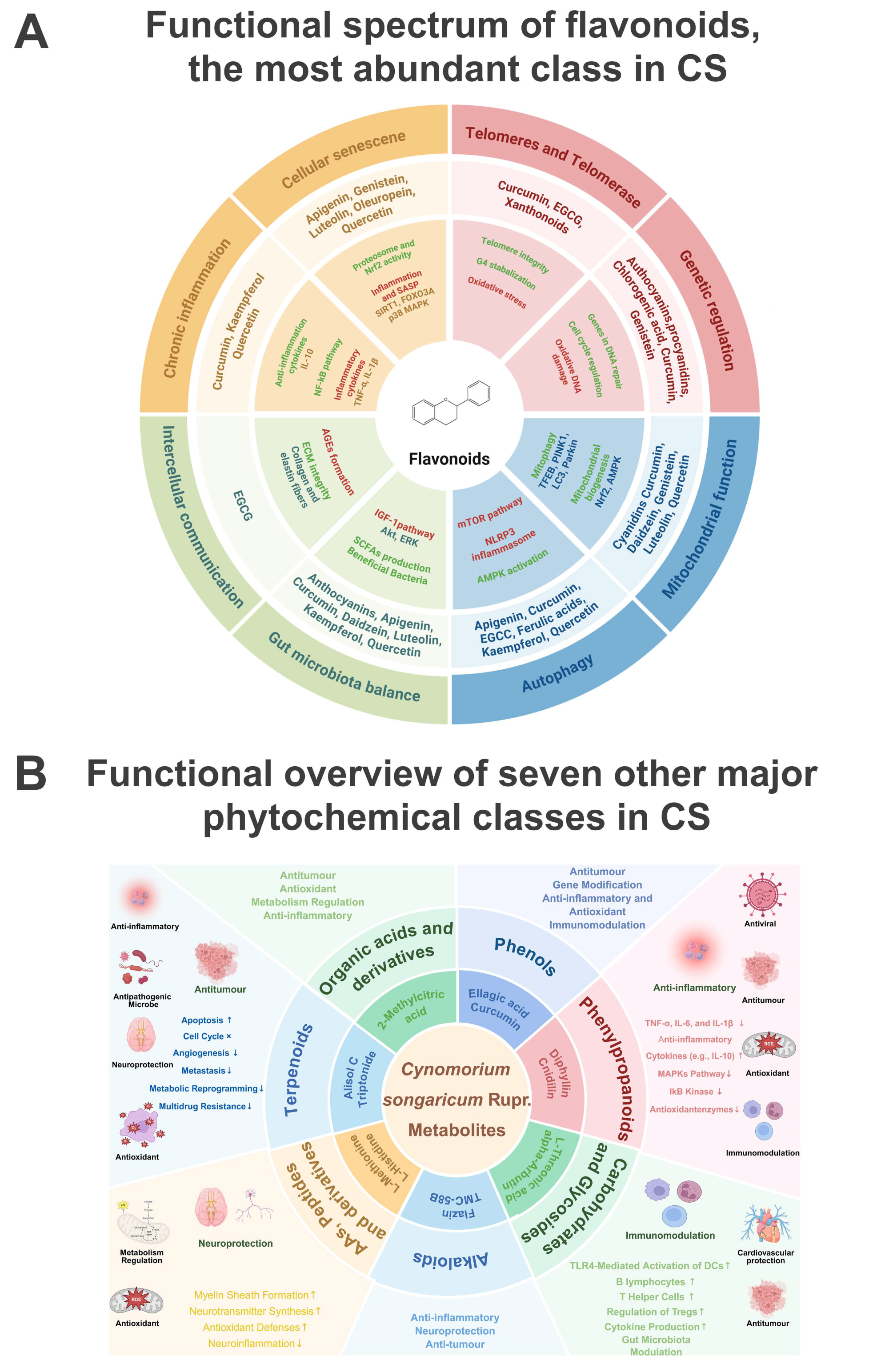
2.1. Main Chemical Components of Cynomorium songaricum Metabolites
2.2. Screening of Common Genes for Drugs and Diseases
2.3. Construction and Analysis of the Protein–Protein Interaction (PPI) Network
2.4. GO Functional Enrichment Analysis
2.5. KEGG Enrichment Analysis
2.6. Analysis of the “Potential Drug-like Compounds–Target–Pathway” Network
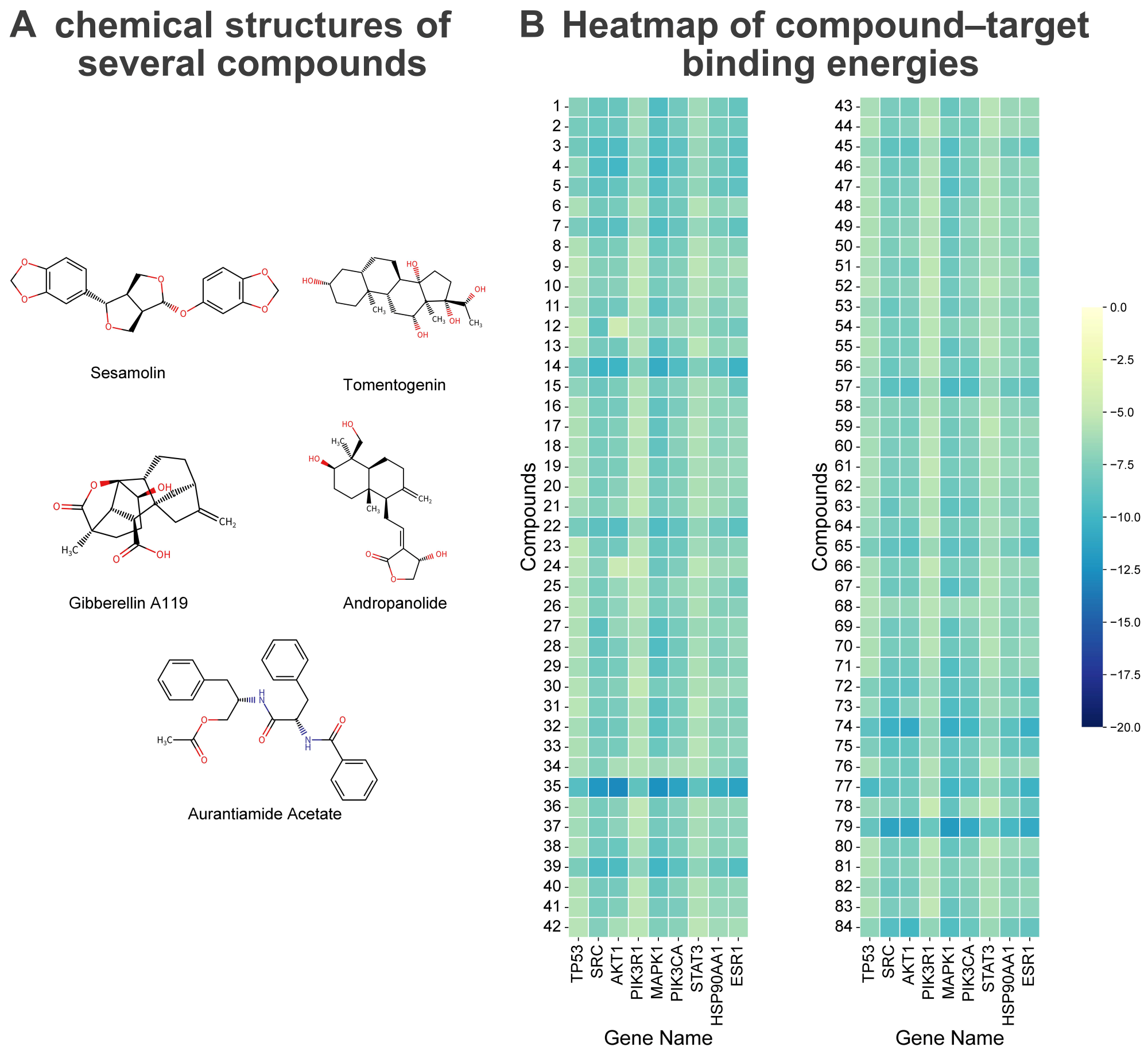
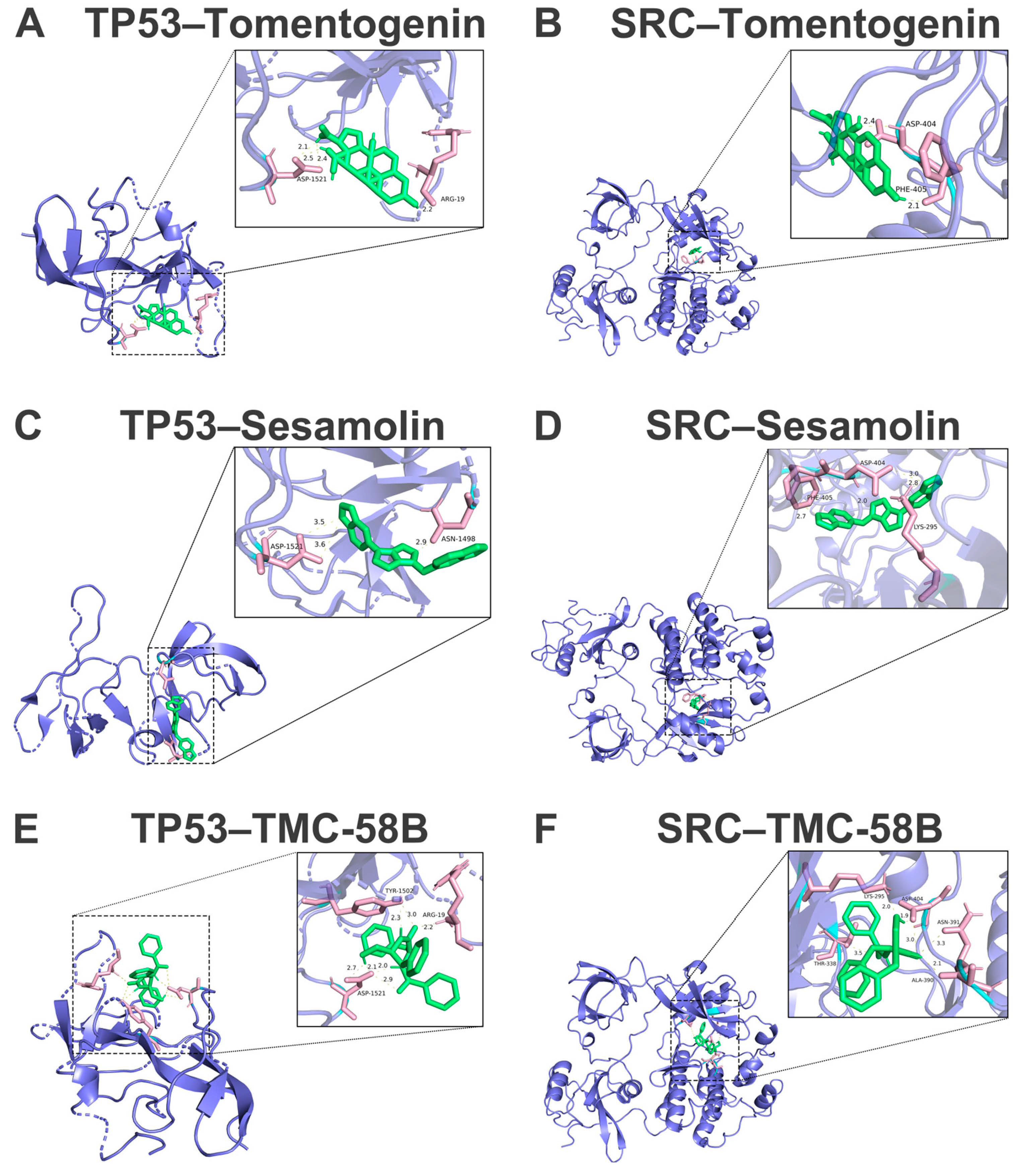
2.7. Molecular Docking Verification of Different Active Components and Core Targets in Cynomorium songaricum
2.8. Molecular Dynamics Simulations Validate the Stability of Key Complexes
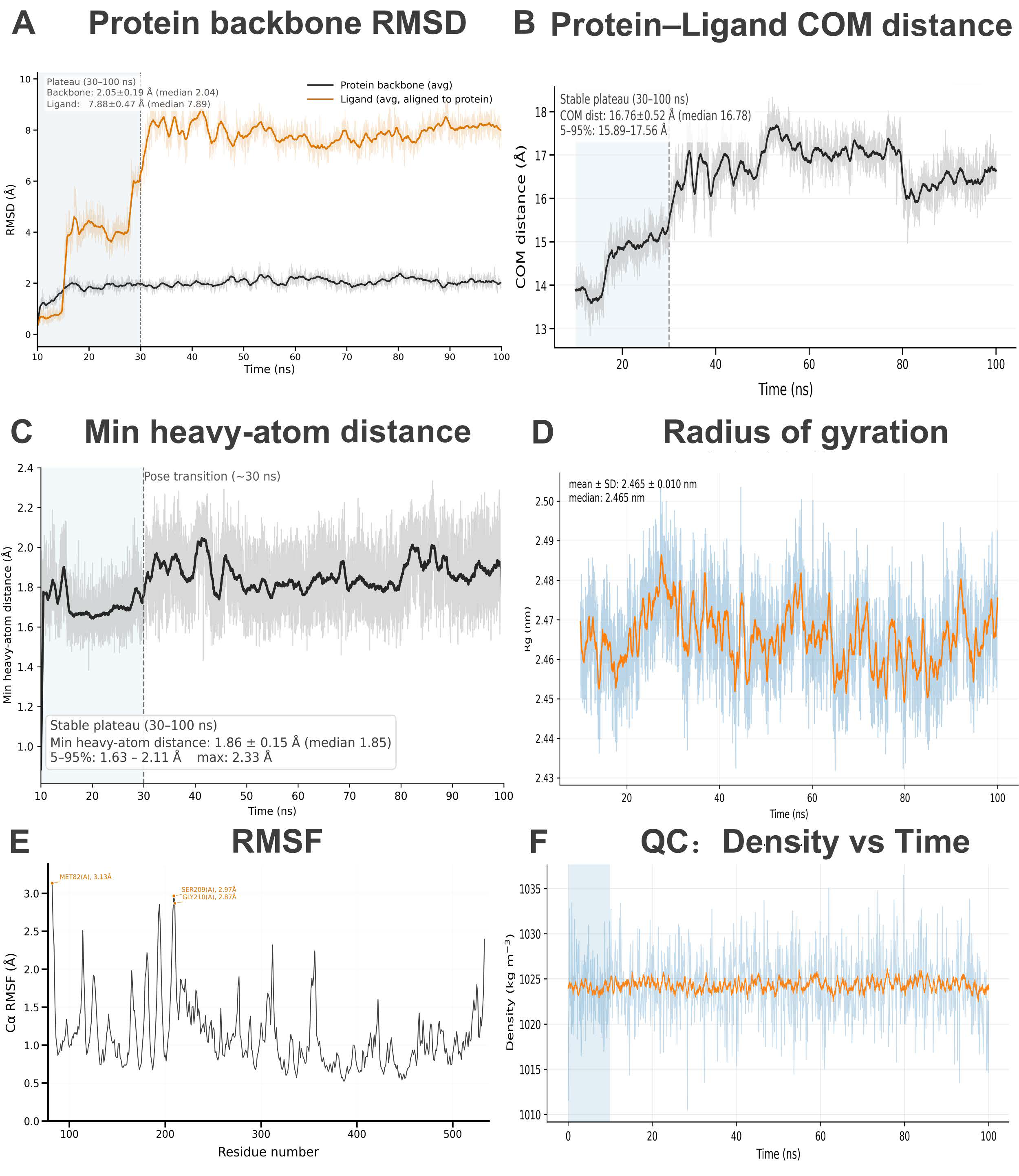
2.8.1. System Stability
2.8.2. Persistent Pocket Occupancy
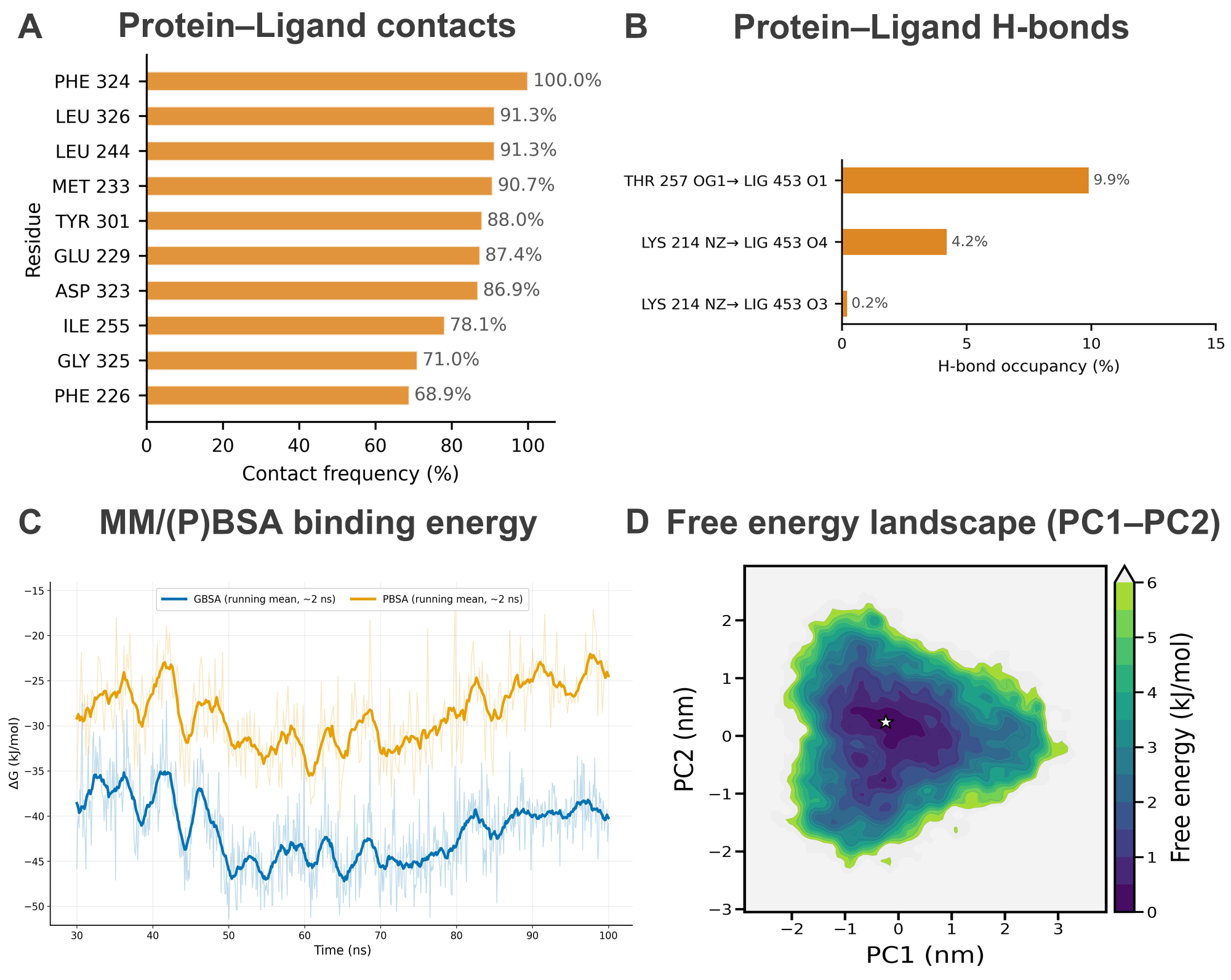
2.8.3. Hydrogen-Bond Persistence
2.8.4. Binding Energetics and Conformational Landscape (MM/(P)BSA, PCA/FEL)
2.8.5. Supporting and Negative Systems
3. Discussion
4. Materials and Methods
4.1. Chemical Composition Analysis of Cynomorium songaricum
4.1.1. Instruments and Materials
4.1.2. Preparation of Sample Solution
4.1.3. UHPLC-Q-Exactive Orbitrap MS/MS Analysis
4.1.4. Identification of Chemical Components in Cynomorium songaricum
4.2. Network Pharmacology Study
4.2.1. Prediction of Component Action Targets
4.2.2. Collection of Target Genes
4.2.3. Intersection of TCM Component Targets and Disease Targets
4.2.4. Construction of Protein-Protein Interaction (PPI) Network
4.2.5. GO Functional and KEGG Pathway Enrichment Analysis
4.2.6. Molecular Docking Evaluation
4.2.7. Molecular Dynamics Simulations
5. Conclusions
Supplementary Materials
Author Contributions
Funding
Institutional Review Board Statement
Informed Consent Statement
Data Availability Statement
Acknowledgments
Conflicts of Interest
Abbreviations
| CS | Cynomorium songaricum Rupr. |
| DL | Drug-Likeness |
| GI | Gastrointestinal |
| GO | Gene Ontology |
| KEGG | Kyoto Encyclopedia of Genes and Genomes |
| OMIM | Online Mendelian Inheritance in Man |
| OB | Oral Bioavailability |
| PPI | Protein-Protein Interaction |
| RCSB PDB | RCSB Protein Data Bank |
| TCM | Traditional Chinese Medicine |
| TCMSP | Traditional Chinese Medicine Systems Pharmacology Database and Analysis Platform |
| TIME | Tumor Immune Microenvironment |
| TAMs | Tumor-Associated Macrophages |
| UHPLC-Q-Exactive Orbitrap MS/MS | Ultra-High-Performance Liquid Chromatography-Q Exactive Orbitrap Mass Spectrometry |
References
- Łukasiewicz, S.; Czeczelewski, M.; Forma, A.; Baj, J.; Sitarz, R.; Stanisławek, A. Breast Cancer-Epidemiology, Risk Factors, Classification, Prognostic Markers, and Current Treatment Strategies-An Updated Review. Cancers 2021, 13, 4287. [Google Scholar] [CrossRef]
- Bray, F.; Laversanne, M.; Sung, H.; Ferlay, J.; Siegel, R.L.; Soerjomataram, I.; Jemal, A. Global cancer statistics 2022: GLOBOCAN estimates of incidence and mortality worldwide for 36 cancers in 185 countries. CA Cancer J. Clin. 2024, 74, 229–263. [Google Scholar] [CrossRef] [PubMed]
- Shakoor, H.; Feehan, J.; Apostolopoulos, V.; Platat, C.; Al Dhaheri, A.S.; Ali, H.I.; Ismail, L.C.; Bosevski, M.; Stojanovska, L. Immunomodulatory Effects of Dietary Polyphenols. Nutrients 2021, 13, 728. [Google Scholar] [CrossRef]
- Wang, J.; Su, H.; Wu, Z.; Wang, W.; Zhou, Y.; Li, M. Integrated Metabolites and Transcriptomics at Different Growth Stages Reveal Polysaccharide and Flavonoid Biosynthesis in Cynomorium songaricum. Int. J. Mol. Sci. 2022, 23, 10675. [Google Scholar] [CrossRef]
- Zagami, P.; Cortés, J.; Carey, L.A.; Curigliano, G. Immunotherapy in the treatment landscape of hormone receptor-positive (HR+) early breast cancer: Is new data clinical practice changing? ESMO Open 2024, 9, 103695. [Google Scholar] [CrossRef]
- Liu, Y.; Zhang, S.; Liu, K.; Hu, X.; Gu, X. Advances in drug discovery based on network pharmacology and omics technology. Curr. Pharm. Anal. 2024, 21, 33–43. [Google Scholar] [CrossRef]
- Cui, Z.; Guo, Z.; Miao, J.; Wang, Z.; Li, Q.; Chai, X.; Li, M. The genus Cynomorium in China: An ethnopharmacological and phytochemical review. J. Ethnopharmacol. 2013, 147, 1–15. [Google Scholar] [CrossRef]
- Liu, Z.; Li, Q.; Zhao, F.; Chen, J. A decade review on phytochemistry and pharmacological activities of Cynomorium songaricum Rupr.: Insights into metabolic syndrome. Phytomed. Int. J. Phytother. Phytopharm. 2025, 140, 156602. [Google Scholar] [CrossRef] [PubMed]
- Liu, Z.; Shang, Q.; Zuo, H.; Li, H.; Fang, D.; Zhang, J.; Huang, H.D.; Granato, D.; Chen, J.; Chen, J. Cynomorium songaricum: UHPLC/ESI-LTQ-Orbitrap-MS analysis and mechanistic study on insulin sensitivity of a flavonoid-enriched fraction. Phytomed. Int. J. Phytother. Phytopharm. 2024, 132, 155862. [Google Scholar] [CrossRef] [PubMed]
- Zhang, X.; Zhang, G.; Miao, Y.; Sun, X.; Huang, L. Effects of different drying methods on physico-chemical properties, bioactive and taste substances of Cynomorium songaricum. LWT 2023, 185, 115159. [Google Scholar] [CrossRef]
- Yang, L.; Shi, H.X.; Lin, P.; Xue, H.Y.; Wang, Y.G.; Liu, X.F. Research on Vitro Anti-Oxidant and Anti-Cancer Activity of Cynomorium songaricum Rupr.’s Extracts. Acta Med. Mediterr. 2018, 34, 19. [Google Scholar]
- Yang, L.; Wang, Z. LC-MS-based 3 M profiling strategy and network pharmacology reveal ginsenoside diversity and bioactivity transformation during decoction of the Shengmai formula. J. Pharm. Biomed. Anal. 2025, 265, 117053. [Google Scholar] [CrossRef]
- Sun, Z.; Xu, H.; Lu, G.; Yang, C.; Gao, X.; Zhang, J.; Liu, X.; Chen, Y.; Wang, K.; Guo, J.; et al. AKT1 Phosphorylates FDX1 to Promote Cuproptosis Resistance in Triple-Negative Breast Cancer. Adv. Sci. 2025, 12, e2408106. [Google Scholar] [CrossRef]
- Samad, M.A.; Ahmad, I.; Hasan, A.; Alhashmi, M.H.; Ayub, A.; Al-Abbasi, F.A.; Kumer, A.; Tabrez, S. STAT3 Signaling Pathway in Health and Disease. MedComm 2025, 6, e70152. [Google Scholar] [CrossRef]
- Zhang, P.; Whipp, E.C.; Skuli, S.J.; Gharghabi, M.; Saygin, C.; Sher, S.A.; Carroll, M.; Pan, X.; Eisenmann, E.D.; Lai, T.H.; et al. TP53 mutations and TET2 deficiency cooperate to drive leukemogenesis and establish an immunosuppressive environment. J. Clin. Investig. 2025, 135, e184021. [Google Scholar] [CrossRef]
- Wang, Y.; Rozen, V.; Zhao, Y.; Wang, Z. Oncogenic activation of PIK3CA in cancers: Emerging targeted therapies in precision oncology. Genes Dis. 2024, 12, 101430. [Google Scholar] [CrossRef]
- Liu, G.Y.; Sabatini, D.M. mTOR at the nexus of nutrition, growth, ageing and disease. Nat. Rev. Mol. Cell Biol. 2020, 21, 183–203. [Google Scholar] [CrossRef]
- Zhou, X.; Chen, Z.; Yu, Y.; Li, M.; Cao, Y.; Prochownik, E.V.; Li, Y. Increases in 4-Acetaminobutyric Acid Generated by Phosphomevalonate Kinase Suppress CD8+ T Cell Activation and Allow Tumor Immune Escape. Adv. Sci. 2024, 11, e2403629. [Google Scholar] [CrossRef]
- Hu, Y.; Dong, Z.; Liu, K. Unraveling the complexity of STAT3 in cancer: Molecular understanding and drug discovery. J. Exp. Clin. Cancer Res. 2024, 43, 23. [Google Scholar] [CrossRef] [PubMed]
- Patel, C.H.; Powell, J.D. More TOR: The expanding role of mTOR in regulating immune responses. Immunity 2025, 58, 1629–1645. [Google Scholar] [CrossRef]
- Peng, D.; Tanikawa, T.; Li, W.; Zhao, L.; Vatan, L.; Szeliga, W.; Wan, S.; Wei, S.; Wang, Y.; Liu, Y.; et al. Myeloid-Derived Suppressor Cells Endow Stem-like Qualities to Breast Cancer Cells through IL6/STAT3 and NO/NOTCH Cross-talk Signaling. Cancer Res. 2016, 76, 3156–3165. [Google Scholar] [CrossRef]
- Li, K.; Shi, H.; Zhang, B.; Ou, X.; Ma, Q.; Chen, Y.; Shu, P.; Li, D.; Wang, Y. Myeloid-derived suppressor cells as immunosuppressive regulators and therapeutic targets in cancer. Signal Transduct. Target. Ther. 2021, 6, 362. [Google Scholar] [CrossRef]
- Savas, P.; Virassamy, B.; Ye, C.; Salim, A.; Mintoff, C.P.; Caramia, F.; Salgado, R.; Byrne, D.J.; Teo, Z.L.; Dushyanthen, S.; et al. Single-cell profiling of breast cancer T cells reveals a tissue-resident memory subset associated with improved prognosis. Nat. Med. 2018, 24, 986–993. [Google Scholar] [CrossRef] [PubMed]
- Imani, S.; Farghadani, R.; Roozitalab, G.; Maghsoudloo, M.; Emadi, M.; Moradi, A.; Abedi, B.; Jabbarzadeh Kaboli, P. Reprogramming the breast tumor immune microenvironment: Cold-to-hot transition for enhanced immunotherapy. J. Exp. Clin. Cancer Res. 2025, 44, 131. [Google Scholar] [CrossRef]
- Zhang, M.; Liu, Z.Z.; Aoshima, K.; Cai, W.L.; Sun, H.; Xu, T.; Zhang, Y.; An, Y.; Chen, J.F.; Chan, L.H.; et al. CECR2 drives breast cancer metastasis by promoting NF-κB signaling and macrophage-mediated immune suppression. Sci. Transl. Med. 2022, 14, eabf5473. [Google Scholar] [CrossRef]
- Zeligs, K.P.; Neuman, M.K.; Annunziata, C.M. Molecular Pathways: The Balance between Cancer and the Immune System Challenges the Therapeutic Specificity of Targeting Nuclear Factor-κB Signaling for Cancer Treatment. Clin. Cancer Res. 2016, 22, 4302–4308. [Google Scholar] [CrossRef] [PubMed]
- Pardali, K.; Moustakas, A. Actions of TGF-beta as tumor suppressor and pro-metastatic factor in human cancer. Biochim. Biophys. Acta 2007, 1775, 21–62. [Google Scholar] [PubMed]
- Larson, C.; Oronsky, B.; Carter, C.A.; Oronsky, A.; Knox, S.J.; Sher, D.; Reid, T.R. TGF-beta: A master immune regulator. Expert Opin. Ther. Targets 2020, 24, 427–438. [Google Scholar] [CrossRef]
- Katsuno, Y.; Derynck, R. Epithelial plasticity, epithelial-mesenchymal transition, and the TGF-β family. Dev. Cell 2021, 56, 726–746. [Google Scholar] [CrossRef]
- Shi, S.; Ou, X.; Liu, C.; Li, R.; Zheng, Q.; Hu, L. NF-κB signaling and the tumor microenvironment in osteosarcoma: Implications for immune evasion and therapeutic resistance. Front. Immunol. 2025, 16, 1518664. [Google Scholar] [CrossRef]
- Hosseini, R.; Hosseinzadeh, N.; Asef-Kabiri, L.; Akbari, A.; Ghezelbash, B.; Sarvnaz, H.; Akbari, M.E. Small extracellular vesicle TGF-β in cancer progression and immune evasion. Cancer Gene Ther. 2023, 30, 1309–1322. [Google Scholar] [CrossRef]
- Lee, S.E.; Lee, J.K. Sesamolin affects both natural killer cells and cancer cells in order to create an optimal environment for cancer cell sensitization. Int. Immunopharmacol. 2018, 64, 16–23. [Google Scholar] [CrossRef] [PubMed]
- Mostashari, P.; Mousavi Khaneghah, A. Sesame Seeds: A Nutrient-Rich Superfood. Foods 2024, 13, 1153. [Google Scholar] [CrossRef]
- Zhang, X.; Li, L.; Chen, J.; Hu, M.; Zhang, Y.; Zhang, X.; Lu, Y. Investigation of anti-depression effects and potential mechanisms of the ethyl acetate extract of Cynomorium songaricum Rupr. through the integration of in vivo experiments, LC-MS/MS chemical analysis, and a systems biology approach. Front. Pharmacol. 2023, 14, 1239197. [Google Scholar] [CrossRef]
- Perrott, K.M.; Wiley, C.D.; Desprez, P.Y.; Campisi, J. Apigenin suppresses the senescence-associated secretory phenotype and paracrine effects on breast cancer cells. GeroScience 2017, 39, 161–173. [Google Scholar] [CrossRef]
- Chen, X.; Zhang, W.; Xu, X. Cyanidin-3-glucoside suppresses the progression of lung adenocarcinoma by downregulating TP53I3 and inhibiting PI3K/AKT/mTOR pathway. World J. Surg. Oncol. 2021, 19, 232. [Google Scholar] [CrossRef] [PubMed]
- Van Aller, G.S.; Carson, J.D.; Tang, W.; Peng, H.; Zhao, L.; Copeland, R.A.; Tummino, P.J.; Luo, L. Epigallocatechin gallate (EGCG), a major component of green tea, is a dual phosphoinositide-3-kinase/mTOR inhibitor. Biochem. Biophys. Res. Commun. 2011, 406, 194–199. [Google Scholar] [CrossRef]
- Chung, S.S.; Dutta, P.; Chard, N.; Wu, Y.; Chen, Q.H.; Chen, G.; Vadgama, J. A novel curcumin analog inhibits canonical and non-canonical functions of telomerase through STAT3 and NF-κB inactivation in colorectal cancer cells. Oncotarget 2019, 10, 4516–4531. [Google Scholar] [CrossRef] [PubMed]
- Cho, E.; Chung, E.Y.; Jang, H.Y.; Hong, O.Y.; Chae, H.S.; Jeong, Y.J.; Kim, S.Y.; Kim, B.S.; Yoo, D.J.; Kim, J.S.; et al. Anti-cancer Effect of Cyanidin-3-glucoside from Mulberry via Caspase-3 Cleavage and DNA Fragmentation in vitro and in vivo. Anti-Cancer Agents Med. Chem. 2017, 17, 1519–1525. [Google Scholar] [CrossRef]
- Sung, B.; Chung, H.Y.; Kim, N.D. Role of Apigenin in Cancer Prevention via the Induction of Apoptosis and Autophagy. J. Cancer Prev. 2016, 21, 216–226. [Google Scholar] [CrossRef]
- Huang, W.W.; Tsai, S.C.; Peng, S.F.; Lin, M.W.; Chiang, J.H.; Chiu, Y.J.; Fushiya, S.; Tseng, M.T.; Yang, J.S. Kaempferol induces autophagy through AMPK and AKT signaling molecules and causes G2/M arrest via downregulation of CDK1/cyclin B in SK-HEP-1 human hepatic cancer cells. Int. J. Oncol. 2013, 42, 2069–2077. [Google Scholar] [CrossRef]
- Wang, J.; Wu, R.; Hua, Y.; Ling, S.; Xu, X. Naringenin ameliorates vascular senescence and atherosclerosis involving SIRT1 activation. J. Pharm. Pharmacol. 2023, 75, 1021–1033. [Google Scholar] [CrossRef]
- Chen, W.; Li, Y.; Zhang, C.; Zhou, H.; Ma, J.; Vaishnani, D.K.; Zeng, B.; Yu, J.; Mao, H.; Zheng, J. Multi-Omics and Experimental Validation Reveal Anti-HCC Mechanisms of Tibetan Liuwei Muxiang Pill and Quercetin. Pharmaceuticals 2025, 18, 900. [Google Scholar] [CrossRef]
- An, Z.-Y.; Jin, J.-M.; Tan, Z.-J.; Wang, Y.-F.; Wang, T.; Dong, Z.-K.; Chen, J.-J.; Xiong, Y.-C.; Jin, W.-L. Lanzhou lily as nutraceuticals: Identification of active metabolites via the UHPLC-Q-exactive orbitrap mass spectrometer. Microchem. J. 2025, 213, 113626. [Google Scholar] [CrossRef]
- Daina, A.; Michielin, O.; Zoete, V. SwissADME: A free web tool to evaluate pharmacokinetics, drug-likeness and medicinal chemistry friendliness of small molecules. Sci. Rep. 2017, 7, 42717. [Google Scholar] [CrossRef] [PubMed]
- Ru, J.; Li, P.; Wang, J.; Zhou, W.; Li, B.; Huang, C.; Li, P.; Guo, Z.; Tao, W.; Yang, Y.; et al. TCMSP: A database of systems pharmacology for drug discovery from herbal medicines. J. Cheminform. 2014, 6, 13. [Google Scholar] [CrossRef] [PubMed]
- Liu, H.; Wang, J.; Zhou, W.; Wang, Y.; Yang, L. Systems approaches and polypharmacology for drug discovery from herbal medicines: An example using licorice. J. Ethnopharmacol. 2013, 146, 773–793. [Google Scholar] [CrossRef]
- Daina, A.; Michielin, O.; Zoete, V. SwissTargetPrediction: Updated data and new features for efficient prediction of protein targets of small molecules. Nucleic Acids Res. 2019, 47, W357–W364. [Google Scholar] [CrossRef]
- Bardou, P.; Mariette, J.; Escudié, F.; Djemiel, C.; Klopp, C. Jvenn: An interactive Venn diagram viewer. BMC Bioinform. 2014, 15, 293. [Google Scholar] [CrossRef]
- Zhou, Y.; Zhou, B.; Pache, L.; Chang, M.; Khodabakhshi, A.H.; Tanaseichuk, O.; Benner, C.; Chanda, S.K. Metascape provides a biologist-oriented resource for the analysis of systems-level datasets. Nat. Commun. 2019, 10, 1523. [Google Scholar] [CrossRef]
- Jiang, S.; Li, H.; Zhang, L.; Mu, W.; Zhang, Y.; Chen, T.; Wu, J.; Tang, H.; Zheng, S.; Liu, Y.; et al. Generic Diagramming Platform (GDP): A comprehensive database of high-quality biomedical graphics. Nucleic Acids Res. 2025, 53, D1670–D1676. [Google Scholar] [CrossRef] [PubMed]


Disclaimer/Publisher’s Note: The statements, opinions and data contained in all publications are solely those of the individual author(s) and contributor(s) and not of MDPI and/or the editor(s). MDPI and/or the editor(s) disclaim responsibility for any injury to people or property resulting from any ideas, methods, instructions or products referred to in the content. |
© 2026 by the authors. Licensee MDPI, Basel, Switzerland. This article is an open access article distributed under the terms and conditions of the Creative Commons Attribution (CC BY) license.
Share and Cite
Mao, Z.-A.; Zhang, M.-L.; An, Z.-Y.; Jin, W.-L. Systematic Investigation of Tumor Immune Microenvironment Modulation by Cynomorium songaricum Against Breast Cancer Through Integrated Chemomics, Network Pharmacology and Molecular Docking. Pharmaceuticals 2026, 19, 314. https://doi.org/10.3390/ph19020314
Mao Z-A, Zhang M-L, An Z-Y, Jin W-L. Systematic Investigation of Tumor Immune Microenvironment Modulation by Cynomorium songaricum Against Breast Cancer Through Integrated Chemomics, Network Pharmacology and Molecular Docking. Pharmaceuticals. 2026; 19(2):314. https://doi.org/10.3390/ph19020314
Chicago/Turabian StyleMao, Ze-An, Mei-Ling Zhang, Zi-Yi An, and Wei-Lin Jin. 2026. "Systematic Investigation of Tumor Immune Microenvironment Modulation by Cynomorium songaricum Against Breast Cancer Through Integrated Chemomics, Network Pharmacology and Molecular Docking" Pharmaceuticals 19, no. 2: 314. https://doi.org/10.3390/ph19020314
APA StyleMao, Z.-A., Zhang, M.-L., An, Z.-Y., & Jin, W.-L. (2026). Systematic Investigation of Tumor Immune Microenvironment Modulation by Cynomorium songaricum Against Breast Cancer Through Integrated Chemomics, Network Pharmacology and Molecular Docking. Pharmaceuticals, 19(2), 314. https://doi.org/10.3390/ph19020314