Plasma miRNA-Metabolite Dysregulation in People with HIV with Cirrhosis Despite Successful HCV Cure

 , , , , , , , ,
  ,
,
Abstract
1. Introduction
2. Results
2.1. Patient Characteristics
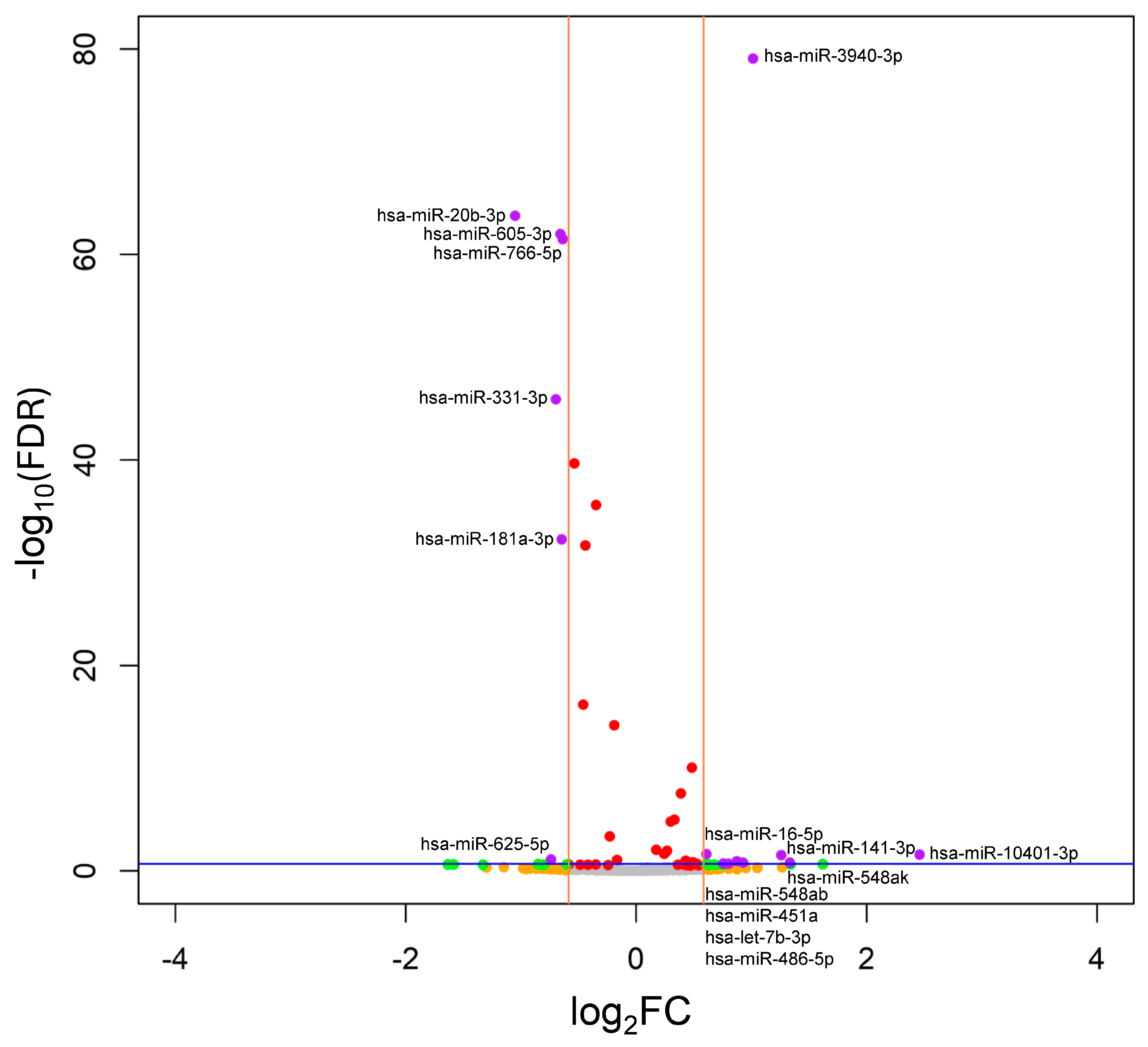
2.2. MiRNome Characterization in PWH with Cirrhosis
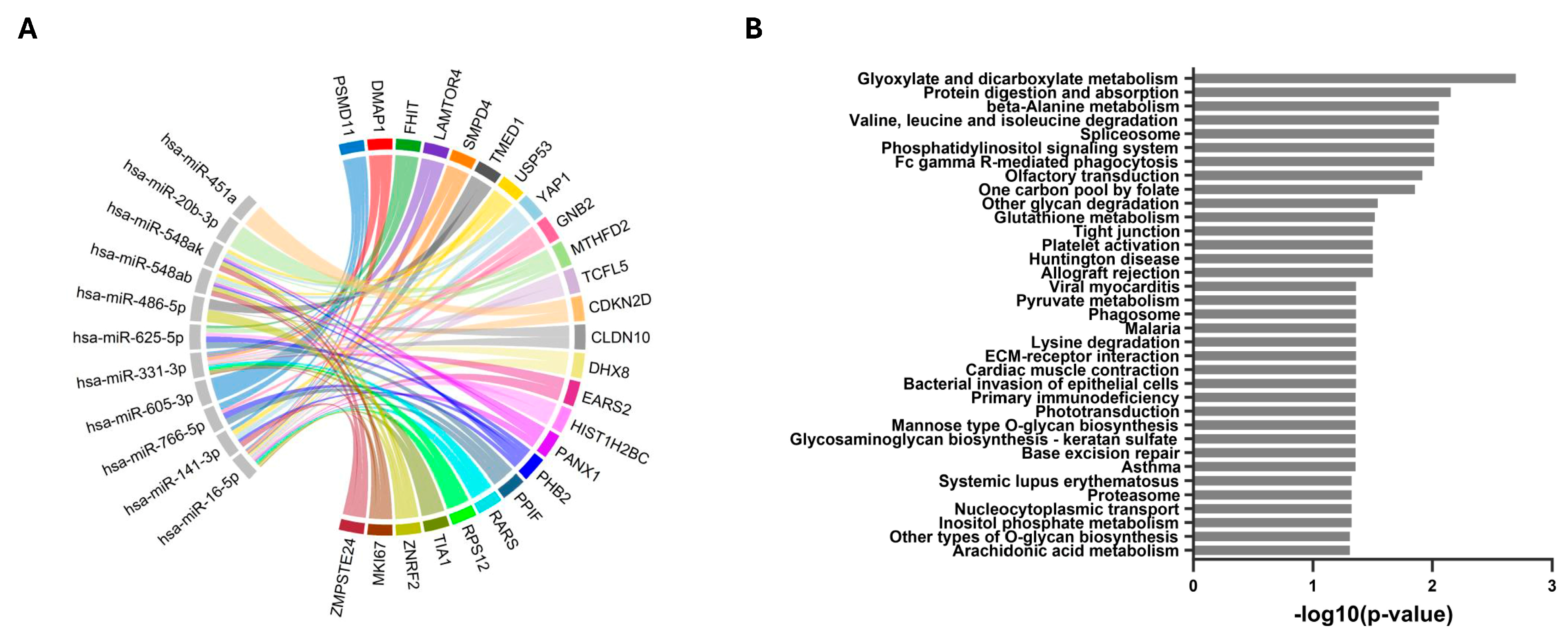
2.3. Target Gene Identification and Pathway Enrichment Analysis
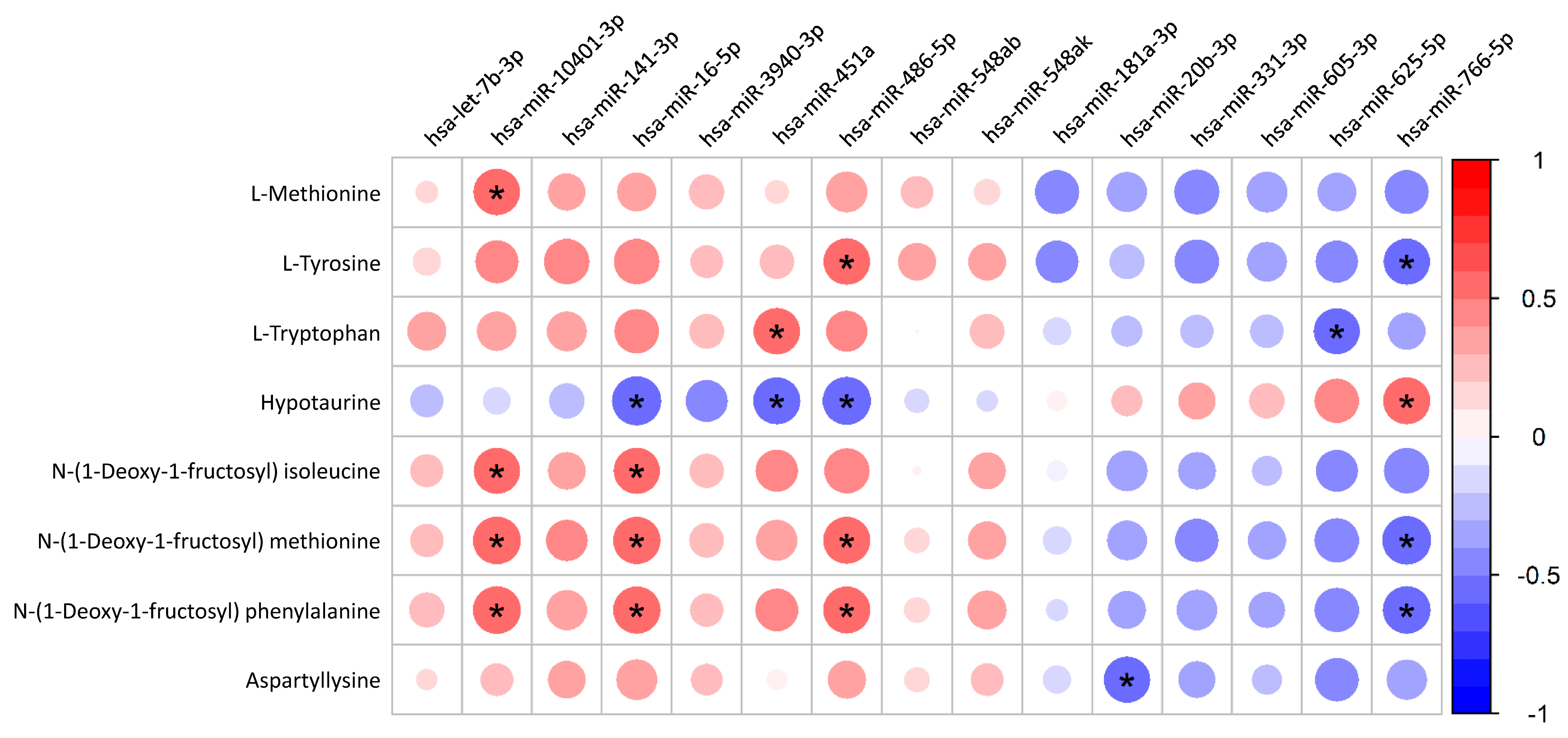
2.4. Correlation Between SDE miRNAs and Metabolites
3. Discussion
3.1. Pro-Fibrotic and Inflammatory miRNA Signature Despite SVR
3.2. Dysregulation of Amino Acid Metabolism Leads to Persistent Liver Disease
3.3. Strengths and Limitations
4. Materials and Methods
4.1. Study Population
4.2. Clinical Data and Sample Collection
4.3. Outcome Variable
4.4. RNA Extraction and miRNome High Throughput Sequencing
4.5. Bioinformatics Analysis
4.6. Metabolites Detection and Identification
4.7. Statistical Analysis
4.8. Target Gene Identification and Pathway Enrichment Analysis
5. Conclusions
Supplementary Materials
Author Contributions
Funding
Institutional Review Board Statement
Informed Consent Statement
Data Availability Statement
Acknowledgments
Conflicts of Interest
Abbreviations
| ART | Antiretroviral therapy |
| BMI | Body mass index |
| CE-MS | Capillary electrophoresis-mass spectrometry |
| DAA | Direct-acting antiviral |
| FC | Fold Change |
| FDR | False discovery rate |
| GLM | Generalized linear models |
| HBV | Hepatitis B virus |
| HCC | Hepatocarcinoma |
| HCV | Hepatitis C virus |
| HIV | Human Immunodeficiency Virus |
| HSC | Hepatic stellate cells |
| HSI | Hepatic steatosis index |
| IFN | Interferon |
| KEGG | Kyoto Encyclopedia of Genes and Genomes |
| LSM | Liver stiffness measurement |
| MKI67 | Marker of proliferation Ki-67 |
| miRNAs | microRNAs |
| mRNA | Messenger RNA |
| MTHFD2 | Methylenetetrahydrofolate dehydrogenase (NADP + dependent) 2 |
| PCA | Principal component analysis |
| PPIF | Peptidylprolyl isomerase F |
| PWH | People with HIV |
| RARS | Arginyl-tRNA synthetase |
| SDE | Significantly differentially expressed |
| SMPD4 | Sphingomyelin phosphodiesterase 4 |
| SVR | Sustained Virologic response |
| TIA1 | TIA1 cytotoxic granule associated RNA binding protein |
| YAP1 | Yes1 associated transcriptional regulator |
Appendix A
References
- Sarrazin, C. Treatment failure with DAA therapy: Importance of resistance. J. Hepatol. 2021, 74, 1472–1482. [Google Scholar] [CrossRef]
- Franco, S.; Buccione, D.; Tural, C.; Martinez, M.A. Circulating microRNA signatures that predict liver fibrosis progression in patients with HIV-1/hepatitis C virus coinfections. AIDS 2021, 35, 1355–1363. [Google Scholar] [CrossRef]
- Kaspar, M.B.; Sterling, R.K. Mechanisms of liver disease in patients infected with HIV. BMJ Open Gastroenterol. 2017, 4, e000166. [Google Scholar] [CrossRef]
- Joshi, N.; Chandane Tak, M.; Mukherjee, A. The involvement of microRNAs in HCV and HIV infection. Ther. Adv. Vaccines Immunother. 2022, 10, 25151355221106104. [Google Scholar] [CrossRef]
- Martinez, M.A.; Tural, C.; Franco, S. Circulating MicroRNAs as a Tool for Diagnosis of Liver Disease Progression in People Living with HIV-1. Viruses 2022, 14, 1118. [Google Scholar] [CrossRef] [PubMed]
- Wang, X.; He, Y.; Mackowiak, B.; Gao, B. MicroRNAs as regulators, biomarkers and therapeutic targets in liver diseases. Gut 2021, 70, 784–795. [Google Scholar] [CrossRef]
- Willeit, P.; Skroblin, P.; Kiechl, S.; Fernandez-Hernando, C.; Mayr, M. Liver microRNAs: Potential mediators and biomarkers for metabolic and cardiovascular disease? Eur. Heart J. 2016, 37, 3260–3266. [Google Scholar] [CrossRef] [PubMed]
- Schueller, F.; Roy, S.; Vucur, M.; Trautwein, C.; Luedde, T.; Roderburg, C. The Role of miRNAs in the Pathophysiology of Liver Diseases and Toxicity. Int. J. Mol. Sci. 2018, 19, 261. [Google Scholar] [CrossRef]
- Gupta, A.; Swaminathan, G.; Martin-Garcia, J.; Navas-Martin, S. MicroRNAs, hepatitis C virus, and HCV/HIV-1 co-infection: New insights in pathogenesis and therapy. Viruses 2012, 4, 2485–2513. [Google Scholar] [CrossRef]
- Kaur, N.; Garg, R.; Tapasvi, C.; Goyal, G. Micro RNAs as a potential biomarker for predicting liver fibrosis severity in hepatitis C virus affected patients. World J. Virol. 2025, 14, 101976. [Google Scholar] [CrossRef] [PubMed]
- Miyaaki, H.; Takatsuki, M.; Ichikawa, T.; Hidaka, M.; Soyama, A.; Ohdan, H.; Inomata, Y.; Uemoto, S.; Kokudo, N.; Nakao, K.; et al. Intrahepatic MicroRNA Profile of Liver Transplant Recipients with Hepatitis C Virus Co-Infected with Human Immunodeficiency Virus. Ann. Transplant. 2017, 22, 701–706. [Google Scholar] [CrossRef]
- Anadol, E.; Schierwagen, R.; Elfimova, N.; Tack, K.; Schwarze-Zander, C.; Eischeid, H.; Noetel, A.; Boesecke, C.; Jansen, C.; Dold, L.; et al. Circulating microRNAs as a marker for liver injury in human immunodeficiency virus patients. Hepatology 2015, 61, 46–55. [Google Scholar] [CrossRef] [PubMed]
- Sun, Z.; Evans, J.; Bhagwate, A.; Middha, S.; Bockol, M.; Yan, H.; Kocher, J.P. CAP-miRSeq: A comprehensive analysis pipeline for microRNA sequencing data. BMC Genom. 2014, 15, 423. [Google Scholar] [CrossRef]
- Sarkans, U.; Gostev, M.; Athar, A.; Behrangi, E.; Melnichuk, O.; Ali, A.; Minguet, J.; Rada, J.C.; Snow, C.; Tikhonov, A.; et al. The BioStudies database-one stop shop for all data supporting a life sciences study. Nucleic Acids Res. 2018, 46, D1266–D1270. [Google Scholar] [CrossRef]
- Ma, L.; Wei, J.; Zeng, Y.; Liu, J.; Xiao, E.; Kang, Y.; Kang, Y. Mesenchymal stem cell-originated exosomal circDIDO1 suppresses hepatic stellate cell activation by miR-141-3p/PTEN/AKT pathway in human liver fibrosis. Drug Deliv. 2022, 29, 440–453. [Google Scholar] [CrossRef]
- Liang, H.; Wang, X.; Si, C.; Duan, Y.; Chen, B.; Liang, H.; Yang, D. Downregulation of miR-141 deactivates hepatic stellate cells by targeting the PTEN/AKT/mTOR pathway. Int. J. Mol. Med. 2020, 46, 406–414. [Google Scholar] [CrossRef]
- Dhayat, S.A.; Husing, A.; Senninger, N.; Schmidt, H.H.; Haier, J.; Wolters, H.; Kabar, I. Circulating microRNA-200 Family as Diagnostic Marker in Hepatocellular Carcinoma. PLoS ONE 2015, 10, e0140066. [Google Scholar] [CrossRef]
- Liu, C.Z.; Ye, Z.H.; Ma, J.; He, R.Q.; Liang, H.W.; Peng, Z.G.; Chen, G. A qRT-PCR and Gene Functional Enrichment Study Focused on Downregulation of miR-141-3p in Hepatocellular Carcinoma and Its Clinicopathological Significance. Technol. Cancer Res. Treat. 2017, 16, 835–849. [Google Scholar] [CrossRef] [PubMed]
- Yang, Z.; Wei, Z.; Wu, X.; Yang, H. Screening of exosomal miRNAs derived from subcutaneous and visceral adipose tissues: Determination of targets for the treatment of obesity and associated metabolic disorders. Mol. Med. Rep. 2018, 18, 3314–3324. [Google Scholar] [CrossRef] [PubMed]
- Son, G.H.; Kim, Y.; Lee, J.J.; Lee, K.Y.; Ham, H.; Song, J.E.; Park, S.T.; Kim, Y.H. MicroRNA-548 regulates high mobility group box 1 expression in patients with preterm birth and chorioamnionitis. Sci. Rep. 2019, 9, 19746. [Google Scholar] [CrossRef]
- Xing, T.J.; Xu, H.T.; Yu, W.Q.; Wang, B.; Zhang, J. MiRNA-548ah, a potential molecule associated with transition from immune tolerance to immune activation of chronic hepatitis B. Int. J. Mol. Sci. 2014, 15, 14411–14426. [Google Scholar] [CrossRef] [PubMed]
- Toro, R.; Perez-Serra, A.; Mangas, A.; Campuzano, O.; Sarquella-Brugada, G.; Quezada-Feijoo, M.; Ramos, M.; Alcala, M.; Carrera, E.; Garcia-Padilla, C.; et al. miR-16-5p Suppression Protects Human Cardiomyocytes against Endoplasmic Reticulum and Oxidative Stress-Induced Injury. Int. J. Mol. Sci. 2022, 23, 1036. [Google Scholar] [CrossRef]
- Lin, Z.; Huang, W.; Xie, Z.; Yi, Y.; Li, Z. Expression, Clinical Significance, Immune Infiltration, and Regulation Network of miR-3940-5p in Lung Adenocarcinoma Based on Bioinformatic Analysis and Experimental Validation. Int. J. Gen. Med. 2022, 15, 6451–6464. [Google Scholar] [CrossRef]
- Letafati, A.; Najafi, S.; Mottahedi, M.; Karimzadeh, M.; Shahini, A.; Garousi, S.; Abbasi-Kolli, M.; Sadri Nahand, J.; Tamehri Zadeh, S.S.; Hamblin, M.R.; et al. MicroRNA let-7 and viral infections: Focus on mechanisms of action. Cell Mol. Biol. Lett. 2022, 27, 14. [Google Scholar] [CrossRef]
- Iannone, F.; Crocco, P.; Dato, S.; Passarino, G.; Rose, G. Circulating miR-181a as a novel potential plasma biomarker for multimorbidity burden in the older population. BMC Geriatr. 2022, 22, 772. [Google Scholar] [CrossRef]
- Khalilian, S.; Abedinlou, H.; Hussen, B.M.; Imani, S.Z.H.; Ghafouri-Fard, S. The emerging role of miR-20b in human cancer and other disorders: Pathophysiology and therapeutic implications. Front. Oncol. 2022, 12, 985457. [Google Scholar] [CrossRef]
- Zhang, G.; Zhang, Y.; Wang, B.; Xu, H.; Xie, D.; Guo, Z. miR-605-3p may affect caerulein-induced ductal cell injury and pyroptosis in acute pancreatitis by targeting the DUOX2/NLRP3/NF-kappaB pathway. PeerJ 2024, 12, e17874. [Google Scholar] [CrossRef]
- Pan, X.; Wei, C.; Su, J.; Fang, M.; Lin, Q.; Qin, Y.; Gao, J.; Zhao, J.; Zhao, H.; Liu, F. A comprehensive analysis of the prognostic value, expression characteristics and immune correlation of MKI67 in cancers. Front. Immunol. 2025, 16, 1531708. [Google Scholar] [CrossRef] [PubMed]
- Han, R.; Shi, J.; Cheng, K.; Wang, Z.; Chen, Y.; Spellecy, O.; Faisal, A.S.M.; Aryal, I.; Chen, J.; Craven, R.; et al. Focal Adhesion Kinase Intersects With the BRD4-MYC Axis and YAP1 to Drive Tumor Cell Growth, Phenotypic Plasticity, Stemness, and Metastatic Potential in Colorectal Cancer. Cancer Med. 2025, 14, e71227. [Google Scholar] [CrossRef]
- Feng, Z.; Yuan, L.; Ma, L.; Yu, W.; Kheir, F.; Kasmann, L.; Brueckl, W.M.; Jin, K.; Wang, D.; Shen, Y.; et al. Peptidyl-prolyl isomerase F as a prognostic biomarker associated with immune infiltrates and mitophagy in lung adenocarcinoma. Transl. Lung Cancer Res. 2024, 13, 1346–1364. [Google Scholar] [CrossRef] [PubMed]
- Lamichhane, P.P.; Aditi; Neil, B.H.; Kilgore, P.B.; Torres, A.G.; Chopra, A.K.; Samir, P. Stress granule component TIA-1 is a negative regulator of the non-canonical NLRP3 inflammasome. bioRxiv 2025. [Google Scholar] [CrossRef] [PubMed]
- Lee, M.; Lee, S.Y.; Bae, Y.S. Functional roles of sphingolipids in immunity and their implication in disease. Exp. Mol. Med. 2023, 55, 1110–1130. [Google Scholar] [CrossRef] [PubMed]
- Zhang, Y.; Zhan, L.; Zhang, L.; Shi, Q.; Li, L. Branched-Chain Amino Acids in Liver Diseases: Complexity and Controversy. Nutrients 2024, 16, 1875. [Google Scholar] [CrossRef]
- Yamakado, M.; Tanaka, T.; Nagao, K.; Imaizumi, A.; Komatsu, M.; Daimon, T.; Miyano, H.; Tani, M.; Toda, A.; Yamamoto, H.; et al. Plasma amino acid profile associated with fatty liver disease and co-occurrence of metabolic risk factors. Sci. Rep. 2017, 7, 14485. [Google Scholar] [CrossRef]
- Zhu, Z.; Leung, G.K.K. More Than a Metabolic Enzyme: MTHFD2 as a Novel Target for Anticancer Therapy? Front. Oncol. 2020, 10, 658. [Google Scholar] [CrossRef]
- Cui, H.; Diedrich, J.K.; Wu, D.C.; Lim, J.J.; Nottingham, R.M.; Moresco, J.J.; Yates, J.R., 3rd; Blencowe, B.J.; Lambowitz, A.M.; Schimmel, P. Arg-tRNA synthetase links inflammatory metabolism to RNA splicing and nuclear trafficking via SRRM2. Nat. Cell Biol. 2023, 25, 592–603. [Google Scholar] [CrossRef]
- Kinny-Koster, B.; Bartels, M.; Becker, S.; Scholz, M.; Thiery, J.; Ceglarek, U.; Kaiser, T. Plasma Amino Acid Concentrations Predict Mortality in Patients with End-Stage Liver Disease. PLoS ONE 2016, 11, e0159205. [Google Scholar] [CrossRef]
- Li, Z.; Wang, F.; Liang, B.; Su, Y.; Sun, S.; Xia, S.; Shao, J.; Zhang, Z.; Hong, M.; Zhang, F.; et al. Methionine metabolism in chronic liver diseases: An update on molecular mechanism and therapeutic implication. Signal Transduct. Target. Ther. 2020, 5, 280. [Google Scholar] [CrossRef]
- Xu, Y.F.; Hao, Y.X.; Ma, L.; Zhang, M.H.; Niu, X.X.; Li, Y.; Zhang, Y.Y.; Liu, T.T.; Han, M.; Yuan, X.X.; et al. Difference and clinical value of metabolites in plasma and feces of patients with alcohol-related liver cirrhosis. World J. Gastroenterol. 2023, 29, 3534–3547. [Google Scholar] [CrossRef]
- Kardashian, A.; Ma, Y.; Yin, M.T.; Scherzer, R.; Nolan, O.; Aweeka, F.; Tien, P.C.; Price, J.C. High Kynurenine:Tryptophan Ratio Is Associated With Liver Fibrosis in HIV-Monoinfected and HIV/Hepatitis C Virus-Coinfected Women. Open Forum Infect. Dis. 2019, 6, ofz281. [Google Scholar] [CrossRef] [PubMed]
- Le Floc’h, N.; Otten, W.; Merlot, E. Tryptophan metabolism, from nutrition to potential therapeutic applications. Amino Acids 2011, 41, 1195–1205. [Google Scholar] [CrossRef]
- Routy, J.P.; Mehraj, V.; Vyboh, K.; Cao, W.; Kema, I.; Jenabian, M.A. Clinical Relevance of Kynurenine Pathway in HIV/AIDS: An Immune Checkpoint at the Crossroads of Metabolism and Inflammation. AIDS Rev. 2015, 17, 96–106. [Google Scholar]
- Raitoharju, E.; Seppala, I.; Oksala, N.; Lyytikainen, L.P.; Raitakari, O.; Viikari, J.; Ala-Korpela, M.; Soininen, P.; Kangas, A.J.; Waldenberger, M.; et al. Blood microRNA profile associates with the levels of serum lipids and metabolites associated with glucose metabolism and insulin resistance and pinpoints pathways underlying metabolic syndrome: The cardiovascular risk in Young Finns Study. Mol. Cell Endocrinol. 2014, 391, 41–49. [Google Scholar] [CrossRef] [PubMed]
- Huang, X.; Fei, Y.; Qiu, X.; Qian, T.; Shang, Q.; Cui, J.; Song, Y.; Sheng, S.; Xiao, W.; Yu, Q.; et al. MiR-625-5p is a potential therapeutic target in sepsis by regulating CXCL16/CXCR6 axis and endothelial barrier. Int. Immunopharmacol. 2024, 137, 112508. [Google Scholar] [CrossRef]
- Zhang, M.; Xiong, F.; Zhang, S.; Guo, W.; He, Y. Crucial Roles of miR-625 in Human Cancer. Front. Med. 2022, 9, 845094. [Google Scholar] [CrossRef] [PubMed]
- Samieyan Dehkordi, S.; Mousavi, S.H.; Ebrahimi, M.; Alizadeh, S.H.; Hedayati Asl, A.A.; Mohammad, M.; Aliabedi, B. Upregulation of hsa-miR-625-5p Inhibits Invasion of Acute Myeloid Leukemia Cancer Cells through ILK/AKT Pathway. Cell J. 2022, 24, 76–84. [Google Scholar] [CrossRef] [PubMed]
- Mizota, T.; Hishiki, T.; Shinoda, M.; Naito, Y.; Hirukawa, K.; Masugi, Y.; Itano, O.; Obara, H.; Kitago, M.; Yagi, H.; et al. The hypotaurine-taurine pathway as an antioxidative mechanism in patients with acute liver failure. J. Clin. Biochem. Nutr. 2022, 70, 54–63. [Google Scholar] [CrossRef]
- Li, B.; Zhang, Z.; Fu, Y. Anti-inflammatory effects of artesunate on atherosclerosis via miR-16-5p and TXNIP regulation of the NLRP3 inflammasome. Ann. Transl. Med. 2021, 9, 1558. [Google Scholar] [CrossRef]
- Sanchez-Conde, M.; Miralles, P.; Bellon, J.M.; Rincon, D.; Ramirez, M.; Gutierrez, I.; Ripoll, C.; Lopez, J.C.; Cosin, J.; Clemente, G.; et al. Use of transient elastography (FibroScan(R)) for the noninvasive assessment of portal hypertension in HIV/HCV-coinfected patients. J. Viral Hepat. 2011, 18, 685–691. [Google Scholar] [CrossRef]
- Mihaila, R.G. Liver stiffness in chronic hepatitis C virus infection. Rom. J. Intern. Med. 2019, 57, 85–98. [Google Scholar] [CrossRef]
- Rinaldi, L.; Giorgione, C.; Mormone, A.; Esposito, F.; Rinaldi, M.; Berretta, M.; Marfella, R.; Romano, C. Non-Invasive Measurement of Hepatic Fibrosis by Transient Elastography: A Narrative Review. Viruses 2023, 15, 1730. [Google Scholar] [CrossRef]
- Andrews, S. FastQC—A Quality Control Tool for High Throughput Sequence Data; Babraham Bioinformatics, Babraham Institute: Cambridge, UK, 2010; Available online: https://www.bioinformatics.babraham.ac.uk/projects/fastqc/ (accessed on 13 January 2026).
- Martin, M. Cutadapt Removes Adapter Sequences From High-Throughput Sequencing Reads. EMBnet J. 2011, 17, 10–12. [Google Scholar] [CrossRef]
- Friedländer, M.R.; Mackowiak, S.D.; Li, N.; Chen, W.; Rajewsky, N. miRDeep2 accurately identifies known and hundreds of novel microRNA genes in seven animal clades. Nucleic Acids Res. 2012, 40, 37–52. [Google Scholar] [CrossRef]
- Kozomara, A.; Griffiths-Jones, S. miRBase: Annotating high confidence microRNAs using deep sequencing data. Nucleic Acids Res. 2014, 42, D68–D73. [Google Scholar] [CrossRef] [PubMed]
- Valle-Millares, D.; Briz, V.; Fernández-Rodríguez, A. CORALIS, an R package for ncRNA-target enrichment analysis based on experimentally validated interactions. Res. Sq. 2023. [Google Scholar] [CrossRef]
- Aparicio-Puerta, E.; Hirsch, P.; Schmartz, G.P.; Kern, F.; Fehlmann, T.; Keller, A. miEAA 2023: Updates, new functional microRNA sets and improved enrichment visualizations. Nucleic Acids Res. 2023, 51, W319–W325. [Google Scholar] [CrossRef] [PubMed]
- Mamani-Huanca, M.; de la Fuente, A.G.; Otero, A.; Gradillas, A.; Godzien, J.; Barbas, C.; López-Gonzálvez, Á. Enhancing confidence of metabolite annotation in Capillary Electrophoresis-Mass Spectrometry untargeted metabolomics with relative migration time and in-source fragmentation. J. Chromatogr. A 2021, 1635, 461758. [Google Scholar] [CrossRef]
- Mamani-Huanca, M.; Gradillas, A.; Gil de la Fuente, A.; López-Gonzálvez, A.; Barbas, C. Unveiling the fragmentation mechanisms of modified amino acids as the key for their targeted identification. Anal. Chem. 2020, 92, 4848–4857. [Google Scholar] [CrossRef]
- Gil-de-la-Fuente, A.; Godzien, J.; Saugar, S.; Garcia-Carmona, R.; Badran, H.; Wishart, D.S.; Barbas, C.; Otero, A. CEU Mass Mediator 3.0: A Metabolite Annotation Tool. J. Proteome Res. 2019, 18, 797–802. [Google Scholar] [CrossRef]
- Fernández Requena, B.; Nadeem, S.; Reddy, V.P.; Naidoo, V.; Glasgow, J.N.; Steyn, A.J.; Barbas, C.; Gonzalez-Riano, C. LiLA: Lipid lung-based ATLAS built through a comprehensive workflow designed for an accurate lipid annotation. Commun. Biol. 2024, 7, 45. [Google Scholar] [CrossRef]



| All Patients | Non-Cirrhosis | Cirrhosis | p-Value | |
|---|---|---|---|---|
| No. | 47 | 15 | 32 | |
| Age (years) | 52 (51–55) | 54 (52–56) | 52 (50–55) | 0.315 |
| Gender (male) | 37 (78.7%) | 12 (80.0%) | 25 (78.1%) | 0.999 |
| BMI (kg/m2) | 24.7 (21.4–27.2) | 24.1 (21.2–26.2) | 24.9 (21.7–27.6) | 0.477 |
| Smoker | 0.752 | |||
| Never | 5 (11.4%) | 2 (13.3%) | 3 (10.3%) | |
| Previous (>6 months) | 15 (34.1%) | 4 (26.7%) | 11 (37.9%) | |
| Current | 24 (54.5%) | 9 (60.0%) | 15 (51.7) | |
| Alcohol intake (>50 g/day) (n = 46) | 0.282 | |||
| Never | 25 (55.6%) | 10 (66.7%) | 15 (50%) | |
| Previous (>6 months) | 16 (35.6%) | 5 (33.3%) | 11 (36.7%) | |
| Current | 4 (8.9%) | - | 4 (13.3%) | |
| Persons who inject drugs | 0.378 | |||
| Never | 13 (28.3%) | 6 (40%) | 7 (22.6%) | |
| Previous (>6 months) | 33 (71.7%) | 9 (60%) | 24 (77.4%) | |
| Current | - | |||
| Liver markers | ||||
| LSM (kPa) | 14.3 (9.0–21.9) | 7.2 (6.0–8.5) | 18.6 (14.3–27.9) | <0.001 |
| HSI | 32.1 (29.0–35.4) | 31.8 (30.0–34.3) | 32.1 (28.5–36.9) | 0.989 |
| APRI | 0.50 (0.35–0.69) | 0.41 (0.28–0.46) | 0.58 (0.42–0.83) | 0.054 |
| HCV markers | ||||
| HCV genotype | 0.288 | |||
| 1 | 34 (72.4%) | 11 (73.3%) | 22 (71.0%) | |
| 3 | 8 (17.0%) | 4 (26.7%) | 4 (12.9%) | |
| 4 | 5 (10.6%) | - | 5 (16.1%) | |
| HCV therapy | <0.001 | |||
| pegIFN | 27 (57.4%) | 14 (93.3%) | 13 (40.6%) | |
| DAAs | 20 (42.6%) | 1 (6.7%) | 19 (59.4%) | |
| HIV markers | ||||
| Previous AIDS | 1 (2.2%) | 1 (6.7%) | 0 | 0.708 |
| CD4+ T-cells/mm3 | 522.5 (279.0–714.3) | 536.0 (348.0–710.5) | 487.0 (273.3–214.3) | 0.705 |
| CD4+ T-cells < 500 cells/mm3 | 23 (47.9%) | 6 (37.5%) | 17 (53.1%) | 0.475 |
| ART | 0.373 | |||
| NRTI + NNRTI | 17 (37.8%) | 6 (42.9%) | 11 (35.5%) | |
| NRTI + II | 18 (37.8%) | 3 (21.4%) | 14 (45.2%) | |
| NRTI + PI | 7 (15.6%) | 4 (28.6%) | 3 (9.7%) | |
| PI + II + NNRTI/MVC | 1 (2.2%) | - | 1 (3.2%) | |
| Others | 3 (6.7%) | 1 (7.1%) | 2 (6.5%) |
Disclaimer/Publisher’s Note: The statements, opinions and data contained in all publications are solely those of the individual author(s) and contributor(s) and not of MDPI and/or the editor(s). MDPI and/or the editor(s) disclaim responsibility for any injury to people or property resulting from any ideas, methods, instructions or products referred to in the content. |
© 2026 by the authors. Licensee MDPI, Basel, Switzerland. This article is an open access article distributed under the terms and conditions of the Creative Commons Attribution (CC BY) license.
Share and Cite
Virseda-Berdices, A.; Behar-Lagares, R.; Berenguer, J.; González-García, J.; Requena, B.; Brochado-Kith, O.; Díez, C.; Hontañon, V.; Grande-García, S.; González-Riano, C.; et al. Plasma miRNA-Metabolite Dysregulation in People with HIV with Cirrhosis Despite Successful HCV Cure. Pharmaceuticals 2026, 19, 170. https://doi.org/10.3390/ph19010170
Virseda-Berdices A, Behar-Lagares R, Berenguer J, González-García J, Requena B, Brochado-Kith O, Díez C, Hontañon V, Grande-García S, González-Riano C, et al. Plasma miRNA-Metabolite Dysregulation in People with HIV with Cirrhosis Despite Successful HCV Cure. Pharmaceuticals. 2026; 19(1):170. https://doi.org/10.3390/ph19010170
Chicago/Turabian StyleVirseda-Berdices, Ana, Raquel Behar-Lagares, Juan Berenguer, Juan González-García, Belen Requena, Oscar Brochado-Kith, Cristina Díez, Victor Hontañon, Sergio Grande-García, Carolina González-Riano, and et al. 2026. "Plasma miRNA-Metabolite Dysregulation in People with HIV with Cirrhosis Despite Successful HCV Cure" Pharmaceuticals 19, no. 1: 170. https://doi.org/10.3390/ph19010170
APA StyleVirseda-Berdices, A., Behar-Lagares, R., Berenguer, J., González-García, J., Requena, B., Brochado-Kith, O., Díez, C., Hontañon, V., Grande-García, S., González-Riano, C., Barbas, C., Resino, S., Fernández-Rodríguez, A., Jiménez-Sousa, M. Á., & the Marathon Study Group. (2026). Plasma miRNA-Metabolite Dysregulation in People with HIV with Cirrhosis Despite Successful HCV Cure. Pharmaceuticals, 19(1), 170. https://doi.org/10.3390/ph19010170